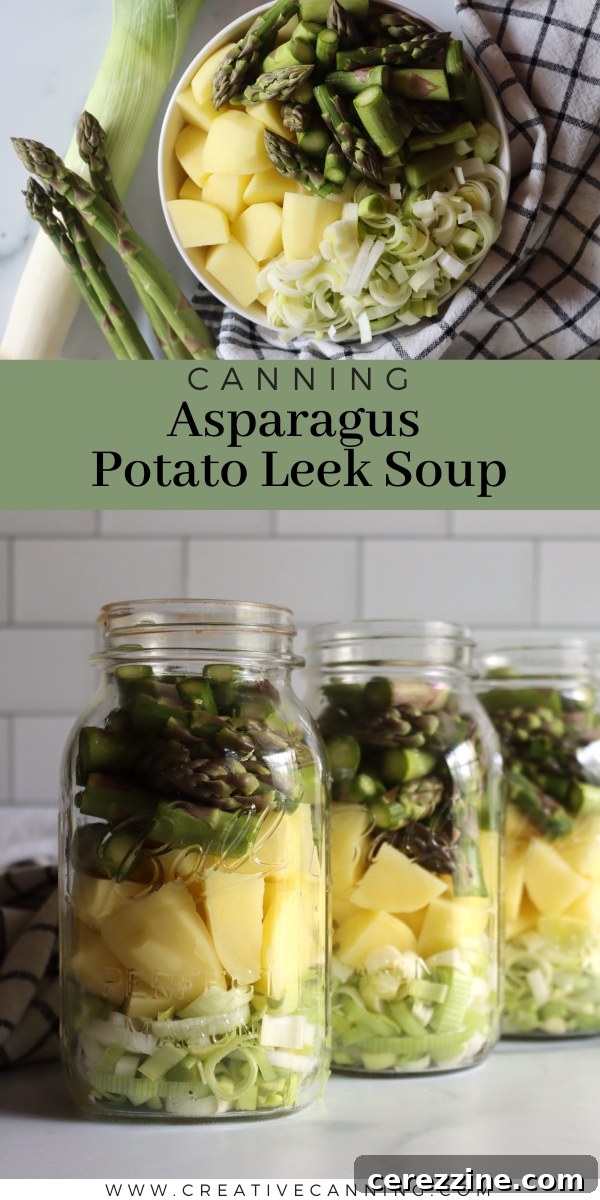
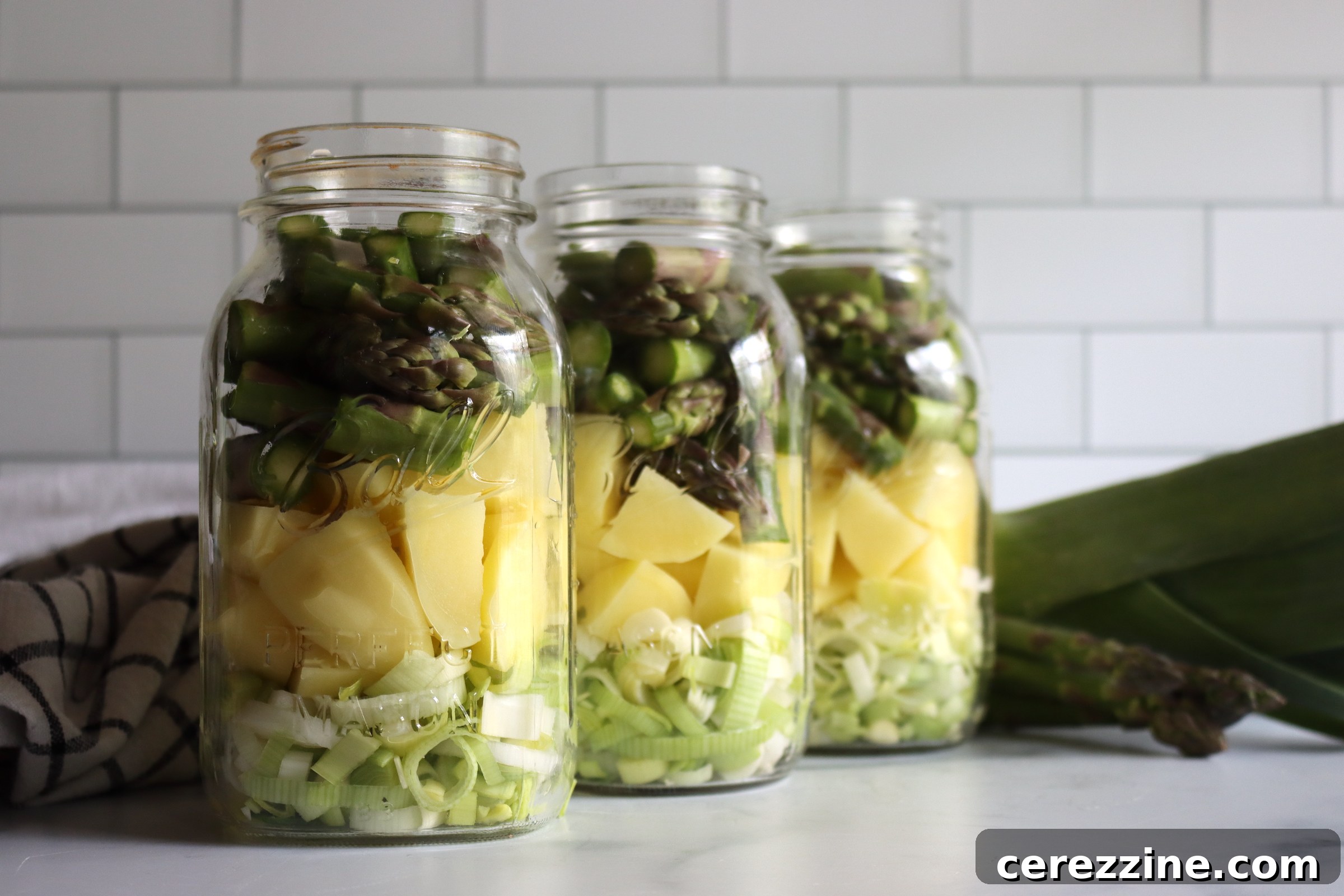
Delight in the comforting fusion of two classic soups with our Asparagus, Potato, and Leek Soup. This hearty and wholesome recipe masterfully combines the rustic charm of traditional potato leek soup with the refined elegance of fresh asparagus, creating a truly unforgettable culinary experience. Best of all, with our simple and safe vegetarian canning recipe, you can capture the vibrant flavors of spring and savor this delicious soup year-round, bringing garden-fresh goodness to your table no matter the season.
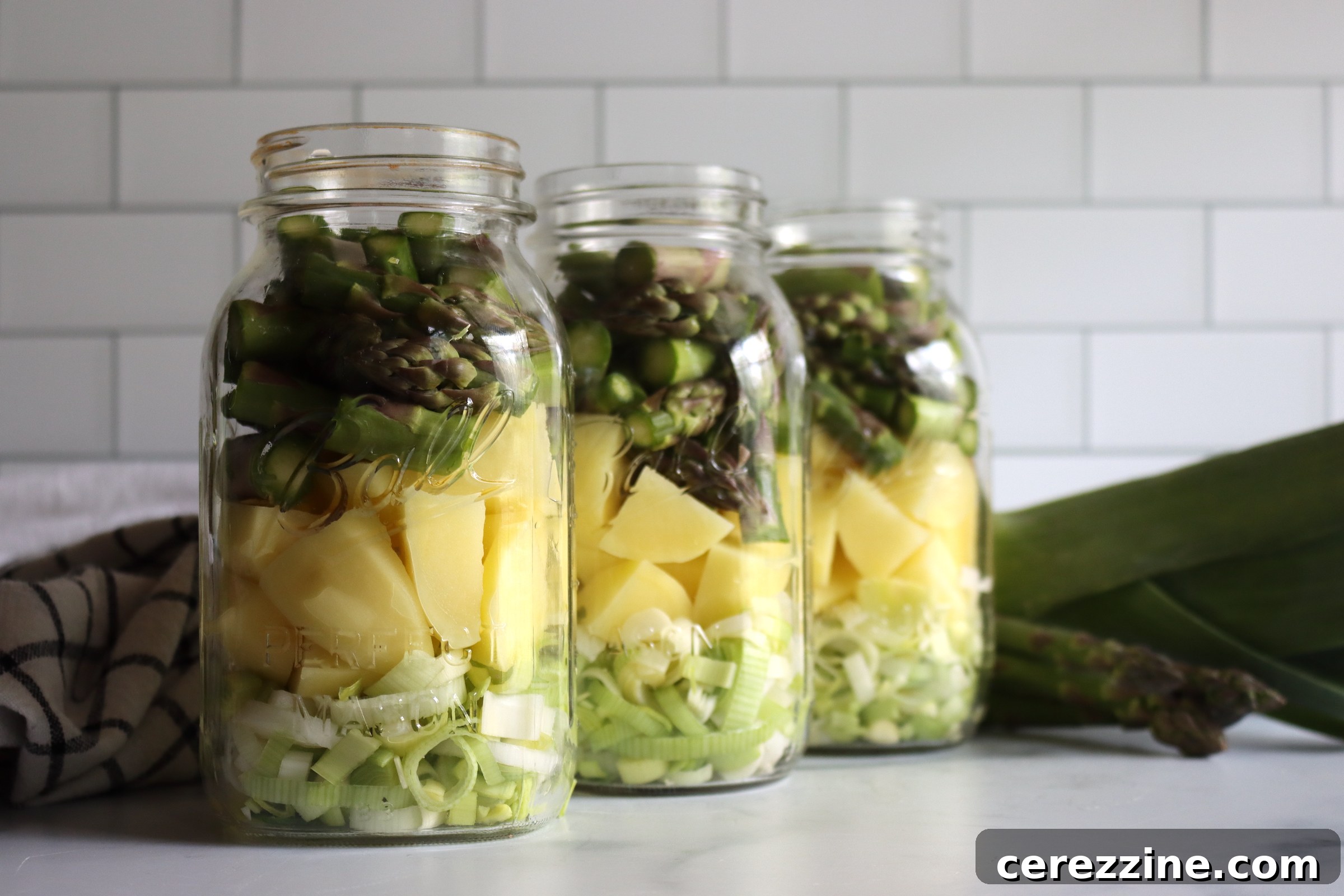
There’s a special satisfaction that comes from preserving the bounty of your garden. Each spring, as the first tender asparagus spears emerge, and the leeks grow plump and flavorful, my kitchen transforms into a hub of culinary creation. Inspired by the abundance of fresh produce, I often find myself pressure canning several batches of seasonal soups. Classic plain asparagus soup, with its delicate flavor, is a personal favorite, while my children enthusiastically request creamy potato leek soup. Juggling both recipes on my counter one day, a delicious idea sparked: why not combine these two beloved flavors?
The result was nothing short of culinary magic. The earthy sweetness of leeks, the comforting richness of potatoes, and the distinct, fresh notes of asparagus proved to be a harmonious blend. This serendipitous discovery led to the creation of this simple, yet incredibly rewarding, canning recipe for Asparagus, Potato, and Leek Soup. It’s a testament to how combining familiar ingredients in new ways can yield truly exceptional results, allowing you to extend the enjoyment of peak seasonal flavors long after the harvest has passed.
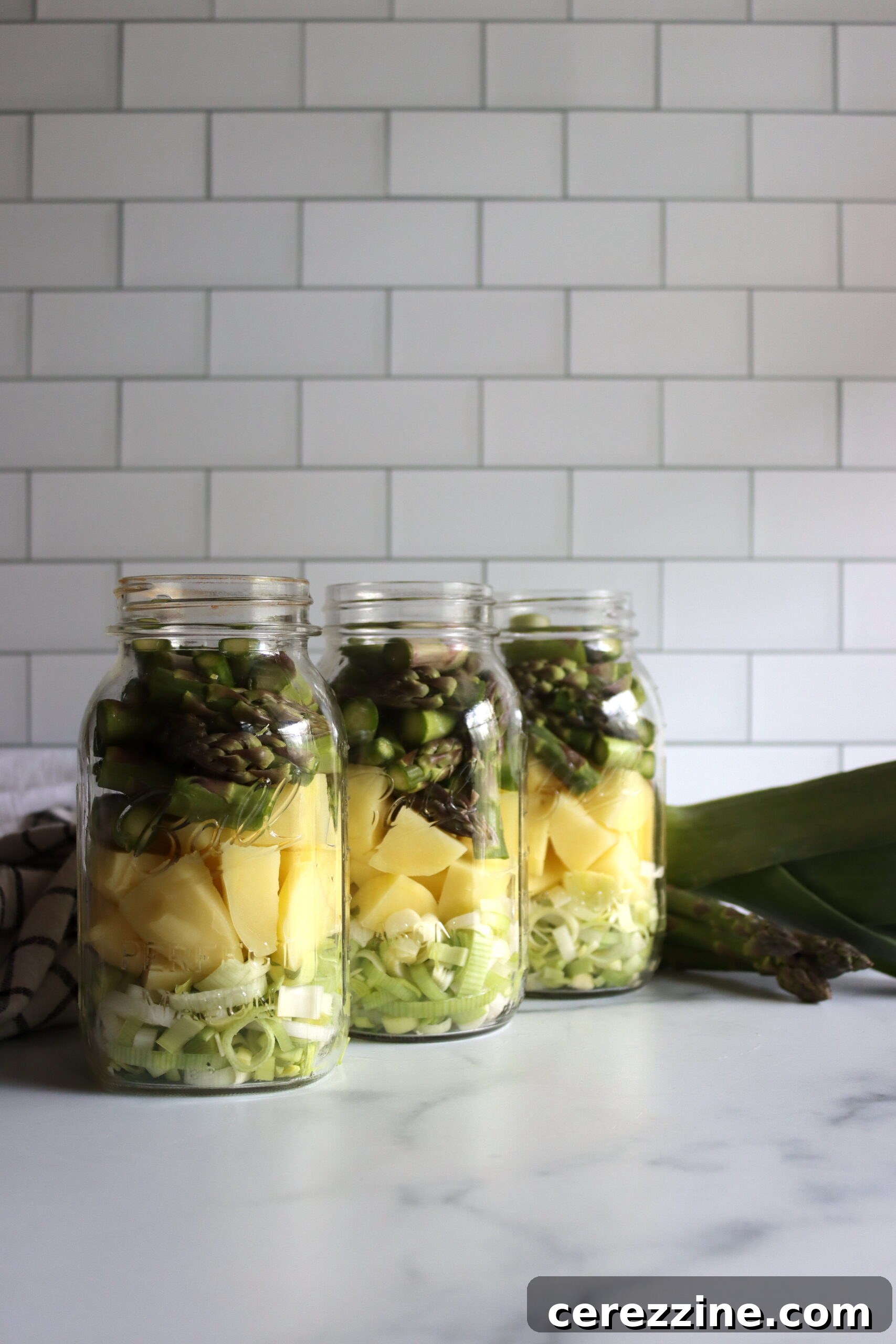
Essential Ingredients for Canning Asparagus, Potato & Leek Soup
Crafting a safe and delicious canned soup relies on careful adherence to established guidelines. This recipe is specifically developed following the University of Alaska’s trusted Hearty Soup Canning Guidelines (Publication FNH-00065), ensuring both safety and quality. When pressure canning, the minimum batch size recommended is two quarts. This recipe is scaled for a small two-quart batch, making it an ideal starting point for beginners or for those with limited quantities of fresh produce. If you’re looking to stock your pantry, feel free to easily scale up the recipe to fill a full canner batch.
The beauty of this recipe lies in its simplicity and the ability to customize. For the freshest and most flavorful results, select firm potatoes, vibrant green asparagus, and crisp, clean leeks. Freshness truly makes a difference in the final taste and texture of your canned soup.
For a small two-quart canner batch, you will need:
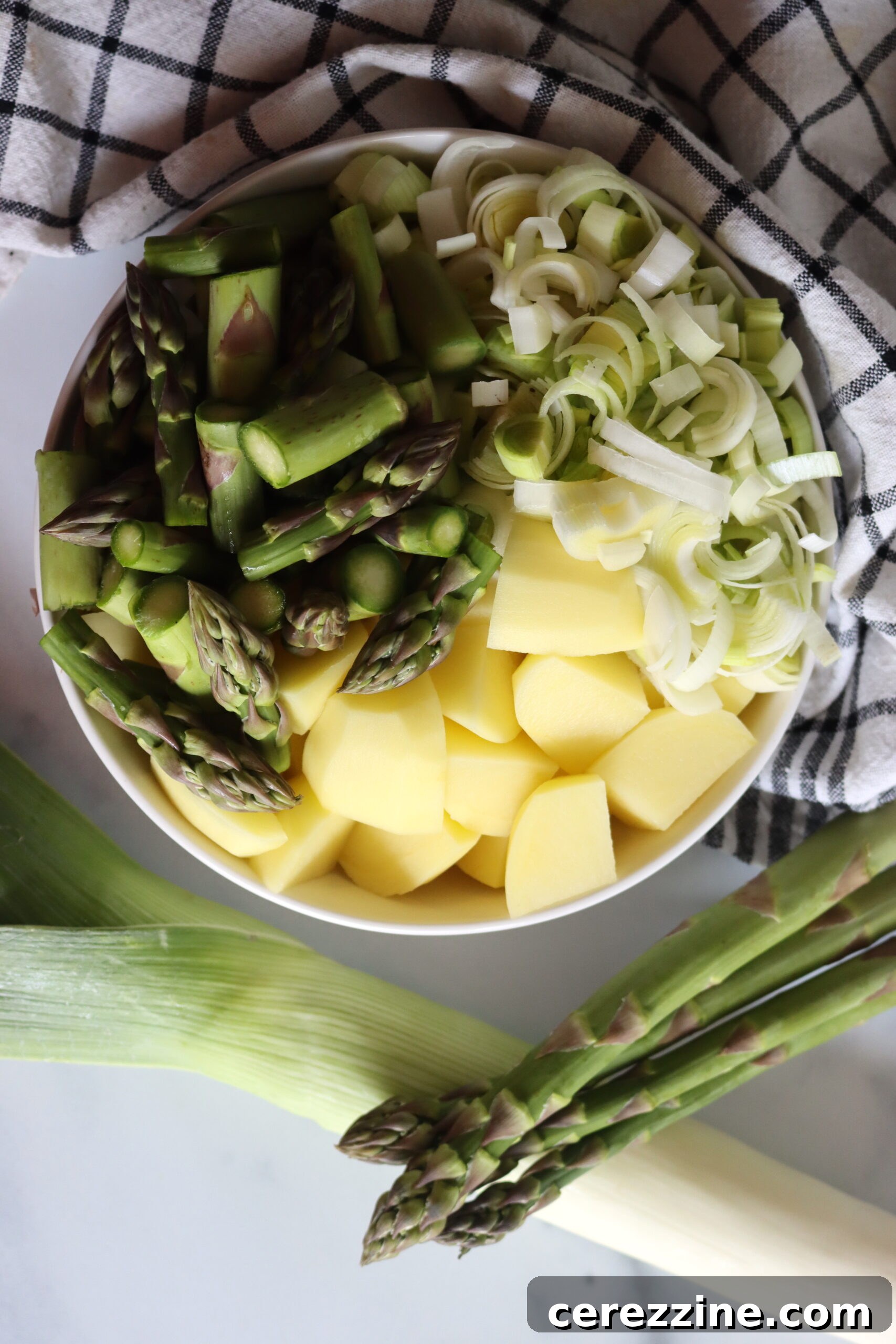
- 2 cups leeks, thoroughly washed and sliced
- 3 cups potatoes, peeled and diced into uniform, bite-sized pieces
- 3 cups asparagus, trimmed and chopped into 1-inch segments
- 2 teaspoons canning salt (non-iodized)
- Approximately 4 cups of high-quality vegetable broth, or enough to fill
To pack each quart jar individually:
- 1 cup leeks, sliced
- 1 1/2 cups potatoes, diced
- 1 1/2 cups asparagus, chopped
- 1 teaspoon canning salt
- Approximately 1 1/2 to 2 cups vegetable broth, or enough to fill
The ingredient proportions in this soup are wonderfully flexible. Feel empowered to adjust the ratios of asparagus, potato, and leek to suit your personal preference. For example, if you prefer a richer asparagus flavor, add a little more; if you love the creaminess of potato, increase that amount. While this recipe is designed as a delicious vegetarian soup, you have the option to incorporate meat or meat stock for a different flavor profile. However, I find that for a smooth, pureed soup, keeping it meat-free allows the delicate vegetable flavors to truly shine. Adding a good quality chicken stock, if you choose, can indeed add a welcome depth and richness without overpowering the vegetables.
Mastering the Art of Canning Asparagus, Potato and Leek Soup
Canning is an excellent way to preserve the freshness of your homemade soups, but it requires precision and adherence to safety guidelines. Always start by thoroughly sterilizing your jars and preparing your pressure canner according to the manufacturer’s instructions. If you plan to use the “hot pack” method, ensure your canner is simmering at approximately 180°F. For a “raw pack,” the water in the canner should be warm, around 140°F, but not actively simmering.
Step-by-Step Canning Process:
- Prepare Your Vegetables: Begin by meticulously washing and chopping your leeks. Leeks can harbor dirt between their layers, so it’s crucial to separate them and rinse thoroughly under running water. Peel and dice the potatoes into consistent, bite-sized pieces, roughly 1/2 to 3/4 inch. This ensures even cooking and a pleasant texture in the finished soup. Finally, trim the woody ends from your asparagus and cut the tender spears into 1-inch pieces.
- Hot Pack Method (Recommended for Quality):
In a large stockpot, combine the prepared leeks, potatoes, asparagus, and canning salt. Pour in enough vegetable broth to generously cover all the vegetables. Bring this mixture to a rolling boil over medium-high heat. Once boiling, reduce the heat and allow it to gently simmer for about 5 minutes. This brief simmering period, known as “pre-cooking” or “hot packing,” is not strictly for safety (the pressure canner will sterilize everything), but it helps to expel air from the vegetables, prevents them from floating in the jar, and often results in a better quality, more appealing finished product with better texture.
Carefully ladle the hot soup into your clean, hot quart jars, ensuring an even distribution of solids and broth. Leave precisely a 1-inch headspace from the rim of the jar. This headspace is critical for proper sealing and to prevent liquid siphoning during processing.
- Raw Pack Method (Optional for Simplicity):
If you prefer the raw pack method for its simplicity, pack the uncooked, prepared vegetables directly into your clean, warm canning jars along with the salt. Then, bring your vegetable broth to a separate boil on the stove. Carefully pour the boiling broth over the vegetables in each jar, ensuring a 1-inch headspace. While this method is safe for soups when pressure canned, some find the hot pack offers superior texture and less liquid loss.
- Remove Air Bubbles: Regardless of the packing method, use a clean bubble remover tool or a thin, non-metallic spatula to gently remove any trapped air bubbles from the jars. Slide the tool along the inside surface of the jar to release air pockets. Adjust the headspace by adding more hot broth if necessary to maintain the 1-inch gap.
- Clean and Seal: Wipe the rims of the jars thoroughly with a clean, damp cloth to remove any food particles or grease. This step is essential for achieving a proper seal. Place the clean, warm canning lids on top of the jars, and then screw on the metal bands until they are “fingertip tight” – meaning secure but not overtightened.
- Pressure Canning Process: Place the filled and sealed jars into your prepared pressure canner, ensuring they do not touch each other. Secure the canner lid according to its instructions. Turn the heat to high. Allow the canner to vent a steady stream of steam for a full 10 minutes before applying the weighted gauge or closing the petcock. This venting step is crucial to ensure all air is expelled from the canner, allowing a true pressure to be reached.
- Processing Time: Once vented, add the weighted gauge or close the petcock to allow pressure to build. Process quart jars at 10 pounds of pressure for 75 minutes. Remember to adjust the pressure according to your altitude (refer to the “Altitude Adjustments” section below for specific guidance).
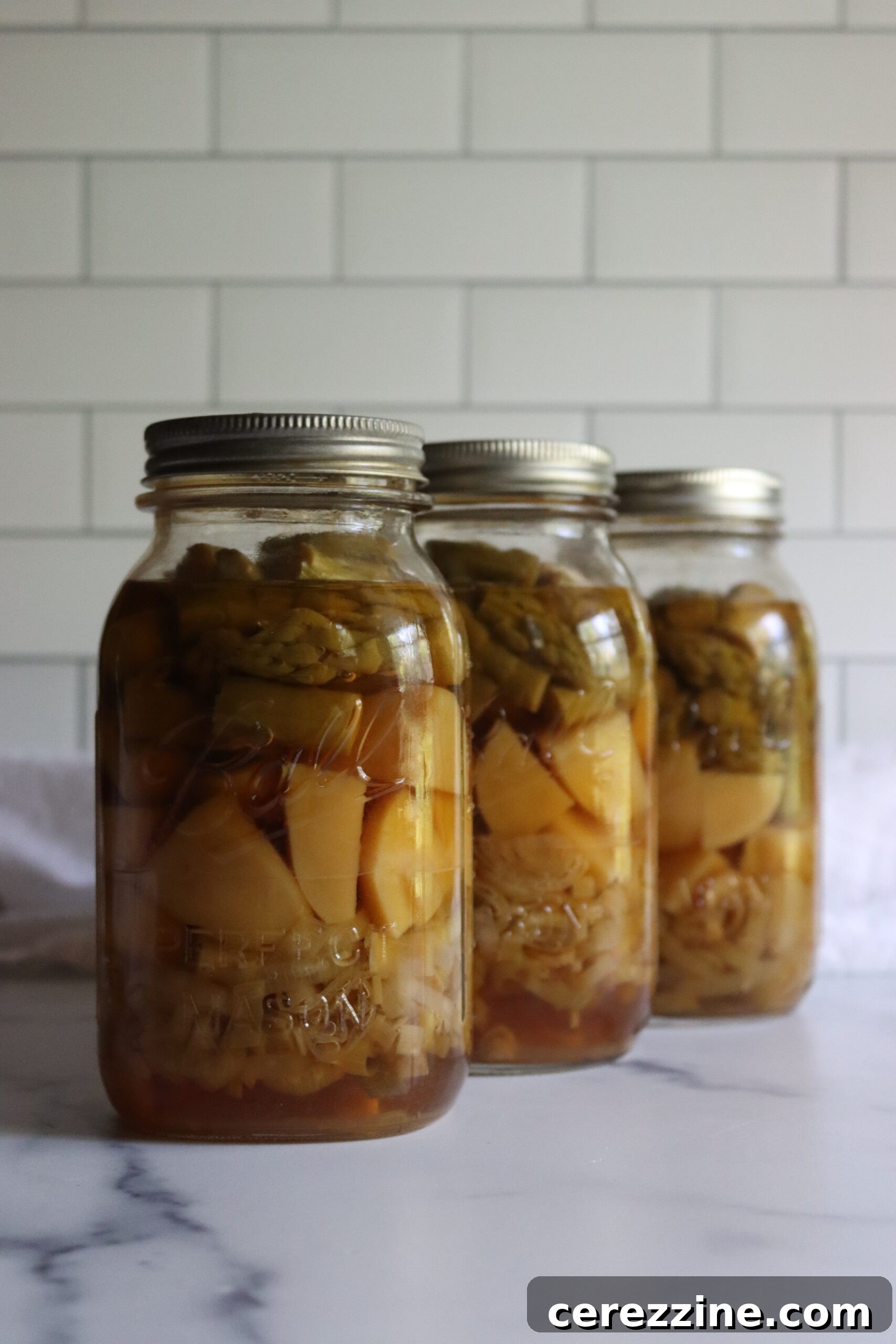
After the processing time is complete, turn off the heat and allow the pressure canner to cool down naturally and completely. Do not attempt to force-cool the canner, as this can be dangerous and compromise the seals. Once the pressure gauge reads zero and the lid can be safely opened, carefully remove the jars using a jar lifter and place them on a clean towel or cooling rack, ensuring there is space between each jar for air circulation. Let them cool undisturbed for 12 to 24 hours.
After cooling, check the seals. A properly sealed lid will be concave (curved inwards) and will not flex or “pop” when pressed in the center. Any jars that have not sealed properly should be reprocessed immediately with new lids, or stored in the refrigerator for immediate consumption. Properly canned and sealed jars can be stored in a cool, dark pantry for 12 to 18 months, maintaining their peak quality. However, they will remain safe to eat as long as the seal is intact. Always refrigerate the soup after opening.
Critical Altitude Adjustments for Pressure Canning
When pressure canning, it’s vital to adjust the required pressure based on your elevation above sea level. This ensures that the internal temperature within the canner reaches a safe level for killing harmful bacteria. While the processing times generally remain consistent, the pressure must be increased at higher altitudes. Consult the following guidelines to determine the correct pressure setting for your location:
For those using a dial gauge pressure canner:
- 0 to 2,000 feet in elevation – 11 lbs pressure
- 2,001 to 4,000 feet in elevation – 12 lbs pressure
- 4,001 to 6,000 feet in elevation – 13 lbs pressure
- 6,001 to 8,000 feet in elevation – 14 lbs pressure
For those using a weighted gauge pressure canner:
- 0 to 1,000 feet in elevation – 10 lbs pressure
- Above 1,000 feet – 15 lbs pressure
Delightful Serving Ideas for Your Canned Soup
The beauty of having homemade canned soup on hand is the convenience and versatility it offers. When you’re ready to enjoy your Asparagus, Potato, and Leek Soup, simply heat it gently on the stovetop or in the microwave until it reaches your desired temperature. If you prefer a thinner consistency, feel free to add a splash of extra vegetable broth or water.
For an elevated experience, consider these serving suggestions:
- Pureed Perfection: While the soup can be served chunky, I personally love to puree it until it’s silky smooth using an immersion blender or a standard blender (be cautious when blending hot liquids). This transforms it into an elegant, restaurant-quality cream soup.
- Creamy Indulgence: Swirl in a dollop of crème fraîche, sour cream, or even a touch of heavy cream just before serving for an extra layer of richness and a beautiful presentation.
- Cheesy Goodness: A sprinkle of freshly grated Parmesan cheese or a sharp cheddar can add a wonderful savory depth.
- Fresh Herbs: Garnish with finely chopped fresh chives, parsley, or a sprig of dill to brighten the flavors and add a pop of color.
- Crunchy Toppings: For added texture, consider toasted croutons, crispy fried shallots, or a scattering of toasted nuts like slivered almonds.
- A Drizzle of Flavor: Finish with a drizzle of high-quality extra virgin olive oil or a swirl of chili oil for a subtle kick.
- Pairing Perfection: This soup pairs wonderfully with crusty bread for dipping, a fresh green salad, or a light sandwich for a complete and satisfying meal.
Canning Asparagus Potato & Leek Soup
Asparagus, Potato, and Leek soup is a cross between two wonderful hearty soups. Potato leek is a classic, and asparagus soup is a refined treat. Together they’re wonderfully delicious, and this canning recipe means you can enjoy them year-round.
By: Ashley Adamant
Servings: 4 servings, 2 Quarts (see notes for adjusting)
Prep Time: 10 mins
Cook Time: 10 mins
Additional Time (Canning): 1 hr 30 mins
Total Time: 1 hr 50 mins
Equipment
- Pressure Canner
- Jar Lifter
- Canning Funnel
- Wide Mouth Quart Mason Jars
- Wide Mouth Canning Lids
Ingredients
In total, for a small two-quart canner batch, you’ll need:
- 2 cup leeks, sliced
- 3 cups potatoes, diced
- 3 cups asparagus, chopped
- 2 tsp salt
- vegetable broth to fill, about 4 cups
Pack each quart jar with:
- 1 cup leeks, sliced
- 1 1/2 cup potatoes, diced
- 1 1/2 cup asparagus, chopped
- 1 tsp salt
- vegetable broth to fill, about 1 1/2 to 2 cups
Instructions
- Before you get started, prepare a pressure canner and jars. If doing a hot pack, the canner should be simmering at around 180 F. For a raw pack, you want warm water, but not simmering, around 140 F.
- For hot pack, combine leeks, potatoes, asparagus, and salt in a pot. Add broth and boil for 5 minutes.
- For raw pack, pack the jars with the veggies and bring the broth to a boil separately on the stove.
- Fill jars with veggie mix, leaving 1-inch headspace; top with boiling broth.
- Remove air bubbles, wipe rims, seal jars, and process at 10 pounds pressure for 75 minutes for quarts (adjust pressure to altitude, see notes).
- Cool and check seals, then store.
Notes
Hot pack for soups is primarily for maintaining quality, not safety. The contents of the jars will cook completely and safely during the pressure canning process. Ball Canning, a trusted resource, has tested and recommends the raw pack method for soup and meal-in-a-jar canning recipes for its simplicity, although many find that a hot pack often yields a slightly better texture and overall quality. Choose the method that best suits your preference.
The minimum batch size when pressure canning is 2 quarts (or 4 pints) for safety and accurate processing. However, you are free to process larger batches without issue, provided your canner has the capacity. Feel free to increase the recipe as much as you like, but do not decrease it below 2 quarts if you intend to can it for shelf-stable storage.
Store properly canned and sealed jars on a cool, dark pantry shelf. They will maintain their peak quality for 12 to 18 months but remain safe to eat for longer as long as the seal is intact and shows no signs of spoilage. Always refrigerate after opening.
Any jars that do not seal properly after cooling should be reprocessed with a new lid (after inspecting for jar imperfections) or promptly stored in the refrigerator for immediate consumption. Do not attempt to reprocess jars that have failed to seal after 24 hours.
Altitude Adjustments
With pressure canning, the processing times remain constant at higher altitudes, but the required pressure changes to ensure a safe internal temperature. Here are the altitude adjustments for pressure canning soup:
For dial gauge pressure canners:
- 0 to 2,000 feet in elevation – 11 lbs pressure
- 2,001 to 4,000 feet in elevation – 12 lbs pressure
- 4,001 to 6,000 feet in elevation – 13 lbs pressure
- 6,001 to 8,000 feet in elevation – 14 lbs pressure
For weighted gauge pressure canners:
- 0 to 1,000 feet in elevation – 10 lbs pressure
- Above 1,000 feet – 15 lbs pressure
Nutrition
Serving: 2 cups, Calories: 253kcal, Carbohydrates: 57g, Protein: 9g, Fat: 1g, Saturated Fat: 0.1g, Polyunsaturated Fat: 0.3g, Monounsaturated Fat: 0.01g, Sodium: 1775mg, Potassium: 1420mg, Fiber: 10g, Sugar: 7g, Vitamin A: 2257IU, Vitamin C: 63mg, Calcium: 105mg, Iron: 6mg
Nutrition information is automatically calculated, so should only be used as an approximation. It can vary based on specific ingredients and preparation methods.
Like this recipe? Leave a comment below!
Explore More Delicious Soup Canning Recipes
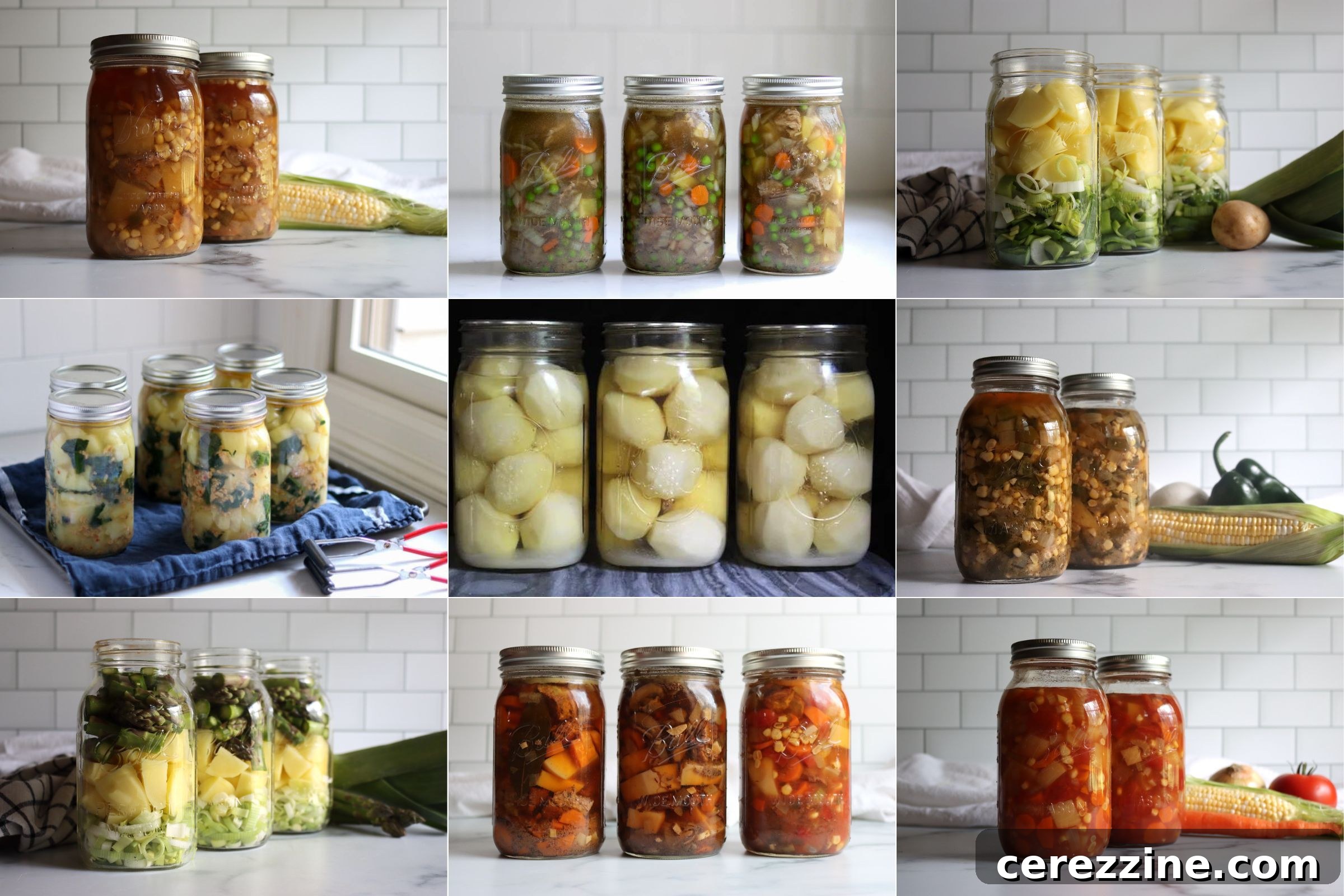
Once you’ve mastered this Asparagus, Potato, and Leek Soup, you’ll discover a world of possibilities for stocking your pantry with wholesome, homemade soups. Canning is a fantastic way to enjoy a variety of flavors all year long. Dive into these other wonderful soup canning recipes to expand your culinary repertoire:
- Hearty Sausage, Potato, and Kale Soup
- Zesty Taco Soup
- Sweet and Savory Carrot Soup
- Classic Roasted Tomato Basil Soup
- Comforting Split Pea Soup
- Nourishing Chicken Soup
Delightful Vegetarian Canning Recipes
Preserving plant-based meals in jars is an incredibly rewarding endeavor, offering healthy and convenient options for busy days. If you’re passionate about vegetarian cooking and canning, you’ll love exploring these other plant-centered recipes designed for safe and delicious preservation:
- Homemade Vegetarian Baked Beans
- Simple Carrot Soup
- Flavorful Chipotle Black Bean Soup
- Versatile Vegetable Broth