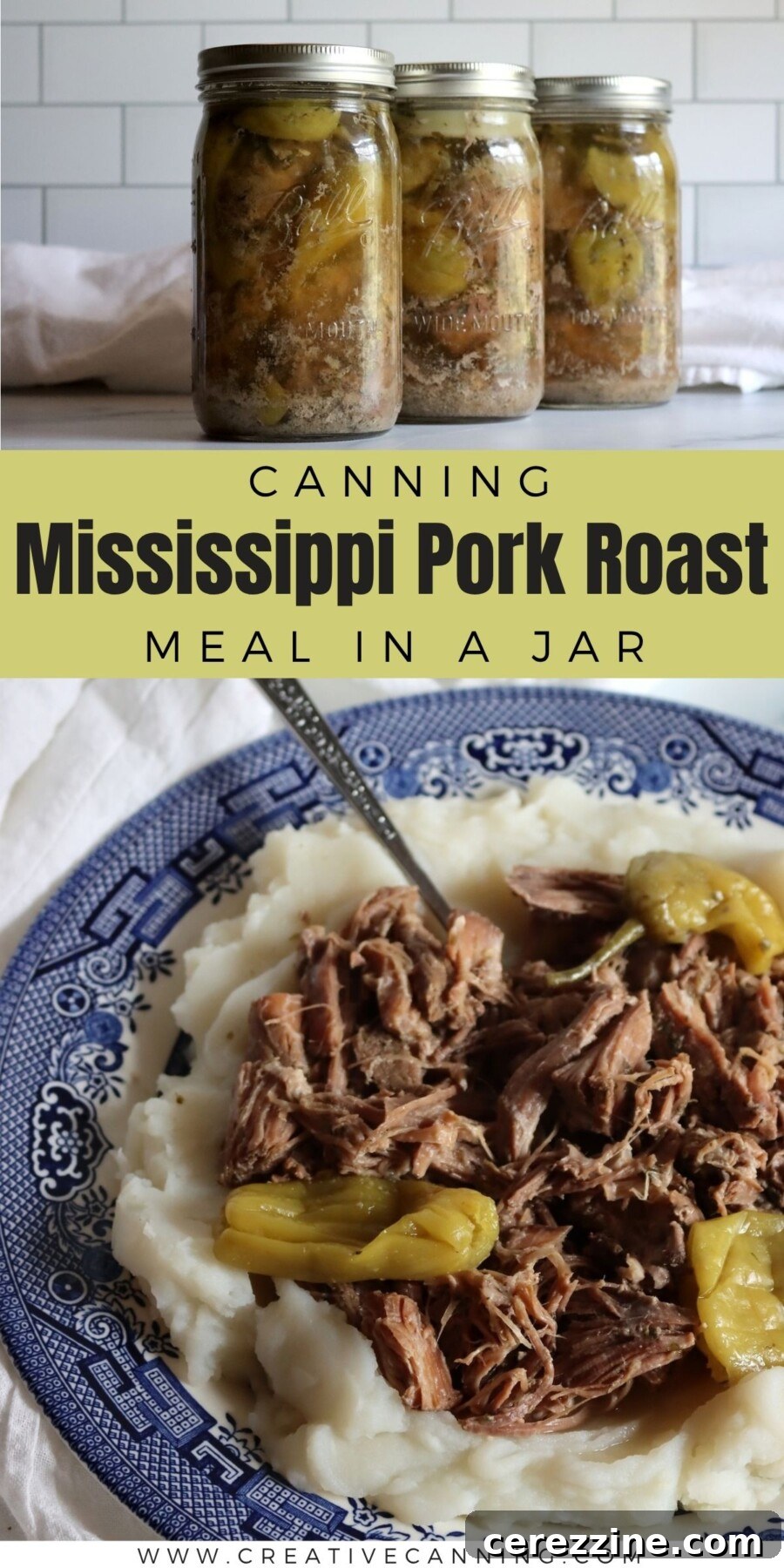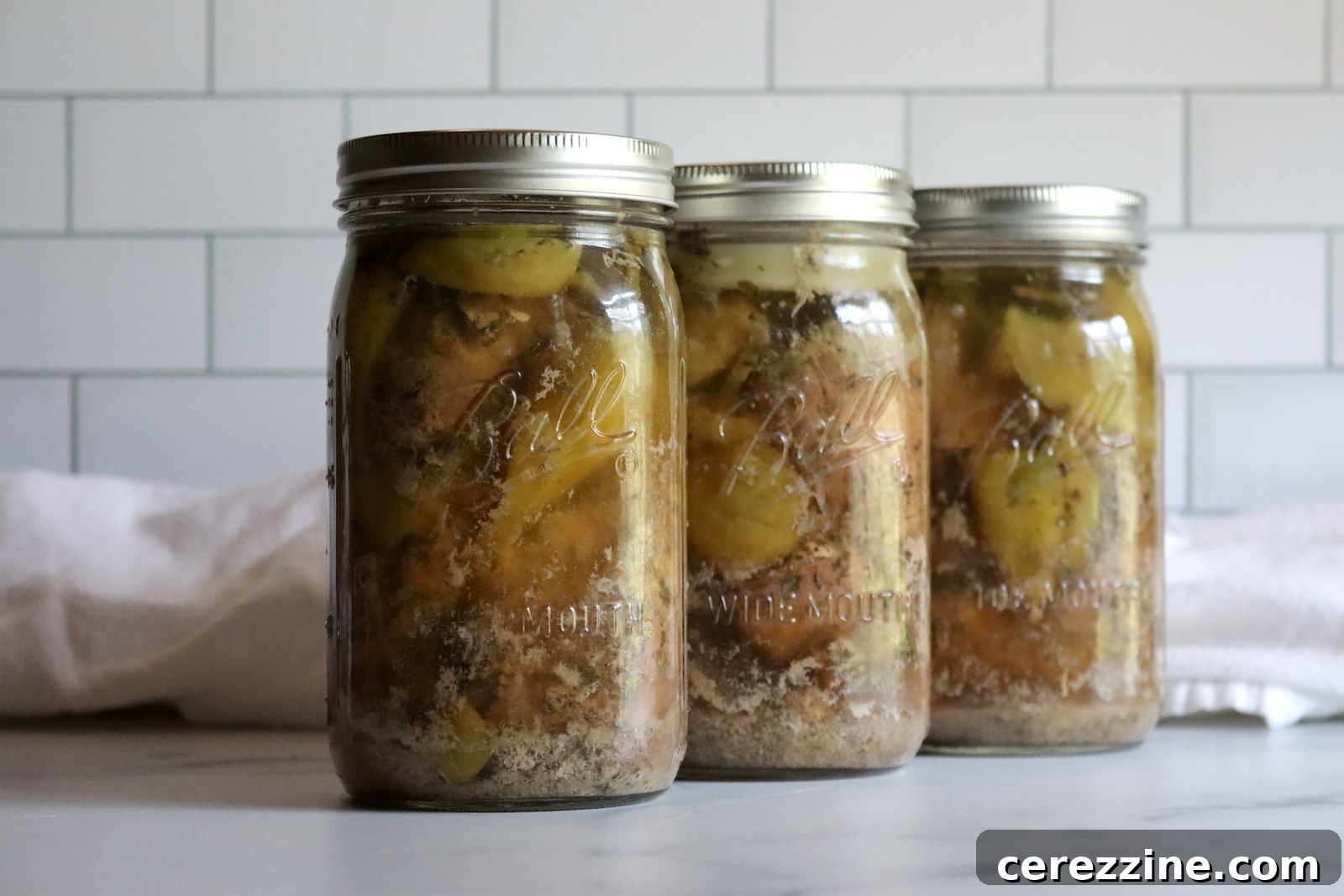
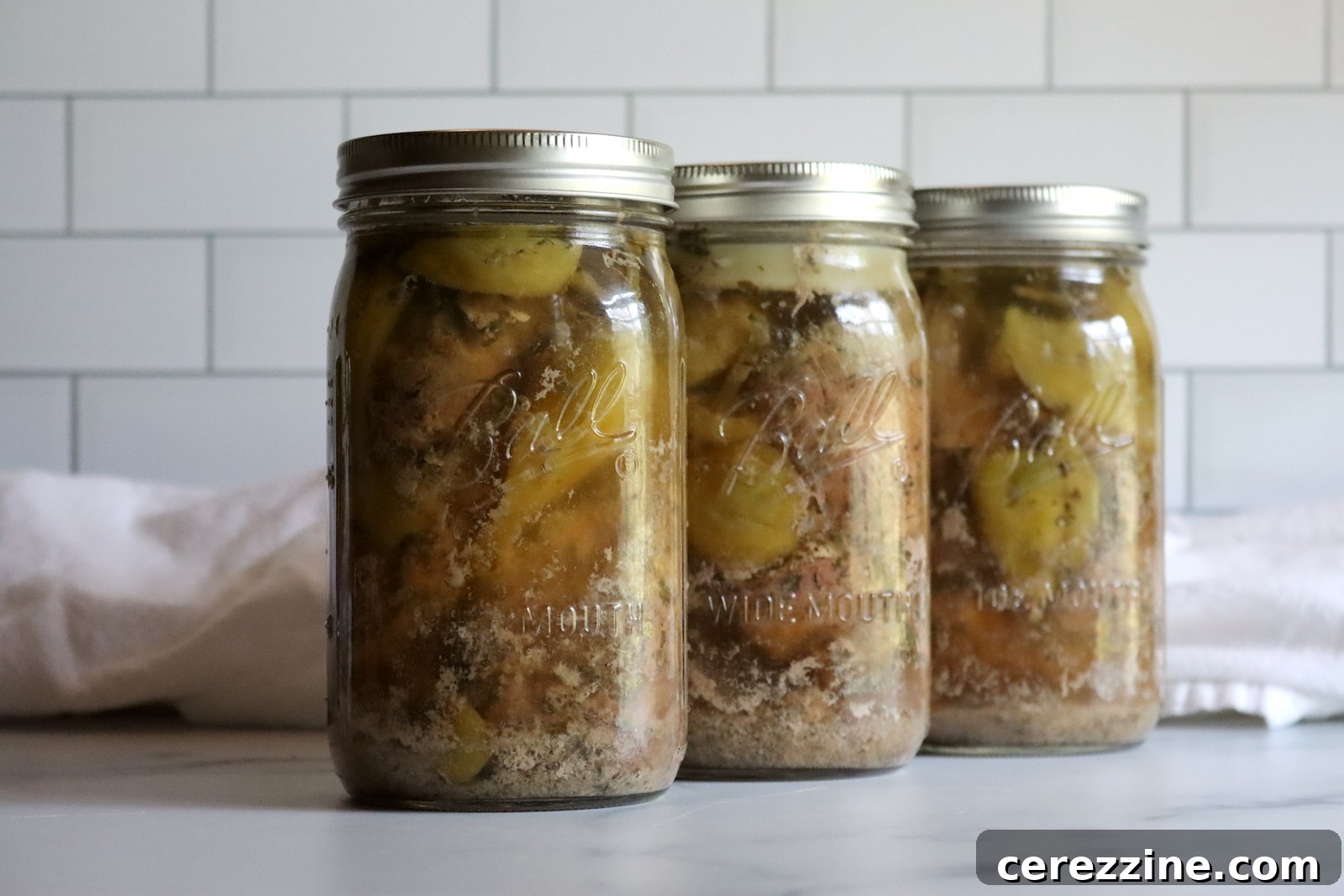
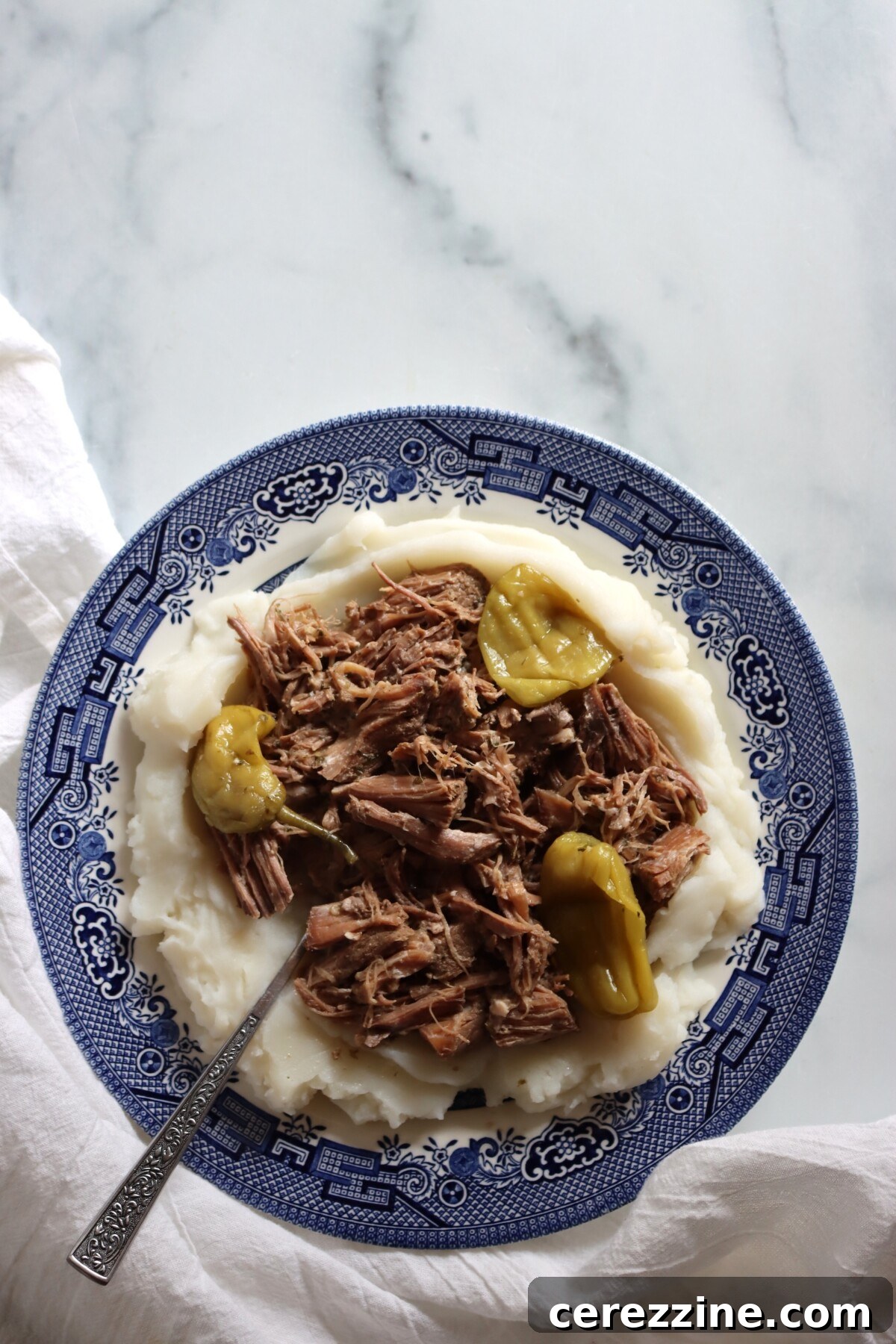
Canning Mississippi pork roast lets you preserve a slow-cooker favorite for the pantry. Tender pork shoulder is packed with sliced pepperoncini, pepper brine, and dried ranch-style herbs so a jar becomes dinner in minutes: heat with a bit of butter, shred, and serve over mashed potatoes, noodles, rice, or a soft roll.
This recipe has been reviewed for safety and accuracy by a Master Food Preserver certified through the University of Cornell Cooperative Extension.
Mississippi pork roast is simple: cubed pork shoulder, sliced pepperoncini, pepper brine, beef broth, and dried herbs that mimic ranch seasoning without dairy. Adapting the dish for pressure canning yields the same tender, flavorful meat as a long slow cook but gives you shelf-stable jars ready to heat and serve.
Notes from My Kitchen

A single pork shoulder plus one jar of pepperoncini usually fills this batch with nothing left over. The pepperoncini brine adds bright tang so canned pork doesn’t taste flat. I replace the usual buttermilk powder with dried herbs—dill, parsley, and chives—for the ranch notes; the brine supplies the necessary tang.
I can this in quarts; one quart serves two. The jars reheat quickly, making weeknight dinners fast and flexible.
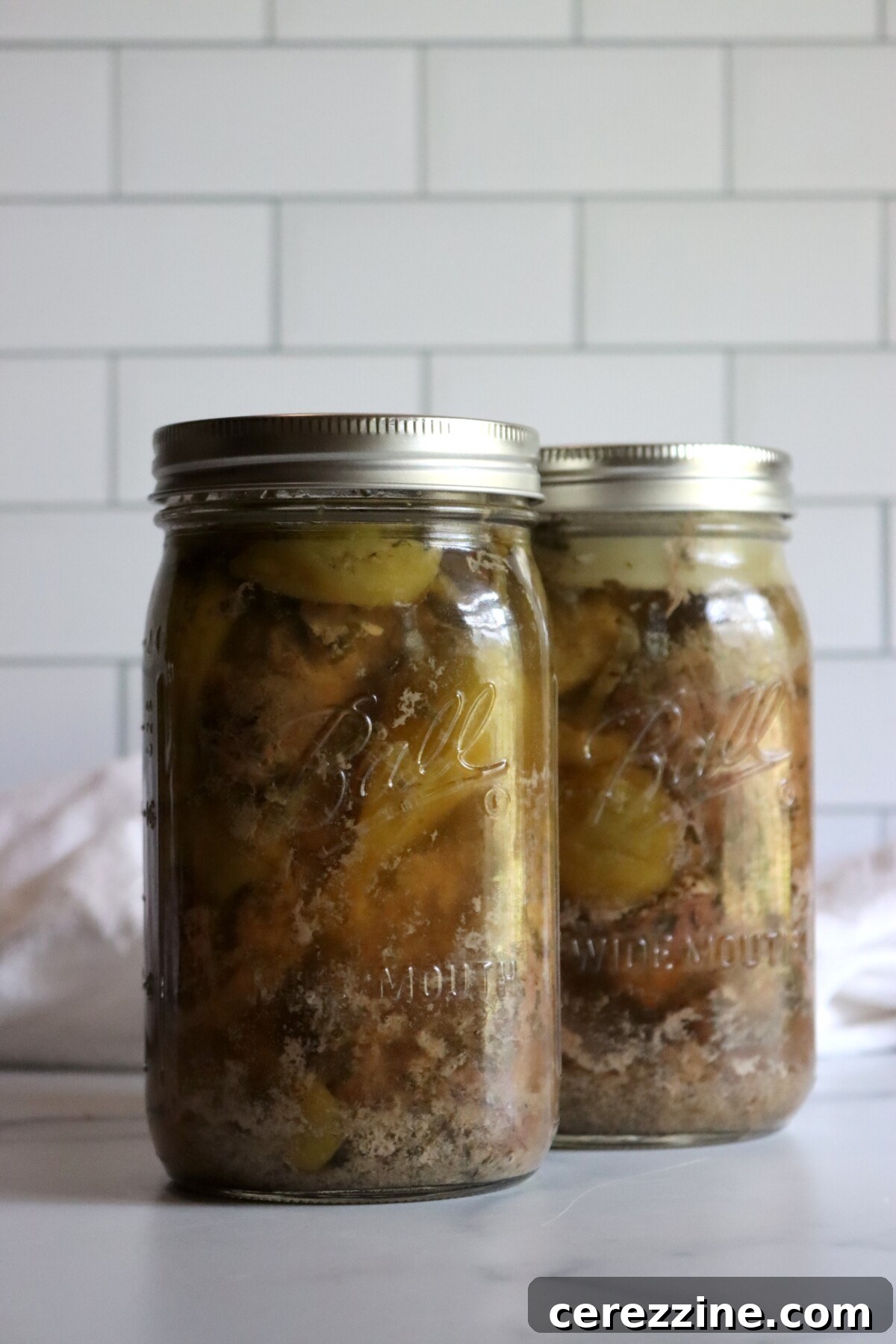
Quick Look at the Recipe
- Recipe Name: Canning Mississippi Pork Roast
- Canning Method: Pressure canning (raw pack)
- Prep Time: About 30 minutes
- Cook Time: About 10 minutes to bring broth to a boil
- Canning Time: 75 minutes for pints, 90 minutes for quarts
- Yield: About 3 quarts or 6 pints
- Jar Sizes: Pints or quarts, 1 inch headspace
- Main Ingredients: Pork shoulder, sliced pepperoncini and brine, beef broth, dried herbs and spices
- Difficulty: Easy
Choosing the Best Cut for Mississippi Pork Roast
Use boneless pork shoulder (Boston butt or picnic shoulder). It’s well-marbled with connective tissue that breaks down under pressure, producing fork-tender shredded meat. Trim the fat cap and any large pieces of hard fat before cubing to avoid greasy jars and rim interference with seals. Cut into 2-inch cubes so pieces fit through jar openings and hold up during processing.
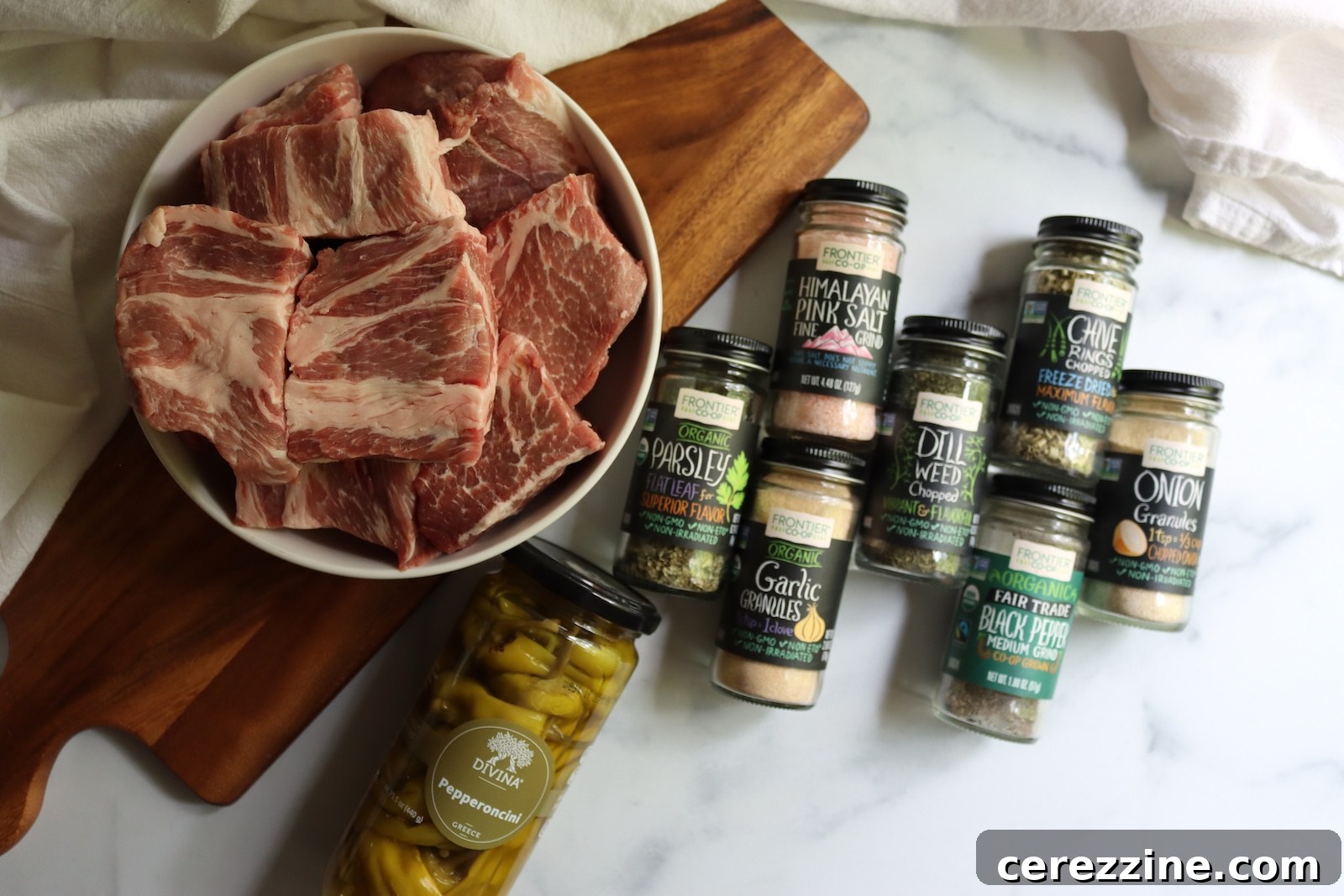
Ingredients for Mississippi Pork Roast
This canning version avoids dairy and thickeners. Dried herbs replace ranch packet ingredients (no buttermilk powder), and beef broth replaces au jus. Thickeners and butter are added when reheating the jar.
- Pork shoulder: Trimmed and cut into 2-inch cubes (about 3 3/4 lbs trimmed).
- Sliced pepperoncini: Mild, tangy peppers; use jarred sliced or slice fresh and reserve the brine.
- Pepperoncini brine: Reserved brine brightens the meat—don’t skip it.
- Beef broth: Boiling to pour over packed jars; homemade or store-bought both work.
- Dried parsley, chives, and dill weed: Herbs that recreate the ranch flavor without dairy.
- Onion powder and garlic powder: Provide savory depth.
- Salt and black pepper: Season to taste; start conservatively if using salted broth or brined peppers.
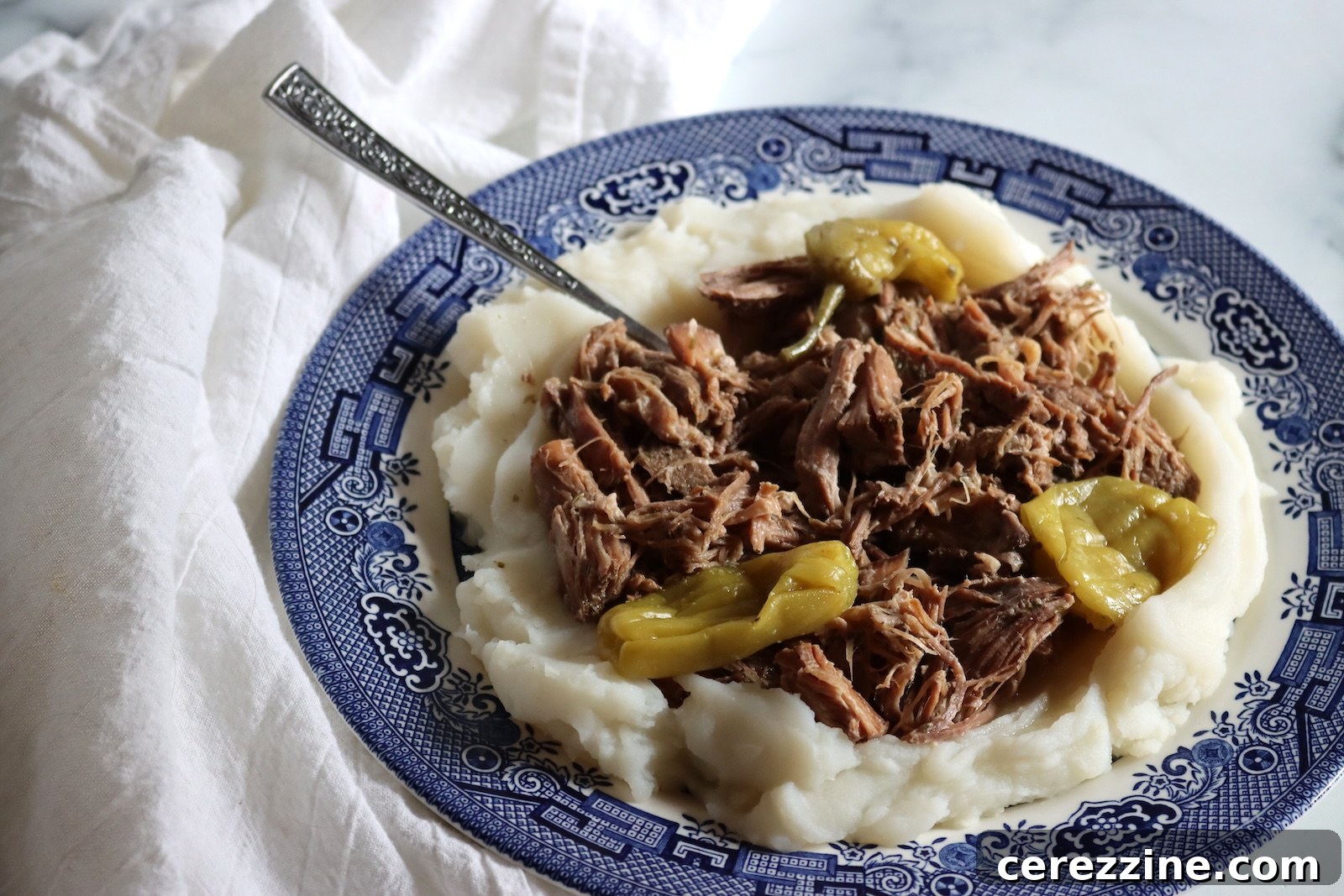
Mississippi Pork Roast Variations
Substitute beef chuck pound-for-pound for a classic Mississippi pot roast. Swap banana pepper rings for similar tang, or use pickled jalapeños for heat. Adjust herbs freely—seasoning changes don’t affect canning safety. Do not add dairy, thickeners, pasta, or rice to jars; those are added when serving.
How to Make Mississippi Pork Roast for Canning
This is a raw pack: no browning. Mix cold meat and seasonings, pack into jars, and pour boiling broth over the top. The pressure canner cooks the jars to safe temperatures.
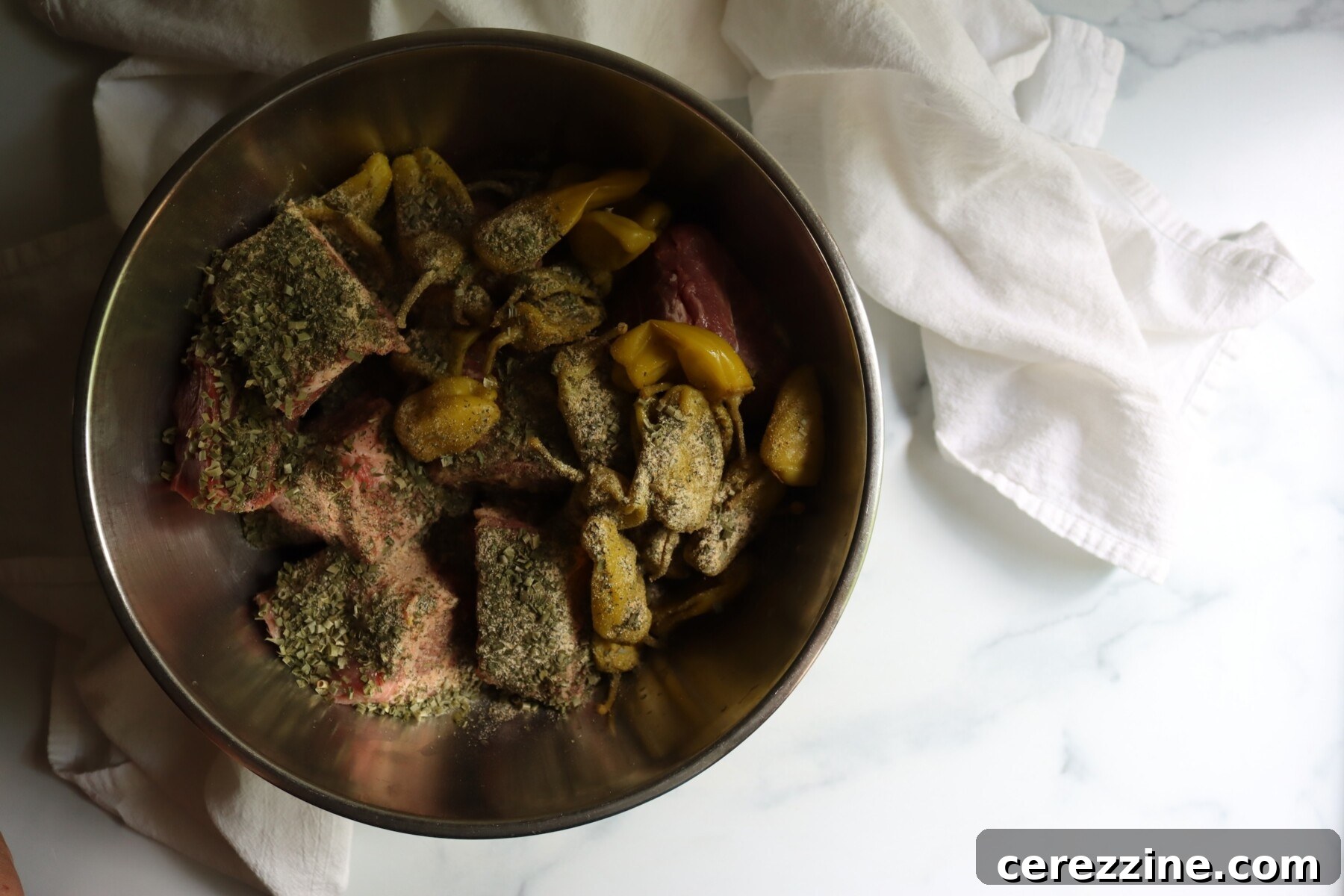
Measure dried parsley, chives, dill weed, onion powder, garlic powder, salt, and pepper into a large bowl. Trim and cube the pork shoulder into 2-inch pieces. Drain the pepperoncini and reserve the brine. Add the pork and peppers to the bowl and mix thoroughly so seasoning is evenly distributed.
Prepare your pressure canner with the amount of water your manual calls for and keep it warm (about 140°F) because jars are room temperature. Bring beef broth to a rolling boil.
Pack pork and peppers into jars, dividing evenly and leaving 1 inch headspace. Add pepperoncini brine divided between jars. Pour boiling broth over solids, maintaining 1 inch headspace. Remove air bubbles, top up with hot broth if needed, wipe rims, and apply lids and bands fingertip tight. Work quickly so broth stays hot when jars go into the canner.
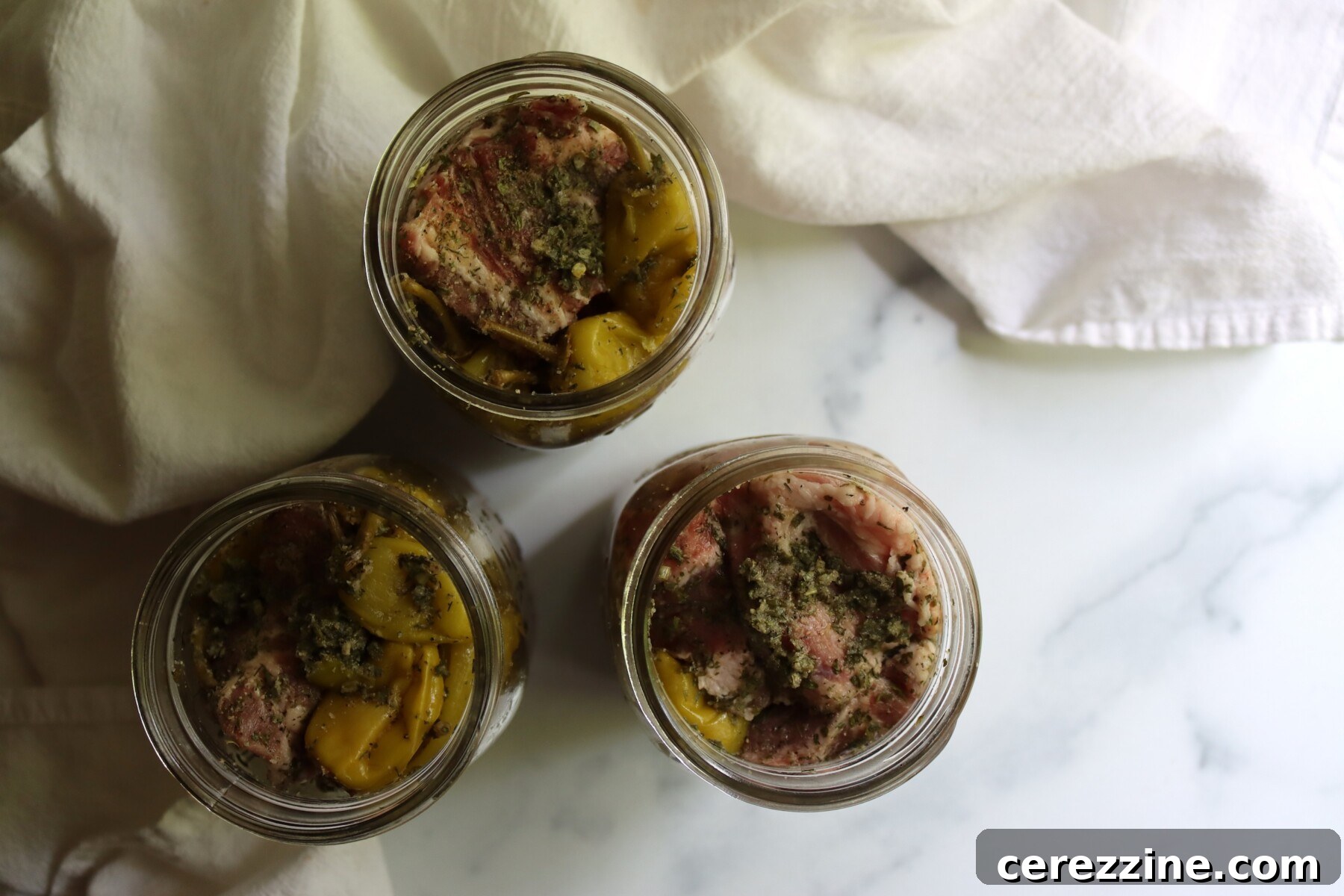
Canning Mississippi Pork Roast
Load jars into the canner and vent a steady stream of steam for 10 minutes before applying the weight or closing the petcock. Process at the required pressure: 10 lbs for weighted gauge or 11 lbs for dial gauge (adjust for altitude). Process pints for 75 minutes and quarts for 90 minutes, keeping pressure steady. If pressure drops, bring it back up and restart the time.
When processing is complete, turn off heat and allow the canner to return to zero pressure naturally. Wait five minutes after it reaches zero, remove the lid, and leave jars in the canner an additional 10 minutes. Remove jars to a towel-lined counter and let them cool undisturbed for 24 hours.
Altitude Adjustments
Processing times remain 75 minutes for pints and 90 minutes for quarts at any altitude. Only the pressure setting changes with altitude. For dial-gauge canners: 0–2,000 ft = 11 lbs; 2,001–4,000 ft = 12 lbs; 4,001–6,000 ft = 13 lbs; 6,001–8,000 ft = 14 lbs. For weighted-gauge canners: 0–1,000 ft = 10 lbs; above 1,000 ft = 15 lbs.
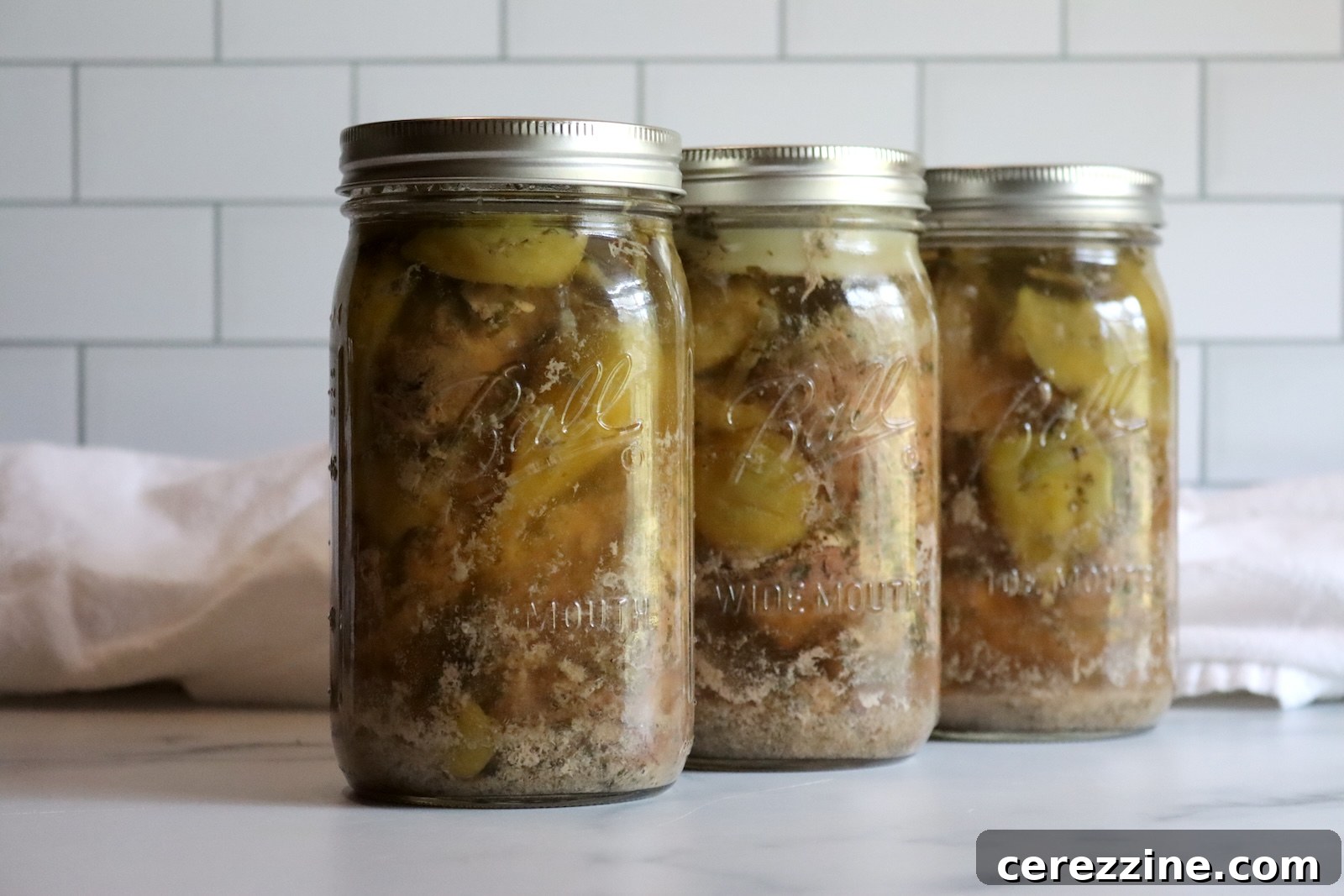
Tips for Success
Raw-packed meat will shrink during processing, leaving more broth on top—that’s normal. Avoid over-salting; store-bought broth and pepper brine contribute sodium. Pack solids so boiling broth can flow between pieces but don’t press them down hard. Keep extra hot broth for topping up jars if needed.
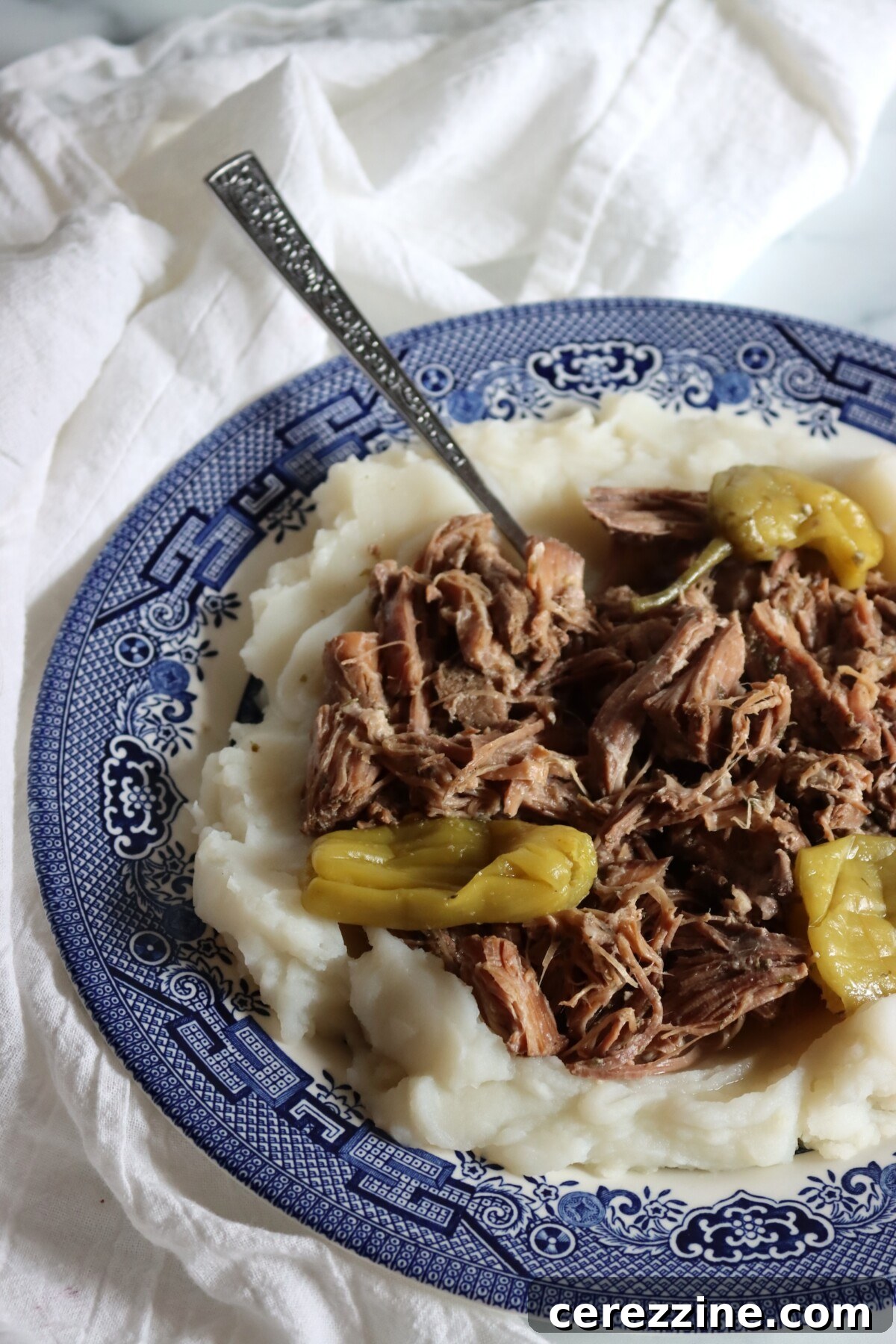
Serving Ideas for Mississippi Pork Roast
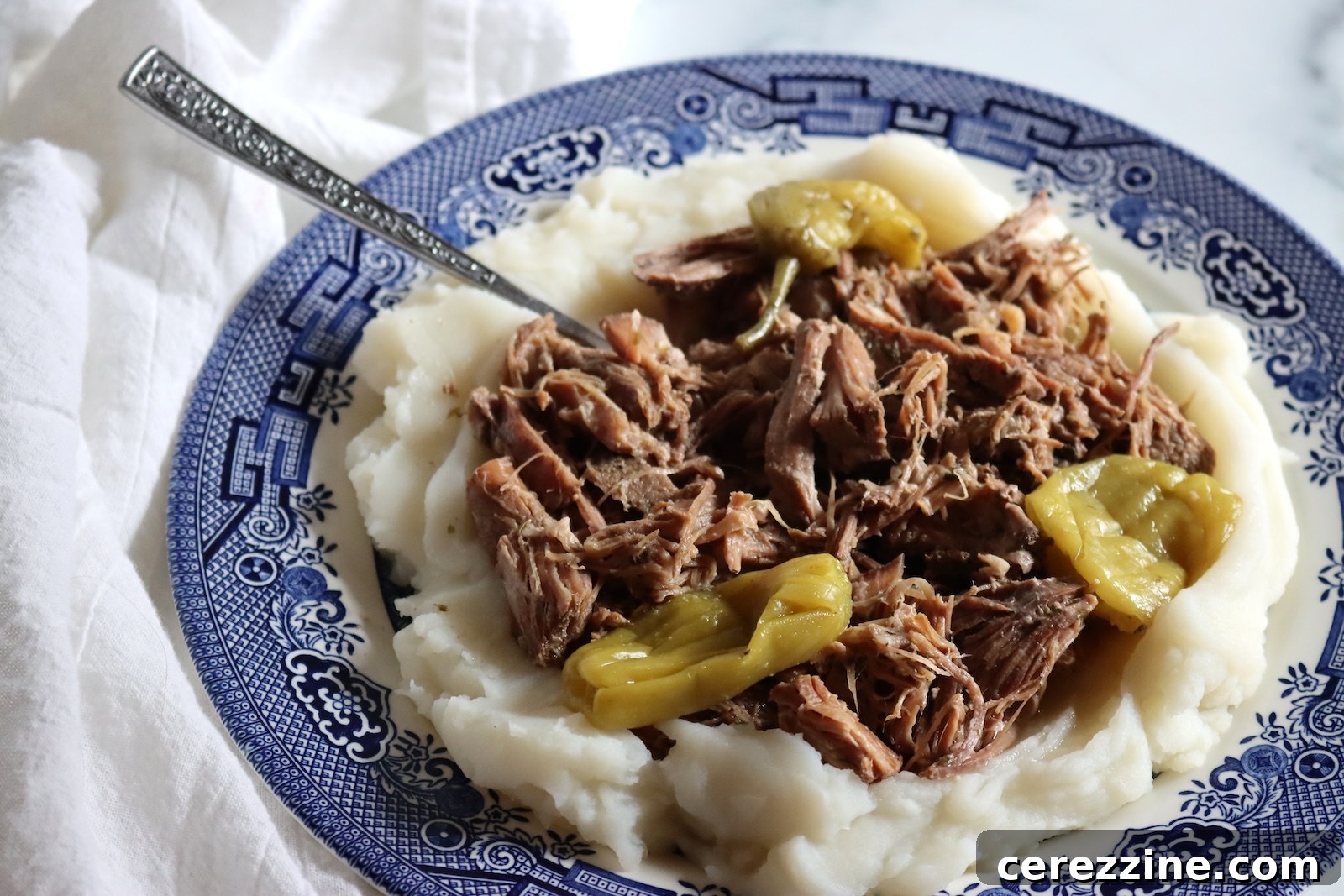
To serve, empty a jar into a saucepan and simmer gently. Stir in 2–4 tablespoons butter to enrich the broth and shred the pork with a spoon. For gravy, whisk 1 tablespoon flour or cornstarch into cold water, stir into the simmering pan, and give it about 5 minutes to thicken. Serve over mashed potatoes, egg noodles, rice, or on rolls. The meat also works well in tacos or on baked potatoes.
Storage and Shelf Life
After 24 hours, remove bands and check seals. Lids should be concave and firm with no movement. Any unsealed jars should be refrigerated and eaten within a few days or reprocessed within 24 hours with new lids. Store sealed jars without bands in a cool, dark place—best quality for 12–18 months. Once opened, refrigerate and use within 3–4 days.
Yield Notes
This batch is built around one pork shoulder and one 15 oz jar of sliced pepperoncini. You should end up with about 3 quarts or 6 pints; a quart typically serves two. The recipe scales up or down cleanly and the processing time stays the same regardless of batch size. The smallest safe canner load is 2 quarts or 4 pints.
Canning Mississippi Pork Roast FAQs
No. This is a low-acid meat-based meal and must be pressure canned to reach temperatures needed for safe shelf-stable preservation. Pepperoncini brine does not acidify the jar enough.
Not usually. Pepperoncini are mild and add more tang than heat. Swap in pickled jalapeños or add red pepper flakes if you want more spice.
No. Commercial ranch packets often contain buttermilk powder (a dairy ingredient) which should not be canned. Dried herbs mimic the flavor safely; if you want the exact packet flavor, add a small amount of ranch mix when reheating the jar.
Not in this recipe. Adding vegetables changes the composition and requires different processing times. If you want vegetables included, use a tested recipe designed for those additions or cook fresh vegetables to serve alongside.
Sealed jars keep best quality for 12–18 months in a cool, dark place and remain safe beyond that if the seal holds. Store jars without bands so failed seals are visible. Refrigerate after opening and use within 3–4 days.