Mastering Meyer Lemon Marmalade: A Zesty, Sweet Homemade Delight
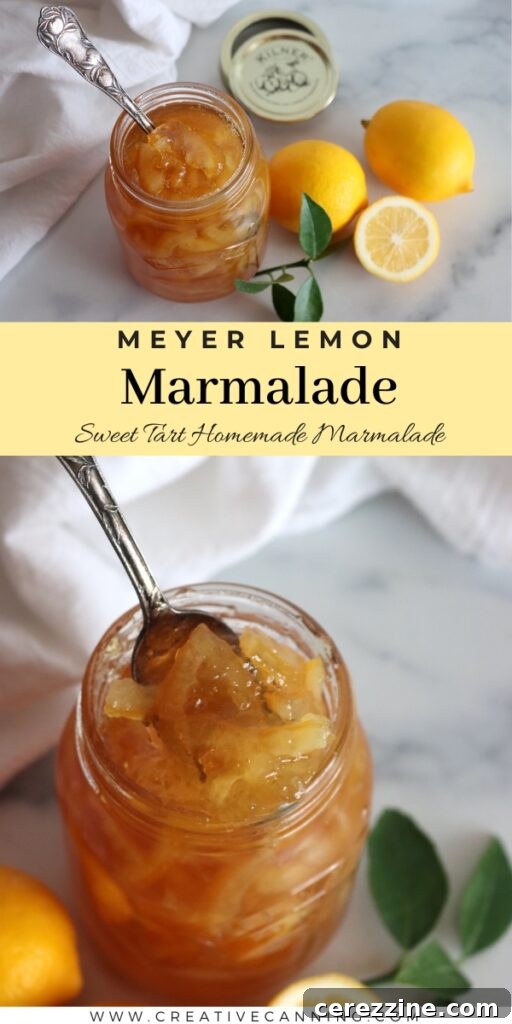
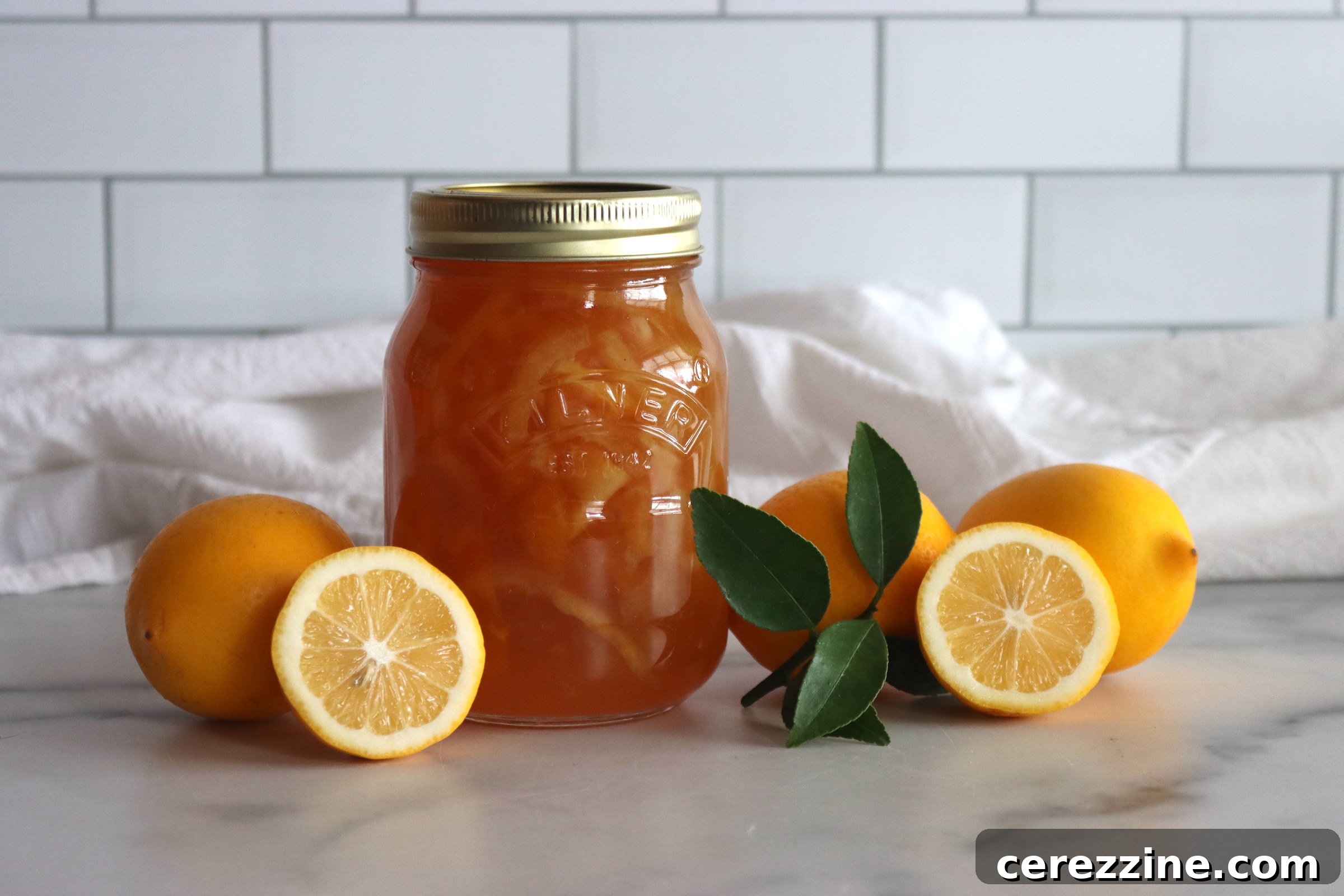
Experience the unparalleled citrus bliss of homemade Meyer Lemon Marmalade. Far surpassing the flavor profile of traditional lemon marmalade, this exquisite recipe harnesses the unique characteristics of Meyer lemons to create a spread that’s both vibrant and delicately sweet. Made the time-honored way with simple ingredients – Meyer lemons, a touch of sugar, and a generous helping of patience – this marmalade promises a taste of sunshine in every spoonful.
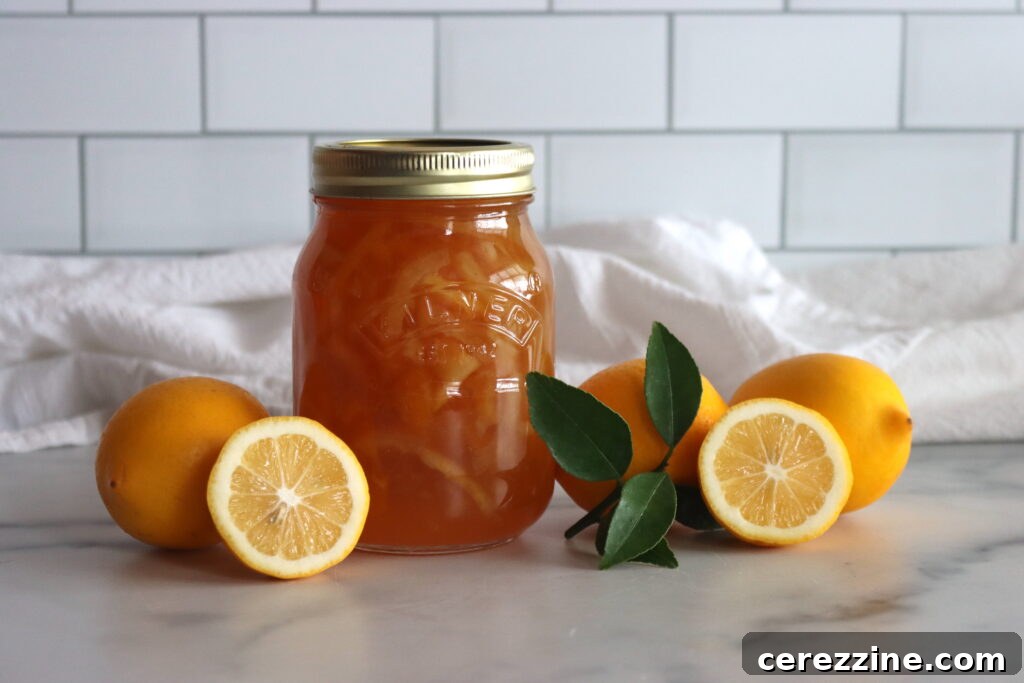
If you appreciate the bright, tangy notes of lemon marmalade, then prepare to fall in love with its more refined cousin: Meyer lemon marmalade. This recipe elevates the classic preserve to a new level of culinary delight, offering a complexity and depth that makes it truly special.
The Distinct Charm of Meyer Lemons
Meyer lemons are not your average citrus fruit. Believed to be a natural hybrid of lemons and mandarins, they boast a sweeter, less acidic profile than standard Eureka or Lisbon lemons. Their skin is notably thinner, richly fragrant, and possesses a beautiful golden hue, often with a hint of orange. This unique combination of lower acidity and aromatic peel makes them an exceptional choice for marmalade, where the rind plays a starring role in both flavor and texture. Unlike common lemons that can sometimes yield an overwhelmingly tart and bitter marmalade, Meyer lemons contribute a harmonious balance of sweet, tart, and floral notes, resulting in a more mellow and approachable spread.
Traditional lemon marmalade often requires an intensive three-day process. This extended preparation is primarily due to the thick, tough skins and pronounced bitterness of standard lemon pith, which necessitate prolonged soaking and cooking to soften and mellow their intense flavors. However, Meyer lemons offer a delightful shortcut without compromising on quality or taste. Their naturally softer peel and reduced bitterness mean you can craft a luscious, homemade marmalade in just two days. This streamlined approach not only saves valuable time but also ensures a vibrant, flavorful spread that perfectly captures the essence of these seasonal fruits.
Why Embrace Homemade Marmalade?
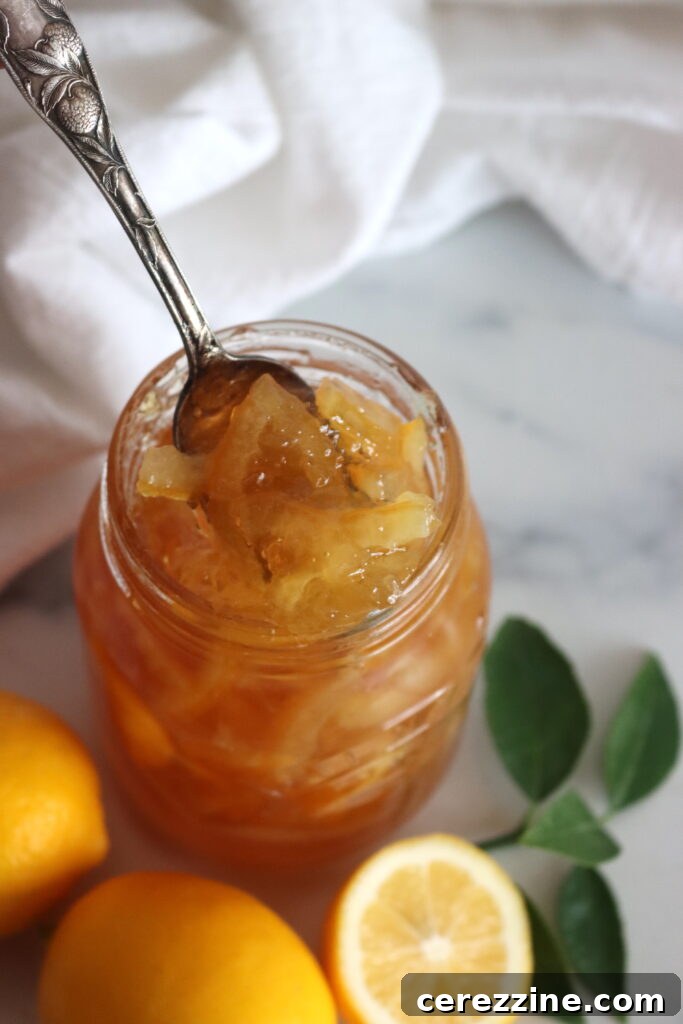
Making your own Meyer lemon marmalade is a deeply satisfying culinary endeavor. Beyond the sheer pleasure of creating something delicious from scratch, homemade preserves offer a level of freshness and quality that store-bought options simply can’t match. You have complete control over the ingredients, ensuring no artificial preservatives or flavors. The process itself is a meditative experience, filling your home with the intoxicating aroma of simmering citrus. Plus, beautifully canned jars of homemade marmalade make thoughtful and cherished gifts for friends and family, sharing a taste of your kitchen’s warmth and creativity. It’s a skill that connects you to generations of home preservers, turning simple fruit into liquid gold.
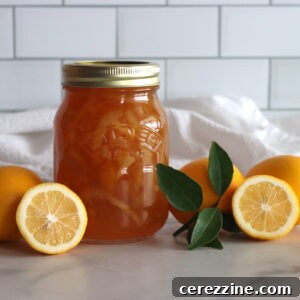
Meyer Lemon Marmalade Recipe
Making homemade Meyer lemon marmalade is a rewarding way to capture the essence of citrus season. Whether you gift it to friends or keep it for yourself, this marmalade will bring a burst of sunshine to every bite!
Ingredients
This recipe is adapted from the All New Ball Book of Canning and Preserving. To make approximately six half-pint jars of Meyer lemon marmalade, you’ll need:
- 2 lbs Meyer lemons, divided
- 2 regular lemons (e.g., Lisbon lemons)
- 6 cups water, divided
- 5 cups granulated sugar (white cane sugar)
- 1/4 cup fresh lemon juice (from 1 to 2 additional regular lemons)
Note on Lemons: This recipe thoughtfully incorporates a few regular lemons and some additional regular lemon juice. This isn’t solely for canning safety (Meyer lemons are already sufficiently acidic for safe preserves, with a pH well below the critical threshold). Instead, the inclusion of standard Lisbon lemons is a secret weapon for flavor enhancement, adding a zesty brightness that beautifully complements the sweeter, floral notes of the Meyer lemons. If Meyer lemons are all you have on hand, feel free to use them exclusively without concern for safety or significant impact on the final product, but the blend offers a richer taste experience.
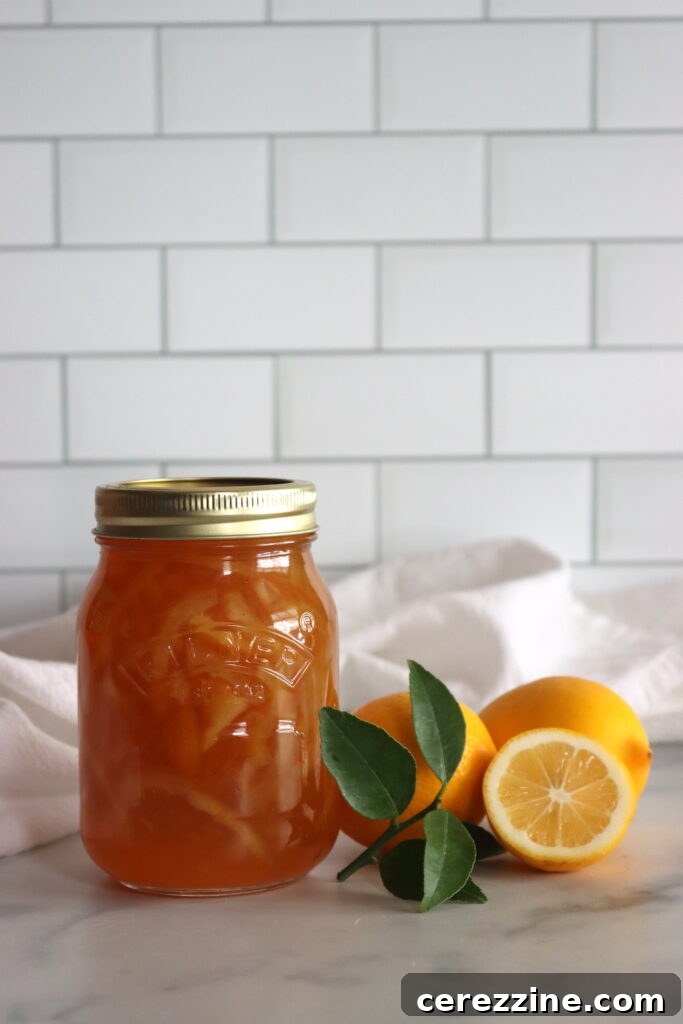
Making Meyer Lemon Marmalade: A Two-Day Culinary Journey
Crafting this vibrant Meyer lemon marmalade is a rewarding two-day process. The first day is dedicated to preparing the fruit, allowing it to rest overnight and naturally release its precious pectin. The second day brings the magic, as you combine the fruit with sugar and cook it to perfection, culminating in the joyous process of canning your homemade preserve.
Day 1: Preparation for Pectin Extraction
-
First Lemon Mixture: Extracting Pectin Rich Juice
Begin by taking 1 lb of Meyer lemons (half of your total Meyer lemons) and the 2 regular lemons. Quarter them lengthwise. Place these quartered lemons into a large, 6-quart stainless steel or enameled Dutch oven. Add 3 cups of water. Bring the mixture to a rolling boil over high heat, then immediately reduce the heat to a gentle simmer. Allow it to simmer, uncovered, for approximately one hour and a half. Stir occasionally to prevent sticking and gently press the lemons with the back of a spoon to encourage them to release their juices. You’ll notice the liquid gradually thickening to a syrupy consistency, and the lemons becoming very soft. This long, slow simmer is crucial for extracting the natural pectin from the lemon peels and seeds. Once cooked, remove the pot from the heat, cover it tightly, and let it sit at room temperature overnight. This overnight rest is a critical step, allowing the citrus to fully release its pectin into the liquid, forming a pectin-rich citrus jelly base that will ensure your marmalade sets beautifully.
-
Second Lemon Mixture: Preparing the Citrus Peel
While the first mixture simmers, prepare the remaining 1 lb of Meyer lemons. Quarter them lengthwise, then carefully remove any visible seeds (these can add bitterness if not properly managed). Once deseeded, slice these lemons crosswise into very thin, delicate pieces. The thinner the slices, the more tender the final peel will be in your marmalade. Place these thinly sliced lemon pieces into a separate 6-quart stainless steel or enameled Dutch oven and cover them with the remaining 3 cups of water. Bring this second pot to a boil, then reduce the heat to a simmer. Allow it to simmer, uncovered, for about 30 minutes, stirring occasionally. This step softens the peel further and begins to mellow any remaining bitterness. After 30 minutes, remove the pot from the heat, cover it, and let it sit at room temperature overnight, alongside the first mixture. By the end of Day 1, all your lemons will be prepped and resting, ready for the next day’s transformation.
Day 2: Cooking and Canning Your Golden Marmalade
-
Prepare Your Canning Equipment
Before you begin cooking, ensure all your canning equipment is ready. Set up your boiling water canner, ensuring it has enough water to cover your jars by at least an inch. Wash and sterilize your half-pint canning jars, lids, and bands according to manufacturer instructions. Keep the jars hot in the canner or in a separate pot of hot (not boiling) water until needed. This step is crucial for canning safety and preventing jar breakage.
-
Strain the First Lemon Mixture
Take the first pot of lemons that rested overnight. Strain the mixture through a fine-mesh sieve, positioned over a large, clean Dutch oven or stockpot. Use the back of a spoon or a sturdy spatula to press firmly on the solids in the sieve, extracting as much pectin-rich juice as possible. This concentrated liquid is key to the marmalade’s set. Discard the remaining solids (pulp and rinds).
-
Combine and Begin to Boil
To the strained liquid in your large Dutch oven, add the thinly sliced lemons from the second pot (which also rested overnight). Pour in the ¼ cup of fresh regular lemon juice. Stir gently to combine all ingredients. Bring this mixture to a vigorous boil over medium-high heat, stirring constantly.
-
Add Sugar and Achieve Set Point
Once the mixture is boiling rapidly, gradually add the 5 cups of granulated sugar, stirring continuously to ensure it dissolves completely. It’s important to add the sugar slowly and stir well to prevent scorching and ensure even distribution. Continue boiling the mixture vigorously, stirring frequently, until it reaches the critical gelling point. This is typically 220°F (104°C) when measured with a candy thermometer. Alternatively, you can use the “plate test”: place a small plate in the freezer for a few minutes, then spoon a small amount of hot marmalade onto the cold plate. Let it cool for 30 seconds, then push it with your finger. If it wrinkles and forms a skin, it’s ready. This process usually takes at least 20 minutes, but can extend to 40 minutes, depending on your stove and the moisture content of the lemons. Do not rush this step; patience is key to a perfectly set marmalade.
-
Ladle and Seal Jars
Once the marmalade reaches the desired set, immediately remove the pot from the heat. Carefully ladle the hot marmalade into your sterilized, hot half-pint jars, leaving precisely 1/4-inch headspace from the rim. This headspace is essential for proper sealing. Use a clean, damp cloth to wipe the rims of each jar thoroughly, removing any drips or sticky residue, as this can prevent a proper seal. Place sterilized lids on top, then screw on the bands until finger-tight.
-
Process in a Boiling Water Canner
Carefully place the filled jars into the boiling water canner, ensuring they are fully submerged by at least one inch of water. Bring the water back to a rolling boil. Process the jars for 10 minutes. If you are canning at an elevation above 6,000 feet, increase the processing time to 15 minutes to ensure proper sterilization and sealing.
-
Cool and Store
After the processing time is complete, turn off the heat and carefully remove the canner lid. Let the jars sit in the hot water for 5 minutes before carefully removing them with a jar lifter. Place the hot jars on a clean, towel-lined surface, ensuring they are not touching each other and are out of drafts. Allow them to cool undisturbed for 12-24 hours. As they cool, you should hear a “ping” sound, indicating that the lids have sealed. Before storing, press down on the center of each lid; if it doesn’t flex, the jar is properly sealed. Any jars that haven’t sealed should be stored in the refrigerator and consumed within a few weeks. Properly canned Meyer Lemon Marmalade can be stored in a cool, dark place for up to one year, ready to bring a burst of citrusy joy whenever you desire.
Creative Ways to Enjoy Your Meyer Lemon Marmalade
The versatility of Meyer Lemon Marmalade extends far beyond a simple breakfast spread. Its unique sweet-tart flavor and floral aroma make it a delightful addition to a wide range of dishes:
- Classic Breakfast: Spread generously on warm toast, freshly baked biscuits, or tender scones for a truly bright and invigorating morning treat.
- Dairy Delights: Swirl a spoonful into plain yogurt, creamy cottage cheese, or a bowl of hot oatmeal for a natural burst of sweetness and tang.
- Gourmet Glaze: Use it as a flavorful glaze for roasted chicken or pork, adding a caramelized, citrusy crust. It also works wonders as a glaze for pastries, tarts, or even pound cake.
- Savory Spreads: Mix with Dijon mustard for an elevated and quick sandwich spread, perfect for turkey or ham.
- Cheese Board Companion: Pair with sharp cheeses like cheddar or creamy brie on a gourmet cheese board, offering a sweet counterpoint to savory flavors.
- Dessert Enhancer: Use it as a filling for tarts, thumbprint cookies, or delicate crepes. A dollop on vanilla ice cream creates an instant gourmet dessert.
- Beverage Booster: Stir a teaspoon into hot tea for a soothing, aromatic drink, or dissolve in sparkling water for a refreshing homemade soda.
Troubleshooting Your Meyer Lemon Marmalade
Even experienced preservers can encounter challenges. Here are common issues and how to address them:
Why is my marmalade too runny? If your marmalade hasn’t set properly, it most likely did not reach the correct gelling temperature of 220°F (104°C) during the cooking phase, or perhaps not enough pectin was extracted. You can reboil the marmalade. Pour it back into a clean pot, bring it to a boil, and retest using a candy thermometer or the plate test. Ensure you’re stirring consistently and checking the temperature accurately. Sometimes, adding a small amount of commercially available pectin designed for regular sugar preserves can help if the natural pectin wasn’t sufficient.
Why is my marmalade too thick? Overcooking is the usual culprit for overly thick or stiff marmalade. If the temperature significantly exceeds 220°F, the pectin can become too concentrated, leading to a very firm set. If this happens, you can often remedy it by gently reheating the marmalade in a saucepan with a small amount of hot water (start with a tablespoon or two) before serving, just enough to loosen the consistency to your preference. For future batches, watch your temperature carefully and remove it from heat promptly once the set point is reached.
My marmalade is too bitter—what went wrong? While Meyer lemons are inherently less bitter than standard lemons, excessive pith (the white layer under the peel) can still contribute unwanted bitterness. Ensure you are removing seeds and slicing the lemons as thinly as possible to minimize large pieces of pith in your final product. If you find a particular batch of lemons is yielding an unexpectedly bitter marmalade, an extra step can help: after slicing the lemons, bring them to a boil in fresh water for 5 minutes, then drain and discard that water. Resume the recipe as written, adding fresh water and cooking the lemon slices again. This blanching step can help leach out some of the bitter compounds.
Why are my jars not sealing properly? A good seal is paramount for safe, shelf-stable preserves. Several factors can hinder it: insufficient headspace (too much or too little), food particles on the jar rim, loose bands, or inadequate processing time. Always ensure jar rims are meticulously wiped clean before securing lids. Make sure bands are finger-tight, not overtightened. And, most importantly, process the jars for the full recommended time in a rolling boiling water canner. If a jar doesn’t seal after cooling for 12-24 hours, treat it as unsealed: store it in the refrigerator and plan to consume its contents within a few weeks.
Can I reduce the sugar in this recipe? Sugar plays a multifaceted role in marmalade: it contributes sweetness, aids in preservation, and is critical for the correct texture by interacting with pectin to create the gel. While you can experiment with slightly reducing the sugar, be aware that significantly lowering the amount may affect both the final consistency (it might be too runny) and the shelf stability of the marmalade (requiring refrigeration or shorter storage times). If you desire a low-sugar spread, it’s best to use a recipe specifically formulated for reduced sugar, which typically includes a box of low-sugar or no-sugar-needed pectin to ensure a proper set.
Nutrition Information (per serving)
Nutrition information is an approximation only.
- Calories: 140kcal
- Carbohydrates: 37g
- Protein: 0.4g
- Fat: 0.2g
- Saturated Fat: 0.02g
- Polyunsaturated Fat: 0.03g
- Monounsaturated Fat: 0.004g
- Sodium: 3mg
- Potassium: 54mg
- Fiber: 1g
- Sugar: 34g
- Vitamin A: 8IU
- Vitamin C: 21mg
- Calcium: 12mg
- Iron: 0.2mg
Frequently Asked Questions About Meyer Lemon Marmalade
Here are some common questions to help you on your marmalade-making journey:
Q: What is the best time of year to make Meyer Lemon Marmalade?
A: Meyer lemons are typically in season from late fall through early spring, with their peak usually in winter. This is the ideal time to make marmalade, as the fruit will be at its freshest, most flavorful, and most aromatic.
Q: Can I use bottled lemon juice instead of fresh for the 1/4 cup?
A: While fresh lemon juice is always preferred for its vibrant flavor, bottled lemon juice can be used if absolutely necessary for the 1/4 cup addition. However, ensure it’s 100% pure lemon juice without added sugars or preservatives, as this could affect the flavor and set of your marmalade. For the best taste, stick to freshly squeezed.
Q: How do I store homemade Meyer Lemon Marmalade?
A: Properly canned and sealed jars of marmalade can be stored in a cool, dark pantry for up to one year. Once a jar is opened, it should be refrigerated and consumed within 2-3 weeks for optimal freshness and safety.
Q: Is it necessary to sterilize the jars?
A: Yes, sterilizing your jars is a critical step for food safety, especially when preserving. It eliminates bacteria, yeasts, and molds that could cause spoilage. Always follow recommended sterilization procedures, typically boiling jars in water for at least 10 minutes or using a dishwasher’s sanitizing cycle.
Q: What is the “plate test” for marmalade setting?
A: The plate test is a traditional method to check if your marmalade has reached its setting point, especially if you don’t have a candy thermometer. Before you start cooking, place a few small ceramic plates in your freezer. When you suspect the marmalade is ready, spoon a small amount onto a chilled plate. Let it cool for 30-60 seconds, then push it gently with your finger. If the surface wrinkles and feels like a soft gel, it’s ready. If it’s still liquid, continue cooking and retest every few minutes.
Beyond Meyer Lemons: Explore More Marmalade Recipes
Once you’ve mastered the delicate art of Meyer Lemon Marmalade, a world of citrus awaits your culinary exploration. Each variety offers a unique flavor profile and preserving experience:
- Try your hand at traditional Lemon Marmalade for a classic, zestier flavor that truly sings.
- Go bold and beautiful with Blood Orange Marmalade, known for its stunning ruby hue and complex, berry-like notes.
- For a truly unique and aromatic twist, Buddha’s Hand Marmalade offers a fragrant, non-bitter experience with its fascinating finger-like fruit.
- If you’re mindful of your sugar intake, our Low Sugar Orange Marmalade (with added pectin) provides a delicious and healthier alternative.
Embracing the craft of marmalade making is a delightful journey, transforming humble fruit into liquid sunshine. Each jar is a testament to patience, skill, and the simple joy of homemade goodness. We hope this comprehensive guide inspires you to create your own batches of vibrant Meyer Lemon Marmalade and share its bright flavor with those you love. Happy preserving!