
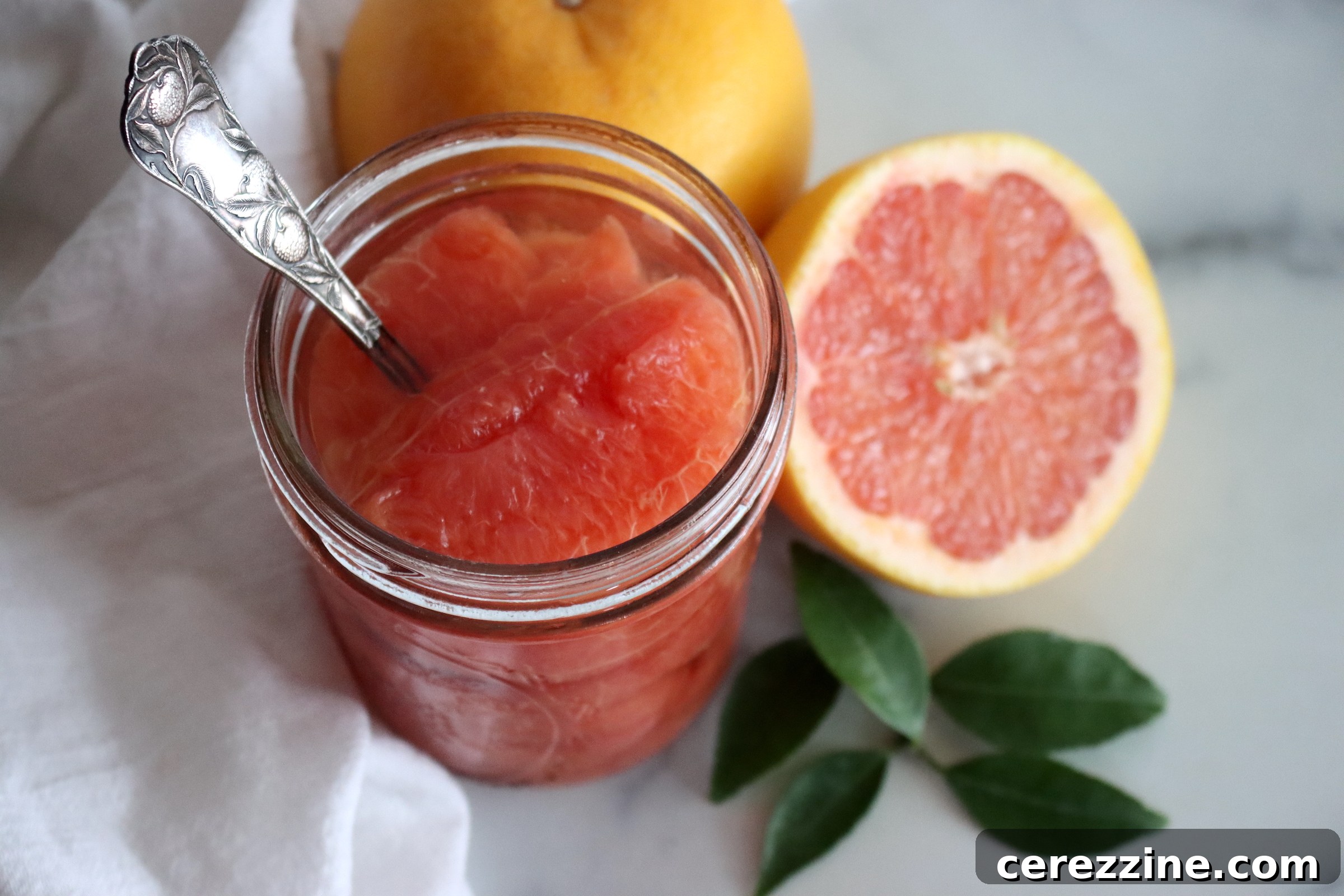
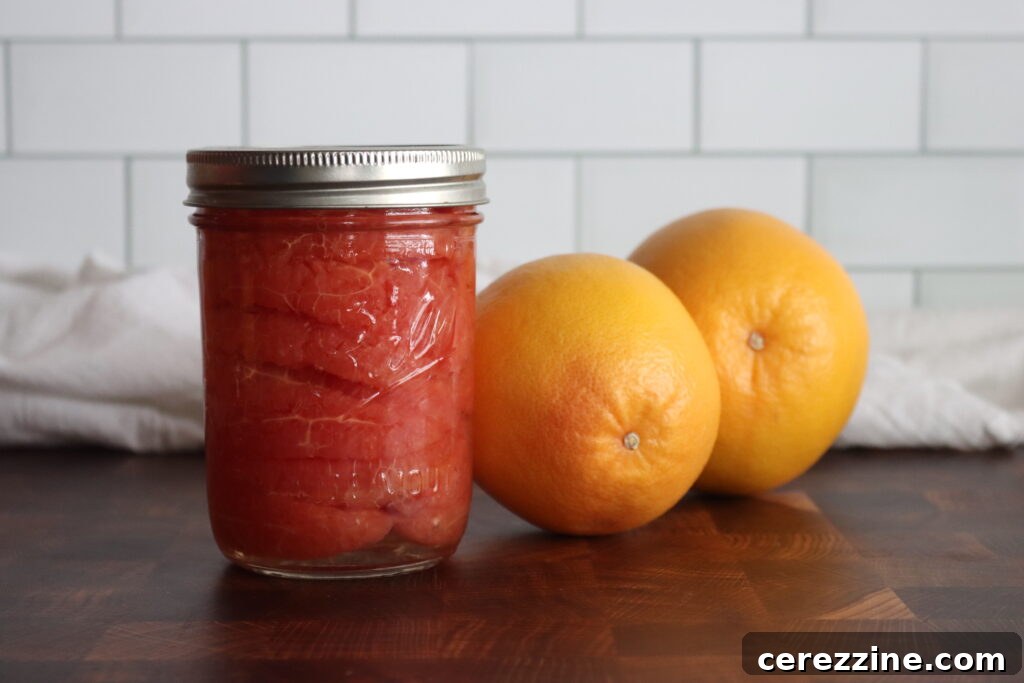
Canning grapefruit sections is a timeless and rewarding method to capture the vibrant, tangy, and refreshingly sweet flavor of grapefruit, extending its enjoyment far beyond its natural season. This preservation technique is particularly effective for sweeter varieties such as Ruby Red, Pink Grapefruit, or Flame Grapefruit, which offer a delightful balance of sweetness and acidity that holds up beautifully during the canning process. However, adventurous home canners can certainly experiment with other types to discover their personal favorites.
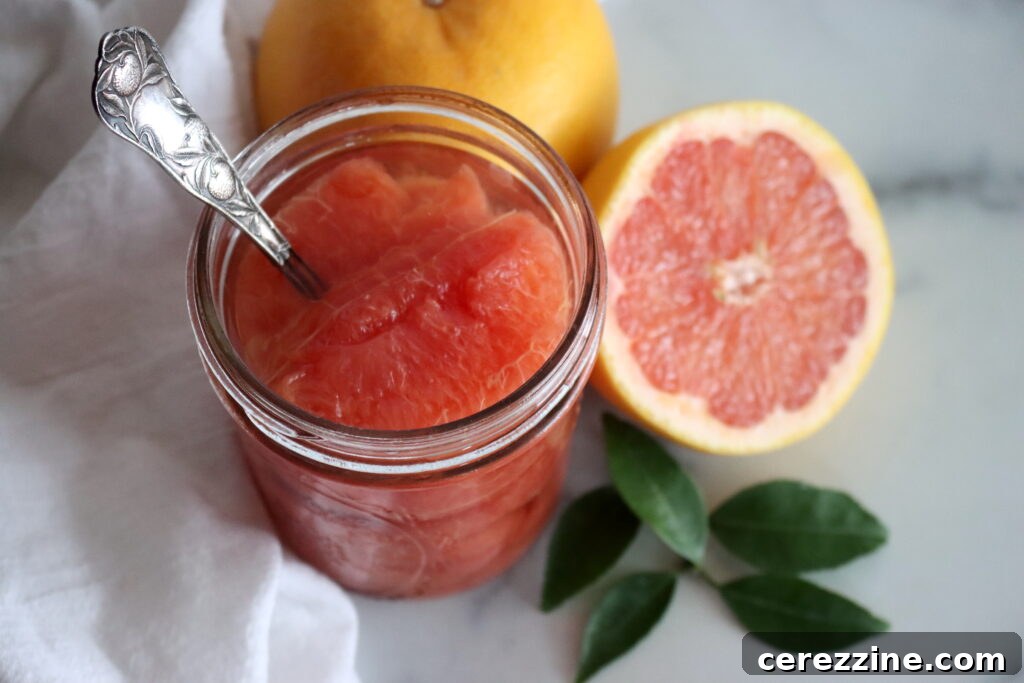
Why Can Grapefruit at Home?
For many, the taste of home-canned grapefruit evokes nostalgic memories. Growing up, the winter months were often brightened by my grandmother’s jars of perfectly preserved grapefruit, served as a zesty accompaniment to breakfast eggs or a bright topping for yogurt. This tradition speaks to the enduring appeal of homemade preserves – a taste of sunshine even on the coldest days.
While grapefruit, with its unique blend of sweet and tart notes, remains a beloved addition to breakfast or a light dessert, finding high-quality commercially canned grapefruit that truly captures its fresh, full-bodied flavor can be challenging. Store-bought options often come drowned in overly syrupy liquid or possess an artificial taste that pales in comparison to the real thing.
Canning grapefruit at home empowers you to maintain complete control over the ingredients, ensuring a product free from excessive sugars, preservatives, or artificial flavors. Unlike many grapefruit preserves, such as grapefruit marmalade, which typically contain significant amounts of sugar, home-canned sections can be customized to your preferred sweetness level, or even preserved in natural fruit juice for a healthier alternative. The satisfaction of opening a jar of perfectly preserved, jewel-toned grapefruit sections, knowing exactly what went into it, is unparalleled.
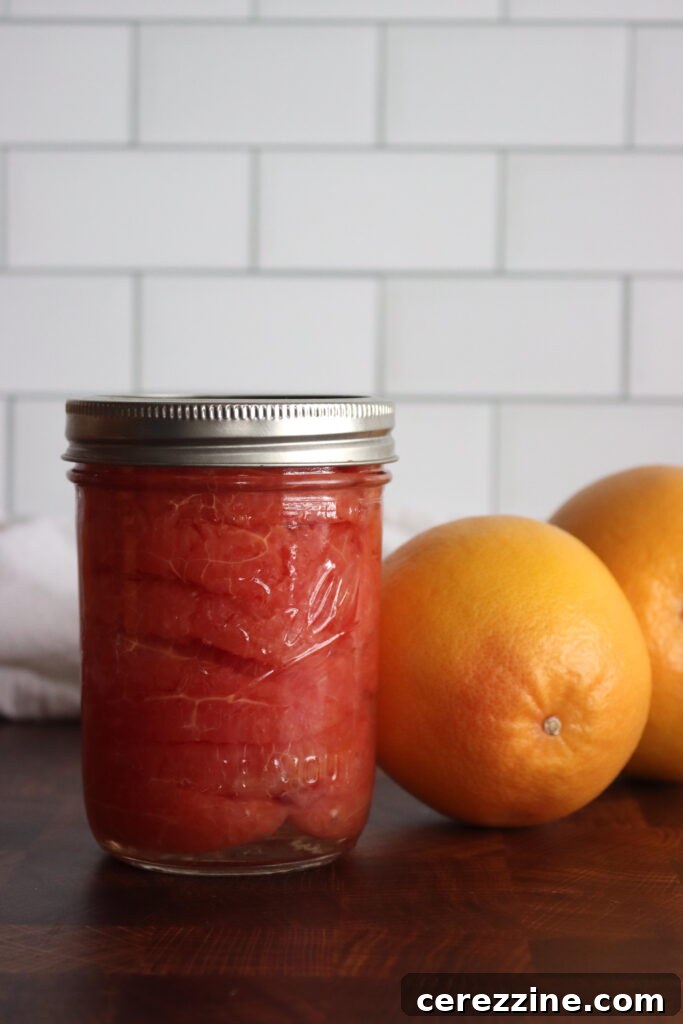
Selecting the Best Grapefruits for Canning
While nearly any variety of grapefruit can be preserved, choosing the right type significantly impacts the final taste and texture of your canned product. For optimal results, focus on sweeter varieties, which inherently possess a more balanced flavor profile that shines after processing. Excellent choices include:
- Ruby Red Grapefruit: Known for its deep red flesh and notably sweet flavor with minimal bitterness.
- Pink Grapefruit: Offers a lovely pink hue and a sweeter taste than white varieties, with a pleasant tang.
- Flame Grapefruit: Another sweet, deeply colored variety that holds up well.
- Oro Blanco/Sweetie: A hybrid that is exceptionally sweet and low in bitterness, perfect for those who prefer a milder citrus flavor.
These varieties not only taste great but also tend to maintain their structure and vibrant color during the water bath canning process. It’s generally advisable to steer clear of overly sour or intensely bitter varieties, as canning can sometimes concentrate these flavors, resulting in an unpleasantly tart end product. Always select grapefruits that are firm, heavy for their size, and free from soft spots or blemishes. Peak season fruit will yield the best flavor and texture.
Essential Ingredients for Canning Grapefruit Sections
Canning grapefruit is wonderfully straightforward, requiring only a few basic ingredients. For a typical canner batch, which can yield approximately 7 quarts or 14 pints, you will need:
- Fresh Grapefruit: The star of your preserve. Plan on roughly 2 pounds of grapefruit per quart jar, or 13-15 pounds for a full canner load.
- Water: For creating the syrup or for canning in plain water.
- Sugar: Optional, but highly recommended for enhancing flavor and texture.
Grapefruit offers versatility in canning liquid. You can process it in plain water, a sugar syrup ranging from extra-light to heavy, or even various fruit juices like grapefruit, orange, or apple juice. Most canning enthusiasts, myself included, find that a light to medium sugar syrup provides the best balance, complementing the grapefruit’s natural tartness without overwhelming it.
While I often lean towards low-sugar recipes in my home canning endeavors, grapefruit’s distinct tartness truly benefits from a touch of sweetness. A light syrup beautifully accentuates its bright, refreshing flavor. If you’re keen on reducing added sugars, fruit juice serves as a fantastic, natural alternative, infusing extra fruity notes into your canned sections.
Mastering Pith Removal with Pectic Enzyme
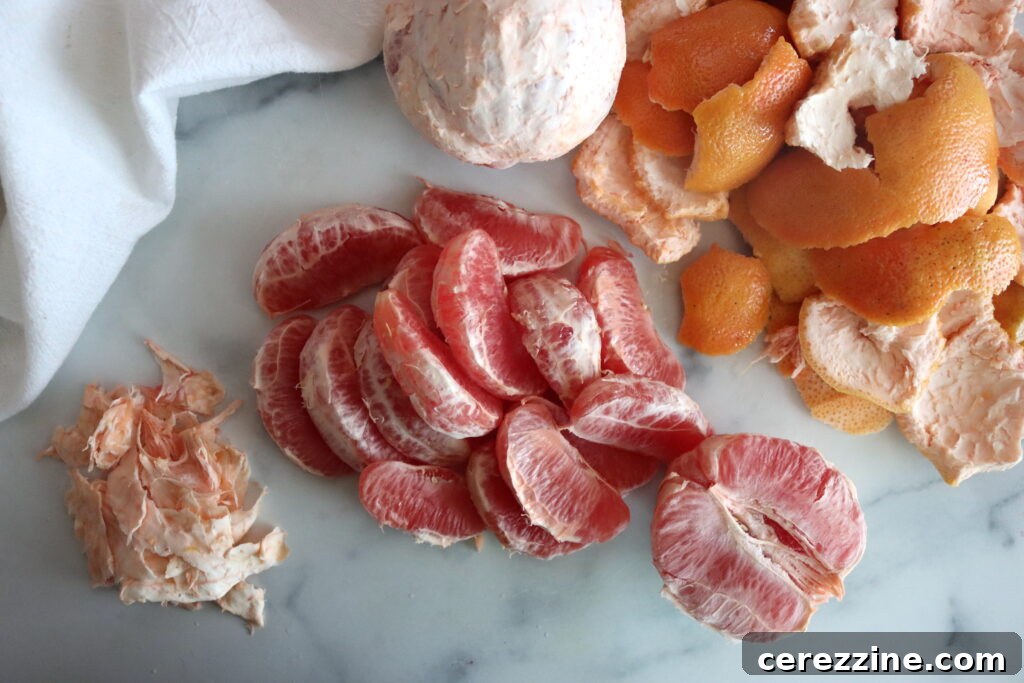
One of the most challenging aspects of preparing citrus for canning, including grapefruit and canning oranges, is thoroughly removing the bitter white pith and membranes. This fibrous white layer, located just beneath the peel and surrounding the segments, contains compounds that can impart an undesirable bitterness to your otherwise sweet and tangy canned fruit. Fortunately, a culinary secret weapon exists: pectic enzyme.
Pectic enzyme is a natural enzyme that breaks down pectin, the substance that gives plant cells their structure. When used in fruit preparation, it effectively loosens the bitter white pith and the tough membranes around the grapefruit segments, making them significantly easier to remove. The result is cleaner, more attractive, and most importantly, less bitter grapefruit sections.
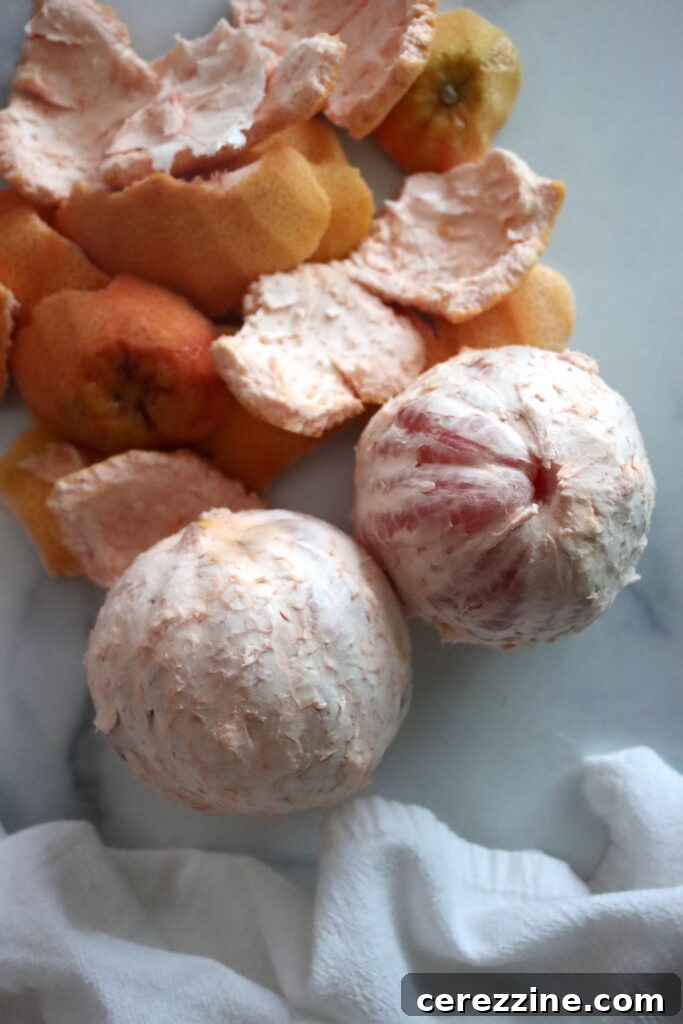
How to Use Pectic Enzyme for Grapefruit:
To harness the power of pectic enzyme, dissolve approximately one teaspoon of liquid or powdered pectic enzyme in a gallon of cool water. After you’ve peeled and roughly segmented your grapefruits, submerge the segments entirely in this enzyme solution. Allow them to soak for several hours, ideally 3 to 6 hours, or even overnight in the refrigerator. During this time, the enzyme will diligently work to loosen the pith and membranes.
It’s important to understand that the enzyme will not magically dissolve the pith completely. Instead, it weakens its attachment to the fruit. You’ll know it’s working when, with a gentle stir or light touch, the pith begins to slough off easily. After soaking, gently wipe or rinse the segments under cool running water to remove any remaining loosened pith and membranes. This extra step is truly worthwhile for achieving perfectly clean, non-bitter grapefruit sections for your jars.
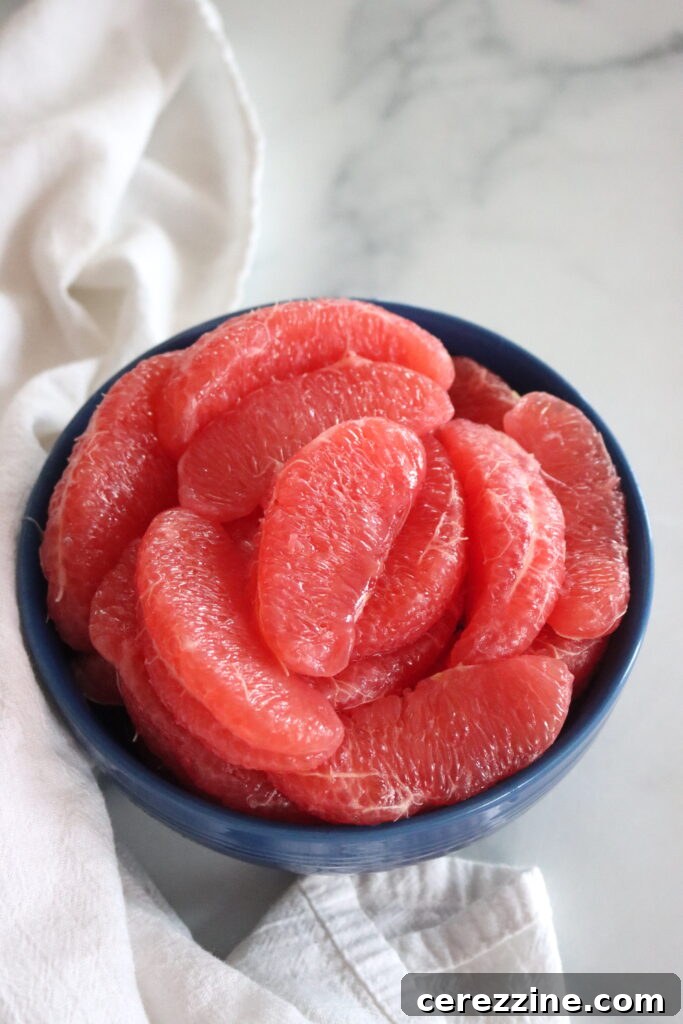
Detailed Preparation Guide for Grapefruit Canning
Thorough preparation is key to successful and delicious home-canned grapefruit. Follow these steps carefully to ensure your fruit is perfectly ready for its journey into the jar:
- Wash the Grapefruits: Begin by washing all grapefruits thoroughly under cool, running water. You can gently scrub the peels with a soft brush to remove any surface dirt or residues.
- Peel the Grapefruits: Using a sharp knife, carefully slice off the top and bottom ends of each grapefruit. Then, stand the grapefruit upright and slice downwards, following the curve of the fruit, to remove the peel and as much of the thick white pith as possible. Aim to expose the vibrant fruit flesh.
- Segment the Grapefruits: Hold the peeled grapefruit over a bowl to catch any juice. Using a small, sharp paring knife, carefully cut along the membrane that separates each segment from the core. Gently pry the segment away. Repeat this process for all segments, removing any visible seeds as you go. If you prefer a very soft texture, you can try to remove the thin membranes surrounding each segment, but be aware that this can cause the segments to break apart more easily during canning. For most, removing the main white pith is sufficient.
- Pectic Enzyme Treatment (Highly Recommended): Once your grapefruits are peeled and segmented, place them in a large non-reactive bowl. Prepare the pectic enzyme solution by dissolving 1 teaspoon of pectic enzyme per gallon of cool water. Pour this solution over the grapefruit segments, ensuring they are completely submerged.
- Soak and Rinse: Allow the segments to soak in the enzyme solution for at least 3 hours, or preferably overnight, in the refrigerator. Every hour or so, give the segments a gentle stir. You’ll notice the pith and membranes becoming noticeably softer and easier to remove. When they can be easily wiped or rinsed away, drain the segments and rinse them thoroughly under cool, running water to remove all loosened bits of pith. Remember, the enzyme helps *loosen* the pith, but a final rinse or gentle manual wipe is needed to fully remove it.
This meticulous preparation ensures that your canned grapefruit will be free of bitterness, beautifully segmented, and ready to absorb the flavors of your chosen syrup or juice.
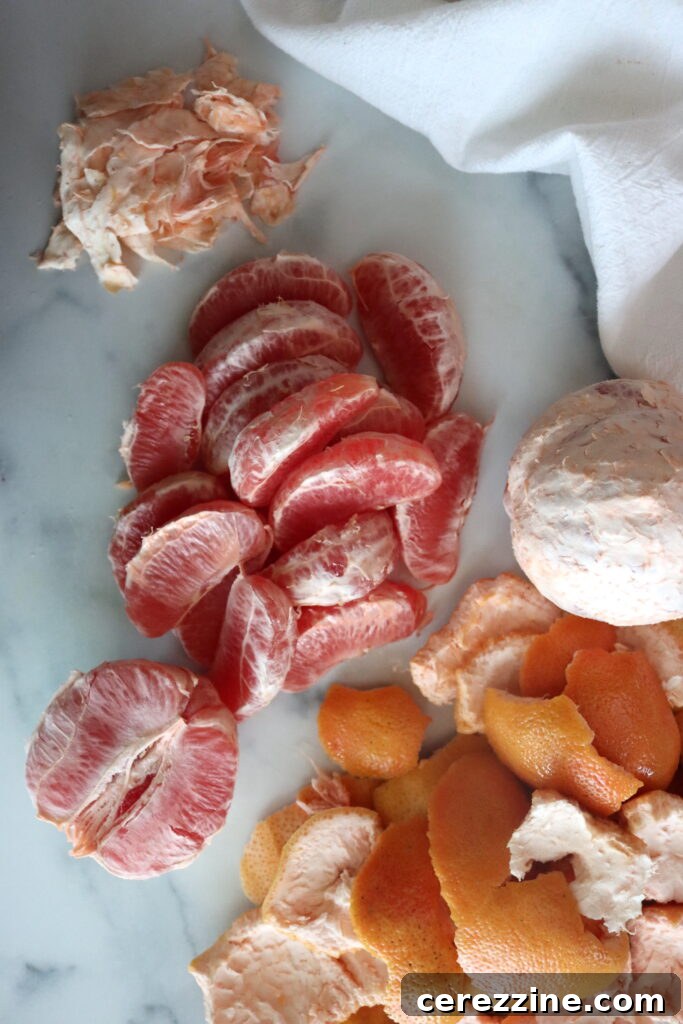
Crafting the Perfect Syrup for Canned Grapefruit
The choice of canning liquid plays a significant role in the final taste and texture of your preserved grapefruit. While plain water is an option, a well-chosen syrup can elevate the fruit’s natural sweetness and help maintain its firm texture. As mentioned, a light syrup is often the preferred choice for grapefruit, offering a lovely balance without excessive sugar. Below are common syrup ratios for various sweetness levels, adaptable for different batch sizes. For a comprehensive guide to syrups for various fruits, refer to syrup for canning fruit.
Syrup Ratios for Canning Batches:
For a 9-Pint Canner Batch:
This batch typically requires enough syrup for approximately 9 pint jars.
- Extra-light syrup: 3/4 cup sugar to 6 1/2 cups water
- Light syrup: 1 1/2 cups sugar to 5 3/4 cups water
- Medium syrup: 2 1/4 cups sugar to 5 1/4 cups water
- Heavy syrup: 3 1/4 cups sugar to 5 cups water
- Extra-Heavy Syrup: 4 1/4 cups sugar to 4 1/4 cups water
For a 7-Quart Canner Batch:
This larger batch will fill approximately 7 quart jars.
- Extra-light syrup: 1 1/4 cups sugar to 10 1/2 cups water
- Light syrup: 2 1/4 cups sugar to 9 cups water
- Medium syrup: 3 3/4 cups sugar to 8 1/4 cups water
- Heavy syrup: 5 1/4 cups sugar to 7 3/4 cups water
- Extra-Heavy Syrup: 6 3/4 cups sugar to 6 1/2 cups water
To prepare your chosen syrup, simply combine the specified amount of sugar and water in a large saucepan. Bring the mixture to a boil over high heat, stirring continuously until all the sugar has completely dissolved. Keep the syrup hot while you prepare your jars and fruit.
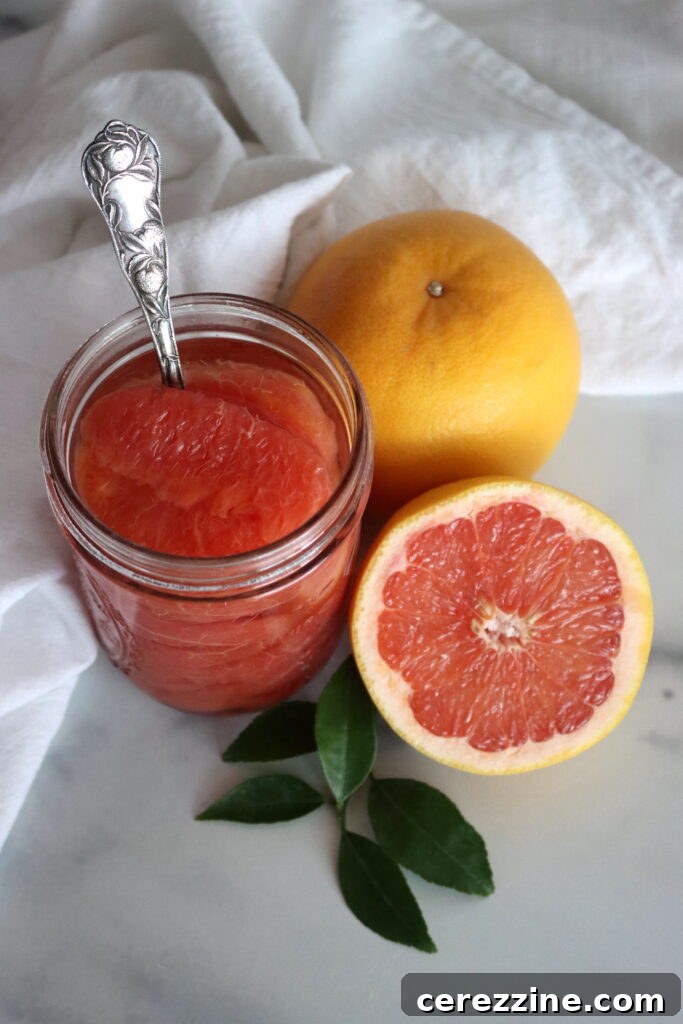
The Water Bath Canning Process for Grapefruit
Water bath canning is the recommended and safest method for preserving high-acid foods like grapefruit. Follow these detailed steps to ensure a safe and successful batch of canned grapefruit sections:
- Prepare Your Equipment: Before you begin, gather and prepare all your canning equipment. This includes your water bath canner, canning jars (pint or quart size), lids, bands, a jar lifter, canning funnel, and a non-metallic spatula or bubble remover. Wash jars and bands in hot, soapy water and rinse well. Sterilize jars by submerging them in boiling water for 10 minutes, or run them through a hot cycle in your dishwasher. Keep jars hot until ready to fill. Set new, clean lids in a small saucepan of simmering water (not boiling) to soften the sealing compound.
- Pack the Jars: Carefully pack the prepared grapefruit segments into your hot, sterilized pint or quart jars. Gently press the fruit down to remove as much air as possible, but avoid crushing the segments. Leave a consistent half-inch headspace from the rim of the jar.
- Add Canning Liquid: Ladle your hot syrup, plain hot water, or heated fruit juice over the packed grapefruit segments, maintaining that crucial half-inch headspace. Ensure the fruit is fully submerged in the liquid.
- Remove Air Bubbles: Insert a non-metallic spatula or a special de-bubbling tool into the jar, moving it around the edges to release any trapped air bubbles. Add more hot canning liquid if necessary to restore the half-inch headspace.
- Clean Rims and Seal: Wipe the rims of each jar thoroughly with a clean, damp cloth to remove any fruit residue or liquid. This step is vital for a proper seal. Center a hot lid on each jar, then screw on a band until it is fingertip tight. Do not overtighten.
- Process in Water Bath: Carefully place the filled jars into your prepared boiling water bath canner, ensuring they are fully submerged by at least 1-2 inches of water. Bring the canner back to a rolling boil. Once boiling vigorously, start your timer.
- Processing Time: Process both pint and quart jars for 10 minutes. Remember to adjust this time based on your altitude (see below).
- Cool and Check Seals: Once the processing time is complete, turn off the heat and let the canner cool for 5 minutes before carefully removing the jars with your jar lifter. Place the hot jars on a towel-lined surface, ensuring there is space between them for air circulation, and allow them to cool undisturbed for 12 to 24 hours. Do not retighten bands during cooling.
- Verify Seals and Store: After the jars have completely cooled, check the seals. The center of each lid should be concave and should not flex when pressed. Remove the bands (they can be reused) and wipe down the jars. Store properly sealed jars in a cool, dark, dry place for up to one year. Any jars that did not seal properly should be refrigerated and consumed within a few days.
Jar Sizes and Essential Processing Times
Grapefruit segments can be safely canned in both pint and quart-sized jars using the water bath method. The recommended processing time for both sizes is a uniform 10 minutes. However, this time is a baseline and must be adjusted to account for higher altitudes to ensure food safety.
Critical Altitude Adjustments for Safe Canning
Altitude significantly affects the boiling point of water. At higher elevations, water boils at a lower temperature, which means food needs to be processed for a longer duration to achieve the same level of safety as at sea level. Always adjust your processing time according to your elevation:
- 0 – 1,000 ft (0 – 305 m): Process for 10 minutes
- 1,001 – 3,000 ft (306 – 914 m): Process for 15 minutes
- 3,001 – 6,000 ft (915 – 1,829 m): Process for 20 minutes
- Above 6,000 ft (Over 1,829 m): Process for 25 minutes
Failure to adjust for altitude can result in under-processed food, which may pose health risks. Always know your altitude and adjust accordingly.
Recipe: Home-Canned Grapefruit Sections
This recipe provides a simple yet effective guide to preserving fresh grapefruit sections, ensuring you can enjoy their bright flavor year-round.
Equipment You’ll Need:
- Water Bath Canner
- Wide Mouth Pint Mason Jars (or quart jars)
- Wide Mouth Canning Lids and Bands
- Canning Funnel
- Jar Lifter
- Large Saucepan for syrup
- Non-metallic spatula or bubble remover
- Large bowl for pectic enzyme treatment
- Sharp paring knife
Ingredients:
- Fresh Grapefruit (approximately 2 lbs per quart jar; 15 lbs for 7 quarts, 13 lbs for 9 pints)
- Water (for syrup or canning liquid)
- Sugar (optional, quantities vary by desired syrup type – refer to syrup ratios above)
- Pectic Enzyme (1 tsp per gallon of water, optional but highly recommended for pith removal)
Instructions:
- Wash grapefruits thoroughly under cool, running water.
- Carefully peel the grapefruits, removing as much of the bitter white pith as possible using a sharp knife.
- Segment the peeled grapefruits, removing any seeds. Hold over a bowl to collect any juice.
- (Optional, but recommended for cleaner segments) Prepare a pectic enzyme solution: dissolve 1 teaspoon of pectic enzyme in 1 gallon of cool water. Submerge the grapefruit segments in this solution and let them soak for 3 hours to overnight in the refrigerator. Stir gently occasionally. After soaking, rinse the segments under cool water to remove loosened pith and membranes.
- Prepare your water bath canner and sterilize pint or quart jars. Keep jars hot.
- If using syrup, combine sugar and water in a saucepan according to your desired sweetness level (e.g., Light Syrup: 1 1/2 cups sugar to 5 3/4 cups water for 9 pints). Bring to a boil, stirring until sugar is dissolved. Keep hot.
- Pack the hot, sterilized jars with grapefruit segments, leaving 1/2 inch of headspace from the rim.
- Pour the hot syrup, hot water, or heated fruit juice over the fruit, maintaining the 1/2 inch headspace.
- Use a non-metallic spatula to remove any trapped air bubbles from the jars. Add more liquid if headspace is lost.
- Wipe the jar rims clean with a damp cloth. Center hot lids on the jars and screw on bands fingertip-tight.
- Carefully place jars into the preheated water bath canner. Ensure jars are covered by 1-2 inches of water. Bring to a rolling boil.
- Process pint or quart jars for 10 minutes, adjusting time for altitude (refer to altitude adjustments above).
- After processing, turn off heat, remove canner lid, and let jars sit for 5 minutes before carefully removing them.
- Place jars on a towel-lined surface to cool undisturbed for 12-24 hours.
- Check seals: lids should be concave and not flex. Remove bands and store sealed jars in a cool, dark place. Refrigerate unsealed jars for immediate consumption.
Notes:
- Yield: On average, expect about 1 quart of canned grapefruit from 2 pounds of fresh fruit. A canner load of 7 quarts requires approximately 15 pounds of grapefruit, while 9 pints need about 13 pounds.
- Syrup Choice: While a light syrup is generally recommended for grapefruit to balance its tartness, feel free to use plain hot water or your preferred fruit juice (grapefruit, apple, orange, pineapple) for canning. If omitting sugar, fruit juice will yield a much better flavor than plain water.
- Altitude Adjustments: As previously detailed, always adjust your processing time based on your elevation:
- 0 – 1,000 ft: 10 minutes
- 1,001 – 3,000 ft: 15 minutes
- 3,001 – 6,000 ft: 20 minutes
- Above 6,000 ft: 25 minutes
Nutrition Information:
Nutrition information is automatically calculated and should be used as an approximation.
Based on a serving, approximate values include:
- Calories: 154 kcal
- Carbohydrates: 39g
- Protein: 2g
- Fat: 0.4g (Saturated Fat: 0.1g, Polyunsaturated Fat: 0.1g, Monounsaturated Fat: 0.1g)
- Sodium: 0.1mg
- Potassium: 346mg
- Fiber: 4g
- Sugar: 30g
- Vitamin A: 2944 IU
- Vitamin C: 80mg
- Calcium: 56mg
- Iron: 0.2mg
Serving Suggestions for Your Canned Grapefruit
Once your jars are sealed and stored, the possibilities for enjoying your home-canned grapefruit are endless. Here are a few ideas to inspire you:
- Breakfast Delight: Serve chilled directly from the jar as a refreshing side dish with eggs, bacon, or toast.
- Yogurt and Cereal Topping: Spoon over plain Greek yogurt, cottage cheese, oatmeal, or your favorite breakfast cereal for a burst of citrus flavor.
- Salads: Add to green salads for a vibrant, tangy contrast, especially with avocado, nuts, and a light vinaigrette.
- Desserts: Use as a topping for pavlova, cheesecake, panna cotta, or simply enjoy on its own with a dollop of whipped cream. The juice can also be reduced into a glaze.
- Beverages: The leftover canning liquid (syrup or juice) is incredibly delicious! Use it in smoothies, sparkling water, iced tea, or even in cocktails.
- Marinades: The tangy juice makes an excellent base for marinades for chicken or fish.
Frequently Asked Questions About Canning Grapefruit
Canning can sometimes raise questions, especially for those new to the process. Here are answers to some common queries about canning grapefruit:
It is strongly recommended to can grapefruits in segments. Whole grapefruits are difficult to pack efficiently into jars and may not heat evenly during the processing, which can compromise safety and quality. Segmenting ensures even heat penetration and a more appealing product.
No, sugar is optional. You can safely can grapefruit in plain hot water or natural fruit juice if you prefer to avoid added sugar. However, be aware that grapefruit canned in plain water may have a “washed out” flavor. Using fruit juice (such as grapefruit, apple, or pineapple juice) is an excellent sugar-free alternative that still enhances the fruit’s taste.
When properly processed and stored in a cool, dark, and dry place, home-canned grapefruit sections can maintain their peak quality for up to one year. Always inspect jars for signs of spoilage (such as bulging lids, off-odors, or mold) before consuming.
Floating fruit is a common occurrence in canning, especially with fruits like grapefruit that naturally contain air within their cells. It’s perfectly normal and does not indicate a problem with safety or seal. To minimize floating, pack segments tightly into jars and ensure you remove as many air bubbles as possible before sealing and processing.
Absolutely! The leftover liquid in your jar of canned grapefruit is wonderfully flavorful. It can be a delicious addition to smoothies, cocktails, or a light syrup for drizzling over pancakes, waffles, or fresh fruit salads. Simply refrigerate the leftover liquid and use it within a few days.
While technically possible, pressure canning is unnecessary for grapefruit. Grapefruit is a high-acid food, making it safe for preservation through the simpler and less intense water bath canning method. Pressure canning can also overcook the delicate fruit, potentially causing the segments to break down too much and impacting their flavor and texture.
Conclusion: Enjoying the Fruits of Your Labor
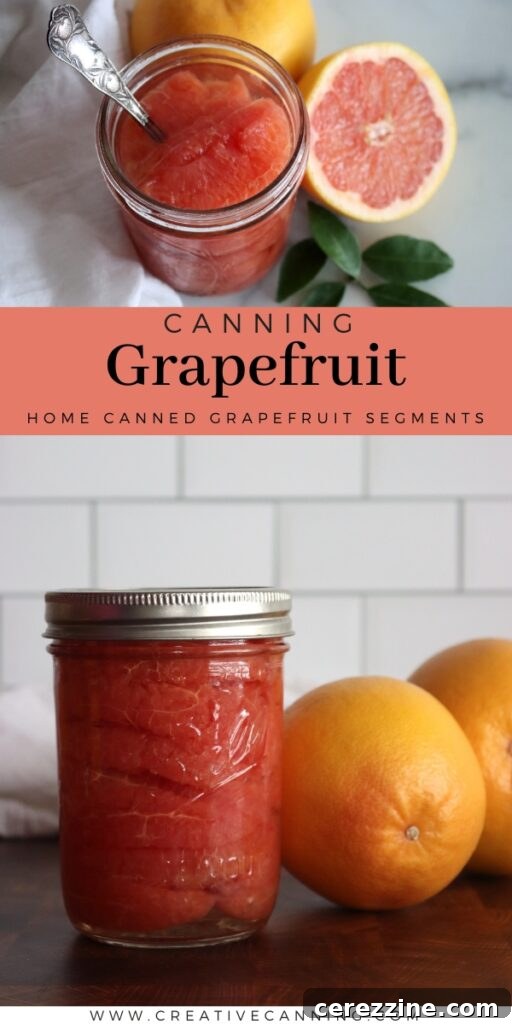
Canning grapefruit sections is more than just a method of preservation; it’s a way to extend the joy of fresh, seasonal fruit throughout the year. With a little effort and attention to detail, you can create delicious, vibrant jars of grapefruit that surpass anything you’d find in a store. Whether enjoyed as a healthy breakfast, a refreshing snack, or a versatile ingredient in your culinary creations, your homemade canned grapefruit will undoubtedly bring a taste of sunshine to your table, anytime you desire. Happy canning!