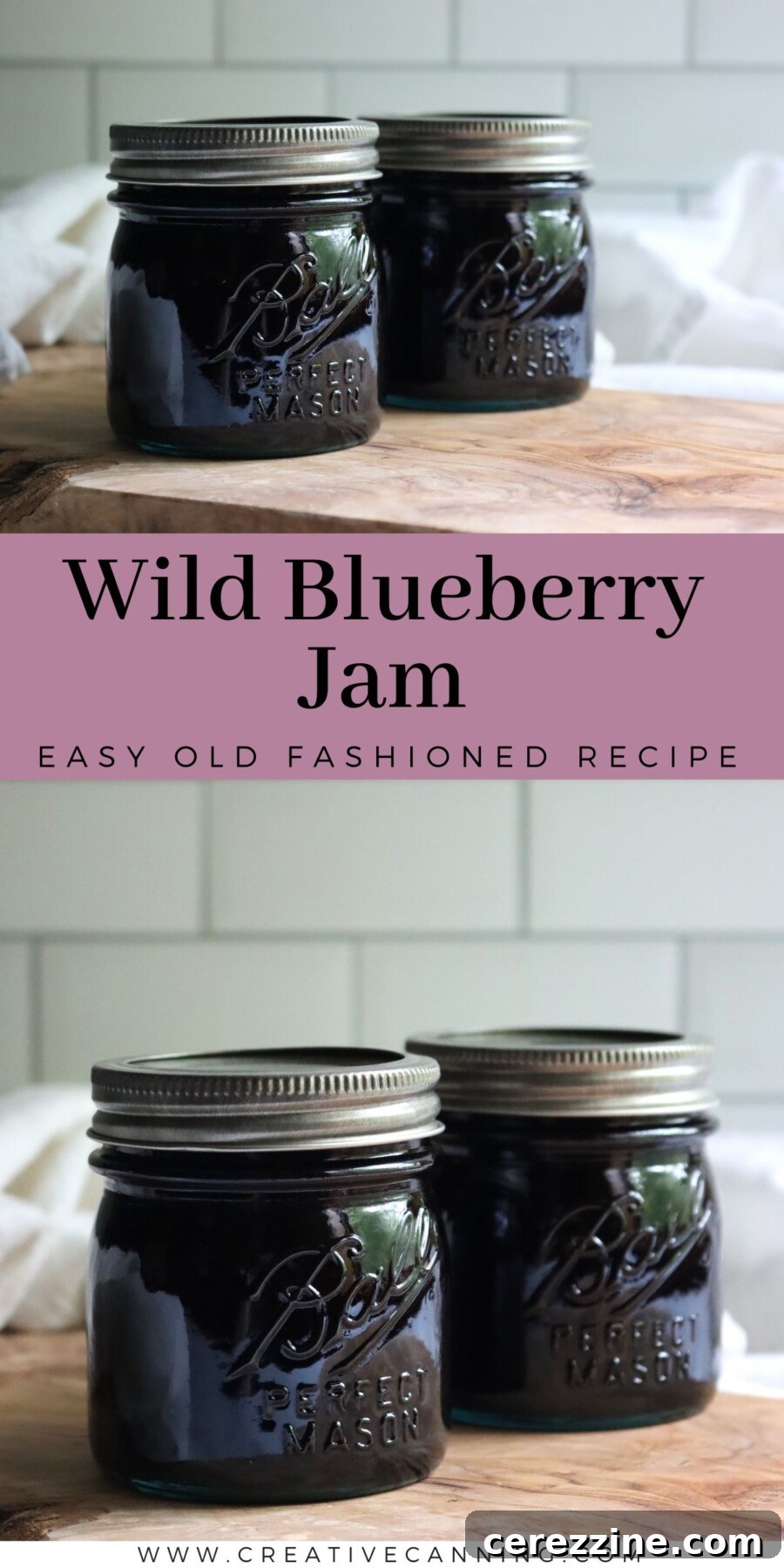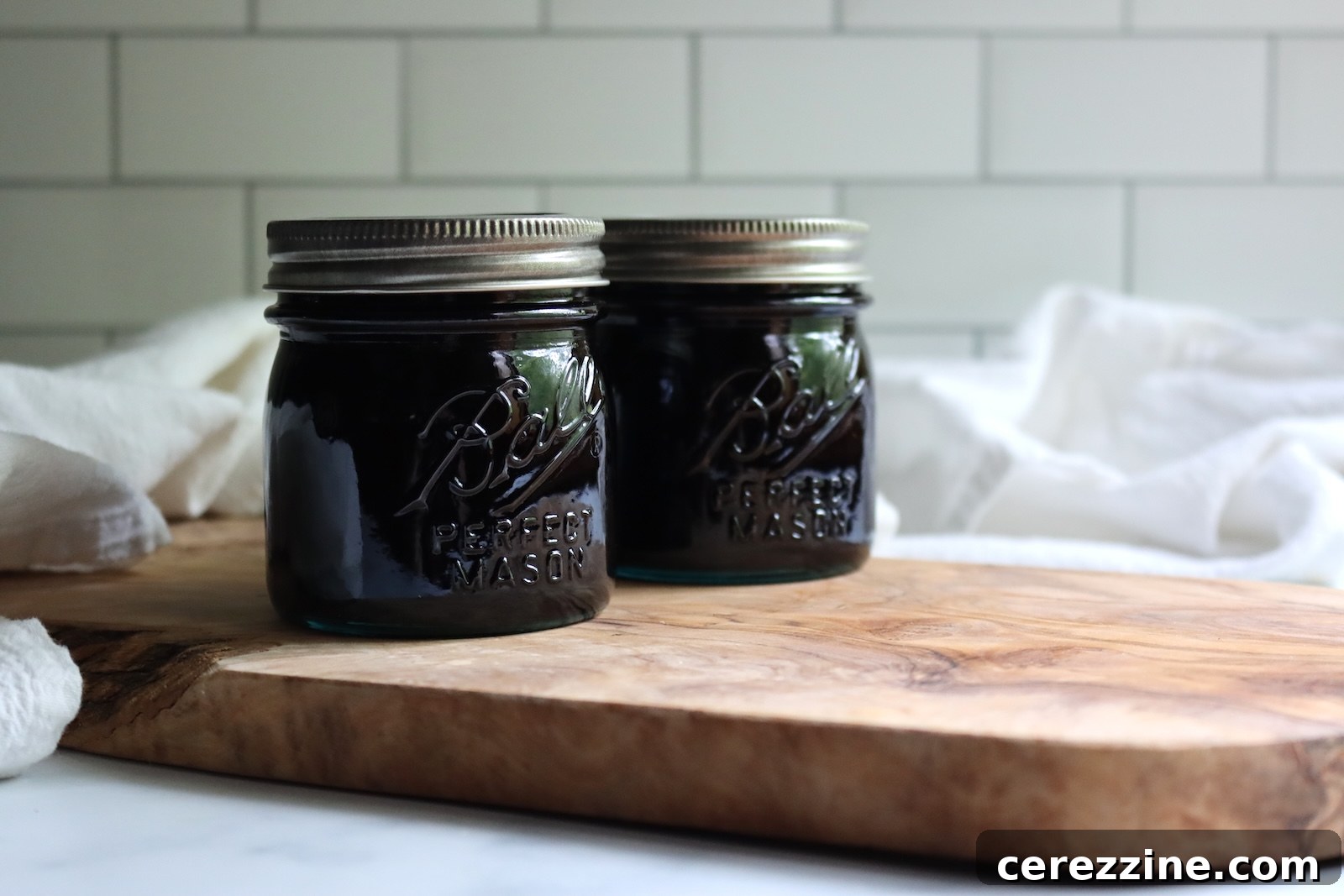
Wild blueberry jam captures a brighter, truer blueberry flavor than jam made from larger cultivated berries. It naturally sets without boxed pectin, and a small batch—just a few pints of berries—yields an unforgettable jar or two.
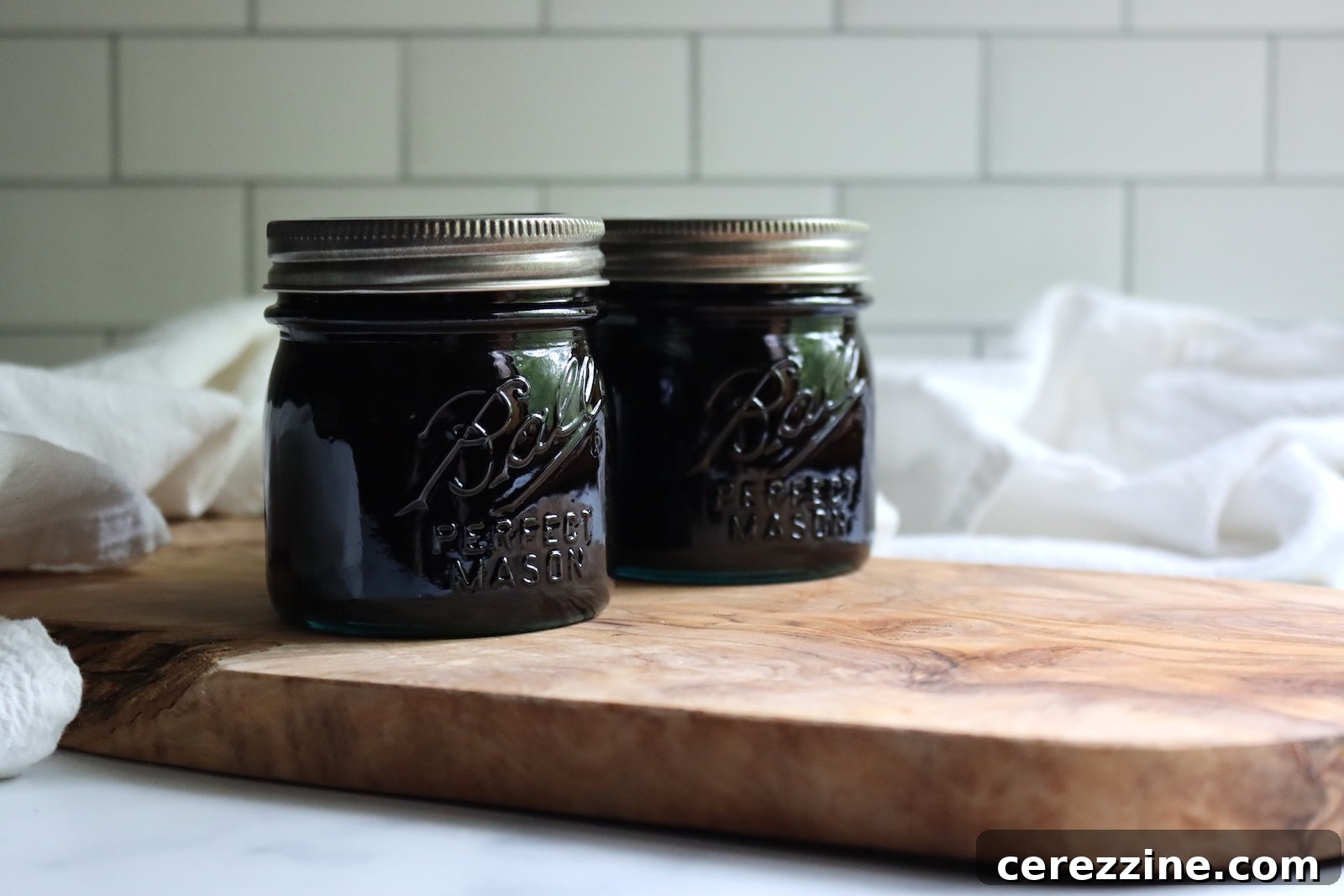
This recipe has been reviewed for safety and accuracy by a Master Food Preserver certified through the University of Cornell Cooperative Extension.
Wild blueberries are a different fruit from the large cultivated berries sold in clamshells. They are lowbush (Vaccinium angustifolium), grow wild across barrens and fields, and are much smaller. Most of each berry is skin, which concentrates flavor and natural pectin. Compared with cultivated blueberries they are tangier and have a slight, winey depth—qualities that make them ideal for jam.
Because the skins hold most of the pectin, a cup of wild berries contributes more gelling power than the same volume of large cultivated berries. This recipe reaches the gel stage after 12 to 15 minutes of steady, hard boiling using only lemon juice to help—not boxed pectin. The result is a jam that tastes like fruit rather than sugar.
This small-batch approach uses considerably less sugar than traditional no-pectin jams, roughly half the typical amount for four cups of fruit. Wild blueberries have strong, concentrated flavor that stands up to less sweetness, producing a softer, fruit-forward spread. The method follows established guidance for jams made without added pectin, including the gel-stage and processing times.
Fresh wild berries have a short season, and much of the harvest is frozen immediately. Frozen wild blueberries work perfectly here and are convenient year-round: add them straight from the bag, no thawing required. They tend to release juice quickly, sometimes shortening the time to boil momentarily. You can make this jam in winter just as easily as in summer.
If you prefer to preserve whole berries, there are straightforward methods to can them in syrup, or to make pie filling. But for a quick, intensely flavored preserve that needs only three ingredients, this wild blueberry jam is hard to beat.
Notes from My Kitchen

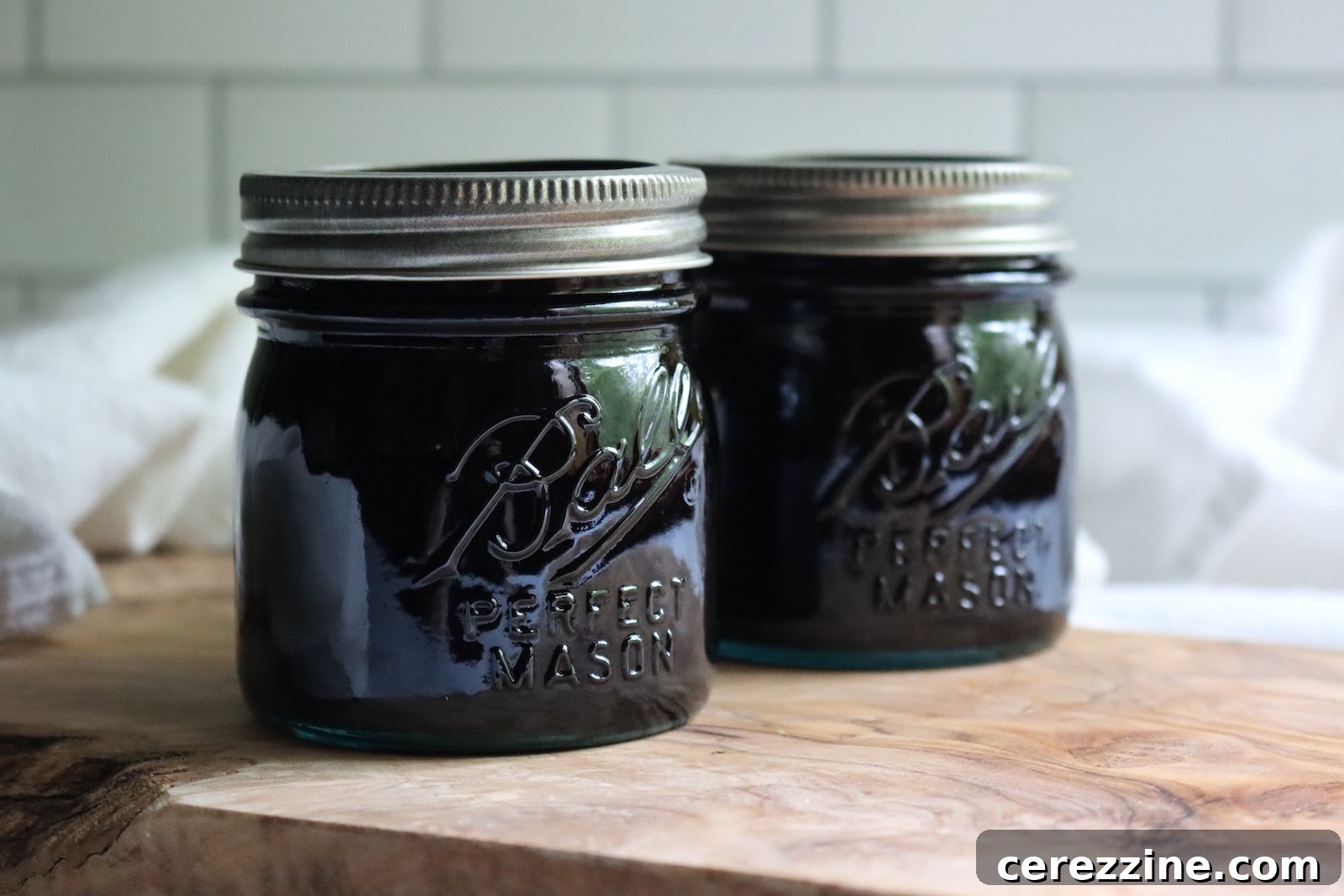
On a trip to coastal Maine I noticed wild blueberries sold alongside cultivated varieties. I brought two pints home, made a small batch of jam in Vermont, and ended up with two half-pint jars—enough to relive the trip one breakfast at a time. Small batches like this are perfect for savoring a season or preserving a memory.
Quick Look at the Recipe
- Recipe Name: Wild Blueberry Jam
- Type: Jam (no added pectin)
- Method: Water bath canning (optional)
- Prep Time: About 10 minutes
- Cook Time: About 20 minutes (12–15 minutes at a hard boil)
- Canning Time: 10 minutes for half pints (adjust for altitude)
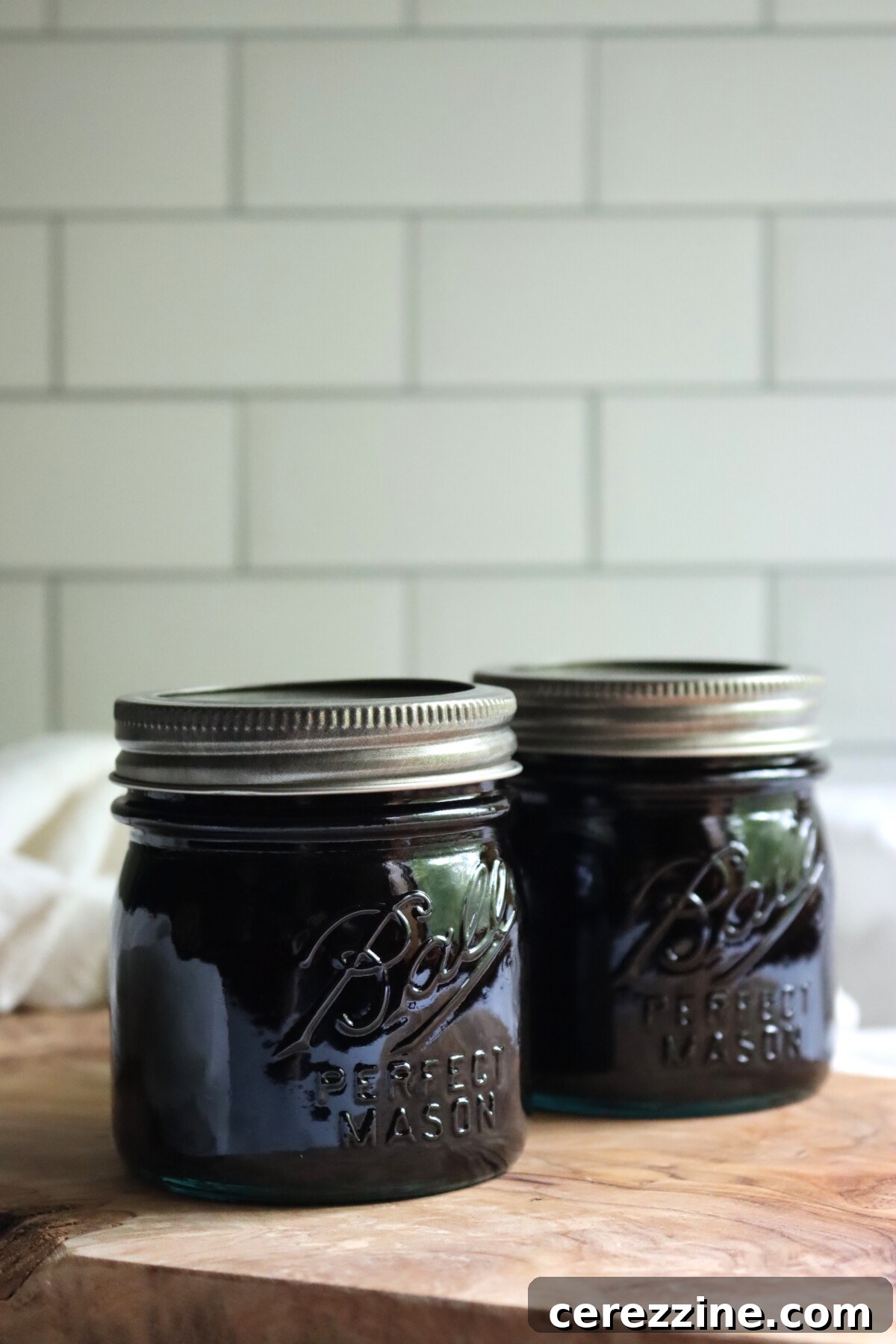
- Yield: About 2 half pints
- Jar Sizes: Half pints or quarter pints
- Headspace: 1/4 inch
- Ingredients: Wild blueberries, granulated sugar, lemon juice
- Difficulty: Easy
Ingredients for Wild Blueberry Jam
This jam calls for just three ingredients. Small changes affect the final set and flavor, so follow the recipe amounts for best results. If you alter sugar or swap fruit, expect differences in texture and yield.
- Wild blueberries: Lowbush berries, dark-through and much smaller than cultivated varieties. Fresh is excellent in season; frozen is perfectly acceptable and may even be easier to work with. Rinse and sort out stems, leaves, and any soft berries. A few underripe berries can help the set because underripe fruit contains more pectin.
- Sugar: Plain granulated sugar is used, and this recipe uses less than a typical no-pectin jam. Sugar affects flavor, texture, and volume—more sugar yields a firmer set and a quicker cook; less sugar produces a softer, fruitier spread.
- Lemon juice: Adds brightness, helps with color, and contributes a bit of natural pectin. Use bottled or fresh lemon juice; do not omit it, or the jam may taste flat.
Use a wide, heavy-bottomed pot so the jam cooks evenly and reduces quickly. Keep jars warm while you cook; the jam thickens fast and you don’t want to be searching for lids at the last minute.
Low Sugar Options
Reducing sugar further is possible, but expect a longer cook time, a softer set, and slightly less finished jam. These are textural and yield changes, not safety issues. For a low-sugar jam that still gels firmly, consider using a low-sugar pectin designed to set with calcium so you can sweeten to taste.
How to Make Wild Blueberry Jam
This recipe skips overnight maceration. Add everything to the pot, bring to a boil, and maintain a hard boil until the mixture reaches the gel stage. With a 4:1 berry-to-sugar ratio, this usually takes 12–15 minutes of vigorous boiling once the mixture is fully boiling. Start to finish, including jar filling, this small batch finishes in under an hour.
Pay attention during the final stage: jam thickening over high heat can scorch quickly. Stir constantly and keep an eye on the pot.
Step-by-Step Instructions
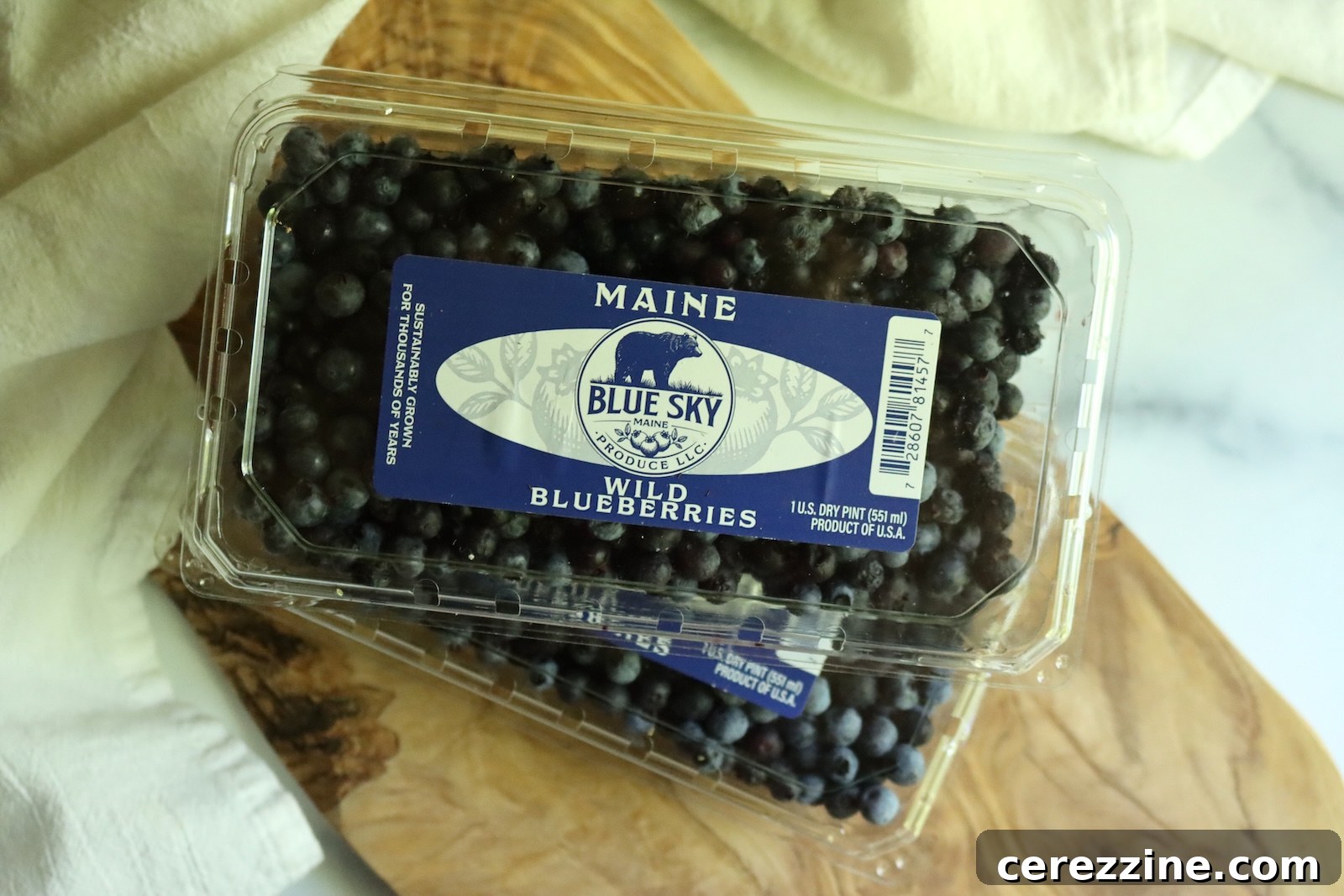
- Rinse and sort the wild blueberries, removing stems and any soft or shriveled berries. Use frozen berries straight from the bag if you prefer.
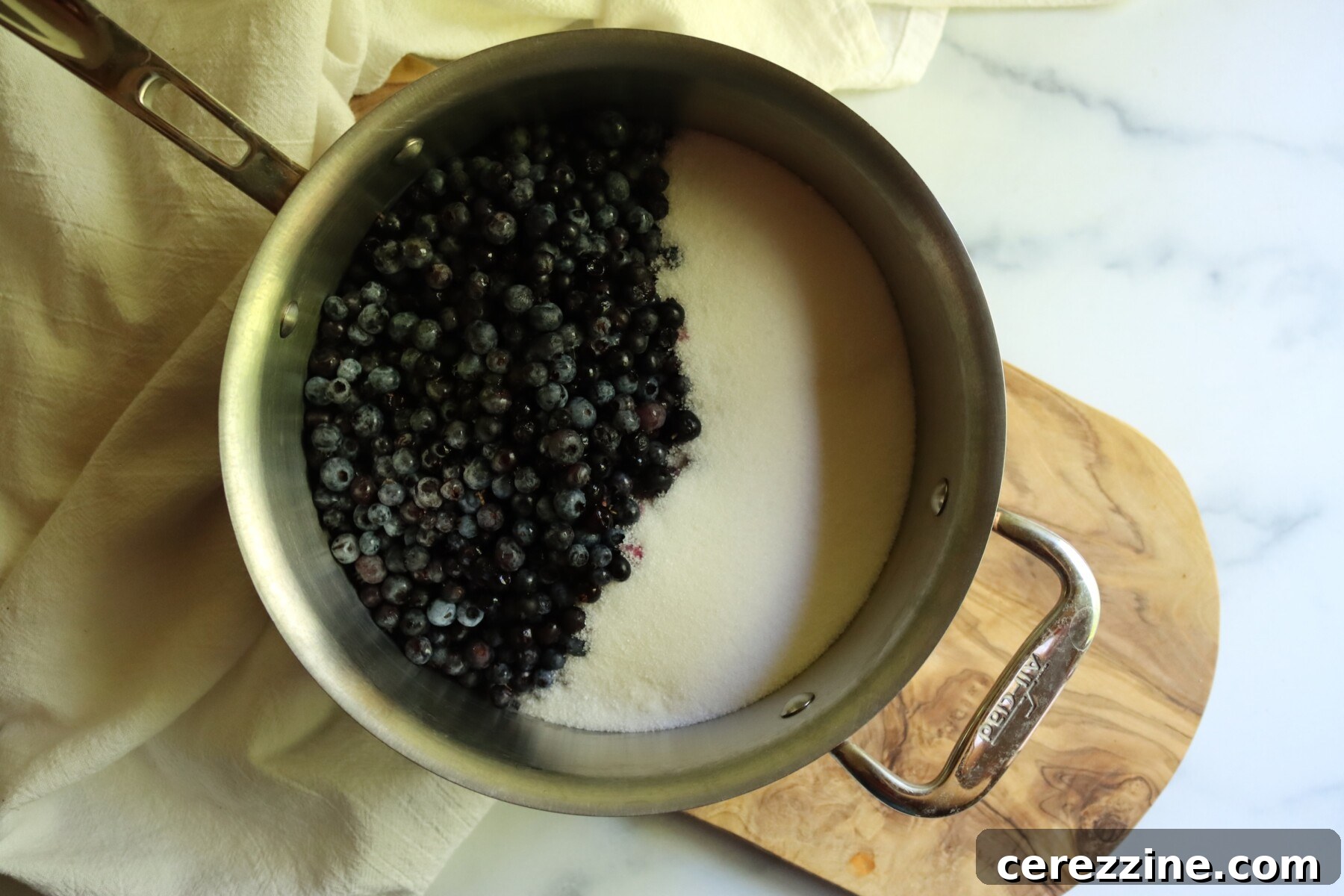
- Combine berries, lemon juice, and sugar in a wide, heavy pot. There’s no need to macerate first.
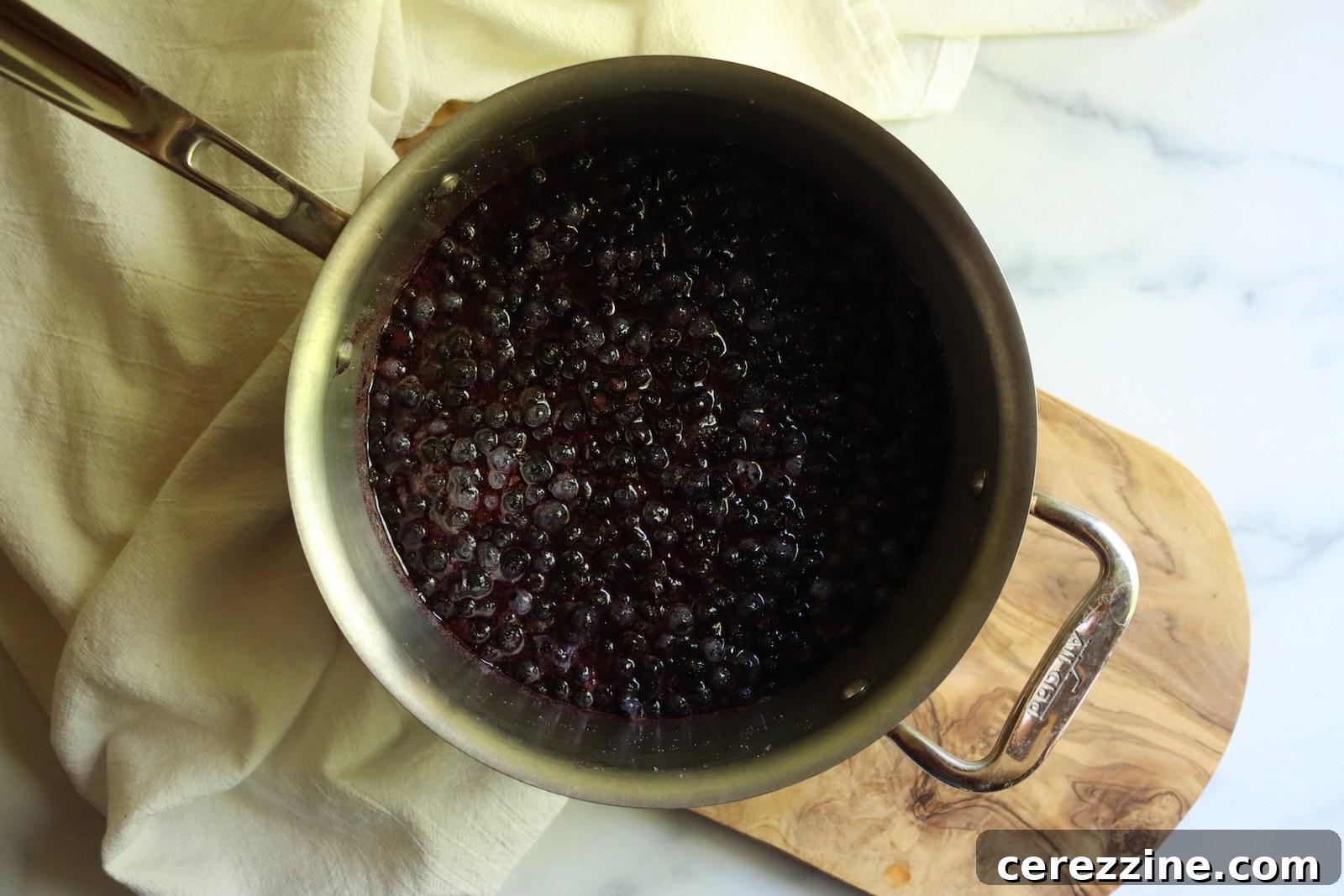
- Bring to a boil over high heat, stirring constantly and lightly mashing berries to release juice and dissolve sugar.
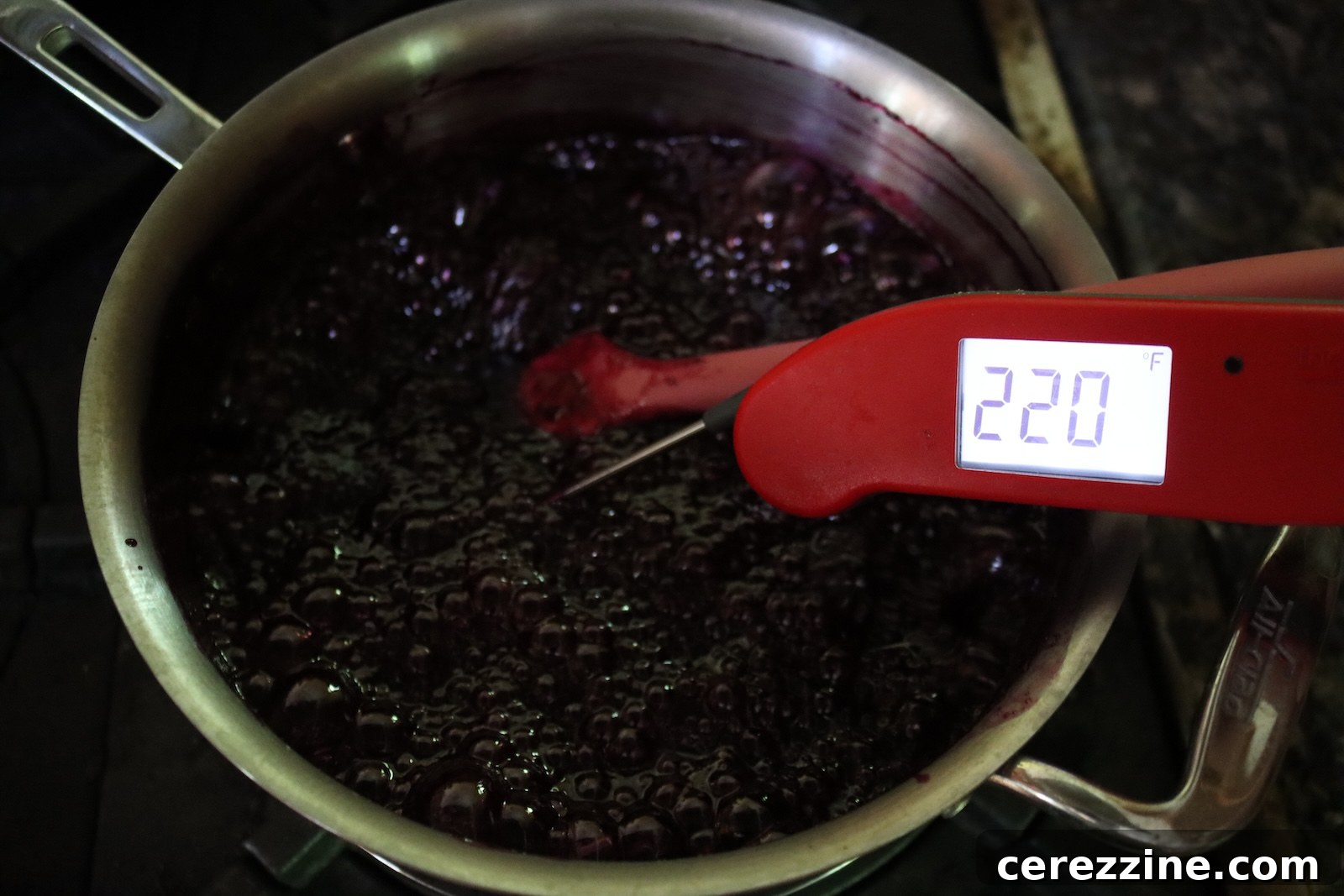
- Maintain a hard boil for 12–15 minutes, stirring, until the jam reaches the gel stage (about 220°F at sea level) or tests on a frozen plate for wrinkling.
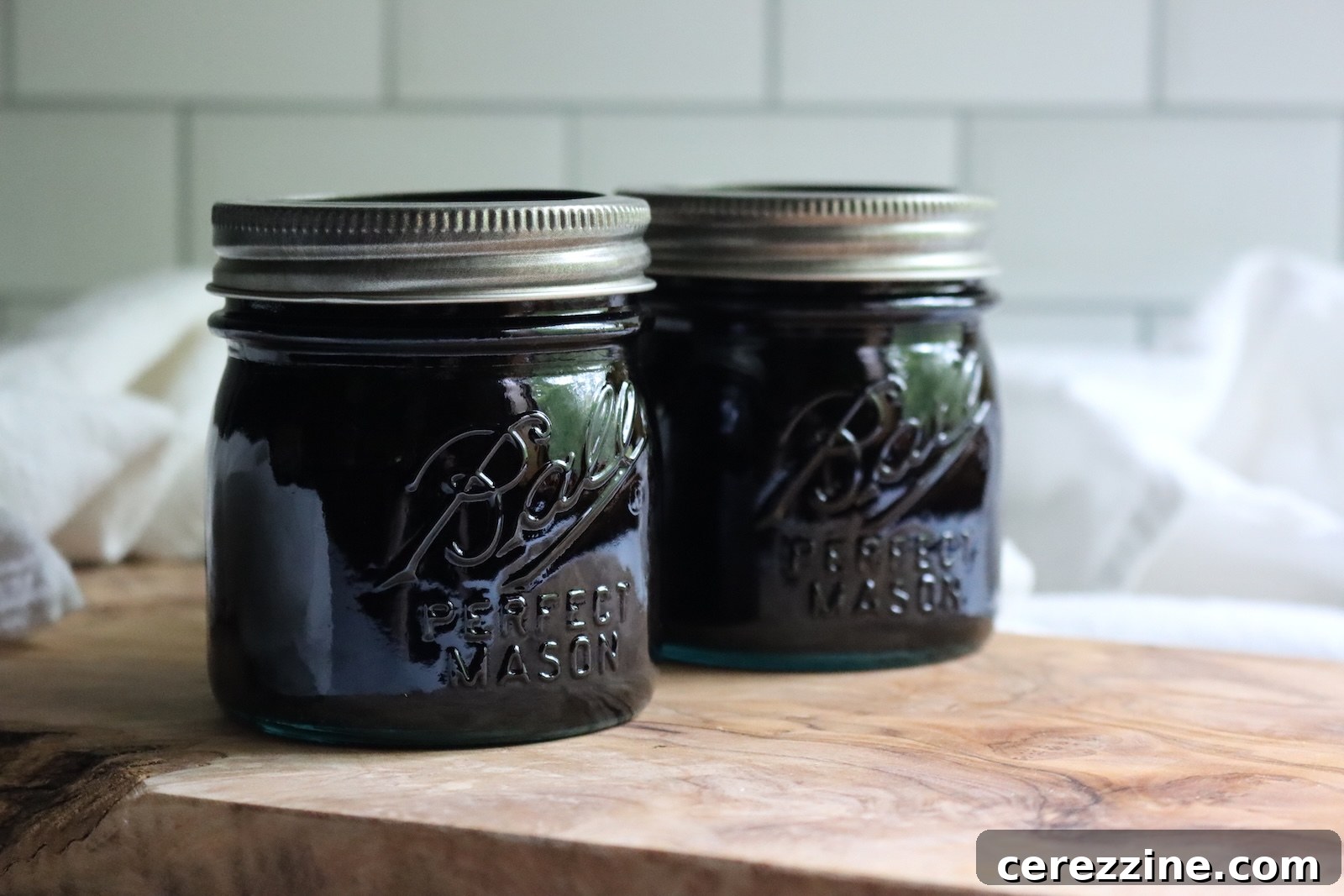
- Ladle hot jam into prepared jars, leaving 1/4 inch headspace. Remove air bubbles, wipe rims, and apply lids and rings finger-tight. Process in a boiling water bath for the recommended time for your altitude.
Canning Wild Blueberry Jam
Heat your water bath canner so it’s ready while the jam cooks. Keep jars warm and have lids, rings, and a funnel at hand. Fill jars to 1/4 inch headspace, remove trapped air, wipe rims clean, and apply lids. Lower jars into boiling water so they are covered by at least 1 inch of water.
Process half pints for 10 minutes at sea level, increasing processing time at higher elevations. After the processing time, turn off the heat and let jars rest in the canner for 5 minutes before removing them to cool. Cooling undisturbed for 12–24 hours produces a proper seal.
Altitude Adjustments
- 0 to 6,000 feet: 10 minutes
- Above 6,000 feet: 15 minutes
Setting Notes
Jam continues to set as it cools; hot jam will always appear runny. Allow 24–48 hours at room temperature before evaluating the final texture. Expect a soft, spoonable set rather than a firm, jelly-like result—wild blueberry jam typically mounds on a spoon instead of standing tall.
Gel stage is roughly 220°F at sea level and decreases about 1°F for every 500 feet of elevation. If you prefer not to use a thermometer, test a spoonful on a frozen plate—if it wrinkles when pushed after chilling, the jam is ready.
Ways to Use Wild Blueberry Jam
Start with toast—especially something slightly salty, like a buttered English muffin or biscuit. The loose, spoonable texture is also ideal stirred into yogurt or oatmeal. Warm a spoonful over vanilla ice cream, spread between cake layers, or spoon over baked brie with toasted nuts. Thin the jam with a splash of vinegar and a pinch of salt to make a glaze for pork or duck.
Small batches make lovely gifts or a jar to open on a morning when you want to remember summer. Two half-pint jars rarely last long in my kitchen.
Storage and Shelf Life
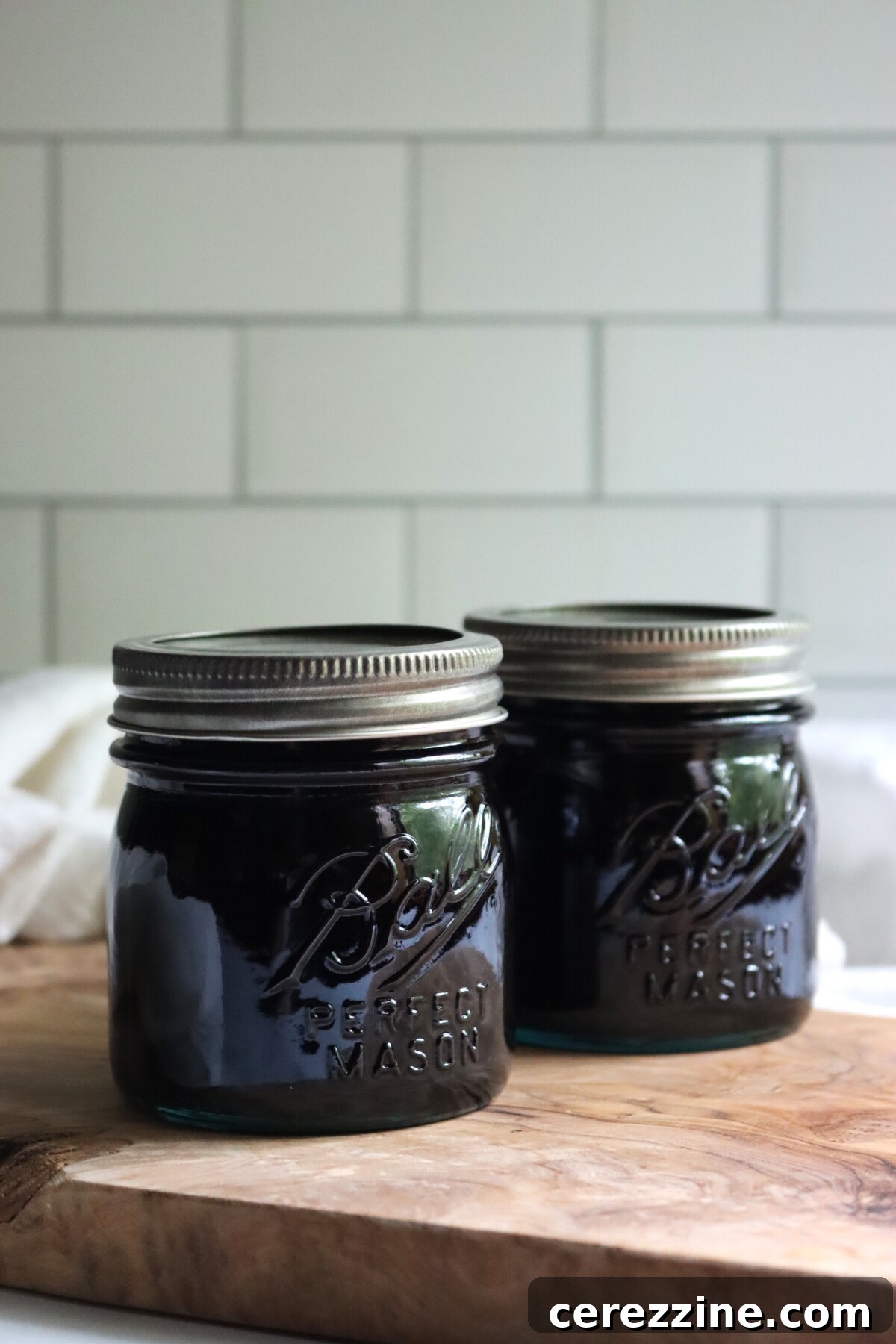
After 12–24 hours, check lids for a firm, slightly concave seal. Remove rings before long-term storage to make seal failures obvious. Label and store sealed jars in a cool, dark place—quality is best for 12–18 months.
Unsealed jars should be refrigerated and used within a week or two, or reprocessed with a new lid within 24 hours. Once opened, keep jam refrigerated and use within 1–2 weeks. Alternatively, skip canning: jam will keep several weeks in the fridge or up to six months in the freezer in straight-sided, freezer-safe jars with 1 inch headspace.
More Ways to Preserve Wild Blueberries
Wild blueberries are versatile: make syrup, cook a long, slow fruit butter, can juice for later jelly, or preserve whole berries in syrup for pies. For large harvests, consider turning them into wine—wild berries make a flavorful ferment.
Yield Notes
Two pint clamshells typically yield about 1 1/4 pounds, which measures roughly 4 cups of whole berries and produces just over two half-pint jars. A longer cook yields firmer jam but less volume. The recipe scales cleanly to double (about four half pints) but avoid making much larger batches in a single pot; deep pots take longer to reach gel and can overcook the fruit.
Wild Blueberry Jam FAQs
Do I need to add pectin? No—wild blueberries contain enough natural pectin in their skins that, combined with lemon juice and cooking to gel stage, produce a set without boxed pectin.
Why didn’t my jam set? Common reasons are removing it from heat before it reached gel temperature, very ripe low-pectin fruit, or too large a batch. Give it 24–48 hours to finish setting; if it still fails, you can recook to concentrate it or enjoy it as a syrup.
Can I use frozen berries? Yes—use them straight from the bag without thawing. They release juice quickly and work well for this recipe.
How long will it keep? Sealed jars retain best quality for 12–18 months. Opened jam should be refrigerated and used within 1–2 weeks.