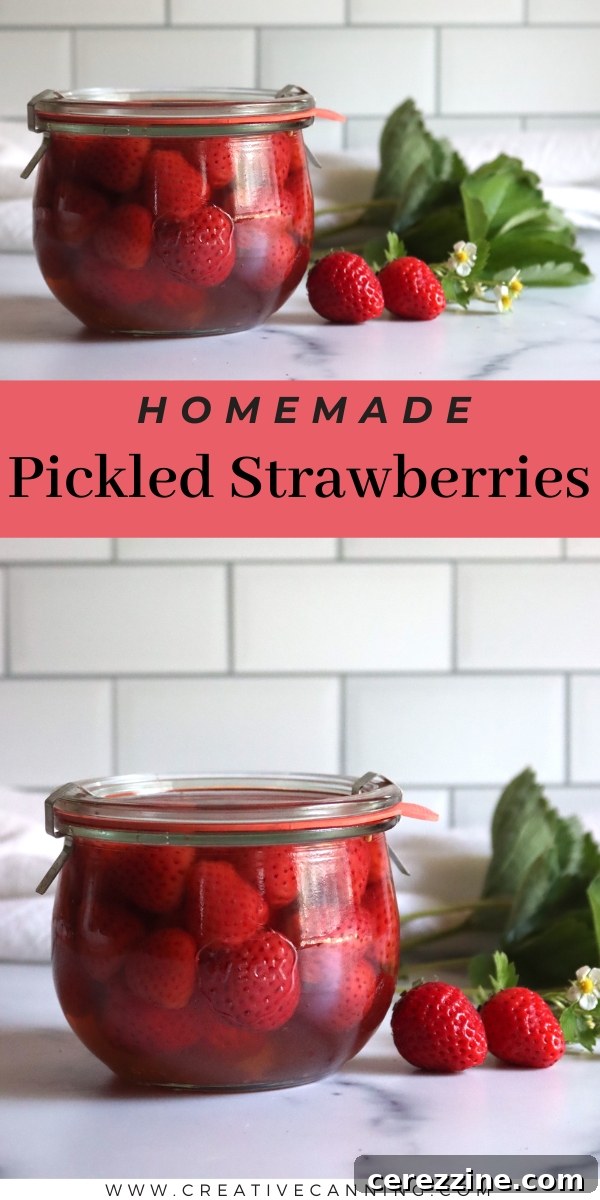
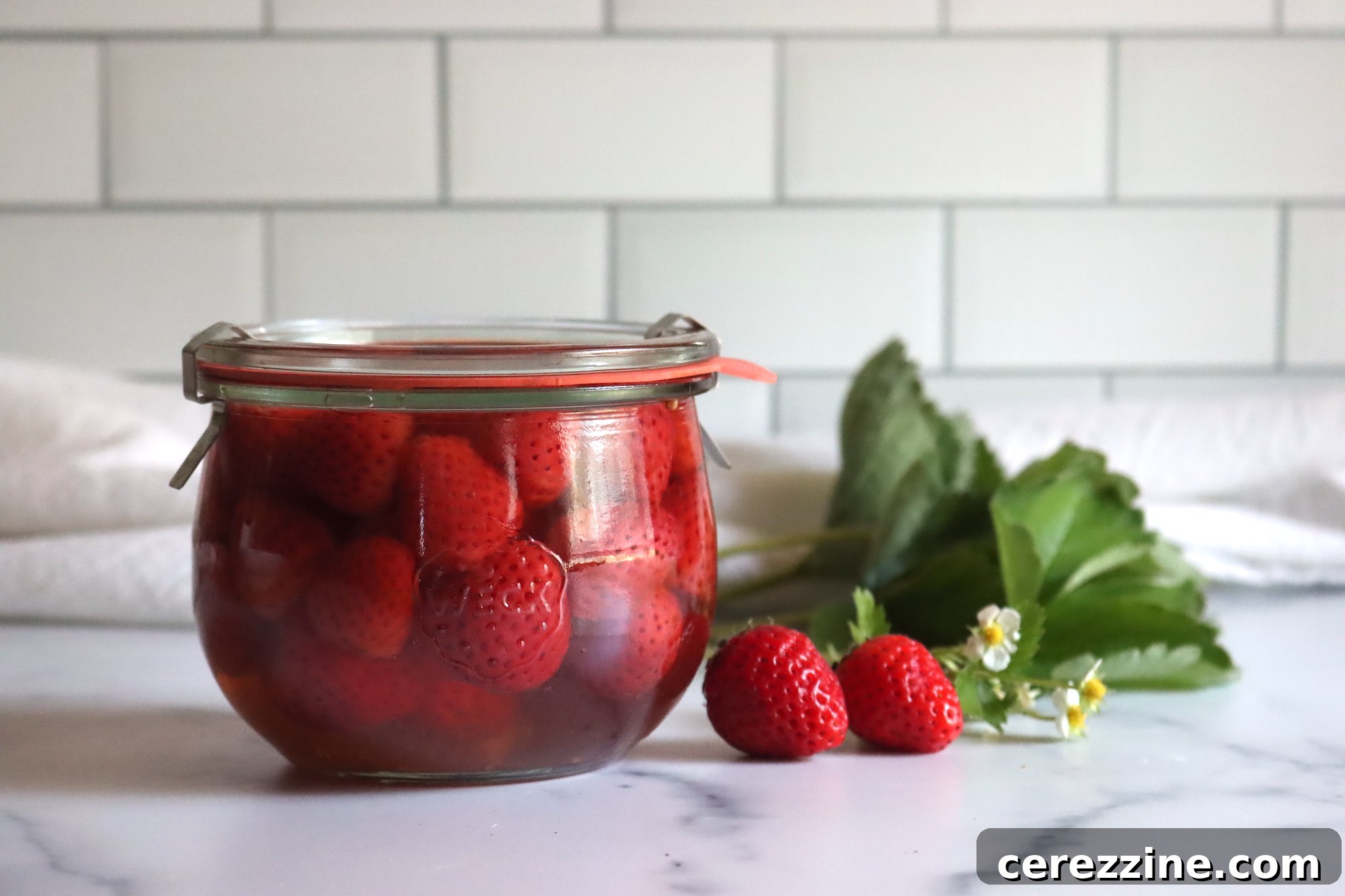
Unlock a truly unique culinary experience by preserving the vibrant taste of seasonal strawberries through pickling. These pickled strawberries offer an irresistible sweet-tart flavor profile that transforms ordinary dishes into extraordinary delights. Imagine a spoonful atop creamy vanilla ice cream, bringing a surprising zing and a burst of summer to every bite!
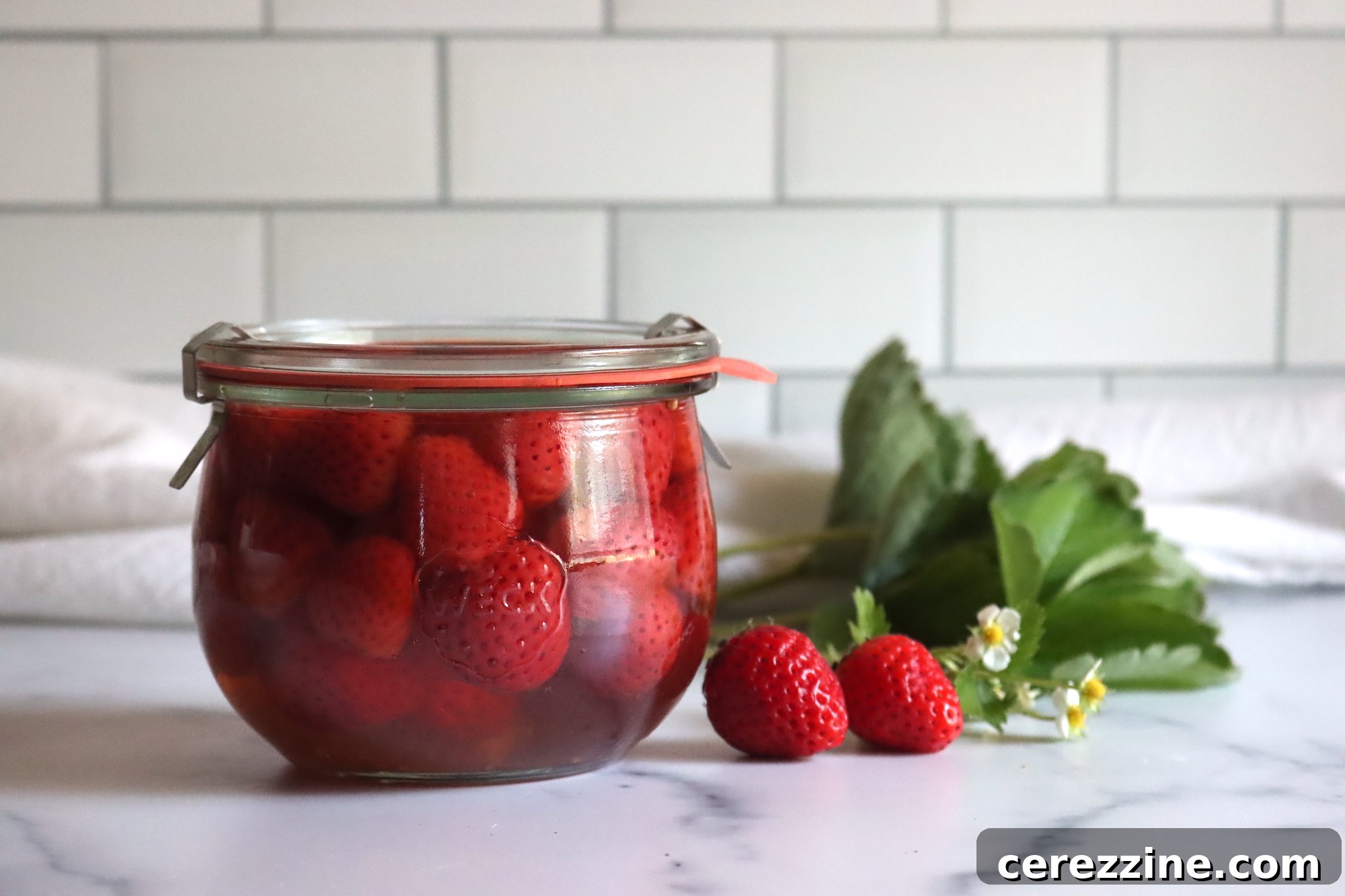
While many home cooks focus on traditional jams and preserves, the art of pickling fruit offers an exciting alternative, yielding results that are both unexpected and incredibly versatile. Our journey into making these delectable pickled strawberries began with a spark of curiosity, inspired by gourmet chefs who once sought out green, unripe strawberries for their high-end restaurant plates. The idea was to pickle them, creating a tart, firm accompaniment.
Initially, I considered trying my hand at green strawberry pickling. However, as the strawberry season progressed and my garden yielded an abundance of perfectly ripe, juicy berries, I found myself questioning the wisdom of picking them prematurely. Why sacrifice their natural sweetness and intense flavor when ripe strawberries could offer an even more magnificent pickled experience? It was a simple realization: the best pickled strawberries would undoubtedly come from the best, most flavorful ripe fruit.
And so, the decision was made. Instead of chasing a fleeting trend, I embraced the bountiful harvest of perfectly ripe, ruby-red strawberries crowding my kitchen counter. The result was a revelation. Pickled ripe strawberries possess a depth of flavor and a delightful texture that green strawberries simply cannot match. They embody a perfect marriage of sweet and tangy, proving that sometimes, the most innovative recipes come from working with nature’s peak offerings.
Pickling fresh fruit might seem unconventional to some, but it’s actually an age-old preserving method that creates a wonderfully balanced treat. The sharp tang of vinegar is harmoniously mellowed by sugar, resulting in a sweet, tart, and savory sensation that can elevate both sweet and savory dishes. These particular homemade pickled strawberries are exceptional on a scoop of vanilla ice cream, but they’re equally fantastic stirred into morning yogurt, or even paired with richer savory meals. They offer a sophisticated flavor, far surpassing any “fancy” but ultimately bland green strawberry concoction.
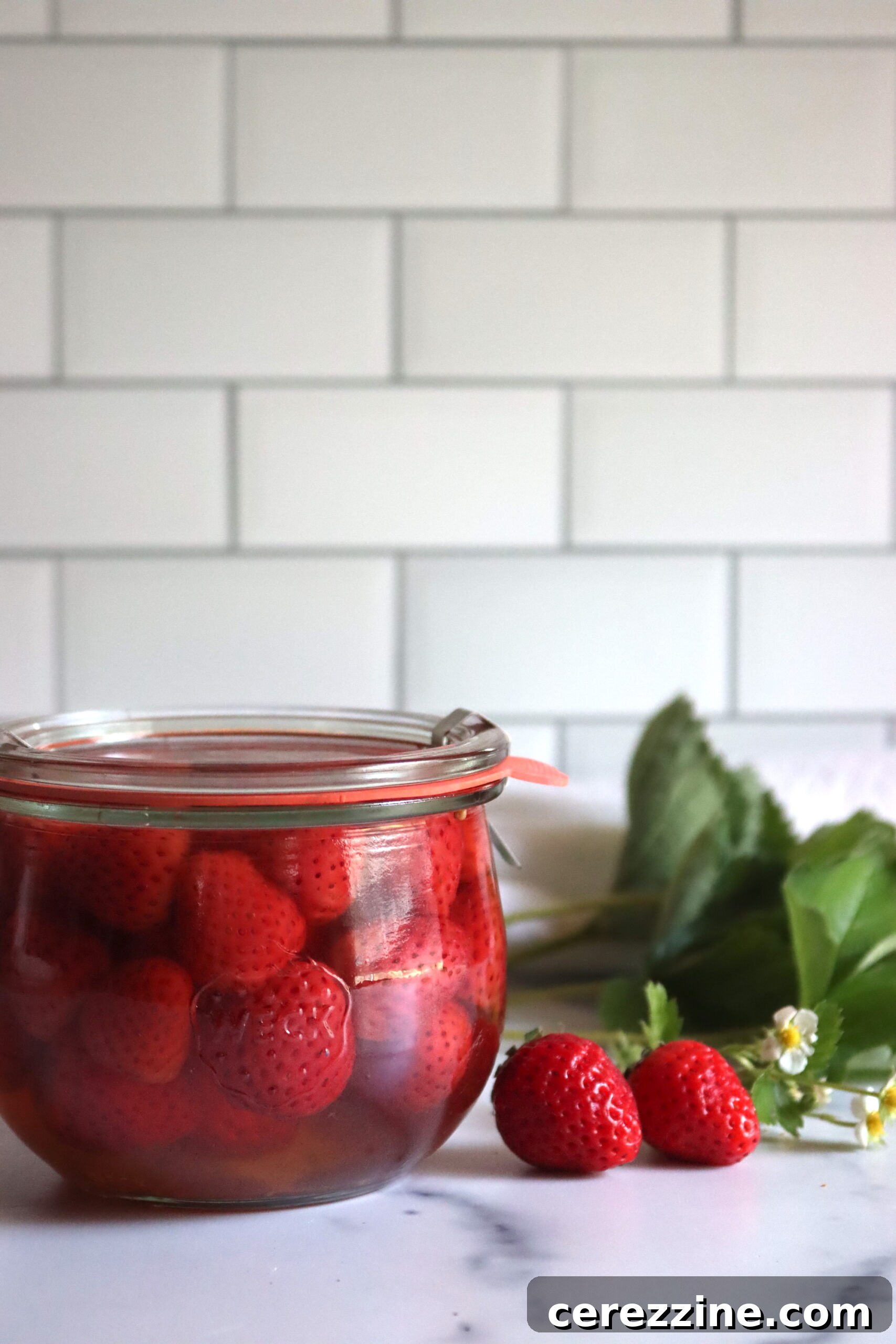
Forget the notion that pickling is exclusively for cucumbers! Strawberries, with their delicate sweetness and vibrant color, are surprisingly well-suited for this preserving technique. When pickled, they undergo a delightful transformation, developing a complex flavor that is both refreshing and comforting. This method not only extends the enjoyment of your strawberry harvest but also introduces an exciting new ingredient to your pantry.
Canning pickled strawberries is an excellent way to capture and extend the life of this beloved seasonal fruit. The pickling process involves soaking fruits or vegetables in a brine typically made from vinegar, sugar, and various spices. This creates a distinctive tangy and sweet flavor profile that is truly addictive. The resulting sweet and sour berries can be savored on their own as a unique snack, or they can serve as an incredible condiment, offering a bright counterpoint to meats, vibrant salads, or hearty sandwiches. Their versatility makes them a must-try for any aspiring home preserver or adventurous foodie.
Beyond their delightful taste, pickling strawberries is also a smart way to lock in the numerous nutritional benefits that these berries offer. Strawberries are renowned for being rich in vitamin C, powerful antioxidants, and dietary fiber, making them a remarkably healthy addition to almost any meal or snack. By canning them, you ensure that these health-boosting properties are available long after the fresh berry season has passed, providing a wholesome treat throughout the year.
The creative possibilities with pickled strawberries are virtually endless. You’re encouraged to experiment with different spices and herbs to craft a unique flavor profile that perfectly suits your palate. Classic additions like cinnamon, cloves, ginger, and allspice can infuse warmth and depth. For a more adventurous twist, consider pink peppercorns for a subtle floral heat, or a sprig of fresh thyme or rosemary for an earthy note. You can also easily adjust the sweetness levels by slightly modifying the sugar content in the pickling liquid, allowing you to tailor the berries to be as sweet or as tart as you desire. This adaptability ensures that your homemade pickled strawberries will be a truly personalized culinary masterpiece.
Ingredients for Homemade Pickled Strawberries
This recipe for pickled strawberries is a safe and tested canning method, thoughtfully adapted from “The Complete Book of Pickling” by Jennifer MacKenzie. Jennifer MacKenzie offers several variations of pickled strawberries, including versions that substitute white balsamic vinegar for traditional cider vinegar and incorporate pink peppercorns for an intriguing spicy kick. Feel free to explore these adaptations if they align with your taste preferences, or stick with this simpler, yet equally delicious, apple cider vinegar-based recipe.
The inclusion of spices in this recipe is entirely optional. You have the freedom to select any dry spices you prefer to flavor your pickled strawberries, or you can opt to leave them out entirely for a pure, unadulterated strawberry flavor. Similarly, while the salt is technically optional, it is highly recommended as it significantly enhances the depth and complexity of these delightful fruit pickles, balancing the sweetness and acidity beautifully.
The ingredients required for canning a batch of pickled strawberries are refreshingly straightforward. To prepare a full canner batch, yielding approximately eight 8-ounce (or 250 mL) jars of these exquisite preserves, you will need the following:
- 12 cups hulled, ripe strawberries
- 3 cups granulated sugar
- 2 cups apple cider vinegar
- 1 teaspoon pickling or canning salt
For those who wish to add an aromatic dimension to their pickled strawberries, consider these optional seasonings:
- ½ teaspoon ground cinnamon
- ¼ teaspoon ground cloves
- A generous pinch of ground allspice
When selecting your strawberries, prioritize those that are clean, firm, and as uniform in size as possible. Consistency in size is key, as it ensures that all berries pickle evenly, resulting in a desirable texture throughout the jar. Using strawberries of varying sizes can lead to an inconsistent final texture, with some becoming overly soft while others remain too firm.
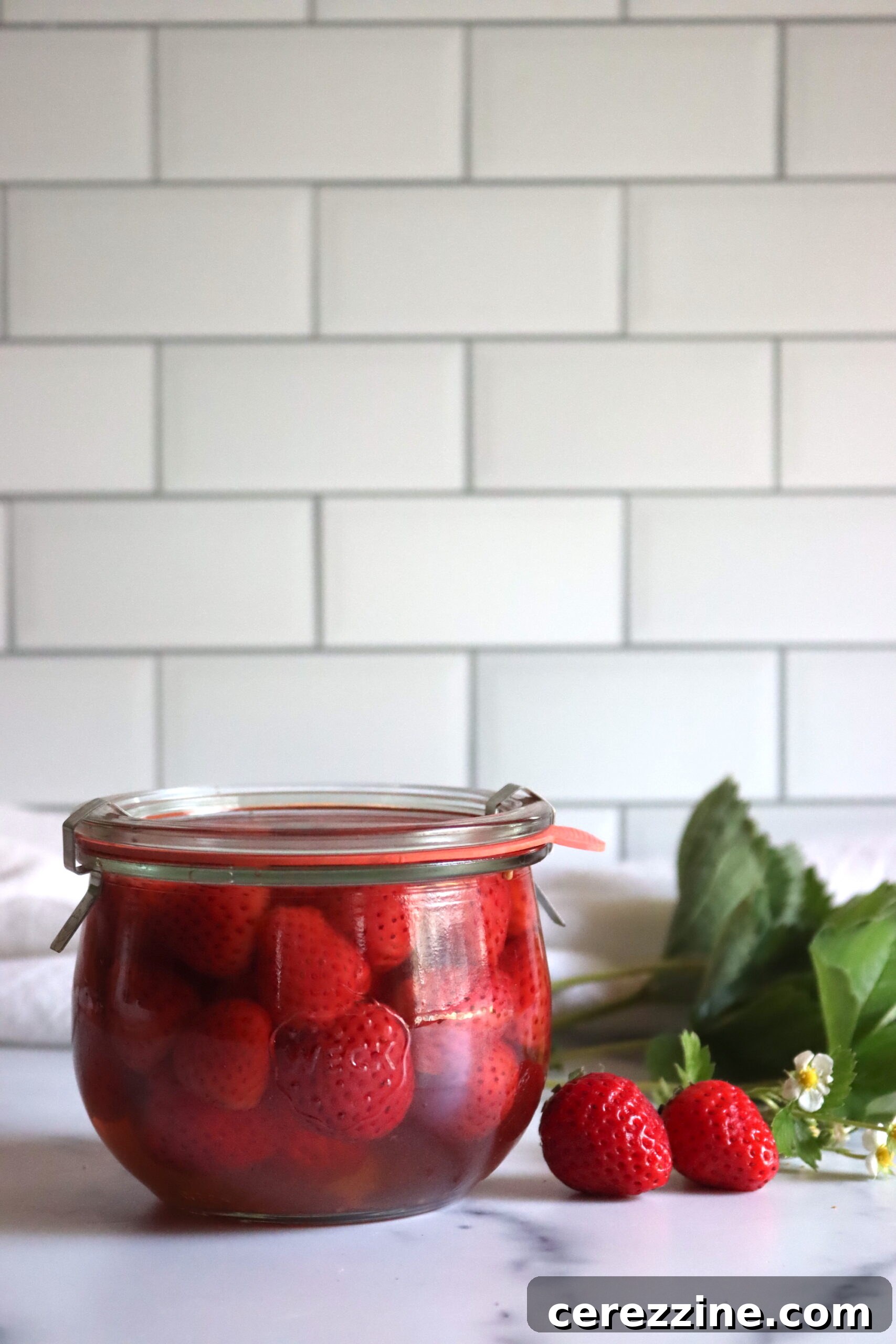
The Step-by-Step Process for Canning Pickled Strawberries
Before you begin, ensure you have all your ingredients and necessary equipment assembled. This includes fresh, hulled strawberries, sugar, salt, your chosen spices (if using), a large wide pot for the pickling liquid, a water bath canner, canning jars, and lids.
- **Prepare the Strawberries:** Gently prick each strawberry with a toothpick a few times. For any strawberries that are noticeably larger than the rest, cut them in half to ensure uniform pickling and texture. Set these prepared berries aside while you move on to the pickling liquid.
- **Craft the Pickling Liquid:** In your large pot, combine the granulated sugar, pickling salt, and any optional spices you’ve chosen, along with the apple cider vinegar. Bring this mixture to a gentle boil over medium heat, stirring frequently to help the sugar and salt dissolve completely.
- **Infuse and Cool:** Once the sugar and salt have fully dissolved, remove the pot from the heat and allow the pickling liquid to cool down slightly. This prevents the strawberries from cooking prematurely.
- **Marinate the Berries:** Carefully add the prepared strawberries to the cooled pickling liquid in the pot. Toss them gently to ensure every berry is thoroughly coated. Cover the pot and let the strawberries stand at a cool room temperature for an extended period, anywhere from six to eighteen hours. During this maceration period, gently swirl the pot occasionally to redistribute the liquid and ensure even penetration. This crucial step allows the pickling liquid to fully permeate the strawberries, helping them to firm up and maintain their structure during the canning process. Skipping this step often results in mushy pickled berries.
- **Gently Reheat:** After the maceration period, warm the strawberries and their liquid over medium-low heat. Be careful not to overcook them; you want them to be just heated through, not soft or mushy.
- **Prepare Canning Equipment:** While the strawberries are warming, sterilize your canning jars by washing them thoroughly in hot, soapy water or running them through a dishwasher cycle. Heat your water bath canner according to its instructions and prepare your canning lids (typically simmering them in hot water to soften the sealing compound).
- **Fill the Jars:** Carefully ladle the warm pickled strawberries and their flavorful pickling liquid into the prepared, hot canning jars. Ensure you leave a half-inch headspace from the rim of the jar. Use a non-metallic utensil to remove any trapped air bubbles by gently running it around the inside of the jar. Adjust the headspace as needed by adding more liquid or berries.
- **Seal the Jars:** Wipe the rims of the jars meticulously with a clean, damp cloth to ensure a perfect seal. Center the warm lids on top of each jar, then screw on the bands until they are “fingertip-tight” – firm but not overtightened.
- **Process in Water Bath:** Carefully place the filled jars into your heated water bath canner, ensuring they are fully submerged in water. Bring the water to a rolling boil and process pint and half-pint jars for 10 minutes. Remember to adjust processing times for higher altitudes (refer to the altitude adjustments section below for specific guidance).
- **Cool Down and Check Seals:** Once the processing time is complete, turn off the heat and carefully remove the canner lid. Allow the jars to rest in the hot water for an additional five minutes. This helps to equalize the temperature and aids in achieving a good seal.
- **Final Cooling:** Carefully transfer the hot jars from the canner to a clean towel on your countertop. Leave them undisturbed to cool completely for at least 24 hours. As they cool, you should hear the satisfying “ping” of the lids sealing.
- **Verify Seals:** After 24 hours, check the seals on all your jars. Press the center of each lid; if it doesn’t flex, the jar is sealed. Any jars that did not seal properly should be refrigerated and consumed within a few weeks. Store properly sealed jars in a cool, dark place for up to a year.
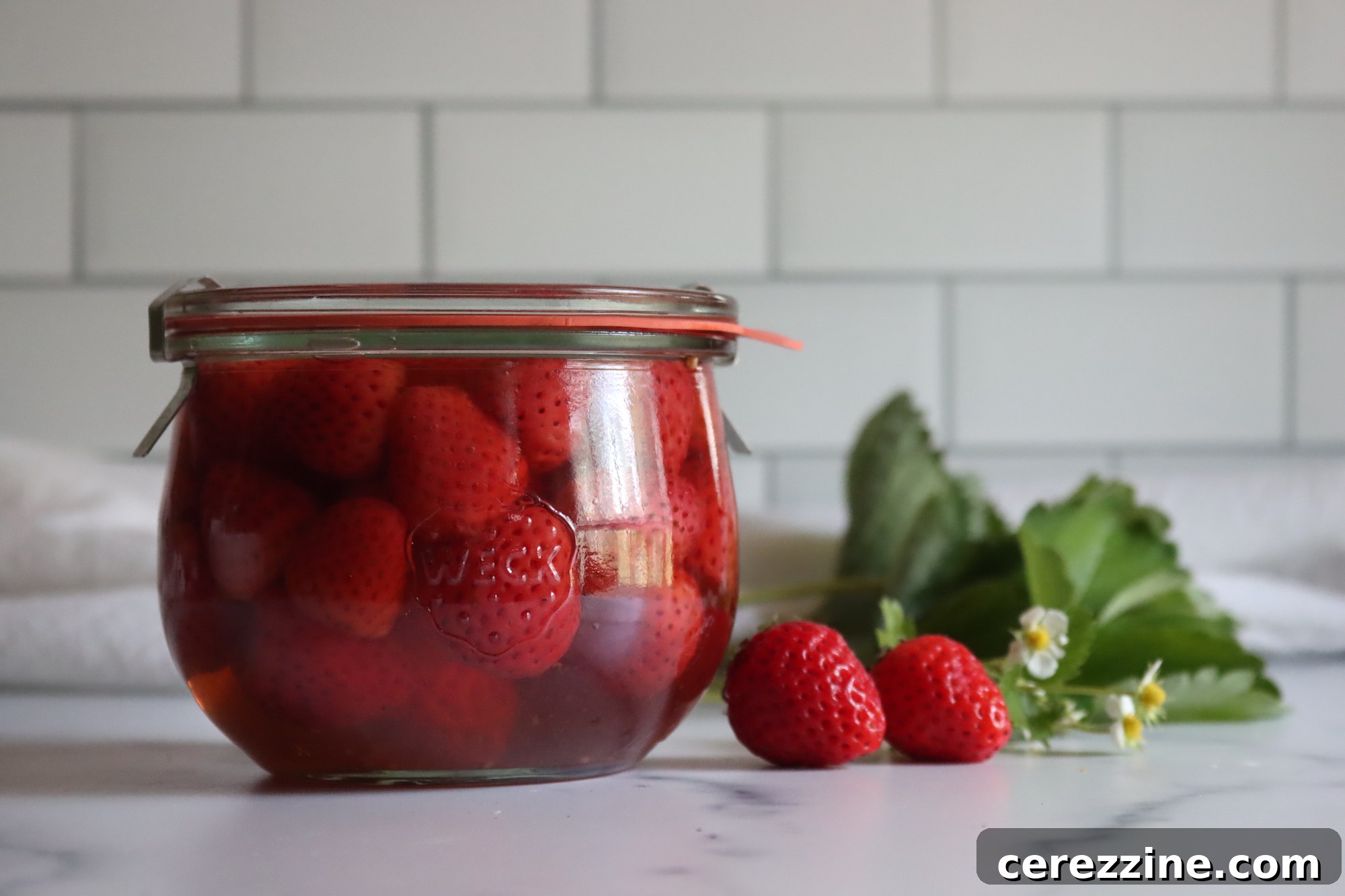
Creative Ways to Serve Pickled Strawberries
When it comes to enjoying your homemade pickled strawberries, the possibilities are truly delightful and remarkably diverse! It’s important to clarify right away that these are a “heat and eat” or “ready to serve” dish; once the jars are opened, they are ready to be savored with no additional cooking or preparation required. Their complex sweet-tart profile makes them incredibly versatile.
So, how can you best enjoy these sweet, tangy, and subtly spiced berries?
One classic and utterly satisfying option is to serve them as an indulgent dessert. Imagine a warm, flaky biscuit generously topped with a dollop of freshly whipped cream and a spoonful of glistening pickled strawberries. The combination of textures and flavors – the crisp biscuit, the airy cream, and the tangy-sweet berries – creates a perfect harmony. For an even more decadent treat, spoon them over a slice of buttery shortcake or a rich pound cake, perhaps with a drizzle of their pickling liquid as a light syrup.
Beyond traditional desserts, pickled strawberries can add a surprising twist to everyday fare. Brighten up your usual fruit salad by tossing in a handful of these unique berries. Their pickling liquid, with its sweet and acidic notes, can even be repurposed as an intriguing dressing for the fruit salad itself, adding a gourmet touch. They also pair wonderfully with creamy cheeses, making them an excellent addition to a cheese board alongside crackers and nuts.
For those who prefer a savory application, pickled strawberries are an unexpected hero. Serve them as an elegant condiment alongside rich meats such as roasted duck, pork loin, or even a flavorful pâté. The vibrant acidity of the strawberries expertly cuts through the richness of the meat, cleansing the palate and adding a refreshing, sophisticated element to your dish. They can also be a delightful addition to gourmet sandwiches, providing a burst of flavor that elevates a simple meal.
Furthermore, don’t overlook their potential in breakfast or brunch settings. Stir a few into your oatmeal or Greek yogurt for a morning pick-me-up, or use them as a topping for pancakes and waffles, offering a sophisticated alternative to plain syrup. Their unique flavor can also inspire creative cocktails or mocktails, adding a fruity, tangy dimension.
In conclusion, pickled strawberries are a truly versatile and incredibly delicious addition to any culinary repertoire. They invite experimentation and creativity in the kitchen. So, dare to give them a try, open your mind to their endless possibilities, and get creative with your serving options. You might just discover your new favorite way to enjoy strawberries!
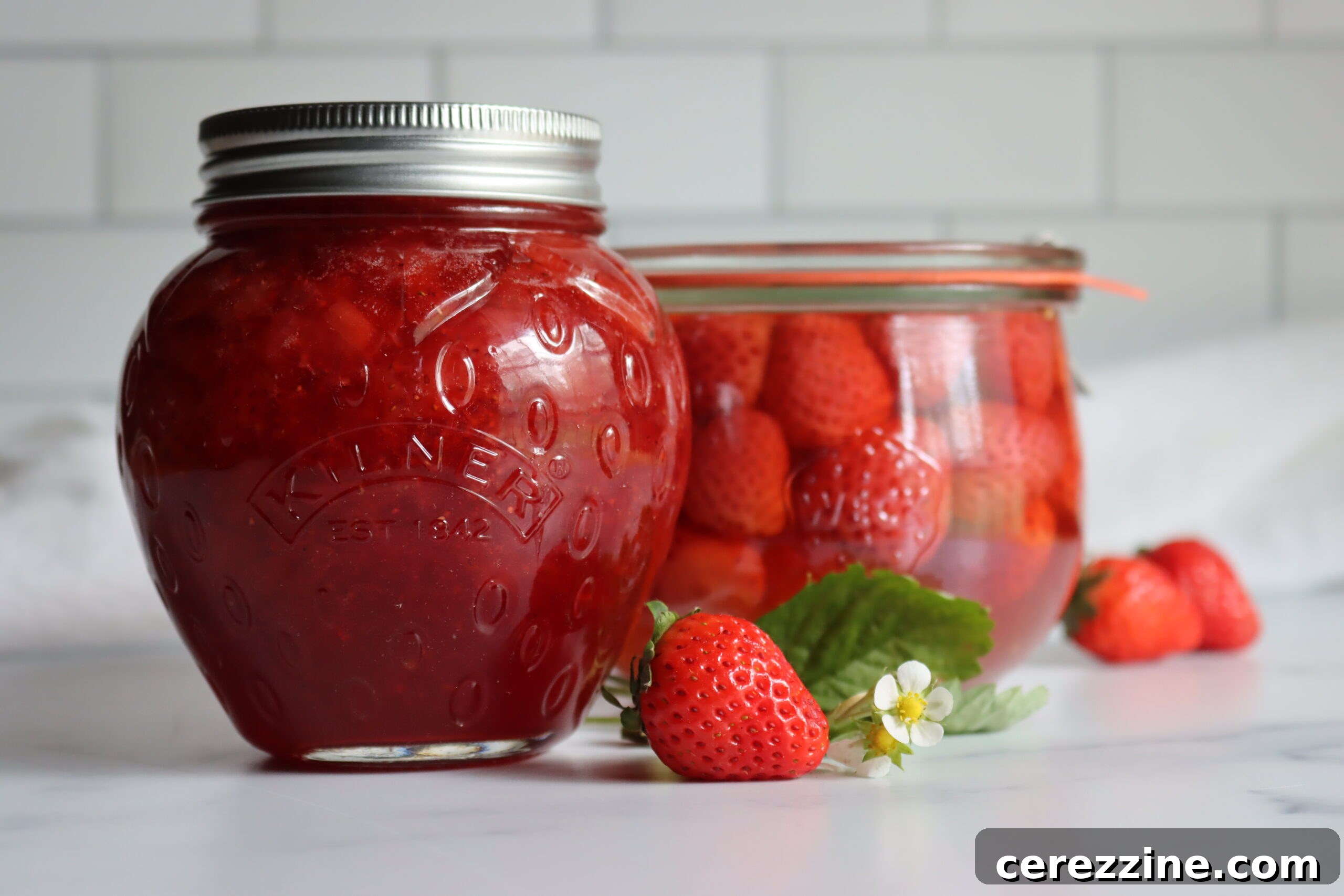
Important Altitude Adjustments for Canning
When canning, it’s crucial to account for changes in altitude, as water boils at lower temperatures at higher elevations. This means that processing times must be extended to ensure proper sterilization and food safety. The following adjustments are specifically for canning pickled strawberries:
- **For 0 to 1,000 Feet in Elevation:** Process pint and half-pint jars for 10 minutes, and quart jars for 15 minutes.
- **For 1,001 to 6,000 Feet in Elevation:** Process pint and half-pint jars for 15 minutes, and quart jars for 20 minutes.
- **Above 6,001 Feet in Elevation:** Process pint and half-pint jars for 20 minutes, and quart jars for 25 minutes.
Explore More Strawberry Canning Recipes
If you’ve enjoyed the unique flavor of pickled strawberries and are eager to explore more ways to preserve this delightful fruit, we have a wealth of creative strawberry canning recipes for you to discover. Expand your canning skills and fill your pantry with homemade goodness:
- Strawberry Rhubarb Jam: A classic combination of sweet strawberries and tart rhubarb, perfect for toast or desserts.
- Strawberry Pie Filling: Prepare delicious strawberry pies year-round with this convenient, ready-to-use filling.
- Homemade Strawberry Syrup: A versatile syrup ideal for pancakes, waffles, or mixing into beverages.
- Canning Strawberry Juice: Enjoy the pure, refreshing taste of strawberry juice anytime.
64 servings, makes Eight half pint jars
Pickled Strawberries
Pickled strawberries are a unique way to preserve strawberries in season, and their sweet-tart flavor is incredible on top of a bowl of vanilla ice cream!
Equipment
-
Water Bath Canner
Ingredients
- 12 cups strawberries, hulled
- 3 cups sugar
- 2 cups apple cider vinegar
- 1 tsp pickling or canning salt
Optional Spices
- ½ tsp ground cinnamon
- ¼ tsp ground cloves
- Pinch ground allspice
Instructions
-
Gather your ingredients and equipment. You’ll need fresh strawberries, sugar, salt, cloves, cinnamon, vinegar, and allspice, as well as a wide pot, canner, jars, and lids.
-
Prick the strawberries with a toothpick and cut the larger ones in half, then set them aside while you prepare the pickling liquid.
-
Combine the sugar, salt, cloves, cinnamon, vinegar, and allspice in your pot and bring the mixture to a boil over medium heat, stirring often.
-
When the sugar and salt have dissolved, and the liquid has cooled, add the strawberries and toss gently to coat.
-
Cover the pot and let the berries stand at a cool room temperature for six to eighteen hours, swirling often to coat them evenly.
-
When the time is up, warm the strawberries over medium-low heat, taking care not to overcook them.
-
Prepare your jars by washing and sterilizing them and heating your canner and lids.
-
Ladle the strawberries and pickling liquid into the jars, leaving a half-inch headspace. Remove any air bubbles and adjust the headspace as needed.
-
Wipe the rims, apply the lids, and screw on the bands until they’re fingertip-tight.
-
Process your jars in the water bath canner for 10 minutes (for pints and half pints), adjusting for altitude (see notes).
-
When the time is over, turn off the heat and remove the canner lid, then let the jars sit in the water for another five minutes. Carefully transfer them to a towel and let them cool for at least 24 hours.
-
Check the seals, and refrigerate any jars that didn’t seal properly.
Notes
This is a safe, tested canning recipe adapted from The Complete Book of Pickling by Jennifer MacKenzie. She actually has several recipes for pickled strawberries, and in other versions, she substitutes white balsamic vinegar for cider vinegar and adds pink peppercorns for a bit of spice. You can adapt this recipe to use those ingredients if you please or go with a simpler cider vinegar variation.
The spices are optional, and you can use any dry spices you like to flavor your pickled strawberries (or none at all). The salt is also optional but really adds depth to these fruit pickles.
Altitude Adjustments
- For 0 to 1,000 Feet in Elevation – Process pint jars for 10 minutes, and quart jars for 15 minutes.
- For 1,001 to 6,000 Feet in Elevation – Process pint jars for 15 minutes, and quart jars for 20 minutes.
- Above 6,001 Feet in Elevation – Process pint jars for 20 minutes, and quart jars for 25 minutes.
Nutrition
Calories: 46kcal, Carbohydrates: 11g, Protein: 0.2g, Fat: 0.1g, Saturated Fat: 0.004g, Polyunsaturated Fat: 0.04g, Monounsaturated Fat: 0.01g, Sodium: 37mg, Potassium: 47mg, Fiber: 1g, Sugar: 11g, Vitamin A: 3IU, Vitamin C: 16mg, Calcium: 5mg, Iron: 0.1mg
Nutrition information is automatically calculated, so should only be used as an approximation.
Like this? Leave a comment below!
More Delightful Fruit Pickling Recipes
Once you’ve experienced the unique and delicious world of pickled strawberries, you’ll find yourself eager to explore other fruit pickling adventures! Don’t stop here; there’s a whole spectrum of sweet-tart flavors waiting to be discovered through the art of fruit preservation. Fruit pickles are a fantastic way to enjoy seasonal produce in a new and exciting format, adding a gourmet touch to your meals and snacks.
- Pickled Figs: A luscious, sweet, and tangy treat that pairs beautifully with cheese boards or savory dishes.
- Pickled Cranberries: Bursting with vibrant color and a sharp, sweet-sour taste, perfect for holiday meals or everyday salads.