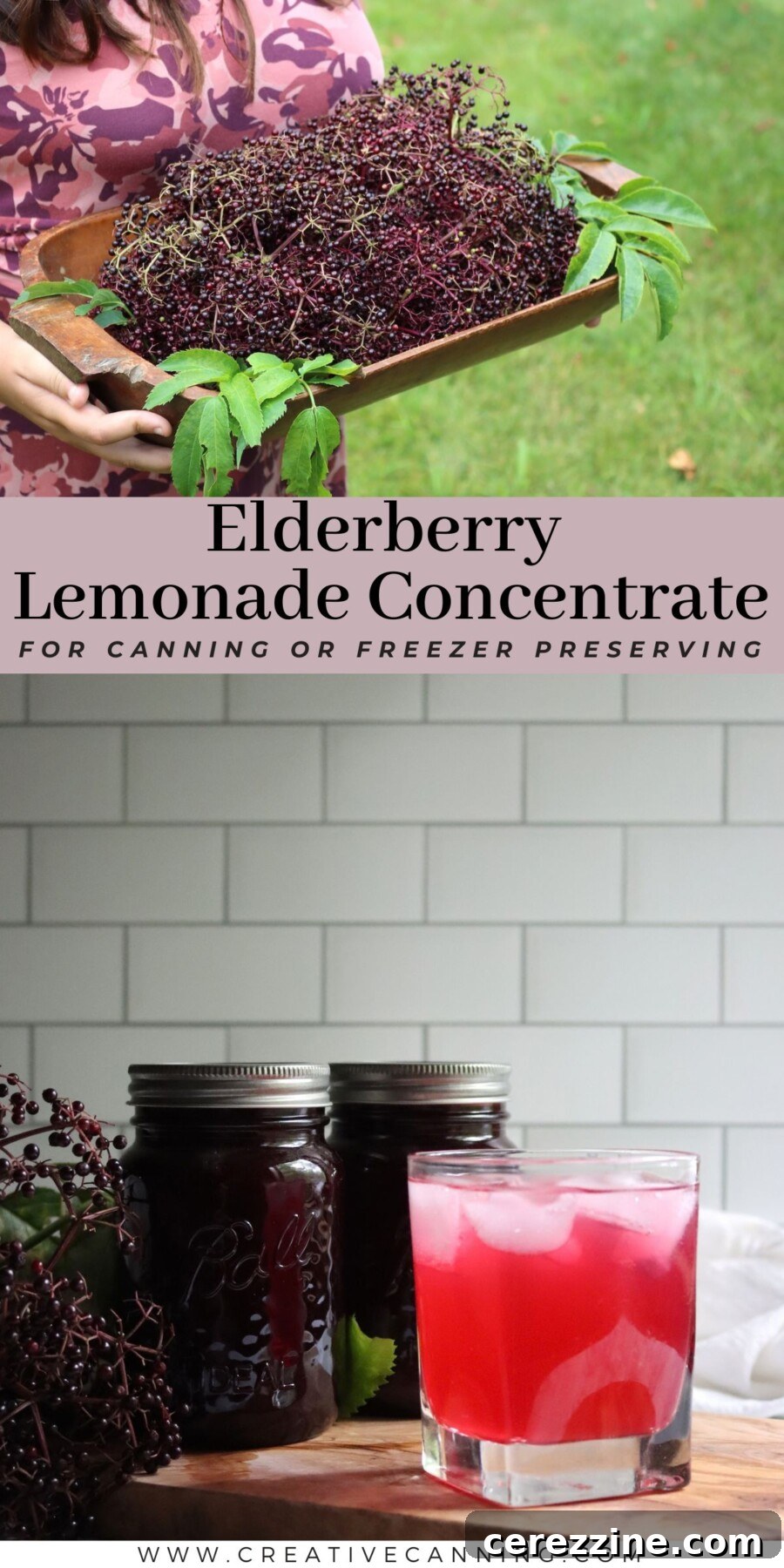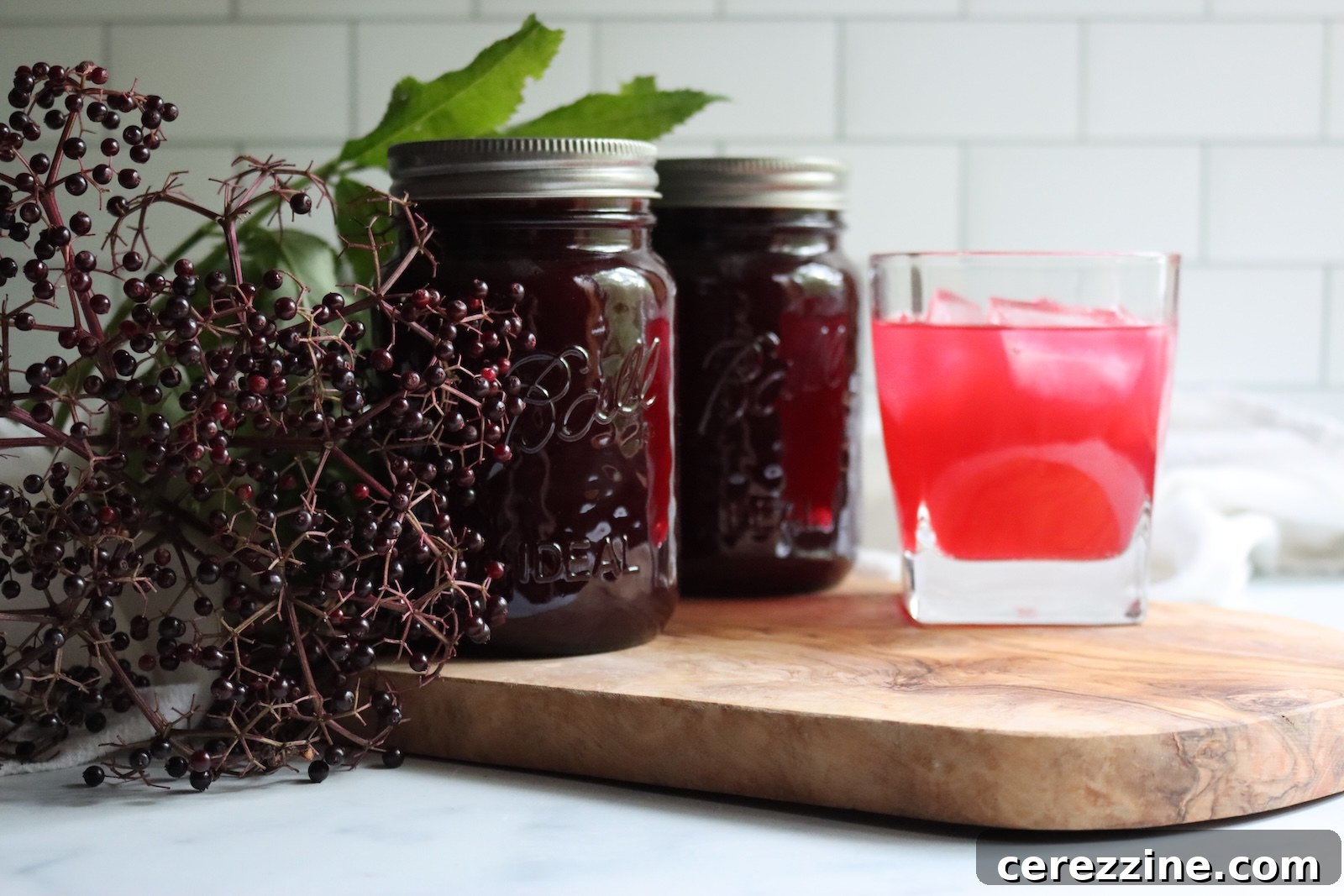
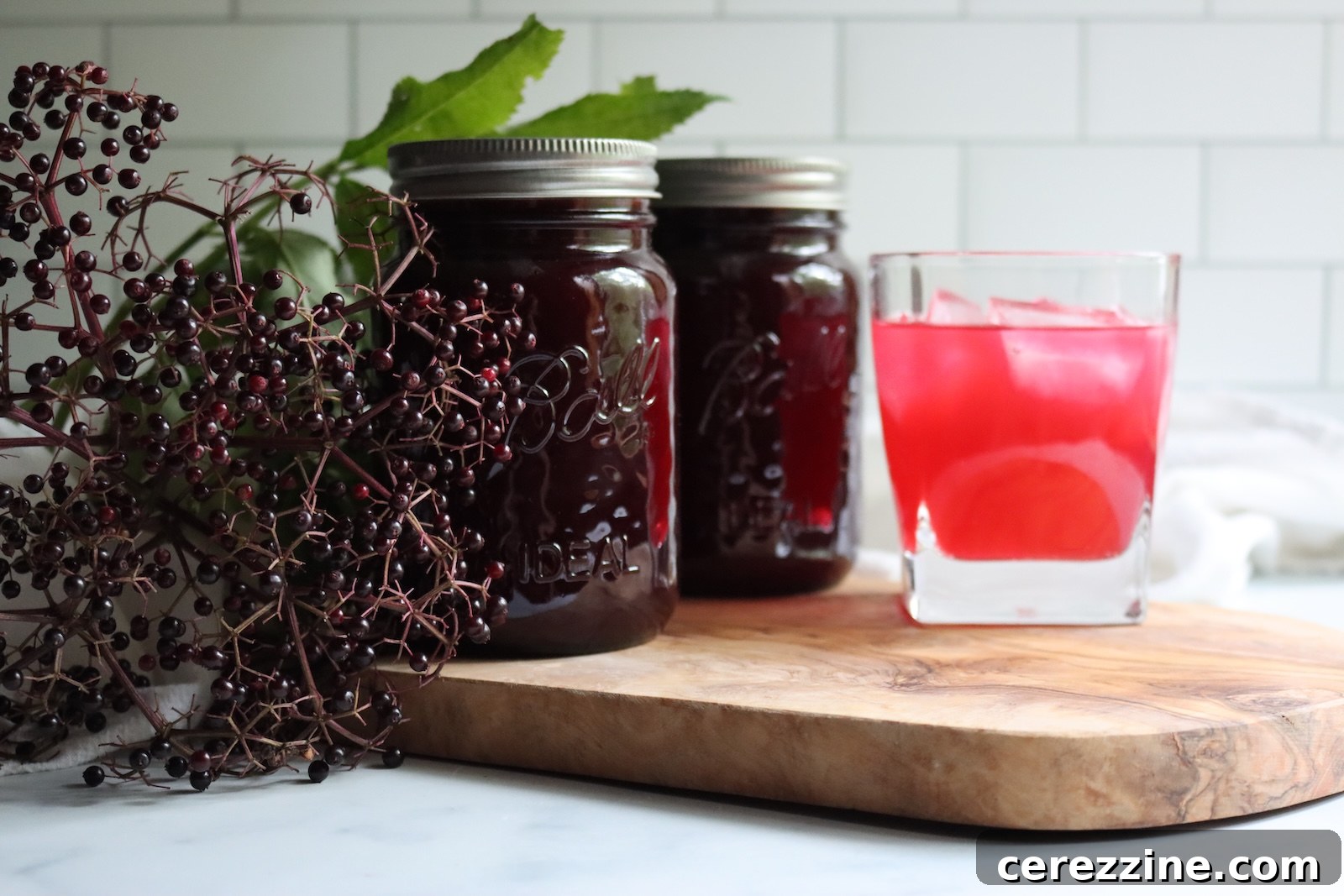
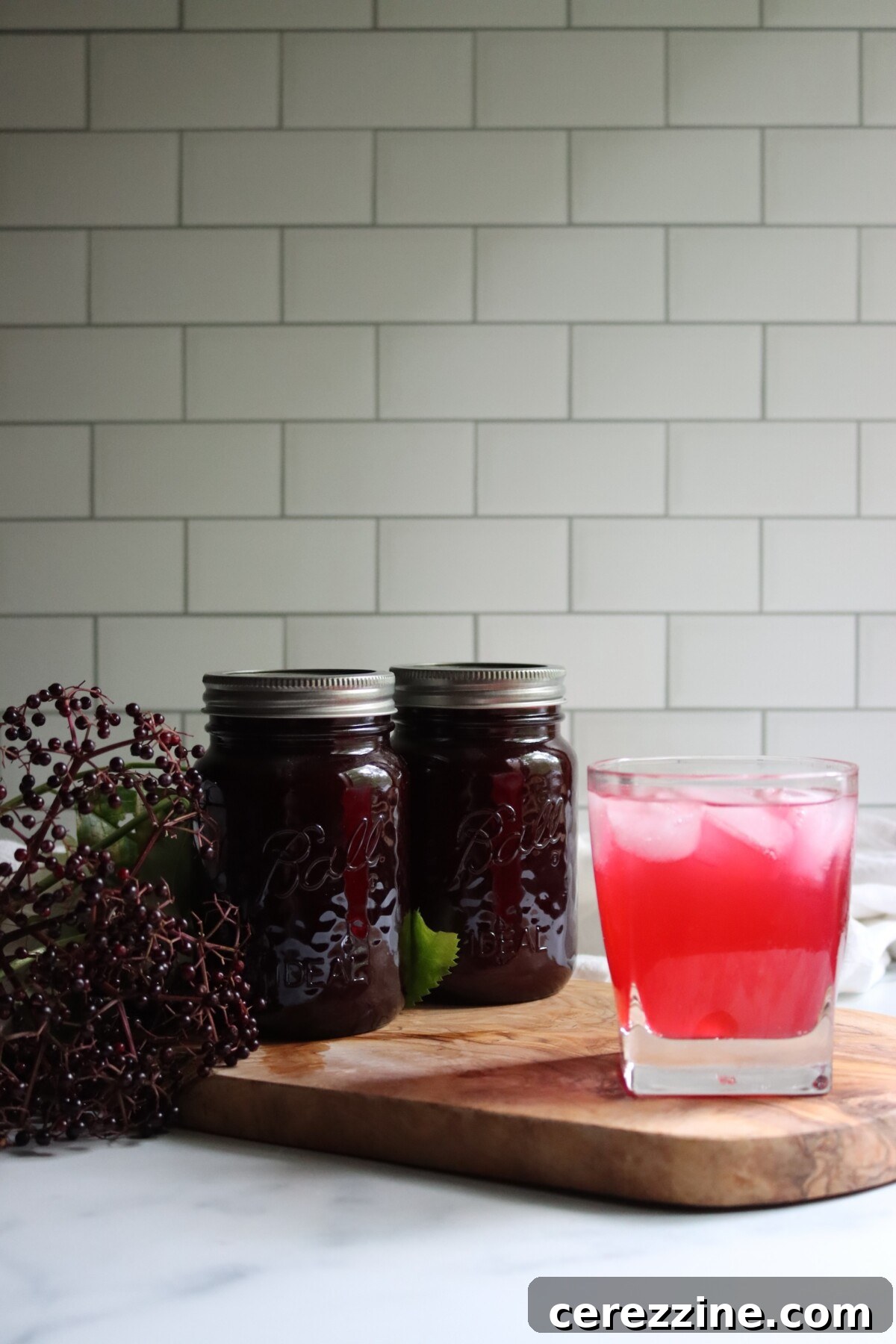
Elderberry lemonade concentrate captures an elderberry harvest in a shelf-stable drink mix you can make year-round. It’s a tart, purple lemonade with genuine elderberry flavor — just add cold water to turn one jar into a pitcher of homemade elderberry lemonade.
This recipe was reviewed for safety and accuracy by a Master Food Preserver certified through the University of Cornell Cooperative Extension.
Elderberries have a dark, slightly earthy flavor that is neither very sweet nor very tart on its own. Paired with lemon, they shine: the lemon supplies bright tartness while the elderberries give color and depth. Where many elderberries become jelly, jam, syrup, or wine, this concentrate offers a refreshing pantry-ready drink option that begins with strained elderberry juice.
Notes from My Kitchen

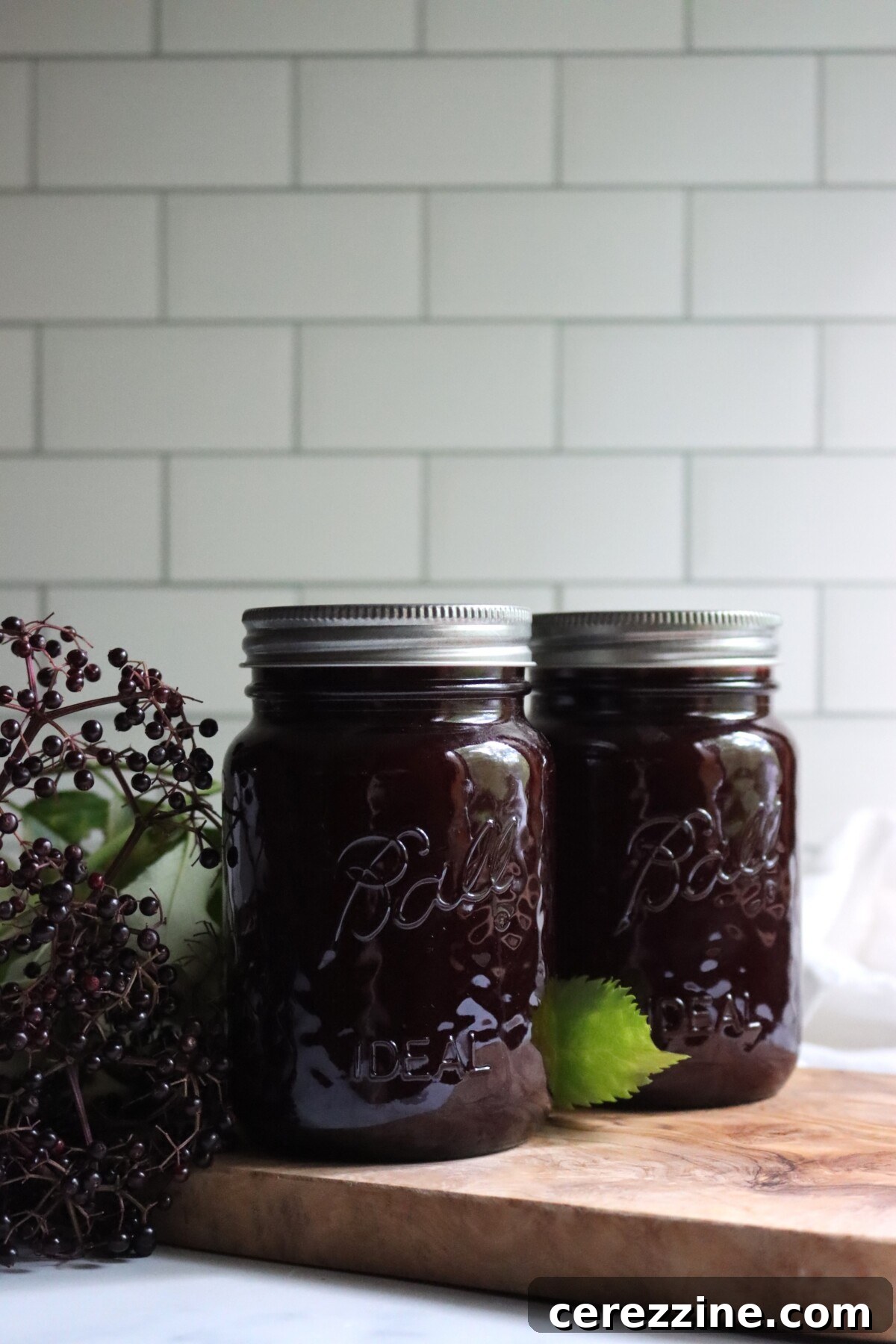
Many people think of elderberry syrup for winter, but syrup doesn’t have a tested canning process and is best made fresh or frozen. This lemonade concentrate, however, is designed for the pantry: a bright, purple pitcher of lemonade in the middle of winter is a real treat.
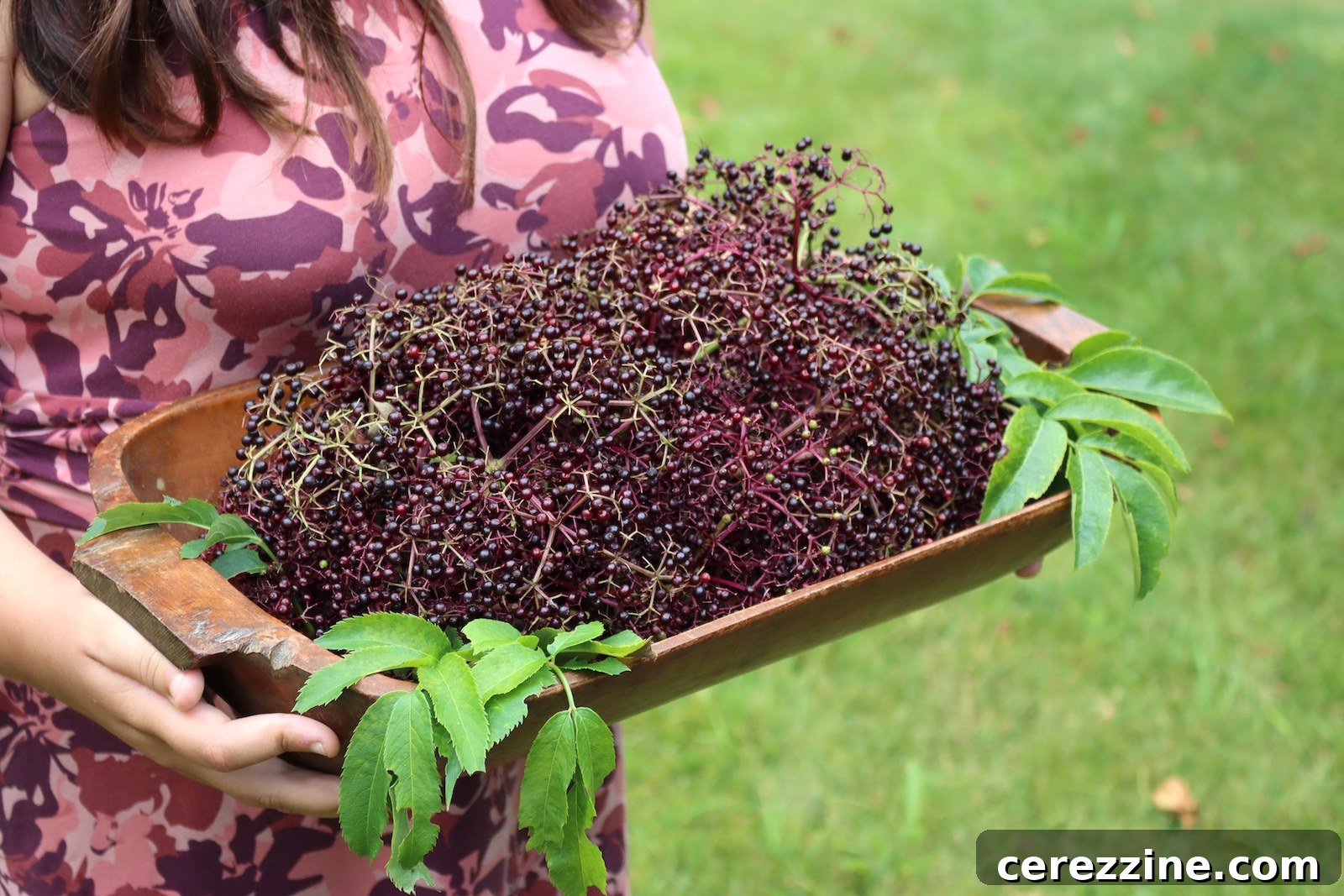
This recipe relies mostly on bottled lemon juice for liquid and acidity, so it sits at the intersection of lemon canning and elderberry canning techniques. Bottled lemon juice provides consistent acidity, which is essential for safe water bath canning of fruit purees and concentrates.
Quick Look at the Recipe
- Recipe Name: Elderberry Lemonade Concentrate
- Canning Method: Water bath canning (processing times follow fruit puree guidance)
- Prep Time: About 45 minutes (including making the juice)
- Cook Time: About 10 minutes
- Canning Time: 15 minutes for half pints, pints, or quarts (adjust for altitude)
- Yield: About 2 pints per batch
- Jar Sizes: Half pints, pints, or quarts (do not use half-gallons)
- Headspace: 1/4 inch
- Ingredients Overview: Elderberries, bottled lemon juice, granulated sugar, water
- Difficulty: Easy
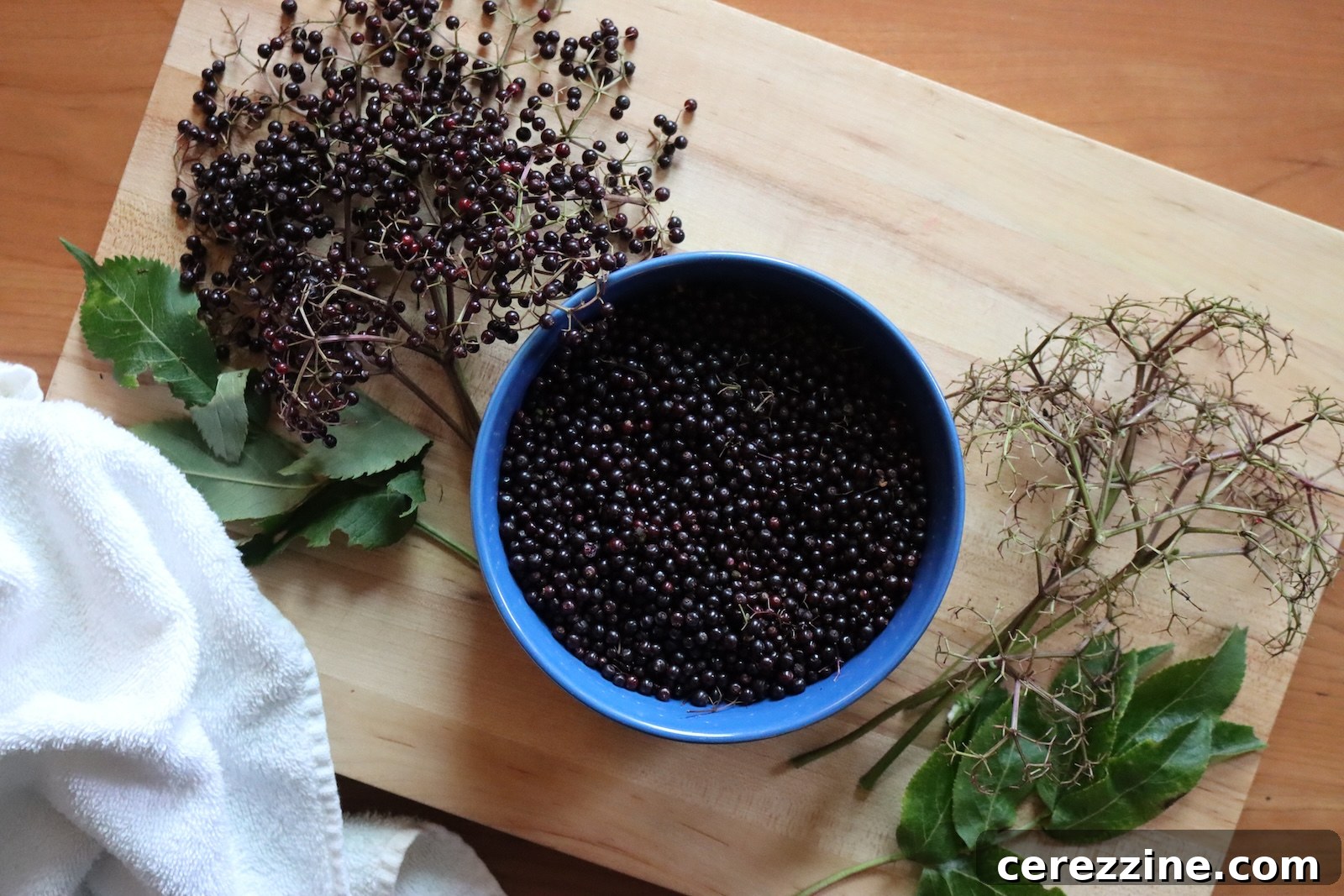
Ingredients for Elderberry Lemonade Concentrate
You can use fresh, frozen, or dried elderberries (dried require a quick steep); pure, unsweetened store-bought elderberry juice also works if it contains no added ingredients. For canning, bottled lemon juice and the full amount of sugar are required for safety and texture.
- Elderberries: Fully ripe and completely de-stemmed. Stems and leaves are bitter and mildly toxic, so remove all green bits. Freezing clusters first makes de-stemming easier. Always cook elderberries before eating.
- Water: A small amount used to simmer the berries and help release juice.
- Bottled lemon juice: Use bottled lemon juice for consistent acidity; keep the amount specified. This acid makes the concentrate safe for water bath canning.
- Sugar: Plain granulated sugar. It balances the lemon and gives the concentrate body; do not replace with honey for canned batches.
Keep the Lemon and Sugar as Written
Elderberries aren’t acidic enough to can safely on their own. Bottled lemon juice provides the necessary, consistent acidity and should be used at twice the volume of the elderberry juice in this recipe. Do not reduce the lemon juice or replace the sugar with honey when canning. To adjust batch size, scale all ingredients together.
Yield Notes
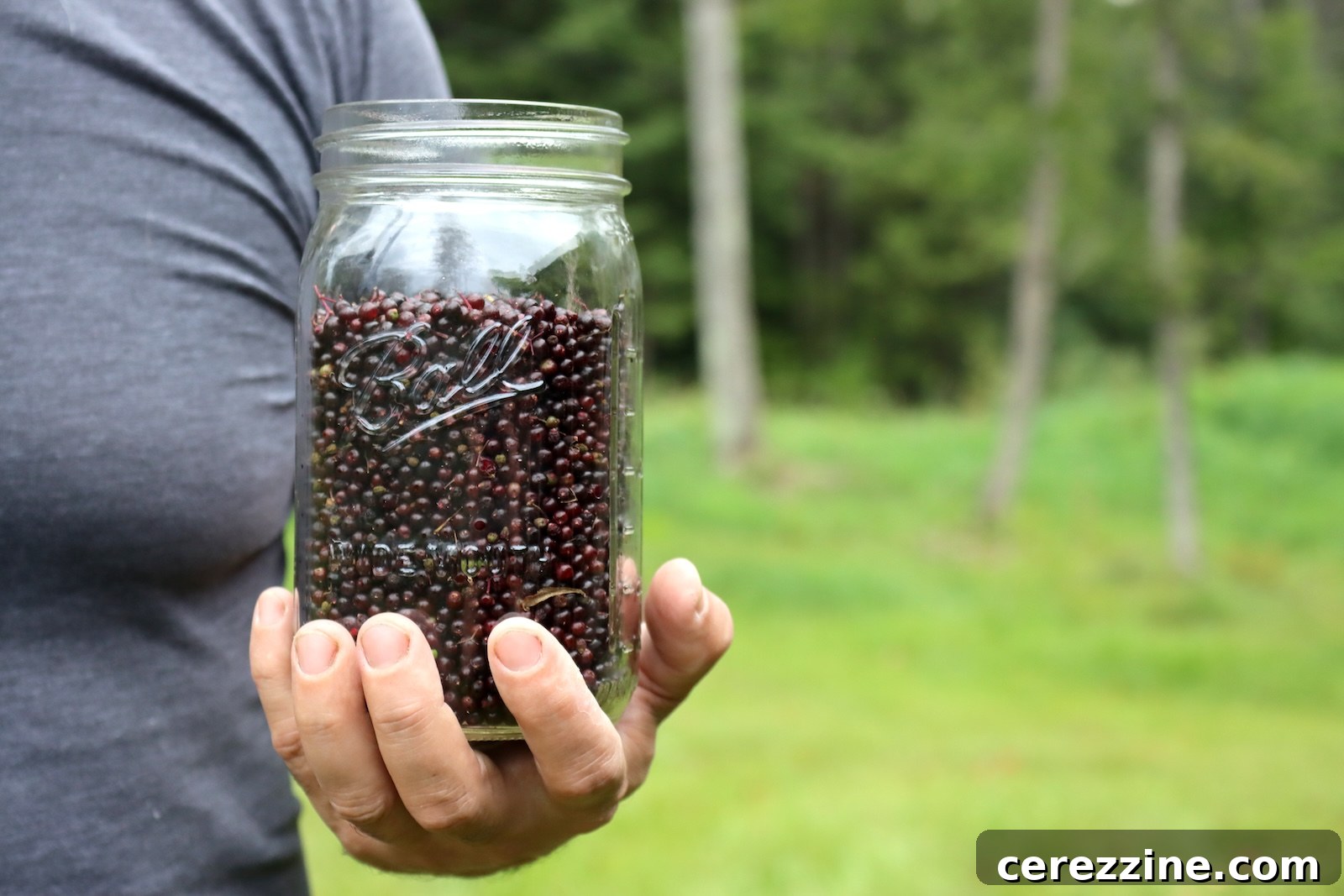
One pound of elderberries as picked becomes about 3 cups after de-stemming and yields about 1 cup of juice when simmered with 3/4 cup water and strained. A batch of concentrate uses:
- 1 cup elderberry juice
- 2 cups bottled lemon juice
- 2 cups granulated sugar
This makes about 2 pints of concentrate. Each pint mixes into a half gallon of lemonade. The recipe doubles or triples easily if you increase every ingredient proportionally.
How to Make Elderberry Lemonade Concentrate
Making the elderberry juice is the main time investment. You can prepare the juice a few days ahead and refrigerate it, or freeze juice at harvest and make concentrate later. Start your water bath canner before heating the concentrate so the canner has time to reach boiling.
Make the Elderberry Juice
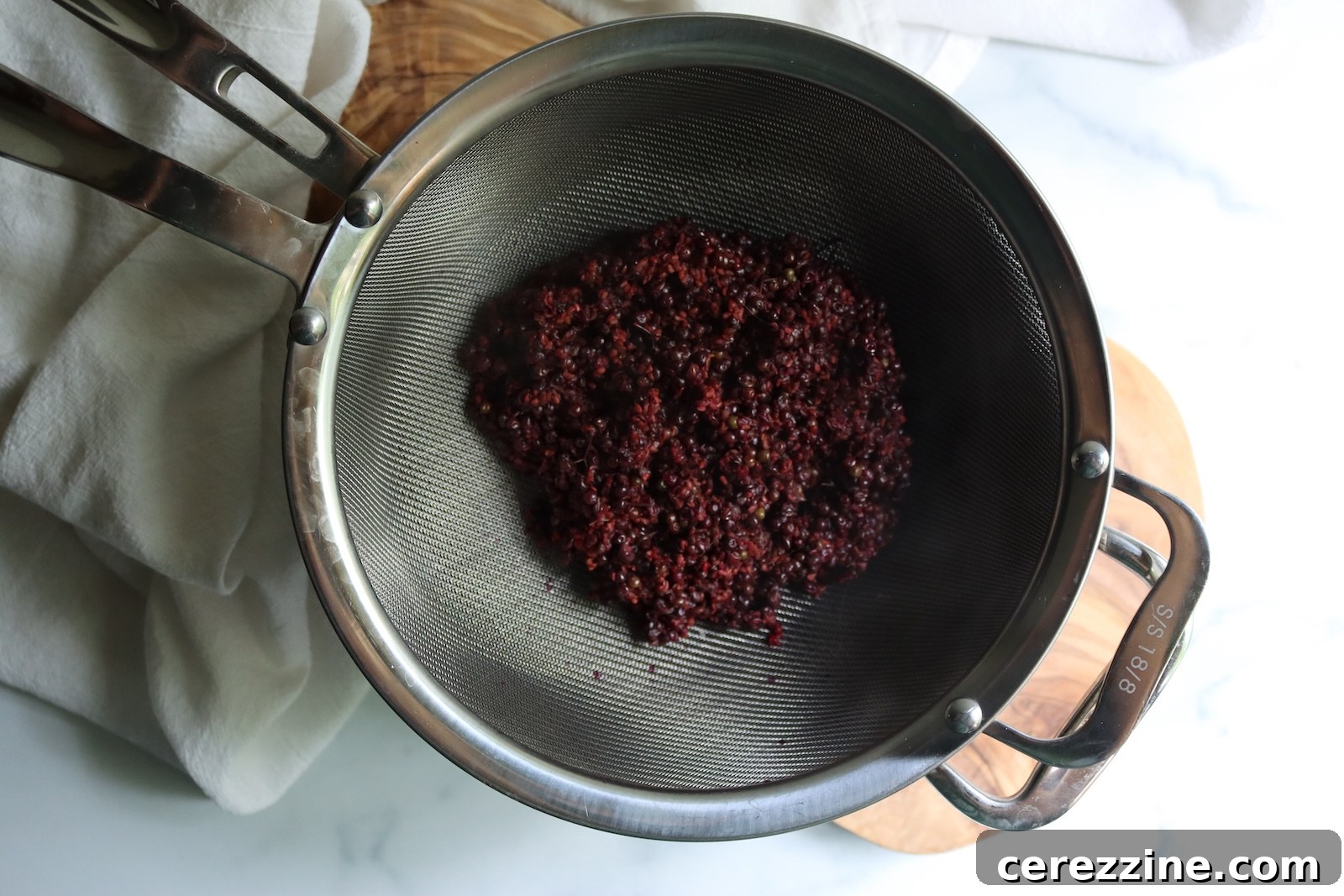
Strip berries completely from stems and remove any leaves or stray bits. Place berries in a saucepan with the water and bring to a gentle simmer. Simmer 10–15 minutes, mashing the berries with a potato masher as they soften, until the berries collapse and release their juice. Strain through a jelly bag or a fine-mesh strainer lined with cheesecloth and let drip. Measure the juice once dripping slows; the concentrate measurements depend on that volume.
Heat the Concentrate
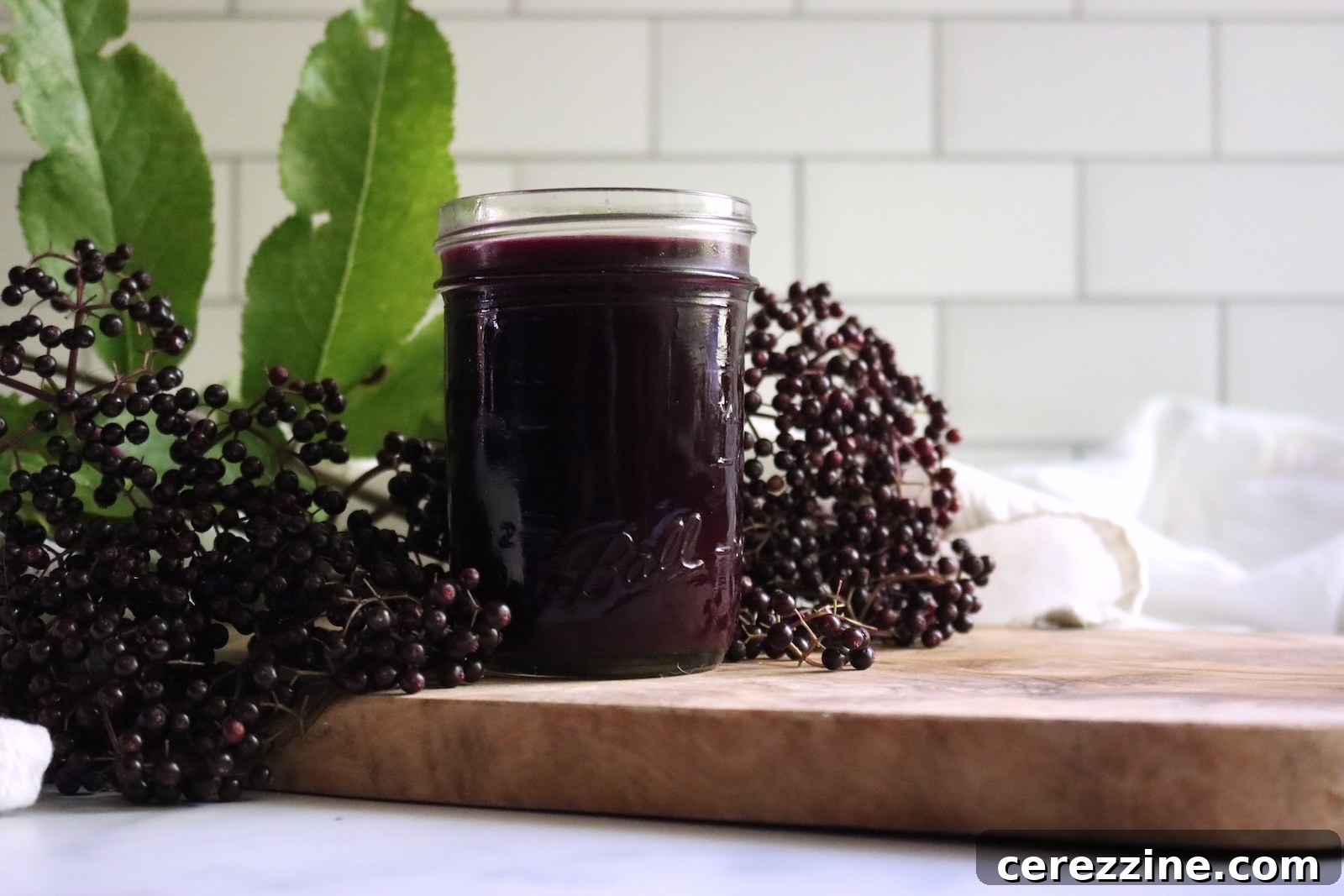
Combine the measured elderberry juice, bottled lemon juice, and sugar in a saucepan. Heat gently, stirring frequently, until the sugar dissolves. Continue heating until the mixture reaches about 190°F (just steaming and just short of simmering). Do not boil; boiling will diminish the fresh lemon flavor.
Canning Elderberry Lemonade Concentrate
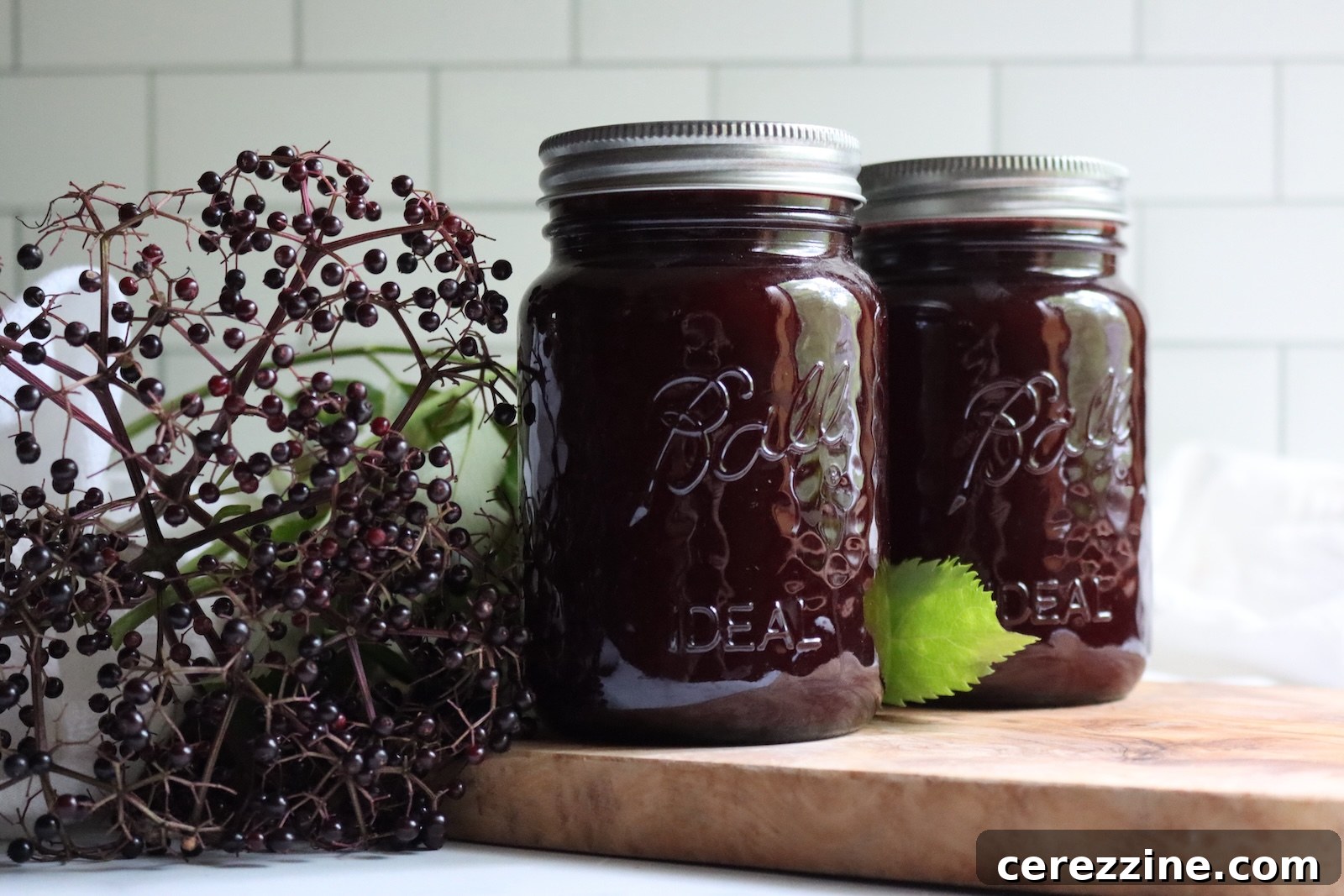
Ladle the hot concentrate into preheated jars, leaving 1/4 inch headspace. Wipe rims, center lids, and screw bands fingertip-tight. Place jars in a water bath canner with at least 1 inch of water covering the jars.
Process half pints, pints, or quarts for 15 minutes, adjusting times for altitude (see below). After processing, turn off heat, remove the canner lid, and wait 5 minutes before lifting jars out to cool on a towel for 12–24 hours. Check seals after cooling; sealed lids should be concave and not flex when pressed.
If a jar fails to seal, reprocess with a new lid within 24 hours or refrigerate and use within a few weeks. Do not use half-gallon jars; quarts are the largest size covered by this processing schedule.
Altitude Adjustments
Processing times increase at higher elevations. Use these times for half pints, pints, and quarts:
- 0 to 1,000 feet: 15 minutes
- 1,001 to 6,000 feet: 20 minutes
- Above 6,000 feet: 25 minutes
Serving Ideas for Elderberry Lemonade
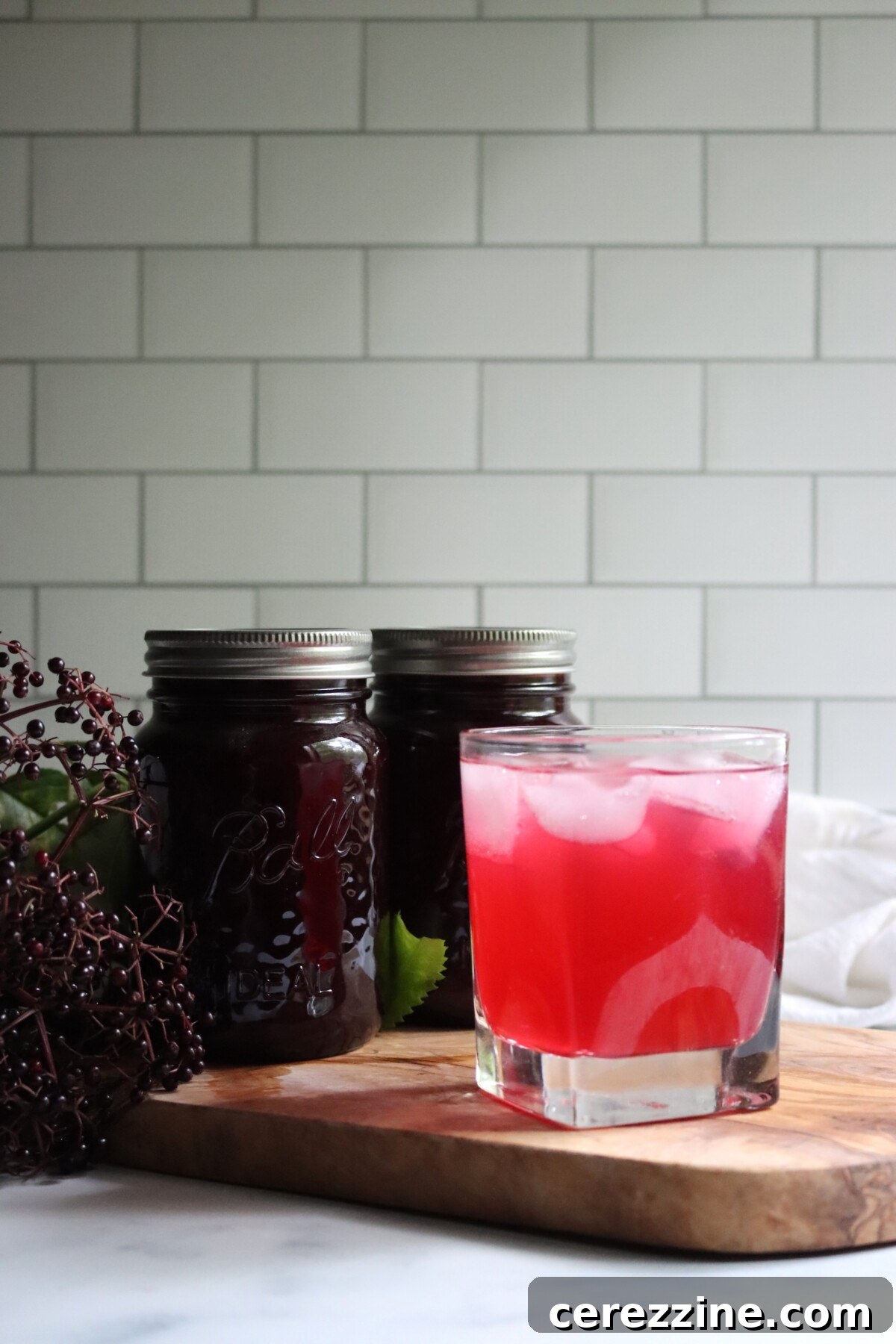
Mix 1 part concentrate with 3 parts cold water. A pint yields a half gallon of ready-to-drink lemonade; a quart makes a gallon. Pour a pint into a half-gallon jar and top with cold water for an easy measure.
Use still water for a classic tart purple lemonade, or sparkling water for an elderberry lemon soda. The reconstituted lemonade freezes well as popsicles. A splash of concentrate brightens iced black tea, and it also mixes nicely with gin or vodka for cocktails. A decorated pint makes a thoughtful homemade gift.
Storage and Shelf Life
After 12–24 hours, press the center of each lid to confirm a good seal. Remove bands before storing so you can spot an unsealed lid later. Store sealed jars in a cool, dark place and use within 12–18 months. Some sediment from lemon juice is normal; shake before mixing. Refrigerate after opening.
You can also freeze concentrate in straight-sided, freezer-safe jars with 1 inch headspace. If you prefer fresh lemon juice, less sugar, or honey, make a fridge or freezer batch rather than canning.
Elderberry Lemonade Concentrate FAQs
A pint jar makes a half gallon of lemonade; a quart makes a gallon. Mix 1 part concentrate with 3 parts cold water. For a pint, that’s 2 cups concentrate to 6 cups water; adjust to taste.
Yes. For dried elderberries, pour 1 1/2 cups boiling water over about 1/4 cup dried berries, steep 5 minutes, then strain; you should get about 1 cup of juice. Pure, unsweetened store-bought elderberry juice also works if it contains no additives.
Not for canning. Bottled lemon juice provides consistent acidity required for safe water bath canning. If you prefer fresh lemon juice, make a fridge or freezer concentrate instead of canning.
Not for canned batches. Keep the full sugar amount when canning and do not substitute honey. For fridge or freezer batches you can reduce sugar or use honey (start with about 3/4 the sugar amount if using honey).
No. Elderberries alone are not consistently acidic enough for water bath canning, and there is no tested process for plain elderberry syrup or juice. The tested elderberry canning recipes are high-sugar jellies and jams; this concentrate relies on bottled lemon juice as the acid to follow fruit puree processing guidance.
Elderberry Canning Recipes
Jelly and jam remain the tested, long-term canning options for elderberries; blossoms make a delicate jelly as well.
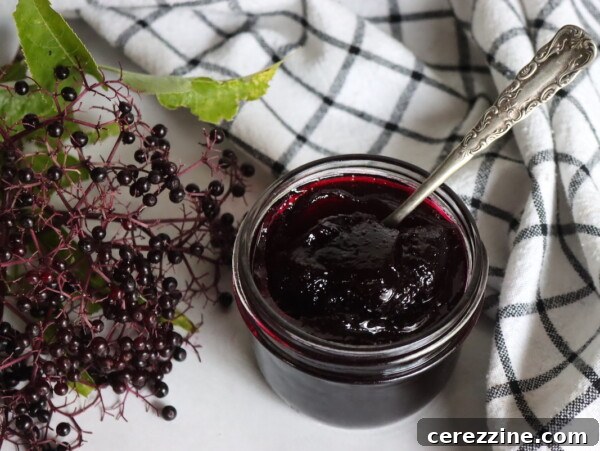
Elderberry Jelly
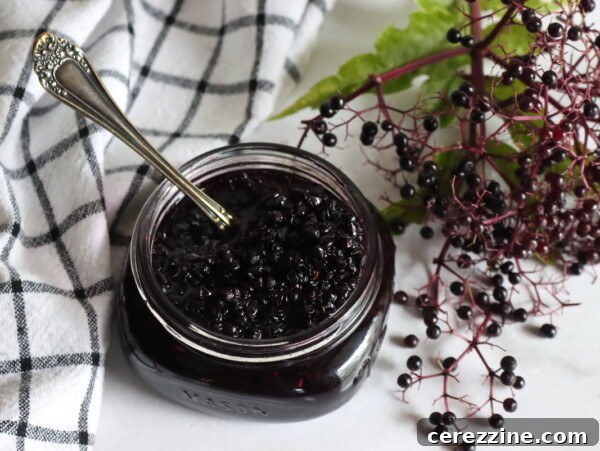
Old-Fashioned Elderberry Jam
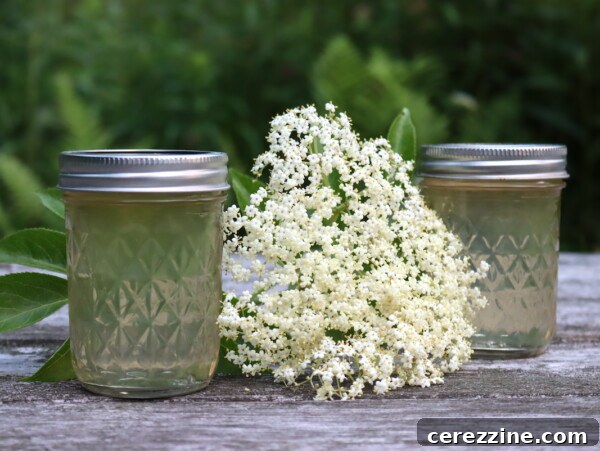
Elderflower Jelly
If you tried this Elderberry Lemonade Concentrate recipe, leave a star rating and share your notes in the comments. Homemade concentrates make lovely gifts and keep summer flavor on the pantry shelf through the colder months.
Elderberry Lemonade Concentrate
Equipment
- Water bath canner
- Canning jars, lids and bands
- Canning funnel
- Jar lifter
- Jelly strainer with bag or fine mesh strainer and cheesecloth
- Potato masher
- Large stainless steel saucepan
- Instant-read thermometer
Ingredients
For the Elderberry Juice
- 1 lb elderberries, as picked (de-stem before cooking)
- 3/4 cup water
For the Concentrate
- 1 cup elderberry juice (measured after straining)
- 2 cups bottled lemon juice
- 2 cups granulated sugar
Instructions
- De-stem the elderberries completely so no stem or leaf goes in the pot.
- Simmer the elderberries with the water for 10–15 minutes, mashing as they soften, until they collapse and release their juice.
- Strain through a jelly bag or fine-mesh strainer lined with cheesecloth and measure the juice.
- Prepare a water bath canner, jars, and lids; keep jars hot until filling.
- Combine the elderberry juice, bottled lemon juice, and sugar in a saucepan.
- Heat gently, stirring often, until the sugar dissolves and the mixture reaches 190°F. Do not boil.
- Ladle hot concentrate into hot jars, leaving 1/4 inch headspace. Wipe rims, center lids, and screw bands fingertip-tight.
- Process half pints, pints, or quarts in a boiling water bath canner for 15 minutes, adjusting for altitude as noted above.
- Turn off the heat, remove the canner lid, wait 5 minutes, then lift jars onto a towel. Cool 12–24 hours and check seals. Remove bands before storing.
- To serve, mix 1 part concentrate with 3 parts cold water.
Notes
Yield and measuring: 1 lb elderberries as picked is about 3 cups de-stemmed and yields roughly 1 cup of juice. The recipe makes about 2 pints of concentrate.
Dried elderberries: Pour 1 1/2 cups boiling water over about 1/4 cup dried elderberries, steep 5 minutes, then strain for about 1 cup of juice.
Recipe source and safety: This procedure follows water bath processing times for fruit purees; bottled lemon juice provides the necessary acid. There is no tested elderberry lemonade concentrate from agricultural authorities, so strict adherence to the lemon juice and sugar amounts is important.
Storage: Sealed jars keep 12–18 months in a cool, dark place. Sediment is normal; shake before mixing. Refrigerate after opening. Freeze options are available for non-canned batches.
Nutrition
Nutrition information is an approximation.
While the canner is out, consider other lemonade concentrates using seasonal fruit: blueberry, raspberry, strawberry, and watermelon all make lovely variations that follow the same bottled-lemon-juice principle.
Lemonade Concentrate Canning Recipes
Most recipes begin with fruit and a generous portion of bottled lemon juice for safety and flavor.
Canning Strawberry Lemonade Concentrate
Canning Lemonade (& Lemonade Concentrate)
Canning Watermelon Lemonade Concentrate