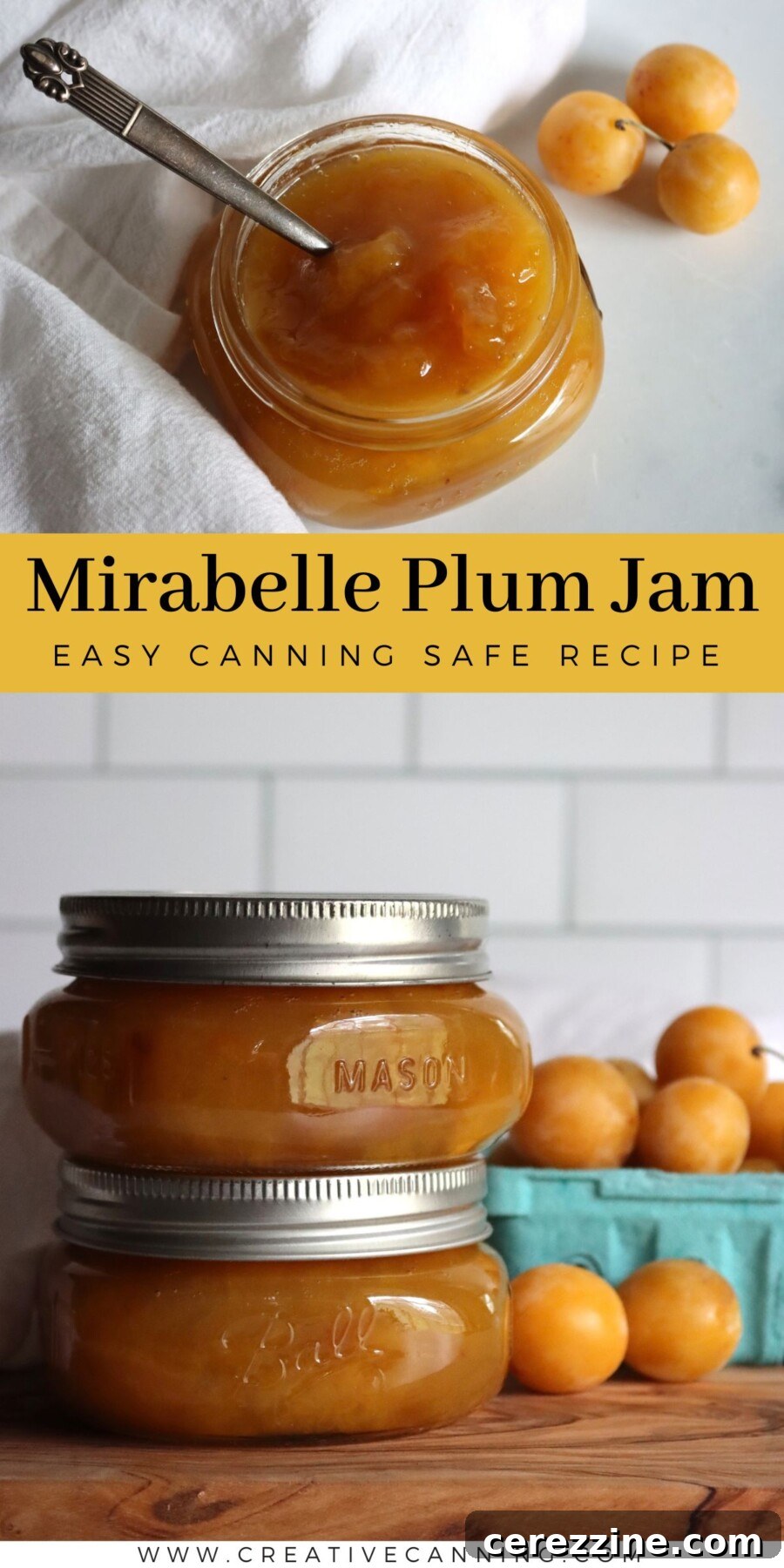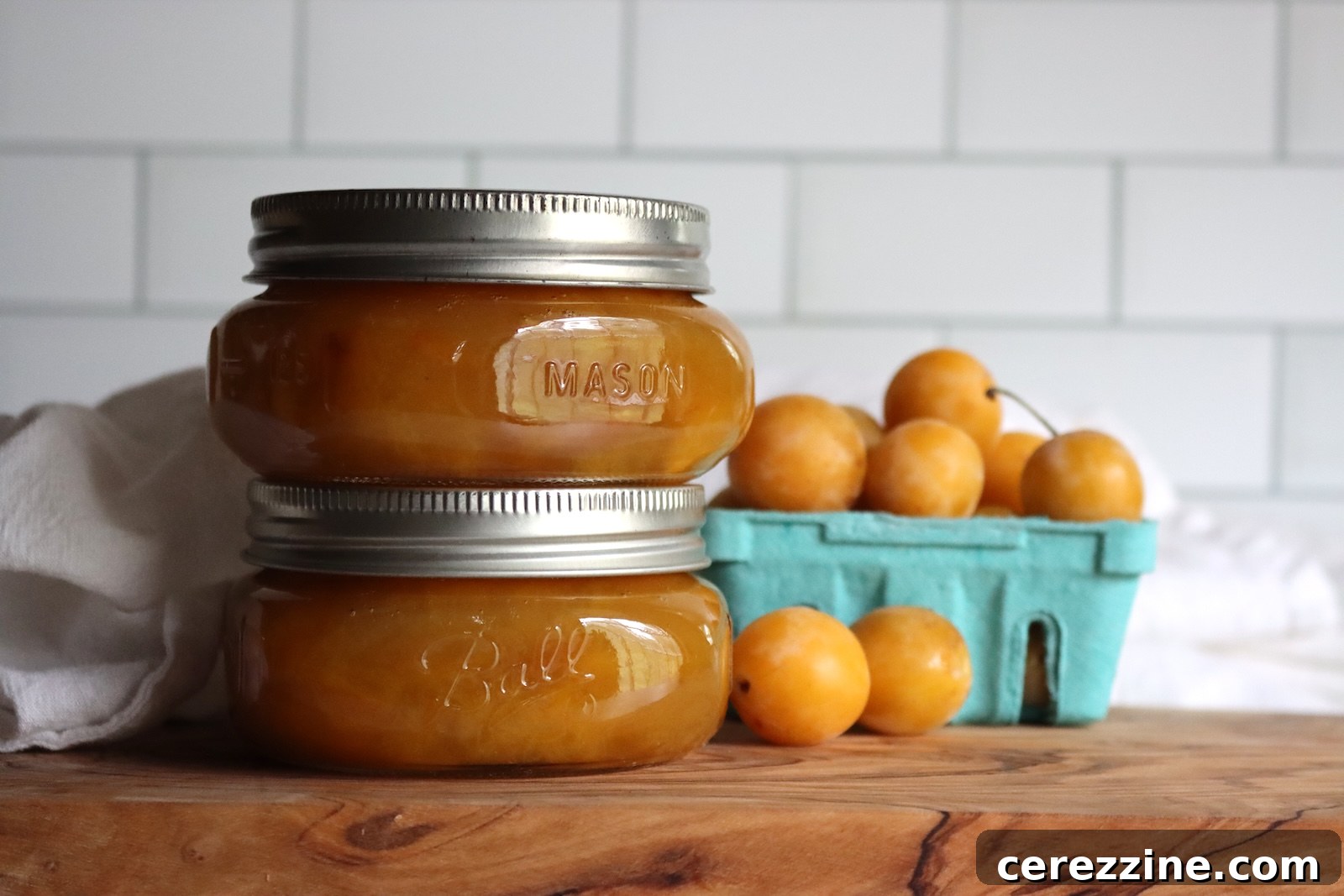
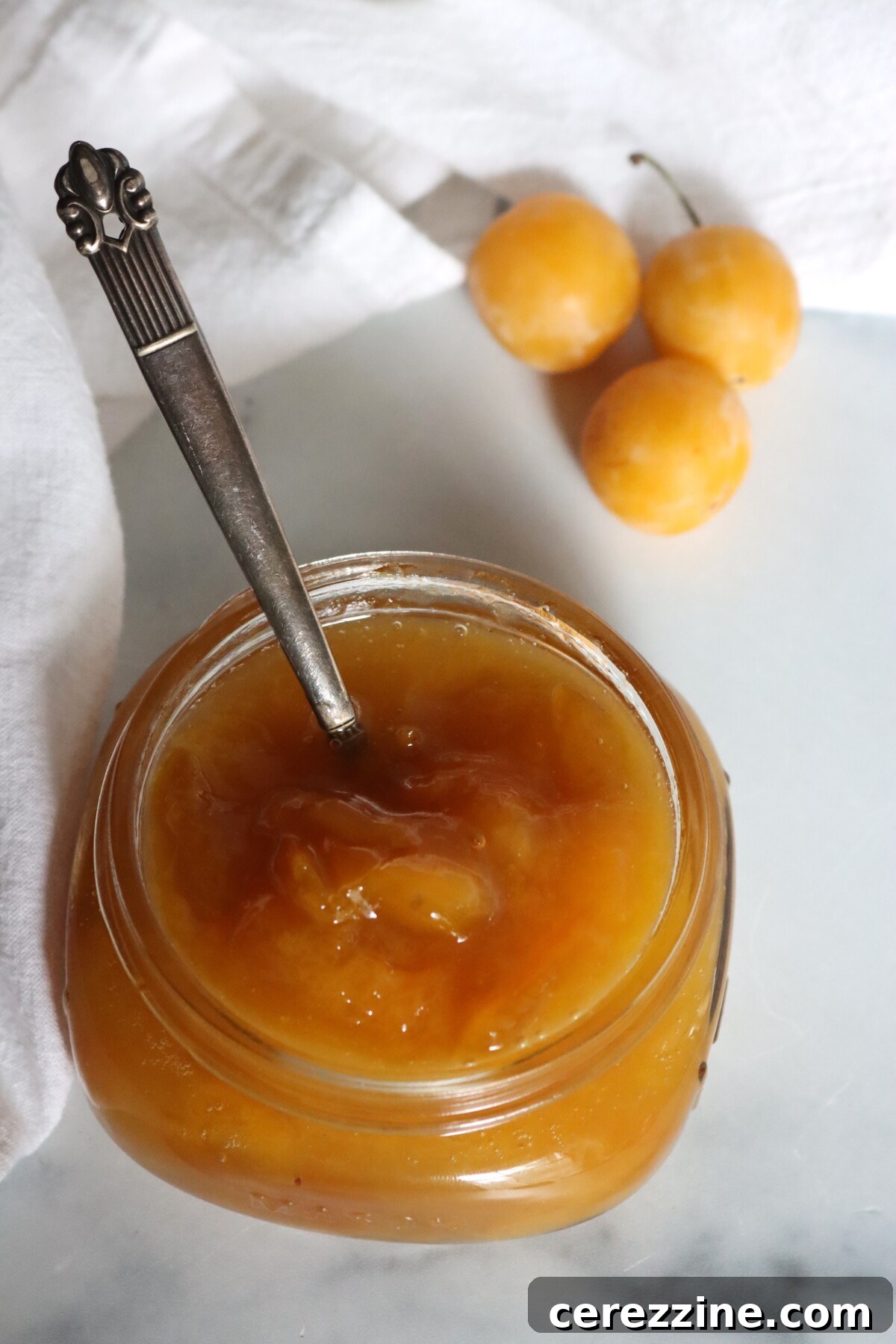
Mirabelle plum jam is a clear golden jam with a honeyed sweetness and a thick, spoonable texture that sets without any added boxed pectin. Mirabelles are tiny, intensely sweet plums with naturally high pectin, so this jam gels quickly and tastes bright and fresh.
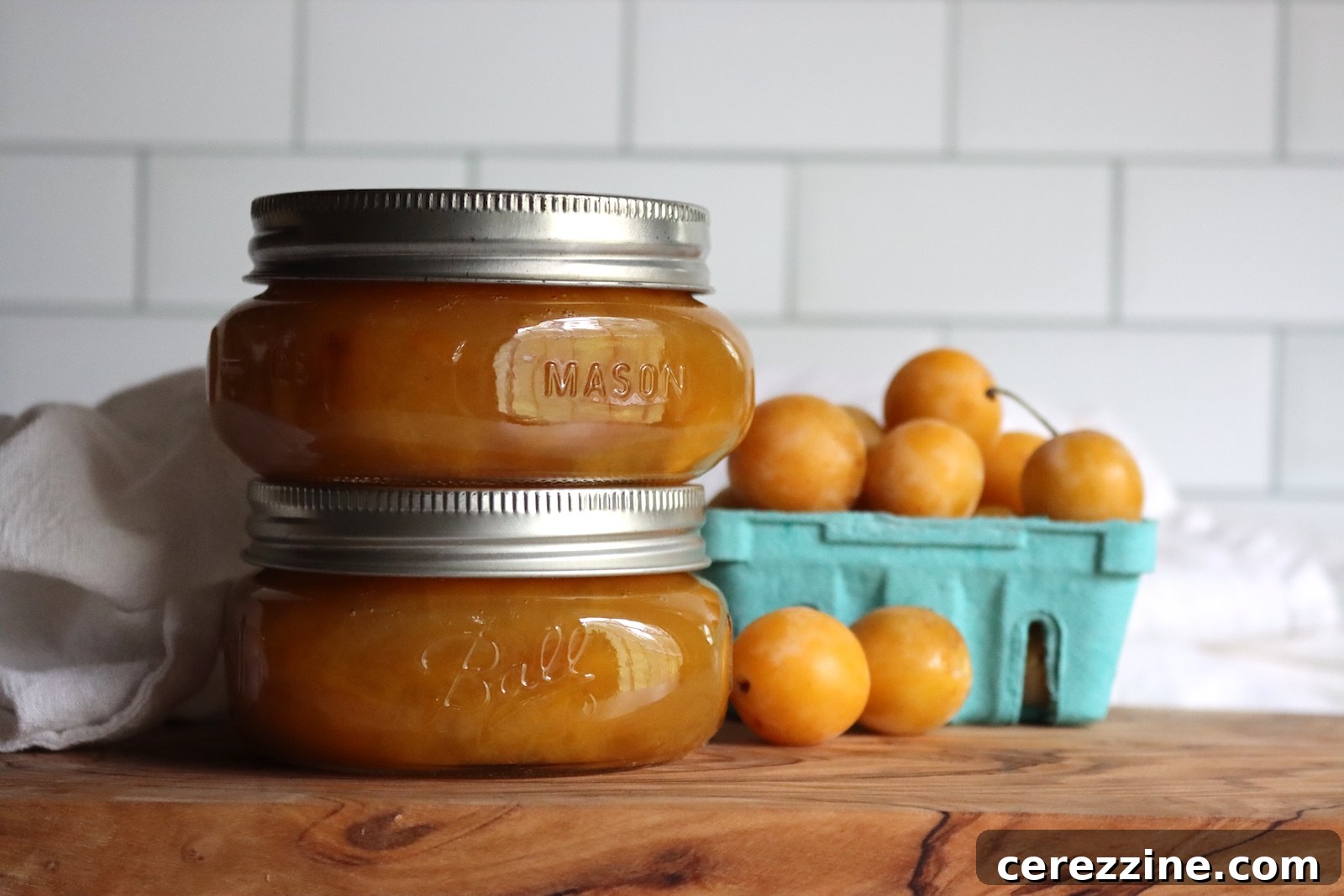
This recipe has been reviewed for safety and accuracy by a Master Food Preserver certified through the University of Cornell Cooperative Extension.
Mirabelles are small, round European plums about the size of a large cherry. Ripe fruit is yellow-gold, often freckled on the sunny side, with firm, dry flesh rather than a juicy texture. They are freestone, so the pit separates easily, and the flavor is cleanly sweet rather than tart.
In France, mirabelles are highly prized: the Lorraine region produces much of the world’s supply and celebrates the harvest each August. Jam is one of the most traditional ways to preserve the short mirabelle season, which lasts only a few weeks.
Because the flesh and skins of mirabelles are rich in pectin, they reach the gel stage quickly. In a small-batch cook I reached gel after about 15 minutes of a strong boil, using only lemon juice to help with acidity and setting.
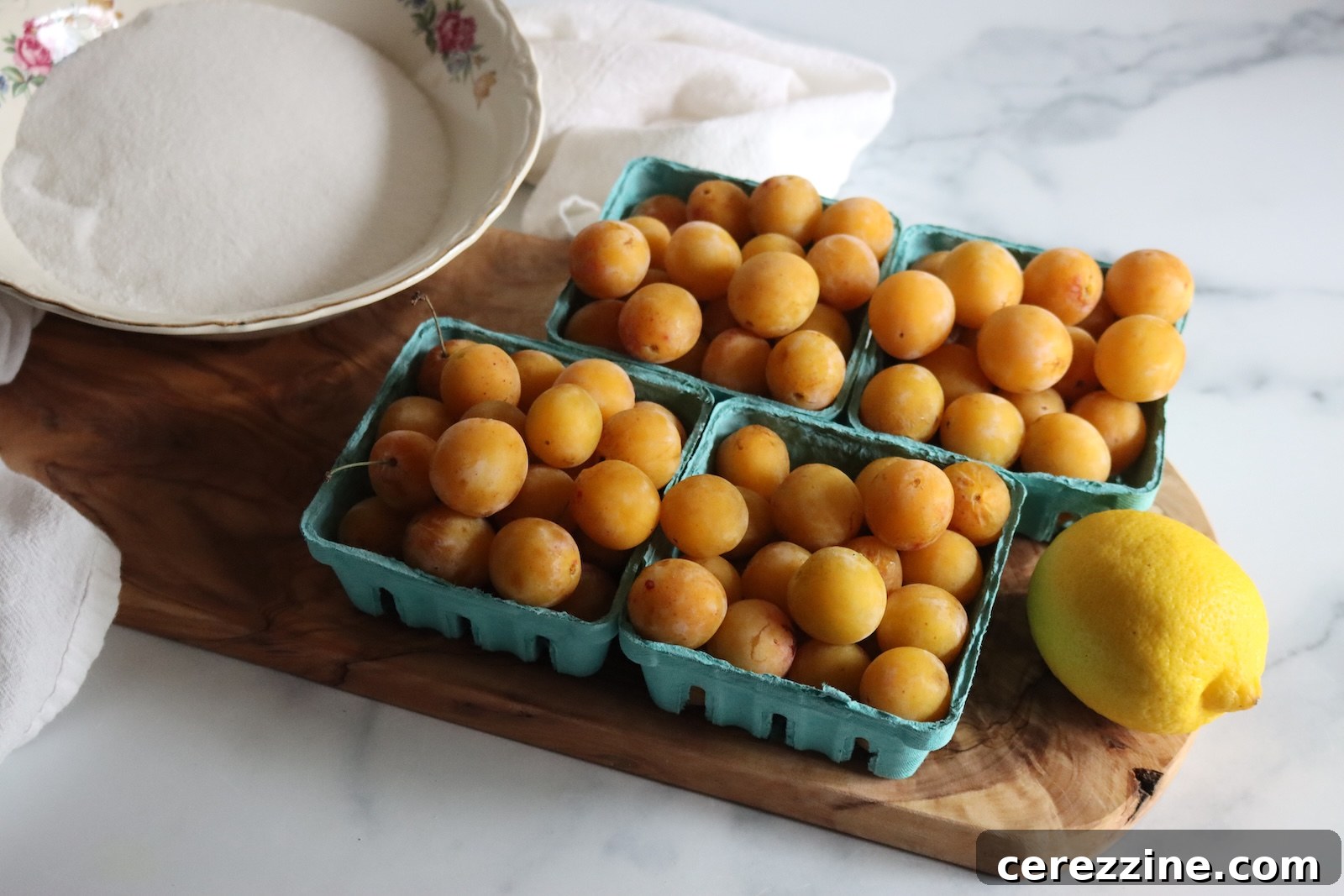
Traditional mirabelle jam often calls for equal weights of fruit and sugar, producing an intensely sweet preserve. I prefer cutting the sugar in half; with mirabelles that reduced sugar still gives a firm set and lets the plum flavor shine rather than tasting like pure candy.
Different yellow plums cook differently. Softer, juicier varieties may require a different method. Mirabelles are firmer and lower in acid than many other plums, so they deserve their own simple approach.
Notes from My Kitchen

Older recipes use a pound of sugar per pound of fruit. I’ve reduced that in many jams where the fruit’s natural sweetness and pectin make it possible. Mirabelles, in particular, need much less sugar to taste balanced and to set well.
I find this jam sweet enough at half the traditional sugar; doubling the sugar would only make it cloying rather than better.
Quick Look at the Recipe
- Recipe Name: Mirabelle Plum Jam
- Type: Jam (no added pectin)
- Canning Method: Water bath canning
- Prep Time: ~25 minutes
- Cook Time: ~25 minutes total; expect 15–20 minutes at a hard boil to reach gel
- Canning Time: 10 minutes for half-pints (adjust for altitude)
- Yield: About 3 half-pint jars
- Jar Sizes: Half pints or quarter pints
- Headspace: 1/4 inch
- Ingredients Overview: Mirabelle plums, granulated sugar, lemon juice, water
- Difficulty: Easy
What Are Mirabelle Plums
Mirabelles (Prunus domestica subsp. syriaca) originated from Asia Minor and have long been grown in France. A ripe mirabelle is round, yellow-gold, often freckled with red, and about 2–3 cm across. The flesh is pale, firm, and not especially juicy; the stone slips away easily.
They are notably less acidic than many other plums, so the tart bite common to some varieties is absent. Two common forms are Mirabelle de Nancy (larger, often eaten fresh) and Mirabelle de Metz (smaller, traditionally used for jam). If you have a backyard tree, either will make excellent jam.
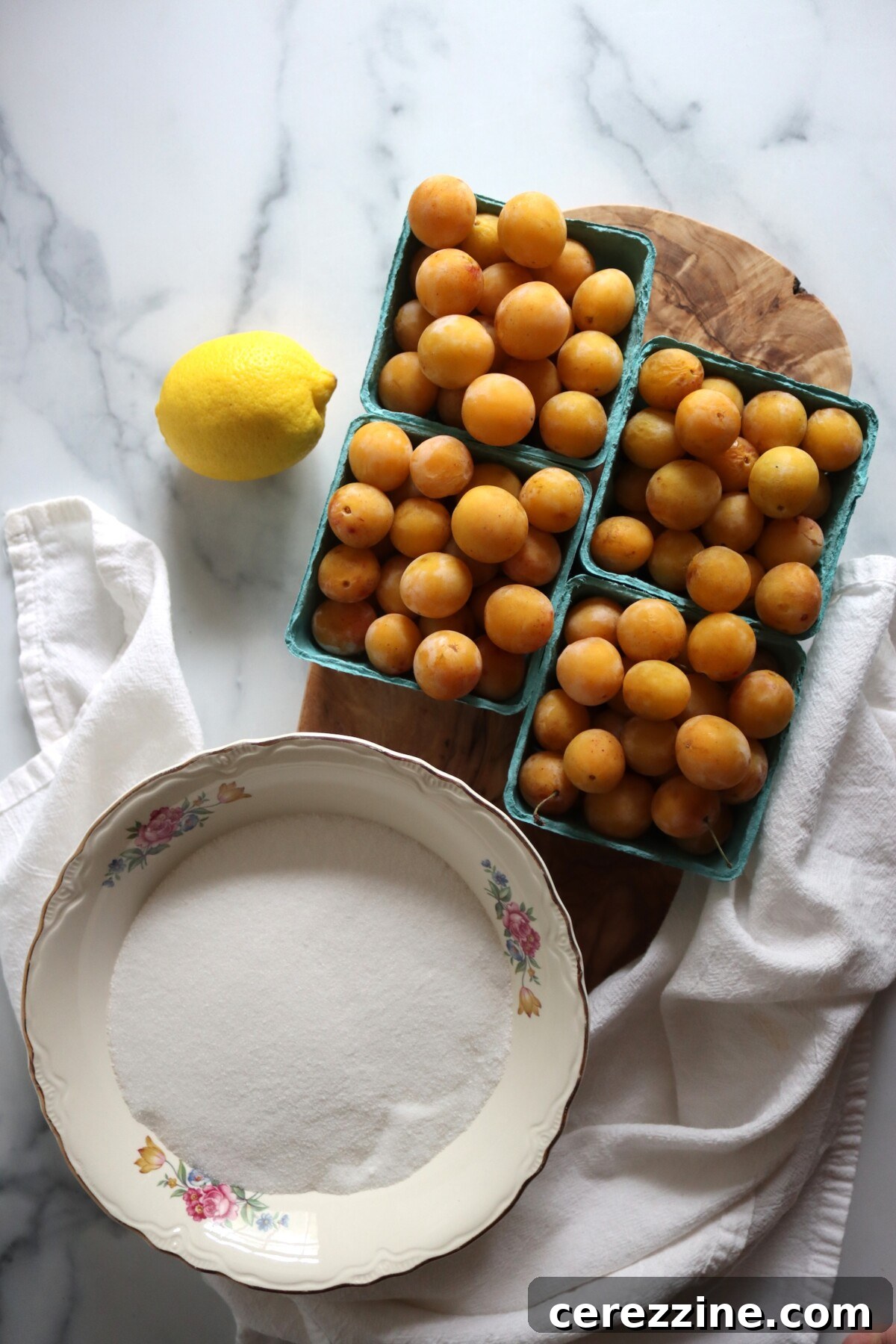
In regions without commercial production, fresh mirabelles can be hard to find, but nursery trees are available for many climates and will ripen in late summer. When they come, they usually ripen all at once.
Ingredients for Mirabelle Plum Jam
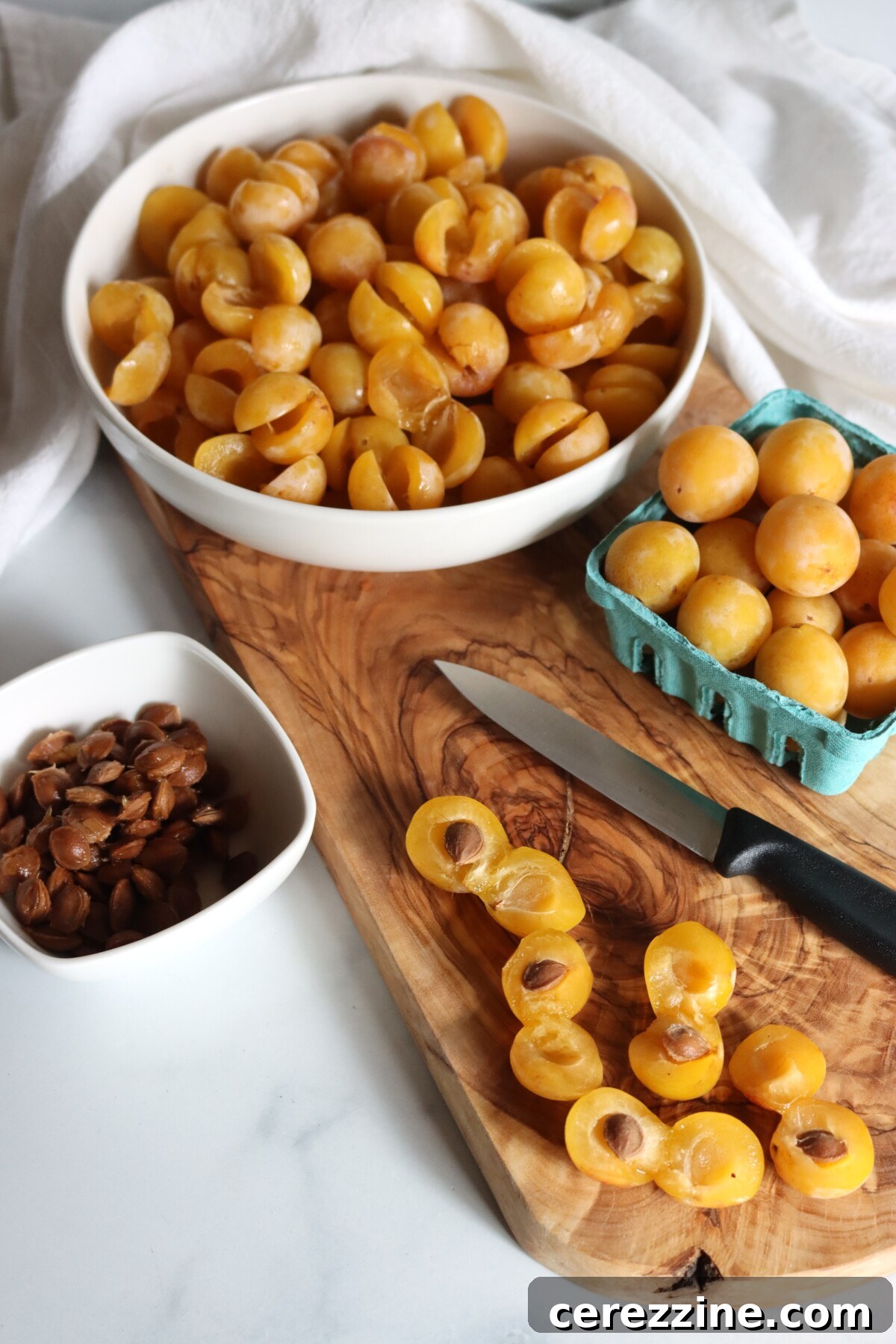
This small-batch jam uses only fruit, sugar, lemon juice, and a little water. Do not skip the water: mirabelles are dry and the water prevents scorching while the fruit softens.
- Mirabelle plums: Choose ripe but still firm fruit. Overripe plums have less pectin and produce a looser jam. Halve each fruit and remove the pit; leave the skins on, since they contribute pectin and color.
- Sugar: Granulated white sugar. This recipe uses half the sugar many traditional recipes call for; more sugar produces a firmer set and slightly higher yield, while less sugar yields a softer spread but a more pronounced plum flavor.
- Lemon juice: Do not omit. Mirabelles are low in natural acid; lemon juice balances flavor, helps pectin set, and is important for safe water bath canning.
- Water: A small amount protects the pot from scorching and helps the fruit break down evenly; it evaporates as the jam cooks down to the gel stage.
Use a wide, heavy-bottomed pot to give the batch surface area and prevent scorching. Small-batch jams cook quickly, and a heavy pot helps maintain even heat as the sugar thickens. Prepare jars and the canner before you begin pitting the fruit; the final cooking stage moves fast.
Low Sugar Options
This recipe is already reduced to about 1/2 pound of sugar per pound of prepared fruit. Mirabelles can still gel with as little as 1/4 pound of sugar per pound of fruit, though expect a longer boil, a softer set, and slightly less finished jam. Sugar here impacts flavor, set, and volume rather than preservation; acidity from the fruit and lemon juice is what allows safe water bath canning.
If you want to go lower than 1/4 pound per pound, use a tested low-sugar pectin designed to set at lower sugar levels. Replacements like maple syrup or honey can substitute partially but change flavor and scorch more easily; non-nutritive sweeteners are not recommended for canning or setting jam.
How to Make Mirabelle Plum Jam
There is no maceration step: the halved, pitted fruit goes into the pot with sugar, lemon juice, and water, and the whole mixture is brought to a hard boil and cooked to the gel stage. A typical small batch reaches gel in roughly 15 minutes of a vigorous boil after coming to a full boil, but stoves vary—use temperature and tests rather than strict timing.
A reliable ratio for this batch: 5 1/2 cups pitted mirabelles to 2 cups sugar, plus 1/4 cup lemon juice and 3/4 cup water. By weight, that’s about 2 pounds pitted fruit to 1 pound sugar.
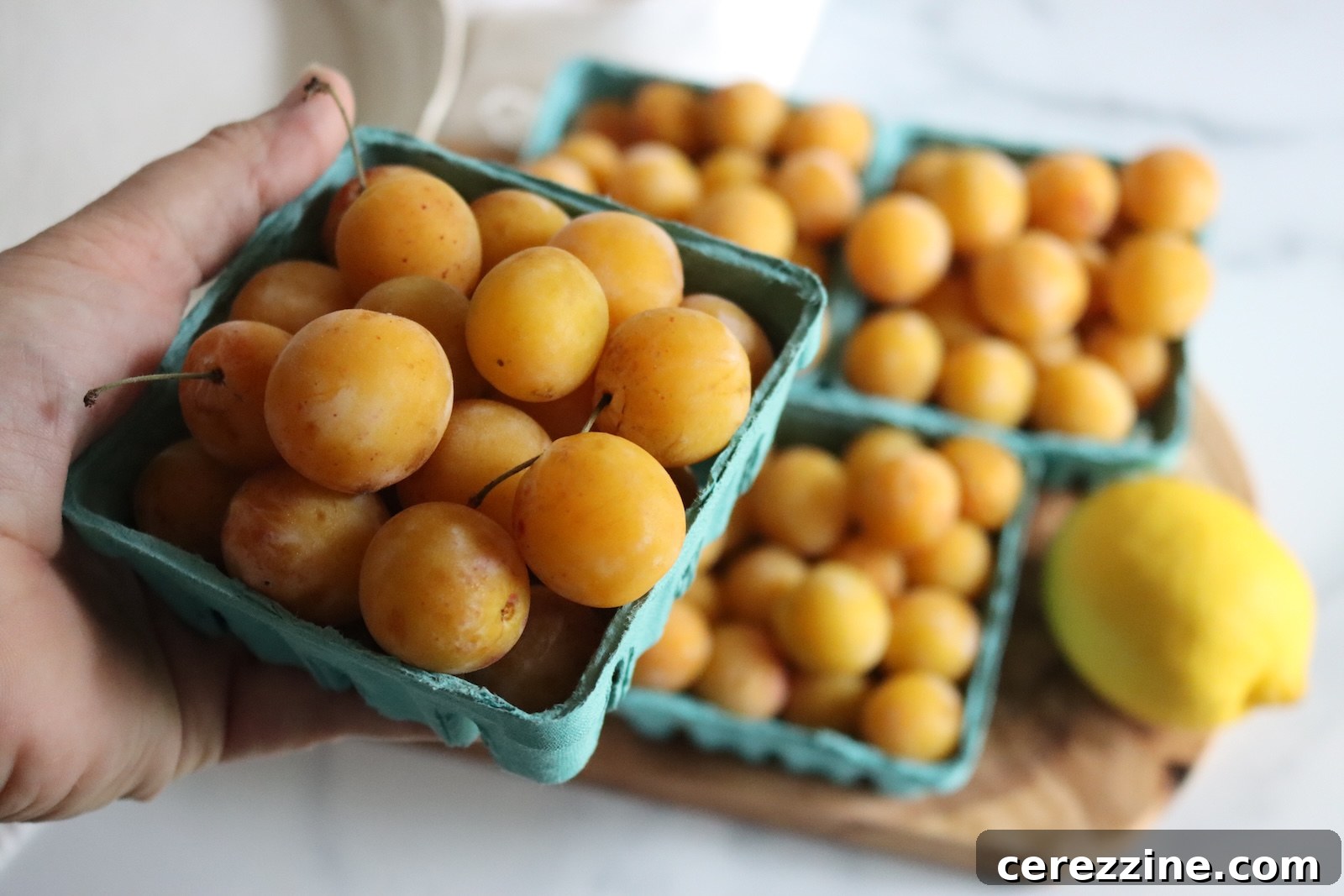
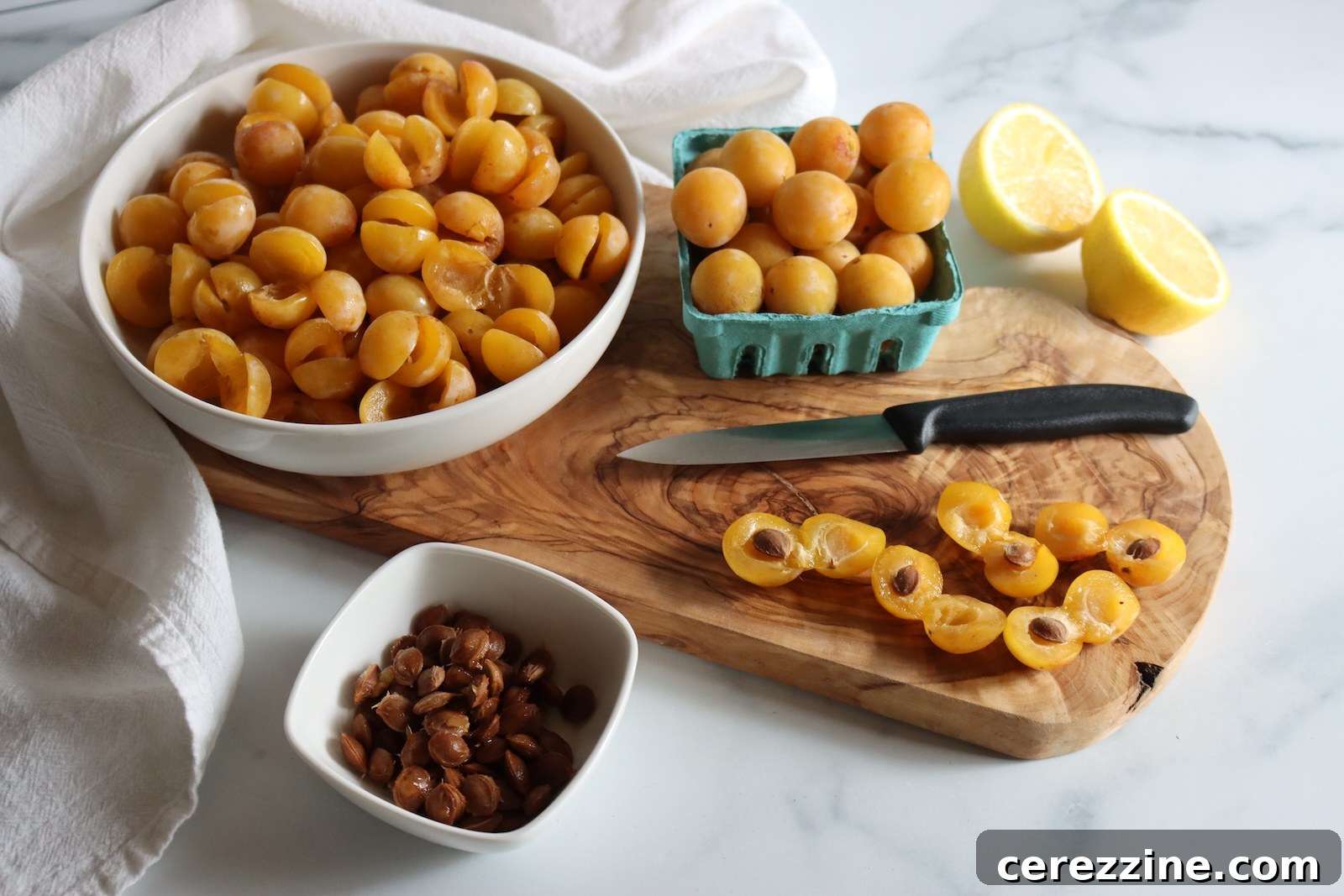
Pitting is the most time-consuming part. Mirabelles are freestone but small; halve them with a paring knife and pop the pit out with your thumb. Drop the halves, skins on, directly into the pot.
Add sugar, lemon juice, and water, and bring the mixture to a boil over high heat. Stir constantly as the fruit softens, pressing the halves against the pot to break them down. If you prefer chunkier jam, press less before the boil finishes the breakdown.
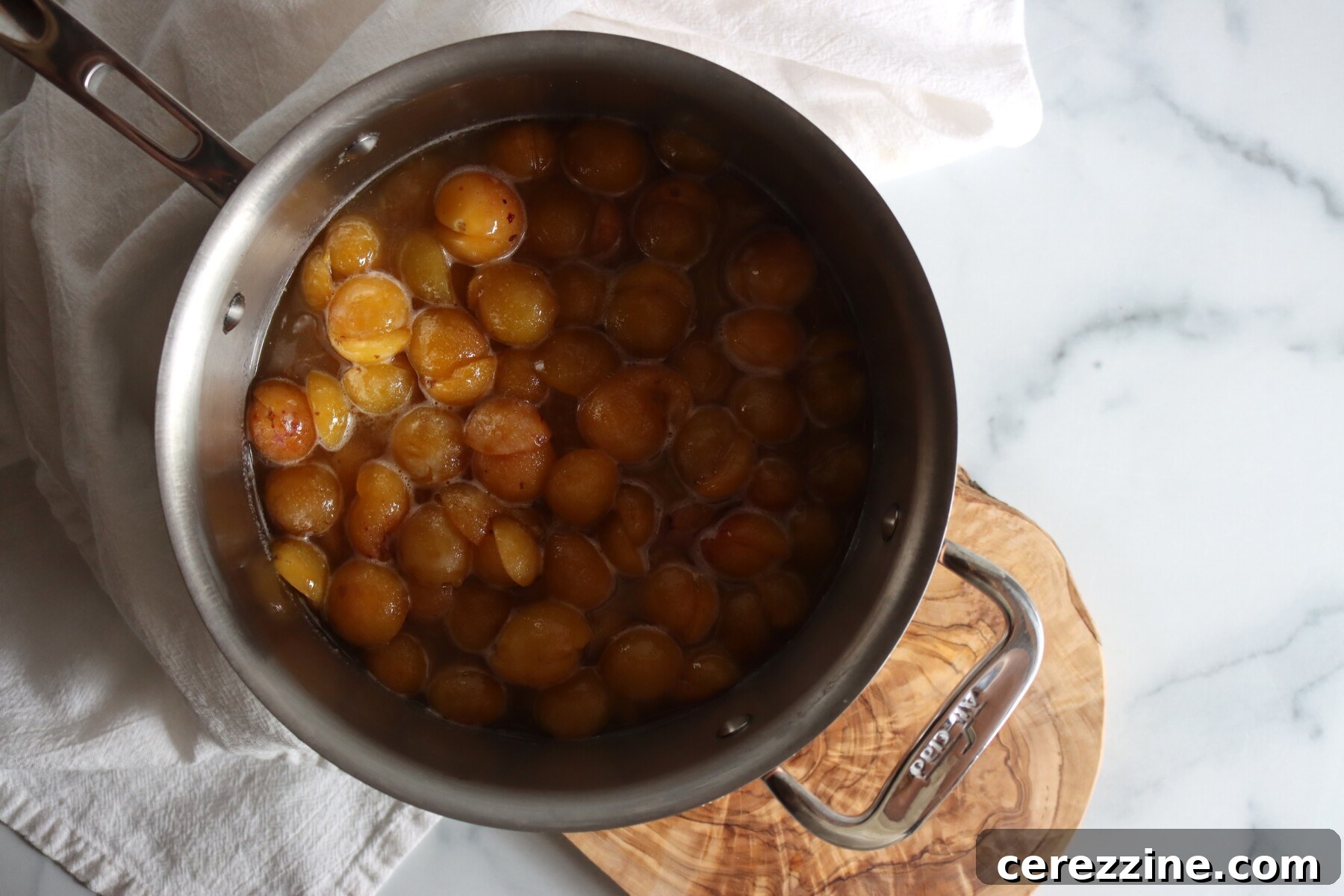
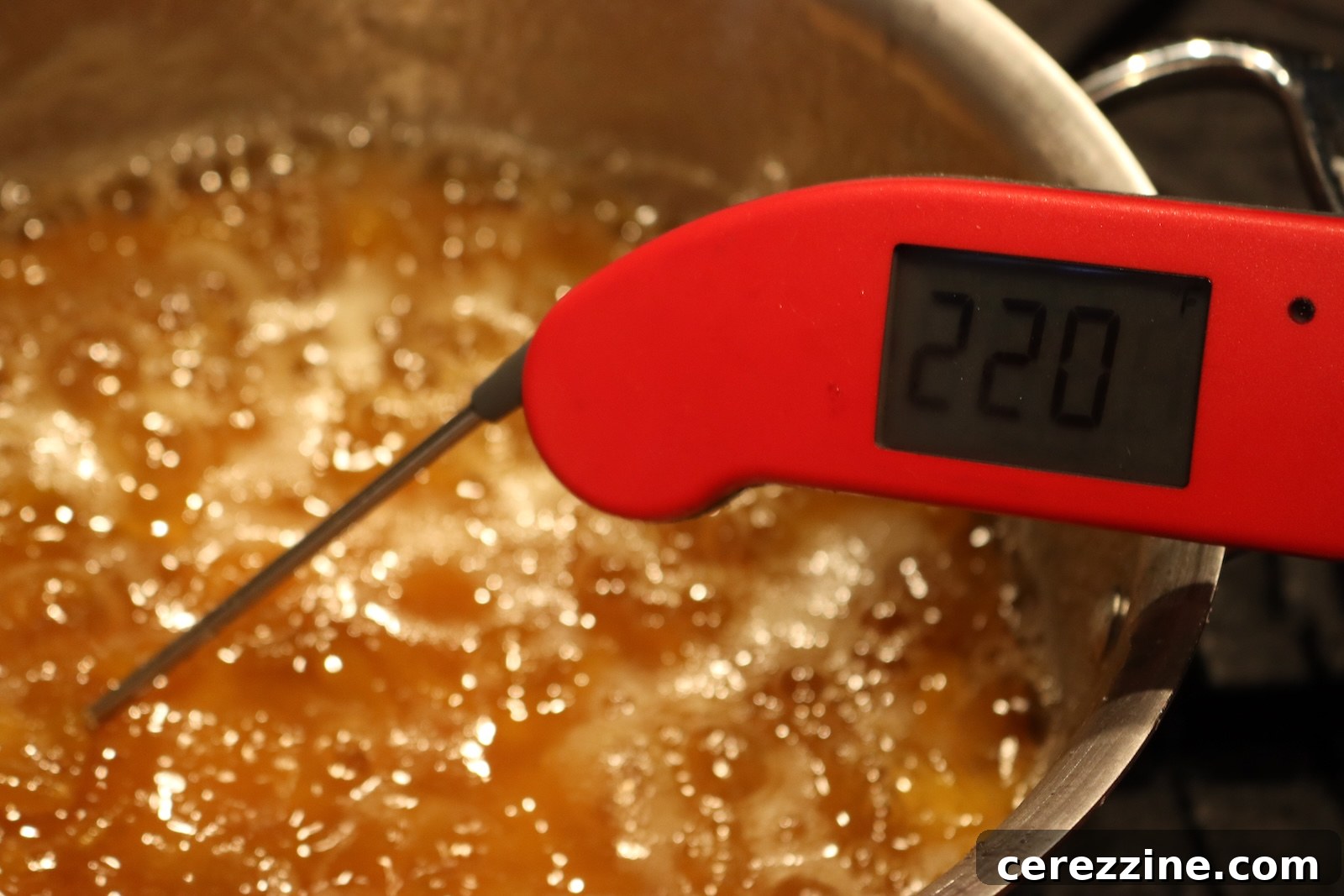
When the mixture reaches a full rolling boil that does not stop when stirred, start timing the boil. Keep stirring and scraping the bottom to prevent scorching. Test for gel around 12–15 minutes: the classic gel temperature is 220°F at sea level. Alternatively, use the cold-plate test: chill small plates in the freezer, place a spoonful of jam on a plate, return it to the freezer for a minute, then push the edge—if it wrinkles, it’s done.
Canning Mirabelle Plum Jam
Heat the water bath canner while you cook the jam so it is ready when the jars are filled. Keep jars warm and have lids, rings, and a funnel ready. Ladle hot jam into jars, leaving 1/4 inch headspace, remove air bubbles, wipe rims clean, center lids, and apply rings fingertip-tight.
Lower jars into the boiling canner so they are covered by at least 1 inch of water. Process half-pints for 10 minutes at altitudes up to 6,000 feet; above 6,000 feet increase processing time to 15 minutes. After processing, turn off the heat and let jars sit in the canner for 5 minutes before removing them to cool undisturbed for 12–24 hours.
Altitude Adjustments
Processing times for water bath canning increase at higher elevations: 0–6,000 feet = 10 minutes; above 6,000 feet = 15 minutes for half-pints. Adjust according to your elevation.
Setting Notes
Jam finishes setting as it cools, not in the pot. Hot jam will always look runny when you jar it; give jars 24–48 hours at room temperature to reach final consistency. Mirabelles often firm up more than other fruits at this reduced sugar level and produce a proper spreadable jam rather than a loose, spoonable preserve.
If the jam has not set after two days, likely reasons are: it was removed from heat before reaching the proper temperature, the fruit was overly ripe and low in pectin, or the batch was scaled up beyond the recommended size. You can recook an under-set batch to reach gel, or use it as a syrup if preferred.
Ways to Use Mirabelle Plum Jam
Start with toast—mirabelle jam is especially good on enriched breads like brioche or croissant where its honeyed notes shine. It also brightens plain yogurt with its golden color and flavor.
In baking, spoon it into prebaked tart shells for a simple tarte aux mirabelles, fill thumbprint cookies, or spread thinly between cake layers. Because it holds shape well in the oven, it’s excellent for hand pies and filled pastries. For savory uses, serve a spoonful on a cheese board next to washed-rind or aged sheep’s milk cheeses, or thin it with a splash of cider vinegar and a pinch of salt to glaze pork, duck, or chicken.
Storage and Shelf Life
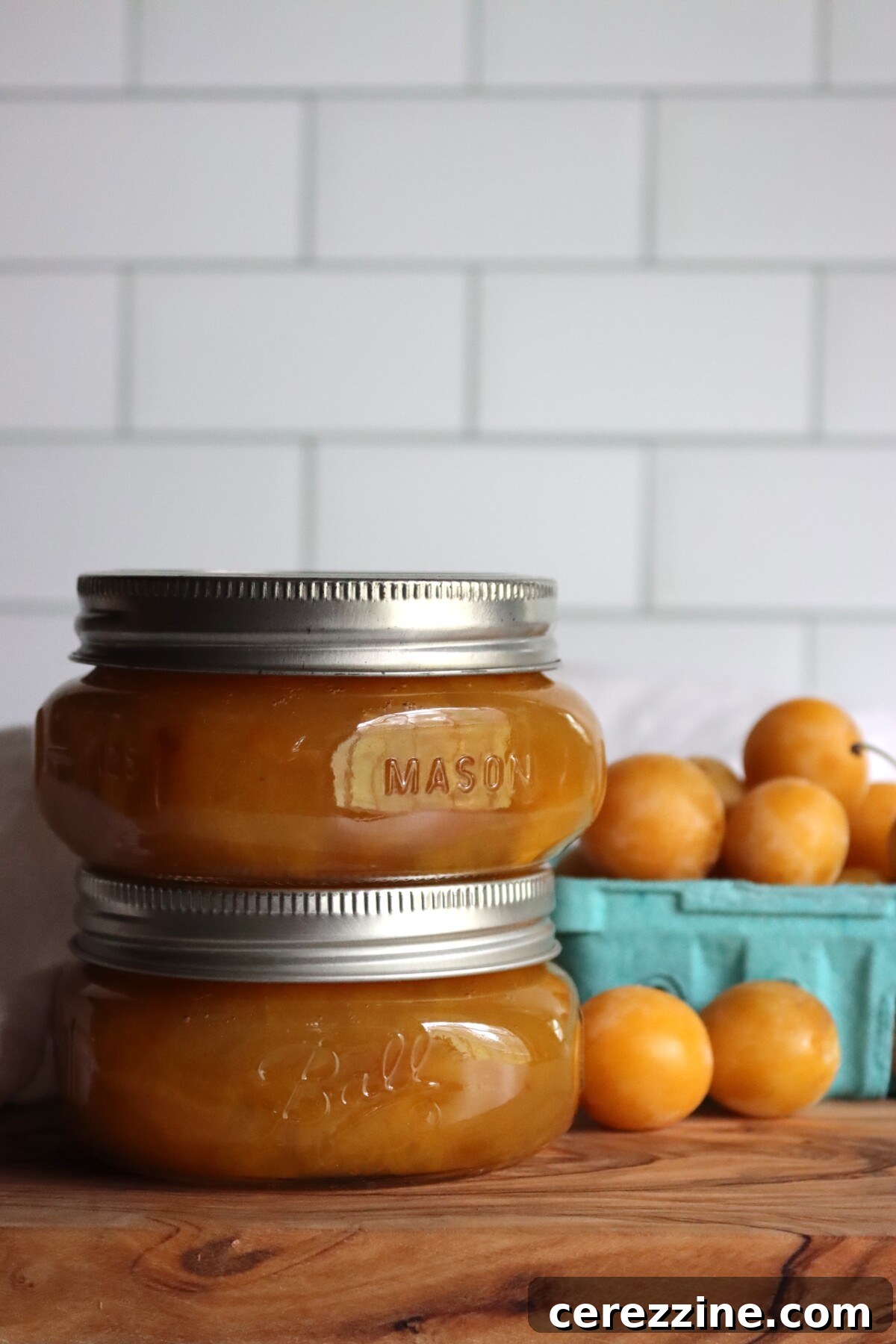
After 12–24 hours, press the center of each lid to check seals; a sealed lid is firm and slightly concave. Remove rings before long-term storage so a failed seal is visible. Label jars with the date and store sealed jam in a cool, dark place; quality is best for 12–18 months, though color may dull after a year.
A jar that did not seal should be refrigerated and consumed within a week or two, or reprocessed with a fresh lid within 24 hours. Once opened, keep jars in the refrigerator and use within 1–2 weeks. You can also skip canning for small batches: refrigerated jam keeps a few weeks, or freeze up to 6 months in straight-sided, freezer-safe containers with 1 inch headspace.
More Ways to Preserve Mirabelle Plums
If you have a large harvest, consider canning whole plums in syrup, making a strained jelly to skip the skins, or turning excess fruit into a concentrate for beverages. Pitted mirabelles also freeze well when spread on a sheet pan then transferred to freezer-safe containers.
Yield Notes
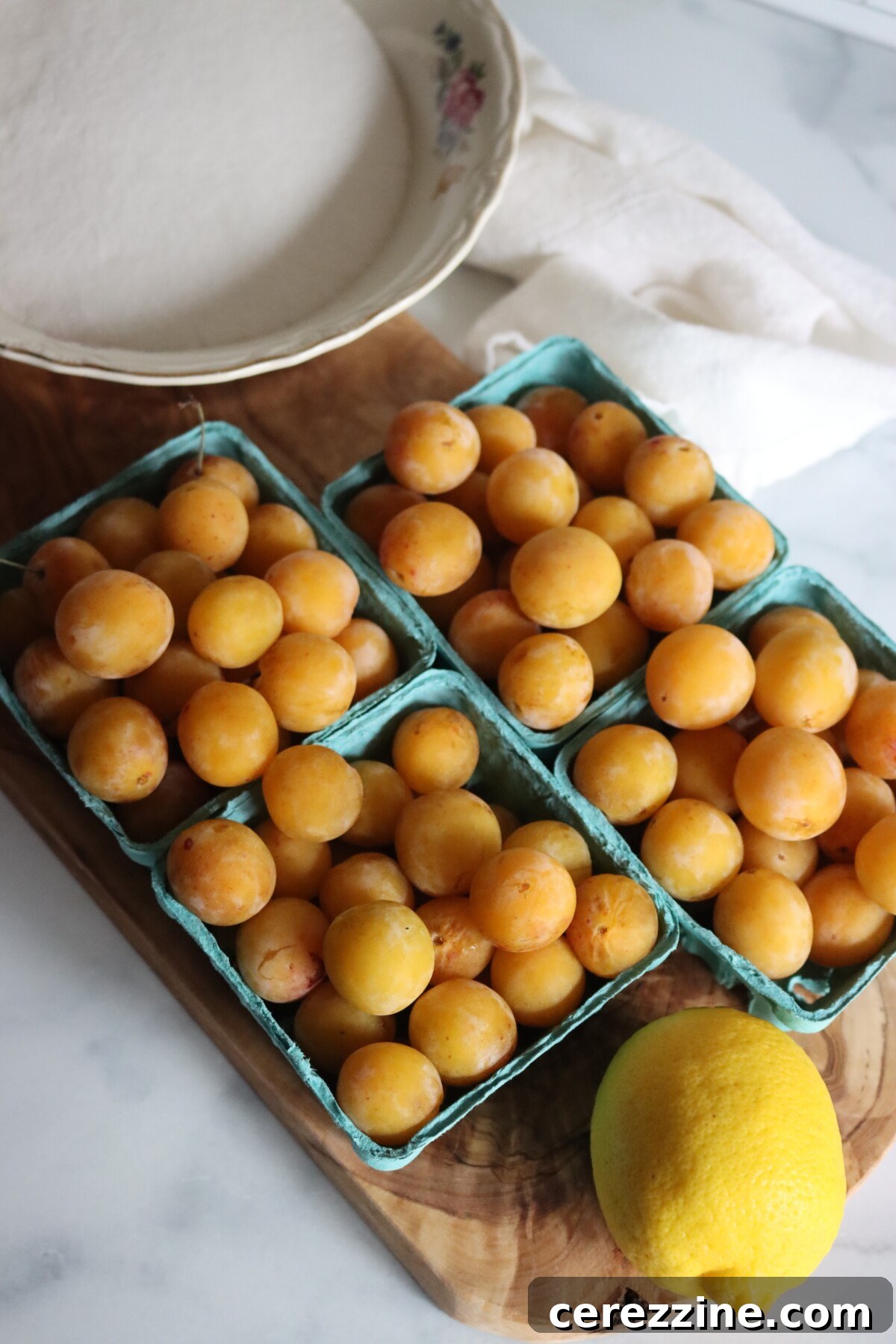
In my batch, four slightly heaping half-pint containers of whole plums weighed 2 1/4 lbs before pitting and yielded about 2 lbs pitted, which measured 5 1/2 cups packed. With 2 cups sugar, 1/4 cup lemon juice, and 3/4 cup water, the cook produced about 3 half-pint jars. A longer boil concentrates the jam and reduces yield; a doubled recipe makes about 6 half-pints but needs a little more boiling time.
Mirabelle Plum Jam FAQs
Common questions tend to focus on pectin, peeling, and substitutions.
Do I need to add pectin to mirabelle plum jam?
No—mirabelles are naturally high in pectin, especially in the skins. Lemon juice adds acidity that helps pectin set. Cooking to the gel stage is what produces a set jam, so boxed pectin is not necessary for this recipe.
Why didn’t my mirabelle jam set?
The usual reasons are removing the jam from heat before it reached gel temperature, using overripe fruit low in pectin, or scaling the batch too large. Allow 24–48 hours to finish setting; if it still fails to gel, recook or use a low-sugar pectin product designed for lower-sugar jams.
Do I have to peel mirabelles for jam?
No—leave the skins on. They are thin, cook down, and provide pectin and color. Peeling small plums is time-consuming and unnecessary. If you want a clear jelly without skins, strain the cooked fruit and make jelly instead.
Can I make this jam with less sugar?
Yes. This recipe uses half the sugar of traditional mirabelle jam and will still set. Mirabelles can set at about 1/4 pound of sugar per pound of prepared fruit, but expect a softer set and longer boil. Below that level, use a low-sugar pectin to ensure reliable setting.
What can I use instead of mirabelle plums?
Greengages are a close substitute, though they are juicier and may need slightly less added water and a few more minutes of cooking. Softer yellow plums require a different approach and amount of water; use a recipe suited to those varieties.
Plum Canning Recipes
If your tree produced more than this batch uses, consider other ways to preserve the surplus.
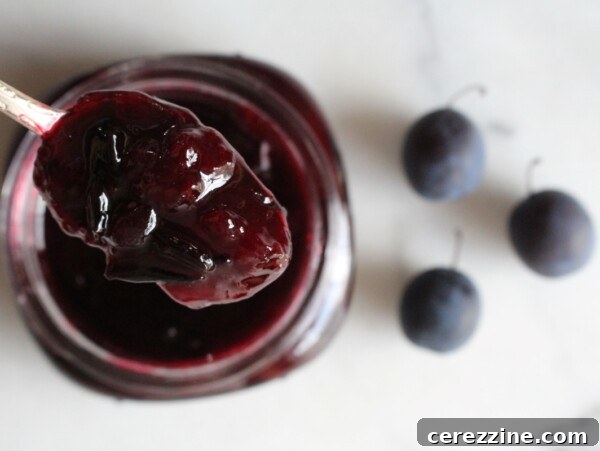
Damson Jam
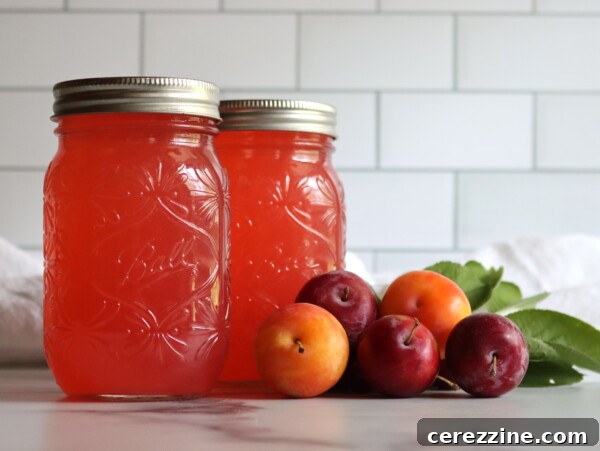
Canning Plum Lemonade Concentrate
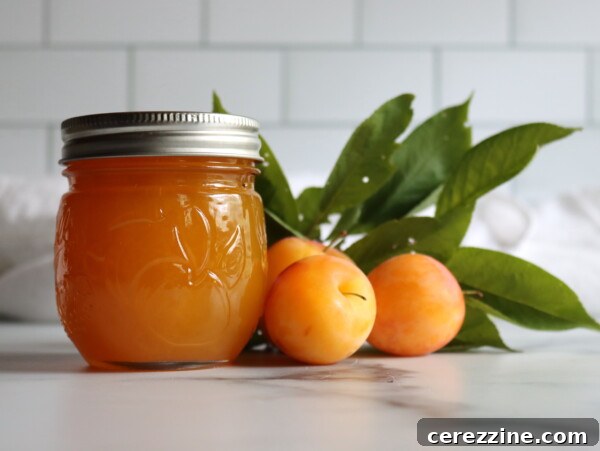
Yellow Plum Jam
If you tried this Mirabelle Plum Jam recipe, please leave a star rating and share feedback in the comments to help other home canners.
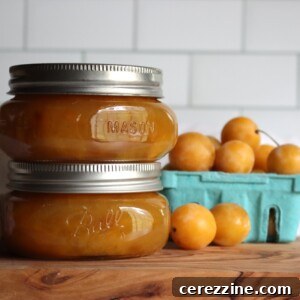
Mirabelle Plum Jam
Equipment
- Water bath canner
- Canning jars, lids, and bands
- Heavy-bottomed pot
- Sharp paring knife
- Instant-read thermometer
- Canning funnel
Ingredients
- 2 1/4 lbs mirabelle plums (as purchased; pitted yields ~2 lbs / 5 1/2 cups packed)
- 2 cups granulated sugar
- 1/4 cup lemon juice, fresh or bottled
- 3/4 cup water
Instructions
- Wash jars and keep them warm. Fill and heat the water bath canner so it comes to a simmer while you make the jam. Have lids, rings, and a funnel ready.
- Rinse plums and discard any that are soft or split. Halve each plum with a paring knife and push the stone out with your thumb; leave the skins on.
- Place pitted plums, sugar, lemon juice, and water in a wide, heavy-bottomed pot. There is no need to macerate first.
- Bring to a boil over high heat, stirring constantly. Press plum halves against the side of the pot as they soften to break them down and help the sugar dissolve.
- Maintain a hard rolling boil. Continue stirring and scraping the pot to prevent scorching until the jam reaches the gel stage (about 220°F at sea level) or passes the cold-plate wrinkle test. Expect roughly 15–20 minutes of a vigorous boil, but go by temperature.
- Ladle hot jam into prepared jars, leaving 1/4 inch headspace. Remove air bubbles, wipe rims clean, center lids, and apply rings fingertip-tight.
- Process jars in the boiling water bath, covered by at least 1 inch of water, for 10 minutes (adjust for altitude). Turn off heat and let jars stand in the canner for 5 minutes before removing them to cool undisturbed for 12–24 hours.
- After cooling, remove rings, check seals, label, and store sealed jars in a cool, dark place. Refrigerate any jars that failed to seal and use within a week or two, or reprocess with new lids within 24 hours.
Notes
Recipe source: This method follows tested guidance for plum jam made without added boxed pectin.
Yield and measuring: Four heaping half-pint containers of whole plums yielded about 2 1/4 lbs unpitted, ~2 lbs pitted, which packed to about 5 1/2 cups and produced roughly 3 half-pint jars.
Pectin and set: Use ripe but firm fruit and leave skins on for pectin and color. Cook to gel temperature; jam will firm over 24–48 hours.
Water: Keeps the pot from scorching while the dry-surfaced mirabelles break down; it evaporates before finish.
Lemon juice: Important for flavor, acidity, and safe canning—do not omit.
Sugar: This recipe uses half the sugar of many traditional mirabelle jams. It still sets reliably; to go lower, use a tested low-sugar pectin product.
Batch size: The recipe halves and doubles cleanly; a double batch yields about 6 half-pints but needs a bit more cooking time. Avoid scaling far beyond double in a single pot.
Canning optional: Small batches can be refrigerated for a few weeks or frozen up to 6 months in straight-sided, freezer-safe jars with 1 inch headspace.
Nutrition
Nutrition information is an approximation.
Looking for another small batch to put up this week? Try other jam recipes that set without added pectin or explore more water bath canning projects when you have the canner out.
Jam Canning Recipes
More small-batch jams that rely on fruit pectin rather than boxed pectin.
Pear Jam
Caramelized Onion Jam
Blueberry Jam (without Added Pectin)
Find the perfect recipe
Search the site for other recipes and techniques to match your harvest and canning plans.