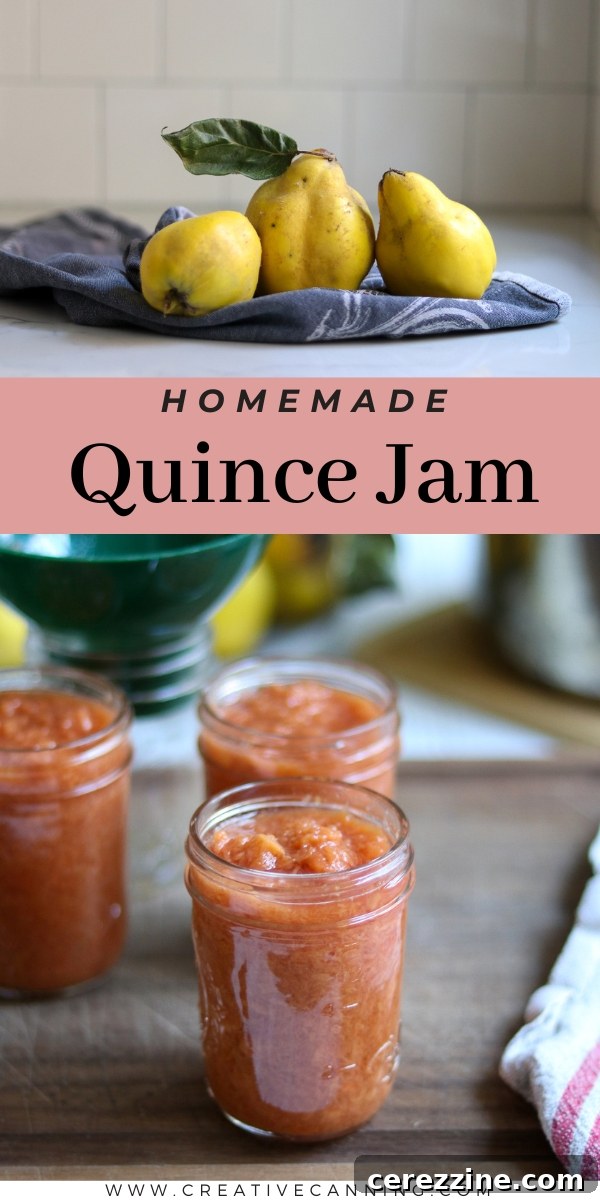
Quince jam is a truly exceptional preserve, offering a captivating blend of sweet pears and delicate rosewater notes. Its vibrant hue and complex aroma make it a delightful addition to your morning toast, a sophisticated companion for cheeses, or a secret ingredient in cherished desserts. Dive into the art of transforming this ancient fruit into a luscious, fragrant homemade jam.
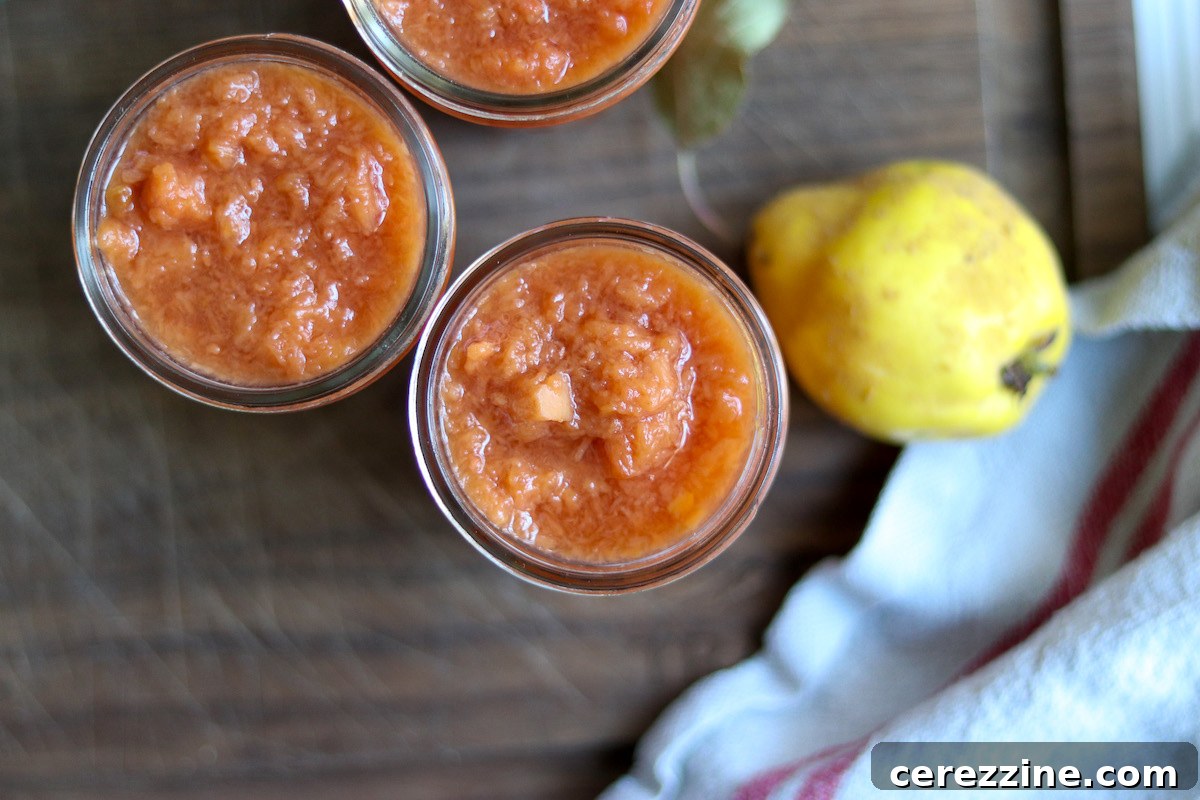
Embracing the Enigma of Quince: A Culinary Journey
Quince, an ancient fruit with a captivating history, holds a special place in our home. With our own quince tree now flourishing on the homestead, I’m always eager to explore new quince recipes. While we’ve perfected classics like membrillo (quince paste) and delightful quince jelly, there’s something uniquely satisfying about a full-bodied preserve that truly captures the exquisite, fragrant essence of quince. This humble fruit, often overlooked in modern kitchens, possesses a magical quality that transforms under heat.
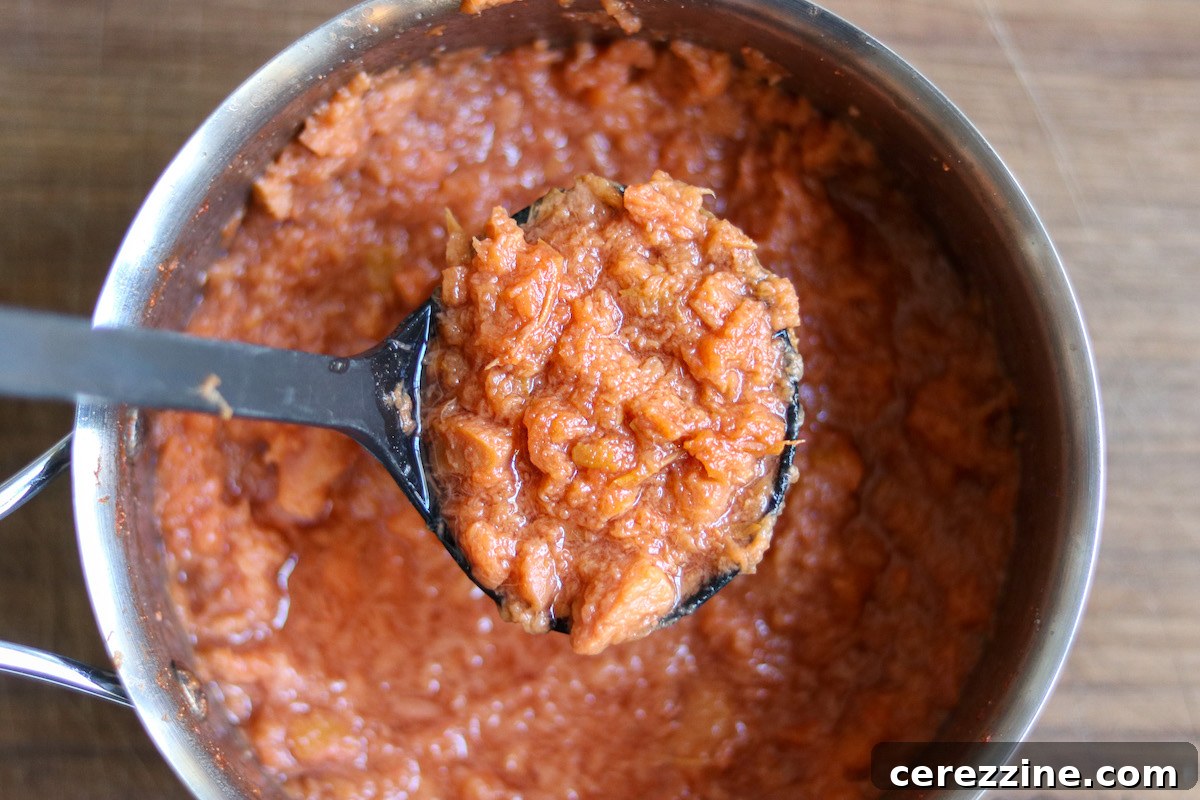
When cooked with care, the hard, pale yellow quince transmutes into an incredibly luscious, rose-scented preserve. Its color deepens to a stunning shade of bright pink or rich ruby red, a testament to the fruit’s hidden beauty and the magic of slow cooking. Quince jam has quickly become a family favorite, and preserving it each year is a cherished tradition.
Quince Jam vs. Quince Preserves: Understanding the Differences
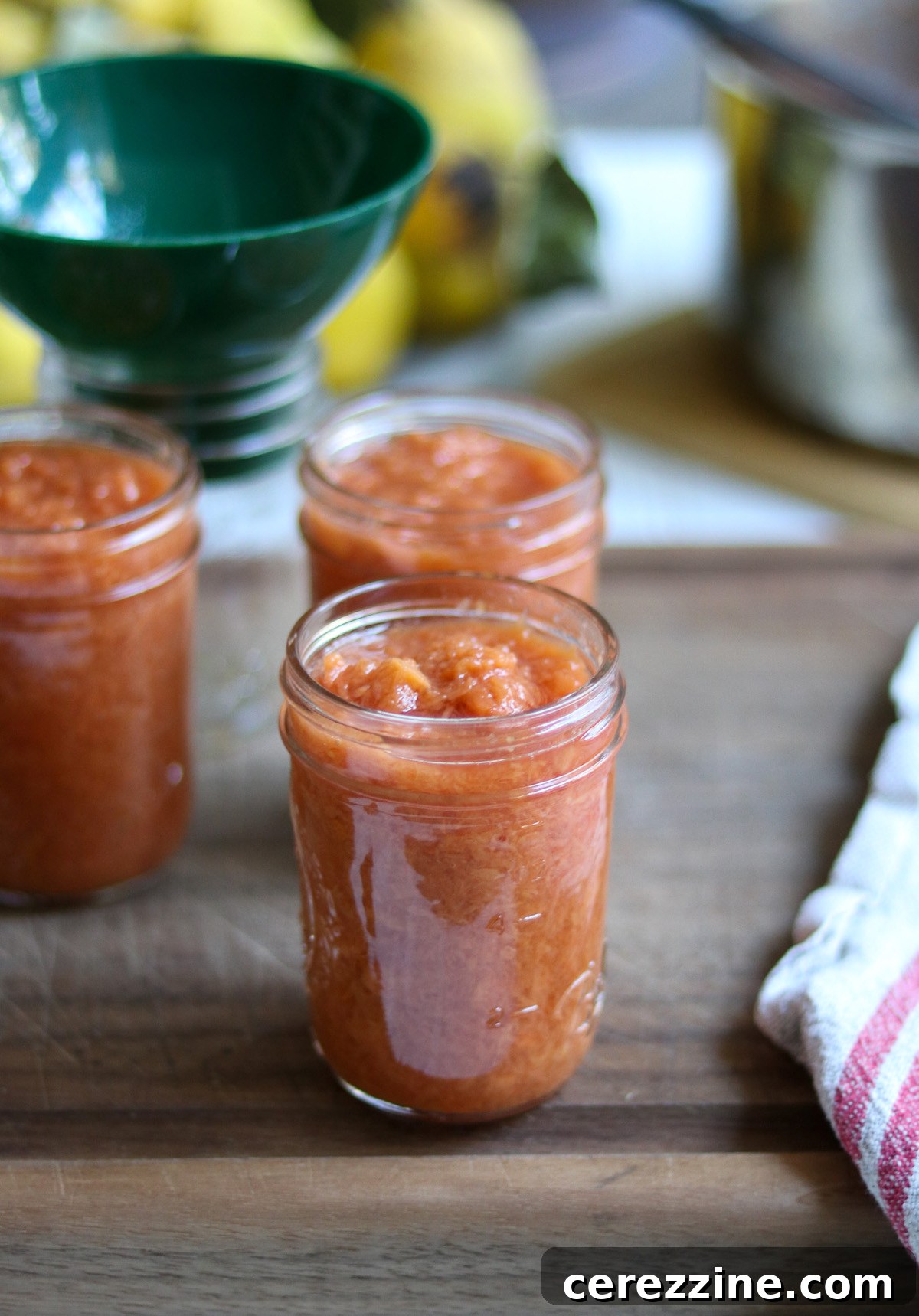
Before we delve into the recipe, let’s clarify the distinction between quince jam and quince preserves, as the terms are sometimes used interchangeably, yet often refer to slightly different preparations. Traditionally, “preserves” can imply larger chunks of fruit suspended in a syrup, often maintaining more of the fruit’s original shape. In many Middle Eastern cultures, quince preserves are a beloved treat or condiment, featuring tender, syrupy pieces of quince.
For this recipe, however, we are aiming for a smoother, more unified texture, characteristic of a classic jam. If your preference leans towards chunkier preserves, you might refer to a recipe for canning quince, where the fruit is typically chopped into larger cubes or slices and processed in syrup. Our goal here is a spreadable, homogeneous consistency, where the quince fruit disintegrates into a beautiful, fragrant jam.
The remarkable pectin content naturally present in quinces is key to achieving this perfect jam consistency without the need for additional gelling agents. When cooked long enough, the fruit breaks down, releasing its pectin and creating that characteristic gel. If you choose to leave the peels on for extra flavor and pectin, an immersion blender can be a helpful tool to ensure a smooth texture, though a rustic jam with small bits of peel can also be delightful.
Essential Ingredients for Perfect Quince Jam
Crafting a batch of delicious quince jam requires just a few simple ingredients, allowing the unique flavor of the quince to truly shine. This recipe is designed to yield approximately 5 half-pint (8 oz) jars of jam, perfect for gifting or enjoying throughout the year.
Choosing Your Quince
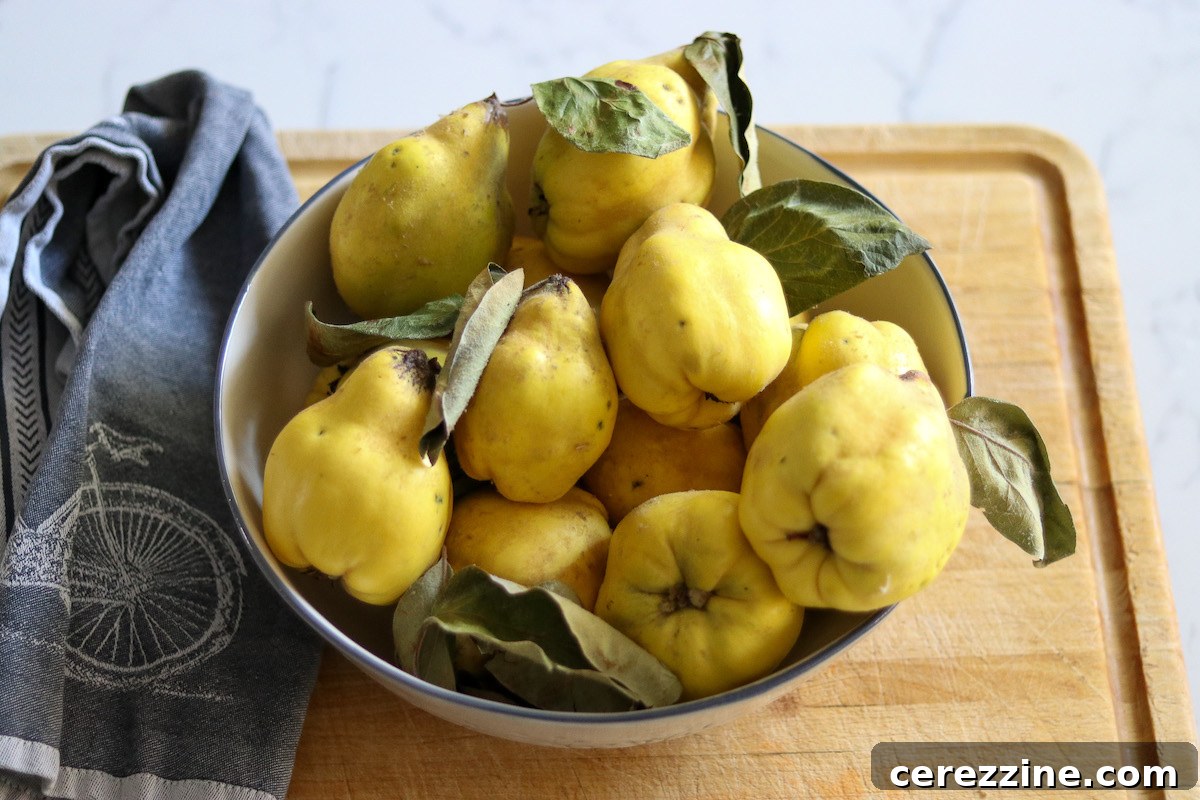
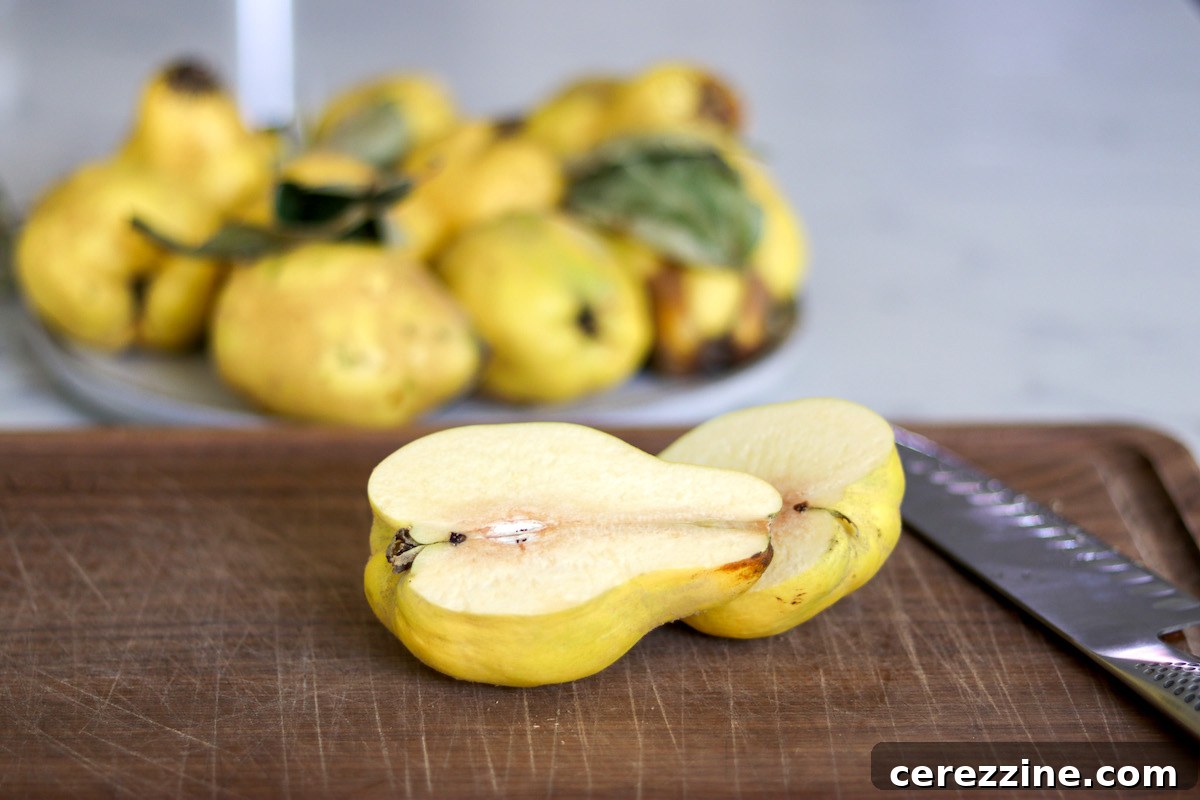
The foundation of exceptional quince jam begins with selecting the right fruit. You’ll need about 7 cups of peeled and chopped quince for this recipe. When choosing quinces, look for those that are firm to the touch, without any soft spots or blemishes. Ripe quinces should boast a beautiful golden-yellow skin and emit a distinctively sweet and floral aroma. Avoid greenish quinces, as they are often unripe and may not develop the desired flavor and color during cooking.
The Simple List of Ingredients:
- 7 cups cored and chopped quince (peeling optional, as discussed below)
- 2 to 3 cups granulated sugar (adjust to your sweetness preference)
- ¼ cup fresh lemon juice
- Water (for simmering)
One of the many benefits of working with quince is its naturally high pectin content. Unlike many other fruits that require added commercial pectin to achieve a good set, quinces are pectin powerhouses. This makes them inherently ideal for jams, jellies, and preserves, allowing you to create a traditional, additive-free product with ease. The lemon juice, beyond enhancing flavor, also plays a crucial role in activating the pectin, ensuring a perfect gel.
Crafting Homemade Quince Jam: A Step-by-Step Guide
Making quince jam is a rewarding process, requiring patience and a love for traditional preserving. Follow these steps to create a batch of fragrant, rosy perfection.
Preparation is Key
If you plan to can your jam for long-term storage, it’s essential to prepare your water bath canner and sterilize your jars and lids *before* you begin cooking the jam. This ensures a seamless transition once the jam is ready.
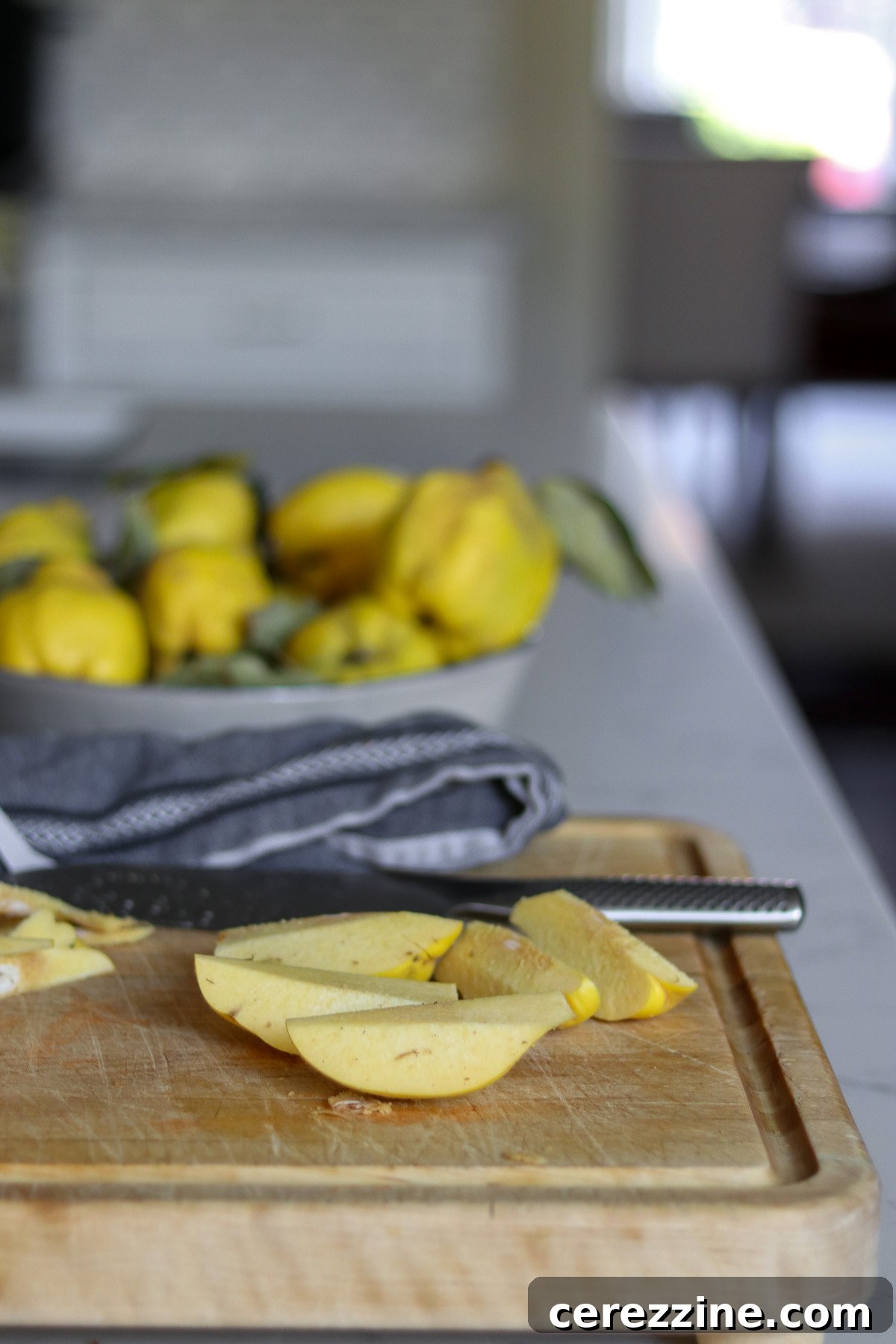
- Wash and Prepare the Quince: Start by thoroughly washing your quinces. Quince is known for being an incredibly hard fruit, so approach cutting with care and a very sharp knife. Cut the quince into quarters, then carefully peel (if desired) and core them, much like you would an apple. Patience is truly key here; the firmness of the fruit makes this step the most challenging. Once cored, cut the quince into small, uniform pieces, ideally about ½ to 1 inch in size. Smaller pieces will cook down more quickly and evenly.
- To Peel or Not to Peel? This is a common question, and the choice is yours. Quince peels contribute significantly to the fruit’s fragrant flavor and contain a good amount of pectin.
- If you peel them: Your jam will likely have a smoother texture without the need for an immersion blender to break down the peels.
- If you don’t peel them: You’ll retain more flavor and color, but you will need to use an immersion blender or vigorously mash the jam to achieve a smooth consistency. Otherwise, you’ll have noticeable pieces of quince peel in your final product, which some people enjoy for a more rustic feel. Both methods yield delicious results; it’s purely a matter of personal preference. The batch photographed in this guide was made with the peels on.
Cooking the Quince to Perfection
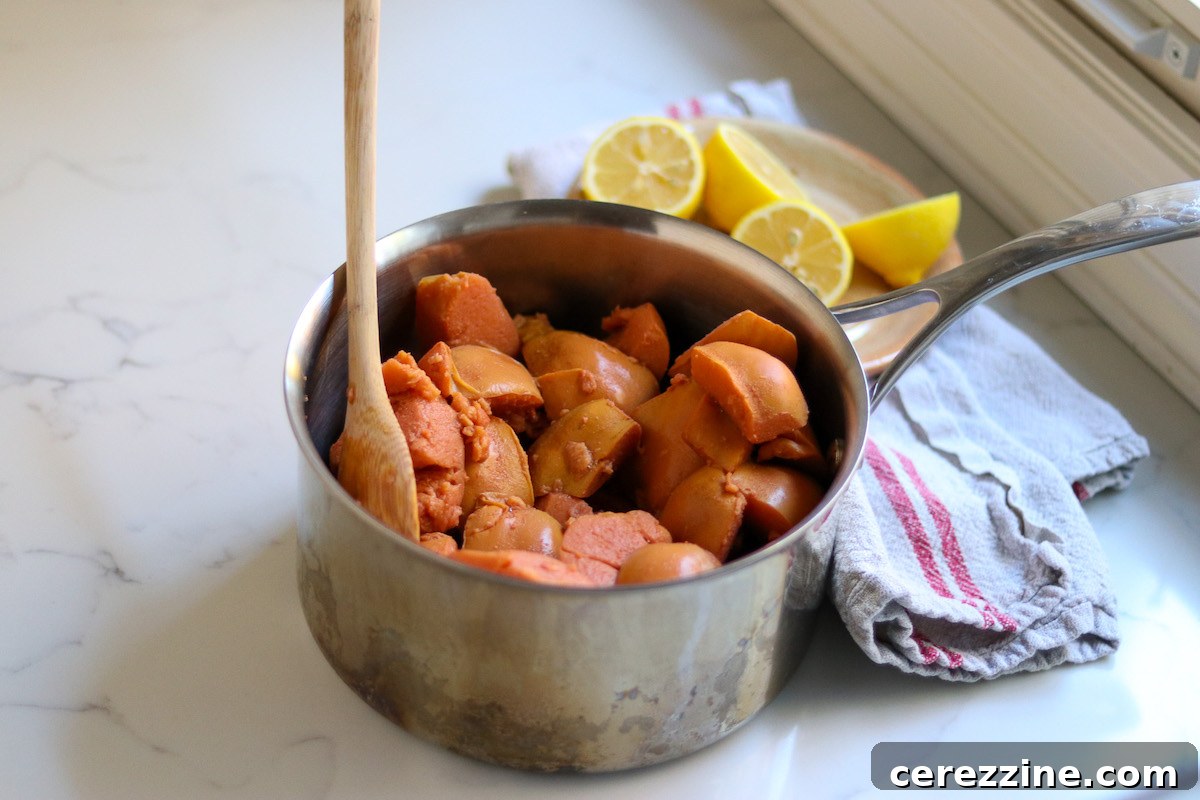
- Simmer Until Tender: Place the diced quince chunks into a large, heavy-bottomed saucepan. Add enough water to just cover the fruit. Bring the mixture to a gentle simmer, stirring occasionally. This initial cooking phase is crucial for softening the extremely hard quince. Expect this step to take longer than with softer fruits, typically around 30 to 45 minutes. It’s vital to monitor the water level throughout this extended cooking time; add more hot water if the pan starts to run dry to prevent scorching. As the quince cooks, you’ll observe a beautiful transformation: the pale white fruit will gradually turn a lovely shade of pink and begin to fall apart. This color change is a hallmark of cooked quince, indicating its readiness for the next stage.
Developing Flavor and Texture
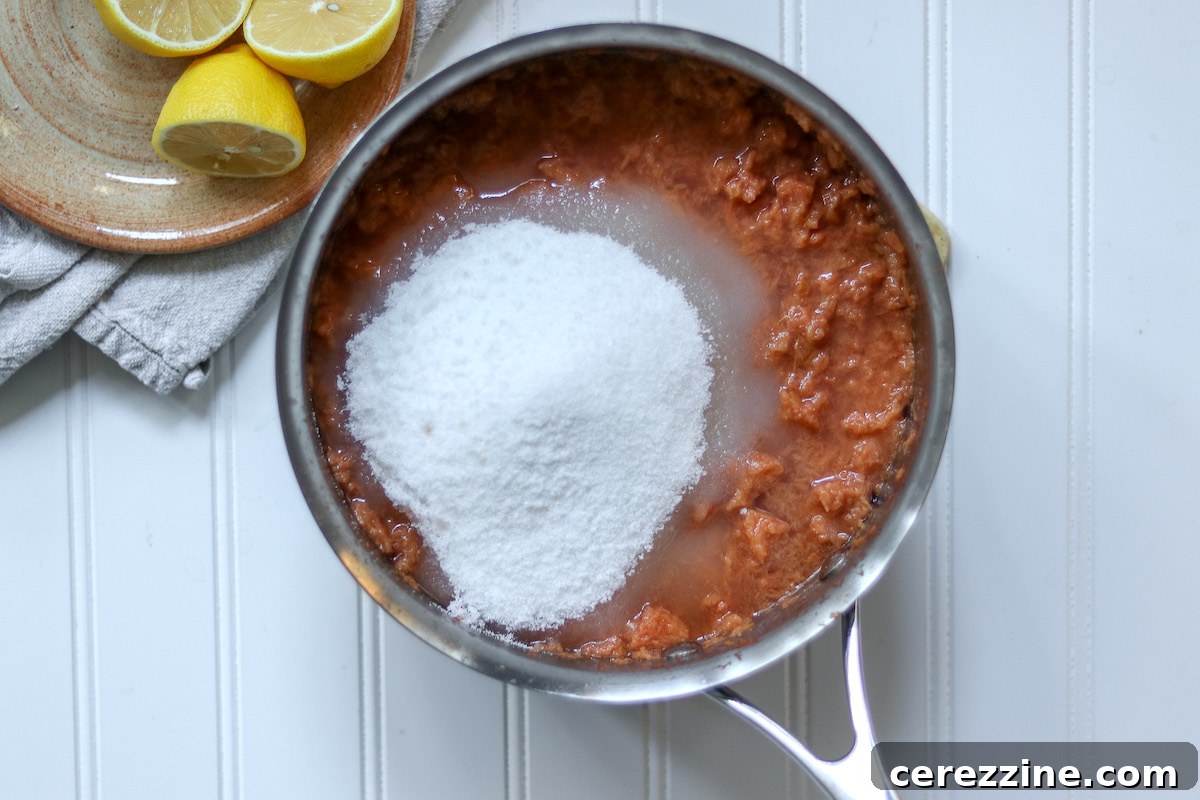
- Add Lemon Juice and Sugar: Once your quince has achieved a soft texture and a rosy hue, it’s time to transform it into jam. Add the fresh lemon juice and your chosen amount of sugar to the saucepan. Stir thoroughly to combine. The acid from the lemon juice, combined with the sugar, will react with the quince’s natural pectin, initiating the gelling process. You have flexibility with the sugar amount; use 2 cups for a more tart, fruit-forward jam, or 3 cups for a sweeter variety, adjusting to your personal taste.
- Incorporate Spices (Optional): At this point, you may wish to enhance the jam’s flavor with complementary spices and seasonings. Classic choices include a pinch of cinnamon, allspice, or cardamom. These spices beautifully accentuate the quince’s inherent aroma, adding depth and warmth to the preserve.
- Cook to Gelling Point: Continue to stir the mixture, encouraging any remaining larger pieces of quince to break down. If you left the peels on, an immersion blender will be your best friend here, quickly achieving a smooth, uniform consistency. Cook the jam, stirring frequently to prevent sticking, until it reaches the gelling point. You can test for gel set by placing a small spoonful of jam on a chilled plate. After a minute, push it with your finger; if it wrinkles, it’s ready. This usually takes an additional 10-20 minutes after adding sugar, depending on your stovetop and the fruit.
Quince Jam Variations: Customizing Your Preserve
One of the joys of homemade jam is the ability to tailor it to your preferences. Quince jam is particularly versatile, allowing for delightful variations in sweetness and spice profiles.
Low Sugar and Tart Variation
The inherent tartness of quince perfectly balances its sweetness. For a sweeter, more traditional jam, use **3 cups of sugar**. If you prefer a brighter, more tart jam that really lets the quince flavor shine through, opt for **2 cups of sugar**. Remember, this is about personal taste, so feel free to experiment and find your ideal balance.
Exploring Aromatic Enhancements
Beyond sugar, a world of spices can elevate your quince jam to new heights. If you’re looking to create something truly unique, consider these inspiring additions:
- Persian Quince Jam (Moraba-ye Beh): A popular variety known for its exquisite aroma, Persian quince jam often features delicate hints of cardamom and rosewater. Add a few green cardamom pods (or a pinch of ground cardamom) during the simmering stage, and a splash of food-grade rosewater towards the very end of cooking for a truly authentic touch. (Remember to remove cardamom pods before jarring if using whole.)
- Warming Spices: For a cozy, autumnal feel, consider adding a pinch of nutmeg, a dash of allspice, a whisper of ground ginger, or a vanilla bean (split and scraped, then removed before jarring). Cinnamon is another natural pairing, offering warmth and depth.
- Honey or Other Sweeteners: While this recipe focuses on sugar, some adventurous cooks might experiment with a portion of honey for a different nuanced sweetness, though this can slightly alter the texture and shelf life for canning. Stick to the sugar ratios for reliable canning results.
Simply choose one or two of your favorite complementary spices and add them along with the sugar and lemon juice after the quince has softened. Experimentation is encouraged to discover your signature quince jam!
Canning Quince Jam for Long-Term Enjoyment
Once your delectable quince jam is cooked to perfection, you have several options for storage. This jam can be enjoyed as a refrigerator or freezer jam, offering convenience for shorter-term enjoyment. Refrigerated, it will last for several weeks. In the freezer, using freezer-safe jars and leaving adequate headspace for expansion, it can be stored for up to 6 months.
However, if you’re planning to share your homemade jam as gifts, or simply wish to stock your pantry with this golden delight for extended periods, water bath canning is the ideal method. Properly canned jams will maintain their quality and safety for 18 months or more in a cool, dark pantry.
Step-by-Step Water Bath Canning Process:
- Prepare Your Canner and Jars: As mentioned earlier, ensure your water bath canner is filled with water and heating, and your canning jars, lids, and bands are clean and sterilized before the jam finishes cooking.
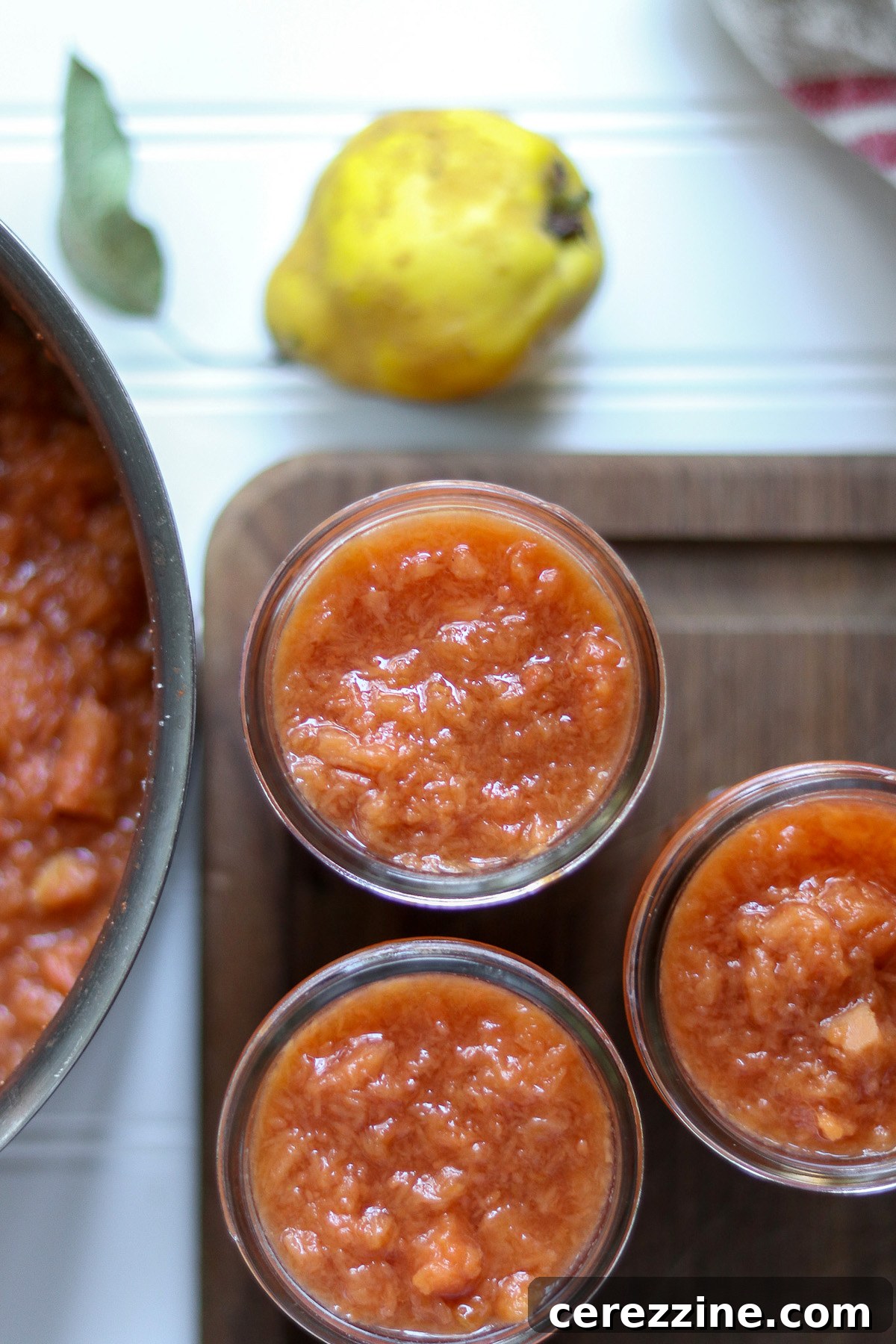
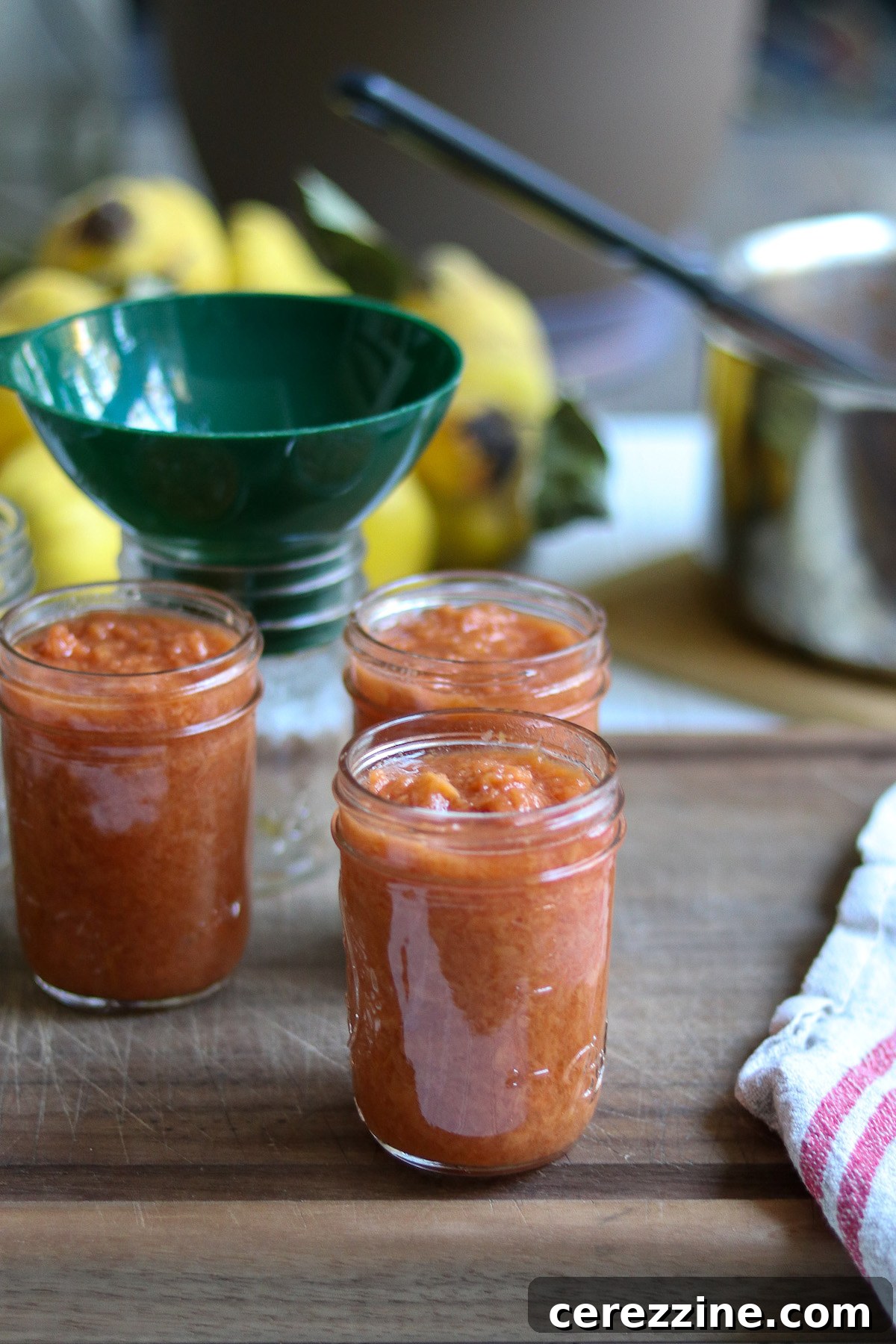
- Fill Jars: Once the jam has reached its gelling point, carefully ladle the hot jam into the prepared, hot canning jars. Leave ¼ inch headspace at the top of each jar. This space is crucial for proper sealing.
- Clean Rims: Using a clean, damp cloth, wipe away any jam residue from the rims of the jars. Even a small amount of jam can prevent the lids from sealing properly.
- Apply Lids and Bands: Center a warm, sterilized canning lid on each jar, and then screw on the bands finger-tight. Do not overtighten, as this can prevent air from escaping and compromise the seal.
- Process in Water Bath: Carefully place the filled jars into the simmering water bath canner, ensuring they are fully submerged by at least 1 inch of water. Bring the water back to a rolling boil, then begin timing. Process the jars for 10 minutes. If you live at an elevation above 6,000 feet, increase the processing time to 15 minutes to account for lower boiling temperatures.
- Cool and Check Seals: After the processing time, turn off the heat and let the jars sit in the canner for 5 minutes before carefully removing them. Place the hot jars on a clean towel on your countertop, allowing them to cool undisturbed for 12 to 24 hours. As they cool, you should hear satisfying “ping” sounds, indicating that the lids are sealing. After cooling, check the seals by pressing on the center of each lid; it should not flex. If a lid does not seal, refrigerate that jar and consume the jam within a few weeks.
Jars of quince jam that are correctly canned and sealed will maintain their peak quality for at least 18 months in a cool, dark pantry. While still safe to eat beyond this period, the flavor and texture may begin to degrade. Always refrigerate canned jams after opening.
Delightful Ways to Enjoy Quince Jam
Quince jam’s distinctive fragrant, sweet-yet-tart profile makes it an incredibly versatile condiment, suitable for both sweet and savory applications. It’s an excellent addition to everyday meals and a sophisticated highlight for special occasions.
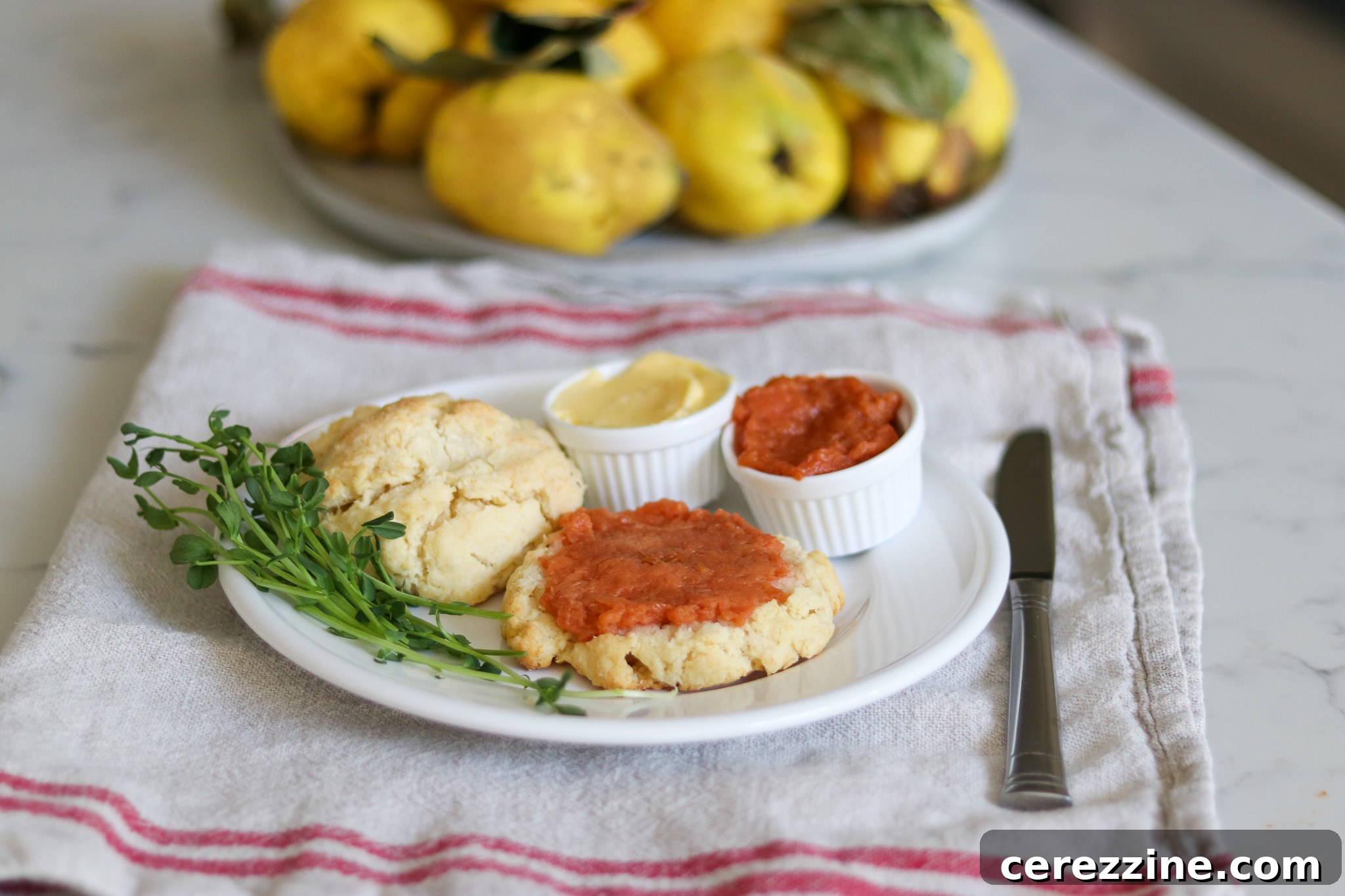
- Breakfast & Brunch: Spread generously over warm toast, flaky croissants, homemade scones, or crumpets. Stir a spoonful into your morning yogurt or oatmeal, perhaps with a sprinkle of granola and fresh fruit, for an unusual and elegant parfait. It also makes a wonderful filling for crepes or pancakes.
- Cheese Boards & Charcuterie: Quince jam truly shines on a sophisticated charcuterie board. Its bright flavor cuts through rich, creamy cheeses beautifully. Pair it with soft-ripened cheeses like Brie or Camembert, firm and nutty Manchego, or a robust aged cheddar. Serve alongside salty cured meats like prosciutto or salami, crusty bread, and crackers for a truly decadent spread. It’s a classic pairing for good reason!
- Savory Pairings: Don’t limit quince jam to sweet dishes. Its tangy notes complement savory flavors surprisingly well. Offer it as a glaze for roasted pork or chicken, or serve it alongside patés, especially chicken liver paté, for an elevated appetizer. Even a simple turkey sandwich can be transformed into a gourmet experience with a thin spread of quince jam.
- Baking & Desserts: Unleash your inner baker! Quince jam is a fantastic filling for thumbprint cookies, tarts, turnovers, or even layered cakes. Explore creative recipes like quince and fig pinwheels for an impressive dessert. It can also be warmed slightly and spooned over vanilla ice cream or panna cotta.
From simple comforts to elaborate spreads, quince jam adds a touch of unique elegance and exquisite flavor to almost any dish. Let your imagination guide you in discovering new ways to enjoy this golden preserve.
Explore More Quince Delights
Fallen in love with the versatility of quince? Here are more fantastic recipes to continue your culinary exploration:
- 50+ Quince Recipes (& How to Cook Quince)
- Quince Jelly
- Canning Quince
- Quince Paste (Spanish Membrillo, Portuguese Marmelada, Italian Cotognata)
- Quince Wine
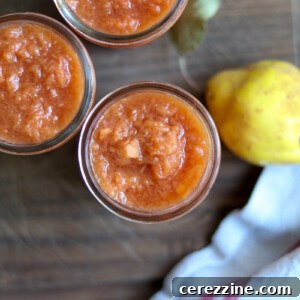
Quince Jam
Equipment
-
Water Bath Canner
Ingredients
- 7 cups quince, peeled, cored, and chopped
- 2 to 3 cups sugar
- ¼ cup lemon juice
- Water
Instructions
-
Carefully core and chop your quince (peeling is optional). Simmer for about 30 to 45 minutes until the quince changes from white to a rosy color. If needed, add more water to prevent the pan running dry. Strain (and you can reserve any extra cooking liquid for making quince jelly).
-
Stir the quince to assist them in breaking up, or use an immersion blender to break it all into tiny pieces. Add the lemon juice and sugar. Standard recipes will call for 3 cups sugar but you can use 2 cups for a low-sugar version.
-
Continue cooking the quince for a few minutes more until the jam has thickened and begins to gel.
-
Ladle into prepared canning jars leaving ¼ head space. Allow to cool to room temperature and store in the refrigerator for immediate use or process in a water bath canner for 10 minutes (or 15 minutes above 6,000 feet in elevation).
Nutrition
Nutrition information is automatically calculated, so should only be used as an approximation.
More Autumn Canning Recipes
Keep your canner working wonders this fall with these seasonal preserving ideas:
- Cranberry Apple Jam
- How to Make Fruit Butter
- Pear Butter
- Pear Sauce
- Pickled Green Tomatoes
Old-Fashioned Jam Recipes: Pure Fruit, Pure Love
Do you cherish the art of making jam the traditional way, relying solely on the natural pectin of fruit, sugar, and a touch of heartfelt effort in each jar? If so, you’ll love these classic, pectin-free jam recipes:
- Raspberry Jam
- Cranberry Apple Jam
- Nectarine Jam
- Apricot Jam
- Persimmon Jam