How to Make Milkweed Flower Jelly: A Unique Foraged Recipe
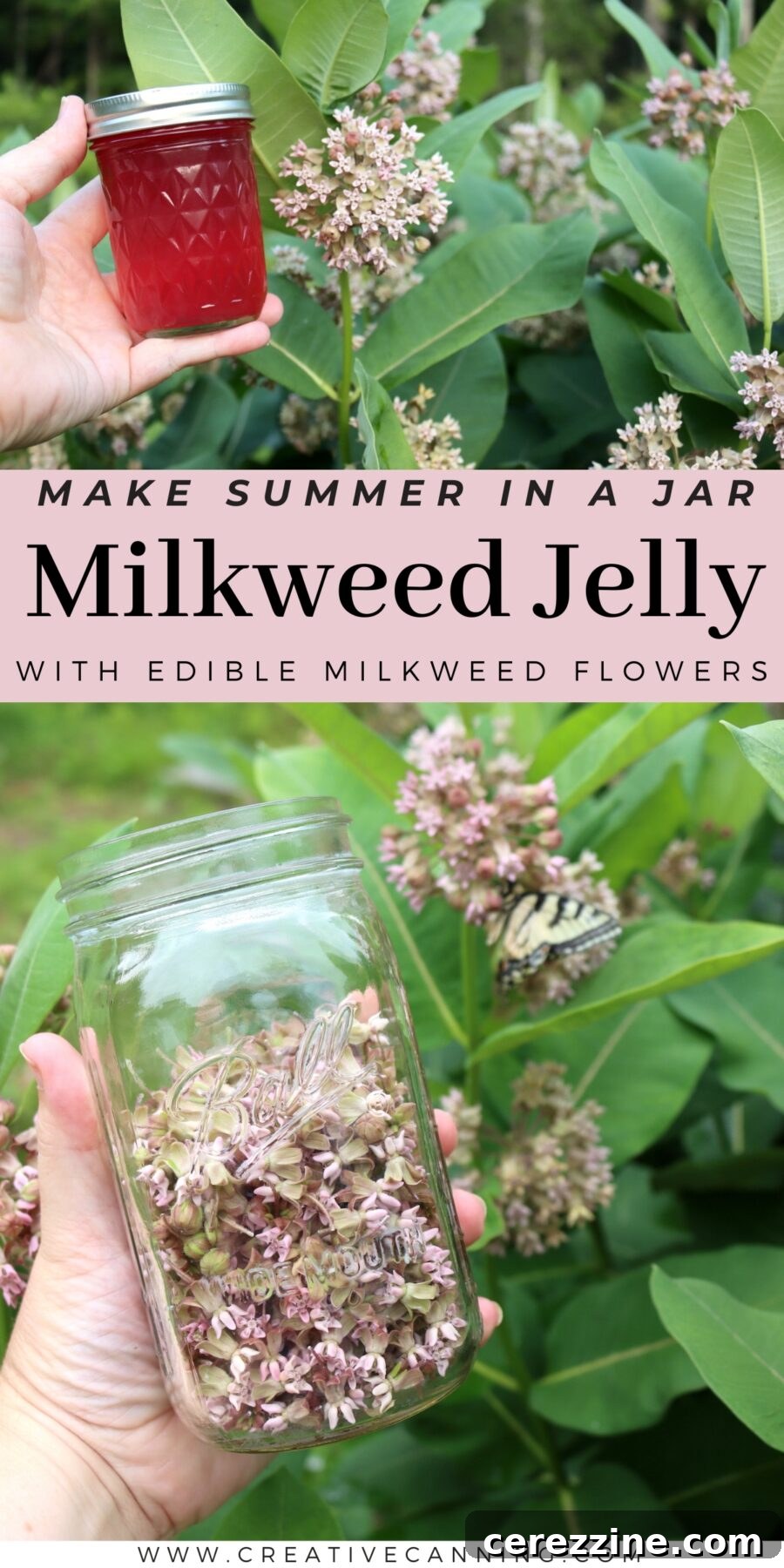
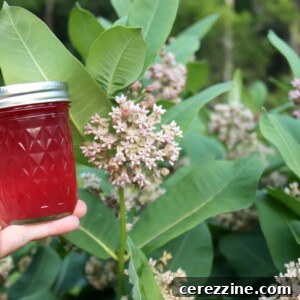
Milkweed flower jelly is a truly magical preserve that captures the intoxicating, honey-like scent of summer milkweed blossoms in a jar. If you’ve ever been captivated by the sweet, floral perfume of a blooming milkweed patch, you’ll understand why this jelly is so special. The flavor is delicate and nuanced, reminiscent of wildflower honey with a subtle hint of lilac and summer berries. It’s a taste of pure sunshine and summer meadows.
This recipe has been reviewed for safety and accuracy by a Master Food Preserver certified through the University of Cornell Cooperative Extension.
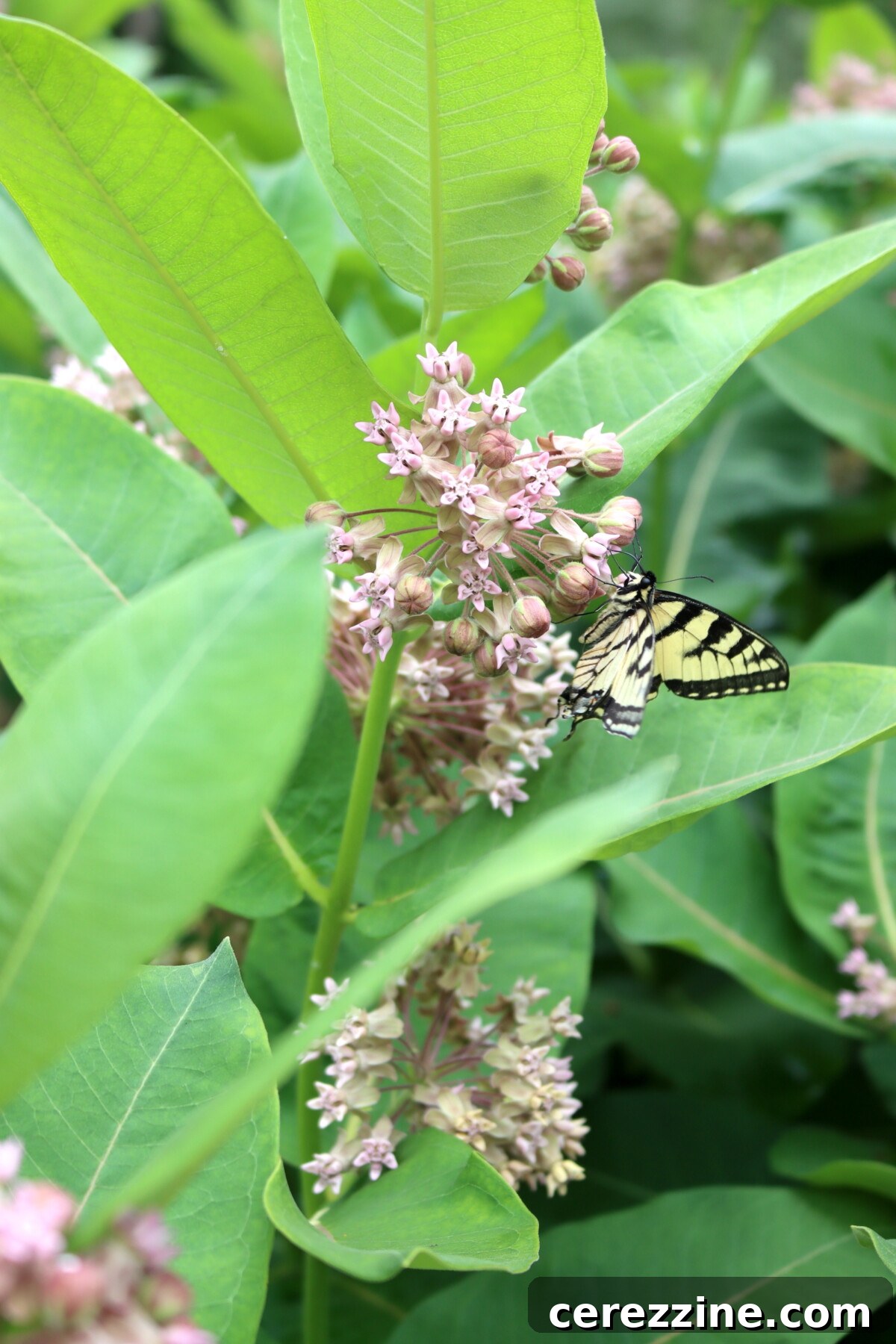
This delightful jelly is made from the blossoms of Common Milkweed (Asclepias syriaca), a native plant that bursts into bloom in early to mid-summer. Its globe-like clusters of pink and purple flowers are a vital food source for pollinators, most famously the monarch butterfly. But these fragrant blossoms are also edible for humans and have a long history in traditional cooking. To make the jelly, the flowers are steeped in hot water to create a fragrant floral “tea” or infusion. This liquid then becomes the base for a simple, classic pectin-set jelly.
The process is straightforward and follows the same fundamental technique used for other foraged flower jellies. If you’ve ever made dandelion jelly, wild violet jelly, or elderflower jelly, you’ll find this method very familiar. The most important step is creating a flavorful infusion. Once you have that, you simply treat it like fruit juice. The addition of bottled lemon juice is essential; it provides the necessary acidity for a safe canning pH and works with the pectin to ensure a perfect gel.
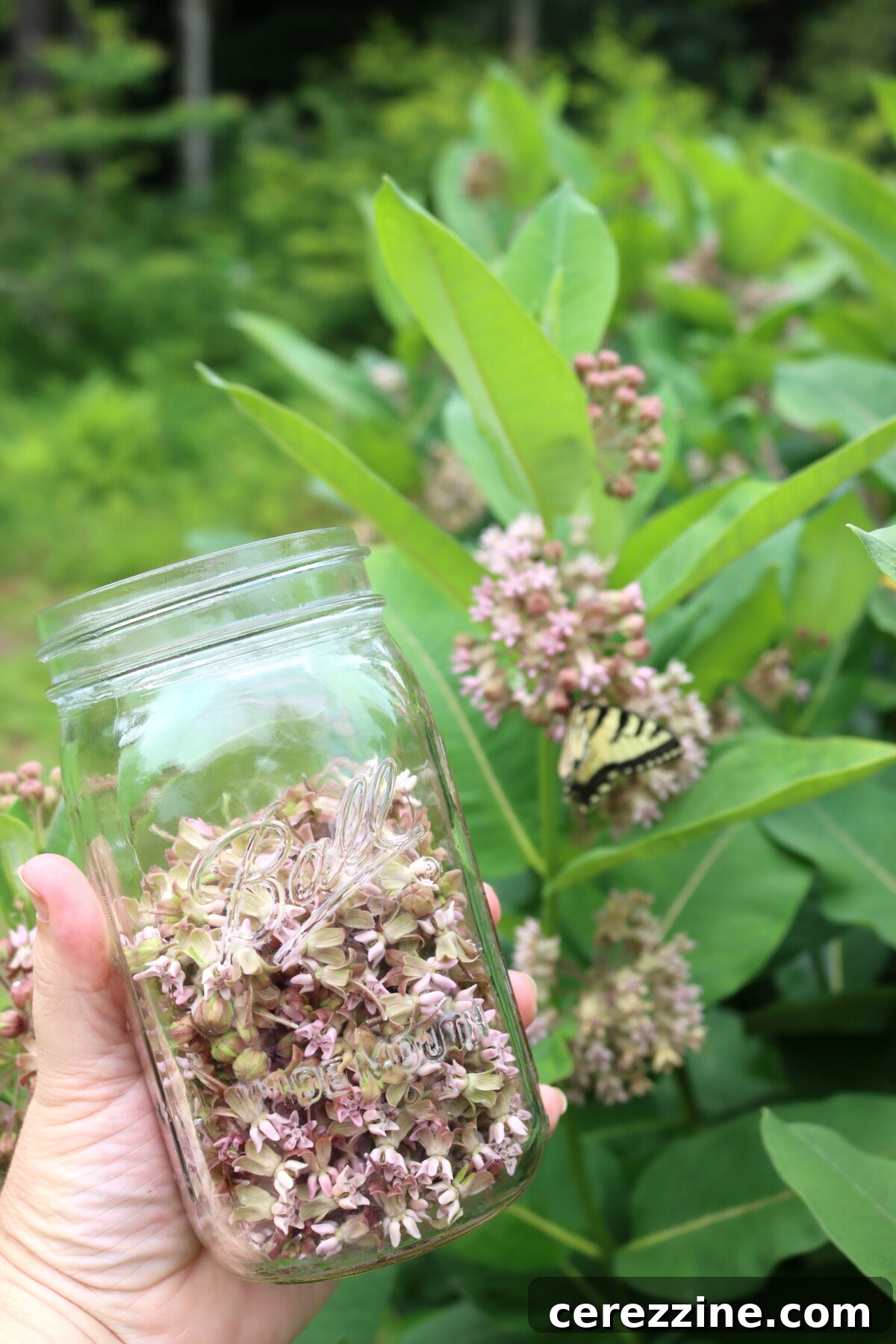
For the best results, harvest milkweed flowers when they are fully open and at their most fragrant. This is typically in the morning, right after the dew has evaporated. Practice sustainable foraging by taking only a small portion of the flowers from any given patch, ensuring you leave plenty behind for the monarch butterflies and other pollinators who depend on this incredible plant. You don’t need much; about 2 cups of flower clusters are all that’s required for a delicious batch of jelly.
Notes from My Kitchen

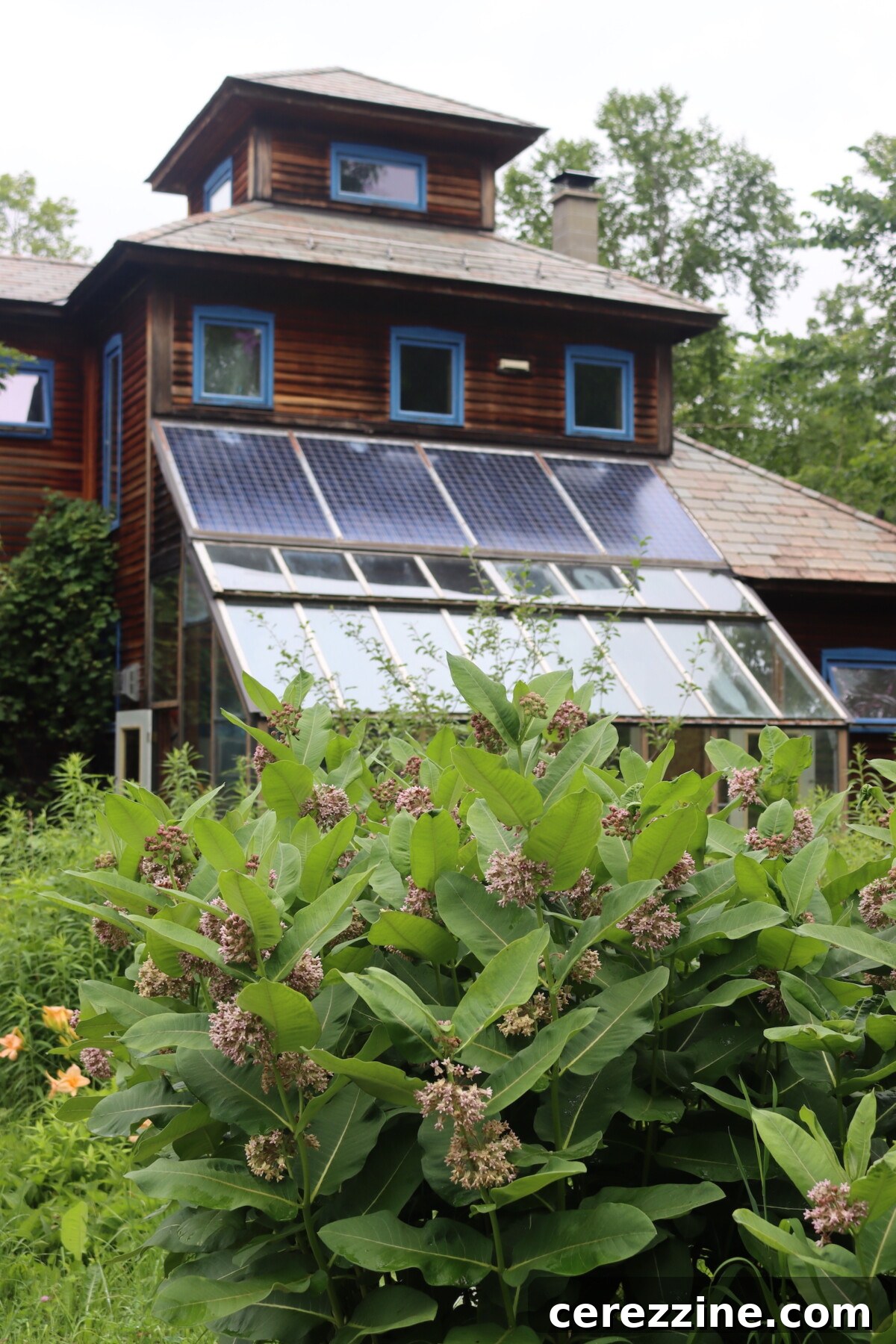
The inspiration for this jelly came after years of admiring the sprawling milkweed patches in our Vermont meadow. The aroma of blooming milkweed is one of my absolute favorite scents of early summer, and I became determined to find a way to bottle that fragrance. This jelly is the result. It tastes remarkably like the flowers smell—sweet, floral, and deeply nostalgic, with surprising little hints of fresh berries and honey.
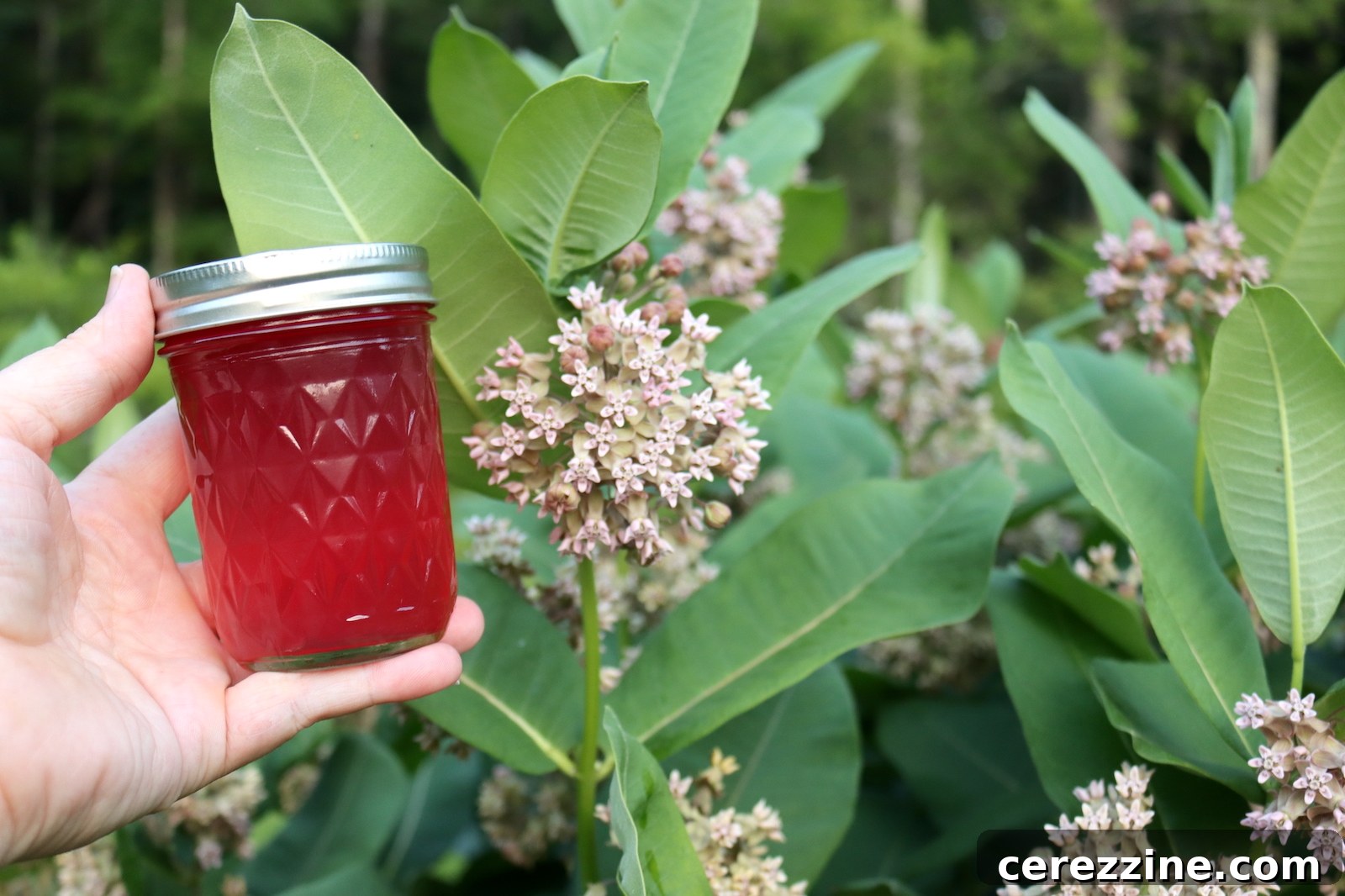
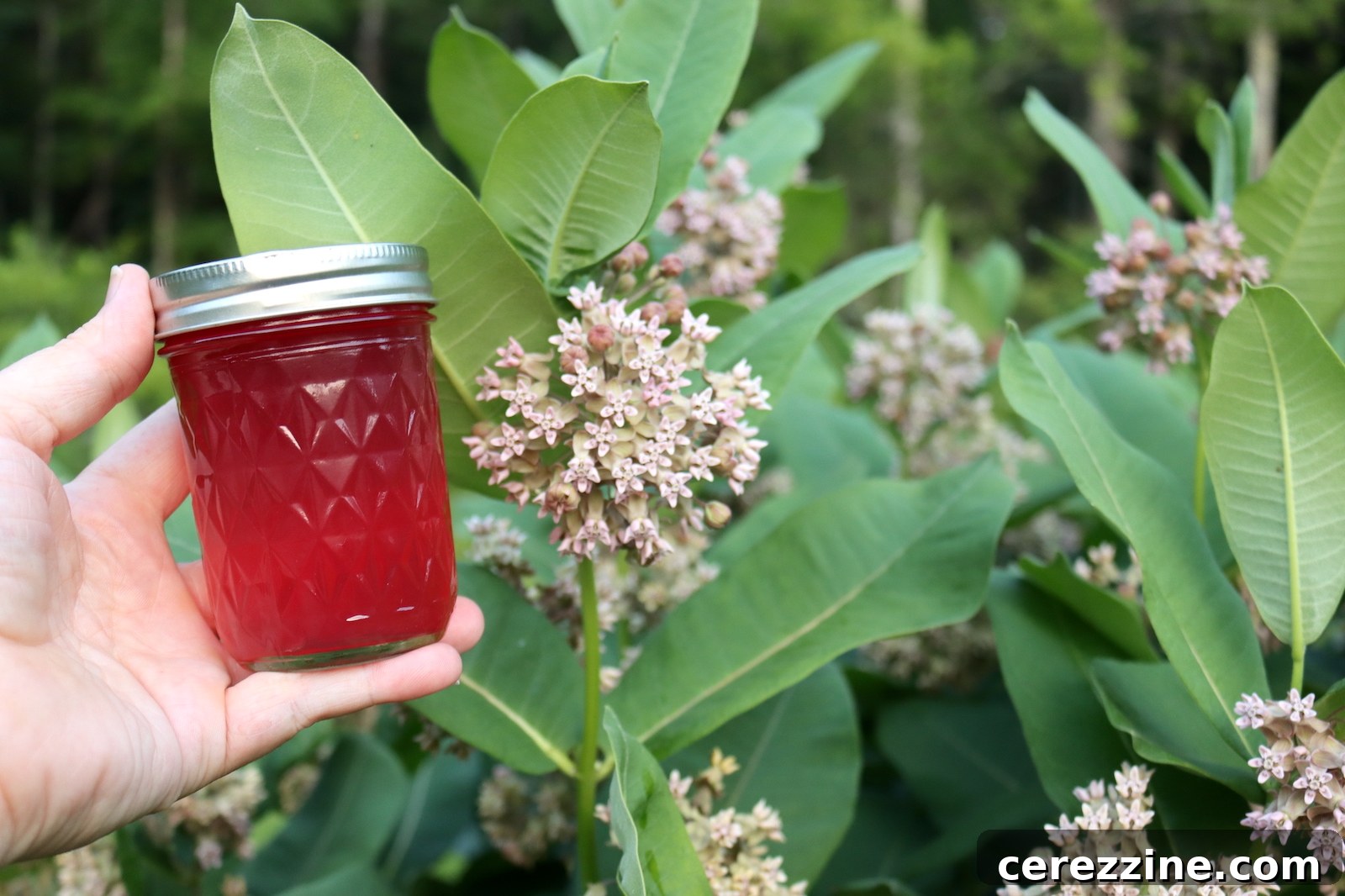
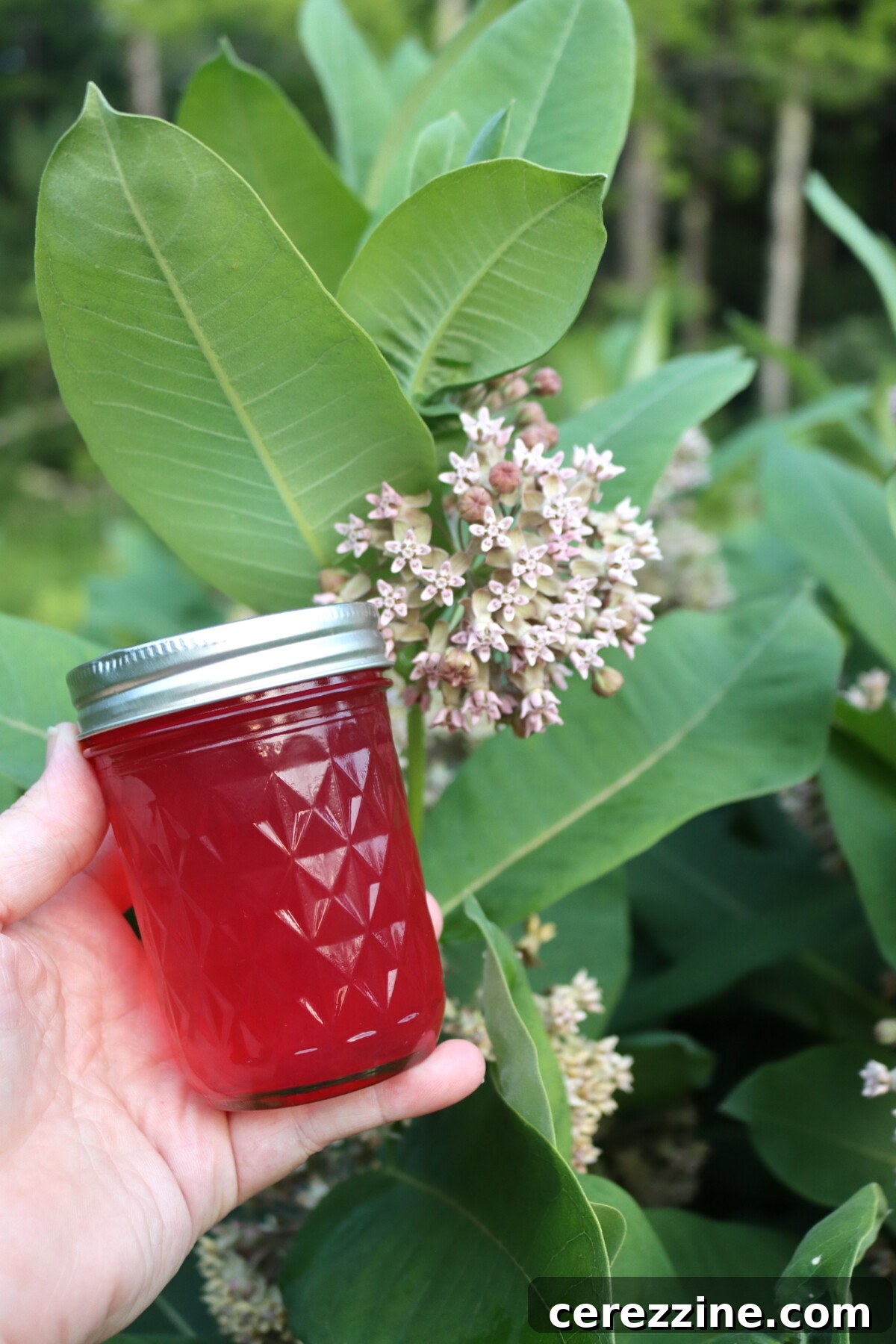
The finished jelly has a beautiful, delicate pink hue that looks stunning in the jar. Its flavor is subtle enough to complement a wide variety of foods without overpowering them. I particularly love it spread on warm, buttery biscuits or swirled into a cup of hot tea. It has also become my go-to homemade gift, as its unique origin and delightful taste always spark wonderful conversations.
Quick Look at the Recipe
- Recipe Name: Milkweed Flower Jelly
- Recipe Type: Flower Jelly
- Canning Method: Water Bath Canning
- Prep Time: 20 minutes (plus infusion time)
- Cook Time: 15 minutes
- Canning Time: 10 minutes for half-pint jars
- Yield: Approximately 4 to 5 half-pint jars
- Jar Sizes: Half-pints or smaller quarter-pint jars
- Headspace: 1/4 inch
- Key Ingredients: Fresh milkweed flowers, water, bottled lemon juice, powdered pectin, and granulated sugar
- Safety Information: Follows standard, tested methods for making flower jelly.
- Difficulty Level: Beginner-friendly
- Similar Recipes: This recipe uses the same trusted technique as our popular rose petal jelly and clover jelly recipes.
Ingredients for Milkweed Jelly
This recipe is designed for standard powdered pectin, such as Sure-Jell or Ball Classic Pectin. The milkweed flowers are the star, providing the unique flavor and color. The lemon juice is non-negotiable; it’s critical for safety and a proper set. The sugar provides sweetness and also works with the pectin to create the jelly’s structure.
- Milkweed Flower Clusters: You’ll need about 2 cups, loosely packed. Be sure to use only the flower blossoms and buds, removing as much of the stems and leaves as possible. Harvest from Common Milkweed (Asclepias syriaca) that is fully open and fragrant.
- Boiling Water: 4 cups, used to create the floral infusion.
- Bottled Lemon Juice: 1/4 cup. This is absolutely required for safe canning. Bottled juice has a consistent acidity level, whereas fresh lemons can vary, making it unsafe for preserving. Do not substitute!
- Powdered Pectin: One standard 1.75 oz box. If you are using a bulk or low-sugar pectin, be sure to follow the manufacturer’s directions, as the ratios may differ.
- Granulated Sugar: 4 cups. This is a full-sugar recipe, which ensures a firm set and acts as a preservative.
A Crucial Note on Identification: Before you harvest a single flower, you must be 100% certain of your plant identification. Common milkweed has large, oval-shaped leaves that grow opposite each other on a thick stalk. When broken, the stem and leaves exude a milky white sap. The flowers grow in large, spherical clusters. A toxic look-alike, Dogbane (Apocynum cannabinum), has similar-looking flowers but features narrower leaves and a branching, reddish stem. If you have any doubt, do not harvest or consume.
How to Make Milkweed Flower Jelly
Making this jelly is a two-part process: first creating the infusion, then making the jelly. The second part moves very quickly, so have your canning supplies ready before you begin. If you plan to can the jelly for shelf stability, prepare your water bath canner while the flowers are steeping.
Step 1: Make the Milkweed Flower Infusion
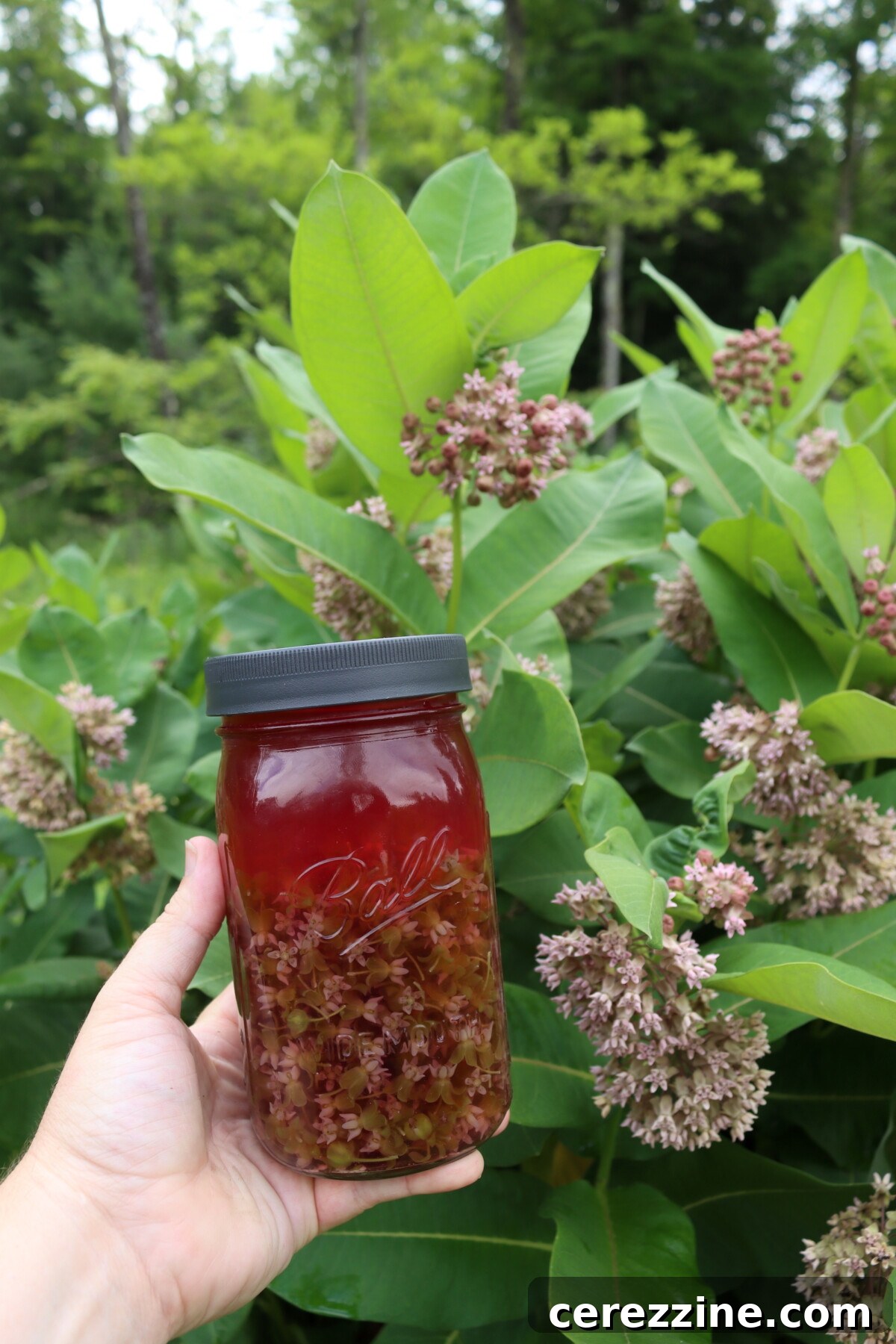
First, gently rinse your milkweed flower clusters under cool water to remove any dirt or small insects. Shake off the excess water. Place the clean flower clusters into a large, heat-proof glass bowl or jar. Pour 4 cups of boiling water directly over the flowers. Use a spoon to gently press them down, ensuring they are all submerged. Cover the container and let the flowers steep. For a delicate flavor, steep for 2-4 hours at room temperature. For a more robust floral taste, you can steep it overnight in the refrigerator.
Step 2: Strain the Infusion
Once the steeping time is complete, strain the liquid through a fine-mesh sieve or several layers of cheesecloth into a measuring cup or bowl. Gently press on the flowers to extract all the fragrant liquid. You can discard the spent flowers in your compost. You should have 4 cups of beautiful, pink-hued milkweed tea. If you are slightly short, you can top it off with a little bit of water to reach the 4-cup mark.
Step 3: Cook the Jelly
Pour the 4 cups of milkweed infusion into a large, deep pot or Dutch oven. Add the 1/4 cup of bottled lemon juice. Whisk in the entire box of powdered pectin until it is completely dissolved and there are no lumps. Place the pot on the stove over high heat and bring the mixture to a full, rolling boil that cannot be stirred down. Be sure to stir constantly to prevent scorching.
Step 4: Add Sugar and Finish
Once boiling, add all 4 cups of sugar at once. Continue stirring constantly to help the sugar dissolve quickly. Bring the mixture back to a full, rolling boil. Once it reaches this stage, boil it hard for exactly one minute, stirring the entire time. After one minute, remove the pot from the heat. Skim off any foam that has formed on the surface with a metal spoon.
Step 5: Fill the Jars
Carefully ladle the hot jelly into your prepared, sterilized canning jars, leaving 1/4 inch of headspace at the top. Use a clean, damp cloth to wipe the rims of the jars to ensure a good seal. Center the lids on the jars and apply the screw bands until they are “fingertip tight”—just snug, not forced.
Tips for a Perfect Set
This recipe uses a standard ratio of full sugar and powdered pectin, which is very reliable. The key is to follow the steps precisely. Adding the pectin to the liquid before the sugar and bringing it to a hard boil is crucial for activating the pectin. If your jelly appears soft or liquidy immediately after canning, don’t worry. It’s normal for some jellies to take 24 to 48 hours to fully set. For more in-depth advice, consult our guide to troubleshooting jelly set issues.
Canning Milkweed Flower Jelly for Storage
If you don’t process the jelly, it can be stored in the refrigerator for up to 3-4 weeks or in the freezer for up to a year. For long-term, shelf-stable storage, you must process the filled jars in a boiling water bath canner.
Prepare your water bath canner with hot water while you are making the jelly. Use a jar lifter to carefully lower the filled jars into the simmering water. Ensure the jars are upright and covered by at least 1-2 inches of water. Place the lid on the canner and bring the water to a rolling boil. Process the jars for 10 minutes (for half-pints). Remember to adjust your processing time for your altitude.
When the time is up, turn off the heat, remove the canner lid, and let the jars rest in the hot water for 5 minutes. This helps prevent siphoning. Then, remove the jars and place them on a towel-lined counter to cool, undisturbed, for 12 to 24 hours. You’ll hear the satisfying “ping” as the lids seal. Before storing, check that all lids have sealed by pressing on the center; it should not flex up or down.
Altitude Adjustments for Canning
Processing times for water bath canning must be increased at higher elevations to ensure safety:
- 0 to 1,000 feet: 10 minutes
- 1,001 to 6,000 feet: 15 minutes
- Above 6,000 feet: 20 minutes
Yield and Color Notes
This recipe will yield approximately 4 to 5 half-pint (8 oz) jars of jelly. The final color of your jelly will depend on the specific milkweed flowers you used. It can range from a very pale, almost clear pink to a deeper, more vibrant rose color. Darker purple flowers will generally produce a more intensely colored jelly.
Serving Suggestions
Milkweed flower jelly’s delicate, honey-like flavor shines when paired with simple foods. It is absolutely divine on warm biscuits, fresh scones, or simple toast. For an elegant and easy appetizer, serve it alongside cream cheese or a mild goat cheese with crackers.
Beyond breakfast, try these creative uses:
- Stir a spoonful into hot or iced tea for a touch of floral sweetness.
- Use it as a glaze for a vanilla pound cake, angel food cake, or cheesecake.
- Whisk it into a vinaigrette for a unique and flavorful salad dressing.
- Serve a dollop on top of a bowl of vanilla ice cream or yogurt.
- Use it as a glaze for roasted chicken or pork in the last few minutes of cooking.
Milkweed Flower Jelly FAQs
Yes, the flowers, leaves, and young pods of Common Milkweed (Asclepias syriaca) are edible when properly identified and prepared. However, proper identification is absolutely critical, as there are toxic look-alikes like Dogbane. Never forage any plant unless you are 100% confident in its identity.
The ideal time to harvest is when the flower clusters are fully bloomed and most fragrant, typically in early to mid-summer. Collect them in the morning after the dew has dried for the best aroma. Always forage responsibly, leaving the majority of flowers for the pollinators.
The flavor is subtle, sweet, and distinctly floral. Most people compare it to a high-quality wildflower honey with additional notes of lilac, jasmine, or even a hint of red berries. It is delicate and not overpowering.
This recipe is specifically developed for Common Milkweed (Asclepias syriaca) due to its strong, pleasant fragrance and established history of edibility. The safety and flavor of other milkweed species are not well-documented, so it is best to stick with common milkweed for this recipe.
More Flower Jelly Recipes
How to Make Flower Jelly (with 20+ Recipes!)
Redbud Jelly (& Syrup)
Rose Petal Jelly
If you tried this Milkweed Flower Jelly recipe, please leave a ⭐ star rating and let me know how it turned out in the 📝 comments below!
Stay in touch by following on social media!
Milkweed Flower Jelly
Rate
Equipment
-
Water Bath Canner
-
Half Pint Mason Jars
-
Canning lids and bands
-
Large Deep Stainless Steel Saucepan
-
Fine Mesh Strainer or Cheesecloth
-
Jar lifter
-
Canning Funnel
Ingredients
- 2 cups milkweed flower clusters, loosely packed, from common milkweed (Asclepias syriaca)
- 4 cups boiling water, for infusion
- 1/4 cup bottled lemon juice
- 1 box powdered pectin, 1.75 oz, like Sure-Jell or Ball Classic
- 4 cups granulated sugar
Instructions
-
Gently rinse milkweed flowers. Place them in a large heat-proof bowl. Pour 4 cups of boiling water over the flowers, pressing them down to submerge. Cover and let steep for at least 2 hours at room temperature, or overnight in the refrigerator for a stronger flavor.
-
Strain the infusion through a fine-mesh strainer or cheesecloth, pressing gently on the flowers to release all liquid. Discard the spent flowers. Measure out 4 cups of the infusion.
-
Pour the 4 cups of infusion into a large, deep saucepan. Add the bottled lemon juice. Whisk in the pectin until it is fully dissolved. Bring the mixture to a full rolling boil over high heat, stirring constantly.
-
Add all the sugar at once, stirring to dissolve. Return the mixture to a full rolling boil and boil hard for exactly 1 minute, stirring constantly. Remove from heat and quickly skim off any foam.
-
Ladle the hot jelly into prepared jars, leaving 1/4 inch of headspace. Wipe the jar rims clean, center the lids, and apply screw bands until fingertip tight.
-
Process the jars in a boiling water bath canner for 10 minutes (adjusting for altitude). After processing, let the jars stand in the canner for 5 minutes before removing to a towel-lined counter to cool.
Notes
Safety First: Plant Identification
Be absolutely certain of your plant identification before harvesting. Common milkweed (Asclepias syriaca) has distinctive opposite leaves, milky sap, and clustered pink-purple flowers. A toxic look-alike, Dogbane, has a different growth habit. If you’re not 100% confident, do not harvest.
Harvesting Tips
Harvest when flowers are fully open and at peak fragrance, usually in early to mid-summer. Take only what you need and leave plenty for pollinators, especially monarch butterflies.
Color Variation
The finished jelly’s color can range from pale pink to a deeper rose, depending on the blossoms. Darker flowers produce a more intensely colored jelly.
Altitude Adjustments for Canning
- 0 to 1,000 feet: 10 minutes
- 1,001 to 6,000 feet: 15 minutes
- Above 6,000 feet: 20 minutes
Nutrition
Nutrition information is automatically calculated and should be used as an approximation.
Did you make this recipe?Leave a comment below and let us know!
More Jelly Recipes
Milkweed Jelly
50+ Jelly Canning Recipes
Strawberry Lemonade Jelly
Find the perfect recipe
Searching for something else? Enter keywords to find the perfect recipe!