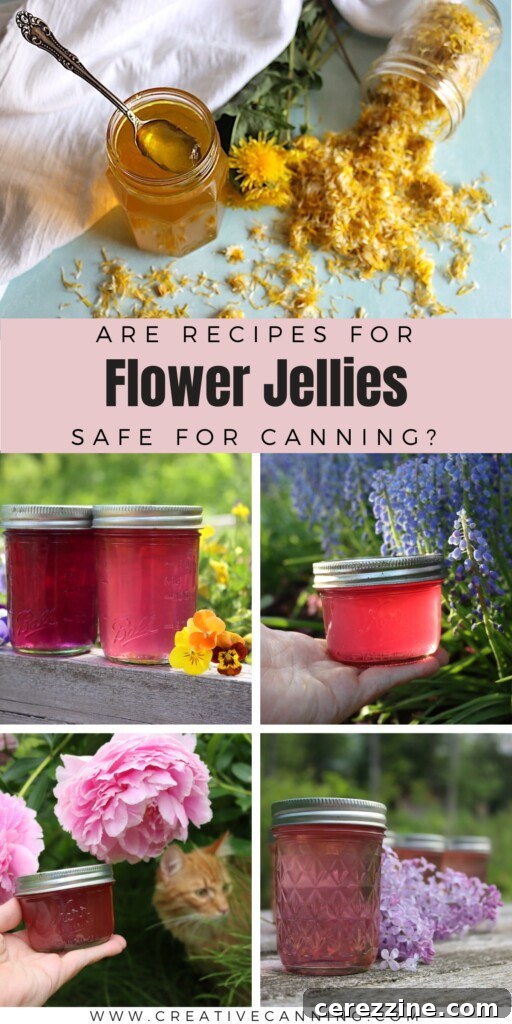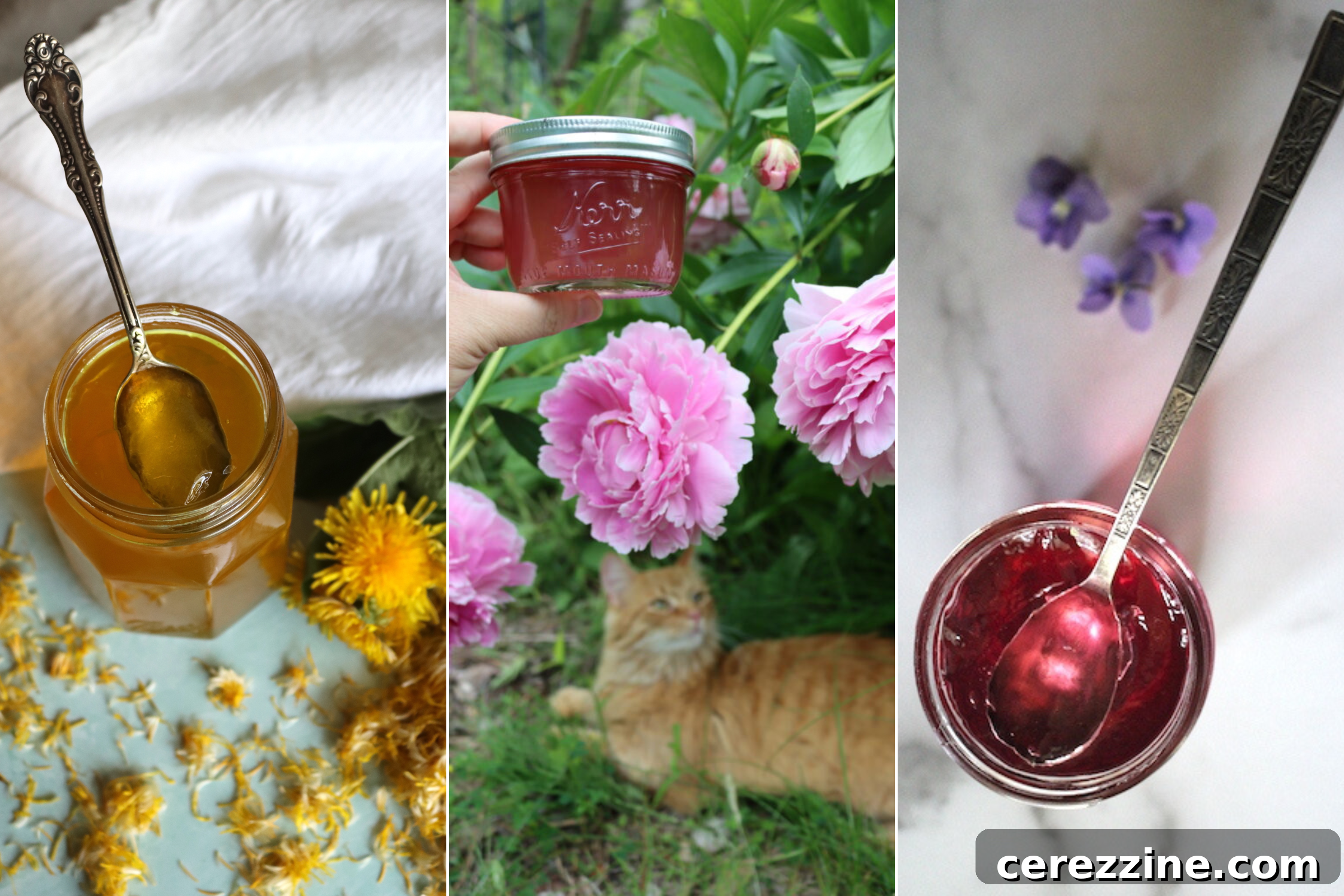
The art of canning allows us to capture the ephemeral beauty and delicate flavors of spring and summer blossoms, transforming them into exquisite flower jellies that brighten our pantries and plates. However, a recent wave of concern has emerged regarding the safety of preserving floral jellies, leaving many home canners confused. Let’s clarify: flower jellies are absolutely safe for canning, provided they are properly acidified. With the correct balance of acidity, typically achieved with lemon juice and the help of commercial pectin, these botanical delights can be just as shelf-stable and safe as any traditional fruit preserve.
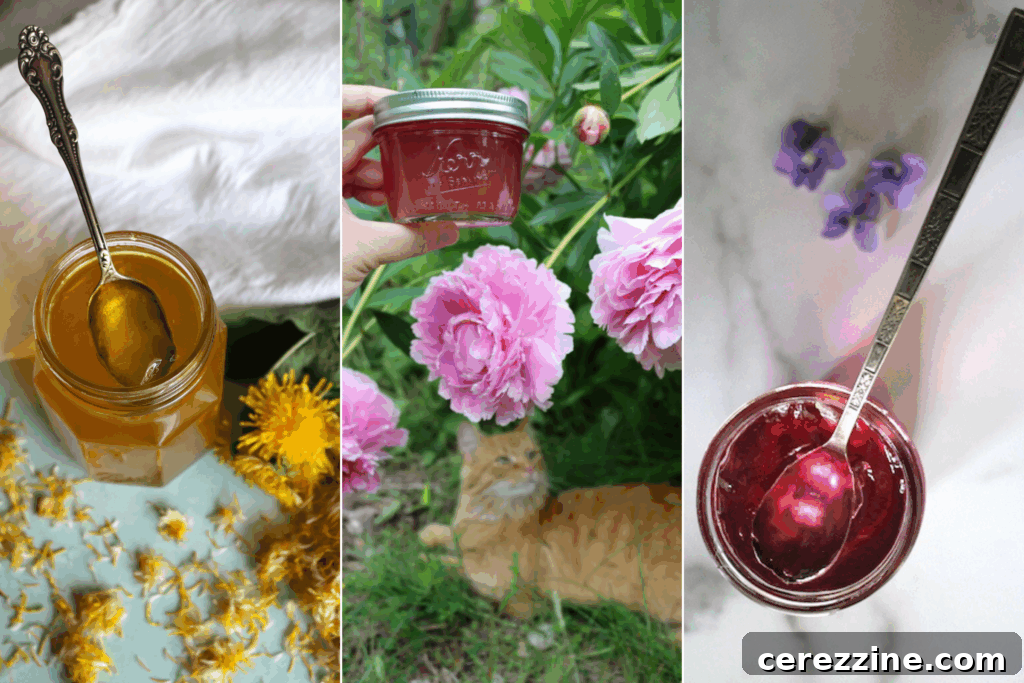
For generations, cherished recipes for dandelion jelly and other floral concoctions have been lovingly shared through families and published in university extension bulletins. These recipes have long been a testament to the safety and joy of preserving nature’s bounty. Yet, a recent incident involving a widely circulated dandelion jelly recipe, previously endorsed by the Wisconsin Extension, sparked widespread concern. This recipe was unexpectedly removed from their website, accompanied by a retraction stating a blanket declaration: “no safe recipes for canning flower jellies” exist. This move understandably sowed confusion and frustration among dedicated home canners, foragers, and culinary enthusiasts.
So, let’s cut through the noise and address the core question directly: Are flower jellies safe to can? The answer is a resounding yes—but this safety hinges entirely on proper acidification. Just like any low-acid food, floral infusions require careful attention to pH levels to prevent the risk of spoilage and harmful bacteria.
Unraveling the Controversy: The Source of the Panic
The sudden retraction from the Wisconsin Extension stemmed from a critical oversight in their long-standing dandelion jelly recipe: it lacked any added lemon juice or other acidifying agent. Without this crucial ingredient, the pH of the final product remained unknown, potentially falling outside the safe zone for water bath canning. When pressed for data, the extension could not produce testing results confirming that their recipe fell below the critical pH threshold of 4.6, which is absolutely essential to inhibit the growth of Clostridium botulinum spores—the bacteria responsible for botulism, a severe foodborne illness.
Driven by understandable liability concerns, the Wisconsin Extension issued a broad statement, inadvertently implying that no flower jellies are safe for canning. This sweeping generalization overlooked the fact that numerous other reputable extensions, national food preservation centers, and commercial pectin companies continue to publish thoroughly tested and proven flower jelly recipes that are completely safe when properly acidified. The key distinction here is not the flower itself, but the presence of adequate acid.
The University of Wisconsin cited several additional reasons for pulling their recipe, beyond just the lack of acidification. These included concerns about the potential for pesticide use on wildflowers, worries about flower allergies, and the possibility of individuals misidentifying flowers. While these are indeed valid concerns for anyone consuming foraged ingredients—and responsible foraging dictates that you should always use unsprayed flowers and accurately identify plants—they are separate issues from the scientific principles of canning safety related to pH. These concerns apply to any edible wild plant or garden harvest and do not inherently deem properly acidified flower jellies unsafe for preservation.
It’s worth noting that similar situations have occurred, such as with pickled garlic canning recipes. These were sometimes pulled not because the pickling process itself failed to acidify the garlic, but due to concerns about contaminated imported garlic, particularly when put up in large quantities. Again, the issue was external contamination, not the safety of the canning method for properly sourced ingredients.
Ultimately, the safety of canning flower jellies isn’t about the inherent danger of flower petals—assuming proper identification and sourcing from unsprayed areas. It’s fundamentally about managing acid levels, a factor we can, and must, meticulously control in home food preservation.
Understanding the Critical Role of Acidity in Canning
Acidity is the cornerstone of safe water bath canning. The pH scale measures how acidic or alkaline a substance is, ranging from 0 (highly acidic) to 14 (highly alkaline), with 7 being neutral. For water bath canning, a pH level below 4.6 is absolutely critical. Below this threshold, botulism spores, which are naturally present in soil and can contaminate produce, are unable to germinate and produce their dangerous toxins. This is why naturally acidic foods like most fruits, or foods that have been sufficiently acidified with ingredients like lemon juice, vinegar, or even wine, are safe for this method of preservation.
Here’s why this is particularly good news for flower jellies: flower jellies are essentially made from a floral tea, which is primarily water, not from dense, low-acid vegetables like peppers or onions. Even these traditionally low-acid vegetables can be safely canned when properly acidified. Research from the esteemed National Center for Home Food Preservation (NCHFP), the leading authority on home food preservation in the United States, provides clear guidance. Their studies have shown that relatively small amounts of acid can effectively lower the pH of low-acid ingredients to safe levels. For instance, just 2 tablespoons of bottled lemon juice can safely acidify a whole cup of chopped onions or peppers when making salsa.
A significant 2004 study by the NCHFP, titled “Studies on safe acidification of salsa for home boiling water canning,” demonstrated that as little as 10 ml of lemon juice per 200 grams of low-acid vegetables was sufficient to bring the pH below 4.6. To put that into more relatable terms, that’s roughly 2 teaspoons of lemon juice for every 1.5 cups of chopped onions. Considering that flower tea is a liquid medium, which is inherently easier to acidify than solid chopped vegetables, achieving the necessary pH for flower jellies is quite straightforward and highly effective.
The Role of Pectin: Setting and Acidifying
Pectin plays a dual role in many jelly recipes: it’s the gelling agent that gives jelly its characteristic texture, and it can also contribute to the overall acidity of the mixture. Most conventional boxed commercial pectins, particularly the high-methoxyl varieties used with high-sugar recipes, contain added citric acid as a setting agent. This built-in acidity actively contributes to lowering the pH of the jelly, enhancing both its stability and safety.
This acidifying effect of pectin is why some well-tested jelly recipes, such as those for mint jelly or corn cob jelly, do not explicitly call for additional lemon juice. Despite the relatively neutral pH of mint tea or corn cob tea, the citric acid within the boxed pectin, combined with the high sugar content, is sufficient to bring the overall pH into the safe range for water bath canning. Corn cob tea, in particular, can be quite alkaline, making the efficacy of pectin’s acid even more noteworthy.
However, out of an abundance of caution and for optimal flavor, I personally always advocate for including a small amount of bottled lemon juice in my floral jelly recipes. This not only provides an extra margin of safety, ensuring the pH is well below the critical threshold, but it also brilliantly balances the sweetness of the jelly and adds a delightful brightness to the floral flavors. Think of it as a flavor enhancer as much as a safety measure.
It is important to note that not all commercial pectins are created equal when it comes to added acidity. Some off-brands or specialty pectins, such as Pomona’s Universal Pectin, are completely un-acidified. These low-methoxyl pectins rely on calcium to gel and, when used for canning, absolutely require the addition of a significant amount of bottled lemon juice to achieve a safe pH. Always check the specific instructions for your chosen pectin. Furthermore, managing pH isn’t just about safety; it also impacts texture. Jellies made with an excessively low pH can sometimes separate or “weep,” releasing liquid. This highlights why careful pH management is paramount for both safety and achieving a beautifully set jelly.
For those making flower jellies, especially beginners, I often recommend sticking with a reliable conventional pectin like Sure-Jell. Both their regular and low-sugar variations are known for consistent gelling and contain sufficient citric acid to aid in acidification, providing a dependable foundation for your floral preserves.
Backed by a Consensus of Trusted Canning Authorities
Despite the isolated cautionary statement from one university extension, the overwhelming evidence and published guidelines from numerous, highly reputable food preservation authorities consistently support the safety of properly acidified flower jellies. These sources provide a clear consensus that when done correctly, floral jellies are a legitimate and safe method of preserving edible flowers. Here’s a detailed look at what these trusted institutions recommend:
- The National Center for Home Food Preservation (NCHFP): Recognized as the gold standard for home canning safety in the United States, the NCHFP publishes safe recipes for both mint jelly and corn cob jelly. Notably, neither of these recipes explicitly includes added lemon juice. The safety of these preserves is attributed to the acidifying effects of the commercial pectin and the high sugar content, which create an environment hostile to harmful bacteria. This directly demonstrates that a tea-based jelly, even from an ingredient that is not inherently acidic, can be made safe for canning.
- Colorado State University Extension: This extension specifically highlights homemade flower jellies as an excellent method for preserving edible flowers. Their resources emphasize that this preservation technique is superior to infused oils, which are prone to rancidity on the shelf. The Colorado State University Extension Fact Sheet 7.237 further states that edible flowers can be utilized and preserved in the same manner as herbs, implying their interchangeability in recipes including home-canned jellies, wines, syrups, and vinegars.
- The Ball Blue Book Guide to Preserving: A quintessential guide for home canners, the Ball Blue Book Guide to Preserving (on page 44, under “Other Ingredients in Soft Spreads”) explicitly advises that herbs and spices can be safely infused into any jelly recipe to enhance flavor without compromising canning safety. The crucial step is straining out the solids (herbs, spices, or flower petals) before completing the jelly and canning process, ensuring that only the acidified liquid is preserved.
- Pomona’s Pectin: This brand, known for its low-sugar pectin, offers specific recipes for low-sugar violet jelly and low-sugar rose petal jelly. Given that Pomona’s pectin does not contain added citric acid, their recipes call for a substantial ½ cup of bottled lemon juice, significantly more than recipes using conventional pectins. This demonstrates a clear understanding and application of acidification principles for safety, and they even note the same recipe can be used for a wide range of edible flowers like peonies or sunflower petals.
- Ball Canning and Bernardin: These renowned canning brands feature a recipe for Lavender Wine Jelly. This recipe utilizes liquid pectin and relies on the natural acidity of white wine, rather than added lemon juice, to achieve a safe pH. The edible flowers (lavender) are infused directly into the acidic wine, reinforcing the concept of acid as the primary preservative agent.
- The University of Illinois Extension: Historically, the University of Illinois Extension specifically recommended making jellies from dandelions and violets. However, this information was subsequently removed due to internal pressure from the University of Wisconsin, not as a result of new safety data or independent testing conducted by the University of Illinois itself. This further highlights that the removal was policy-driven rather than scientifically mandated.
- The University of Alaska Extension: This extension provides practical, tested recipes for both spruce tip jelly and rose petal jelly in their pamphlets. These recipes consistently include 2 tablespoons of bottled lemon juice per 4 cups of floral tea per batch, clearly demonstrating a tested and safe approach to floral jelly preservation.
It’s crucial to remember that all these endorsements and recipes pertain to “flower jelly,” where the petals are strained out, leaving only the acidified, sweet floral liquid. “Flower jams,” which include the actual flower petals suspended in the preserve, represent a different category with distinct considerations for safety, which we will explore next.
A Reliable Basic Canning Recipe for Flower Jelly
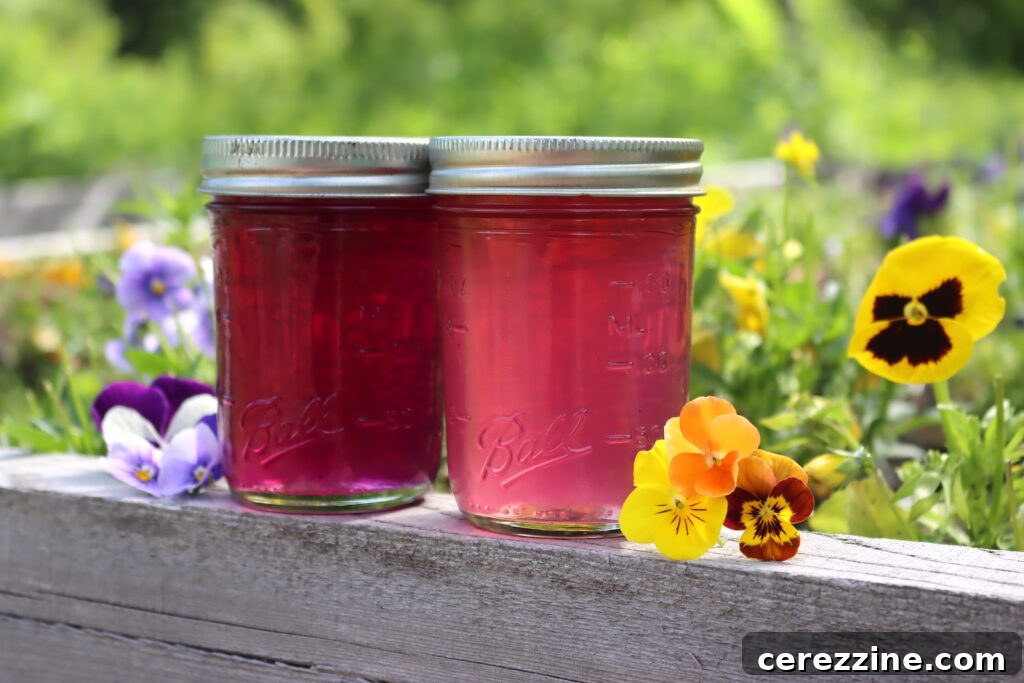
While the choice of flower will impart its unique flavor and hue, the fundamental methodology for crafting safe and delicious flower jelly remains remarkably consistent. The foundation is a simple infusion, a tea crafted from edible flower petals, which is then combined with essential ingredients: bottled lemon juice for acidification, sugar for sweetness and preservation, and pectin for achieving that perfect set. This versatile formula provides a trustworthy starting point for a wide array of floral jellies.
To begin your flower jelly journey, gather approximately 2 cups of lightly packed edible flower petals. Excellent choices include dandelion, vibrant violet, fragrant lilac, or classic rose petals. Gently place the petals in a heat-proof bowl or pitcher. Bring 4 cups of water to a rolling boil and carefully pour it over your chosen petals. Allow this infusion to steep for a minimum of 15 to 30 minutes for a delicate flavor, or up to several hours if you desire a more intense floral essence. Once steeped, strain the petals thoroughly using a fine-mesh sieve or several layers of cheesecloth, pressing gently to extract all the flavorful liquid. You should yield approximately 3½ to 4 cups of concentrated flower tea.
Transfer the strained flower tea into a clean saucepan. Now, add 2 tablespoons of bottled lemon juice—it’s important to use bottled lemon juice for its consistent acidity, unlike fresh lemons which can vary. Stir in one box (1.75 oz) of powdered pectin, ensuring it dissolves completely. Bring the mixture to a full, rolling boil over high heat, stirring constantly. Once boiling vigorously, swiftly add 4 cups of granulated sugar all at once, stirring to dissolve. Return the mixture to a hard boil and cook for 1 to 2 minutes, or until the jelly reaches its gelling point. You can test this by dipping a cold spoon into the jelly; if it sheets off the spoon or wrinkles when pushed on a cold plate, it’s ready.
Carefully ladle the hot jelly into sterilized half-pint or pint jars, leaving ¼ inch headspace. Remove any air bubbles, wipe jar rims clean, and secure with two-piece lids. Process the jars in a boiling water bath canner for 10 minutes. If you reside at elevations above 6,000 feet, increase the processing time to 15 minutes to ensure safety.
This recipe consistently yields excellent results with a diverse range of edible flowers. If you opt to use Pomona’s Universal Pectin, be sure to consult their specific instructions, as they typically require ½ cup of bottled lemon juice and the use of calcium water to facilitate gelling, due to its unique low-sugar, un-acidified formulation. Once you’ve mastered this foundational technique, feel free to explore creative variations, such as blending different floral essences, incorporating wine as a base, or adding complementary herbs like mint, lemon balm, or thyme. Just remember to always adhere to proper acid ratios and avoid reducing the sugar content if you are using standard, high-sugar pectin formulations.
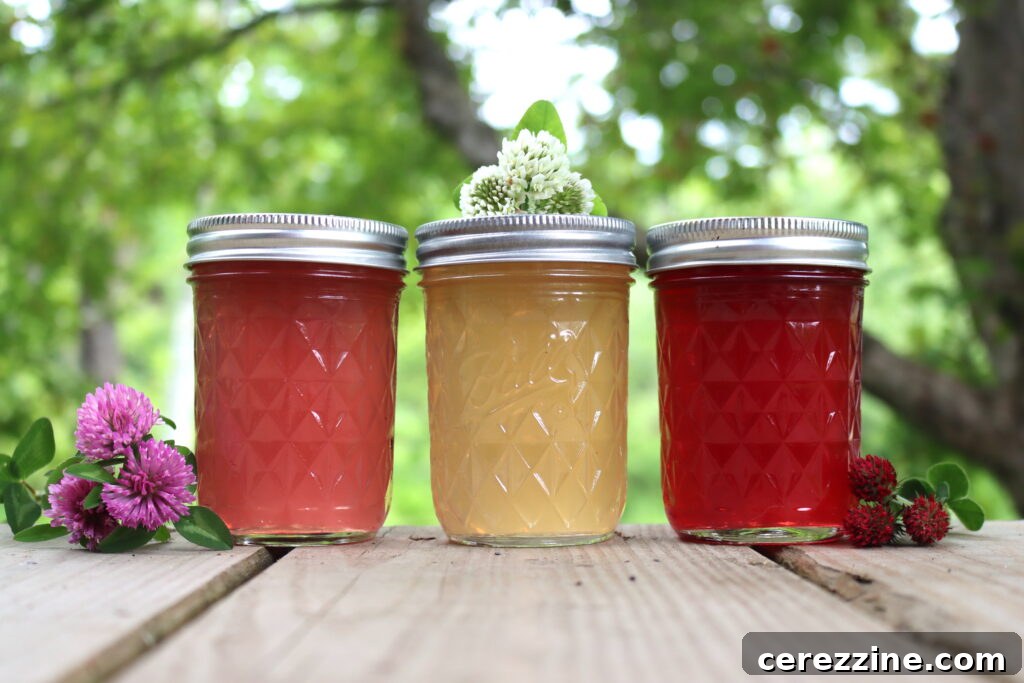
Exploring Flower Jams: A Different Approach to Floral Preserves
While flower jellies, made from strained floral infusions and properly acidified, are definitively safe for home canning, flower jams present a slightly different set of considerations. The key distinction lies in their composition: a flower jam includes the actual flower petals suspended within the preserve, rather than just the strained liquid. This means that the entire mixture, including the solid petals, must be sufficiently acidic to prevent the growth of harmful microorganisms throughout the jar.
To safely can a flower jam, the preserve needs to be acidic enough to effectively “pickle” the flower petals. This concept isn’t as unusual as it sounds; many tested recipes incorporate ingredients with a naturally higher pH into an acidic jelly base. Pepper jellies are a prime example: they are, in essence, a type of jellied pickle. Most pepper jelly recipes rely heavily on cider vinegar for acidity, balanced with a generous amount of sugar for flavor. For a savory herbal jam, including edible flowers, the principles remain the same. The recipe must ensure a high acid content, often requiring at least ¼ cup of vinegar per half-pint jar in yield.
The following tested recipe for a savory herbal jam provides a good framework, yielding approximately 4 half-pint jars:
- 1 to 2 cups edible flowers (e.g., chive blossoms, calendula petals)
- 4 cups water (or 2 cups water and 2 cups white wine for added depth)
- 1 to 2 cups granulated sugar
- 1 cup vinegar at 5% acidity (such as wine vinegar, white vinegar, cider vinegar, or rice vinegar)
- 1/4 cup bottled lemon juice
- 1 box (1.75 ounces) Low Sugar Pectin (such as Sure-Jell Low Sugar)
In this recipe, using 2 cups of sugar will result in a sweeter, more piquant jam, akin to a traditional pepper jelly, while 1 cup of sugar creates a more savory profile, with just enough sweetness to temper the acidity. It’s important to understand that this savory jam formulation is generally not what people envision when they think of a “sweet flower jam.” However, there’s another intriguing approach to achieving acidity for flower jams: incorporating wine.
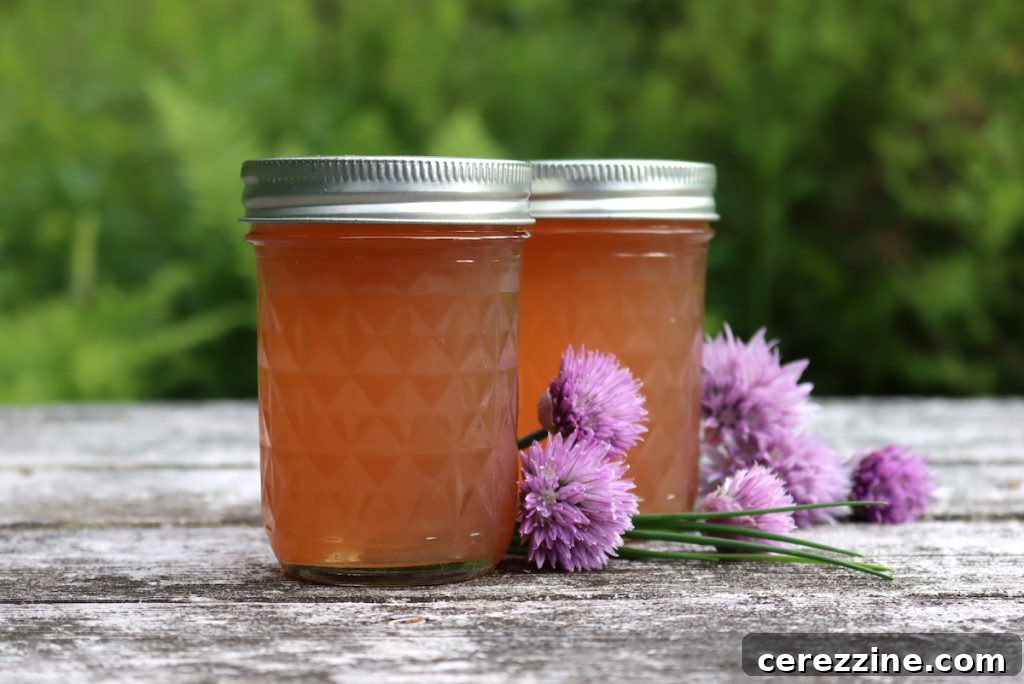
Flower Jams with Wine: An Untested Exploration
Wine is naturally acidic, a characteristic fundamental to its production, as this acidity creates an environment where yeast can flourish while spoilage microorganisms are inhibited. In fact, if wine’s pH is too high, it too can potentially harbor harmful bacteria, including botulism. Thus, by definition, wines must maintain a pH below 4.6 to be stable. White wines typically have a pH ranging from 3.0 to 3.4, and red wines from 3.3 to 3.6, making them comparable in acidity to many common pickling brines. White wine offers a neutral base that allows the floral notes to shine, while providing a significant acidic contribution to a jam containing petals.
Bernardin, a trusted canning authority, offers a recipe for an all-wine and lemon juice pepper jelly that does not require additional vinegar. This recipe could conceptually be adapted for a flower jam, substituting edible flower petals for the hot peppers. However, it is paramount to stress that this adaptation is NOT a officially tested recipe for flower jam. While the acidic properties of wine and lemon juice, combined with pectin, should theoretically ensure a safe pH, the interaction with specific flower petals and their potential buffering capacity is not scientifically verified in this context. Therefore, if you choose to explore this method, it is absolutely essential to test the pH of your finished product using reliable pH strips or a pH meter to confirm it is below 4.6.
Here’s a conceptual framework based on the Bernardin wine jelly, to be approached with caution and personal pH testing:
- 1 cup edible flower petals
- 1 1/2 cups (375 ml) sweet white wine
- 3 1/2 cups (875 ml) granulated sugar
- 3 tbsp (45 ml) bottled lemon juice
- 1 pouch (85 ml) Liquid Pectin
When using conventional boxed or liquid pectin, you will already benefit from the added citric acid it contains. Coupled with the bottled lemon juice and the inherent acidity of the wine, the pH of this mixture should be well within the safe canning range. (If using Pomona’s pectin, remember you would need about ½ cup of lemon juice for proper acidification and gelling). The edible flowers are incorporated in place of chopped peppers, with the assumption that they will undergo a similar “pickling” effect. However, as this specific adaptation is not a tested recipe, reliance on personal judgment and accurate pH testing is crucial. All other recipes and recommendations in this article, unless explicitly stated otherwise, are based on thoroughly tested and approved canning guidelines.
Traditional Flower Preserves: High-Sugar Syrup Method
Beyond jellies and jams, there’s a time-honored category of flower preserves that falls into the realm of traditional syrups or candied fruits, which can also include flower petals. These recipes typically involve cooking flowers in a concentrated sugar syrup until the mixture reaches the “thread stage” (around 235°F or 113°C on a candy thermometer), a temperature significantly higher than the gelling point for most pectin-set jellies (usually around 220°F or 104°C). This method results in a thick, luscious preserve that relies not on pectin for its set, but on the sheer concentration of sugar.
In these high-sugar preserves, the pH becomes less critical past a certain sugar concentration, as the high sugar content itself acts as the primary preservative through osmotic pressure, inhibiting microbial growth. While not strictly necessary for safety in these cases, a touch of lemon juice still enhances the flavor, adding a bright counterpoint to the sweetness. Essentially, you are creating syrup-candied edible flowers that are served much like a “flower jam”—and the taste is simply exquisite!
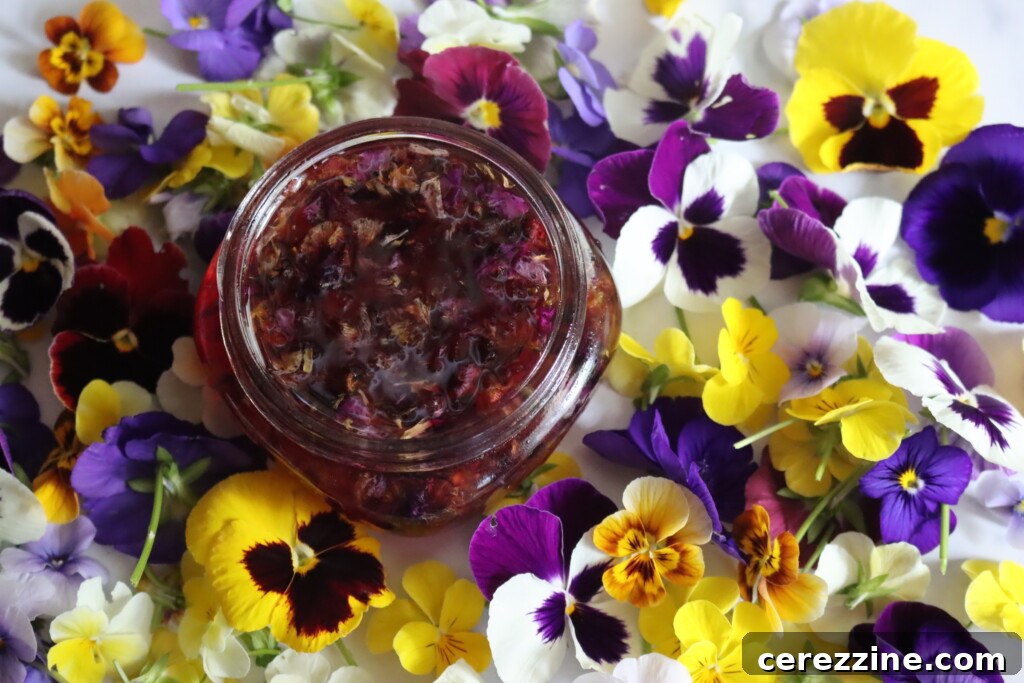
This syrup-based “flower jam” is a global culinary tradition, with renowned examples like the truly luscious Turkish rose petal jam, often made using this very technique. To craft a similar syrup-based flower jam at home, start with 4 cups of water, 4 cups of granulated sugar, and 2 to 4 cups of your chosen edible flower petals. Combine all ingredients in a large, heavy-bottomed pot. Bring the mixture to a boil over medium-high heat, stirring until the sugar dissolves. Continue to cook, stirring occasionally, until the syrup reaches 235°F (113°C) on a reliable candy thermometer. This indicates the “thread stage,” where the sugar concentration is sufficient for preservation.
Carefully ladle the hot, thick preserve into prepared jars, leaving ¼ inch headspace. Remove any air bubbles, wipe jar rims clean, and affix two-piece lids. Process the jars in a boiling water bath canner for 10 minutes (or 15 minutes if you are at an elevation above 6,000 feet).
In many cultures, these high-sugar syrup preserves are simply transferred to sterilized jars and stored in a cool, dark pantry without further canning. However, in the US, for an extra layer of confidence and shelf stability, we typically opt for the additional step of water bath canning. Regardless of the final storage method, the delicious outcome remains the same!
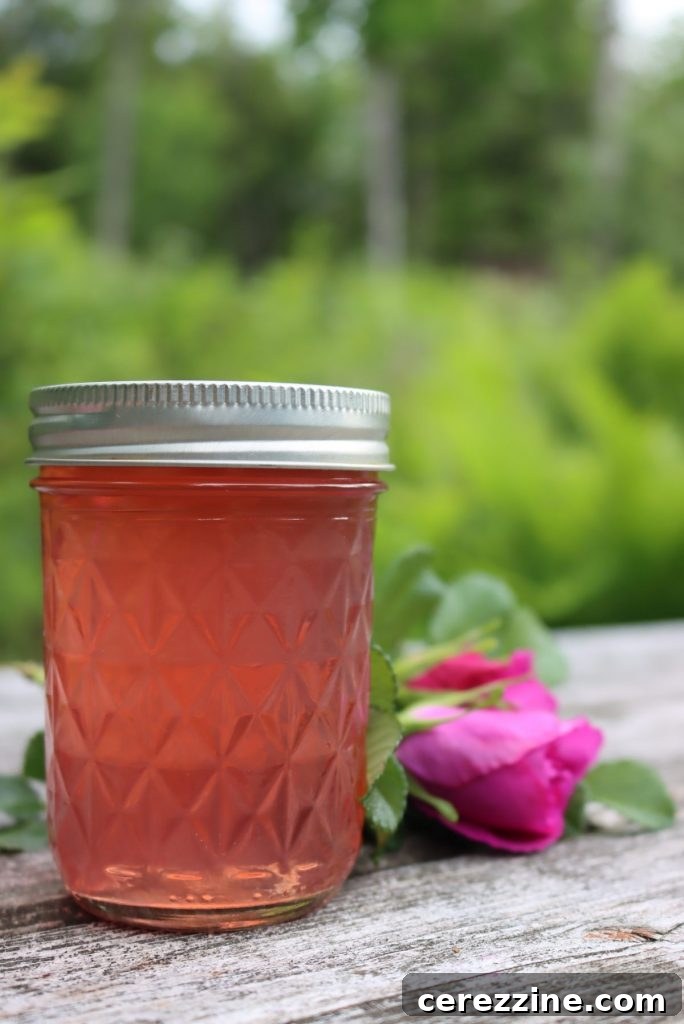
Flower Jellies Are Safe—When Done Right
In summary, despite the recent isolated alarm from one extension office, the foundational science of food preservation—and the multitude of time-tested recipes from leading authorities—unequivocally supports the safety of properly acidified flower jellies. When you meticulously follow guidelines that incorporate conventional boxed pectin (which typically includes citric acid), maintain adequate sugar content, and critically, add a sufficient amount of bottled lemon juice, you are well within the established safe home canning parameters.
Therefore, flower jellies are not inherently unsafe. They simply demand the same diligent acidification and careful preparation as any other preserve processed in a boiling water bath canner. Whether you’re making mint jelly, fragrant rose jelly, or charming dandelion jelly—the underlying principles of safety are identical and universally applicable.
To provide an extra layer of assurance, always include 2 tablespoons of bottled lemon juice for every 4 cups of flower tea when utilizing standard boxed pectins like Sure-Jell. If you opt for Pomona’s Pectin, increase this to ½ cup of bottled lemon juice, as recommended by their instructions to ensure proper acidity. There is nothing intrinsically hazardous about edible flower petals themselves, provided they are responsibly harvested from unsprayed locations and correctly identified. In truth, their properties for jelly-making are not significantly different from those of culinary herbs such as mint, which are widely and safely used in countless tested jelly recipes.
Should anyone suggest otherwise, please feel empowered to share this comprehensive guide. Because the only thing more detrimental than the risk of foodborne illness is the propagation of fear-based misinformation that discourages us from embracing the joy and satisfaction of preserving the vibrant beauty and exquisite flavors of each passing season.
Delicious Flower Jelly Recipes to Try
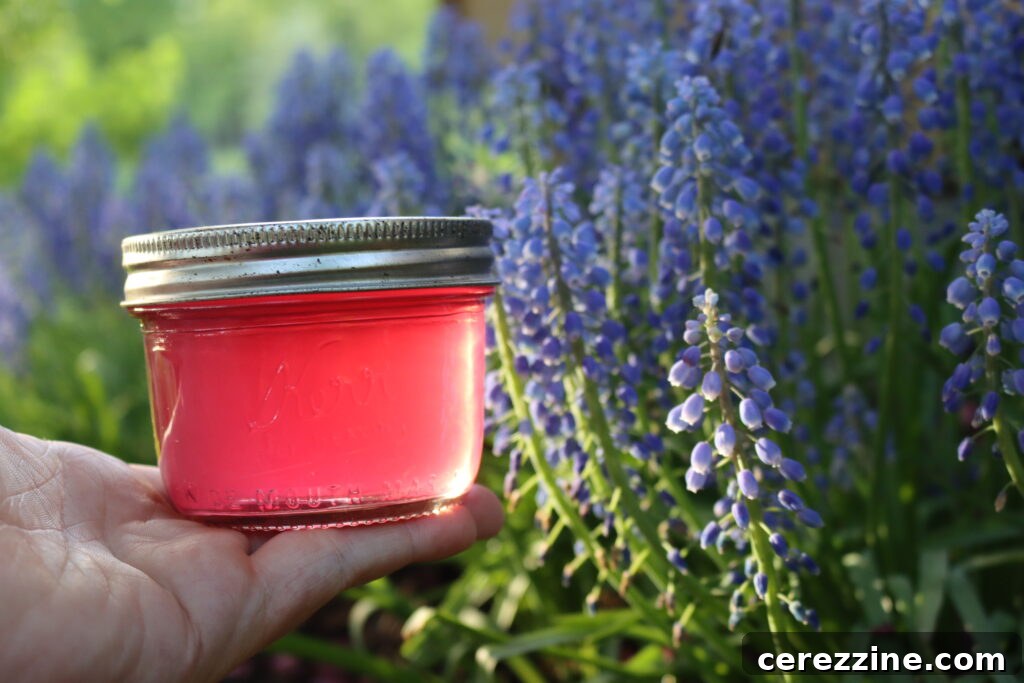
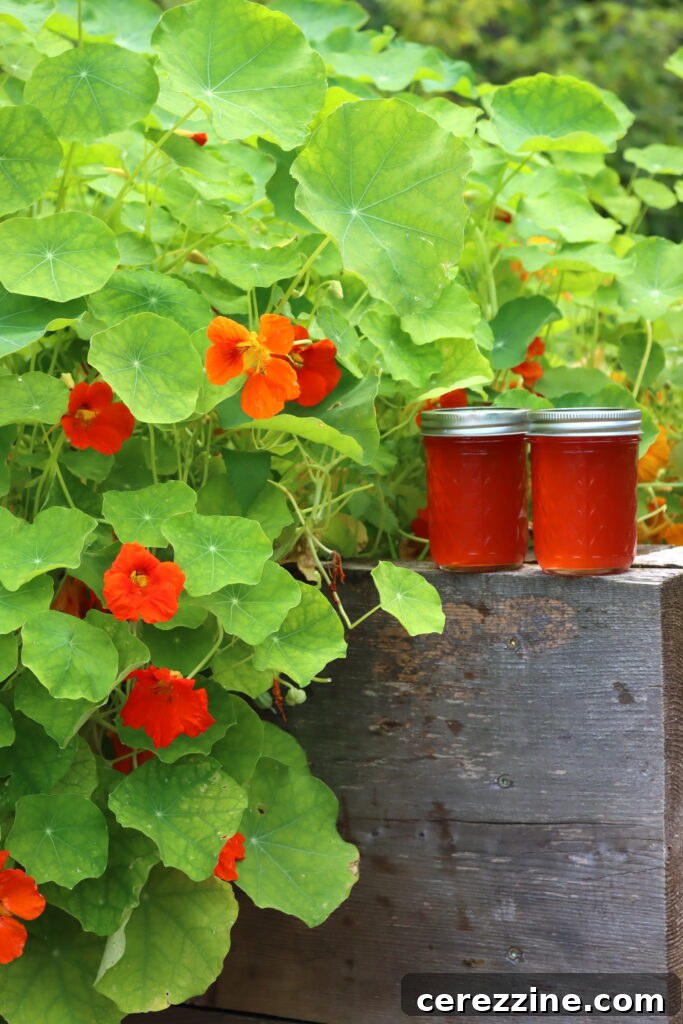
If you’re eager to embark on the delightful journey of making your own flower jellies, I’ve curated a diverse collection of safe, thoroughly tested recipes. Each recipe rigorously adheres to proper acidification methods for reliable home canning, ensuring both safety and sensational flavor. For the earliest signs of spring, Dandelion Jelly remains a perennial favorite. Capture the delicate essence and stunning hues of wild violets with Violet Jelly. As the season progresses, explore the fragrant notes of Lilac Jelly, the sunny brightness of Forsythia Jelly, or the peppery zest of Nasturtium Jelly. For something truly unique, Clover Jelly, Grape Hyacinth Jelly, and Apple Blossom Jelly offer beautiful and delicious seasonal preserves.
Foraging enthusiasts will particularly appreciate Redbud Jelly and the distinctive flavor of Elderflower Jelly!
You’ll discover all these and more in my comprehensive collection of flower jelly recipes, each meticulously crafted with added lemon juice and clear, step-by-step canning instructions to guarantee both safety and an unforgettable taste experience.