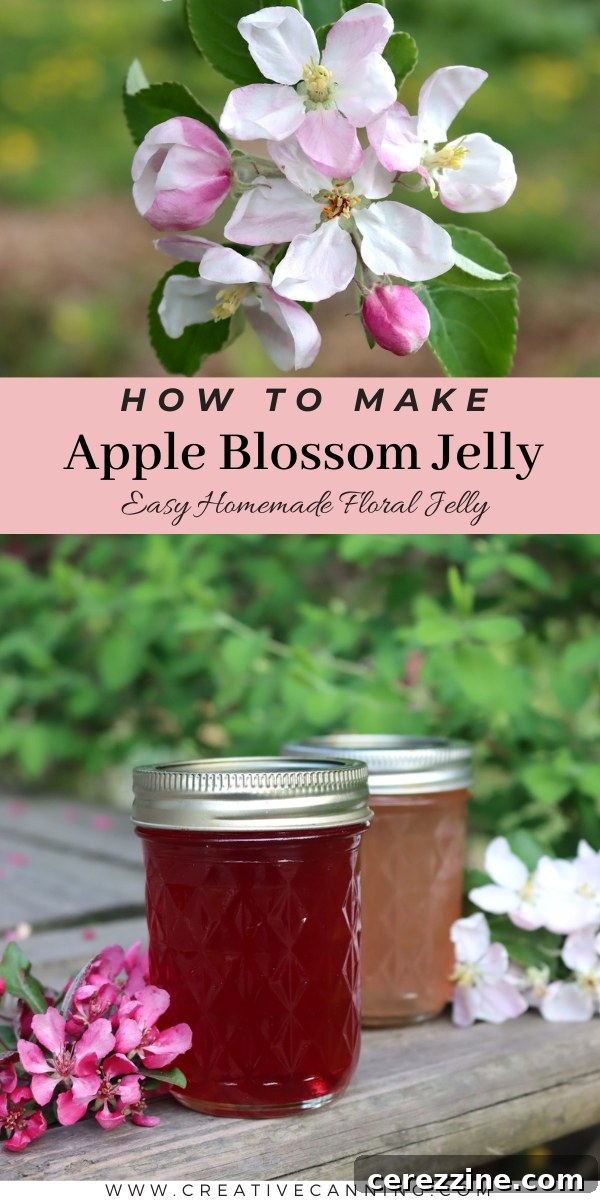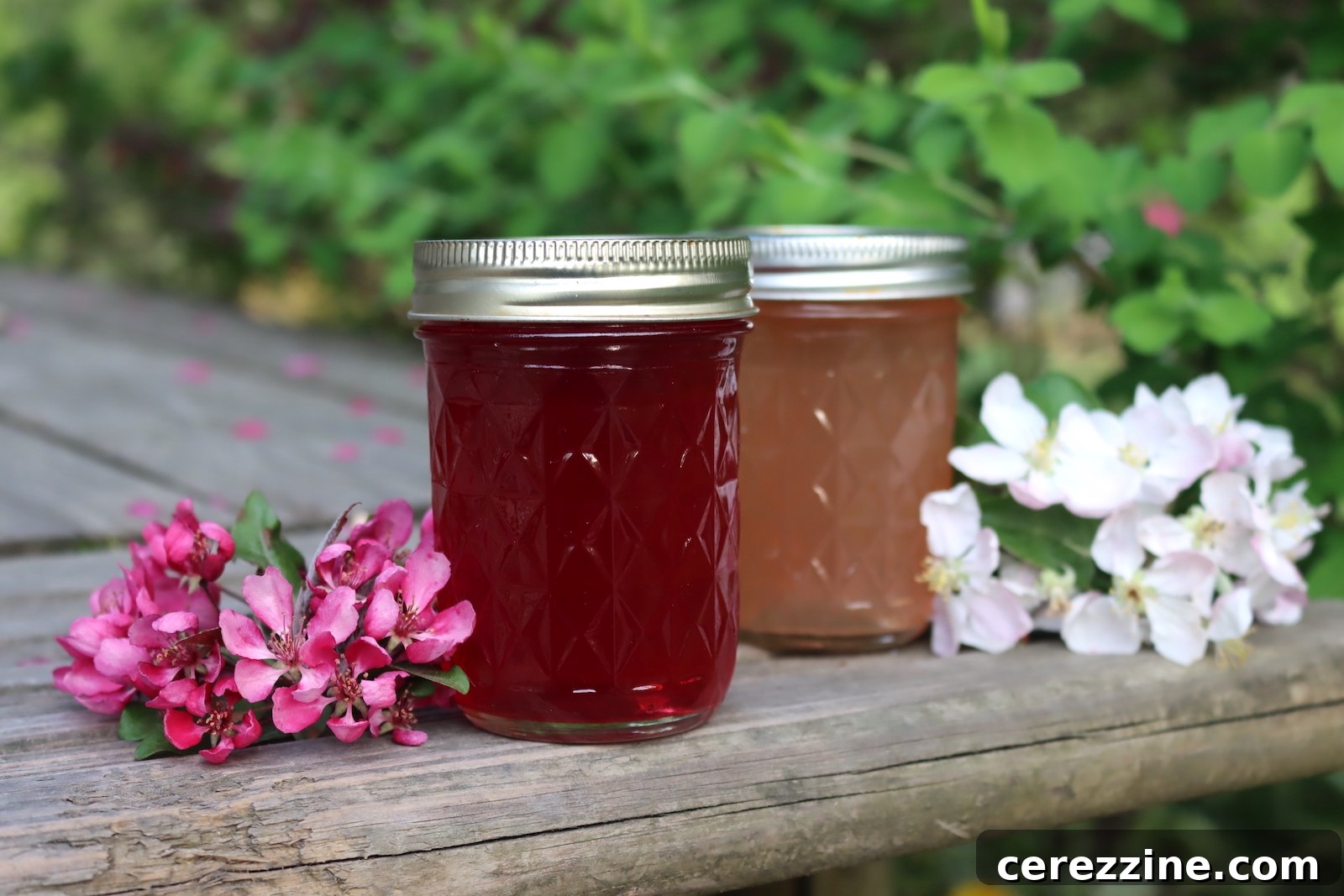
Apple blossom jelly captures the ephemeral essence of spring, transforming the season’s sweet, delicate fragrance into a delightful floral spread. This versatile recipe isn’t limited to apple blossoms; it beautifully works with any edible fruit tree flowers, including cherry, peach, pear, and even crabapple blooms. Imagine savoring the enchanting taste of spring long after the petals have fallen, bringing a touch of nature’s magic to your table year-round.
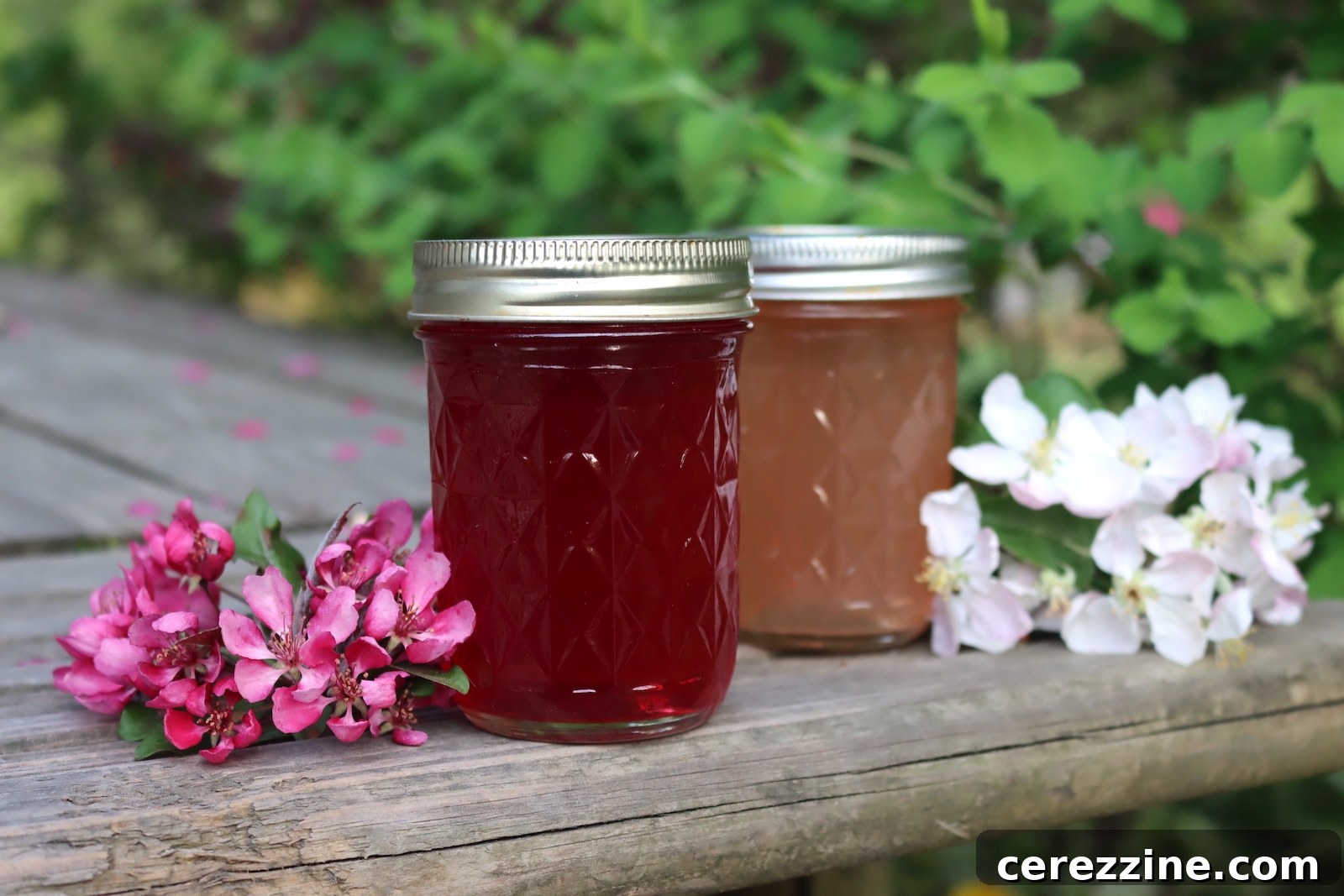
Each year, as winter’s chill retreats and the world awakens, we embark on a culinary quest: crafting new flower jellies to bottle up the vibrant taste of spring. There’s an undeniable joy in spreading the delicate flavor of fresh, sweet spring blossoms onto a warm, toasty biscuit, especially on a frigid January morning. It’s a sensory reminder that spring will inevitably return, and for a fleeting moment, it transports you back to those sun-drenched days filled with promise and bloom.
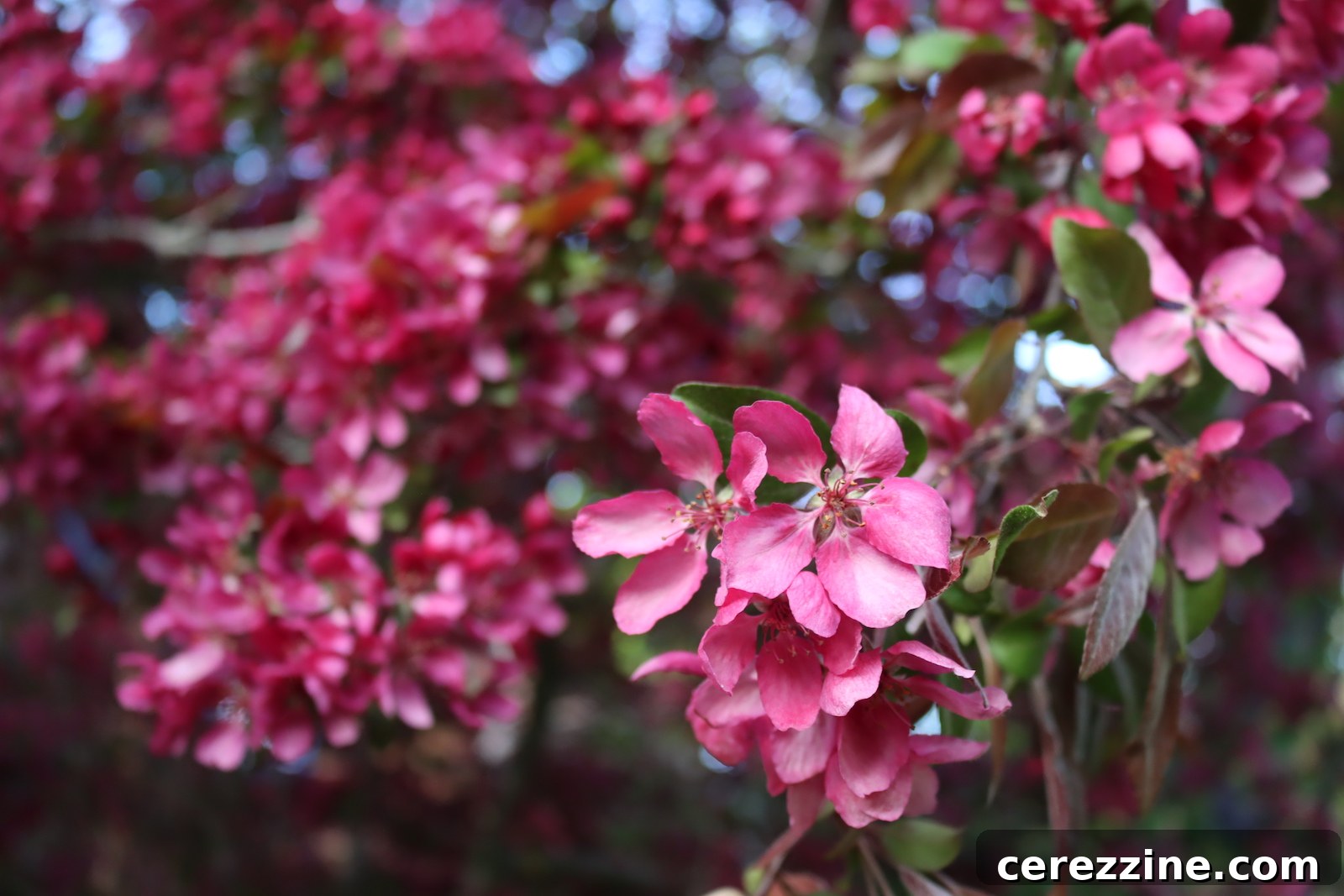
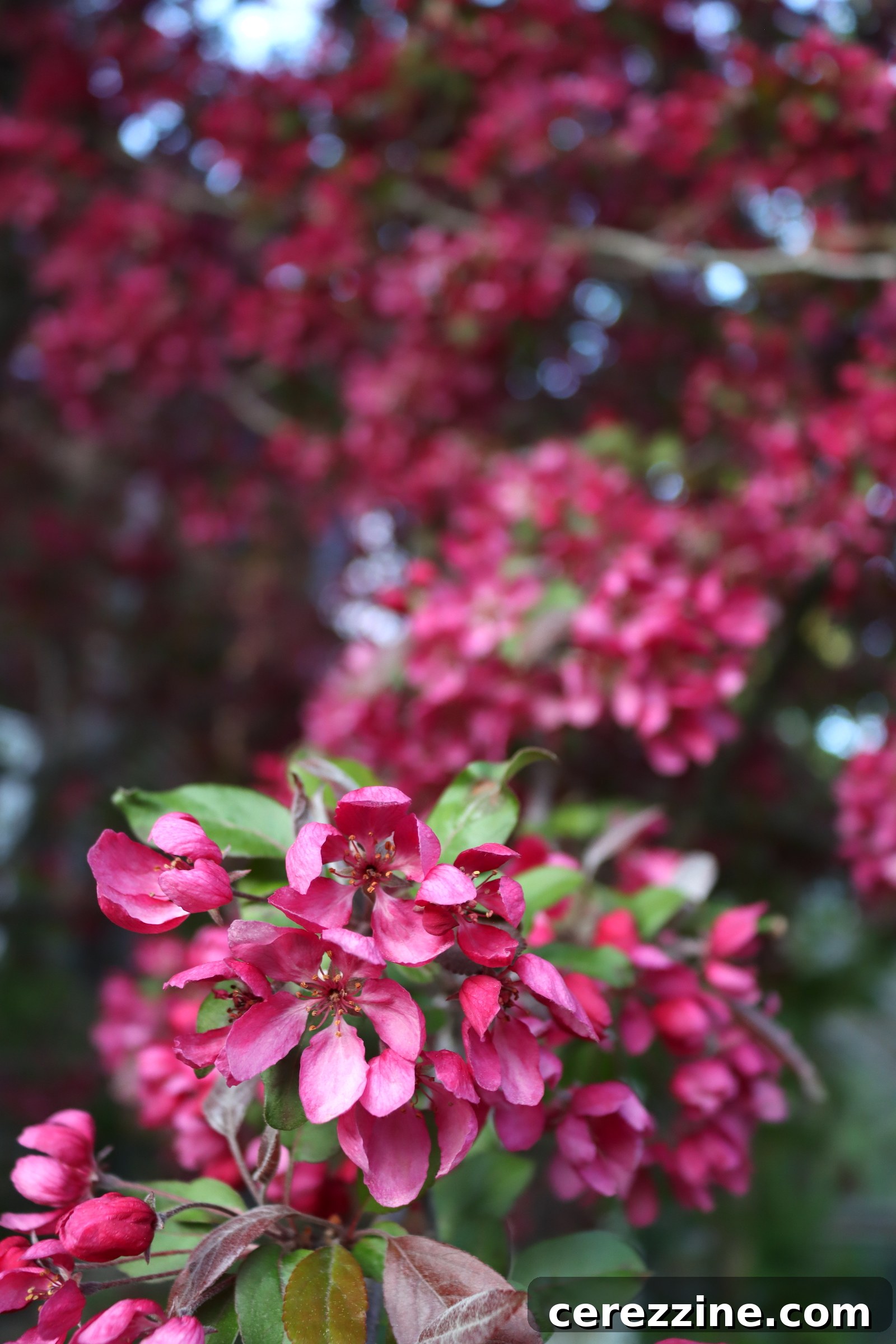
Right outside our front door stands a magnificent crabapple tree, whose intoxicating fragrance in early May is truly a highlight of the season. For years, I vowed to transform that luscious perfume into a homemade apple blossom jelly, yet somehow, the short bloom period combined with the hustle and bustle of spring activities meant I missed my chance, year after year. The window for harvesting these precious petals is surprisingly narrow, demanding attention and swift action.
This year, however, I made a conscious effort. Determined to capture their fleeting beauty, I collected the blossoms as soon as they unfurled. I gathered petals from our vibrant red-flowered crabapple tree, as well as several other apple trees throughout the yard, and even a few delicate cherry blossoms. The effort was immensely rewarding, yielding several batches of exquisite jelly. This floral delicacy has now earned a permanent spot on our annual canning list, a tradition we look forward to repeating every spring.
A Quick Look at the Recipe
- Recipe Name: Apple Blossom Jelly
- Recipe Type: Flower Jelly Recipe
- Canning Method: Water Bath Canning
- Prep/Cook Time: Approximately 30 Minutes active time
- Canning Time: 10 Minutes (at sea level)
- Yield: 4 to 5 half-pint (8 oz) jars
- Recommended Jar Sizes: Quarter Pint, Half Pint, or Pint
- Headspace: 1/4 inch
- Key Ingredients: Edible Flowers, Water, Lemon Juice (essential for safety and set), and Sugar
- Difficulty: Easy! The process primarily involves making a quick floral tea and setting it with pectin.
- Similar Recipes: The fundamental technique is quite similar to other delightful springtime floral jellies, including Tulip Jelly, Dandelion Jelly, Redbud Jelly, Grape Hyacinth Jelly, Violet Jelly, Pansy Jelly, Forsythia Jelly, and Lilac Jelly.
What Does Apple Blossom Jelly Taste Like?
Apple blossom jelly offers a taste experience that closely mirrors the enchanting scent of apple blossoms themselves: light, distinctly floral, with a subtle whisper of fresh fruit. It’s not overtly sweet or tart; rather, it possesses a delicate balance that is uniquely spring-like.
The precise flavor profile of your jelly will largely depend on the specific variety of apple tree (or cherry, pear, etc.) from which you harvest the blossoms. Each variety boasts a slightly different fragrance and, consequently, a nuanced taste. For the most profound and authentic flavor, it’s crucial to harvest your blossoms when they are at their peak fragrance. This is when their essential oils and aromatic compounds are most potent, ensuring a truly vibrant jelly.
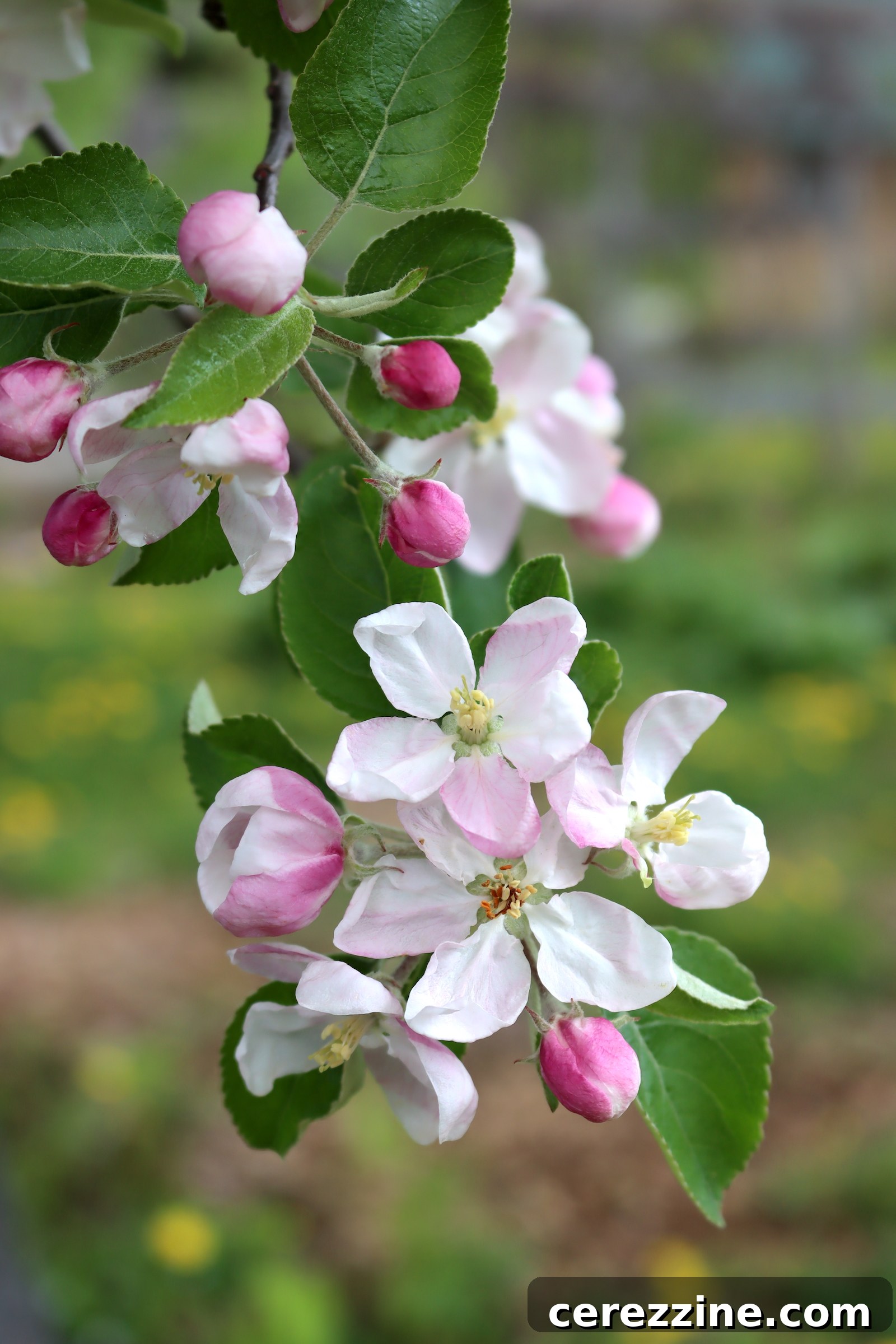
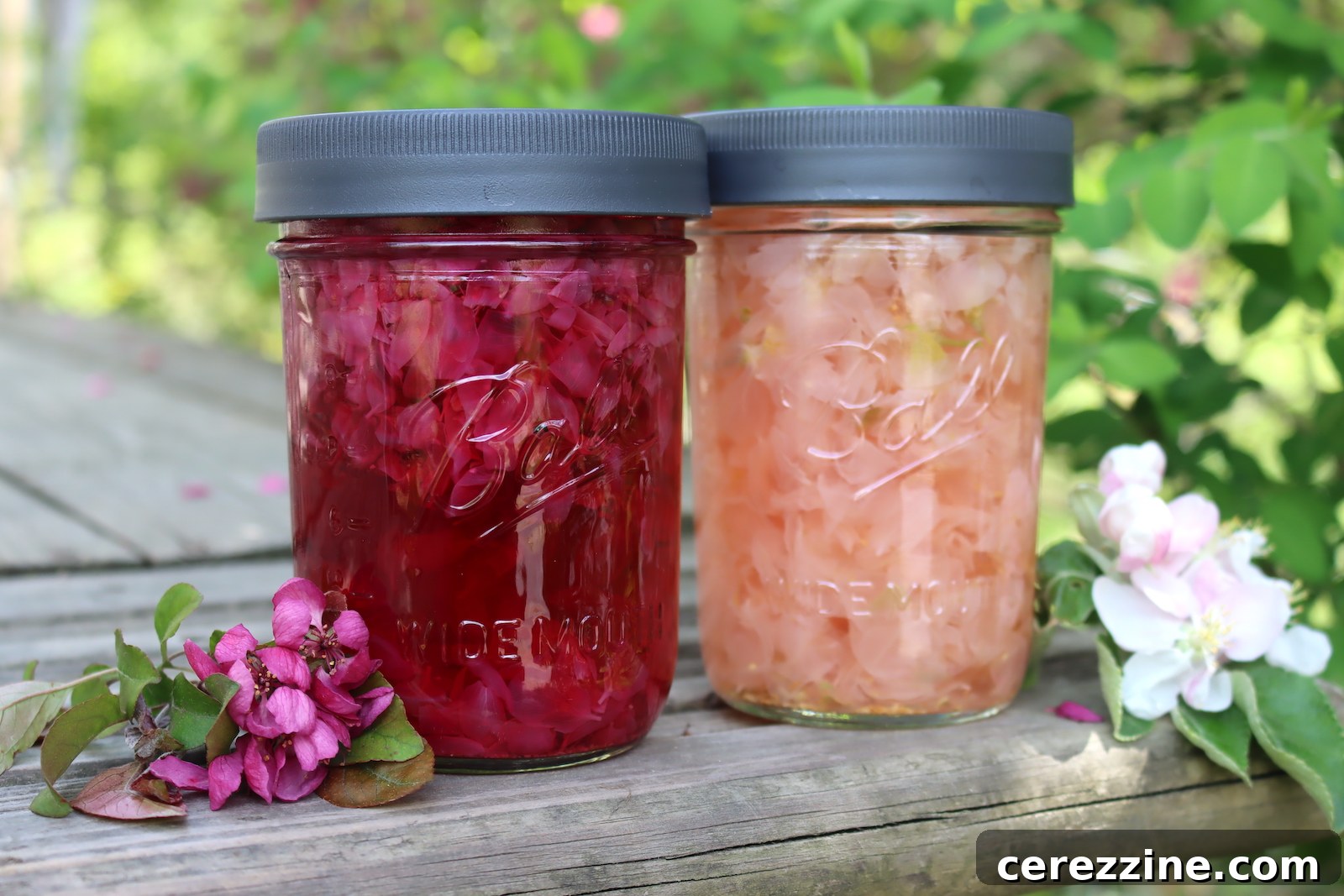
Beyond flavor, the color of your blossoms also plays a significant role in the final product. Blossoms can range from pure white to soft pinks and even deeper reds. These color compounds, often anthocyanins, are potent antioxidants and contribute to the overall character of the jelly. Interestingly, some of these same compounds are responsible for the distinct flavors found in fruits like blueberries and raspberries. Depending on the intensity and hue of your chosen blossoms, the finished jelly might surprise you with a faint, delightful berry-like undertone, adding another layer of complexity to its delicate floral notes.
Harvesting Apple Blossoms for Flower Jelly: A Sustainable Practice
Many aspiring jelly makers often wonder if harvesting apple blossoms will diminish their fruit yield. The good news is, quite the contrary!
Fruit trees, including apples and crabapples, produce a staggering abundance of flowers far exceeding their capacity to set fruit. In commercial orchards, growers typically allow only a small fraction of the flowers to develop into fruit (often no more than 1 in 5 to 1 in 10 blossoms). Later in early summer, they painstakingly thin the crop, removing roughly three out of every four tiny fruits to ensure the remaining ones grow large and healthy. Without this essential thinning, the tree would attempt to support too many fruits, resulting in a stunted, undersized harvest, often half the size of typical grocery store apples.
From each cluster of blossoms, which usually contains 5 to 6 individual flowers, ideally, only one fruit should mature in the end. Therefore, when harvesting for jelly, you can gently and sustainably pluck a few flowers from each cluster. Knowing that the tree would naturally drop most of these flowers anyway, you’re not significantly impacting its ability to produce fruit. In fact, you’re merely participating in a natural thinning process, albeit a slightly earlier one.
(As a bonus, those young, unripe apples that you might thin later can be used to make excellent, natural apple pectin, but that’s a culinary adventure for another day!)
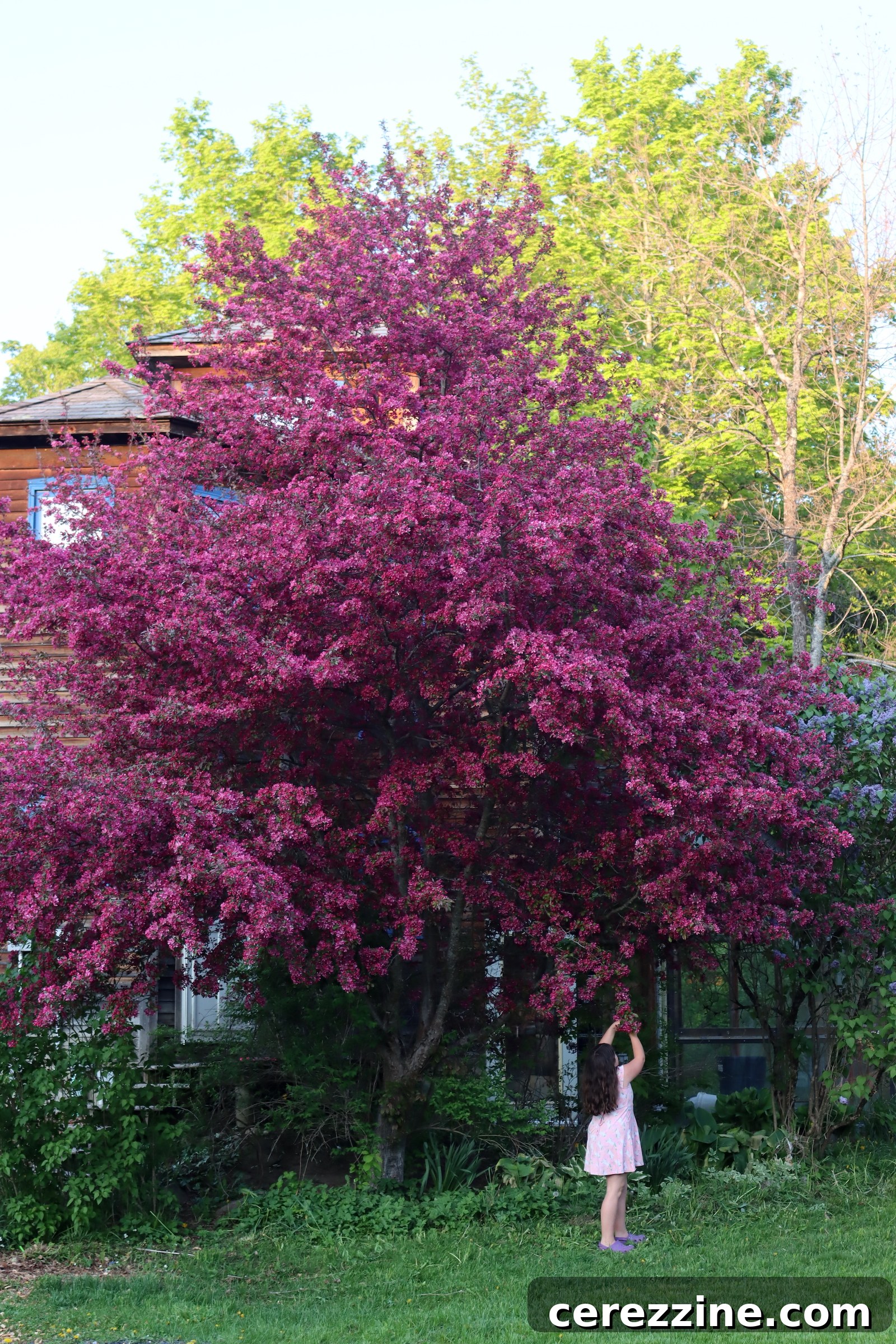
If you have a mature flowering crabapple or apple tree, harvesting a few handfuls of blossoms for a batch of jelly will barely be noticeable amidst the millions of flowers the tree produces. It truly is a drop in the bucket, allowing you to enjoy the beauty and flavor without guilt.
For an intriguing experiment, try keeping blossoms from different tree varieties separate. This allows you to taste and observe the subtle color differences in the resulting jellies, offering a unique culinary comparison. Alternatively, you can simply mix them all together to create a delightful “house blend” from your own backyard bounty, celebrating the diverse flavors of your unique garden.
Remember to always harvest blossoms from trees that have not been sprayed with pesticides or herbicides. Choose healthy, vibrant flowers from clean, untraveled areas to ensure your jelly is as pure and delicious as possible.
Essential Ingredients for Apple Blossom Jelly
To craft a batch of exquisite floral jelly from apple blossoms—or any other edible fruit tree blossoms like peach, pear, cherry, or plum—you’ll need a handful of freshly harvested blooms, along with a few pantry staples: water, sugar, pectin, and a crucial touch of lemon juice.
For a standard batch, yielding approximately 4 to 5 half-pint (8 oz) jars, gather the following:
- 4 cups freshly harvested Apple blossoms (ensure they are unsprayed and clean, stems removed)
- 4 cups clean Water
- 2 tablespoons fresh Lemon Juice (or 1/2 teaspoon citric acid powder dissolved in a small amount of water)
- 1 to 4 cups Sugar (quantity depends on pectin type and desired sweetness – see detailed notes below)
- 1 box (1.75 oz) powdered Pectin (Regular or Low Sugar variety)
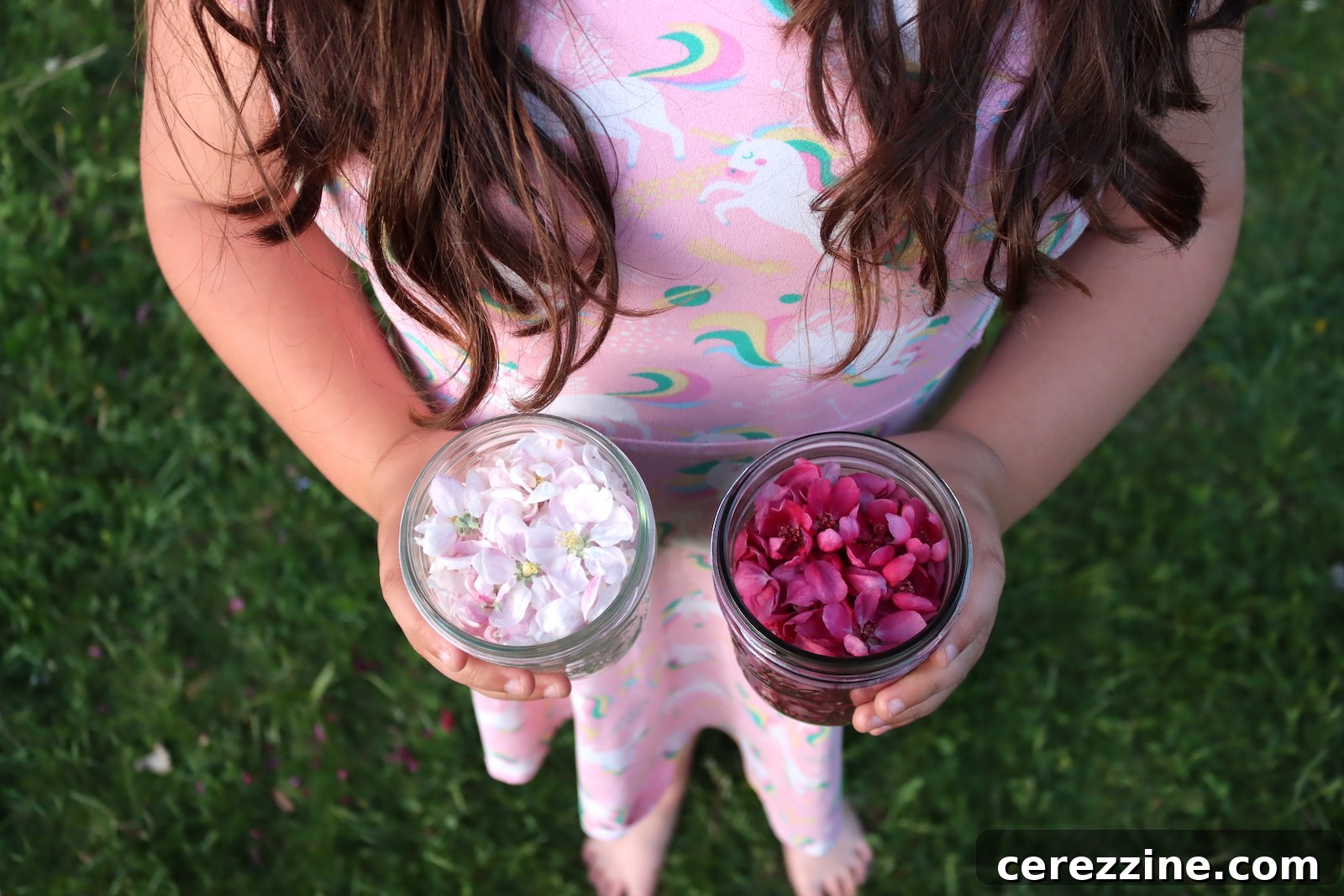
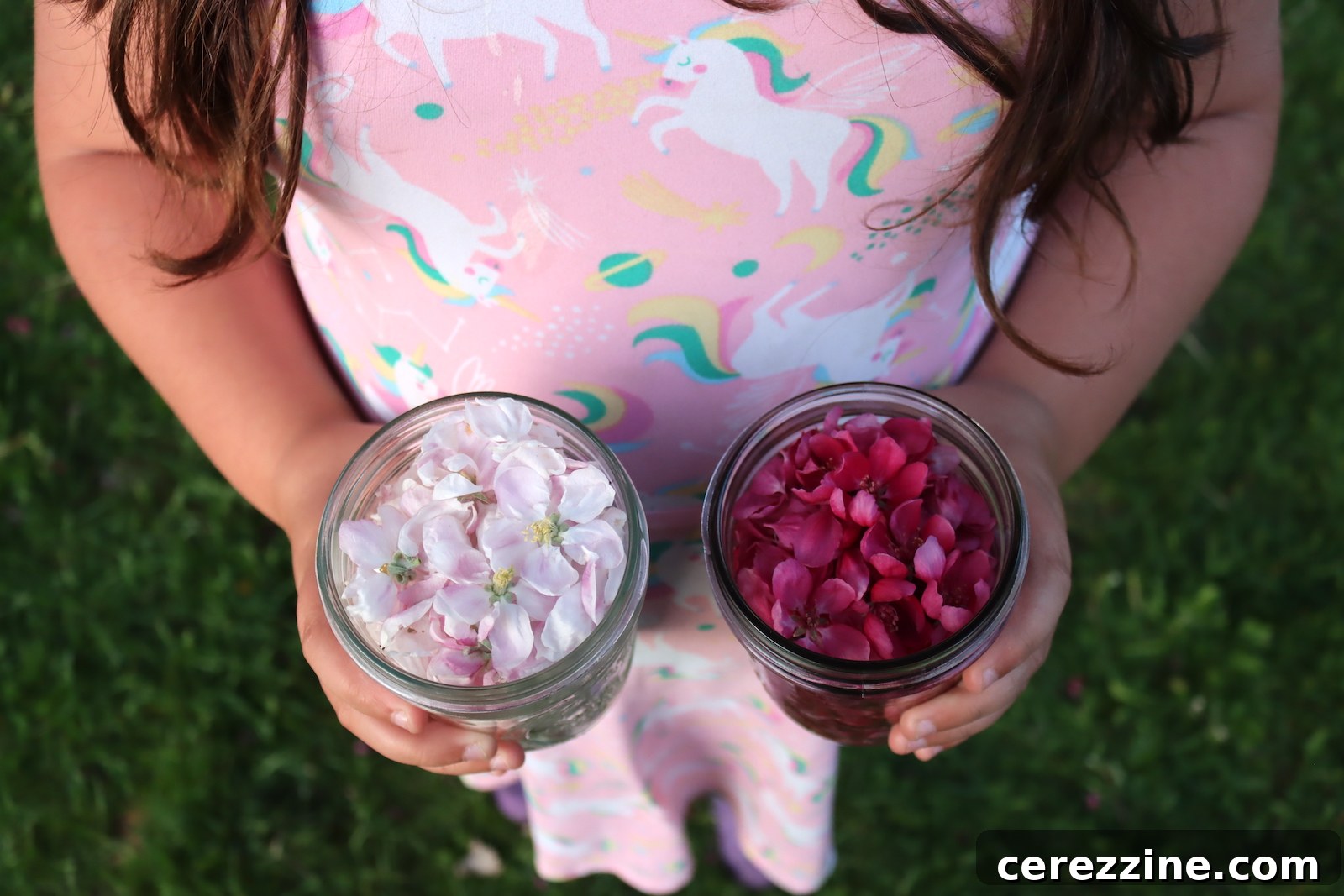
The natural fragrance and color of your selected blossoms are the primary determinants of your finished jelly’s unique flavor and visual appeal. Lighter blossoms tend to produce a more subtle, delicate jelly, while pinker or redder varieties might offer a slightly more robust flavor and a beautiful rosy hue.
The Indispensable Role of Lemon Juice
Lemon juice is far more than just a flavor enhancer in this recipe; it’s a critical component for both taste and safety. Firstly, its bright acidity perfectly balances the sweetness of the sugar, adding a pleasant tart contrast that elevates and brings out the subtle floral notes of the blossoms. Without it, the jelly can taste one-dimensional and overly sweet.
Secondly, and perhaps most importantly, lemon juice significantly lowers the pH of the mixture. This acidity is essential for two key reasons: it helps the pectin activate and set properly, ensuring your jelly achieves that perfect jiggly consistency. Moreover, a sufficiently low pH (high acidity) is vital for making the jelly safe for water bath canning, inhibiting the growth of harmful bacteria. Even if you don’t plan to can your jelly, lemon juice is still highly recommended for optimal flavor and texture.
For those seeking a more neutral flavor profile without the distinct citrus note of lemon, citric acid powder is an excellent alternative. When using citric acid, remember that it is significantly more concentrated than citrus juice. A general rule of thumb is to use 1/4 teaspoon of citric acid powder for every tablespoon of lemon or lime juice called for in a recipe. Since this recipe calls for 2 tablespoons of lemon juice, you would use 1/2 teaspoon of citric acid powder per batch, dissolved in a tiny bit of water before adding to the floral tea.
Understanding Pectin Options and Sugar Ratios
Pectin is the gelling agent that gives jelly its characteristic texture. The type of pectin you choose will directly influence the amount of sugar required and the final sweetness of your jelly.
For reliability and consistent texture, I generally recommend powdered pectin brands like Sure-Jell regular pectin or Sure-Jell low sugar pectin. After experimenting with numerous types on the market, these have consistently delivered superior results.
- Regular Pectin: If you opt for regular powdered pectin, it requires a minimum 1:1 ratio of sugar to liquid to set properly. For 4 cups of apple blossom tea, you will need at least 4 cups of sugar. This creates a very sweet, traditional-style jelly.
- Low Sugar Pectin: Low sugar pectin is much more flexible and will gel with significantly less sugar. You can use as little as 1/2 cup of sugar for a barely sweet jelly, or 1 to 2 cups for a lower-sugar option that still retains a pleasant sweetness. This is often my preferred choice as it allows the delicate floral flavors to shine through more prominently without being overshadowed by excessive sweetness. Low sugar pectin can also be used with full sugar recipes, making it a versatile staple for your pantry.
- Ball Flex Batch Pectin: If you use Ball Flex Batch Pectin, you will need 6 tablespoons of the powder, which is equivalent to a 1.75 oz box of other powdered pectin types. This applies to both their regular and low-sugar canisters.
- Liquid Pectin: While the full recipe card below includes instructions for liquid pectin, I generally do not recommend it for floral jellies due to its requirement for astronomical amounts of sugar (typically 7 cups of sugar for 4 cups of liquid) to achieve a set. The order of operations for liquid pectin is also different (sugar added first, pectin last). If this is your preferred pectin type, ensure you follow the specific instructions on its packaging precisely to avoid setting issues.
How to Make Apple Blossom Jelly: Step-by-Step Guide
Making jelly from apple blossoms is a straightforward and rewarding process, quite similar to crafting any type of floral jelly. The key is careful preparation and precise timing to capture those delicate flavors.
Step 1: Prepare the Blossoms
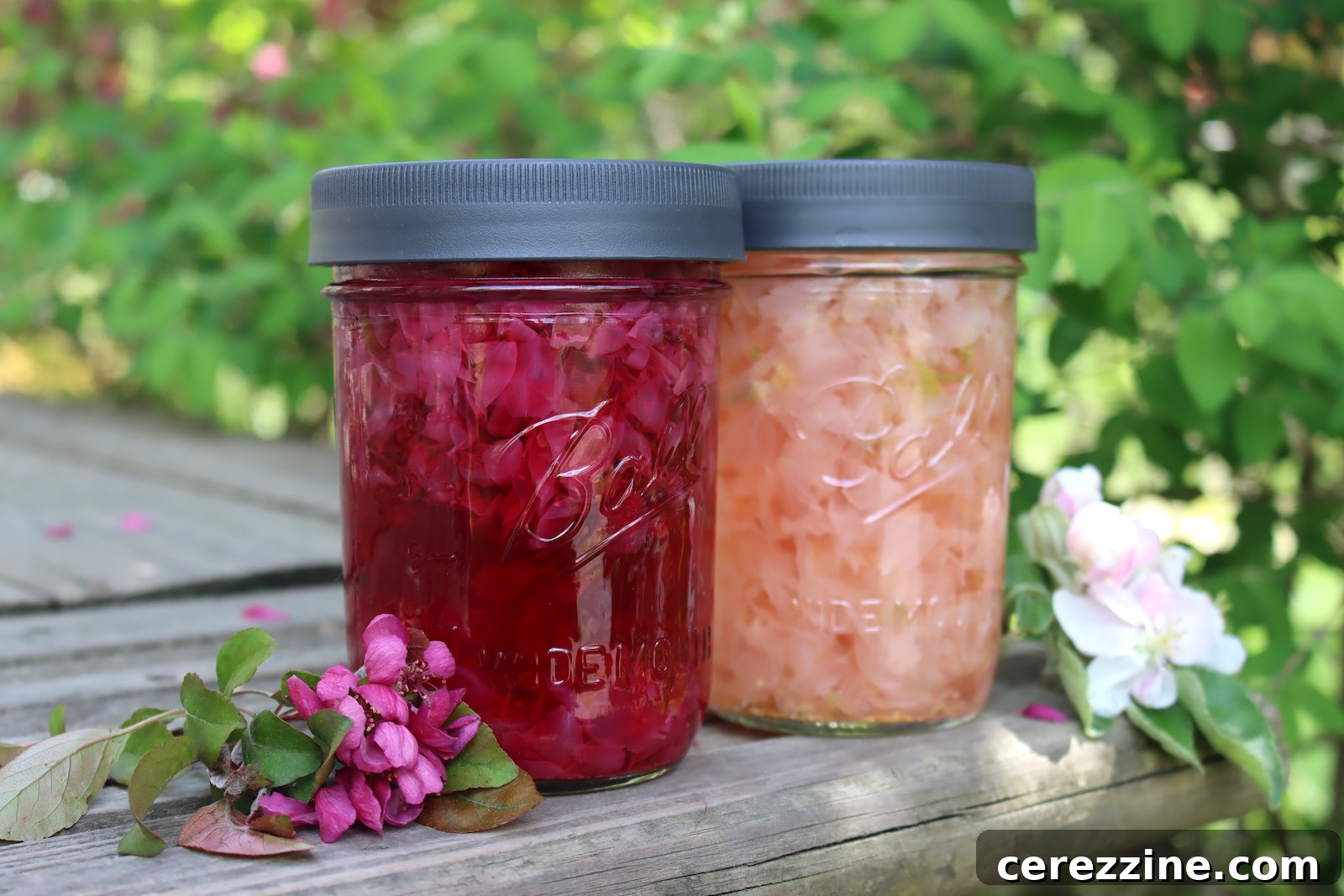
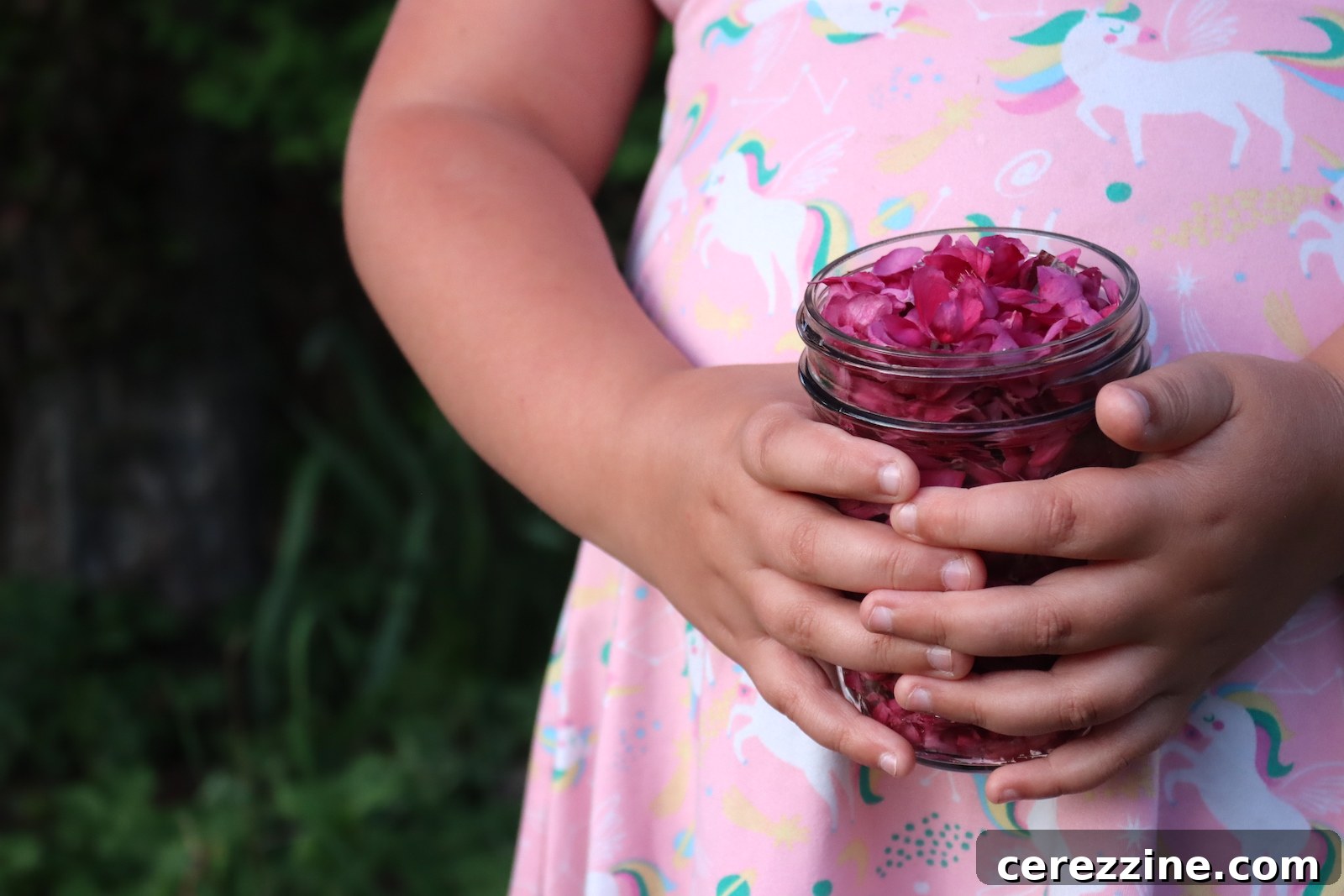
Begin by gently separating about 4 cups of fresh, unsprayed apple blossoms from their stems. It’s best to do this shortly after harvesting to retain their freshness. I find that picking them directly into a quart-sized jar is convenient, as it’s the perfect vessel for the next step.
Step 2: Infuse the Floral Tea
Once your blossoms are ready, pour 4 cups of freshly boiled water over them. Allow the blossoms to steep for approximately 15 to 20 minutes. This infusion process extracts the delicate flavors and colors from the petals, creating a fragrant floral tea. Avoid over-steeping, as it can sometimes lead to a slightly bitter taste.
Step 3: Strain the Tea and Add Lemon Juice
Carefully strain the infused apple blossom tea into a clean saucepan or a dedicated jelly pot. Pressing lightly on the blossoms can help extract more flavor, but avoid squeezing them too aggressively. Add 2 tablespoons of fresh lemon juice (or 1/2 teaspoon dissolved citric acid) to the tea. As mentioned earlier, the lemon juice is crucial: it not only brightens the jelly’s color and balances the sweetness but also lowers the pH, which is essential for pectin activation and ensures the jelly is safe for canning.
Step 4: Incorporate Pectin
Bring the floral tea and lemon juice mixture to a rolling boil over medium-high heat. Once boiling, stir in one box (1.75 oz) of powdered pectin. If you’re making a half batch (using 2 cups of floral tea), you would use half a box of pectin (approximately 3 tablespoons). Stir continuously until the pectin is completely dissolved. Continue boiling for one full minute to activate the pectin fully. It’s vital to add the pectin *before* the sugar; adding sugar too early can prevent the jelly from setting properly.
Step 5: Add Sugar and Final Boil
After the pectin has boiled for one minute, add your chosen amount of sugar (refer to the “Pectin Options and Sugar Ratios” section above for guidance on quantity). Stir vigorously to ensure the sugar completely dissolves into the hot mixture. Once dissolved, return the mixture to a hard, rolling boil that cannot be stirred down. Maintain this vigorous boil for exactly one minute. This final minute of boiling with sugar is crucial for the jelly’s set.
Step 6: Ladle into Jars
Immediately remove the jelly mixture from the heat. Carefully ladle the hot jelly into your prepared jars, leaving 1/4 inch of headspace at the top. This headspace is important for proper sealing if you plan to can the jelly. Wipe the rims of the jars clean with a damp cloth to remove any drips, which could interfere with sealing.
Canning Apple Blossom Jelly for Long-Term Storage
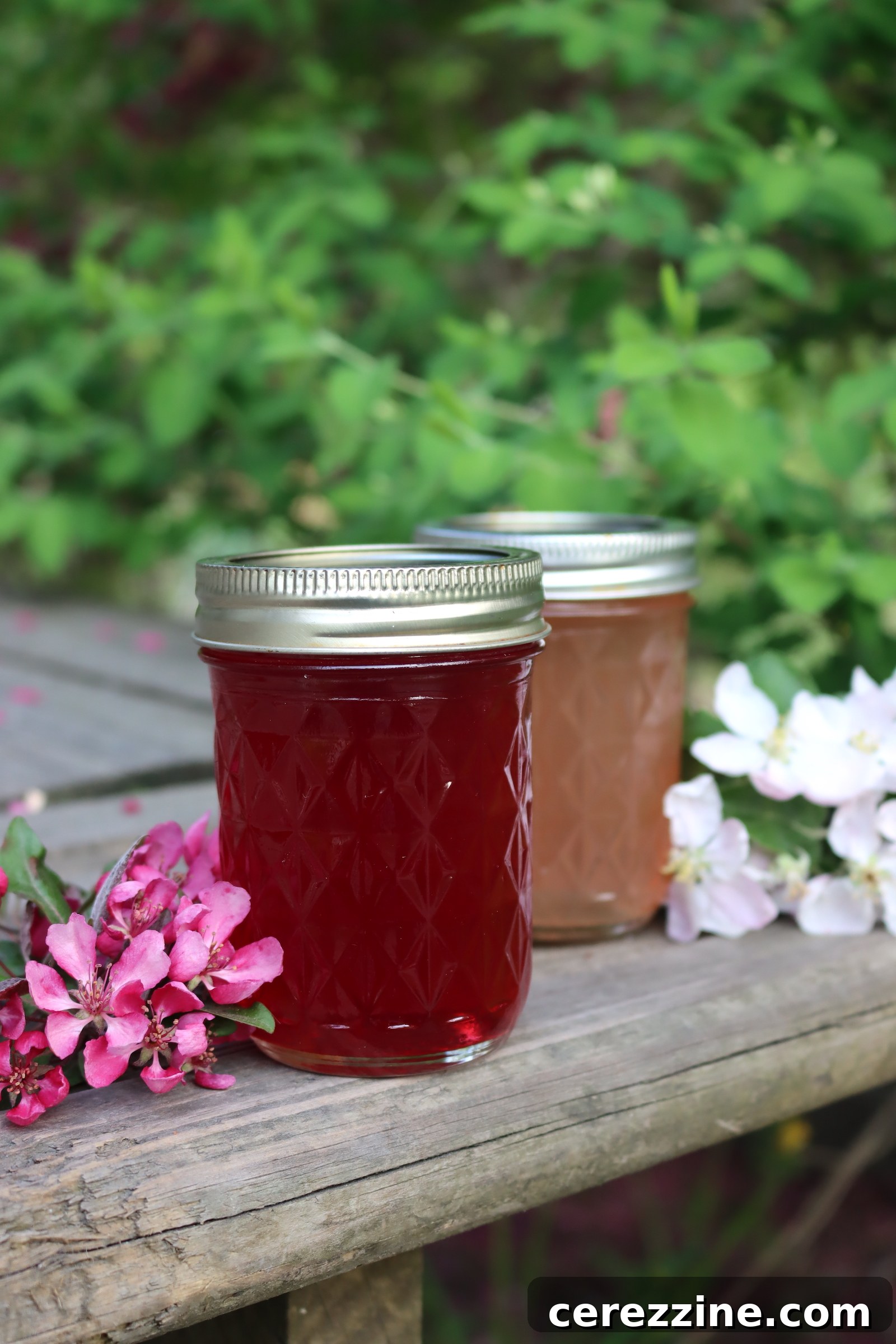
While canning your apple blossom jelly is optional, and you can certainly store it in the refrigerator for several weeks or freeze it in freezer-safe jars for up to 6 months, I personally advocate for water bath canning. The simplicity and convenience of processing jars in a water bath canner mean I can store my homemade jelly right on the pantry shelf, allowing me to enjoy the sweet, delicate, and often berry-like flavor of apple blossom jelly at any time of the year without taking up precious refrigerator or freezer space.
For safe water bath canning, it is absolutely essential that you have included the lemon juice (or citric acid) in your recipe. This ingredient lowers the pH of the jelly mixture sufficiently to prevent the growth of harmful bacteria, making it safe for shelf-stable storage.
Water Bath Canning Steps:
- Prepare Your Equipment: Before you even start making the jelly, ensure your water bath canner is ready. This means filling it with water and bringing it to a simmer. Wash your canning jars, bands, and new lids thoroughly. Keep the jars hot in simmering water until ready to fill.
- Fill Jars: Once your jelly is cooked (following the steps above), ladle the hot jelly into the prepared hot canning jars, leaving precisely 1/4 inch of headspace. This small gap is crucial for creating a proper vacuum seal.
- Clean Rims and Seal: Wipe the rims of each jar meticulously with a clean, damp cloth to remove any sticky residue. Place a clean, new lid on top of each jar, followed by a canning band, tightened finger-tip tight (do not overtighten).
- Process Jars: Carefully place the filled jars into your hot water bath canner, ensuring they are fully submerged by at least 1 inch of water. Bring the water to a rolling boil. Once boiling, process the jars for 10 minutes. If you are at an elevation above 6,000 feet, you will need to increase the processing time to 15 minutes to account for the lower boiling point of water.
- Cool and Check Seals: After the processing time is complete, turn off the heat and let the jars sit in the canner for 5 minutes before carefully removing them. Place the hot jars on a clean towel on your counter, spaced apart, to cool undisturbed for 12 to 24 hours. As they cool, you should hear satisfying “pop” sounds as the lids seal. After cooling, check each seal by pressing on the center of the lid; it should be concave and not flex when pressed. Any jars that haven’t sealed properly should be reprocessed with new lids or stored in the refrigerator for immediate consumption.
Properly canned and sealed jars of apple blossom jelly will maintain their quality on your pantry shelf for 12 to 18 months. Once opened, always store the jar in the refrigerator.
Apple Blossom Jelly Variations: Creative Twists
While the classic apple blossom jelly is a delight on its own, its delicate flavor profile makes it a wonderful canvas for creative variations. Your initial choice of fruit tree blossom will, of course, be the primary determinant of your floral jelly’s final flavor and hue. However, by incorporating a few additional ingredients, you can introduce exciting new dimensions to your homemade jelly.
Berry Boosts for Enhanced Flavor and Color
To amplify the subtle berry-like undertones often found in apple blossoms and to achieve a richer, more vibrant color, consider muddling in a handful of fresh berries during the steeping process. Raspberries or blackberries are excellent choices. Their natural tartness and fruity notes complement the floral essence beautifully, creating a more complex and robust jelly. Simply add a small amount of crushed berries along with your blossoms when you pour the boiling water over them, then strain as usual.
Exploring Other Edible Flowers
The world of edible flowers is vast and offers endless possibilities for unique jellies. Beyond fruit tree blossoms, you can experiment with:
- Dandelion Petals: For a jelly with a surprisingly sweet, honey-like flavor and a beautiful sunny yellow color.
- Wild Violet Petals: These tiny treasures impart a distinct berry-like flavor and transform your jelly into a stunning bright magenta hue.
- Lilac Blossoms: If you desire a more pronounced and intensely floral flavor, lilac jelly is an exquisite choice, known for its heady perfume.
- Rose Petals: For a truly romantic and aromatic jelly with a classic floral essence.
Always ensure any flowers you use are truly edible, unsprayed, and harvested from a clean, safe environment.
More Fruit Tree Blossom Recipes
If you’ve fallen in love with the idea of utilizing the fragrant beauty of fruit tree blossoms in your kitchen, here are some additional inspiring recipes to explore:
- Preserved Cherry Blossoms
- Cherry Blossom Syrup
- Cherry Blossom Milk Pudding
If you tried this Apple Blossom Jelly Recipe, or any other recipe on Creative Canning, leave a ⭐ star rating and let me know what you think in the 📝 comments below!
And make sure you stay in touch with me by following on social media!
- Substack
More Flower Jelly Recipes
Tulip Jelly: A Unique Floral Preserve
Are Flower Jellies Safe for Canning? Your Guide to Preservation
Lilac Jelly: Capturing Spring’s Enchanting Aroma
5 (8 oz) Jars
Apple Blossom Jelly
Ashley Adamant
15 mins
5 mins
10 mins
30 mins
Ingredients
- 4 cups apple blossoms (freshly picked, unsprayed, stems removed)
- 4 cups water
- 2 tbsp lemon juice (freshly squeezed, not optional)
- 1 to 4 cups sugar (see notes below for guidance based on pectin type)
- 1 box powdered pectin (1.75 oz, regular or low sugar variety recommended)
Instructions
-
Gently separate 4 cups of clean apple blossoms from their stems. Ensure no green parts, leaves, or bugs are included.
-
Pour 4 cups of freshly boiled water over the apple blossoms in a heatproof container. Allow the floral tea to infuse for about 15 to 20 minutes to extract flavor and color.
-
Strain the floral tea into a large saucepan or jam pot, discarding the spent blossoms. Add the 2 tablespoons of lemon juice. The lemon juice is vital for balancing the sugar, helping the pectin set, and adding acidity for canning safety. Do not skip this ingredient.
-
Bring the tea mixture to a rolling boil over medium-high heat. Once boiling, add the entire box of powdered pectin, stirring continuously until it is completely dissolved. Continue to boil for 1 full minute.
-
Add the sugar (see notes below for quantity guidance), stirring constantly until it is fully dissolved. Bring the mixture back to a vigorous, hard boil that cannot be stirred down, and boil for exactly 1 minute.
-
Immediately remove the pot from the heat. Ladle the hot jelly into prepared clean jars, leaving 1/4 inch of headspace. Wipe jar rims clean. If canning, proceed with water bath canning (see detailed canning instructions above). Otherwise, allow jars to cool completely on the counter before storing them in the refrigerator (for up to a month) or the freezer (for up to 6 months).
Notes
Only use unsprayed flowers that were harvested from clean locations, free from herbicides, pesticides, or pollution.
A Note on Sugar…
If using standard powdered pectin, you must adhere to a 1:1 ratio of liquid to sugar for the jelly to set correctly. For 4 cups of flower blossom tea, you will need a minimum of 4 cups of sugar. This creates a very sweet, “old-fashioned” style jelly.
To reduce the sugar content, simply use a low-sugar pectin. I highly recommend Sure-Jell Low Sugar Pectin, which is very dependable. With low-sugar pectin, you can adjust the sugar quantity to your preference, using as little as 1/2 to 1 cup for a lightly sweet jelly. Bear in mind that lowering the sugar will also lower the final yield; the yield of 5 half-pints is typically for a full-sugar recipe.
If using Pomona’s Universal Pectin, please note that it is a two-part low-sugar pectin with different instructions. Follow the specific instructions provided in the Pomona’s box for a “mint jelly” type recipe to adapt for floral jellies.
If you prefer liquid pectin, be aware that the order of operations is different (pectin is added last, sugar first), and it requires significantly more sugar to set (often 7 cups of sugar per 4 cups of liquid). While it works, I generally don’t recommend liquid pectin due to the high sugar levels required.
For Ball Flex Batch Pectin, you will need 6 tablespoons of the powder, which is equivalent to a standard 1.75 oz box of other pectin types. This quantity applies to both their regular and low-sugar canisters.
Nutrition
Nutrition information is automatically calculated and should only be used as an approximation. Actual values may vary.
Enjoyed this recipe? Share your thoughts below!
More Floral Jelly Recipes
Expand your pantry with these delightful floral jellies, capturing the essence of various blooms:
- Peony Jelly: A Luxurious Spring Treat
- Dandelion Jelly: The Taste of Sunshine in a Jar
- Lilac Jelly: Capturing Spring’s Enchanting Aroma
- Violet Jelly: A Jewel-Toned Delight
- Rose Petal Jelly: Elegance in a Jar
- Elderflower Jelly: Sweet and Aromatic
- Forsythia Jelly: Golden Hues of Early Spring
Beyond Flowers: Explore Herbal Jellies
The garden offers more than just flowers for exquisite jellies! Discover these savory and sweet herbal preserves:
- Savory Herbal Jelly: Unexpected Flavors for Culinary Adventures
- Lemon Balm Jelly: A Refreshing and Calming Spread
- Calendula Jelly (Marigold Jelly): Bright and Beautiful
- Mint Jelly (recipe coming soon)
- Tulsi Jelly (recipe coming soon)