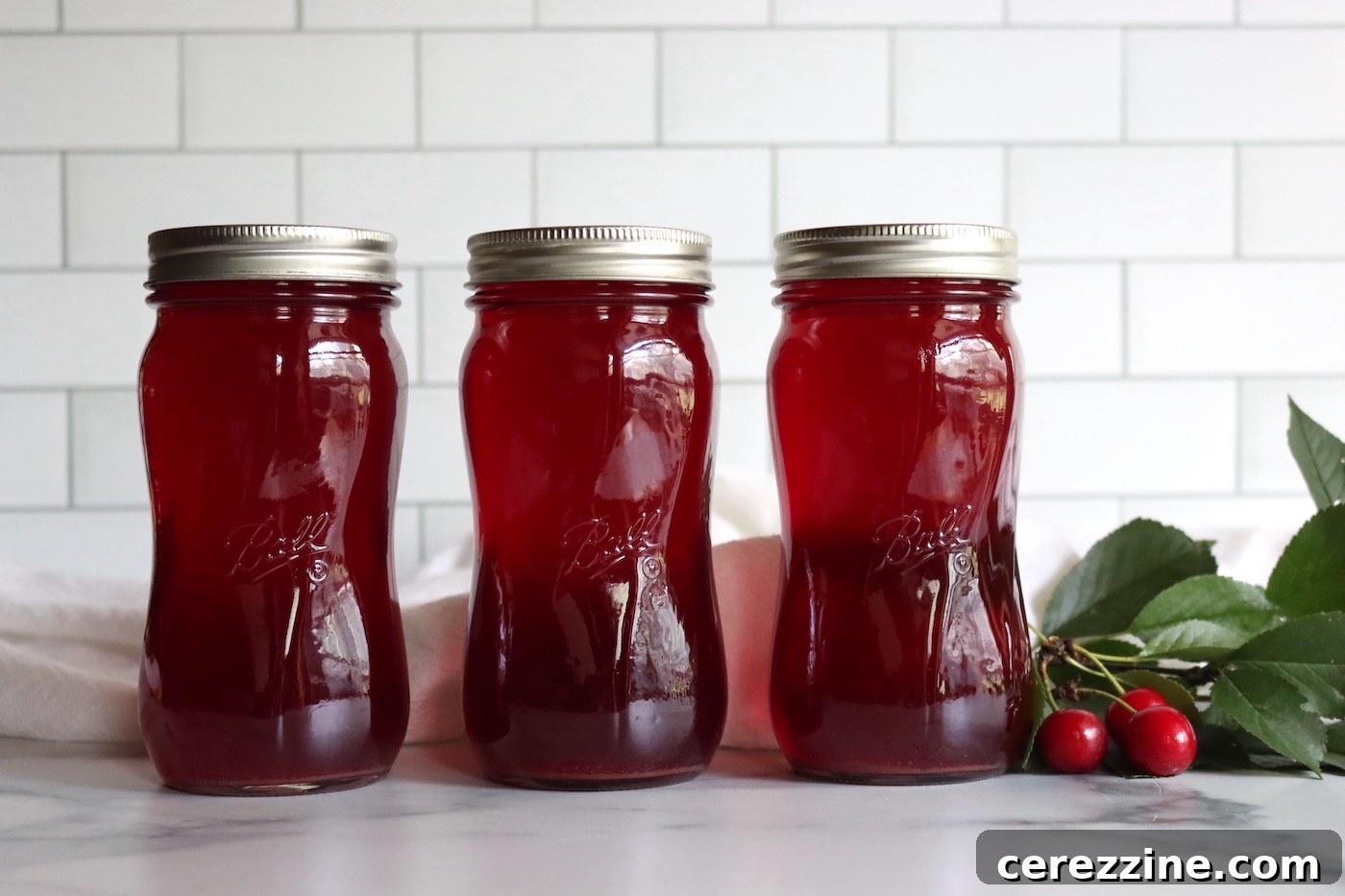
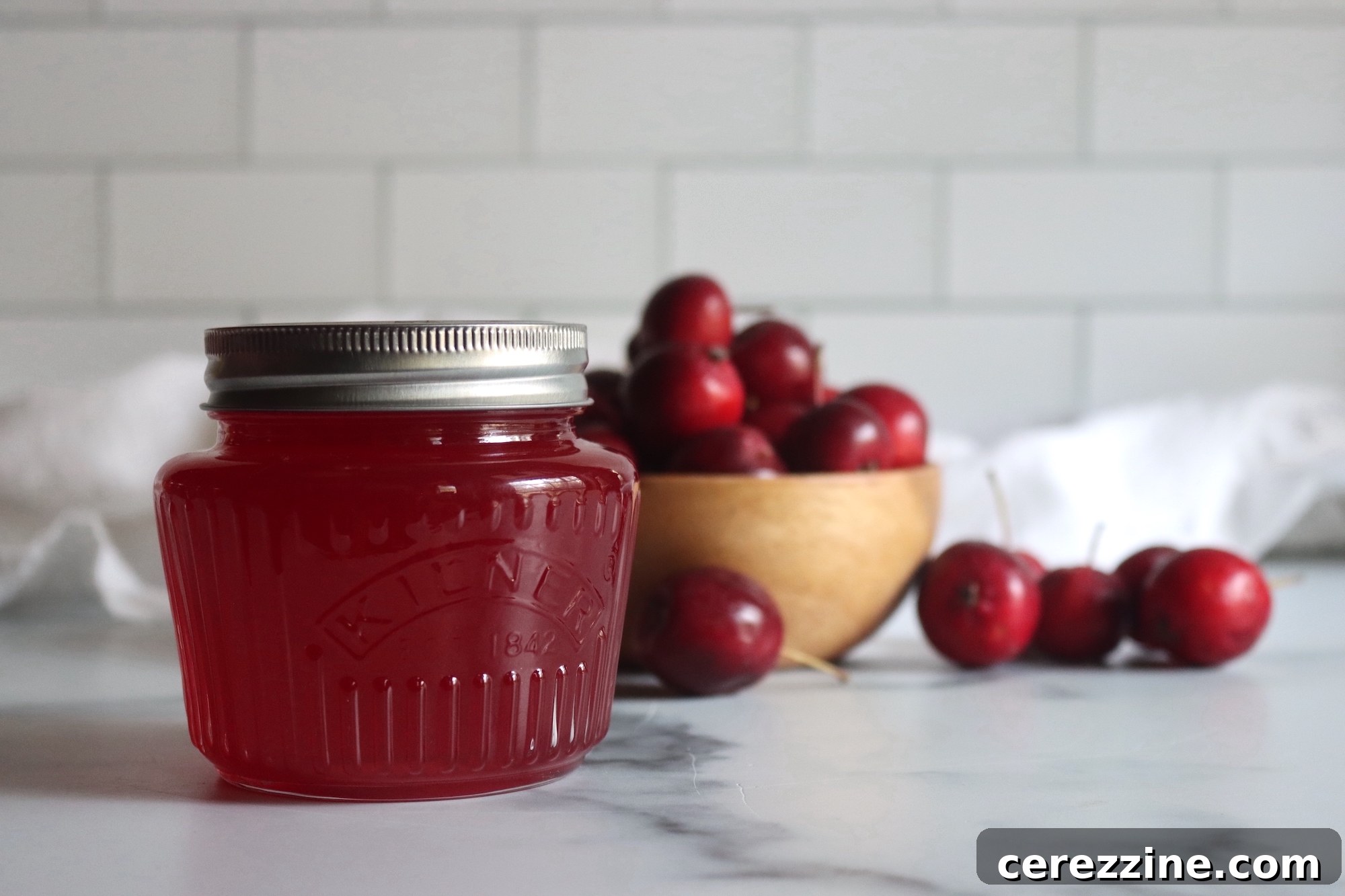
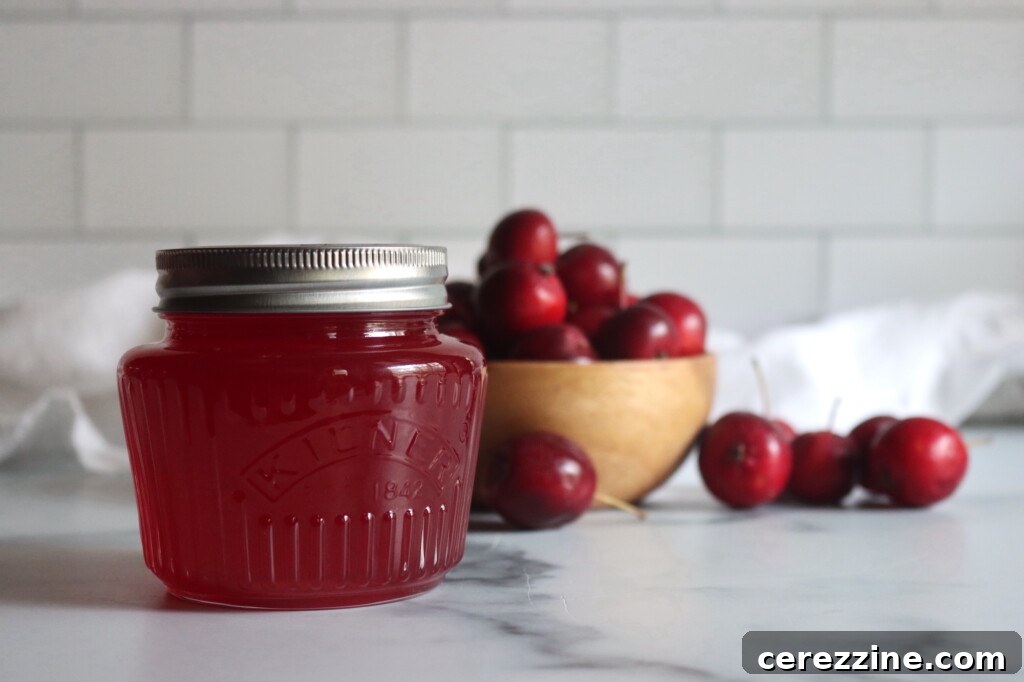
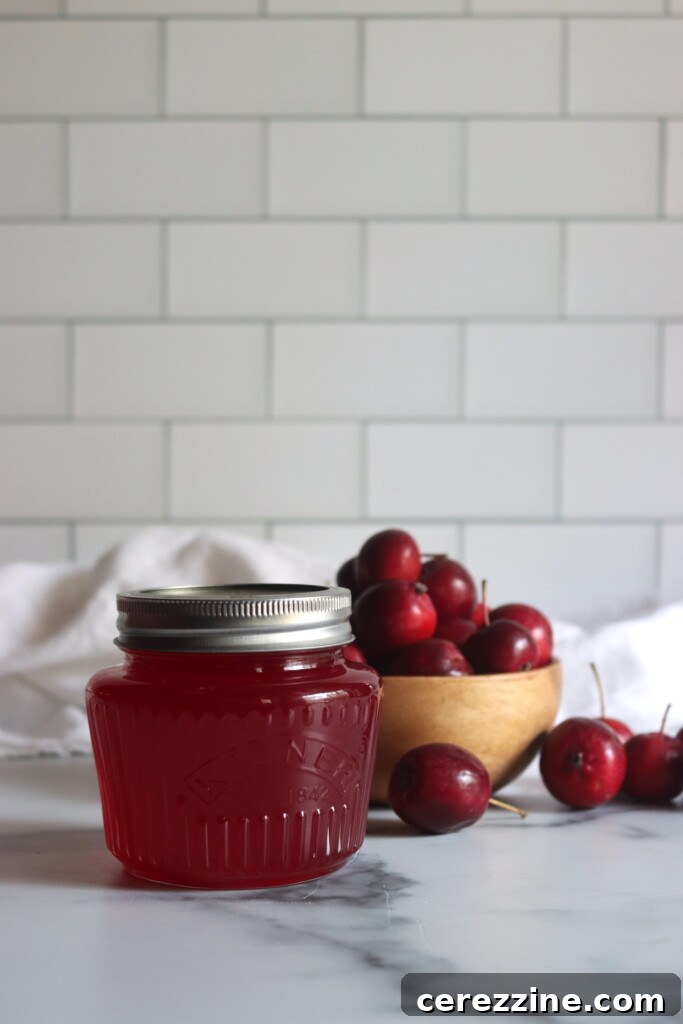
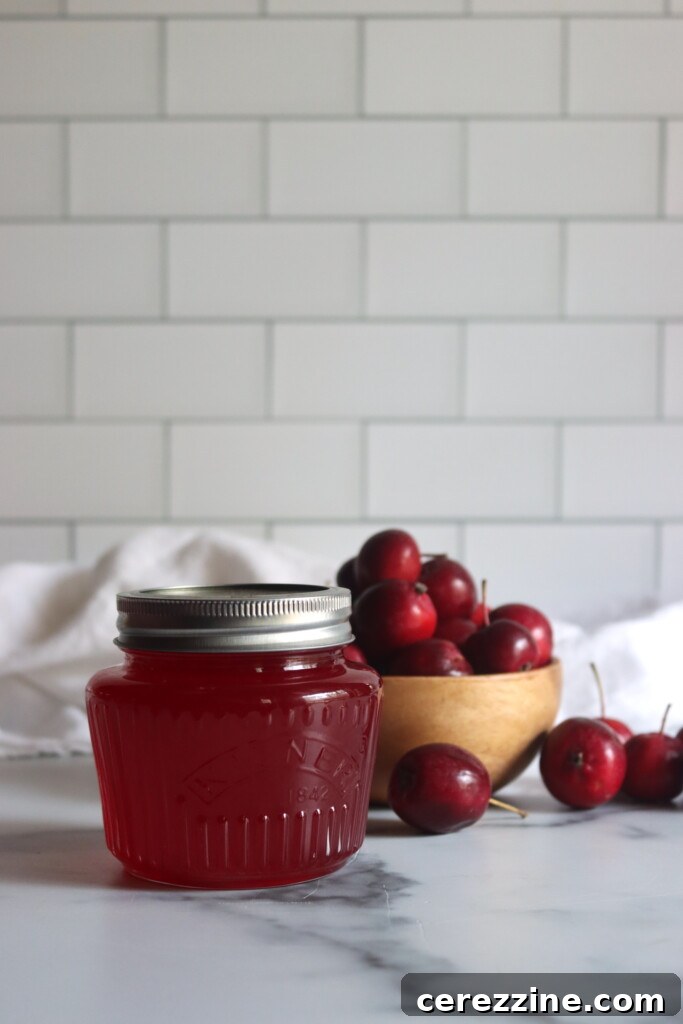
Crabapple jelly is a timeless autumn delight, celebrated for its vibrant color, tart-sweet flavor, and remarkable ability to gel beautifully without any added commercial pectin. These small, often overlooked fruits are a hidden gem for home preservers, naturally abundant in both pectin and acidity. This inherent quality means that with just a few simple ingredients—crabapple juice and sugar—you can create a sparkling, ruby-red preserve that captures the very essence of the fall harvest.
Making your own crabapple jelly is not just a culinary task; it’s a cherished tradition that connects you to the rhythms of nature and the satisfaction of homemade goodness. Unlike many other fruit jellies that rely on store-bought pectin to achieve their set, crabapples contain enough natural pectin to do the job effortlessly. The process is straightforward and incredibly rewarding, transforming bushels of tart crabapples into jars of shimmering jelly that are as beautiful to behold as they are delicious to taste.
For many home canners, the arrival of early autumn signals not only the apple harvest for sauces and ciders but also the perfect time to gather crabapples. These trees are often heavily laden with fruit, and since crabapples are typically too tart for fresh eating, turning them into jelly is an ideal way to utilize the bountiful harvest. This project offers a wonderful balance of simplicity and elegance, resulting in shelf-stable jars of luminous jelly that will brighten your pantry and your breakfast table throughout the year.
This recipe emphasizes a traditional, pectin-free approach, which means success hinges on selecting the right fruit, precise cooking times, and a keen eye for reaching the perfect gel stage. You’ll gently cook the crabapples to extract their juice while preserving their natural pectin, then carefully strain the juice and boil it with sugar until it hits that magical point of transformation into a firm, yet delicate, jelly. This method, passed down through generations, ensures a superior flavor and texture that commercial jellies simply can’t match.
Embracing the art of making crabapple jelly is a satisfying journey. The aroma of simmering fruit filling your kitchen, the anticipation as the liquid thickens, and the ultimate reward of neatly sealed jars—it’s an experience that often becomes an annual fall ritual. Follow this comprehensive guide, and you’ll soon be savoring your own homemade crabapple jelly, a true taste of the season.
Crabapple Jelly Recipe Overview
Before diving into the detailed steps, here’s a quick summary of what to expect:
- Recipe Name: Homemade Crabapple Jelly (No Added Pectin)
- Recipe Type: Fruit Jelly (Naturally Set)
- Canning Method: Boiling Water Bath
- Prep & Cook Time: Approximately 2-2.5 Hours (active & passive)
- Canning Time: 10-15 Minutes (depending on altitude)
- Yield: 4 to 5 half-pint jars
- Recommended Jar Sizes: Quarter-Pint, Half-Pint, or Pint
- Headspace: 1/4 inch
- Key Ingredients: Fresh Crabapples, Water, Granulated Sugar
- Difficulty: Moderate (requires careful attention to gel stage, especially for pectin-free recipes)
- Special Note: Ensure you understand the various methods for testing for jelly set before you begin.
Essential Ingredients for Perfect Crabapple Jelly
Crafting exquisite crabapple jelly with natural pectin requires only two primary ingredients, allowing the pure, unadulterated flavor of the fruit to shine through. The secret lies in the quality and balance of these simple components:
Crabapple Juice: The Foundation
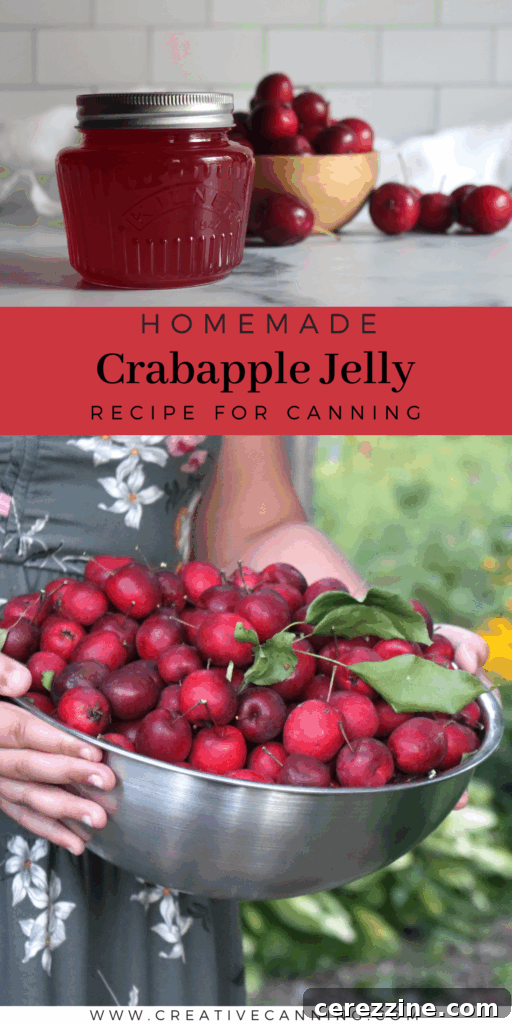
You’ll start with approximately 3 pounds of fresh crabapples. This amount typically yields about 4 cups of clear crabapple juice, which is the perfect quantity for one batch of jelly. The key to successful pectin-free jelly is using a judicious mix of fruit: aim for about one-quarter slightly underripe crabapples and three-quarters fully ripe fruit. The underripe crabapples are crucial as they contain a higher concentration of natural pectin, which is essential for achieving a firm set without needing any commercial additives.
To extract the juice, the crabapples are gently cooked with about 3 cups of water. This simmering process softens the fruit and releases its pectin and vibrant flavor into the liquid. After cooking, the mixture is carefully strained through a jelly bag or several layers of fine cheesecloth. This slow, passive straining process ensures a crystal-clear juice, which is vital for a beautifully transparent jelly. Avoid pressing the pulp, as this can introduce cloudiness into your final product.
Sugar: For Sweetness, Preservation, and Set
Once you have your strained crabapple juice, you’ll combine it with an equal amount of granulated sugar. For 4 cups of juice, you will use 4 cups of sugar. This traditional 1:1 ratio is fundamental to creating a bright, flavorful jelly with a classic loose-but-set texture and a rich, appealing ruby-red color. Beyond adding sweetness, sugar plays a critical role in preserving the jelly and aiding in the gelling process by interacting with the fruit’s natural pectin. When using fresh, properly balanced crabapples, there’s no need for additional pectin, lemon juice, or other acids. The fruit provides everything necessary for a perfect set.
Choosing the Best Crabapples for Your Jelly
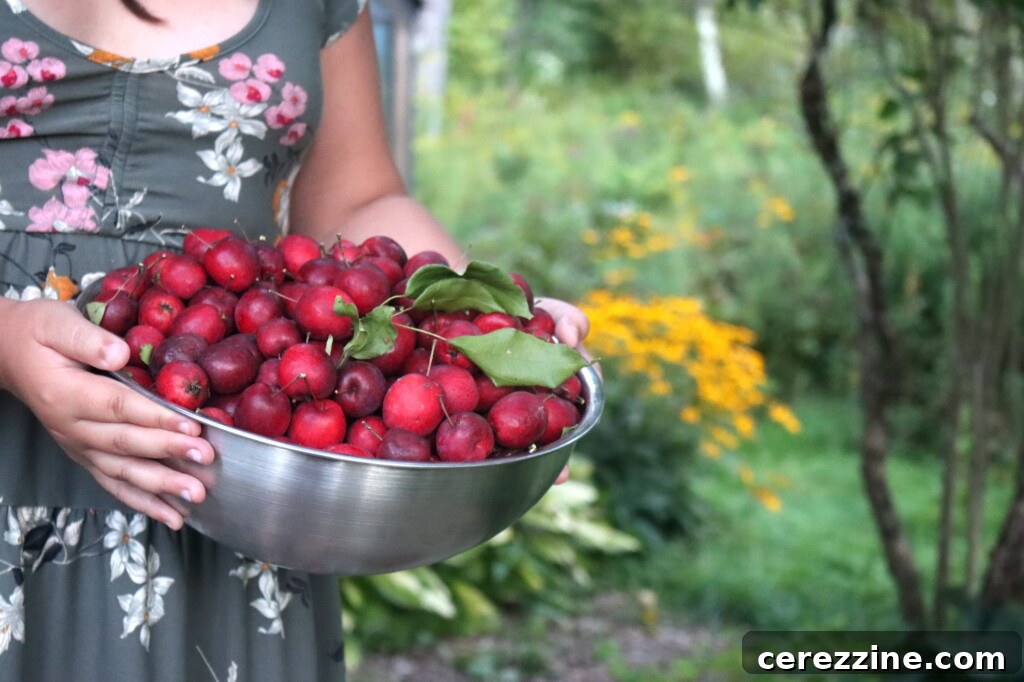
While all crabapples technically contain pectin, not all varieties are equally suited for making jelly. The best results come from selecting the right types and ensuring a proper mix of ripeness. Here’s what to look for:
Characteristics of Ideal Crabapples
- Firmness: Choose firm, unblemished fruit. Overly soft or bruised crabapples may have degraded pectin and won’t yield as much clear juice.
- Tartness: Tart varieties are generally higher in pectin and acidity, both crucial for a good set and bright flavor. Sweeter varieties might require more care to achieve gel.
- Ripeness Mix: As mentioned, a blend of approximately 1/4 slightly underripe and 3/4 fully ripe fruit is ideal. The greener, less ripe crabapples are pectin powerhouses, while the riper ones contribute more flavor and color.
Popular Crabapple Varieties for Jelly Making
You can use ornamental crabapples found in many landscapes, but always verify that they haven’t been treated with non-food-safe chemicals. If in doubt, it’s best to source from a known organic grower or forage from wild, unsprayed trees. Some excellent varieties renowned for their high pectin content and superb jelly-making qualities include:
- Dolgo: A favorite among preservers for its extremely high pectin content, vibrant red color, and tart flavor.
- Chestnut: Known for its nutty undertones and good pectin levels, producing a rich, complex jelly.
- Whitney: A larger crabapple with excellent cooking qualities and reliable pectin.
- Centennial: Offers a good balance of sweetness and tartness, with sufficient pectin for a natural set.
- Wickson: Highly prized for its unique flavor profile and dependable gelling properties.
When foraging wild crabapples, always select clean, healthy fruit from trees located away from roadsides or areas that might be exposed to pollutants or sprays. A quick taste test can give you an idea of their tartness—the tarter, the better for pectin content!
Step-by-Step Guide to Making Crabapple Jelly
Creating homemade crabapple jelly is a labor of love that rewards patience and attention to detail. Follow these steps carefully to ensure a perfectly set, deliciously flavorful jelly.
Phase 1: Preparing the Fruit and Extracting Juice
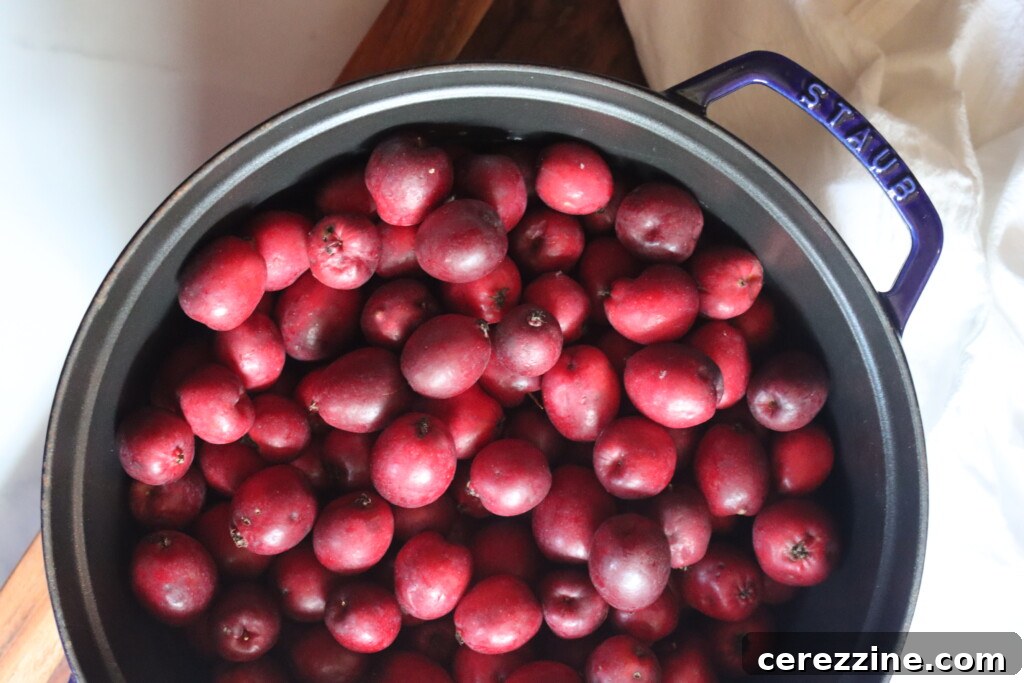
- Select and Prepare Crabapples: Begin by choosing about 3 pounds of firm, tart crabapples. The ideal mix is roughly 1/4 underripe (slightly green) and 3/4 fully ripe fruit. This balance optimizes both pectin content and flavor development. Thoroughly wash the fruit under cold running water.
- Trim and Cut: Remove both the stems and the blossom ends from each crabapple. Crucially, do not peel or core the fruit. The skins, cores, and even the seeds contain a significant amount of the natural pectin needed for your jelly to set. Cut the crabapples into quarters or smaller chunks to expose more surface area, which aids in juice extraction.
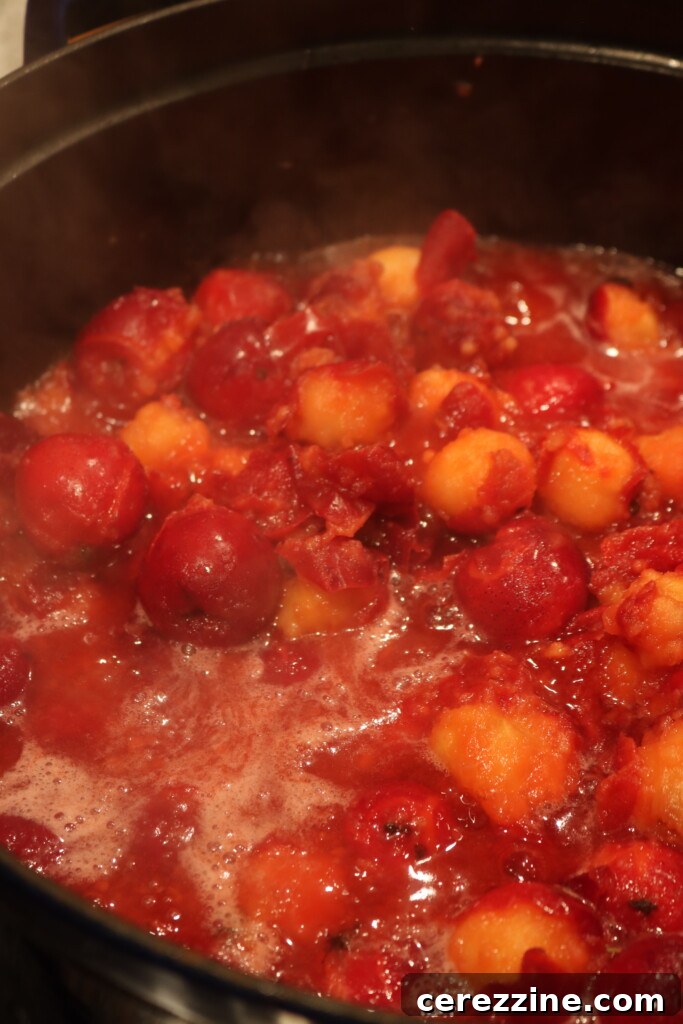
- Simmer the Fruit: Place the prepared crabapple chunks into a large, heavy-bottomed saucepan or stockpot. Add 3 cups of water. Bring the mixture to a rapid boil over high heat, stirring occasionally to prevent the fruit from sticking to the bottom of the pot.
- Gentle Cook: Once boiling, reduce the heat to a gentle simmer. Cover the pot and continue to cook for 20 to 25 minutes, or until the crabapples are completely soft and beginning to fall apart. It’s important not to overcook the fruit, as excessive heat can degrade the natural pectin, potentially hindering the final gel.
Phase 2: Straining the Clear Juice
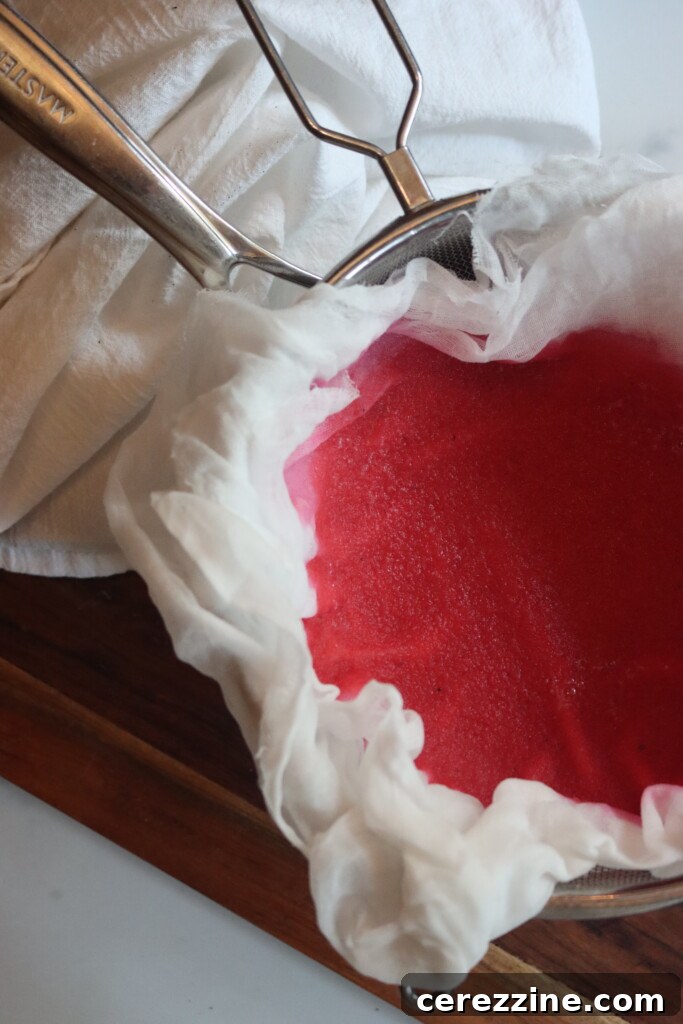
- Prepare for Straining: While the fruit is simmering, prepare your straining setup. Dampen a jelly bag or a double layer of fine cheesecloth. Suspend the bag over a large bowl or a measuring cup with a spout.
- Strain the Juice: Carefully pour the entire contents of the cooked crabapple pot—fruit and liquid—into the dampened jelly bag. Allow the juice to drip through slowly and naturally. This process takes several hours, or even overnight. Patience is key here; do not press or squeeze the bag! Squeezing the pulp will force tiny fruit particles into the juice, resulting in a cloudy jelly. For a perfectly clear, sparkling jelly, resist the urge to rush this step.
- Measure the Juice: Once all the juice has dripped, you should have approximately 4 cups of clear crabapple juice. If you have slightly more or less, simply adjust the amount of sugar proportionally to maintain a 1:1 juice-to-sugar ratio by volume.
Phase 3: Cooking the Jelly to Perfection
- Combine Juice and Sugar: Pour the measured crabapple juice into a clean, heavy-bottomed jam pot or a large saucepan. Add an equal volume of granulated sugar (e.g., 4 cups juice to 4 cups sugar). Stir continuously over medium heat until all the sugar has completely dissolved.
- Bring to a Rolling Boil: Increase the heat to high and bring the mixture to a rapid, rolling boil. This is a boil that cannot be stirred down. Maintain this vigorous boil, stirring occasionally to prevent sticking, until the jelly reaches its gel stage.
- Test for Gel Stage: This is the most critical part for pectin-free jellies. The target temperature for jelly set is generally 220°F (104°C) at sea level, or approximately 8°F (4.5°C) above the boiling point of water in your specific location. Alternatively, use the traditional spoon or plate tests (detailed below) if you don’t have a thermometer or prefer classic methods.
- Skim and Remove: Once the jelly has reached the appropriate consistency and passes your chosen gel test, immediately remove the pot from the heat. Carefully skim off any foam that has risen to the surface using a clean spoon or ladle. A small knob of butter added during the boiling process can help reduce foam formation.
Phase 4: Canning and Storage
- Prepare Jars: While the jelly is cooking, sterilize your canning jars (half-pint jars are ideal for jelly). You can do this by washing them thoroughly in hot, soapy water, rinsing well, and then keeping them hot in a boiling water canner, a dishwasher cycle, or a low oven. Keep lids and bands hot as well.
- Ladle and Seal: Ladle the hot crabapple jelly immediately into the sterilized, hot jars, leaving precisely 1/4 inch of headspace at the top. Wipe the rims of the jars meticulously with a clean, damp cloth to remove any jelly residue that could interfere with the seal. Center the two-piece canning lids on the jars and apply the bands, tightening them until they are fingertip-tight (snug but not overly tight).
- Process in Water Bath Canner: Carefully place the filled jars onto the rack in your boiling water bath canner, ensuring they are fully submerged in water by at least an inch. Bring the water back to a rolling boil. Process half-pint or quarter-pint jars for 10 minutes. If you are above 6,000 feet in elevation, increase the processing time to 15 minutes.
- Cool and Check Seals: After processing, turn off the heat and carefully remove the canner lid. Let the jars sit in the hot water for 5 minutes before carefully removing them to a clean towel-lined surface. Allow the jars to cool undisturbed for 12 to 24 hours. Do not tighten the bands further during this time. After cooling, check the seals by pressing the center of each lid; if it doesn’t flex, the jar is sealed. Remove bands for storage.
- Storage: Properly sealed jars of homemade crabapple jelly can be stored in a cool, dark pantry for up to 18 months. Once a jar is opened, refrigerate it and consume it within 2 to 3 weeks for best quality.
Mastering the Gel Stage: Testing Pectin-Free Jelly
Achieving the perfect gel for your crabapple jelly without added pectin is perhaps the most crucial step. There are several reliable methods to determine if your jelly has reached its setting point:
- Thermometer Test (Most Reliable): For precise results, use a candy thermometer. Jelly typically gels at 220°F (104°C) at sea level. Remember to adjust this temperature for your altitude: subtract 2°F for every 1,000 feet (600 meters) above sea level. For instance, at 1,000 feet, the target would be 218°F. The thermometer should be accurate and clipped to the side of the pot without touching the bottom.
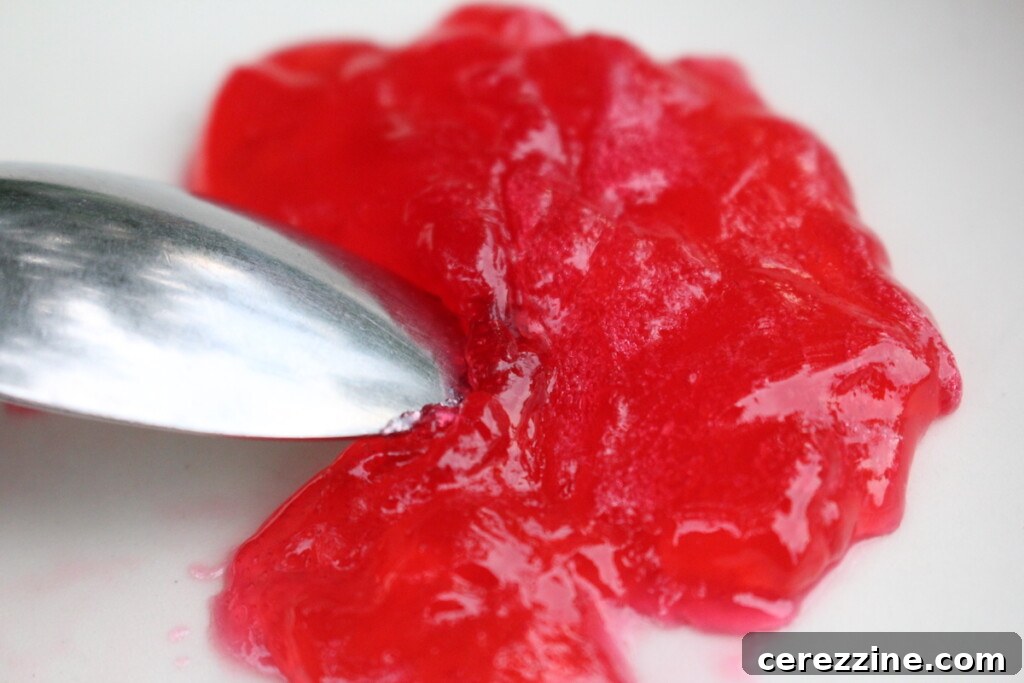
- Spoon Test (Sheet Test): This classic method requires a cold metal spoon. Before you start cooking the jelly, place a few metal spoons in the freezer. When you suspect the jelly is nearly ready, dip a chilled spoon into the boiling jelly, lifting it out sideways. Allow the liquid to cool for a moment. If the jelly forms a “sheet” or two thick, coherent drops that run together off the side of the spoon, rather than falling off as separate, thin drips, it has reached its gel stage.
- Plate Test (Wrinkle Test): Another traditional and highly effective method. Place a small ceramic plate in the freezer for at least 15-20 minutes until it’s very cold. When you believe the jelly is close to setting, spoon a small amount (about a teaspoon) onto the cold plate. Let it sit for 30 seconds to cool slightly. Then, gently push the jelly with your finger. If the surface wrinkles and holds its shape, your jelly is ready. If it’s still very liquid and doesn’t wrinkle, continue boiling for another few minutes and retest.
Frequently Asked Questions About Crabapple Jelly
Absolutely, and it’s highly recommended! Crabapples are naturally rich in pectin and high in acidity, which are the two key components needed for jelly to set. This recipe specifically leverages these natural properties, so there’s no need to add any commercial pectin to achieve a beautiful, firm gel.
A steam juicer works wonderfully for extracting clear juice for jelly, often yielding a purer liquid. However, traditional mechanical juicers tend to introduce a significant amount of pulp and foam into the juice, which can result in a cloudy final jelly. If you opt to use a mechanical juicer, it is highly advisable to re-strain the juice through a fine-mesh jelly bag or several layers of cheesecloth afterward to remove any unwanted solids and achieve clarity.
Cloudiness in jelly is a common issue that typically arises from two main reasons: squeezing the jelly bag during the straining process, or overcooking the fruit when extracting the juice. When you squeeze the bag, you force small particles of fruit pulp through the cloth, which makes the jelly appear opaque. Overcooking the fruit can also break down its cellular structure excessively, releasing more solids. For the clearest jelly, always allow the juice to drip naturally and slowly, and avoid pressing the pulp at all costs.
When properly canned and sealed in sterilized jars, homemade crabapple jelly has an excellent shelf life. It can be safely stored in a cool, dark pantry for 12 to 18 months. Always check the seal before opening. Once a jar has been opened, it should be refrigerated and consumed within 2 to 3 weeks to maintain its best flavor and quality.
If your jelly doesn’t set after cooling for 24-48 hours, don’t despair! It likely means it didn’t reach the full gel stage. You can re-process it. Return the jelly to a clean pot, bring it back to a boil, and re-test for gel stage using a thermometer or the spoon/plate test. If necessary, you can add a small amount of liquid pectin (follow package directions for “fixing” jelly) or lemon juice to boost acidity. Re-pour into clean jars and re-process in a water bath canner.
Explore More Apple & Crabapple Canning Recipes
Cranberry Applesauce
Crabapple Juice (and Syrup)
Crabapple Jelly
Crabapple Sauce
Classic Crabapple Jelly Recipe (No Added Pectin)
This recipe guides you through making beautiful, naturally set crabapple jelly. With just two main ingredients, you’ll create a delicious preserve that highlights the tart-sweet flavor and vibrant color of crabapples, perfect for year-round enjoyment.
Crabapple Jelly
Old-fashioned crabapple jelly is easy to make without added pectin. Just juice, sugar, and a bit of patience yield this tart, brightly colored preserve.
Equipment
- Jelly Strainer with Bag (or fine cheesecloth)
- Large heavy-bottomed saucepan or stockpot
- Boiling water bath canner with rack
- Canning jars (half-pint or quarter-pint) with new lids and bands
- Jar lifter, canning funnel, headspace tool (optional, but recommended)
- Candy thermometer (optional, but recommended)
Ingredients
- 3 pounds fresh crabapples (a mix of 1/4 underripe and 3/4 ripe)
- 3 cups water
- 4 cups granulated sugar (adjust based on juice yield, 1:1 ratio)
Instructions
Phase 1: Prepare Crabapples & Extract Juice
- Start by selecting about 3 pounds of fresh crabapples, ideally a mix of ¼ underripe and ¾ ripe. This ratio ensures the best flavor and enough natural pectin for the jelly to set. Thoroughly wash the fruit.
- Remove stems and blossom ends, but do not peel or core them. These parts contain a significant amount of pectin. Cut the fruit into quarters or smaller chunks.
- Place the prepared fruit in a large saucepan with 3 cups of water. Bring the mixture to a boil over high heat, stirring occasionally to prevent scorching.
- Once boiling, reduce the heat, cover the pot, and simmer gently for 20 to 25 minutes until the fruit is completely soft and falling apart. Avoid overcooking, which can degrade pectin.
Phase 2: Strain the Clear Juice
- When the crabapples are soft, pour the entire contents of the pot through a dampened jelly bag or a double layer of damp cheesecloth suspended over a clean bowl.
- Allow the juice to drain naturally and slowly. Do not press or squeeze the bag, as this will result in cloudy jelly. This process may take several hours.
- You should end up with approximately 4 cups of clear crabapple juice. If you have slightly more or less, adjust the sugar proportionally to maintain a 1:1 ratio.
Phase 3: Cook the Jelly
- Pour the strained juice into a clean jam pot or heavy-bottomed saucepan. Add 4 cups of granulated sugar and stir over medium heat until all the sugar is dissolved.
- Increase heat to high and bring the mixture to a rapid, rolling boil. Continue boiling, stirring occasionally, until the jelly reaches its gel stage.
- Test for gel stage: This is 220°F (104°C) at sea level (adjust for altitude), or use the spoon test or plate test (refer to “Mastering the Gel Stage” section above for details).
- Once the jelly reaches the correct consistency, remove it from the heat and skim off any foam that forms on the surface. (A small amount of butter added during boiling can help reduce foam).
Phase 4: Can the Jelly for Storage
- Ladle the hot jelly immediately into sterilized half-pint jars, leaving ¼ inch headspace.
- Wipe the jar rims clean with a damp cloth, apply two-piece canning lids, and tighten bands to fingertip-tight.
- Process the filled jars in a boiling water bath canner for 10 minutes (for elevations below 6,000 feet) or 15 minutes (for elevations above 6,000 feet).
- After processing, turn off heat, remove canner lid, and let jars sit for 5 minutes. Carefully remove jars to a towel-lined surface and allow to cool undisturbed for 12-24 hours before checking seals.
- Store properly sealed jars in a cool, dark pantry for up to 18 months. Refrigerate once opened.
Notes & Tips for Success
Juice-to-Sugar Ratio: This recipe uses a 1:1 ratio by volume of crabapple juice to granulated sugar. It’s crucial to maintain this ratio for proper gelling and flavor, regardless of how much juice you yield.
No Lemon Juice Needed: Crabapples are naturally high in acidity, so there’s no need to add extra lemon juice for safety or to aid in setting, unlike some other fruit jellies.
Preventing Cloudy Jelly: The most common causes of cloudy jelly are squeezing the jelly bag or overcooking the fruit. Allow the juice to drip naturally without any pressure on the pulp. Gently simmer the fruit, don’t boil aggressively for too long in the initial stage.
Foam Management: A small amount of foam is natural during jelly cooking. You can skim it off before jarring. To significantly reduce foam, add ¼ teaspoon of unsalted butter to the jelly mixture while it’s boiling; the fat helps to break the surface tension.
Altitude Adjustments: If you live at a higher altitude, remember to adjust your processing time for canning (as noted in step 14) and your target gel temperature when using a thermometer (subtract 2°F for every 1,000 feet above sea level).
Nutrition Information (Approximate per serving)
Nutrition information is automatically calculated and should be used as an approximation only. Values can vary based on ingredients and preparation methods.
Conclusion: Enjoying Your Homemade Crabapple Jelly
There’s immense satisfaction in opening a jar of homemade crabapple jelly, knowing that you’ve transformed a seasonal bounty into a delightful treat using traditional methods. This vibrant, naturally set jelly is a testament to the simple magic of good fruit and patient hands. Spread it on toast, serve it with scones, pair it with cheese, or use it as a glaze for poultry – its possibilities are endless. Beyond its culinary uses, each jar represents a preserved piece of autumn, bringing warmth and flavor to your table long after the leaves have fallen. We hope this guide inspires you to make crabapple jelly a treasured part of your annual canning repertoire, sharing its beauty and deliciousness with family and friends.