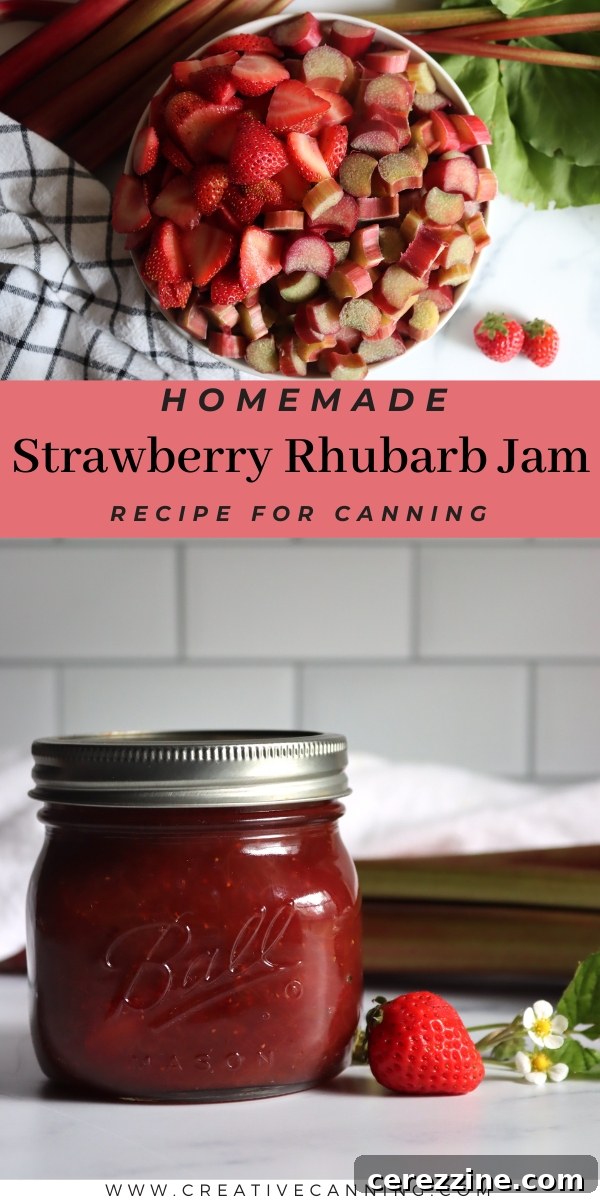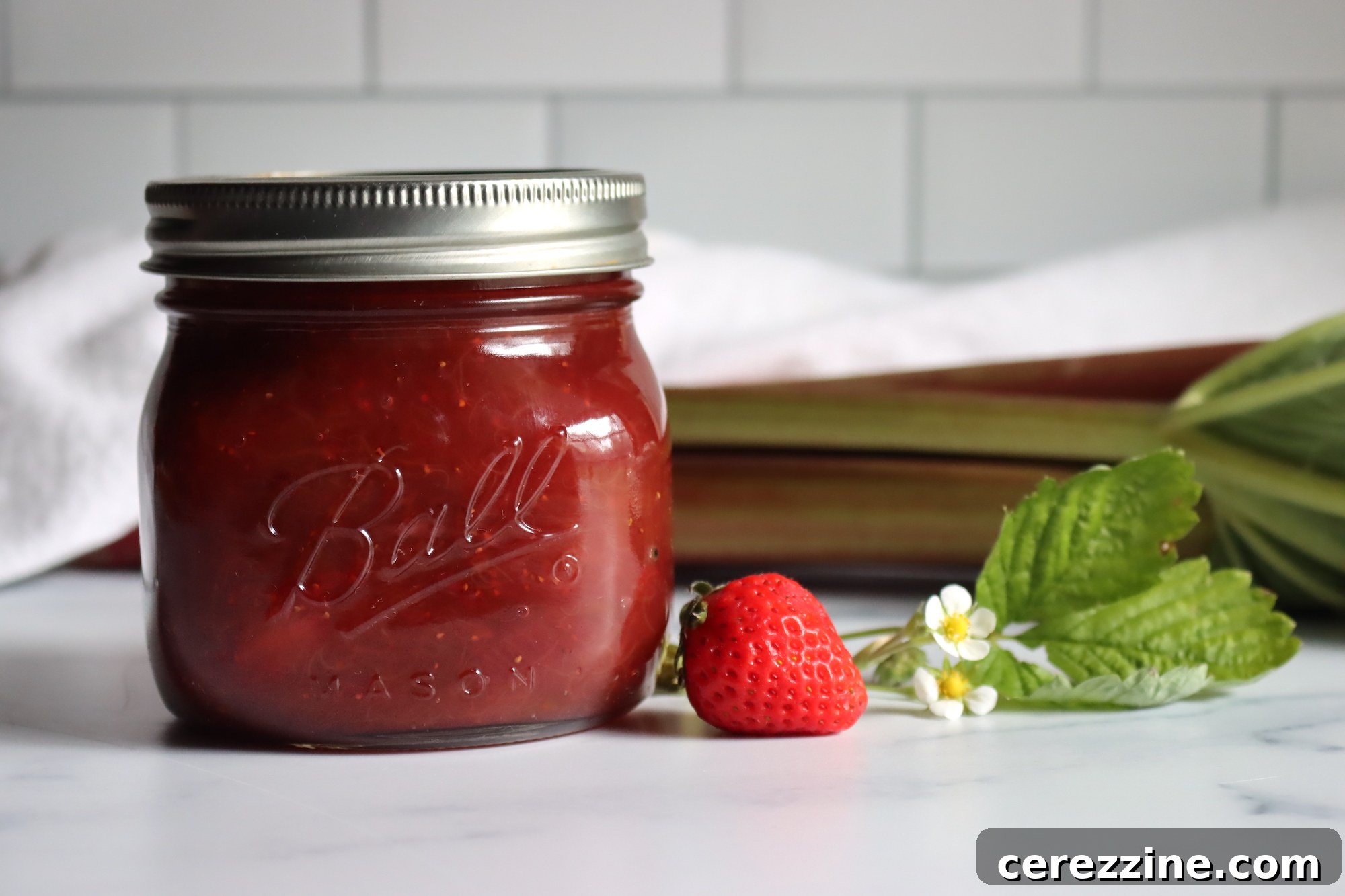
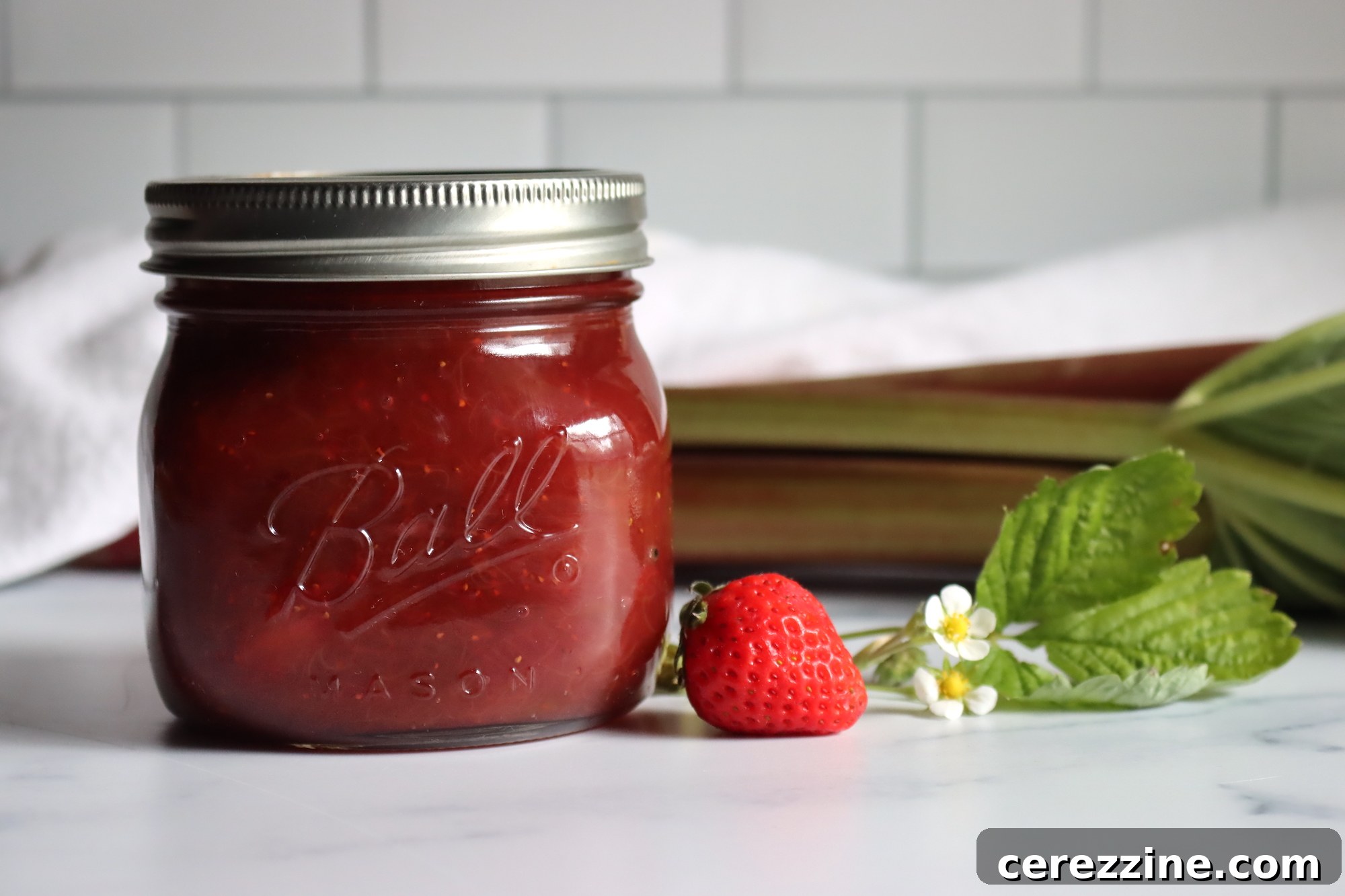
Strawberry Rhubarb jam is a delightful culinary creation that perfectly marries the luscious sweetness of ripe strawberries with the unique tartness of garden rhubarb. This homemade preserve captures the very essence of spring, offering a taste of the season that can be savored year-round.
Homemade Strawberry Rhubarb Jam: Preserving Spring’s Sweet & Tangy Delight
The combination of strawberries and rhubarb is a timeless classic, celebrated in desserts from pies to crumbles. While a warm slice of strawberry rhubarb pie is undeniably comforting, the versatility of strawberry rhubarb jam extends far beyond the dessert plate. Imagine spreading this vibrant, fruit-forward jam on your morning toast, layering it into fluffy biscuits, using it as a filling for tarts, or even swirling it into yogurt for a burst of fresh spring flavor. This simple yet exquisite preserve allows you to bottle the taste of spring and enjoy it throughout the year.
Crafting your own strawberry rhubarb jam is a rewarding experience, providing not only a delicious treat but also the satisfaction of creating something from scratch. This comprehensive guide will walk you through every step, from selecting the finest ingredients to mastering the canning process, ensuring you achieve a perfectly set, irresistibly flavorful jam.
Essential Ingredients for Perfect Strawberry Rhubarb Jam
This recipe for strawberry rhubarb jam is inspired by a “fruit-forward” philosophy, adapting techniques from Canning for a New Generation. The goal is to let the natural flavors of the fruit shine through, rather than masking them with excessive sugar. You might notice that this recipe calls for a slightly higher ratio of rhubarb to strawberries than some traditional versions. While it could be called “Rhubarb Strawberry Jam” due to the quantity, the resulting flavor beautifully balances the sweet notes of strawberry with the distinctive tangy kick of rhubarb. When strawberries dominate, rhubarb’s subtle tartness can sometimes get lost. This carefully balanced ratio ensures both beloved ingredients are equally prominent on your palate.
To yield approximately 5 half-pint (8-ounce) jars of this delectable Strawberry Rhubarb Jam, gather the following high-quality ingredients:
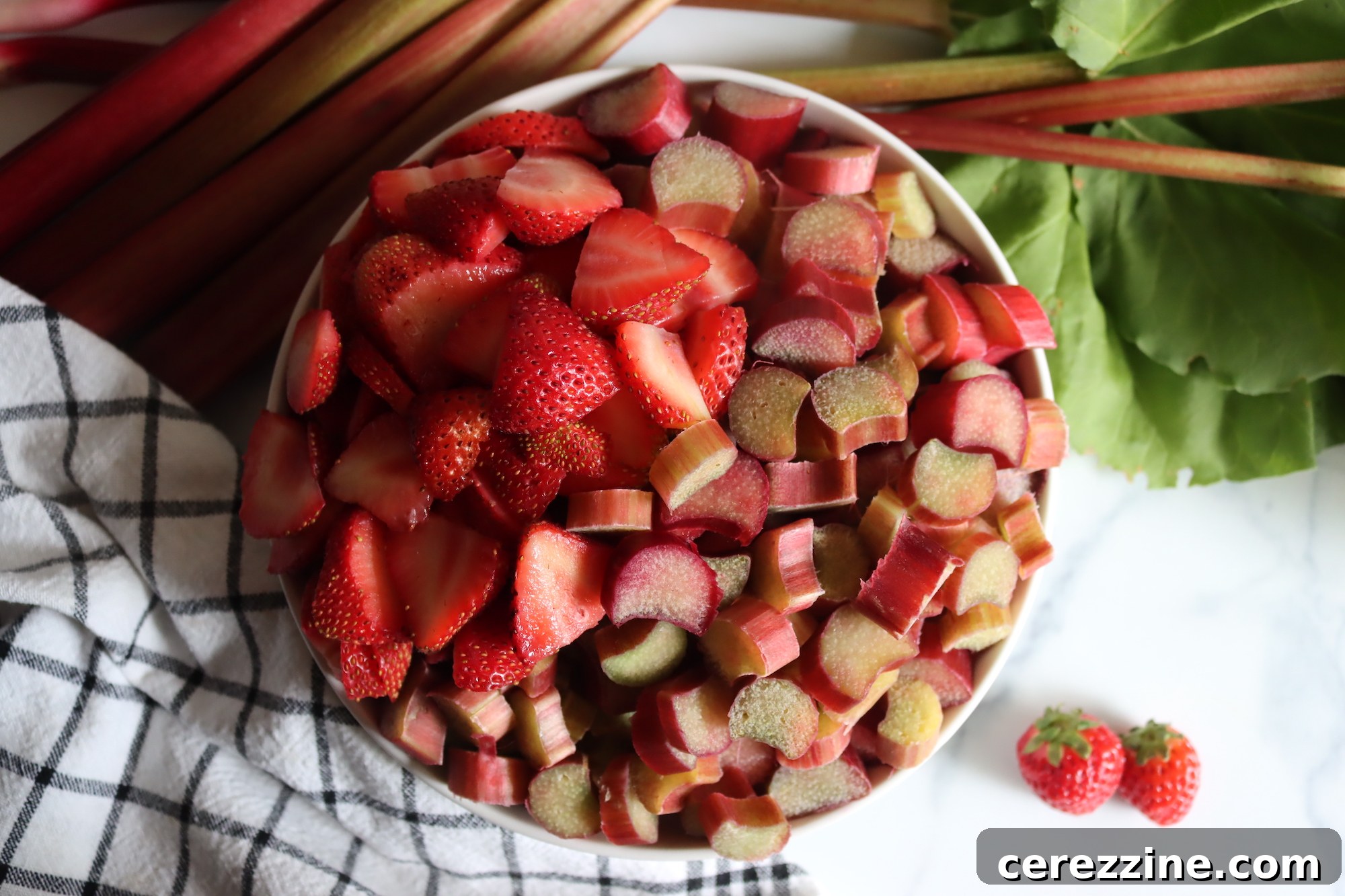
- 6 cups of Diced Rhubarb: This amounts to roughly 2 pounds of fresh rhubarb stalks.
- 3 cups of Diced Strawberries: Approximately 1 pound of ripe strawberries.
- 2 cups Granulated Sugar: Providing the necessary sweetness and aiding in the gelling process.
- ¼ cup Freshly Squeezed Lemon Juice: Essential for both flavor enhancement and critical acidity for safe canning.
Selecting the Best Fruits for Jam Making
The quality of your jam starts with the quality of your produce. For rhubarb, aim for younger, more tender shoots. These are typically thinner and have a more vibrant pink or red hue. Older, tougher stalks tend to be stringier and may not break down as smoothly during cooking, potentially leading to a less uniform jam texture. Tender rhubarb softens beautifully, contributing to a wonderfully thick and spreadable preserve.
When choosing strawberries, select those that are perfectly ripe but not overly soft or bruised. They should be firm, fragrant, and uniformly colored. Avoid any strawberries with soft spots, mold, or an off-smell, as these can negatively impact the flavor and shelf life of your jam. Always trim away any brown or blemished areas from both the rhubarb and strawberries during preparation.
The Science Behind Lemon Juice in Jam
Freshly squeezed lemon juice plays a crucial dual role in this recipe. First, it brightens and enhances the natural flavors of the strawberries and rhubarb, adding a zesty counterpoint to the sweetness. More importantly, lemon juice provides the necessary acidity for safe canning. The pectin naturally present in fruits, especially rhubarb, requires an acidic environment to properly gel. Without sufficient acidity, your jam may remain runny and would not be safe for long-term storage using water bath canning methods. The lemon juice ensures a firm set and helps preserve your jam for up to 18 months, allowing you to enjoy homemade goodness throughout the seasons.
Step-by-Step Guide: Crafting Your Strawberry Rhubarb Jam
Making homemade jam is a process that combines precision with a touch of culinary artistry. Follow these detailed steps to create a batch of perfect strawberry rhubarb jam:
Preparation of Fruits and Equipment
- Prepare the Rhubarb: Begin by trimming off the leafy green ends and the tough root tips from your rhubarb stalks. Rinse the stalks thoroughly under cool running water. Inspect for any blemishes or brown spots and carefully trim them away. Dice the clean rhubarb stalks into small ½-inch pieces. You’ll need precisely 6 cups of these diced pieces.
- Prepare the Strawberries: Wash the strawberries gently under cool water. Remove the green tops (calyx) and hull them. Hulling involves removing the small, tough white core at the top of the berry. For larger strawberries, this is particularly important to ensure a smooth jam texture. A simple trick is to use a straw: push it up through the bottom tip of the strawberry, dislodging the hull and green top in one swift motion. Once cleaned, dice the strawberries into small pieces. Measure out 3 cups of diced strawberries.
- Pre-chill Plates for Testing: Place 3-4 small ceramic plates in your freezer. These will be essential later for testing the gel stage of your jam.
- Prepare Canning Equipment: If you plan to can your jam, now is the time to prepare your jars, lids, and other canning equipment. Familiarize yourself with the process by consulting a reliable guide, such as a beginner’s guide to water bath canning, for detailed instructions on sterilizing jars and setting up your canner.
Cooking the Jam Base
- Combine Ingredients: In a large, heavy-bottomed pot, combine the diced rhubarb, diced strawberries, granulated sugar, and ½ cup of water. Stir the mixture gently to ensure the sugar begins to dissolve and coat the fruit.
- Initial Cook: Place the pot over medium-high heat. Cook the mixture, stirring frequently, until the fruits release their juices and are fully covered by the liquid. This process typically takes about 10-15 minutes. The rhubarb will begin to soften, and the strawberries will start to break down.
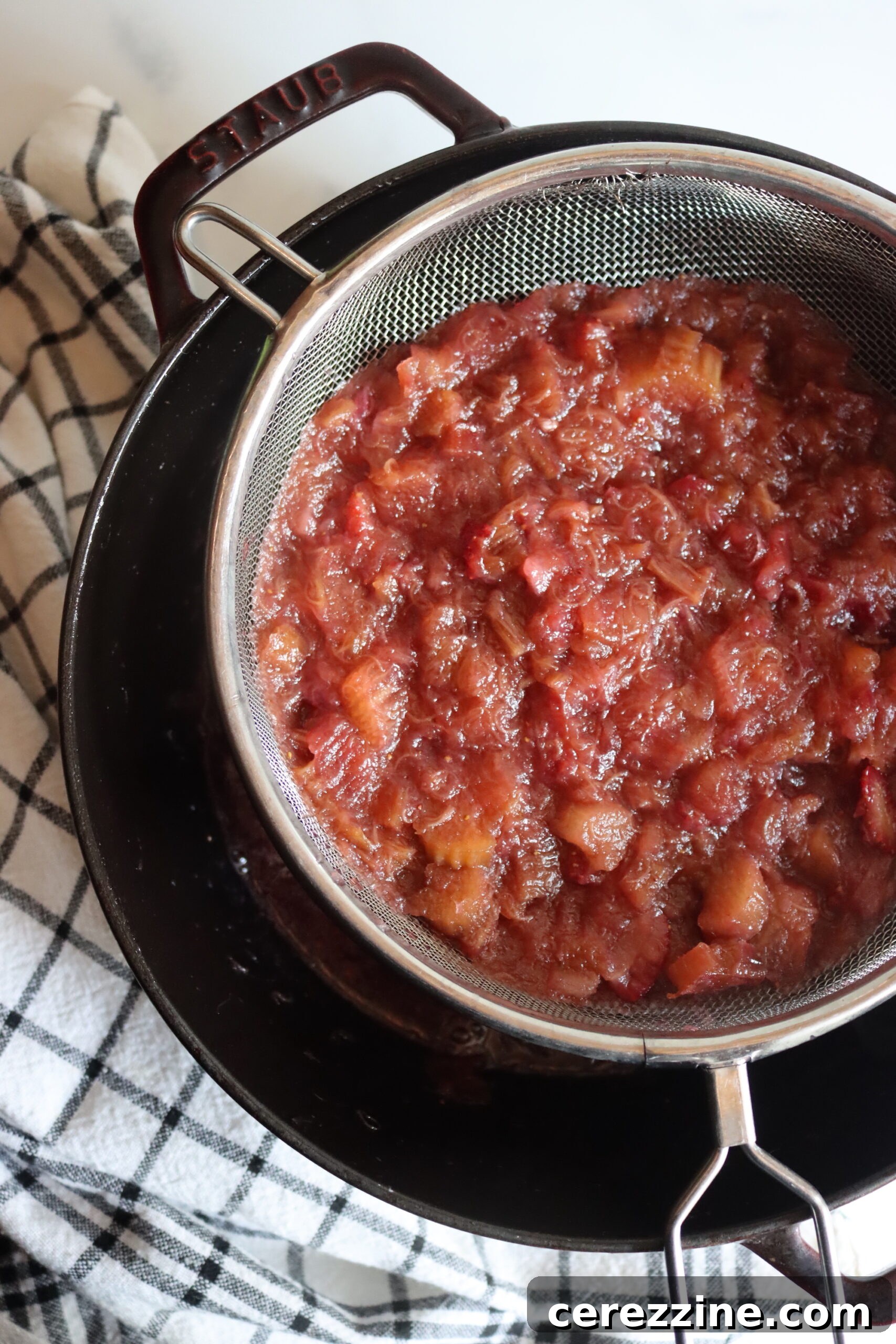
- Separate Juice from Pulp: Position a colander over a large heat-proof bowl. Carefully pour the cooked strawberry and rhubarb mixture into the colander, allowing the vibrant juices to drain into the bowl below. Stir the fruit pulp in the colander gently to encourage as much liquid as possible to separate, reserving both the fruit solids and the collected juices for later steps.
- Reduce the Juice: Pour the collected juice back into the large pot. Bring it to a rolling boil over high heat, stirring occasionally to prevent scorching. Continue to boil until the juice has reduced significantly, reaching a volume of approximately 1½ cups. This reduction process concentrates the flavors and helps create a better gel, usually taking around 20 minutes.
Finishing the Jam and Gel Test
- Combine and Simmer: Add the reserved rhubarb and strawberry solids from the colander, along with any additional juices that have drained, back into the pot with the reduced liquid. Stir in the ¼ cup of freshly squeezed lemon juice. Bring the mixture back to a gentle simmer.
- Continue Simmering: Maintain a steady simmer, stirring frequently to prevent sticking and ensure even cooking. Continue to cook for approximately 15 minutes, or until the jam begins to thicken.
- Perform the Cold Plate Test: This is a crucial step to determine if your jam has reached the proper gel stage. Retrieve one of the chilled plates from the freezer. Spoon a small dollop of hot jam onto the cold plate. Return the plate to the freezer for 1 minute. After 1 minute, remove the plate and gently push the edge of the jam with your fingertip or tilt the plate. If the jam wrinkles or appears somewhat firm and doesn’t run freely across the plate, it has reached its gel point. If it’s still very runny, continue cooking for another 5 minutes, then repeat the test using a clean, cold plate. Remember, the jam won’t be fully set when hot, but it should show clear signs of thickening.
- Skim and Stir: Once the jam reaches the desired gel stage, remove the pot from the heat. Carefully skim off any foam that has risen to the surface using a spoon or ladle. Stir the jam gently for about a minute. This helps to evenly distribute the fruit pieces throughout the liquid before jarring.
Water Bath Canning Your Strawberry Rhubarb Jam
Canning homemade jam extends its shelf life significantly, allowing you to enjoy your harvest long after the spring season has passed. Water bath canning is a safe and effective method for high-acid foods like this strawberry rhubarb jam. If you are new to this process, it is highly recommended to review a beginner’s guide to water bath canning thoroughly before starting to ensure safety and success.
Canning Preparation and Processing
- Prepare Jars and Canner: Ensure your canning jars and two-piece lids (flats and rings) are clean and ready. Jars should be sterilized, and lids should be warm (follow manufacturer’s instructions). Have your hot water bath canner preheated and boiling water ready.
- Fill Jars: Carefully ladle the hot jam into the prepared hot jars, leaving exactly ¼ inch of headspace at the top of each jar. Headspace is the empty space between the surface of the jam and the rim of the jar. This is crucial for proper sealing and to prevent food from expanding out of the jar during processing. A canning funnel with headspace measurements can simplify this step.
- Clean Rims and Apply Lids: Wipe the rims of the filled jars thoroughly with a clean, damp cloth to remove any sticky residue. This ensures a clean surface for the lid to seal properly. Center a new, sterile lid flat on top of each jar, then screw on the canning ring only until it is “finger-tight” – snug but not overly tightened.
- Process Jars: Carefully load the filled and lidded jars into your preheated water bath canner, ensuring they are fully submerged in boiling water. Bring the canner to a full, rolling boil. Once boiling, process the jars for 10 minutes. If you are canning at an elevation above 6,000 feet, increase the processing time to 15 minutes to account for lower boiling points.
- Cool Down and Check Seals: After the processing time is complete, turn off the heat and allow the jars to remain in the hot water for an additional 5 minutes. This helps prevent “siphoning” (loss of liquid from the jars). Using a jar lifter, carefully remove the hot jars from the canner and place them upright on a towel-lined surface on your counter. Leave some space between the jars for proper airflow, allowing them to cool undisturbed for 12-24 hours. As they cool, you should hear a “ping” sound, indicating that the lids have sealed.
Storage and Enjoyment
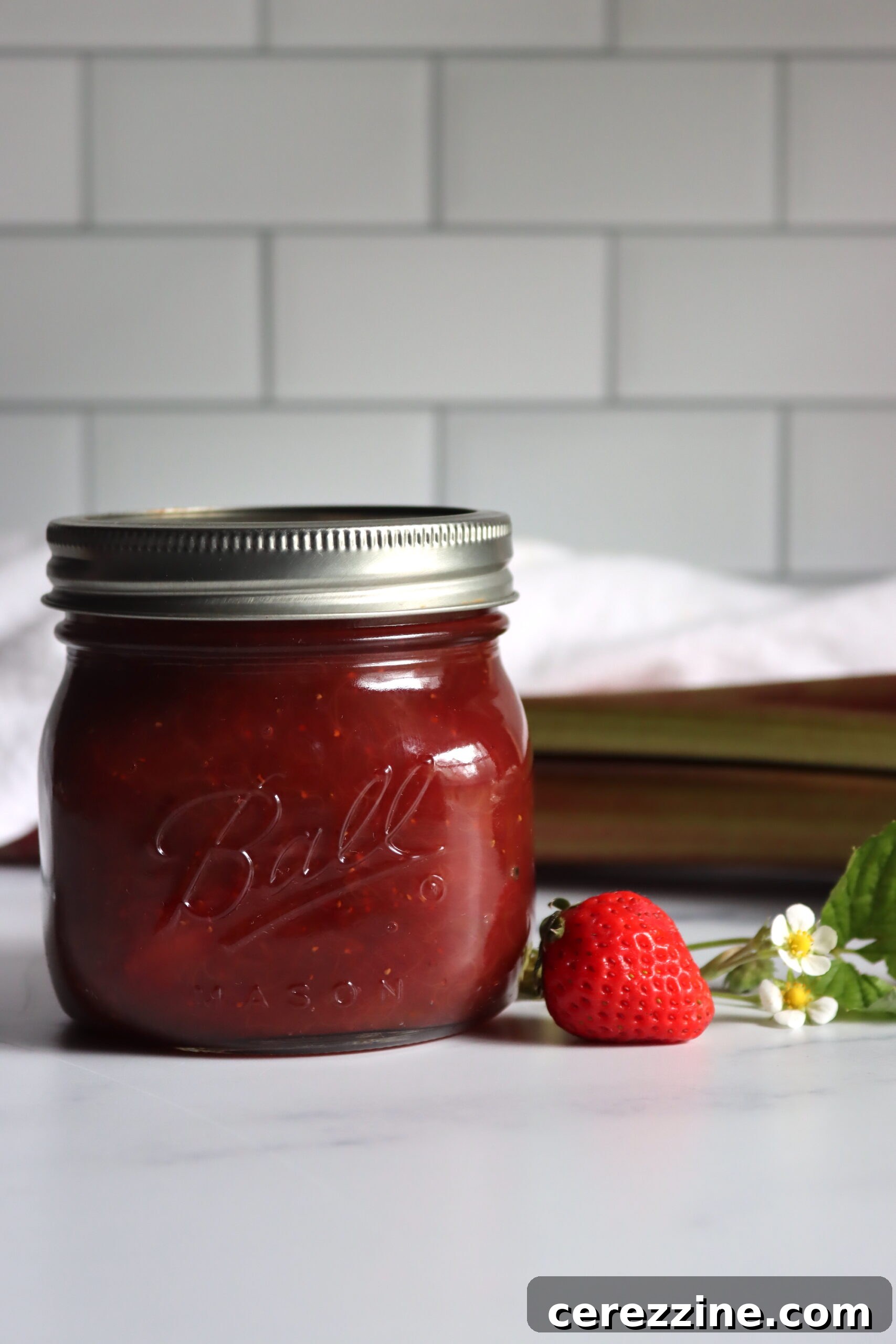
After 24 hours, check the seals on your jar lids. A properly sealed lid will be concave (curved inwards) and will not flex when pressed. Any jars that did not seal properly should be stored in the refrigerator and consumed within a few weeks. Store your properly sealed, canned jam in a cool, dry, dark place, such as a pantry or cellar. It will maintain its excellent quality on the shelf for approximately 18 months, though it will still be safe to eat for longer as long as the seal remains intact. Once opened, always refrigerate the jam.
Exciting Strawberry Rhubarb Jam Variations
While the classic strawberry rhubarb combination is superb, feel free to experiment and customize your jam to suit your taste preferences. Most berries pair wonderfully with rhubarb, offering a spectrum of flavor possibilities.
- Mixed Berry Medley: Instead of just strawberries, try substituting them with other berries like raspberries, blueberries, or a combination. For example, you could adapt this recipe to create a Rhubarb Berry Jam that combines rhubarb with strawberries and blueberries for a truly unique flavor profile.
- Aromatic Infusions: Elevate your jam with aromatic additions. A teaspoon of vanilla extract or almond extract stirred in after cooking can add depth and warmth. For a fresh twist, consider adding a handful of fresh mint leaves to the pot during the last few minutes of simmering, then removing them before jarring. A pinch of ground ginger or cardamom can also introduce an unexpected and delightful complexity.
- Spice It Up: For those who enjoy a hint of spice, a small amount of finely grated fresh ginger, a cinnamon stick, or even a tiny pinch of black pepper can add an intriguing layer to the jam’s profile. Add these during the simmering stage to allow their flavors to meld.
Delightful Ways to Enjoy Your Homemade Jam
Homemade Strawberry Rhubarb Jam is incredibly versatile and can elevate a wide array of dishes. It’s truly one of those pantry staples that can brighten any meal. Here are some of our favorite ways to enjoy its fantastic flavors:
- Breakfast Staples: The most classic use is spreading a generous amount over toasted English muffins, freshly baked biscuits, warm croissants, or your favorite slice of toast. It transforms a simple breakfast into a gourmet experience.
- Pancakes and Waffles: Ditch the plain syrup and top your stacks of pancakes or fluffy waffles with a dollop of strawberry rhubarb jam. For an extra treat, add a swirl of whipped cream.
- Yogurt and Oatmeal: Stir a spoonful or two into your morning yogurt, cottage cheese, or hot oatmeal for a natural burst of fruit flavor and sweetness.
- Baking Adventures: Use the jam as a filling for thumbprint cookies, layered cakes, or delicate shortbread bars. It can also be warmed slightly and used as a glaze for pastries or even roasted meats like pork tenderloin.
- Savory Pairings: Don’t limit jam to just sweet applications! It pairs wonderfully with certain cheeses on a charcuterie board. Its tartness cuts through rich flavors, making it an excellent accompaniment to brie or goat cheese.
- Dessert Enhancer: Swirl it into homemade ice cream or use it as a topping for panna cotta, cheesecake, or simple vanilla bean ice cream. For a quick dessert, layer it with cream cheese and serve with graham crackers.
- Beverage Boost: A small amount can be stirred into sparkling water for a refreshing fruit spritzer, or used as a base for creative cocktails.
No ratings yet
40
servings, Makes 5 half-pint (8-ounce) jars
Strawberry Rhubarb Jam
Ashley Adamant
15
45
10
1
10
Ingredients
- 6 cups rhubarb, diced, approximately 2 lbs.
- 3 cups strawberries, diced, approximately 1 lb.
- 2 cups granulated sugar
- ¼ cup lemon juice, fresh or bottled
Instructions
-
Cut off the leaf and root end of the rhubarb stalk, then wash the stalk under cool water.
-
Dice the rhubarb into ½” pieces to get approximately 6 cups of diced rhubarb.
-
Rinse the strawberries, cut off the green tops and center core if necessary, and remove any brown or soft spots. Dice the strawberries to get approximately 3 cups.
-
Place the rhubarb, strawberries, sugar, and ½ cup water into a large pot.
-
Cook the fruit and sugar mixture until the juices cover the fruit, approximately 10-15 minutes.
-
Place a colander over a large bowl, and pour the fruit mixture into the colander. Capture the drained juices in the bowl, stirring the fruit gently, allowing additional juice to flow through.
-
Pour the juice back into the pot, and reserve the fruit pulp for later, continuing to capture any juices that drain off.
-
Cook the juice over medium-high heat until boiling, stirring frequently. Continue to boil until the juice is reduced to about 1½ cups, stirring occasionally for approximately 20 minutes.
-
Carefully add the retained fruit pulp from the colander, any additional captured juices, and ¼ cup of freshly squeezed lemon juice into the boiling juice.
-
Reduce heat to medium-high and simmer, stirring frequently.
-
Cook the jam until it nears the gel stage, which should take approximately 15 minutes.
-
Test the jam to see if it has reached the gel stage by using the cold plate test until the juices no longer run on the plate, providing a fairly firm set.
-
Remove the jam from the heat, skim off as much foam as possible, and gently stir the jam mixture for about a minute to ensure the fruit pulp remains distributed within the juice.
-
Ladle or pour the jam into prepared jars or containers.
-
If canning, process in a water bath canner for 10 minutes (or 15 minutes if above 6,000 feet in elevation).
Nutrition
Calories: 46kcal, Carbohydrates: 12g, Protein: 0.2g, Fat: 0.1g, Saturated Fat: 0.01g, Polyunsaturated Fat: 0.04g, Monounsaturated Fat: 0.01g, Sodium: 1mg, Potassium: 71mg, Fiber: 1g, Sugar: 11g, Vitamin A: 20IU, Vitamin C: 8mg, Calcium: 18mg, Iron: 0.1mg
Nutrition information is automatically calculated, so should only be used as an approximation.
More Spring Jelly Recipes to Explore
Spring is an abundant season, offering a wealth of fruits and blossoms perfect for transforming into delicious homemade jellies and jams. If you enjoyed making this strawberry rhubarb jam, consider trying some of these other delightful spring preserves to stock your pantry:
- Classic Strawberry Jelly
- Unique Spruce Tip Jelly
- Fragrant Lilac Jelly
- Sweet Dandelion Jelly
- Vibrant Redbud Jelly
Beyond Jam: Other Rhubarb Canning Recipes
If you find yourself with a bumper crop of rhubarb this season, there are many other fantastic ways to preserve this versatile stalk. Don’t let any go to waste!
- 12+ Inspiring Rhubarb Canning Recipes
- Simple Guide to Canning Rhubarb
- Refreshing Canning Rhubarb Juice
- Convenient Canning Rhubarb Pie Filling