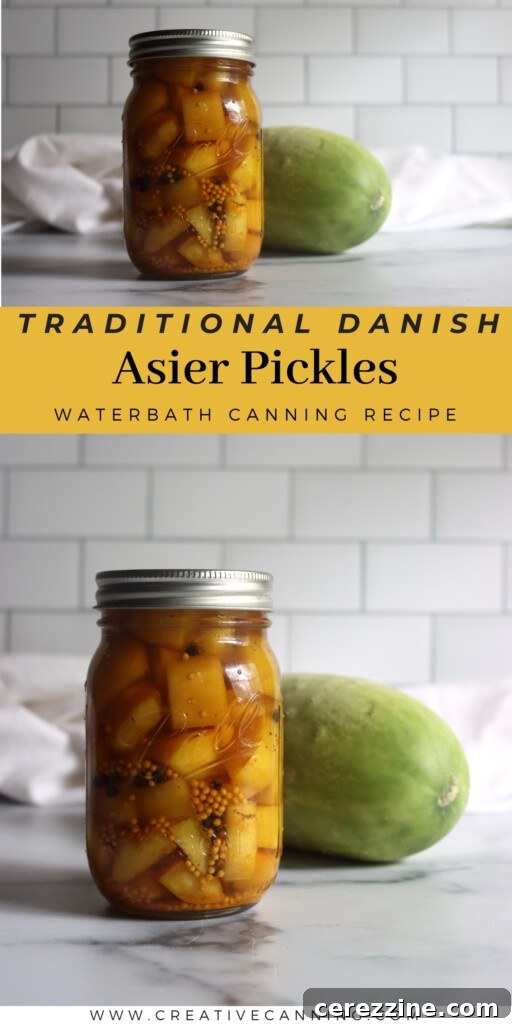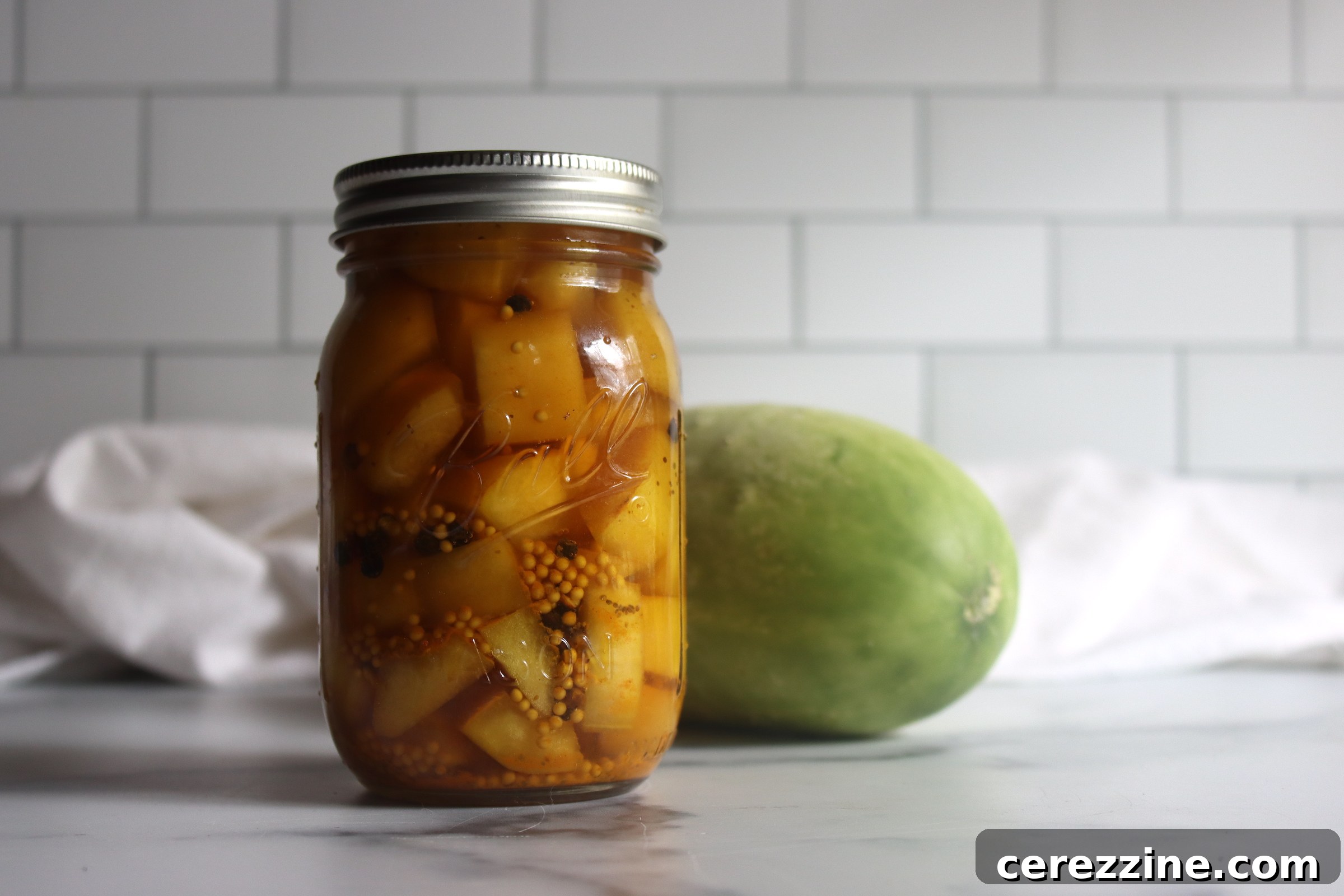
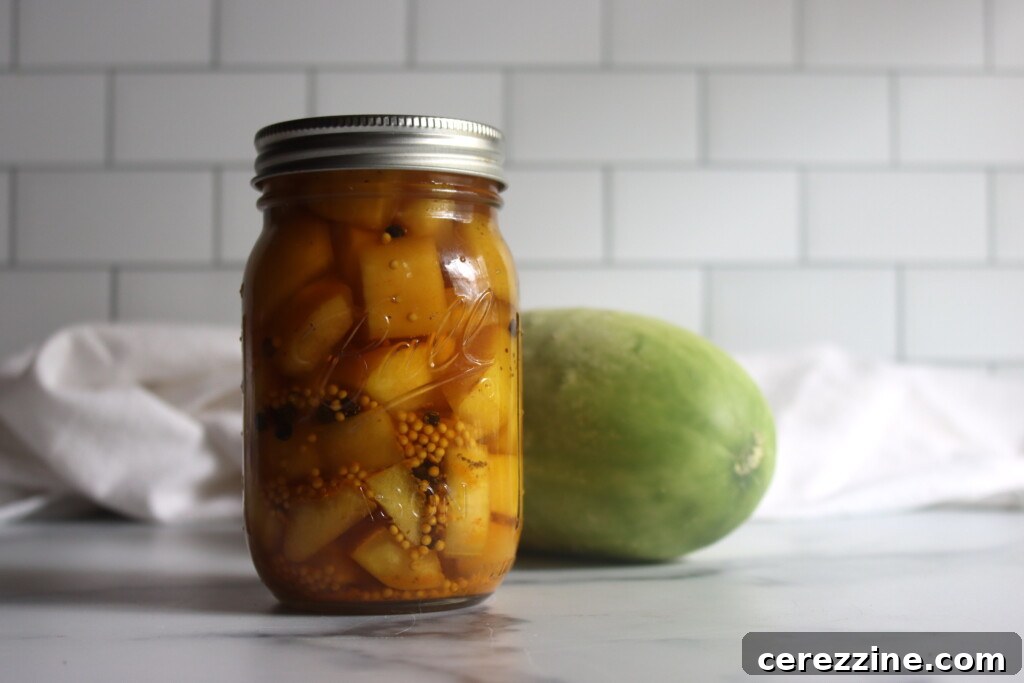
Danish Asier Pickles: The Ultimate Sweet & Spiced Canning Recipe for Overgrown Cucumbers
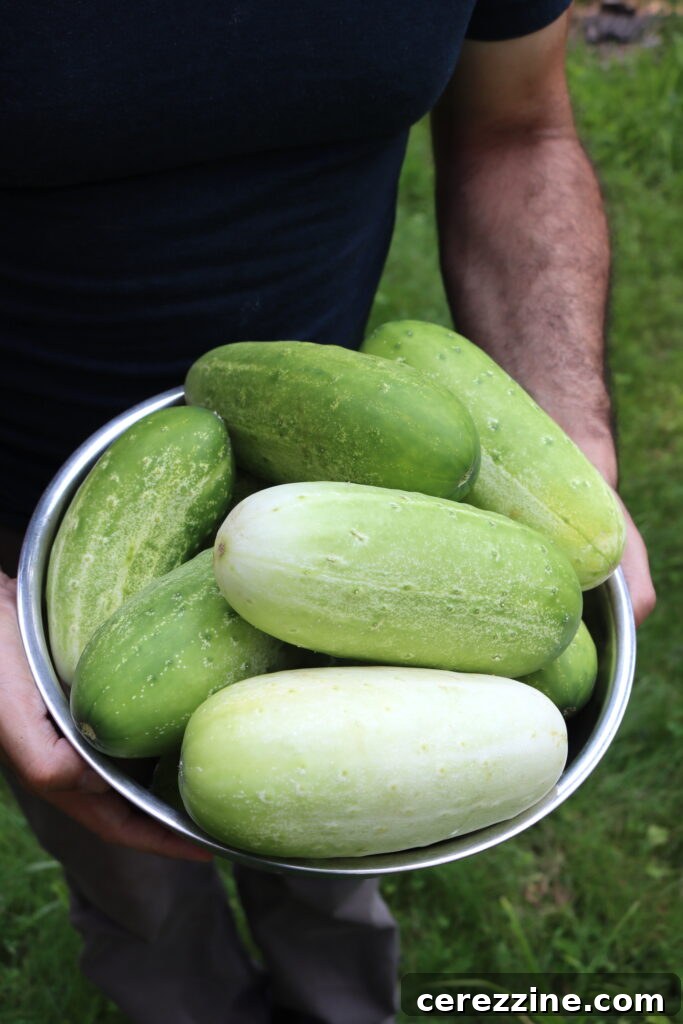
Every home gardener knows the bittersweet discovery: a few forgotten cucumbers, hidden beneath lush foliage, now oversized, yellowing, and brimming with mature seeds. While these giants are long past their prime for fresh salads or typical dill pickles, they are, in fact, absolutely perfect for crafting a traditional Scandinavian delicacy: Danish Asier Pickles. Far from being a garden casualty, these fully ripe cucumbers transform into something truly extraordinary—a sweet, spiced, and utterly delicious preserved treat. This time-honored canning recipe offers an ingenious and incredibly flavorful way to utilize your garden’s generous bounty, ensuring no cucumber goes to waste.
Danish Asier Pickles are more than just a way to preserve produce; they are a culinary celebration. These chunky, tender cucumber pickles boast a distinctive profile, marrying a tangy-sweet vinegar brine with a medley of warm, aromatic spices. Think turmeric for its golden hue and earthy notes, mustard seed for a subtle pungency, and ginger for a hint of warmth that makes these pickles uniquely comforting. This recipe invites you to embrace the art of traditional food preservation, resulting in jars filled with crisp, flavorful pickles that will become a cherished staple in your pantry, ready to elevate any meal.
The Gardener’s Secret: Transforming Overgrown Cucumbers
Don’t despair when you find those behemoth cucumbers. While underripe cucumbers are preferred for their crisp texture in many pickling recipes, the robust, thick flesh of an overgrown, fully mature cucumber is precisely what makes Danish Asier Pickles so special. These larger cucumbers develop a firmer texture and a more neutral flavor profile after being peeled and seeded, making them ideal for absorbing the rich, complex pickling brine without becoming mushy. The traditional process for Asier pickles specifically calls for these “garden giants,” proving that sometimes, bigger is indeed better in the world of canning.
This recipe provides a sustainable solution for any gardener dealing with a late-season cucumber abundance or simply those that escaped detection during daily harvests. Instead of composting them, you can turn them into a gourmet condiment that will last for months. The transformation from a slightly bitter, seedy overgrown cucumber to a sweet, tender, and beautifully spiced pickle is nothing short of magic, ensuring your hard work in the garden is fully rewarded.
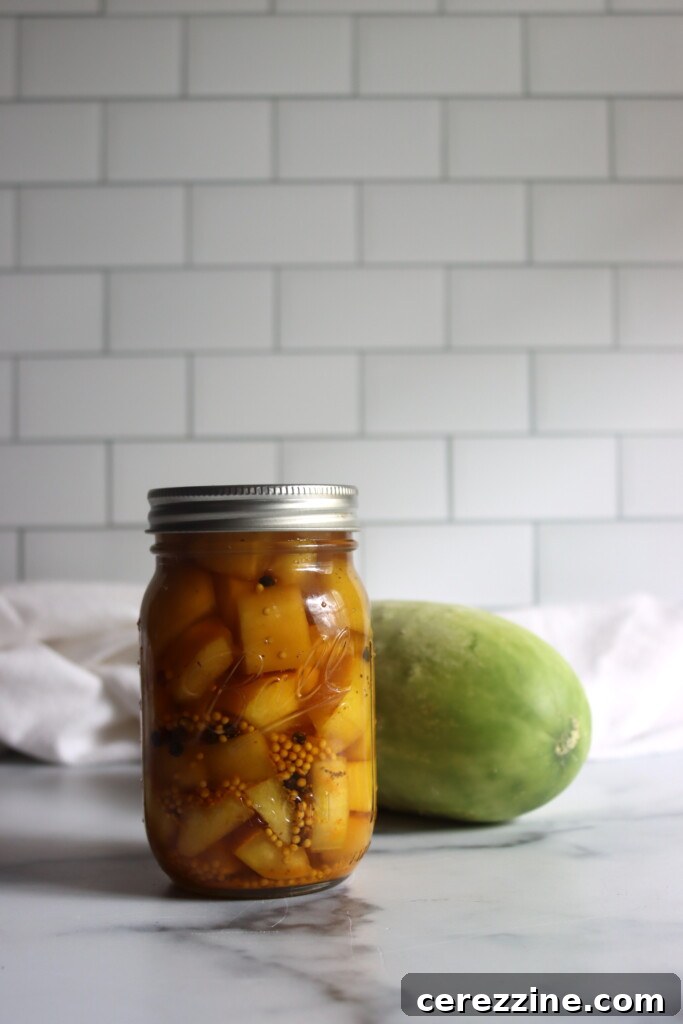
Why You’ll Adore This Danish Asier Pickles Recipe
- Perfect for Garden Surplus: Finally, a truly delicious and celebrated use for those unexpectedly large or overripe cucumbers that often go to waste. Turn your garden’s generosity into a pantry favorite.
- Exquisite Sweet & Spiced Flavor: Experience a unique pickle profile where the deep, caramel notes of brown sugar beautifully balance the vibrant tang of vinegar and the warming embrace of turmeric, ginger, and other traditional spices. It’s a comforting flavor sensation unlike any other pickle.
- Authentic Scandinavian Tradition: Dive into a piece of Nordic culinary heritage. This classic Danish recipe offers an authentic taste of Scandinavian kitchens, bringing a unique cultural touch to your homemade preserves.
- Versatile Culinary Companion: Beyond being a delightful snack, these pickles are incredibly versatile. They pair wonderfully with hearty roast meats, complement rich cheeses on a charcuterie board, and are an essential component of traditional Danish open-faced rye sandwiches (smørrebrød).
- Rewarding Canning Project: This two-day process is straightforward and deeply satisfying. It’s an accessible project for both novice and experienced canners, yielding impressive results that are perfect for gifting or enjoying throughout the year.
Key Ingredients for Authentic Danish Asier Pickles
The ingredient list for Danish Asier Pickles shares some similarities with other sweet pickle varieties, but the combination of brown sugar and specific warm spices truly sets it apart. This recipe, thoughtfully adapted from “The Joy of Pickling,” emphasizes achieving that distinct Scandinavian flavor profile.
For the Pre-Soak:
- 3 1/4 lbs Ripe Cucumbers: Aim for fully mature cucumbers that have begun to yellow, featuring large seeds and firm, robust flesh. You’ll typically need about 3 large cucumbers to reach this weight after peeling and seeding. The ripening process is crucial for developing the ideal texture that holds up beautifully to the pickling process.
- 1/4 cup Pickling Salt: This specialized salt is essential for drawing out excess moisture from the cucumbers during their overnight soak. This vital step helps to preserve their firm texture and primes them to fully absorb the rich pickling brine, ensuring a crisp, flavorful end product.
For the Pickling Brine:
- 3 cups Cider Vinegar: The foundation of the tangy flavor. Cider vinegar contributes a mellow, slightly fruity acidity that complements the sweet and spiced notes. For consistent safety and quality, always use vinegar with a 5% acidity level. While white vinegar can be substituted, it will impart a sharper, less nuanced flavor.
- 1 cup Light Brown Sugar: This is a star ingredient, infusing the brine with deep, caramel-like sweetness and rich molasses undertones. Brown sugar is key to the distinctive warm flavor profile of Asier pickles.
- 1 cup Granulated Sugar: Paired with brown sugar, granulated sugar provides a clean, bright sweetness that balances the tang of the vinegar and highlights the spice blend without overwhelming it.
- 1 tsp Black Peppercorns: These add a subtle, fragrant heat and complexity to the brine, enhancing the overall savory-sweet balance.
- 1 tsp Mustard Seeds: Contributing a mild, earthy pungency, mustard seeds are a classic pickling spice that adds depth and a characteristic zesty note.
- 1/2 tsp Celery Seeds: These tiny seeds impart a delicate, earthy, and slightly bitter flavor, reminiscent of celery, which harmonizes wonderfully with the other spices.
- 1 tsp Ground Turmeric: Beyond its beautiful golden color, turmeric provides an earthy, slightly bitter, and warm flavor. It’s a cornerstone spice in Asier pickles, giving them their signature hue and distinctive taste.
- 1/2 tsp Ground Ginger: Offering a delightful warmth and gentle spice, ginger adds a comforting, slightly peppery kick that brightens the entire flavor profile of the pickles.
The harmonious blend of these ingredients creates a pickling syrup that is both sweet and tangy, deeply aromatic, and perfectly balanced, making Danish Asier Pickles a truly unforgettable experience.
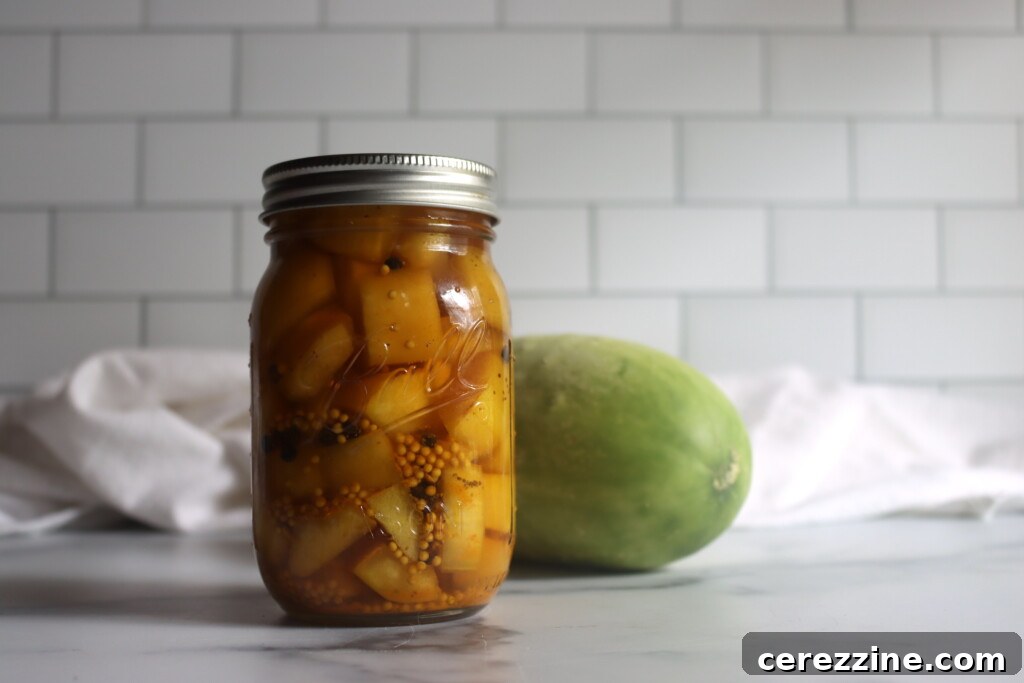
Crafting Danish Asier Pickles: A Two-Day Process
Making these traditional pickles is a rewarding two-day endeavor, beginning with a crucial salt soak to prepare the cucumbers, followed by the pickling and canning process on the second day. This method ensures optimal texture and flavor absorption.
Day 1 – Preparation and Salt Soak for Perfect Texture
- Prepare the Cucumbers: Begin by thoroughly peeling the ripe cucumbers. Next, slice them in half lengthwise and use a spoon or melon baller to scoop out the mature seeds. This step is essential as the large seeds are typically tough and undesirable in the finished pickle. Cut the deseeded cucumber halves into thick strips, then chop these strips into chunky ¾- to 1-inch cubes. The chunky size is characteristic of Asier pickles and holds up well during canning.
- Salt Soak: In a large, non-reactive bowl or container (glass, ceramic, or food-grade plastic works best), gently toss the prepared cucumber chunks with ¼ cup of pickling salt. Ensure all pieces are evenly coated. Cover the bowl and allow the cucumbers to sit at room temperature overnight, or for at least 8-12 hours. This salt soak is critical; it draws out excess moisture from the cucumbers, preventing them from becoming watery and ensuring a more tender, yet still firm, texture in the final product.
Day 2 – Brining and Canning for Long-Lasting Flavor
- Rinse Cucumbers: The following day, drain the salted cucumbers thoroughly. Rinse them several times under cold running water to remove any lingering excess salt. Taste a small piece to ensure they are not overly salty. Set them aside in a colander to drain completely while you prepare the brine.
- Prepare the Pickling Brine: In a large, non-reactive saucepan, combine the cider vinegar, light brown sugar, granulated sugar, black peppercorns, mustard seeds, celery seeds, ground turmeric, and ground ginger. Bring the mixture to a vigorous boil over medium-high heat, stirring constantly until both sugars are completely dissolved.
- Cook the Cucumbers: Once the brine is boiling, add the drained cucumber chunks to the saucepan. Return the mixture to a hard boil and let it cook for precisely 1 minute. This brief cook time softens the cucumbers slightly, allowing them to better absorb the brine without losing their pleasant chew. Immediately remove the saucepan from the heat after 1 minute.
- Pack the Jars: Carefully pack the hot cucumber chunks into clean, sterilized pint or quart canning jars, leaving ½ inch of headspace at the top of each jar. Ladle the hot pickling brine over the cucumbers, ensuring they are fully submerged and maintaining that ½ inch of headspace. Use a non-metallic utensil, such as a plastic knife or chopstick, to gently remove any trapped air bubbles from the jars. Adjust the liquid level if necessary, adding more brine to maintain the headspace.
- Seal and Process: Wipe the rims of the jars clean with a damp cloth to ensure a proper seal. Apply the lids and screw bands fingertip-tight. Process the jars in a boiling water bath canner according to the recommended times: 10 minutes for pint jars and 15 minutes for quart jars. Remember to adjust processing times for your specific altitude (see guidelines below).
- Cool and Store: After processing, carefully remove the jars from the canner and place them on a clean towel or cooling rack, allowing them to cool undisturbed for 12–24 hours. Once completely cool, check the seals: the center of the lid should be depressed and not flex when pressed. Any jars that have not sealed properly should be refrigerated and consumed within a few weeks. Store properly sealed jars in a cool, dark place for up to one year.
While these pickles are undeniably delicious right after sealing, their flavors truly meld and deepen over time. For the best taste, allow them to mellow for at least a couple of weeks before enjoying.
Essential Canning Altitude Adjustments
When canning, it’s crucial to adjust processing times based on your altitude. Water boils at a lower temperature at higher elevations, meaning jars need a longer processing time to ensure safe and effective preservation. Please follow these guidelines for Danish Asier Pickles:
- For 0 to 1,000 Feet in Elevation: Process pint jars for 10 minutes, and quart jars for 15 minutes.
- For 1,001 to 6,000 Feet in Elevation: Process pint jars for 15 minutes, and quart jars for 20 minutes.
- Above 6,001 Feet in Elevation: Process pint jars for 20 minutes, and quart jars for 25 minutes.
30
Servings, Makes 4 to 5 pints
Danish Asier Pickles Recipe
Ashley Adamant
8 hrs
10 mins
10 mins
8 hrs 20 mins
Equipment
-
Water Bath Canner
Ingredients
Pre-Soak:
- 3 1/4 lbs Ripe Cucumbers, peeled and seeded (about 3 large)
- 1/4 cup pickling salt
Pickling Brine:
- 3 cups cider vinegar
- 1 cup light brown sugar
- 1 cup granulated sugar
- 1 tsp black peppercorns
- 1 tsp mustard seeds
- 1/2 tsp celery seeds
- 1 tsp ground turmeric
- 1/2 tsp ground ginger
Instructions
-
Start by peeling and seeding the cucumbers. Next, slice them into strips, and then cut each strip into chunky ¾- to 1-inch cubes.
-
Toss the chopped cucumbers in the pickling salt and place them in a non-reactive bowl. Allow them to sit overnight at room temperature.
-
The next day, drain the salted cucumbers and rinse them thoroughly under cold running water to remove excess salt. Set aside to drain.
-
In a large saucepan, combine all the pickling brine ingredients. Bring the mixture to a hard boil, stirring until the sugars dissolve. Add the drained cucumber pieces and return the pot to a boil for 1 minute. Remove from heat.
-
Ladle the hot cucumber pieces into sterilized canning jars and top with hot brine, ensuring cucumbers are covered and leaving 1/2 inch headspace. Remove air bubbles.
-
Wipe jar rims, apply lids and rings, then process in a boiling water bath canner for 10 minutes for pints, or 15 minutes for quarts, adjusting for altitude as needed. Let cool for 12-24 hours before checking seals and storing.
Notes
Canning Altitude Adjustments
Water boils at a lower temperature at higher altitudes, so jars need to be processed a bit longer to ensure safety. Here are the altitude adjustments for canning Danish Asier Pickles:
- For 0 to 1,000 Feet in Elevation – Process pint jars for 10 minutes, and quart jars for 15 minutes.
- For 1,001 to 6,000 Feet in Elevation – Process pint jars for 15 minutes, and quart jars for 20 minutes.
- Above 6,001 Feet in Elevation – Process pint jars for 20 minutes, and quart jars for 25 minutes.
Nutrition
Calories: 66kcal, Carbohydrates: 15g, Protein: 0.4g, Fat: 0.2g, Saturated Fat: 0.01g, Polyunsaturated Fat: 0.02g, Monounsaturated Fat: 0.03g, Sodium: 948mg, Potassium: 100mg, Fiber: 0.4g, Sugar: 15g, Vitamin A: 36IU, Vitamin C: 2mg, Calcium: 17mg, Iron: 0.3mg
Nutrition information is automatically calculated, so should only be used as an approximation.
Enjoyed this recipe? Share your thoughts in the comments below!
Exploring More Ripe Cucumber Recipes
If you’ve discovered the joy of preserving those delightful overgrown cucumbers, there’s a whole world of possibilities beyond Asier pickles. Don’t let your garden’s abundance go to waste; these robust cucumbers are perfect for a variety of unique and delicious pickling recipes. Each method offers a different flavor profile and texture, ensuring you can enjoy your harvest in many forms throughout the year. From zesty and savory to tangy and sweet, these recipes provide excellent ways to utilize every last cucumber from your garden.
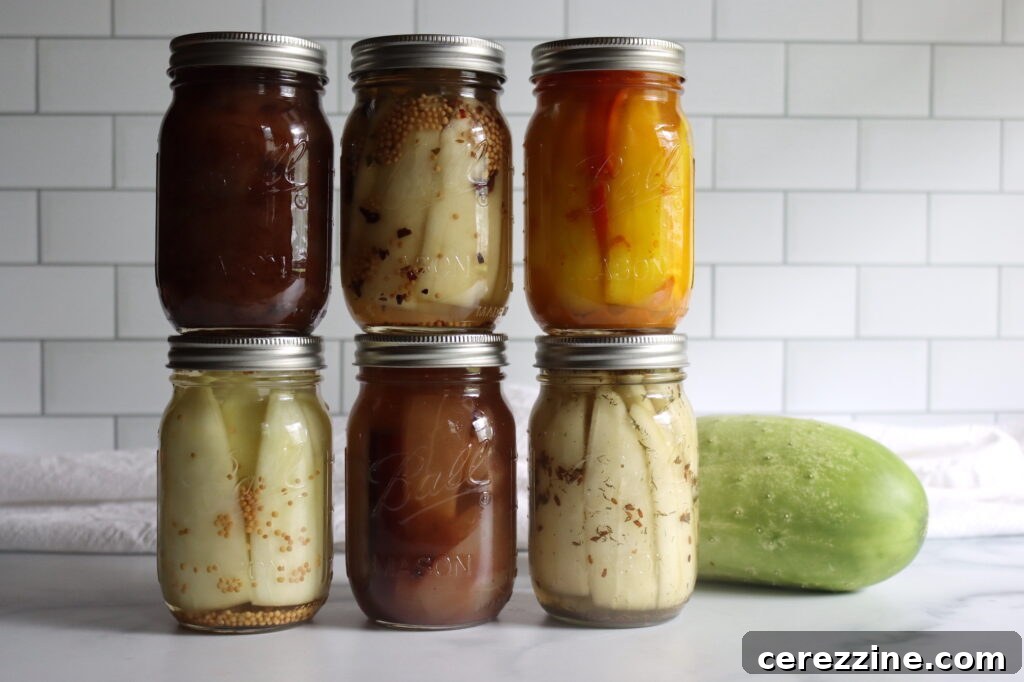
- Russian Bear Claw Pickles: A robust pickle with a distinctive name and satisfying crunch.
- Vermont Cucumber “Tongue” Pickles: Sweet and savory, known for their unique shape and flavor.
- Dutch Pickles: A mild and slightly sweet European-style pickle.
- Ruth’s Pickles (from the American South): Often a sweet bread-and-butter style, bursting with classic Southern comfort.
- Senfgurken (German Mustard Pickles): Tangy and flavorful, enhanced with a pronounced mustard kick.
- Sunshine Pickles: Bright and cheerful, often featuring a sweet and sour profile.
Each of these recipes provides another fantastic opportunity to transform those garden surprises into pantry treasures, allowing you to savor the taste of summer long after the season ends. Happy canning!