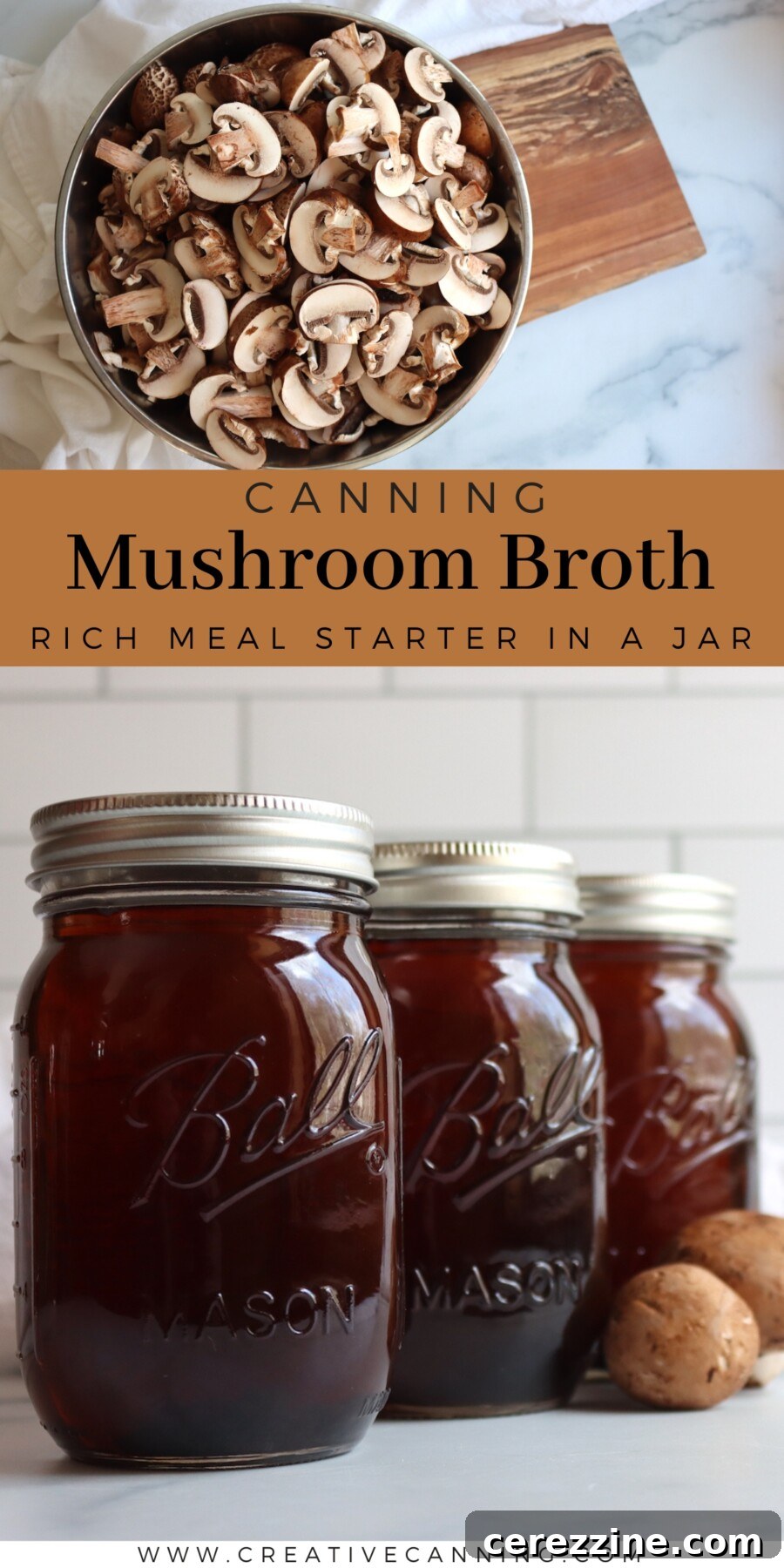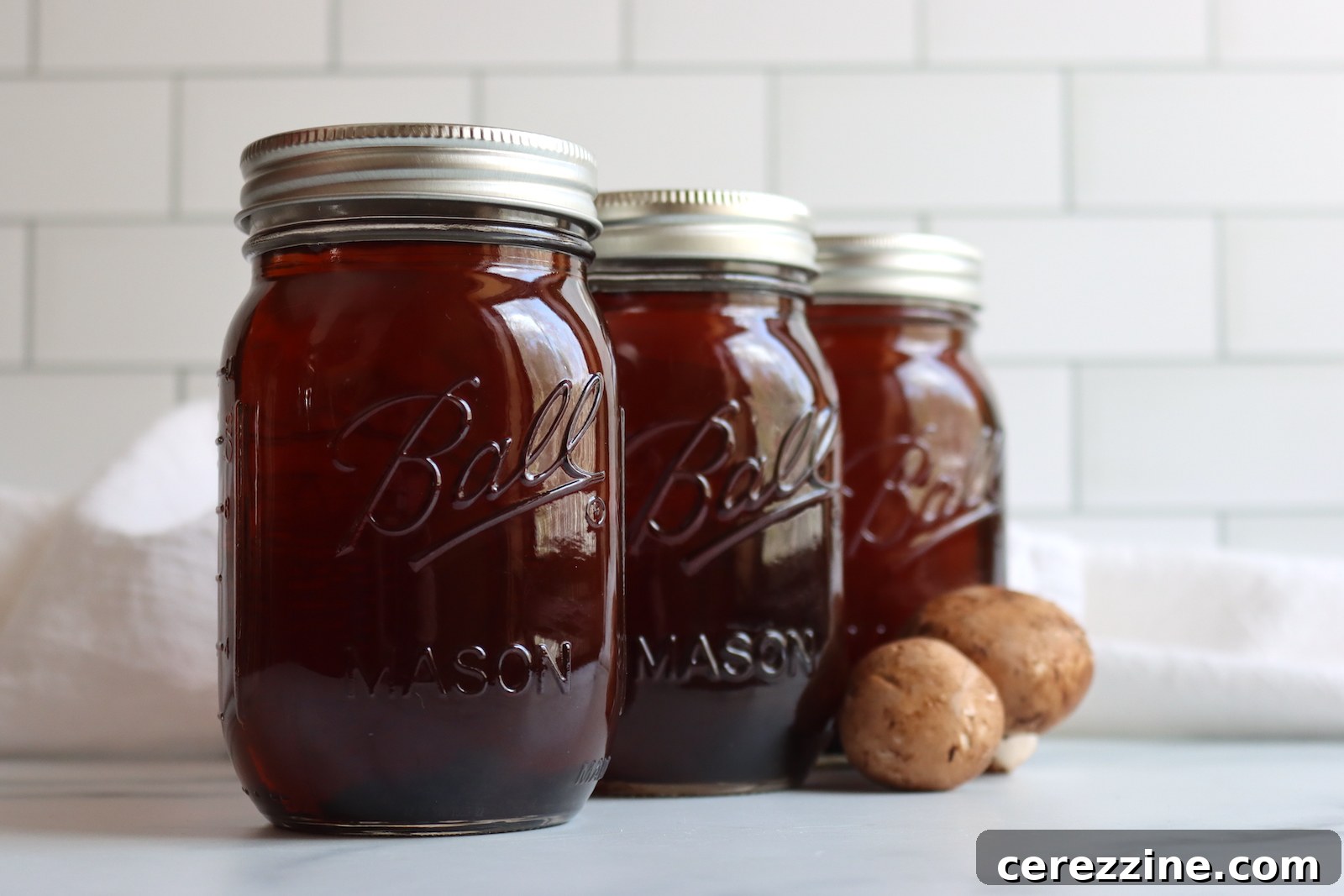
Canning mushroom broth creates a rich, savory pantry staple that instantly upgrades simple dishes — from a quick soup to a pot of rice — making them taste like they simmered all afternoon. Once you have jars on the shelf, you’ll find yourself reaching for them again and again. Home canning keeps this flavor-dense stock available without using freezer space.
This recipe has been reviewed for safety and accuracy by a Master Food Preserver certified through Cornell Cooperative Extension.
On our Vermont homestead we grow and cook a lot of mushrooms, and I frequently accumulate stems and trimmings that used to get composted. Now those scraps go into mushroom broth, which I keep alongside vegetable and beef broths in regular rotation. The broth is economical to make and puts those small bits to excellent use.
Canning mushroom broth requires a different processing schedule than broth made from meat because mushrooms are a low-acid food. A strained mushroom broth follows the tested schedule for canning plain mushrooms: 45 minutes in half-pint or pint jars. That processing time is longer than many meat stocks need, so it’s important to follow the tested parameters for safety. This recipe is a pressure canning recipe — there is no safe water-bath method for low-acid broths like this one.
Notes from My Kitchen

Mushroom broth is one of those preserves that costs almost nothing to make but pays back every time you open a jar. Most of my batches begin with frozen scraps — stems and trims saved over time — plus a handful of dried mushrooms for backbone. You can build this broth from fresh whole mushrooms, but the scrap version is just as satisfying and makes the recipe particularly efficient.
Consider the recipe a flexible framework rather than a rigid rule. As long as you use cultivated mushrooms, canning-safe vegetables, and strain everything thoroughly before processing, you can adjust the mushroom mix and aromatics to suit what you have on hand. The important part is following the tested canning schedule for safety.
Quick Look at the Recipe
- Recipe Name: Canning Mushroom Broth
- Recipe Type: Stock and Broth Canning Recipe
- Canning Method: Pressure Canning
- Prep/Cook Time: About 30 minutes active, plus 1–2 hours simmering
- Canning Time: 45 minutes for half-pints or pints (do not can in quarts)
- Yield: Approximately 3–4 quarts, depending on mushroom quantity and simmer time
- Jar Sizes: Half-pints or pints only
- Headspace: 1 inch
- Ingredients Overview: Cultivated fresh mushrooms (plus optional dried), onion, celery, carrot, garlic, peppercorns, bay leaves
- Source: Tested mushroom canning guidance applied to a strained mushroom broth
- Difficulty: Easy — most of the time is hands-off simmering; canning step is straightforward
Ingredients for Mushroom Broth
The proportions below provide a balanced, savory broth. They are flexible: use any combination of cultivated mushrooms and aromatics you prefer, but always strain the finished liquid and stick to ingredients that are safe for pressure canning. Taste and adjust seasoning toward the end of simmering before you jar the broth.
- Fresh mushrooms: 2–3 pounds of cultivated mushrooms (any mix). Cremini and button mushrooms give a clean base; portobello, shiitake, or oyster add more depth. Saved stems and trimmings are ideal. Do not use wild-foraged mushrooms for canned broth.
- Dried mushrooms (optional): 1–2 ounces (shiitake or porcini) add concentrated flavor. Add them dry at the start and strain out with the solids.
- Onion: 1 large yellow onion, quartered. You may leave the skins on for additional color and depth.
- Celery: 2 ribs, roughly chopped.
- Carrot: 1 medium carrot, roughly chopped; optional for a hint of sweetness.
- Garlic: 4 cloves, peeled and lightly smashed; add more if you prefer a stronger garlic note.
- Peppercorns & bay leaves: Whole, added during simmer and strained out afterward.
- Water: About 4–5 quarts or enough to cover solids by at least 2 inches; top up during simmer as needed.
Do not include wild mushrooms, thickeners (flour, cornstarch), dairy, added oils, puréed vegetables, or concentrated seasonings (soy sauce, miso, bouillon paste, Worcestershire) before canning. Those ingredients either are unsafe for canning or interfere with heat penetration and seal quality. Add concentrated seasonings after opening the jar instead.
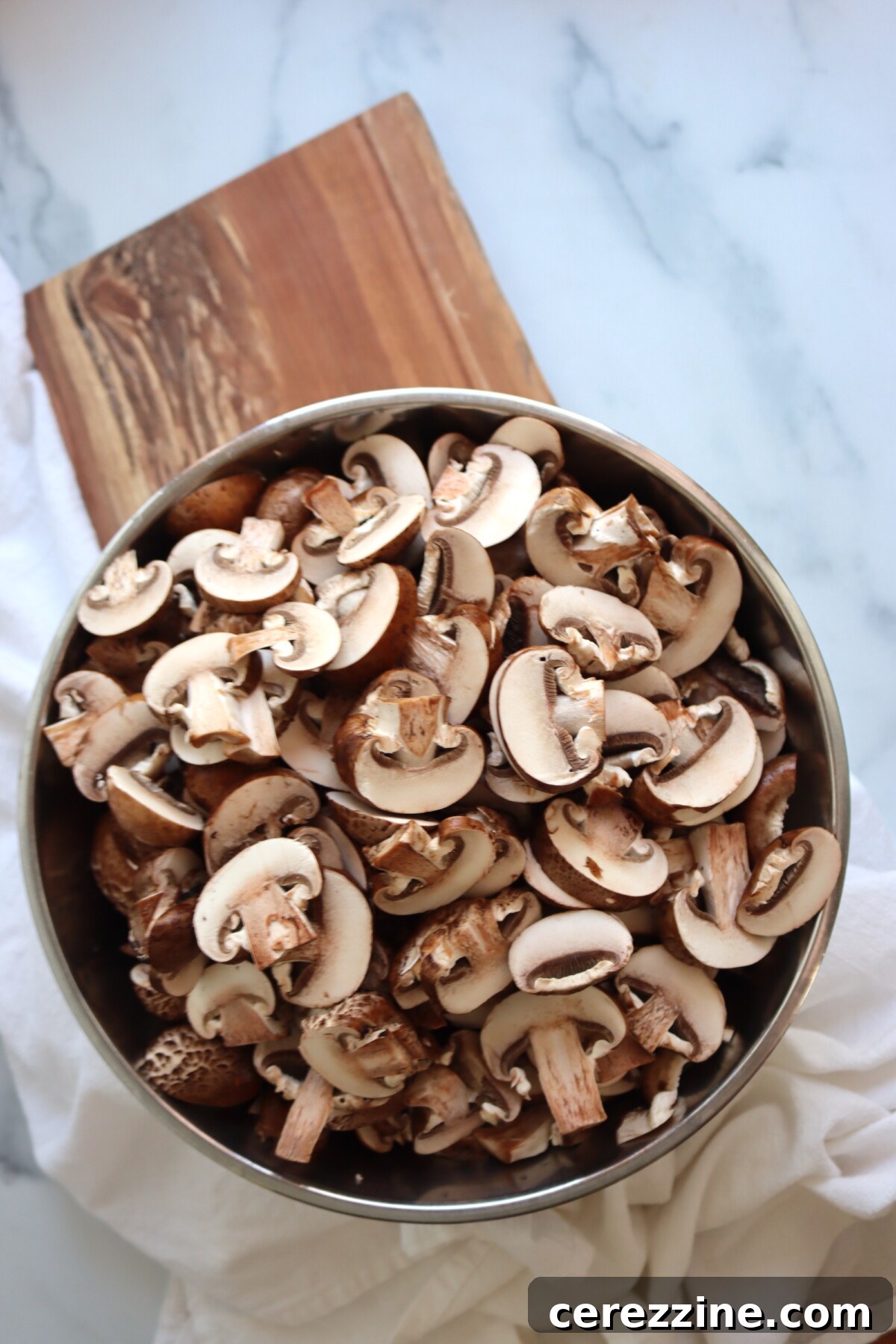
How to Make Mushroom Broth
Mushroom broth develops its flavor more quickly than bone broth — most of the savory character extracts within one to two hours. Browning the mushrooms first concentrates and deepens the flavor, much as roasting bones does for meat stocks. If you prefer a lighter result, you can skip browning and still make a good broth.
Brown the Mushrooms
Roughly chop the fresh mushrooms. In a large stockpot over medium-high heat, dry-sauté them in batches until they release liquid, the liquid evaporates, and the mushroom edges begin to brown. If they begin to stick, add a small splash of water; avoid using oil or butter if you plan to can the broth. Browning is optional but recommended for a richer flavor.
Build and Simmer the Broth
Add onion, celery, carrot, garlic, peppercorns, bay leaves, and any dried mushrooms to the pot. Cover with cold water by at least 2 inches (about 4–5 quarts). Bring to a boil, then reduce to a gentle simmer and cook 1–2 hours. Keep the simmer low so the broth barely bubbles — a hard boil will cloud the liquid. Top up with water if needed and taste toward the end to adjust flavor.
Strain Thoroughly
When the broth has the flavor you like, strain it through a colander lined with several layers of cheesecloth into a clean stockpot. Allow it to drain without pressing or squeezing the solids — pressing forces fine particles into the liquid and clouds the broth. If you choose to add salt, do so now and taste; about 1/8 teaspoon per pint is a conservative guideline, but many people prefer to can without salt and season later.
Can the Broth
Prepare your pressure canner, jars, lids, and bands. Reheat the strained broth to a full boil and ladle it into hot half-pint or pint jars, leaving 1 inch of headspace. Wipe rims clean, apply lids and bands fingertip-tight, and place the jars in the preheated pressure canner. Vent the canner for 10 minutes, bring it to the required pressure for your altitude, and process for 45 minutes. Allow the canner to depressurize naturally, then remove the jars and cool undisturbed for 12–24 hours before checking seals, labeling, and storing.
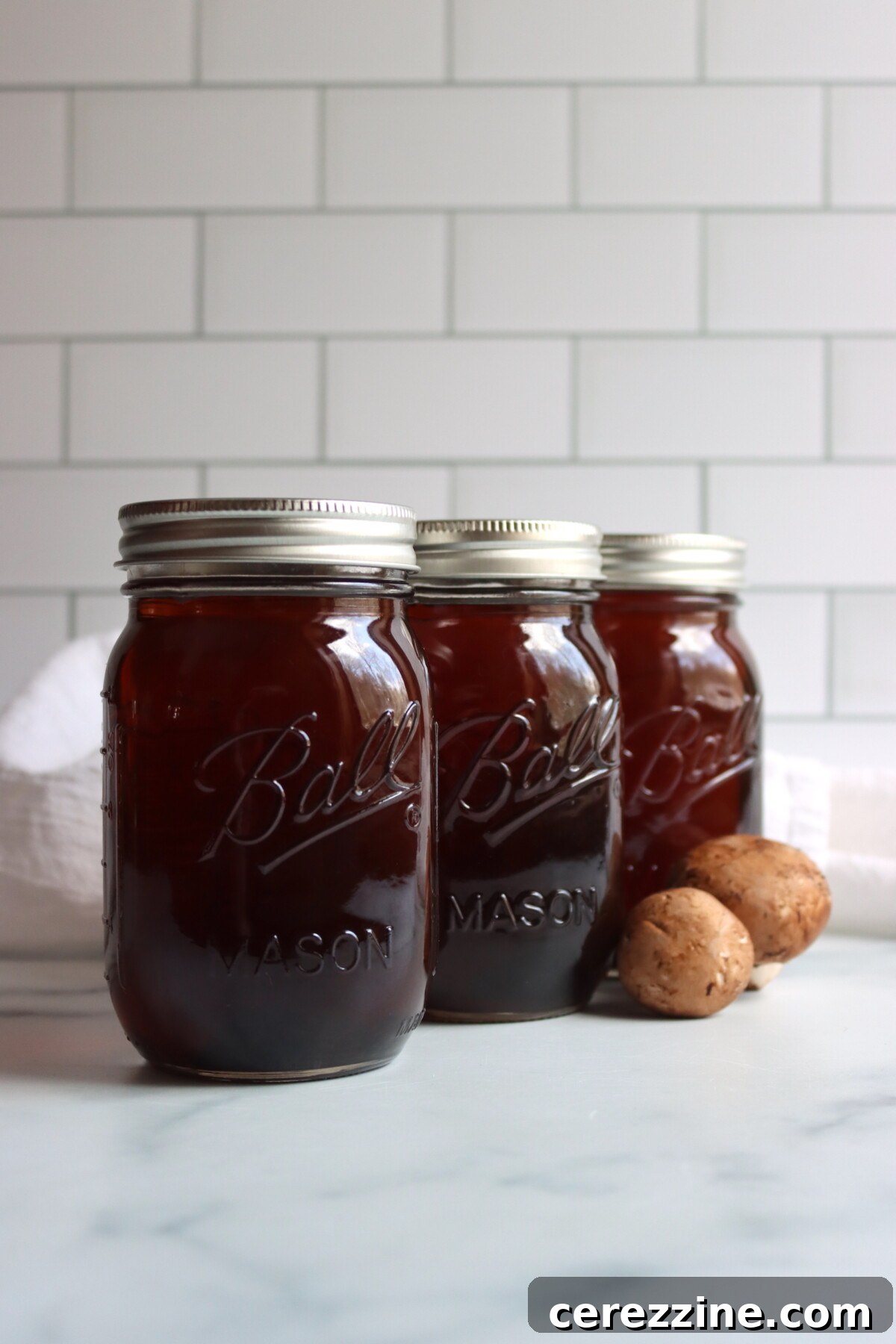
Canning Mushroom Broth
Mushroom broth is a low-acid product and must be pressure canned. Follow the tested mushroom canning schedule: 45 minutes in half-pint or pint jars only. There is no tested quart time for mushrooms, so do not use quart jars. Strain the broth thoroughly so it is a clear liquid with no suspended solids, and avoid any thickeners or added fats before canning to ensure effective heat penetration and reliable seals.
Process half-pints or pints for 45 minutes at the pressure recommended for your canner type and elevation.
Altitude Adjustments
Processing time stays the same at higher altitudes, but pressure must be adjusted. Use the following guidelines for mushroom broth:
For dial-gauge pressure canners:
- 0–2,000 feet: 11 lbs pressure
- 2,001–4,000 feet: 12 lbs pressure
- 4,001–6,000 feet: 13 lbs pressure
- 6,001–8,000 feet: 14 lbs pressure
For weighted-gauge pressure canners:
- 0–1,000 feet: 10 lbs pressure
- Above 1,000 feet: 15 lbs pressure
Serving Ideas
Mushroom broth is versatile. Use it anywhere you would use vegetable or chicken broth to add deeper, earthier flavor. Cook rice, grains, or risotto in mushroom broth instead of water for a quick flavor boost. Heat a jar and add noodles and greens for a fast soup, or use it as a braising liquid for mushrooms, beans, or onions. A splash in pan sauces or gravies adds richness, and it can replace beef broth in vegetarian versions of recipes for a meaty savoriness without meat.
Canning Mushroom Broth FAQs
No. Mushroom broth must follow the tested canning process for mushrooms: 45 minutes in half-pint or pint jars at the specified pressure for your canner and altitude. There is no tested quart time, and shortening the processing time or changing jar size compromises safety.
Mushroom broth is low-acid and requires pressure canning because water-bath canning only reaches boiling temperature (212°F), which is insufficient to safely process low-acid foods. Pressure canning reaches higher temperatures required for safe shelf storage.
Yes. The ingredient mix is flexible as long as you use cultivated mushrooms and canning-safe vegetables, strain the broth to a clear liquid with no solids, and avoid thickeners, dairy, added oil, concentrated seasonings, or puréed ingredients before canning. Processing time and jar size remain the same regardless of flavor adjustments.
Broth Canning Recipes
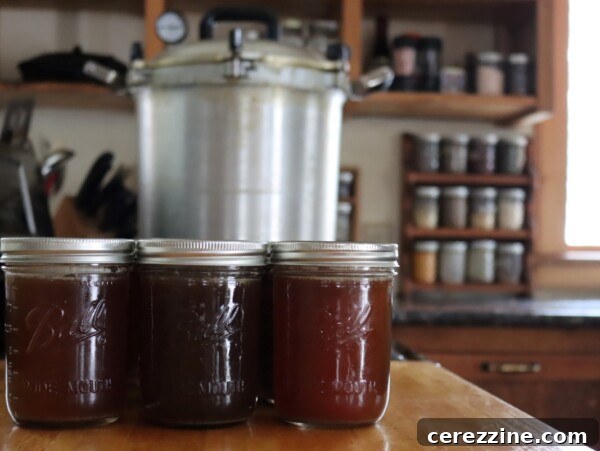
Canning Beef Broth
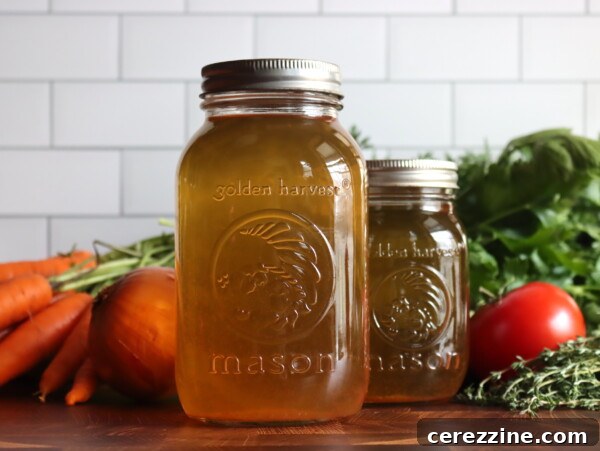
Canning Vegetable Broth
Canning Chicken Broth
If you tried this Canning Mushroom Broth recipe, leave a star rating and share your experience in the comments. Your feedback helps others adapt the recipe to their pantry and tastes.
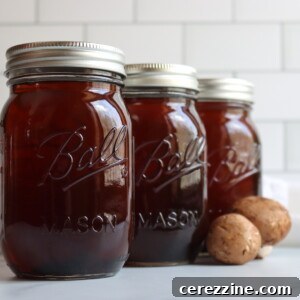
Canning Mushroom Broth
Equipment
- Pressure canner
- Fine mesh strainer or colander with cheesecloth
- Canning funnel
- Canning jars, lids and bands
Ingredients
- 2 to 3 lbs fresh mushrooms, any kind or a mix (whole caps or saved stems and trimmings)
- 1 to 2 oz dried mushrooms (optional; shiitake or porcini)
- 1 large onion, quartered (skins optional)
- 2 ribs celery, roughly chopped
- 1 medium carrot, roughly chopped (optional)
- 4 cloves garlic, peeled and smashed
- 20 whole black peppercorns
- 2–3 whole bay leaves
- 4 to 5 quarts cold water, approximately — enough to cover solids by 2 inches; top up as needed
Instructions
- Roughly chop the mushrooms. Dry-sauté them in a large stockpot over medium-high heat in batches until they release liquid and begin to brown. Browning deepens flavor but is optional. If needed, add a splash of water to prevent sticking; avoid added oil if canning.
- Add onion, celery, carrot, garlic, peppercorns, bay leaves, and any dried mushrooms. Cover with cold water by at least 2 inches. Bring to a boil, then reduce to a gentle simmer.
- Simmer 1–2 hours, keeping the heat low so the broth barely bubbles. Add water if the level drops below the solids. Taste and adjust seasoning near the end.
- Strain the broth through a colander lined with several layers of cheesecloth into a clean pot. Do not press or squeeze the solids. If desired, add salt to taste (about 1/8 tsp per pint is a guideline).
- Prepare the pressure canner and hot jars. Reheat the strained broth to a full boil and ladle into hot half-pint or pint jars, leaving 1 inch headspace. Wipe rims, apply lids and bands fingertip-tight, load into the preheated canner, vent 10 minutes, bring to pressure, and process for 45 minutes, adjusting pressure for altitude. Allow the canner to depressurize naturally, then cool jars 12–24 hours before checking seals and storing.
Notes
Jar size: Half-pints or pints only. The tested process has no quart time.
Processing time: 45 minutes, following tested mushroom canning guidelines. Do not shorten the time.
Browning: Optional but recommended for deeper flavor.
Dried mushrooms: About 1 ounce adds concentrated depth; add dry at the start and strain out.
Salt: Optional and has no effect on canning safety. Add to taste; many prefer to can without salt and season when serving.
Flexibility: The ingredient mix is adaptable so long as the finished broth is a clear liquid with no solids and contains only canning-safe ingredients (no thickeners, dairy, added oil, or puréed vegetables).
Storage: Store sealed jars in a cool, dark pantry up to 18 months. Refrigerate after opening.
Altitude adjustments: See recommended pressures for dial- and weighted-gauge canners above.
Nutrition
Serving: 1/2 cup • Calories: 24 kcal • Carbohydrates: 4 g • Protein: 2 g • Fat: 1 g • Sodium: 7 mg (approx.)
Nutrition information is automatically calculated and should be used as an approximation.
Mushroom Canning Recipes
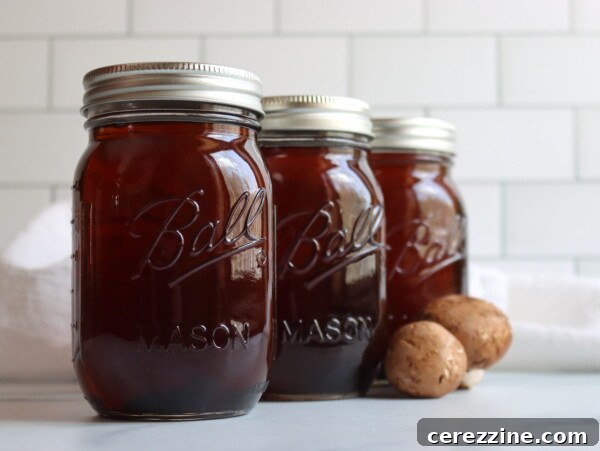
Canning Mushroom Broth
Canning Mushroom Soup Base
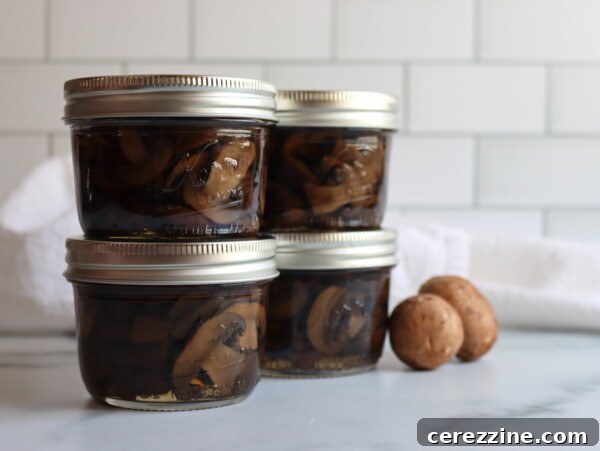
Canning Mushrooms
Find the perfect recipe
Searching for something else? Enter keywords to find the perfect recipe on the site.