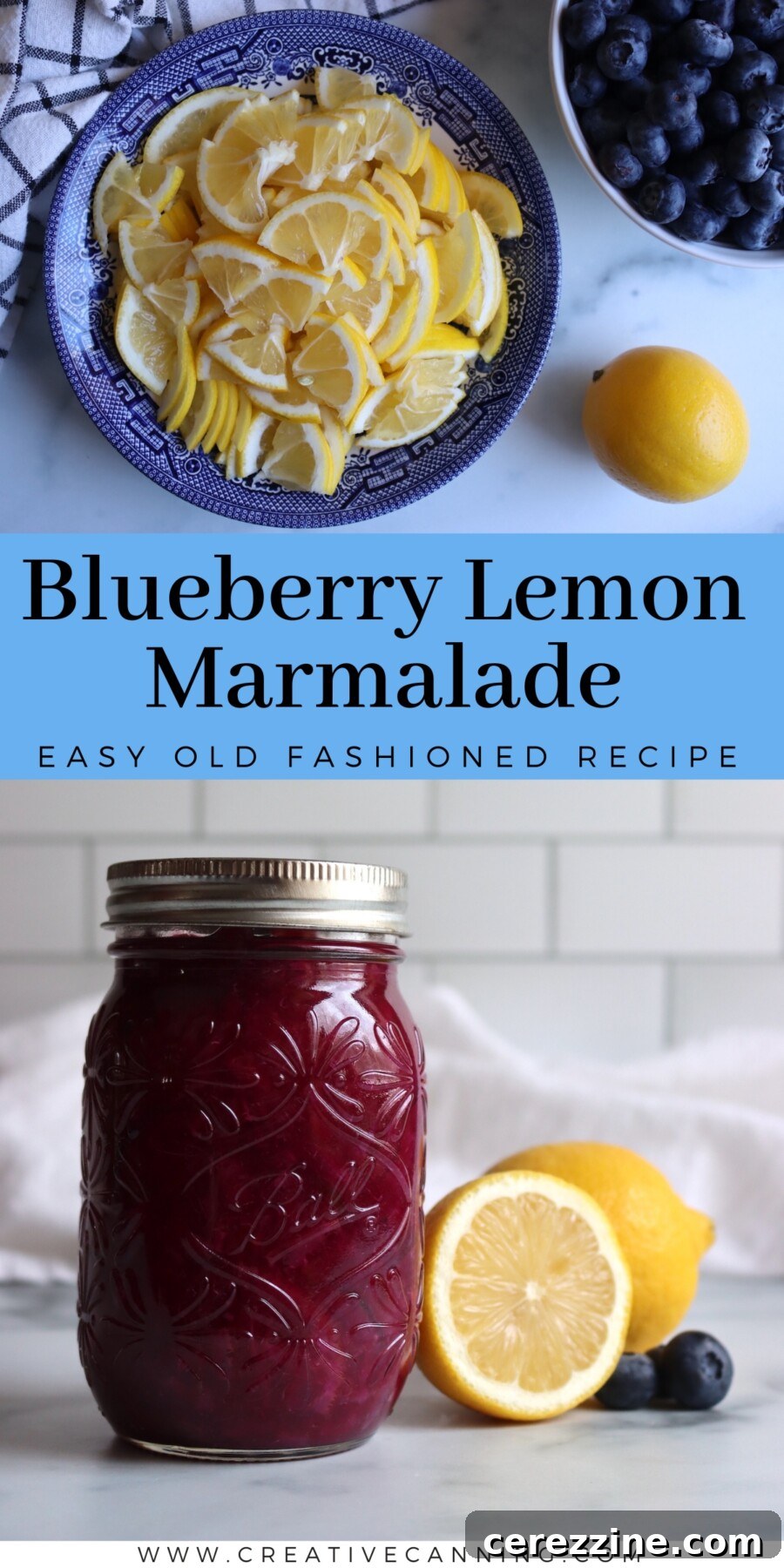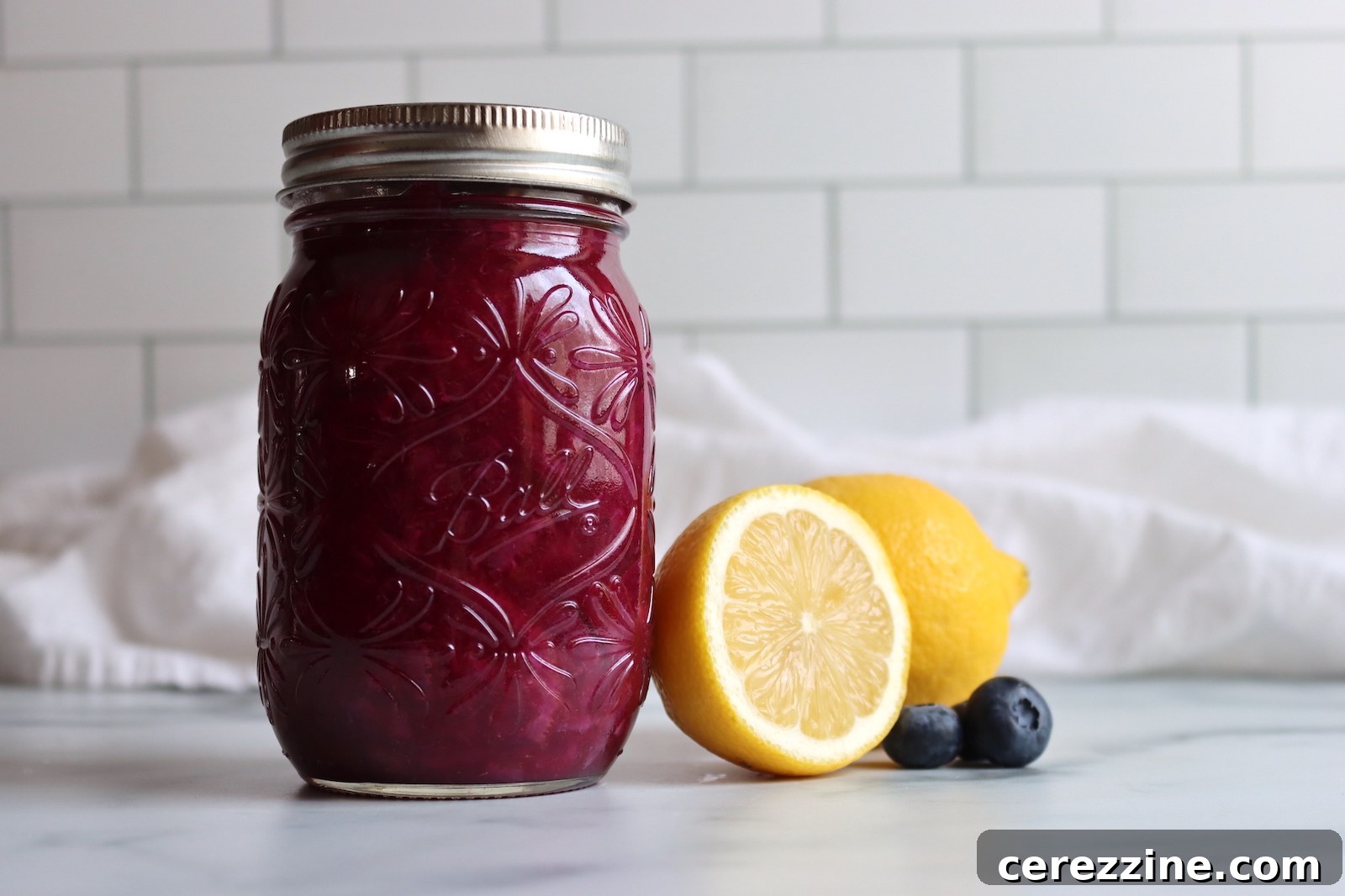
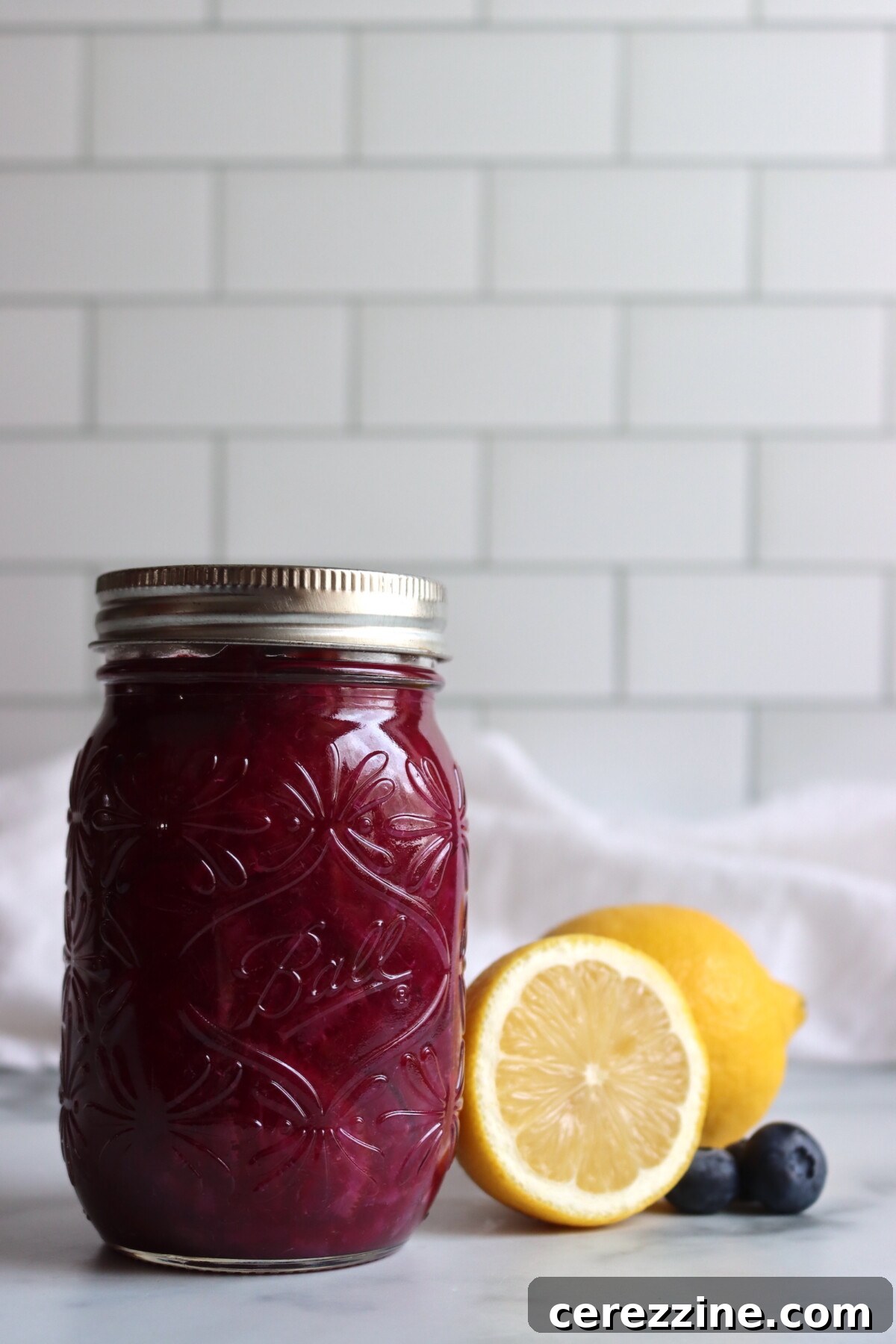
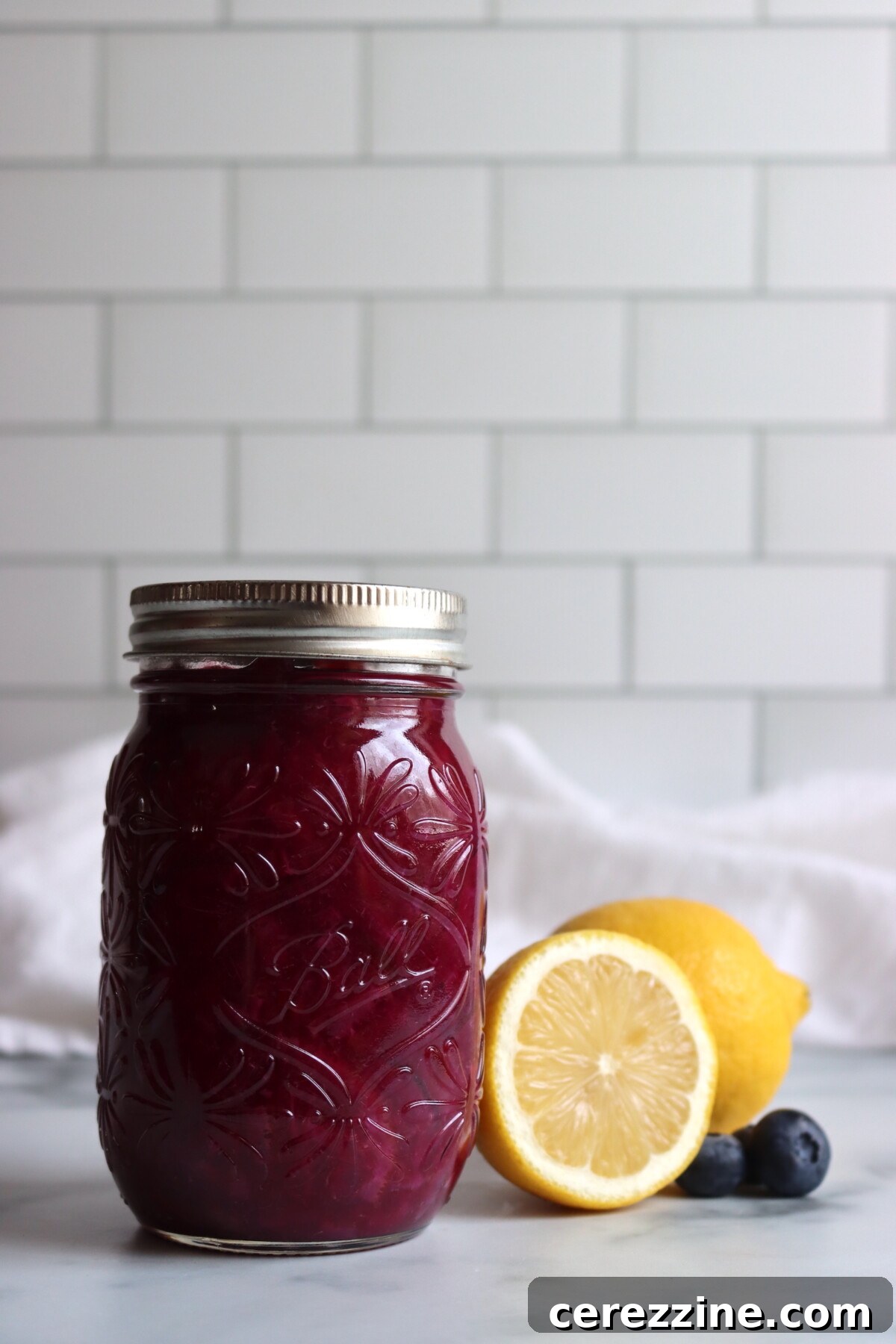
Blueberry lemon marmalade is a true marmalade with delicate ribbons of lemon peel running through it, not simply a jam flavored with citrus. Blueberries contribute color and sweetness while the lemon provides the classic bittersweet marmalade character.
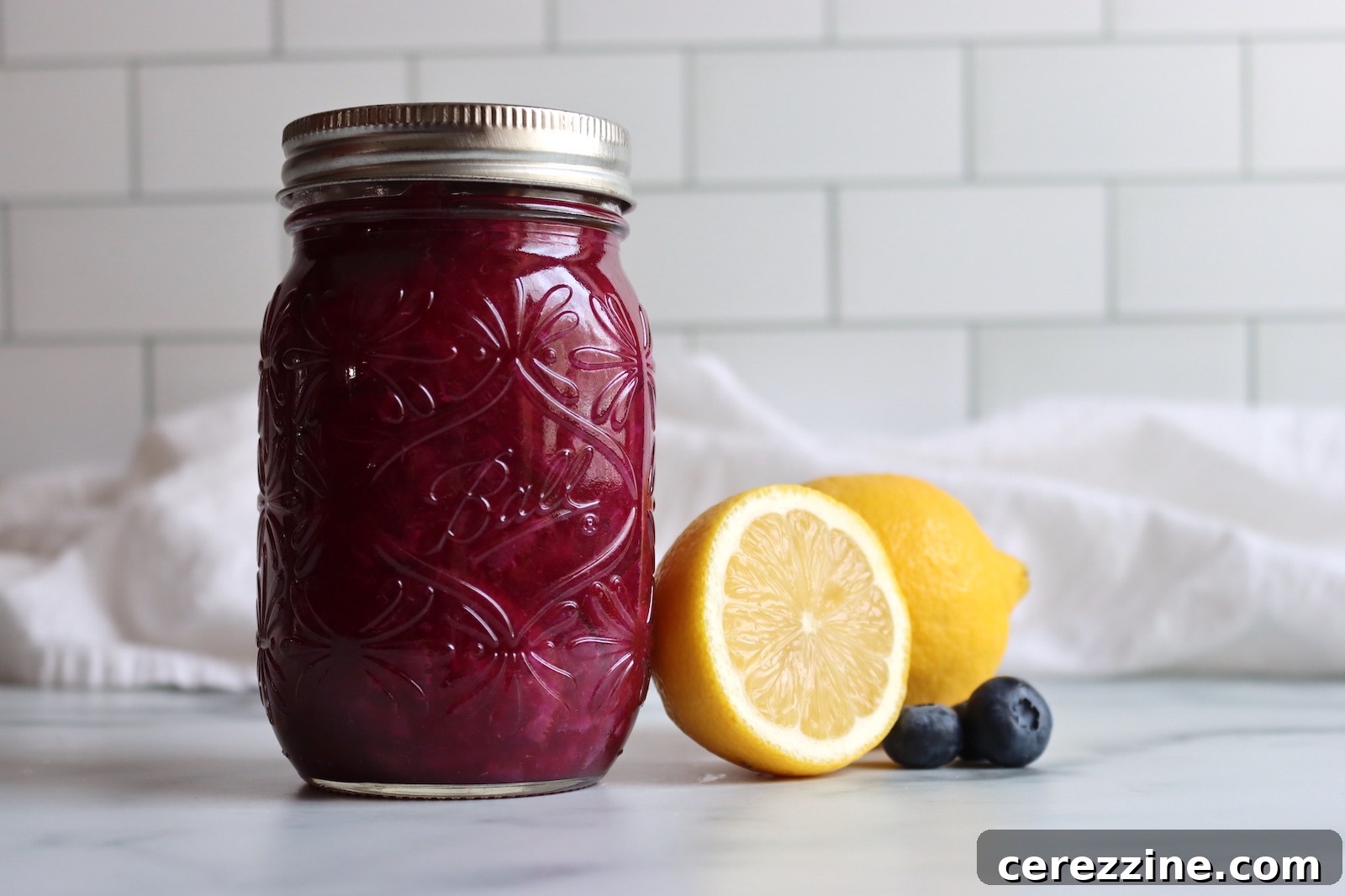
This recipe has been reviewed for safety and accuracy by a Master Food Preserver certified through the University of Cornell Cooperative Extension.
Blueberries and lemon make a striking pairing in this simple small-batch marmalade. Use regular lemons for a brighter, more bitter finish, or Meyer lemons for a sweeter, floral note. The method mirrors traditional marmalade techniques: slice the citrus thin, soak it overnight, then simmer until the peel is tender before adding the fruit and sugar. That overnight soak is essential for tender peel and a balanced flavor.
This recipe uses no added pectin. The overnight soak softens the peel and reduces bitterness while the long simmer pulls natural pectin from the citrus. The result is a softer, old-fashioned set compared with marmalades made with commercial pectin.
Notes from My Kitchen

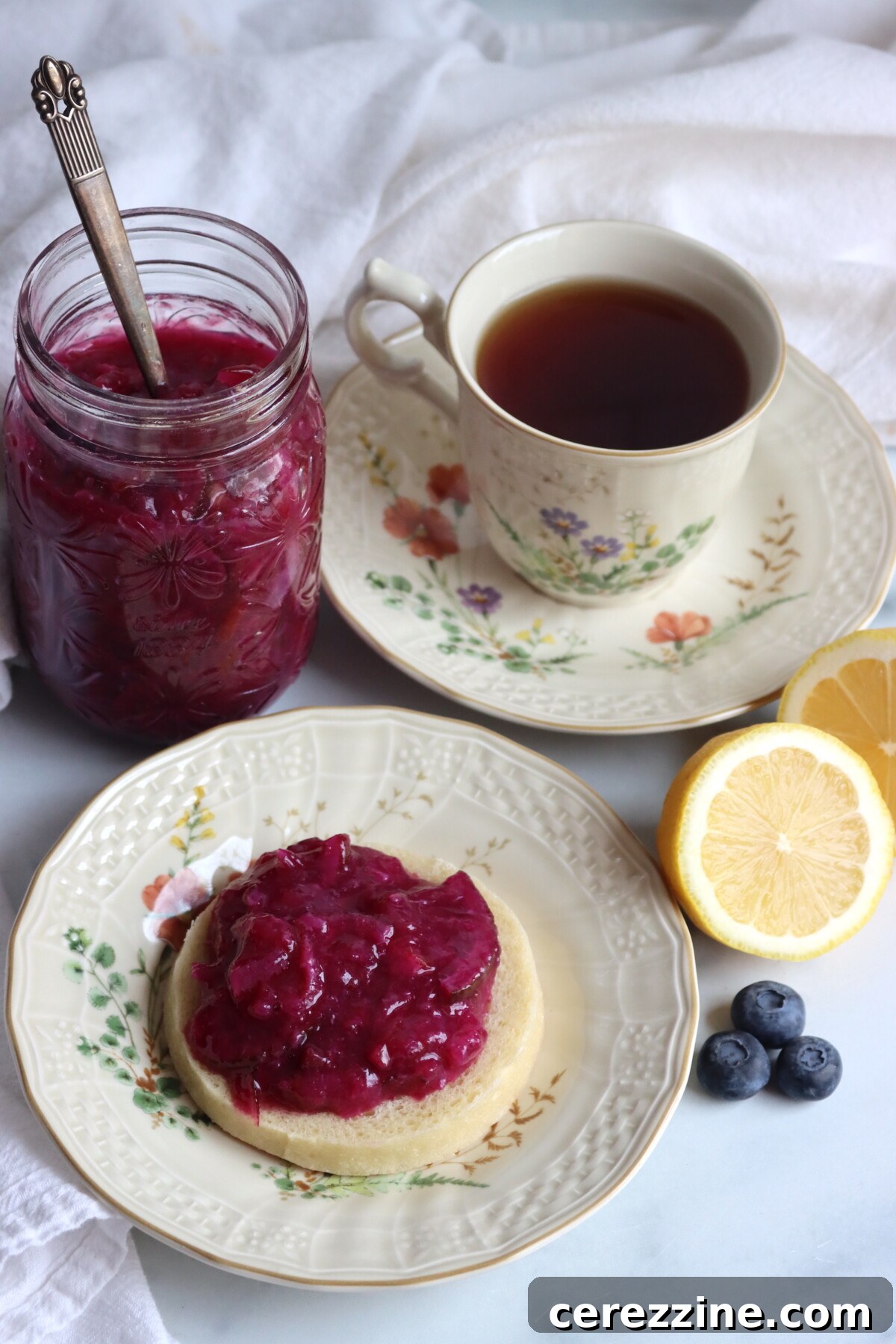
I tested this twice—once with regular lemons and once with limes—because I couldn’t choose which I preferred. Both versions are excellent in their own way: the lemon marmalade delivers the traditional bittersweet character, while a blueberry-lime marmalade is more intense and tart. The deep purple of the blueberries looks beautiful against pale lemon peel. This small-batch recipe yields about three half-pints, ideal for trying a new flavor without committing to a large batch.
Quick Look at the Recipe
- Recipe Name: Blueberry Lemon Marmalade
- Recipe Type: Marmalade
- Canning Method: Water bath canning
- Prep Time: About 20 minutes (plus overnight soak)
- Cook Time: About 30 minutes
- Canning Time: 10 minutes for half-pints
- Yield: About 3 half-pints
- Jar Sizes: Half-pints or quarter-pints
- Headspace: 1/4 inch
- Ingredients Overview: Lemons, blueberries, water, sugar (no added pectin)
- Difficulty: Moderate
Ingredients
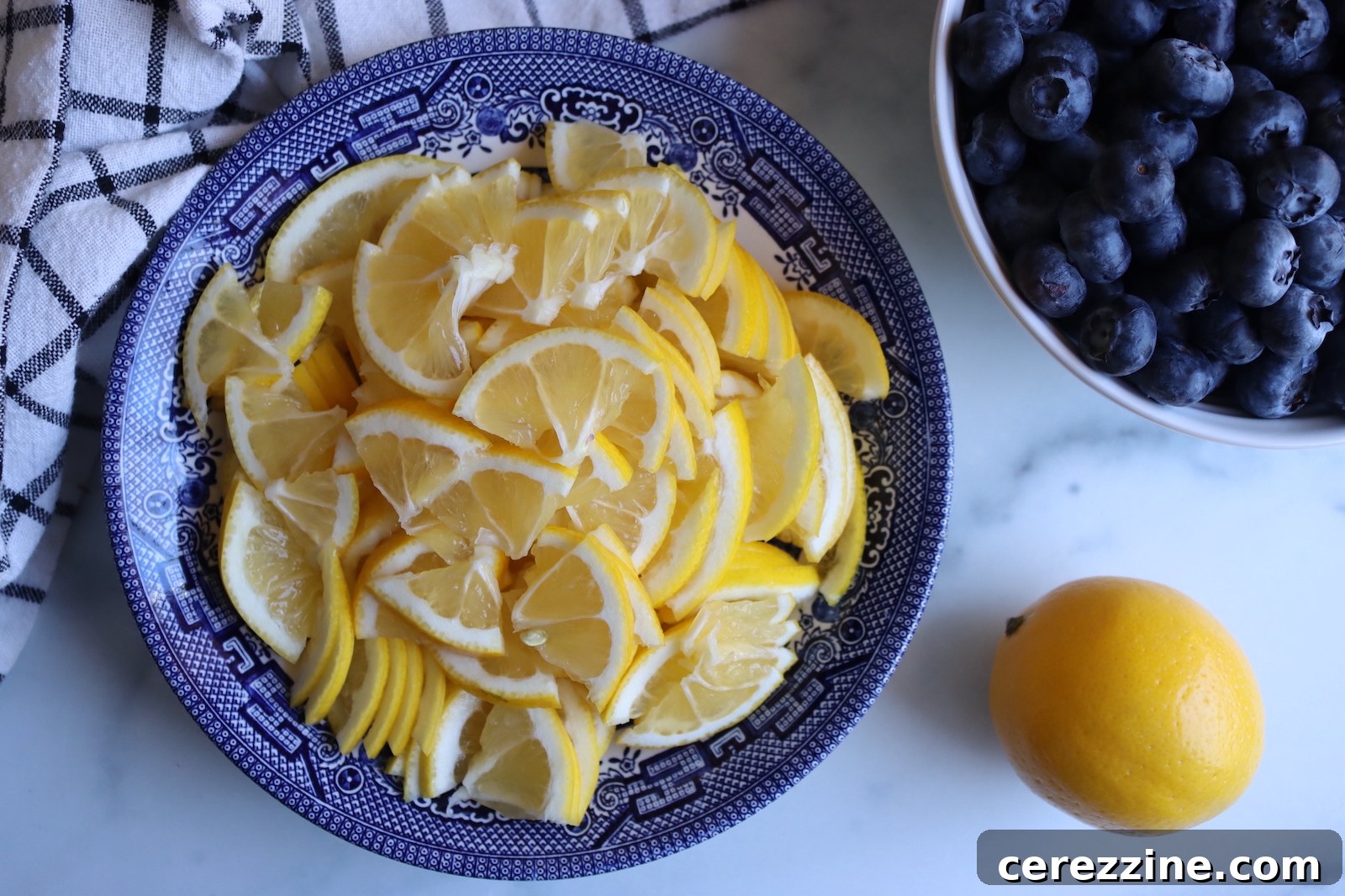
This traditional no-pectin marmalade depends on natural pectin from the citrus peel. The overnight soak softens the peel and helps draw out pectin while the blueberries add color, gentle sweetness, and additional pectin to support the set.
- Lemons: Provide flavor and natural pectin. Choose lemons that feel heavy for their size with relatively thin skins. Organic or unwaxed fruit is ideal since you use the peel; if using conventional lemons, scrub them thoroughly to remove any wax. Meyer lemons produce a sweeter, less bitter marmalade.
- Blueberries: Fresh or frozen both work. Frozen berries break down a bit faster, which helps them meld into the marmalade rather than remaining whole. Wild blueberries have a more concentrated flavor if available.
- Water: Used for both the overnight soak and the simmer. Tap water is fine unless it has a strong chlorine or mineral taste.
- Granulated sugar: Essential for sweetness, gel formation, and shelf stability. For a no-pectin marmalade, do not reduce the sugar unless you switch to a recipe formulated for lower sugar with added pectin.
Step by Step Instructions
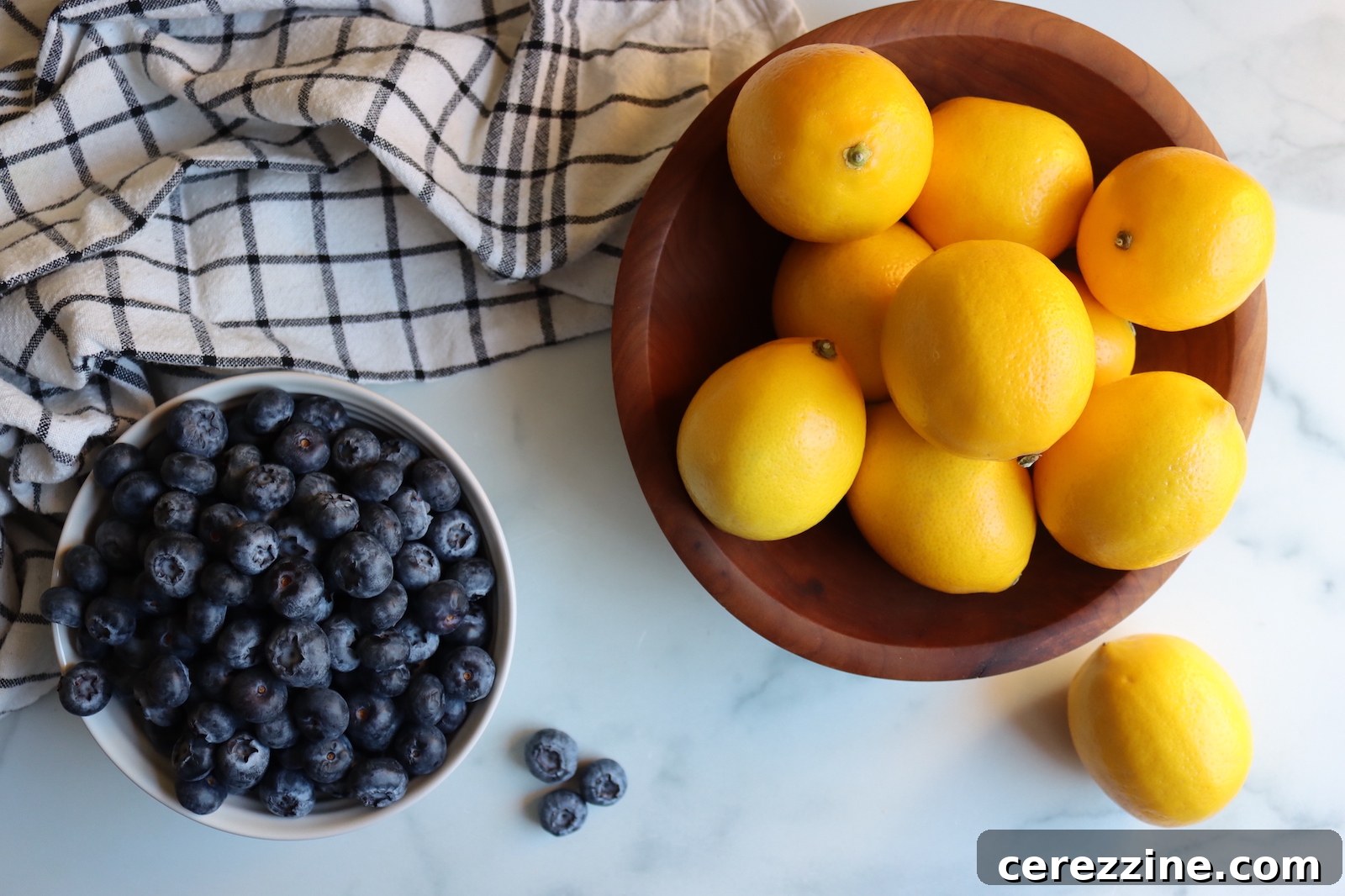
This is a multi-day recipe. Prepare your canner only when the marmalade is cooking on the final day.
Prepare and Soak the Lemons
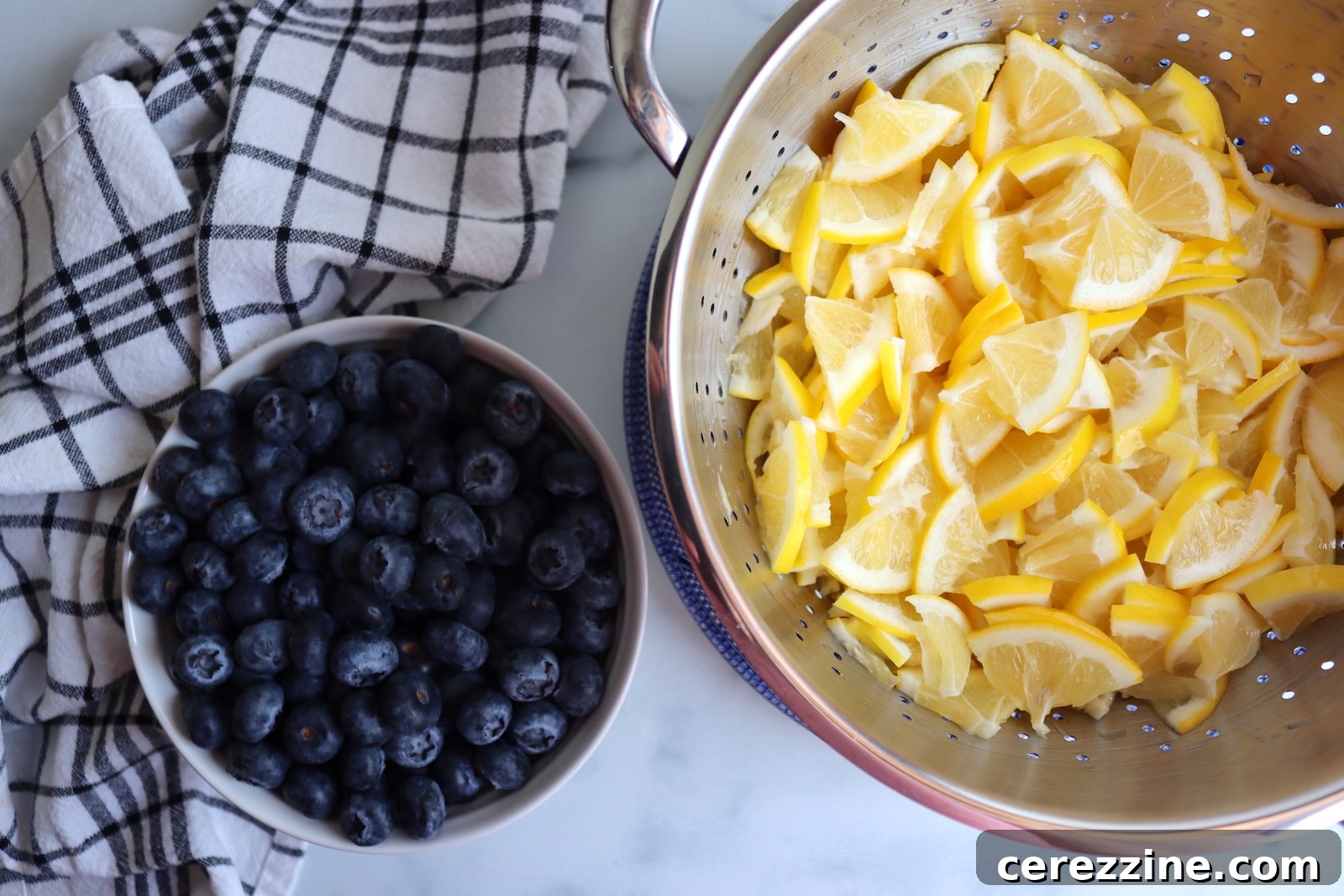
Wash and scrub the lemons well with hot water. Quarter each lemon lengthwise, then slice each quarter crosswise into very thin slices (about 1/8 inch). Remove and discard any seeds as you go.
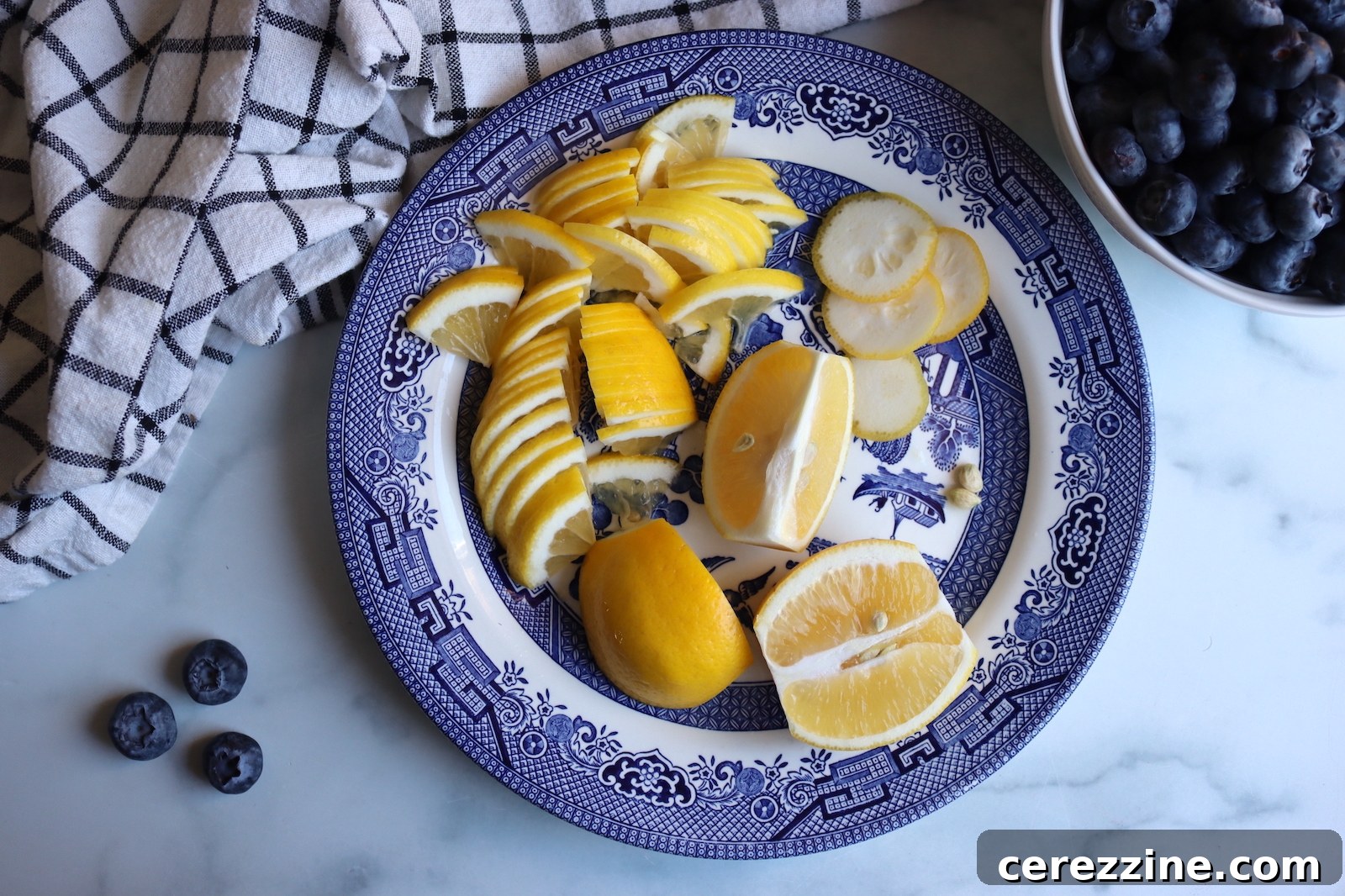
Place the sliced lemons in a large bowl and cover with water. Let soak overnight (at least 8 hours) at room temperature. This softens the peel and reduces bitterness. Drain and discard the soaking water.
Simmer the Citrus
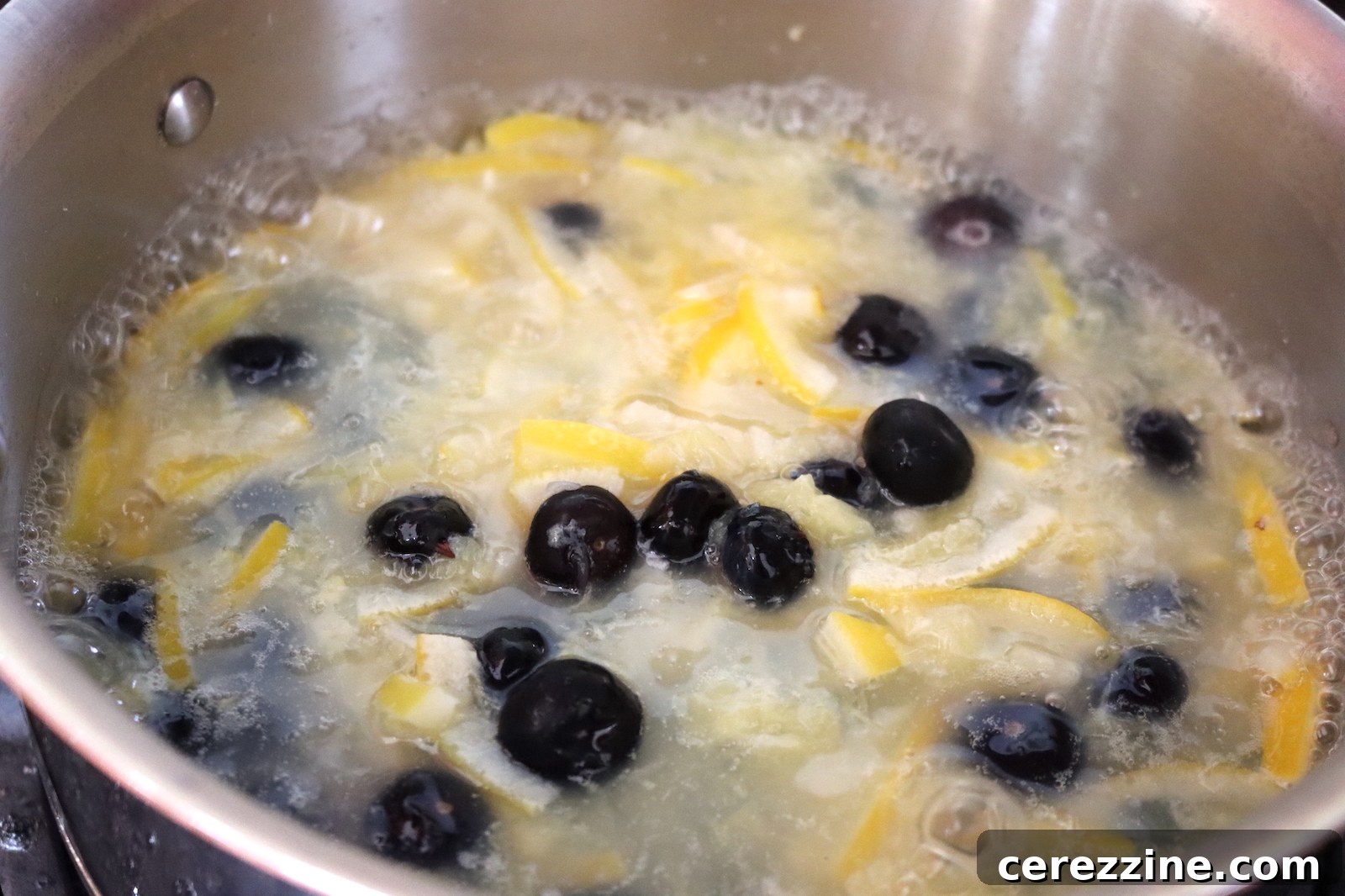
Transfer the drained lemon slices to a large, heavy saucepan and add 2 cups of fresh water. Bring to a boil over medium-high heat, then reduce to a simmer. Cook for 10–15 minutes, stirring occasionally, until the peel is very tender.
Once tender, add the blueberries and the sugar, stirring until the sugar dissolves.
Cook to Gel Point
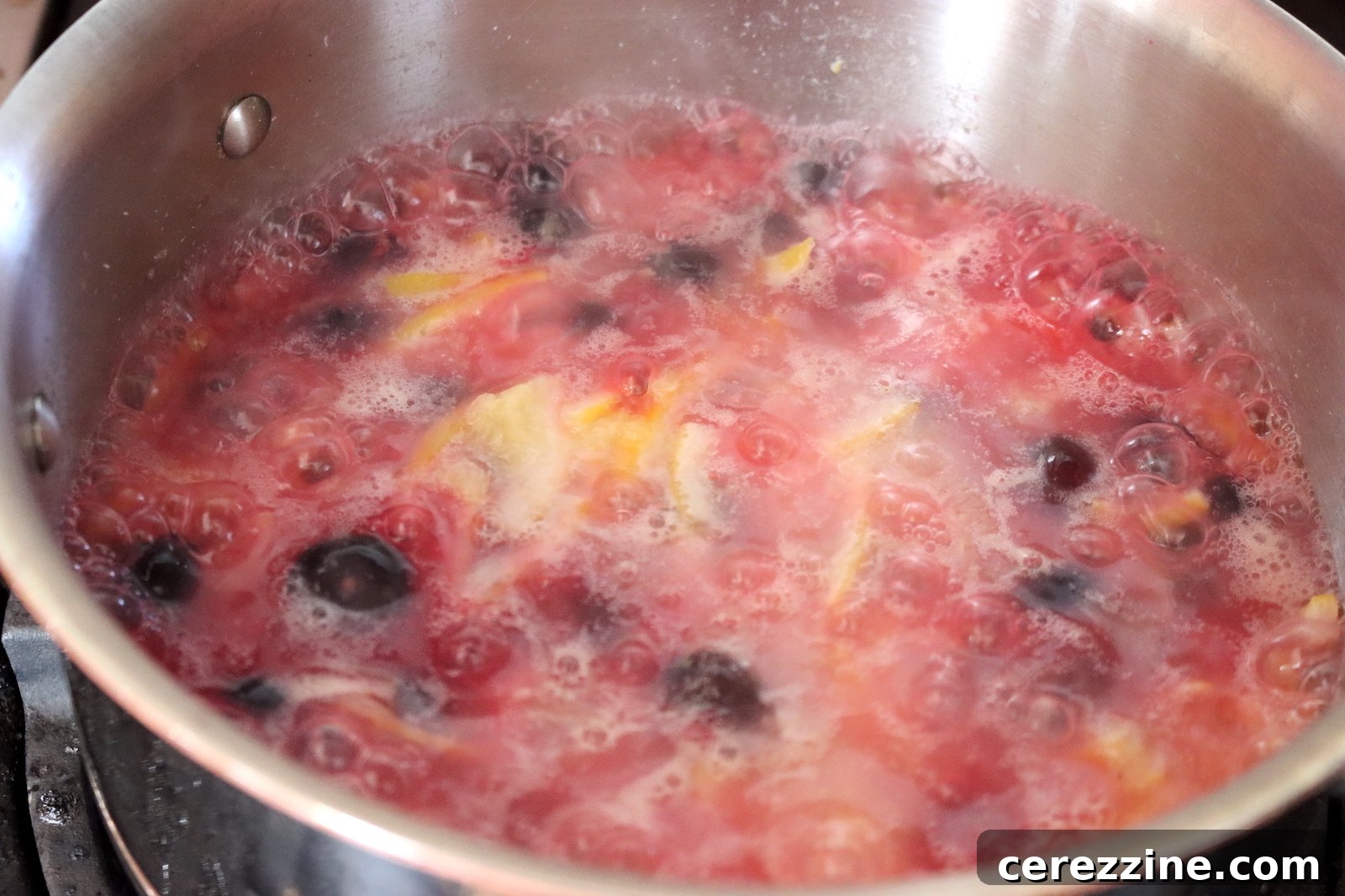
Increase the heat and bring the mixture to a full rolling boil, stirring frequently to prevent scorching. Continue boiling until the marmalade reaches the gel point (220°F at sea level) or passes the cold plate test. This usually takes 8–10 minutes of boiling. Skim off any foam as it forms.
Fill Jars
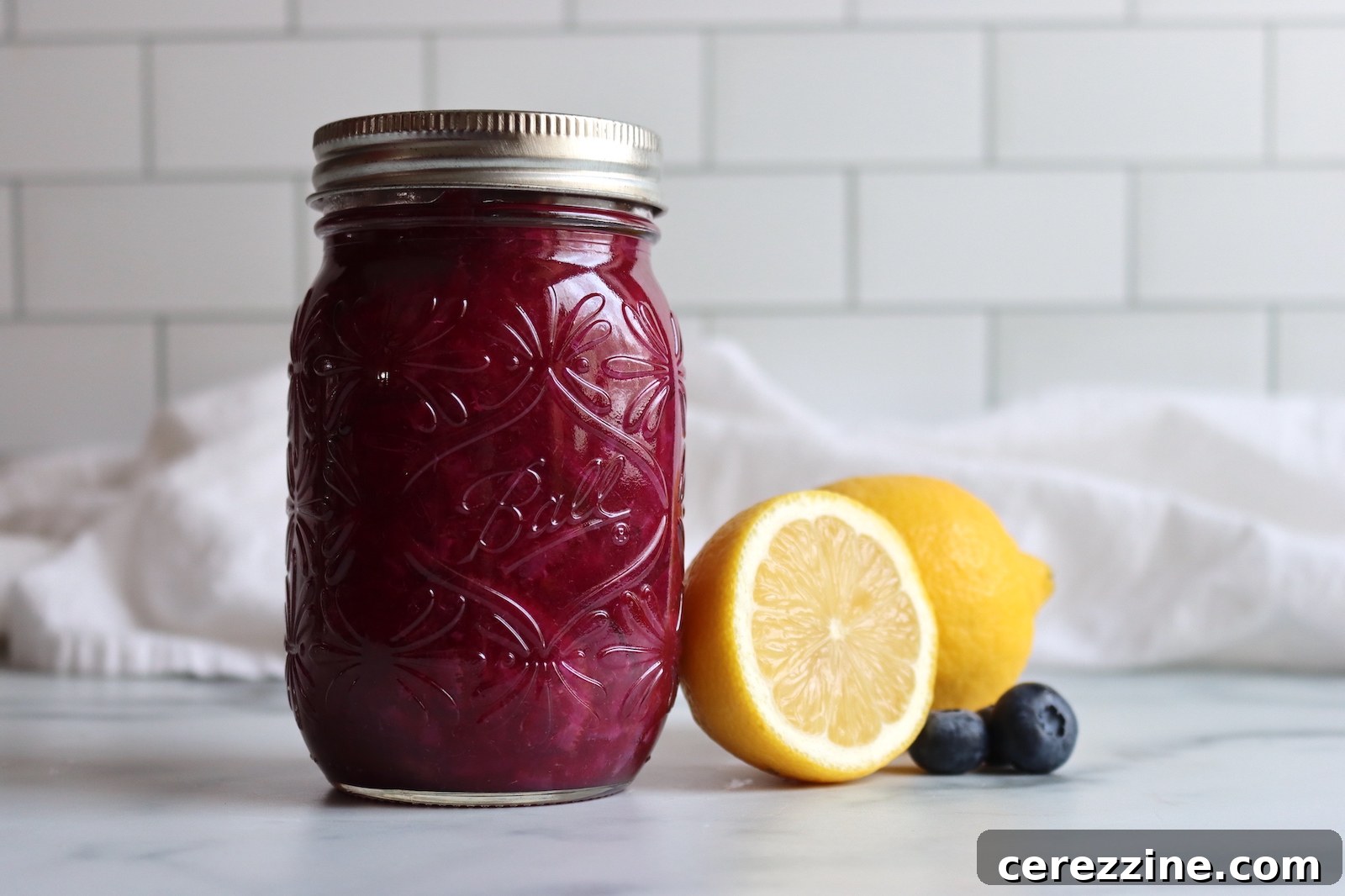
Ladle the hot marmalade into prepared jars, leaving 1/4 inch headspace. Wipe the rims clean, center the lids, and apply bands fingertip-tight.
Setting Notes
This no-pectin marmalade depends on the natural pectin extracted from lemon peel during the soak and simmer. The gel point is 220°F at sea level and decreases by roughly 1°F for every 500 feet of elevation. To use the cold plate test, chill a plate, place a small spoonful of marmalade on it, and push the surface with your finger—if it wrinkles and holds its shape, it’s ready.
No-pectin marmalades tend to have a softer set than those made with commercial pectin, which many home cooks find desirable.
Canning Blueberry Lemon Marmalade
Store uncanned marmalade in the refrigerator for up to three weeks or freeze for up to a year. For shelf-stable jars, process filled jars in a boiling water bath.
Prepare a water bath canner while the marmalade cooks. Lower the filled jars into the canner so they are covered by at least one inch of water. Process half-pints for 10 minutes, adjusting time for altitude as needed. After processing, turn off the heat and let the jars sit in the canner for five minutes before removing. Allow jars to cool undisturbed on a towel-lined counter for 12–24 hours, then check seals before storing.
Altitude Adjustments
Process times for water bath canning increase at higher elevations:
- 0–6,000 feet: 10 minutes
- Above 6,000 feet: 15 minutes
Yield Notes
This small-batch recipe yields about three half-pints (roughly three cups). You’ll need approximately 1 pound of lemons (4–5 medium) and 2 cups of blueberries. Yield will vary slightly depending on cook time and evaporation; a longer cook yields a thicker set but a smaller volume.
Serving Ideas
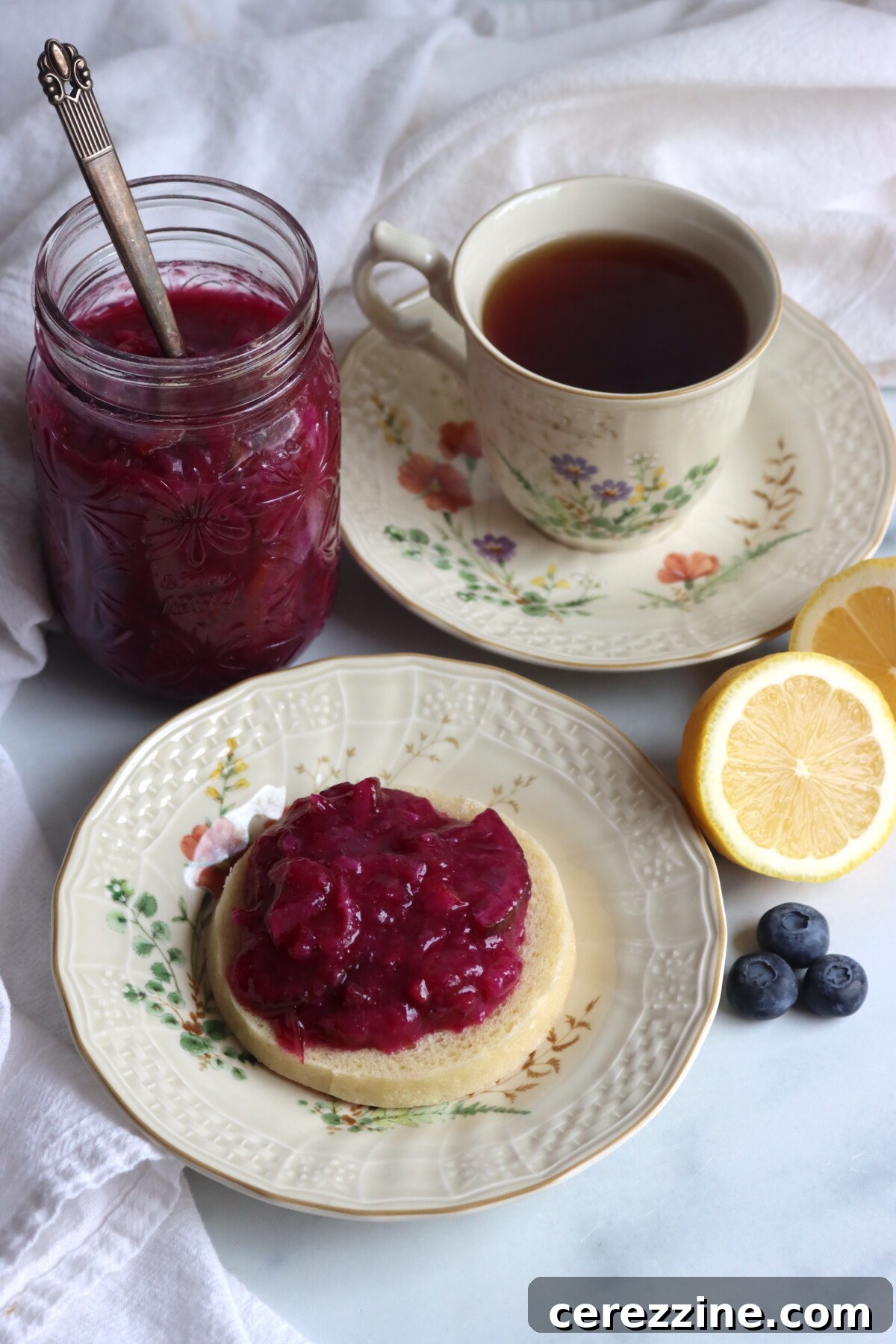
This marmalade is lovely on toast, biscuits, scones, or croissants where the lemon peel adds texture and bright flavor. Use it as a glaze for pound cake, cheesecake, or tarts—the deep purple color is eye-catching. It’s also delicious stirred into plain yogurt or spooned over vanilla ice cream.
Blueberry Lemon Marmalade FAQs
Meyer lemons are sweeter, less acidic, and have thinner skins than regular lemons; they’re a cross between a lemon and a mandarin. Regular lemons give a brighter, slightly more bitter marmalade that many prefer.
Soaking softens the peel, draws out some bitter compounds, and helps extract natural pectin. Skipping this step can leave you with tough, overly bitter peel.
Yes. Frozen blueberries work well and can break down slightly faster than fresh, helping them integrate into the marmalade.
Use a candy thermometer to check for 220°F at sea level, or use the cold plate test: a spoonful cooled on a chilled plate should wrinkle when nudged with your finger.