
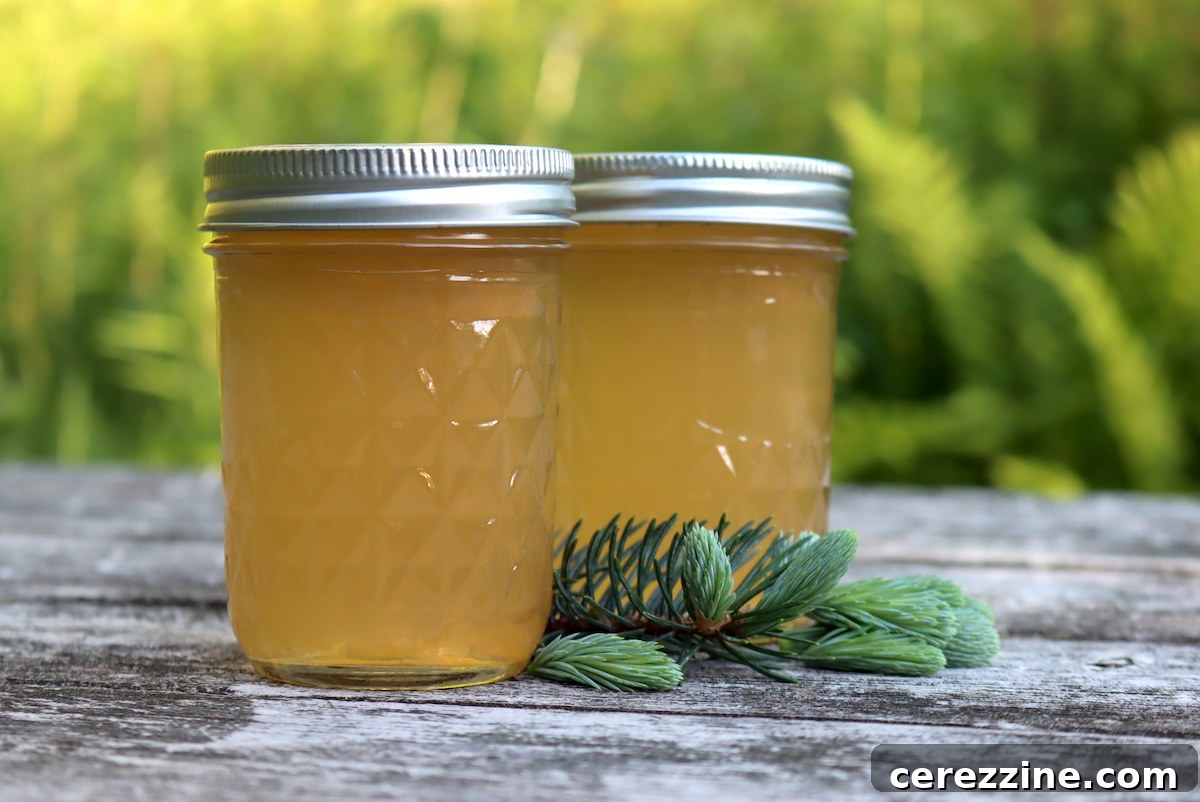
Welcome to the enchanting world of homemade herbal jellies, where nature’s hidden treasures transform into culinary delights. Among these, Spruce Tip Jelly stands out as a uniquely flavored spread, capturing the essence of the wild. Crafted from fresh, vibrant spruce tips, this jelly offers an extraordinary taste profile reminiscent of zesty lime, underscored by subtle, warm resinous notes. It’s an unexpectedly sophisticated condiment, versatile enough to grace both sweet and savory dishes, promising a delightful surprise with every spoonful.
Discovering the Unique Flavor of Spruce Tips
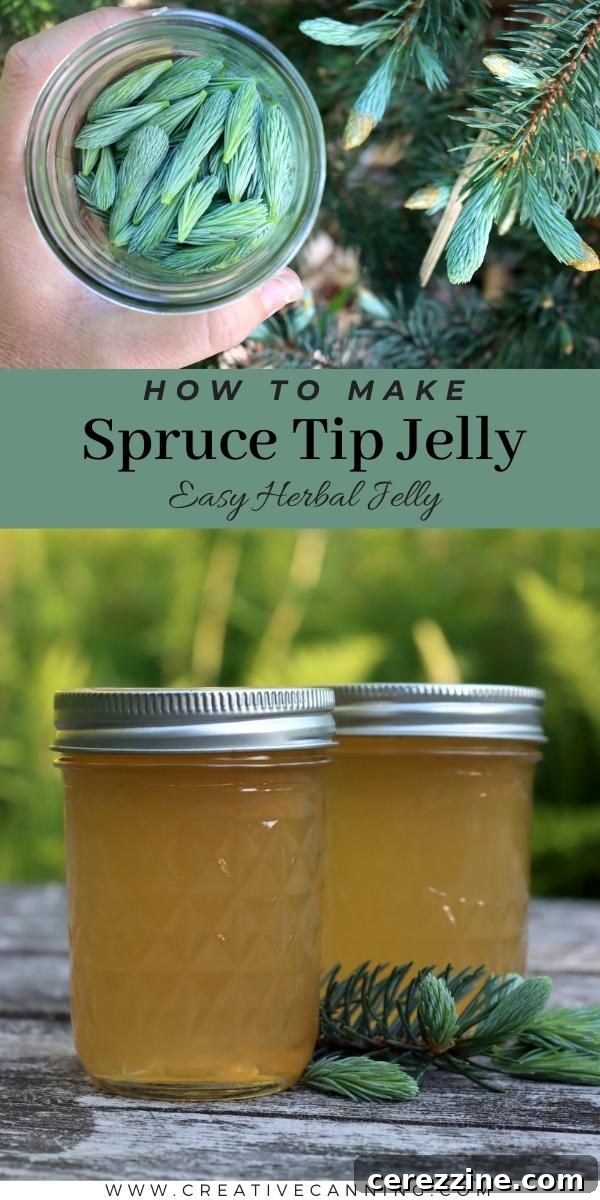
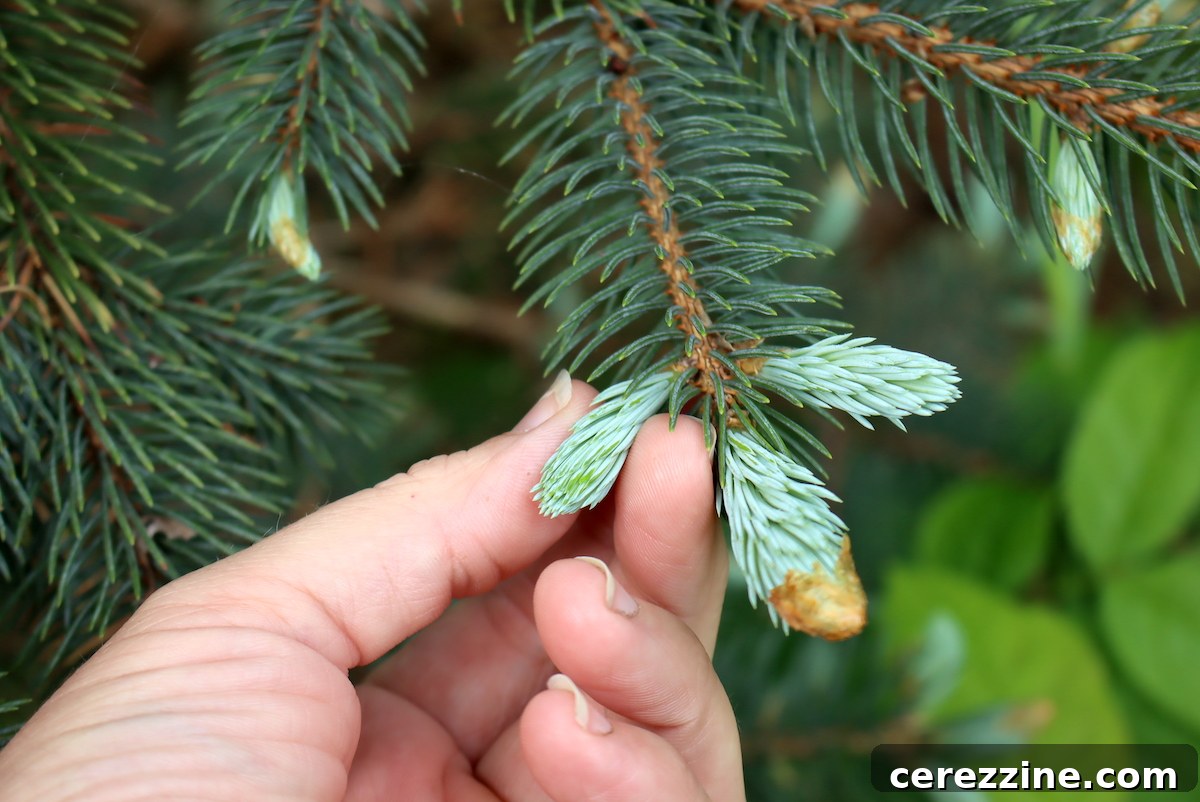
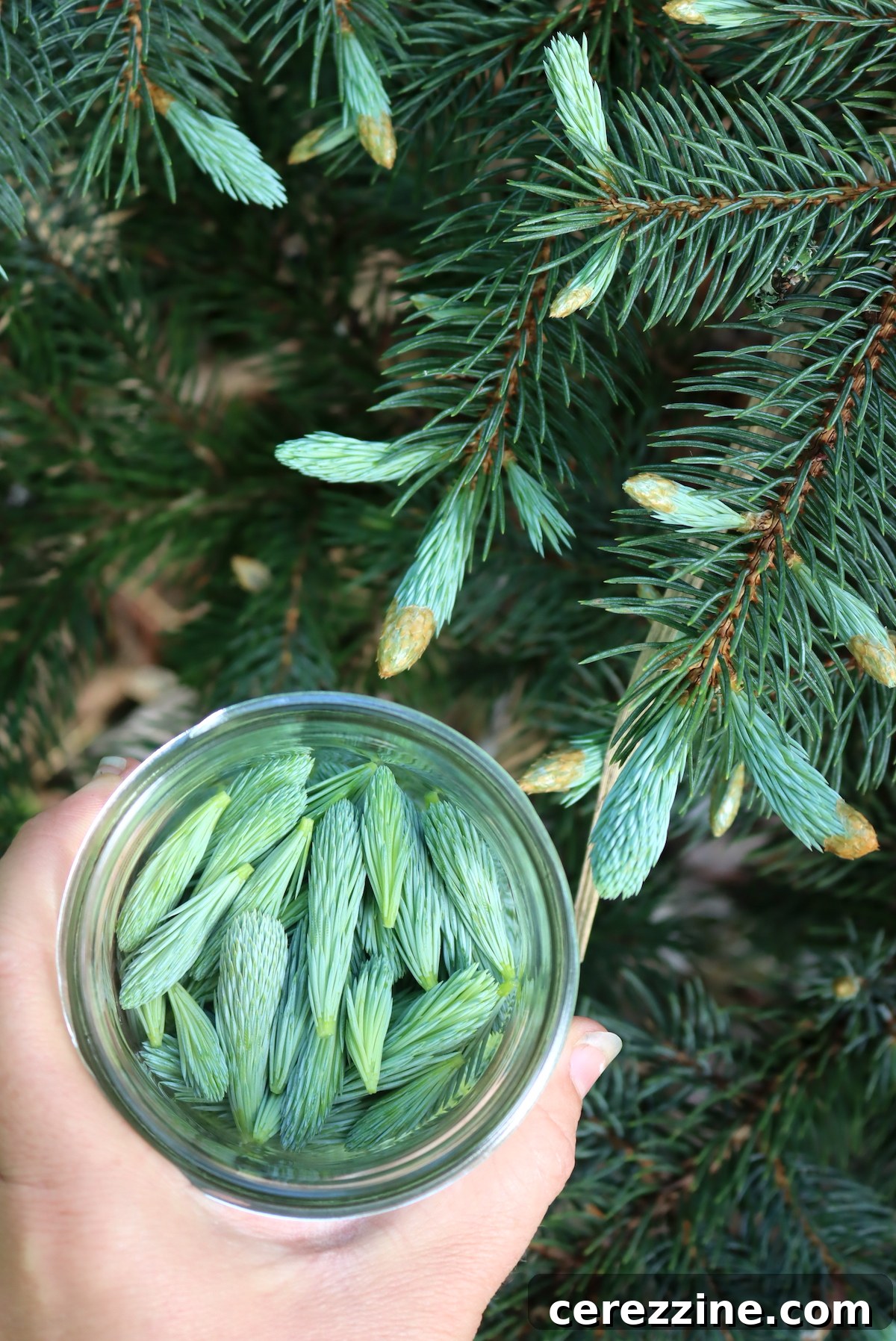
Spruce tips, the tender, nascent growth found at the ends of spruce tree branches in early spring, are a true revelation for the adventurous palate. Far from what one might expect, these fresh shoots boast an invigorating flavor that defies easy categorization. Imagine the brightness of citrus, the crisp tang of lime, expertly balanced with a distinct, warm, and subtly resinous undertone that hints at their forest origins. This remarkable flavor makes spruce tips a highly sought-after ingredient in a diverse range of recipes.
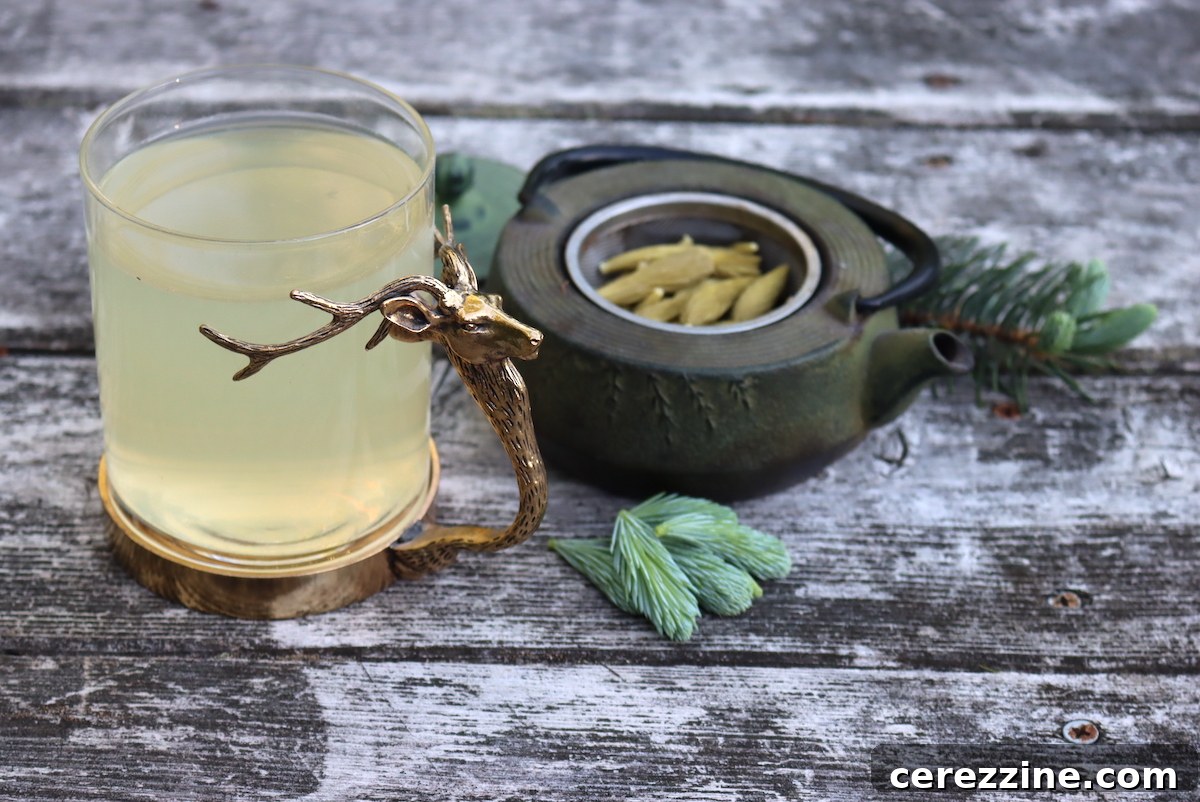
Beyond jelly, these flavorful tips lend themselves beautifully to various culinary creations. From refreshing spruce tip ice cream that cools and invigorates, to rich, aromatic spruce tip syrup perfect for drizzling over pancakes or complementing savory meats and fish. A simple yet delightful way to enjoy their fresh taste is by brewing a soothing spruce tip tea, which also forms the essential base for our exquisite homemade herbal jelly.
The versatility of spruce tips makes them a prized seasonal ingredient. Their unique profile can elevate everyday dishes into gourmet experiences, proving that foraging can unlock a world of unparalleled flavors right in your local woodlands. This guide will walk you through transforming these humble forest shoots into a vibrant, flavorful jelly that will capture the essence of spring in a jar.
Ethical Foraging and Harvesting Spruce Tips for Jelly
Embarking on a foraging adventure for spruce tips is a rewarding experience, but it requires knowledge and respect for nature. Before you begin, it’s crucial to understand proper identification and ethical harvesting practices. For those new to foraging, I highly recommend consulting a comprehensive guide to foraging spruce tips and other edible conifer tips. While many conifer tips are edible, including the tender new growth of fir trees and pine tips (often called pine candles), there are vital exceptions.
Always exercise extreme caution and avoid toxic species such as yew and inedible varieties like ponderosa pine. Misidentification can have serious consequences, so never consume anything you haven’t positively identified with 100% certainty. When in doubt, leave it out. Additionally, remember that pine needle tea can also make a lovely jelly, and this very recipe can be adapted for it, offering another delicious way to enjoy the flavors of the forest.
When and How to Harvest
The optimal time for harvesting fresh spruce tips is in the early spring, precisely when the trees are beginning to bud and display their vibrant new growth. These young tips are soft, succulent, and bursting with flavor. To ensure the health and continued growth of the tree, it’s essential to harvest responsibly. Take only a small number of tips from each tree, focusing on side shoots rather than the main growing leader. This practice minimizes stress on the tree and allows it to continue thriving season after season, ensuring a sustainable harvest for years to come.
For making a batch of spruce tip jelly, you’ll need approximately 2 to 4 cups of these freshly foraged tips. This translates to roughly 1/2 cup to 1 cup of tips per half-pint (8-ounce) jelly jar. While 2 cups generally provide a good, balanced flavor for a full batch of four jars, increasing the quantity to 4 cups will yield a more intense and robust spruce flavor, ideal for those who truly appreciate its unique profile. Anywhere within this range, from a pint to a quart of tips, will produce a delicious homemade jelly.
Essential Ingredients for Your Spruce Tip Jelly
Crafting a vibrant and flavorful spruce tip jelly starts with a careful selection of ingredients. This recipe is designed to highlight the bright, citrusy essence of the spruce tips, creating a truly memorable spread. For a batch yielding approximately five half-pint (8-ounce) jars, gather the following:
- 2 to 4 cups Fresh Spruce Tips: The star of our jelly. Adjust the quantity based on your desired flavor intensity.
- 4 cups Water: The liquid base for extracting the spruce tip flavor.
- 2 Tbsp. Lime Juice: Freshly squeezed or bottled. This is key to enhancing the natural lime-like notes of the spruce tips.
- 1 to 4 cups Granulated Sugar: See notes below for guidance on sugar quantities and pectin types.
- 1 box (1.75 oz.) Powdered Pectin: Regular or low-sugar variety, depending on your sugar preference.
Ingredient Deep Dive: Choosing Your Conifer Tips and Pectin
While this recipe specifically calls for spruce tips, remember that many conifer varieties offer edible new growth. If you have a preference for fir tips or another safe, edible conifer, feel free to substitute them. The foraging principles and general preparation methods remain largely the same. Always refer to reliable identification resources before consuming any wild plants.
When it comes to citrus, while lemon juice is a common choice in many jelly recipes, I highly recommend using lime juice for this particular creation. The inherent citrusy, almost lime-like flavor profile of spruce tips is beautifully accentuated by the addition of fresh lime juice. It provides the necessary acidity for proper jelly setting and contributes to a more cohesive and bright flavor.
Pectin plays a crucial role in achieving the perfect jelly consistency. This recipe is adaptable to both regular and low-sugar pectin. If using a standard, regular pectin (such as Sure-Jell Original), you’ll generally need a 1:1 ratio of liquid to sugar. Since our recipe yields approximately 4 cups of spruce tip tea (liquid), we will use 4 cups of granulated sugar to ensure a proper set and classic jelly texture.
For those preferring a less sweet option, low-sugar pectin (like Sure-Jell Low Sugar) is an excellent choice. This type of pectin is formulated to set with significantly less sugar, allowing you to reduce the sugar content by almost half without compromising the jelly’s structure. If you opt for less than 4 cups of sugar, using a pectin specifically designed for low-sugar recipes is essential for reliable results. Always follow the specific instructions on your chosen pectin package for best outcomes.
With your spruce tips carefully harvested and ingredients ready, let’s move on to the exciting process of transforming them into a delightful jelly!
Crafting Your Spruce Tip Jelly: A Step-by-Step Guide
Creating homemade spruce tip jelly is a straightforward and enjoyable process. Follow these detailed steps to capture the vibrant flavors of spring in your jars.
Step 1: Infusing the Spruce Tip Tea
Begin by placing your freshly harvested 2 to 4 cups of spruce tips into a clean, medium to large heat-proof bowl. Ensure the bowl is spacious enough to comfortably hold both the tips and 4 cups of water. Next, bring 4 cups of water to a rolling boil using a kettle or microwave. Carefully pour the boiling water directly over the spruce tips in the bowl. Allow the spruce tips to steep and infuse their unique flavor into the water for a full 15 minutes. This infusion creates a potent spruce tip “tea” that forms the foundation of our jelly.
Step 2: Straining and Preparation
Once the infusion is complete, carefully pour the liquid through a fine-mesh strainer or a cheesecloth-lined colander into a medium saucepan or a dedicated jam pot. This step is crucial for removing all solid spruce tip material, leaving behind a clear, aromatic spruce tip tea. Discard the spent spruce tips. At this point, pre-measure your granulated sugar (1-4 cups, depending on your pectin choice and sweetness preference) and set it aside. If you plan to preserve your jelly using the hot water bath canning method, ensure all your jars, lids, and canning equipment are sterilized and ready. Alternatively, prepare clean jars or freezer-safe containers for non-canned storage.
Step 3: Combining Ingredients and Initial Boil
Add 2 tablespoons of fresh or bottled lime juice to the spruce tip tea in your saucepan. Place the saucepan over medium-high heat and bring the mixture to a vigorous boil. It’s important to reach a full, rolling boil before proceeding to the next step, as this ensures the pectin will activate correctly.
Step 4: Incorporating Pectin
Once the spruce tip tea and lime juice mixture is at a full, rolling boil, gradually sprinkle in the powdered pectin. Stir continuously as you add the pectin to help it dissolve evenly and prevent clumping. Any small lumps of pectin that may form should dissolve as you continue to boil and stir. Use a spoon to gently press any stubborn lumps against the side of the saucepan if needed. Maintain a vigorous, full boil for exactly one minute while continuously stirring to ensure the pectin is fully incorporated and activated.
Step 5: Adding Sugar and Final Boil
Slowly add your pre-measured sugar to the boiling pectin mixture, stirring constantly until all the sugar has completely dissolved. It’s essential to keep stirring to prevent the sugar from scorching at the bottom of the pan. Once the sugar is dissolved, bring the mixture back to a hard, rolling boil. Continue to boil vigorously for 1 to 2 minutes. Be careful not to overcook the jelly (do not boil for more than 5 minutes total once sugar is added), as this can prevent it from setting properly.
Step 6: Filling Jars and Sealing
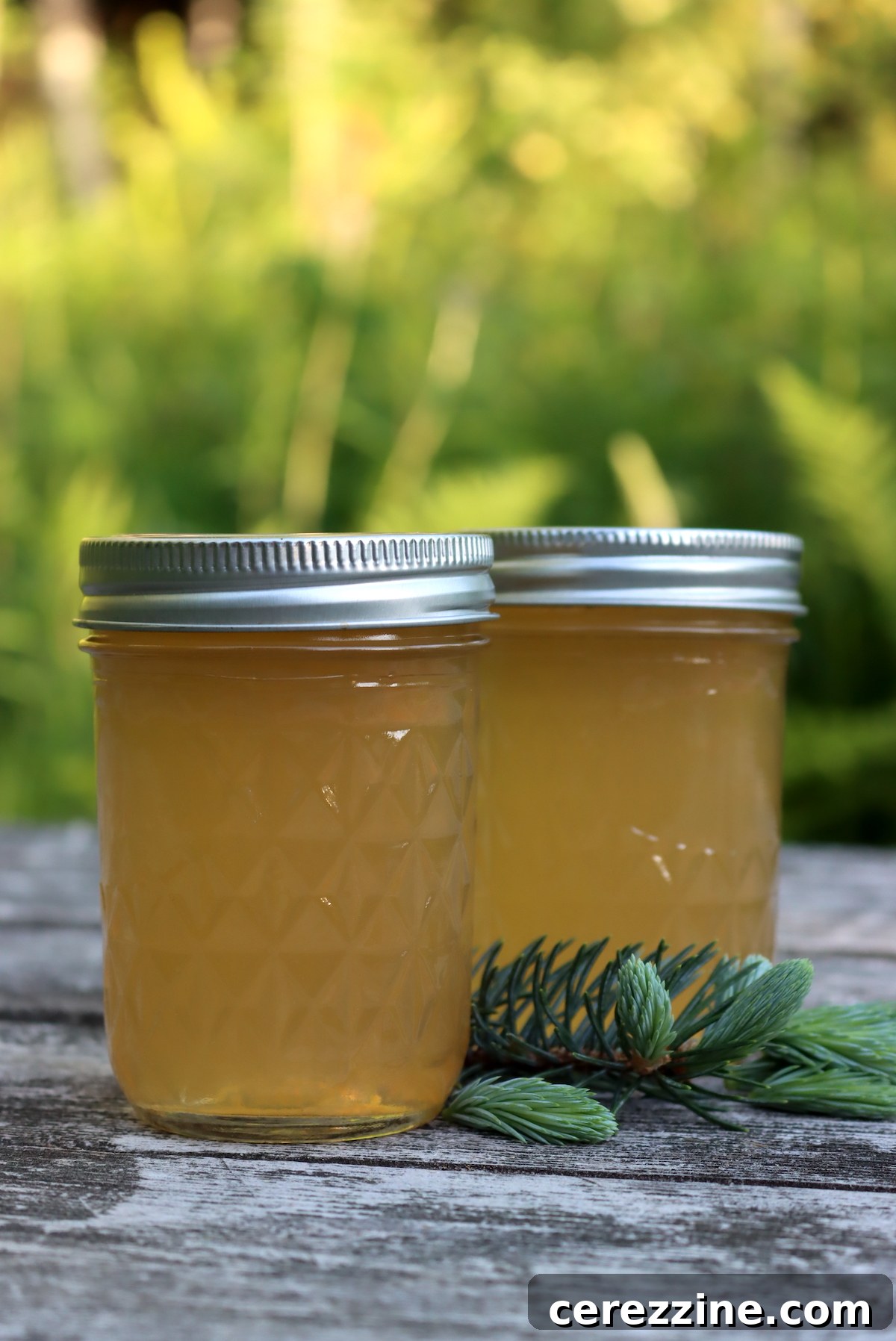
Carefully remove the saucepan from the heat. Using a canning funnel, ladle or pour the hot jelly mixture into your prepared jars or containers, leaving precisely ¼ inch of headspace at the top of each jar. This headspace is vital for proper sealing during canning and prevents overflow. Wipe the rims of each jar or container thoroughly with a clean, damp cloth to remove any sticky residue; this ensures a perfect seal. Attach the lids firmly. If you are not canning, allow the jars to cool to room temperature on your counter, then refrigerate for up to 1 month or freeze for up to 6 months. For those opting to can, detailed instructions follow.
Preserving Your Harvest: Water Bath Canning Spruce Tip Jelly
Water bath canning is a reliable method for preserving your homemade spruce tip jelly, extending its shelf life and allowing you to enjoy the taste of spring year-round. If you’re new to this preservation technique, I highly recommend consulting a beginner’s guide to water bath canning. Such resources provide detailed instructions, a comprehensive list of necessary supplies, and invaluable tips for ensuring successful and safe canning.
Canning Process Overview:
- Prepare Jars: Ensure your canning jars are clean and warm. They can be heated in the canner water or a warm oven to prevent thermal shock when filled with hot jelly.
- Fill Jars: Once your jelly is cooked and hot, carefully ladle or pour it into the warm, prepared jelly jars. Use a canning funnel with headspace measurements. This tool is incredibly useful for maintaining the crucial ¼ inch of headspace at the top of each jar, allowing for proper expansion during processing and minimizing spills.
- Clean Rims: After filling, take a clean, damp cloth and thoroughly wipe the rims of each jar. Any residue can interfere with the seal, so this step is critical for ensuring a proper, airtight seal.
- Apply Lids and Rings: Place the flat canning lids onto the jars. Then, screw on the canning rings until they are “finger-tight.” This means tightening them just enough so they feel secure, but without overtightening. Overtightening can prevent air from escaping during processing, leading to seal failures. A potholder might be helpful to hold the hot jars, but avoid using any tools to grip or tighten the bands excessively.
- Process in Water Bath: Using a jar lifter, carefully place the filled jelly jars into your hot water bath canner. The canner should already be at least half full of simmering water. Ensure the water level covers the tops of the jars by at least 1 inch. Bring the water in the canner back to a full, rolling boil.
- Set Timer: Once the water is boiling, set your timer for 10 minutes. If you are at an elevation above 6,000 feet, increase the processing time to 15 minutes to compensate for the lower boiling point of water.
- Cool Down: After the appropriate processing time, turn off the heat but leave the jelly jars in the hot canner for an additional 5 minutes. This allows the internal pressure to equalize and helps prevent siphoning.
- Remove and Cool: Using your jar lifter, carefully remove the hot jars from the canner. Place them on a towel on your counter, ensuring there is some air space between each jar. Allow them to cool undisturbed for 12 to 24 hours. During this time, you should hear satisfying “pinging” sounds as the lids seal.
- Check Seals: After 24 hours, check all jars for proper seals. The center of the lid should be concave and should not flex or pop when pressed. If a lid still has a “bubble” or pops up, the jar is not sealed. For unsealed jars, either reprocess them immediately with new lids (within 24 hours) or store them in the refrigerator for immediate consumption.
Properly canned and sealed jars of spruce tip jelly will maintain their quality in your pantry for 12 to 18 months. Once a jar is opened, always store it in the refrigerator to maintain freshness.
Creative Variations for Your Spruce Tip Jelly
The unique, vibrant flavor of spruce tips offers a fantastic canvas for experimentation. While delightful on its own, spruce tip jelly can be enhanced and transformed with a few creative additions, leading to exciting new flavor profiles.
Berry & Spruce Combinations
The citrusy notes of spruce tips pair exceptionally well with the rich, sometimes tart flavors of dark berries. Consider adding fresh blueberry juice or serviceberry juice to your spruce tip tea base. Maintain the 1:1 liquid-to-sugar ratio (or adjust according to your pectin type) to create a beautifully blended jelly that marries the forest freshness with fruity sweetness. This variation adds depth and a lovely visual appeal to your finished product.
Amplifying Citrus Flavors
For those who adore the bright, tangy aspects of spruce, incorporating other citrus fruits can further elevate the experience. Experiment by infusing oranges, additional limes, or even grapefruit alongside your spruce tips in the initial tea-making step. These citrus additions will naturally amplify the existing citrus undertones in the spruce tips, resulting in an intensely flavorful jelly that bursts with zesty freshness.
Don’t be afraid to experiment with small batches to discover your favorite combinations. The beauty of homemade jelly lies in its potential for personalization and culinary adventure.
Delightful Ways to Enjoy Your Spruce Tip Jelly
Once you’ve crafted your beautiful batch of spruce tip jelly, the possibilities for enjoying its unique flavor are endless. This versatile spread is not just for toast; its balanced sweet and resinous notes make it a culinary secret weapon for both sweet and savory applications.
Savory Pairings:
- Gourmet Glaze: Spruce tip jelly makes a phenomenal glaze for roasted or grilled meats. Brush it over pork tenderloin, pan-seared steak, succulent wild goose, or roasted duck during the last few minutes of cooking for a glossy finish and an intriguing flavor boost.
- Chicken Marinade: Whisk it into a marinade for chicken before grilling or baking. The lime-like acidity tenderizes the meat, while the spruce essence adds an unexpected depth.
- Roasted Vegetables: Stir a spoonful or two into a pan of root vegetables or potatoes before roasting in the oven. It caramelizes beautifully, imparting a subtly zesty and herbaceous flavor to your side dishes.
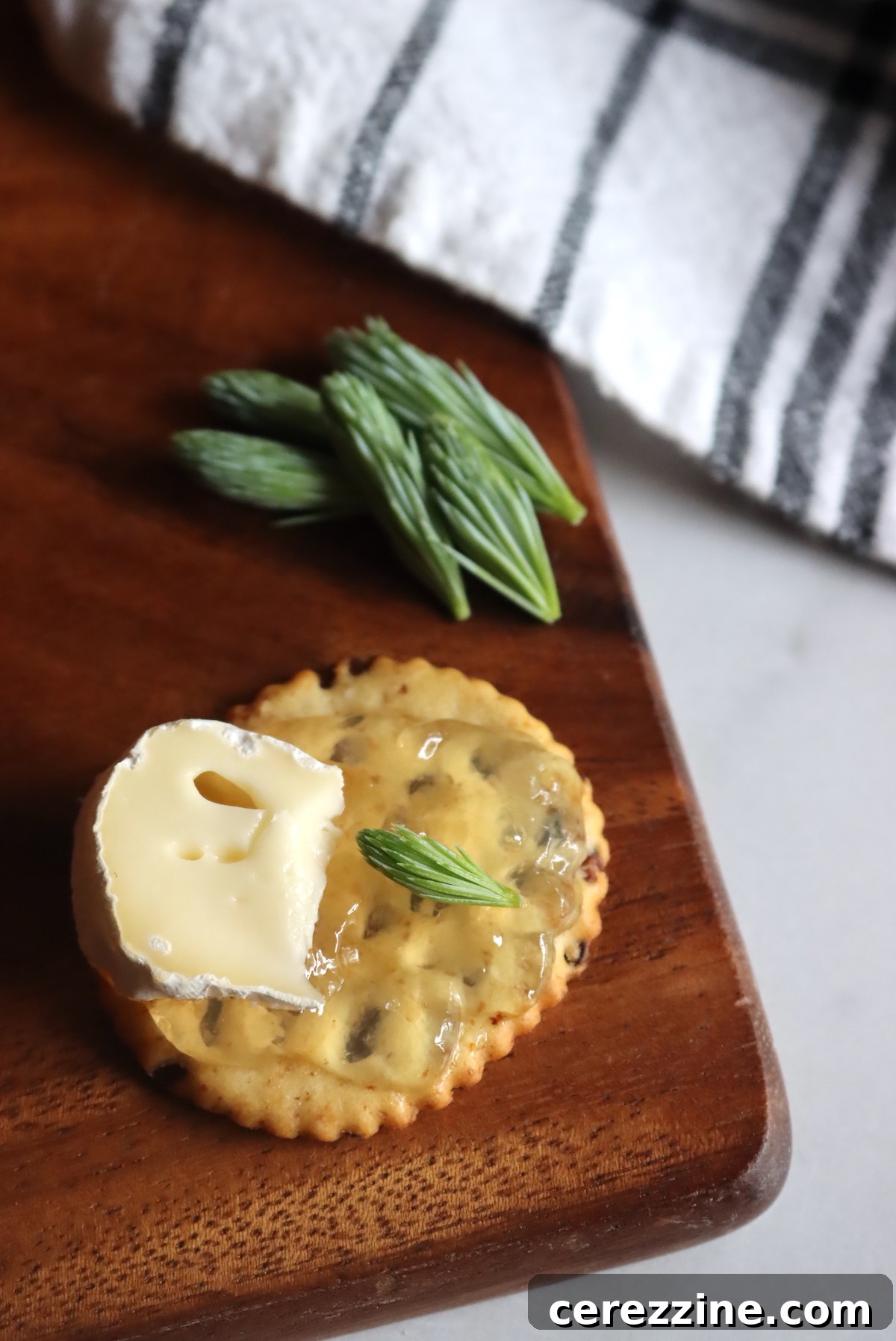
- Cheese Boards: Elevate your charcuterie or cheese board by adding a dollop of spruce tip jelly alongside sharp cheddar, creamy brie, or tangy goat cheese. It provides a bright, refreshing counterpoint to rich cheeses and salty crackers.
Sweet & Everyday Uses:
- Breakfast Staple: Of course, it’s wonderful on classic breakfast items – warm buttered toast, flaky croissants, homemade scones, or a fresh biscuit.
- Dessert Topping: Drizzle over vanilla ice cream, plain yogurt, or even cheesecake for an unexpected twist.
- Tea Enhancer: Stir a spoonful into your favorite hot tea for a comforting and aromatic beverage that brings the unique flavor of spruce tips to your mug any time of the year.
Beyond its incredible taste, it’s worth noting that spruce tips, like many conifers, are packed with Vitamin C. So, when you indulge in spruce tip jelly, you’re not just treating your taste buds but also getting a small, natural boost of vitamins!
Spruce Tip Jelly Recipe Card
64
Servings (4 half pint (8 oz) Jars)
Spruce Tip Jelly
Ashley Adamant
20
5
10
35
Rate
Equipment
-
Water Bath Canner
-
Canning Funnel
-
Jar Lifter
-
Half Pint Jars
-
Regular Mouth Canning Lids
Ingredients
- 2 to 4 cups fresh spruce tips
- 4 cups water
- 2 Tbsp. lime juice
- 4 cups sugar, See notes for low sugar option
- 6 Tbsp powdered pectin, One box 1.75 oz. pectin (Regular or Low Sugar), see notes
Instructions
-
In a medium-large bowl, place 2 to 4 cups of spruce tips.
-
Pour 4 cups of boiling water over the spruce tips, allowing the water to become infused with the flavor of the spruce tips for 15 minutes.
-
Pour the spruce tip-infused tea through a cheesecloth or strainer into a medium saucepan or jam pot. Discard the spruce tips.
-
Prepare your jars or containers for jelly, pre-measure the sugar you need, and set the sugar aside for now.
-
Add 2 Tablespoons of lime juice to the spruce tip tea.
-
Over high heat, bring the mixture to a boil.
-
While stirring, slowly add the pectin.
-
Return the mixture to a hard boil and allow it to boil for one minute.
-
Add the premeasured sugar to the mixture slowly, stirring continuously, allowing the sugar to dissolve.
-
Continuing to cook over high heat, bring the mixture back to a hard boil, stirring while boiling for 1-2 minutes.
-
Ladle or pour the jelly into prepared jelly jars or containers, leaving ¼” headspace at the top of the jar.
-
Wipe the rims of the jars or containers with a wet, clean cloth.
-
If you are going to can your jelly, put the canning lid on the jar and screw on the ring until finger-tight. Do not over-tighten. If you plan to refrigerate or freeze your jelly, place lids on the jars or containers and leave the jars to cool and set up for 24 hours.
-
If canning, process the jars in a water bath canner for 10 minutes (or 15 minutes if above 6,000 feet in elevation).
-
Unprocessed jelly should be stored in the refrigerator for up to 1 month, or in the freezer for 6 months. Canned jelly will maintain quality for up to 18 months in your pantry or cool, dry place. For all jelly, refrigerate once opened.
Notes
Personally, I make this with Sure Jel low sugar pectin, and I like to use 1 to 2 cups of sugar in my herbal jellies like this one.
Low-sugar pectin can be used to make jelly that uses less sugar, and you can use as little as 1 cup of sugar in this recipe if you use low-sugar pectin.
There are a variety of low-sugar pectin brands you can buy. I typically use Sure Jel Low Sugar because it’s reliable and easy to use, and sets nicely with a perfect texture.
For making spruce tip jelly using low-sugar pectin, use 1 to 3 cups of sugar for about 4 cups of liquid (spruce tip tea plus lime juice).
Another option is Pomona’s Universal Pectin for low-sugar recipes. When using Pomona’s pectin, you need to add extra lemon or lime juice for canning safety because that type of pectin does not include citric acid. Increase the citrus juice to 1/4 cup. Pomona’s pectin also has different instructions, so you will need to follow the instructions in the box for mint jelly (substituting spruce tea in place of the mint tea).
*Using less sugar and low-sugar pectin will result in a lower yield.
Nutrition
Carbohydrates: 14g,
Protein: 0.01g,
Fat: 0.04g,
Saturated Fat: 0.001g,
Polyunsaturated Fat: 0.001g,
Sodium: 4mg,
Potassium: 1mg,
Fiber: 0.1g,
Sugar: 12g,
Vitamin A: 0.3IU,
Vitamin C: 0.1mg,
Calcium: 1mg,
Iron: 0.04mg
Nutrition information is automatically calculated, so should only be used as an approximation.
More Delicious Spruce Tip Recipes
If you’ve enjoyed making and tasting your spruce tip jelly, you might be eager to explore other delightful ways to incorporate these seasonal forest gems into your culinary repertoire. Spruce tips offer a remarkably versatile flavor profile that shines in both sweet and savory dishes. Here are a few more inspiring recipes to try:
- Spruce Tip Ice Cream: A surprisingly refreshing and aromatic dessert that beautifully highlights the unique citrusy-pine notes of spruce.
- Spruce Tip Syrup: A versatile syrup perfect for drizzling over pancakes, waffles, or even as an interesting addition to cocktails and marinades.
- Spruce Tip Vinegar: Infused vinegar that adds a bright, herbaceous, and slightly tangy kick to salads, dressings, and savory glazes.
These recipes provide fantastic ways to utilize your foraged spruce tips, ensuring that none of this precious seasonal ingredient goes to waste. Experiment and discover your favorite applications!
Explore More Homemade Jelly Creations
The art of making homemade jelly is a rewarding journey, transforming simple fruits and herbs into delectable preserves. If you’ve enjoyed the unique experience of creating spruce tip jelly, you might be inspired to delve into other easy and flavorful jelly recipes. Expanding your canning skills opens up a world of fresh, natural spreads for your pantry. Here are some more delightful homemade jelly recipes to try:
- Gooseberry Jelly: A classic, tart, and intensely fruity jelly that captures the essence of summer berries.
- Black Raspberry Jelly (Seedless): A rich, sweet, and vibrant jelly, perfect for those who love the deep flavor of raspberries without the seeds.
- Quince Jelly: An elegant, fragrant jelly with a beautiful rosy hue and a unique floral-fruity taste.
- Raspberry Jelly: A beloved favorite, bursting with the sweet and slightly tangy flavor of fresh raspberries.
- Rose Petal Jelly: A delicate and aromatic jelly that captures the subtle, romantic essence of rose petals in a jar.
Each of these recipes offers a distinct flavor and a wonderful opportunity to practice your jelly-making skills. Enjoy the satisfaction of creating these preserves from scratch and sharing them with family and friends.