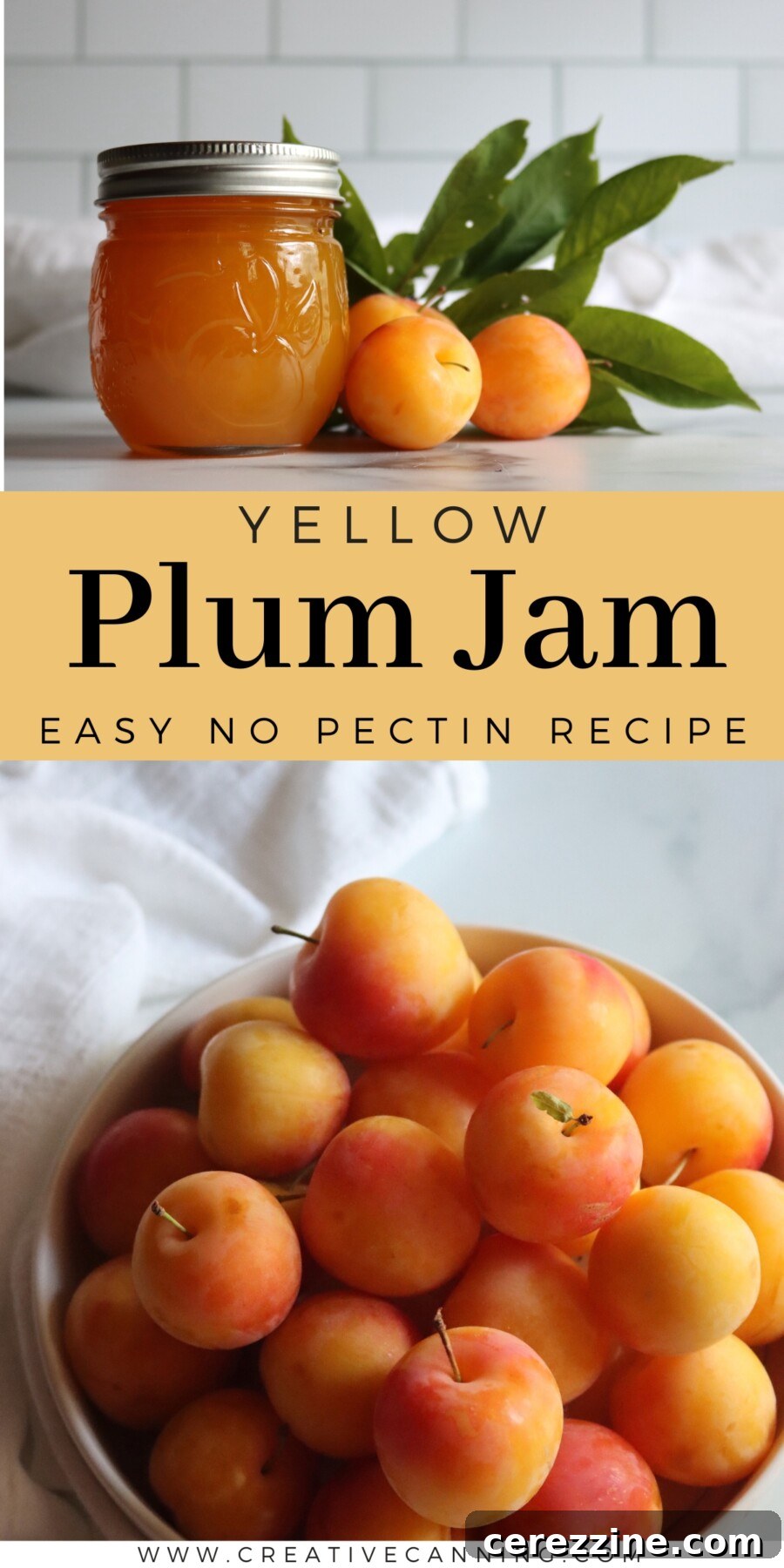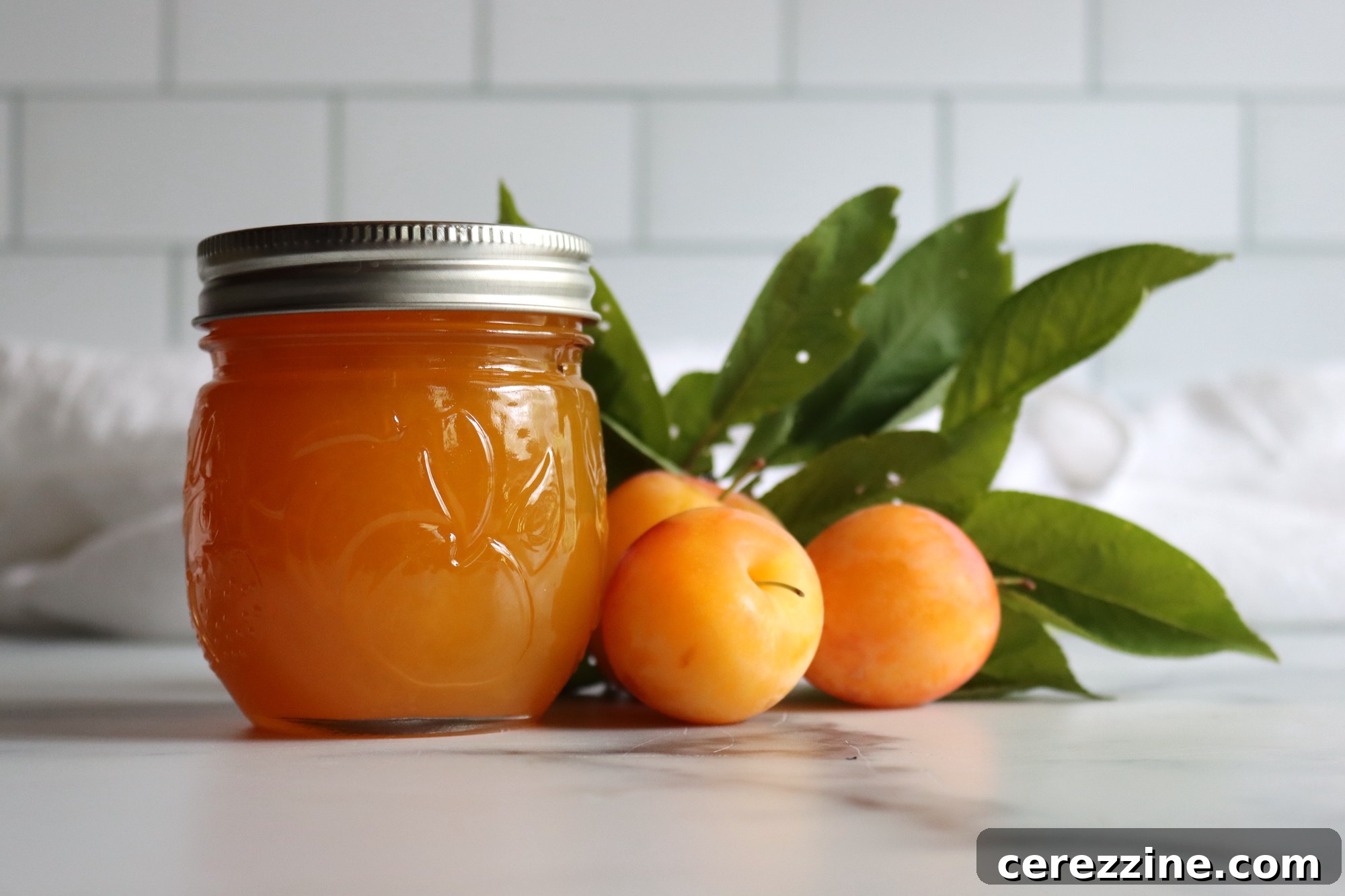
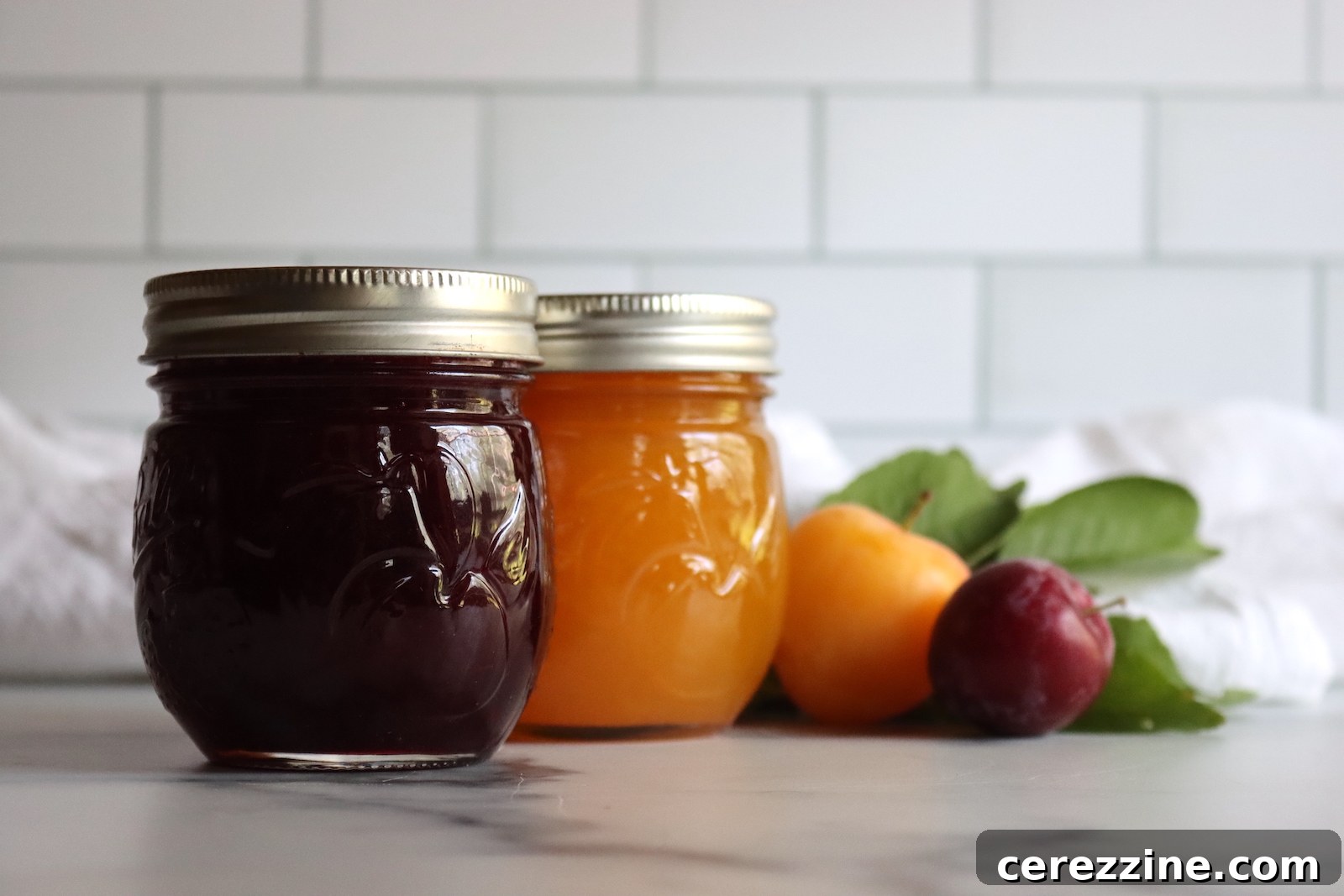
Yellow plum jam offers a brightness that red plum jam can’t match. While darker plums yield a rich, intensely flavored preserve, golden plums create something lighter and more delicate, with a subtle honeyed sweetness and apricot-like undertones that pleasantly surprise the palate.
Many flavor compounds in plums are tied to their pigments, so the color of the fruit directly influences the taste of your jam. Yellow plums have a distinct profile: when you try a jar of this sunny preserve, you’ll understand why it deserves shelf space alongside the traditional red versions.
This recipe has been reviewed for safety and accuracy by a Master Food Preserver certified through the University of Cornell Cooperative Extension.
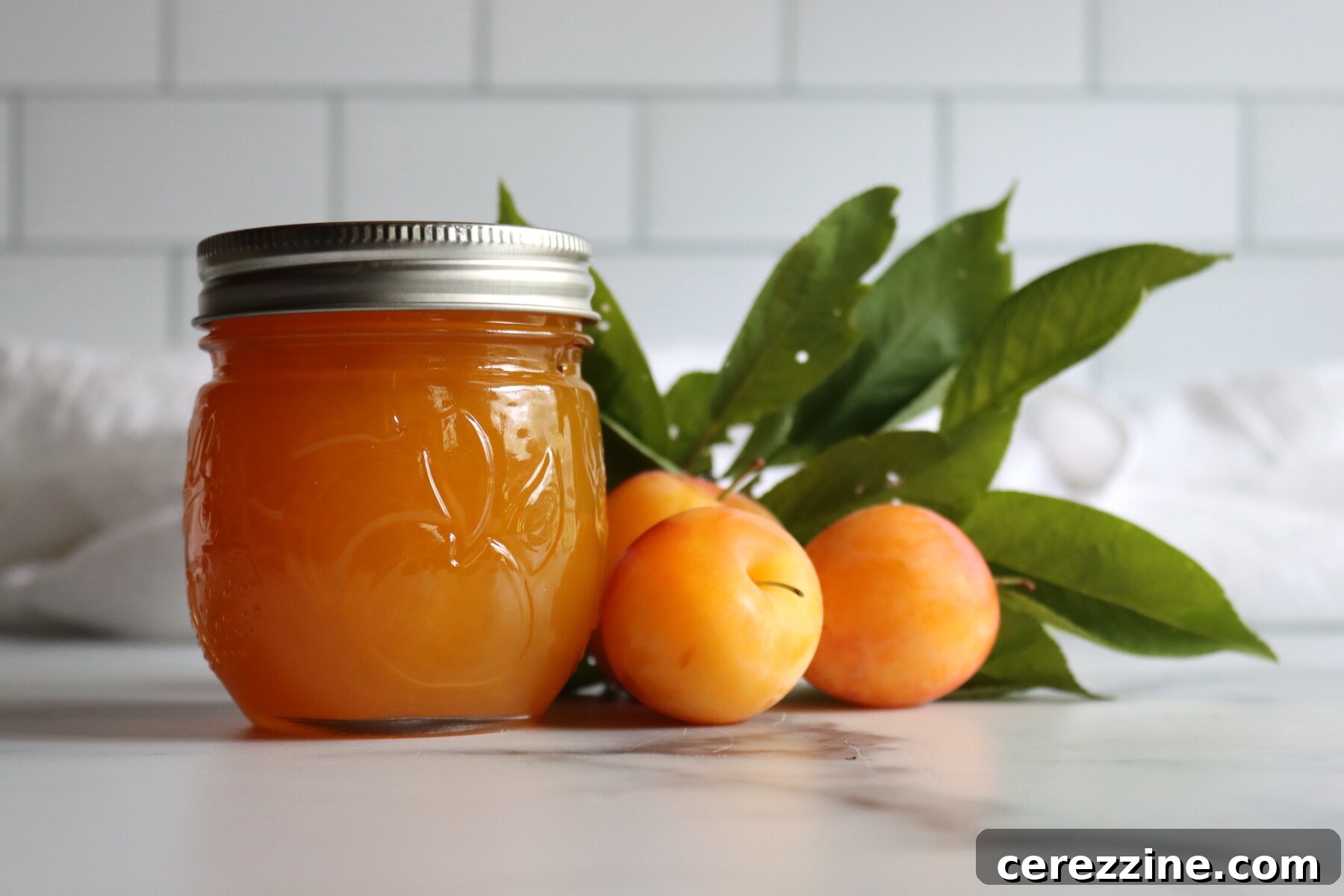
I’ve been making plum jam for years; my mom’s favorite remains a classic made with deep red Santa Rosa plums. Recently I began exploring other varieties—greengages, damsons, and finally a gorgeous golden plum. The jam from those golden plums exceeded expectations: lighter-bodied than red plum jam, almost floral, with a beautiful amber color that looks like bottled sunshine. Its sweet-tart balance and apricot notes make it very different from the bold intensity of darker plums.
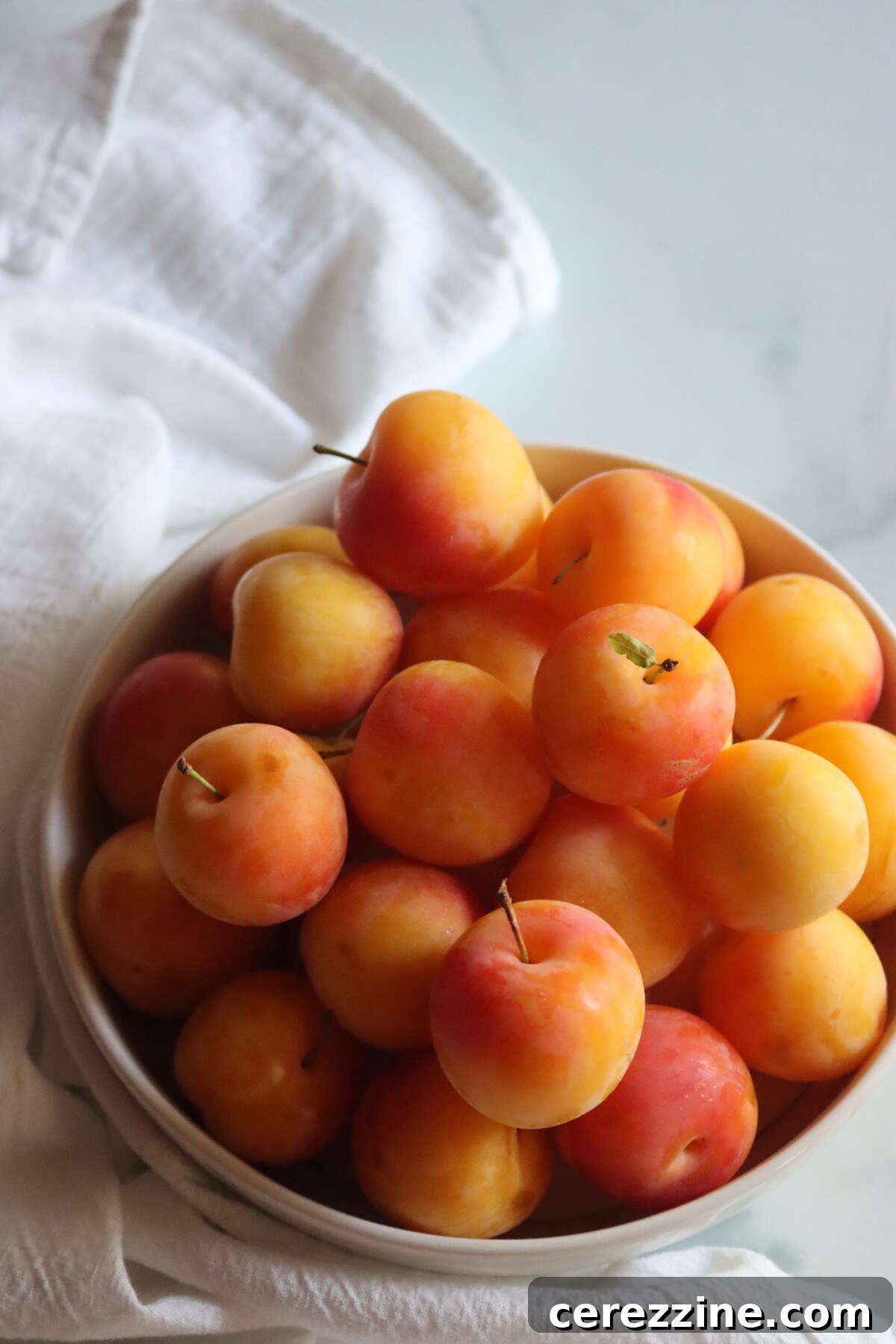
This tested recipe is adapted from reputable sources and works with any golden or yellow plum variety—common grocery finds or specialty types like mirabelles, yellowgages, or Shiro plums. The natural pectin in the fruit eliminates the need for boxed pectin, and a gentle cook preserves the delicate flavors that make golden plums special.
Notes from My Kitchen

Golden plums are more delicate than red varieties in both texture and flavor. They tend to be softer when ripe, which results in a slightly softer set in the finished jam. The jam still spreads nicely and holds shape, but it’s more spoonable than sliceable—an attribute I appreciate because the texture complements the gentle flavor.
The taste can be surprising: rather than simply a lighter-colored version of plum jam, golden plum jam has its own personality—bright, fresh, almost tropical, with honey and apricot undertones. It pairs wonderfully with soft cheeses and makes a great glaze for light meats like chicken or pork tenderloin.
My mom still gets her Santa Rosa jam, but I keep a jar of yellow plum jam in my fridge for myself.
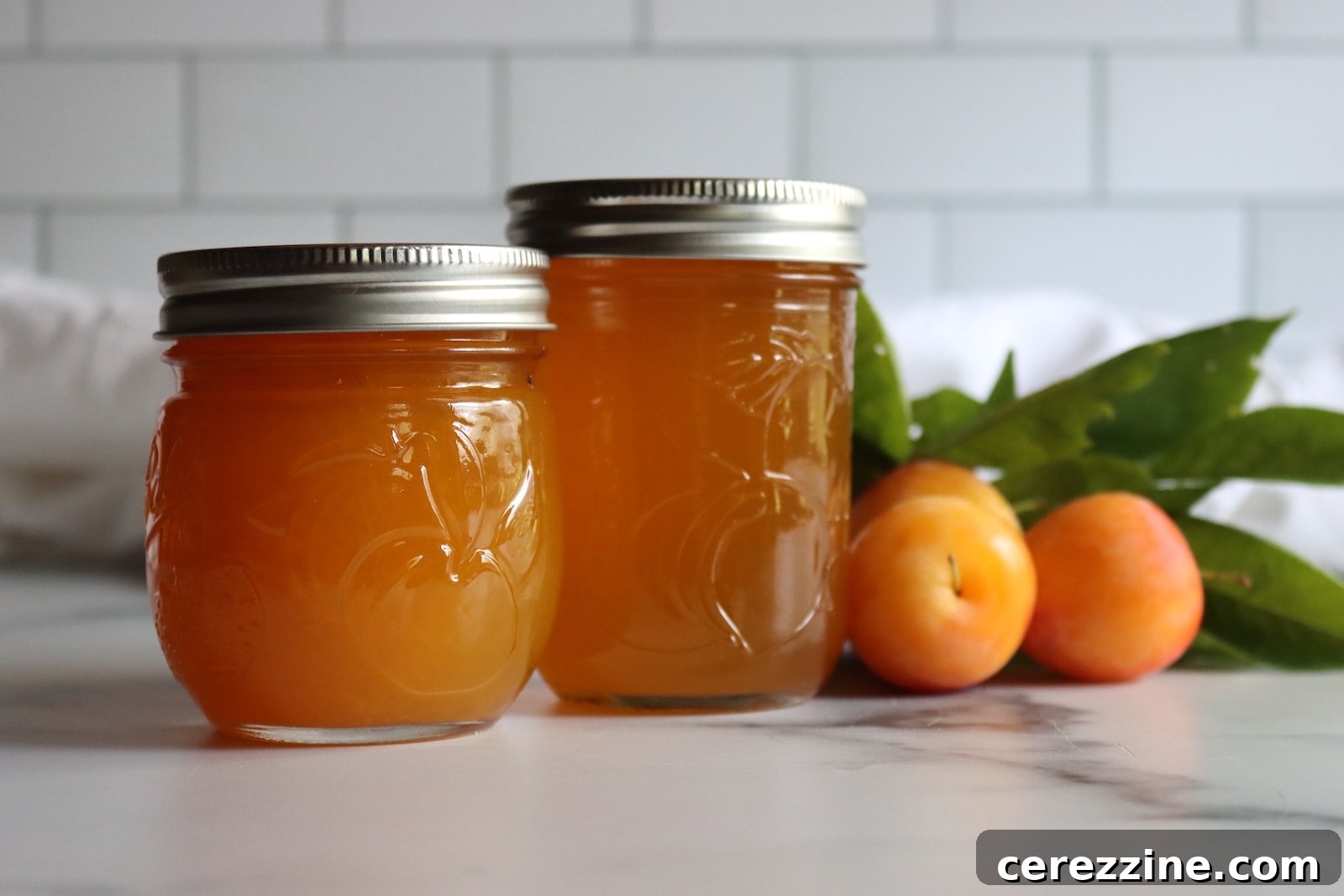
Quick Look at the Recipe
- Recipe Name: Golden Plum Jam without Pectin
- Recipe Type: Jam without pectin
- Canning Method: Water bath canning (optional)
- Prep Time: About 20 minutes
- Cook Time: 15 to 25 minutes
- Canning Time: 10 minutes for half pints or pints (adjust for altitude)
- Yield: About 8 half-pints
- Jar Sizes: Quarter pints, half pints, or pints (do not can in jars larger than pints)
- Headspace: 1/4 inch
- Ingredients Overview: Chopped golden plums, sugar, water, lemon juice. No boxed pectin needed.
- Difficulty: Easy — golden plums have sufficient natural pectin to set reliably.
Ingredients
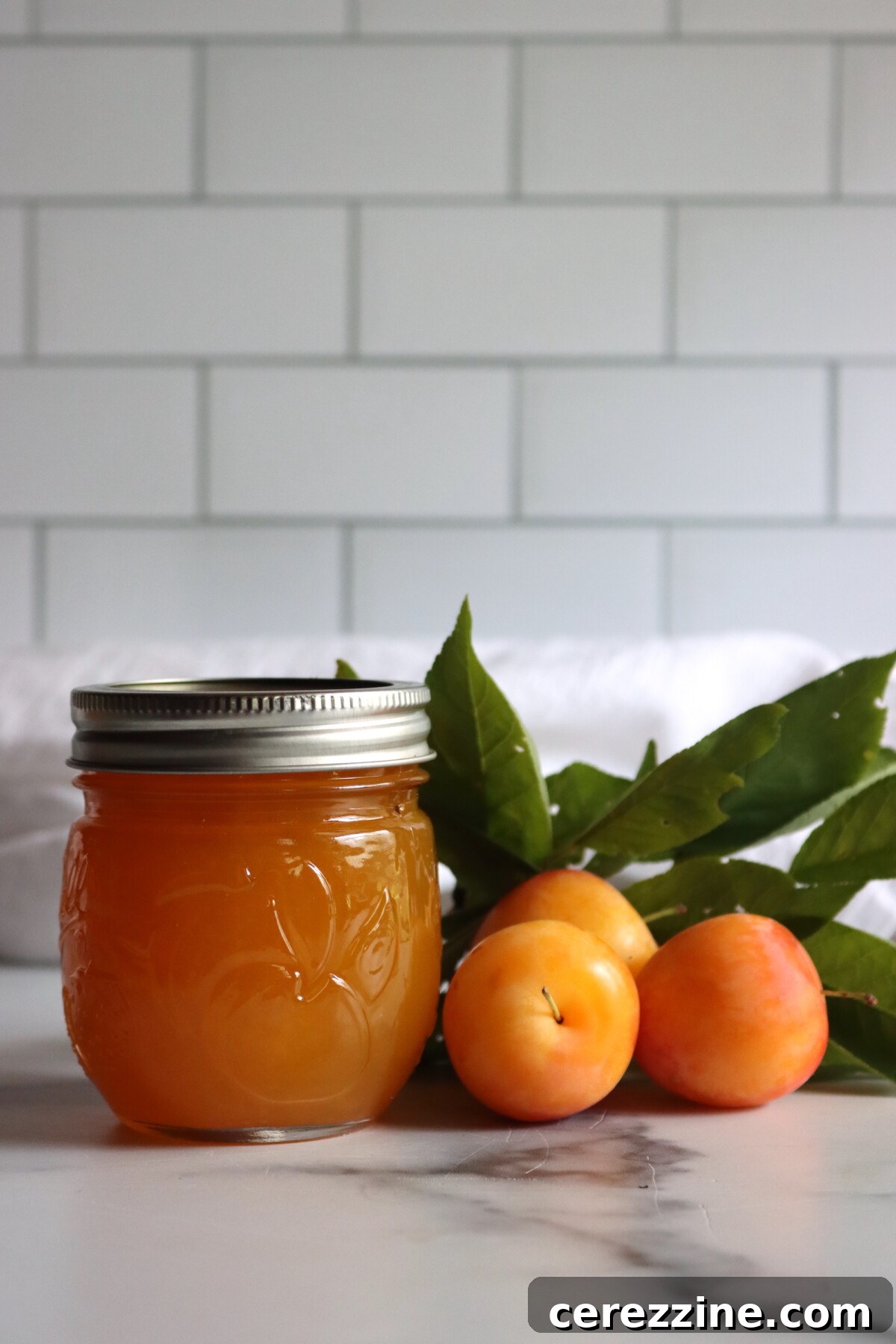
This recipe uses just four ingredients and relies on the natural pectin in the plums to achieve a good set. Golden plums contain plenty of pectin, especially when the batch includes a few slightly underripe fruits.
- Golden plums: About 4 pounds fresh to yield 2 quarts chopped. Any yellow-fleshed variety works: grocery golden plums, mirabelles, yellowgages, Shiro plums, or similar. Choose ripe but still slightly firm fruit; include a few underripe plums for extra pectin. Pit and chop coarsely, leaving skins on for color and pectin.
- Sugar: 6 cups sugar in the tested recipe to balance tartness and help setting. If plums are particularly sweet, you may reduce to 4 cups, but do not go below 4 cups for safety and texture reasons.
- Water: 1½ cups to prevent scorching and promote even cooking.
- Lemon juice: 1/4 cup fresh or bottled to add brightness and the acidity needed for a proper gel and safe water-bath canning.
For a lower-sugar approach using added pectin, specialty pectins that allow sugar customization can be used, but this recipe is designed to work without boxed pectin.
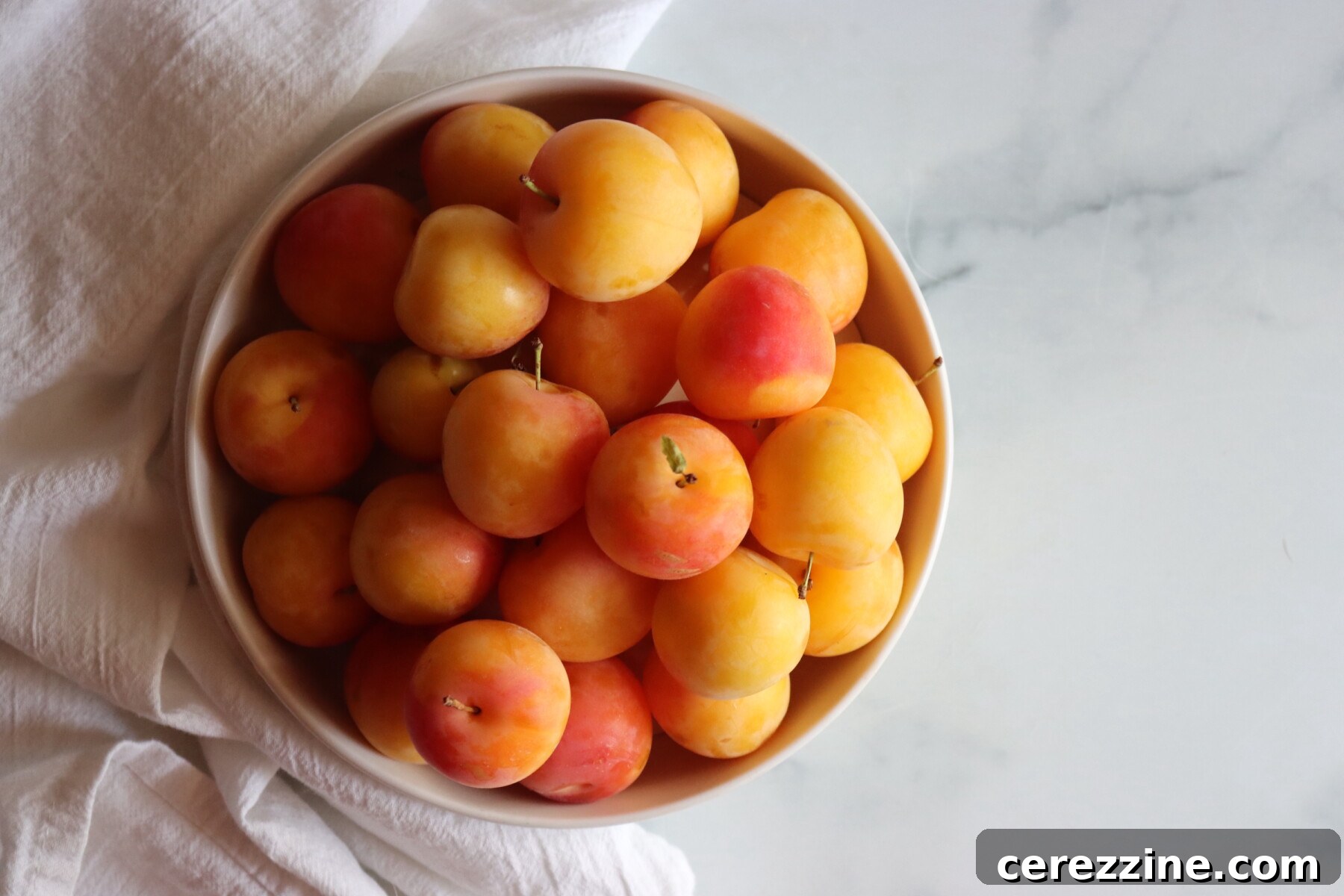
Step by Step Instructions
Prepare jars and a water-bath canner if you plan to can. The jam itself comes together quickly, so have equipment ready before you start.
Prepare the Plums
Wash golden plums, halve and pit them, then chop coarsely into roughly half-inch pieces, leaving skins on. The skins contribute pectin, color, and a pleasant tartness that balances the sweet flesh.
Combine Ingredients
Add chopped plums, water, sugar, and lemon juice to a large, heavy-bottomed pot. A wide pot speeds evaporation. Stir and bring to a simmer over medium heat, stirring occasionally until sugar dissolves and plums soften and release juice.
Cook to Gel Point
Once bubbling, increase heat to reach a rapid boil. Stir frequently to prevent sticking or scorching. The plums will break down and the mixture will thicken and deepen to a rich amber. Cook until the jam reaches gel stage—typically 15 to 25 minutes depending on fruit and stove.
Fill Jars
When jam reaches set point, remove from heat. Skim foam if desired. Ladle hot jam into prepared jars, leaving 1/4 inch headspace. Wipe rims, apply lids and bands, and tighten to fingertip tight.
Testing for Set
The gel point for jam is about 8°F above the boiling point of water—roughly 220°F at sea level. Use an instant-read or candy thermometer for accuracy. If you don’t have one, use the cold-plate test: chill a small plate, drop a spoonful of jam on it, wait 30 seconds, and push it with your finger. If the surface wrinkles and the jam holds its shape, it’s ready. Golden plum jam often sets softer than darker varieties; a spoonable texture is normal.
Adjust the target temperature based on elevation: subtract about 1°F for every 500 feet above sea level.
Canning Golden Plum Jam
Canning is optional but allows pantry storage. For shelf-stable jars, process filled jars in a boiling water bath for 10 minutes at elevations up to 6,000 feet; increase to 15 minutes above 6,000 feet. After processing, cool jars undisturbed 12–24 hours and check seals before storing. Properly sealed jars keep 12 to 18 months.
Altitude Adjustments
- 0 to 6,000 feet: 10 minutes processing
- Above 6,000 feet: 15 minutes processing
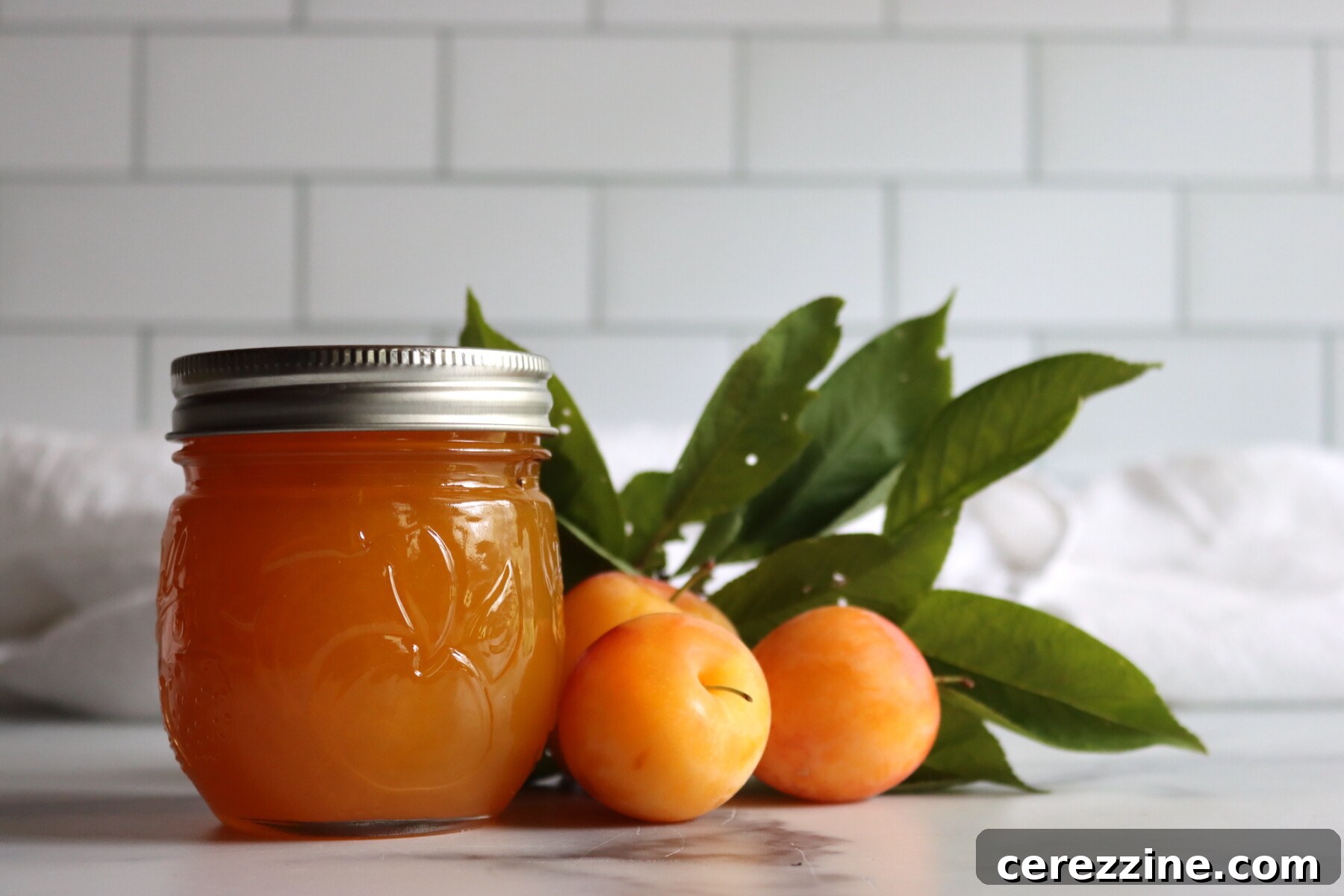
Yield Notes
Starting with about 4 pounds of fresh golden plums yields roughly 2 quarts (8 cups) of chopped fruit and should produce about 8 half-pint jars. Yield varies with plum juiciness and cooking time: shorter cooks produce more jam with a softer set, while longer cooks concentrate flavor and reduce volume but give a firmer texture. Use quarter pint, half pint, or pint jars; do not can in jars larger than pints.
Serving Ideas
Golden plum jam’s lighter, more delicate flavor opens serving possibilities different from bolder jams. Spread it on a warm croissant or brioche—the buttery pastry complements the jam’s gentle sweetness. It pairs exceptionally well with soft cheeses such as brie, camembert, or fresh goat cheese; the bright acidity cuts richness while the honey notes enhance flavor. Use it as a glaze for roasted chicken or pork tenderloin, or whisk it into a vinaigrette with olive oil, white wine vinegar, and a touch of Dijon for a fruity salad dressing.
For breakfast, swirl golden plum jam into Greek yogurt or spoon it over overnight oats. Its sunny color brightens any morning.
Golden Plum Jam FAQs
No. Golden plums are naturally high in pectin and generally set without boxed pectin. Including a few slightly underripe plums increases the pectin content and helps achieve a good gel.
Golden plums typically produce a softer set than darker varieties. This softer, spoonable texture is normal and complements the jam’s delicate flavor. For a firmer set, cook a few minutes longer or include more underripe plums.
Any yellow or golden-fleshed plum will work: common golden plums, mirabelles, yellowgages, Shiro plums, and other light-colored varieties. Each yields a slightly different flavor, but all are excellent for jam.
Golden plum jam is lighter and brighter, with subtle honeyed sweetness and apricot-like undertones, whereas darker plum jams are richer and more intensely flavored. The color ranges from pale gold to rich amber depending on the fruit.
Plum Canning Recipes
Cranberry Orange Marmalade
Cranberry Applesauce
Cranberry Salsa
If you tried this Golden Plum Jam recipe, leave a star rating and share your thoughts in the comments below!
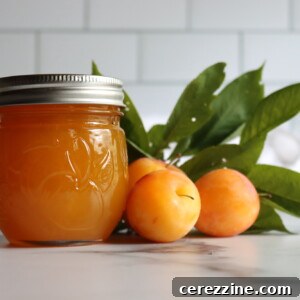
Golden Plum Jam without Pectin
Equipment
- Water bath canner
- Half-pint canning jars with lids and bands
- Jar lifter
- Canning funnel
- Instant-read or candy thermometer
- Large heavy-bottomed pot
Ingredients
- 2 quarts golden plums (measured after chopping and pitting; about 4 pounds whole plums)
- 6 cups sugar
- 1 1/2 cups water
- 1/4 cup lemon juice (fresh or bottled)
Instructions
- If canning, prepare a water bath canner, jars, and lids before beginning.
- Wash plums, halve and pit, then chop coarsely with skins on to yield about 2 quarts (8 cups) of chopped fruit.
- Combine chopped plums, water, sugar, and lemon juice in a large heavy-bottomed pot. Stir and bring slowly to a boil over medium heat until sugar dissolves.
- Once boiling, increase heat and cook rapidly, stirring frequently to prevent sticking. The mixture will thicken and darken to a rich amber color.
- Cook until jam reaches gel point (about 220°F at sea level) or passes the cold-plate test: a spoonful on a chilled plate wrinkles when pushed after 30 seconds. Golden plums often produce a softer set.
- Remove from heat, skim foam if desired, and ladle hot jam into prepared jars leaving 1/4 inch headspace. Wipe rims, apply lids and bands, and tighten to fingertip tight.
- Process in a boiling water bath for 10 minutes (0–6,000 ft) or 15 minutes (above 6,000 ft). Remove jars and cool undisturbed 12–24 hours, then check seals.
Notes
Golden plums produce a lighter, more delicate jam with honey-like sweetness and apricot undertones. Including some slightly underripe plums helps ensure a good gel. The tested sugar amount is 6 cups; you may reduce to 4 cups if desired but not below 4 cups. Expect about 8 half-pints depending on juiciness and cooking time. Store unopened, properly sealed jars in a cool, dark place for 12–18 months. Refrigerate after opening and use within 3–4 weeks.
Old Fashioned Jam Recipes
Rhubarb Orange Jam
Rhubarb Applesauce
Rhubarb Sauce (or Compote)
Find the perfect recipe
Searching for something else? Enter keywords to find the perfect recipe on the site.