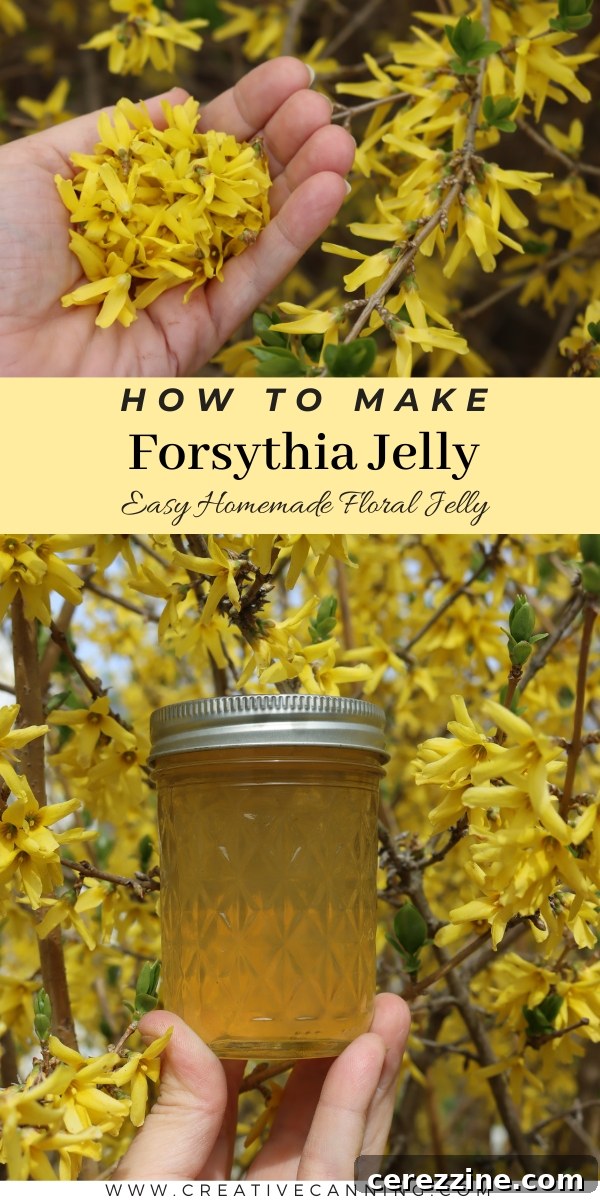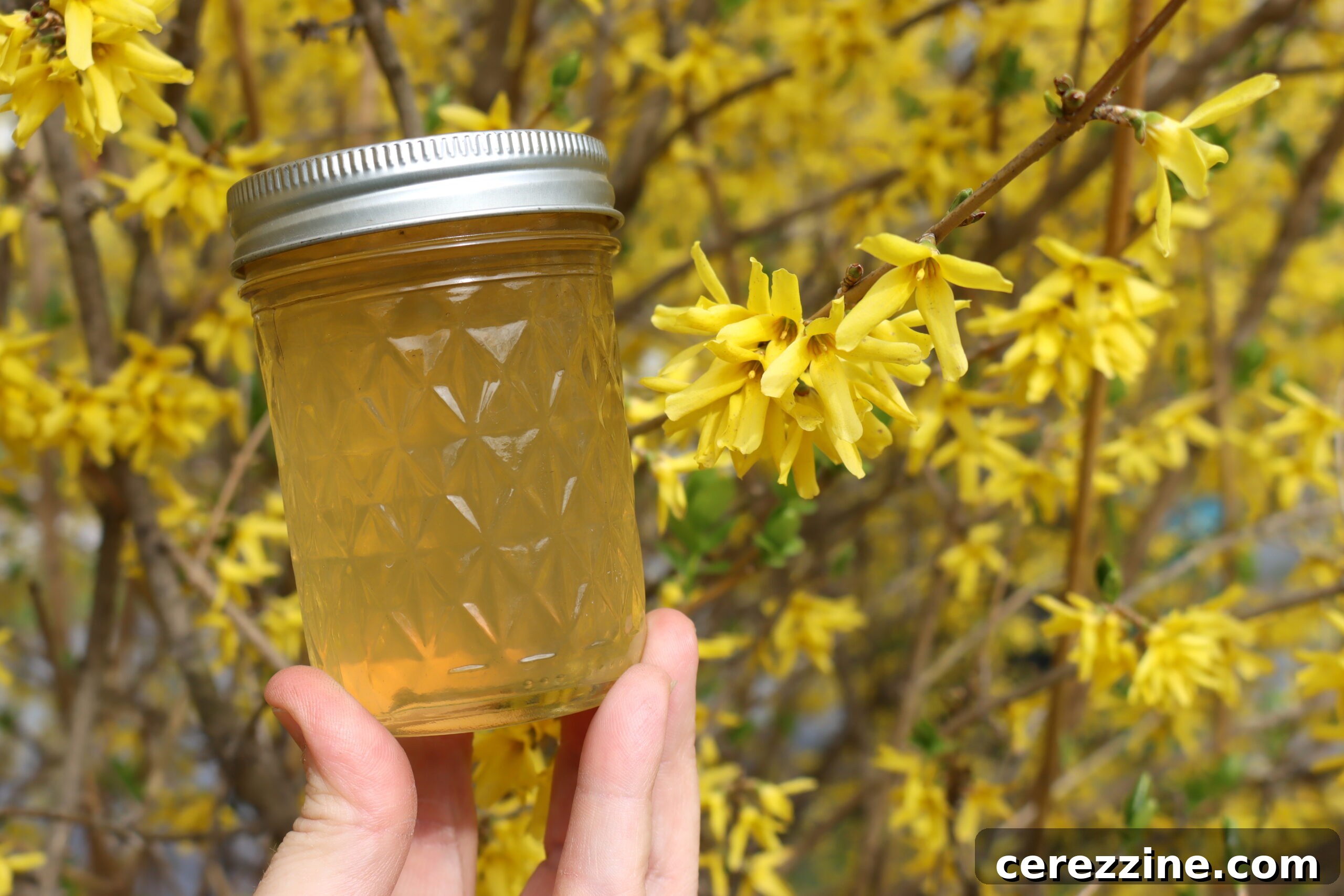
Welcome the vibrant essence of spring into your pantry with homemade Forsythia Jelly. This exquisite preserve beautifully encapsulates the delicate flavor and enchanting fragrance of these early blooming, sunny yellow flowers. Imagine enjoying a taste of springtime sunshine all year long, a delightful spread that brings warmth and unique floral notes to your table.
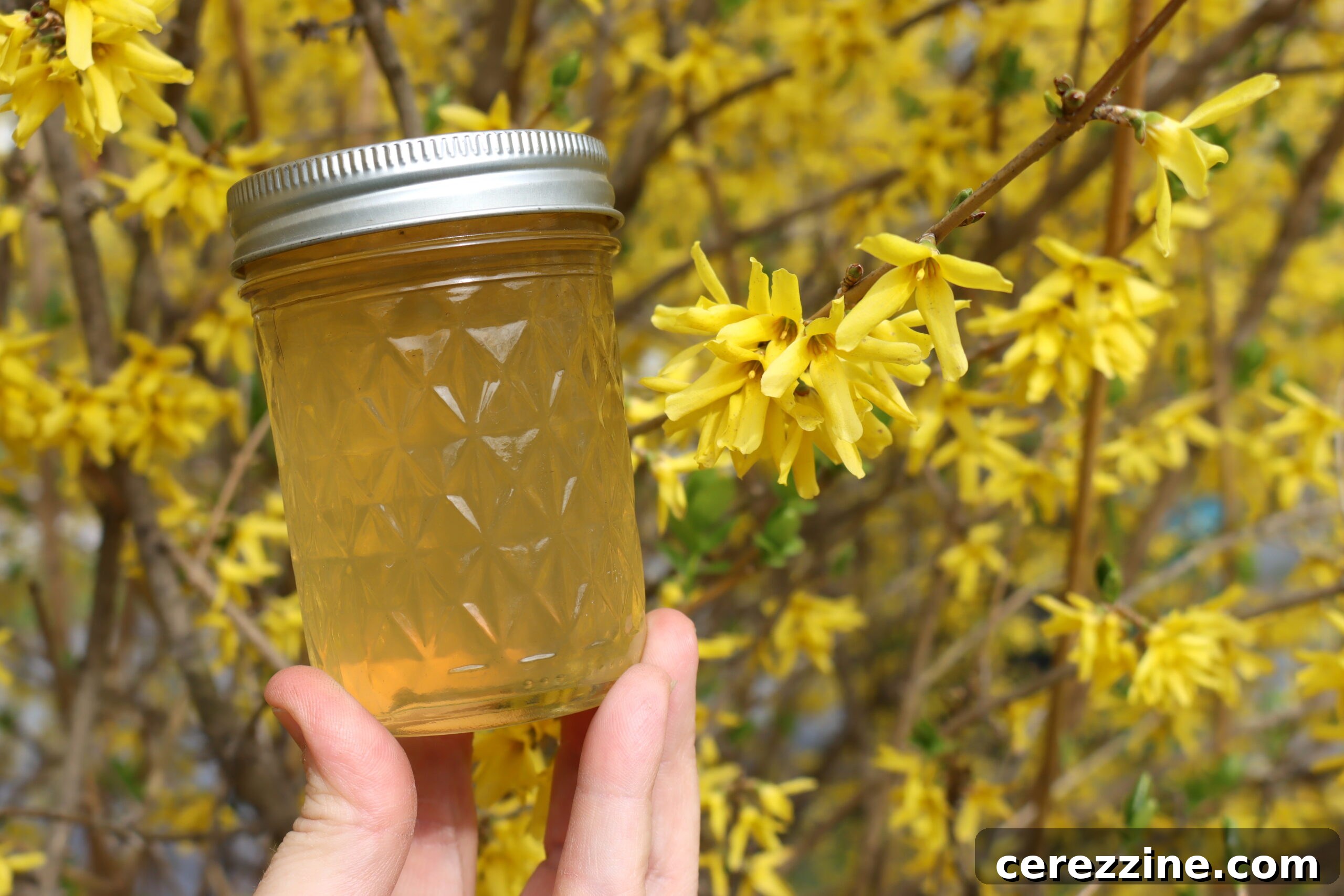
As winter’s chill recedes, the forsythia bush emerges as a beacon of hope, its branches bursting into a spectacular display of golden-yellow blooms. This otherwise unassuming shrub transforms almost overnight, painting landscapes with its brilliant hue, often before any leaves dare to unfurl. This early bloom is especially cherished in northern climates, where the arrival of spring is eagerly anticipated.
While many admire forsythia for its ornamental beauty, fewer realize that these cheerful blossoms are entirely edible! Beyond their visual appeal, forsythia flowers can be transformed into a myriad of culinary delights, from delicate cookies and soothing teas to, most notably, this vibrant and aromatic forsythia jelly. Discovering the edible potential of this common plant opens up a world of seasonal foraging and delicious homemade creations.
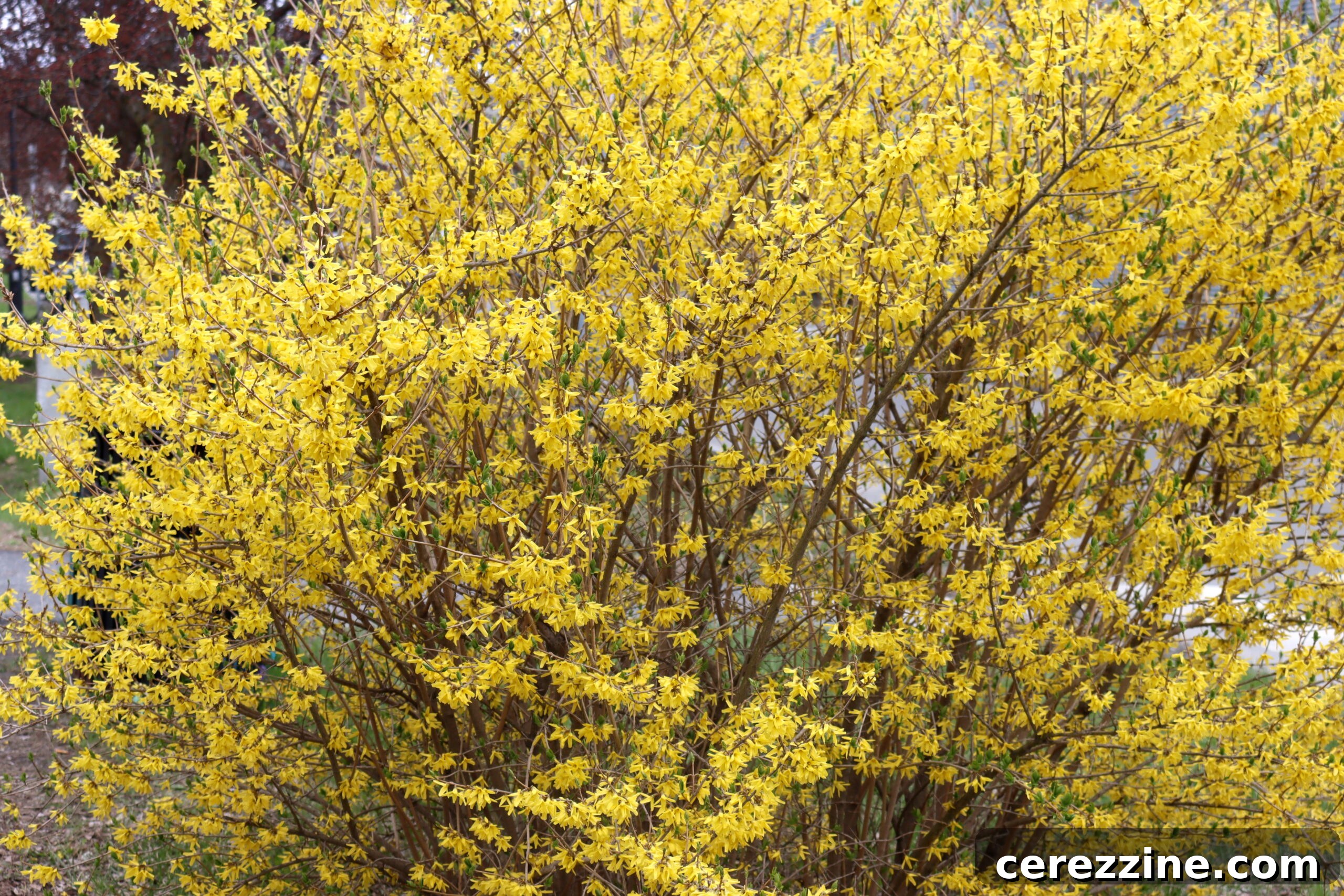
Embracing the bounty of spring through edible flowers is a rewarding experience, offering unique flavors not found in conventional produce. Forsythia stands out among these for its accessibility and abundant blossoms, making it a perfect candidate for your first foray into floral jellies. This recipe is designed to be straightforward, ensuring even novice canners and jelly makers can achieve a delicious and beautifully set spread.
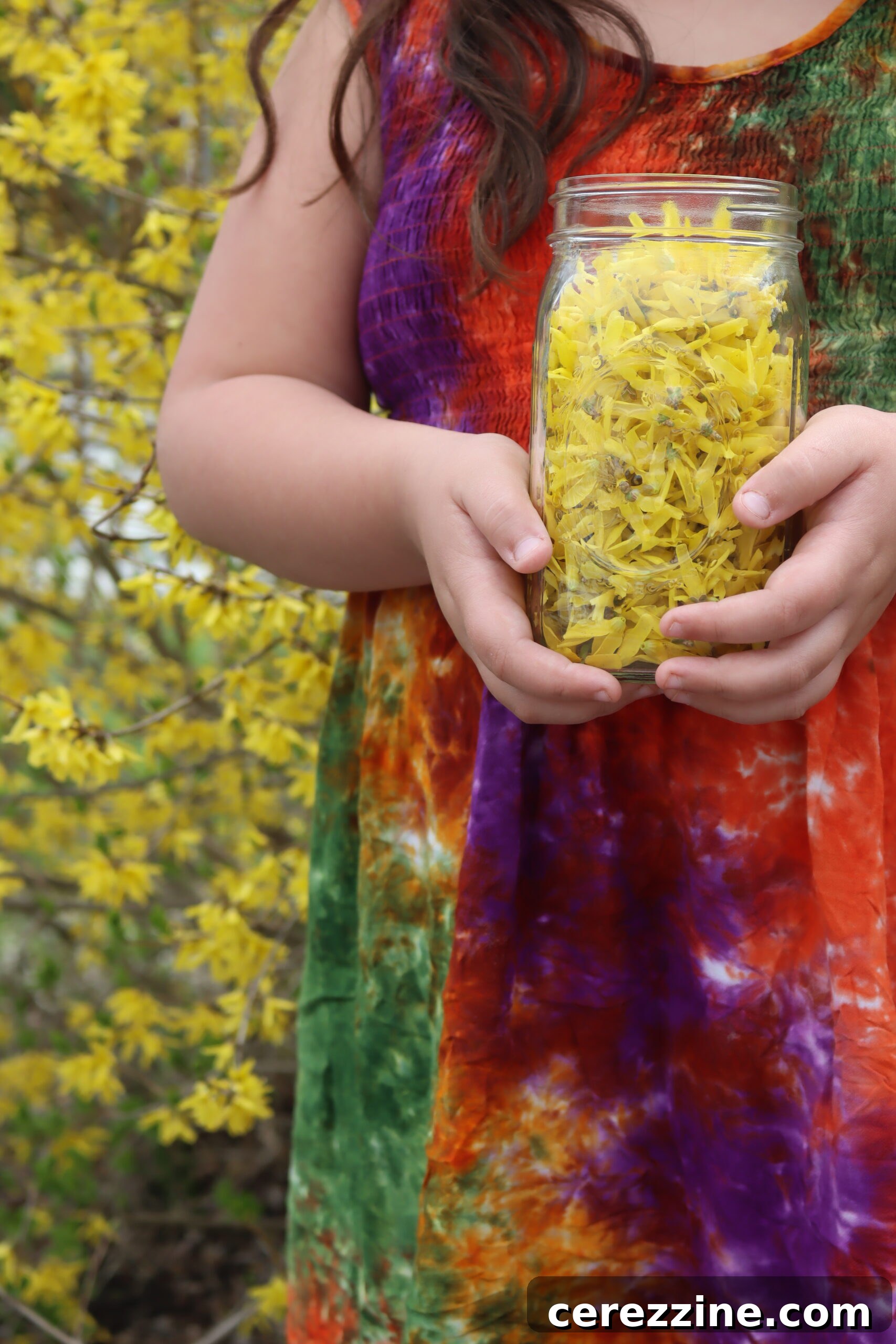
A Quick Look at the Recipe
- Recipe Name: Forsythia Jelly
- Recipe Type: Flower Jelly Recipe
- Canning Method: Waterbath Canning (Optional, but recommended for shelf-stable storage)
- Prep Time: Approximately 15-20 Minutes (including flower preparation)
- Cook Time: Roughly 5-10 Minutes
- Canning Time: 10 Minutes
- Yield: 4 to 5 half-pint jars (depending on sugar content and pectin type)
- Jar Sizes: Quarter Pint, Half Pint, or Pint
- Headspace: 1/4 inch
- Key Ingredients: Fresh Forsythia Flowers, Water, Lemon Juice (essential!), Sugar, and Pectin
- Difficulty: Easy! The process involves making a floral infusion and setting it with pectin.
- Similar Floral Jelly Recipes: The technique is comparable to making other delightful spring floral jellies, such as Tulip Jelly, Dandelion Jelly, Redbud Jelly, Grape Hyacinth Jelly, Violet Jelly, Pansy Jelly, or Lilac Jelly.
What Does Forsythia Jelly Taste Like?
The flavor profile of forsythia jelly is often the most intriguing aspect for those new to edible flowers. Unsurprisingly, it boasts a delicate floral and wonderfully fragrant aroma, reminiscent of the blossoms themselves. However, the true surprise lies in its subtle fruity undertones. Many describe the taste as remarkably similar to peach jelly, but with an added layer of complexity and an ethereal aromatic quality that elevates it beyond a simple fruit preserve.
Imagine the juicy sweetness of a ripe peach, but infused with the essence of a spring garden. This unique blend makes forsythia jelly a truly special treat, especially in regions where fresh peaches are a rarity, particularly in early spring. Its bright, sweet, and slightly tangy flavor profile makes it an exquisite addition to breakfast pastries, toast, or even as a glaze for savory dishes. This jelly isn’t just food; it’s a sensory experience that captures the very spirit of spring.
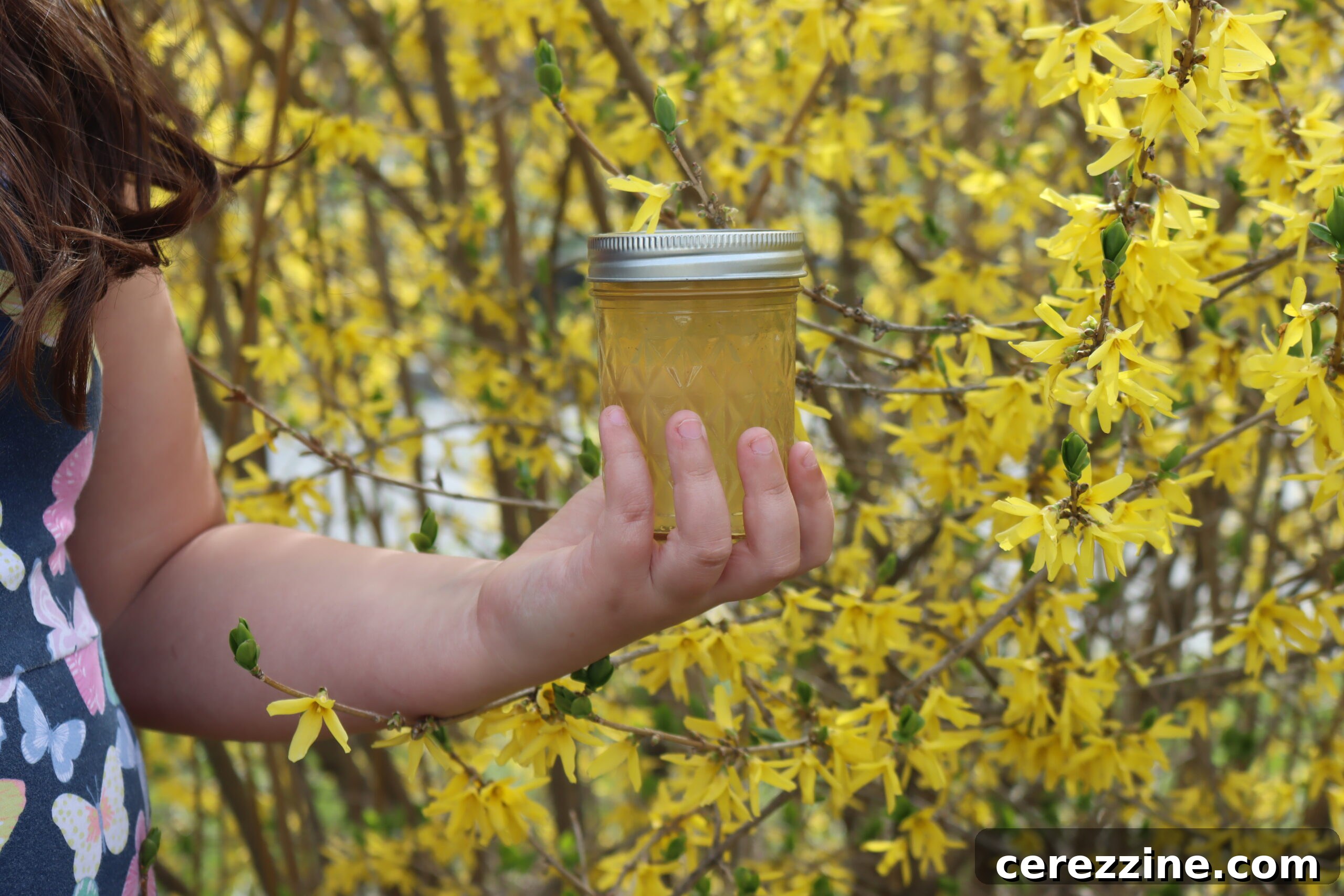
Harvesting Forsythia for Flower Jelly
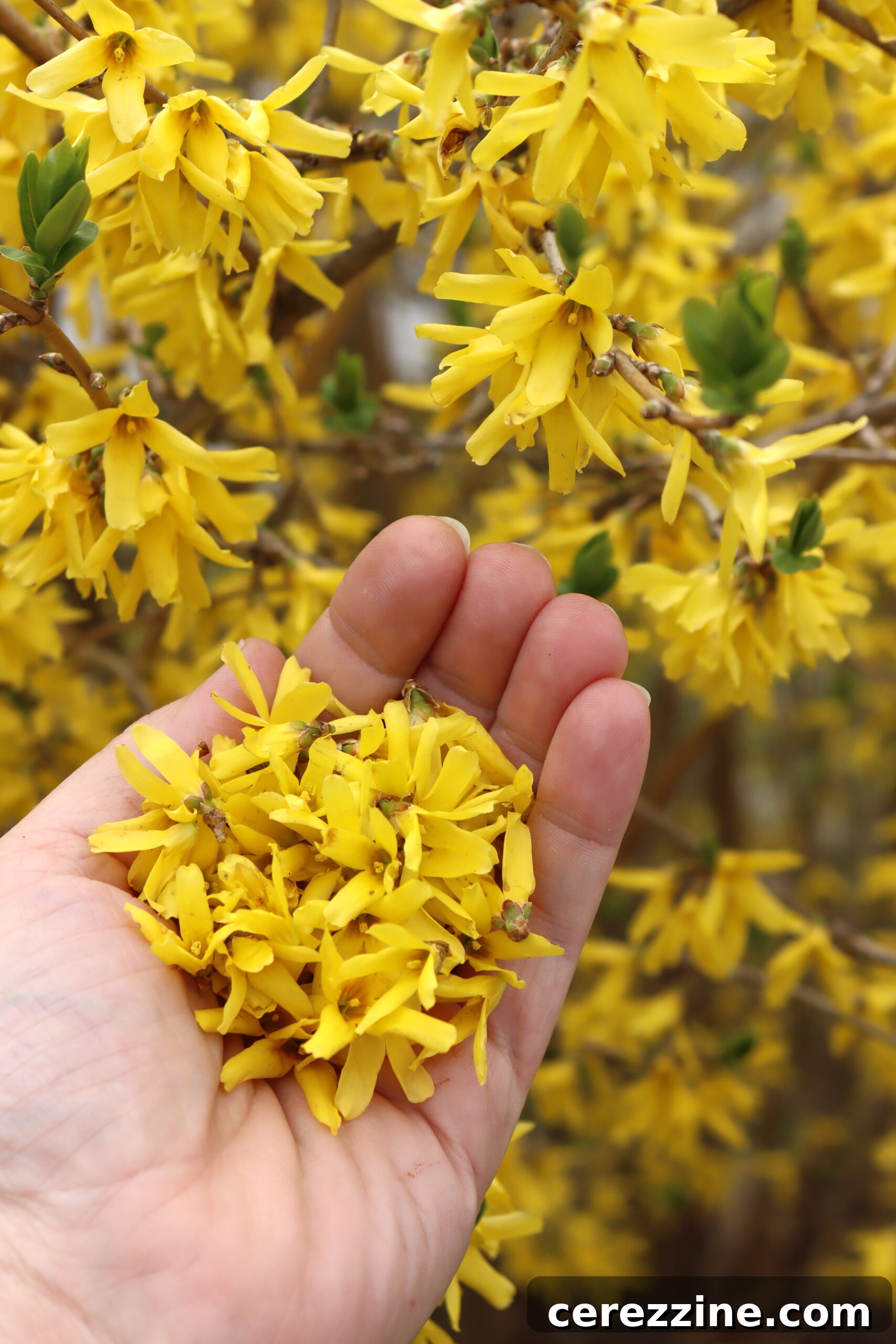
Gathering forsythia blossoms for jelly is a simple and enjoyable process. The flowers detach easily from their stems, making collection quick and efficient. A single mature forsythia bush can produce an astonishing abundance of blossoms each spring, so harvesting a few cups for your jelly will hardly make a dent in its glorious display. This makes it an ideal plant for sustainable foraging from your own garden or a known, safe location.
When harvesting, choose blossoms that are fully open and vibrant. It’s best to pick them on a dry, sunny morning after the dew has evaporated, as this ensures the most intense flavor and fragrance. Avoid harvesting from bushes near busy roadsides or those that may have been treated with pesticides or herbicides. Gently shake the branches to dislodge any small insects before bringing the flowers indoors. Use a breathable container, like a basket, to prevent crushing the delicate petals. This careful approach to harvesting ensures you get the purest, most flavorful infusion for your homemade jelly.
Essential Ingredients for Forsythia Jelly
Crafting a delicious forsythia jelly requires only a few key ingredients that work in harmony to create a perfect set and balanced flavor. You’ll need freshly harvested forsythia blooms, water for infusion, sugar for sweetness and preservation, pectin for gelling, and a crucial touch of lemon juice. Each component plays an important role in the final product.
For a batch yielding approximately 4 to 5 half-pint jars, gather the following:
- 4 cups fresh Forsythia flower petals (ensure green bases are carefully removed)
- 4 cups water
- 2 tablespoons fresh lemon juice (or ½ teaspoon citric acid powder)
- 1 to 4 cups granulated sugar (refer to notes on pectin types for specific quantities)
- 1 box (1.75 oz) powdered pectin (Regular or Low Sugar variety)
The lemon juice is not an optional ingredient; it serves multiple vital functions. Firstly, it provides a much-needed tart contrast to the sweetness of the sugar, enhancing the delicate floral flavor of the forsythia. More importantly, lemon juice lowers the pH of the mixture, which is essential for the pectin to properly set the jelly. For those intending to preserve their jelly through canning, the acidity from the lemon juice is also critical for food safety, making it safe for water bath canning. If you prefer a more neutral flavor profile without the citrus note, you can substitute the lemon juice with citric acid powder, dissolved in a small amount of water. Remember that citric acid is more concentrated; use about 1/4 teaspoon for every tablespoon of lemon juice, meaning 1/2 teaspoon for this recipe.
Regarding pectin, reliable brands like Sure-Jell (regular or low-sugar) are highly recommended for their consistent results and excellent texture. Standard pectin typically requires a 1:1 ratio of sugar to liquid for optimal gelling, meaning you’ll need 4 cups of sugar for 4 cups of forsythia tea. If you prefer a less sweet jelly, opt for a low-sugar pectin, which can gel with as little as 1/2 to 2 cups of sugar for the same amount of liquid. Low-sugar pectin is a versatile choice as it also works perfectly for full-sugar recipes, making it a staple in many pantries. If using Ball Flex Batch Pectin, you will need 6 tablespoons, which is equivalent to a standard 1.75 oz box of other brands, for both regular and low-sugar varieties. While liquid pectin is an option, it generally requires a significantly higher sugar content (around 7 cups of sugar for 4 cups of liquid) and a different order of operations, so powdered pectin is usually preferred for its flexibility and lower sugar requirements.
Step-by-Step Guide to Making Forsythia Jelly
Creating forsythia jelly is a straightforward and enjoyable process, quite similar to making any other type of floral jelly. The key is careful preparation of your blossoms to ensure the best flavor and a beautiful, clear jelly.
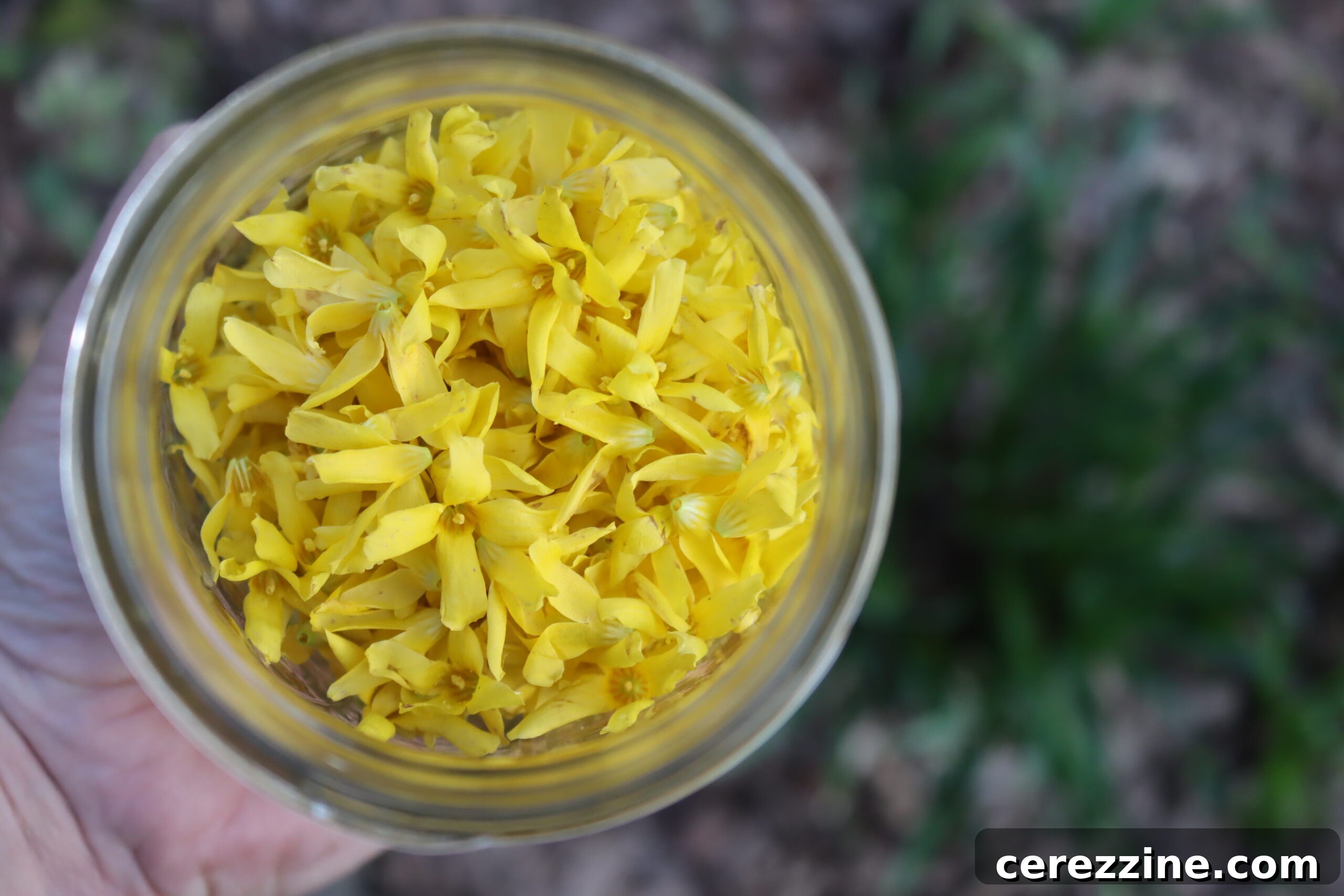
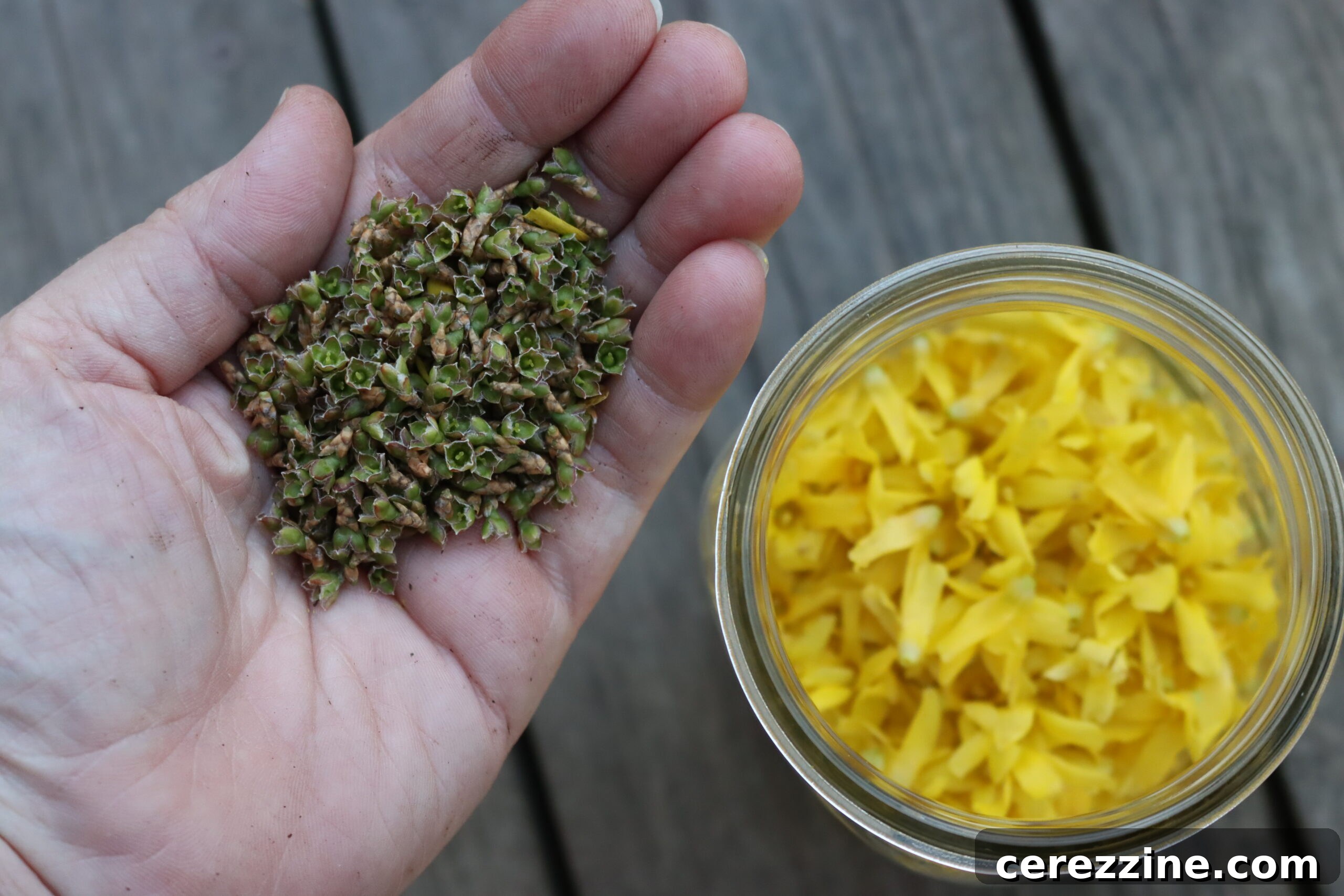
Step 1: Prepare the Forsythia Blossoms. You’ll need approximately 4 cups of fresh forsythia blossoms. This is the most meticulous step: you must carefully remove the small green base (sepals) from each individual flower. While the yellow petals are sweet and fragrant, these green parts can impart a bitter taste to your jelly. This finicky task is essential for a delicious outcome, similar to the preparation required for lilac jelly.
Step 2: Infuse the Floral Tea. Place your cleaned forsythia petals into a heat-proof container, such as a large glass measuring cup or a Mason jar. Pour 4 cups of freshly boiled water directly over the petals. This hot water will extract the vibrant color, flavor, and fragrance from the flowers, creating a lovely forsythia tea.
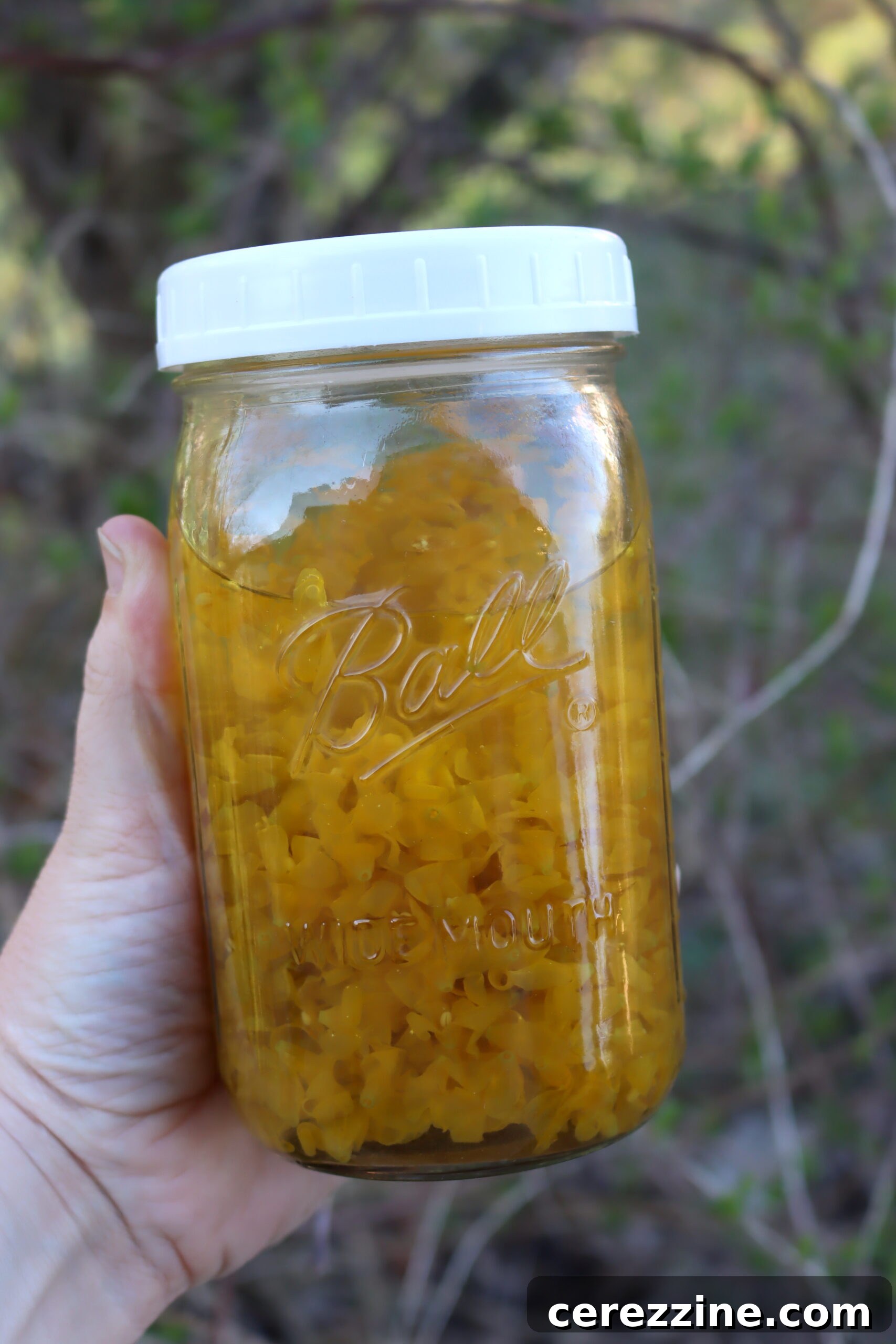
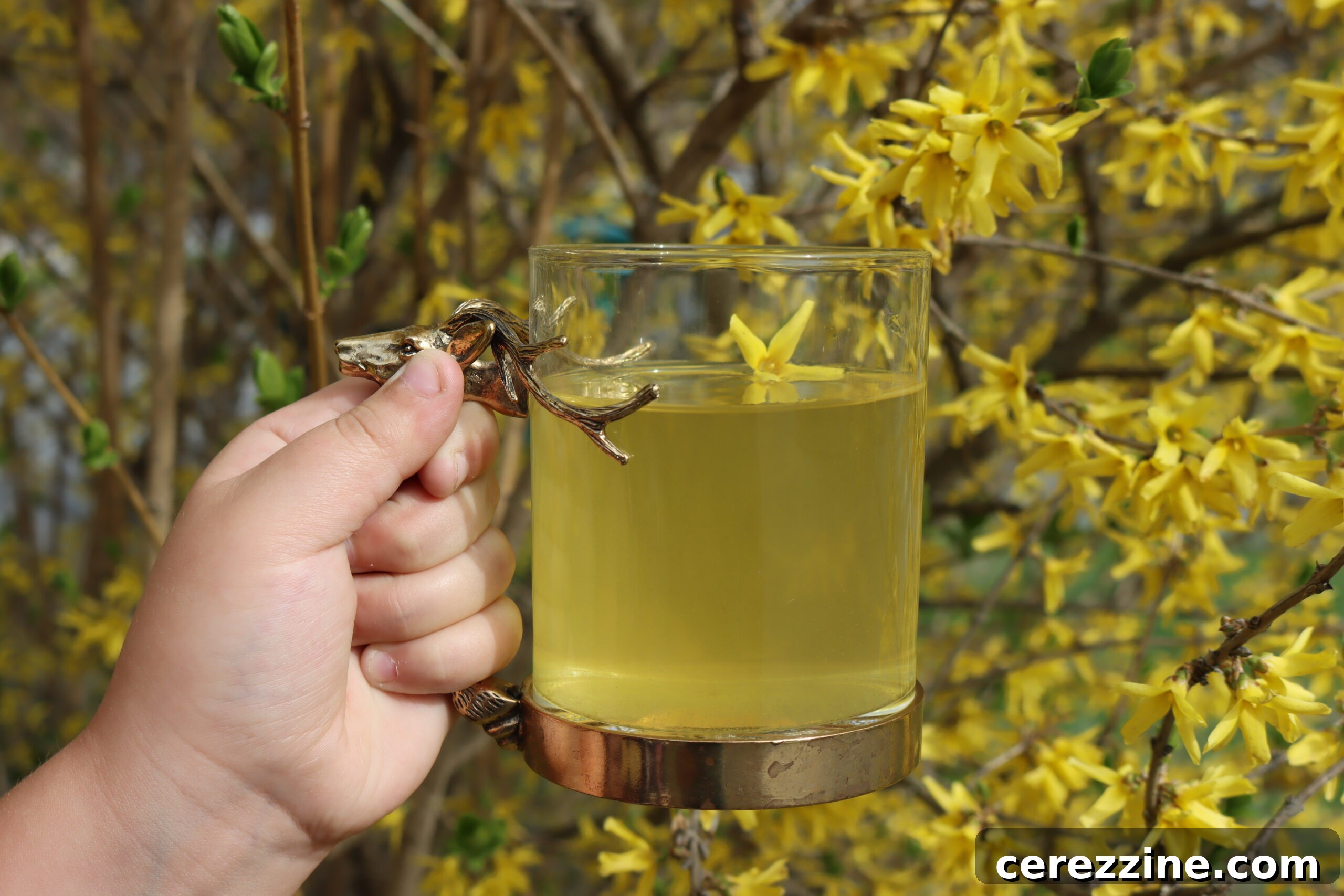
Step 3: Steep and Strain. Allow the forsythia blossoms to steep in the hot water for about 15 to 20 minutes. This steeping time is crucial for developing a rich flavor. Once steeped, strain the liquid through a fine-mesh sieve or cheesecloth into a clean saucepan or a jelly pot, pressing gently on the flowers to extract as much liquid as possible. At this stage, you have a beautiful forsythia tea, which can be enjoyed on its own with a touch of sweetener, offering a preview of your jelly’s flavor.
Step 4: Combine with Lemon Juice and Pectin. Pour the strained forsythia tea into your jelly pot. Add the 2 tablespoons of lemon juice. This step is non-negotiable, as the lemon juice provides essential acidity for both flavor balance and proper pectin setting, and ensures safety if you plan to can the jelly. Bring the tea to a rolling boil over high heat. Once boiling, gradually whisk in the entire contents of one box (1.75 oz) of powdered pectin until it is completely dissolved. Continue boiling vigorously for exactly 1 full minute, stirring constantly.
Step 5: Incorporate Sugar and Final Boil. After the minute of boiling with pectin, add the sugar. The amount of sugar will depend on the type of pectin you are using: if using standard pectin, you’ll need 4 cups of sugar for 4 cups of liquid to achieve a firm set. If using a low-sugar pectin (like Sure-Jell low sugar), you have the flexibility to use significantly less sugar, from as little as 1/2 cup to 2 cups, depending on your sweetness preference. Stir continuously until the sugar is fully dissolved. Once dissolved, return the mixture to a hard boil for another full minute, stirring to prevent scorching. This final boil is critical for activating the pectin and achieving a proper gel.
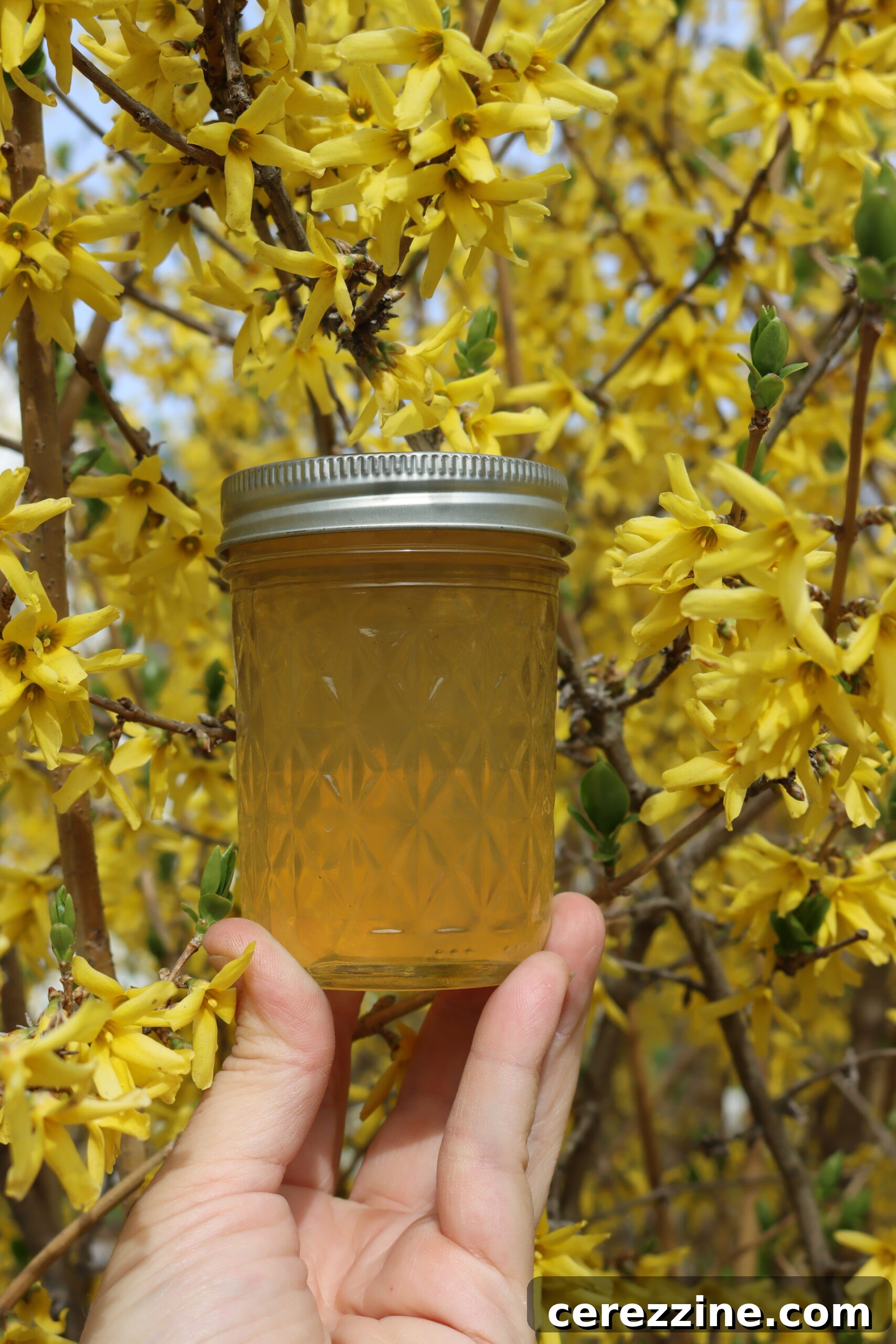
Step 6: Ladle into Jars. Immediately remove the jelly mixture from the heat. Carefully ladle the hot jelly into prepared jars, leaving exactly 1/4 inch of headspace at the top of each jar. This headspace is crucial for proper sealing and to prevent jars from overflowing during canning.
Canning Forsythia Jelly for Long-Term Storage
While you can certainly store freshly made forsythia jelly in the refrigerator for several weeks or freeze it in freezer-safe jars for up to 6 months, water bath canning offers the convenience of shelf-stable storage. This method allows you to keep the sunny flavor of forsythia jelly readily available on your pantry shelf year-round, freeing up valuable refrigerator and freezer space. Proper canning also ensures that the jelly remains safe and delicious for an extended period.
To safely can this floral jelly, ensuring you’ve used the recommended amount of lemon juice is paramount, as its acidity is critical for both the jelly’s set and its safety. Before you begin making the jelly, prepare your water bath canner, canning jars, and two-part canning lids according to standard canning guidelines. Jars should be clean and hot, and lids should be warm.
Once your jelly is made and carefully ladled into the prepared hot canning jars, ensure the 1/4 inch headspace. Wipe the rims of the jars thoroughly to remove any jelly residue, which could prevent a proper seal. Place the lids and screw on the bands until fingertip tight. Carefully transfer the sealed jars into your preheated water bath canner, ensuring they are fully submerged by at least an inch of water. Bring the water to a rolling boil, then process the jars for 10 minutes. If you live at an elevation above 6,000 feet, increase the processing time to 15 minutes to account for the lower boiling point.
Once the processing time is complete, turn off the heat and let the jars sit in the canner for 5 minutes before carefully removing them. Place the hot jars on a clean towel on your countertop, allowing ample space between them for air circulation. Let them cool undisturbed for 12-24 hours. You’ll hear the satisfying “ping” sound as the lids seal. After cooling, check all seals. Properly sealed jars will have lids that are concave and do not flex when pressed. Store properly canned and sealed jars in a cool, dark place on your pantry shelf for 12-18 months. Once opened, refrigerate the jelly and consume within a few weeks.
More Forsythia Recipes to Explore
If you’ve fallen in love with the versatility and unique flavor of forsythia, there are many other delightful ways to incorporate these cheerful flowers into your culinary repertoire. Don’t limit yourself to just jelly! Explore these inspiring recipes:
- Creative Ways to Use Forsythia Flowers
- Forsythia Flower Honey Syrup
- How to Make Flower Wines (With any edible flower)
If you tried this Forsythia Jelly Recipe, or any other recipe on Creative Canning, leave a ⭐ star rating and let us know what you think in the 📝 comments below!
And make sure you stay in touch by following on social media!
- Substack
Explore More Edible Flower Jellies
Tulip Jelly
Are Flower Jellies Safe for Canning?
Lilac Jelly
Peony Jelly
Forsythia Jelly
Rate
Ingredients
- 4 cups forsythia blossoms, green bases removed
- 4 cups water
- 2 tbsp lemon juice
- 1 to 4 cup sugar, See Note
- 1 box Powdered pectin, 1.75 oz pectin (Regular or Low Sugar)
Instructions
-
Separate 4 cups of forsythia flower blossoms from their stems, carefully removing any green parts. The green bases of each flower are bitter, so you really do need to remove them and use just the yellow petals. They slip off easily.
-
Pour 4 cups boiling water over the top of the flower blossoms and allow the tea to infuse for about 10 to 15 minutes.
-
Strain the floral tea into a saucepan or jam pot. Add the lemon juice, which will help bring out the best color in the jelly, but it’s also required to balance the sugar in the recipe and help the pectin set. Beyond that, it adds acidity to help preserve the jelly, so don’t skip the lemon!
-
Bring the mixture to a boil and add the powdered pectin, stirring to dissolve. Allow the mixture to boil for 1 minute before adding sugar. (Note: Do not add the sugar at the same time as the pectin, or before the pectin, or the jell will not set.)
-
Add the sugar, stirring to dissolve (See notes on quantity). Bring the mixture back to a full boil for 1 minute before ladling into jelly jars leaving 1/4 inch headspace.
-
If canning, process in a water bath canner for 10 minutes. (or 15 minutes if above 6,000 feet in elevation.) Otherwise, allow the jars to cool completely on the counter before storing in the refrigerator (for up to a month) or the freezer for up to 6 months.
Notes
A note on sugar…
If using standard pectin, you must use a 1:1 ratio of liquid to sugar. That means for 4 cups flower blossom tea you’d need a minimum of 4 cups sugar to get the jelly to set. That results in a very sweet “old-fashioned” jelly. To reduce the sugar, simply use low-sugar pectin instead and then make the jelly as instructed but using less sugar. I suggest sure jel low sugar, which is very dependable.
Lowering sugar will also lower yield, and the yield of 5 half-pints is for a full sugar recipe.
If using Pomona’s Universal Pectin, the instructions are different, as that is a 2-part low sugar pectin. Follow the instructions provided in the Pomona’s box for mint jelly.
If using liquid pectin, the order of operations is different (pectin is added last, sugar first). Liquid pectin also requires a lot more sugar to set (7 cups sugar to 4 cups liquid). I don’t recommend liquid pectin because of the high sugar levels required for set, but it will work if that’s your preference.
If you have Ball Flex Batch Pectin, you’ll need 6 Tbsp. (which is equal to a 1.75 oz box of other types of pectin). That’s true for their regular and low-sugar canisters.
Nutrition
Nutrition information is automatically calculated, so should only be used as an approximation.
More Delightful Flower Jelly Recipes
Expand your pantry with these delicious and beautifully unique floral jellies, capturing the essence of your garden’s bounty!
- Peony Jelly
- Dandelion Jelly
- Lilac Jelly
- Violet Jelly
- Rose Petal Jelly
- Pansy Jelly
- Elderflower Jelly
Discover Unique Herbal Jellies
Beyond flowers, the garden offers a treasure trove of herbs that can be transformed into incredibly flavorful and aromatic jellies!
- Savory Herbal Jelly
- Lemon Balm Jelly
- Calendula Jelly (Marigold Jelly)
- Chamomile Jelly
- Borage Jelly