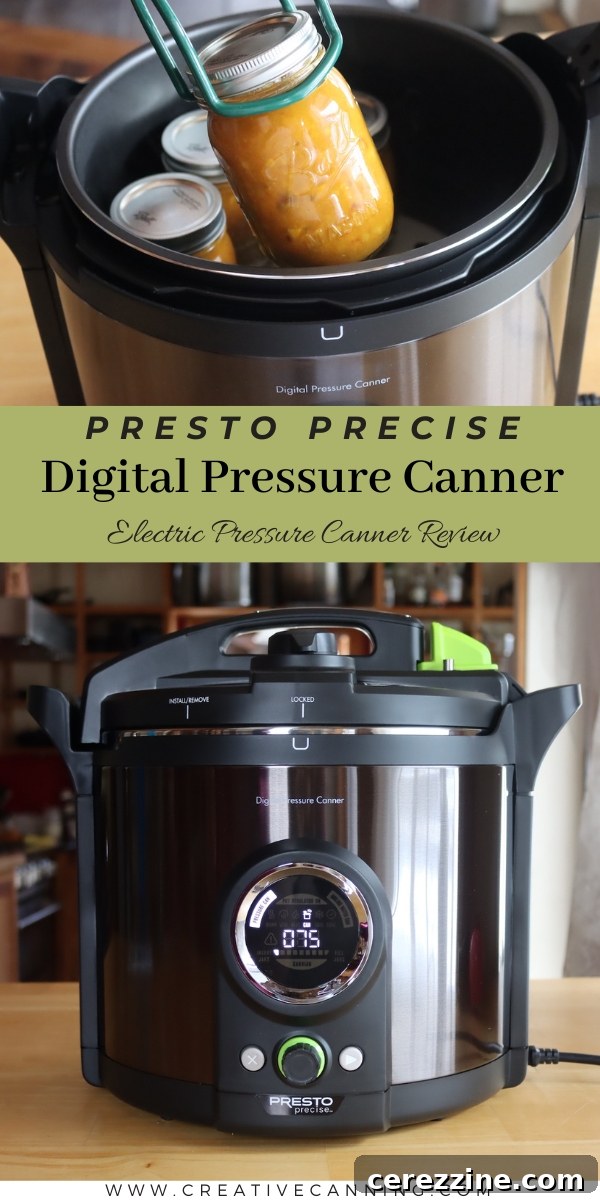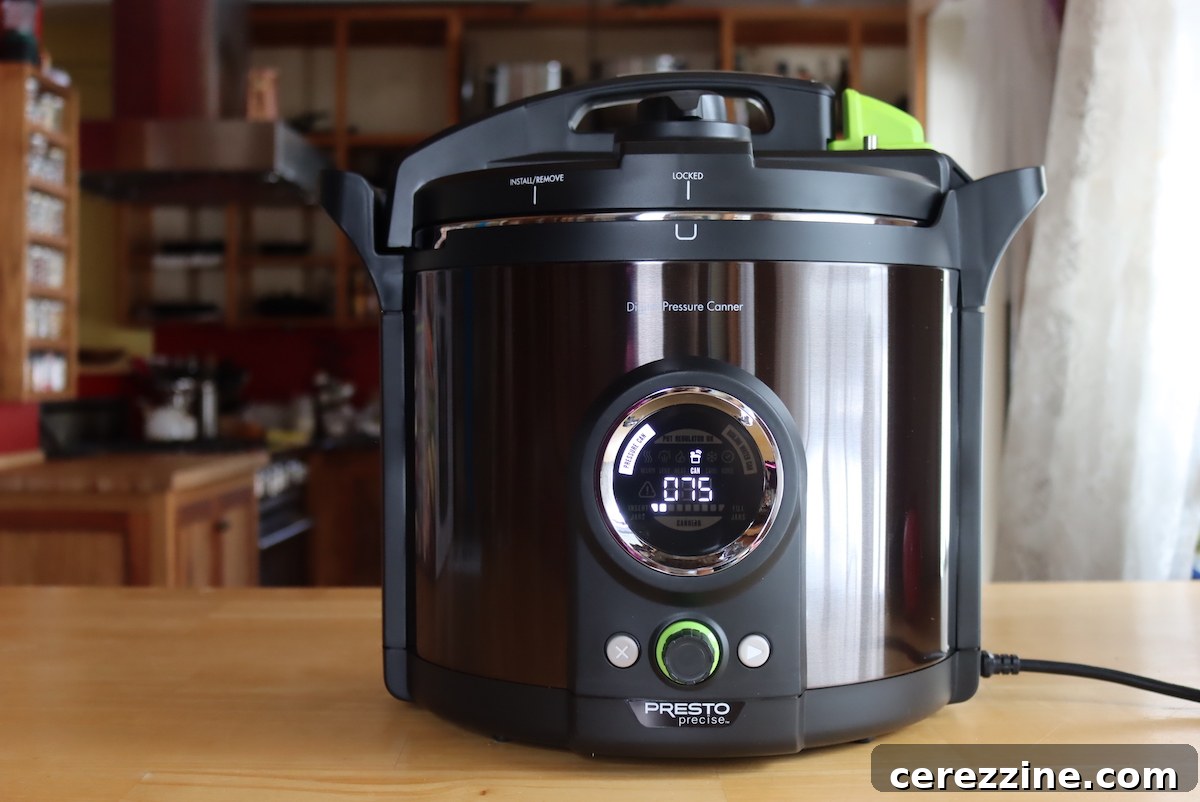
The world of home food preservation has seen remarkable advancements, making the once-daunting process of canning more accessible and safer than ever before. Leading this revolution is the **Presto Precise Digital Pressure Canner**, an innovative automatic electric pressure canner designed to simplify home canning significantly. Much like the familiar Instant Pot, it offers push-button convenience, but unlike standard pressure cookers, it’s engineered specifically to meet stringent USDA guidelines for safe pressure canning.
For decades, pressure canning has been a cornerstone of preserving low-acid foods like meats, vegetables, and soups. However, traditional stovetop pressure canners, while incredibly effective, often intimidate beginners with their manual pressure regulation, loud jiggling weights, and the necessity of precise altitude adjustments. The Presto Precise Digital Pressure Canner eliminates these complexities, properly venting its chamber before canning and then maintaining precise, consistent temperatures throughout the entire process. This automatic functionality makes it a game-changer for both seasoned canners seeking convenience and newcomers eager to explore home preservation without the fear factor.
But with its advanced features and unique position in the market, the question naturally arises: is this pioneering electric pressure canner truly worth the investment?
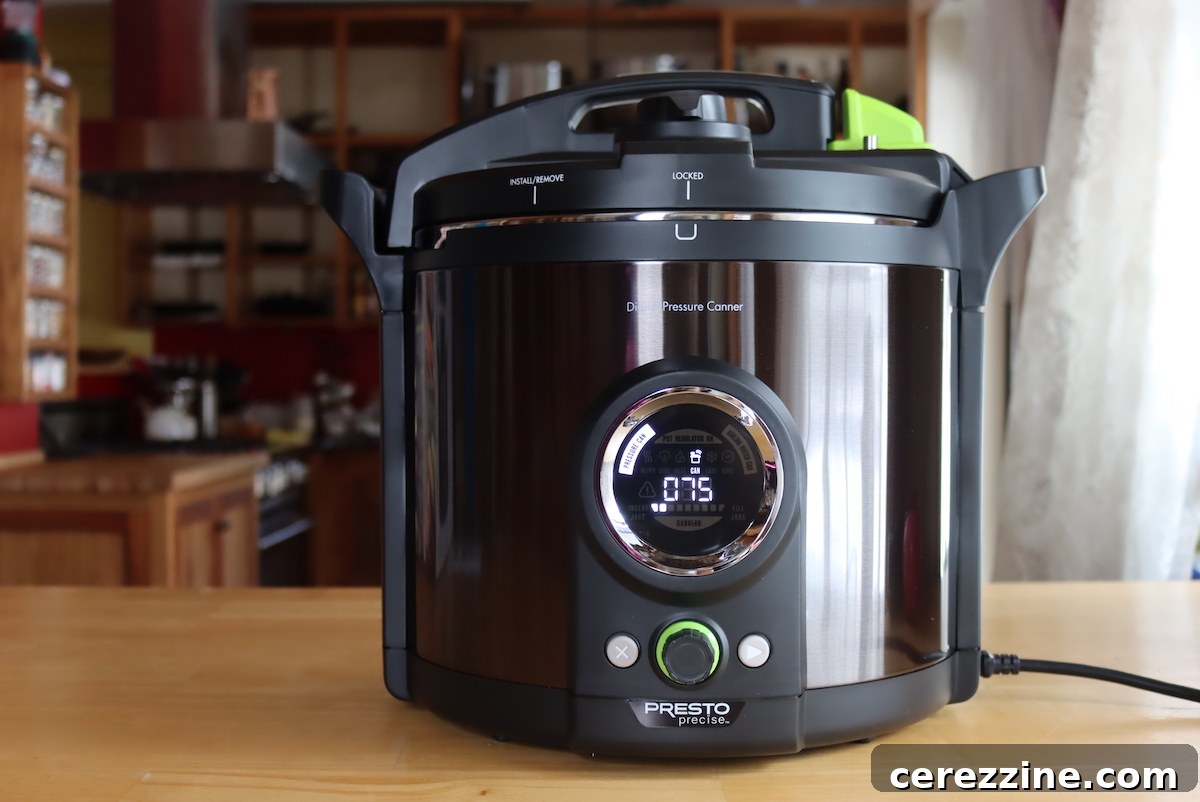
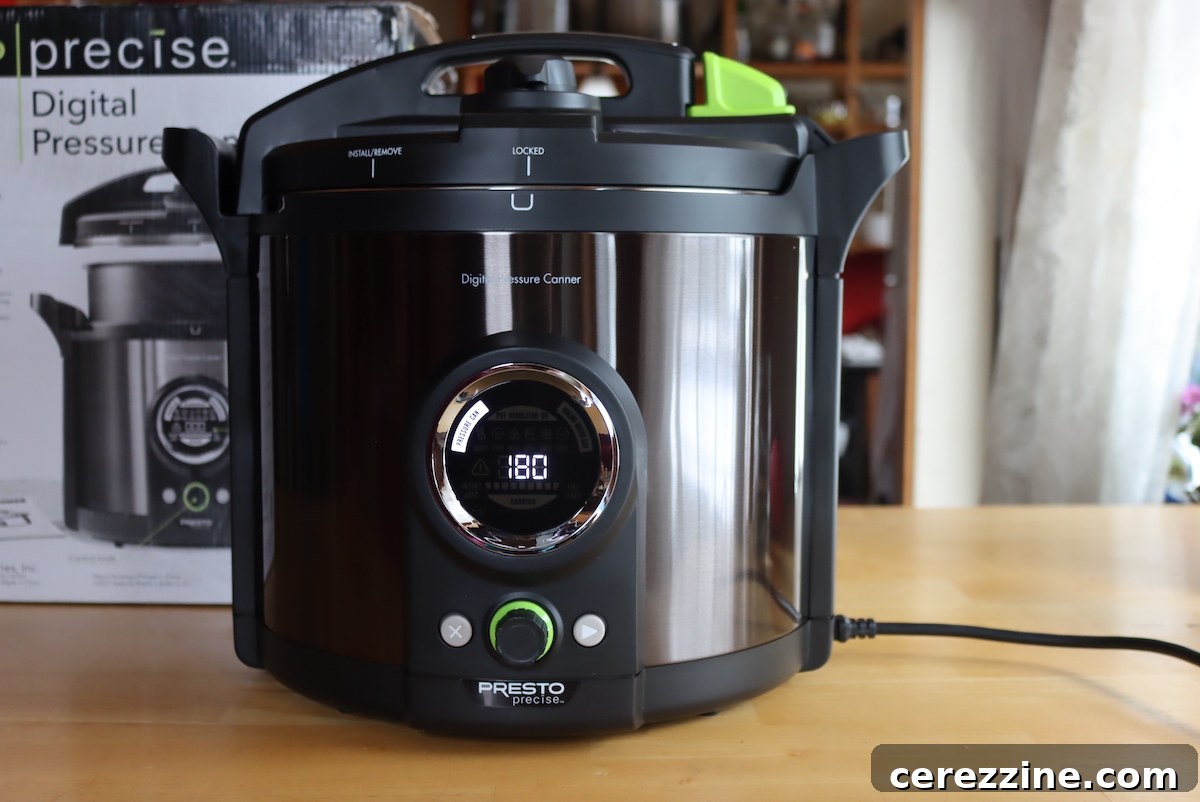
Presto stepped into the spotlight with the release of the first – and currently only truly USDA-compliant – electric pressure canner, the Presto Precise Digital Pressure Canner #02144. This ingenious appliance strips away the guesswork and anxiety traditionally associated with pressure canning. Its intuitive operation guides users through every stage of the process, transforming a potentially intimidating task into a straightforward, automated one.
My own journey into pressure canning, over a decade ago with an All-American Pressure Canner, began with a healthy dose of apprehension. Those robust stovetop models are built like tanks and perform admirably, but their manual operation, constant jiggling sounds, and the need for vigilant monitoring can be overwhelming, especially for those new to canning. The learning curve is steep, and precision is paramount for safety.
The introduction of the Instant Pot in 2010 revolutionized home cooking, making pressure cooking accessible and comfortable for millions. Its countertop design and automated features eliminated the intimidation factor, leading many to wonder if it could also be used for canning. Unfortunately, a critical distinction must be made: **Instant Pots are unequivocally not safe for pressure canning.**
The reasons behind this crucial safety warning are manifold:
- Inaccurate Temperature and Pressure Control: Instant Pots are designed for cooking, not precision canning. Their “high” and “low” pressure settings offer a general pressure window that can fluctuate by 3 to 4 PSI during operation. This variability is perfectly acceptable for cooking beans or stews but falls far short of the consistent, precise pressure and temperature required for safe pressure canning. The USDA mandates a sustained temperature of 240°F (116°C) for safe low-acid food preservation, a threshold that Instant Pots frequently fail to maintain, even at their “high pressure” setting, as confirmed by Instant Pot’s own documentation.
- Lack of Proper Venting: A fundamental step in safe pressure canning is venting the canner before sealing and pressurizing. This expels all trapped air, ensuring a pure steam environment and uniform heat distribution throughout the chamber. Instant Pots do not perform this crucial venting step, leading to potential “cold spots” within the canning chamber. While minor temperature variations are fine for cooking food that will bubble and circulate, they are a critical flaw for canning, where a single jar in a cold spot could compromise food safety.
- No Altitude Adjustment Mechanism: The boiling point of water and the effective pressure required for canning change significantly with altitude. Traditional pressure canners require manual adjustments to compensate for this. Instant Pots lack any mechanism to adjust for altitude, meaning a pressure setting that might be adequate at sea level would be dangerously insufficient at higher elevations, making them universally unsafe for pressure canning across varying geographies.
This limitation holds true even for the Instant Pot Max, which misleadingly includes a “canning” setting. According to the Instant Pot website itself, this setting is only approved for water bath canning of high-acid foods. For a deeper dive into why Instant Pot canning is problematic, I encourage you to consult dedicated resources on the subject, such as my comprehensive article about canning in the Instant Pot.
So, if the ubiquitous Instant Pot falls short, what is the reliable solution for an electric pressure canner? Enter the Presto Precise Digital Pressure Canner. Released a decade after the first Instant Pot, it expertly addresses and resolves every issue associated with electric pressure canning. This intelligent appliance guides you through each stage of the canning process, ensuring compliance and safety.
Its operation is entirely automatic. The Presto canner maintains the ideal temperature within its chamber independently, eliminating the need for manual pressure adjustments or complicated altitude calculations. It seamlessly integrates vital steps such as warming jars, venting the canner, and precise processing, all crucial elements for successful and safe pressure canning.
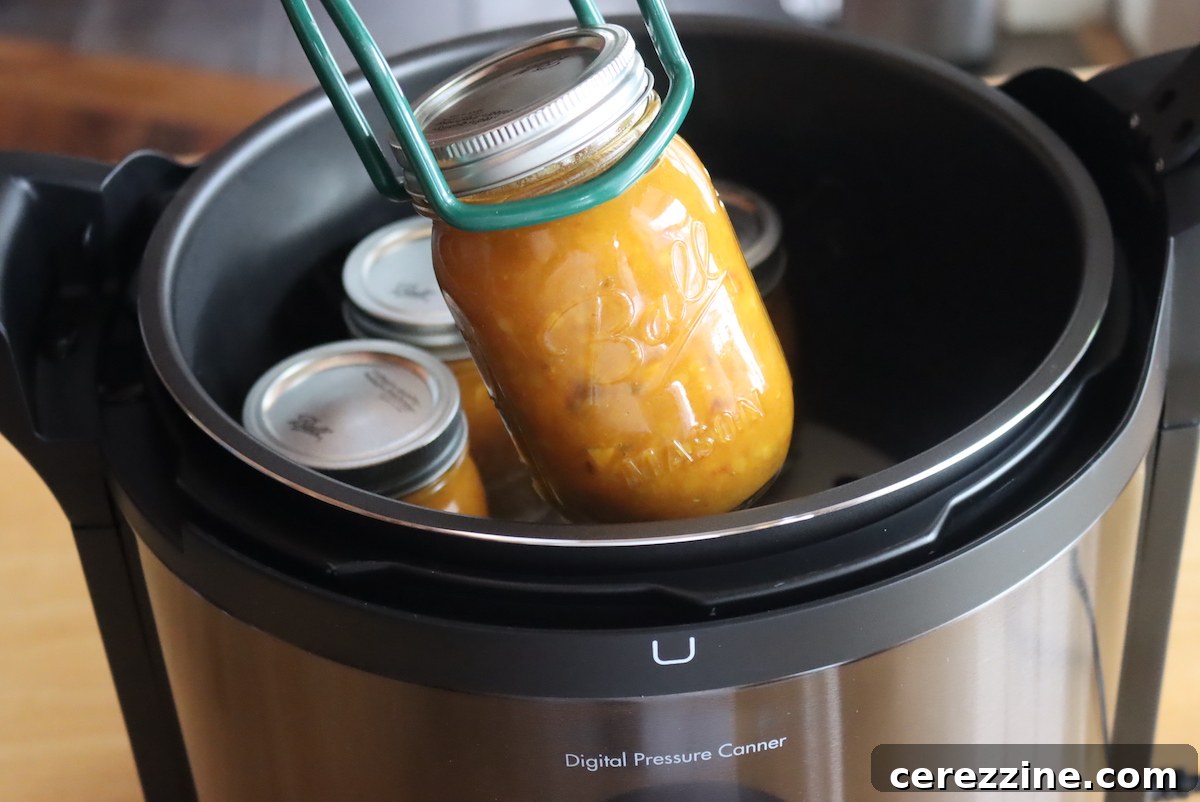
Despite its release in 2020 amid global disruptions, the Presto digital canner didn’t receive the widespread attention it deserved. Even years later, many home preservers remain unaware that dedicated electric pressure canners exist. Having thoroughly tested this remarkable appliance through numerous batches, I am eager to share its capabilities and change that perception. This is more than just an appliance; it’s a revolutionary tool for home food preservation, designed to remove the fear and uncertainty from pressure canning. I genuinely wish such a device had been available when I first embarked on my canning journey.
As an experienced canner whose family processes multiple batches weekly year-round, I can confidently say this “little beauty” has earned a permanent spot on my kitchen countertop. It has streamlined my canning routine to such an extent that I’m contemplating retiring one of my traditional canners.
(Transparency Note: I want to assure readers that I am not affiliated with Instant Pot or Presto Canning. I purchased these products with my own funds for the sole purpose of providing an unbiased review. All opinions expressed are genuinely my own.)
Pros and Cons of the Presto Precise Digital Pressure Canner
For those considering an upgrade or their first venture into pressure canning, a detailed understanding of the Presto Precise Digital Pressure Canner’s strengths and limitations is essential. Below, I’ll delve into its operational nuances, highlighting what truly makes it stand out and areas where it might not suit every canner’s needs. If you’re pressed for time, here’s a concise overview of its advantages and disadvantages:
Pros
- Frees Up Stovetop Space: A dedicated countertop appliance, it eliminates the need to monopolize precious stovetop burners, allowing for parallel cooking or a less cluttered kitchen during canning.
- Fully Automatic Operation: The canner guides you through every step, ensuring proper venting, precise temperature maintenance, and eliminating the risk of forgetting critical procedures.
- Maintains Accurate Pressure Automatically: By tracking internal temperature rather than just pressure, it guarantees safe processing regardless of external factors.
- No Altitude Adjustments Needed: Its intelligent temperature sensor compensates automatically for varying altitudes, simplifying a previously complex calculation.
- Silent Operation: Unlike traditional canners with their noisy jiggler weights, this electric model operates with remarkable quietness during the processing phase.
- Multiple Fail-Safes: Equipped with advanced safety interlocks and automatic shut-off features, it offers peace of mind by preventing mishaps like accidental opening under pressure or excessive pressure buildup.
- Excellent Insulation: The well-insulated design prevents significant heat transfer to your kitchen, making year-round canning more comfortable and energy-efficient.
- User-Friendly Interface: Designed with simplicity in mind, its operation is as intuitive and easy as using a popular electric pressure cooker.
- Reduces Intimidation: By automating complex steps and enhancing safety, it significantly lowers the barrier to entry for new pressure canners.
Cons
- Limited Capacity: With a capacity of 5 quarts or 8 pints, it may be restrictive for those processing exceptionally large batches.
- Audible Notifications at Each Step: While helpful for guidance, the series of beeps can be a minor inconvenience for some users.
- Extended Cool-Down Time: Due to its superior insulation, the canner takes longer to depressurize and cool, which can extend the overall processing time, particularly for back-to-back batches.
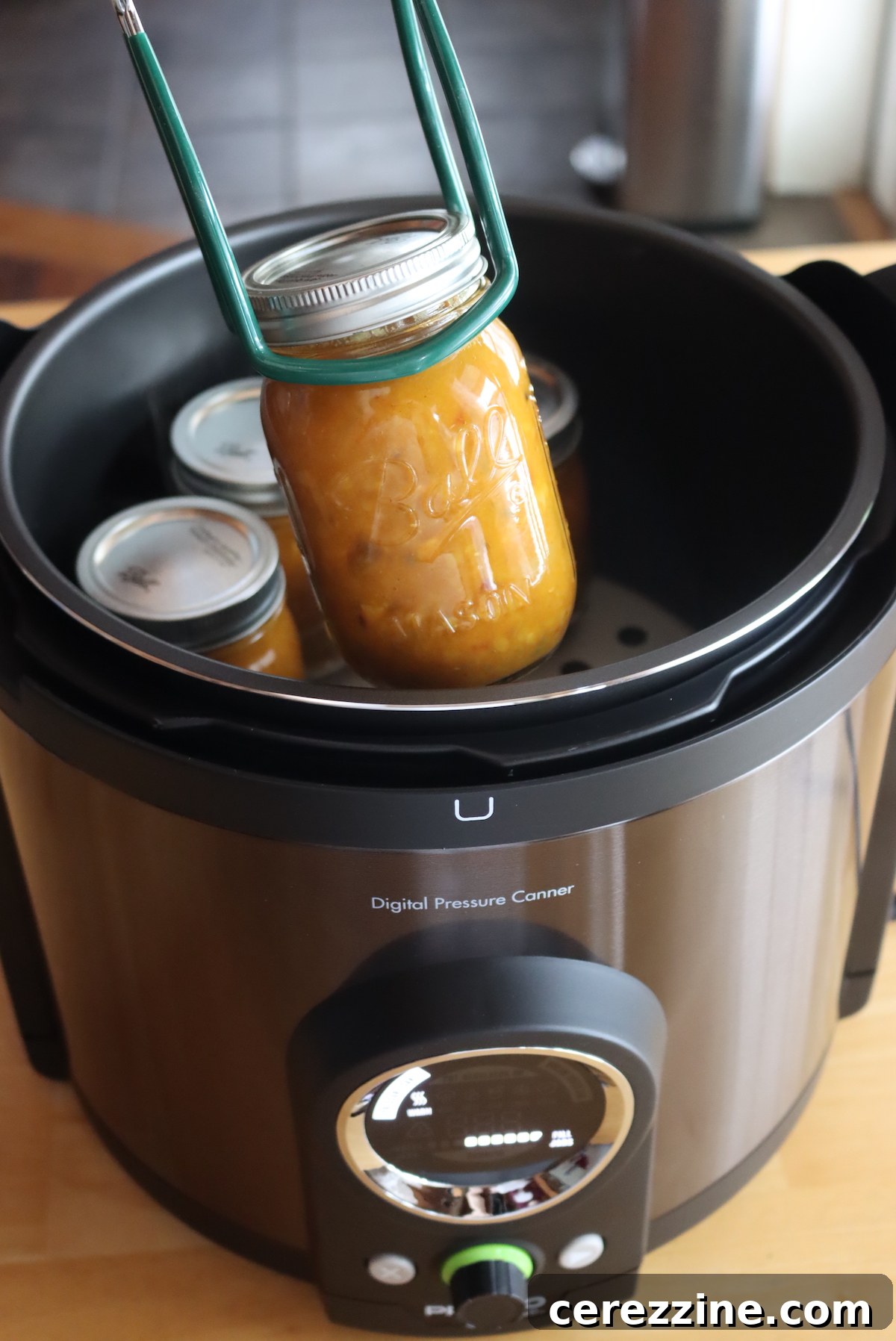
How Does a Presto Digital Pressure Canner Work?
The operational simplicity of the Presto Precise Digital Pressure Canner is one of its most compelling features. Upon unboxing, you’ll find a clear quick-start guide that details instructions for both pressure canning and water bath canning (yes, this versatile appliance can handle both!). The comprehensive owner’s manual further expands on maintenance, troubleshooting, and even includes a recipe book with USDA-approved recipes, providing an immediate resource for safe canning practices.
In essence, the Presto electric pressure canner functions like an advanced electric pressure cooker, but with crucial, integrated steps tailored specifically for canning. These include a pre-heating cycle for jars and a mandatory venting phase to ensure optimal processing conditions. A key differentiator is its integrated temperature sensor, which continuously monitors the internal temperature in real-time. This sensor guarantees that the canner consistently maintains temperatures above 240°F (116°C), the critical threshold for safe pressure canning, irrespective of your altitude. At higher elevations, the canner will simply apply more heat to achieve this target temperature, ensuring perfectly processed food every time without any manual adjustments from the user.
A helpful tip for streamlining your canning process: instead of using the canner’s built-in jar warming step, consider running your jars through a dishwasher cycle just before canning. This ensures they are pre-warmed and sterilized without the need for additional hot water handling, simplifying your workflow. Be aware, however, that the canner’s programmed “jar warming” step is integral to its pre-heating cycle and cannot be skipped, as it also brings the appliance itself up to temperature.
Presto Digital Pressure Canner Review: A Deep Dive into Performance
To be entirely transparent, I approached the Presto Precise Digital Pressure Canner with a degree of skepticism. As a long-time user of robust All-American Brand Pressure Canners—including a colossal 40-quart model capable of feeding an army—I considered myself a traditionalist. My initial expectation for an electric model was that it might be a charming novelty, perhaps useful for small tasks, but certainly not a primary workhorse for our family’s extensive canning needs. After all, we process several batches a week, year-round.
I was absolutely mistaken! This appliance has profoundly impressed me and has quickly become my go-to canner for weekly tasks. It represents a significant leap forward in convenience and safety for home food preservation. Here’s a detailed look at what I’ve come to love – and a few minor points that aren’t perfect – about the Presto electric pressure canner:
Guided Process: Flawless Execution, Every Time
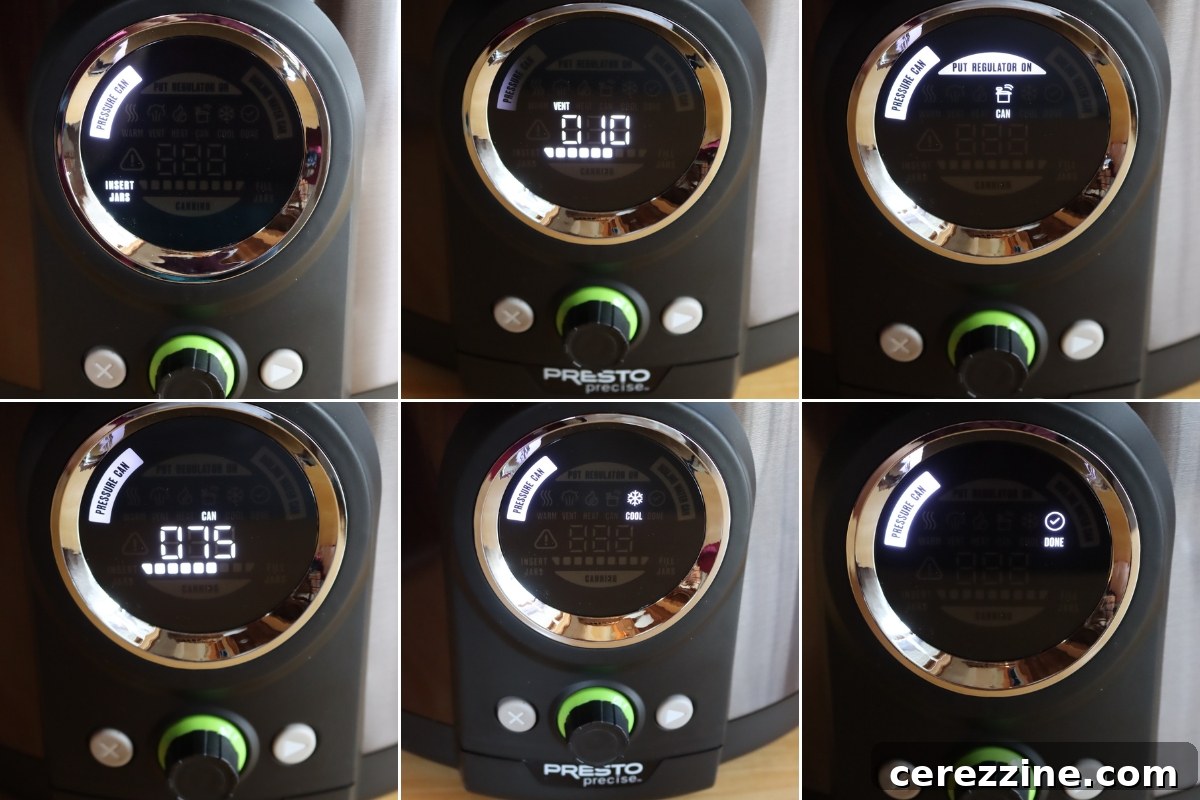
The Presto canner’s built-in programming for the entire pressure canning process is nothing short of brilliant. It meticulously guides you through each and every step, ensuring no critical phase is overlooked. Forget to vent the chamber? Not an issue – the canner handles it automatically. From the initial pre-heat cycle to the final, safe cool-down, every stage is pre-programmed, with clear prompts displayed on the screen. This feature is invaluable for beginners, providing a reassuring hand-holding experience. But it’s equally beneficial for experienced canners, especially on busy weeknights when processing leftovers. Picture yourself tidying the kitchen while canning a batch of chili con carne; the canner acts as a diligent personal assistant, ensuring every step is executed precisely and on schedule.
Effortless Altitude Adjustments: A Game-Changer for Safety
One of the most significant complexities in traditional pressure canning is compensating for altitude. The science is simple: at higher elevations, atmospheric pressure is lower, requiring higher pounds per square inch (PSI) inside the canner to reach the critical 240°F needed for safe processing. The Presto canner elegantly bypasses this manual calculation. Because it continuously tracks the actual internal temperature, it simply applies the necessary heat to maintain 240°F, regardless of your geographical location. The temperature, not the fluctuating pressure reading, is the true indicator of safety. This automation is a monumental convenience and a critical safety feature, removing a common source of error and anxiety for canners residing at different altitudes.
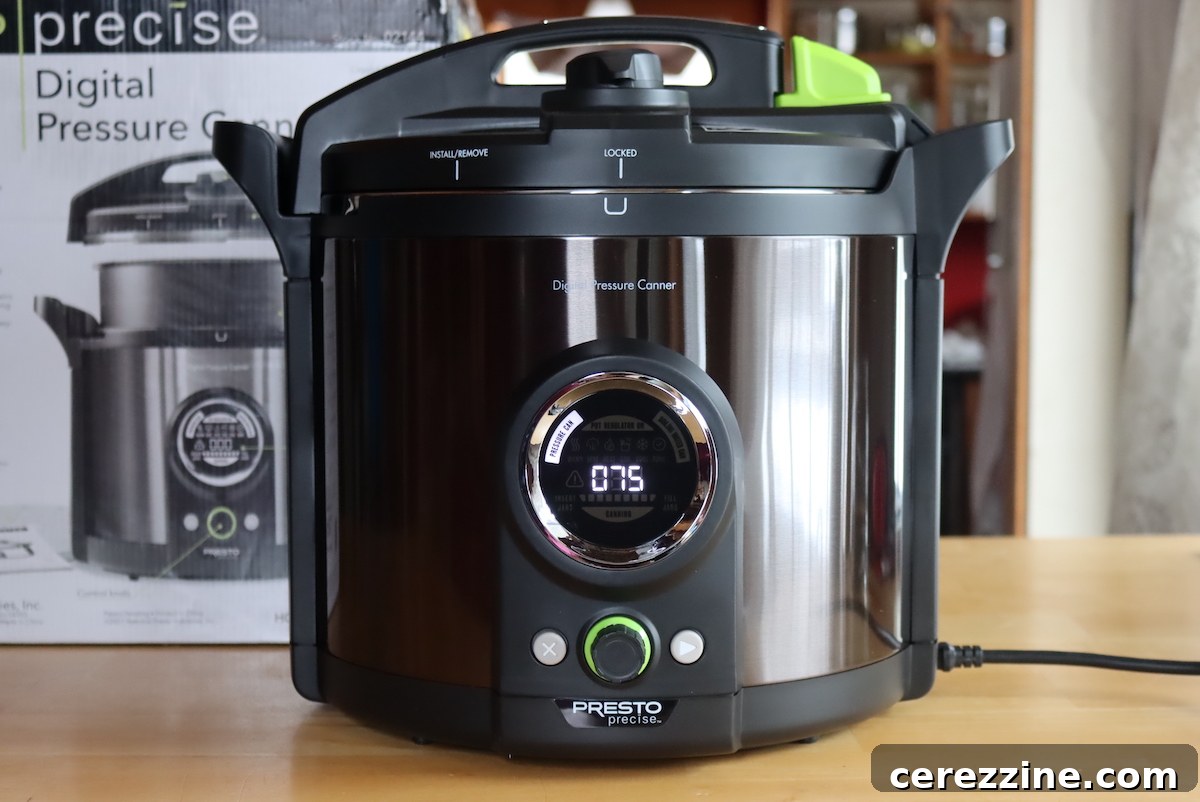
Silent Operation: Canning Peace and Quiet
As an experienced canner, the silent operation of the Presto digital canner is a feature I particularly cherish. Anyone familiar with stovetop pressure canners knows the incessant jiggling of the weighted gauge, a constant, often loud reminder that the canner is regulating pressure. Once the Presto canner reaches its target temperature and pressure, it operates in blissful silence. This is a godsend for parents of young children, allowing for canning during nap times or late evenings without disturbing anyone. While it does emit beeps at each instructional step, these occur during the active setup and loading phases. Once processing begins, the canner quietly and efficiently gets the job done, without another peep.
Countertop Convenience: Reclaiming Your Stovetop
Kitchen real estate, especially stovetop space, is often at a premium during canning season. Jars need to be kept hot, food needs to be cooked and prepared, and the canner itself requires a burner. This juggling act becomes even more challenging when trying to prepare dinner simultaneously. The Presto digital canner offers a brilliant solution by moving pressure canning off the stovetop entirely. Your stove remains free for other culinary tasks, a blessing during a long 90-minute processing cycle. Even if you’re solely focused on canning, not having to share burners with prep work significantly streamlines the entire operation, particularly in kitchens with smaller stoves.
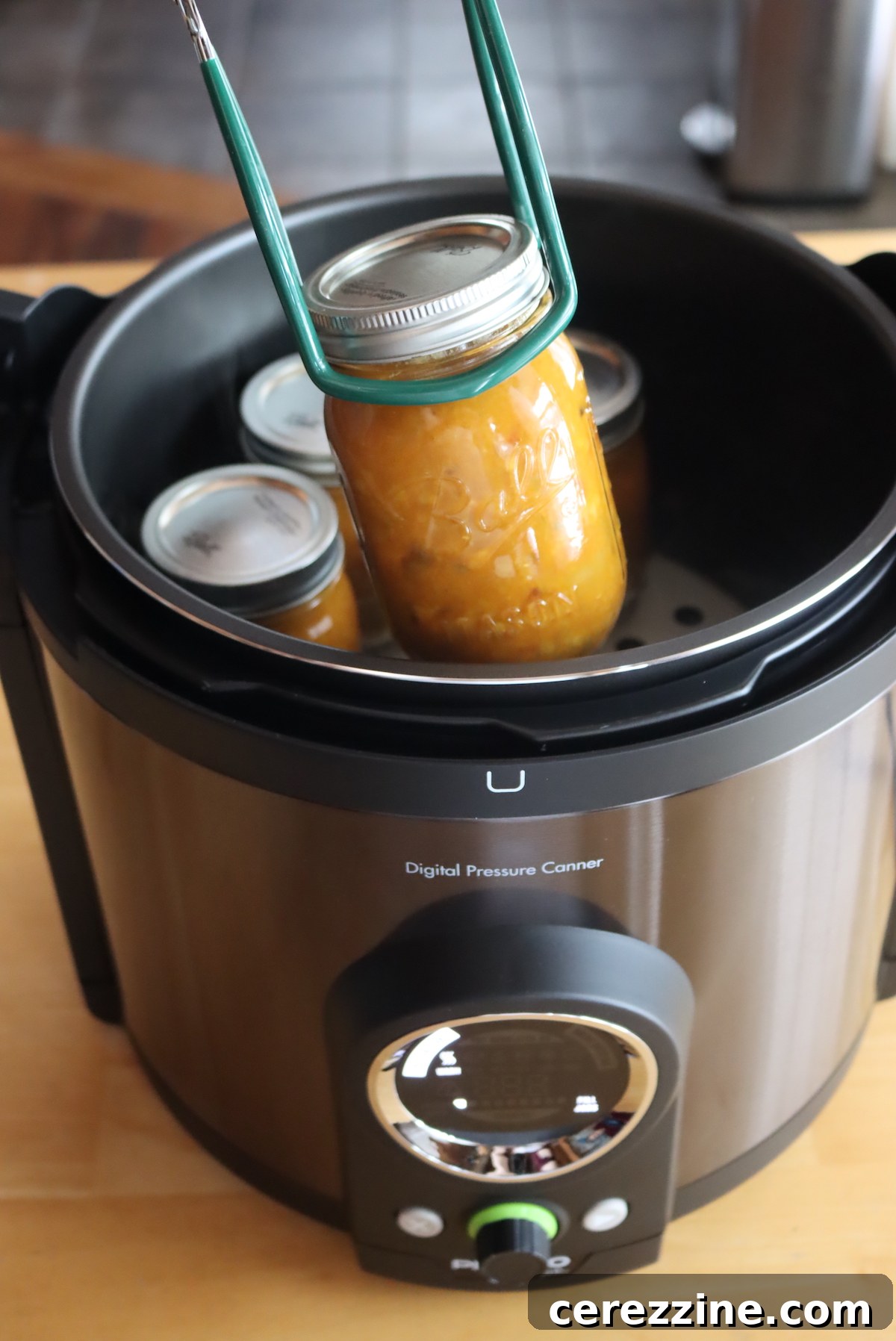
Robust Safety Features: Unwavering Peace of Mind
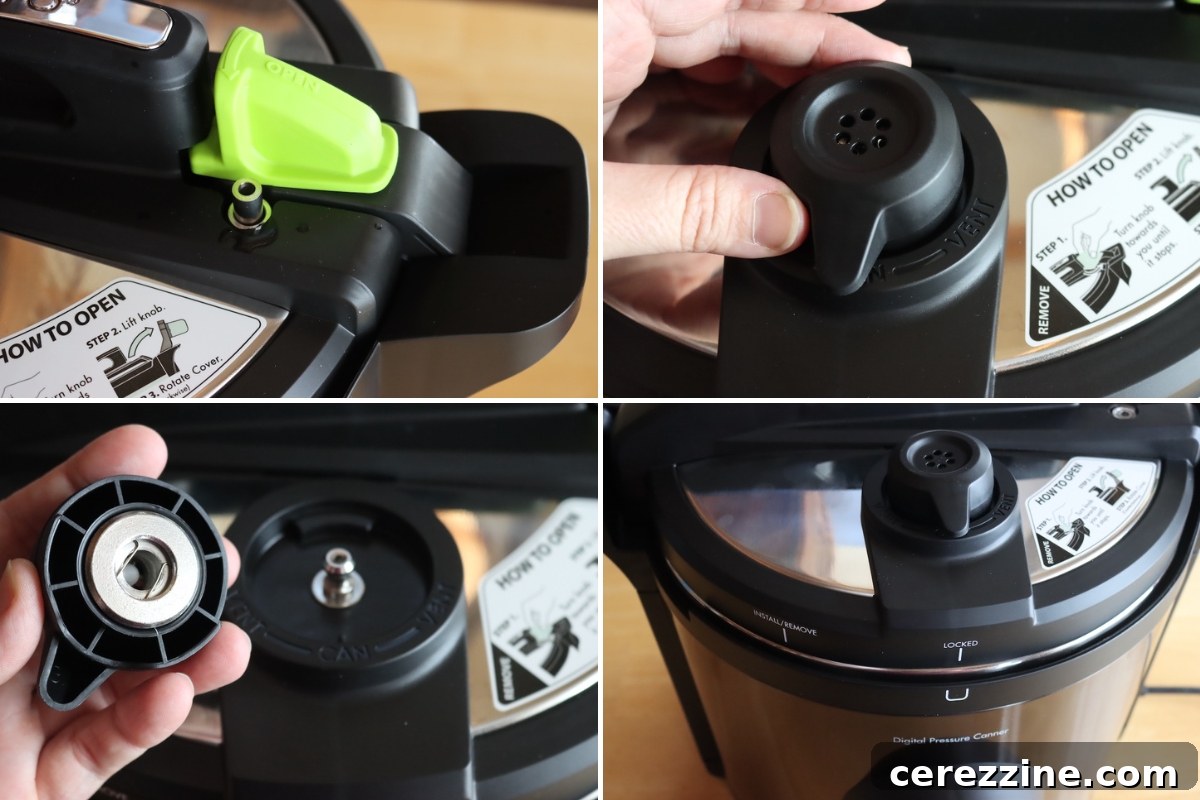
Safety is paramount in pressure canning, and the Presto digital canner excels in this regard with multiple integrated fail-safe mechanisms. The unit is equipped with interlocks that physically prevent the lid from being opened when the chamber is pressurized, eliminating any risk of accidental scalding or injury. Furthermore, it automatically shuts off if internal pressure exceeds safe limits, such as in the unlikely event of a blocked vent. These advanced safety features, combined with its quiet operation, effectively remove the “scary” elements often associated with traditional pressure canning, allowing users to proceed with confidence.
Superior Insulation: A Cooler Kitchen and Lower Energy Bills
Traditional stovetop pressure canners are not typically insulated, meaning a significant amount of heat radiates into your kitchen during operation. This often relegates extensive pressure canning to cooler winter months. In stark contrast, the electric Presto canner boasts exceptional insulation. This design choice prevents your kitchen from overheating, allowing for comfortable year-round canning, even in warmer climates. The added benefit of this superior insulation is enhanced energy efficiency; the canner requires less power to maintain its processing temperature compared to a stovetop model.
(It’s worth noting that this excellent insulation does have a trade-off: a longer cool-down period after processing, which we’ll discuss in more detail shortly.)
Electrically Powered: Versatility for Modern Homes and Off-Grid Living
The fact that this canner runs on electricity offers a distinct advantage. While most home cooks will appreciate its energy efficiency and convenience on a standard grid, it opens up exciting possibilities for off-grid living. For those with solar panels and battery banks, like my own homestead, it can be powered directly from surplus electricity generated during sunny months. This addresses a common query for “off-grid” canning solutions, as traditional methods like open fires or outdoor propane burners lack the precise heat control necessary for safe pressure canning. The Presto digital canner, in such scenarios, becomes the ideal “off-grid pressure canner.” For those connected to the grid, it’s simply a more efficient and better-insulated alternative to conventional models.
Minor Criticisms: Understanding the Limitations
While my enthusiasm for the Presto digital canner is evident, no product is without its minor drawbacks. Given our family’s extensive year-round canning efforts, often involving very large batches, two points stand out:
Firstly, the capacity is limited to 5 quarts or 8 pints per batch. While this is perfectly adequate for the majority of home canning needs and daily meal prep, it falls short when processing exceptionally large quantities, such as multiple gallons of broth or stock. For those truly massive endeavors, a larger capacity stovetop unit, like the 40-quart All-American Brand Pressure Canner, remains indispensable.
Secondly, the canner’s superior insulation, while a major benefit for energy efficiency and a cooler kitchen, contributes to an extended cool-down period. As a critical safety precaution, the canner cannot be opened until all internal pressure has dissipated. With stovetop canners, this typically takes 30 to 45 minutes after the heat is turned off. The Presto electric canner, due to its excellent heat retention, requires approximately 60 to 90 minutes to cool sufficiently for safe opening. While this isn’t a significant difference for a single batch, it can impact efficiency when attempting to process multiple batches consecutively. This extended waiting period is a direct consequence of its safe, well-insulated design, a trade-off that, in my opinion, is well worth it for the overall benefits.
Overall, these criticisms are minor in the grand scheme of things. The overwhelming advantages of the Presto electric pressure canner far outweigh these small limitations, making it an invaluable addition to any home preservation setup.
Presto Digital Pressure Canner FAQ
To further address common questions and provide comprehensive insights, here are answers to frequently asked questions about the Presto Precise Digital Pressure Canner, rounding out the details:
Are There Other Reliable Electric Pressure Canners on the Market?
At a price point around $300, the Presto digital canner represents a significant investment compared to a basic Instant Pot. This often leads to questions about competing brands. While the market for electric canners is still developing, options for truly safe and USDA-compliant electric pressure canners are extremely limited. The Presto Precise Digital Pressure Canner stands out as the best, and arguably only, reliable choice.
Let’s examine some alternatives and why they fall short:
- Nesco Digital Pressure Cooker and Canner: Nesco offers a product it labels as a “Digital Pressure Cooker and Canner” (available here). My experience with this model, purchased for comparative review, has been challenging. It is considerably less automated than the Presto and proving quite finicky to program correctly, even after a dozen batches. I’ve encountered instances where it prematurely initiates the canning countdown before reaching proper pressure and temperature, necessitating reprocessing the batch. While some users report success, I honestly struggle with its consistency and user-friendliness. For the effort involved, a standard stovetop pressure canner is often a more straightforward and reliable option. Therefore, I cannot recommend the Nesco for those specifically seeking an electric pressure canner.
- Instant Pot Max: As previously discussed, the Instant Pot Max, despite its “canning” setting, is not approved for pressure canning. Initial claims of pressure canning capability were later retracted by Instant Pot due to its inability to maintain consistent, high enough pressure (specifically, a sustained 240°F) throughout the entire processing cycle. Their own data graphic clearly illustrates significant pressure fluctuations, regularly dropping below safe thresholds. The Instant Pot website now explicitly states it’s only suitable for water bath canning high-acid foods.
- Ball Canning Electric Water Bath Canner: Ball offers an electric canner, but it is explicitly a water bath canner, not a pressure canner. It functions like an oversized electric kettle, ideal for boiling water for high-acid foods like jams, jellies, fruits, and pickles, without occupying a stovetop burner. However, it cannot be used for pressure canning low-acid foods.
- All American Electric Autoclave: All American also manufactures an electric autoclave that bears a superficial resemblance to their stovetop pressure canners. However, it is fundamentally different and unsuitable for food canning. Designed for steam sterilization of medical instruments or porous materials, its internal configuration, pressure settings (locked at 17 PSI, much higher than needed for canning), and maximum run time (60 minutes, insufficient for many recipes) make it incompatible with safe food preservation. Despite sometimes being mislabeled as an “All American Electric Pressure Cooker,” it is a professional autoclave intended solely for non-food sterilization and carries a hefty price tag of $1000-$1200.
Conclusion on Alternatives: If your goal is to acquire a reliable electric pressure canner, the Presto Precise Digital Pressure Canner (#02144) is the unequivocally recommended choice for both novice and experienced canners. No other product currently on the market offers its combination of automation, safety, and USDA compliance.
Does the Presto Electric Pressure Canner Meet USDA Guidelines?
Yes, absolutely. While the USDA does not formally “approve” or “certify” specific brands of pressure canners, the Presto Precise Digital Pressure Canner adheres to all USDA guidelines for safe home pressure canning. Presto explicitly states that the machine properly vents its chamber before sealing and maintains precise, consistent temperatures throughout the entire canning process. Its intelligent temperature sensor automatically adjusts for altitude, eliminating the need for manual intervention and ensuring the critical 240°F processing temperature is always achieved.
Furthermore, the Presto canner has a chamber sufficient to hold at least 4 quarts, meeting another crucial USDA standard (smaller chambers can cool too quickly, compromising safety). To operate it in full compliance with USDA guidelines, always use tested pressure canning recipes and ensure each batch consists of at least 2 quarts (or 4 pints) of food. Very small batches lack sufficient thermal mass to guarantee even heating within the chamber. All USDA-tested pressure canning recipes are designed for a minimum of 2 quarts or larger yields.
Therefore, the Presto Digital Pressure Canner (#02144) stands as the only electric pressure canner that meets the rigorous standards set by the USDA for safely preserving low-acid foods (such as meats, beans, and soups) at home.
It’s important to differentiate this from Presto’s simple digital pressure cooker, which costs around $100. That model functions similarly to an Instant Pot and is not designed for canning. To ensure you purchase the correct canning appliance, always verify that you are selecting Presto’s stock No. 02144, as product listings online can sometimes be confusing.
What is the Best Electric Pressure Canner?
Without a doubt, the best electric pressure canner available today is the Presto Precise Digital Pressure Canner #02144. There is simply no comparison in terms of safety, automation, and adherence to USDA guidelines. As detailed earlier, the Instant Pot is unsafe due to inadequate temperature maintenance and chamber size. The Nesco electric canner, while less expensive, is prone to user error and significantly harder to operate consistently. If you’re considering the Nesco as a budget-friendly option, I would strongly advise opting for a traditional stovetop canner instead, which offers greater reliability and ease of use at a similar price point.
How Much Does the Presto Electric Canner Cost?
As of 2023, the Manufacturer’s Suggested Retail Price (MSRP) for the Presto Precise Digital Pressure Canner is approximately $300. Market prices can fluctuate due to inflation and retailer discounts; I’ve observed it priced anywhere from $285 to $349. I personally purchased mine from this seller, which offered the most competitive price I found.
To put this in perspective, this is a moderate increase from most stovetop Presto canners, which typically range from $150 to $175. However, it is considerably more affordable than premium models like the All-American Pressure Canner, which can cost between $450 and $600.
What is the Capacity of the Presto Digital Pressure Canner?
The Presto electric pressure canner offers a practical capacity for home preservers. When pressure canning, it can accommodate:
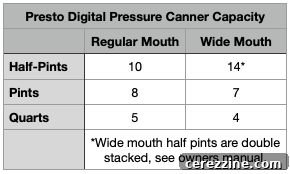
- Eight regular-mouth pint jars (or seven wide-mouth pint jars)
- Five regular-mouth quart jars (or four wide-mouth quart jars)
- Ten regular-mouth half-pint jars
For wide-mouth half-pint jars, which are shorter and wider, you can double-stack them to fit a total of 14 jars. The instruction manual provides specific guidance on how to safely double-stack these shorter jars to maximize capacity. The following table summarizes the jar capacities:
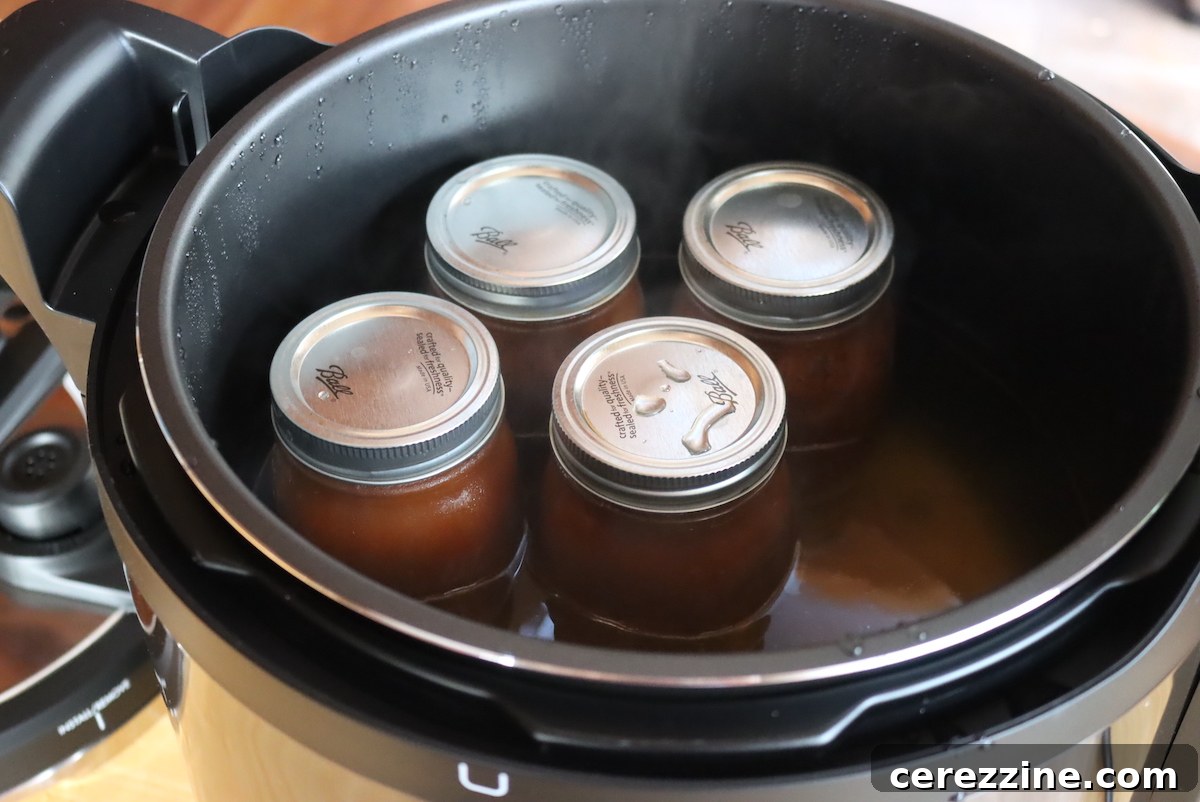
It’s important to note a slight difference for water bath canning: the internal pot is not quite deep enough to fully submerge quart jars. Therefore, water bath canning is limited to pint and half-pint jars, and double-stacking half-pints is not recommended for water bathing. For water bath canning, the capacity is eight regular-mouth pints or ten regular-mouth half-pints.
Can You Water Bath Can in an Electric Pressure Canner?
Yes, the Presto Precise Digital Pressure Canner is a versatile appliance capable of both pressure canning and water bath canning. To switch modes, simply select “water bath canning” from the menu and follow the guided prompts. The process is largely similar to pressure canning, with the key difference being that you omit placing the pressure regulator valve on the canner. This prevents pressure from building, allowing it to function as a boiling water bath. This dual functionality adds significant value, making it a single solution for a wide range of home preservation tasks.
This video provides a clear demonstration of how to water bath can using the Presto digital pressure canner:
Can You Pressure Cook in the Presto Digital Pressure Canner?
While the Presto Precise Digital Pressure Canner is a pressure appliance, its suitability for general pressure cooking (i.e., cooking food directly in the pot, not in jars) is unclear and not explicitly addressed in Presto’s literature. My primary concern would be the design of its vent system, which is optimized for canning jars and might be susceptible to clogging from solid food particles if used for direct cooking. Furthermore, the canner’s programming includes mandatory steps like warming and venting that cannot be skipped, making it less efficient and practical for quick pressure cooking tasks compared to a dedicated electric pressure cooker.
What Are the Electricity Requirements of the Presto Digital Pressure Canner?
The Presto electric pressure canner operates on standard 120-volt electricity, utilizing a typical US-style wall plug. It has a power rating of 1485 watts. While this is a substantial power draw for a small kitchen appliance, it’s comparable to many electric waffle makers, toasters, or high-powered blenders. It should comfortably operate on most standard kitchen circuits without issues.
How Long Does It Take an Electric Pressure Canner to Complete a Cycle?
The total time for a full canning cycle with the Presto digital canner varies based on your specific recipe’s processing duration. However, the general timeline for each stage is as follows:
- Pre-Warming Jars: 15 to 20 minutes (if using the canner’s built-in function)
- Loading Jars: 5 to 10 minutes
- Warming to Boiling: 10 to 15 minutes
- Venting Steam: 10 minutes (critical for safe canning)
- Coming up to Pressure: 10 to 15 minutes
- Processing at Pressure: Varies significantly by recipe, typically 10 to 100 minutes
- Cooling & Depressurizing: 60 to 90 minutes (due to excellent insulation)
Considering all stages, a complete canning run can range anywhere from approximately 2 hours for recipes with the shortest processing times, up to 4.5 hours for those requiring the longest duration. Crucially, once the jars are loaded and the chamber is properly vented, the remaining steps are entirely automated and hands-off, allowing you to attend to other tasks. While the total run time is comparable to a stovetop canner, the extended cool-down period is a direct consequence of the Presto’s superior insulation and built-in safety features, which prevent opening until all pressure has safely dissipated.
What is the Maximum and Minimum Processing Time in the Presto Digital Pressure Canner?
The Presto Precise Digital Pressure Canner offers a flexible processing time range. It can be programmed to process at pressure for durations between a minimum of 10 minutes and a maximum of 180 minutes. Adjustments can be made in convenient 5-minute increments (e.g., 10, 15, 20 minutes, up to 180 minutes).
The longest standard pressure canning time for any food item, such as seafood, is typically around 100 minutes, meaning the 180-minute timer provides ample capacity for all USDA-approved food recipes. This extended maximum duration also makes the canner suitable for other applications, such as sterilizing substrates for mushroom cultivation, which often require longer high-pressure exposure. For most home canners, the appliance will primarily be used for durations up to 90 minutes (for quarts of soup) or 100 minutes (for seafood-based recipes).
Is There Any Maintenance for the Presto Digital Pressure Canner?
Like most pressure canners, the Presto electric pressure canner requires minimal but consistent maintenance, primarily focusing on its sealing gasket. (As a point of comparison, All American Canners are unique in their metal-on-metal seal design, which eliminates the need for gaskets and can operate for decades without this specific maintenance, though they are not electric.)
For the Presto canner, periodic replacement of the sealing ring and the gasket for the air vent/cover lock is necessary as they can shrink, harden, deform, crack, or tear with normal use. This is considered routine wear and tear and is not covered under warranty. Beyond this, the manufacturer recommends general cleaning and care, akin to any kitchen appliance. The inner pot is typically dishwasher safe, but the electrical base unit should never be submerged.
Here are the specific maintenance recommendations from the Presto Electric Pressure Canner manual:
“
- When not in use, store your electric canner in a dry place. To prevent unpleasant odors from lingering, store the unit with the cover inverted on the canner body.
- Do not use metal utensils as they may scratch the nonstick surface.
- Do not strike the rim of the removable pot with any utensils. This could damage the rim, which may allow steam to escape and prevent the canner from sealing.
- The sealing ring and gasket for the air vent/cover lock may shrink, become hard, deformed, cracked, or torn with normal use. When this happens, replace the sealing ring and/or the air vent/cover lock gasket. This is a routine replacement and is not covered under warranty.
- Leakage between the cover and canner body is usually caused by deterioration of the sealing ring after prolonged use.
- Periodically check the vent pipe nut for looseness. If necessary, retighten with a ½ʺ wrench.
- If, for any reason, the canner cannot be opened, contact the Consumer Service Department at 1-800-877-0441 for assistance.
- Any maintenance required for this product, other than normal household care and cleaning, should be performed by the Presto Factory Service Department.
“
What’s the Difference Between an Electric Pressure Canner and an Electric Pressure Cooker?
The distinction between an electric pressure canner and an electric pressure cooker, while subtle in name, is critical for safety and function. Electric pressure cookers (like Instant Pots) are designed for cooking food quickly under pressure. They are not built to maintain the precise, consistent temperatures and pressures required for safe pressure canning and typically lack the necessary venting stages. Conversely, electric pressure canners, such as the Presto Precise Digital Pressure Canner, are engineered specifically for the rigorous demands of canning. While they operate under pressure, their primary design is for preserving food safely in jars, rather than direct cooking within the appliance itself.
Further Canning Resources & Guides
For those eager to delve deeper into the world of home canning or seeking additional information and reviews, explore these comprehensive guides and articles:
- Beginner’s Guide to Pressure Canning: A foundational resource for starting your pressure canning journey.
- How to Use an Electric Pressure Canner: Step-by-step instructions for operating these modern appliances.
- Can you Can in an Instant Pot?: A detailed explanation of why popular electric pressure cookers are not suitable for pressure canning.
- What is Canning Salt? (And Substitutions): Understanding the importance of specific salts in preservation.