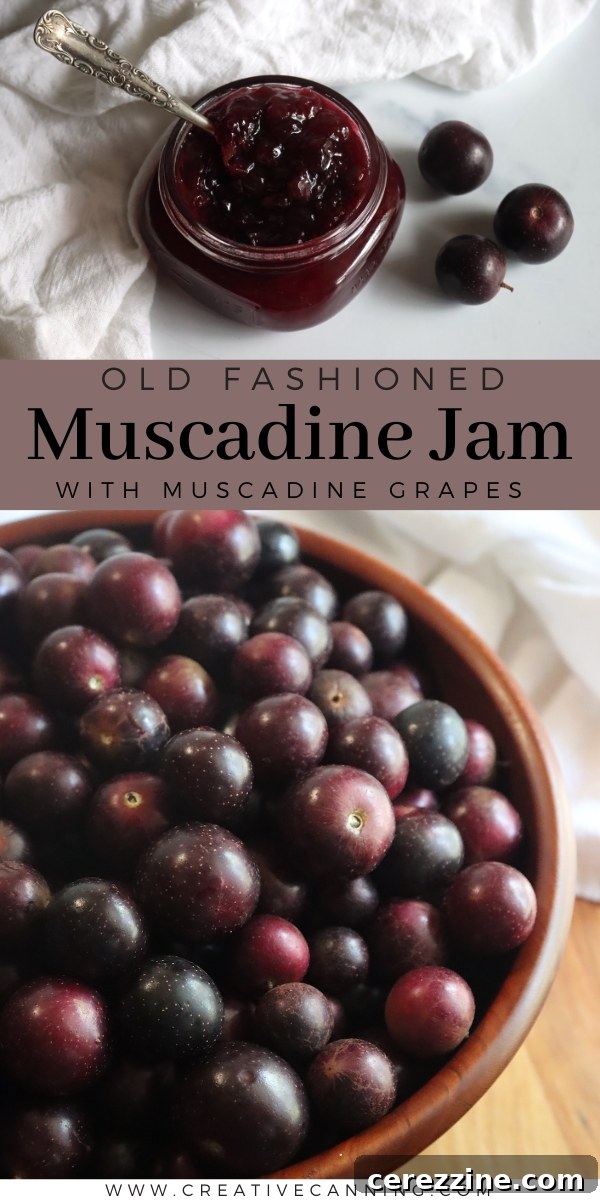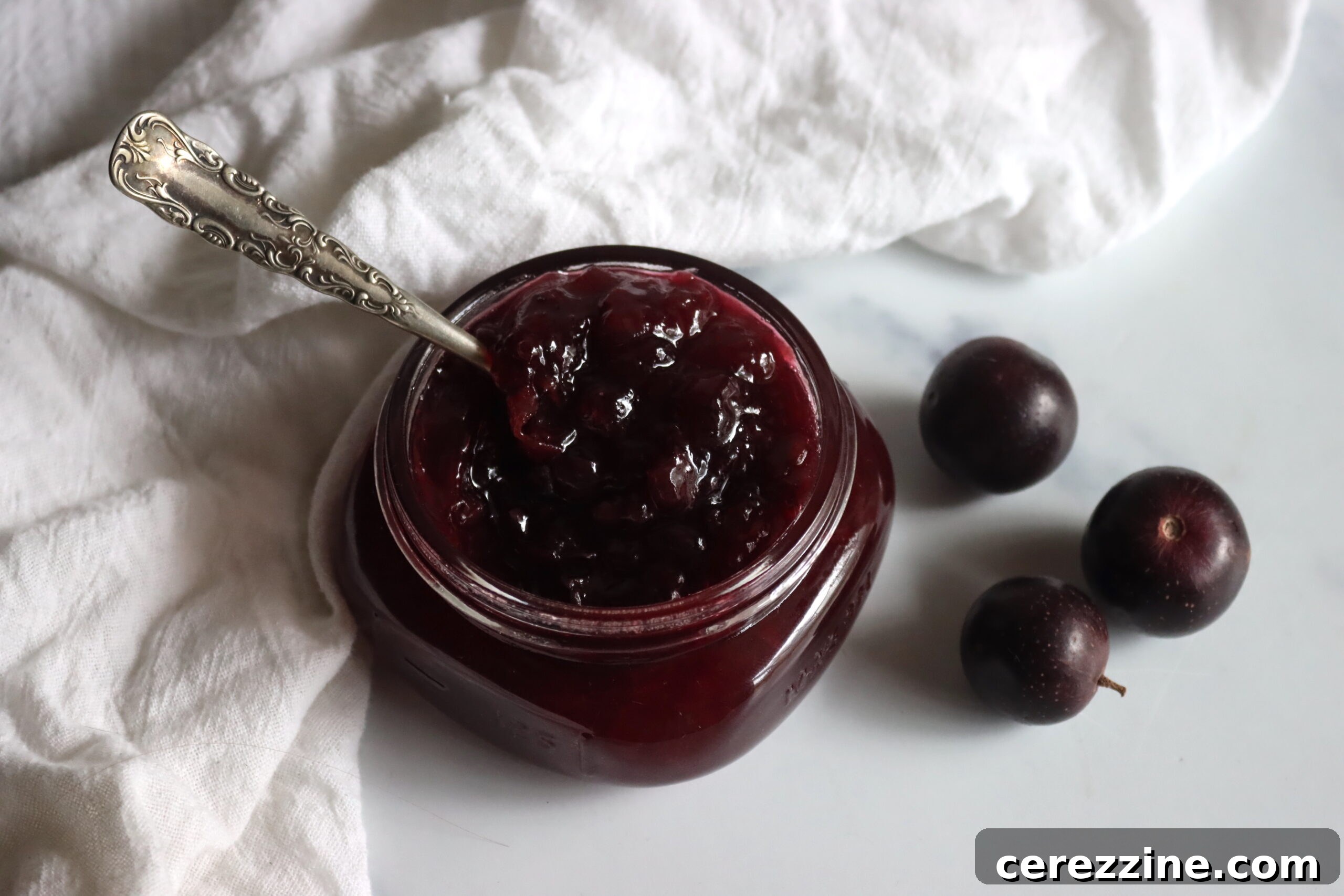
Muscadine Jam is a delicious, old-fashioned way to savor the rich flavors of muscadine grapes when they are perfectly in season. This Southern delicacy offers a delightful balance of sweet and tart, making it a truly unforgettable culinary experience.
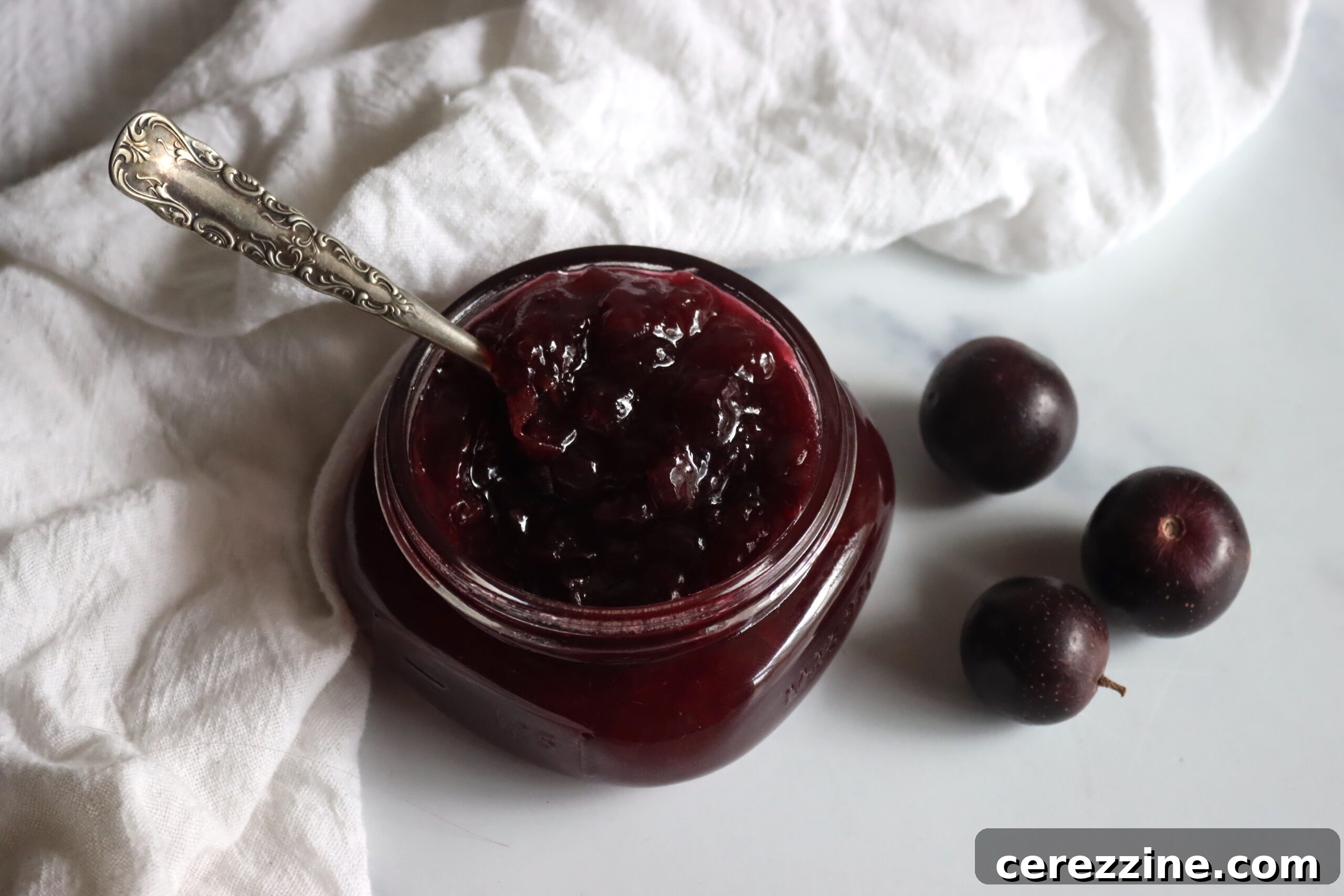
Unlocking the Flavors of the South: Homemade Muscadine Jam
Muscadine jam is more than just a spread; it’s a taste of Southern heritage, a burst of sunshine in a jar that truly makes your taste buds sing. Its unique sweet, tart, and intensely aromatic profile sets it apart from other fruit preserves. Whether you’re spreading it generously on warm, flaky biscuits, slathering it over morning toast, or even enjoying it straight from the spoon (we won’t judge!), its vibrant flavor is undeniably captivating. Beyond breakfast, imagine the culinary possibilities: pairing it with a sophisticated cheese board, or using it as a glossy, flavorful glaze for roasted meats like pork or chicken. The versatility of this homemade jam is truly remarkable.
For many, the idea of making jam, especially tackling the canning process, can seem daunting. The thought of complicated recipes, specialized equipment, and endless steps might be overwhelming. However, preparing muscadine jam is surprisingly straightforward, embodying a rustic simplicity that yields incredibly rewarding results. You only need two primary ingredients for this delightful preserve: the star of the show, fresh muscadine grapes, and granulated sugar.
What makes muscadines particularly special for jam-making is their natural composition. Unlike many other fruits, muscadine grapes are rich in natural pectin, eliminating the need for any store-bought boxed pectin. This means a more natural, purer flavor profile in your finished jam. Furthermore, these grapes boast a delightful inherent acidity, so there’s no need to add extra lemon juice or other acidic agents. With a touch of patience and a generous helping of culinary love, you’ll soon have a beautiful batch of homemade muscadine jam, ready to be enjoyed or shared, bringing a taste of the South to any occasion.
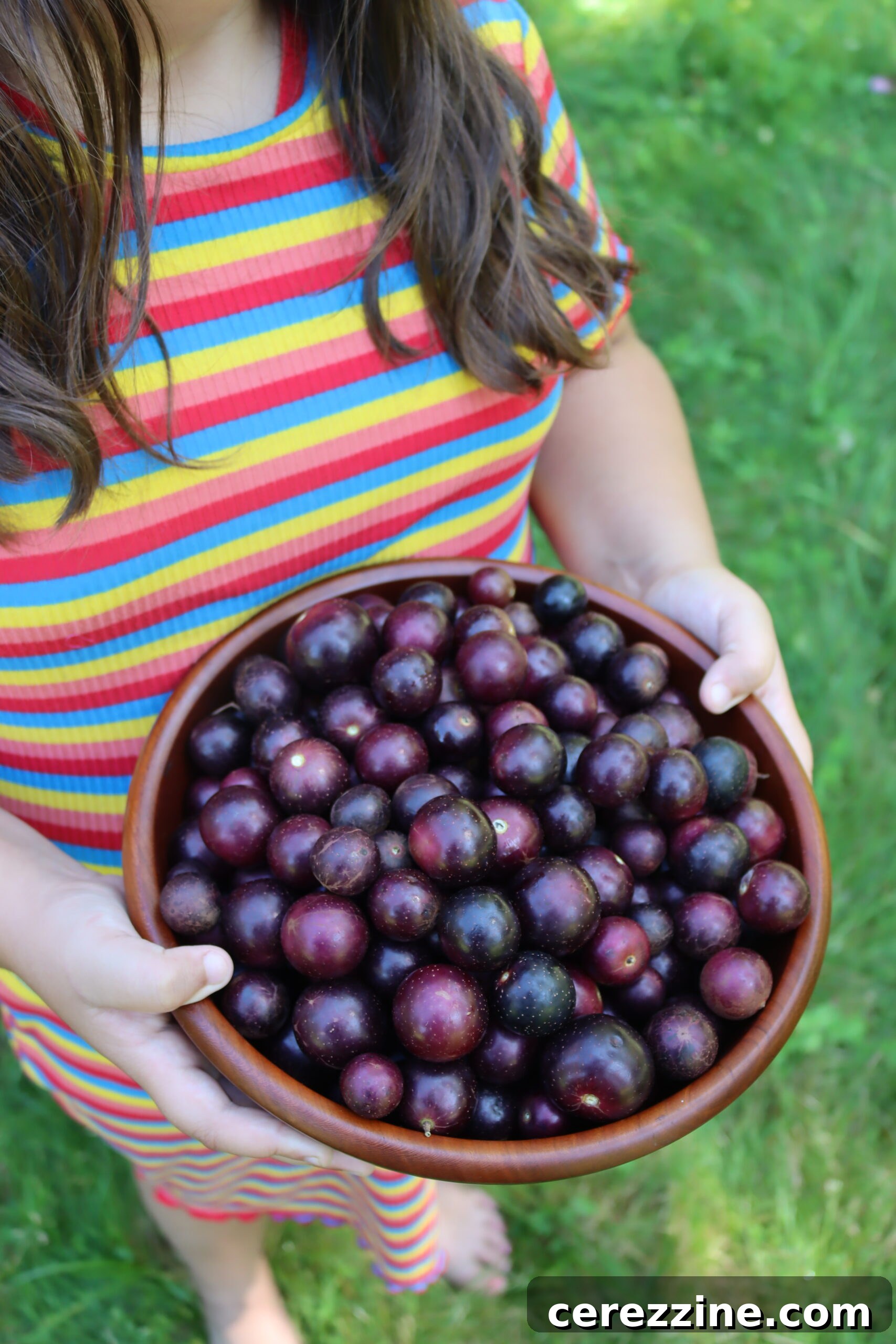
The Star Ingredient: Understanding Muscadine Grapes
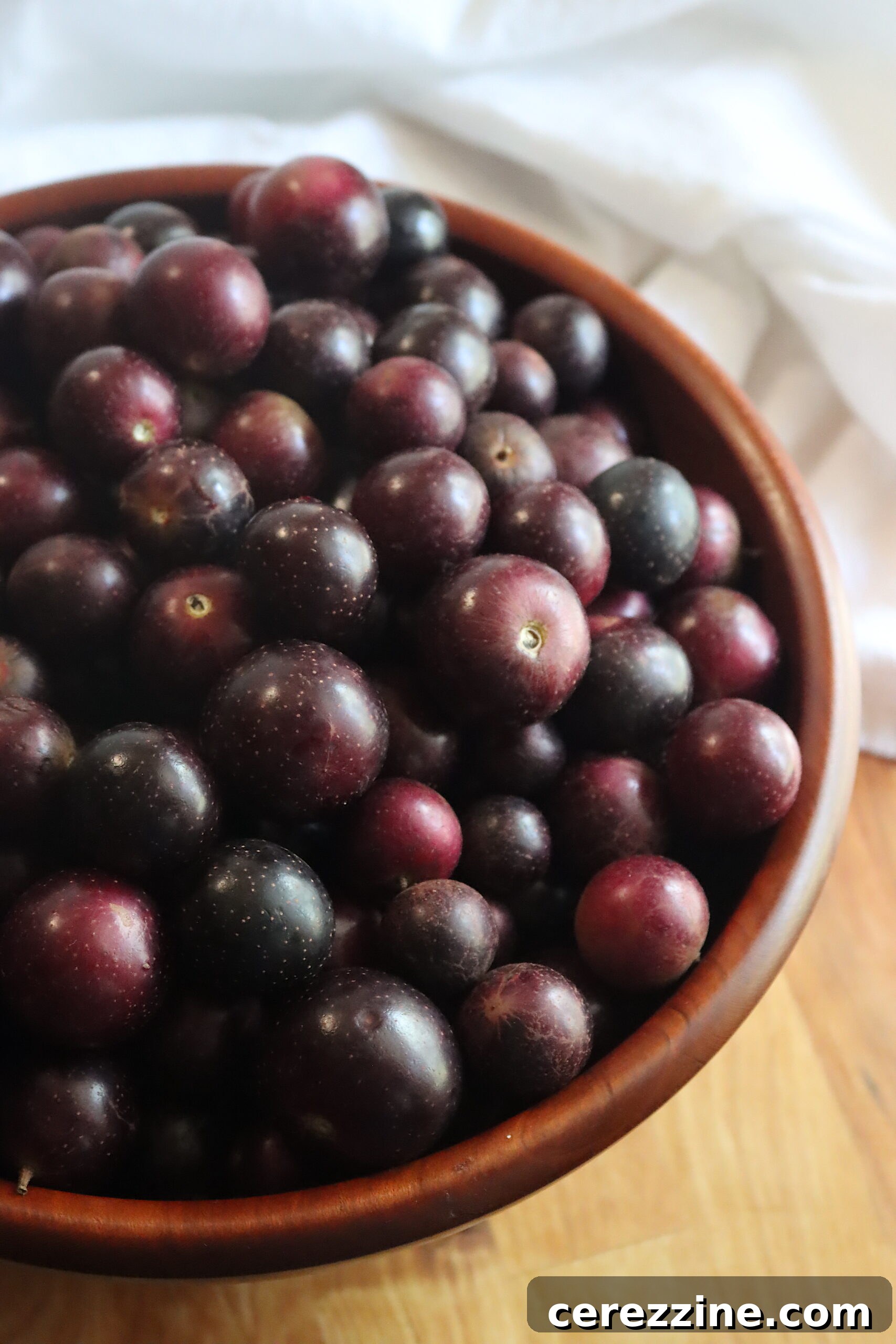
Before diving into the recipe, it’s worth understanding the unique characteristics of muscadine grapes. Native to the Southeastern United States, these grapes are distinct from common table grapes. They have a thick, leathery skin, a sweet and juicy pulp, and often a noticeable musky aroma, which gives them their name. Muscadines are typically in season from late summer to early fall, making this the perfect time to harvest them or find them at local farmers’ markets. Their robust flavor, coupled with their natural pectin and acidity, makes them an ideal candidate for jams and jellies, offering a depth of flavor that mass-produced jams simply can’t match.
Simple & Authentic: Ingredients for Muscadine Jam
This recipe for muscadine jam is a time-tested method, often found in trusted canning resources like “So Easy to Preserve” by the University of Georgia Cooperative Extension, ensuring both safety and delicious results. Focusing on simplicity, it highlights the natural qualities of the muscadine grape.
To prepare a standard canner batch, yielding approximately six half-pint jars of exquisite muscadine jam, gather these straightforward ingredients:
- 2 quarts of fresh muscadine grapes (ensure all stems are removed)
- 6 cups of granulated sugar
Should you be fortunate enough to have an abundance of muscadines, feel free to double this recipe to create a larger yield. However, it’s crucial not to increase the batch size beyond double. Extremely large batches tend to heat unevenly during the cooking process, which can prevent the jam from setting properly and reaching the desired consistency. Sticking to manageable batch sizes ensures optimal results every time.
Crafting Your Own Southern Delight: How to Make Muscadine Jam
The journey to creating your own delicious muscadine jam begins with proper preparation. Following these steps carefully will ensure a safe and successful canning experience.
Step 1: Sterilizing Your Jars
Before you begin making the jam, it’s essential to sterilize your canning jars. This crucial step eliminates any bacteria that could compromise your jam’s shelf life. Start by washing your half-pint jars thoroughly in hot, soapy water, then rinse them completely. Place the clean jars in a large stockpot or canning kettle, ensuring they are fully submerged in water. Bring the water to a rolling boil and allow the jars to boil for at least 10 minutes. Carefully remove the hot jars using canning tongs and place them upside down on a clean towel to dry while you prepare your jam. Alternatively, for convenience, you can sanitize them by running them through a hot cycle in your dishwasher.
Step 2: Preparing the Muscadine Grapes
Once your jars are ready, turn your attention to the muscadines. Wash the two quarts of grapes thoroughly under cool running water, then carefully remove all stems. This ensures a clean and pleasant texture in your jam.
Step 3: Separating Skins from Pulp
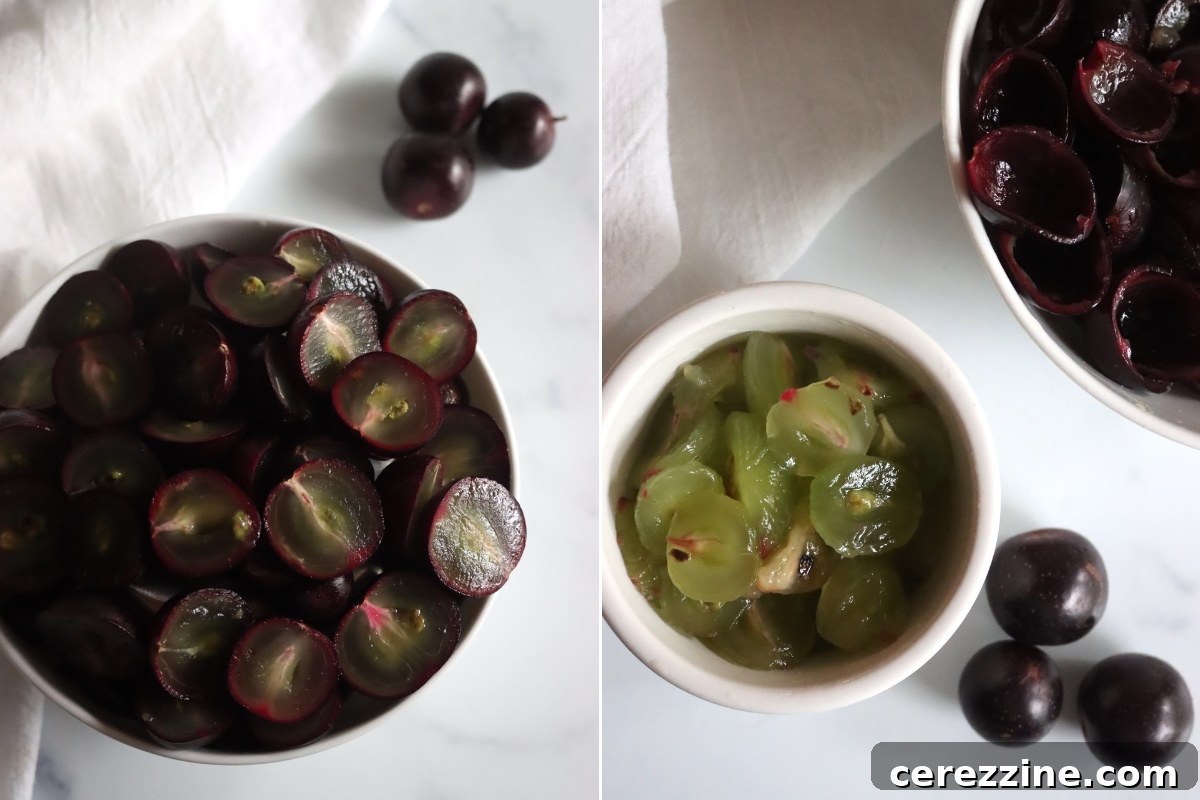
This is arguably the most distinctive step when working with muscadines. Muscadine grapes are unique; their outer layer is quite thick and behaves more like a shell than the thin skin of a typical grape. To separate the pulp from the skins, you can gently squeeze each grape, allowing the soft, jelly-like pulp to pop out into a separate bowl. Many find it easier to cut each grape in half, then use a small spoon to scoop out the interior pulp. Collect the skins in one bowl and the pulp in another.
Step 4: Preparing the Skins
After separating, you’ll notice the muscadine skins are quite firm. Unlike other grape skins that can be left whole in jam, muscadine skins are tough and would create an undesirable texture if not processed further. Therefore, it’s essential to finely chop the skins. Use a food processor or a blender to pulse them until they are in small, uniform pieces. Transfer the chopped skins to a saucepan and add approximately half a cup of water, just enough to prevent them from sticking. Cook the skins gently over low to medium heat for 15 to 20 minutes, allowing them to soften and release their flavor.
Step 5: Processing the Pulp
While the skins are simmering, place the muscadine pulp in a separate saucepan. Cook the pulp over medium heat without adding any water, stirring occasionally, until it has softened significantly. Once soft, press the cooked pulp through a fine-mesh sieve or a food mill to remove all the seeds. This step ensures a smooth, seed-free jam.
Step 6: Combining and Jellying the Jam
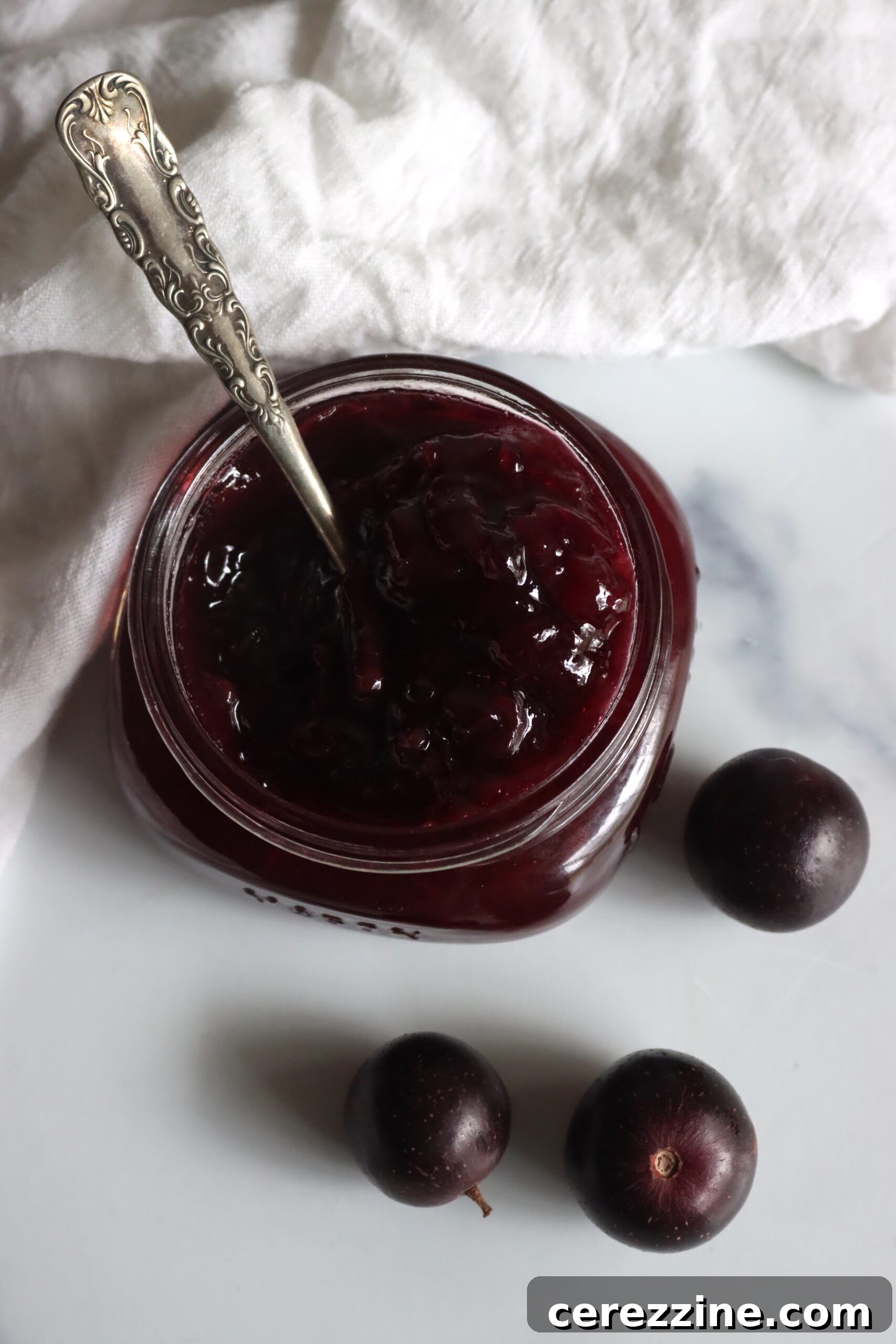
Now, combine the softened, chopped skins, the seedless pulp, and the six cups of granulated sugar in a large, heavy-bottomed pot. Stir the mixture well to dissolve the sugar. Bring the jam to a boil over medium-high heat, stirring frequently to prevent scorching, especially as it thickens. The goal is to reach the “jellying point,” which usually takes about 10 minutes of active boiling. You can test for the jellying point by placing a small spoonful of jam on a chilled plate; if it wrinkles when pushed with a finger, it’s ready. Alternatively, a candy thermometer should read 220°F (104°C) at sea level.
Step 7: Filling and Sealing the Jars
Once the jam has reached its jellying point, remove it from the heat. Carefully ladle the hot muscadine jam into your prepared hot, sterilized half-pint jars, leaving approximately ¼ inch of headspace from the rim. Use a clean, damp towel to wipe the jar rims thoroughly; any residue can prevent a proper seal. Center the lids on the jars and apply the screw bands, tightening them to “fingertip tight”—meaning tight enough to stay on, but not overly forcefully.
Canning Muscadine Jam via Water Bath
With your jars filled and sealed, it’s time for the crucial water bath canning process. This ensures the jam is shelf-stable for long-term storage.
Gently load the filled jars into your boiling water bath canner, ensuring they are fully submerged by at least one inch of water. Bring the water back to a rolling boil and process the jars for 10 minutes. If you reside at an elevation above 6,000 feet, increase the processing time to 15 minutes to account for the lower boiling point of water. After the processing time is complete, turn off the heat and carefully remove the jars from the canner using your canning tongs. Place them on a clean towel or cooling rack, ensuring there’s space between each jar for air circulation.
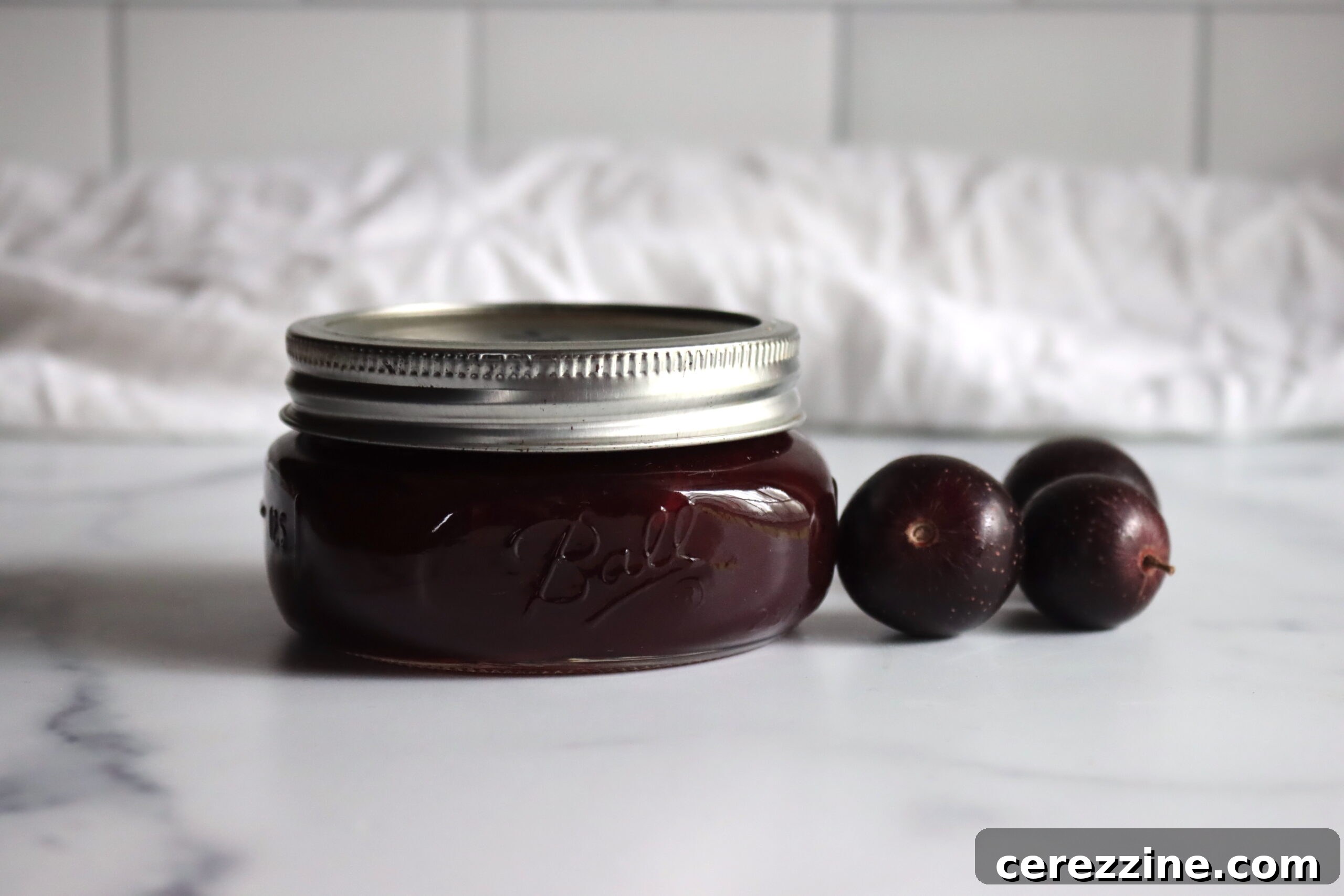
As the jars cool, you’ll likely hear a satisfying “pop” sound—this indicates that the vacuum seal has formed properly. Allow the jars to cool undisturbed for 12-24 hours. After this time, check each lid by pressing the center; if it doesn’t flex, the jar is sealed. Any jars that haven’t sealed properly should be refrigerated and consumed within a few weeks. Label your sealed jars with the contents and date, and store them in a cool, dark place for up to a year or even longer.
Serving & Savoring Your Homemade Muscadine Jam
Congratulations! You’ve successfully crafted a batch of exquisite homemade muscadine jam. Now comes the best part: enjoying the fruits of your labor! This sweet and tangy preserve is incredibly versatile and pairs beautifully with a wide array of dishes.
Start your day right by spreading it generously on breakfast favorites like warm buttered toast, fluffy pancakes, golden waffles, or freshly baked Southern biscuits. It also makes a delightful addition to oatmeal or yogurt, adding a burst of fruity flavor and natural sweetness.
Beyond breakfast, let your culinary creativity shine. Muscadine jam can elevate simple dishes into gourmet experiences. Use it to add a unique, tangy-sweet twist to your favorite grilled cheese sandwich or as a vibrant filling for pastries and tarts. For a quick and delicious dessert, swirl a spoonful into vanilla ice cream or layer it with cream cheese and crackers for an easy appetizer. The possibilities truly are endless with this versatile jam.
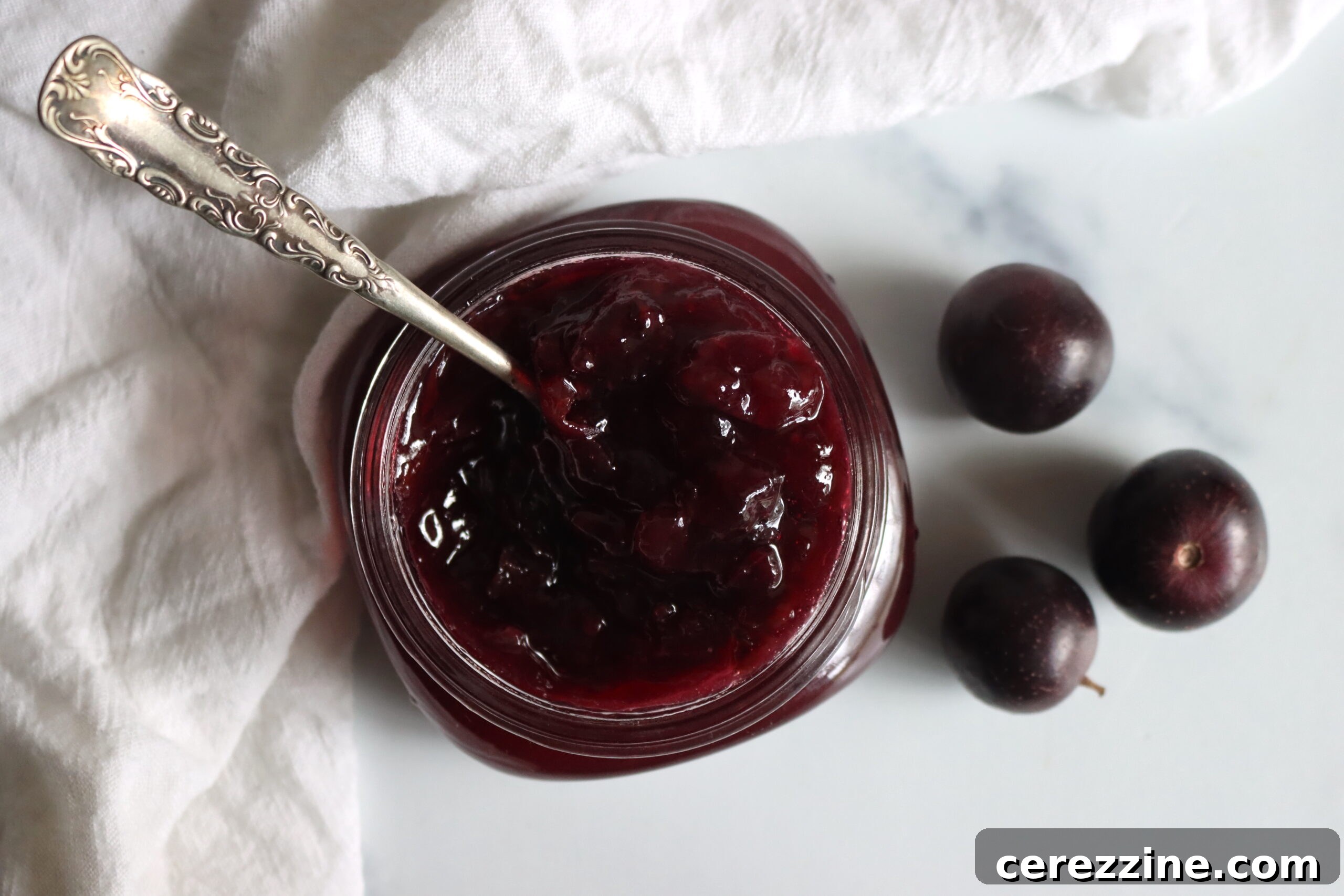
One of the best aspects of this homemade jam is its ready-to-enjoy nature. There’s no need for additional preparation or heating before serving. Simply open a jar, and you’re ready to indulge. While it shines on bread, consider exploring its savory potential. Pair it with a variety of artisanal cheeses and crisp crackers for an elegant appetizer that will impress your guests. Or, use it as a glaze for roasted meats like pork loin, chicken breasts, or even game birds, where its tartness can beautifully cut through richness and add a caramelized finish. Don’t hesitate to experiment; try dolloping a spoonful onto a platter of cured meats, stirring it into a homemade vinaigrette for a sweet and savory salad dressing, or incorporating it into a barbecue sauce for a unique Southern flair. The rich, distinctive flavor of muscadine jam is sure to become a cherished addition to your pantry and your plate.
Recipe: Homemade Muscadine Jam
Muscadine Jam
By Ashley Adamant
Muscadine Jam is a delicious old-fashioned way to use muscadine grapes in season, capturing their unique sweet and tart flavor in a beautifully set preserve.
Servings: 48 servings, makes Six half-pint jars
Prep Time: 1 hour
Cook Time: 10 minutes
Total Time: 1 hr 10 mins
Equipment
- Water Bath Canner
- Large pot or stockpot
- Food processor or blender
- Fine-mesh sieve or food mill
- Canning tongs
- Half-pint canning jars with new lids and bands
Ingredients
- 2 Quarts muscadine grapes, with the stems removed
- 6 cups granulated sugar
Instructions
- Wash and stem two quarts of muscadine grapes thoroughly.
- Separate the pulp from the skins. Cut grapes in half and scoop out the pulp, keeping skins and pulp in separate bowls. Finely chop the skins in a food blender or chopper.
- Toss the chopped skins in a pot and add about half a cup of water to prevent sticking. Cook gently for 15 to 20 minutes until softened.
- Meanwhile, cook the pulp in a separate saucepan over medium heat without water until soft. Press the pulp through a sieve or food mill to remove all seeds.
- Combine the cooked skins, seedless pulp, and six cups of sugar in a large, heavy-bottomed pot. Bring the mixture to a rolling boil over medium-high heat, stirring frequently. Cook for about 10 minutes, or until the jam reaches its jellying point (220°F/104°C at sea level, or passes the wrinkle test on a chilled plate).
- Once the jam is ready, carefully ladle the hot jam into hot, sterilized half-pint jars, leaving about ¼ inch of headspace.
- Wipe the jar rims clean with a damp cloth, center the lids, and apply the screw bands fingertip tight.
- Load the jars into the water bath canner, ensuring they are fully submerged. Bring the water to a boil.
- Process the jars for 10 minutes in the boiling water bath (increase to 15 minutes if above 6,000 feet in elevation). After processing, carefully remove jars with tongs and let them cool undisturbed on a clean towel for 12-24 hours.
- Check seals by pressing the center of each lid. If sealed, label and store in a cool, dark place for up to one year. Refrigerate any unsealed jars and consume within a few weeks.
Nutrition
Calories: 119kcal, Carbohydrates: 30g, Protein: 0.3g, Fat: 0.3g, Sodium: 1mg, Potassium: 81mg, Fiber: 2g, Sugar: 25g, Vitamin A: 26IU, Calcium: 15mg, Iron: 0.1mg
Nutrition information is automatically calculated, so should only be used as an approximation.
Explore More Summer Canning Recipes
Muscadine jam is just one of many delicious ways to preserve the bounty of summer. Expanding your canning repertoire allows you to enjoy fresh, seasonal flavors throughout the year. Here are some other delightful recipes perfect for summer canning:
- Zucchini Relish
- Peach Jam
- Pickled Green Beans (Dilly Beans)
- Canning Strawberry Lemonade Concentrate