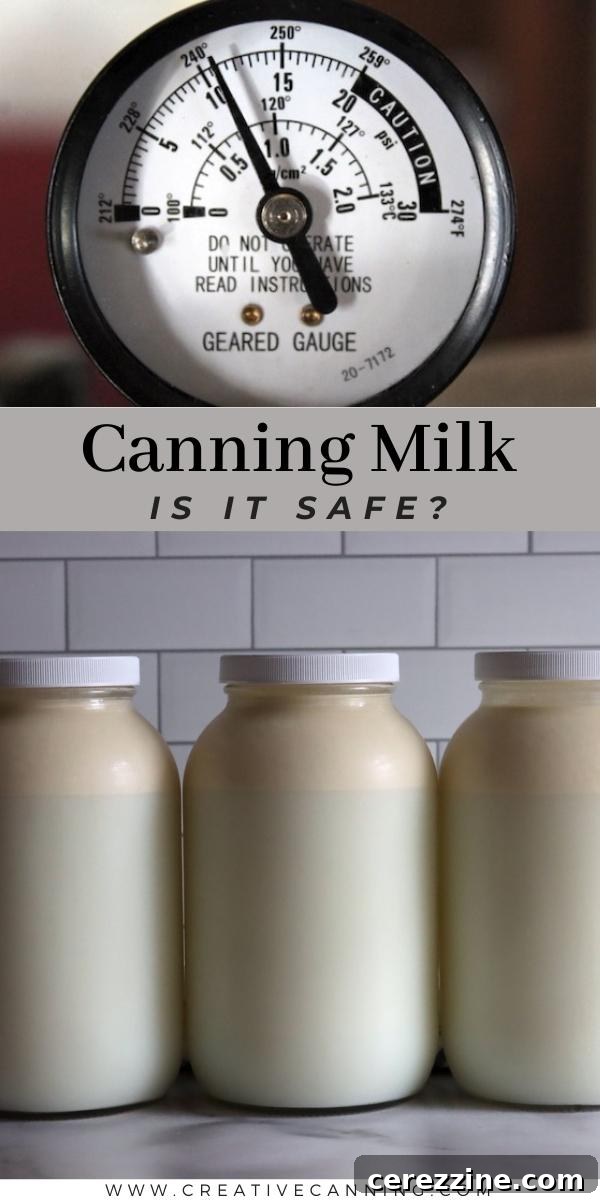
In the expansive and ever-evolving world of home food preservation, a fascinating trend has emerged within certain online communities, often dubbed “rebel canning.” Among the many unconventional methods explored, canning milk at home has gained significant traction, sparking widespread debate and curiosity. Is this practice truly safe, or does it harbor hidden risks that aspiring homesteaders and DIY enthusiasts should be aware of? This comprehensive guide aims to demystify the process, examining the purported benefits alongside critical safety concerns. We’ll delve into the methods circulating online, including those from popular “rebel canning” groups, and compare them with established food safety science.
It’s crucial to state upfront that the USDA and the National Center for Food Preservation (NCFP) currently offer no scientifically tested or approved recipes for canning milk at home. Understanding the reasons behind this lack of official guidance is key to making an informed decision about this practice. Commercial milk canning operates under stringent controls and specialized equipment that home environments simply cannot replicate. Yet, many individuals claim to have successfully canned milk for years without adverse effects, leading to a perplexing dichotomy between official warnings and personal experiences. This article will thoroughly explain the nuances, allowing you to weigh the evidence and make the best choice for your household.
The Growing Interest in Home Canning Milk: Addressing a Common Query
The question of how to safely can milk at home is one that frequently lands in my inbox. Readers, often inspired by online communities or anecdotes from older generations, express a strong desire to preserve this versatile staple. Just this morning, a reader articulated the dilemma perfectly:
“Our question is about home pressure canning milk. It is debated on whether it is safe to can dairy in most blogs I read. Some say they’ve been doing it for years, and others say no way. It’s hard to believe that large companies can process milk safely, but it’s not safe at home. Please tell us your experience/thoughts on home canning dairy?”
This sentiment highlights a common confusion: if commercial entities can process milk for shelf stability, why can’t individuals replicate this at home? The conflicting information available online only adds to the complexity. My consistent response, previously confined to detailed email replies, underscores the need for a comprehensive public discussion on the advantages, disadvantages, and critical safety considerations surrounding home canning milk.
My Personal Approach to Milk Preservation
For transparency, I personally do not engage in home canning milk. Our household is actively involved in home cheesemaking, a tradition that allows us to preserve significant quantities of dairy. Each year, we produce pounds of raw milk cheddar, Colby cheese, and an array of other delicious cheesemaking recipes. For long-term fresh milk storage, freeze-drying milk is my preferred method. This technique preserves milk in a way that, upon rehydration, is virtually indistinguishable from fresh milk, retaining its original flavor and smooth texture, unlike the often grainy and “cooked” taste associated with commercially dehydrated milk.
I acknowledge that cheesemaking requires a learning curve, and not everyone has access to a specialized appliance like a home freeze-dryer. This often leads people back to the question of pressure canning milk as a seemingly simpler alternative. However, as we will explore, there are compelling reasons to exercise extreme caution with this method, extending beyond the mere absence of scientifically validated recipes.
Understanding Commercial Milk Canning: A Benchmark for Safety
To truly understand the challenges and risks of canning milk at home, it’s essential to first grasp how milk is processed and canned on an industrial scale. The commercial process for shelf-stable milk, particularly evaporated milk, is a testament to advanced food science and engineering, far removed from typical home canning methods.
A concise explanation from Wikipedia provides a good starting point:
“Evaporated milk is made from fresh, homogenized milk from which 60% of the water has been removed. After the water has been removed, the product is chilled, stabilized, sterilized, and packaged. It is commercially sterilized at 240–245 °F (115–118 °C) for 15 minutes. A slightly caramelized flavor results from the high heat process (Maillard reaction), and it is slightly darker in color than fresh milk. The evaporation process concentrates the nutrients and the food energy (kcal); unreconstituted evaporated milk contains more nutrients and calories than fresh milk per unit volume.”
For a deeper dive, industrial food science texts like A Complete Course in Canning and Related Processes meticulously detail commercial canning operations for a vast array of foods, including milk. The extensive chapter on milk canning highlights processes like filtering, standardizing, and homogenizing the milk *before* it even reaches the sterilization stage. This pre-processing ensures that every batch has a consistent composition, allowing for precise and uniform processing times and temperatures, a level of control unattainable in a home kitchen.
Once standardized, the commercial sterilization of evaporated milk typically involves time-temperature regimens ranging from 110 to 120 degrees C (230 to 248 F) for 15 to 20 minutes. This intense heat causes the Maillard reaction, responsible for the distinct caramelized flavor and darker color of evaporated milk, distinguishing it significantly from fresh milk.
UHT Milk: An Even Higher Standard
The textbook also details the production of Ultra-High Temperature (UHT) milk, a distinct product often found in aseptic packaging and designed for shelf stability without refrigeration. UHT milk aims to preserve a flavor closer to fresh milk, but this requires even more sophisticated processing. It undergoes continuous “flow sterilization” at extremely high temperatures, specifically 130 to 140 degrees C (266 to 284 F) for just a few seconds, followed by rapid cooling and aseptic packaging. Replicating UHT sterilization at home is entirely impossible; standard glass canning jars cannot withstand such rapid temperature fluctuations or the ultra-high temperatures achieved, which exceed the capabilities of home pressure canners.
Even for evaporated milk, where the temperatures are within the range of a home pressure canner, it’s crucial to acknowledge the commercial pre-treatments. Commercial evaporated milk is concentrated (60% of water removed) and often contains stabilizers to withstand the heat without coagulation or separation. The exact processing time and temperature vary based on fat content and milk solids, which differ by manufacturer and country. For instance, US evaporated milk must be at least 6.5% milk fat and 23% total milk solids, while in Canada, it’s 7.5% milk fat and 25% milk solids.
Home-harvested milk, especially from breeds like Jersey cows, can naturally have higher fat content (around 5% milkfat in spring), sometimes approaching the density of commercially concentrated milk without any water removal. However, its composition is highly variable depending on the cow’s breed, diet, and season, making standardization difficult. If one were to attempt to pressure can regular, unconcentrated milk at home, for maximum safety, it would logically require the highest processing temperatures and times observed commercially for evaporated milk to account for this variability and lack of precise control.
In a home pressure canner, assuming proper technique and optimal conditions (below 1,000 feet in elevation), this would roughly translate to:
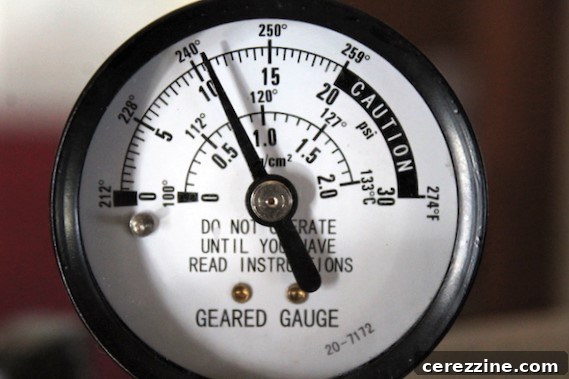
- Minimum Processing Parameters: 10 Pounds Pressure, maintained for 15 minutes.
- Maximum Processing Parameters: 15 Pounds Pressure, maintained for 20 minutes.
It’s important to note that at elevations above 1,000 feet, achieving the necessary pressure for adequate processing becomes even more challenging, as most home canners have a practical upper limit of 15 pounds of pressure. This overview of commercial practices sets a vital context for understanding why home canning milk faces such significant safety hurdles.
The Dangers of Home Canning Milk: Beyond Missing Guidelines
While the absence of USDA-approved guidelines is a primary deterrent, understanding *why* these guidelines don’t exist is even more critical. The difference between canning milk commercially and at home extends far beyond equipment and scale; it fundamentally concerns food safety principles, product consistency, and desired outcomes.
One major difference lies in milk standardization. Home-harvested milk exhibits significant natural variation in fat, protein, and total milk solid content based on the animal’s breed (cow vs. goat), diet, and season. This variability makes it nearly impossible to determine a universally safe processing time and temperature for every batch in a home setting. Commercial operations meticulously standardize their milk, ensuring consistent chemical composition, which is paramount for predictable and safe heat penetration.
The most alarming issue with commonly circulated online instructions for canning milk is their severe inadequacy in achieving true sterilization. Many “rebel canning” methods essentially heat the milk just enough to create a vacuum seal in the jars. This is nowhere near the temperatures and durations required to destroy dangerous pathogens, especially Clostridium botulinum spores. These spores, though harmless in oxygenated environments, thrive in the anaerobic (oxygen-free) conditions inside a sealed canning jar and produce a deadly neurotoxin if not eliminated by proper heat processing.
While botulism spores are relatively rare in milk, typically being soil-borne contaminants found more often on root vegetables like potatoes, onions, or garlic, they can indeed be present if milk becomes contaminated. Dairy animals, being outdoors, can introduce soil contaminants into the milking process, even with diligent sanitation. The danger is that a single botulism spore, if present and not destroyed, can proliferate and produce enough toxin to be fatal.
This explains why some individuals can “successfully” can milk using insufficient processing for years, even a lifetime, without incident. They have simply been fortunate that botulism spores were not present in their particular batches. However, this reliance on luck is akin to playing Russian roulette; a single unlucky batch can have catastrophic consequences. The very purpose of safe canning is to eliminate such risks, not merely to hope they aren’t present.
The Palatability Problem: Why Proper Processing is Avoided
Another fundamental reason for inadequate home processing is taste. When milk is subjected to the high temperatures and extended times required for commercial-level sterilization (e.g., 15 pounds pressure for 20 minutes), its natural sugars undergo significant caramelization (Maillard reaction), and its proteins denature. The resulting product bears little resemblance to fresh milk; it develops a strong, cooked, and often unpalatable flavor that most people find undesirable for drinking straight. This “cooked” flavor is even more pronounced than what you might experience with boiled milk.
Commercial evaporated milk, while also having a distinct flavor, is often treated with stabilizers and carefully filtered to minimize coagulation and separation during processing, making it more palatable for its intended use (primarily in cooking and baking, not as a direct substitute for fresh milk). Home canners, without these industrial additives and precise controls, will find their properly processed milk to be thick, discolored, and distinctly “off-tasting.”
This palatability issue is precisely why the NCFP and USDA have not developed guidelines for canning milk at home. Investing significant research funds into creating a “safe” method for a product that most consumers would find inedible is simply not a practical use of resources. The core of safe home canning is to produce a shelf-stable food that is enjoyable and ready to eat directly from the jar, without further processing.
Deconstructing “Rebel Canner” Instructions for Canning Milk
Given the official stance, how do “rebel canners” claim success with home-canned milk? The most widely circulated instructions come from the Rebel Canners Cookbook by Tammy McNeill, who also leads the popular Rebel Canners Facebook group. It’s worth noting that many recipes in this cookbook *do* adhere to USDA guidelines, demonstrating an understanding of conventional canning principles. However, some, like the milk canning recipe, venture into “true rebel canning” territory.
Tammy McNeill’s method, frequently shared online, suggests the following:
“I canned milk two years ago about 45 pints. I am still using them. The process I used is simple. Put milk in pints. Bring up to 5 pounds of pressure. Turn the canner off and let cool completely before opening it. The usual pressure for my altitude is 10 pounds of pressure, but milk is done at 5 pounds of pressure at my altitude. It is one of the few exceptions to the ’10-pound rule.’ I only use this in cooking as the milk sugars carmelize, and the flavor changes slightly to a sweeter product. The milk fats will separate so shake before opening. This caramelization makes it really good in hot cocoa.”
Let’s analyze this method critically:
- Vague Instructions: The recipe is missing crucial details like whether the milk is hot-packed (brought to a boil before jarring) and specified headspace. While 1 inch of headspace is common for fatty foods, 1/2 inch is also sometimes suggested for milk to encourage a more reliable seal, given the minimal processing. These details can significantly impact sealing success and heat penetration.
- Absence of Processing Time: The most critical flaw is the lack of any sustained “processing time.” The instructions direct the user to “Bring up to 5 pounds of pressure. Turn the canner off and let cool completely.” A safe canning recipe requires a specific duration during which the canner *maintains* the target pressure, allowing heat to penetrate the jars and sterilize the contents. Simply reaching pressure and immediately turning off the heat is insufficient for proper sterilization.
- Internal vs. External Temperature: While 5 pounds of pressure corresponds to approximately 228°F (109°C) at sea level in the canner, the milk inside the jars will not reach this temperature instantaneously. It takes time for heat to transfer and penetrate the entire volume of food in the jar. Without a sustained processing time, the internal temperature of the milk in the jars likely only reaches slightly above boiling (212°F/100°C) – nowhere near the 228°F of the canner’s environment, let alone the 230-248°F for 15-20 minutes recommended for commercial evaporated milk.
- Botulism Risk: This under-processing is a direct invitation for botulism if spores are present. While organisms like lactobacillus and mold might be killed at these lower temperatures, Clostridium botulinum spores are highly heat-resistant and require temperatures of at least 240°F (116°C) maintained for a specific duration to be destroyed. The anaerobic environment of a sealed jar, combined with insufficient heat, creates ideal conditions for these spores to germinate and produce their deadly toxin.
So, why do people get away with it? A combination of factors is likely at play. As mentioned, botulism spores are not always present in every batch of milk. Many users simply get lucky, avoiding contamination. However, there’s another subtle but significant point Tammy McNeill raises: she “only uses this in cooking” and for things like “hot cocoa,” noting the caramelized flavor.
This brings us to a crucial mitigating factor: cooking. The USDA, while strongly recommending discarding any suspect home-canned low-acid foods, does state:
“If it is possible that any deviation from the USDA-endorsed methods occurred, to prevent the risk of botulism, low-acid…foods should be boiled in a saucepan before consuming even if you detect no signs of spoilage. At altitudes below 1,000 ft, boil foods for 10 minutes. Add an additional minute of boiling time for each additional 1,000 ft elevation. However, this is not intended to serve as a recommendation for consuming foods known to be significantly underprocessed according to current standards and recommended methods. It is not a guarantee that all possible defects and hazards with non-recommended methods can be overcome by this boiling process.”
The World Health Organization provides even more specific information: “Though spores of C. botulinum are heat-resistant, the toxin produced by bacteria growing out of the spores under anaerobic conditions is destroyed by boiling (for example, at an internal temperature greater than 85 °C for 5 minutes or longer).” An internal temperature of 85°C corresponds to approximately 185°F, which is just below a simmer. This means that simply reheating the food to a boil for a few minutes before consumption *can* destroy any botulism toxin that may have formed. Therefore, if Tammy McNeill (and other “rebel canners”) consistently use their home-canned milk in cooking or hot beverages rather than drinking it cold straight from the jar, they are inadvertently adding a crucial safety step that denatures any potential toxin. This combination of luck and re-cooking explains why many people, including previous generations, have canned milk with low-temperature methods for decades without reported illness. However, relying on a secondary cooking step to ensure safety defeats the primary purpose of safe canning, which is to produce a truly shelf-stable, ready-to-eat product.
Is Canning Milk at Home Truly Safe? A Definitive Look
In light of all the evidence, the answer remains clear: canning milk at home is not currently recommended by the USDA or the National Center for Food Preservation. This isn’t an arbitrary restriction but stems from fundamental principles of food science and safety.
The core reasons for this recommendation are twofold:
- Palatability of Properly Processed Milk: When milk is processed at home using the high pressures and sustained times necessary to destroy botulism spores (e.g., 10-15 pounds pressure for 15-20 minutes), the resulting product is largely unpalatable. The intense heat causes significant caramelization of milk sugars and denaturation of proteins, leading to a strong, cooked flavor, altered texture, and often a brownish discoloration. Unlike commercial processes that use filtering, stabilizers, and precise control to mitigate these issues, home methods cannot produce a desirable product even when processed safely.
- Inadequate Processing in “Rebel” Methods: The commonly circulated “rebel canning” instructions, which involve merely bringing a canner to low pressure (e.g., 5 pounds) and immediately turning off the heat, are fundamentally unsafe. These methods do not achieve the internal temperatures or sustained processing times required to sterilize the milk and destroy heat-resistant spores like Clostridium botulinum. While such methods might create a vacuum seal (which gives a false sense of security), they fail to eliminate dangerous pathogens.
The definition of a “safe” canned food is one that is shelf-stable and can be eaten directly from the jar without any further cooking or processing to render it safe. If a food requires re-boiling or cooking out of the jar to mitigate potential toxins, it inherently fails to meet the standard of a safely canned product. While re-cooking *can* destroy botulism toxin, relying on this step places the burden of safety on the consumer, making the canning process itself unreliable and potentially dangerous if this extra step is forgotten or overlooked.
The argument that “someone I know has been doing it for years without getting sick” is a common but dangerous fallacy. Luck and the rarity of botulism contamination, coupled with accidental re-cooking, might create the illusion of safety, but they do not constitute a dependable or scientifically sound preservation method. Food safety guidelines are established to protect against the worst-case scenario, ensuring consistent safety regardless of whether contaminants are present in a given batch.
It’s also important to remember that canning, while seemingly traditional, has a relatively short history compared to other preservation methods like drying, salting, or fermentation. Many early canning recommendations from decades past are now considered unsafe due to advancements in our understanding of microbiology and foodborne illness. Just because something can be put into a jar and sealed does not automatically make it a good or safe idea for long-term storage.
Given the significant risks and the availability of proven, safe, and palatable alternatives (such as cheesemaking, freezing, or freeze-drying milk), I strongly advise against canning milk at home. While my goal is to provide comprehensive information for an informed decision, the scientific consensus and the potential for severe health consequences make a compelling case for choosing safer preservation strategies. Your family’s health and safety should always be the top priority in home food preservation.