
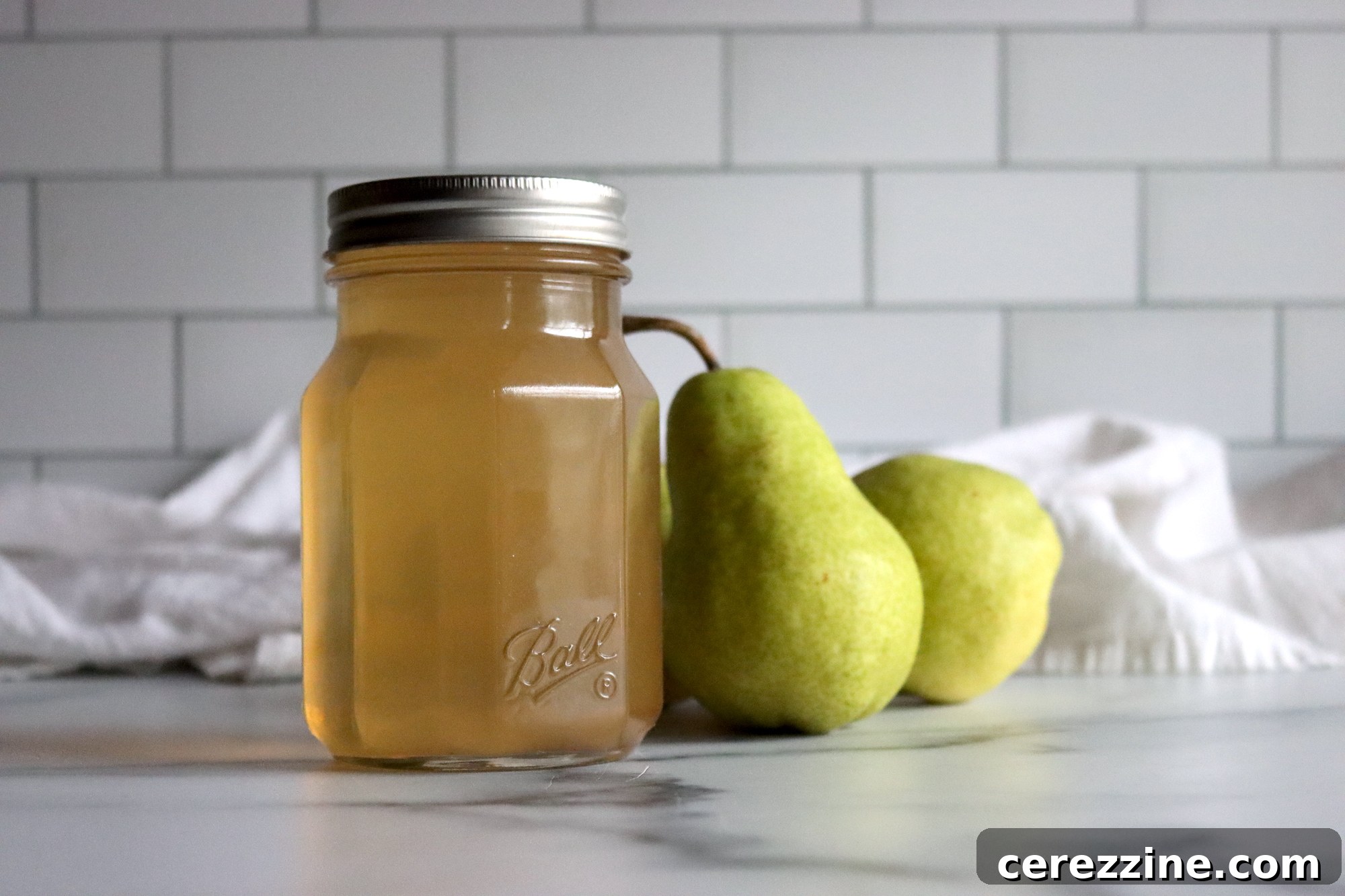
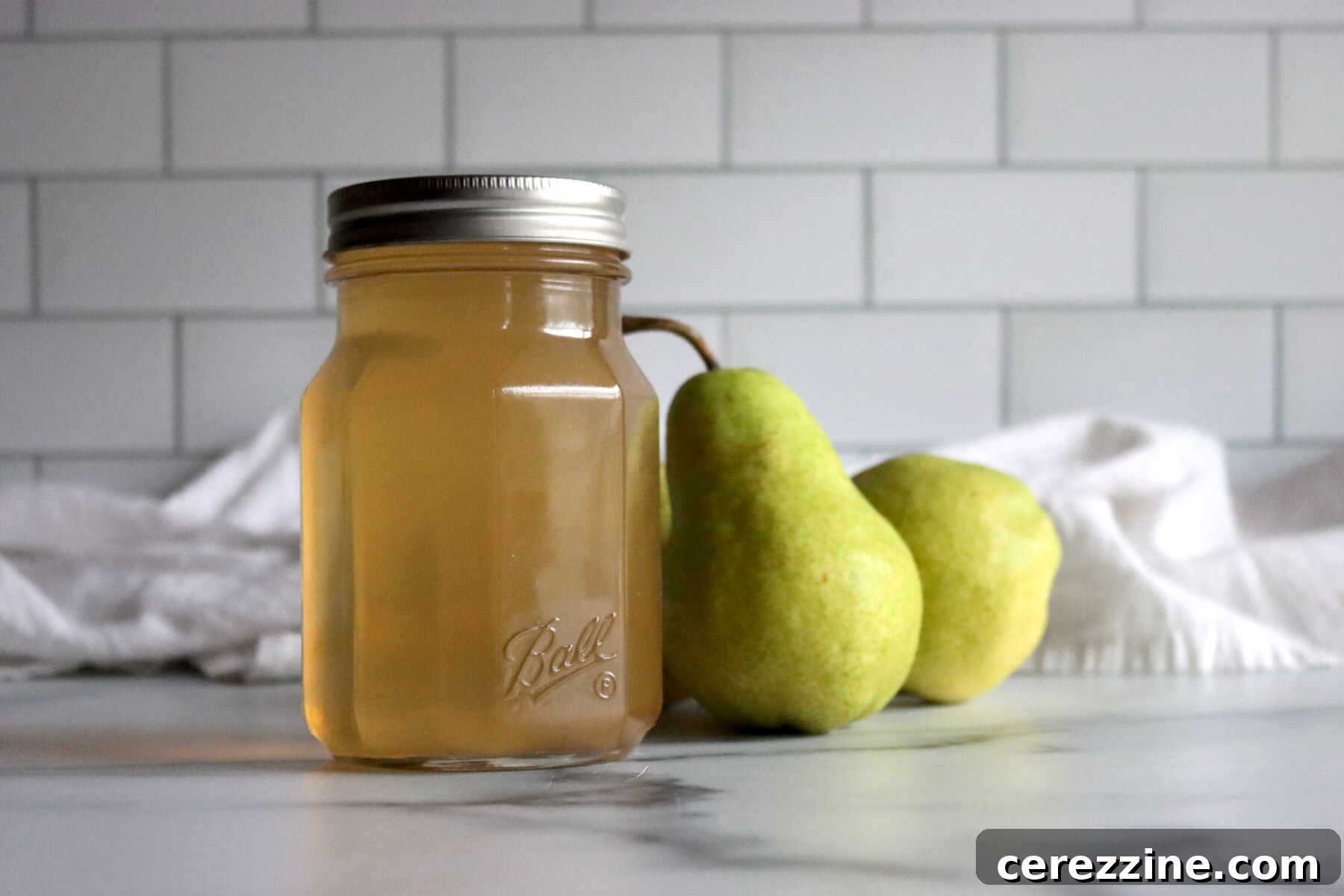
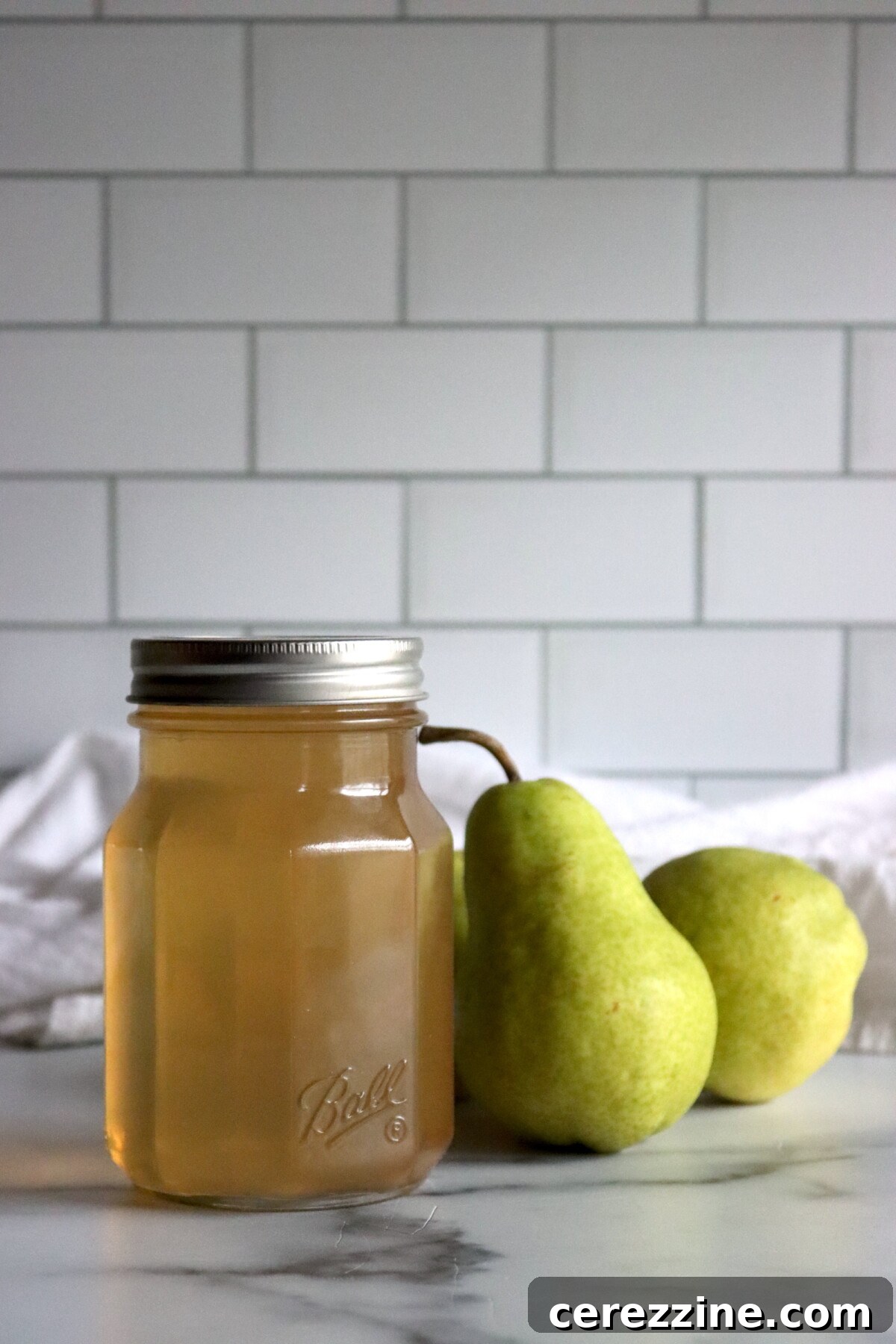
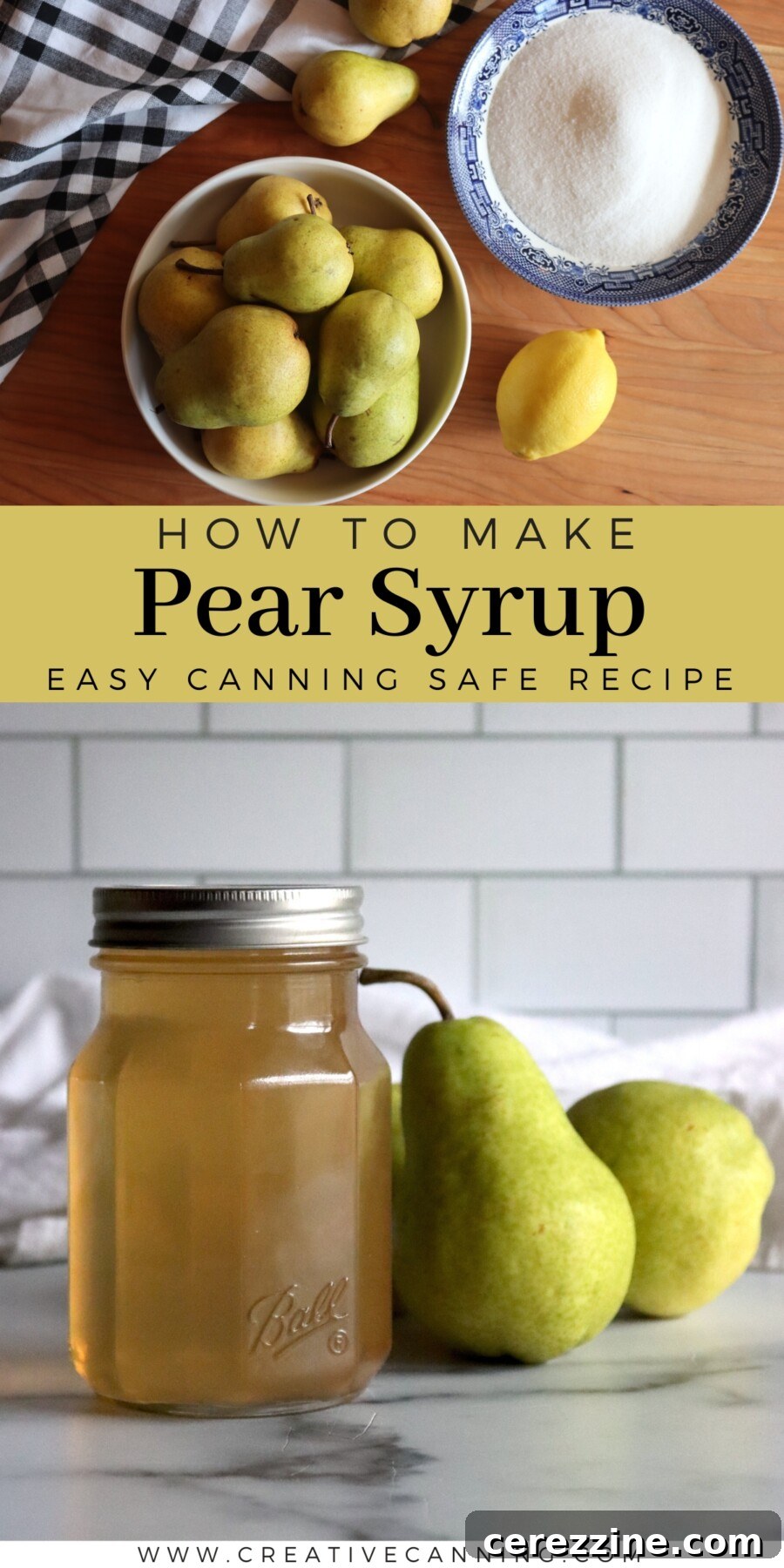
Pear syrup transforms ripe pears into a golden, pourable sweetener that preserves the delicate floral flavor of the fruit. Thinner than honey but richer than a simple sugar syrup, pear syrup is ideal for drizzling over pancakes, stirring into cocktails, sweetening sparkling water, or brushing on roasted pork and chicken. It’s a low-effort preserving project that turns an abundance of pears into a jar of ready-to-use flavor.
This recipe has been reviewed for safety and accuracy by a Master Food Preserver certified through the University of Cornell Cooperative Extension.
The technique is the same juice extraction used for jelly, minus the pectin: quarter and simmer the pears, strain the cooked fruit to collect the juice, then combine that juice with an equal amount of granulated sugar and heat to make syrup. The 1:1 juice-to-sugar ratio creates a syrup that tastes like fruit rather than sweetened water—sweet and pourable, with real pear character.
Pears are acidic enough to be processed safely in a water bath canner without added acid. A small amount of lemon juice in the recipe is optional and only used to brighten the flavor; it’s not required for safety. Because syrup has no gel point to chase, it’s a forgiving preserving project suitable for beginners.
Notes from My Kitchen

When pears ripen all at once, extracting juice for syrup saves time compared with peeling and coring each fruit for canning halves or making butter. The straining step requires little attention and lets you capture the essence of many pears in one batch. We use pear syrup most at breakfast—over pancakes, waffles, and French toast—but it also brightens cocktails and sparkling drinks without adding pulp.
Quick Look at the Recipe
- Recipe name: Pear Syrup
- Type: Fruit syrup / canning recipe
- Method: Extract juice, combine 1:1 with sugar, heat, and water-bath can
- Prep time: About 20 minutes active, plus extraction and straining time
- Cook time: About 15 minutes
- Canning time: 10 minutes for pints or half-pints (adjust for altitude)
- Yield: About 3 pints or 6 half-pints from ~3½ lb pears
- Jar sizes: Pints or half-pints
- Headspace: 1/4 inch
- Ingredients overview: Pears, water, and granulated sugar (1:1 by volume with juice). Optional lemon juice for brightness.
- Difficulty: Easy — forgiving and suitable for beginners
Ingredients
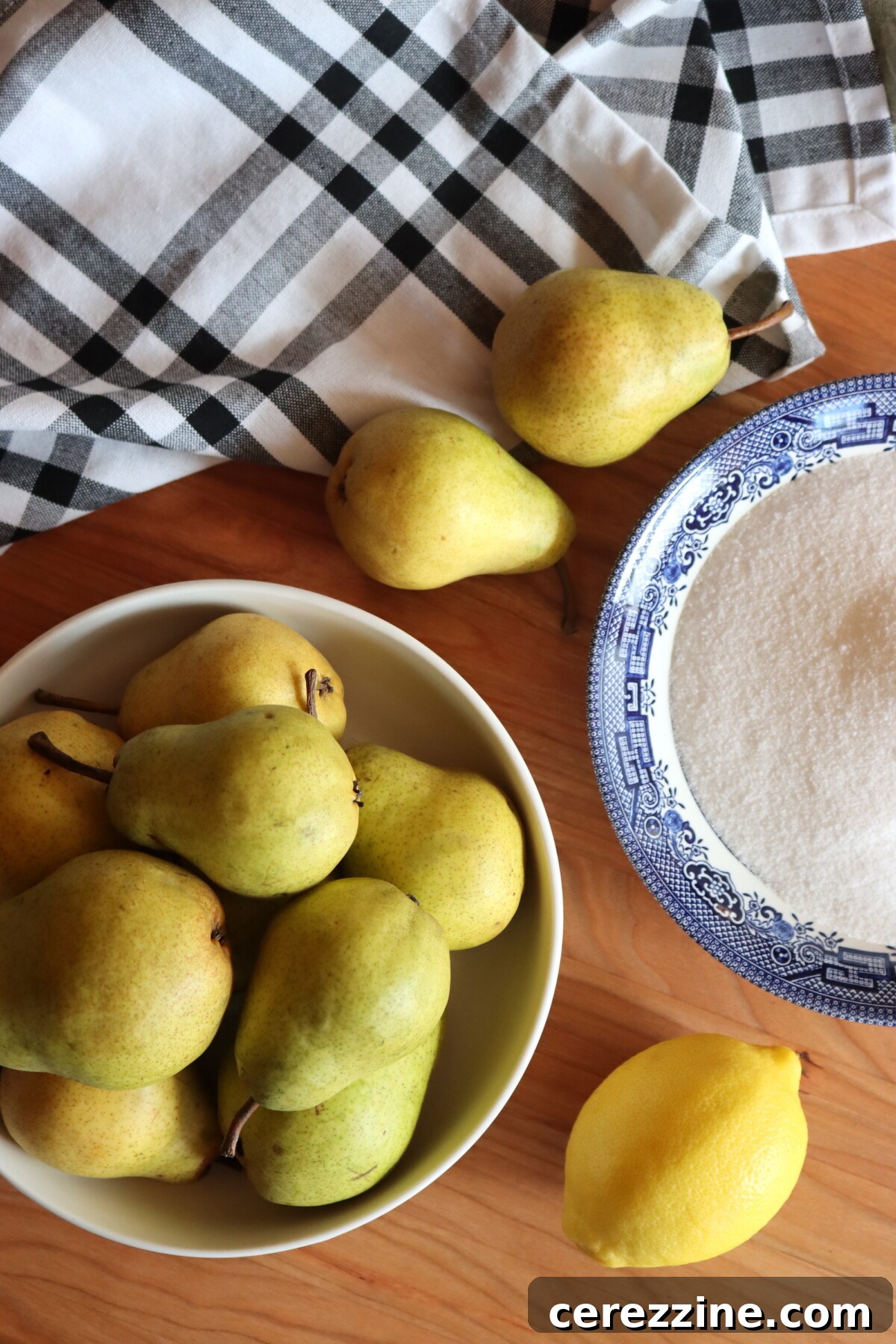
Pear syrup uses very few ingredients; the pears determine the final flavor. Extract the juice first, then mix equal parts juice and sugar.
- Pears: Any variety—Bartlett, Bosc, Anjou, etc. Use fully ripe, fragrant pears for best flavor. Slightly soft or bruised fruit is fine because everything is cooked and strained. No need to peel or core; peels and cores add flavor during extraction and are strained out.
- Water: 1 to 2 cups to start the cooking and prevent scorching. This water becomes part of the extracted juice, so add only what’s needed.
- Granulated sugar: Use a 1:1 ratio of sugar to extracted juice for body and pourability. Sugar affects texture and sweetness, not safety—reduce it if you prefer a thinner, tarter syrup.
- Lemon juice (optional): About 1/4 cup per batch (or 1 tablespoon per cup of juice) brightens flavor but is not required for safe canning.
Step-by-Step Instructions
Two main phases: extract and strain the pear juice, then sweeten and can it. Start the extraction early so the juice has time to drain and you know how much sugar to add.
Extract the Juice
Wash and quarter the pears, leaving peels and cores intact. Place them in a large pot with 1 to 2 cups of water, bring to a simmer, and cook, crushing with a potato masher as they soften, until the fruit breaks down and releases juice. Expect roughly 8 medium-large pears (about 3½ pounds) to yield about 4 cups of juice. Simmering usually takes 20–30 minutes for pears to collapse fully.
Strain the Juice
Line a colander with a double layer of damp cheesecloth or use a jelly bag and set it over a bowl. Pour in the cooked pears and let the juice drip through for at least 2 hours or overnight. For a clear syrup, avoid squeezing the bag; pressing will yield more juice but a cloudier syrup. Reserve the pulp for compost or process it into pear sauce with a food mill.
Make the Syrup
Combine the strained pear juice and an equal volume of granulated sugar in a clean stainless-steel saucepan. Add optional lemon juice for brightness. Heat over medium-high, stirring until the sugar dissolves. Bring to a boil, then reduce heat and simmer 5 minutes, skimming any foam. The syrup should be pourable—similar to maple syrup. Simmer longer to thicken, watching carefully to prevent scorching.
Fill Jars
Ladle hot syrup into prepared jars, leaving 1/4 inch headspace. Wipe rims, center lids, and apply bands fingertip-tight. Use pints or half-pints depending on how you’ll use the syrup; a canning funnel helps keep rims clean for reliable seals.
Canning Pear Syrup
For shelf-stable storage, process jars in a boiling water bath. Place filled jars in the canner with at least 1 inch of water above lids and process for 10 minutes for pints or half-pints, adjusting times for altitude: 0–1,000 ft = 10 minutes; 1,001–6,000 ft = 15 minutes; above 6,000 ft = 20 minutes. After processing, turn off heat, let jars rest in the canner 5 minutes, then remove and cool undisturbed 12–24 hours before checking seals. Properly sealed jars store at room temperature for 12–18 months; unsealed jars should be refrigerated and used soon.
Yield Notes
Starting with about 3½ pounds of pears (roughly 8 medium fruit) typically yields ~4 cups of juice. Mixed 1:1 with 4 cups of sugar, this produces about 6 cups of syrup—enough for 3 pint jars or 6 half-pints. Adjust the sugar to match your actual juice volume to maintain the 1:1 ratio. The recipe scales well for larger batches; processing time remains the same regardless of quantity.
Serving Ideas
Pear syrup shines at breakfast—drizzle over pancakes, waffles, French toast, or oatmeal. Spoon it over yogurt, ice cream, or pound cake. It mixes beautifully into sparkling water or cocktails and works as a glaze for roasted pork or chicken. Pair pear syrup with vanilla or warm spices such as cinnamon and ginger, or serve it alongside sharp or blue cheeses where its sweetness balances savory, salty flavors.
The same juice-and-sugar approach works for many fruits, so consider keeping other fruit syrups in your pantry alongside this pear syrup for year-round use.