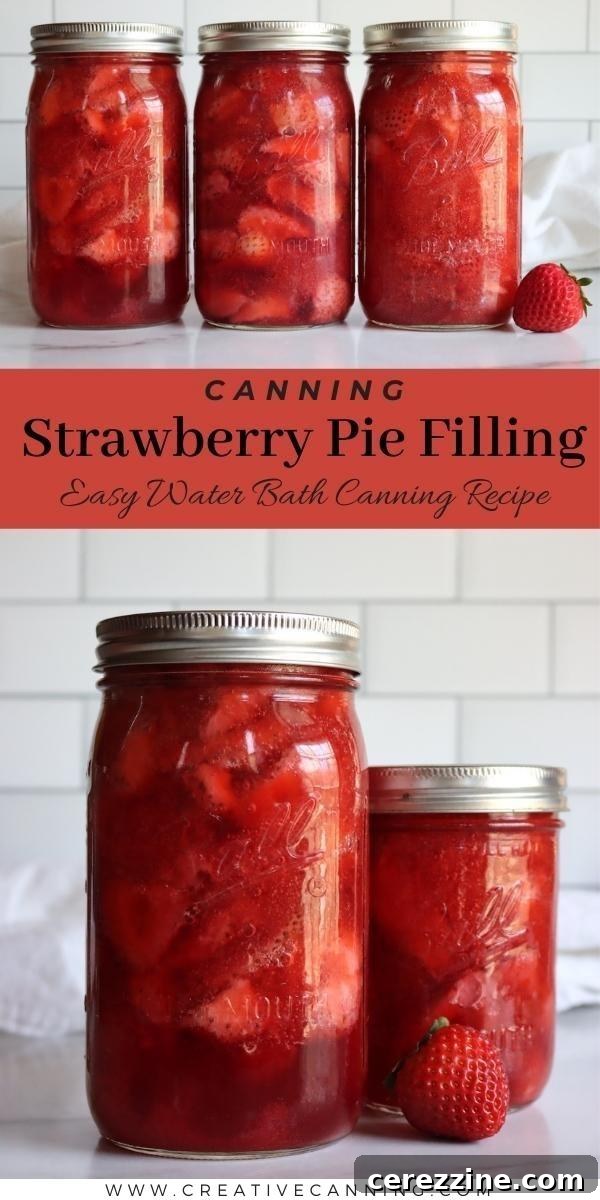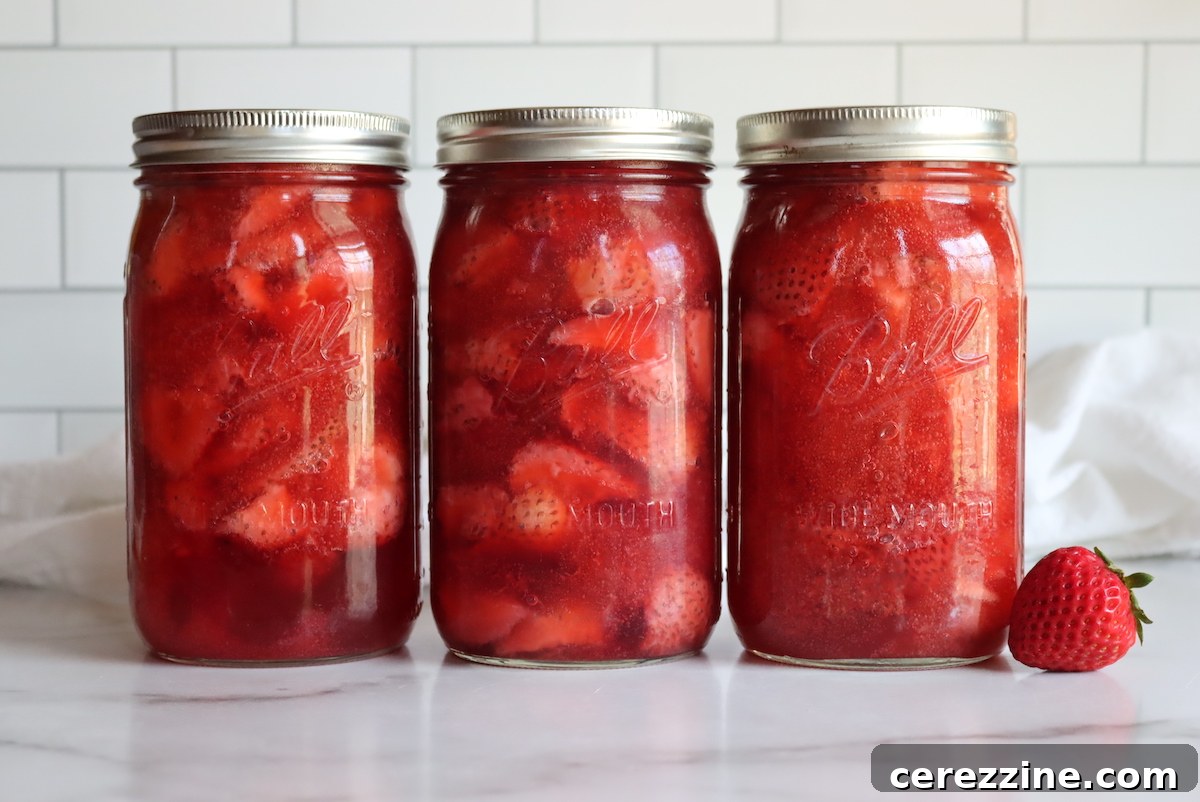
Imagine the sweet taste of summer strawberries, perfectly preserved and ready to transform into a delightful dessert whenever the craving strikes. Canning strawberry pie filling makes this dream a reality, offering a versatile supply for delicious treats year-round. More than just a pie filling, this vibrant, fruity concoction is perfect for layering between birthday cake tiers, topping creamy cheesecakes, or simply spooning over a scoop of vanilla ice cream for an instant summertime sundae.
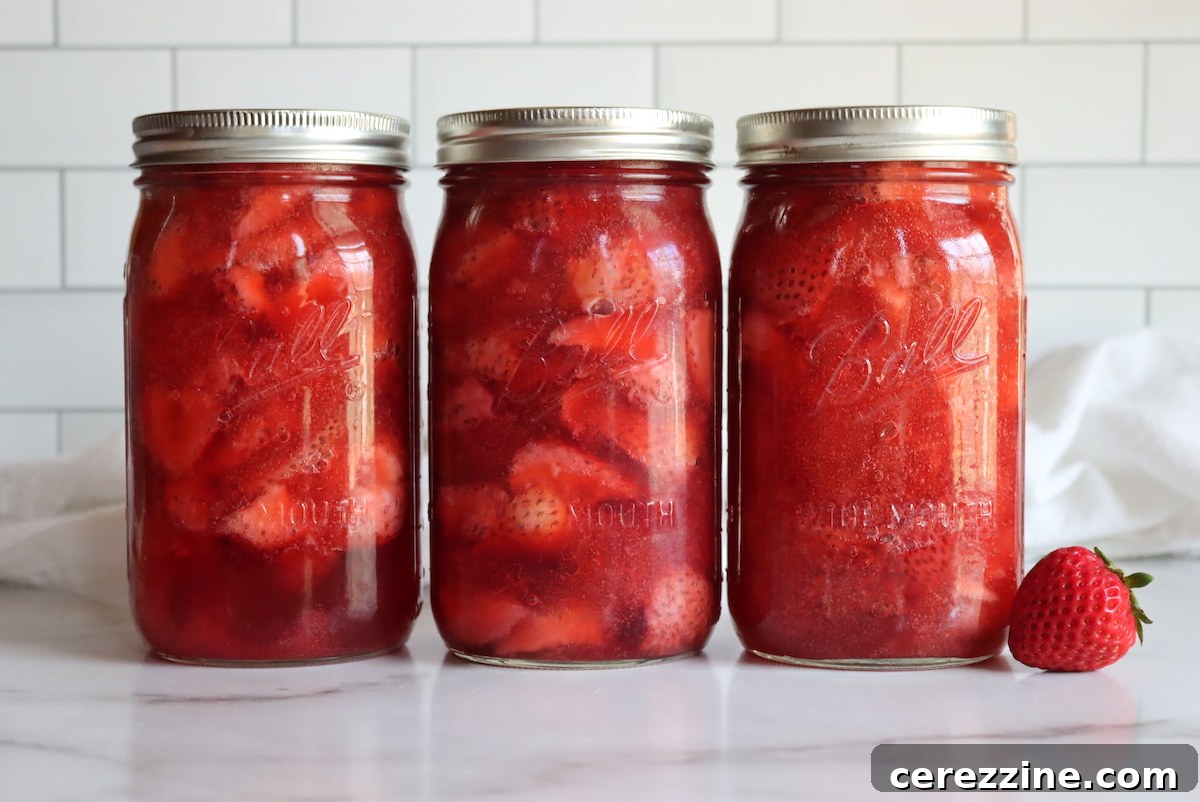
Strawberries hold a special place in the hearts of many, heralding the arrival of warmer weather and abundant harvests. Here in Vermont, after enduring long, snowy winters, the emergence of the first strawberries is a truly welcome treat. That’s why we dedicate a significant portion of our garden to several hundred strawberry plants—the thought of a summer without these juicy berries is simply unbearable after months of snow shoveling!
Our garden boasts a variety of strawberry types to ensure a continuous bounty. We cultivate classic June-bearing strawberries for that iconic early summer flush, alongside everbearing varieties that provide smaller, but consistent, yields throughout the season. We also enjoy the delicate flavor of alpine strawberries and, for a unique twist, even added pineberries to our collection this year. Each type offers its own distinct charm and flavor profile, ensuring a diverse harvest.
Some years, our strawberry plants produce just enough to satisfy our desire for fresh fruit straight from the vine, leaving little extra for preservation. However, other years bring an incredibly prolific harvest, leaving us delightfully buried in an abundance of ripe, red berries. When these bountiful years arrive, our pantry becomes a hub of activity as we embark on various preservation projects.
We start by canning whole strawberries, which are fantastic additions to muffins and scones year-round. Our simple old-fashioned strawberry jam is a perennial favorite, and the kids are especially fond of homemade strawberry jelly. Once our shelves are brimming with these classic preserves, we even venture into making strawberry wine – a truly rewarding way to capture the essence of summer.
This year, as winter approached, I found myself longing for jars of home-canned strawberry pie filling for those cozy, colder evenings. After experimenting, the results were so wonderfully successful that canning strawberry pie filling has officially earned a permanent spot on my annual preserving list. It’s a simple project with immense rewards, bringing the taste of sunshine to your table no matter the season.
Essential Ingredients for Your Homemade Strawberry Pie Filling
Creating a safely canned strawberry pie filling requires specific ingredients, especially when it comes to the thickener. Unlike fresh pies where you might use cornstarch or flour, home-ccanning necessitates a special, canning-approved thickener called Clear Jel (cook type). This distinction is crucial for both safety and quality.
Traditional thickeners like flour, tapioca starch, and regular cornstarch are NOT approved for canning because they can interfere with proper heat penetration throughout the jar during processing. This means that the center of your jar might not reach a high enough temperature to eliminate harmful bacteria, posing a significant safety risk. Furthermore, these thickeners tend to break down and lose their thickening power after prolonged heating and re-heating, meaning your beautifully canned filling would turn watery when baked into a pie.
Clear Jel (cook type), on the other hand, is specifically designed to withstand the rigors of canning. It maintains its thickening properties through repeated heating and cooling cycles, ensuring your pie filling remains perfectly set whether you’re baking it into a pie or using it as a chilled topping. Even if your intention is to use the home-canned strawberry pie filling purely as a topping (without re-baking), it is still imperative to use Clear Jel, as it’s the only thickener tested and approved for canning safety by reputable sources like the NCHFP (National Center for Home Food Preservation).
For each quart jar of delicious strawberry pie filling, you’ll need the following precise measurements:
- 3 1/2 cups of cleaned, precisely sliced strawberries (this typically comes from 1 quart of fresh fruit, weighing approximately 2 lbs)
- 3/4 cup + 2 Tbsp. Granulated Sugar
- 1/4 cup + 1 Tbsp. Clear Jel
- 1 cup cold water (or cold strawberry juice for enhanced flavor and color)
- 3 1/2 tsp. Bottled Lemon Juice (critical for acidity and safety)
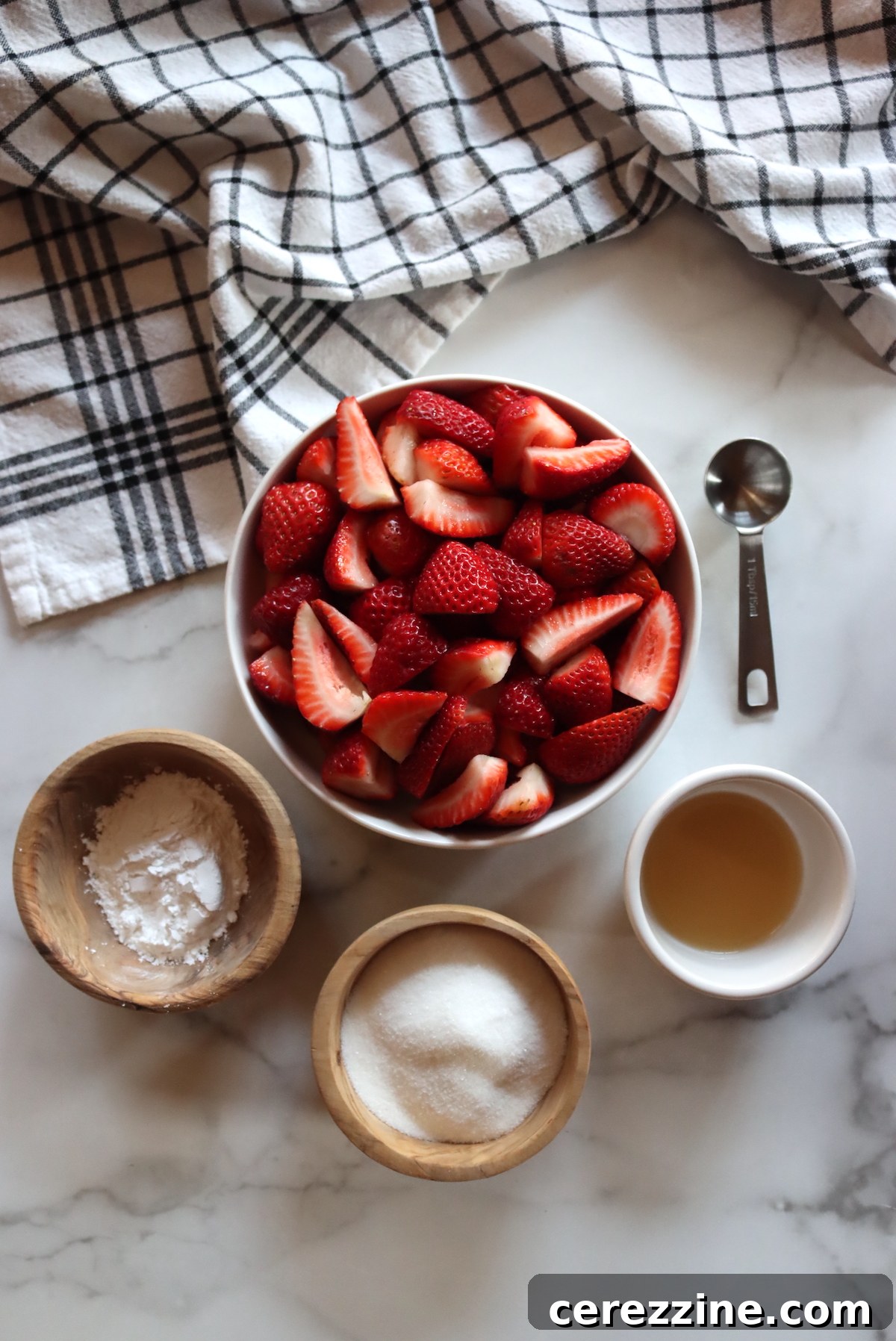
The measurements for a single jar might appear a little intricate, but this recipe is optimized for efficiency and safety when preparing a larger, 7-quart canner batch. The amounts for a full 7-quart canner batch are designed with more rounded numbers, making larger scale production straightforward:
- 6 quarts of cleaned, sliced strawberries (derived from approximately 7 quarts of fresh fruit, or about 14 to 15 lbs)
- 6 cups Granulated Sugar
- 2 1/4 cups Clear Jel
- 7 cups cold Water (or cold strawberry juice)
- 1/2 cup Bottled Lemon Juice
When purchasing Clear Jel, be aware that it’s often sold by weight rather than volume. A useful conversion to remember is that one pound of Clear Jel typically equates to about 3 cups. Plan your purchase accordingly to ensure you have enough for your canning project.
Important Recipe Note on Lemon Juice: You might encounter varying lemon juice quantities in older canning publications or copied handouts for berry pie fillings. There was a persistent typo in a University of Washington publication that incorrectly listed 3 tablespoons per quart and ½ cup for 7 quarts. The scientifically tested and correct ratio, confirmed by the NCHFP, is 3½ teaspoons of bottled lemon juice per quart of filling. This precise measurement conveniently scales up to ½ cup for a 7-quart batch, ensuring consistent safety and proper acidity across all batch sizes. These corrected, safe amounts are what we utilize in this recipe.
Customizing Your Strawberry Pie Filling While Ensuring Safety
One of the great aspects of home canning is the ability to personalize your creations. While canning requires adherence to strict safety guidelines, this strawberry pie filling recipe offers some flexibility for adjustments without compromising safety. According to the Washington State Extension service, you can:
“Adjust the sugar and spices in the recipe to suit your personal preferences. However, the amount of lemon juice should never be altered because it ensures the safety and storage stability of the fillings.”
This means you can feel free to adjust the amount of sugar to make your filling sweeter or less sweet, depending on your taste. You could also add a pinch of cinnamon or a dash of vanilla extract for an extra layer of flavor, though strawberries often shine best on their own. The key takeaway is that the acidic balance provided by lemon juice is non-negotiable for safe shelf storage.
Another permissible modification relates to the thickener. If you try this recipe and find the set to be too firm for your liking, you can slightly reduce the amount of Clear Jel used. For a slightly looser consistency, cutting the total amount of Clear Jel down to 3 to 4 tablespoons per quart jar is an approved modification, as it simply makes the mixture less dense, not unsafe. Remember, though, that increasing the Clear Jel beyond the recipe’s stated amount is not advised, as it could potentially interfere with heat penetration.
While decreasing the lemon juice is never permitted, you are welcome to add more if you desire a tarter strawberry pie filling. This will only increase the acidity, further enhancing the safety profile without negative impact.
The main principles you must not violate are decreasing the critical ratio of lemon juice to fruit, or increasing the Clear Jel beyond the recommended quantities. Adhering to these guidelines ensures both a delicious product and safe, shelf-stable preservation.
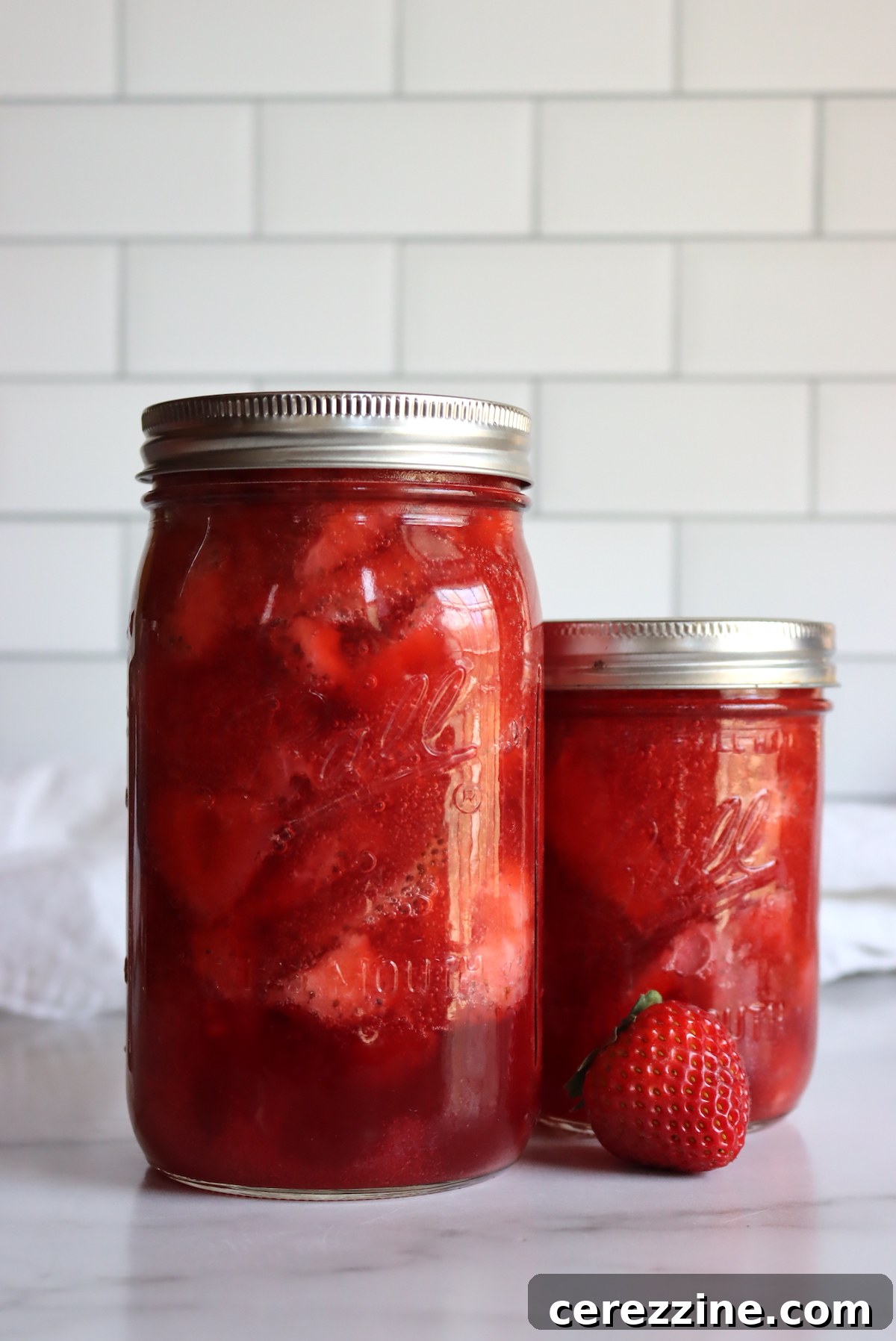
Step-by-Step Guide: How to Can Strawberry Pie Filling Safely
Canning strawberry pie filling with Clear Jel is a slightly different process compared to canning plain fruit or jam, and paying close attention to the order of operations is critically important for success. The unique properties of Clear Jel require specific handling to achieve a smooth, properly thickened filling. Following these instructions meticulously will ensure the best results, both in terms of texture and food safety.
Before You Begin: Preparation is Key
Before you even begin working with the strawberries, ensure your canning equipment is ready. Prepare your water bath canner by filling it with water and bringing it to a simmer. Wash your canning jars thoroughly with hot, soapy water, rinse well, and keep them hot (either in the canner, a warm oven, or a dishwasher) until ready to fill. Inspect your two-part canning lids for any defects; use new lids for reliable seals, and prepare them according to the manufacturer’s instructions, typically by simmering in warm water.
If you are new to water bath canning, I highly recommend reviewing a comprehensive beginner’s guide to water bath canning to familiarize yourself with the essential steps and safety protocols before starting this recipe.
Preparing the Strawberries
- Wash and Drain: Start by thoroughly washing your fresh strawberries under cool running water. Drain them well in a colander. If you are using frozen strawberries, thaw them in a colander set over a bowl to collect any valuable juice (which can be used later!).
- Hull and Slice: Hull the strawberries by removing the green leafy caps and any white core. The size of your slices is a matter of preference, but I generally halve smaller strawberries and quarter larger ones. It’s best to leave them slightly larger, as strawberries tend to shrink during the canning process, and very small pieces might disintegrate during cooking and processing.
- Blanch the Fruit: Bring several quarts of water to a rolling boil in a large pot on the stove. Carefully blanch the sliced strawberries in batches for 30 seconds to 1 minute, or until they are heated through. This crucial step helps to remove air from the fruit, which prevents it from floating to the top of the jar during storage and helps maintain its texture. Work gently to avoid mashing the delicate fruit. Remove the blanched strawberries with a slotted spoon and keep them warm while you prepare the Clear Jel mixture.
Making the Clear Jel Mixture
- Combine Dry Ingredients: In a large, heavy-bottomed pot (one big enough to comfortably hold all the fruit), combine the granulated sugar and Clear Jel. Whisk them together thoroughly to ensure the Clear Jel is evenly distributed with the sugar, which helps prevent clumping.
- Add Cold Liquid: Gradually add the cold water or cold strawberry juice to the pot. Whisk continuously until the Clear Jel is completely dissolved and no lumps remain. This step is incredibly important! Clear Jel will clump instantly in hot liquid, forming unusable tapioca-like blobs. Trust me on this—it’s much easier to prevent lumps from the start than to try and salvage a clumpy mixture. Do NOT turn on the heat until you are absolutely sure the Clear Jel is fully dissolved in the cold liquid.
- Thicken and Add Lemon Juice: Once the Clear Jel is fully dissolved, turn the heat to medium-high. Continue to whisk constantly as the mixture heats. It will begin to bubble and visibly thicken. As soon as it reaches a bubbling consistency, add the bottled lemon juice and continue to cook, whisking, for 1 additional minute. The lemon juice ensures the required acidity for safe water bath canning.
- Fold in Berries: Turn off the heat immediately and gently fold in the warm, drained blanched strawberries into the thickened Clear Jel mixture.
Filling Jars and Processing
- Fill Jars: Promptly fill your prepared, hot canning jars with the hot strawberry pie filling mixture. Work quickly, as the Clear Jel will continue to thicken as it cools. Take extra care to de-bubble the jars thoroughly using a non-metallic spatula or bubble remover. Due to the thick nature of the filling, air bubbles can become trapped easily, and removing them is essential for proper heat penetration and a good seal. Leave a precise 1-inch headspace at the top of each jar. Wipe the rims of the jars clean with a damp cloth to ensure a perfect seal.
- Cap and Process: Cap the jars with two-part canning lids (flats and rings). Twist the rings on to “finger-tight” – just enough to secure them without over-tightening.
- Water Bath Processing: Carefully place the filled jars into your simmering water bath canner. Ensure the jars are covered by at least 1 inch of water. Bring the water back to a rolling boil and process the jars for 30 minutes. This processing time is the same for both pint and quart jars of strawberry pie filling.
Altitude Adjustments for Safe Processing:
- 0 to 1,000 Feet in Elevation: Process for 30 minutes
- 1,001 to 3,000 Feet in Elevation: Process for 35 minutes
- 3,001 to 6,000 Feet in Elevation: Process for 40 minutes
- Above 6,000 Feet in Elevation: Process for 45 minutes
- Cooling and Sealing: Once the processing time is complete, turn off the heat under the canner. Leave the jars undisturbed in the hot water bath for an additional 5-10 minutes with the lid removed. This crucial step allows the internal pressure in the jars to equalize slowly, significantly reducing the risk of siphoning (liquid loss from the jars) as you remove them. Skipping this step can lead to a messy situation and some loss of your precious filling, although it doesn’t compromise safety if the jars still seal correctly.
- Final Cool Down: Remove the jars from the canner using a jar lifter and place them on a towel-lined counter or wire rack, ensuring they are not touching each other, for 12 to 24 hours to cool completely and seal. You will hear satisfying “pop” sounds as the seals engage.
- Check Seals and Store: After the cooling period, check all jar seals. The center of the lid should be depressed and not flex when pressed. Any unsealed jars should be refrigerated immediately and consumed within a few weeks. For properly sealed jars, remove the rings (they can trap moisture and cause rust), wipe the jars clean, label them with the contents and date, and store in a cool, dark place. Home-canned strawberry pie filling will maintain its peak quality for about 12 months. Refrigerate after opening.
Juice or Water for Canning Liquid: Enhancing Flavor and Color
When preparing your strawberry pie filling, you have a key decision to make regarding the canning liquid: whether to use plain water or strawberry juice to dissolve the Clear Jel. While water is perfectly acceptable, using strawberry juice instead can dramatically enhance both the flavor and the vibrant red color of your finished pie filling. In my experience, using strawberry juice yields a far superior taste and a more appealing hue, making the extra effort well worth it.
If you opt for strawberry juice, you’ll need to extract it beforehand. Approximately 1 pound of strawberries will yield about 1 cup of juice. Here are a few methods for extracting strawberry juice:
- Simmering and Straining: This is a common method, similar to making jelly. Roughly chop your strawberries (they don’t need to be pretty for juicing) and place them in a pot with a small amount of water (just enough to prevent scorching). Bring the mixture to a gentle simmer and cook until the strawberries soften, about 5-10 minutes. Mash the softened fruit with a potato masher, then strain the mixture through cheesecloth or a jelly bag, allowing the juice to drip naturally.
- Thawing Frozen Strawberries: If you’re using frozen strawberries for your pie filling, thaw them in a colander over a bowl. The liquid that drains out as they thaw is pure strawberry juice and is perfect for this recipe. You can then use the thawed berries in the pie filling itself and the collected juice to activate the Clear Jel.
- Countertop Juicer: For the most straightforward method, a countertop juicer can extract strawberry juice efficiently without any heating, preserving its fresh flavor.
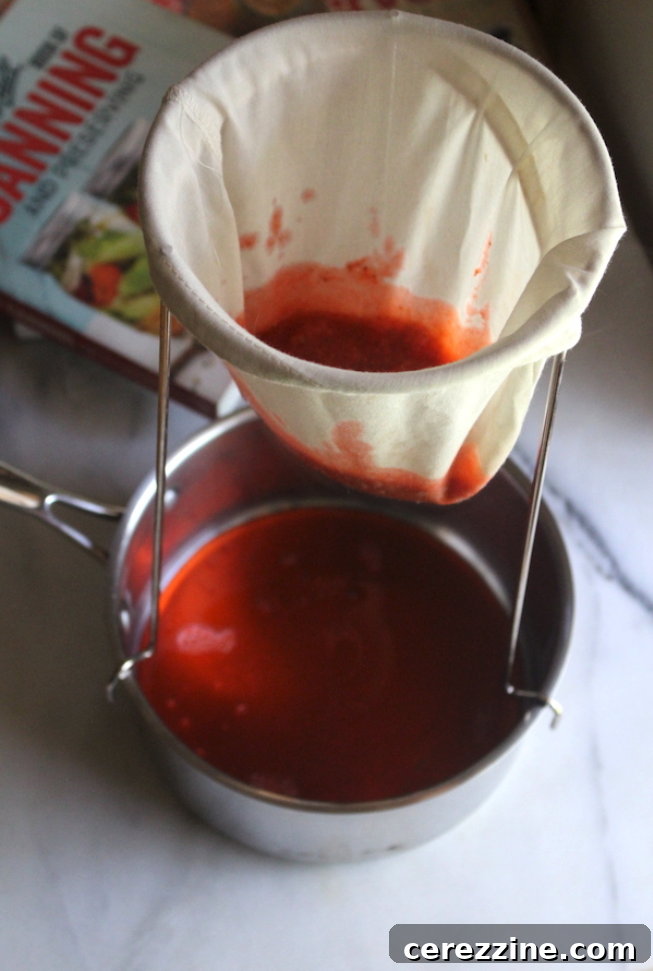
A crucial consideration when using extracted strawberry juice is its temperature. Remember, Clear Jel must be dissolved in cold liquid. If your extracted juice is hot (as it would be from simmering), you’ll need to chill it in the refrigerator for several hours or even overnight until it is completely cold. Alternatively, you can extract slightly less juice than required and add ice cubes to bring the volume up to the full amount needed for the recipe, ensuring the liquid is cold enough for the Clear Jel.
If the juicing process seems like too much effort, don’t worry—using cold water for your canning liquid is absolutely fine and will still result in a delicious and safe strawberry pie filling. To enhance the visual appeal, you might consider adding a drop or two of red food coloring to the water to give the “gel” around the strawberries a brighter, more vibrant red color, but this is entirely optional and doesn’t affect the taste or safety.
You can also experiment with other types of fruit juice, such as apple, cherry, or cranberry, for the liquid. However, be mindful that these juices will impart their own distinct flavors to the pie filling. Even a seemingly mild juice like apple can significantly alter the overall taste, making your canned strawberry pie filling taste somewhat like apples. For the purest and most authentic strawberry flavor, I highly recommend using strawberry juice for at least 1/4 to 1/2 of the liquid, even if it means sacrificing a small portion of your berries to the juicer.
Troubleshooting Common Issues with Strawberry Pie Filling
Even for experienced canners, working with pie fillings can sometimes present unique challenges. While canning strawberry pie filling is generally straightforward, being aware of common pitfalls and knowing how to address them can save you frustration and ensure a successful batch. Here are some of the most frequent issues encountered and their effective solutions:
Issue: Filling Not Setting Properly (Runny Pie Filling)
If your strawberry pie filling turns out runny after canning, the culprit is almost invariably related to the thickener. The only thickener approved for safe canning of pie fillings is Cook-Type Clear Jel. It’s crucial to understand that instant Clear Jel, regular cornstarch, or tapioca are not suitable. Cornstarch, in particular, cannot withstand the prolonged heat of the canning process and will not re-thicken when baked into a pie. Ensure you are purchasing Clear Jel specifically labeled “cook type” from a reliable source; many canners find success with brands like Hoosier Hill Farm’s cook-type Clear Jel. If you’ve confirmed you’re using the correct type of Clear Jel and your filling still didn’t set, it’s possible you received a compromised batch (which, though rare, can happen). When functioning correctly, Clear Jel should begin to thicken as you fill the jars, requiring you to work quickly. If your batch remains stubbornly thin, there’s likely an issue with your Clear Jel product itself.
Issue: Filling is Clumpy or Lumpy
This is one of the easiest mistakes to make and illustrates the importance of proper technique. Clear Jel must be whisked thoroughly into cold liquid before any heat is applied. If Clear Jel comes into contact with hot juice or water, it will instantly gelatinize on the surface, forming stubborn, gluey clumps that are incredibly difficult, if not impossible, to break up. I’ve made this mistake myself, as seen in the photos in my rhubarb pie filling post, where hot rhubarb juice led to undesirable lumps. To avoid this, always combine the Clear Jel with sugar, then whisk it into cold liquid until fully dissolved before gradually applying heat.
Issue: Low Yield from the Recipe
The final yield for pie filling can sometimes be unpredictable. This often stems from how the fruit is measured. Large, whole strawberries occupy more space and have more air gaps than smaller or more densely packed fruit, which can affect overall volume. The amount of fruit lost during trimming and hulling also varies. If you find yourself with slightly less filling than anticipated, it is perfectly acceptable to pack a jar a little less full and process it as usual. It will still be safe and completely usable, just with a slightly smaller quantity of filling.
Issue: Jar Siphoning During Processing (Liquid Loss)
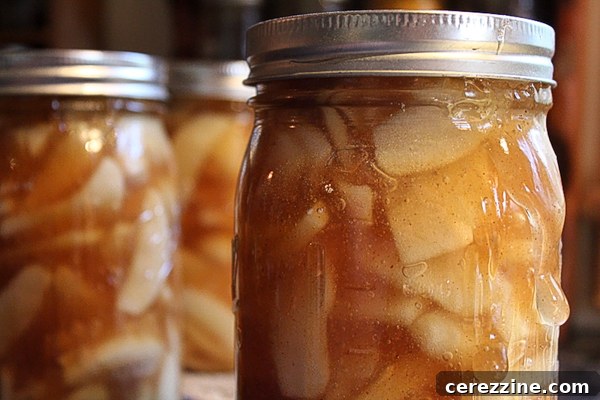
Siphoning occurs when syrup or liquid leaks out of your jars during the canning process. A common cause is removing the jars too quickly from the canner after processing. Always allow the jars to rest in the hot water bath for at least 5 to 10 minutes with the heat turned off and the canner lid removed before lifting them out. This crucial rest period helps to equalize the pressure inside and outside the jars, significantly reducing the likelihood of liquid loss. While siphoning can be messy, it’s important to remember that as long as the jars properly seal, it does not pose a food safety risk. Simply remove the rings, carefully check the seals, and wash the outsides of the jars to remove any sticky residue before storing. (Below is an example of siphoning with apple pie filling; while not ideal, the sealed jars are still safe for consumption once cleaned.)
Issue: Fruit Floats to the Top of the Jar
If you observe that your strawberry pieces are all floating at the top of the jar while the thickened gel has settled at the bottom, there are a couple of likely reasons. Firstly, the filling might not have been quite thick enough before canning, or the mixture wasn’t stirred thoroughly just before filling the jars, leading to uneven distribution. Secondly, and often more critically, the fruit might not have been blanched properly before you began. The blanching step at the beginning of the recipe is designed to remove air trapped within the fruit cells. If the fruit is under-blanched, this trapped air will cause the berries to become buoyant and float during the canning process. To prevent this, ensure gentle but thorough stirring right before filling the jars to distribute the fruit evenly, and always ensure adequate blanching. Remember that fruit float, while aesthetically imperfect, is purely a cosmetic issue and does not affect the safety or taste of your delicious pie filling.
Issue: Persistent Air Bubbles That Won’t Release
Because Clear Jel begins to set relatively quickly, it can be challenging to remove all air bubbles from the jars, especially as you get towards the end of a batch. To combat this, try to work as quickly as possible when filling the jars. Use a non-metallic bubble remover tool or a clean chopstick to gently press along the inside perimeter of the jar, releasing any trapped air. If the filling is already firming up significantly, you might not be able to eliminate every single bubble, and that’s perfectly acceptable. Do your best, but remember that absolute perfection isn’t required here for safety. While a jar with numerous bubbles might not win a prize at a state fair, it will still be perfectly safe to eat as long as the jars have been processed correctly and achieved a proper seal.
Creative Ways to Enjoy Your Home-Canned Strawberry Pie Filling
Once you’ve successfully created a batch of home-canned strawberry pie filling, you have a convenient and delicious ingredient that is shelf-stable and ready to use without further cooking. While baking it into a classic pie is an obvious and delightful choice, its versatility extends far beyond that. Here are some creative and mouth-watering ways to enjoy your homemade strawberry pie filling:
- Classic Strawberry Pie: Of course, its primary purpose! Pour into your favorite pie crust, bake, and enjoy.
- Cheesecake Topping: Spoon generously over a chilled New York-style cheesecake or individual cheesecake cups for a vibrant, fruity contrast.
- Ice Cream Sundaes: Elevate a simple scoop of vanilla ice cream into a gourmet dessert. It’s also heavenly on a banana split!
- Cake Layer Filling: Use it as a luscious middle layer in a birthday cake or other celebration cakes, adding both flavor and moisture.
- No-Bake Tarts: Perfect for a quick and easy dessert, simply fill a pre-baked tart shell with the chilled filling.
- Yogurt and Oatmeal Mix-in: Stir a spoonful into your morning yogurt or oatmeal for a burst of fruity flavor and natural sweetness.
- Pancake and Waffle Topping: Drizzle warm strawberry pie filling over fluffy pancakes or crispy waffles for a decadent breakfast or brunch.
- Dessert Pizza: Spread it over a sweet pizza crust (like a sugar cookie crust) and top with whipped cream or fresh berries.
- With a Spoon: And yes, sometimes the simplest pleasure is the best – eating it straight from the jar with a spoon!
One of my favorite variations involves combining it with other home-canned goods. I find that this strawberry pie filling works exceptionally well when I add a drained quart of home-canned rhubarb to it. The strawberry pie filling provides ample thickener for the rhubarb as well, resulting in an instant and incredibly flavorful strawberry rhubarb pie filling that is truly a taste of summer and spring combined.
Rating: 4.88 from 8 votes
Servings: 16 servings (Makes 1 quart or 7 quarts)
Canning Strawberry Pie Filling
By Ashley Adamant
Home canned strawberry pie filling is a tasty way to preserve a rich strawberry filling right on the pantry shelf. It’s perfect for pies, of course, but it’s also great for topping cheesecakes and other desserts.
Prep: 20 mins
Cook: 10 mins
Canning Time: 30 mins
Total: 1 hr
Print Recipe
Equipment
- Wide Mouth Quart Mason Jars
- Water Bath Canner
- Clear Jel (Canning Safe Thickener)
Ingredients
For A Single Quart:
- 3 1/2 cups strawberries, sliced (from 1 quart of fresh fruit, about 2 lbs)
- 3/4 cup + 2 Tbsp. Sugar
- 1/4 cup + 1 Tbsp. Clear Jel
- 1 cup water (or juice)
- 3 1/2 tsp. Bottled lemon juice
For a 7 Quart Canner Batch:
- 6 Quarts sliced strawberries (from about 7 quarts of fresh fruit, or about 14 to 15 lbs)
- 6 cups Sugar
- 2 1/4 cups Clear Jel
- 7 cups Water (or juice)
- 1/2 cup Bottled Lemon Juice
Instructions
- Before you begin, prepare a water bath canner, jars, and lids.
- Start by washing and draining the strawberries. Thaw them in a colander over a bowl and reserve the juice if using frozen fruit.
- Hull the strawberries and slice them. The size of the slices is up to you; I tend to halve the smaller strawberries and quarter the larger ones. Leave them a bit on the large side, as they shrink during canning, and very small pieces will fall apart during cooking.
- Bring a few quarts of water to a boil on the stove and blanch the strawberries for 30 seconds to 1 minute until they’re heated through. Work in batches, and be gentle with the fruit so it doesn’t fall apart. Remove them with a slotted spoon and keep them warm while making the Clear Jel mixture.
- Combine sugar and Clear Jel in a large pot, big enough to hold all the fruit comfortably. Add cold water or cold juice to the pot and whisk to dissolve the Clear Jel completely. This is important! Do not turn on the heat until the Clear Jel is fully dissolved into the water.
- Turn on the heat to medium-high and whisk continuously until the mixture begins to bubble and thicken. As soon as it bubbles, add lemon juice and cook for 1 additional minute.
- Turn off the heat and fold in the drained berries.
- Immediately fill the canning jars with the mixture, taking extra care to de-bubble the jars as the mixture will be thick. Leave 1-inch headspace.
- Cap the jars with 2-part canning lids and twist on rings to finger tight. Process in a water bath canner for 30 minutes, adjusting for altitude. Canning times are the same for pints and quarts.
- Once the processing time is complete, turn off the heat and allow the jars to sit undisturbed in the canner for about 10 minutes. This reduces the risk of siphoning as you remove the jars from the canner. (If you skip this step, there’s a good chance the thick mixture will siphon out of the lid as the jars cool. That’s not a safety issue, and the jars are still fine to eat if they do still seal, but it makes a big mess, and you lose some of the contents of the jar.)
- Remove the jars from the canner with a jar lifter and allow them to cool on the counter for 12 to 24 hours. Check seals, and store any unsealed jars in the refrigerator for immediate use.
- Properly canned and sealed jars of strawberry pie filling will maintain peak quality on the pantry shelf for about 12 months. Refrigerate after opening.
Notes
It’s incredibly important that the Clear Jel is dissolved in cold water, as it’ll clump quickly in hot water, and you’ll have something that looks like tapioca pudding with lots of little white clumps of powder. Trust me on this one; it’s really not usable when that happens.
It’s also important that the fruit are pre-blanched to be partially cooked and hot when they go into the Clear Jel.
Be sure to follow the instructions carefully for the best results.
Altitude adjustments for canning are as follows:
- 0 to 1,000 Feet in Elevation: 30 minutes
- 1,001 to 3,000 Feet in Elevation: 35 minutes
- 3,001 to 6,000 Feet in Elevation: 40 minutes
- Above 6,000 Feet in Elevation: 45 minutes
After the canning time is complete, turn off the heat and allow the jars to cool slightly in the canner before removing. (Wait at least 10 minutes.) You have a greater chance of siphoning if you skip this step as the jars cool too rapidly on the counter.
Lemon Juice Amounts
You may see different lemon juice amounts listed for berry pie fillings in older or copied canning handouts. A long-standing typo in the University of Washington’s publication listed 3 tablespoons per quart and ½ cup for 7 quarts, which isn’t accurate. The correct tested ratio (confirmed by the NCHFP) is 3½ teaspoons of bottled lemon juice per quart of filling, which works out to be ½ cup for a 7-quart batch. Those corrected amounts are used here, giving you the same amount of lemon juice per quart whether you’re doing a 1-quart or 7-quart batch.
Nutrition
- Calories: 54kcal
- Carbohydrates: 14g
- Protein: 0.2g
- Fat: 0.1g
- Saturated Fat: 0.01g
- Polyunsaturated Fat: 0.05g
- Monounsaturated Fat: 0.01g
- Sodium: 1mg
- Potassium: 50mg
- Fiber: 1g
- Sugar: 11g
- Vitamin A: 4IU
- Vitamin C: 19mg
- Calcium: 6mg
- Iron: 0.1mg
Nutrition information is automatically calculated, so should only be used as an approximation.
We encourage you to leave a comment below and share your experience with this recipe or any creative ways you’ve used your homemade strawberry pie filling!
More Home-Canned Pie Filling Recipes
Ready to expand your home canning repertoire? Explore more delicious recipes for canning pie filling at home:
- Canning Apple Pie Filling
- Canning Blackberry Pie Filling
- Canning Peach Pie Filling
- Canning Cherry Pie Filling
Other Fruit Canning Recipes
Strawberries are just the beginning! If you have a bounty of other fruits this season, I have plenty of fruit canning recipes to keep your pantry well-stocked:
- Canning Peaches
- Canning Blackberries
- Canning Plums
- Canning Blueberries
- Canning Cherries