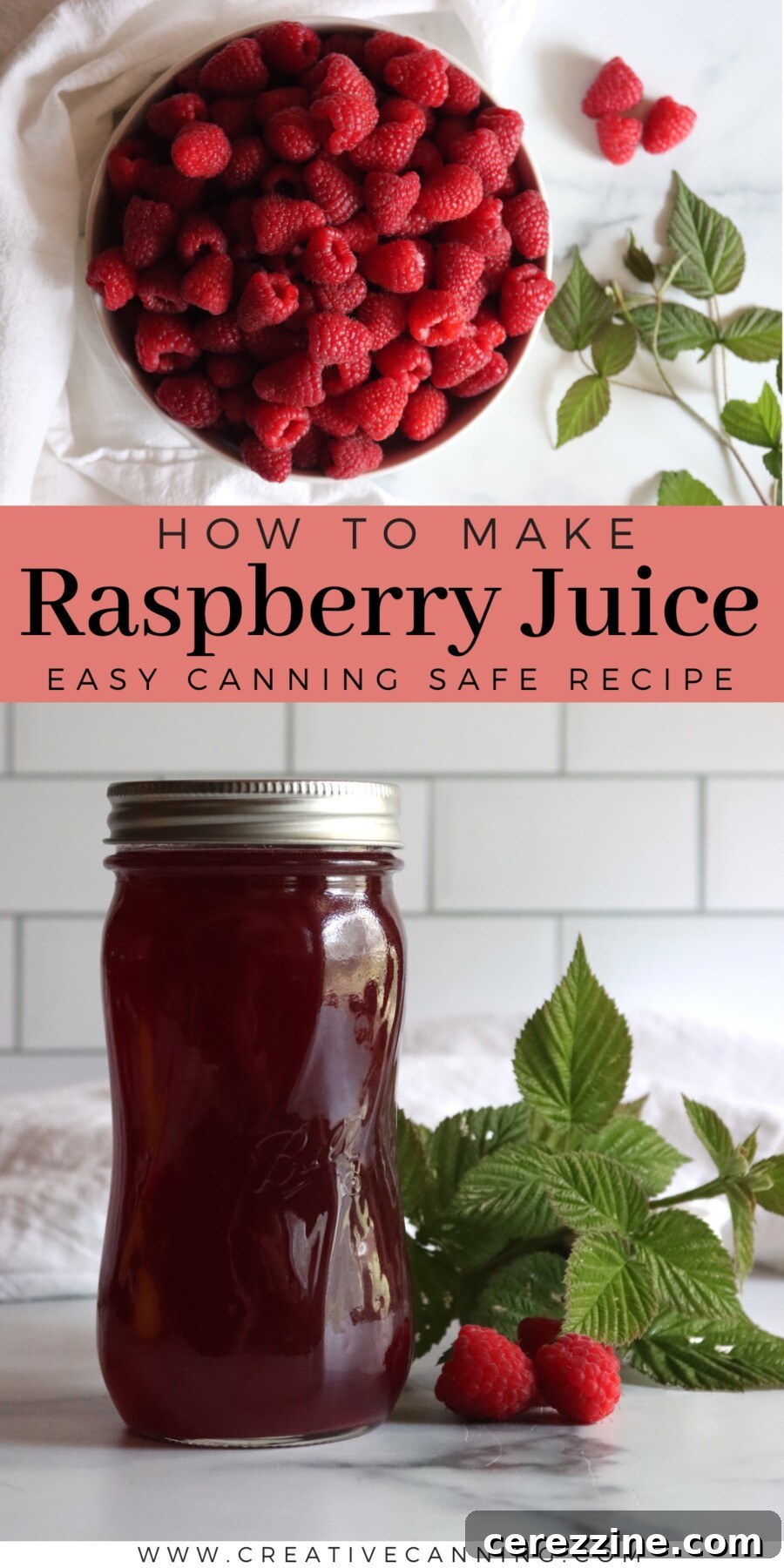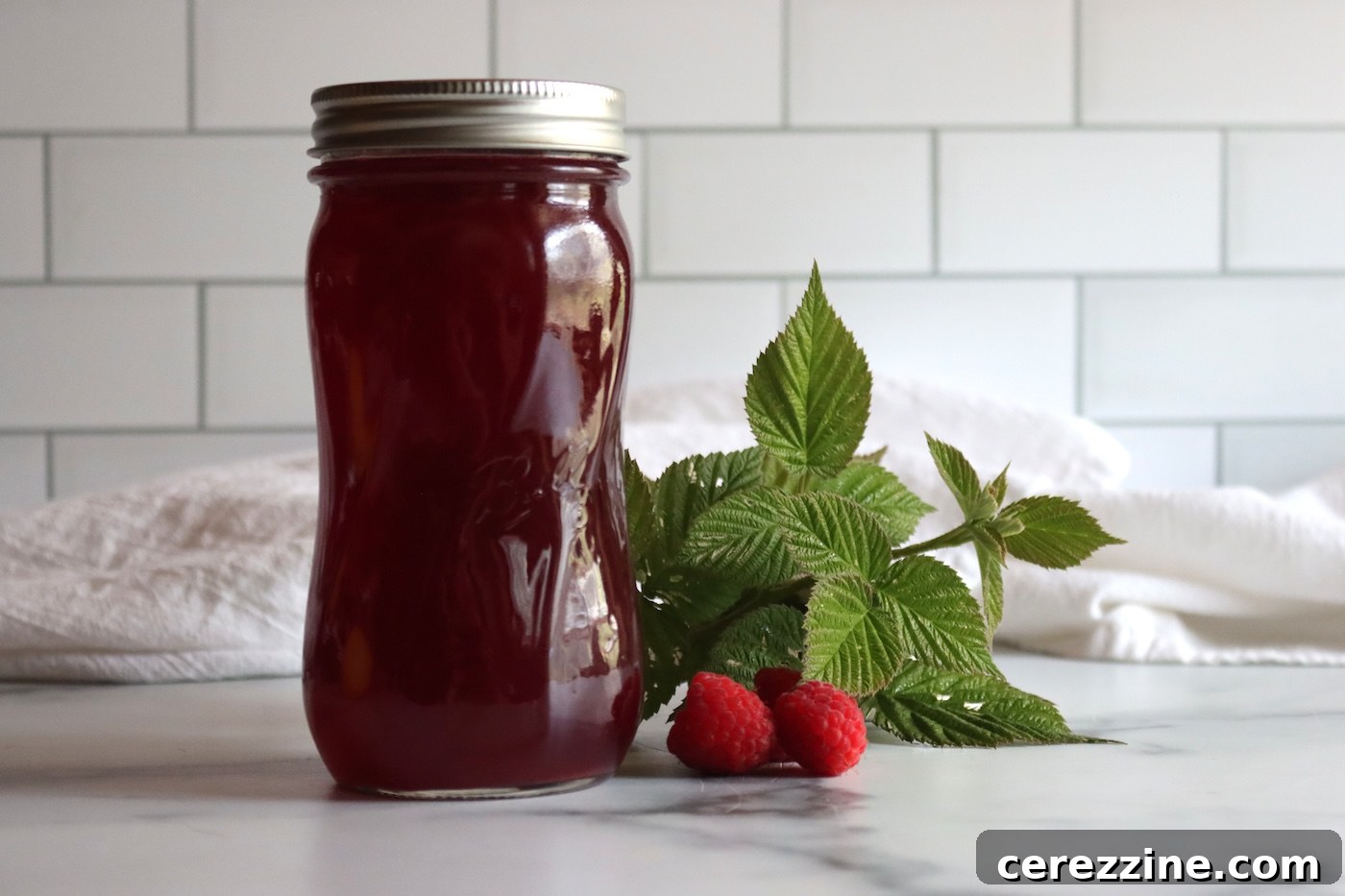
Raspberry juice captures summer in a jar: bright, fragrant, and ready to serve over ice, stirred into lemonade, or opened on a gray winter afternoon when fresh fruit feels far away.
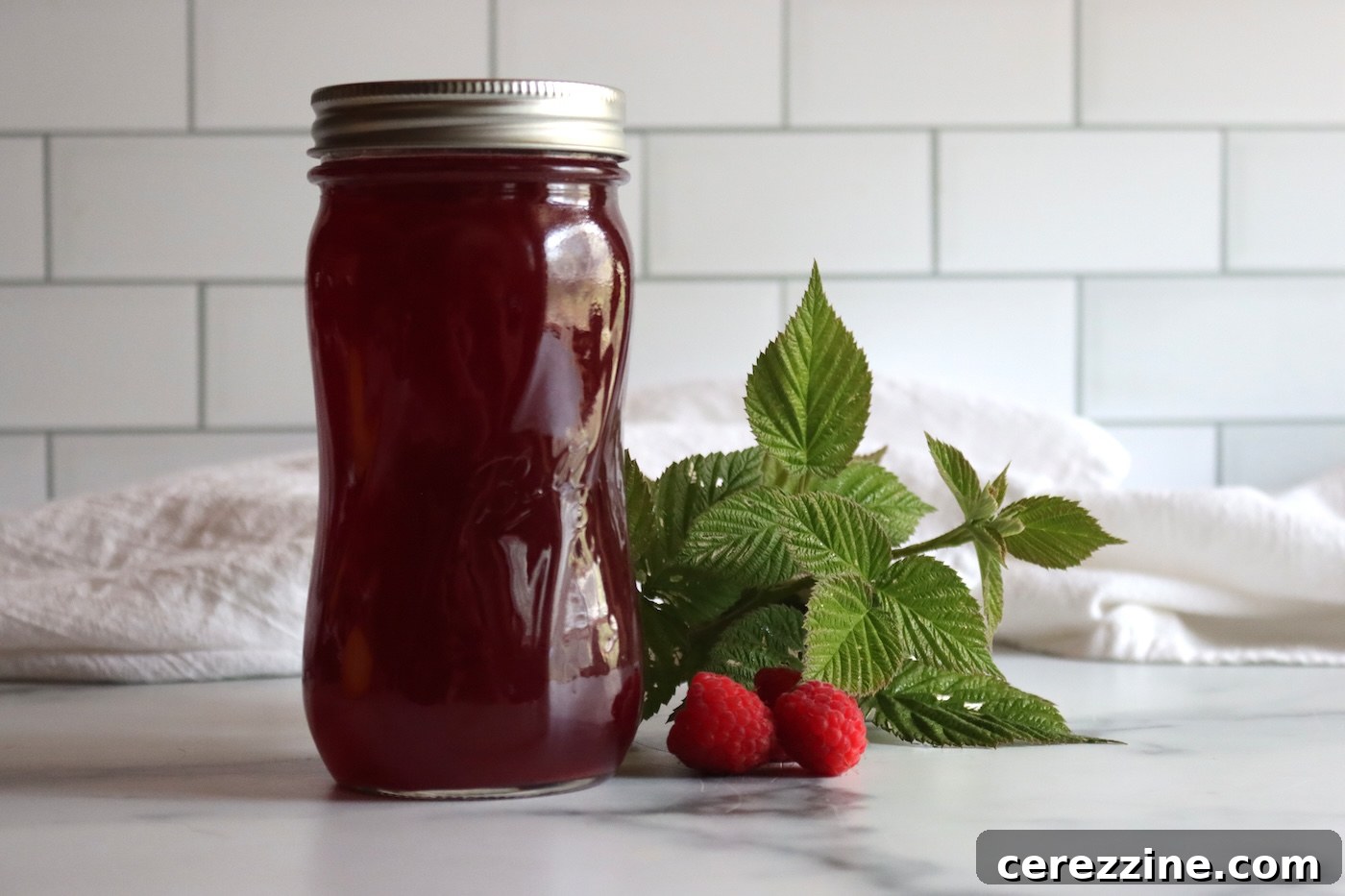
This recipe has been reviewed for safety and accuracy by a Master Food Preserver certified through the University of Cornell Cooperative Extension.
This method follows the standard berry juice technique from trusted home-preserving guides: crush the fruit with just a little water to prevent scorching, simmer briefly until the berries collapse, and let the pulp drip through a jelly bag until the liquid is clear. After that it’s a short heat-holding step and a quick water-bath canning session to make the juice shelf-stable.
If you’ve made raspberry syrup before, the extraction stage will feel familiar: the fruit is broken down and strained the same way. The difference is that syrup gets an equal weight of sugar and is boiled to thicken, which alters the fresh fruit flavor somewhat. Juice skips the sugar (or adds only a spoonful per cup for taste) and is never boiled, so the finished jar tastes closer to the fresh berry.
Both fresh and frozen raspberries work well; frozen berries often yield more liquid because freezing bursts the cells, so there’s no need to thaw them before cooking. Black raspberries can be used too, though they tend to be seedier and yield slightly less juice, so plan for a larger volume of fruit if you swap varieties. Strained juice is also the base for jelly, so a few jars on the pantry shelf let you make seedless jelly in winter without fresh fruit.
Notes from My Kitchen

Our raspberry patch ripens all at once during the hottest stretch of summer, faster than we can eat them and faster than I want to stand at a stove. I freeze the harvest in bags as we pick, then when the weather cools I pull the bags out and run a juice batch. Frozen fruit gives up more juice, so postponing the work until it’s convenient is an advantage rather than a sacrifice.
I typically can most of the juice unsweetened because an unsweetened jar keeps more culinary options open. A splash in sparkling water is our simplest drink. Add sugar and pectin later to make jelly, or sweeten by the glass. Leaving jars plain preserves flexibility, which is more valuable to me in March than a ready-to-drink jar in August.
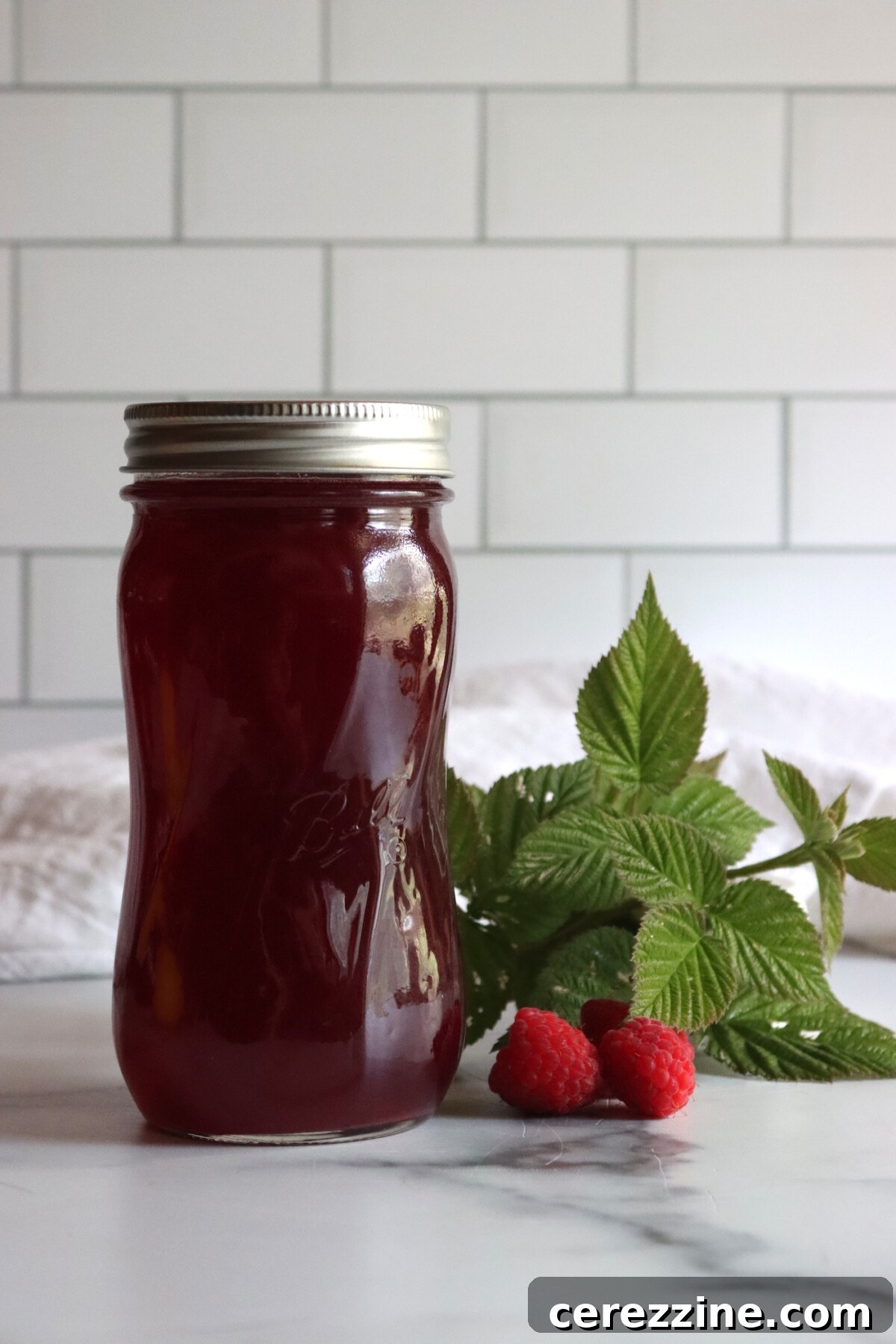
Quick Look at the Recipe
- Recipe Name: Raspberry Juice
- Recipe Type: Fruit Juice
- Canning Method: Water bath canning
- Prep Time: About 20 minutes active, plus 2 hours or more of straining
- Cook Time: About 15 minutes
- Canning Time: 15 minutes for half pints, pints, or quarts (see altitude adjustments)
- Yield: About 4 cups of juice (roughly 2 pints)
- Jar Sizes: Half pints, pints, or quarts
- Headspace: 1/4 inch
- Ingredients Overview: Raspberries, a small amount of water, and optional sugar for taste
- Difficulty: Easy. The straining takes time but requires little attention.
Ingredients for Raspberry Juice
This recipe keeps the ingredient list short. The goal is to extract the fruit’s juice while preserving the fresh flavor, so start with the best berries you can get.
- Raspberries: Ripe, tender berries give the most juice and the richest color. Slightly overripe fruit that is soft for the fruit bowl is fine; avoid anything moldy or fermented. Fresh and frozen both work; frozen need not be thawed. Black raspberries can substitute but typically yield less juice.
- Water: Use a small amount to get the extraction started and to prevent scorching—about 1/4 to 1/2 cup of water for every 4 cups of berries. Avoid adding extra water because it dilutes the finished juice.
- Sugar (optional): Sugar is for taste, not preservation. If you want a drink-ready jar, stir in 1 to 2 tablespoons per cup of juice before canning. If you’d rather preserve flexibility, leave jars unsweetened and sweeten by the glass later.
You’ll also want a jelly bag or several layers of damp cheesecloth for straining; a fine mesh strainer alone lets too much sediment through. If you process a lot of fruit frequently, a steam juicer extracts juice with less mess and the canning steps are the same for steam-extracted juice.
How to Make Raspberry Juice
The method is simple: cook the berries just until they collapse, let the juice drip undisturbed, hold the strained juice at temperature (without boiling), and process in a water bath. The only slow step is the dripping, and that happens without effort once set up.
Begin the straining early or the night before. If canning the same day, have your water bath canner, jars, and lids ready while the juice drains so you can move quickly when the liquid is heated.
Extract the Juice
Rinse about 3 1/2 quarts of raspberries (roughly 14 cups, about 3 1/2 pounds) and remove stems, leaves, and any spoiled fruit. Place the berries in a large stainless steel pot with 1 cup of water and crush them with a potato masher. Bring the pot to a boil over medium-high heat, stirring frequently to prevent sticking.
Reduce the heat, cover loosely, and simmer gently for 5 to 10 minutes, stirring and crushing occasionally, only until the berries soften and fall apart. You are extracting juice, not reducing the mixture; once the fruit has lost its structure, further cooking dulls the fresh flavor.
Strain the Juice
Spoon the hot fruit into a dampened jelly bag or into a colander lined with several layers of damp cheesecloth set over a deep bowl. Let it drip undisturbed for at least 2 hours, or overnight in a cool spot. For the clearest juice, do not squeeze the bag—squeezing forces fine pulp through the cloth and clouds the liquid.
Expect roughly 4 cups of juice from 3 1/2 quarts of berries, which equates to about 3 to 3 1/2 cups of raspberries per cup of juice. Yield varies with season, variety, and ripeness; measure the juice at the end rather than relying on an exact jar count. If you prefer more volume over clarity, feel free to press the pulp—flavor remains good though the juice will be cloudier.
Settle the Juice for Clarity
This optional, cosmetic step improves appearance. Refrigerate the strained juice overnight and allow fine sediment to settle. The next day, carefully pour off the clear top layer and leave the sediment behind. You lose a small amount of liquid but gain a brighter-looking jar. Skipping this does not affect safety or shelf life and is perfectly fine when the juice will be used for jelly or cooking.
Heat the Juice for Canning
Pour the strained juice into a clean saucepan. If using sugar, add 1 to 2 tablespoons per cup of juice and stir until dissolved. Heat the juice to 190°F (about 88°C) and hold it at that temperature for 5 minutes. Do not let it boil—boiling will evaporate volatile flavors and produce a cooked note. An instant-read thermometer is helpful because 190°F can resemble a simmer.
Canning Raspberry Juice
Canning is optional. Fresh juice keeps about a week in the refrigerator or up to a year in the freezer. For shelf stability, water bath canning is efficient and straightforward.
Prepare jars, lids, and a water bath canner while the juice is warming. Ladle hot juice into hot, prepared jars, leaving 1/4 inch headspace. Wipe the rims clean, center lids, and screw on bands fingertip tight. Lower jars into the canner so they are covered by at least 1 inch of water and process for 15 minutes for half pints, pints, or quarts, adjusting processing time for altitude if needed. When time is up, turn off the heat and let jars rest in the canner for 5 minutes to prevent siphoning, then move to a towel-lined counter and allow them to cool undisturbed for 12 to 24 hours.
Altitude Adjustments
Processing time increases with elevation:
- 0 to 1,000 feet: 15 minutes
- 1,001 to 6,000 feet: 20 minutes
- Above 6,000 feet: 25 minutes
Ways to Use Raspberry Juice
Most of ours is poured over ice and mixed with sparkling water for an instant summer drink. It also brightens iced tea and lemonade, adds concentrated berry flavor to cocktails and mocktails, and makes a soothing warm drink with honey when someone has a sore throat.
As an ingredient, raspberry juice is versatile: add sugar and pectin to make jelly (the seeds are already removed), reduce it into syrup, use it in place of water in gelatin desserts, or simmer it into a sauce for cheesecake or pound cake. Black raspberry juice works the same way and produces a darker, richer flavor.
Using the Leftover Pulp
The pulp left in the jelly bag still contains flavor. The simplest option is a second extraction: add a little water to the pulp, simmer briefly, and strain again. The second run will be lighter in color and flavor but useful for drinking or lightly flavored beverages.
You can also fold the pulp into jam recipes as a partial substitute for fresh fruit—use it for up to half of the fruit in a jam so the final texture and acidity remain balanced. Pulp will not set on its own, so don’t expect it to replace all the fruit in a full jam batch.
Storage and Shelf Life
After jars cool, check seals by pressing the center of each lid—sealed lids don’t flex. Remove bands, wipe jars clean, label with contents and year, and store in a cool, dark place. Properly sealed jars keep their best quality for 12 to 18 months; flavor and color fade gradually after that rather than becoming unsafe.
If any jar fails to seal, refrigerate and use within a week or freeze with appropriate headspace. Once opened, keep refrigerated and use within about a week. Discard any jar with a bulging lid, broken seal, mold, off-smell, or signs of fermentation without tasting.
Yield Notes
This recipe starts with about 3 1/2 quarts of raspberries and 1 cup of water and yields roughly 4 cups of strained juice—enough for 2 pint jars or 4 half-pints. Plan on about 3 to 3 1/2 cups of raspberries per cup of juice, though yield varies widely with variety and ripeness. Frozen berries generally give more juice than fresh.
Because the recipe scales by measuring the juice produced rather than a strict fruit-to-juice ratio, you can scale up or down easily: measure the juice you obtain, sweeten if desired, and fill jars. Processing time remains 15 minutes regardless of batch size (with altitude adjustments as noted).
Raspberry Juice FAQs
Yes. Frozen raspberries often yield more juice than fresh because freezing ruptures cell walls. Add berries frozen to the pot and give them a few extra minutes to break down; there’s no need to thaw first.
No. Raspberries are sufficiently acidic for safe water-bath canning and do not require added bottled lemon juice or citric acid.
Plan on about 3 to 3 1/2 cups of raspberries for each cup of juice, so roughly 6 to 7 cups of berries per pint. Yield varies by variety and ripeness, so measure the juice at the end.
Yes. Strained raspberry juice is the starting point for jelly—just add sugar and pectin and follow a tested jelly recipe. Because the seeds are removed, the process is simpler for seedless jellies.
Properly canned and sealed jars keep their quality for 12 to 18 months stored in a cool, dark place. Refrigerate after opening and use within about a week. Uncanned juice keeps about a week in the refrigerator or up to a year in the freezer.
Raspberry Canning Recipes
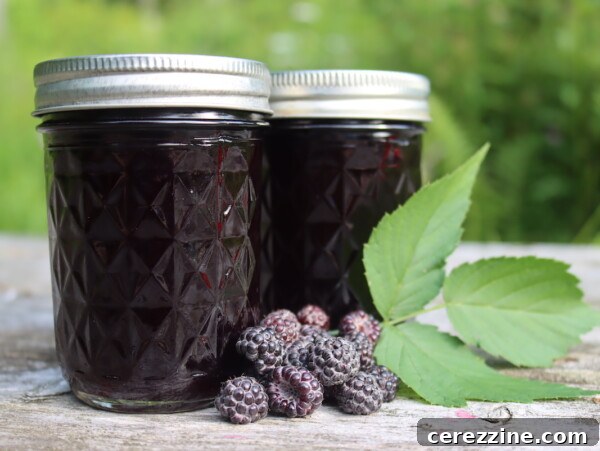
Black Raspberry Jelly (Seedless)
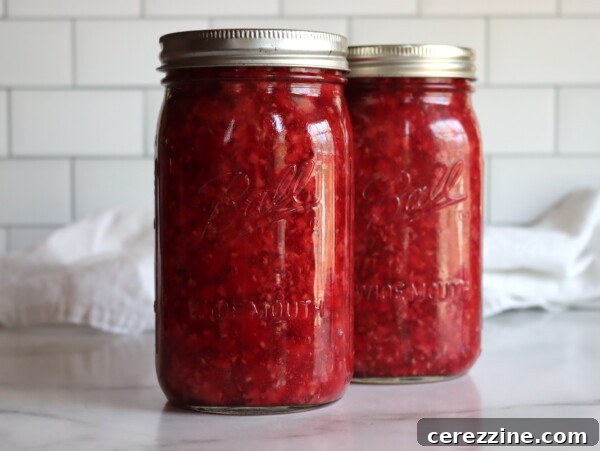
Canning Raspberry Pie Filling
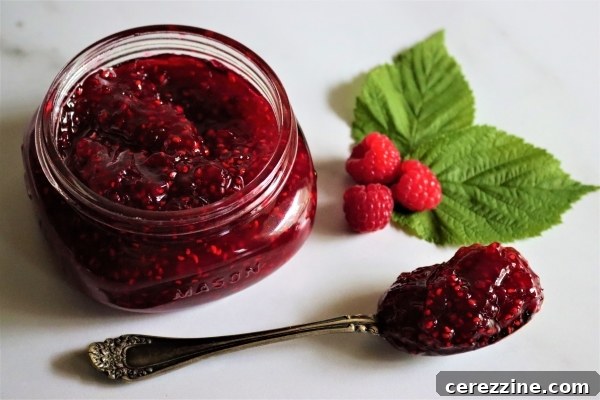
Classic Raspberry Jam (without Added Pectin)
If you try this Raspberry Juice method, consider leaving a star rating and share your experience in the comments—your feedback helps others succeed.
Raspberry Juice
Equipment
- Water bath canner
- Canning funnel
- Jelly strainer with bag or cheesecloth
- Canning jars, lids, and bands
Ingredients
- 14 cups raspberries (about 3 1/2 quarts, or 3 1/2 pounds), fresh or frozen
- 1 cup water (use only enough to prevent scorching)
- Sugar, optional: 1 to 2 tablespoons per cup of juice
Instructions
- Prepare a water bath canner, jars, and lids.
- Rinse raspberries and remove stems, leaves, or spoiled fruit.
- Add berries and water to a large stainless steel pot and crush with a potato masher. Bring to a boil over medium-high, stirring frequently.
- Reduce heat, cover loosely, and simmer gently 5 to 10 minutes until the berries soften and fall apart.
- Transfer hot fruit to a dampened jelly bag or cheesecloth-lined colander set over a bowl. Let drip undisturbed at least 2 hours or overnight. Do not squeeze for clear juice.
- Optional: Refrigerate strained juice overnight to let sediment settle, then pour off the clear juice.
- Pour juice into a clean saucepan. Add sugar if using and dissolve. Heat to 190°F and hold 5 minutes—do not boil.
- Ladle hot juice into prepared jars, leaving 1/4 inch headspace. Wipe rims, center lids, and apply bands fingertip tight.
- Process in a boiling water bath for 15 minutes for half pints, pints, or quarts, adjusting for altitude. Turn off heat and let jars rest in canner 5 minutes. Cool jars undisturbed 12 to 24 hours, then check seals.
Notes
Yield: Expect about 3 to 3 1/2 cups of raspberries per cup of juice. This batch yields roughly 4 cups of juice, enough for 2 pints or 4 half-pints. Yield varies with variety and ripeness; frozen berries often give more juice than fresh.
Water: Use just enough to prevent scorching—about 1/4 to 1/2 cup per 4 cups of berries. Extra water dilutes flavor.
Sugar: Optional and for flavor only. For medium sweetness use 1 to 2 tablespoons per cup of juice. Unsweetened jars remain more versatile for later uses.
Acid: Raspberries are naturally acidic and require no added lemon juice or citric acid for water-bath canning.
Scaling: Measure the juice you obtain and fill jars accordingly. Processing time is the same regardless of batch size.
Storage: Properly sealed jars keep 12 to 18 months. Refrigerate after opening and use within about a week. Uncanned juice keeps about a week in the refrigerator or up to a year in the freezer.
Nutrition
Calories: 55 kcal, Carbohydrates: 12 g, Protein: 1 g, Fat: 1 g, Fiber: 7 g, Sugar: 5 g, Vitamin C: 28 mg (approximate).
Nutrition information is automatically calculated and should be used as an approximation.
The same cook-drip-hold method works for nearly any high-acid fruit, so consider preserving other fruit juices while they’re in season to keep a variety of bright flavors on the pantry shelf.
Juice Canning Recipes
Rhubarb Juice Concentrate
Canning Berry Juice
Canning Apple Cider
Find the perfect recipe
Searching for something else? Enter keywords to find recipes in the site search.