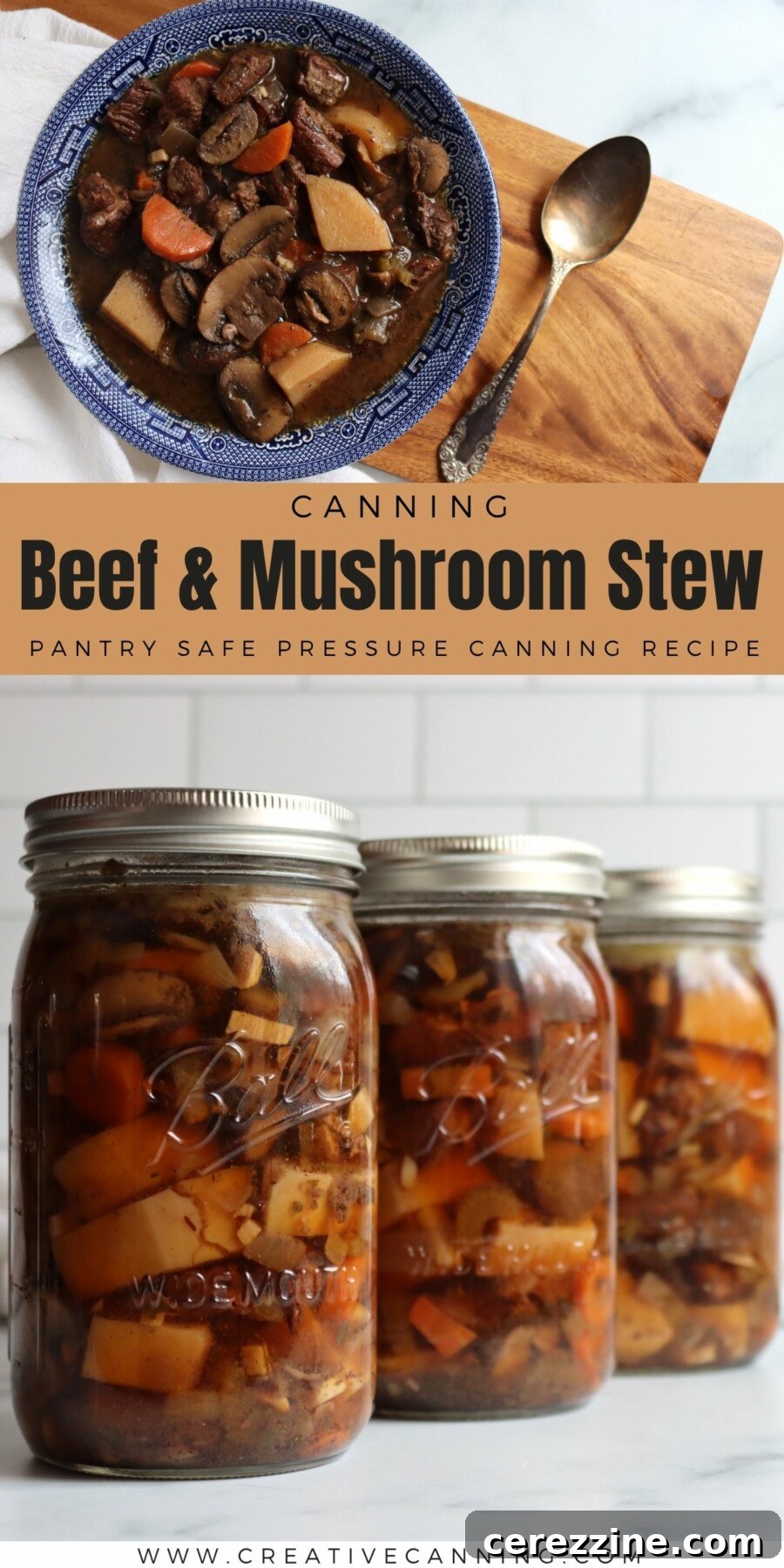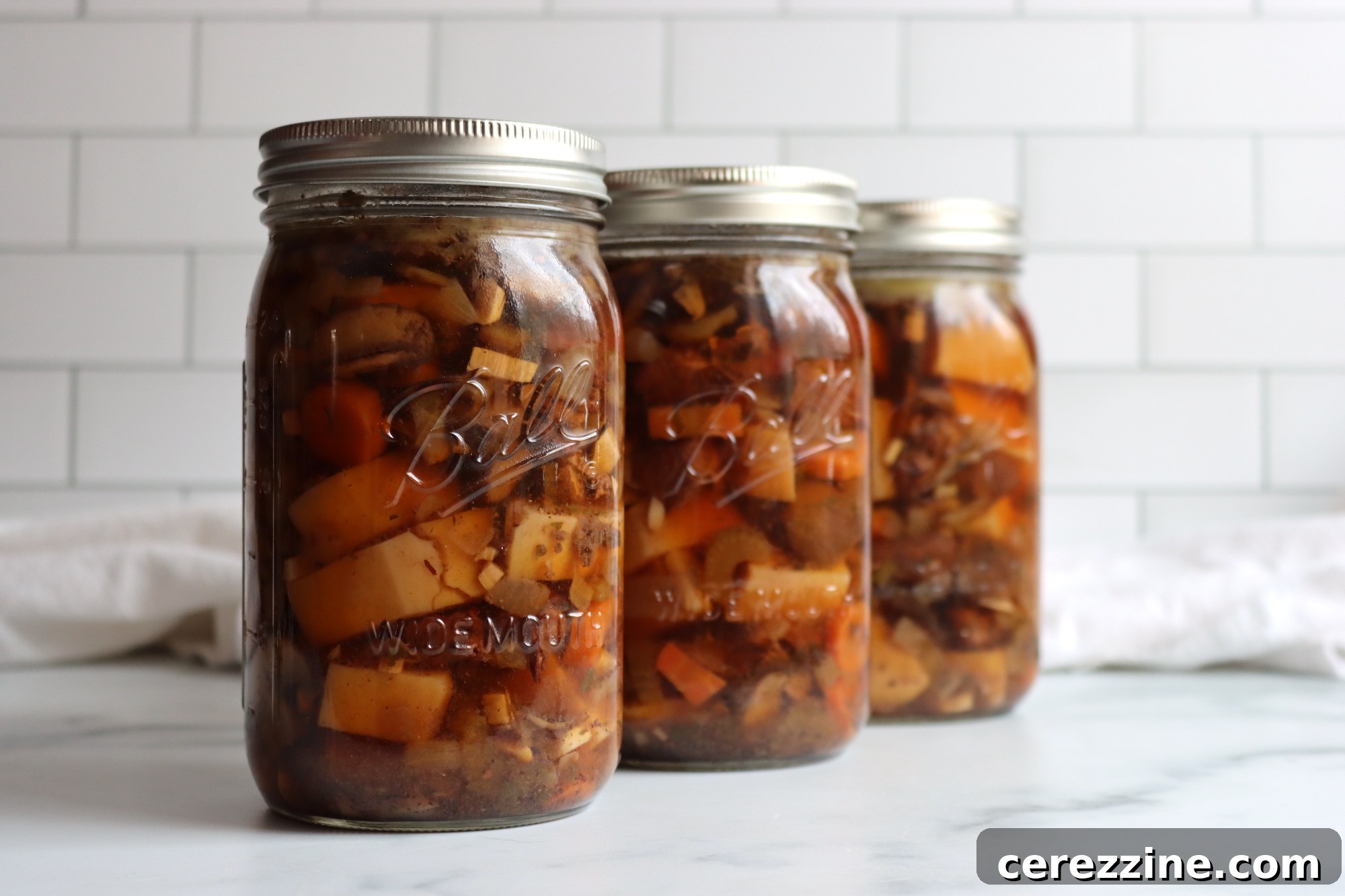
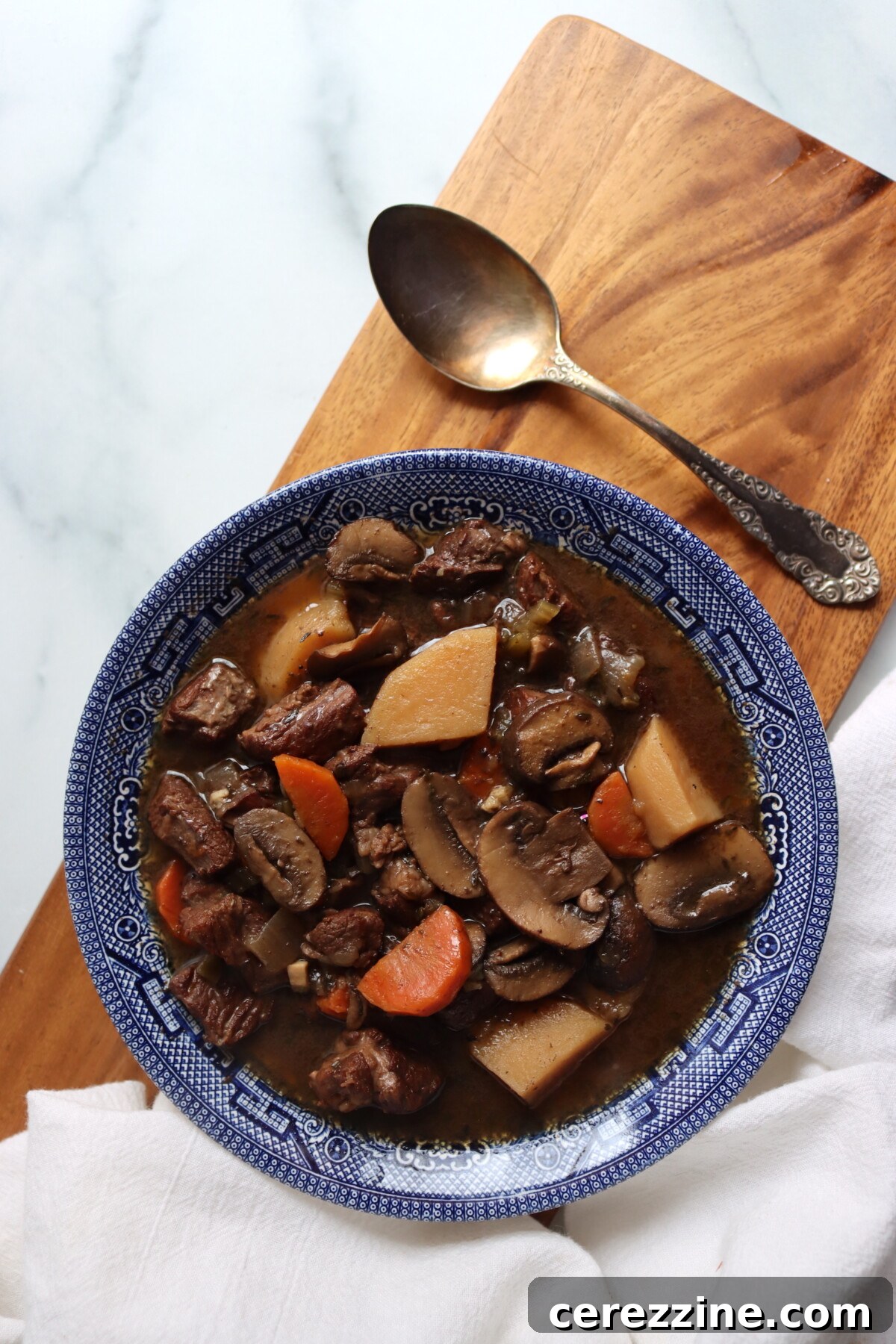
Canning beef stew with mushrooms transforms a timeless comfort food into a gourmet pantry staple. This isn’t just any beef stew; it’s a rich, deeply flavored culinary experience, ready to enjoy at a moment’s notice. Featuring tender beef chuck, an abundance of earthy mushrooms, and a symphony of hearty vegetables simmered in a robust red wine and beef broth base, each jar offers a savory depth and complexity that sets it apart from conventional stews. Imagine the convenience of having a restaurant-quality meal, brimming with umami richness, right on your shelf.
This recipe has been meticulously reviewed for safety and accuracy by a Master Food Preserver, certified through the esteemed University of Cornell Cooperative Extension. Your peace of mind is our priority.
Our unique recipe for home canned beef stew with mushrooms is a thoughtful adaptation of a beloved beef stew classic. The canning instructions are carefully built upon the trusted guidelines from the Ball Beef Stew with Vegetables, found in the authoritative Ball Complete Book of Home Preserving, combined with the flexible and reliable University of Alaska Cooperative Extension Hearty Soups Protocol. This blend of expertise ensures both delicious flavor and canning safety.
The flavor profile of this stew perfectly bridges the gap between a traditional beef stew and the more refined Beef Burgundy. The red wine contributes a nuanced complexity and subtle acidity, enhancing the overall taste without overpowering the other ingredients. Meanwhile, the generous addition of mushrooms imparts an extraordinary umami richness, creating a truly distinctive stew that will delight your palate.
Why You’ll Adore This Canned Beef Stew with Mushrooms!

This particular beef stew with mushrooms masterfully completes my collection of beef stew canning recipes. While my classic beef stew remains a beloved family staple and the vegetable beef stew is perfect for showcasing garden-fresh produce, this mushroom-infused version truly stands out with its singular flavor profile. The harmonious combination of red wine and savory mushrooms bestows a richness that feels inherently more luxurious and special. It’s the kind of dish you’d expect to savor in a fine restaurant, not simply pull from your pantry shelf for a quick meal. The depth of flavor developed through the canning process is simply unmatched.
As detailed, this recipe is designed to yield 5 generous quart jars of incredibly satisfying stew. For those who prefer a slightly brothier consistency, an additional 4 cups of beef stock can be incorporated, distributing the stew across 6 quart jars instead. Pay close attention to the salt recommendations: if you’re using unsalted homemade broth, the full 4.5 teaspoons of salt will provide perfect seasoning. However, if you opt for commercial salted broth, it’s crucial to significantly reduce the added salt to prevent an overly salty final product, ensuring a balanced and delightful taste.
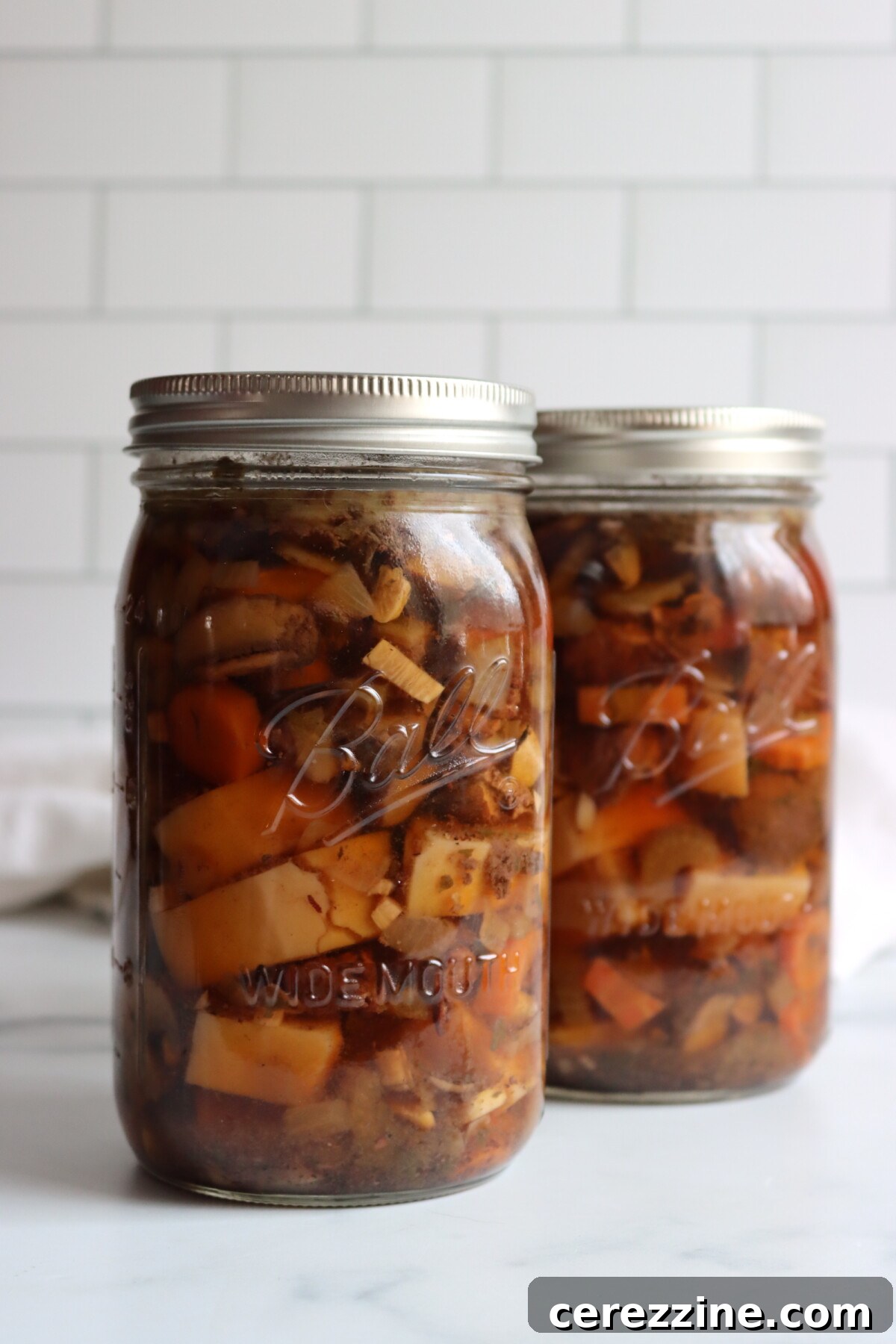
Quick Recipe Overview: Canning Beef Stew with Mushrooms
- Recipe Name: Canning Beef Stew with Mushrooms – A premium, umami-rich meal in a jar.
- Recipe Type: Meal in a Jar Canning Recipe – Convenient and flavorful homemade provisions.
- Canning Method: Pressure Canning – Essential for safety and preservation of low-acid foods like meat and vegetables.
- Prep/Cook Time: Approximately 45 minutes of active preparation and simmering.
- Canning Time: 75 minutes for pint jars, 90 minutes for quart jars. This ensures thorough processing for long-term storage.
- Yield: Produces 5 hearty quart jars. Can be extended to 6 brothier quarts with additional stock.
- Jar Sizes: Suitable for both pint and quart sized canning jars.
- Headspace: A precise 1-inch headspace is critical for proper sealing and canning safety.
- Ingredients Overview: Features premium beef chuck, a generous pound of mushrooms, potatoes, carrots, celery, onion, aromatic garlic, red wine, robust beef stock, and a classic blend of herbs and spices.
- Safe Canning Recipe Source: This recipe is rigorously adapted from the trusted Ball Complete Book of Home Preserving and adheres to the guidelines of the University of Alaska Cooperative Extension Hearty Soups Protocol, ensuring safety and quality.
- Difficulty: Moderate. While it involves some chopping, browning, and careful measurement, the overall process is straightforward and rewarding once ingredients are prepared.
- Similar Recipes: This recipe is a stellar addition to your collection, alongside our Classic Beef Stew, Vegetable Beef Stew, and Beef Burgundy. Explore more delicious ideas on our Meal in a Jar Canning Recipes and Beef Canning Recipes pages for endless inspiration.
Essential Ingredients for an Exceptional Beef Stew with Mushrooms
Crafting this distinctive beef stew relies on a foundation of classic stew ingredients, elevated by two pivotal additions: a generous pour of dry red wine and a full pound of fresh, flavorful mushrooms. These two components are the secret to the stew’s remarkable depth, creating a broth so rich it tastes like it has been simmering for an entire day.
- Beef Chuck: This is the premier cut for pressure canned stews. Its rich marbling ensures that the beef becomes incredibly tender under pressure, literally melting in your mouth, while simultaneously infusing the broth with unparalleled richness and robust beef flavor. Cut the chuck into uniform 1 to 1.5-inch cubes to ensure even cooking and efficient packing into your canning jars.
- Olive Oil: Used for browning the beef, a crucial step that locks in flavor and creates a delicious fond at the bottom of the pot. Any high-quality neutral cooking oil will serve this purpose effectively.
- Onion: One small onion, yielding approximately 1 cup when diced, contributes a foundational sweetness and essential body to the stew’s savory broth. It’s an aromatic backbone that elevates all other flavors.
- Carrots: Two cups of sliced carrots add vibrant color, natural sweetness, and the quintessential hearty stew flavor that grounds the entire dish. Opt for firm, hearty storage carrots rather than thinner salad varieties for best texture and taste after canning.
- Potatoes: Four cups of cubed potatoes transform this recipe into a truly satisfying and filling meal in a jar. Yukon Golds are highly recommended as they maintain their structural integrity better than Russets during the canning process, though Russets can also be used if preferred.
- Celery: One cup of sliced celery is vital for adding a subtle yet profound savory depth to the broth. While it might blend into the background, its absence would be noticeably missed, as it contributes to the overall complexity.
- Garlic: Three cloves of minced garlic round out the aromatic profile, introducing a quiet yet powerful richness that deepens the finished broth without being overwhelming.
- Mushrooms: A full 16 ounces (approximately 8 cups sliced) of mushrooms are what make this stew truly extraordinary. They cook down considerably during simmering and canning, releasing their intensely savory umami essence, which permeates the broth in a way a plain beef stew simply cannot achieve. While any variety works, cremini or baby bella mushrooms are particularly excellent choices for their robust flavor.
- Red Wine: 1.5 cups of dry red wine introduces a layer of complexity and a gentle acidity. This brightens the broth and contributes a sophisticated note without making the stew overtly wine-forward. It’s crucial to use a wine you would genuinely enjoy drinking—avoid anything overly tannic or excessively sweet. As per the University of Alaska Cooperative Extension Hearty Soups Protocol, a modest amount of wine can be safely incorporated as a partial substitute for beef broth in canned soups.
- Beef Stock: Eight cups of quality beef stock form the liquid heart of the broth. Using unsalted homemade stock grants you the greatest control over the final salt content, allowing for precise seasoning. Please refer to our important notes on salt before incorporating any salted commercial stock.
- Bay Leaves: Five bay leaves are simmered with the stew, contributing a subtle, aromatic, and herbaceous background note to the broth. Remember to remove and discard them before canning.
- Thyme, Parsley, and Black Pepper: This classic triumvirate of herbs and spices perfectly complements both the richness of the beef and the earthiness of the mushrooms, creating a balanced and inviting flavor profile without overpowering any single element.
- Salt: A total of 4.5 teaspoons of salt is specified for the entire batch when utilizing unsalted homemade broth. This calculates to approximately 3/4 teaspoon per quart jar, achieving ideal seasoning. However, if you opt for salted commercial stock, carefully review our detailed notes on salt adjustment to prevent over-salting your delicious stew.
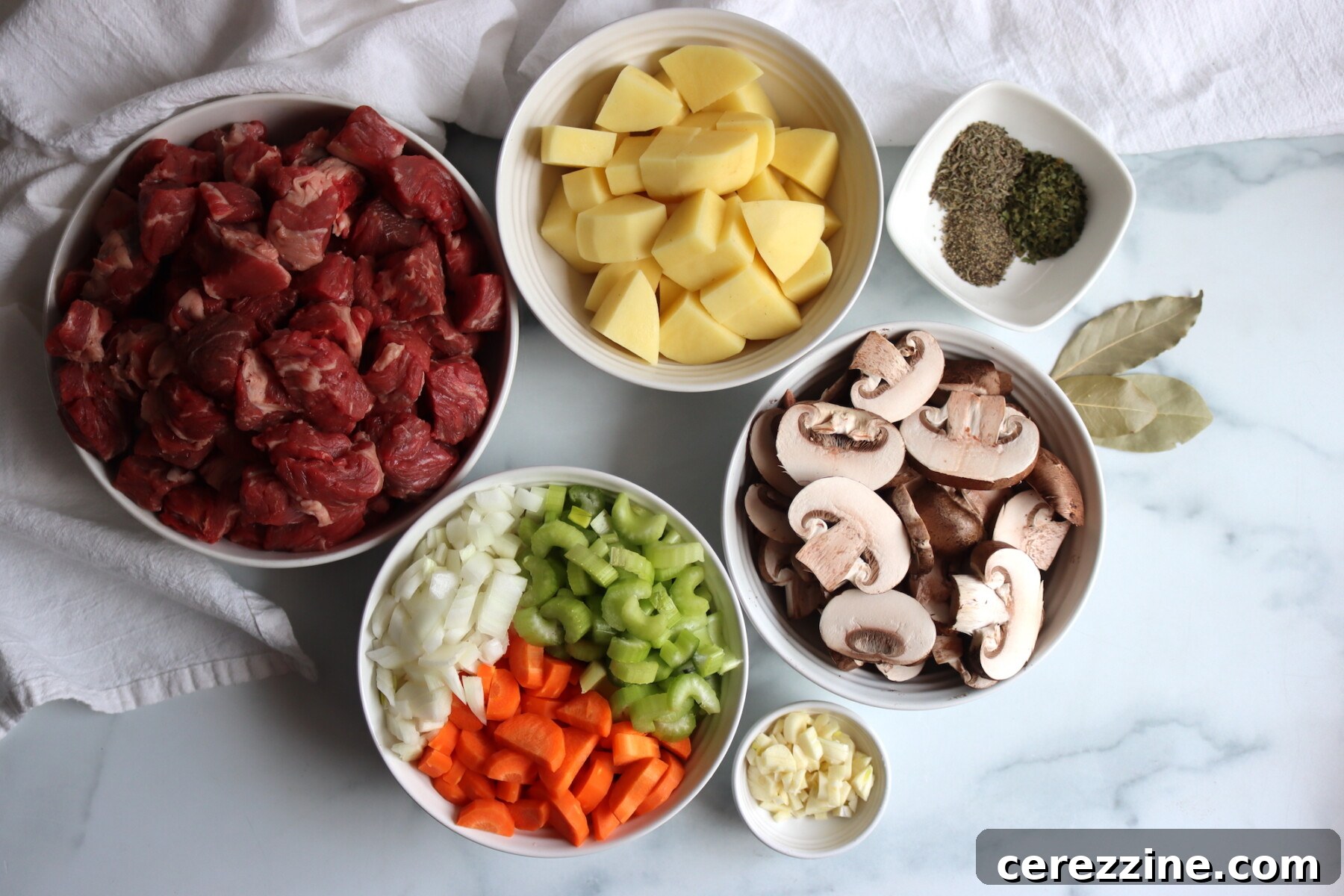
This comprehensive recipe meticulously adheres to the University of Alaska Cooperative Extension Hearty Soups Protocol. This protocol offers valuable flexibility regarding the selection of vegetables and seasonings, allowing you to tailor the stew to your personal preferences. You are welcome to substitute other firm, low-acid vegetables or adjust the herb blend to your taste. However, it is critically important to understand that certain ingredients are strictly prohibited before pressure canning for safety reasons. You must NOT add any thickeners (such as flour or cornstarch), dairy products, pasta, rice, pureed vegetables, or cured meats to the stew prior to canning. If a thicker stew is desired, it should always be thickened after the jar has been opened and the stew is being reheated for serving.
Step-by-Step Instructions for Canning Beef Stew with Mushrooms
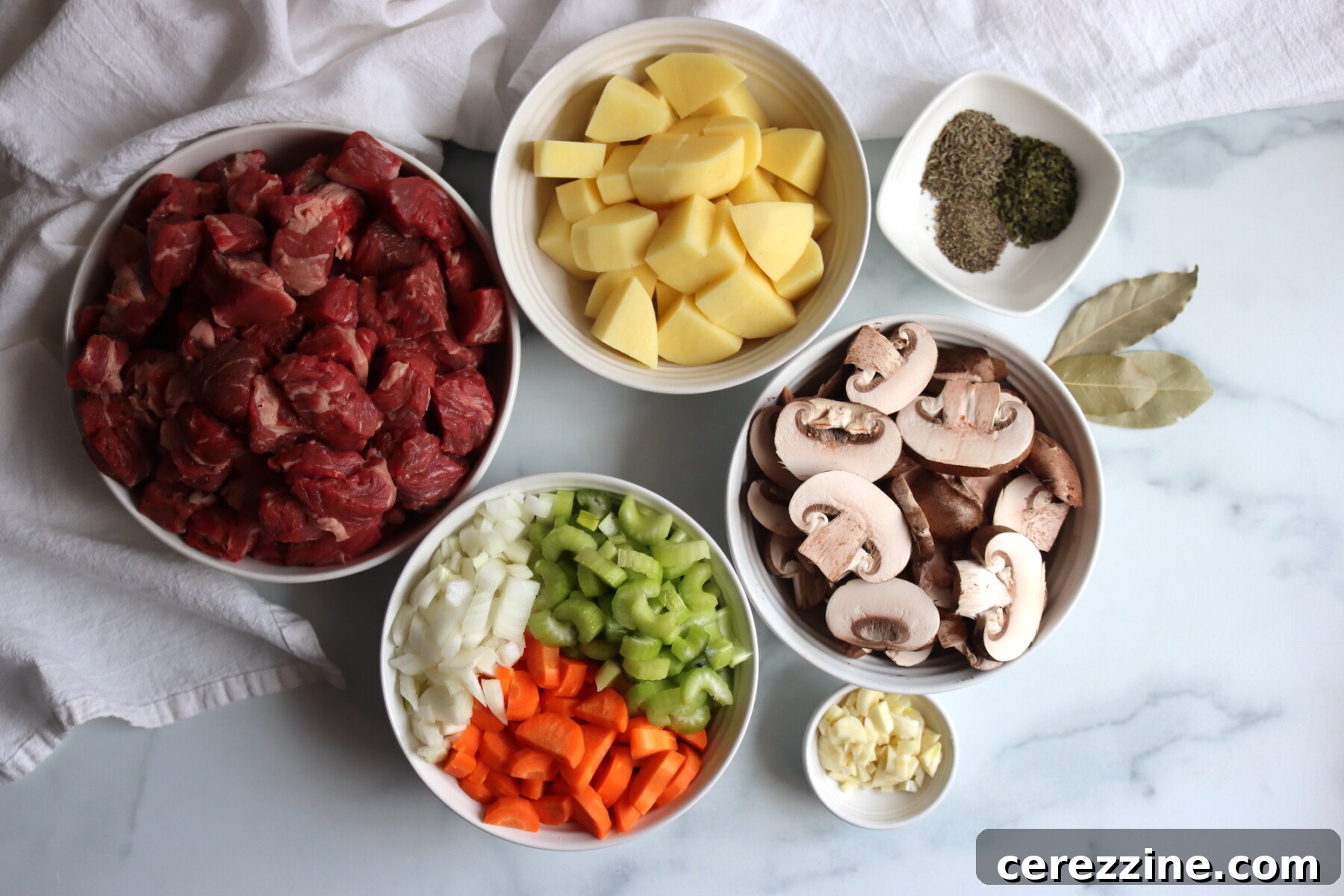
- Prepare Your Equipment & Ingredients: Begin by preparing your pressure canner, ensuring it is in good working order. Wash and sterilize your canning jars, lids, and bands according to the manufacturer’s instructions, keeping jars hot until ready for use. Next, meticulously prepare all your ingredients: cut the beef chuck into uniform 1 to 1.5-inch cubes, dice the onion, uniformly slice the carrots and celery, cube the potatoes, finely mince the garlic, and evenly slice the mushrooms. This preparatory step ensures a smooth cooking process.
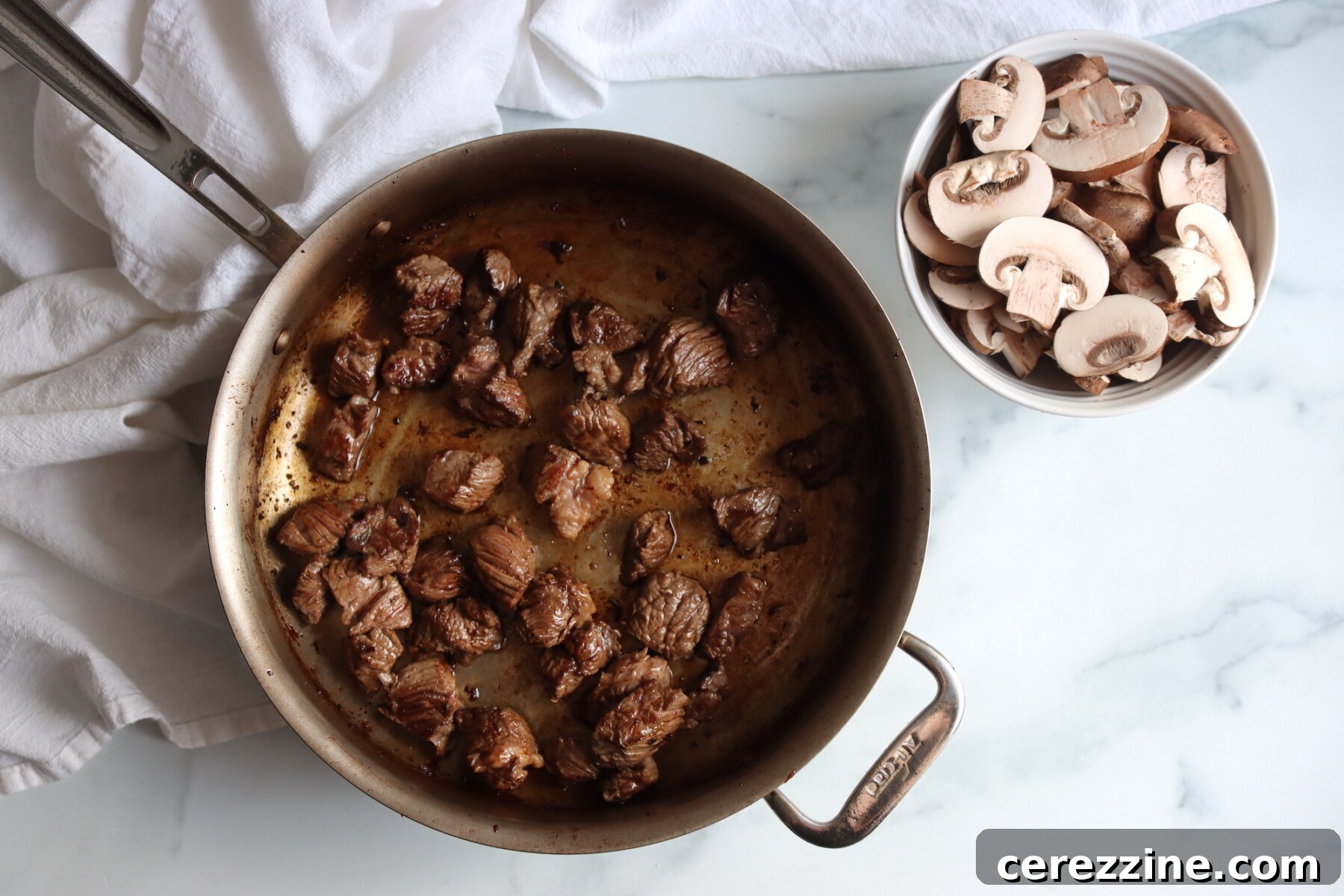
- Brown the Beef: Heat the olive oil in a large, heavy-bottomed pot or Dutch oven over medium-high heat until shimmering. Working in batches to avoid crowding the pan, brown the beef cubes on all sides until a deep, rich crust forms. Crowding the pan will steam the meat instead of browning it. Add a little more oil if necessary for subsequent batches. The browning process is crucial as it develops a deep, savory fond (browned bits) at the bottom of the pot, which will contribute immense flavor to your finished broth. Once browned, remove the beef and set it aside.
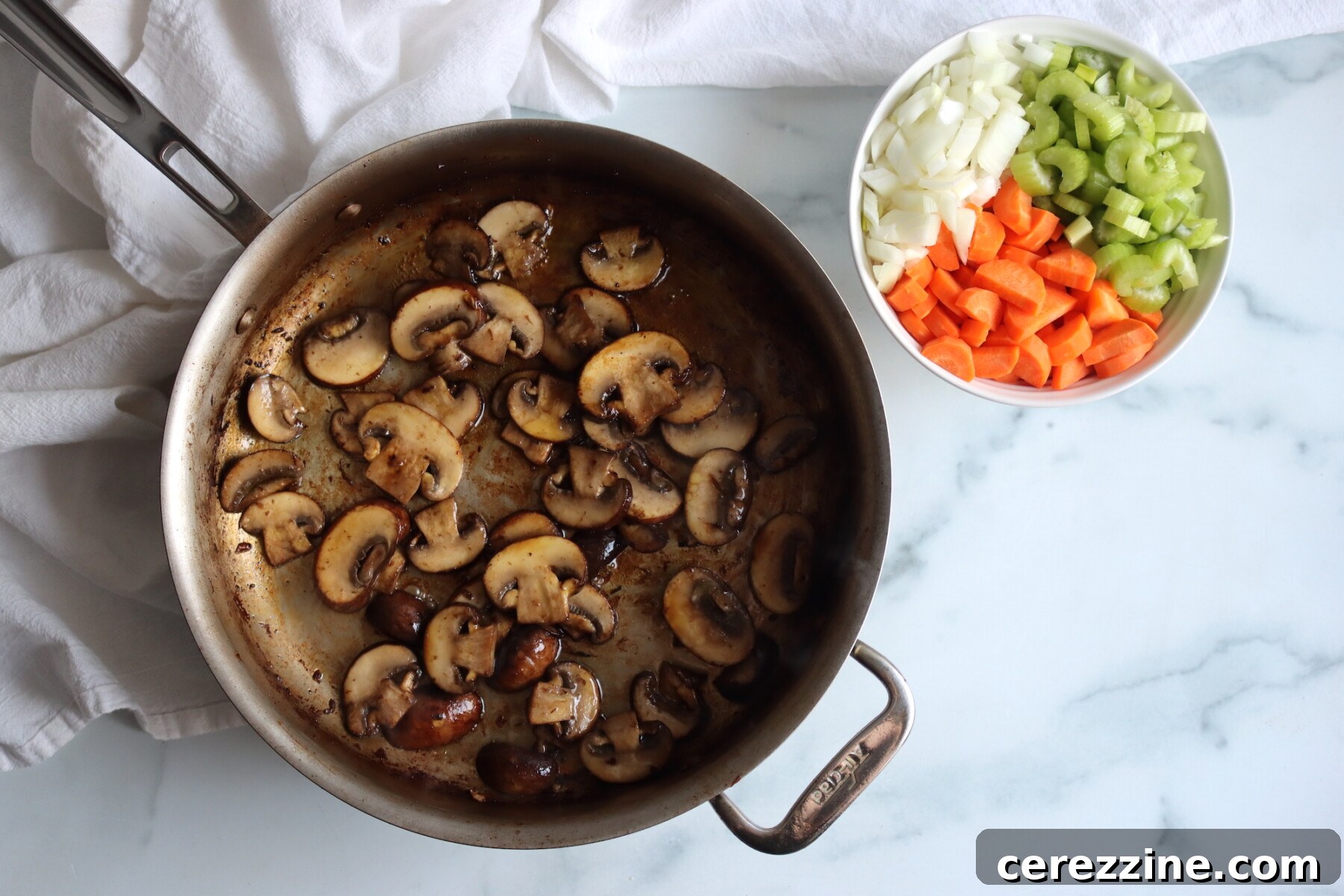
- Cook the Mushrooms: In the same pot, without cleaning it (those browned bits are flavor!), add the sliced mushrooms. Cook them over medium-high heat, stirring occasionally, until they release their natural liquids and begin to brown beautifully. This step concentrates their umami flavor. Once adequately browned, remove the mushrooms from the pot and set them aside with the beef.
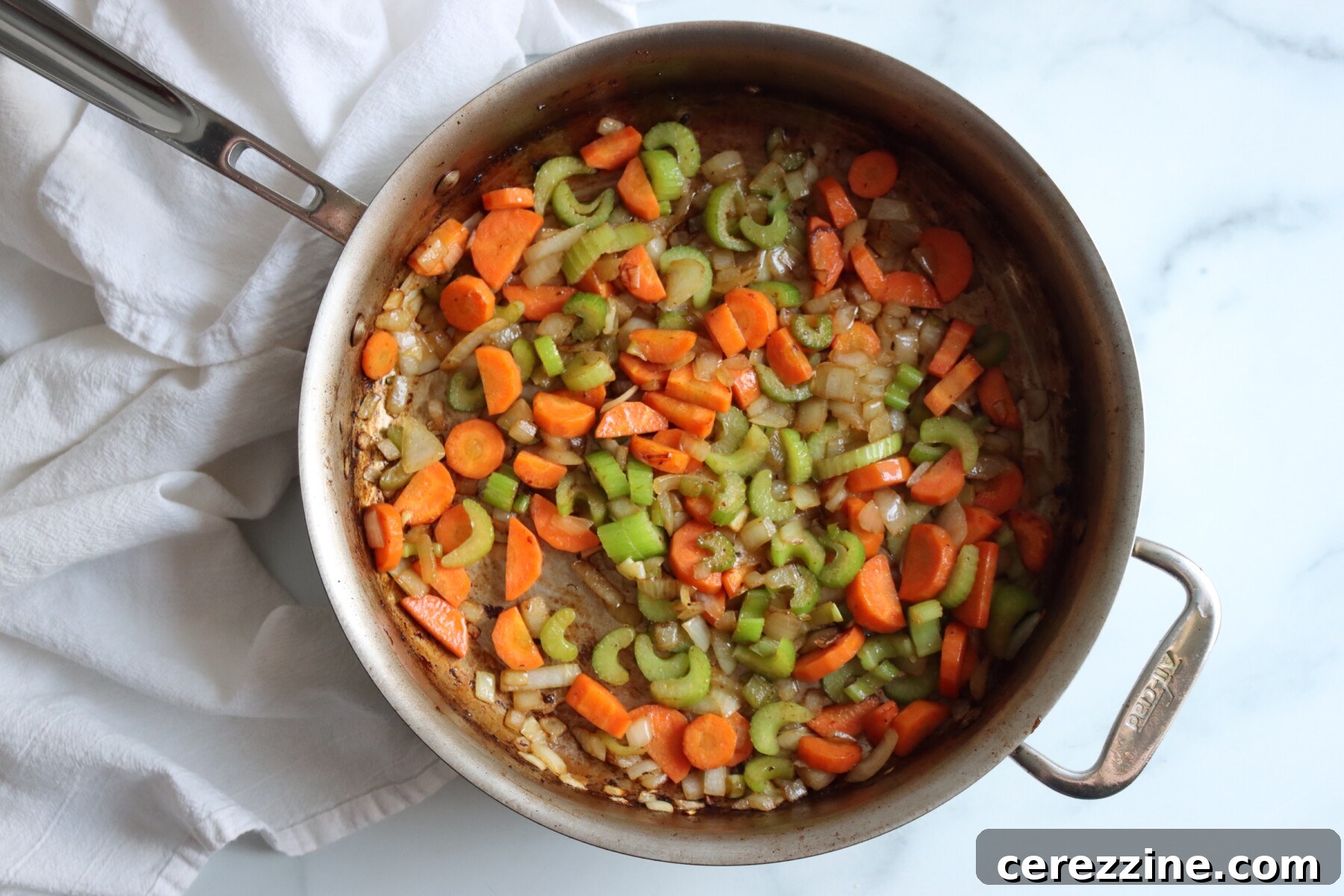
- Sauté the Aromatics: If needed, add a small amount of additional olive oil to the pot. Add the diced onion, sliced carrots, sliced celery, and minced garlic. Sauté these vegetables over medium heat, stirring frequently, until they have softened and are just beginning to take on a light golden color. This develops their sweetness and aromatic depth. Once softened, remove them and set them aside with the beef and mushrooms.
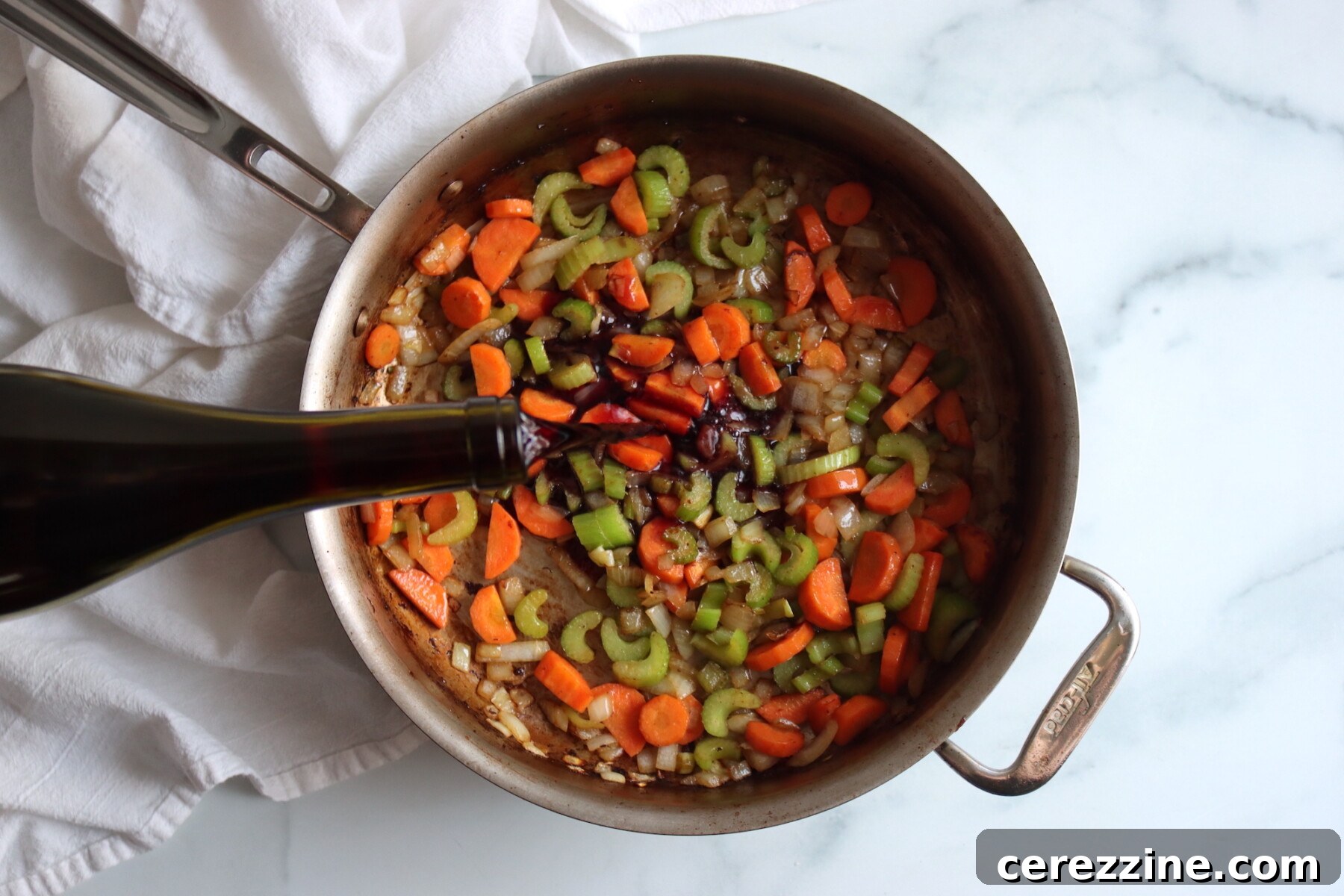
- Deglaze with Red Wine: Pour the red wine into the hot pot. Immediately scrape the bottom of the pot vigorously with a wooden spoon or spatula, dissolving all the delicious browned bits (fond) from the beef and vegetables into the wine. Allow the wine to simmer and bubble for one to two minutes, permitting the alcohol to cook off and concentrating its rich, complex flavor.
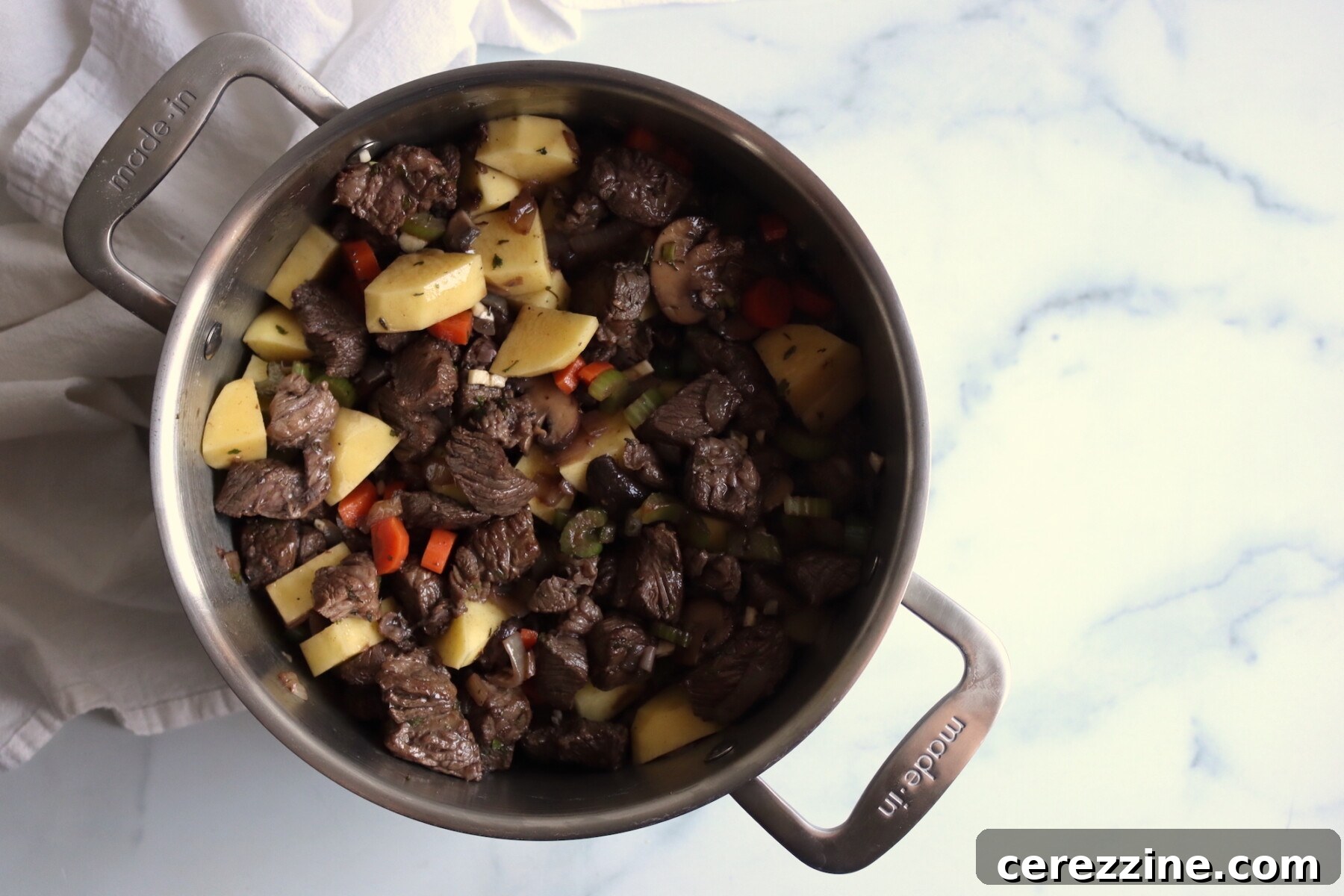
- Simmer the Stew: Return the browned beef, cooked mushrooms, and sautéed vegetables to the pot. Pour in the beef stock, add the cubed potatoes, bay leaves, dried thyme, dried parsley, black pepper, and salt (adjusted according to our notes on salted vs. unsalted broth). Stir all ingredients thoroughly to combine. Bring the stew to a full rolling boil, then reduce the heat and let it simmer gently for 5 minutes, ensuring all components are heated through evenly. Before proceeding, carefully remove and discard all bay leaves.
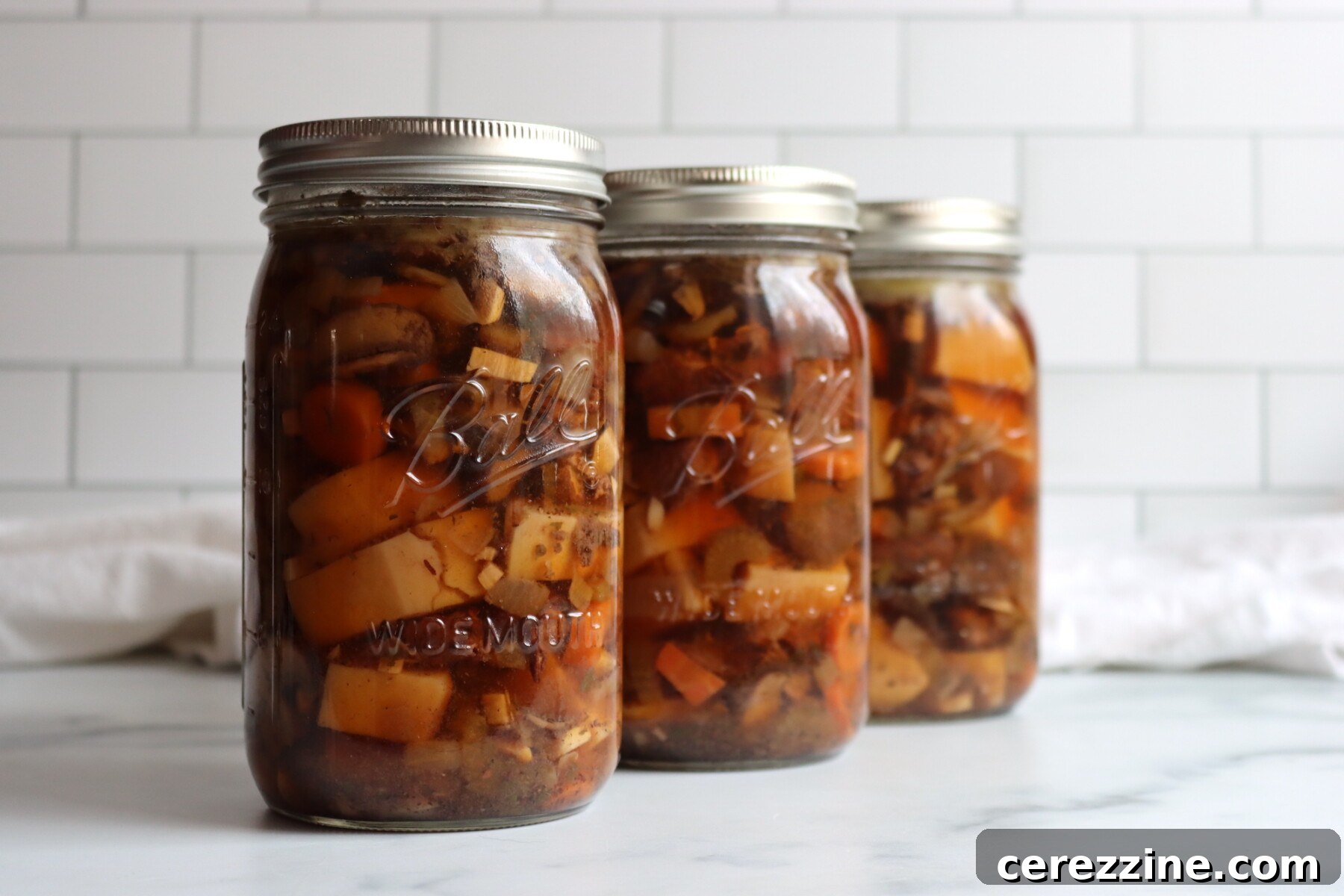
- Pack Jars and Pressure Can: Using a slotted spoon, carefully and evenly distribute the solid ingredients (beef, mushrooms, vegetables) among your hot, sterilized canning jars. Then, ladle the hot broth over the solids, ensuring a consistent 1-inch headspace from the rim of the jar. Use a non-metallic utensil to remove any trapped air bubbles by gently running it around the inside of each jar. Wipe the rims clean with a damp cloth to ensure a perfect seal. Apply lids and bands, tightening them to fingertip-tight. Load the filled jars into your preheated pressure canner. Secure the canner lid, vent steam for 10 minutes (following manufacturer guidelines), then bring the canner to the specified pressure. Process pint jars for 75 minutes and quart jars for 90 minutes, meticulously adjusting the pressure according to your altitude.
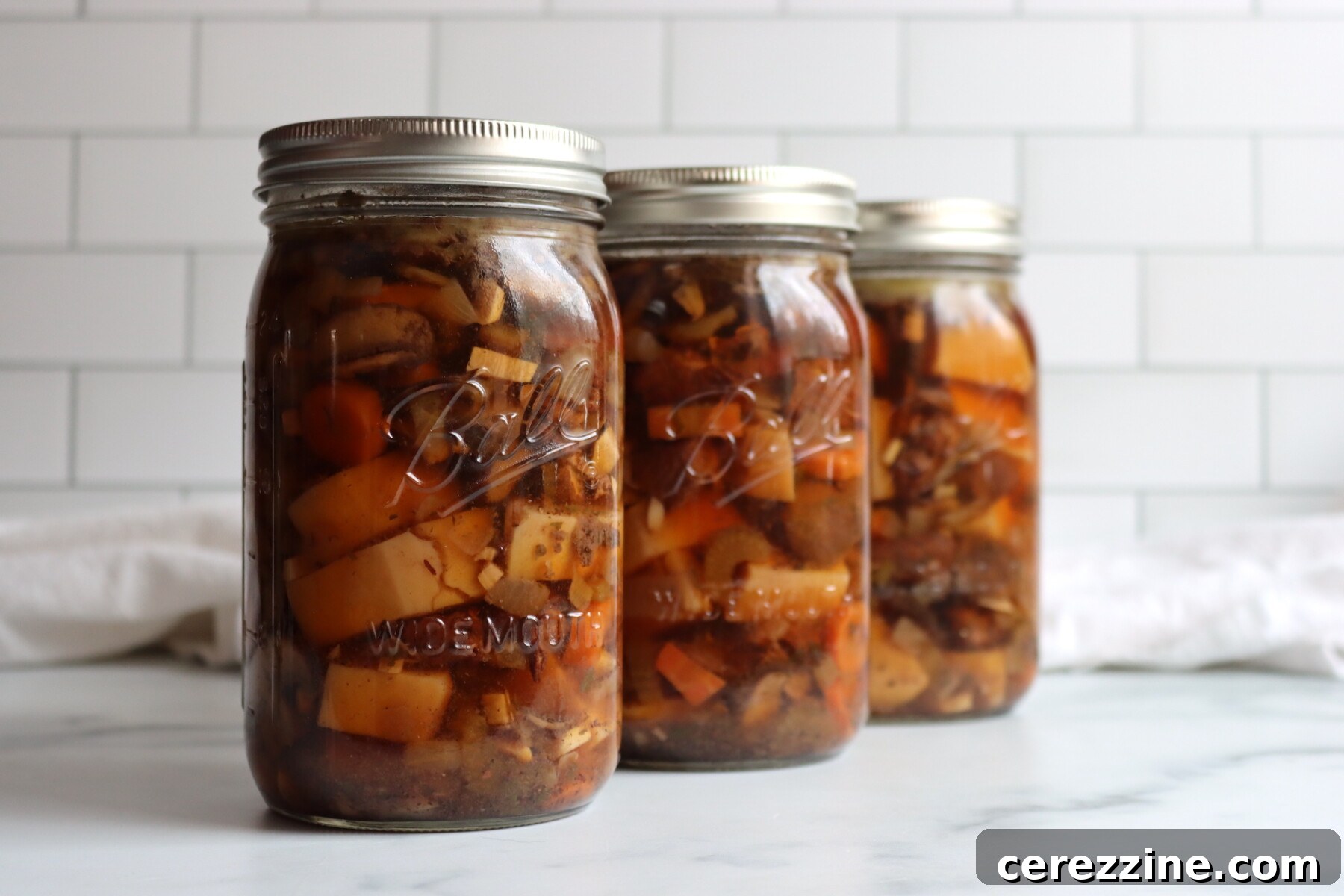
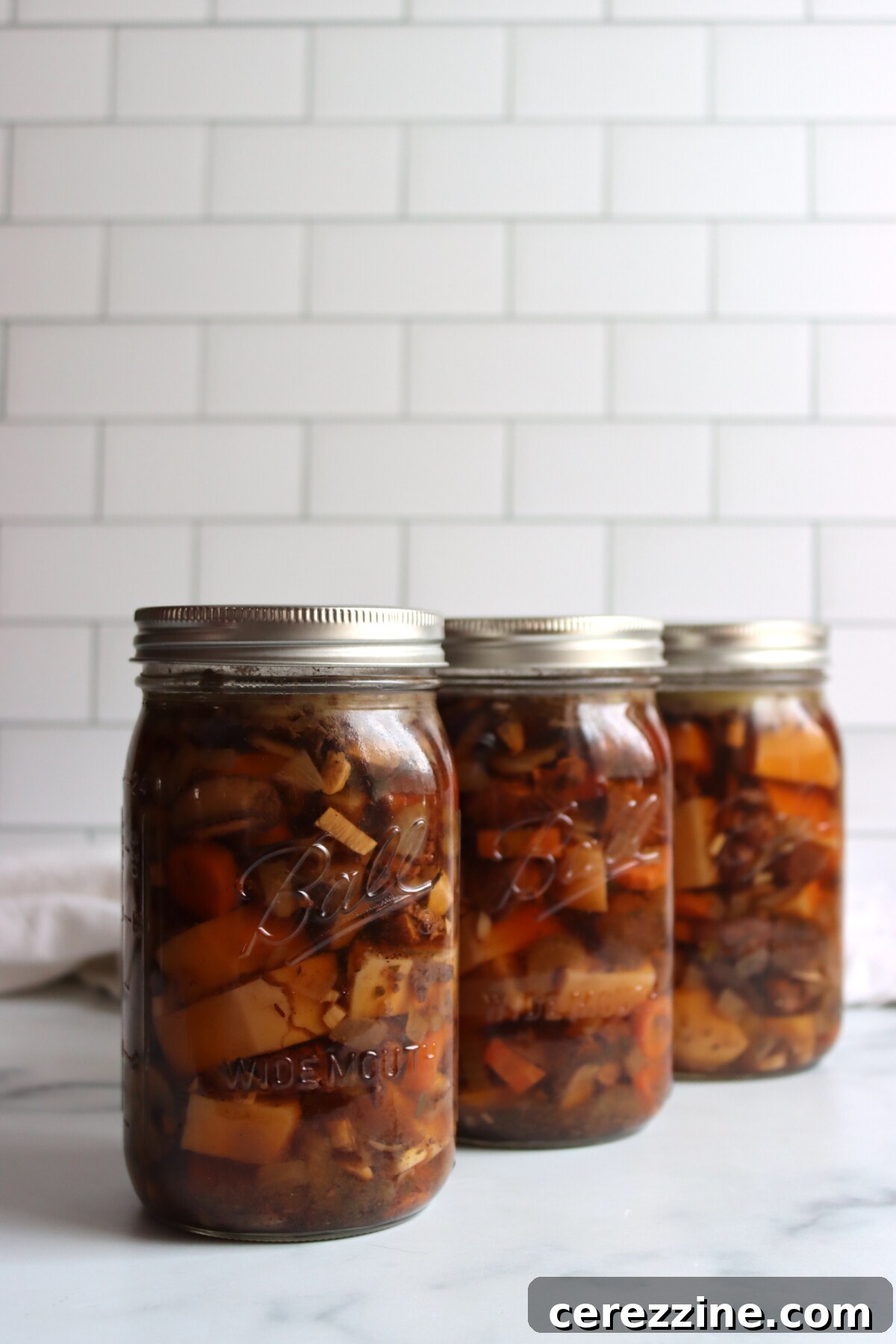
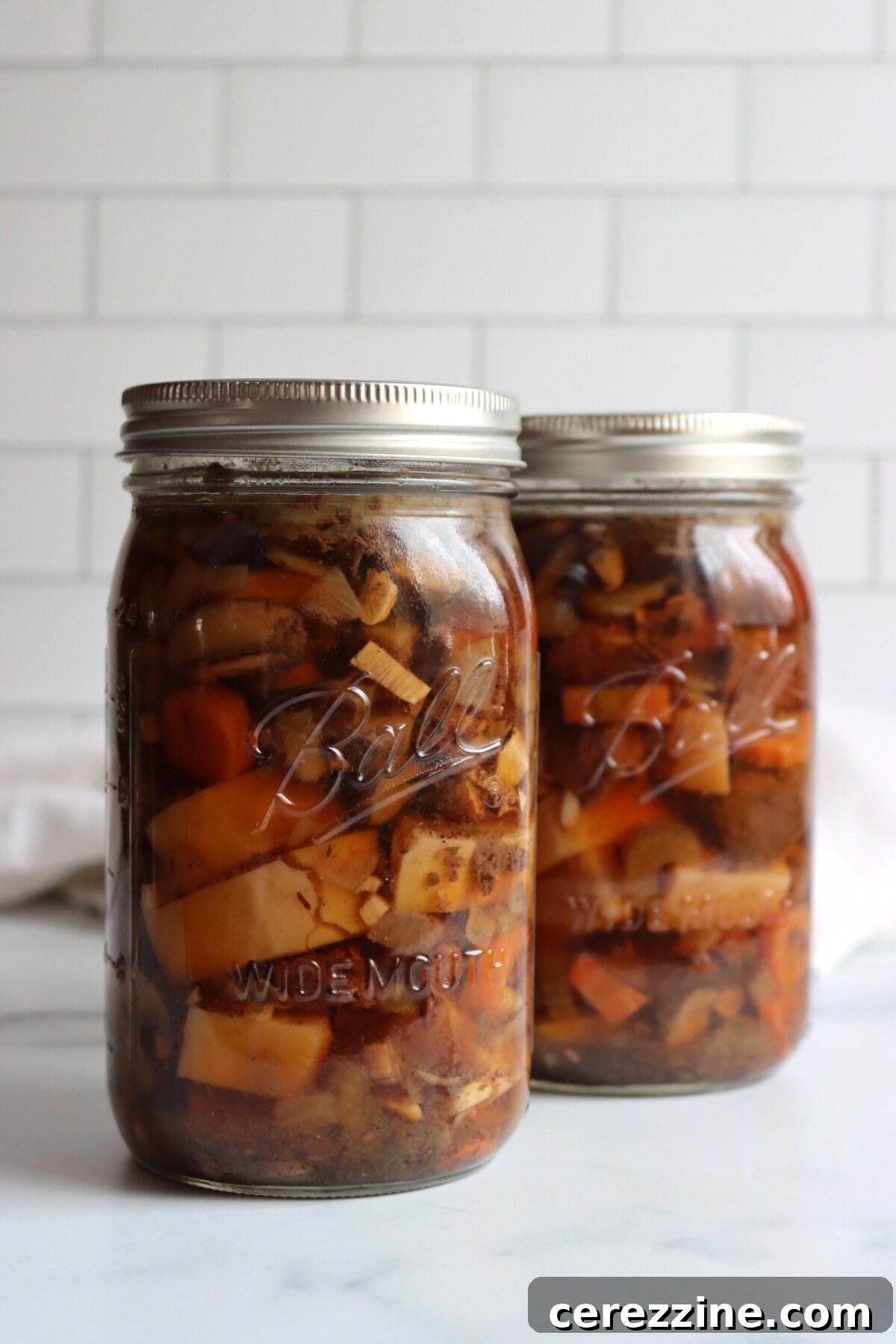
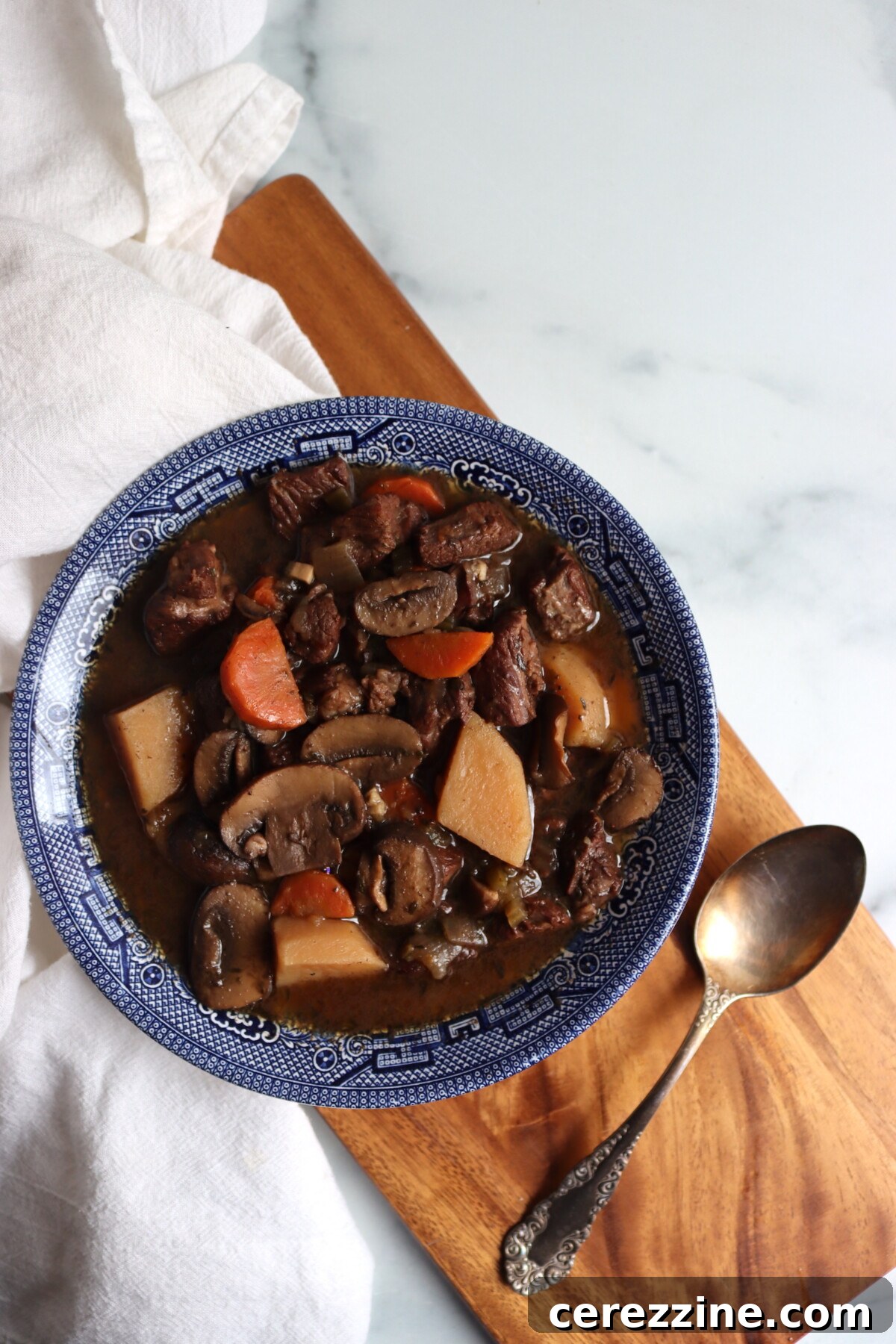
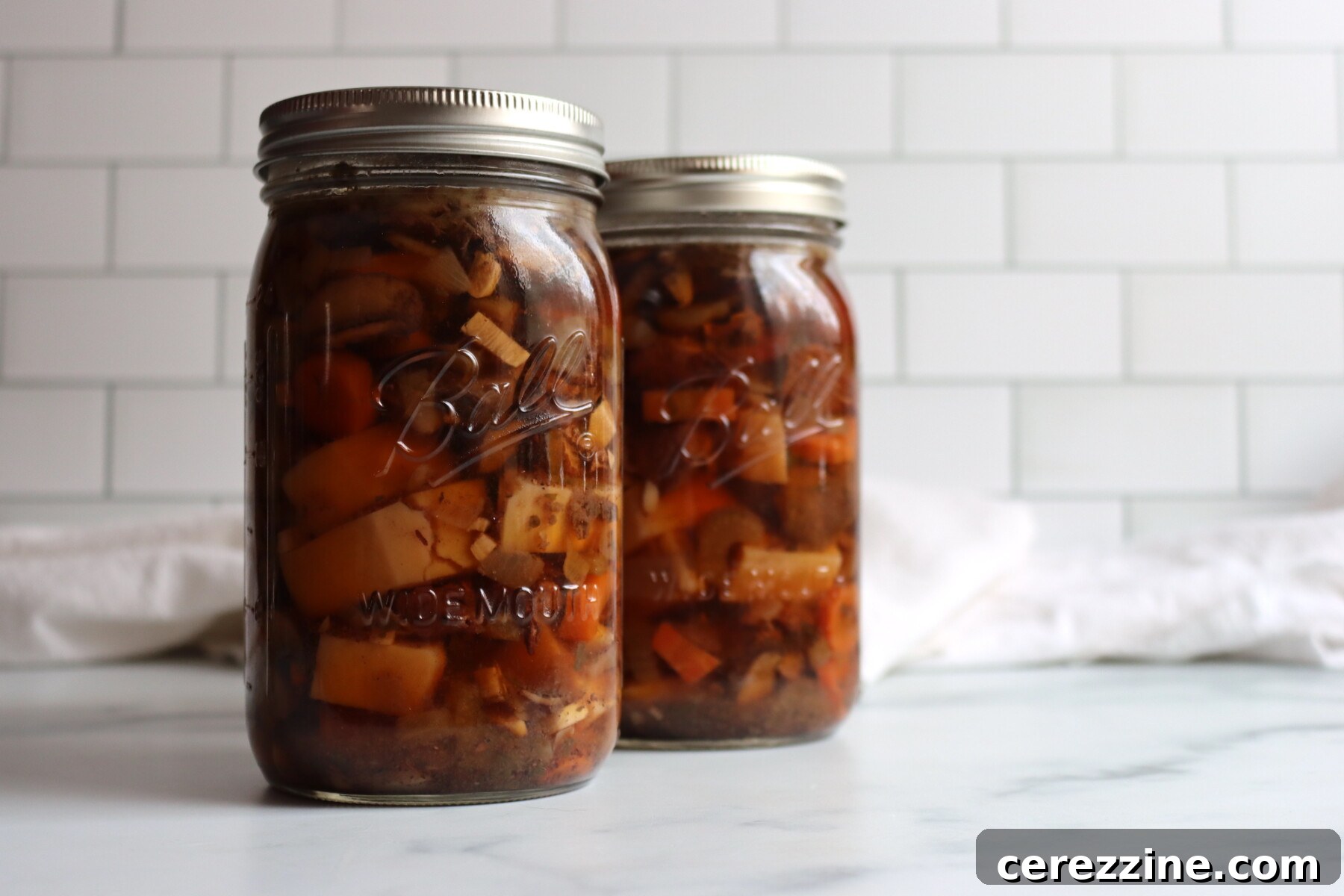
- Cool and Store: Once the processing time is complete, allow the pressure canner to depressurize naturally until the gauge reads zero. Do not rush this process. Carefully remove the hot jars from the canner and place them on a towel-lined counter, spaced apart, to cool undisturbed for 12 to 24 hours. After cooling, check all seals to ensure they are firm and concave. Any unsealed jars must be reprocessed immediately or refrigerated and consumed within a few days. Label your perfectly sealed jars with the contents and date, then store them in a cool, dark, and dry pantry. The finished jars will showcase a visually appealing, rich, mahogany-colored broth, holding tender beef, succulent mushrooms, and vibrant vegetables, promising a delightful meal in every quart.
Detailed Guidance on Canning Beef Stew with Mushrooms
This recipe utilizes the “hot pack” method, which is essential for ensuring the safety and quality of pressure canned stews. In this method, the beef is thoroughly browned, and the stew is brought to a boil and simmered before being packed into jars. This pre-cooking ensures proper heat distribution throughout the jar during the pressure canning process, leading to a safer and more stable product. It is crucial never to attempt a raw pack with this recipe.
When filling your jars, it’s recommended to use a slotted spoon to first distribute the solid ingredients—beef, mushrooms, and vegetables—evenly among the jars. This helps ensure that each serving contains a balanced mix of components. After the solids are in place, ladle the hot broth over them, ensuring that the liquid level reaches a consistent 1-inch headspace from the rim of each jar. It’s important to note that mushrooms significantly reduce in volume during the initial simmering stage; therefore, don’t be alarmed if the pot appears very full before you begin filling the jars. Should you find yourself with insufficient broth during the jar-filling stage, you can safely top off the jars with a bit of boiling water or additional heated beef stock. For those who prefer a more liberal amount of broth in their stew, consider adding an extra 4 cups of beef stock to the pot before bringing it to a boil, then distribute the expanded yield across 6 quart jars instead of the standard 5.
For processing, quarts must be canned for 90 minutes, and pint jars for 75 minutes. If you are using a weighted gauge canner, process at 10 pounds pressure. If you are using a dial gauge canner, process at 11 pounds pressure. Always remember to adjust the processing pressure according to your specific altitude to ensure food safety.
Critical Altitude Adjustments for Pressure Canning
When engaging in pressure canning, while the processing times remain constant regardless of elevation, the necessary pressure must be adjusted at higher altitudes. These adjustments are vital for ensuring the safety of your home-canned beef stew with mushrooms:
For dial gauge pressure canners, follow these guidelines:
- 0 to 2,000 feet in elevation: Maintain 11 lbs pressure
- 2,001 to 4,000 feet in elevation: Maintain 12 lbs pressure
- 4,001 to 6,000 feet in elevation: Maintain 13 lbs pressure
- 6,001 to 8,000 feet in elevation: Maintain 14 lbs pressure
For weighted gauge pressure canners, the adjustments are simpler:
- 0 to 1,000 feet in elevation: Use a 10 lbs weight
- Above 1,000 feet: Use a 15 lbs weight
Delightful Serving Ideas for Your Canned Beef Stew with Mushrooms
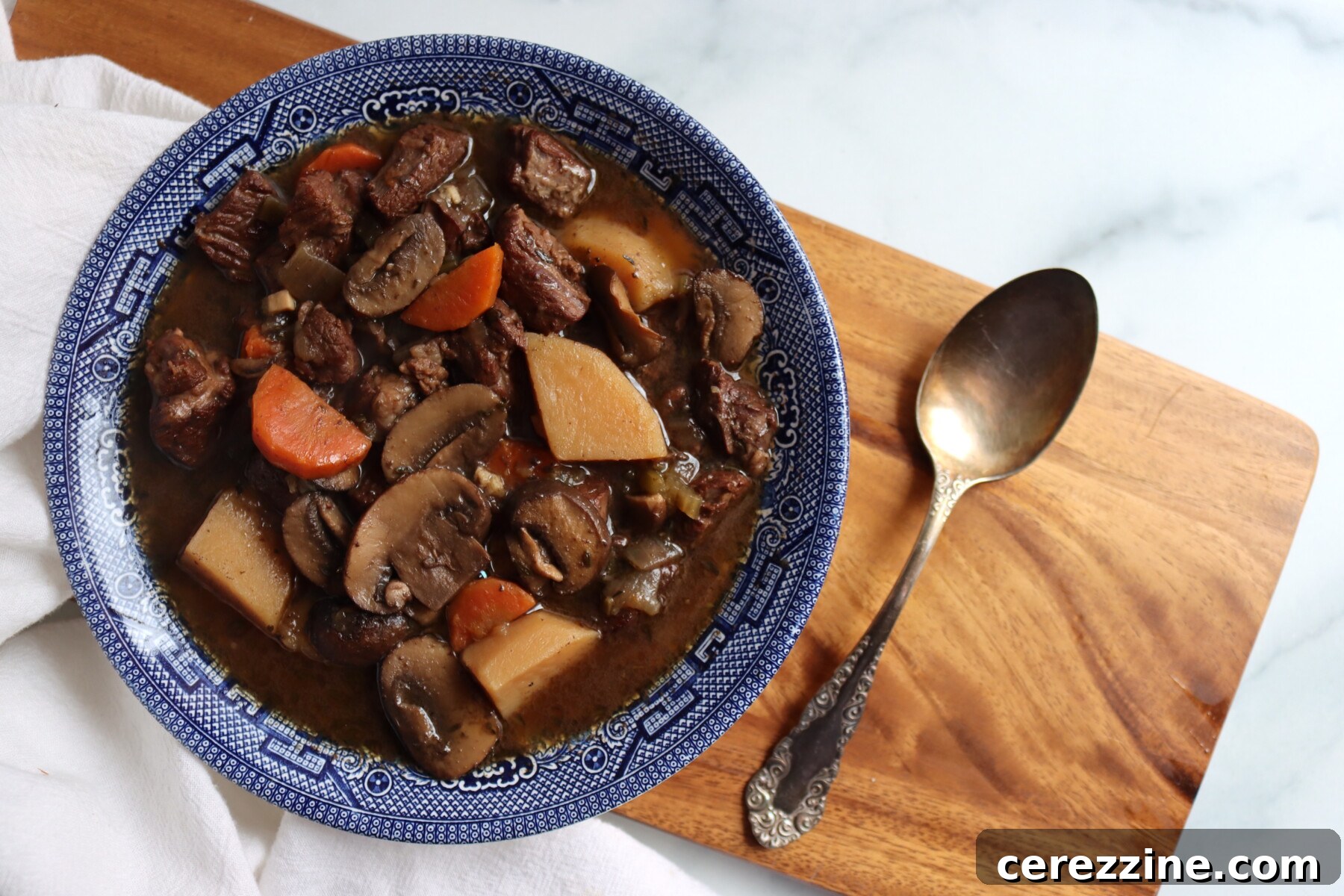
One of the greatest advantages of this home-canned beef stew is its incredible convenience. It’s fully cooked and perfectly seasoned, meaning it’s ready to heat and serve straight from the jar. The rich, deeply flavored broth is so satisfying that the stew truly needs little else to complete a meal. A thick slice of warm, crusty bread or a freshly baked dinner roll is often all you need to sop up every last bit of that delicious sauce, making for a hearty and complete dinner. The earthy depth from the mushrooms elevates this stew beyond a standard offering, making it an excellent choice for entertaining guests or for a slightly more special weeknight meal without any fuss.
If your preference leans towards a thicker, more traditional stew consistency, simply pour the contents of a jar into a saucepan. Over medium heat, stir in a simple slurry made from cornstarch or flour mixed with a little cold water until the broth reaches your desired thickness. Once thickened, this stew is absolutely exquisite served over creamy mashed potatoes, buttery egg noodles, or a bowl of smooth, creamy polenta. The mushroom-forward broth, in particular, creates a fantastic synergy with the subtle sweetness of polenta.
Beyond being a standalone meal, any leftover stew from an opened jar can be ingeniously repurposed. It makes a wonderfully rich and flavorful filling for a comforting pot pie, or it can be transformed into a quick and easy stroganoff-style dish. For the latter, simply stir in a spoonful of sour cream after heating and serve over tender egg noodles. This minimal effort will yield a luxurious, almost beef stroganoff-like meal that is both decadent and incredibly easy.
Frequently Asked Questions About Canning Beef Stew with Mushrooms
Absolutely! Mushrooms can be safely pressure canned as part of a beef stew, provided you adhere to established, tested protocols like the University of Alaska Cooperative Extension Hearty Soups Protocol. As a low-acid vegetable, mushrooms, along with the beef and other ingredients, necessitate pressure canning for safety, not water bath canning. They hold up remarkably well through the pressure canning process, retaining their texture and, crucially, infusing the stew’s broth with a deep, earthy, savory umami flavor. Since mushrooms do cook down significantly, it’s advised to use a generous quantity in the initial preparation to ensure their presence is notable in the finished product.
Yes, a carefully measured, small amount of wine can indeed be safely used as a partial substitute for broth in a pressure canned stew. Reputable canning guidelines, such as the University of Alaska Cooperative Extension Hearty Soups Protocol, specifically permit the inclusion of wine in this manner. This particular recipe incorporates 1.5 cups of red wine into its liquid base. This quantity is sufficient to impart a delightful complexity and richness to the broth without compromising the safety or stability of the canning recipe. The alcohol content is effectively cooked off during the simmering and canning processes, leaving behind only the desirable flavor notes.
This is a critical consideration for optimal flavor balance. If you are using a full-salt commercial beef stock, it is highly recommended to reduce the total amount of added salt in the recipe from the specified 4.5 teaspoons down to a mere 1.5 teaspoons. Most commercial beef stocks contain a significant amount of sodium, and adding the full recipe amount on top of that can easily result in an oversalted and unpalatable stew. For comparison, when using unsalted homemade beef stock, the full 4.5 teaspoons of salt works out to approximately 3/4 teaspoon per quart jar, which is generally considered the perfect balance for seasoning.
The distinction primarily lies in the proportion and impact of the wine. This beef stew with mushrooms recipe utilizes a relatively modest amount of red wine as part of its broth base. This imbues the finished jars with a subtle, sophisticated wine-forward complexity that enhances the overall flavor without dominating it. In contrast, traditional canning beef burgundy recipes feature a much higher proportion of wine, leading to a more intense, distinctly wine-forward flavor profile that closely mimics the classic French dish. Our mushroom stew intentionally occupies a delicious middle ground, offering more nuanced wine notes than a plain beef stew but less intensity than a full beef burgundy, making it a versatile and appealing option for your pantry.
More Delicious Soup Canning Recipes
Canning Sausage Potato and Kale Soup (Copycat Zuppa Toscana)
Canning Taco Soup
Roasted Tomato Basil Soup
If you tried this Beef Stew with Mushrooms Canning Recipe, or any other recipe on Creative Canning, leave a ⭐ star rating and let me know what you think in the 📝 comments below!
And make sure you stay in touch with me by following on social media!
- Substack
10 servings (makes 5 quarts)
Canning Beef Stew with Mushrooms
30 mins
15 mins
1 hr 30 mins
2 hrs 15 mins
Pin
Rate
Equipment
-
Pressure Canner
Ingredients
- 2.5 lbs beef chuck, cut into 1 to 1.5 inch cubes
- 2 tbsp olive oil, for browning the beef
- 1 cup onion, diced, about 1 small onion (120g prepared)
- 2 cups carrots, sliced
- 4 cups potatoes, cubed, Yukon Gold or Russet
- 1 cup celery, sliced
- 3 cloves garlic, minced
- 16 oz mushrooms, sliced, about 8 cups — cremini or baby bella recommended
- 1.5 cups red wine
- 8 cups beef stock, unsalted — see notes if using salted stock
- 5 bay leaves
- 4.5 tsp salt, with unsalted broth — see notes if using salted stock
- 1 tsp dried thyme
- 1 tsp dried parsley
- 0.5 tsp black pepper
Instructions
- Prepare your pressure canner, jars, lids, and bands according to the manufacturer’s instructions. Keep jars hot until needed. Cut the beef chuck into 1 to 1.5 inch cubes. Dice the onion, slice the carrots and celery, cube the potatoes, mince the garlic, and slice the mushrooms.
- Heat the olive oil in a large heavy-bottomed pot over medium-high heat. Brown the beef in batches without crowding the pan, adding more oil as needed. Browning in batches builds a deep fond in the pan that gives the finished broth its richness. Set the browned beef aside.
- In the same pot, cook the onion, carrots, celery, and garlic until softened. Add the mushrooms and cook for a few minutes until they begin to release their liquid. Return the browned beef to the pot. Add the red wine, beef stock, potatoes, bay leaves, thyme, parsley, pepper, and salt. Stir well and bring to a boil. Reduce heat and simmer for 5 minutes until everything is heated through.
- Remove and discard the bay leaves. Use a slotted spoon to distribute the solids evenly between the hot jars, then ladle the broth over the top to 1 inch headspace. If you run short on broth, add a bit of boiling water or additional stock. Remove air bubbles, wipe rims, and apply lids and bands to fingertip tight.
- Load jars into the preheated pressure canner. Lock the lid, vent for 10 minutes, then bring to pressure. Process pints for 75 minutes and quarts for 90 minutes, adjusting pressure for altitude. Allow the canner to depressurize naturally. Remove jars and cool on a towel-lined counter for 12 to 24 hours. Check seals, label, and store in a cool dark place.
Notes
Yield: As written, this recipe yields 5 hearty quart jars. For a brothier stew, add 4 more cups of beef stock before bringing the pot to a boil and distribute across 6 quart jars instead of 5.
Mushrooms: The mushrooms cook down significantly during the simmer and pressure canning process. Using the full 16 ounces (8 cups sliced) is important for achieving a noticeable mushroom presence in the finished jars. Cremini or baby bella mushrooms give especially deep flavor, but any variety works.
Wine: Use a dry red wine you would be happy to drink. Avoid anything too tannic or sweet. Per the University of Alaska Cooperative Extension Hearty Soups Protocol, wine can be used as a partial substitute for broth in pressure canned soups and stews.
Thickening: Do not add flour, cornstarch, or any thickener before canning. Thicken the stew after opening the jar when reheating if preferred.
Meat: Beef chuck is the best choice for this recipe. You can also use venison, bison, or other game meats.
Storage: Store sealed jars in a cool, dark pantry. Use within 12 to 18 months for best quality. Refrigerate after opening.
Like this? Leave a comment below!
More Beef Canning Recipes
Canning Chili Con Carne
Canning Hamburger (Ground Beef)
Canning Sloppy Joe Filling
Find the perfect recipe
Searching for something else? Enter keywords to find the perfect recipe!