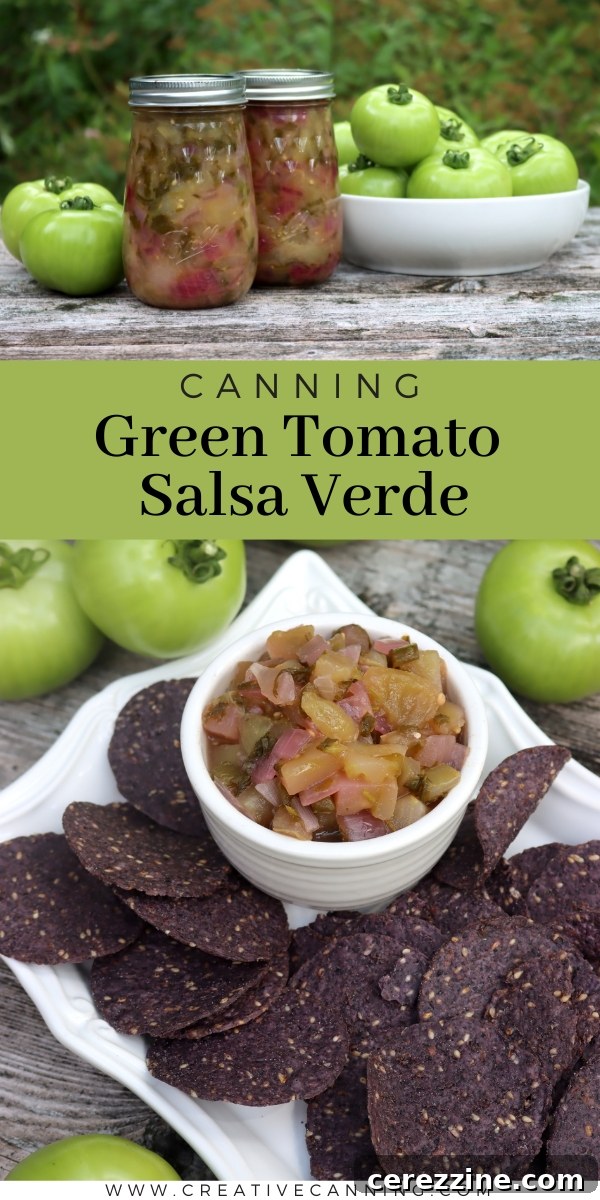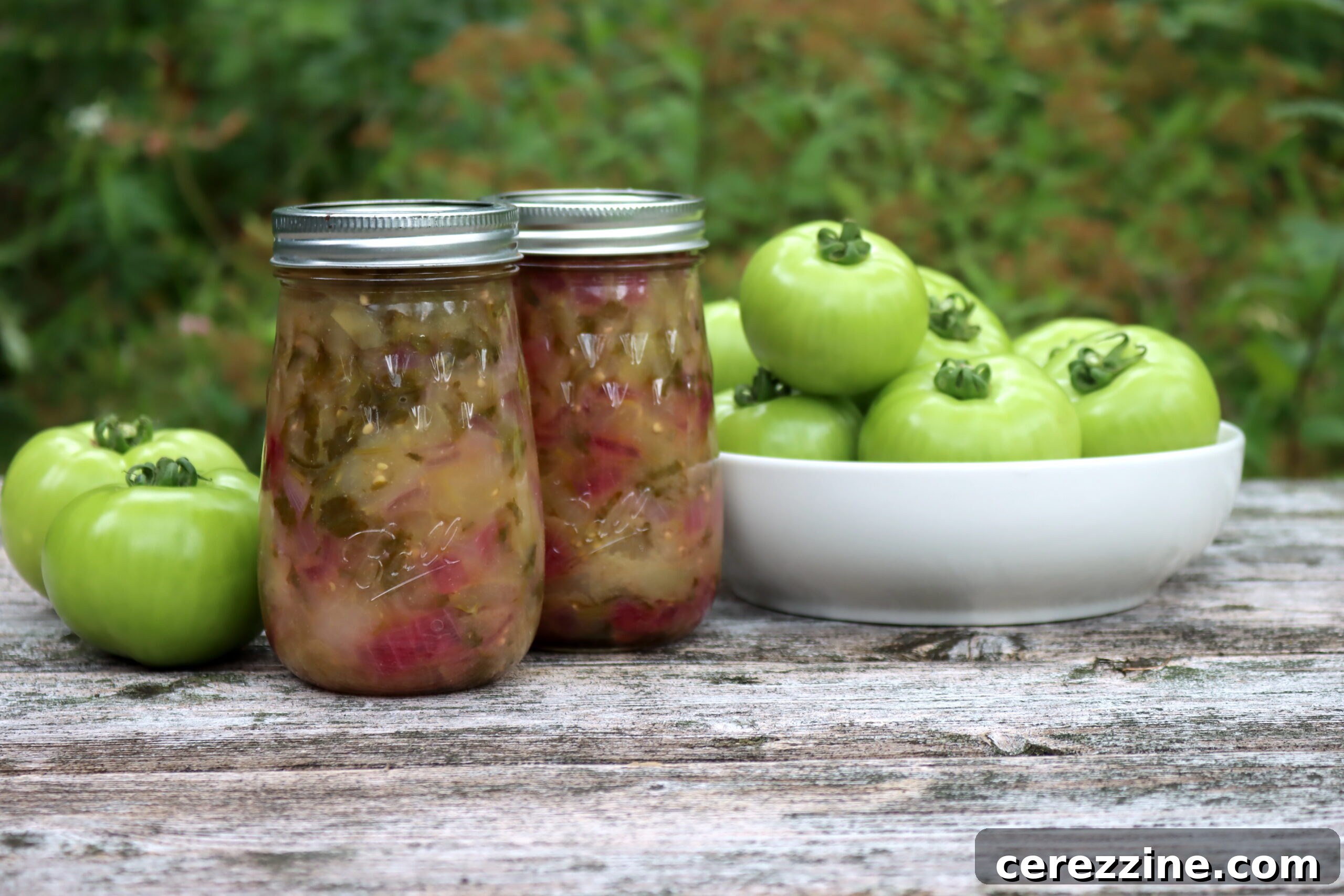
Welcome the crisp flavors of autumn with a vibrant Green Tomato Salsa Verde, the perfect solution for utilizing the last bountiful harvest of green tomatoes from your garden. This refreshing salsa offers a unique twist on traditional red varieties, bringing a zesty, tangy, and subtly spicy kick to your table.
Embracing the Unripe: Why Green Tomatoes Shine in Salsa Verde
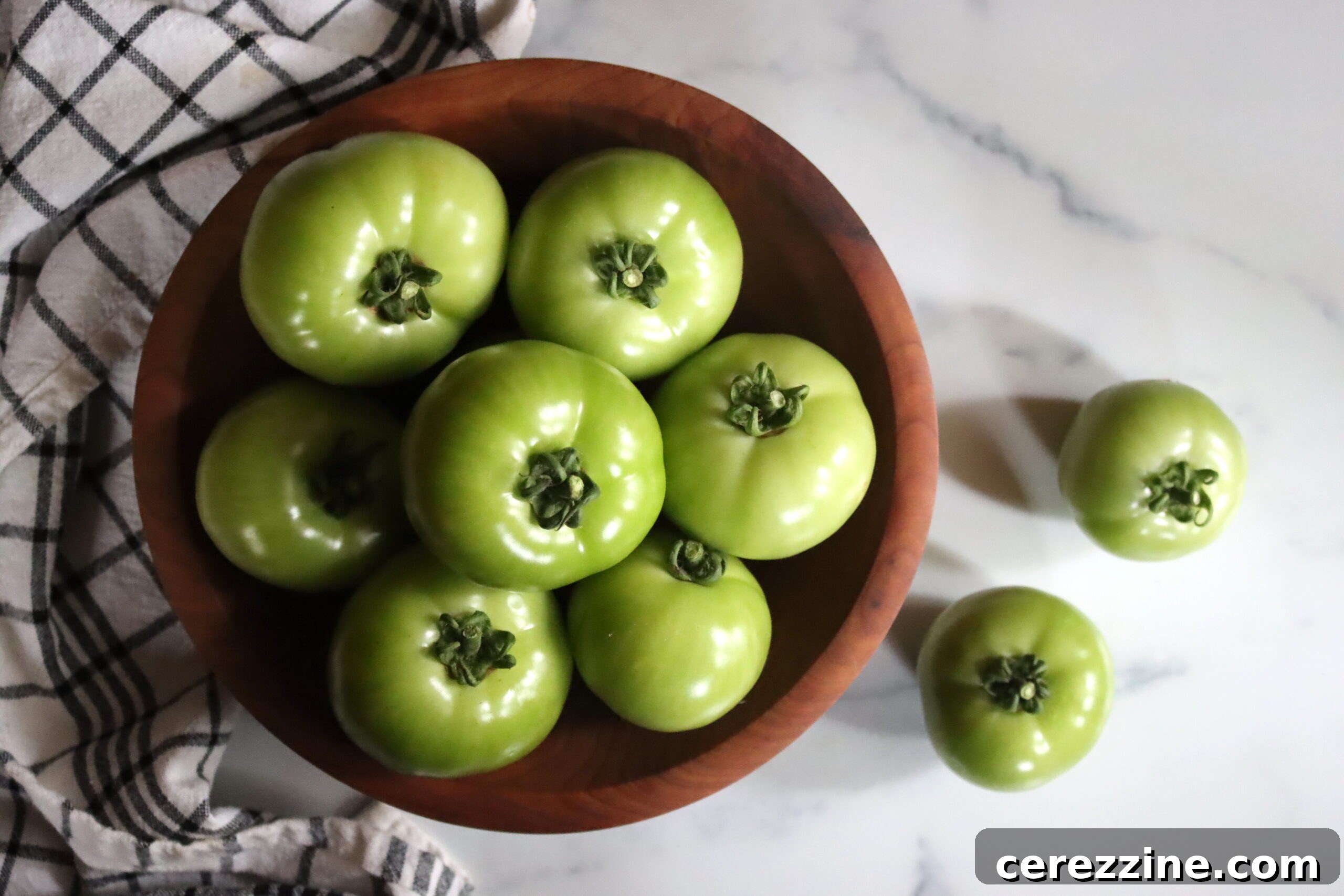
Salsa verde, literally “green sauce,” is a celebrated condiment traditionally made with tomatillos. However, an often-overlooked and equally delicious alternative utilizes green tomatoes – those firm, unripe gems at the close of the gardening season. This ingenious substitution not only prevents food waste but also creates a salsa with a distinct flavor profile that stands proudly apart from its red counterparts.
Green tomatoes are an ideal choice for canning and preserving for several compelling reasons. Their inherent acidity is naturally higher than that of fully ripe tomatoes, making them inherently safer for water bath canning without extensive acidification. This natural tartness is key to their refreshing flavor in salsa verde. Beyond acidity, green tomatoes possess a firm, robust texture that holds up exceptionally well during the cooking and canning process, ensuring your salsa maintains a delightful consistency rather than becoming overly mushy.
This meticulously tested recipe, adapted from the venerable Ball Blue Book Guide to Preserving, a trusted resource for generations of canners, expertly combines the tartness of green tomatoes with the vibrant hues of red onions. Fresh cilantro lends an aromatic brightness, while hot peppers provide customizable heat. A generous splash of lime juice amplifies the tang, complemented by a blend of cumin, oregano, salt, and freshly ground black pepper for a truly well-rounded and irresistible salsa.
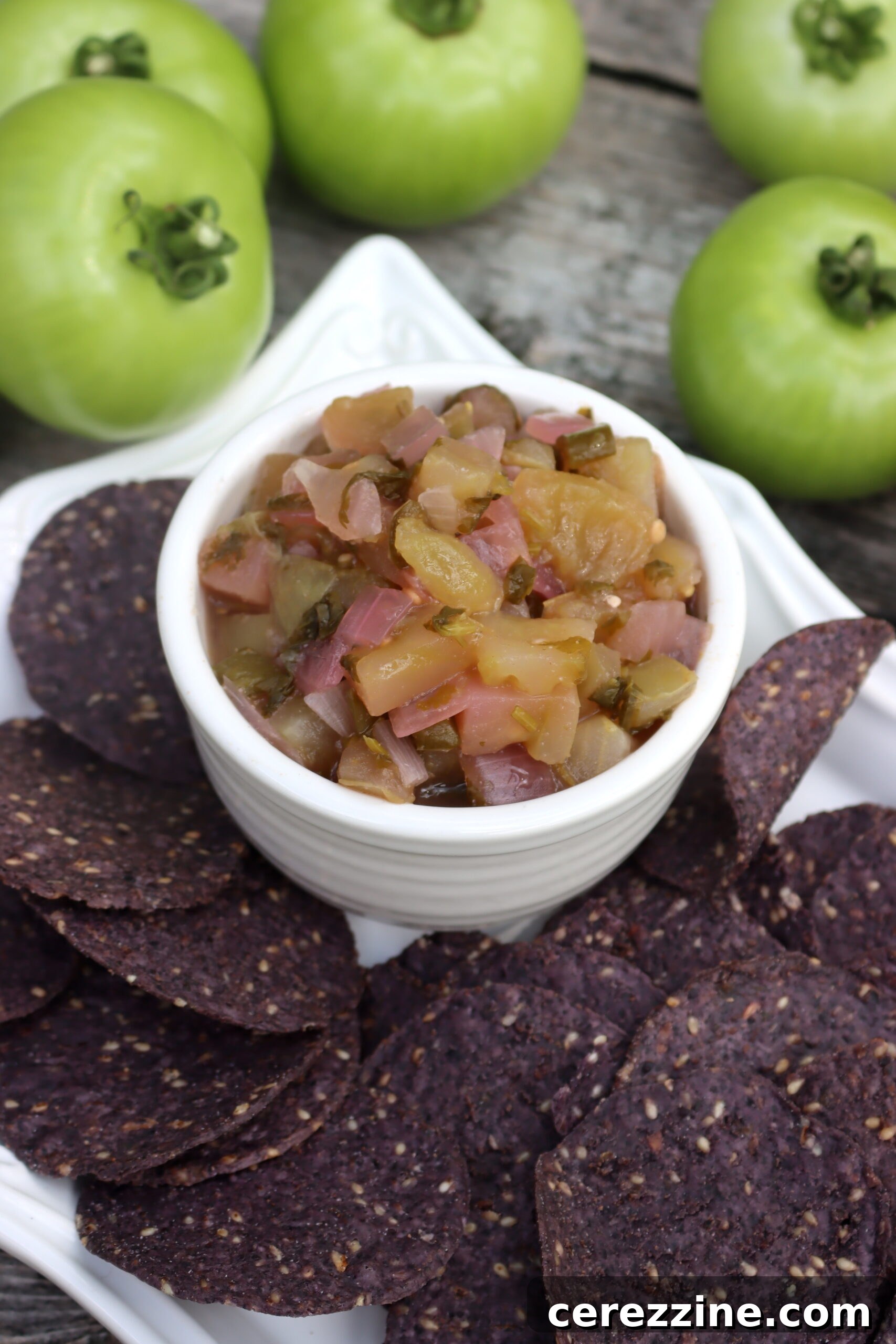
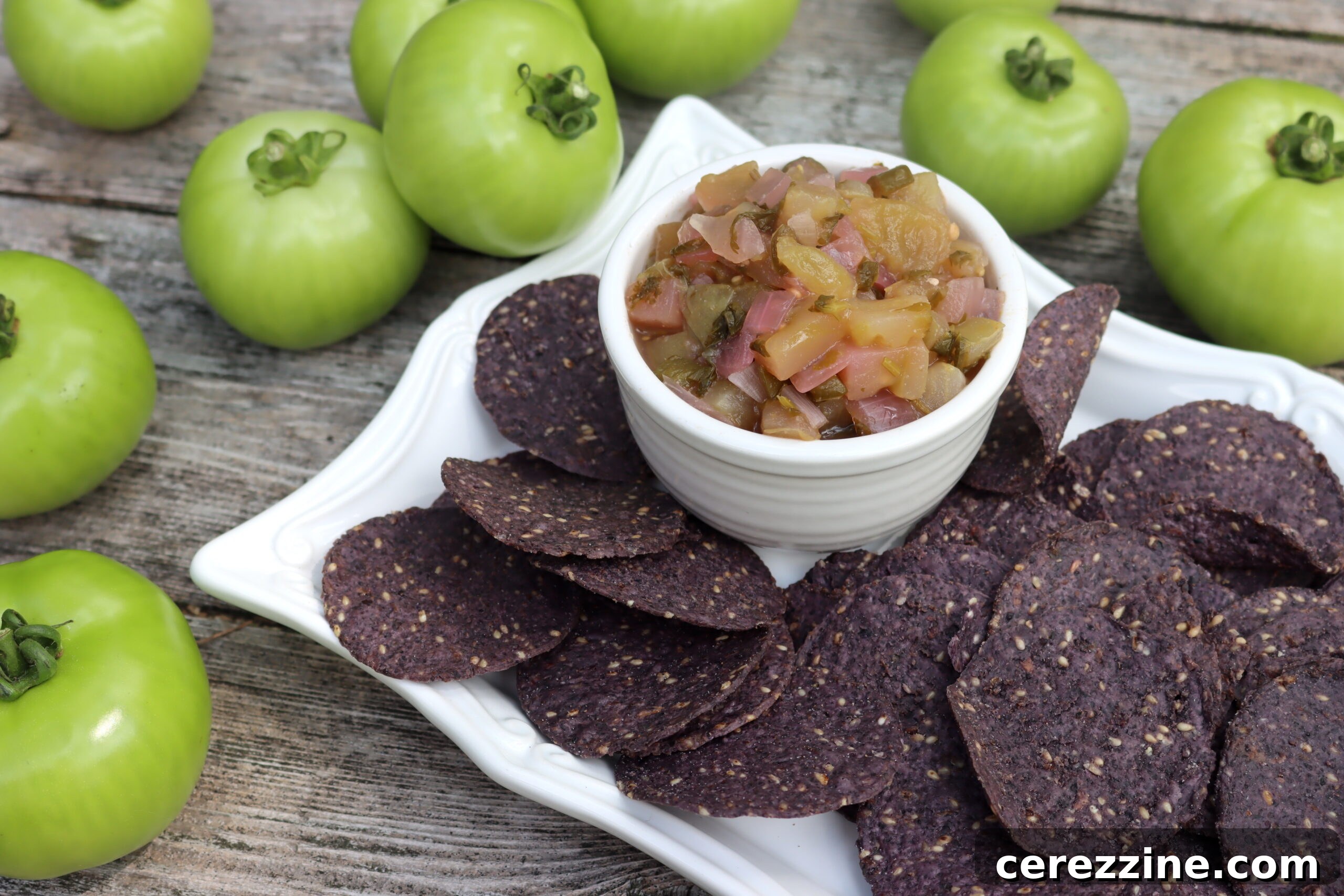
Beyond being a fantastic dip for tortilla chips, Green Tomato Salsa Verde is incredibly versatile. It transforms tacos and enchiladas with its fresh zest, and can even serve as a lively condiment for grilled hot dogs or hamburgers, offering a delightful alternative to traditional relish. Consider stirring it into marinades for stewed meats or slow-cooked roast pork to infuse dishes with a bright, herbaceous flavor.
Crafting Your Batch: Essential Ingredients for Green Tomato Salsa Verde
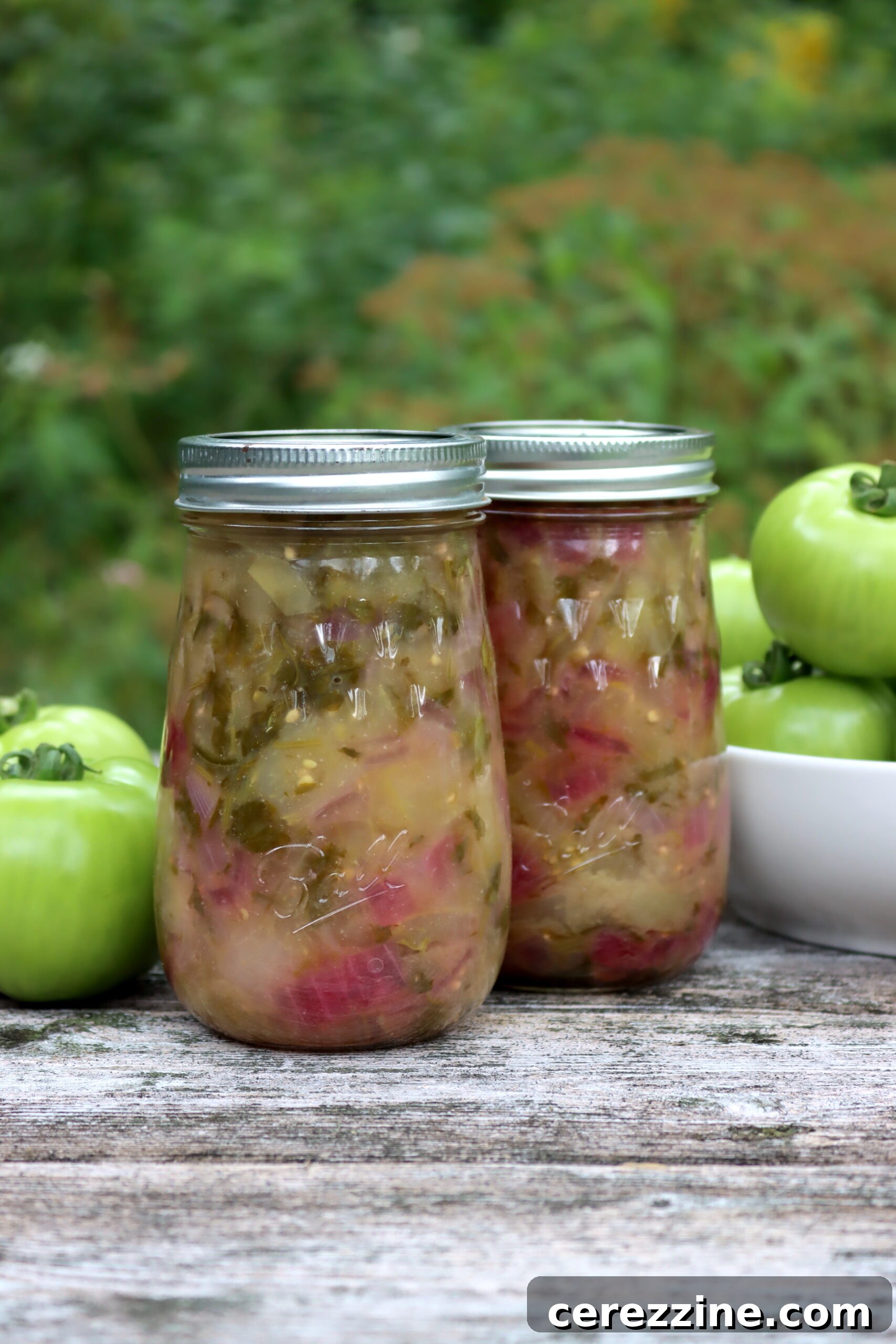
Having a plentiful supply of homemade salsa verde on hand ensures you’re always ready to elevate a meal or snack. It’s especially rewarding as a zero-waste solution for those plentiful green tomatoes clinging to the vine as temperatures drop. This recipe yields approximately 6 half-pint (8 oz) jars or 3 pint jars, perfect for sharing or stocking your pantry for year-round enjoyment.
Ingredients:
- 7 cups green tomatoes, chopped
- 5-10 jalapeño, habanero, or Scotch bonnet peppers, finely chopped (adjust to taste)
- 2 cups red onion, finely chopped
- 2 cloves garlic, finely chopped
- ½ cup bottled lime juice
- ½ cup fresh cilantro, loosely packed
- 2 tsp. ground cumin
- 1 tsp. dried oregano
- 1 tsp. canning salt
- 1 tsp. freshly ground black pepper
Choosing Your Heat: Understanding Peppers
The choice and quantity of peppers are entirely up to your personal preference for spice. Peppers are rated on the Scoville Heat Unit (SHU) scale, which measures their capsaicin content, the compound responsible for their heat. Jalapeños offer a mild to medium heat (2,500-8,000 SHU), while habaneros and Scotch bonnets are significantly hotter (100,000-350,000 SHU). If you’re new to working with hot peppers, it’s advisable to start with a few jalapeños, ensuring all seeds and white membranes (pith) are removed, as these parts contain the highest concentration of capsaicin. You can always add more heat later if desired.
Safety First: Handling Hot Peppers
It is absolutely crucial to wear protective gloves when handling hot peppers, especially those with higher Scoville ratings. Capsaicin, the active compound in peppers, can cause severe burning sensations, irritation, and even blistering upon direct skin contact. Unlike many irritants, capsaicin is not water-soluble, meaning washing with soap and water will not effectively remove it from your skin. It can linger for hours, or even days, and transferring it to sensitive areas like your eyes can be excruciatingly painful.
Regardless of how accustomed you might be to kitchen tasks, always don gloves when preparing peppers, particularly when working with larger quantities as called for in canning recipes. Nitrile gloves are highly recommended due to their snug fit, which allows for precise handling of knives and easier seed removal. Disposable food preparation gloves or even sturdy latex dishwashing gloves are also suitable options.
Customizing Texture: The Art of Chopping
The final texture of your salsa is a matter of personal preference. If you enjoy a robust, chunky salsa, chop your vegetables into larger pieces. For a smoother, more saucy consistency, opt for a finer chop. The instructions will guide you to chop the ingredients, giving you the freedom to achieve your desired texture.
Step-by-Step Guide: How to Make Green Tomato Salsa Verde
Preparing this vibrant salsa involves a few key steps that ensure both flavor and food safety. Follow these instructions carefully for a delicious and well-preserved product.
- Prepare Your Produce: Begin by thoroughly washing all green tomatoes, peppers, and fresh cilantro under cool, running water. Set them aside in a colander to drain excess moisture.
- Blanch the Tomatoes: Fill a large saucepan with water and bring it to a rolling boil. Ensure the water level is sufficient to fully submerge one or two tomatoes at a time. Using a slotted spoon, carefully immerse 1-2 tomatoes into the boiling water for 30 to 60 seconds. Immediately transfer them to a bowl of ice-cold water to stop the cooking process. You may add extra ice cubes to the cold water to maintain its temperature. Continue this process until all tomatoes are blanched, ensuring the boiling water remains at a constant boil throughout. Refresh the cold water bath as needed. Blanching makes the tomato skins significantly easier to peel.
- Peel and Core Tomatoes: Once the blanched tomatoes are cool enough to handle, use a paring knife to carefully cut around the stem end, removing the tough white core along with the stem. The skin should now be relatively loose and can be easily peeled away with your fingers. Discard the skins and cores.
- Chop Tomatoes: Roughly chop the peeled tomatoes, retaining their seeds and natural juices. Measure out exactly 7 cups of chopped green tomatoes and transfer them to a large, heavy-bottomed saucepan or stockpot.
- Prepare Peppers (Gloves On!): While wearing gloves, slice off the tops (stems) of your chosen peppers. Carefully cut each pepper in half lengthwise. Using a spoon, scoop out the seeds and white ribs (pith) from the inside. Remember, removing more seeds and pith will result in a milder salsa; leaving some in will increase the heat. Discard the unwanted seeds, ribs, and stems. Finely chop the prepared peppers and add them to the saucepan with the tomatoes.
- Chop Onions and Garlic: Peel the red onion, then finely chop it. Measure 2 cups of chopped red onion and add it to the tomato and pepper mixture in the saucepan. Next, peel and finely chop the 2 cloves of garlic and incorporate them into the mixture.
- Prepare Cilantro: Lightly pack ½ cup of fresh cilantro. If desired, remove any thicker stems. Finely mince or chop the cilantro, but set it aside for later addition.
- Combine and Cook: Add the ½ cup of bottled lime juice to the saucepan containing the tomatoes, peppers, onions, and garlic. Stir all ingredients together thoroughly. Place the saucepan over medium-high heat and bring the mixture to a vigorous boil, stirring frequently to prevent scorching and ensure even cooking.
- Season and Simmer: Once boiling, add the reserved chopped cilantro, ground cumin, dried oregano, canning salt, and freshly ground black pepper. Stir well to combine all the spices. Reduce the heat to medium and allow the salsa to gently boil for 3 minutes, stirring continuously.
- Fill Jars: Carefully spoon or ladle the hot salsa verde into your prepared canning jars or other storage containers, leaving ½ inch of headspace at the top of each jar.
For immediate use, allow the salsa to cool, then store it in the refrigerator for up to 3 weeks. Alternatively, freeze it for up to 6 months. For long-term preservation, proceed to the canning instructions below.
Preserving Your Harvest: Canning Green Tomato Salsa Verde
Water bath canning is a safe and effective method for preserving this delicious salsa. If you are new to water bath canning, please consult a comprehensive beginner’s guide to ensure you understand all safety protocols before beginning.
- Prepare Canner and Jars: Before you even start cooking your salsa, ensure your water bath canner is prepared, and your jars are clean and heated. Lids should be simmering in hot (not boiling) water.
- Fill Jars with Care: Using a canning funnel (preferably one with headspace measurements), carefully ladle the hot salsa verde into the hot jars, ensuring you leave precisely ½ inch of headspace from the rim. Proper headspace is critical for a strong seal. Exercise caution to prevent spills and burns.
- Clean Rims and Apply Lids: After filling, wipe the rims of each jar thoroughly with a damp, clean cloth to remove any food particles. This step is vital for a good seal. Place a two-part canning lid (flat lid and screw band) on each jar. Tighten the canning bands only until “finger-tight” – firm but not overtightened. Overtightening can prevent air from escaping and hinder proper sealing.
- Process in Water Bath Canner: Load the filled jars into your preheated water bath canner. Ensure the water level covers the tops of the jars by at least 1 inch. Bring the water to a full, rolling boil.
- Timing the Process: Once the water reaches a full rolling boil, start your timer. Process pint or half-pint jars for 20 minutes.
- Cool Down and Remove: After the processing time is complete, turn off the heat. Allow the jars to remain in the hot canner for an additional 5 minutes. This helps stabilize the pressure and reduces the chance of siphoning.
- Final Cooling: Using a jar lifter, carefully remove the hot jars from the canner. Place them on a clean towel on your countertop, ensuring there is ample space between jars for air to circulate freely. Do not disturb the jars or tighten the bands further as they cool. You should hear the satisfying “ping” sound as the lids seal.
- Check Seals and Store: After 12-24 hours, check the seals. Press the center of each lid; if it doesn’t flex, the jar is sealed. Any jars that did not seal properly should be stored in the refrigerator for immediate consumption. Properly sealed jars can be stored in a cool, dry, dark pantry for about 18 months, maintaining peak quality. They will still be safe to eat beyond this timeframe as long as the seal remains intact. Refrigerate after opening.
Altitude Adjustments for Water Bath Canning
Altitude affects the boiling point of water; at higher elevations, water boils at a lower temperature. This means that processing times must be adjusted to ensure adequate heat penetration for safe canning. Always adjust your processing time based on your elevation:
- For Under 1,000 Feet in Elevation: 20 minutes for pints & half pints
- For 1,001 to 3,000 Feet in Elevation: 25 minutes
- For 3,001 to 6,000 Feet in Elevation: 30 minutes
- For 6,001 to 8,000 Feet in Elevation: 35 minutes
Unleash Your Creativity: Green Tomato Salsa Verde Variations
The beauty of this green tomato salsa verde recipe lies in its adaptability. While the core ingredients provide a fantastic base, don’t hesitate to experiment with different peppers and additions to tailor it to your preferences.
Pepper Power: Customizing Your Spice Level
- Mild Salsa: For a gentle heat that still offers great flavor, consider using Anaheim or banana peppers. These peppers are low on the Scoville scale and perfect for those who prefer a less intense spice.
- Medium Heat: Jalapeño and Serrano peppers are excellent choices for a noticeable but not overwhelming kick. Remember, you can control the heat by removing more or fewer seeds and membranes.
- Spicy Salsa: If you’re a true heat seeker, reach for Habanero, Scotch Bonnet, Cayenne, or Tabasco peppers. These varieties pack a significant punch, so proceed with caution and always wear gloves.
Enhanced Flavor: Roasting Peppers
To add a smoky depth and rich complexity to your salsa, try roasting the peppers before chopping them. This process caramelizes their sugars and softens their texture. You can roast peppers on a grill, under a broiler, or directly over an open flame (using tongs). Turn the peppers frequently until their skin is uniformly blistered and slightly charred. Once roasted, place them immediately under a moist towel or in a paper bag to steam for about 10-15 minutes. This makes the skin easier to remove. After they’ve cooled, use your fingers to peel off the blistered skin. As always, remember to wear gloves when handling hot peppers, even after roasting.
Other Creative Additions (For Refrigerated/Frozen Salsa – Consult specific canning guidelines for additions if canning):
- Sweetness: A small amount of sugar or a finely chopped apple can balance the acidity of the green tomatoes.
- Herbs: Experiment with other fresh herbs like oregano or epazote for different aromatic notes.
- Vegetables: For a heartier salsa, consider adding corn, black beans, or finely diced bell peppers. (Note: Adding low-acid vegetables requires careful acidification and tested recipes for canning safety. Always follow approved guidelines).
Beyond the Chip: Versatile Ways to Enjoy Green Tomato Salsa Verde
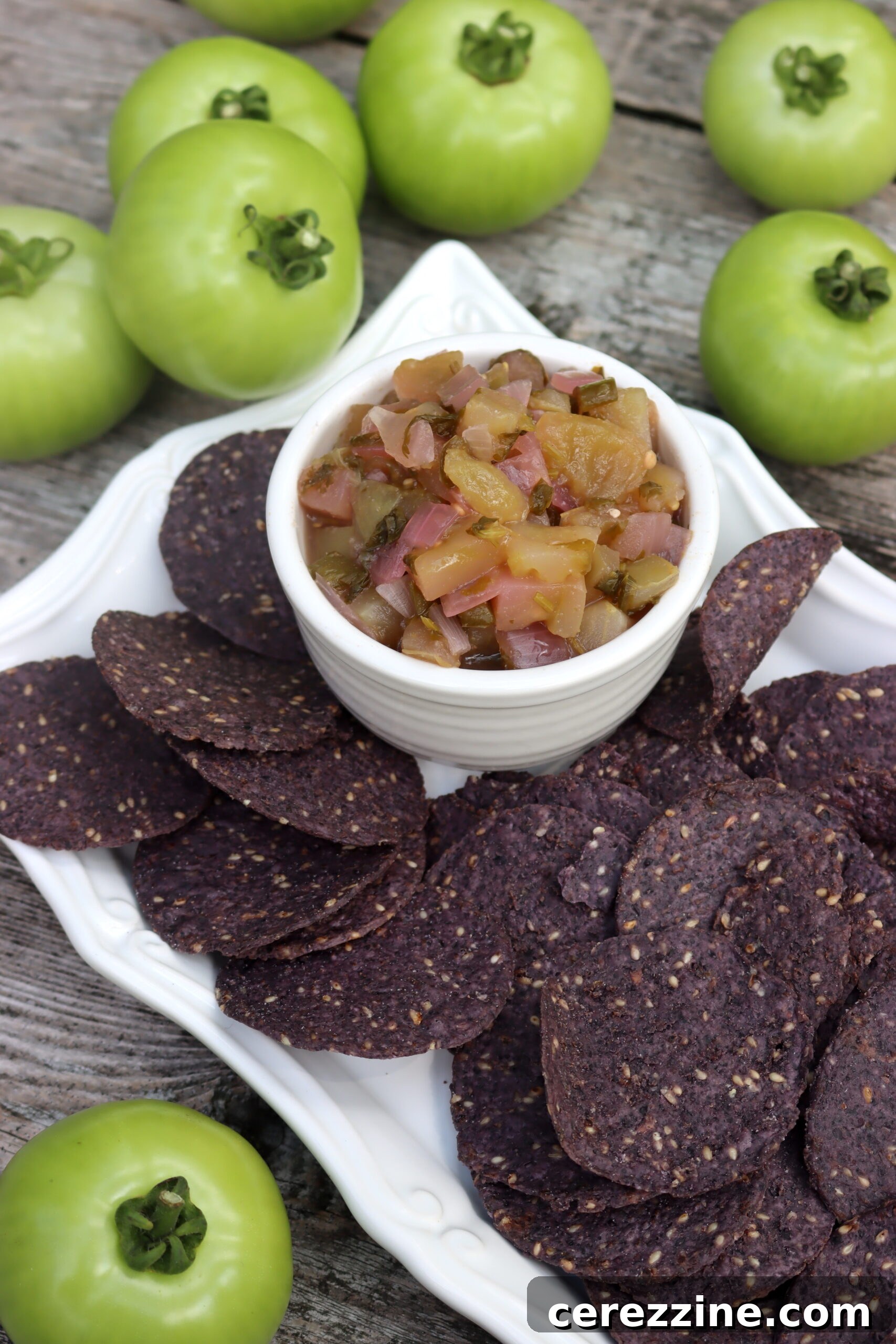
Green Tomato Salsa Verde is far more than just a dip. Its bright, tangy, and subtly spicy character makes it an incredibly versatile condiment that can elevate a wide array of dishes.
- The Classic Dip: Of course, serve it with your favorite tortilla chips for a refreshing snack or appetizer. Its vibrant flavor is a fantastic alternative to traditional red salsas.
- Mexican Culinary Star: Many authentic Mexican recipes feature salsa verde as a key ingredient, from classic enchiladas verdes to chilaquiles. It’s also an indispensable accompaniment to nearly any Mexican meal, from quesadillas and burritos to fajitas and tacos.
- Grilled Delights: Use it as a zesty topping for grilled meats like chicken, pork chops, or steak. It provides a fresh, acidic counterpoint to rich, smoky flavors.
- Condiment King: Replace traditional relish or ketchup on hot dogs, brats, or hamburgers with this flavorful salsa for a gourmet twist.
- Flavorful Marinade: Its acidity and bold flavors make it an excellent marinade for chicken breasts, pork loin, or even firm white fish. Marinate for at least 30 minutes, or up to a few hours, before cooking.
- Egg Enhancer: Spoon it over scrambled eggs, omelets, or huevos rancheros for a breakfast with a kick.
- Soup and Stew Booster: Stir a dollop into chili, stews, or even a simple chicken noodle soup for an unexpected burst of flavor.
- Salad Dressing Base: Whisk it with a little olive oil for a unique and tangy salad dressing.
- Vegetable Topper: Drizzle over roasted vegetables like zucchini, corn, or bell peppers for an added layer of flavor.
Green Tomato Salsa Verde Recipe
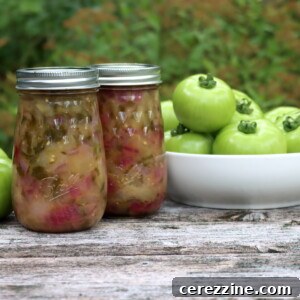
Green Tomato Salsa Verde is a delicious way to use up green tomatoes at the end of the gardening season.
Yields: 48 servings, approximately 6 half-pint (8-ounce) or 3 pint jars
Prep Time: 25 minutes
Cook Time: 15 minutes
Additional Time (Canning): 20 minutes (plus cooling)
Total Time: Approximately 1 hour
Ingredients
- 7 cups green tomatoes, chopped
- 5-10 large jalapeño, habanero, or Scotch bonnet peppers, finely chopped (adjust to desired heat)
- 2 cups red onion, finely chopped
- 2 cloves garlic, finely chopped
- ½ cup bottled lime juice
- ½ cup cilantro, loosely packed and chopped
- 2 tsp. ground cumin
- 1 tsp. dried oregano
- 1 tsp. canning salt
- 1 tsp. freshly ground black pepper
Equipment
- Water Bath Canner
- Large saucepan or stockpot
- Slotted spoon
- Paring knife
- Cutting board
- Protective gloves for handling peppers
- Canning funnel
- Jar lifter
Instructions
- Wash the tomatoes, peppers, and cilantro under cool water. Set aside to drain.
- Heat water in a saucepan to boiling. Blanch tomatoes 1-2 at a time (30-60 seconds each), immediately transferring them to a cold water bath. Continue until all tomatoes are blanched.
- Remove the stem and core from the tomatoes, then peel off the skin. Discard skin, stems, and cores.
- Chop the tomatoes, retaining seeds and juices, and measure 7 cups. Place in a large saucepan or stockpot.
- Wearing gloves, cut off pepper tops/stems. Remove seeds and ribs (retain some seeds for spicier salsa). Chop peppers and add to tomatoes. Discard stems and unwanted seeds/ribs.
- Peel and chop the red onion, measuring 2 cups. Add to the tomato and pepper mixture.
- Peel and chop 2 cloves of garlic. Add to the mixture.
- Measure ½ cup of loosely packed cilantro. Remove large stems if preferred, then chop or mince finely. Set aside.
- Add ½ cup of bottled lime juice to the saucepan. Stir to combine.
- Place saucepan over medium-high heat and bring the mixture to a boil, stirring frequently.
- Add the chopped cilantro, cumin, oregano, salt, and pepper to the boiling mixture. Stir to combine. Reduce heat to medium and gently boil the salsa for 3 minutes, stirring frequently.
- Spoon or pour the hot salsa verde into prepared jars, leaving ½” headspace.
- Wipe the rims of the jars with a clean, damp cloth and apply 2-part canning lids (flat lid and screw band). Tighten screw bands only until finger-tight.
- If not canning, allow to cool and store in the refrigerator for up to 3 weeks, or freeze for up to 6 months.
- To can, load filled jars into a preheated water bath canner, ensuring jars are covered by at least 1 inch of water. Bring to a rolling boil.
- Process pint and half-pint jars for 20 minutes (adjust for altitude, see notes). Turn off heat and allow jars to sit in the canner for 5 minutes after processing.
- Use a jar lifter to remove jars and place them on a towel on the counter to cool for 12-24 hours. Check seals. Refrigerate any unsealed jars for immediate use.
- Store properly processed and sealed salsa in a cool, dry place for 18 months. Refrigerate once opened.
Notes
Altitude Adjustments for Water Bath Canning:
- Under 1,000 Feet in Elevation: 20 minutes for pints & half pints
- 1,001 to 3,000 Feet in Elevation: 25 minutes
- 3,001 to 6,000 Feet in Elevation: 30 minutes
- 6,001 to 8,000 Feet in Elevation: 35 minutes
Nutrition (Approximate per serving)
Calories: 11kcal, Carbohydrates: 2g, Protein: 0.5g, Fat: 0.1g, Saturated Fat: 0.02g, Polyunsaturated Fat: 0.03g, Monounsaturated Fat: 0.04g, Sodium: 84mg, Potassium: 76mg, Fiber: 1g, Sugar: 1g, Vitamin A: 201IU, Vitamin C: 9mg, Calcium: 9mg, Iron: 0.3mg
Nutrition information is automatically calculated and should be used as an approximation.
Explore More Green Tomato Canning Recipes
If you’re looking for additional creative ways to preserve your green tomato bounty in canning jars, here are some fantastic recipes to consider:
- More Green Tomato Canning Recipes
- Crisp Pickled Green Tomatoes
- Old Fashioned Green Tomato Jam