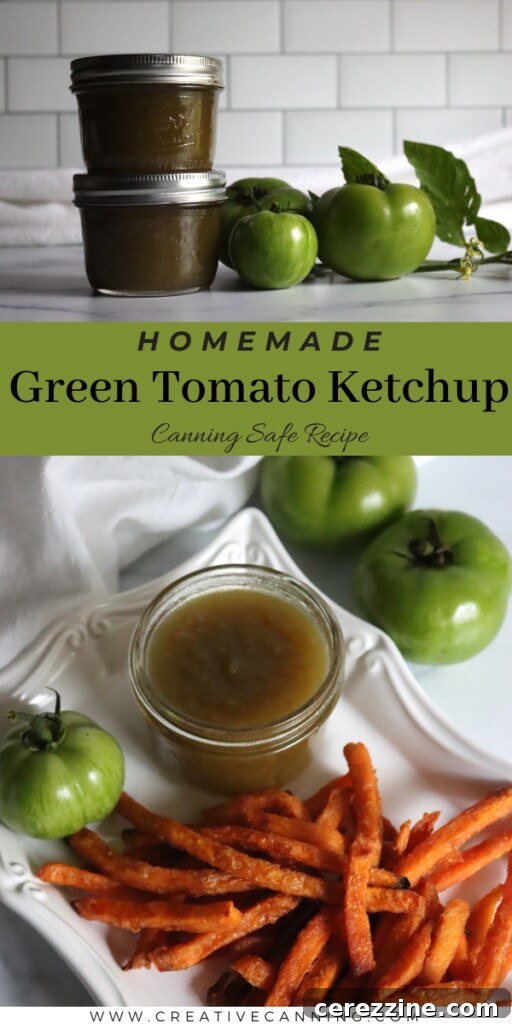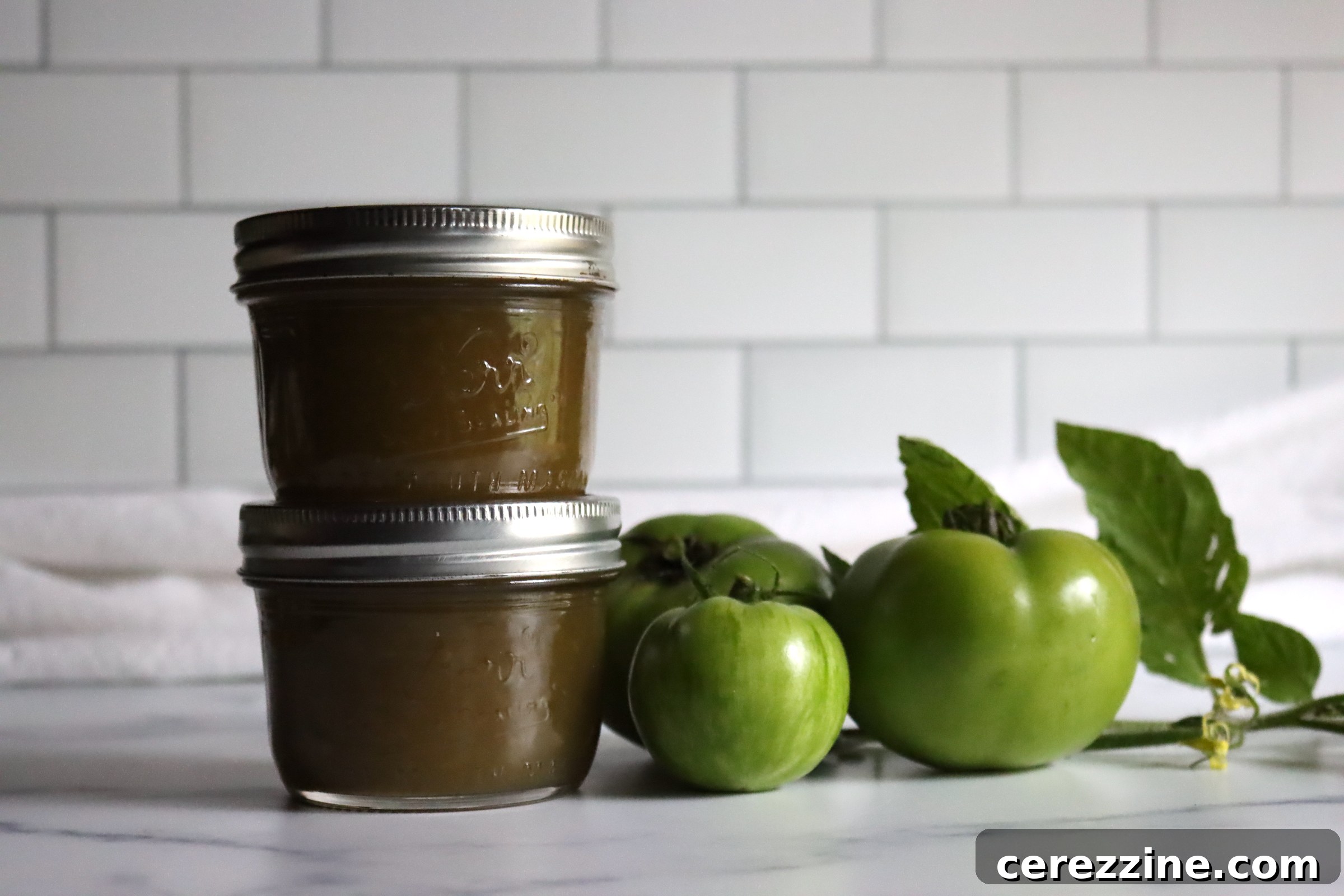
Unlock the vibrant, tangy potential of your garden’s last harvest with homemade green tomato ketchup! As summer gracefully transitions into autumn, many home gardeners find themselves with a bountiful supply of green, unripe tomatoes. Instead of letting this precious produce go to waste, transform it into a culinary masterpiece that will delight your taste buds and add a unique twist to your pantry. This exceptional condiment is a delightful way to preserve the distinctive flavor of these end-of-season tomatoes, offering a refreshing alternative to traditional ketchup.
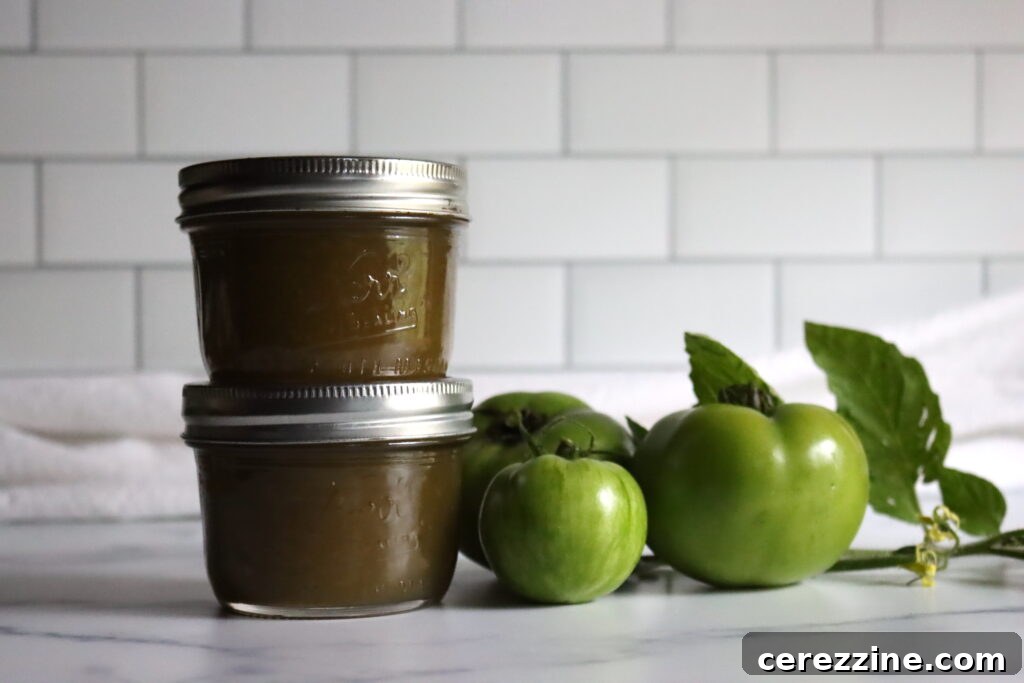
Homemade green tomato ketchup is more than just a condiment; it’s a celebration of seasonal produce and the art of preservation. Imagine a tangy, sweet, and subtly spicy flavor profile that perfectly complements everything from juicy burgers and crispy fries to gourmet sandwiches and grilled chicken. It’s an unexpected delight that will undoubtedly become a staple in your kitchen and a talking point at any meal. This recipe guides you through creating a small batch, yielding approximately two pints, but it’s easily scalable for larger harvests, ensuring you can enjoy its unique taste throughout the fall and winter months.
Why Make Green Tomato Ketchup? The Unsung Hero of the Garden
As the days shorten and temperatures drop, many gardeners face the annual dilemma of unripe green tomatoes clinging to their vines. While some might ripen indoors, many are destined for the compost bin. This is where green tomato ketchup shines as a brilliant solution. Unlike their red counterparts, green tomatoes possess a firm texture and a naturally higher acidity, which makes them ideal for a robust, tangy ketchup. This inherent tartness is beautifully balanced with sweetness from honey and a complex blend of spices, resulting in a condiment that stands apart.
Making your own ketchup allows you to control the ingredients, avoiding the high fructose corn syrup and artificial preservatives often found in store-bought varieties. You get to customize the sweetness, spice level, and overall flavor to suit your preference, creating a truly bespoke product. Plus, the satisfaction of making something so delicious from scratch, especially from produce you might otherwise discard, is incredibly rewarding. It’s an act of culinary creativity and sustainable gardening all rolled into one.
Essential Ingredients for Your Green Tomato Ketchup
Crafting this delightful green tomato ketchup begins with selecting the right ingredients. For a batch that yields about 2 pints, here’s what you’ll need. Remember, this recipe is incredibly adaptable, so feel free to adjust quantities to match your harvest or increase the batch size as desired.
- 6 pounds of green tomatoes: This typically equates to about 12 medium-sized tomatoes. For the best yield and texture, consider using paste tomatoes like Roma if you have them, as they contain less water. However, any firm, unripe green tomato will work beautifully. Ensure they are free from blemishes or soft spots.
- 1 1/2 cups onions, chopped: Approximately 1 pound, or one large onion. Onions add a foundational savory depth that complements the tomatoes’ tartness. White or yellow onions are generally preferred for their balanced flavor.
- 1 Tbsp dry mustard: This spice contributes a subtle heat and pungent note, essential for classic ketchup flavor without being overpowering. It helps to round out the overall profile.
- 1 tsp Worcestershire sauce: A secret weapon for umami depth, Worcestershire sauce adds a rich, savory complexity that enhances all the other flavors in the ketchup.
- 2 tsp mixed pickling spices: While optional, these are highly recommended. Mixed pickling spices typically include ingredients like mustard seeds, coriander seeds, dill seeds, allspice, bay leaves, and sometimes a hint of red pepper flakes or cinnamon. They infuse the ketchup with a warm, aromatic character that’s hard to replicate. If you can’t find them, a pinch of cinnamon and allspice can offer a similar warmth, though perhaps not the same complex layering.
- 1 tsp black pepper: Freshly ground black pepper will provide a sharp, earthy kick, enhancing the savory elements.
- 1 1/2 cups Apple Cider Vinegar: Apple cider vinegar is a star in this recipe. Its fruity, slightly sweet acidity is mellower and more nuanced than white vinegar, adding a wonderful depth of flavor to the ketchup. If white vinegar is all you have, it can be substituted, but be aware it will impart a sharper, less rounded tartness.
- 3/4 cup honey (or to taste): Honey provides natural sweetness, balancing the acidity of the green tomatoes and vinegar. You can adjust the amount based on your preference for sweetness. Maple syrup or brown sugar can also be used as alternatives, each lending a slightly different character.
- 1 Tbsp Kosher salt (or to taste): Salt is crucial for enhancing all the flavors and achieving the perfect balance. Kosher salt is ideal due to its clean taste and larger crystals, but fine sea salt can also be used. Always taste and adjust before the final canning stage.
The beauty of homemade condiments lies in their flexibility. Don’t be afraid to experiment with the spice blend—a pinch of cayenne for extra heat, or a touch of smoked paprika for a smoky undertone, can further personalize your batch. Remember that the quality of your fresh produce will significantly impact the final taste, so opt for firm, healthy green tomatoes.
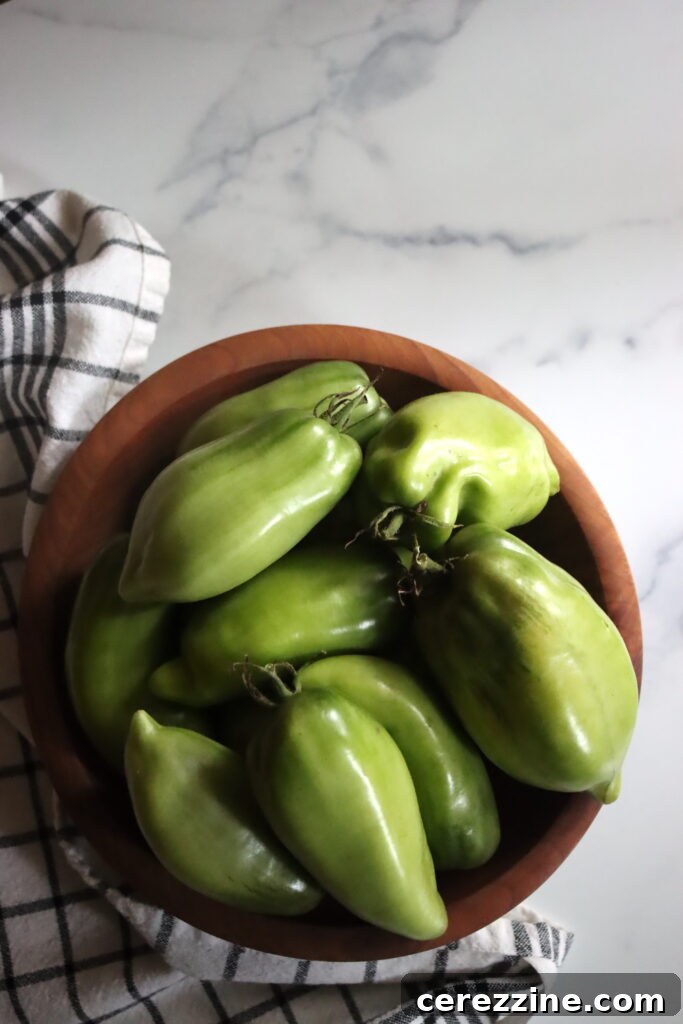
Consider the pickling spices a valuable addition. If adding whole spices, a small cheesecloth bag (sachet) is invaluable. It allows the spices to infuse their flavors into the mixture during cooking, making them easy to remove before blending, ensuring a smooth, spice-particle-free ketchup. This attention to detail will elevate your green tomato ketchup from good to truly exceptional.
Crafting Your Homemade Green Tomato Ketchup: A Step-by-Step Guide
Making green tomato ketchup is a rewarding process that transforms simple ingredients into a gourmet condiment. Follow these detailed steps to create your perfect batch:
Step 1: Prepare Your Produce and Initial Cook
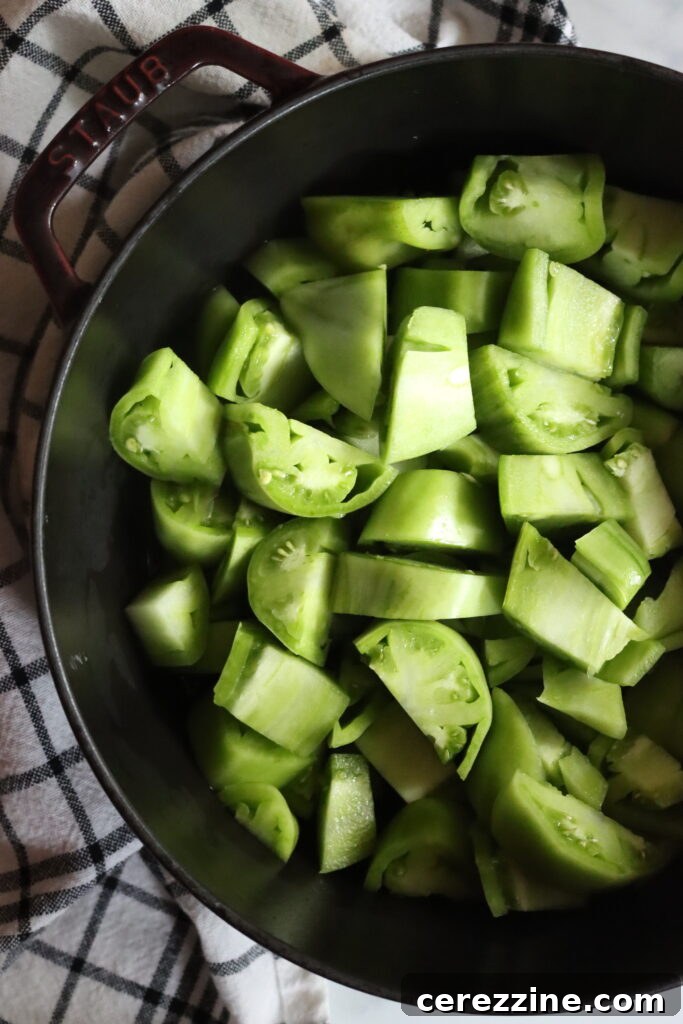
Start by thoroughly washing your green tomatoes and onions. Dice or chop them into small, manageable pieces. The smaller the pieces, the faster they will break down during cooking. Place the chopped tomatoes and onions into a large, heavy-bottomed Dutch oven or stockpot. Add the dry mustard, Worcestershire sauce, and black pepper. If you’re using mixed pickling spices, place them in a small cheesecloth bag and tie it securely. This sachet will allow the flavors to infuse into the mixture and make for easy removal later. Pour the apple cider vinegar over all the ingredients in the pot. Stir everything well to ensure the spices are evenly distributed.
Cover the pot and place it over low heat. Allow the mixture to gently simmer for approximately 4 hours. This extended, slow cooking time is crucial. It allows the tomatoes and onions to soften completely, releasing their juices and flavors, which then meld together into a rich, complex base. Stir the mixture occasionally to prevent sticking and ensure even cooking. The goal is a thoroughly cooked-down, tender vegetable base.
Step 2: Achieve the Perfect Smoothness
Once the tomatoes and onions have become very soft and broken down, it’s time to transform the chunky mixture into a smooth ketchup base. You have a couple of options here:
- Traditional Blender: If using a standard countertop blender, work in small batches. Fill the blender no more than one-third full with the hot mixture. Secure the lid, but remove the center cap and cover the opening with a kitchen towel to allow steam to escape. This prevents pressure buildup and dangerous splattering. Blend until completely smooth.
- Immersion Blender (Stick Blender): For convenience and less mess, an immersion blender can be used directly in the pot. Blend until the mixture is entirely smooth and uniform.
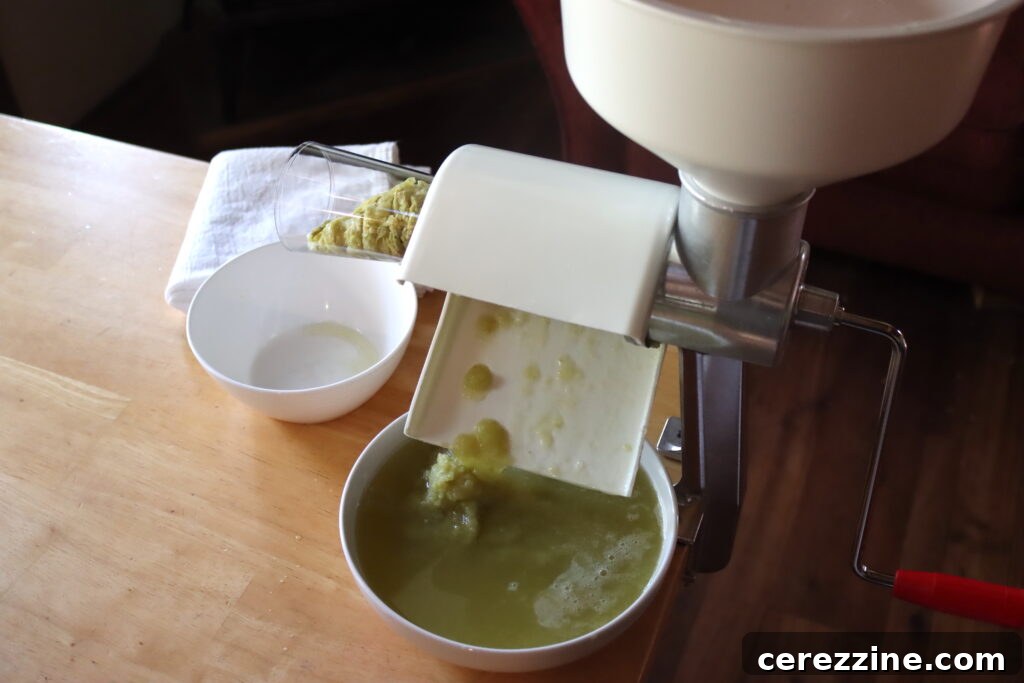
- Food Mill: Many experienced canners prefer a food mill. This tool simultaneously purees and strains, effectively separating seeds, skins, and any fibrous bits from the pulp. If you use a food mill, you can often skip the subsequent straining step. The result is a wonderfully consistent and smooth texture.
After blending, whether with a traditional or immersion blender, you will need to strain the mixture. Place a fine-mesh strainer over a large bowl or back into your clean Dutch oven. Pour the blended mixture through the strainer, pressing firmly on the solids with a spoon or spatula to extract as much liquid as possible. This step removes any remaining seeds, skins, or coarse particles, ensuring your ketchup has that silky-smooth consistency everyone loves.
Step 3: Thicken and Season to Perfection
Return the strained, smooth ketchup base to your Dutch oven or stockpot. If you used a cheesecloth bag for pickling spices, remove and discard it at this stage. Bring the mixture to a boil over medium-high heat, then reduce the heat to low. Now, it’s time to add the honey. Stir it in thoroughly, allowing its sweetness to dissolve and meld with the tangy base. Taste the ketchup. This is where you adjust the seasoning to your liking. Add kosher salt, a teaspoon at a time, tasting after each addition, until the flavor is perfectly balanced and vibrant. You might also add more honey if you prefer a sweeter ketchup, or a pinch of extra black pepper or dry mustard for more kick.
Continue to cook the ketchup uncovered over low heat, stirring frequently to prevent scorching, until it thickens to your desired consistency. This process can take anywhere from 30 minutes to an hour, or even longer, depending on how thin or thick your initial mixture was and how concentrated you want the final product. A good test for thickness is to dip a spoon into the ketchup; if it coats the back of the spoon without running off immediately, it’s likely ready. Another method is to draw a line through the ketchup on a plate; if the line holds, it’s sufficiently thick.
Step 4: Prepare for Canning
While your ketchup is simmering and thickening, it’s crucial to prepare your canning equipment. Fill a water bath canning kettle with enough water to cover your jars by at least 2 inches once they are placed inside. Bring this water to a boil, then reduce the heat to a simmer to keep it hot. Place your clean pint or half-pint canning jars into the hot water to sterilize them. Keep them in the hot water until you are ready to fill them. Simultaneously, place your new sealing lids in a small saucepan, cover them with water, and bring to a gentle boil. Remove from heat and keep the lids warm until use; this softens the sealing compound, ensuring a proper seal.
Step 5: Fill and Process Your Jars
Once the green tomato ketchup has reached your desired thickness, it’s time to fill the jars. Carefully remove a hot, sterilized jar from the canning kettle, emptying any water back into the pot. Using a canning funnel, ladle the hot ketchup into the jar, leaving a precise ¼-inch of headspace at the top. This headspace is critical for proper sealing and creating a vacuum. Using a damp, clean cloth or paper towel, wipe the rim of each jar meticulously to remove any ketchup residue, which could prevent a seal from forming. Place a warm, flat sealing lid onto the jar, centering it. Screw on the metal band (ring) until it is “finger-tight”—meaning tightened just until resistance is met, but not overtightened. Overtightening can prevent air from escaping during processing, leading to seal failure.
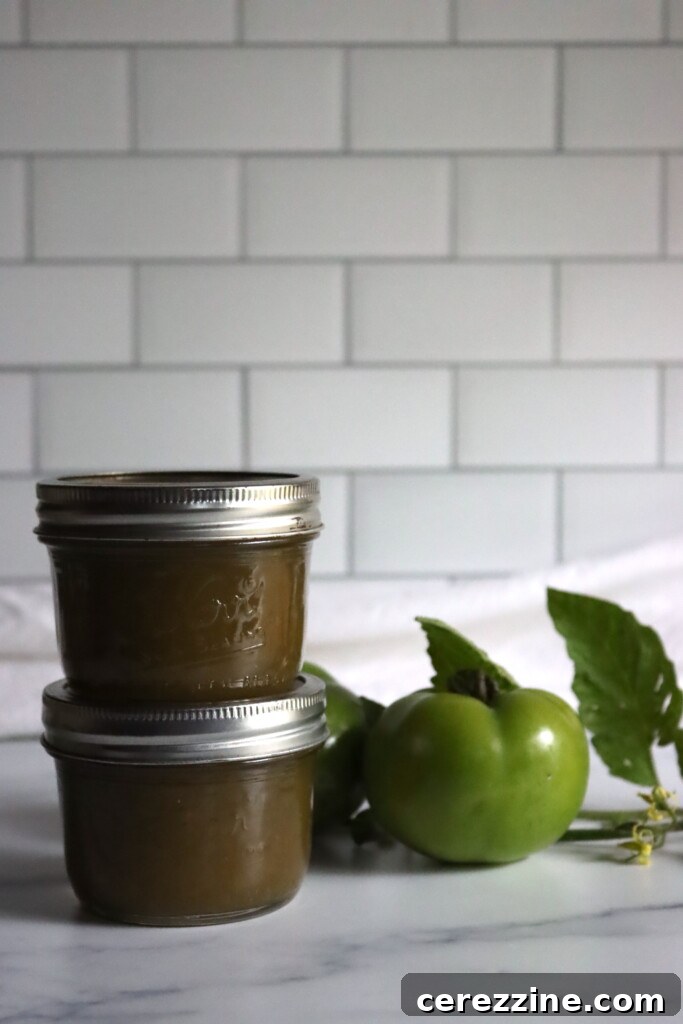
Carefully place the filled and sealed jars into the simmering water bath canner, ensuring they are covered by at least 2 inches of water. Bring the water back to a rolling boil. Process pint or half-pint jars for 15 minutes. It is vital to adjust this processing time according to your altitude. (Refer to the “Altitude Adjustments” section below for specific guidance.)
Step 6: Cool, Check Seals, and Store
After the recommended processing time is complete, turn off the heat and carefully remove the jars from the canner using a jar lifter. Place them on a clean kitchen towel on your countertop, ensuring they are not touching each other, and allow them to cool undisturbed for 12 to 24 hours. As the jars cool, you should hear a satisfying “pop” as the lids seal, indicating a successful vacuum has formed.
Once fully cooled, check the seals. Press down on the center of each lid. If the lid does not flex or “pop” when pressed, it is sealed. You can also visually inspect the lid for a concave (curved inward) appearance. Remove the screw bands before storing (this prevents rust and allows you to easily spot any seal failures later). Store sealed jars in a cool, dark, dry place for up to one year. Any jars that did not seal properly should be refrigerated immediately and used within 3 months. This rigorous canning process ensures the safety and longevity of your homemade green tomato ketchup.
Crucial Altitude Adjustments for Canning Ketchup
When canning, adjusting processing times for altitude is paramount for food safety. Water boils at lower temperatures at higher elevations, meaning more time is needed to ensure proper sterilization. Please consult the following guidelines for processing your green tomato ketchup:
- For elevations from 0 to 1,000 feet: Process jars for 15 minutes.
- For elevations from 1,001 to 6,000 feet: Process jars for 20 minutes.
- For elevations from 6,001 to 8,000 feet: Process jars for 25 minutes.
- For elevations above 8,001 feet: Process jars for 30 minutes.
Always ensure you are processing your green tomato ketchup in pint-sized jars or smaller. Do not use jars larger than pint size for this recipe, as the processing times are calibrated for these smaller volumes to ensure adequate heat penetration.
Expert Tips for Your Green Tomato Ketchup Success
Achieving perfectly delicious and safe homemade green tomato ketchup involves a few key considerations:
- Blending Hot Ingredients Safely: When pureeing hot liquids in a standard blender, remember the golden rule: fill only one-third full. The steam generated can build up pressure, causing the lid to blow off. Always remove the center cap (if applicable) and cover the opening with a folded kitchen towel. Hold the lid down firmly while blending. An immersion blender, used directly in the pot, is often a safer and more convenient alternative for hot liquids.
- Essential Canning Tools: Beyond the basic jars and lids, investing in a few specialized canning tools can make the process much smoother and safer. A jar lifter is indispensable for safely transferring hot jars, a wide-mouth funnel helps prevent spills when filling jars, and a headspace tool ensures accurate headspace measurement. These tools simplify handling and reduce the risk of burns or seal failures.
- Flavor Customization: While the provided spice blend is well-balanced, feel free to experiment to suit your palate. For a warmer, autumnal note, consider adding a pinch of ground cinnamon, a few whole cloves, or a touch of ground allspice along with the pickling spices. For a spicier kick, a tiny amount of cayenne pepper or a chopped jalapeño (added with the tomatoes and onions) can add a delightful zing. Taste and adjust as you go!
- Troubleshooting Thickness: If your ketchup doesn’t thicken sufficiently after the recommended time, simply continue simmering it uncovered. More evaporation equals a thicker consistency. If it becomes too thick, you can thin it slightly with a tablespoon or two of hot water or apple cider vinegar.
- Non-Canning Storage: If you’re not planning to can your ketchup, you can simply pour the hot mixture into clean, airtight containers once it’s thickened and seasoned. Allow it to cool completely before refrigerating. Homemade green tomato ketchup stored this way will keep well in the refrigerator for up to 3-4 weeks.
Creative Ways to Enjoy Your Green Tomato Ketchup
The unique tangy-sweet profile of homemade green tomato ketchup makes it incredibly versatile, extending its use far beyond just dipping fries. Here are some inspiring ideas to make the most of your delicious creation:
- Classic Pairings: Elevate your everyday meals. It’s a sensational topping for grilled burgers, hot dogs, and veggie burgers. Dip your crispy French fries, sweet potato fries, or chicken tenders into it for a fresh, gourmet twist on a classic.
- Sandwich and Wrap Enhancer: Spread a generous layer on sandwiches, wraps, or paninis for an unexpected burst of flavor that cuts through richer ingredients. Try it with a grilled cheese sandwich for a delightful tang.
- Marinades and Glazes: Incorporate it into your marinades for chicken, pork, or even tofu. Its acidity and sweetness make it an excellent base. Whisk it with a little soy sauce, ginger, and garlic for an Asian-inspired glaze.
- BBQ Sauce Base: Mix it with a touch of mustard, brown sugar, and a splash of liquid smoke to create a quick and flavorful homemade barbecue sauce, perfect for ribs, pulled pork, or grilled chicken wings.
- Sauces and Dressings: Whisk it into a vinaigrette for a vibrant salad dressing, or stir it into a creamy dip for vegetables or chips. It can even be a secret ingredient in a homemade cocktail sauce for shrimp.
- Meatloaf or Meatball Glaze: Use it as a tangy glaze for your next meatloaf or as a sweet-and-sour component for meatballs, baked or simmered on the stovetop.
- Eggs and Breakfast Dishes: A dollop of green tomato ketchup can brighten up scrambled eggs, omelets, or even a breakfast burrito, adding a zesty kick to start your day.
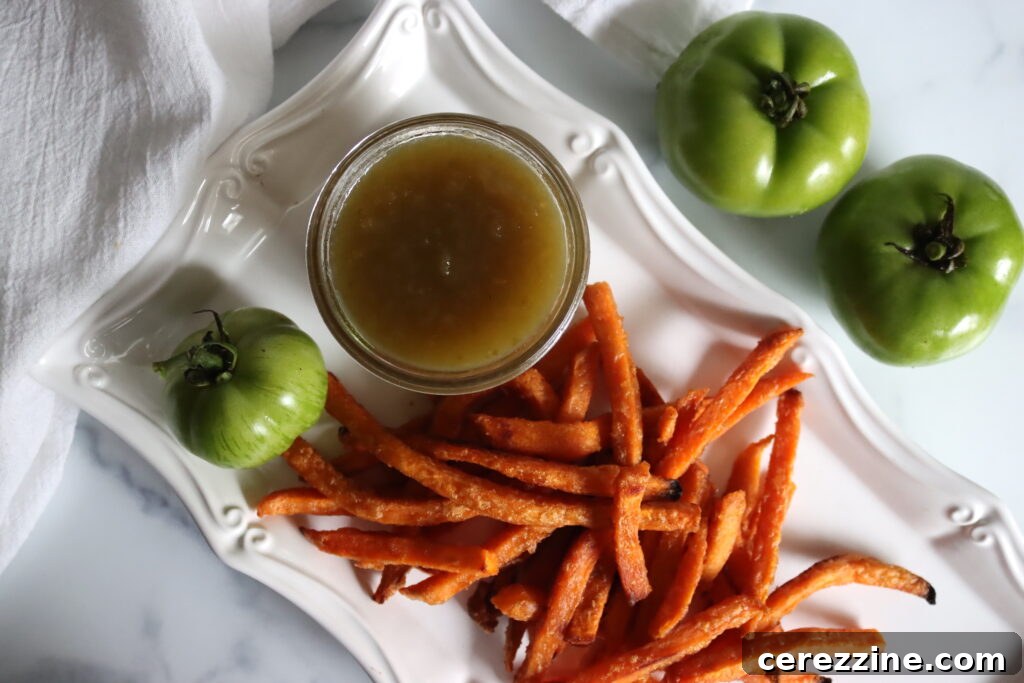
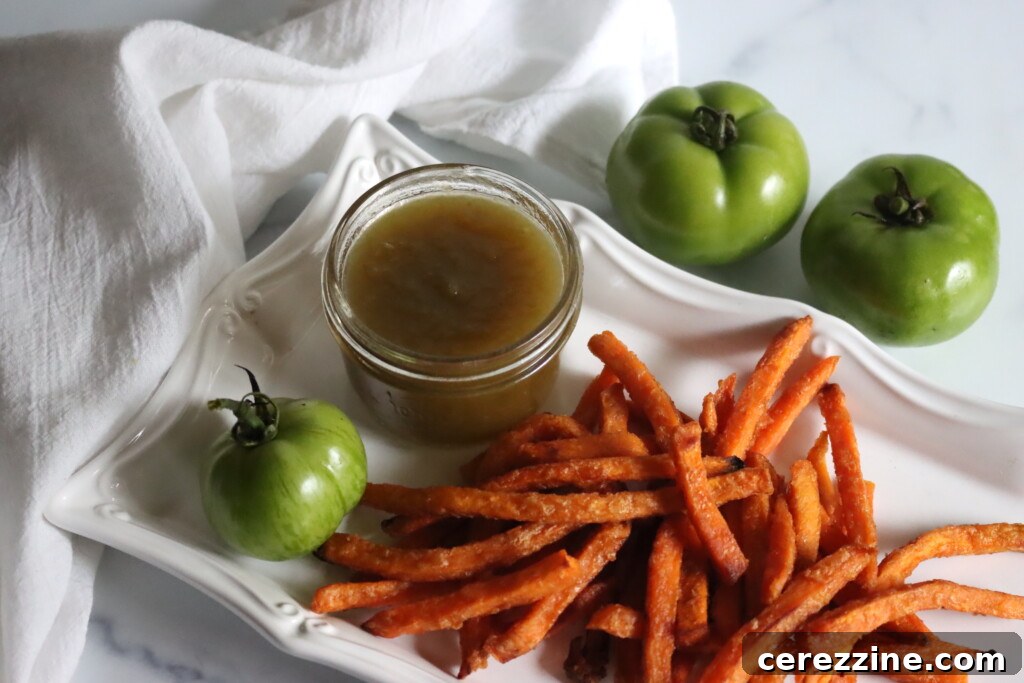
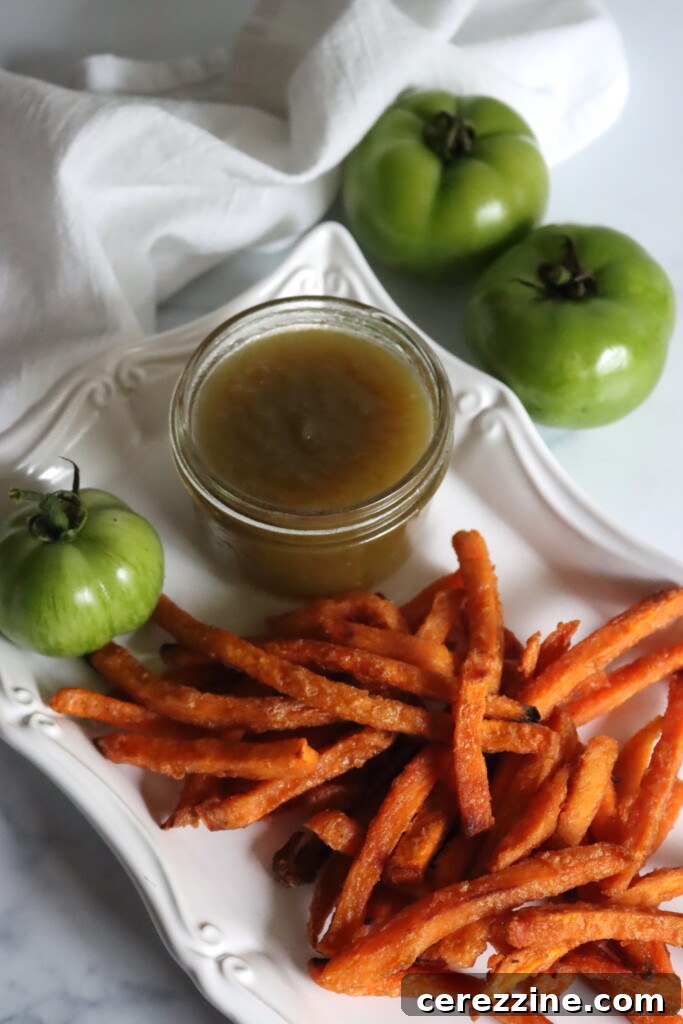
I find it particularly delightful with sweet potato fries, where its tartness beautifully complements their inherent sweetness, creating an irresistible combination.
So, the next time your garden graces you with a bounty of green tomatoes, embrace the opportunity to create this exceptional homemade green tomato ketchup. It’s a flavorful journey from vine to jar, promising a condiment that’s as unique as it is delicious.
64
servings (about 2 pints)
Green Tomato Ketchup
15
mins
5
hrs
15
mins
Ingredients
- 6 lbs green tomatoes, about 12 medium tomatoes
- 1 1/2 cups onions, chopped (about 1lb or 1 large onion)
- 1 Tbsp dry mustard
- 1 tsp Worcestershire sauce
- 2 tsp mixed pickling spices, optional, but recommended
- 1 tsp black pepper
- 1 1/2 cups Apple Cider Vinegar, or white vinegar
- 3/4 cup honey, or to taste
- 1 Tbsp Kosher salt, or to taste
Instructions
-
Prep the Ingredients: Chop or slice the green tomatoes and onions. Place them in a large Dutch oven or stockpot. Add the black pepper, dry mustard, Worcestershire sauce, and mixed pickling spices (if using, place in a cheesecloth bag). Pour the vinegar over the vegetables and spices. At this point, you’re adding everything except the honey and salt.
-
Cook the Mixture: Simmer the mixture on low heat for about 4 hours, stirring occasionally.
-
Blend the Ketchup: After cooking, puree the mixture in batches using a blender or immersion blender. Strain through a fine mesh strainer to remove solids. Or use a food mill to blend and strain at the same time.
-
Thicken the Ketchup: Return the strained mixture to the pot and bring to a boil. Add honey, taste, and add salt as needed. Simmer uncovered until the ketchup thickens to your liking (about 30-60 minutes).
-
Prepare Canning Supplies: Prepare pint or half pint jars and a boiling water bath canner.
-
Can the Ketchup: Ladle the hot ketchup into sterilized jars, leaving ¼-inch headspace. Wipe the rims clean and seal with hot lids. Process in a boiling water bath for 15 minutes, adjusting for altitude (see notes).
-
Cool and Store: Let the jars cool on a towel for 24 hours. Check the seals, and store sealed jars in a cool, dry place for up to a year. Refrigerate unsealed jars for up to 3 months.
Notes
Altitude Adjustments
The altitude adjustments for canning ketchup are as follows:
- For 0 to 1,000 feet in elevation process jars 15 minutes
- For 1,001 to 6,000 feet in elevation process jars 20 minutes
- For 6,001 to 8,000 feet in elevation process jars 25 minutes
- Above 8,001 feet process jars for 30 minutes
Nutrition
Carbohydrates: 6g,
Protein: 1g,
Fat: 0.1g,
Saturated Fat: 0.02g,
Polyunsaturated Fat: 0.05g,
Monounsaturated Fat: 0.04g,
Sodium: 153mg,
Potassium: 100mg,
Fiber: 1g,
Sugar: 5g,
Vitamin A: 273IU,
Vitamin C: 10mg,
Calcium: 8mg,
Iron: 0.3mg
Nutrition information is automatically calculated, so should only be used as an approximation.
More Delightful Green Tomato Canning Recipes
Don’t let any of your green tomatoes go to waste! The end of the season offers a fantastic opportunity to preserve their unique flavor in various ways. Beyond this outstanding ketchup, there’s a world of green tomato recipes waiting to be explored for your pantry:
- Green Tomato Salsa Verde: A brilliant twist on the classic Mexican condiment. While traditional salsa verde typically features tomatillos, green tomatoes step in beautifully, offering a similar tartness and firm texture that creates a vibrant, zesty, and refreshing salsa, perfect for tacos, chips, or grilled meats.
- Green Tomato Chutney: This savory and slightly sweet condiment is a close cousin to ketchup but with a delightful chunky texture. Infused with spices, vinegar, and sometimes dried fruits, green tomato chutney makes an excellent accompaniment to roasted meats, cheese boards, or even spread on sandwiches. Its complex flavor profile adds a gourmet touch to any meal.
- Pickled Green Tomatoes: Simple yet incredibly effective, pickling green tomatoes transforms them into crisp, tangy morsels. These are fantastic served alongside rich, heavy meals, offering a bright, acidic counterpoint that cleanses the palate. They can also be chopped into salads or added to sandwiches for an extra burst of flavor and crunch.
- Canned Green Tomato Slices: For those who love fried green tomatoes, canning the slices allows you to enjoy this Southern classic year-round. Simply open a jar, dredge the slices in seasoned flour or cornmeal, and fry until golden brown. This preservation method ensures you always have a taste of summer on hand.
If these ideas aren’t enough to inspire you, I have an extensive article featuring more than 20 green tomato canning recipes, providing ample inspiration to fill your pantry with delicious homemade preserves from your garden’s final bounty. Explore the possibilities and embrace the unique flavor of green tomatoes!