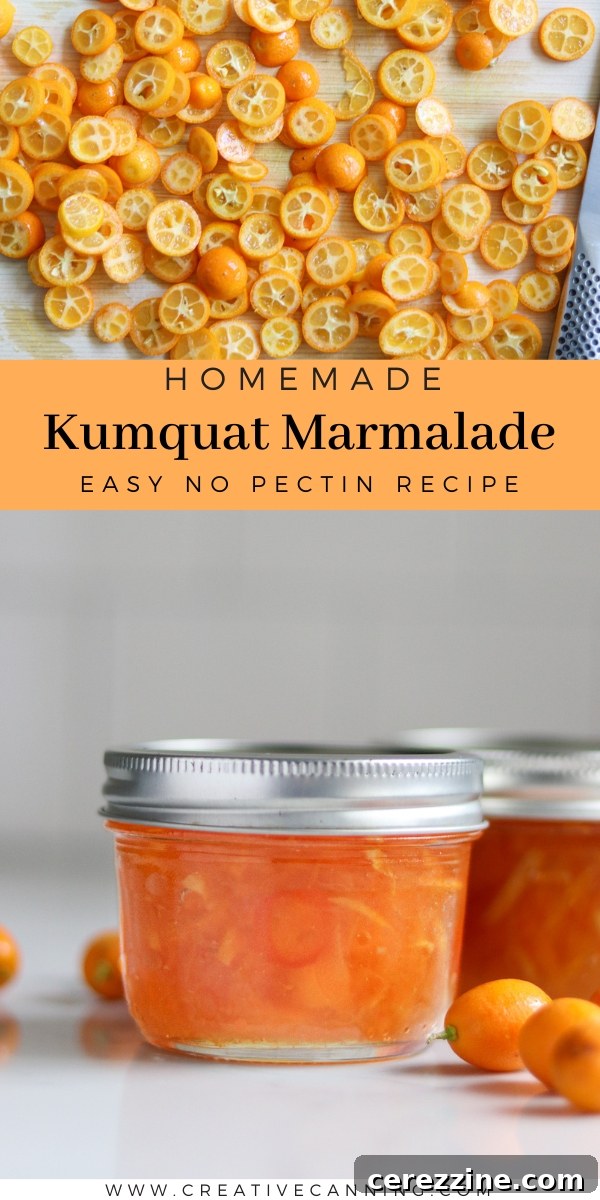
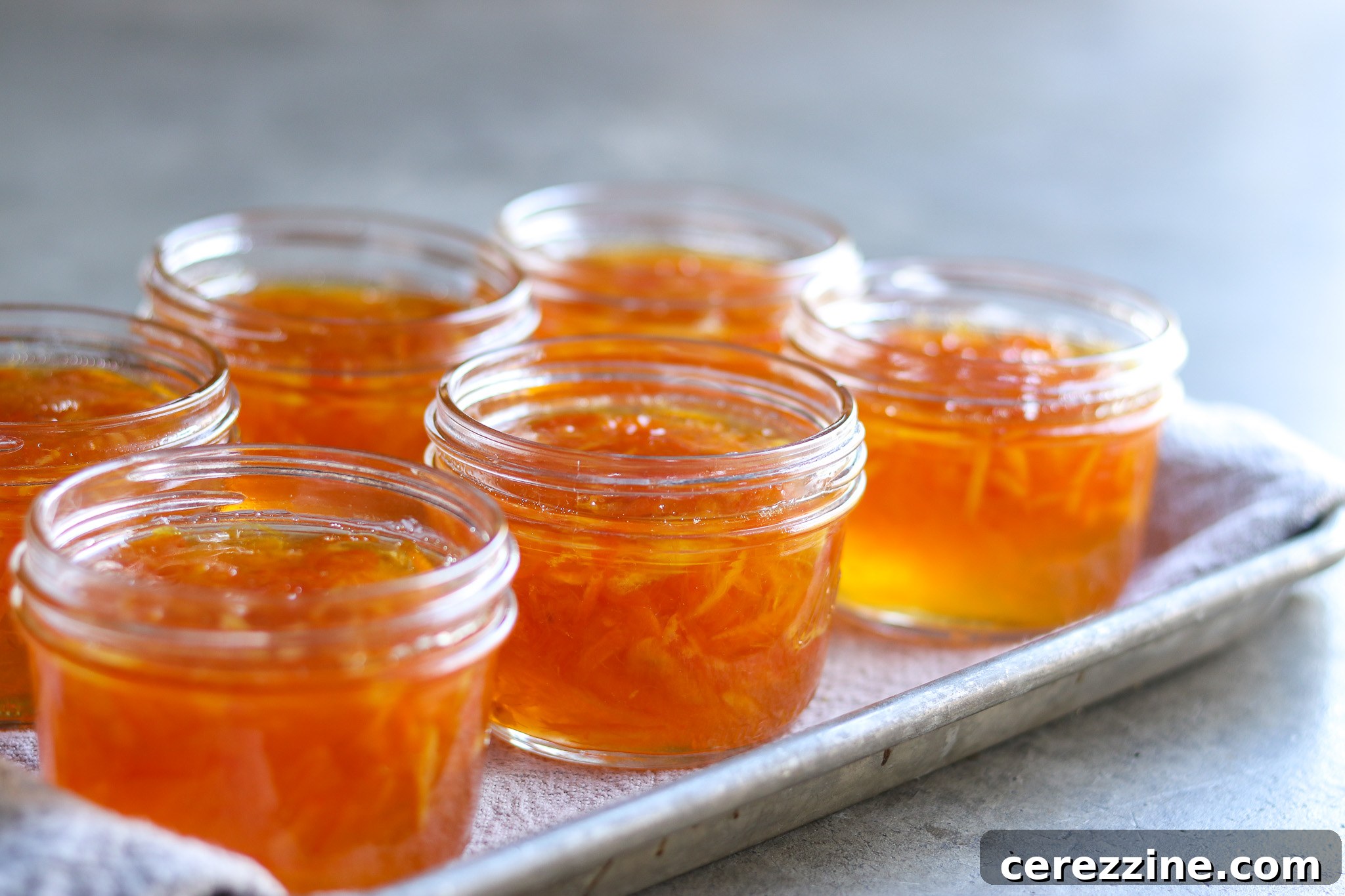
Kumquat marmalade is a truly unique citrus preserve, celebrated for its vibrant flavor and delightful texture. This seasonal delicacy, made from fresh kumquats, captures the essence of these tiny, extraordinary fruits. Unlike most citrus, kumquats are best enjoyed whole – peel and all – making them perfectly suited for crafting a sublime, homemade marmalade that’s bursting with sweet, tangy, and slightly bitter notes.
My earliest memories of kumquats transport me back to elementary school, where a towering kumquat tree dominated the playground. We, the children, would playfully dare each other to eat the tiny, seemingly sour fruits. Our uninformed approach involved meticulously peeling each kumquat, convinced this would somehow mitigate the tartness. Little did we know the secret to enjoying kumquats lay in their skin. The aromatic oils and natural sweetness in the peel are what truly define the kumquat’s fresh, distinctive flavor. This revelation transforms the kumquat from a puckering experience into a delightful one, highlighting why they are ideal for preserves where the entire fruit is utilized.
Indeed, when you’re cooking or preserving with kumquats, embracing the whole fruit, skin and all, is absolutely essential. This unique characteristic makes them a star ingredient for homemade marmalade, promising a complex flavor profile that’s both invigorating and comforting. A batch of freshly made kumquat marmalade is not just a treat for the taste buds; it’s a celebration of seasonal bounty, a culinary art form that yields a stunning, jewel-toned spread.
Essential Ingredients for Homemade Kumquat Marmalade
This delightful kumquat marmalade recipe is inspired by classic preserving techniques, ensuring a beautifully set and flavorful result. To create approximately 8 half-pint jars of this exquisite preserve, you will need a carefully selected combination of citrus and staples. The beauty of this recipe lies in its reliance on the natural pectin found abundantly in kumquats and oranges, eliminating the need for any added commercial pectin.
Here’s what you’ll need:
- 2 cups thinly sliced kumquats: This will require about 24 medium kumquats. Choose firm, brightly colored fruits without blemishes. The entire kumquat, peel included, will be sliced.
- 1½ cups chopped orange pulp: Sourced from approximately 2 medium oranges. Select juicy oranges with thin skins for easier preparation.
- 1½ cups thinly sliced orange peel: Also from about 2 medium oranges. This refers to the outermost colored zest, free of the bitter white pith.
- ⅓ cup fresh or bottled lemon juice: Lemon juice not only adds a bright tartness that balances the sweetness but also provides essential acidity for proper gelling and safe canning.
- 1½ quarts water: Used to extract pectin and soften the fruit peels during the initial cooking phase.
- 4 to 6 cups granulated sugar: The exact amount of sugar is crucial for achieving the perfect set and flavor balance. You’ll determine the precise quantity after the initial fruit cooking, measuring it based on the volume of your fruit base.
The sugar in this recipe is intentionally variable. The best practice is to prepare all your citrus components first, cook them down, and then measure the resulting marmalade base. For every cup of cooked fruit base, you will add one cup of sugar. This method ensures your marmalade achieves the ideal consistency and sweetness, accounting for natural variations in fruit size and juiciness. Typically, the total sugar needed will fall within the 4 to 6 cup range, depending on how efficiently you’ve prepared and measured your fruit.
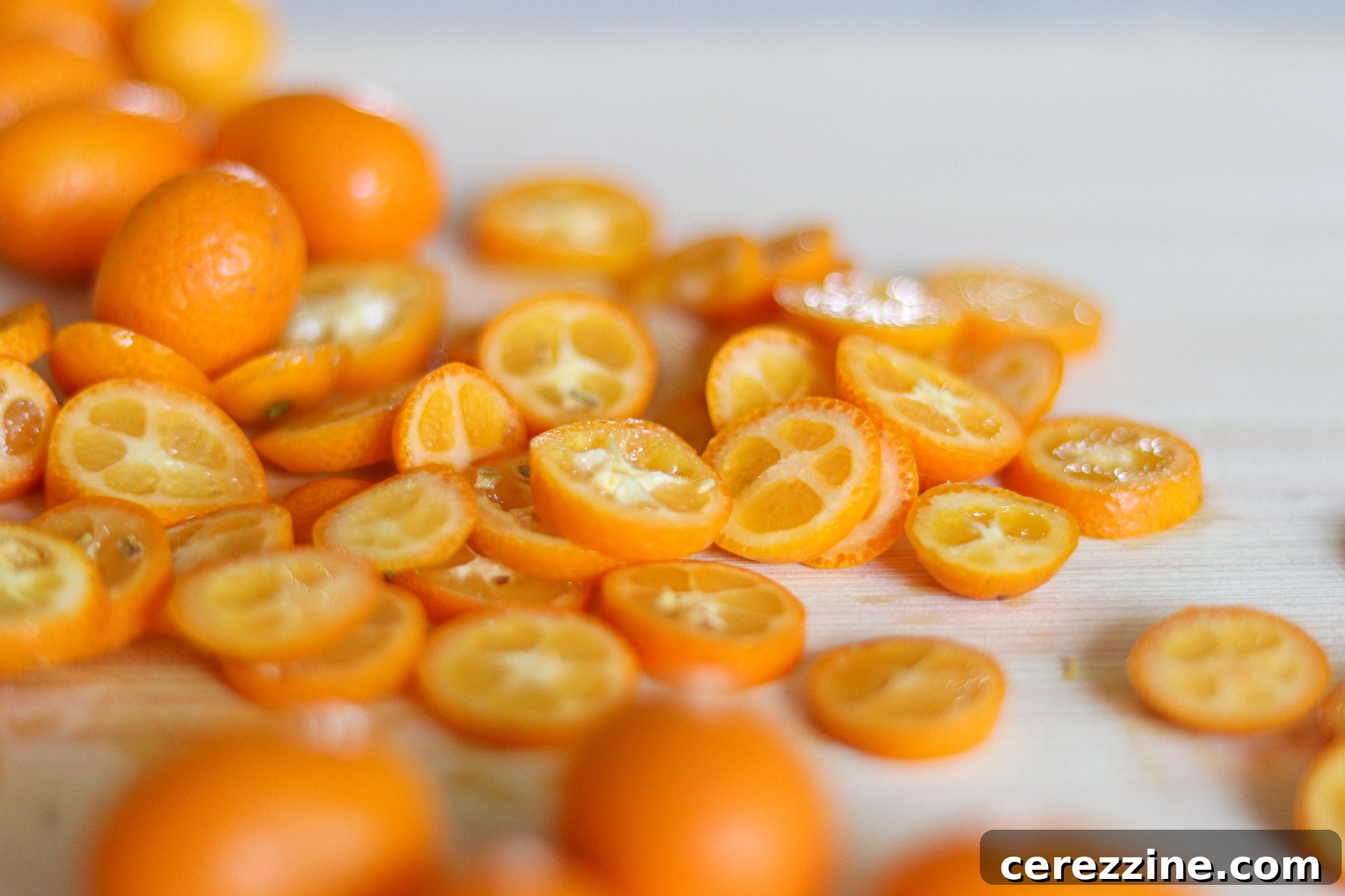
The unique flavor profile of kumquats, a harmonious blend of sweet and tart, creates a marmalade unlike any other. By utilizing both the skin and internal flesh of the kumquat, combined with the pulp and zest of oranges, we achieve a rich, thick, and intensely flavorful preserve. Both kumquats and oranges are naturally rich in pectin, the carbohydrate responsible for the marmalade’s gelled texture, which means you won’t need any additional commercial pectin for this recipe. For the best possible results, always choose kumquats that are fully ripe, displaying a bright orange or yellow-orange skin, free from any green spots or blemishes.
Crafting Your Kumquat Marmalade: A Step-by-Step Guide
Making homemade marmalade is a rewarding process that fills your kitchen with incredible aromas and yields a truly special treat. Follow these detailed steps to create your perfect kumquat marmalade:
Preparation of the Fruit
- Begin by thoroughly washing your kumquats and oranges under cold, clean water. Gently scrub the skins with your hands or a clean vegetable brush to remove any surface dirt or residues. For an extra clean, you may rub the skins with a mixture of 2 tablespoons of baking soda and 1 cup of water, followed by a thorough rinse.
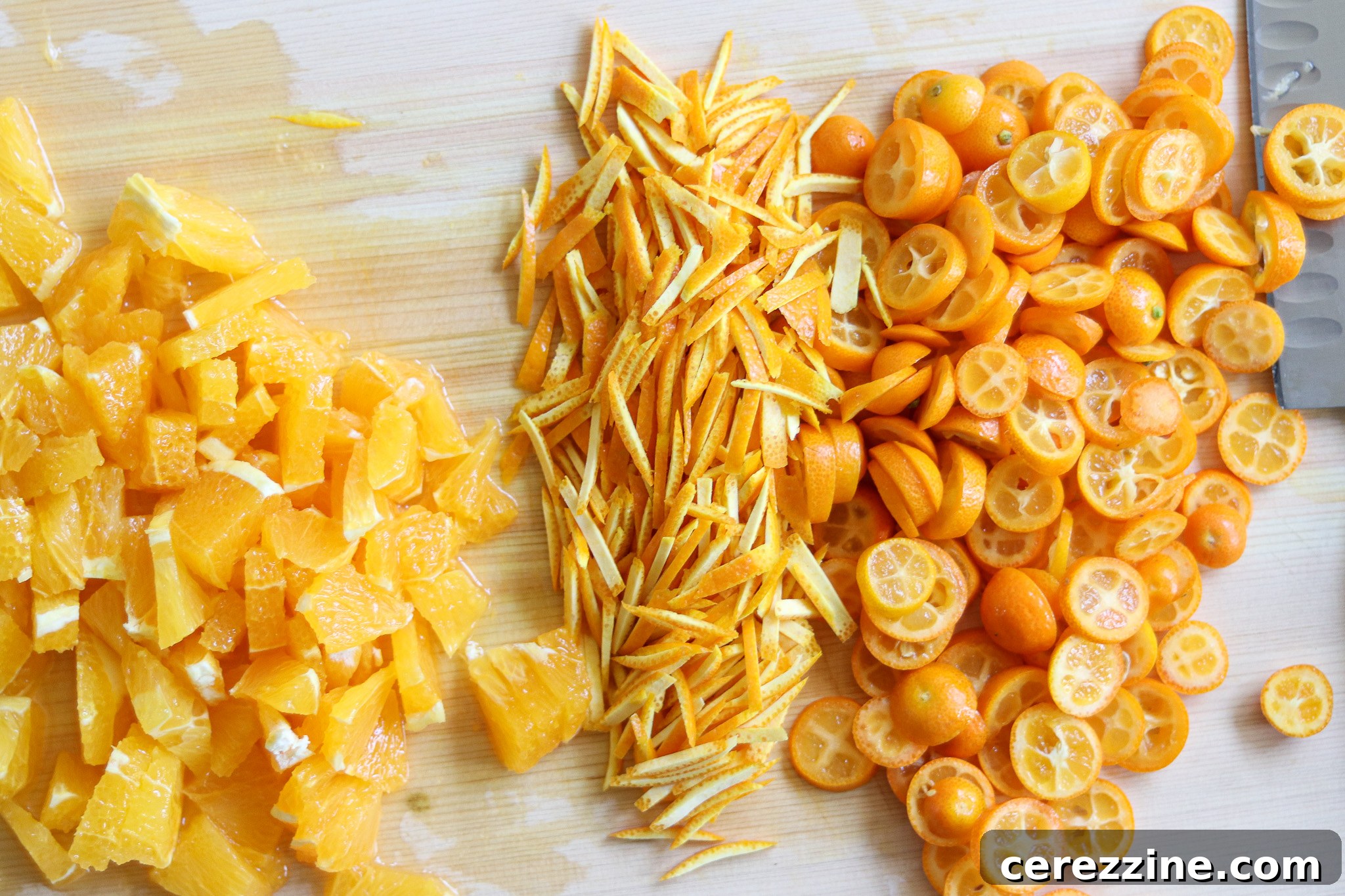
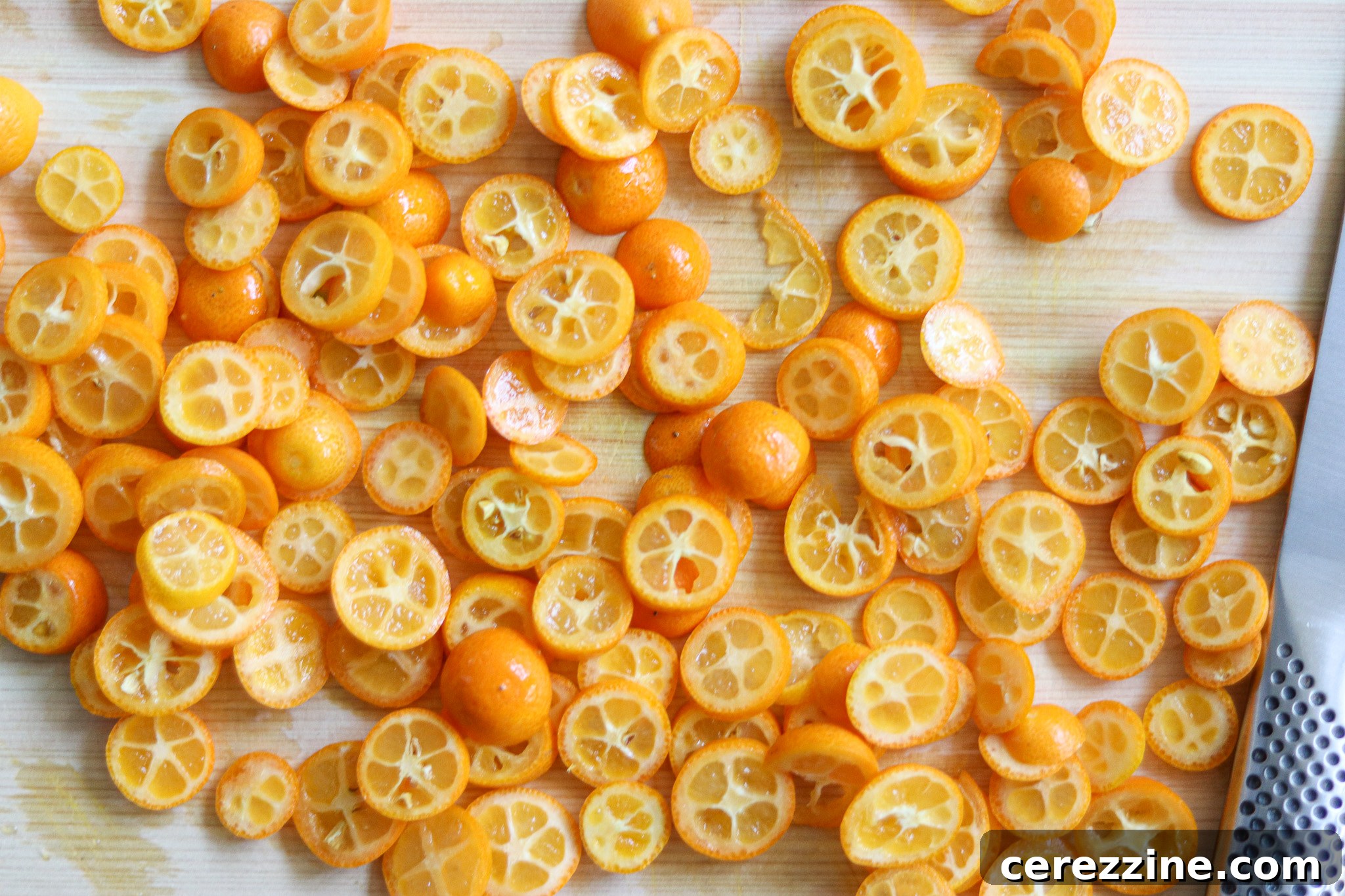
- For the kumquats: Slice them crosswise into very thin rounds. As you slice, remove any visible seeds. Your goal is to accumulate 2 cups of these thinly sliced kumquat pieces. Remember, the skin remains on the kumquat, as it’s integral to the flavor and pectin content.
- For the oranges: Cut each orange in half crosswise. Carefully scoop out the pulp, discarding any seeds you find. Chop this orange pulp until you have a total of 1½ cups.
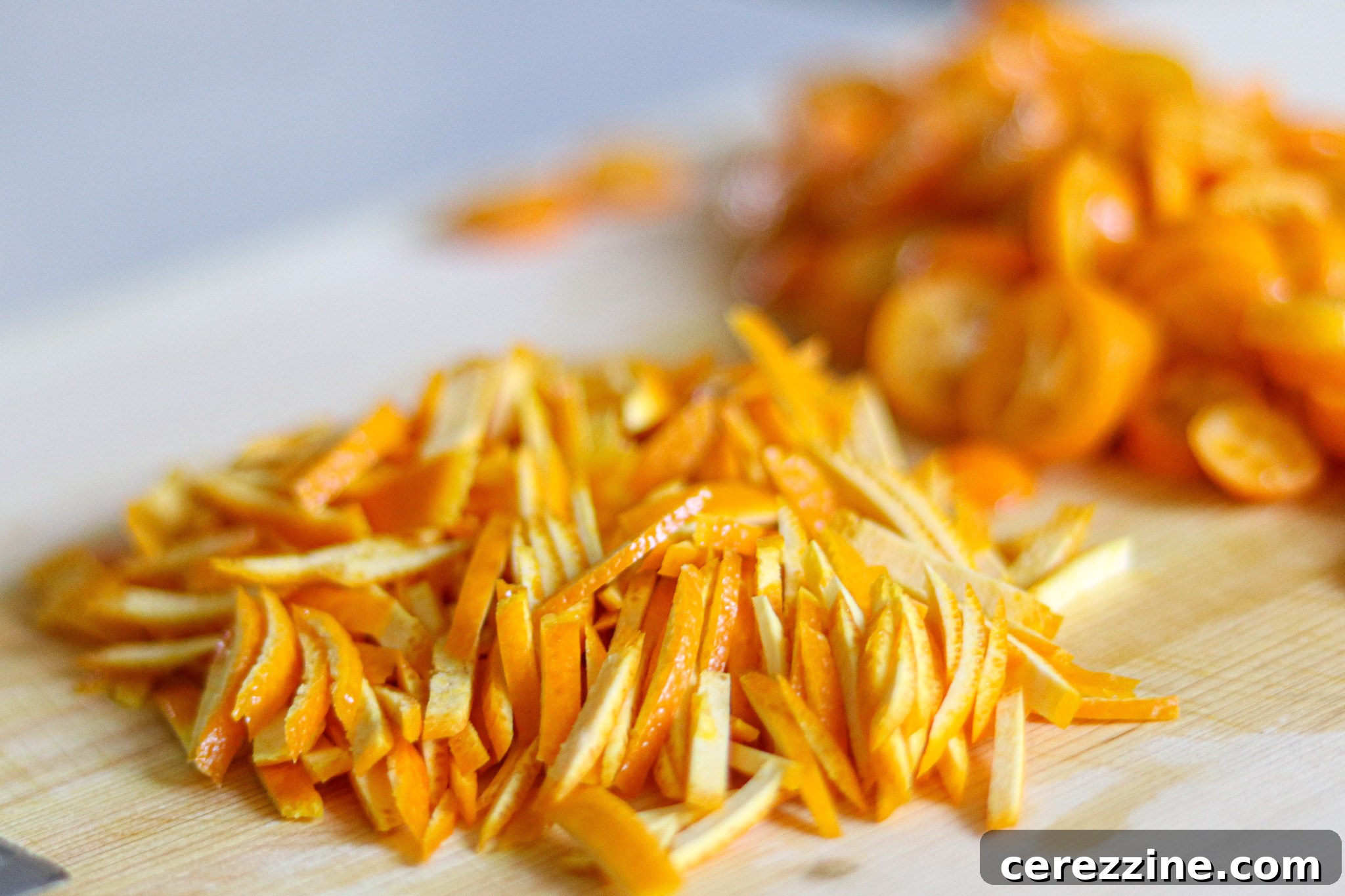
- Next, prepare the orange peels. Using a sharp knife or spoon, meticulously remove the white pith (the bitter spongy layer) from the inner side of the orange rinds, retaining only the vibrant, outermost colored zest. Once the pith is removed, slice the colorful peel into thin strips or small pieces, aiming for 1½ cups.
Initial Cooking and Essential Resting Period
- Combine the prepared sliced kumquats, chopped orange pulp, and sliced orange peels in a large, heavy-bottomed saucepan.
- Add the ⅓ cup of lemon juice and 1½ quarts of water to the fruit mixture. Place the saucepan over medium-high heat and bring the mixture to a boil. Once boiling, reduce the heat to medium and allow it to gently boil for 5 minutes, stirring occasionally to prevent sticking.
- Crucially, remove the fruit mixture from the heat. Cover the saucepan, or transfer the mixture to a lidded container, and place it in the refrigerator for an extended period of 12 to 18 hours. This resting period is not merely a suggestion; it’s a vital step in marmalade making. During this time, the natural pectins within the fruit peels are encouraged to release, softening the peels to achieve a desirable texture in the final marmalade and ensuring a proper gel set. Do not skip this refrigeration step, as doing so could result in tough peels and a marmalade that fails to set properly.
Final Cook and Setting the Marmalade
- After the resting period, return the fruit mixture to a large saucepan on the stove. Bring it to a boil over medium-high heat and continue to cook, stirring occasionally, until the orange peels become tender. This step might take some time, so be patient.
- Once the peels are tender, carefully measure the entire contents of the saucepan (fruit and liquid combined). This measurement will dictate the amount of sugar you need.
- Measure an equal amount of granulated sugar to the fruit mixture. Add the sugar to the saucepan and stir continuously over medium-high heat until the sugar is completely dissolved. For instance, if you measured 3½ cups of fruit and liquid, you would add 3½ cups of sugar.
- While the sugar dissolves, prepare your hot water bath canner by filling it with enough water to cover your jars by 1-2 inches. Have your clean half-pint jars and two-part canning lids ready, along with any necessary canning tools like a jar lifter and canning funnel.
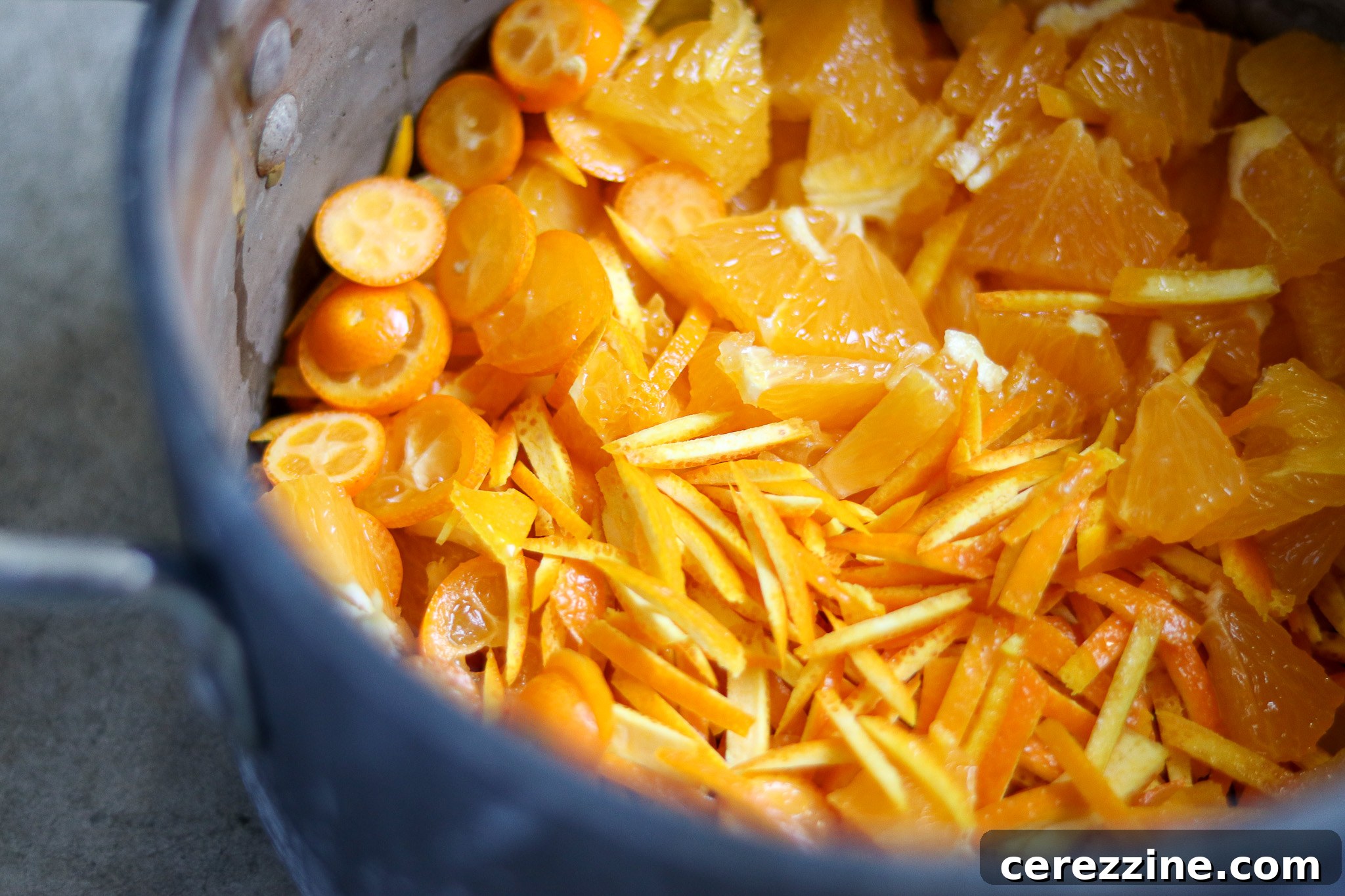
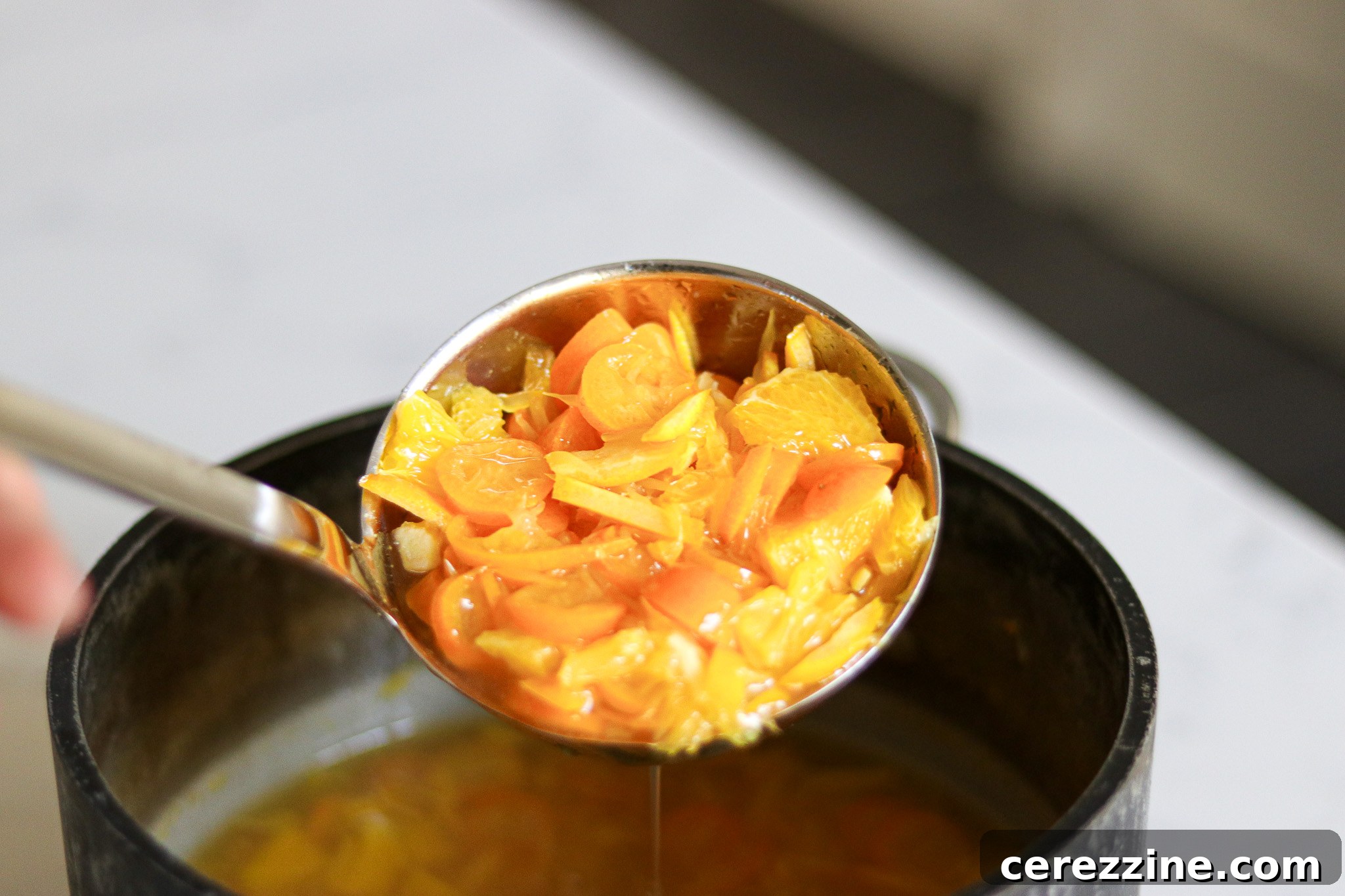
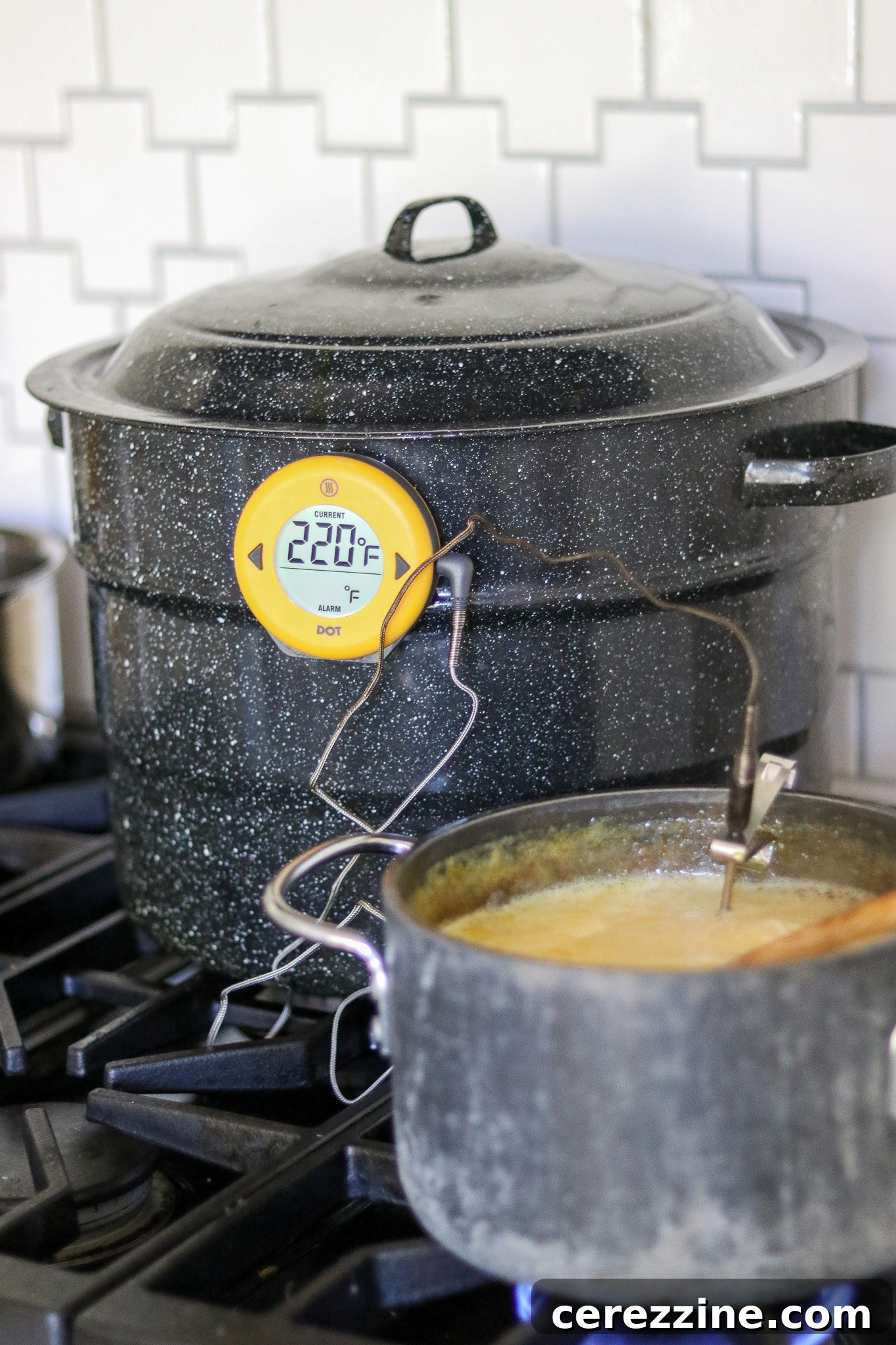
- Bring the sugar and fruit mixture to a full, rolling boil over medium-high heat. A “rolling boil” means that the mixture continues to boil vigorously even when you stir it. Continue to boil and stir the marmalade until it reaches the gelling point. This is typically when the mixture reaches 220°F (104°C) on a reliable kitchen thermometer.
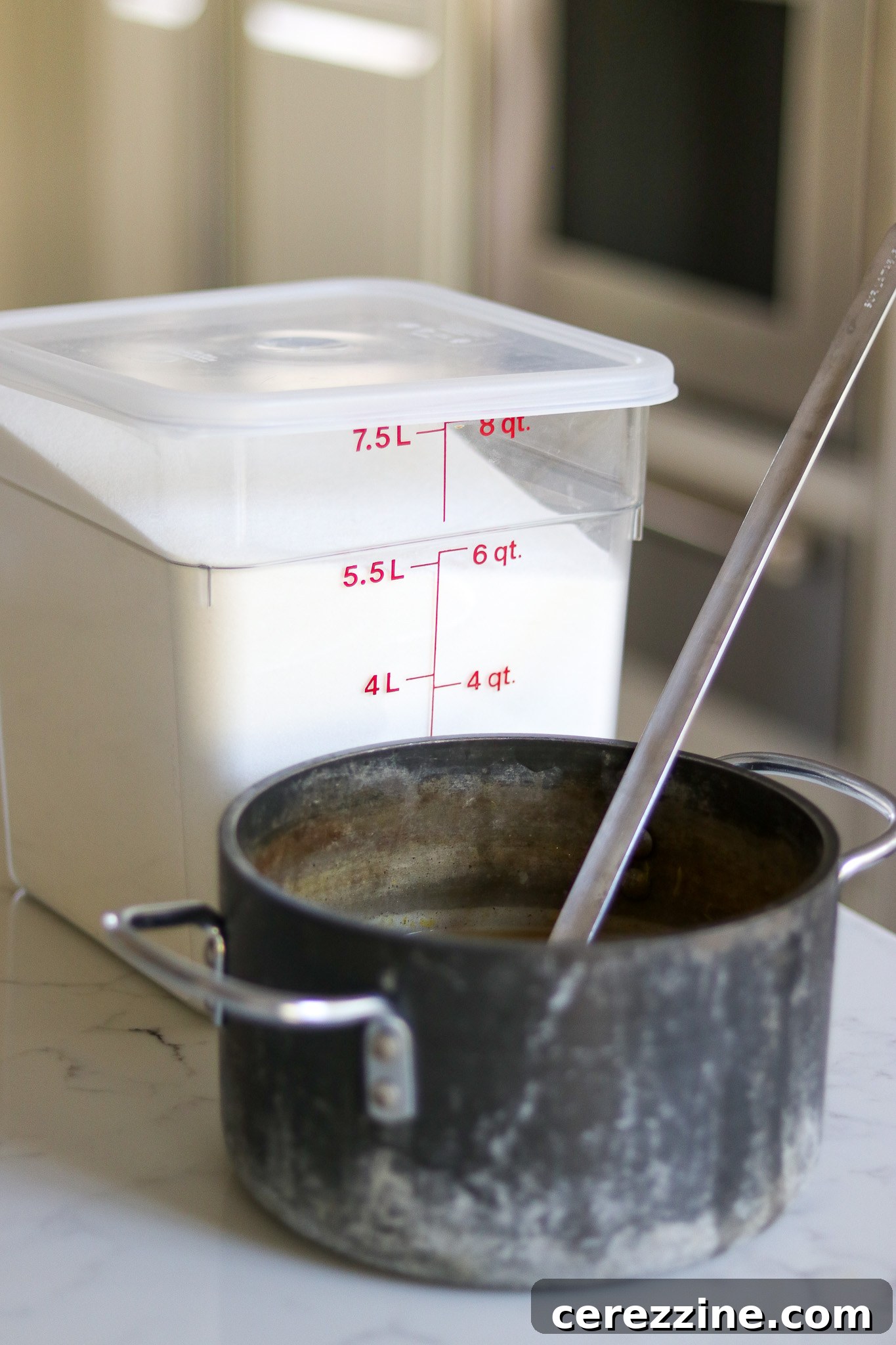
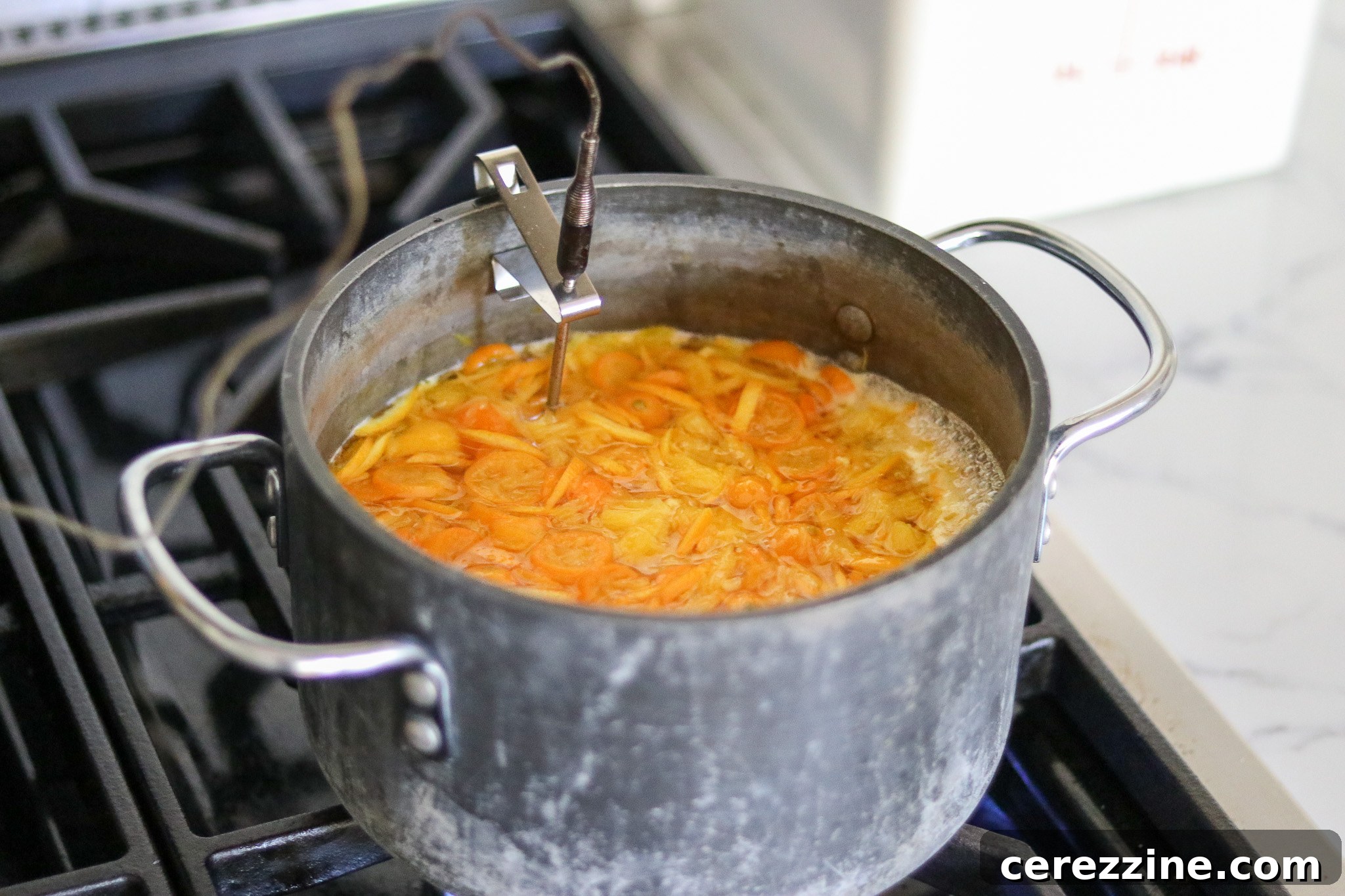
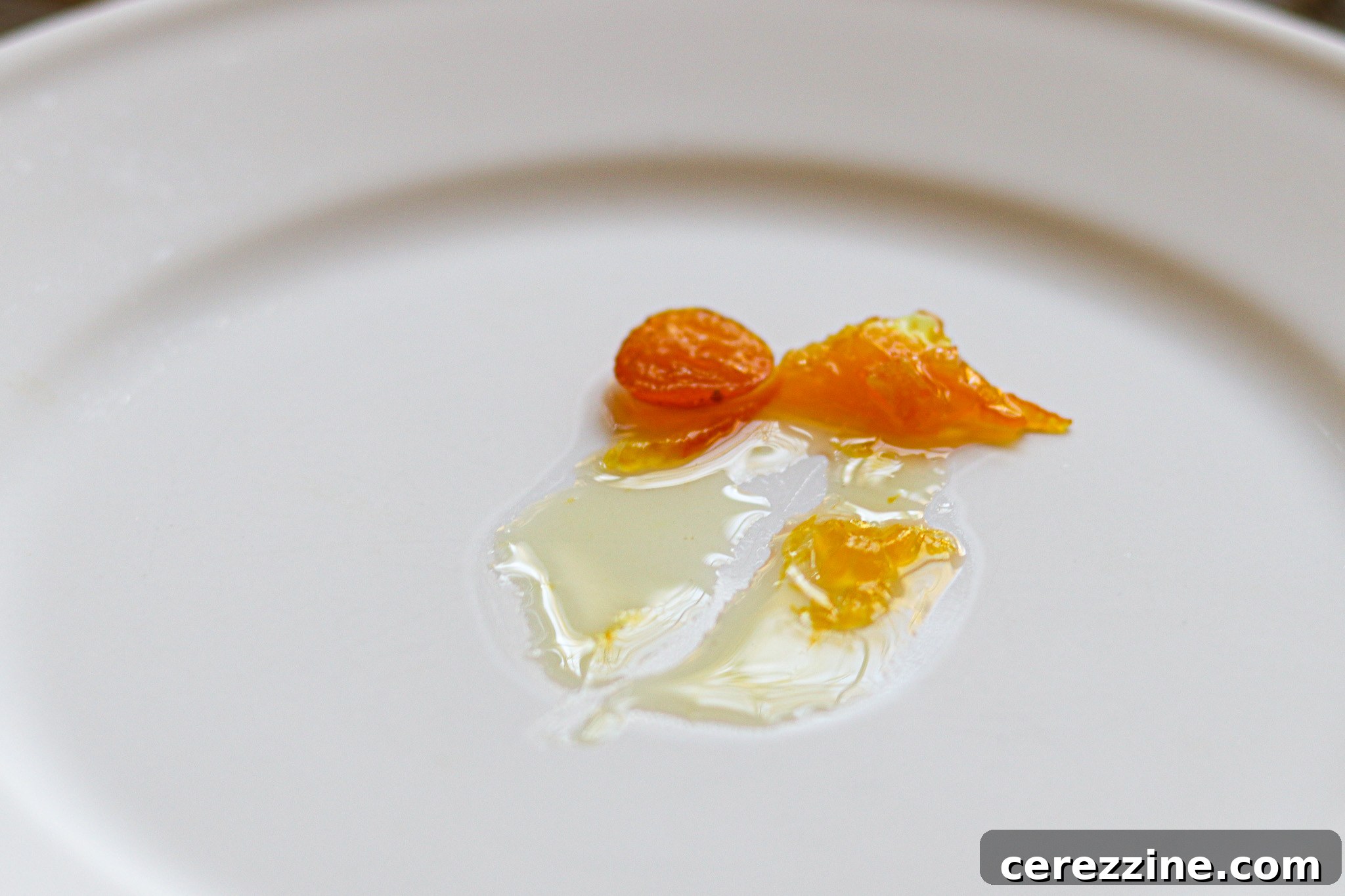
If you don’t have an instant-read thermometer, you can use the chilled plate test for readiness. Simply place a small plate in the freezer for about 10-15 minutes. When you suspect the marmalade is nearly done, spoon a small amount onto the cold plate. Let it cool for a moment, then push it with your finger. If it wrinkles and holds its shape, it’s ready. If it remains runny, continue cooking for a few more minutes and retest.
Filling Jars and Canning
- Once the marmalade reaches its set point, remove it from the heat. Skim off any foam that has accumulated on the surface using a metal spoon for a clearer, more appealing finished product.
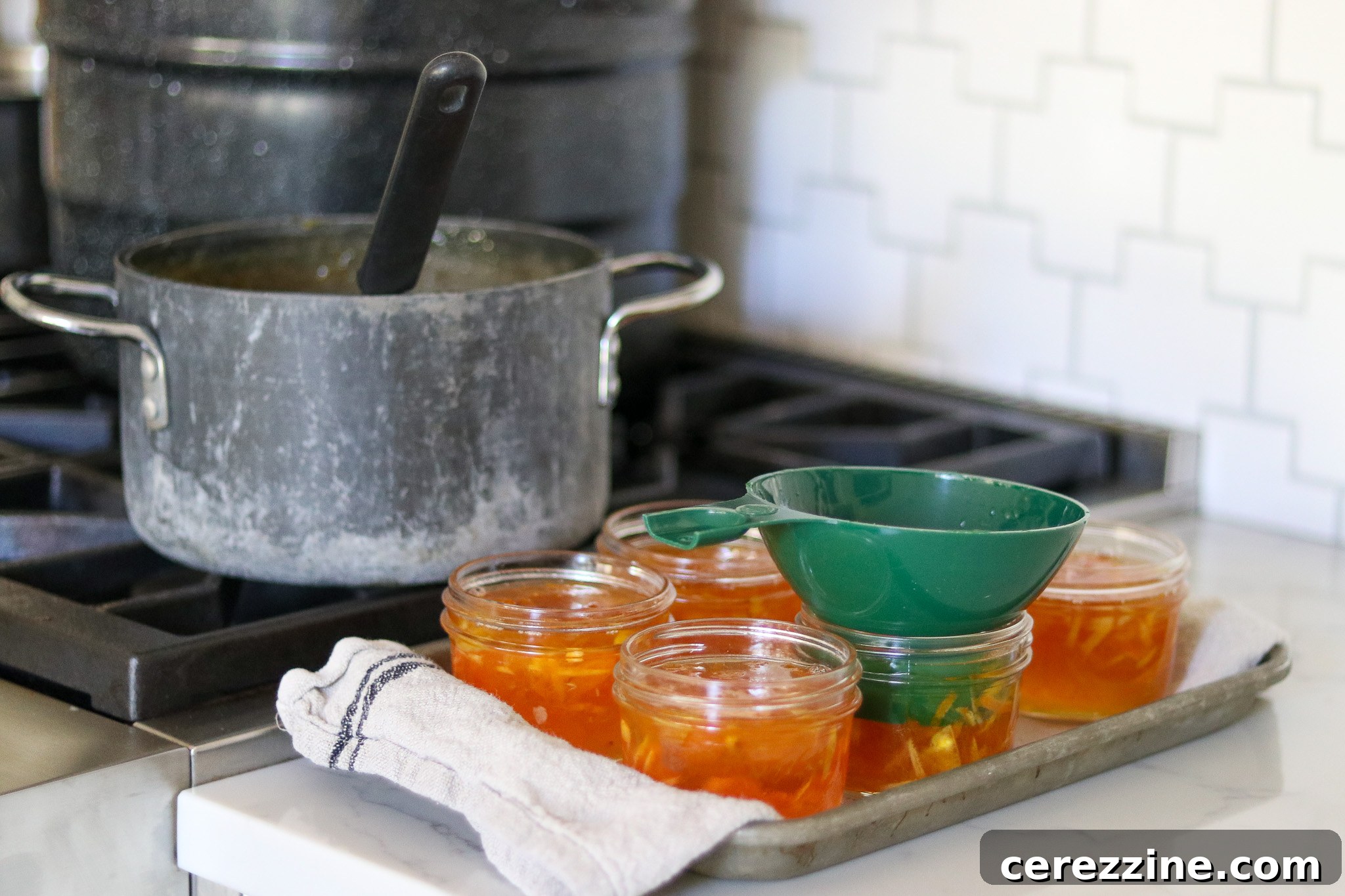
- Immediately ladle the hot marmalade into your hot, sterilized jars, leaving ¼ inch of headspace at the top.
Canning Kumquat Marmalade for Long-Term Storage
For those new to canning, a basic understanding of water bath canning is essential. Ensure you’re familiar with the process before you begin, which includes sterilizing jars and understanding safe handling practices.
- Use a rubber spatula to gently remove any trapped air bubbles from the filled jars. Then, wipe the rims of the jars with a clean, damp cloth to ensure a pristine sealing surface.
- Place the two-part canning lids (flats and rings) onto the jars and tighten the rings to “finger-tight” – meaning snug, but not overly tight with a tool, which could prevent proper sealing.
- Load the filled jars into your preheated water bath canner, ensuring they are fully submerged by 1-2 inches of water. Bring the canner to a full, rolling boil. Once boiling vigorously, start your timer and process the jars for 10 minutes. For higher elevations, adjust processing times as follows: 15 minutes for altitudes above 3000 feet, and 20 minutes for altitudes above 6000 feet.
- After the processing time is complete, turn off the heat and carefully remove the cover from your canner. Allow the jars to remain in the hot water for an additional 5 minutes. This helps to equalize the temperature and reduce the risk of siphoning (liquid loss from the jars).
- Using a jar lifter, carefully remove the jars from the canner and place them on a clean towel on your countertop. Leave ample space between the jars to allow for proper air circulation as they cool. Do not disturb them for 12 to 24 hours.
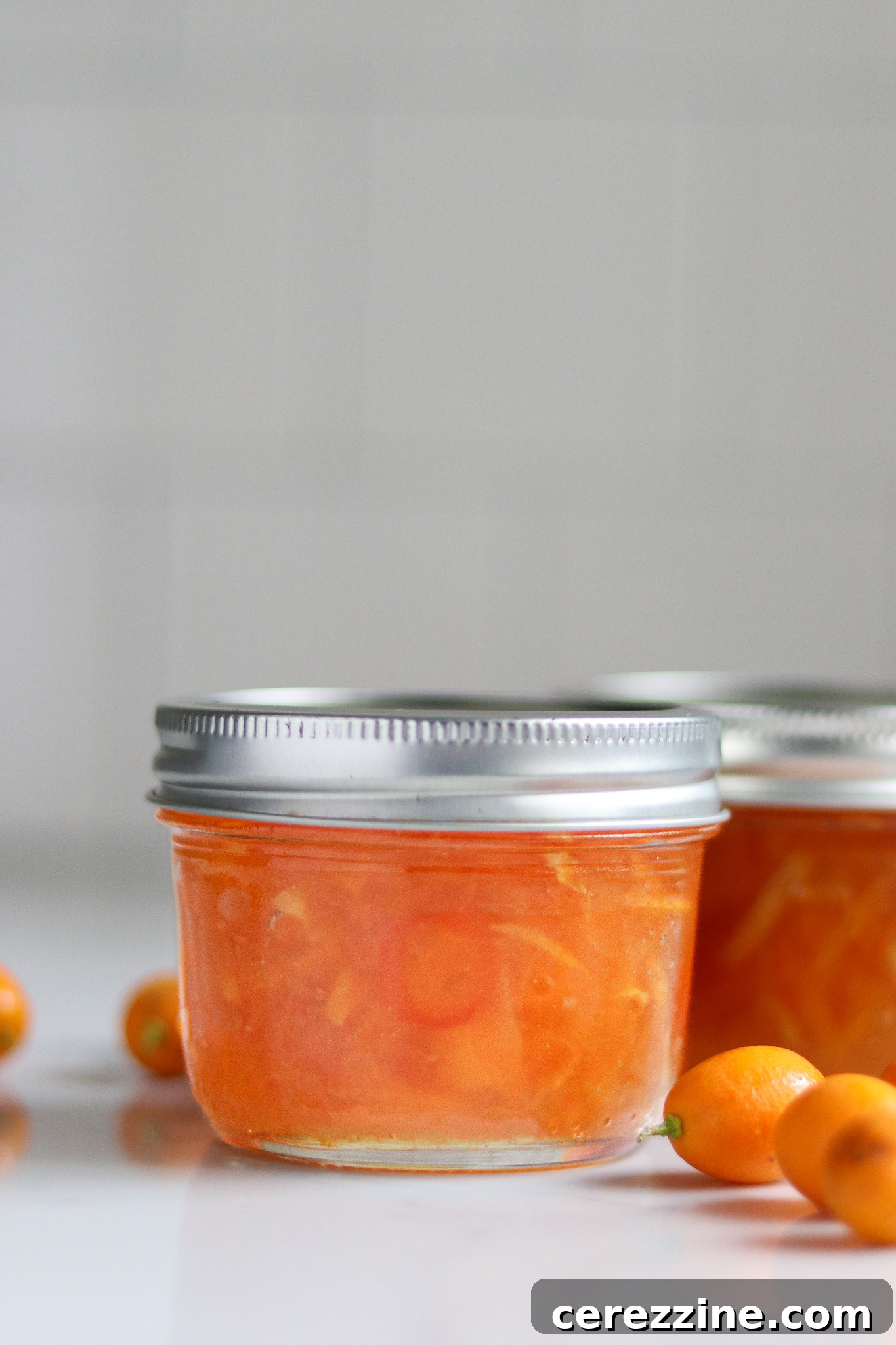
After 24 hours, check the seals on your jars. A properly sealed lid will be concave (curved inwards) and will not flex when pressed. If a lid still has a “bubble” in the center or springs back when pressed, it has not sealed. Any unsealed jars should be refrigerated immediately and consumed within three weeks. It’s worth noting that kumquat marmalade, while often setting more quickly than some other marmalades, can sometimes take up to a week to achieve its desired firm, jam-like thickness. Even if your jars are sealed, the marmalade might initially appear runny or thinner than expected. Be patient and allow the pectin ample time to fully gel and set. You can still enjoy it before it’s perfectly set, but waiting will reward you with that signature marmalade texture.
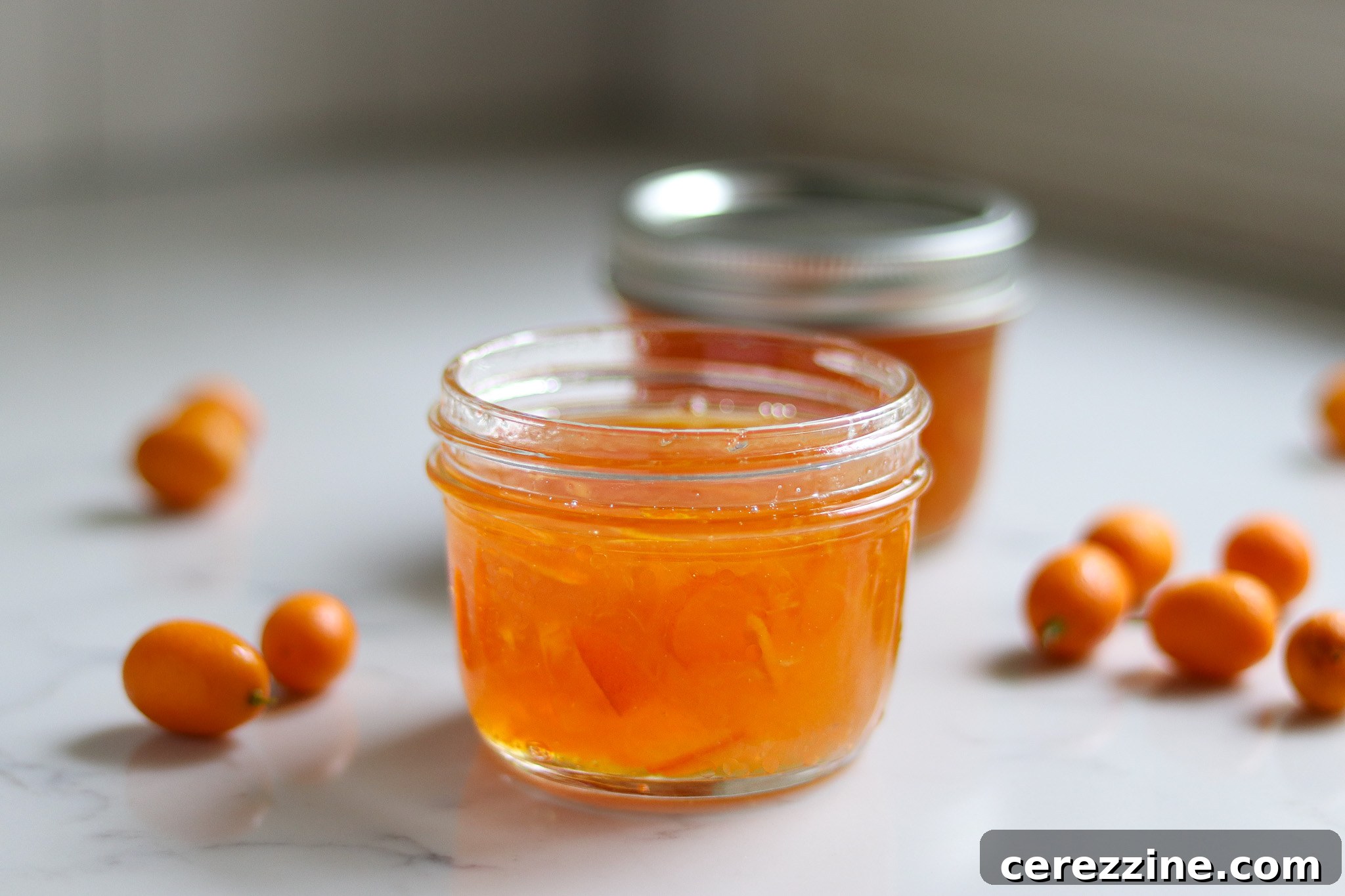
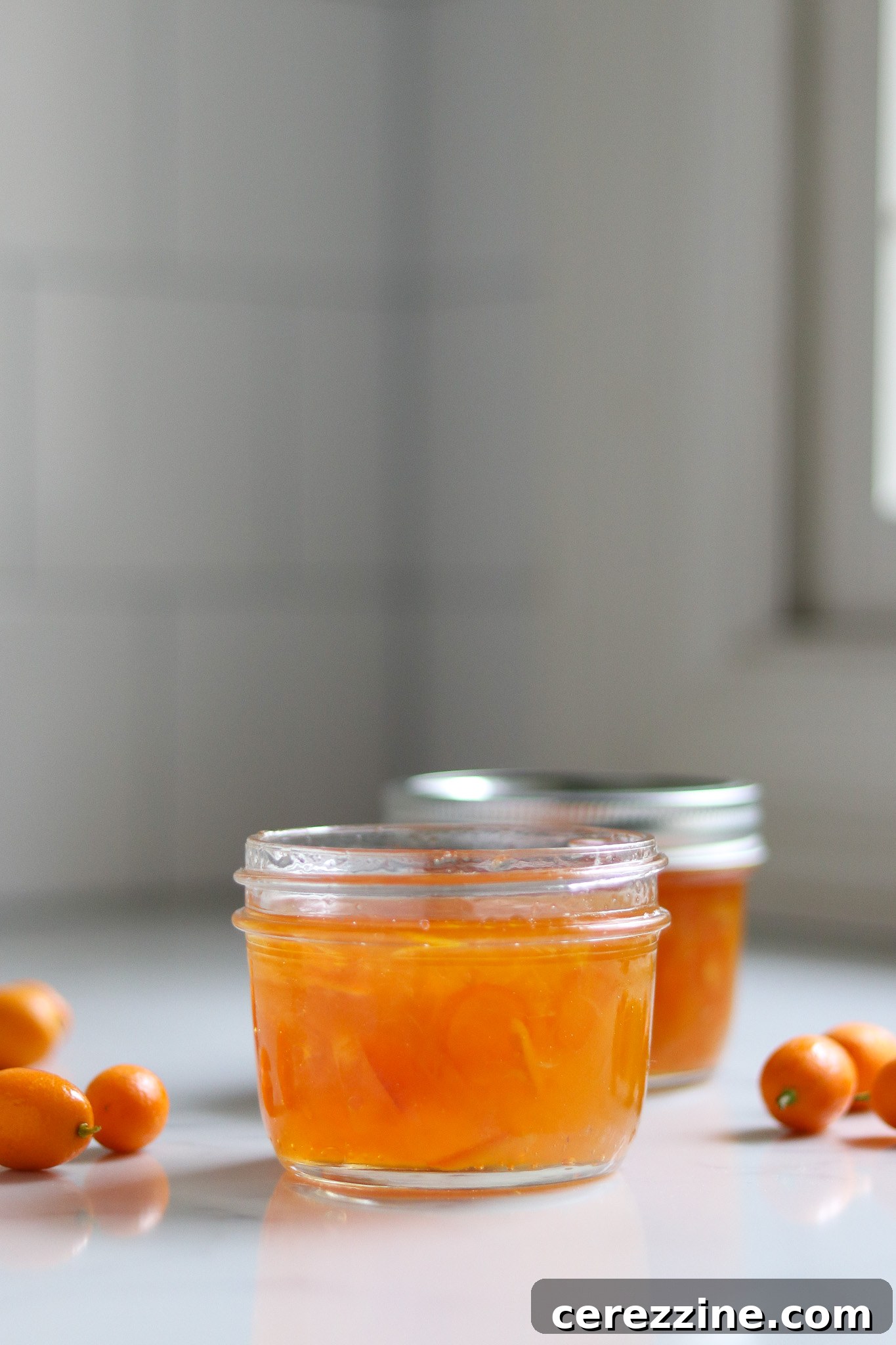
Store sealed, unopened jars of kumquat marmalade in a cool, dry place like your pantry for up to 12 months for optimal quality. It will remain safe to eat beyond this period as long as the jars maintain their seal. Once a jar is opened, always refrigerate it and consume its contents within three weeks to maintain freshness and prevent spoilage.
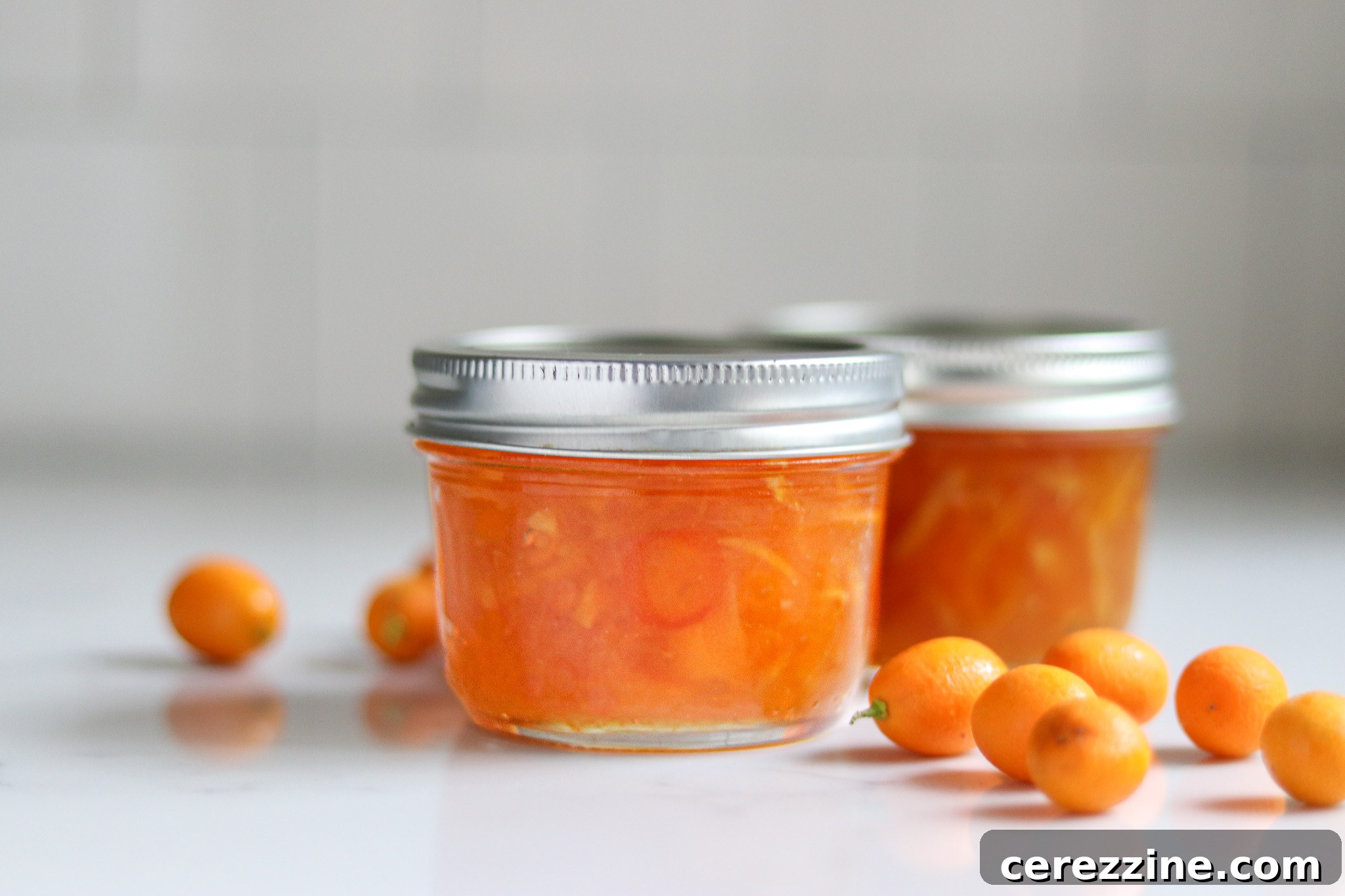
Exciting Kumquat Marmalade Variations
While classic kumquat marmalade is a delight on its own, its versatile flavor profile invites a world of creative variations. Don’t hesitate to experiment with these ideas to tailor the marmalade to your personal taste:
- Blend with Other Citrus: Introduce other citrus fruits for a more complex flavor. Meyer lemon, known for its sweeter and less acidic profile, pairs beautifully with kumquats, offering a delicate floral note. Adding a touch of lime can provide an extra zesty kick, while grapefruit can introduce a lovely bitterness.
- Cranberry Kumquat Marmalade: Cranberries and kumquats are a match made in heaven. The tartness of cranberries complements the kumquats perfectly, yielding a vibrant red marmalade with a festive touch, ideal for holiday gifting or serving alongside roasted meats.
- Warm Spices: Infuse your marmalade with warm, inviting spices. A cinnamon stick or a few star anises added during the cooking process can transform the flavor, giving it a cozy, aromatic depth. A hint of cardamom or ground ginger can also create an intriguing twist.
- Extracts and Flavorings: For an extra layer of flavor, stir in a teaspoon of pure almond extract or vanilla extract after the marmalade is removed from the heat, just before jarring. These extracts can round out the citrus notes and add a subtle richness. A splash of Grand Marnier or Cointreau can also elevate the marmalade to a gourmet level.
- Ginger Kumquat Marmalade: Finely grated fresh ginger can add a delightful warmth and gentle spice, contrasting wonderfully with the citrus. Add it during the initial cooking stage to allow its flavors to meld.
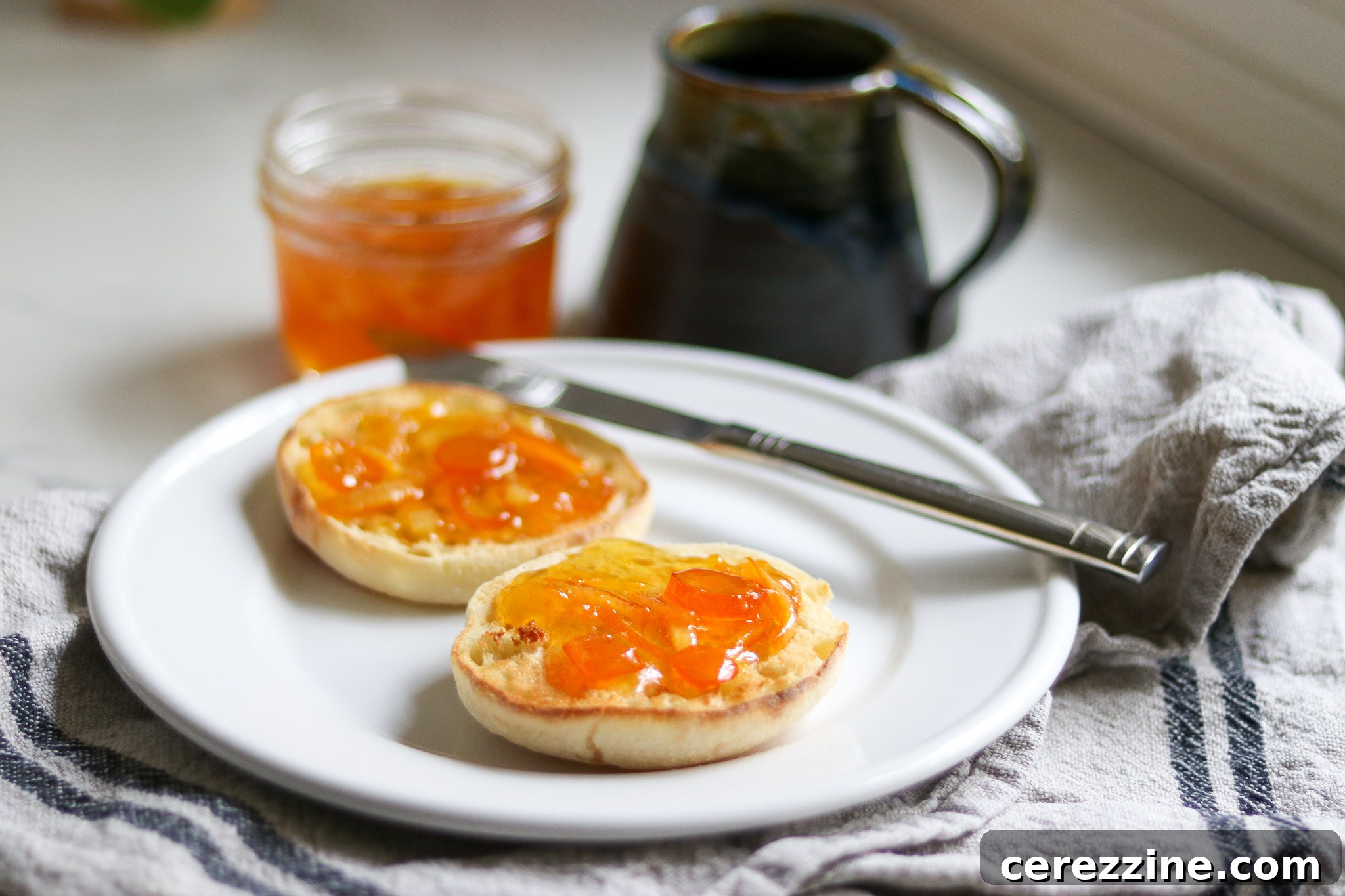
Creative Ways to Savor Your Kumquat Marmalade
Kumquat marmalade is far too delicious and versatile to be confined solely to breakfast toast! Its unique sweet-tart flavor, coupled with a hint of bitterness from the peel, makes it an exceptional accompaniment to both sweet and savory dishes. Explore these exciting ways to incorporate your homemade kumquat marmalade into your culinary repertoire:
- Gourmet Glazes for Meats: Transform your grilled or roasted meats into culinary masterpieces. Brush kumquat marmalade onto lamb chops during the final 1-2 minutes of grilling for a sticky, sweet-tangy glaze. It also works wonders as a glaze for roast chicken, duck, or pork tenderloin, adding a fantastic citrusy zest and beautiful sheen.
- Accompaniment for Roasts: Serve a spoonful of kumquat marmalade alongside a hearty beef roast or glazed ham. The bright, acidic notes cut through the richness of the meat, offering a delightful flavor contrast that elevates the entire meal.
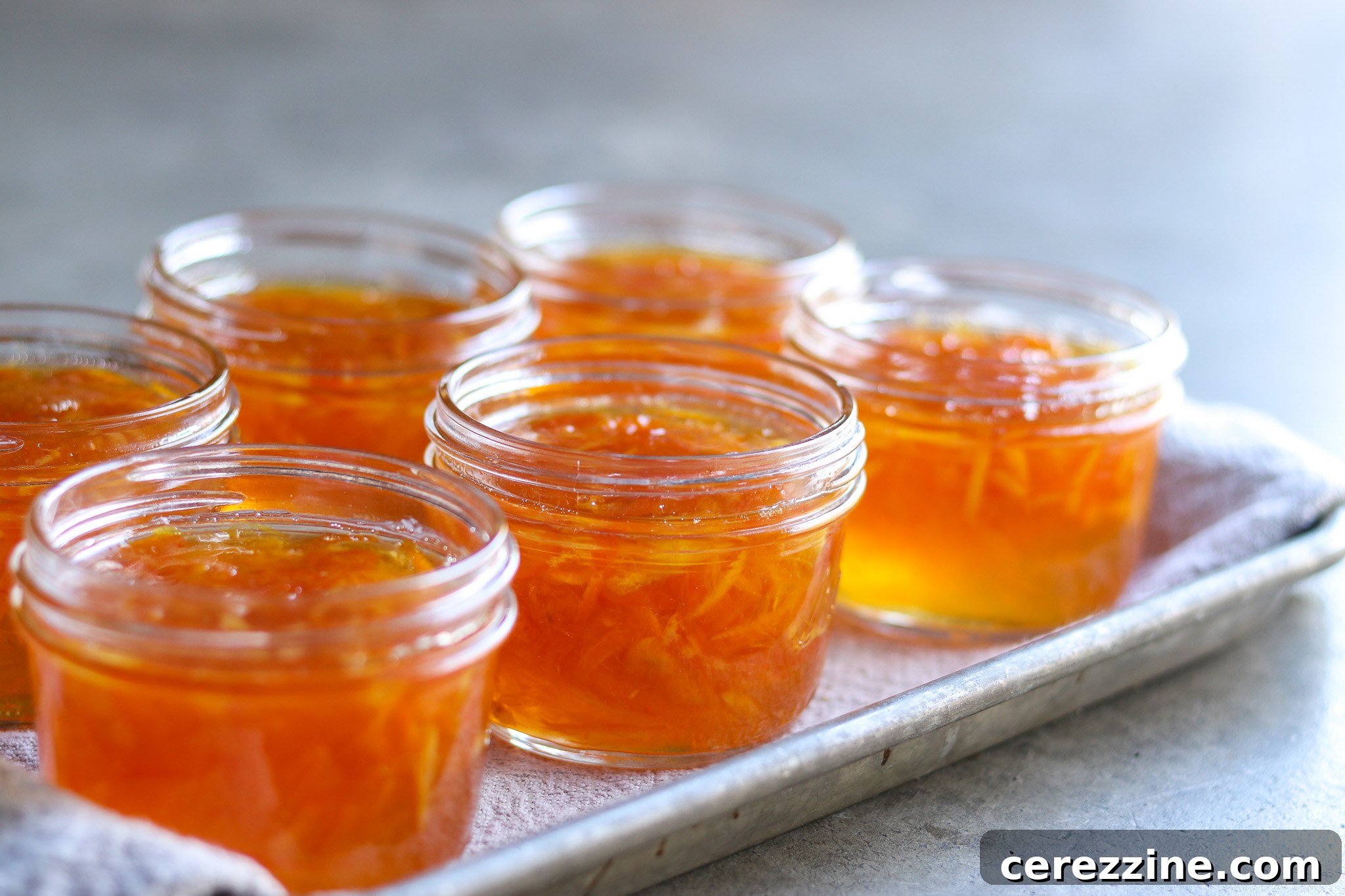
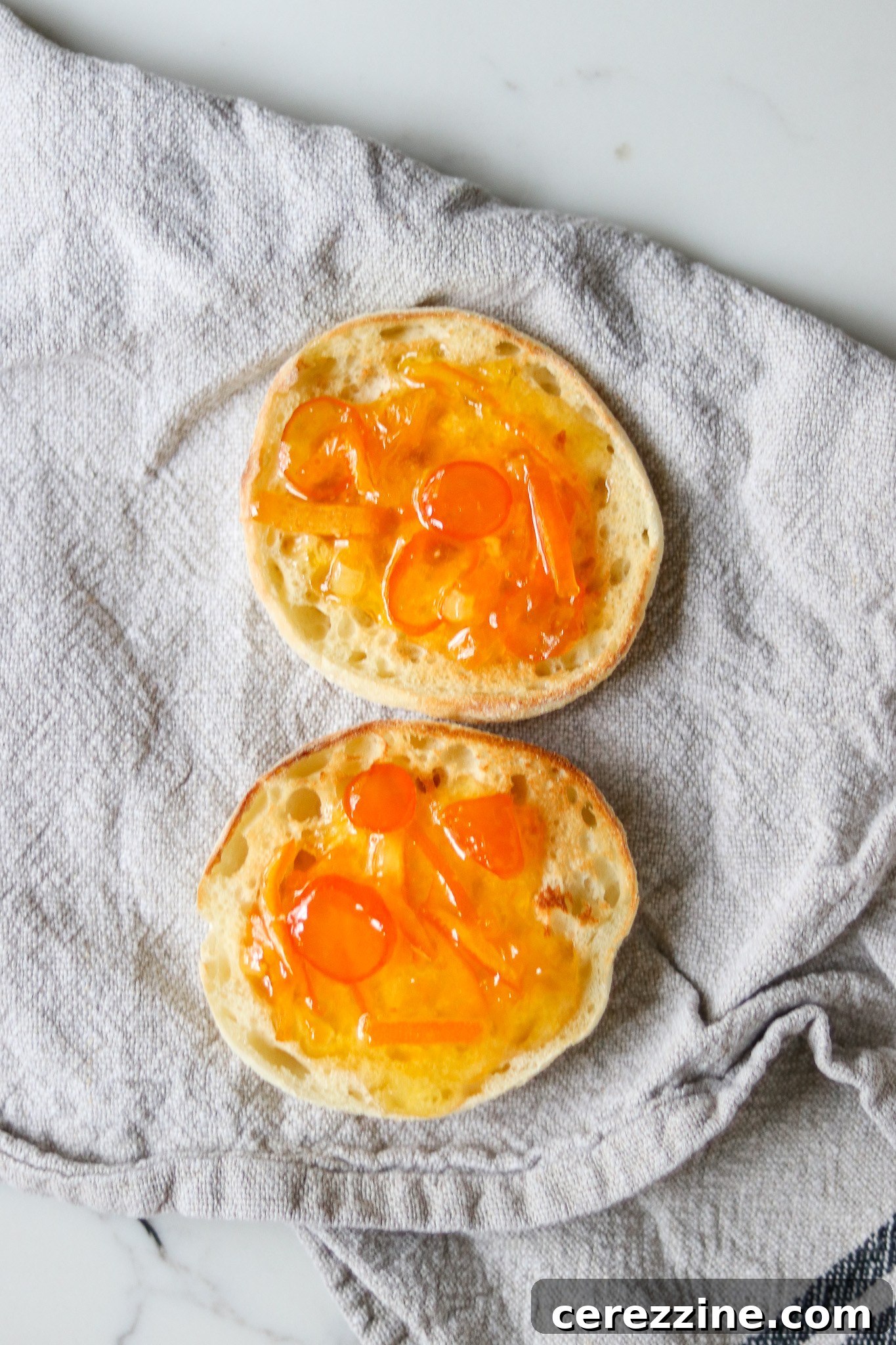
- Breakfast & Brunch Staples: Beyond traditional toast, slather kumquat marmalade on warm muffins, fluffy scones, or buttery English muffins. Swirl it into your morning yogurt or oatmeal for an elevated start to the day. It also pairs wonderfully with croissants and brioche.
- Cheese Boards & Appetizers: Elevate your cheese board by pairing kumquat marmalade with creamy brie, tangy goat cheese, or sharp cheddar. Its complexity complements various cheeses beautifully. Serve it with butter crackers or crusty bread for an elegant appetizer.
- Dessert Enhancer: Use it as a filling for tarts, thumbprint cookies, or layer cakes. A dollop over vanilla ice cream or panna cotta creates a simple yet sophisticated dessert. You can even warm it slightly and pour it over cheesecake.
- Marinades & Dressings: Whisk kumquat marmalade into a vinaigrette for a vibrant salad dressing, especially delicious with salads featuring nuts, goat cheese, or roasted beets. It can also form the base of a flavorful marinade for seafood or poultry.
- Cocktails: A small spoonful can add an unexpected citrusy depth to cocktails, particularly those made with gin or whiskey.
64
servings (8 half pint jars)
Kumquat Marmalade
50
mins
10
mins
12
hrs
Equipment
-
Water Bath Canner
-
Wide Mouth Canning Lids
-
Wide Mouth Half Pint Jars
-
Jar Lifter
-
Canning Funnel
Ingredients
- 2 cups kumquats, thinly sliced (about 24 medium kumquats)
- 1½ cup orange pulp, chopped, about 2 medium oranges
- 1½ cup orange peel, peel only, no white parts or pith, cut into small pieces (about 2 medium oranges)
- ⅓ cup lemon juice, fresh or bottled
- 6 cups water
- 4 to 6 cups sugar, see notes
Instructions
-
Wash the kumquats and oranges with clean, cool water, gently rubbing with your hands or a vegetable scrubber.
-
Slice the kumquats crosswise into thin slices. Do not remove the peeling, but seeds may be discarded. Slice enough kumquats to equal 2 cups.
-
Cut the oranges in half and scoop out the orange pulp, removing any seeds. Chop the orange pulp to obtain 1½ cups.
-
Remove the white pith layer from the inside of the orange rinds, and retain only the outer layer of peeling from the orange. Cut the peeling into thin slices or small pieces, equaling 1½ cups.
-
Mix the kumquats, orange pulp, orange peels, lemon juice, and water in a large saucepan.
-
Bring the fruit mixture to a boil over medium-high heat, then reduce the heat to medium and gently boil the mixture for 5 minutes.
-
Place a cover on the saucepan or transfer the mixture to a container with a lid and refrigerate for 12 to 18 hours.
-
Return the fruit mixture in a large saucepan to the stove and cook over medium-high heat. Continue to cook, stirring occasionally, until the peelings are tender.
-
Measure the fruit mixture, including the juices, then add an equal amount of sugar to the mixture and stir until the sugar dissolves.
-
Prepare jars and a hot water bath.
-
Return the fruit and sugar mixture to a rolling boil, stirring continuously, and continue to boil hard until it reaches the gel stage or when the mixture reaches 220° Fahrenheit.
-
Remove the marmalade from the stove and skim off any foam with a metal spoon if desired.
-
Immediately pour or ladle the hot marmalade into prepared hot jars, leaving ¼” headspace at the top of the jars.
-
Wipe the rims of the jars with a clean cloth, and apply the 2-part canning lids.
-
Preserve the marmalade using a hot water bath canning method for 10 minutes, 15 minutes at altitudes above 3000 feet, or 20 minutes above 6000 feet.
-
After processing, turn off the heat and leave jars in the canner, uncovered, for 5 minutes. Remove the jars from the canner and let them cool and seal for 12-24 hours or longer. It may take up to a week for the marmalade to set firmly.
-
Sealed marmalade will retain peak quality for up to 12 months stored in a cool, dry place or pantry. Refrigerate the marmalade once opened.
Nutrition
Carbohydrates: 14g,
Protein: 0.1g,
Fat: 0.1g,
Saturated Fat: 0.01g,
Polyunsaturated Fat: 0.01g,
Monounsaturated Fat: 0.01g,
Sodium: 2mg,
Potassium: 21mg,
Fiber: 1g,
Sugar: 13g,
Vitamin A: 29IU,
Vitamin C: 7mg,
Calcium: 8mg,
Iron: 0.1mg
Nutrition information is automatically calculated, so should only be used as an approximation.
Explore More Marmalade Recipes
Once you’ve mastered the art of making this vibrant kumquat marmalade, you might find yourself inspired to delve deeper into the world of citrus preserves. Each variety offers a unique flavor and texture, inviting endless experimentation in your kitchen. Here are some other delightful marmalade recipes to try:
- Meyer Lemon Marmalade: Known for its sweeter and less acidic profile compared to regular lemons, Meyer lemons create a wonderfully delicate and aromatic marmalade with floral undertones.
- Lime Marmalade: For those who love a bold, zesty kick, lime marmalade delivers a bright, tangy, and incredibly refreshing spread, perfect for summer breakfasts or as a glaze.
- Classic Orange Marmalade: A timeless favorite, orange marmalade offers the quintessential sweet-bitter balance, making it a staple preserve for any pantry.
- Blood Orange Marmalade: Experience the exotic flavor and stunning ruby-red hue of blood orange marmalade. It boasts a unique berry-like sweetness with the characteristic citrus tang.
- Marmalade with Any Citrus Recipe: This guide empowers you to use a medley of citrus fruits, allowing for endless customization and ensuring you can make marmalade no matter what fresh citrus is available.
- Buddha’s Hand Marmalade: For a truly extraordinary and aromatic experience, try making marmalade from the striking Buddha’s Hand citron. Its unique finger-like segments offer a profound citrus fragrance with very little pulp or juice.
Each recipe promises a rewarding journey into the delightful world of homemade preserves. Enjoy the process of creating these beautiful jars of sunshine, ready to brighten your meals and share with loved ones.