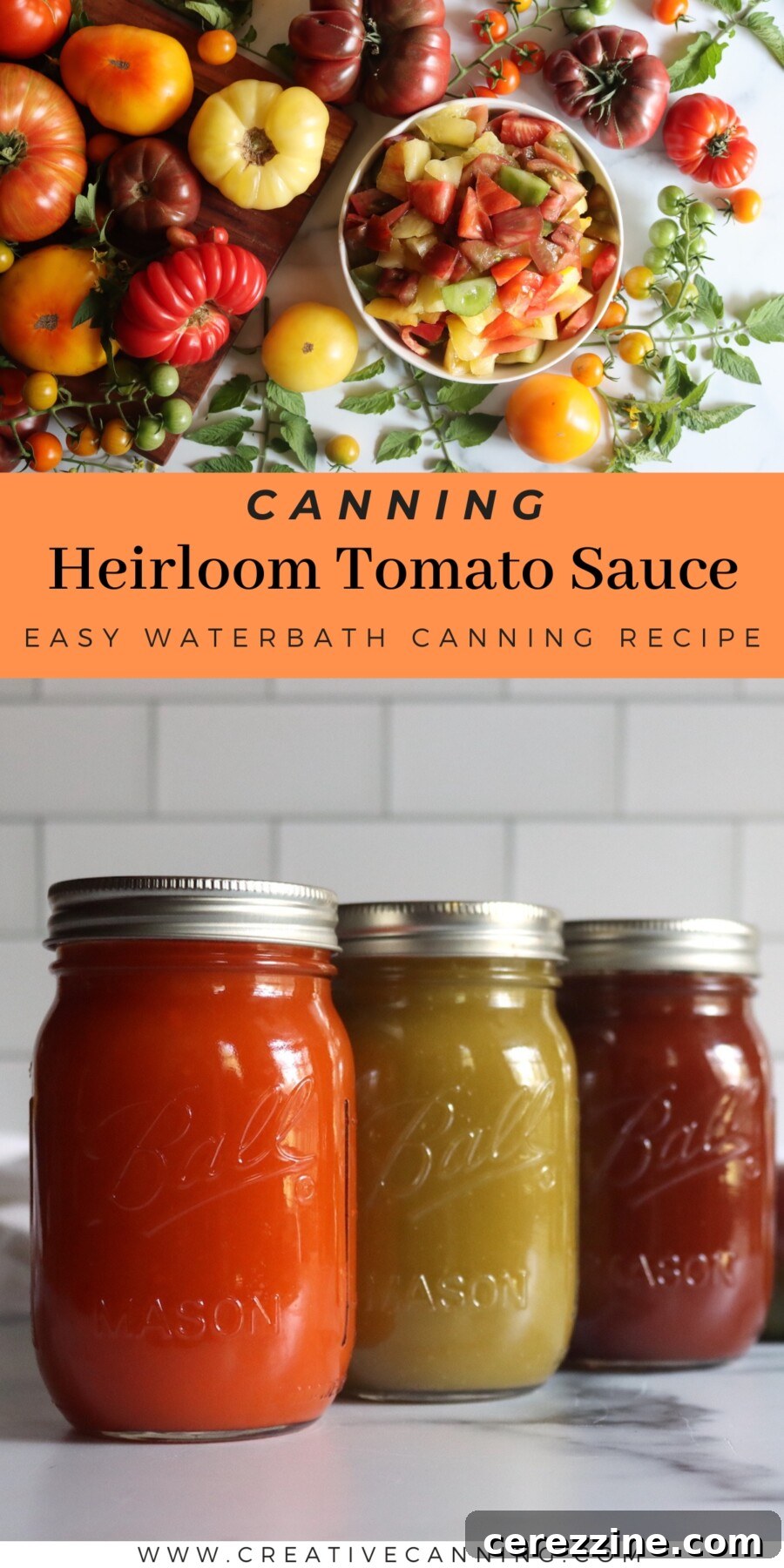
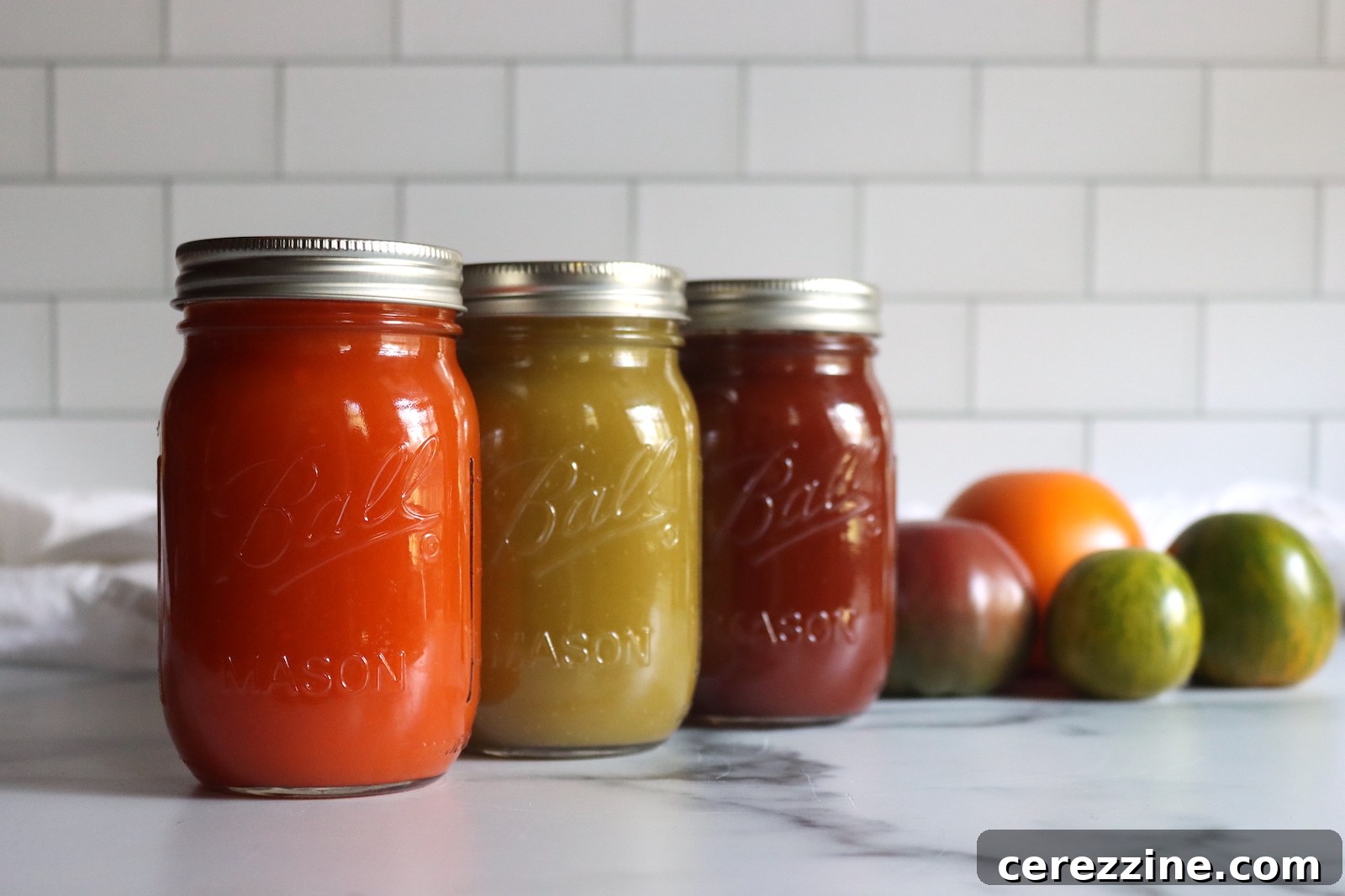
Heirloom tomato sauce captures the unique color and flavor of heritage varieties in a way that a standard red sauce cannot. A single batch can turn deep purple, bright green, or golden orange depending on the tomatoes used, and the finished jars taste of the specific variety from your garden rather than a generic puree.
This recipe has been reviewed for safety and accuracy by a Master Food Preserver certified through the University of Cornell Cooperative Extension.
This recipe follows the NCHFP standard tomato sauce method and is designed for safe water bath canning. It works with any tomato variety and uses the same tested process normally reserved for paste tomatoes, applied here to heirlooms so you can preserve their color and character. Keep in mind that heirlooms tend to carry more water and larger seed cavities than paste types, so plan on roughly 1.5 to 2 times the weight of fruit to achieve the same finished yield.
If you prefer a ready-to-eat option or a version cooked with herbs and garlic, consider making a seasoned marinara or an heirloom tomato soup instead. Plain heirloom sauce is intentionally unseasoned so you can customize each jar when you open it.
Notes from My Kitchen

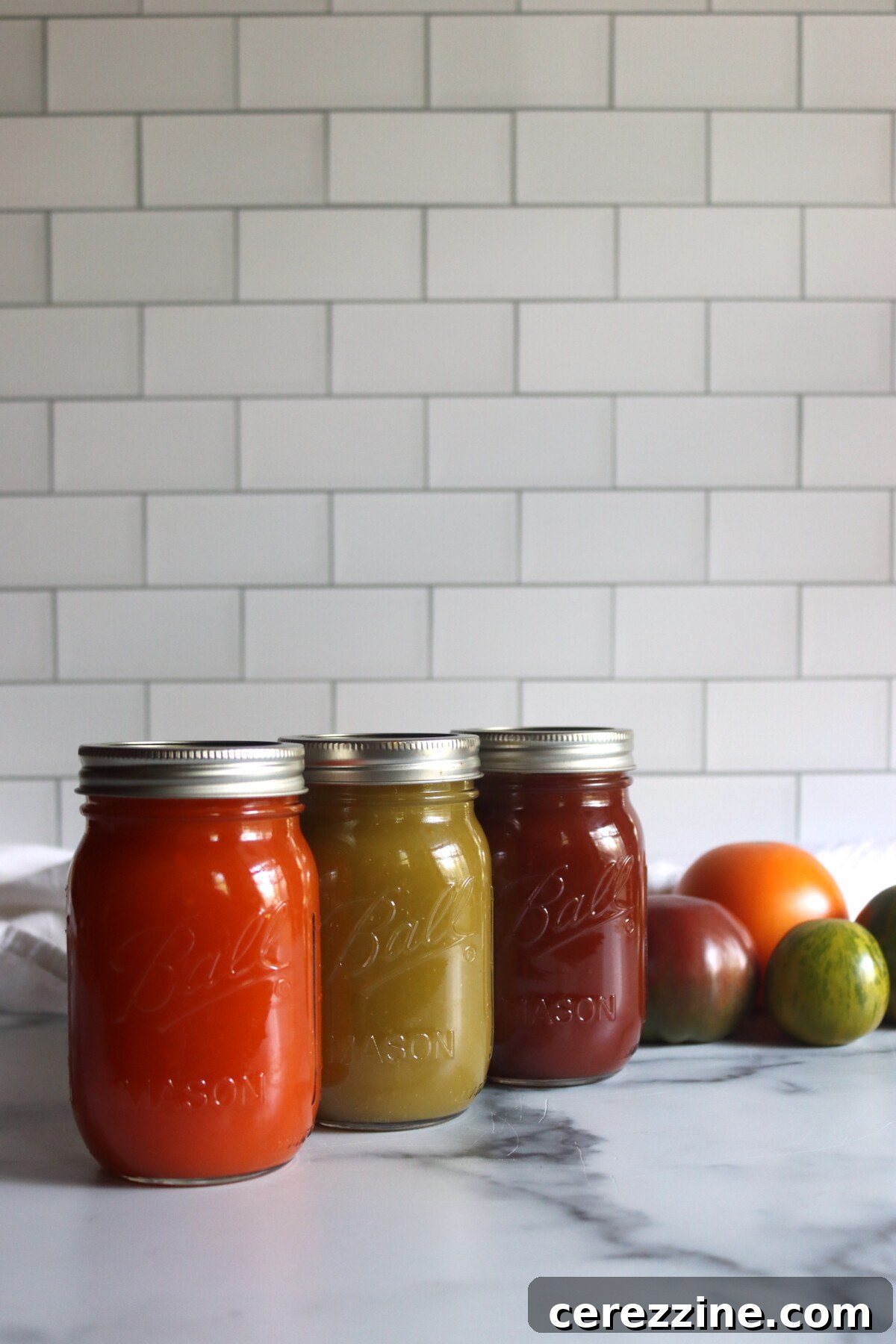
I started making single-varietal sauces with whatever heirloom was producing the most fruit in the garden, and the results were always a surprise. Black Krim yields a purple-brown sauce unlike anything from supermarket tomatoes. Green Zebra produces a startling green that could pass for a tomatillo salsa. Yellow varieties give a warm, golden sauce. Flavor follows color: some are sweet, some sharply acidic, and some have a depth that typical red varieties rarely match.
Volume is the main planning consideration. I often use two five-gallon buckets of heirlooms for a small batch where one bucket of Romas would suffice. The extra water means longer simmering to reach the desired thickness, but the concentrated flavor at the end makes the extra time worthwhile.
Quick Look at the Recipe
- Recipe Name: Heirloom Tomato Sauce
- Method: NCHFP standard tomato sauce for water bath canning
- Prep Time: About 1 hour
- Cook Time: 45 minutes to 1 hour (or more for very watery varieties)
- Canning Time: 35 minutes (pints), 40 minutes (quarts) at sea level
- Yield: About 4 pints (estimate—varies by tomato and reduction)
- Jar Sizes: Pints or quarts
- Headspace: 1/4 inch
- Key Ingredients: Heirloom tomatoes, bottled lemon juice or citric acid, salt (optional)
- Difficulty: Easy
Choosing Heirloom Tomatoes
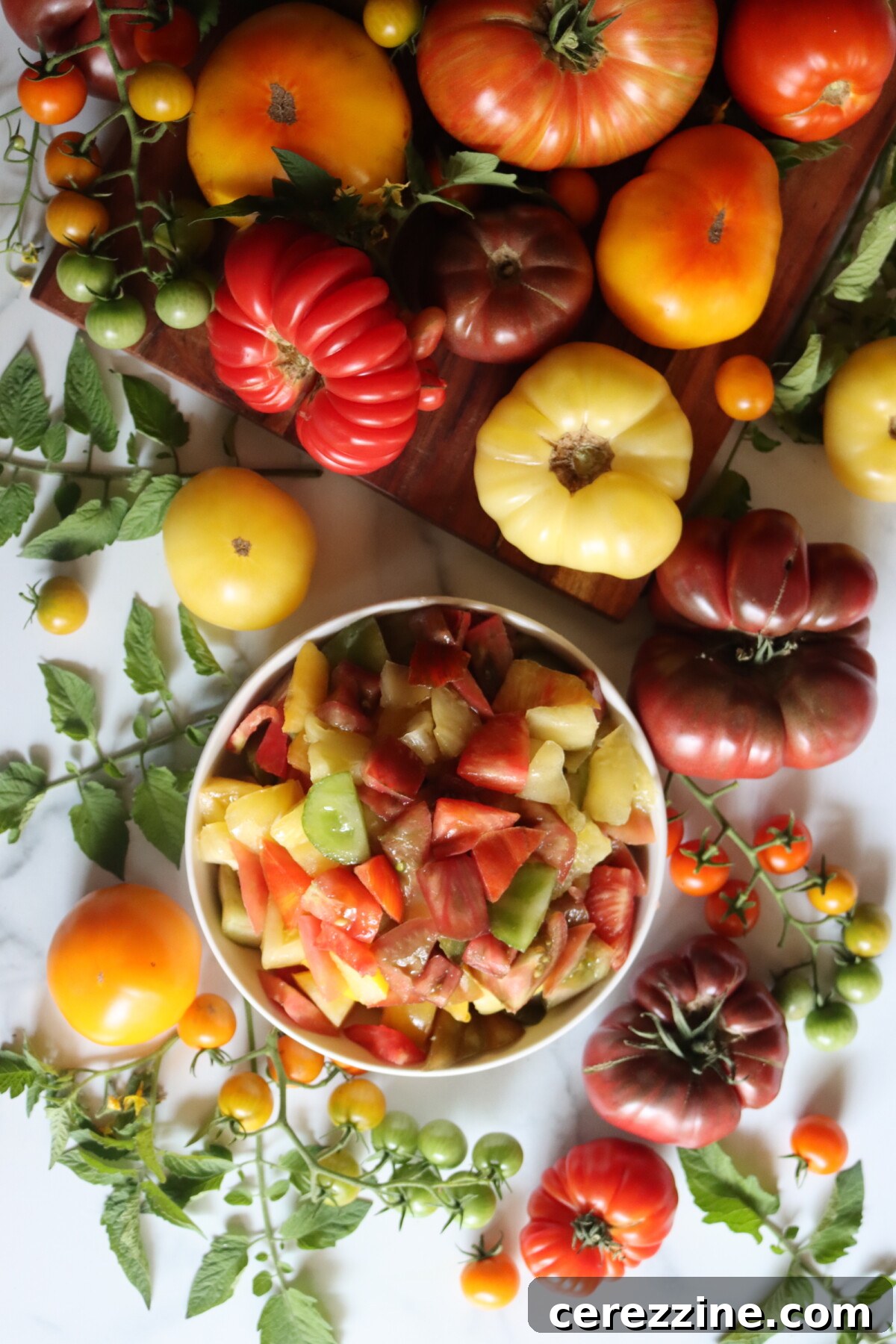
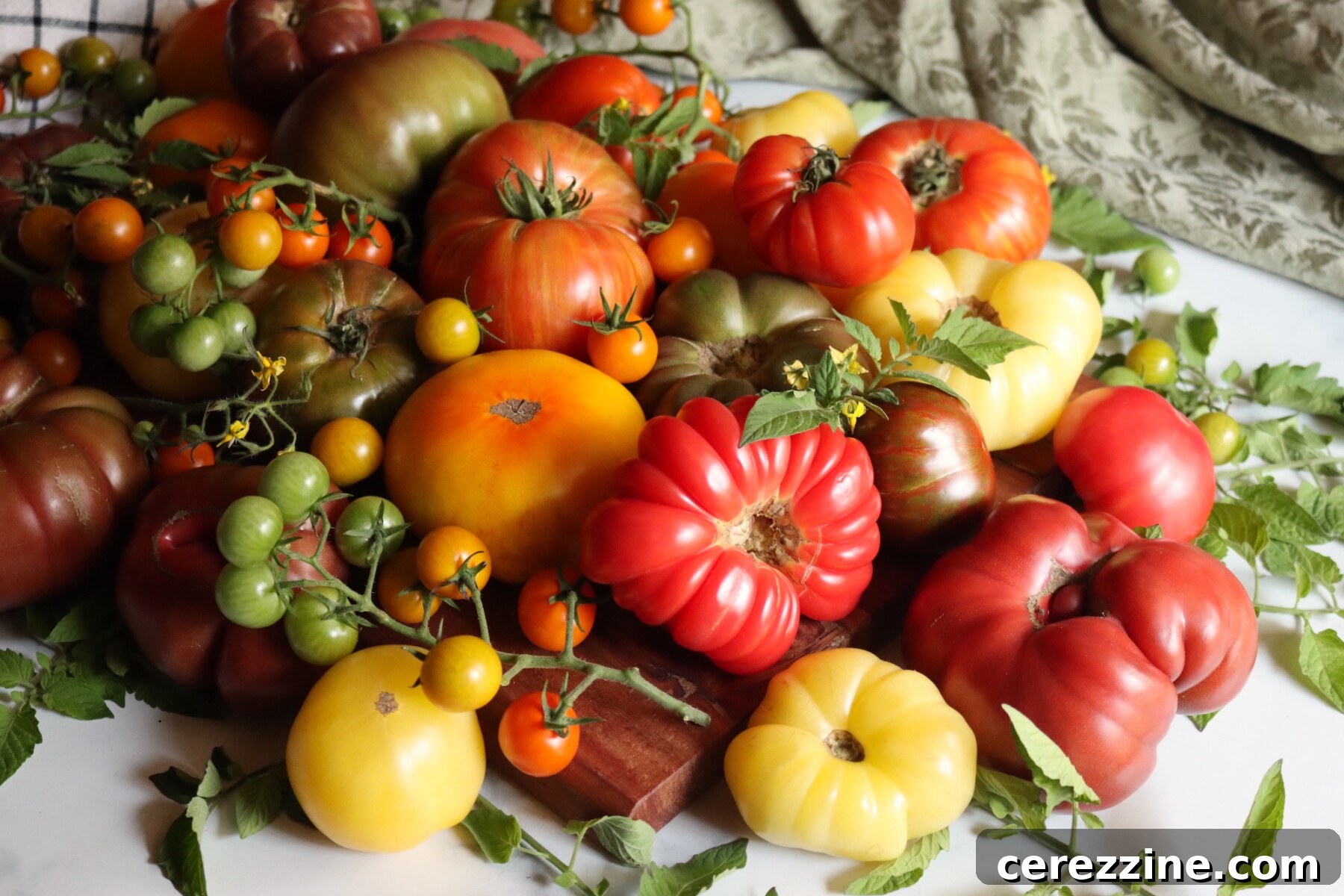
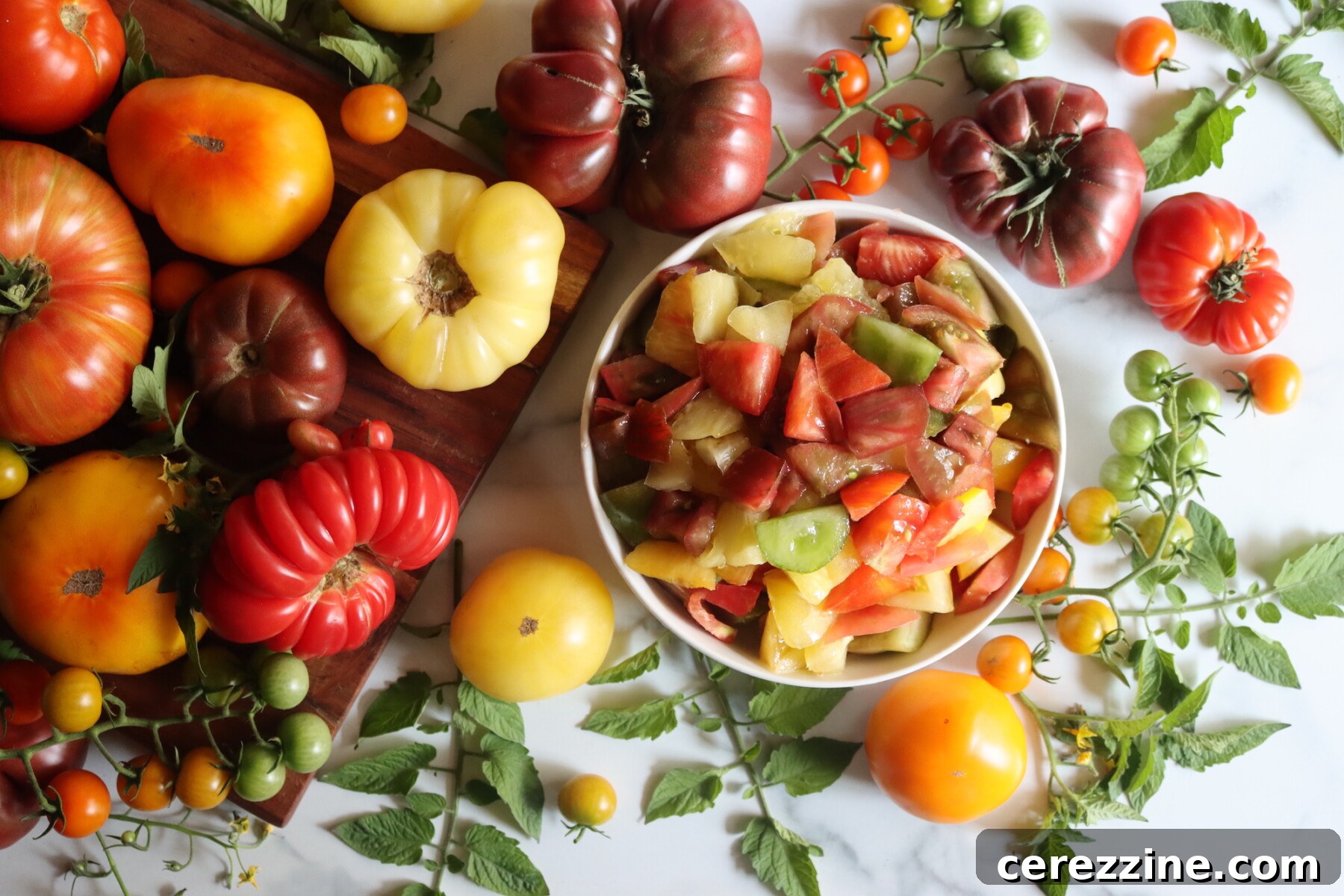
Any heirloom will make safe sauce when properly acidified, so choose based on the color and flavor you want to preserve. Purple and black types like Black Krim and Cherokee Purple give deep tones; green varieties like Green Zebra stay vividly green; yellow and orange types like Brandywine Yellow or Lemon Boy produce gold or amber sauces. Using a single variety per batch keeps the color clean and lets that tomato’s personality shine.
Mixing varieties is fine for complex flavor, but color tends to blend toward a muted red. Look for fully ripe, unblemished fruit and remove any bruised or soft spots before cooking. Harvest when multiple plants are producing so you can fill a batch and reduce cook time.
Ingredients for Heirloom Tomato Sauce
Heirloom tomato sauce uses a short ingredient list. The tomatoes provide the flavor; the acidifier provides safety for water bath canning.
- Heirloom Tomatoes: Any variety. Plan on roughly 16 to 24 pounds for about 4 pints—about 1.5 to 2 times the weight needed for paste tomatoes. Exact amounts depend on water content and desired thickness.
- Bottled Lemon Juice or Citric Acid: Required for safe canning. Add 1 tablespoon bottled lemon juice or 1/4 teaspoon citric acid per pint (double for quarts). Use bottled lemon juice, not fresh.
- Salt (optional): For flavor only. Add 1/2 teaspoon per pint or 1 teaspoon per quart if desired; it does not affect safety.
This is intentionally a plain, unseasoned sauce so you can season individually when serving. If you prefer a sauce cooked with herbs and garlic, make a marinara-style batch separately.
Heirloom Tomato Sauce Notes
This recipe is safe because it follows the NCHFP standard tomato sauce method. The acid it requires is the safety control that makes water bath canning possible. Use the full amount of bottled lemon juice or citric acid and never reduce it. What you can change safely is seasoning and consistency—salt and the degree of reduction are personal choices, but acid, headspace, processing time, and jar size must remain as specified.
How to Make Heirloom Tomato Sauce
The process has three main stages: blanching and peeling, milling into a smooth puree, and simmering the puree to the desired thickness. Heirlooms require extra patience at the simmering stage because of their higher water content.
Blanch and Peel the Tomatoes
Wash tomatoes and remove stems and any damaged spots. Working in batches, dip them in boiling water for 30–60 seconds until the skins split, then transfer them to ice water to stop cooking. Slip off the skins, remove cores, and chop into quarters or large chunks.
Make the Puree
Place the peeled tomatoes in a large pot and bring to a boil. Boil uncovered about 20 minutes, stirring occasionally, until they break down into a loose, soupy mix. Run the softened tomatoes through a food mill to remove seeds and remaining skins for a smooth puree. If you don’t have a food mill, blend and press through a fine sieve, accepting some volume loss.
Simmer to Thicken
Return the puree to a wide, shallow pot to speed evaporation. Bring to a boil, then simmer uncovered, stirring frequently to prevent scorching. Reduce by about one-third for a thin sauce or by half for a thicker sauce. With heirlooms, plan on 45 minutes to an hour or more, and judge doneness by consistency rather than a strict time.
Canning Heirloom Tomato Sauce
Once the sauce reaches the desired thickness, decide whether to can, refrigerate, or freeze. Refrigerate for up to a week or freeze for up to six months if you prefer not to can the whole batch.
To can: prepare a water bath canner, hot jars, lids, and bands. Add the acidifier to each hot jar first, then salt if using. Ladle hot sauce into jars leaving 1/4 inch headspace. Remove trapped air with a bubble remover or utensil, wipe rims, center lids, and apply bands fingertip tight. Process pints for 35 minutes and quarts for 40 minutes at elevations up to 1,000 feet; adjust times for higher altitudes as noted below. After processing, turn off heat and let jars rest in the canner for 5 minutes, then remove and cool undisturbed for 12–24 hours before checking seals. Store sealed jars in a cool, dark place.
Altitude Adjustments
Processing times increase at higher elevations:
- 0 to 1,000 feet: 35 minutes for pints, 40 minutes for quarts
- 1,001 to 3,000 feet: 40 minutes for pints, 45 minutes for quarts
- 3,001 to 6,000 feet: 45 minutes for pints, 50 minutes for quarts
- Above 6,000 feet: 50 minutes for pints, 55 minutes for quarts
Tips for Success
A food mill produces the smoothest results by removing seeds and skins while preserving pulp. Run hot tomatoes through the mill; pass a second time for an extra-smooth texture. Use a wide, shallow pot for reduction to speed evaporation and save time. Stir often as the sauce thickens to prevent scorching, which can ruin the whole batch.
Ways to Use Heirloom Tomato Sauce
Plain heirloom sauce is versatile and lets the tomatoes’ color and flavor take center stage. Because it’s unsalted and unseasoned by design, you can tailor it at serving time:
- Quick marinara: Sauté garlic in olive oil, add sauce, season with basil and oregano for pasta.
- Pizza base: Spread on homemade pizza; unusual colors make striking pies.
- Soup starter: Use as the base for tomato soup, adding cream or broth.
- Shakshuka: Warm in a skillet, crack in eggs, and cook until set.
- Braising liquid: Braise chicken, meatballs, or vegetables in the sauce.
- Curry base: Substitute for canned tomatoes in curry recipes and add spices.
Save a few jars of your most unusual varieties for dishes where the color will be showcased.
Yield Notes
This recipe produces about 4 pints, but yield varies widely with heirlooms. Plan on roughly 16 to 24 pounds of tomatoes for 4 pints—about 1.5 to 2 times the weight required for paste varieties. Actual yield depends on variety, reduction level, and growing conditions. Start with more tomatoes than you expect to need and reduce to the consistency you want. The acid requirement remains 1 tablespoon bottled lemon juice or 1/4 teaspoon citric acid per pint regardless of batch size.
Heirloom Tomato Sauce FAQs
No. The added acid is the safety control for water bath canning and cannot be reduced. Use 1 tablespoon bottled lemon juice or 1/4 teaspoon citric acid per pint (double for quarts). Bottled lemon juice has consistent acidity; fresh citrus does not.
Heirlooms have higher water content and larger seed cavities, so you lose more volume when removing seeds and reducing the puree. Plan on roughly 1.5 to 2 times the weight of heirlooms to achieve the same finished sauce volume as paste varieties.
Colors may shift slightly during processing, but distinctive hues like purple, green, or orange generally remain recognizable. Greens can olive slightly and very dark varieties may lighten modestly, but the sauce will still differ noticeably from a standard red sauce.
Properly processed and sealed jars keep about 12–18 months in a cool, dark place. Refrigerate and use within a week any jar that fails to seal. Once opened, refrigerate and use within 5–7 days.