
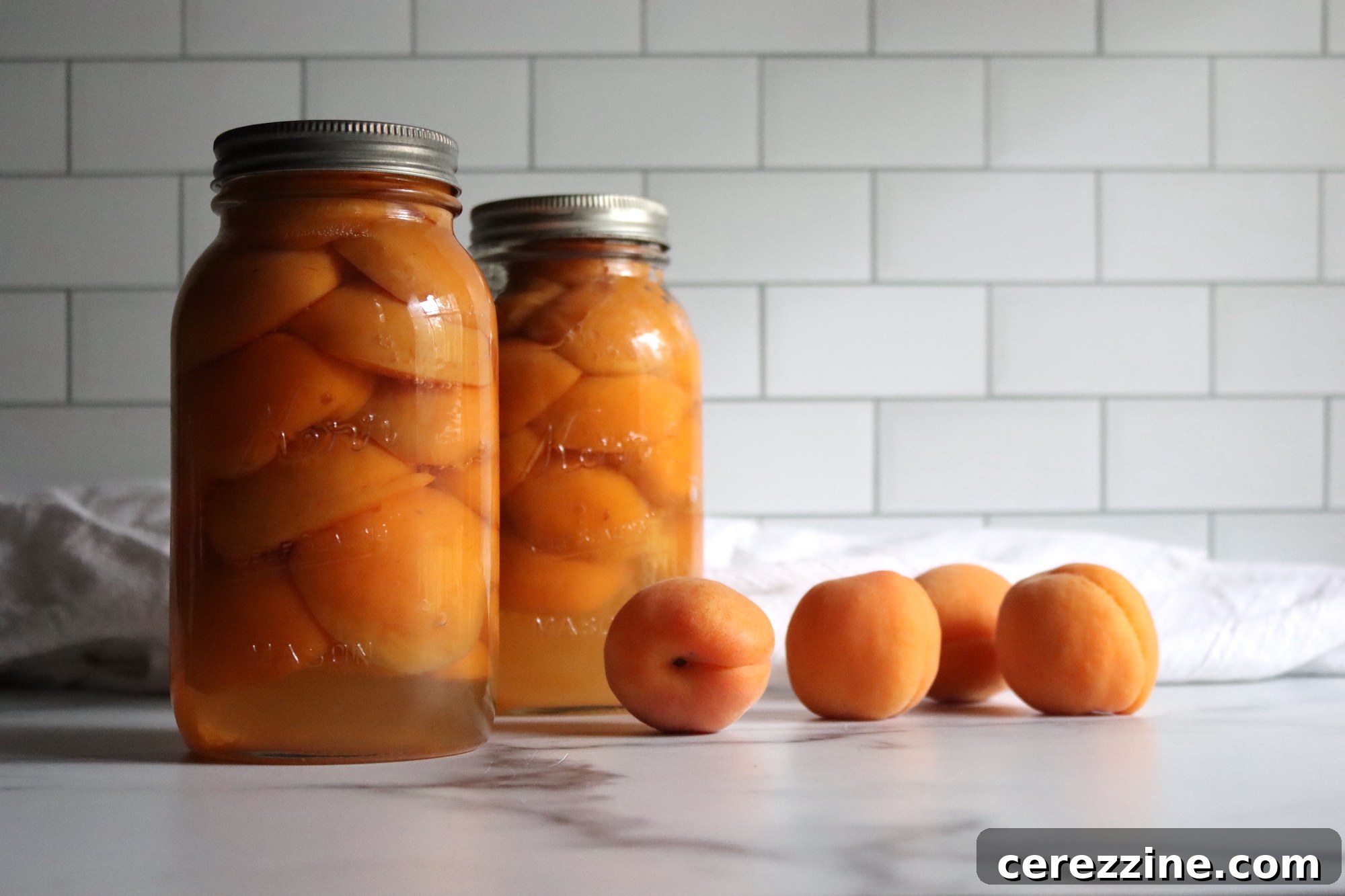
Canning apricots is a timeless tradition, a delightful way to capture the essence of summer and extend its vibrant flavors throughout the year. Imagine a cold winter’s day, and you reach for a jar of sun-kissed apricots, ready to be added to your favorite baked goods, spooned generously over creamy ice cream, or simply enjoyed as a wholesome, sweet treat straight from the jar. These homemade canned apricots are more than just food; they’re a burst of sunshine and a testament to the satisfying art of home preservation.
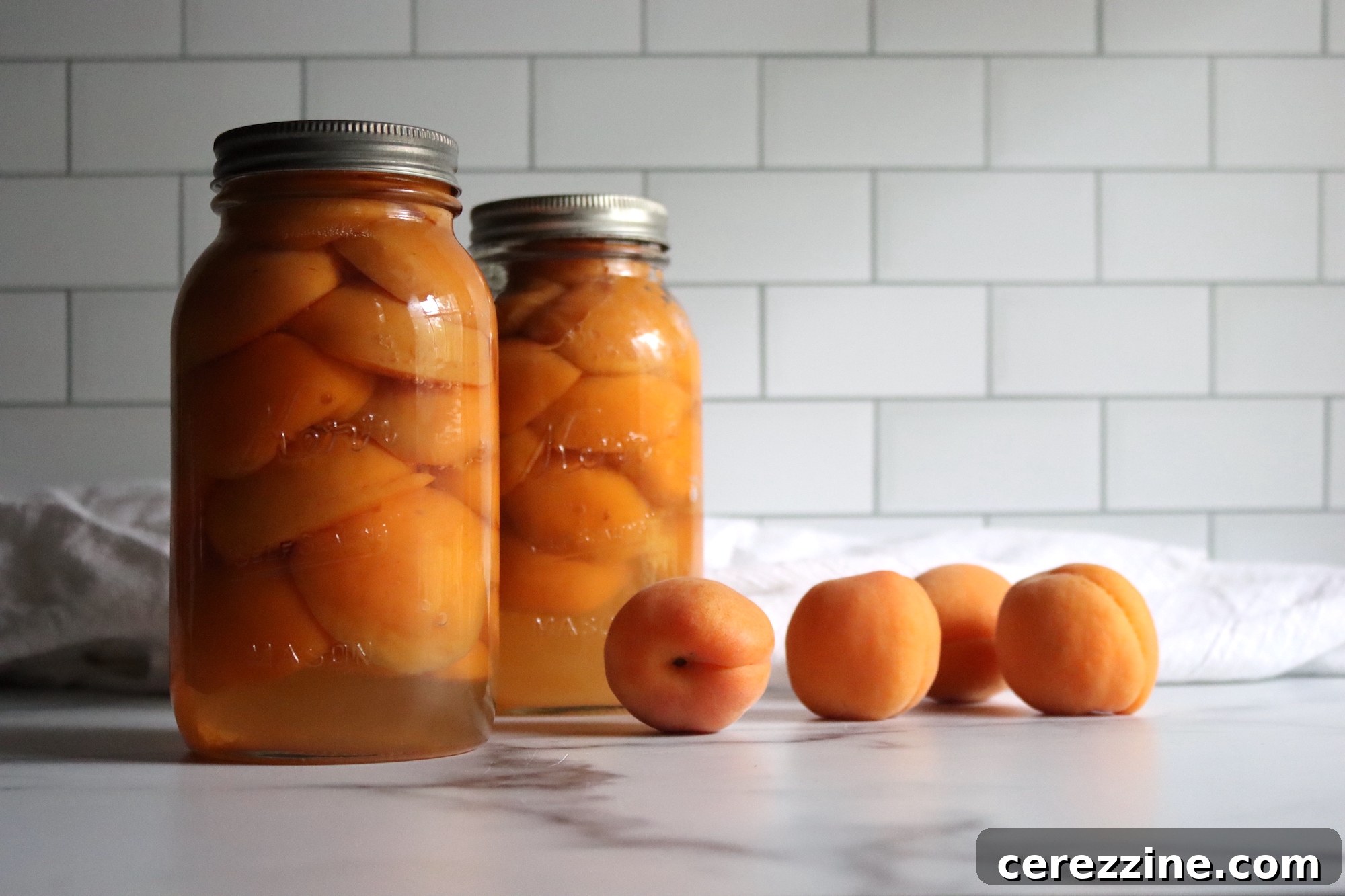
The Abundance of Apricots: A Seasonal Delight
For those of us who grew up in regions abundant with stone fruit, like California, the sight of apricot trees laden with ripe fruit is a cherished summer memory. Just a couple of backyard trees can yield enough apricots to share with an entire neighborhood. However, the apricot season is famously short. Blink, and you might miss it. Once these golden gems are gone, you’re left waiting a whole year for their return. This fleeting availability is precisely what makes preserving apricots such a valuable skill and a rewarding endeavor.
My own journey into apricot canning deepened recently, inspired by my mom’s prolific backyard apricot tree. She’s not an experienced canner, so I focused on developing simple apricot canning recipes that were easy for her to follow. While apricot jam and apricot butter are undeniably delicious and relatively straightforward to make, there’s only so much jam one can eat! (And while canning apricot pie filling is a fantastic option, it tends to be a bit more involved, often requiring additional steps and ingredients.)
Ultimately, I sought a versatile method that would allow the pure flavor of the apricot to shine, suitable for various culinary uses. Canning plain apricots in syrup proved to be the answer. I embarked on testing all available, tested canning methods to discover the absolute best option for preserving apricots. My criteria were simple: it had to be easy enough for anyone to follow, but more importantly, it had to yield the highest quality fruit possible. After all, what’s the purpose of preserving something if the end result isn’t truly worth savoring?
Through extensive experimentation, I confidently discovered the superior method: **raw pack canning apricots in light syrup, with the peels left intact, processed in a water bath canner.** This approach consistently delivered fruit with the best texture, flavor, and visual appeal, outperforming all other techniques I tried.
Why Raw Pack with Peels Intact is the Best Method
You might find tested methods for pressure canning, hot pack canning, and even canning peeled apricots, but in my experience, none of these yielded results nearly as good. Apricots are inherently delicate fruits. When peeled, their flesh becomes more vulnerable, often breaking down or browning easily. Similarly, hot packing, which involves pre-cooking the fruit before jarring, causes them to soften significantly, often turning mushy during the canning process. Pressure canning, while excellent for low-acid foods, is often too intense for the tender flesh of apricots, leading to a less desirable texture.
The beauty of the raw pack method is its simplicity and its respect for the fruit’s natural integrity. By packing raw apricot halves directly into jars and then covering them with warm syrup, you minimize handling and exposure to heat, which helps them retain their shape, firm texture, and vibrant color. The peels, often discarded, actually play a crucial role. They not only contribute to the fruit’s structural integrity, preventing excessive softening, but also add beneficial nutrients and a subtle tartness that balances the sweetness of the syrup. Plus, leaving the peels on significantly reduces prep time, making the entire canning process much more efficient and enjoyable.
Essential Supplies for Canning Apricots
Before you begin your apricot canning adventure, ensure you have all the necessary equipment. Having these tools ready will make the process smooth, safe, and efficient:
- Fresh Apricots: Select firm, ripe, and unblemished fruit for the best results. Approximately 10-12 pounds for a 9-pint batch, or 16-18 pounds for a 7-quart batch.
- Canning Jars: Pint or quart-sized jars are ideal. Ensure they are clean and free from chips or cracks.
- New Lids and Bands: Use new lids for each canning batch to ensure a proper seal. Bands can be reused if they are in good condition.
- Large Pot for Syrup: A sizeable pot is needed to prepare your canning syrup efficiently.
- Water Bath Canner with Rack: Essential for processing the jars safely. The rack prevents jars from touching the bottom of the canner and allows for even heat distribution.
- Jar Lifter: A crucial safety tool for handling hot jars, preventing burns and spills.
- Canning Funnel: This wide-mouthed funnel helps prevent spills and keeps jar rims clean when filling with fruit and syrup.
- Non-Metallic Spatula or Debubbler: Used to remove air bubbles from jars before sealing, ensuring proper headspace.
- Clean Towels: For wiping jar rims thoroughly and for cooling jars after processing.
- Basic Kitchen Utensils: Knives for halving, pitting spoon (optional), measuring cups, and spoons.
Choosing the Perfect Apricots for Canning
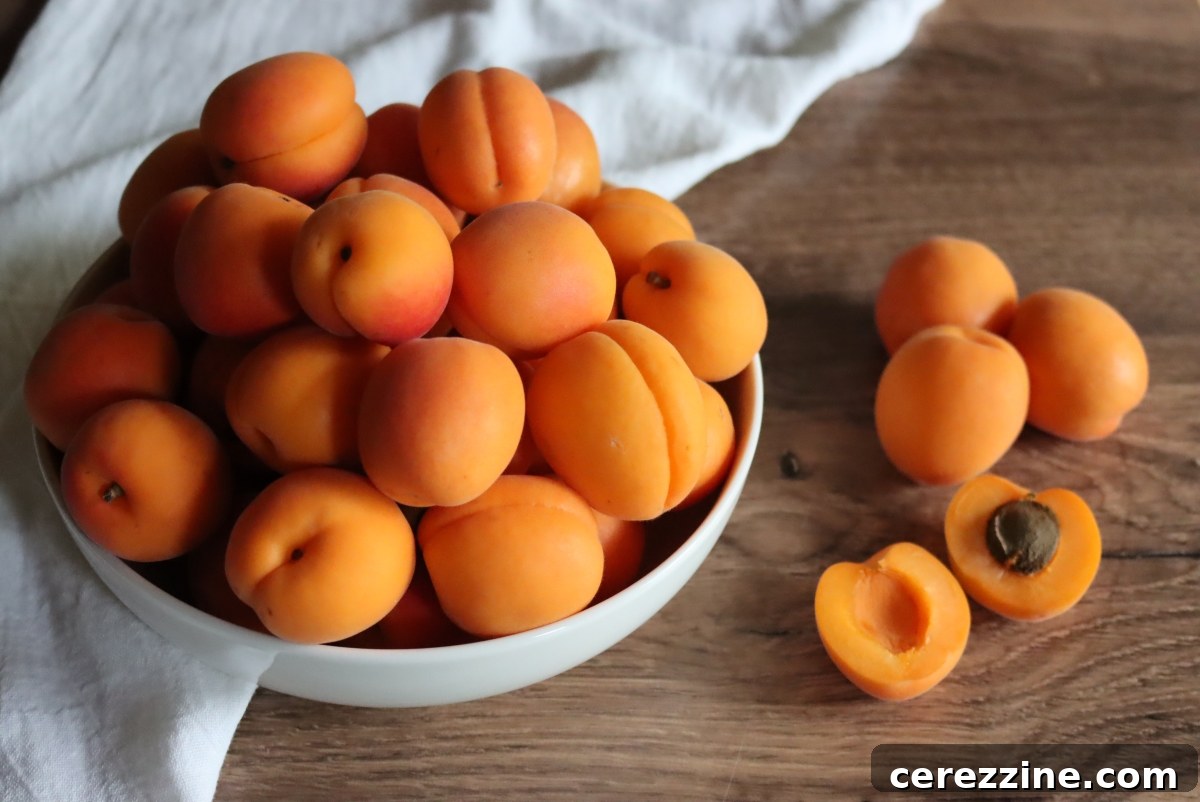
The success of your canned apricots largely depends on the quality of the fruit you start with. When selecting apricots, aim for fruit that is ripe, fragrant, and vibrant in color, but still firm to the touch. Avoid overly soft or mushy apricots, as these will likely break down too much during processing. Similarly, bypass any fruit with blemishes, bruises, or signs of mold, as these can compromise the safety and quality of your canned product.
While many apricot varieties can be successfully canned, some are particularly renowned for their flavor and texture retention:
- Blenheim Apricots (also known as Royal Blenheim): These are often considered the gold standard for canning. Blenheims boast an intensely sweet, rich, and aromatic flavor that deepens beautifully during processing. They also tend to hold their shape well, making them a favorite among home canners.
- Tilton Apricots: Slightly firmer than Blenheims, Tiltons are another excellent choice for preserving. Their robust texture ensures they maintain their form and integrity, even after being subjected to the heat of the canner. They offer a good balance of sweetness and tartness.
- Royal Apricots (sometimes used interchangeably with Blenheim, but distinct in some regions): These varieties are celebrated for their juicy flesh and a perfect equilibrium of sweetness and a pleasant tart bite. They perform wonderfully in a variety of recipes, including canning.
Regardless of the specific variety, always prioritize fruit that is consistent in ripeness and free from any imperfections. A little care in selection goes a long way in ensuring a delicious and visually appealing end product.
Step-by-Step Guide: How to Can Apricots (Raw Pack Method)
1. Prepare the Apricots:
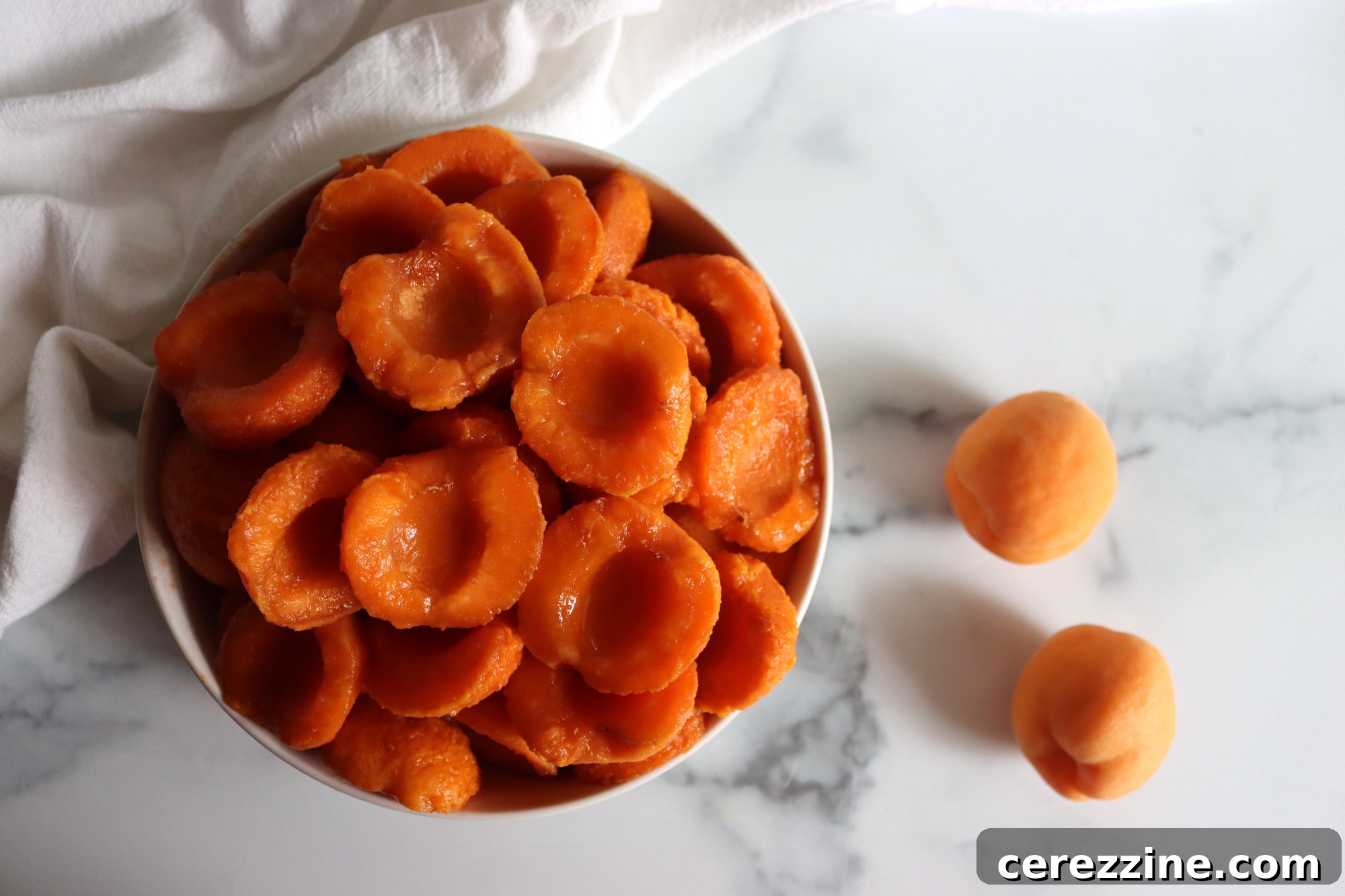
Begin by thoroughly washing your fresh apricots under cool running water to remove any dirt or debris. Once clean, you’ll need to halve each apricot and carefully remove the pit. A simple twist can often separate the halves, making pit removal easy. Work efficiently to prevent browning, especially if you’re not using a browning prevention treatment.
2. To Peel or Not to Peel? (Strongly Advised Against Peeling):
While some recipes might suggest peeling apricots, I strongly recommend against it for canning. Apricot skin is perfectly edible and will soften significantly during the canning process. More importantly, peeling makes the fruit more susceptible to falling apart and browning. Even with a lot of careful preparation, peeled apricots tend to become mushy and visually unappealing once they are processed. The skin helps them maintain their shape and integrity, resulting in a much more attractive and texturally superior canned product.
3. Prevent Browning (Optional but Recommended):
After halving and pitting, you may choose to treat your apricots with ascorbic acid (such as lemon juice or a commercial fruit fresh product containing citric acid) to prevent browning. This is especially beneficial for lighter-colored apricot varieties or if you anticipate a slight delay between preparation and packing. To do this, simply dip the apricot halves in a solution of 1 teaspoon ascorbic acid per gallon of water, or toss them lightly with lemon juice. However, I’ve found that if you work quickly to halve and pit the apricots and pack them immediately into jars, you can often skip this step entirely without significant browning, depending on the apricot variety.
Crafting the Perfect Syrup for Canning Apricots
Apricots can technically be canned in plain water or even fruit juice, but most enthusiasts prefer canning them in syrup. Syrup not only enhances their natural sweetness but also plays a vital role in preserving their delicate flavor and firm texture. For apricots, a light syrup is generally recommended, as it complements their inherent sweetness without making them overly sugary. However, you have complete control over the sweetness level to match your personal preference or dietary needs.
To prepare your syrup, combine the specified amounts of sugar and water in a large saucepan. Bring the mixture to a boil over medium-high heat, stirring constantly until all the sugar has completely dissolved. Keep the syrup warm, but not boiling, while you prepare your apricots and jars.
Syrup Ratios for a 9-Pint Canner Batch:
(Yields approximately 6-7 cups of syrup)
- Extra-Light Syrup: 3/4 cup sugar to 6 1/2 cups water
- Light Syrup (Recommended): 1 1/2 cups sugar to 5 3/4 cups water
- Medium Syrup: 2 1/4 cups sugar to 5 1/4 cups water
- Heavy Syrup: 3 1/4 cups sugar to 5 cups water
- Extra-Heavy Syrup: 4 1/4 cups sugar to 4 1/4 cups water
Syrup Ratios for a 7-Quart Canner Batch:
(Yields approximately 9-10 cups of syrup)
- Extra-Light Syrup: 1 1/4 cups sugar to 10 1/2 cups water
- Light Syrup (Recommended): 2 1/4 cups sugar to 9 cups water
- Medium Syrup: 3 3/4 cups sugar to 8 1/4 cups water
- Heavy Syrup: 5 1/4 cups sugar to 7 3/4 cups water
- Extra-Heavy Syrup: 6 3/4 cups sugar to 6 1/2 cups water
As a general guideline, each pint jar will require approximately ½ to ¾ cup of syrup, while quart jars will need about 1 to 1 ½ cups. The exact amount will vary based on how tightly you pack the apricot halves into your jars. Feel free to adjust the syrup type to suit your taste; whether you prefer a subtle sweetness or a richer, more decadent preserve, any of these syrup options will work effectively.
The Canning Process: Sealing in Summer’s Sweetness
With your syrup prepared and apricots ready, it’s time to assemble your jars, lids, and bands, and preheat your canner. For the raw pack method, it’s crucial to preheat your water bath canner to a temperature of 140-150°F (60-65°C). This is warm, but well below simmering. Starting with water that’s too hot can thermally shock your jars, potentially leading to breakage. (Note: If you were to hot pack, which is not recommended for apricots due to their delicate nature, you would aim for a canner temperature around 180-190°F / 82-88°C).
1. Packing the Jars:
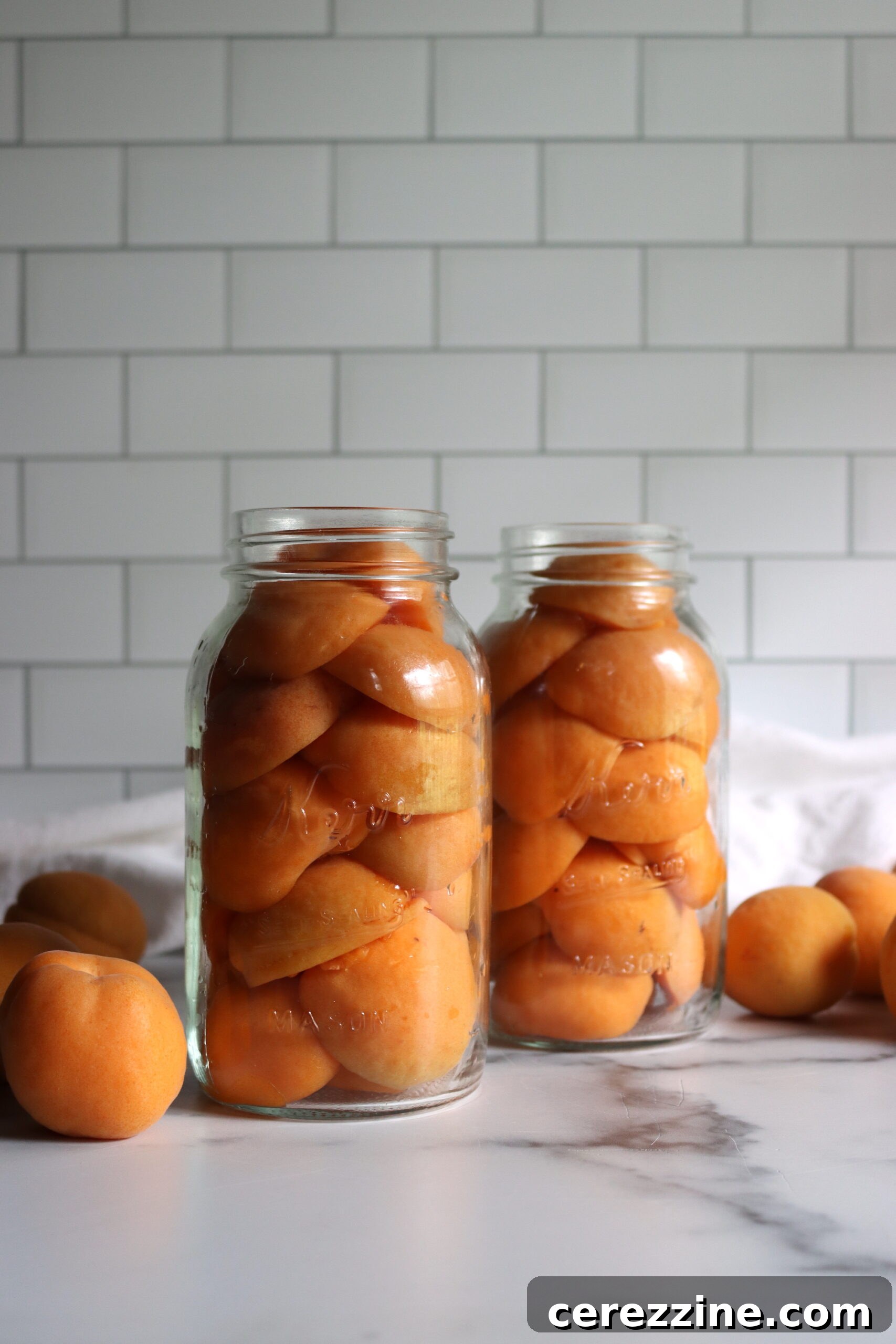
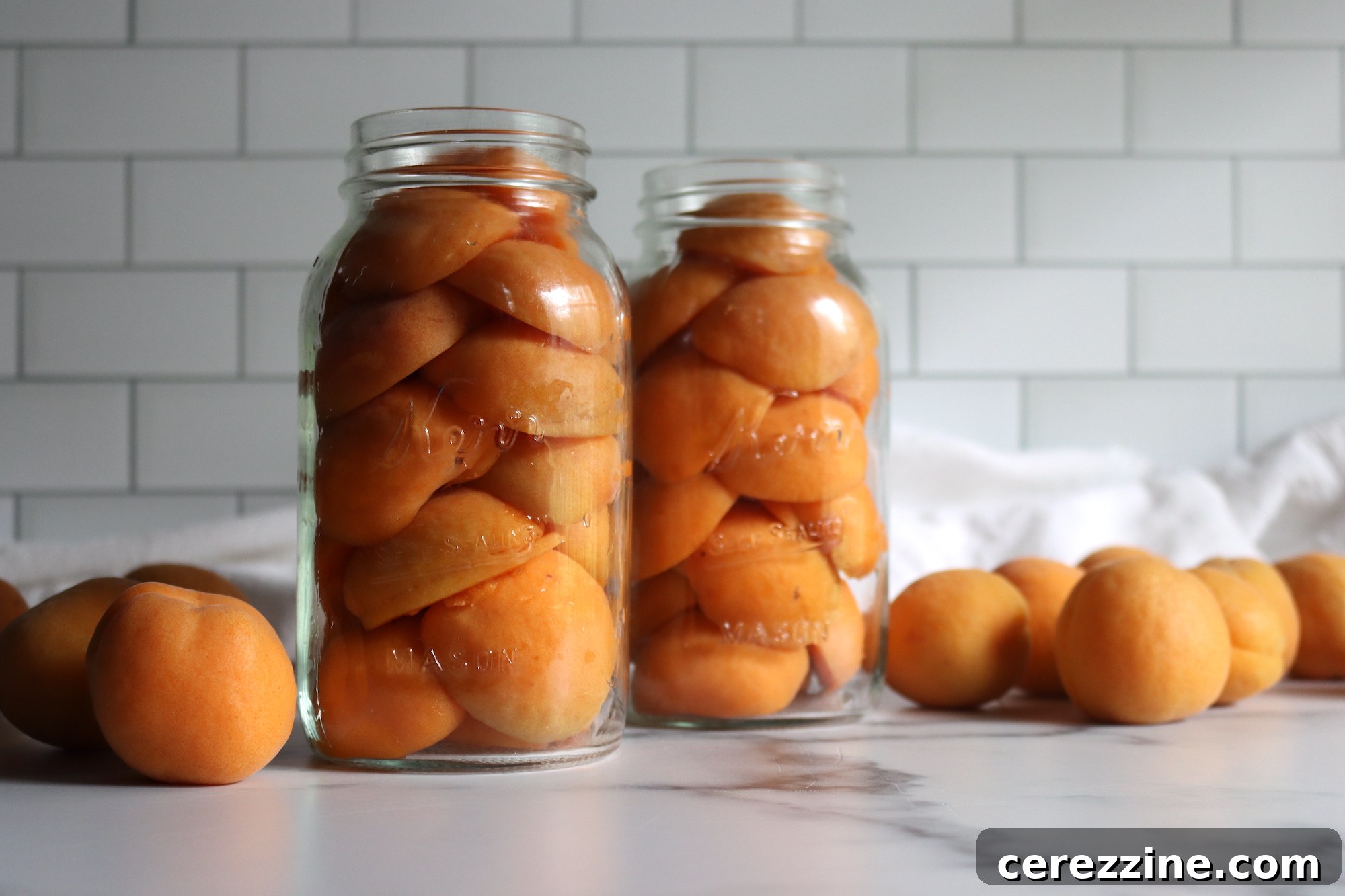
Carefully pack the prepared apricot halves into your hot, sterilized jars. For raw pack, simply arrange the apricot halves tightly into the jars, cut-side down if possible, which helps minimize air pockets and prevents them from floating too much. Ensure you leave enough space to allow the syrup to fully cover the fruit. Once packed, slowly pour the warm syrup over the fruit, ensuring it completely covers the apricots. Use a non-metallic utensil to gently remove any trapped air bubbles, then recheck the syrup level. Leave a consistent 1/2 inch of headspace (the space between the top of the food and the rim of the jar). Maintaining proper headspace is critical for a strong seal.
2. Preparing for Sealing:
After filling, use a clean, damp cloth to meticulously wipe the rims of the jars. Any sticky syrup or fruit residue can prevent the lids from sealing properly. Place a new, sterilized lid squarely on top of each jar. Then, screw on the bands until they are “fingertip tight”—meaning you tighten them just until you feel resistance, but avoid over-tightening. Over-tightening can prevent air from escaping during processing, leading to buckling lids or improper seals.
3. Processing the Jars:
Now, it’s time to process your jars to create a vacuum seal. For apricots, which are a high-acid fruit, you have the option of either water bath canning or pressure canning, though water bath canning is generally preferred for optimal texture.
- Water Bath Canning (Recommended): Gently lower the filled and sealed jars onto the rack in your preheated water bath canner. Ensure the jars are completely submerged by at least 1-2 inches of water. Bring the water to a rolling boil. Once boiling vigorously, start your timer. Process raw-packed apricots for 25 minutes for pint jars and 30 minutes for quart jars. (If you were to hot-pack, times would be 20 minutes for pints and 25 minutes for quarts, but again, this method is less ideal for apricots.)
- Pressure Canning (Optional): While possible, pressure canning apricots often results in a softer product. If you choose this method, process jars for 10 minutes at 6 lbs pressure in a dial-gauge canner or 5 lbs pressure in a weighted-gauge canner, regardless of whether you used a hot or raw pack. Remember to consult your canner’s specific instructions for safe operation.
Always remember to adjust canning times and pressures for altitude if you are located above 1,000 feet in elevation. This crucial step ensures proper heat penetration and safe preservation.
4. Cooling and Storing:
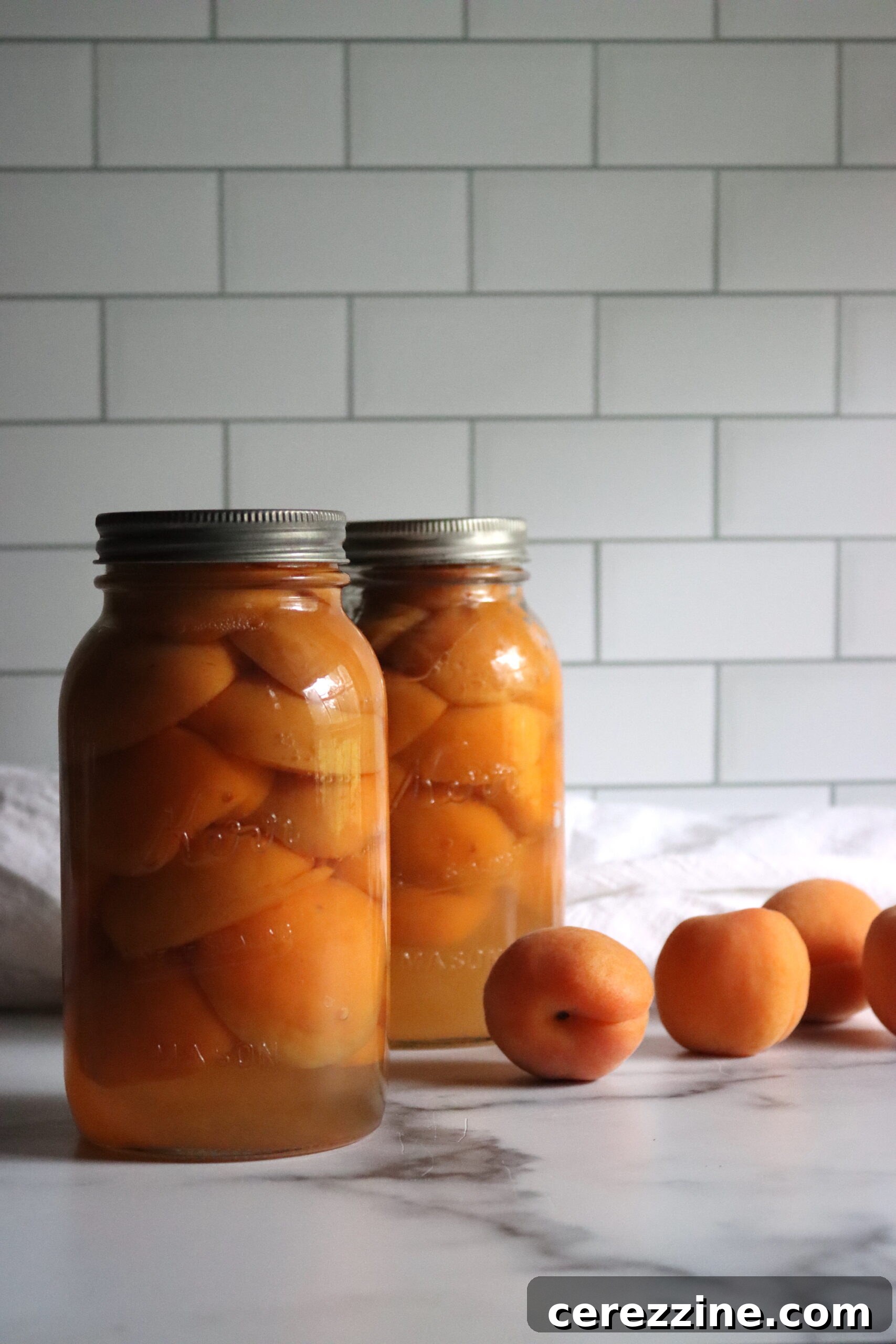
Once the processing time is complete, carefully turn off the heat and remove the canner lid. Allow the jars to sit in the canner for 5 minutes before carefully removing them using your jar lifter. Place the hot jars on a clean towel or a wire rack, ensuring they are not touching each other, and allow them to cool undisturbed at room temperature for 12 to 24 hours. You’ll likely hear satisfying “pinging” sounds as the lids seal.
After cooling, check the seals: press down on the center of each lid. If the lid is concave and doesn’t flex or pop back, it has sealed properly. Any jars that haven’t sealed should be refrigerated and consumed within a few days. For properly sealed jars, remove the bands (they can trap moisture and cause rust), wipe the jars clean, label them with the contents and date, and store them in a cool, dark, dry pantry. Properly canned and sealed apricots can be stored for 12-18 months, though quality may gradually diminish over time. Always refrigerate after opening.
Critical Altitude Adjustments for Safe Canning
Altitude plays a significant role in canning because boiling points decrease as elevation increases. To ensure your food reaches a safe temperature for preservation, processing times or pressures must be adjusted. Always consult these guidelines based on your specific elevation.
For Raw Pack Waterbath Canning Apricots:
- 0 to 1,000 feet in elevation: 25 minutes for pints, 30 minutes for quarts.
- 1,001 to 3,000 feet in elevation: 30 minutes for pints, 35 minutes for quarts.
- 3,001 to 6,000 feet in elevation: 35 minutes for pints, 40 minutes for quarts.
- 6,001 feet and above: 40 minutes for pints, 45 minutes for quarts.
For Hot Pack Waterbath Canning Apricots (Not Recommended, but for reference):
- 0 to 1,000 feet in elevation: 20 minutes for pints, 25 minutes for quarts.
- 1,001 to 3,000 feet in elevation: 25 minutes for pints, 30 minutes for quarts.
- 3,001 to 6,000 feet in elevation: 30 minutes for pints, 35 minutes for quarts.
- 6,001 feet and above: 35 minutes for pints, 40 minutes for quarts.
For Pressure Canning Apricots:
The processing time for pressure canning apricots remains a consistent 10 minutes for both pint and quart jars, regardless of whether they are raw or hot packed. However, the required pressure must be adjusted according to your altitude.
With a Dial Gauge Canner (e.g., Presto brand):
- 0 to 2,000 feet in elevation: 6 pounds pressure
- 2,001 to 4,000 feet in elevation: 7 pounds pressure
- 4,001 to 6,000 feet in elevation: 8 pounds pressure
- 6,001 to 8,000 feet in elevation: 9 pounds pressure
- Above 8,000 feet: 10 pounds pressure
With a Weighted Gauge Canner (e.g., All-American brand):
- 0 to 1,000 feet in elevation: 5 pounds pressure
- Above 1,001 feet in elevation: 10 pounds pressure
Canning Apricots Recipe

Canning apricots is one of the most rewarding ways to preserve summer fruit. This simple raw pack method ensures delicious, firm apricots for year-round enjoyment, perfect for desserts, breakfasts, or a sweet snack.
Equipment
- Water Bath Canner
- Canning Jars (Pint or Quart)
- New Lids and Bands
- Jar Lifter
- Canning Funnel
- Large Saucepan (for syrup)
- Non-Metallic Spatula/Debubbler
Ingredients
- Fresh Apricots (firm, ripe, unblemished)
- Sugar (quantity varies by desired syrup sweetness)
- Water (quantity varies by desired syrup sweetness)
- Optional: Lemon Juice or Ascorbic Acid (to prevent browning)
Instructions
- Prepare Apricots: Wash apricots thoroughly. Halve and pit them. Do not peel, as the peels help maintain shape and texture during canning.
- Prepare Syrup: In a large saucepan, combine sugar and water according to your desired syrup type (see notes below for ratios). Bring to a boil, stirring until sugar is dissolved. Keep syrup warm.
- Sterilize Jars & Lids: Wash jars in hot soapy water and rinse well. Sterilize jars by submerging them in boiling water for 10 minutes. Keep lids simmering in a separate pot of hot water. Keep your water bath canner preheated to 140-150°F (60-65°C).
- Pack Jars: Pack apricot halves tightly into the hot, sterilized jars, cut-side down. Pour warm syrup over the fruit, ensuring apricots are covered. Remove air bubbles with a non-metallic spatula, then adjust syrup level, leaving 1/2 inch of headspace.
- Seal Jars: Wipe jar rims clean with a damp cloth. Place new, sterilized lids on jars and screw bands on until fingertip tight.
- Process Jars: Carefully place jars in the preheated water bath canner. Ensure jars are covered by 1-2 inches of water. Bring to a rolling boil. For raw pack, process pints for 25 minutes, quarts for 30 minutes. (Adjust times for altitude – see notes).
- Cool and Store: After processing, turn off heat, remove canner lid, and let jars sit for 5 minutes. Carefully remove jars with a lifter and place on a towel to cool for 12-24 hours. Check seals (lids should be concave and not flex). Remove bands, label, and store in a cool, dark place. Refrigerate any unsealed jars and consume promptly.
Notes
Apricot Quantity: For a 9-pint batch, you’ll need approximately 10-12 pounds of fresh apricots. For a 7-quart batch, plan for about 16-18 pounds.
Syrup Sweetness: Adjust syrup sweetness to your preference. You can also substitute fruit juice (like apple or white grape) for water for a lighter option.
Syrup Ratios for a 9-Pint Canner Batch:
- Extra-light syrup: 3/4 cups sugar to 6 1/2 cups water
- Light syrup: 1 1/2 cups sugar to 5 3/4 cups water
- Medium syrup: 2 1/4 cups sugar to 5 1/4 cups water
- Heavy syrup: 3 1/4 cups sugar to 5 cups water
- Extra-Heavy Syrup: 4 1/4 cups sugar to 4 1/4 cups water
Syrup Ratios for a 7-Quart Canner Batch:
- Extra-light syrup: 1 1/4 cups sugar to 10 1/2 cups water
- Light syrup: 2 1/4 cups sugar to 9 cups water
- Medium syrup: 3 3/4 cups sugar to 8 1/4 cups water
- Heavy syrup: 5 1/4 cups sugar to 7 3/4 cups water
- Extra-Heavy Syrup: 6 3/4 cups sugar to 6 1/2 cups water
Altitude Adjustments
Adjust processing times and pressures based on your elevation for food safety.
For Raw Pack Waterbath Canning Apricots:
- 0 to 1,000 feet: 25 minutes (pints), 30 minutes (quarts).
- 1,001 to 3,000 feet: 30 minutes (pints), 35 minutes (quarts).
- 3,001 to 6,000 feet: 35 minutes (pints), 40 minutes (quarts).
- 6,001 feet and above: 40 minutes (pints), 45 minutes (quarts).
For Hot Pack Waterbath Canning Apricots:
- 0 to 1,000 feet: 20 minutes (pints), 25 minutes (quarts).
- 1,001 to 3,000 feet: 25 minutes (pints), 30 minutes (quarts).
- 3,001 to 6,000 feet: 30 minutes (pints), 35 minutes (quarts).
- 6,001 feet and above: 35 minutes (pints), 40 minutes (quarts).
For Pressure Canning Apricots (10 minutes for both pints and quarts):
Dial Gauge Canner:
- 0 to 2,000 feet: 6 pounds
- 2,001 to 4,000 feet: 7 pounds
- 4,001 to 6,000 feet: 8 pounds
- 6,001 to 8,000 feet: 9 pounds
- Above 8,000 feet: 10 pounds
Weighted Gauge Canner:
- 0 to 1,000 feet: 5 pounds
- Above 1,001 feet: 10 pounds
Nutrition Information
Nutrition information is an approximation and can vary based on ingredients and preparation methods.
Calories: 121 kcal,
Carbohydrates: 29g,
Protein: 2g,
Fat: 1g,
Saturated Fat: 0.04g,
Polyunsaturated Fat: 0.1g,
Monounsaturated Fat: 0.3g,
Sodium: 2mg,
Potassium: 402mg,
Fiber: 3g,
Sugar: 26g,
Vitamin A: 2985IU,
Vitamin C: 16mg,
Calcium: 20mg,
Iron: 1mg
Expand Your Home Canning Skills
If you’re inspired by the simplicity and delicious results of canning apricots, you might enjoy preserving other seasonal fruits as well. Home canning is a rewarding skill that allows you to enjoy the freshest flavors long after their growing season has passed.
- Canning Peaches
- Canning Cherries
There’s immense satisfaction in looking at a pantry shelf stocked with beautifully preserved homemade fruits. It’s a connection to the seasons, a way to reduce waste, and an assurance of healthy, delicious food for your family. Happy canning!