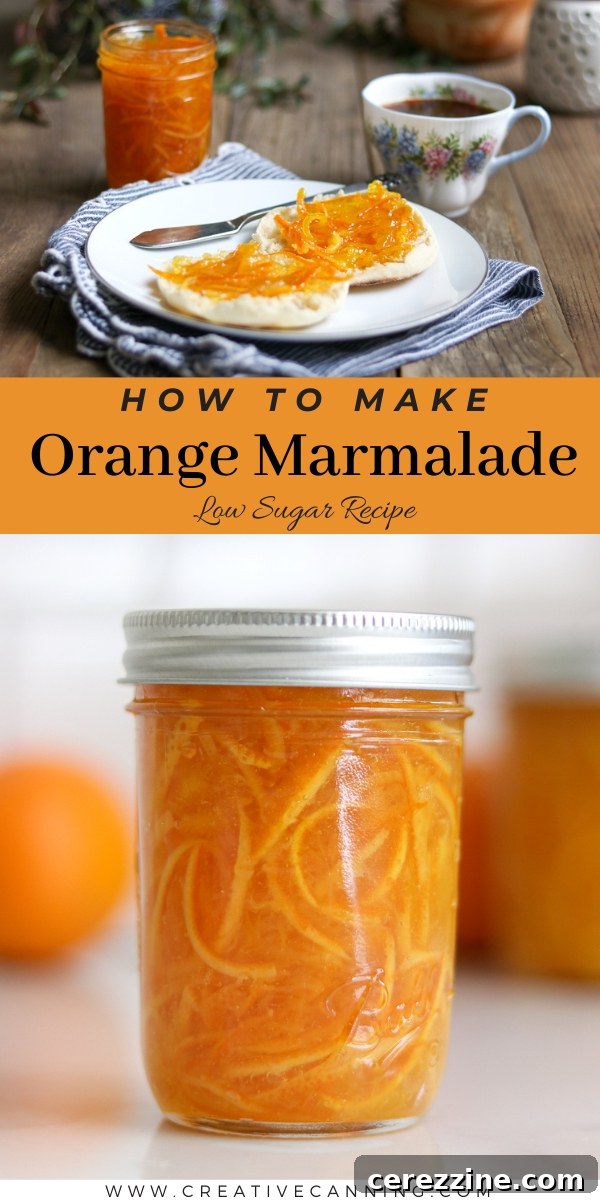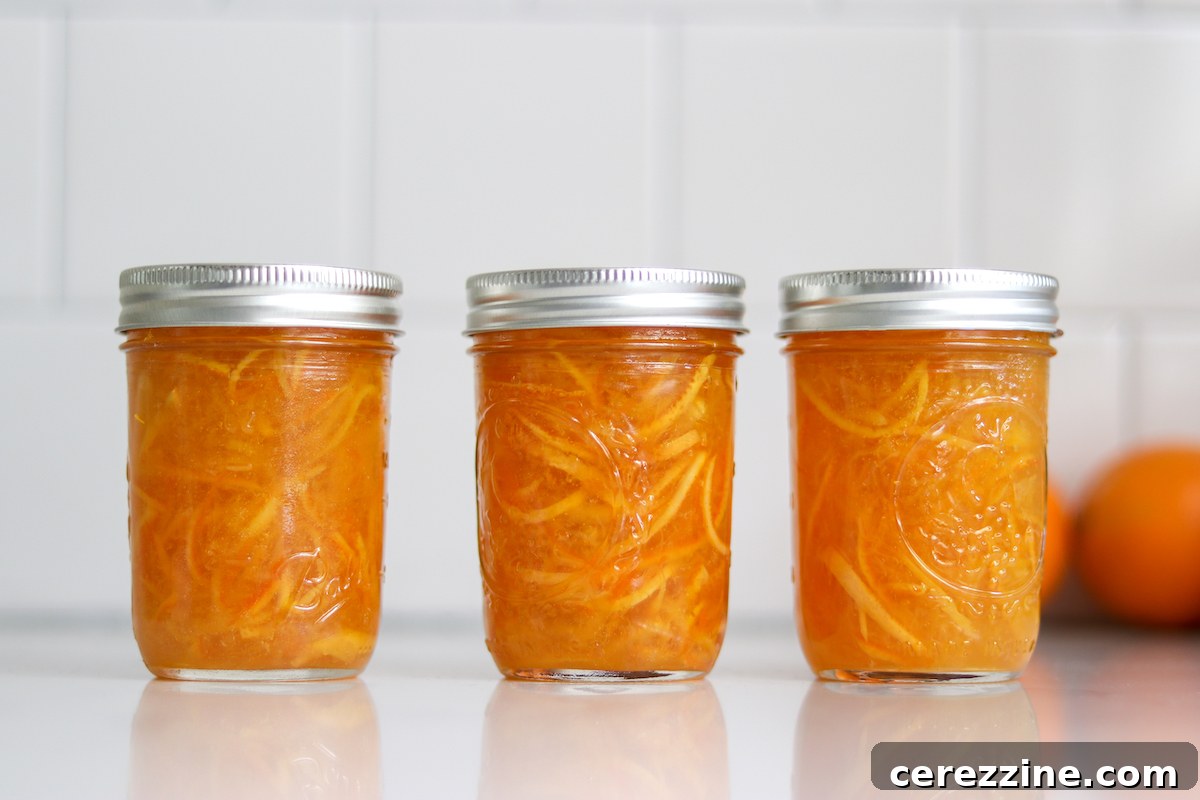
Welcome to the delightful world of homemade preserves, where flavor takes center stage without excessive sweetness! If you’re looking for a healthier alternative to traditional, sugar-laden recipes, this low-sugar orange marmalade is your perfect match. It offers all the bright, tangy, and subtly sweet notes you expect from a classic marmalade, but with a refined balance that truly lets the vibrant citrus shine through. Forget the overwhelming sugar rush; this recipe provides just the right amount to highlight the fruit’s natural goodness and achieve that perfect set.
Traditional orange marmalade recipes are notorious for calling for astounding quantities of sugar – sometimes as much as 12 cups! While this might seem excessive by today’s standards, there’s a historical reason behind it. Originally, marmalade was crafted from bitter, Seville oranges, which were far too tart to be enjoyed raw. Sugar was essential not only for preservation but also to render the fruit palatable.
However, in contemporary kitchens, we typically use readily available grocery store oranges that are already naturally sweet and less bitter. This means there’s no longer a need to overwhelm your batch with such enormous amounts of sugar. The challenge then becomes how to achieve the characteristic thick, spreadable consistency of marmalade without relying on sugar as the primary setting agent. This is where low-sugar pectin comes into play. By utilizing a specialized low-sugar pectin, we can ensure our orange marmalade still sets beautifully, delivering an exquisite flavor profile that’s perfectly balanced—sweet enough to be delicious, yet tangy enough to be refreshing, without the cloying sweetness of older recipes.
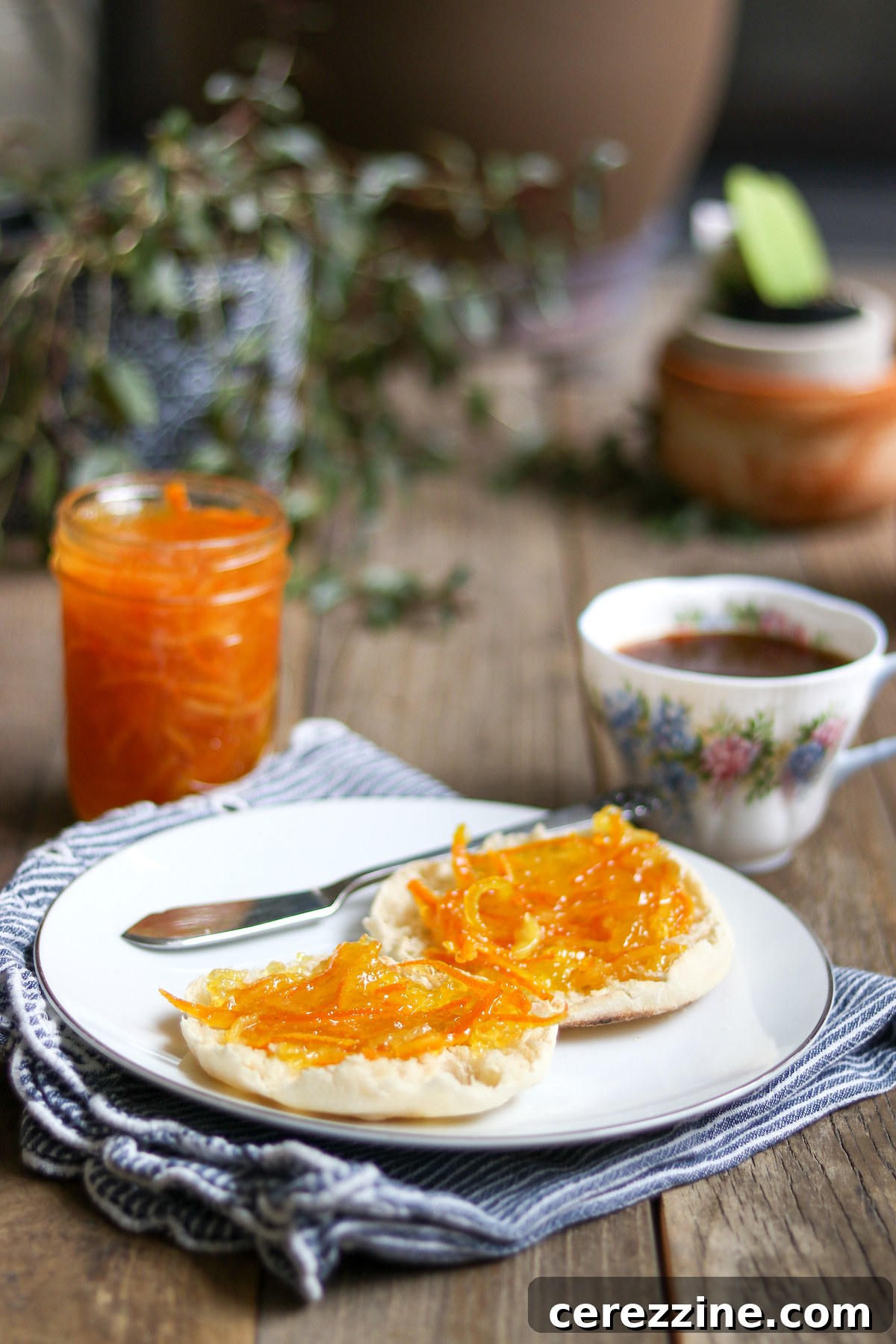
Essential Ingredients for Perfect Orange Marmalade
Crafting homemade orange marmalade involves utilizing both the juicy flesh and the aromatic rind of the orange, which together create its distinctive, rich flavor. To elevate this citrus symphony, a few lemons are also incorporated. While you won’t distinctly taste “lemon” in the final product, their presence is crucial. Lemons introduce an essential acidity that brightens the overall flavor, preventing the marmalade from becoming overly sweet or “cloying,” and adding a depth that oranges alone might miss. This subtle acidity also plays a vital role in helping the pectin activate and set the jam.
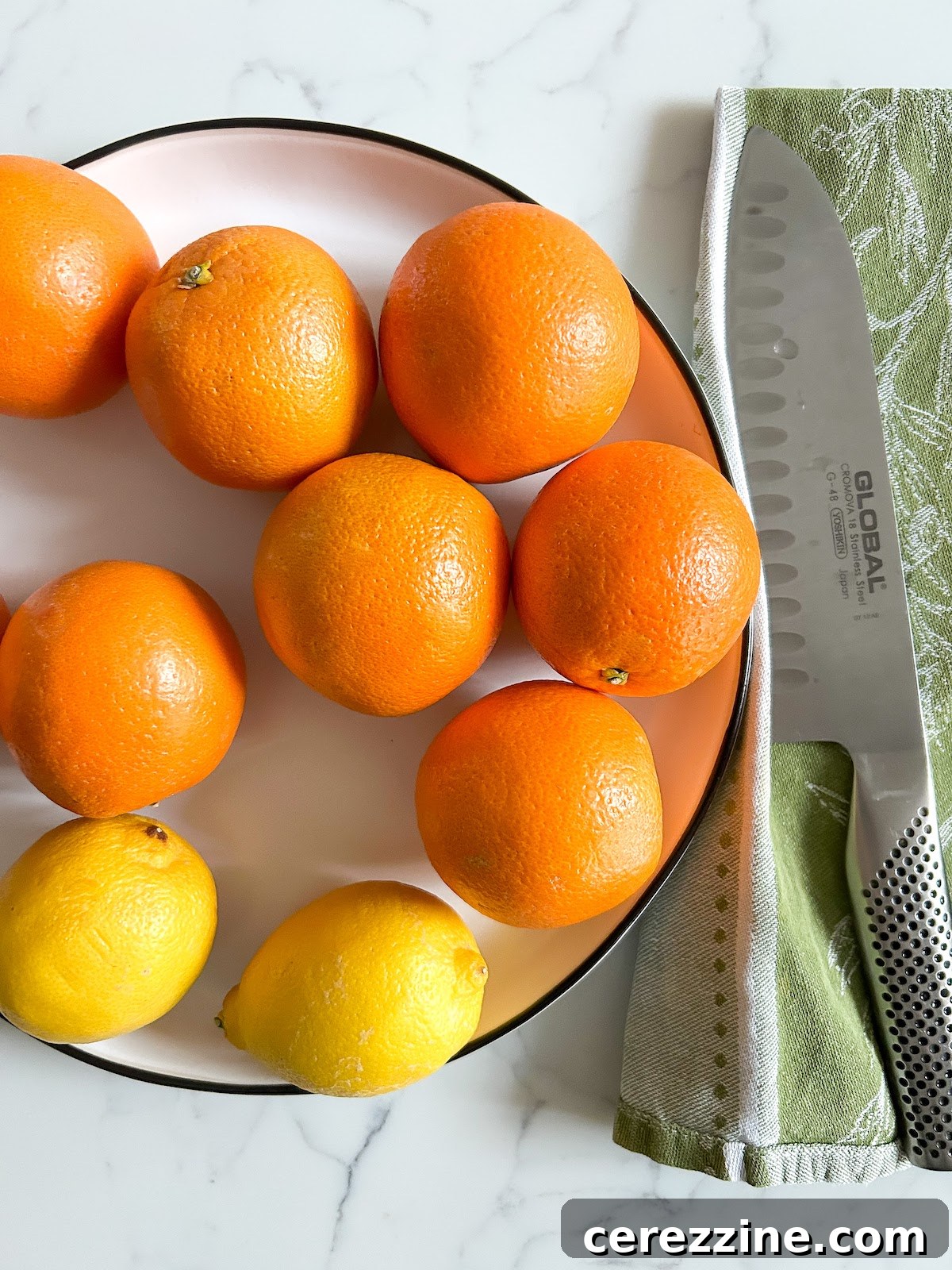
The foundation of this recipe is adapted from the instructions found inside a box of Sure Jel Low Sugar Pectin. However, it’s important to note that other brands of low-sugar pectin, such as Pomona’s Universal Pectin, can also be used. If you opt for an alternative pectin, always refer to the specific instructions provided on its packaging, as the method for adding ingredients or processing times may vary to ensure the best results and a proper set.
This recipe yields a generous batch of marmalade, approximately 10 to 12 half-pint (8 oz) jars, making it perfect for sharing with friends and family, or simply stocking your pantry. Here’s what you’ll need:
- 8 medium oranges (roughly 2½ to 3 pounds)
- 2 medium lemons
- 4 cups granulated sugar, divided
- 2½ cups water
- 1 box (1.75 oz) Sure Jel Low Sugar Pectin (or equivalent low-sugar pectin)
- 1/8 tsp. baking soda (refer to notes for importance)
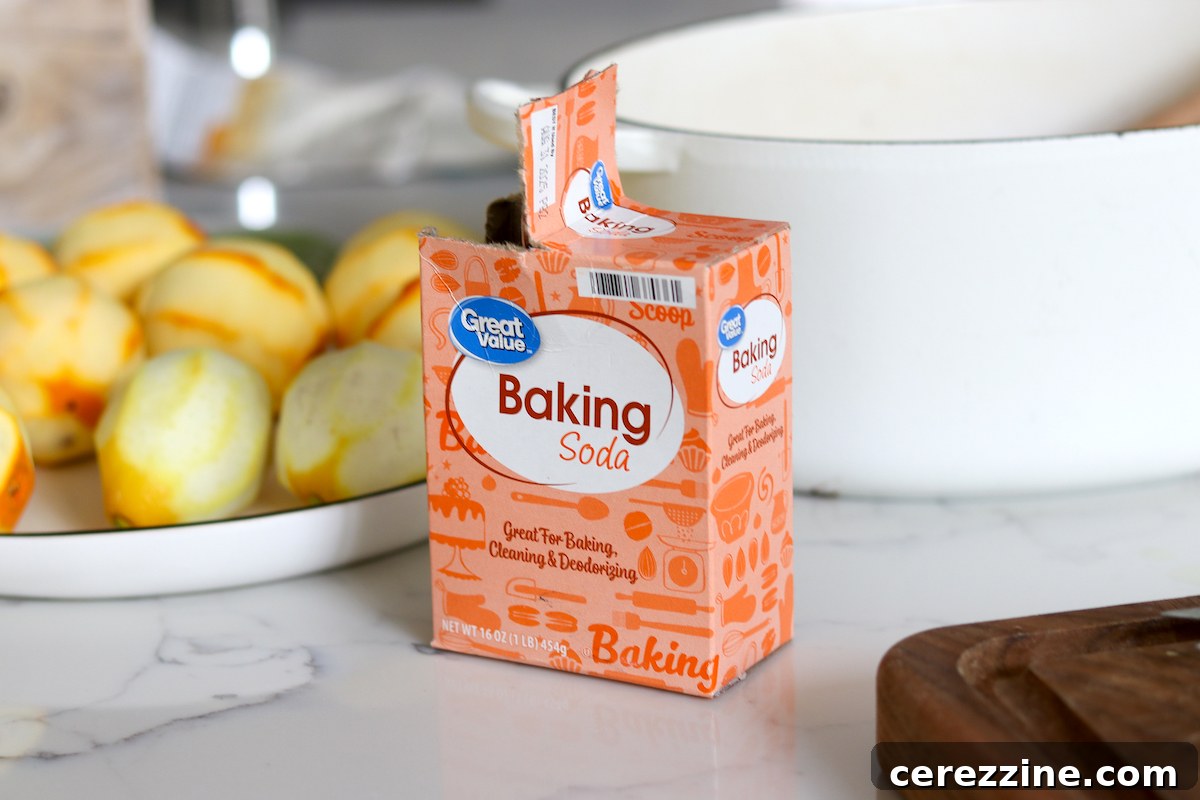
When choosing your oranges and lemons, aim for fruit that is fully ripe but firm, without any soft spots or bruises. Optimal fruit quality contributes significantly to the marmalade’s flavor and texture. The small amount of baking soda in this recipe is a critical ingredient for several reasons. In traditional marmalade making, peels are often cooked for hours to soften them. This recipe is much quicker, so the baking soda acts as a catalyst, helping to tenderize the peels more efficiently, ensuring they are pleasantly soft and integrated into the marmalade’s texture. Furthermore, citrus fruits are highly acidic. While this acidity is crucial for canning safety, excessively high acidity can sometimes hinder pectin from setting properly. Baking soda helps to slightly moderate the pH, bringing it into an optimal range for pectin activation, without compromising the acidity required for safe water bath canning. You’re gently balancing the pH, not neutralizing it.
Crafting Your Homemade Orange Marmalade: A Step-by-Step Guide
This recipe is designed for creating delicious, shelf-stable canned orange marmalade, not freezer jam. It is imperative that you are familiar with the principles of hot water bath canning and have all the necessary equipment ready, including a canner, up to 12 half-pint jars, lids, bands, and a jar lifter. If you are new to water bath canning or need a refresher, please consult a reliable guide, such as a comprehensive Beginner’s Guide to Water Bath Canning, before you begin to ensure food safety and successful preservation.
Start by thoroughly washing your oranges and lemons under clean, cool running water. Use your hands or a gentle vegetable brush to scrub the skins, as we will be utilizing the rinds. Since the peels are a key component, opting for organically grown or locally sourced citrus is highly recommended to minimize pesticide exposure.
Next, use a vegetable peeler to carefully remove only the outermost colored layer of the orange and yellow rind from the fruits. The goal is to capture the vibrant, flavorful zest while avoiding the thick, white pith underneath, which can impart a bitter taste to your marmalade.
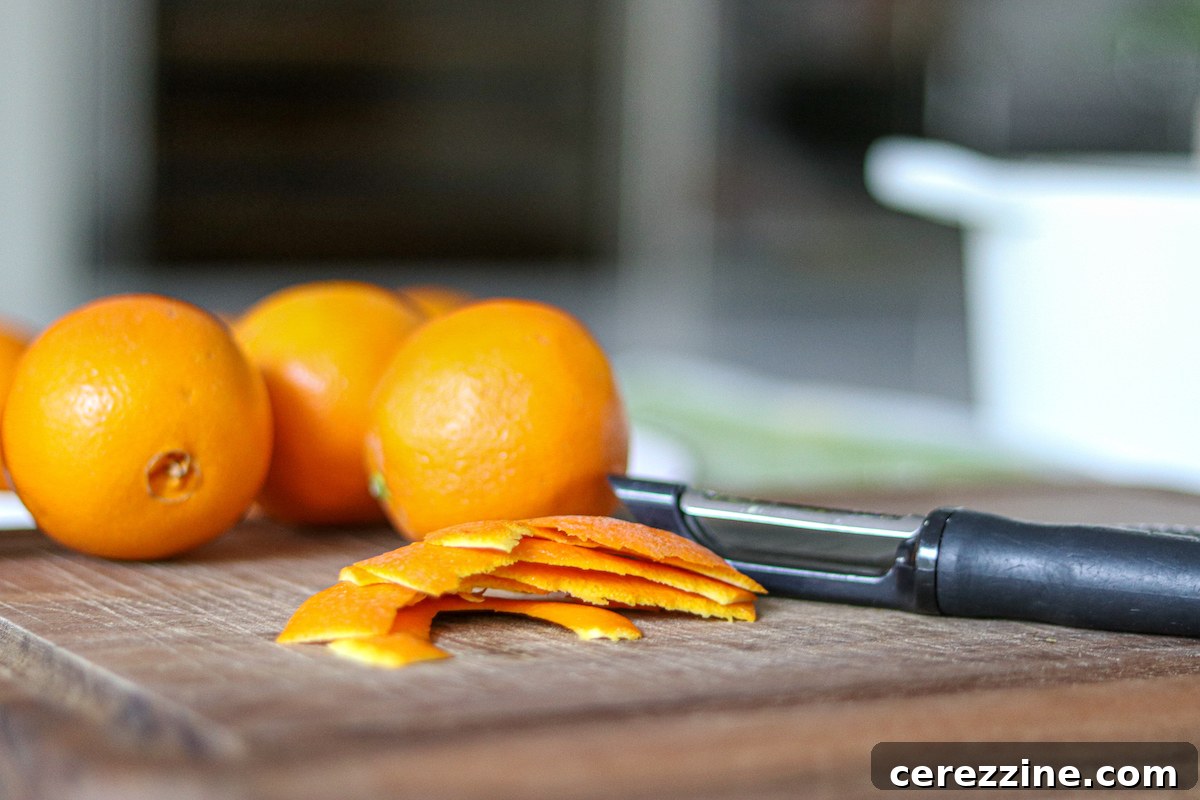
Citrus fruits typically have a substantial pith layer that lacks flavor and can be quite bitter. For the best marmalade, we want to minimize its inclusion. Once you’ve peeled off the thin, colored zest, finely chop these rinds. While a coarse chop is acceptable, cutting them into uniform, neat strips will significantly enhance the visual appeal of your finished marmalade, making it even more enticing. Place these chopped rinds into a large saucepan.
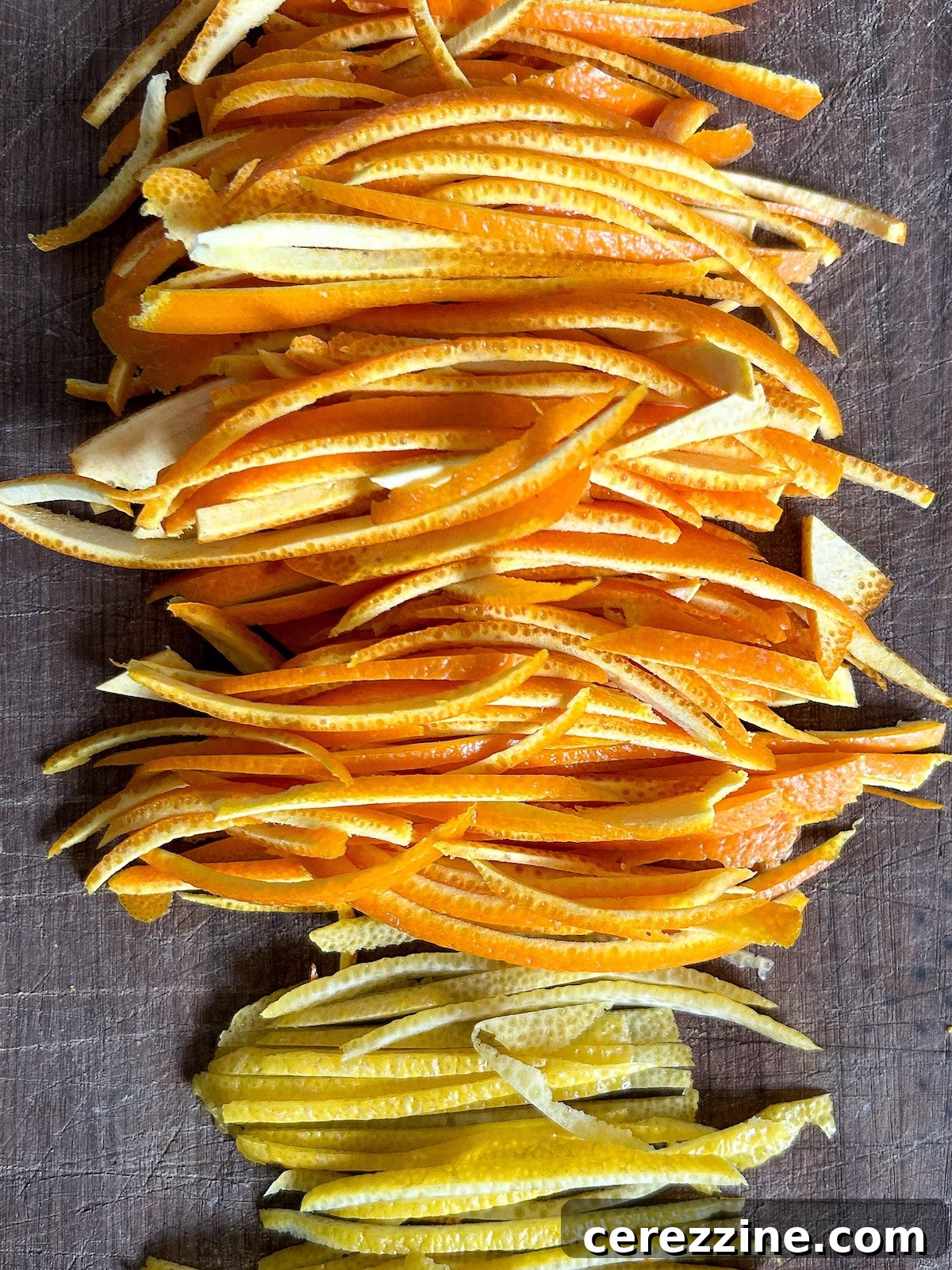
To the saucepan containing the chopped rinds, add 1/8 teaspoon of baking soda and 2½ cups of water. Stir the mixture well to ensure the baking soda dissolves completely. As mentioned earlier, the baking soda is crucial for softening the peel pieces, contributing to a delightful texture in your finished marmalade, especially with this quicker cooking method. Bring this mixture of rinds, baking soda, and water to a boil over medium-high heat, stirring occasionally to prevent sticking and ensure even cooking.
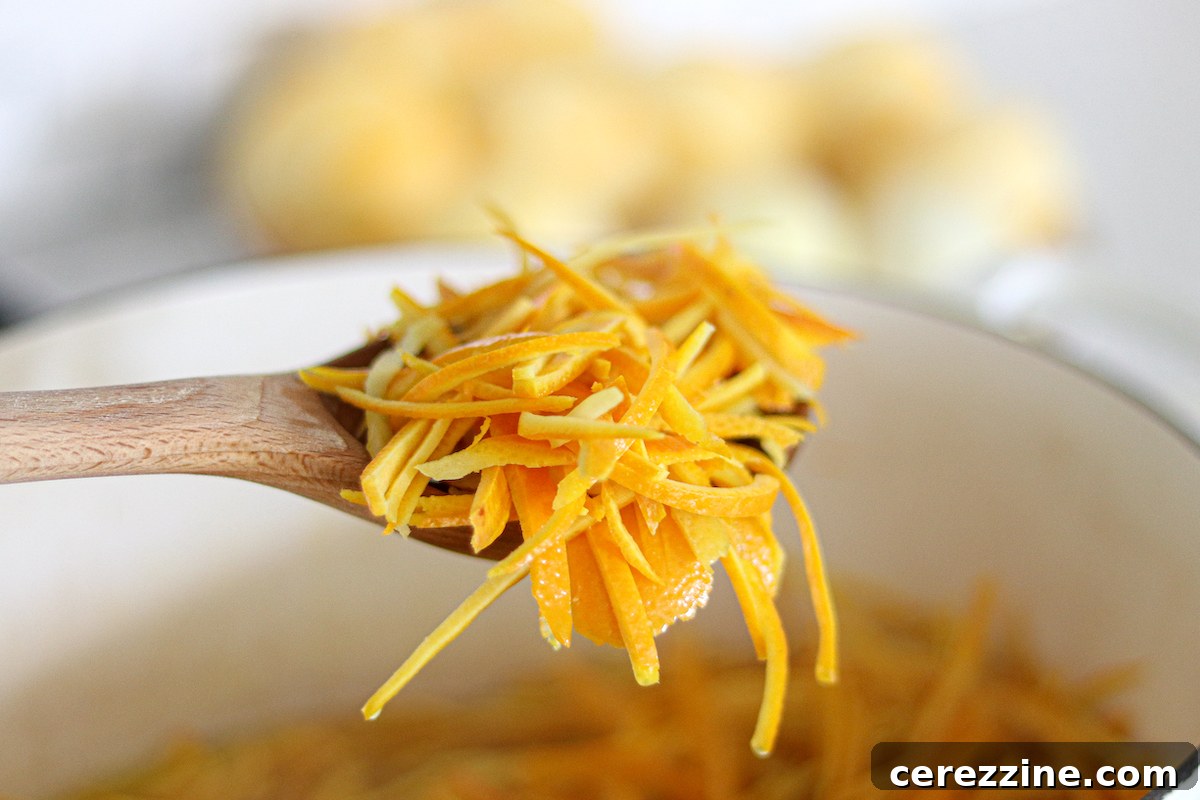
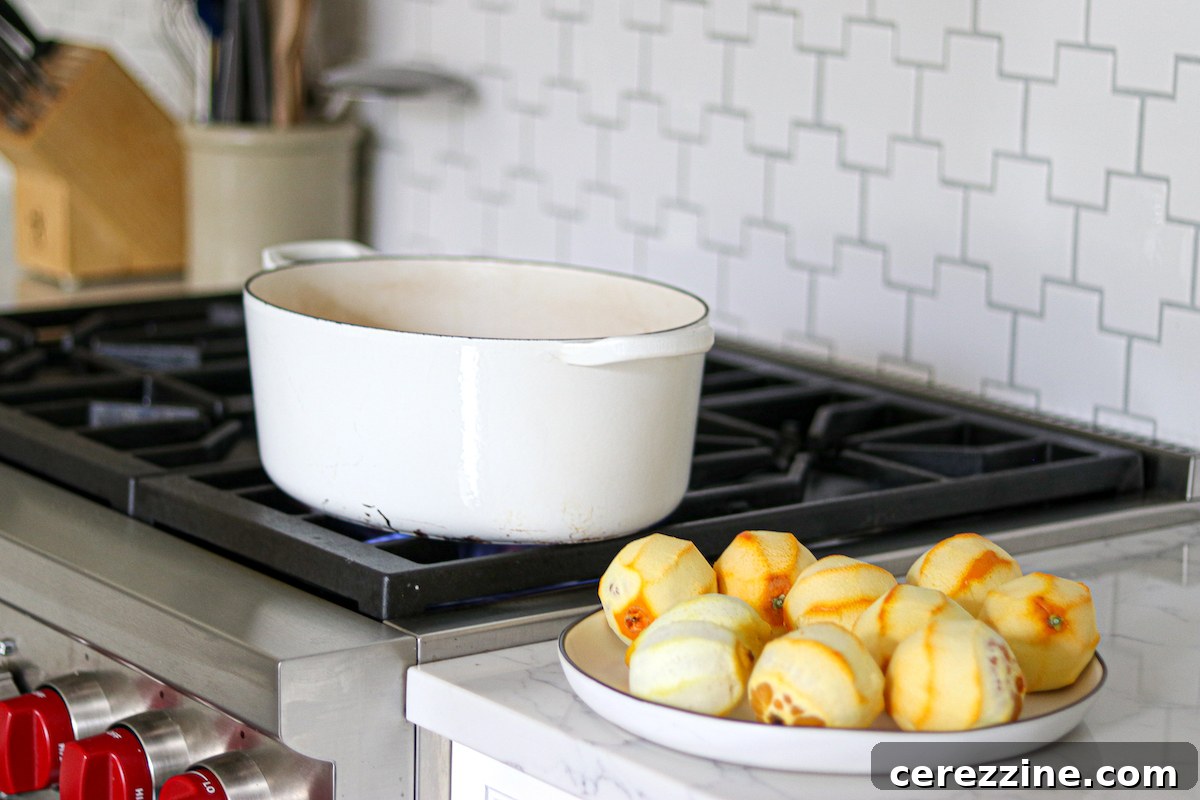
Once the mixture reaches a boil, reduce the heat to medium-low, cover the saucepan, and allow it to simmer for 20 minutes, continuing to stir occasionally. While the rinds are simmering, focus on the remaining fruit. Carefully remove and discard all the white pith from the peeled oranges and lemons. This white layer, as noted, is bitter and contributes little to the flavor, so it’s best sent to the compost. We’re only interested in the vibrant, flavorful zest and the juicy pulp.
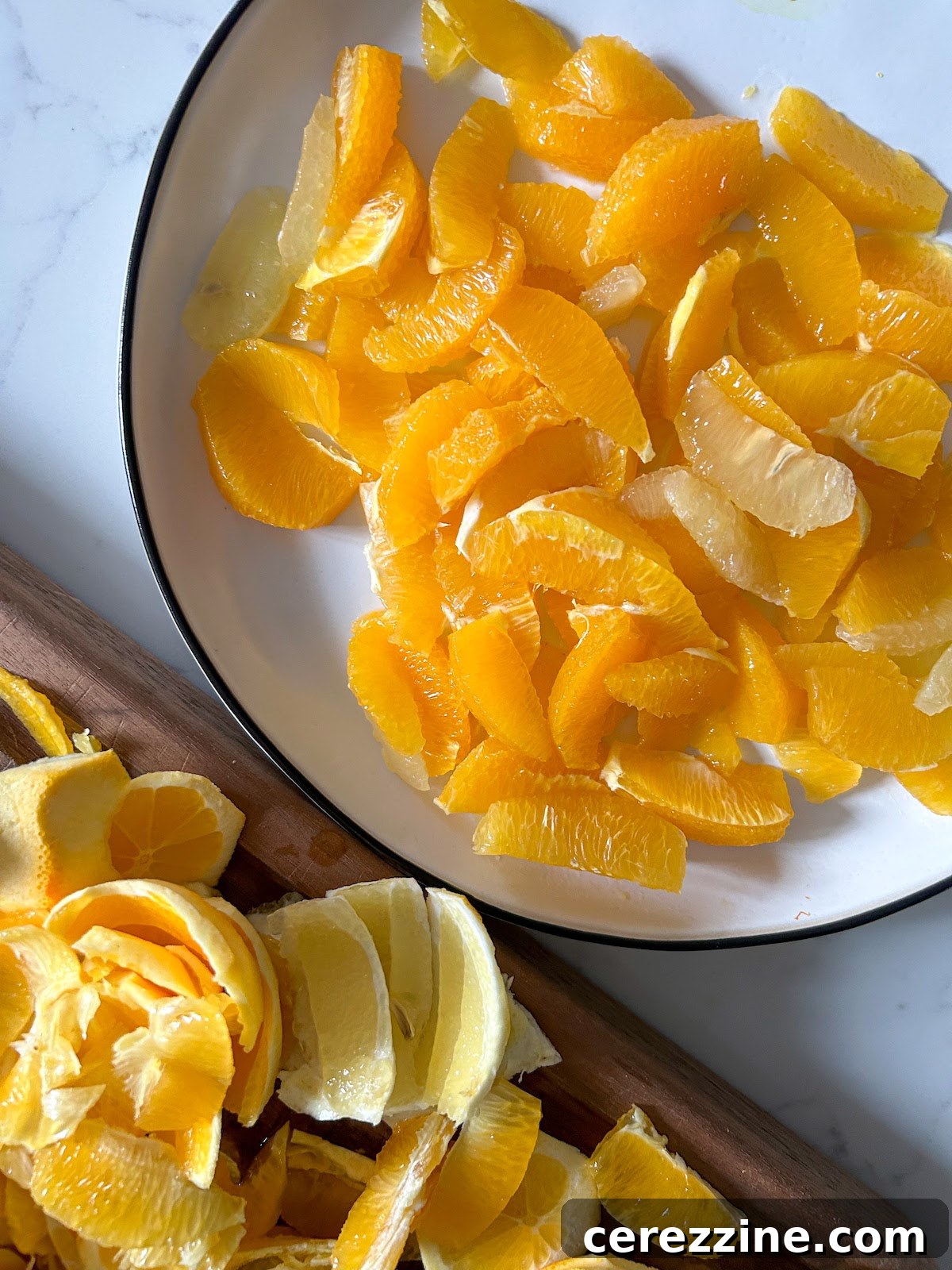
After the pith has been removed, coarsely chop the fleshy part of the oranges and lemons. As you chop, it’s important to collect as much of the escaping juice as possible. Working over a shallow bowl or a cutting board with a lip can help you retain these precious juices, which are packed with flavor and natural pectin. Do not deliberately juice the fruit; simply collect what naturally releases during chopping.
Once the peel mixture has simmered for the full 20 minutes, add the chopped fruit and all the reserved juices to the saucepan. Stir everything together and continue to simmer for an additional 10 minutes, stirring occasionally. At this stage, you should have approximately 5½ cups of cooked fruit mixture. If your volume is slightly less, you can add a little more water to reach the desired amount. If it’s significantly less, you may need to chop and add an additional orange (without the peelings) and simmer for another 10 minutes to ensure adequate fruit content for the pectin to work effectively.
While your fruit mixture is simmering, prepare your hot water bath canner. Fill it with enough water to cover your jars by 1-2 inches, and begin heating it. Sterilize your jars and ensure your two-part canning lids (flats and bands) are ready. Have all other necessary canning tools, such as a jar lifter, handy.
Now, measure 4 cups of granulated sugar into a medium bowl. This entire amount will be used, but not all at once. Take precisely ¼ cup of this sugar and transfer it to a smaller bowl. Add the packet of powdered low-sugar pectin to this smaller bowl with the ¼ cup of sugar, and stir them together thoroughly. This crucial step prevents the pectin from clumping when added to the hot fruit mixture, ensuring it dissolves evenly and activates properly. If you were to add all the sugar at this initial stage, it could “shock” the pectin and hinder its ability to set.
Pour the ¼ cup sugar and pectin mixture into the saucepan with your hot fruit mixture. Stir continuously to ensure the pectin dissolves completely. Return the saucepan to high heat, stirring constantly until the mixture reaches a full, rolling boil. A full rolling boil is characterized by bubbles that cannot be stirred down; the mixture continues to boil vigorously even while you are stirring. Once this rolling boil is achieved, slowly add the remaining premeasured sugar (from the medium bowl) to the saucepan, continuing to stir until all the sugar is dissolved. Bring the mixture back to a full rolling boil and boil it for exactly one minute, stirring constantly.
After precisely one minute of boiling, remove the marmalade from the heat. Use a metal spoon to skim off any foam that has formed on the surface. Skimming improves the clarity and appearance of the finished marmalade.
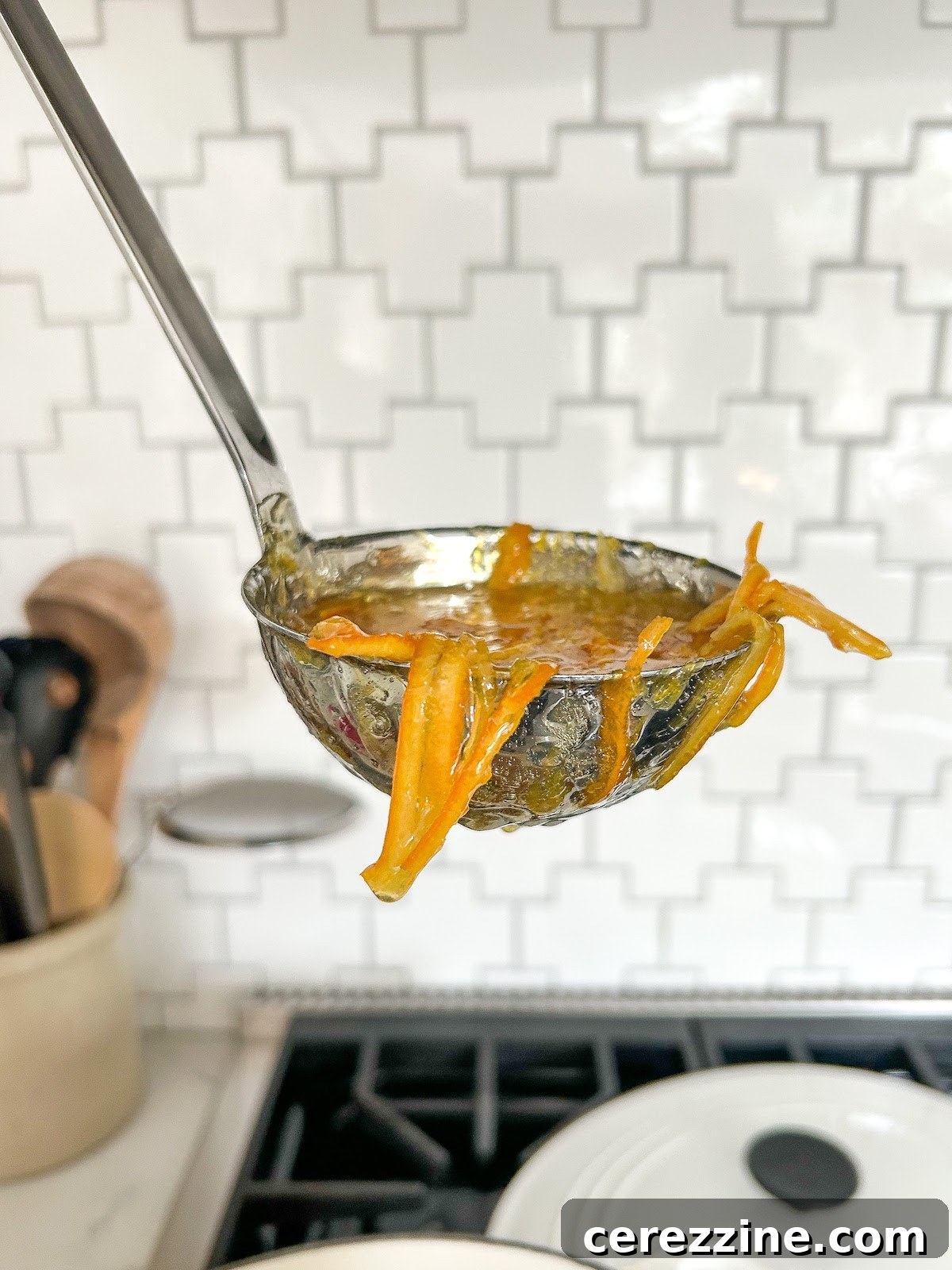
Immediately and carefully ladle or pour the hot marmalade into your hot, sterilized jars. A canning funnel with headspace measurements is invaluable here, helping you leave the correct amount of space and prevent spills. Aim for precisely ¼ inch of headspace at the top of each jar. Maintaining the correct headspace is vital for a strong seal during processing and prevents oxidation during storage, which can lead to discoloration and reduced quality.
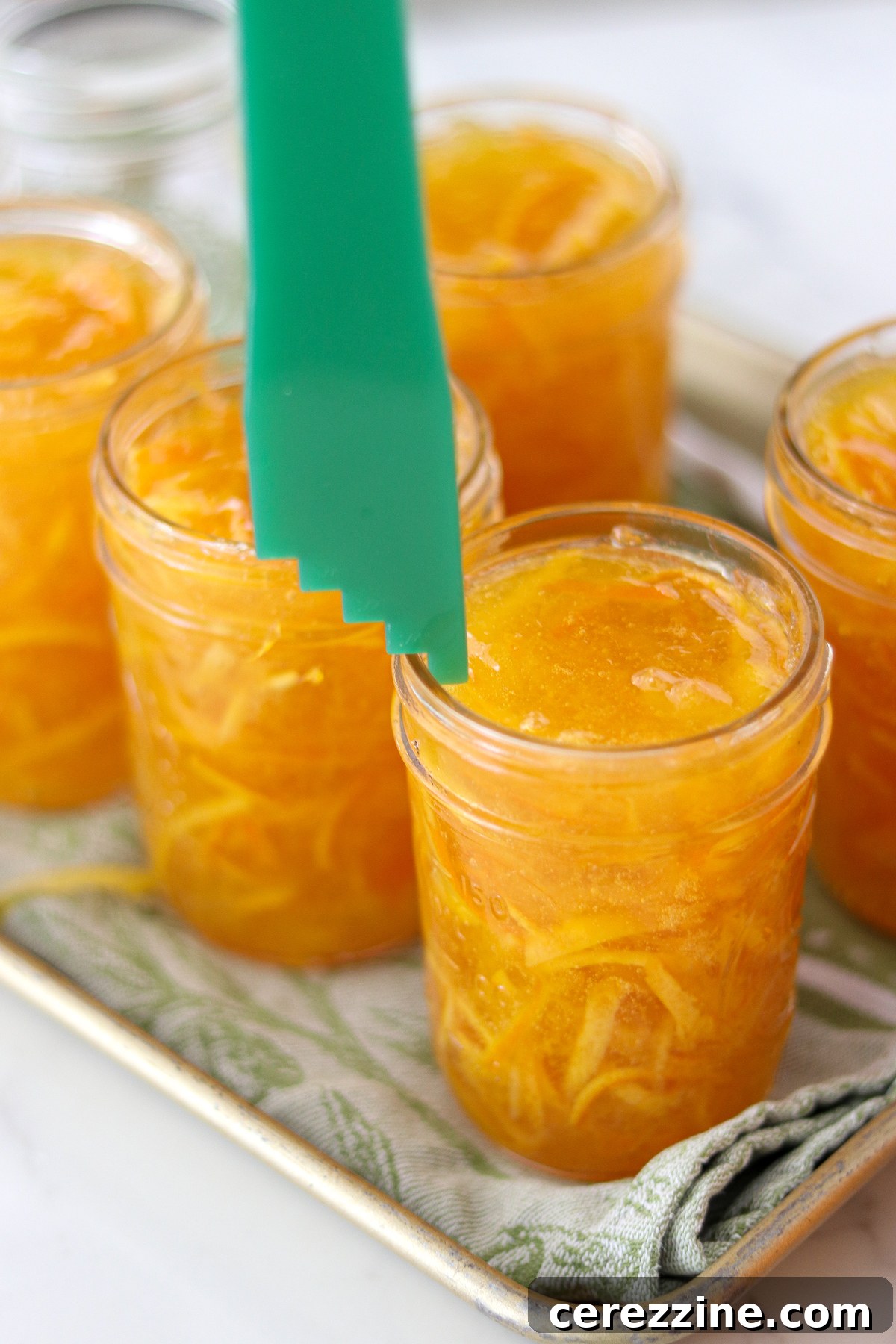
Using a clean, damp cloth, carefully wipe the rims of each jar to remove any marmalade residue. This ensures a clean surface for the lids to seal properly. Place the two-part canning lids (the flat disc and the screw band) on the jars. Tighten the screw bands to “finger-tight” – meaning firm but not overtightened with a tool. Overtightening can prevent air from escaping during processing, leading to seal failures. Now your jars are ready for the final canning stage.
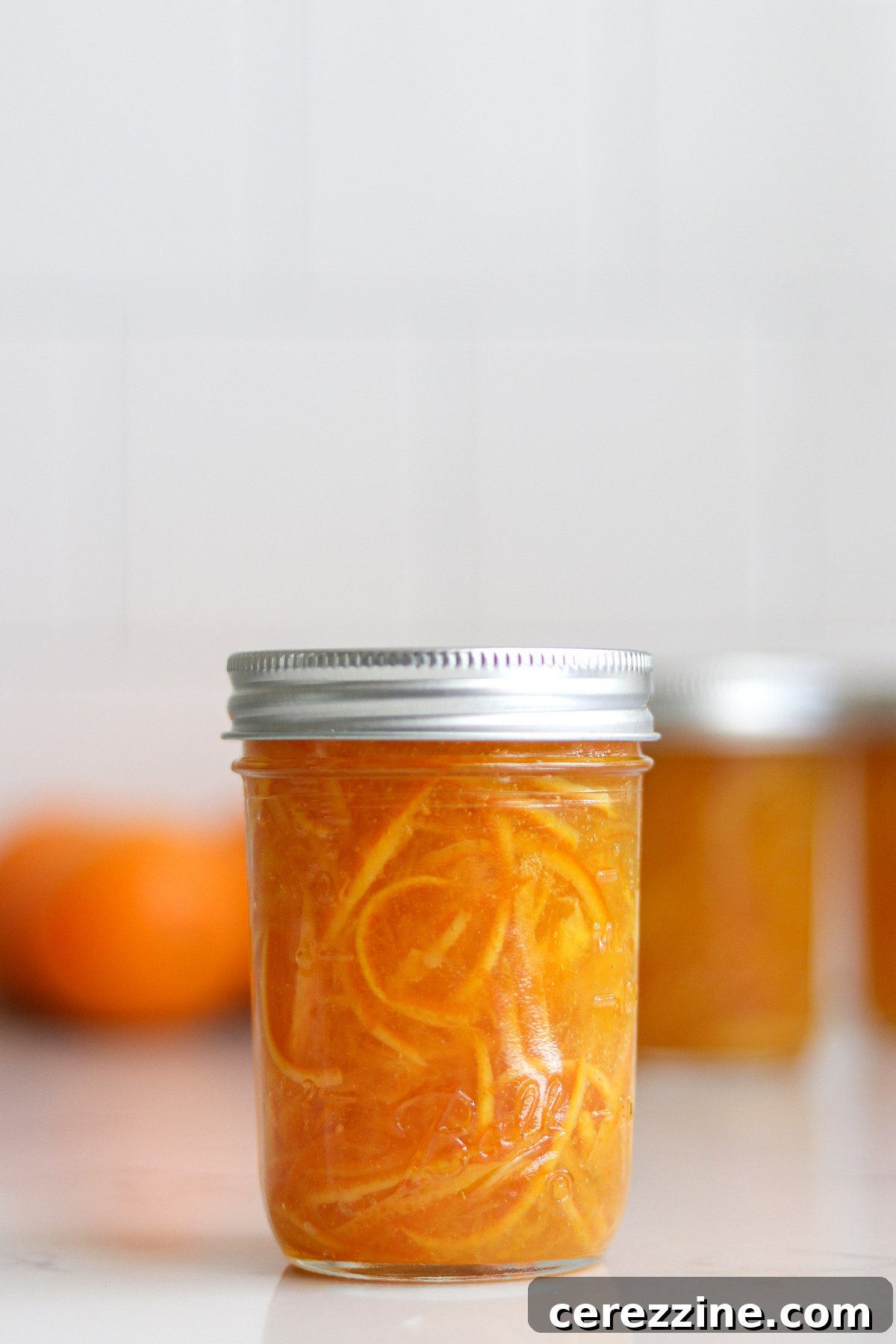
Safe Water Bath Canning for Orange Marmalade
Carefully place your filled jars into the preheated water bath canner, ensuring they are fully submerged with at least 1-2 inches of water covering the tops. Bring the canner to a vigorous, rolling boil. Once the canner is at a full boil, set your timer and process the jars for 10 minutes. For those living at higher altitudes, it is crucial to adjust the processing time according to your elevation; refer to the chart provided with your pectin or a reliable canning guide for precise adjustments.
After the processing time is complete, turn off the heat and carefully remove the canner lid. Allow the jars to rest in the hot water for 5 minutes before removing them. This helps prevent “siphoning” (loss of liquid from the jars). Using a jar lifter, carefully remove the hot jars from the canner and place them upright on a towel-lined surface on your counter. Ensure there is adequate space between the jars to allow air to circulate freely. Leave the jars undisturbed for a minimum of 24 hours.
After 24 hours, check the seals. A properly sealed jar will have a lid that is concave (curved inwards) and does not flex when pressed in the center. If a lid still has a “bubble” in the center or springs back when pressed, it has not sealed. You can either reprocess unsealed jars within 24 hours using new lids, or store them immediately in the refrigerator for immediate use, consuming the marmalade within three weeks.
It’s important to exercise patience with homemade marmalade, especially low-sugar versions, as it can take time to achieve its desired set. Even if the jars have sealed perfectly, the marmalade may initially appear runny or have a thinner consistency than you prefer. Don’t despair! Your orange marmalade can take up to two weeks to set firmly. While you can certainly enjoy it before it’s fully set, waiting for this period will reward you with the ideal thick, spoonable texture characteristic of delicious marmalade.
Store sealed, unopened jars of marmalade in a cool, dry, dark place, such as your pantry, for up to 12 months for peak quality. It will likely remain good to eat beyond this timeframe as long as the jars maintain a secure seal. Once a jar is opened, always refrigerate the marmalade and consume it within three weeks to maintain freshness and quality.
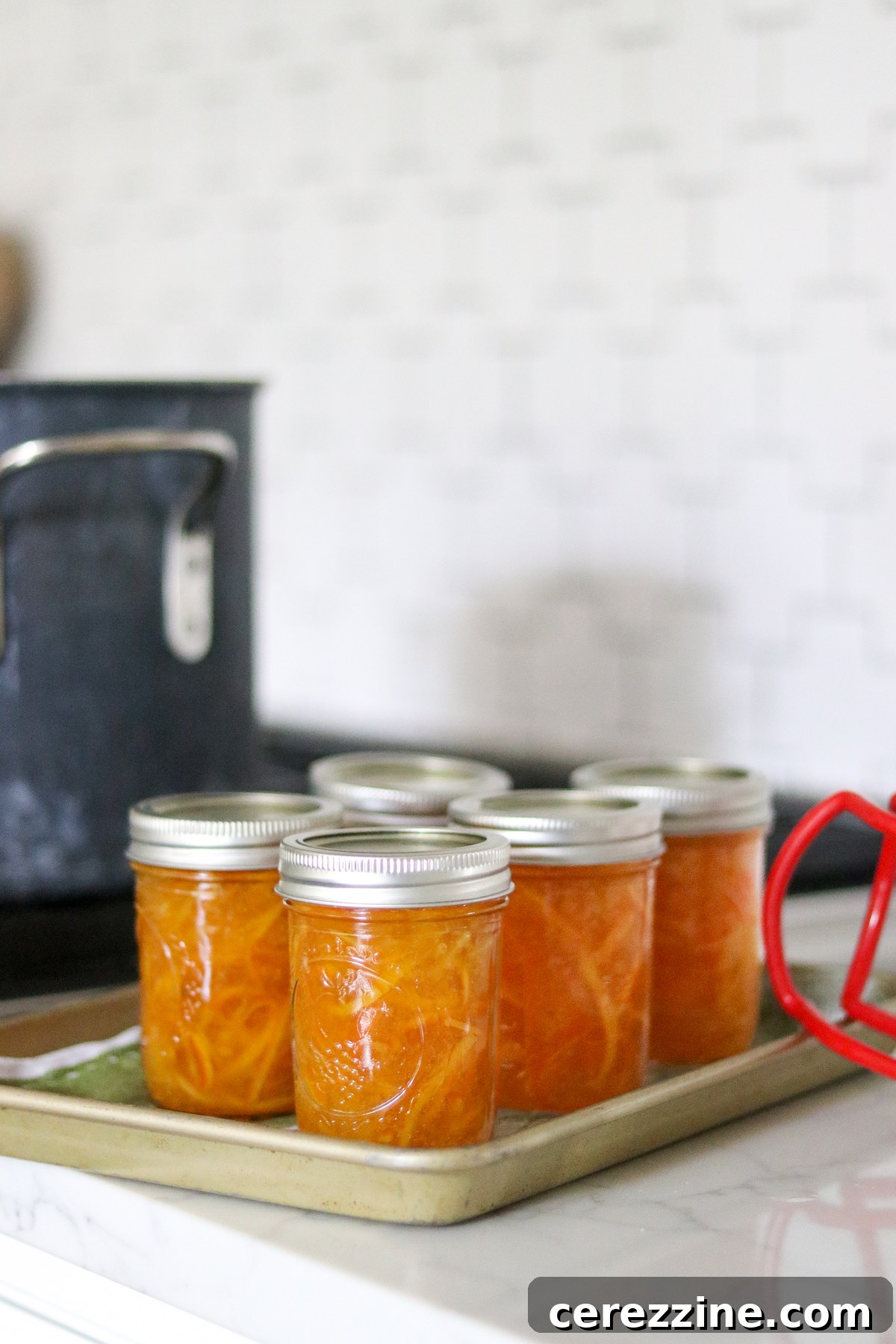
Creative Orange Marmalade Variations
The beauty of homemade orange marmalade lies in its versatility. It serves as a fantastic base for incorporating various flavors, allowing you to create unique and personalized treats for yourself, your family, and your friends. Don’t be afraid to experiment!
For a warm and comforting twist, consider adding extracts. Flavors like pure almond or vanilla extract pair exceptionally well with the bright citrus notes of orange. Simply add a small amount (start with ½ to 1 teaspoon) to the rind mixture while it’s cooking to soften, allowing the flavors to meld beautifully.
Incorporating other fruits can lead to delightful combinations. Finely chopped cherries, cranberries, or pomegranate arils added to your fruit mixture during the cooking process will introduce new textures, colors, and complementary tart-sweet notes, creating a more complex and exciting marmalade.
Spices are another excellent way to customize your marmalade. Ginger, rosemary, cinnamon, cloves, or even a hint of cardamom can add incredible depth. When using spices, start with small amounts (e.g., ¼ teaspoon of ground spice or a small sprig of fresh rosemary). Allow the marmalade to simmer for a while after adding them, as heat helps to release and intensify their flavors. Taste periodically and adjust to your preference, remembering that a little goes a long way.
And for a truly exceptional treat, I wholeheartedly recommend adding pineapple! Pineapple-orange marmalade is a personal favorite, offering a tropical zest that brightens any breakfast spread. To make it, simply substitute 1 cup of finely chopped pineapple for 1 cup of chopped orange, then follow the rest of the recipe instructions as written. This vibrant combination is absolutely divine on warm muffins, crispy toast, or even drizzled over pancakes for an indulgent morning meal.

Creative Culinary Uses for Orange Marmalade
Orange marmalade is far more versatile than just a spread for toast. Its vibrant citrus flavor and sweet-tangy profile can elevate a wide array of prepared dishes, both sweet and savory. Get creative and explore the many ways to incorporate this homemade gem into your cooking!
For a simple yet elegant side dish, add a spoonful of orange marmalade to the pot when cooking carrots. The marmalade will beautifully glaze the vegetables, imparting a delicate sweetness and a touch of citrus that complements the earthy flavor of the carrots. It’s a fantastic way to brighten up a weeknight meal.
Transform ordinary chicken breasts into an extraordinary meal by topping them with orange marmalade. Its sweet and tangy characteristics make it an excellent glaze for roasted or baked chicken, creating a refreshing orange-chicken flavor profile that’s reminiscent of your favorite takeout but with a homemade touch. Brush it on during the last few minutes of cooking for a glossy finish.
Orange marmalade also makes an absolutely phenomenal glaze for grilled pork chops. As your pork chops near completion on the grill, spread a generous layer of marmalade over them during the final 1-2 minutes of cooking. The sugar in the marmalade will caramelize slightly, forming a delicious, sticky-sweet crust that adds incredible flavor and tenderness to the meat.
Elevate your breakfast or brunch by incorporating orange marmalade into your baking. Bran muffins, for instance, reach a whole new level of deliciousness when orange marmalade is swirled into the batter. Then, for an extra burst of flavor and moisture, top them with even more marmalade after they come out of the oven. These marmalade-infused muffins are truly irresistible!
Don’t limit yourself to these suggestions. Think of orange marmalade as a secret weapon in your pantry. Anything that could benefit from a bright, sweet, or citrusy boost is a candidate. Stir it into salad dressings, use it as a glaze for other meats like ham or duck, mix it into yogurt, or even spread it between layers of a cake for a surprising flavor. The possibilities are endless when you unleash your culinary imagination with this versatile preserve.
Explore More Low-Sugar Preserves
Inspired to fill your pantry with more wholesome, low-sugar delights? Homemade preserves are a wonderful way to enjoy the bounty of the seasons with less added sugar. Diversify your canning adventures with these other fantastic low-sugar recipes, perfect for adding variety to your breakfast table or gifts for loved ones:
- Low Sugar Flower Jellies (an exquisite and unique preserve, adaptable with various edible flowers)
- Low Sugar Strawberry Jam (using Pomona’s Pectin for a classic favorite with less sweetness)
- Low Sugar Peach Jam (another delightful option with Pomona’s Pectin, capturing the essence of ripe peaches)
80 Servings, Makes 10 to 12 jars (8 oz each)
Low-Sugar Orange Marmalade
Ashley Adamant
20 mins
30 mins
10 mins
1 hr
Equipment
-
Water Bath Canner
Ingredients
- 8 medium oranges
- 2 medium lemons
- 4 cups sugar, divided
- 2½ cups water
- 1 box (1.75 oz) Powdered pectin, Sure Jel Low Sugar Pectin
- 1/8 tsp. baking soda, see notes
Instructions
- Wash the oranges and lemons with clean, cool water, gently rubbing with your hands or a vegetable scrubber.
- Remove the outer colored part of the orange with a vegetable peeler. Try to cut only the very outer layer, and do not get too much of the thick, white inner peeling. Do the same with the lemons.
- Chop the orange and lemon peels into fine pieces and place in a large saucepan.
- Add 1/8 tsp. baking soda to the peelings, and cover with 2 ½ cups of water, stir to dissolve the baking soda.
- Bring the orange and lemon peel mixture to a boil, cover, and reduce the heat to medium-low.
- Simmer the mixture for 20 minutes, stirring occasionally.
- Remove the remaining white layer of peeling from the oranges and lemons, discarding the white peels until you have the remaining fleshy citrus.
- Chop the remaining citrus into small pieces, and reserve juices from the fruit while peeling and cutting.
- Add the chopped citrus and juices to the pan of cooked peels, stir to mix, and simmer for an additional 10 minutes.
- Prepare jars and a hot water bath canner.
- Measure 4 cups of sugar into a medium bowl.
- Using ¼ cup measure, take only ¼ cup of sugar from the 4 cups you just placed in a bowl, and pour the ¼ cup of sugar into a small bowl. Add the powdered pectin to the sugar in the small bowl, and stir to mix.
- Add this sugar/pectin mix to the fruit mixture on the stove, stirring to dissolve.
- Bring the jam mixture to a full rolling boil.
- Slowly add the remaining premeasured sugar while stirring continuously. Continue to cook until the mixture returns to a full rolling boil.
- Boil the jam for exactly one full minute.
- Remove the marmalade from the stove and skim off any foam with a metal spoon if desired.
- Immediately pour or ladle the hot marmalade into prepared hot jars, leaving ¼” headspace at the top of the jars.
- Wipe the rims of the jars with a clean cloth, and apply the 2-part canning lids.
- Preserve the marmalade using a hot water bath canning method for 10 minutes (or 15 minutes if above 6,000 feet in elevation).
- After processing, allow the jars to cool and seal for 24 hours or longer. It may take up to two weeks for the marmalade to set firmly.
- Sealed marmalade will retain peak quality for up to 12 months stored in a cool, dry place or pantry. Refrigerate the marmalade once opened.
Notes
Since citrus are so acidic, it also helps balance the pH. Jams have trouble setting if they’re too acidic, so a little baking soda helps cut through the acidity and bring this into the right range. Don’t worry; it’s still acidic enough for safe canning. You’re only bringing up the pH a little bit to help the pectin set.
Nutrition
Carbohydrates: 13g,
Protein: 0.2g,
Fat: 0.1g,
Saturated Fat: 0.002g,
Polyunsaturated Fat: 0.005g,
Monounsaturated Fat: 0.002g,
Sodium: 5mg,
Potassium: 38mg,
Fiber: 0.4g,
Sugar: 12g,
Vitamin A: 327IU,
Vitamin C: 10mg,
Calcium: 4mg,
Iron: 0.1mg
Nutrition information is automatically calculated, so should only be used as an approximation.
More Marmalade Recipes to Explore
If you’ve fallen in love with the tangy zest of citrus in a jar, there’s a whole world of marmalades waiting to be discovered. Each type of citrus offers a unique flavor profile, transforming into a distinct and delightful preserve. Broaden your marmalade horizons with these exciting recipes:
- Grapefruit Marmalade: A wonderfully bittersweet and aromatic spread, perfect for those who appreciate a more complex citrus flavor.
- Lime Marmalade: Bright, zesty, and incredibly refreshing, this marmalade brings a taste of the tropics to your table, often made without added pectin for a purer fruit experience.
- Kumquat Marmalade: For a truly unique and gourmet experience, kumquat marmalade offers a delightful balance of sweet and tart, utilizing the whole fruit for an exquisite taste.
Stock Your Pantry with Delicious Jam Recipes
Keep your canning jars bustling with activity and your pantry shelves well-stocked by diving into these tempting jam recipes. Whether you prefer classic fruit flavors or something a little more adventurous, there’s a jam for every palate. Homemade jams are perfect for gifting, enjoying with breakfast, or adding a sweet touch to various dishes:
- Raspberry Jam: A perennial favorite, bursting with the sweet and slightly tart flavor of fresh raspberries.
- Cranberry Apple Jam: A perfect blend of seasonal fruits, offering a tart and sweet combination that’s ideal for autumn and winter.
- Nectarine Jam: Celebrate summer with this succulent and fragrant jam, highlighting the delicate sweetness of ripe nectarines.
- Apricot Jam: A golden-hued preserve that captures the sunny, floral notes of fresh apricots.
- Persimmon Jam: Discover the unique, honey-like sweetness of persimmons in this delightful and often overlooked jam.