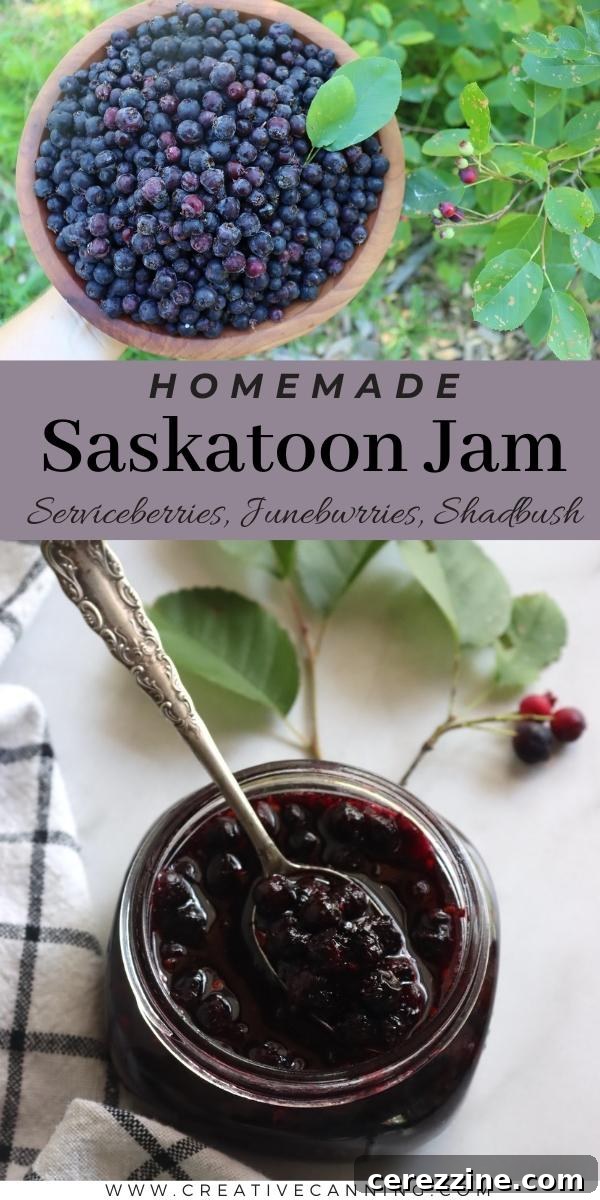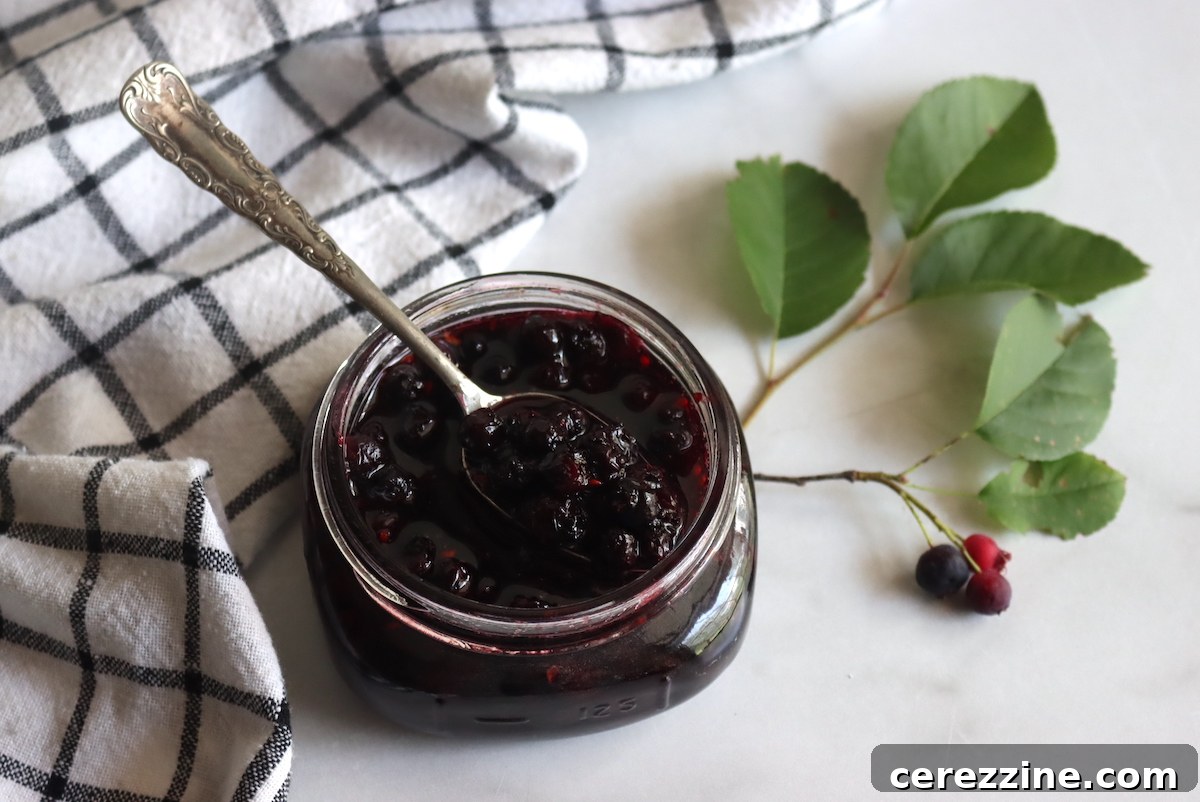
Saskatoon berries, often hailed as nature’s hidden gems, offer a unique flavor that transforms into an exquisite jam. Whether you’re a passionate forager venturing into the wild or cultivating these resilient shrubs in your backyard, crafting homemade saskatoon jam is a deeply rewarding experience. This recipe, requiring only a few simple ingredients and no added pectin, allows you to capture the essence of summer and enjoy this delightful fruit straight from your pantry shelf all year round. Get ready to discover the rich, intense flavors of this wild fruit transformed into a preserve that truly stands out.
Discovering the Saskatoon Berry: A North American Treasure
The saskatoon berry (Amelanchier species) is a true marvel of the North American landscape, known by a charming array of common names including serviceberry, shadbush, juneberry, and prairie berry. This versatile fruit thrives across the prairie states of the US and throughout Canada, making it a familiar sight for foragers and gardeners in the northern half of the continent. Despite its widespread presence, many outside these regions remain unaware of its distinct charm and culinary potential.
Saskatoons are among the earliest berries to ripen, signaling the true arrival of summer. Depending on their geographical range, these resilient plants produce their bounty from as early as June in more southern climates, stretching into late July in the far north. Here in Vermont, for example, we eagerly anticipate their harvest during the final days of June and the first week of July. Their early appearance makes them a treasured resource, often ripening alongside the season’s first rhubarb.
Beyond their delicious fruit, saskatoon shrubs are prized for their ornamental value. They are frequently used in landscaping, gracing parking lots, supermarket fronts, and housing developments with their beautiful early spring flowers. Birds, ever keen on their sweet fruit, play a vital role in seed dispersal, ensuring that these wild edibles spread naturally into surrounding areas within a few years of a landscape planting. This natural proliferation means that even if you start with just a few, you’re likely to find many more thriving nearby.
The Unique Flavor Profile of Saskatoon Berries
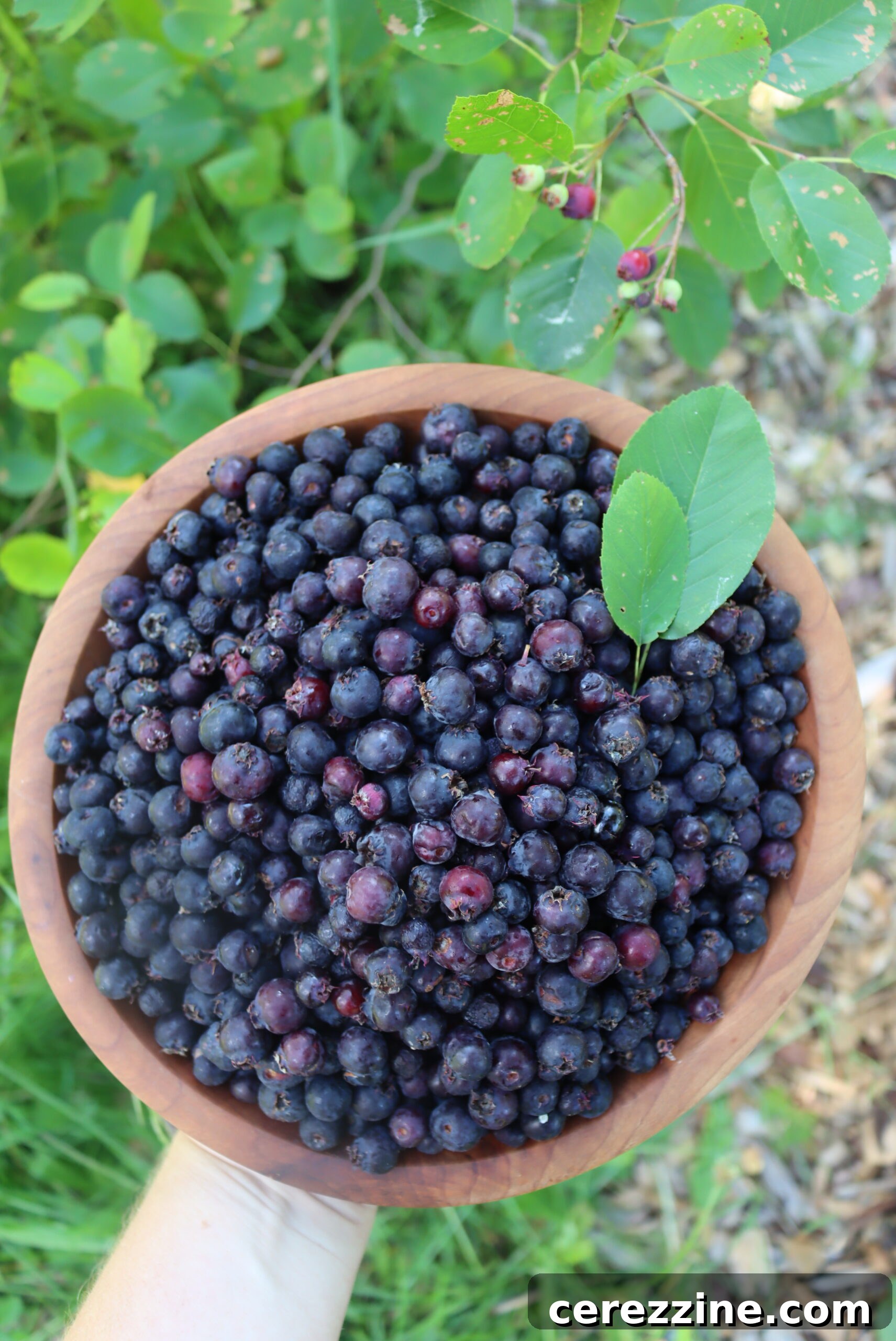
While often compared to blueberries due to their similar appearance and tart-sweet notes, saskatoon berries boast a distinct and unforgettable flavor. They offer a dryer, firmer texture than blueberries, but what truly sets them apart is their concentrated, intense taste. Beneath the initial burst of sweetness, there’s a delicate, earthy undertone, often described as having a mild “almond” or marzipan-like nuance. Imagine a deep, rich blueberry flavor, then add a subtle hint of almond extract – that’s the complex, inviting profile of a saskatoon berry. This unique combination makes them absolutely perfect for crafting a truly exceptional homemade saskatoon jam. The almond notes complement the fruitiness beautifully, elevating the jam to something truly special.
Sourcing Your Saskatoon Berries
Despite their prolific nature, gathering a substantial harvest of saskatoon berries can sometimes be a delightful challenge. Birds, with their keen eyesight and appreciation for these “blueberries that grow on trees,” are often your fiercest competitors. Additionally, some wild species can grow quite tall, placing their ripest treasures just out of arm’s reach. However, many wild varieties remain at a manageable height of 6 to 8 feet, and when they fruit, they do so with such abundance that there’s typically plenty to share between humans and our feathered friends.
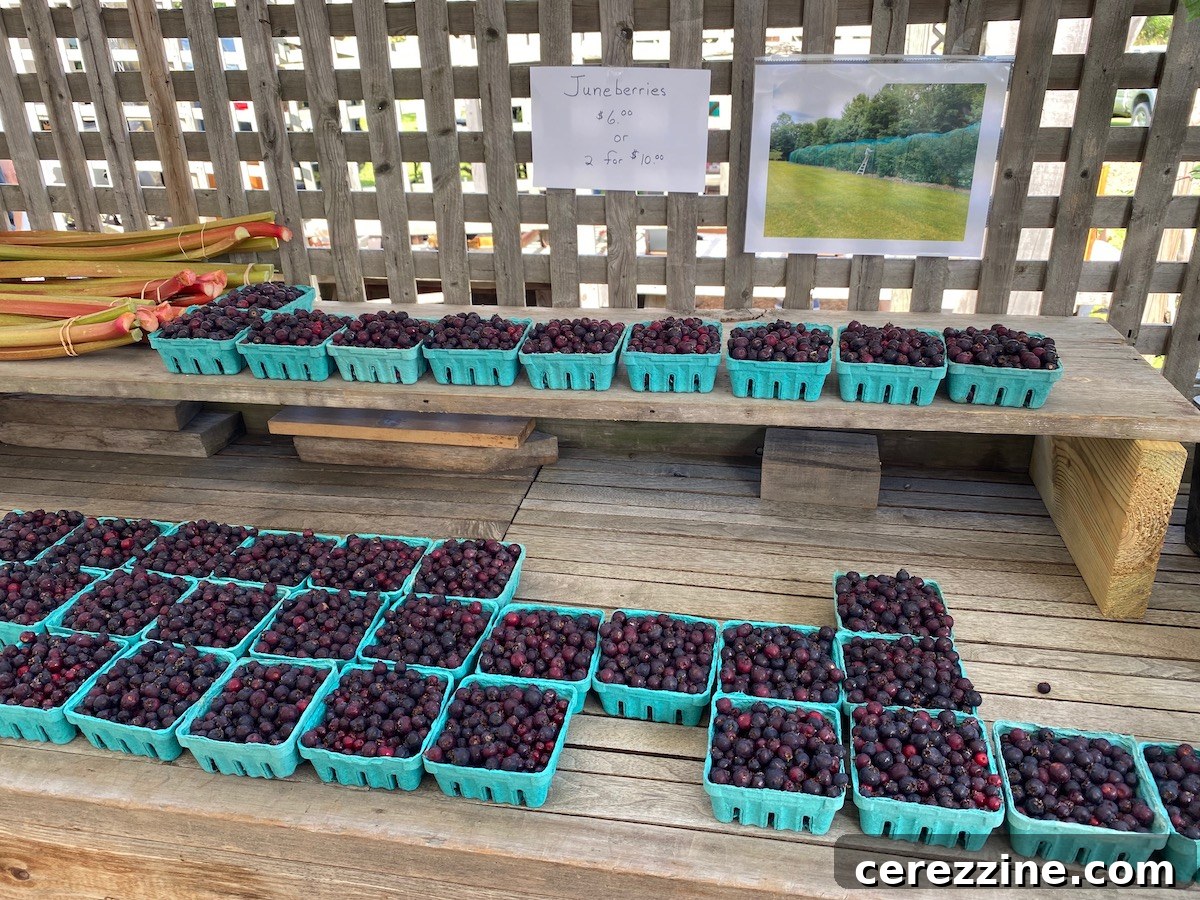
If foraging isn’t an option, or if you simply prefer convenience, saskatoons are increasingly available through commercial channels. In northern regions, it’s not uncommon to find them at farmer’s markets during their peak season. Commercially grown saskatoons are often pruned to maintain a lower height for easier picking and are frequently protected by extensive bird netting to ensure a good yield for human consumption. Keep an eye out for them in the late spring and early summer months; they’ll often appear alongside fresh rhubarb.
Crafting the Perfect No-Pectin Saskatoon Jam
Whether you’ve hand-foraged your saskatoons from a hidden patch or purchased them fresh from a local farmer’s market, transforming them into jam is a straightforward and immensely satisfying process. One of the best aspects of this saskatoon jam recipe is that it requires absolutely no added pectin. The natural pectin in the fruit, especially when combined with a touch of lemon, creates a beautiful set without the need for commercial thickeners. All you truly need are your fresh saskatoon berries, sugar, and lemon juice. A bit of optional lemon zest, however, adds an aromatic brightness that truly elevates the overall flavor of this serviceberry jam.
Essential Ingredients for Saskatoon Jam
This recipe is designed for ease and simplicity, allowing the natural flavor of the saskatoon berry to shine. For a standard batch yielding approximately four half-pint (8 oz) jars, you will need:
- 4 cups saskatoon berries, washed and carefully picked over
- 3 cups granulated sugar
- 1/2 cup water
- Juice of 1/2 lemon (approximately 2 tablespoons)
- Zest of 1/2 lemon (approximately 1 teaspoon, optional but highly recommended for flavor)
This quantity is ideal for ensuring even heating and proper setting. While you can double the recipe, it’s generally recommended to avoid making excessively large batches. Jam cooked in very large quantities doesn’t heat evenly, which can compromise the final set and quality. Stick to manageable batches for the best results.
The Role of Water and Fruit Texture
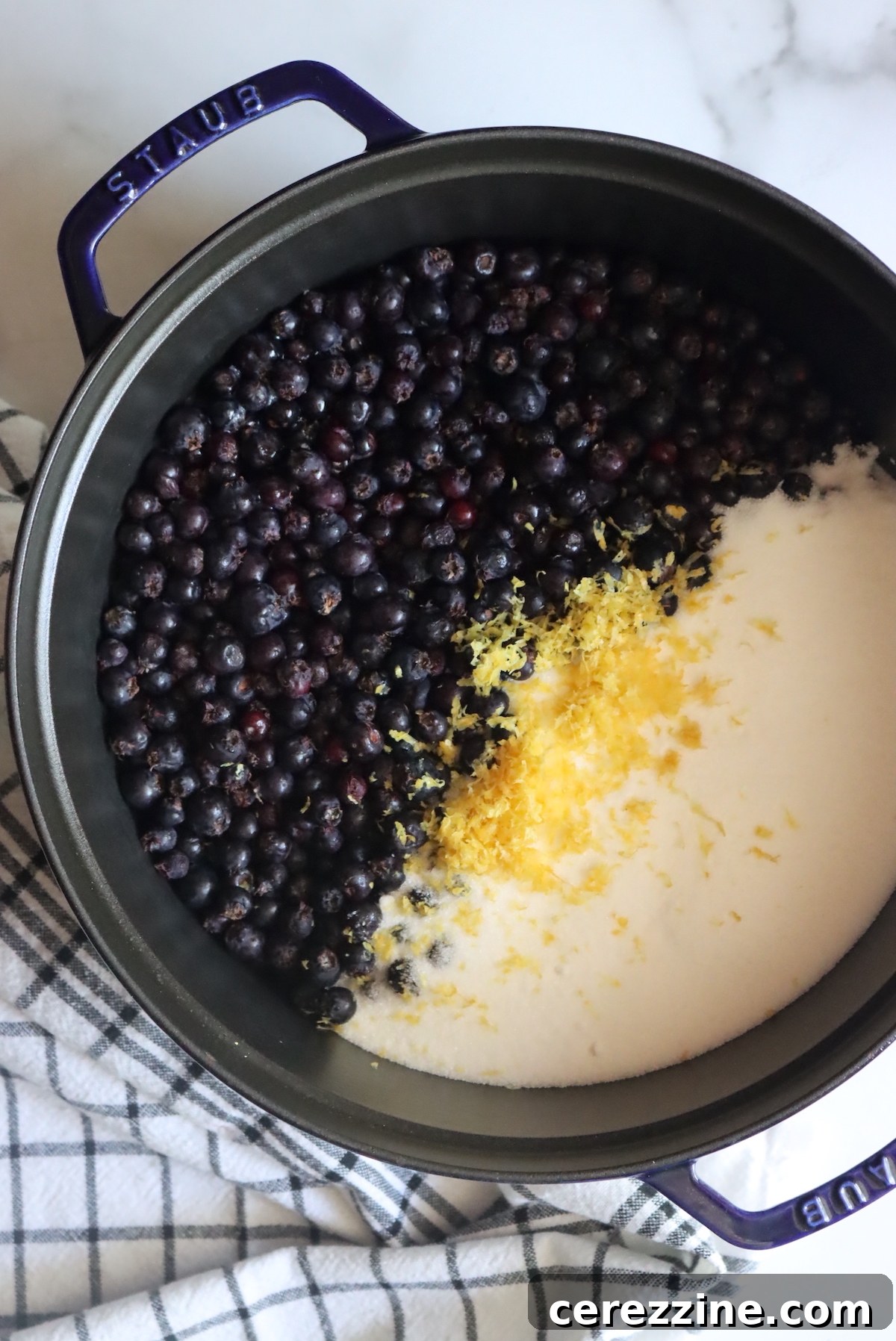
You might notice the inclusion of a small amount of water at the beginning of this recipe. This isn’t arbitrary; saskatoon berries are quite firm and need a little time and heat to release their vibrant juices. Starting them with a bit of water prevents the fruit from scorching at the bottom of the pot before enough liquid has accumulated. Once the cooking process is underway, the berries will soften and release plenty of their own delicious liquid.
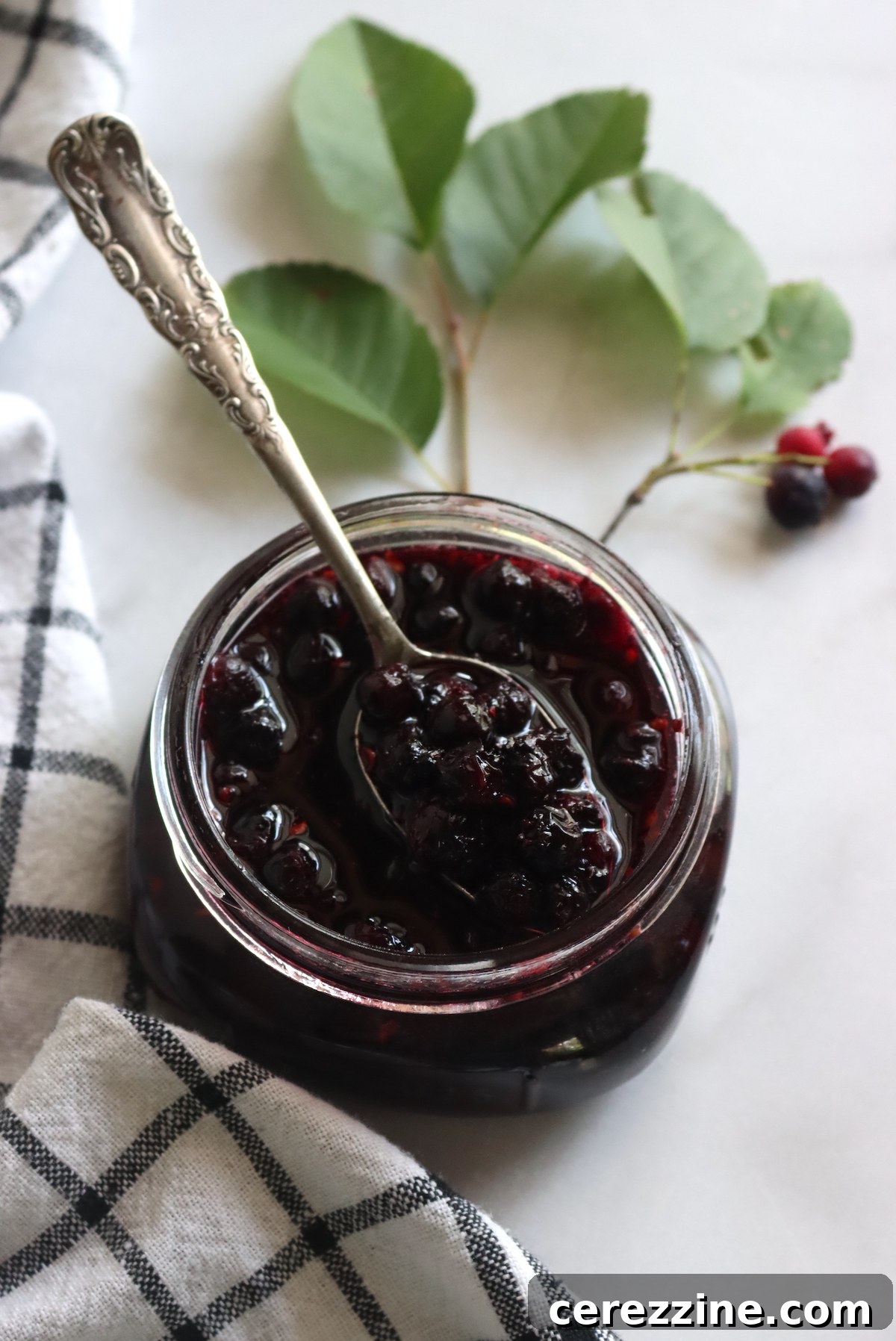
Regarding fruit texture, saskatoons tend to hold their shape quite well, even after extensive cooking. If you prefer a beautifully chunky jam with whole or lightly mashed berries, you can leave them mostly as they are. This is often my personal preference, as it highlights the fruit’s integrity. However, if you desire a smoother jam, I highly recommend using a potato masher to gently break down the berries during the early stages of cooking, once they’ve softened slightly. Mashing them early on will help create a more consistent texture throughout the jam.
Canning Safety and the Magic of Lemon Juice
When preserving fruit, understanding its acidity (pH) is crucial, especially for canning. Saskatoon berries have a pH ranging from 4.2 to 4.4, which makes them less acidic than their blueberry cousins. For safe water bath canning, fruit must have a pH below 4.6. This places saskatoons right at the edge of that safe zone.
Given the natural variations that can occur in wild fruits, it’s always best to err on the side of caution. This is where lemon juice becomes an indispensable ingredient in our saskatoon jam recipe. The lemon juice serves multiple critical functions:
- Lowers pH for Safety: It significantly lowers the overall pH of the jam, ensuring it falls well below the 4.6 threshold, making it safe for water bath canning. This is non-negotiable for shelf-stable preserves.
- Enhances Flavor: Since saskatoons are not inherently very tart, the lemon juice adds a vital zing and brightness, balancing the sweetness of the sugar beautifully. This tartness brings out the complex, unique flavor profile of the saskatoons, preventing the jam from tasting overly sweet or flat.
- Aids in Setting: Lemon juice is a natural source of pectin. By adding it, we boost the jam’s natural pectin content, which is essential for achieving a firm, desirable set without the need for costly commercial pectin. Pectin packets can add a significant cost, especially for smaller batches, making this natural approach more economical and authentic.
While technically optional if you’re only making a refrigerator preserve (where a slightly higher pH isn’t a safety concern), I strongly advise against skipping the lemon juice even for non-canned batches. Its contribution to both flavor and set is simply too valuable. The lemon zest, though, is purely for flavor and contains some pectin, but does not significantly impact the jam’s pH for canning safety. It adds a lovely aromatic note but can be omitted if preferred.
Step-by-Step Guide to Making Saskatoon Jam
Making saskatoon jam is a wonderfully simple process that yields incredible results. Since this recipe doesn’t rely on added pectin, there’s no complex timing or special steps to fuss with. The core of the process involves combining your ingredients in a pot and boiling them until the jam reaches its perfect set point.
Preparation is Key
Before you even begin cooking, especially if you plan to can your jam, ensure your equipment is ready. Sterilize your canning jars and lids, and have your water bath canner preheating to around 180°F (just below a simmer). A deep, heavy-bottomed pot is crucial for making jam. It should be large enough to comfortably hold all your ingredients without filling more than halfway. Jam tends to foam and bubble vigorously as it cooks, so ample headspace prevents messy boil-overs.
Cooking the Jam to Perfection
- Combine Ingredients: Place the washed saskatoon berries, sugar, water, lemon juice, and optional lemon zest into your deep jam pot.
- Initiate Cooking: Stir the ingredients well to combine. The initial addition of water is vital here, as it helps the firm saskatoons soften and release their juices without scorching at the bottom of the pot.
- Bring to a Boil: Bring the mixture to a strong, rolling boil over medium-high heat. As the berries cook, they will soften. At this stage, decide on your preferred texture: if you like a smoother jam, use a potato masher to gently crush some of the fruit. For a chunky jam, leave the berries mostly whole. Be prepared for robust foaming as the jam cooks.
- Achieve Gel Stage: Continue boiling the jam hard, stirring continuously to prevent sticking and boil-overs. The jam needs to reach a specific temperature to set properly. At sea level, this “gel stage” typically occurs at 220°F (104°C). If you live at a higher elevation, remember to adjust this temperature: subtract 1°F for every 500 feet above sea level. For instance, at 1,000 feet elevation, the jam would finish at around 218°F.
- Checking for Set (Without a Thermometer): If you don’t have an instant-read thermometer, you can use the “freezer plate test.” Place a small plate in the freezer before you start cooking. Once the jam has been boiling for about 10-15 minutes, spoon a small amount onto the chilled plate. Return the plate to the freezer for a minute, then gently push the edge of the jam with your finger. If it wrinkles and holds its shape, it’s ready. If it’s still runny, continue cooking and retest every few minutes.
Preserving Your Homemade Saskatoon Jam: Canning for the Pantry
Once your delicious saskatoon jam reaches its perfect set point, you have a couple of options for storage. You can simply ladle the hot jam into clean jars, allow it to cool, and then store it in the refrigerator. Refrigerated jam will keep for several weeks. For longer-term storage, up to 6 months, you can freeze it. If choosing to freeze, be sure to use freezer-safe jars and leave ample headspace to allow for expansion.
However, for the ultimate convenience and to truly savor the flavors of summer during the coldest months, water bath canning is the preferred method. Canning transforms your jam into a shelf-stable delight, allowing you to store it right in your pantry without refrigeration for extended periods. The process is straightforward and well worth the effort for year-round enjoyment.
The Water Bath Canning Process
- Jam Preparation: Follow the jam-making steps as outlined above, ensuring you do not skip the lemon juice. Its acidity is crucial for safe canning.
- Fill Jars: Once the jam reaches its set point, remove the pot from the heat. Carefully ladle the hot jam into your prepared, sterilized canning jars, leaving 1/4 inch of headspace at the top. This headspace is essential for proper sealing.
- Clean Rims and Cap: Wipe the rims of the jars with a clean, damp cloth to remove any sticky residue. This ensures a proper seal. Place the prepared two-part canning lids (flats and rings) onto the jars and tighten the rings finger-tight.
- Process in Canner: Using a jar lifter, carefully load the filled jars into your preheated water bath canner. Ensure the jars are fully submerged in water, with at least 1 inch of water covering the tops of the jars. Bring the water in the canner to a full, rolling boil.
- Timing the Process: Once the water reaches a full boil, start your timer and process the jars for 10 minutes. If you are at an elevation above 6,000 feet, increase the processing time to 15 minutes.
- Cooling and Sealing: After the processing time is complete, turn off the heat and allow the jars to remain in the hot canner for an additional 5 minutes. This gentle cool-down period helps prevent thermal shock and siphoning (loss of liquid) when you remove the jars.
- Final Steps: Carefully remove the jars from the canner and place them on a towel-lined counter, spaced slightly apart, to cool undisturbed for 12 to 24 hours. During this time, you should hear the satisfying “ping” sound as the lids seal.
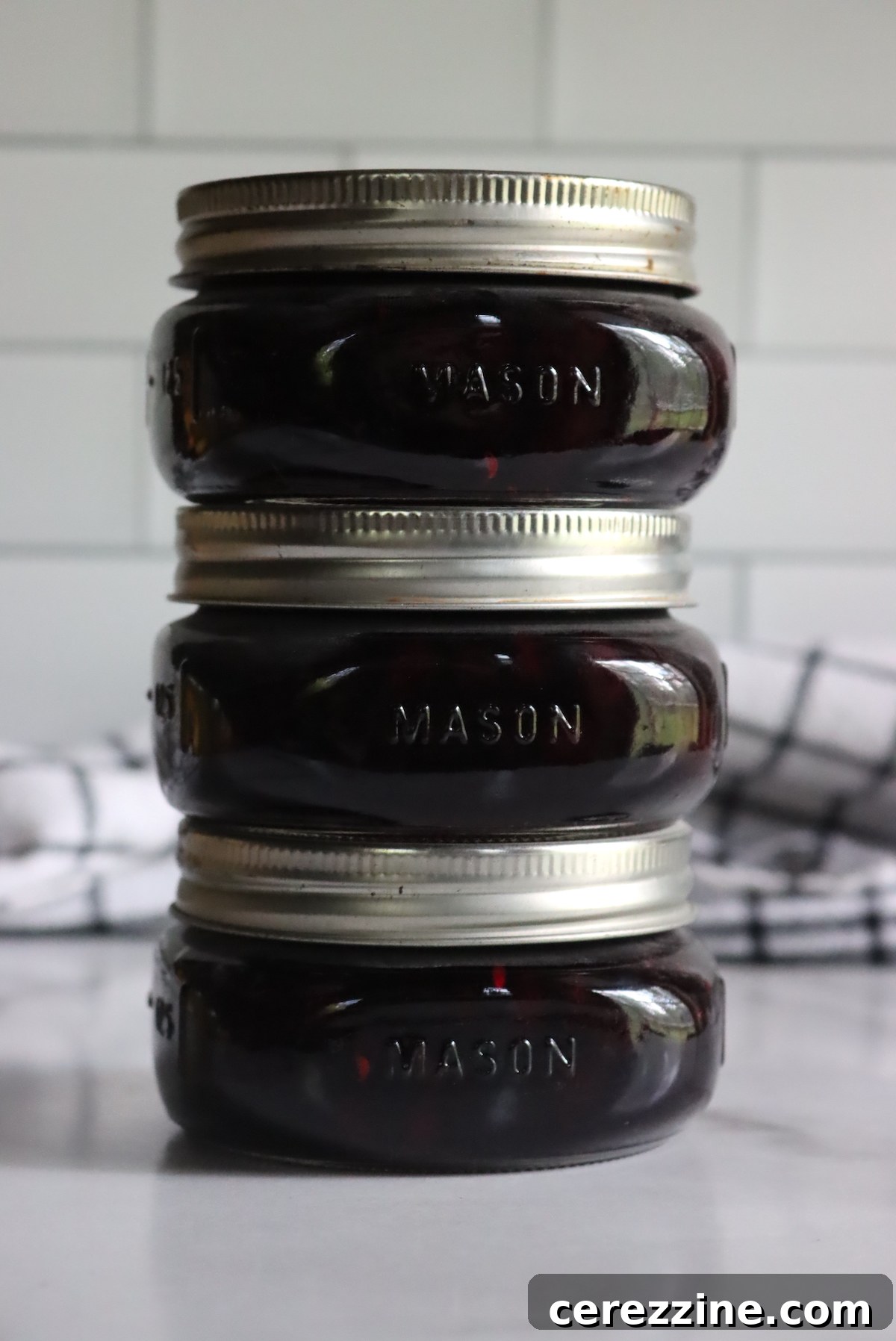
- Check Seals and Store: Once the jars are completely cool, check the seals by pressing down on the center of each lid. If the lid is concave and does not flex, it is sealed. Any unsealed jars should be stored in the refrigerator for immediate use. Properly canned and sealed jars of saskatoon jam will maintain their peak quality on the pantry shelf for 12-18 months. Always refrigerate after opening.
5 from 1 vote
Servings: 32 servings, Makes 4 half pint (8 oz) Jars
Saskatoon Jam
By Ashley Adamant
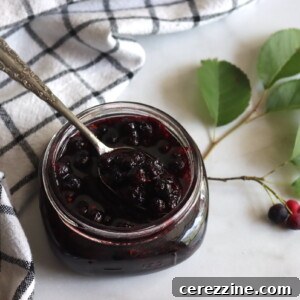
Saskatoon jam is an easy way to preserve fresh saskatoon berries for year-round enjoyment.
Prep: 5 mins
Cook: 15 mins
Canning Time (Optional): 10 mins
Total: 30 mins
Equipment
- Water Bath Canner (Optional for canning)
- Large, deep jam pot
- Jar lifter (for canning)
- Potato masher (optional, for smoother jam)
- Instant-read thermometer (optional, but highly recommended)
Ingredients
- 4 cups saskatoons, washed and picked over
- 3 cups sugar
- 1/2 cup water
- Juice and zest of 1/2 lemon (2 tbsp juice, and about 1 tsp fresh zest)
Instructions
- If canning, prepare a water bath canner, jars, and lids before you begin.
- Place all ingredients in a deep-sided pot and bring the mixture to a hard rolling boil.
- Cook the jam at a hard boil over medium-high heat, stirring continuously to prevent overflows and sticking. Mash the fruit occasionally if desired for a less chunky jam, or leave them whole.
- Boil the jam for about 15 minutes until it reaches gel stage, which is 220°F (104°C) at sea level. (Subtract 1°F for every 500 feet above sea level. At 1,000 feet elevation, the jam would finish at 218°F). Alternatively, check for set on a plate that’s been placed in the freezer.
- Once the jam reaches its set point, remove it from the heat and ladle into prepared jars leaving 1/4 inch headspace. Cap with 2-part lids.
- If canning, process the jars in a water bath canner for 10 minutes (or 15 minutes above 6,000 feet elevation). After processing, turn off heat and let jars sit in canner for 5 minutes. Then, allow the jars to cool on a towel on the counter for 12-24 hours, then check seals. Store any unsealed jars in the refrigerator for immediate use. Properly canned and sealed jars of saskatoon jam will maintain peak quality on the pantry shelf for 12-18 months. Refrigerate after opening.
Notes
Canning Safety
Saskatoons vary in pH from 4.2 to 4.4, meaning they’re less acidic than blueberries. They are just barely acidic enough for canning, as fruit needs to have a pH below 4.6 for water bath canning safety.
Given wild fruit variations, it’s always better to be safe. The lemon juice in this recipe lowers the pH for safe canning, improves flavor, and aids in setting. Since saskatoons aren’t very acidic on their own, lemon juice adds tartness to balance the sugar.
The lemon juice is technically optional if you’re not canning but is highly recommended for flavor and set. Do not skip the lemon juice if you intend to can your saskatoon jam for shelf stability.
Low Sugar Saskatoon Jam
This recipe can be adapted for a lower sugar content while still achieving a good set. You can reduce the sugar down to 2 cups of sugar for every 4 cups of fruit. With less sugar, the yield will be slightly lower, and the jam’s set may be a little less firm. The flavor, however, will be more intensely fruity.
If you wish to use even less sugar than that, I recommend incorporating a low-sugar pectin product, such as Pomona’s Universal Pectin or Sure-Jell for Less or No Sugar Needed Recipes. In this case, follow the instructions provided with the pectin for a low-sugar blueberry jam, but be sure to include lemon juice at a rate of 2 tablespoons for every 4 cups of saskatoon fruit to ensure both safety and flavor balance.
Nutrition
Calories: 83kcal, Carbohydrates: 21g, Protein: 0.1g, Fat: 0.1g, Saturated Fat: 0.01g, Polyunsaturated Fat: 0.03g, Monounsaturated Fat: 0.01g, Sodium: 1mg, Potassium: 15mg, Fiber: 0.4g, Sugar: 21g, Vitamin A: 10IU, Vitamin C: 2mg, Calcium: 1mg, Iron: 0.1mg
Nutrition information is automatically calculated and should only be used as an approximation.
More Saskatoon Berry Recipes to Explore
Saskatoon berries are incredibly versatile, extending far beyond delicious jam. If you find yourself with an abundance of these unique fruits, consider trying these other fantastic recipes:
- Saskatoon Muffins
- Saskatoon Crumble
- Saskatoon Tarts
- Saskatoon Clafloutis
Diverse Berry Jam Recipes
If you’ve enjoyed making saskatoon jam and are looking to expand your preserving repertoire, there are countless other fresh berry jams to try this summer. Each berry offers its own unique flavor profile and challenges, making jam-making an endless adventure:
- Raspberry Jam
- Thimbleberry Jam
- Strawberry Jam (without pectin)
- Blackberry Jam (no pectin)
- Blueberry Jam (no pectin)
- Black Raspberry Jam
- Gooseberry Jam
- Berry Jam Recipe with Any Berry
Beyond Jam: Creative Berry Canning Recipes
Jam is just one fantastic way to preserve the bounty of berries. Don’t limit yourself! There are many other creative and easy canning recipes that allow you to enjoy berries in different forms throughout the year:
- Canning Strawberries
- Canning Strawberry Juice
- Canning Strawberry Lemonade Concentrate
- Canning Raspberries
- Canning Blackberries
- Canning Gooseberries
- Canning Berry Juice