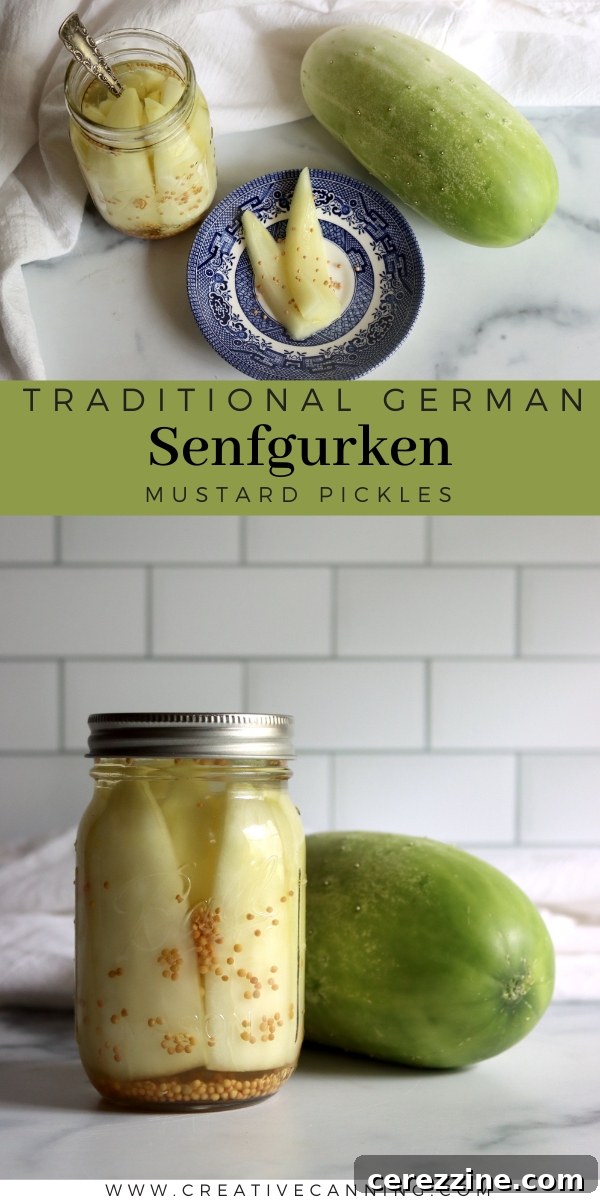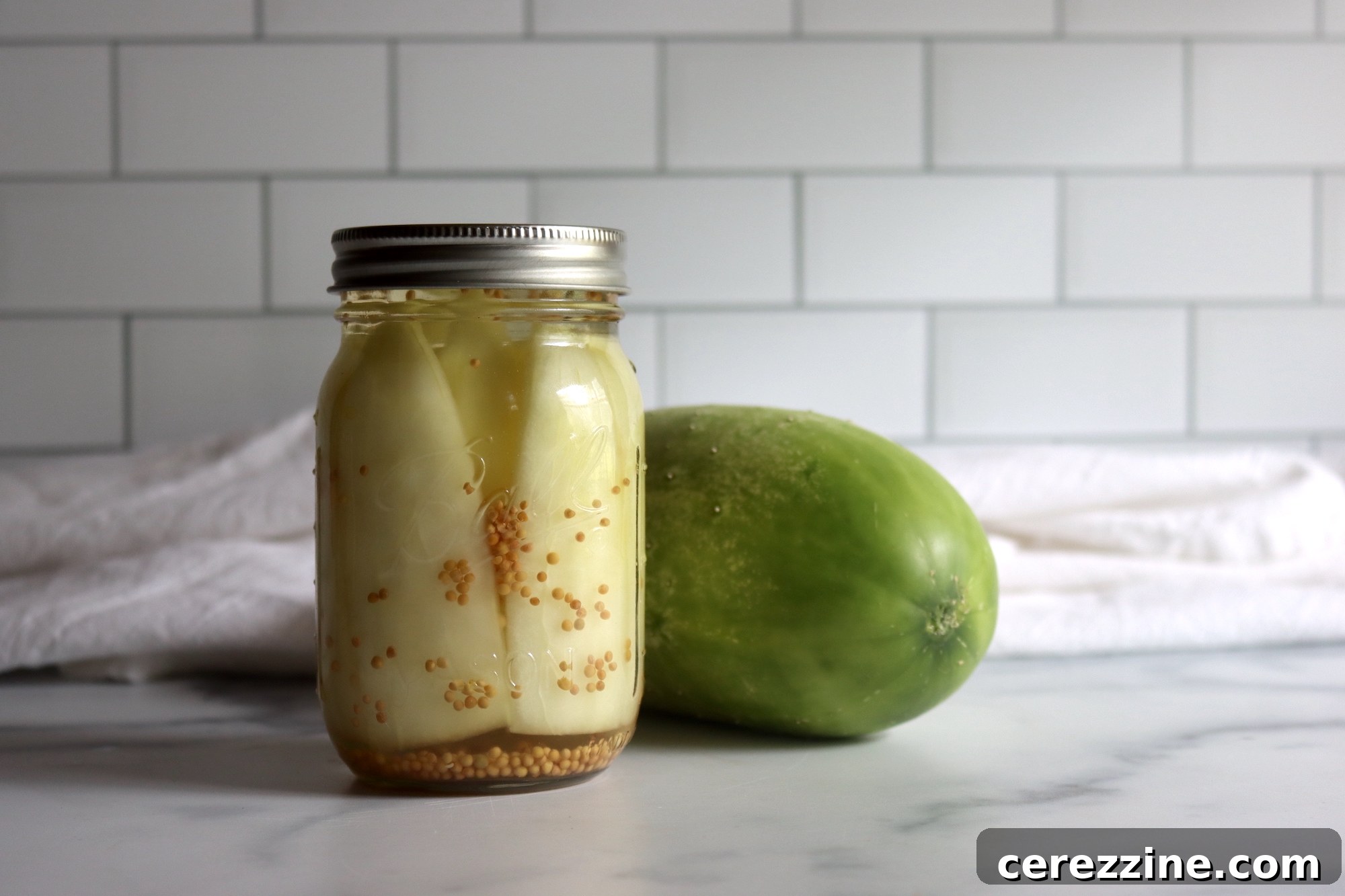
Senfgurken are traditional German pickles, cherished for their distinctive flavor profile spiced predominantly with mustard seeds. These delightful, thrifty spears are typically crafted from overripe cucumbers harvested at the culmination of the growing season, transforming what might otherwise be wasted produce into a culinary treasure.
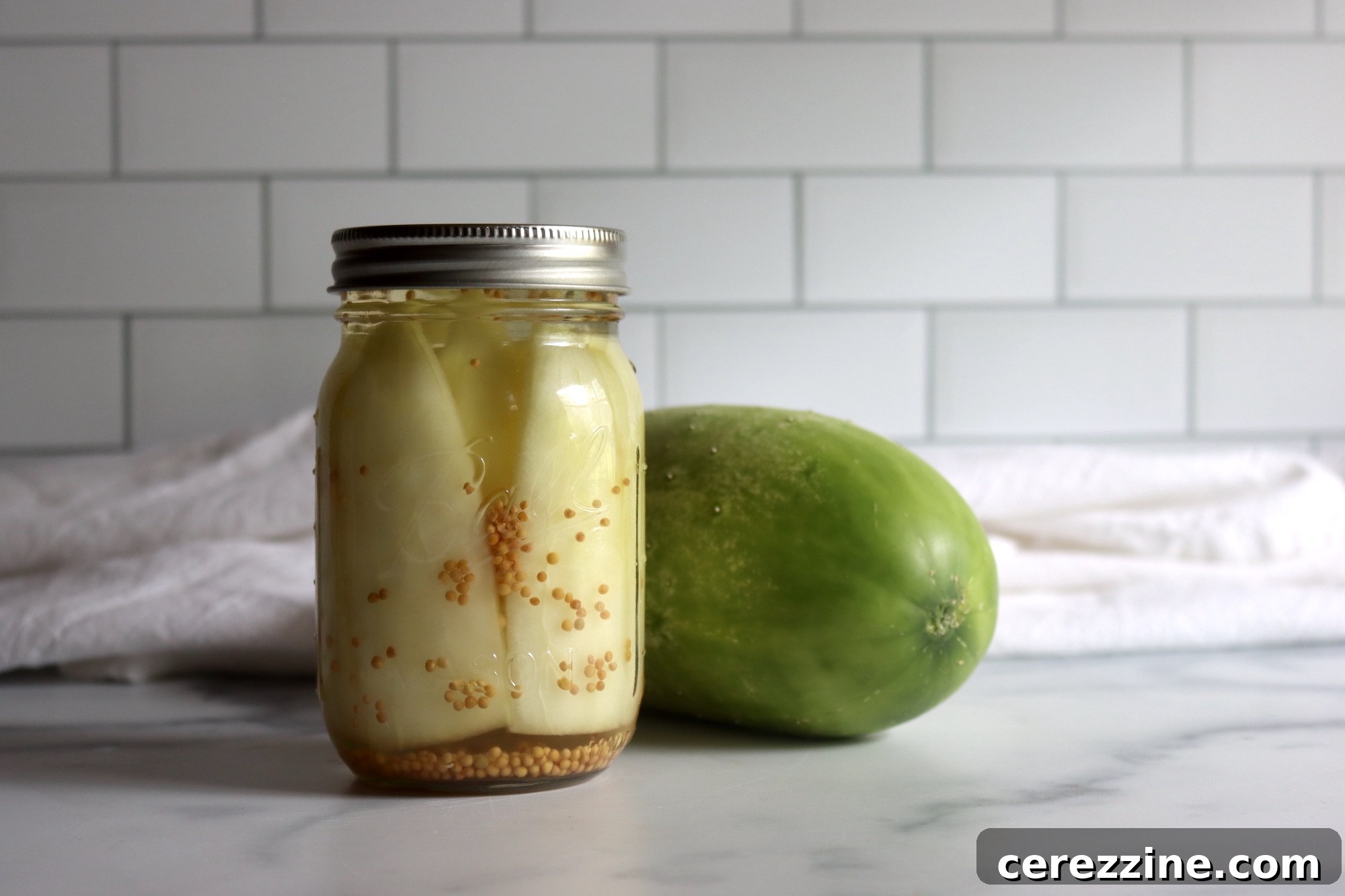
Every year, it feels like the garden takes on a life of its own, particularly the cucumber patch. One moment, you’re carefully monitoring tiny cucumber blossoms, planning to harvest them for delicate French Cornichons. The next, seemingly overnight, those humble cucumbers have grown to monumental sizes, turning a tell-tale yellow as they venture past their prime picking stage. If you’re a gardener, you know this scenario all too well: suddenly, you find yourself with buckets overflowing with gigantic, overripe cucumbers, leaving you to ponder how to make the most of this bountiful, albeit slightly unruly, harvest.
Fortunately, throughout history and across diverse cultures, home cooks and preservers have faced this exact dilemma and devised ingenious solutions. Nearly every region where cucumbers thrive boasts unique recipes for processing these larger, more mature fruits. Instead of discarding them, these recipes celebrate the cucumber’s versatility, transforming them into flavorful, long-lasting preserves that can be enjoyed well beyond the harvest season.
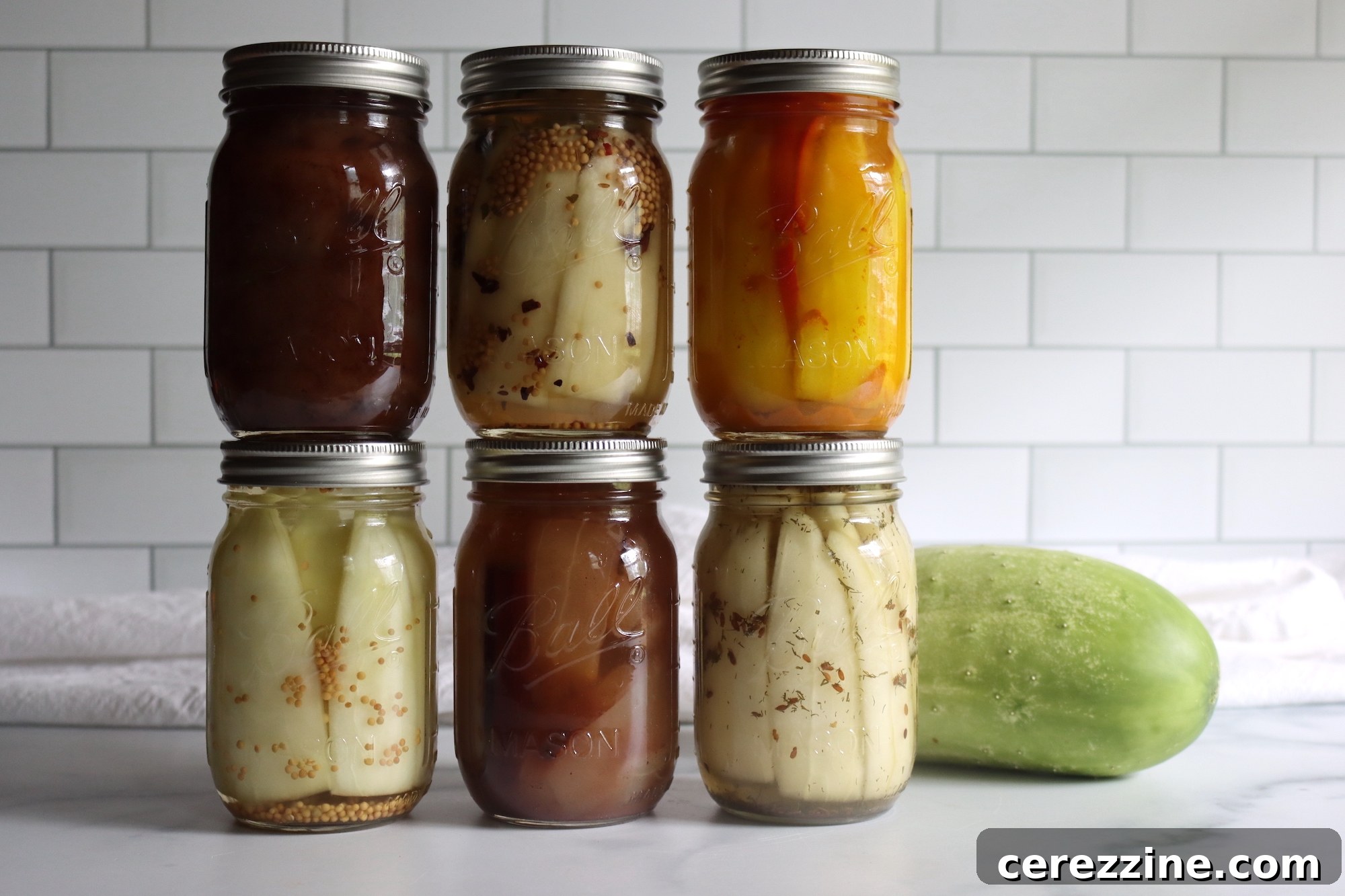
The culinary world offers a delightful array of options for salvaging overripe cucumbers, each with its own regional flair and spice blend. Some popular methods include:
- Russian Bear Claw Pickles: Known for their hearty texture and robust flavor.
- Vermont Cucumber “Tongue” Pickles: A unique shape and often a sweet-sour profile.
- Danish Asier Pickles: Large, mild pickles, often sliced into thick rounds or wedges.
- Dutch Pickles: Frequently incorporating a mix of spices and sometimes a slightly sweeter brine.
- Ruth’s Pickles (from the American South): A beloved Southern classic, often sweet and tangy.
- Sunshine Pickles (Enjoyed everywhere): A widely popular recipe, typically bright and flavorful.
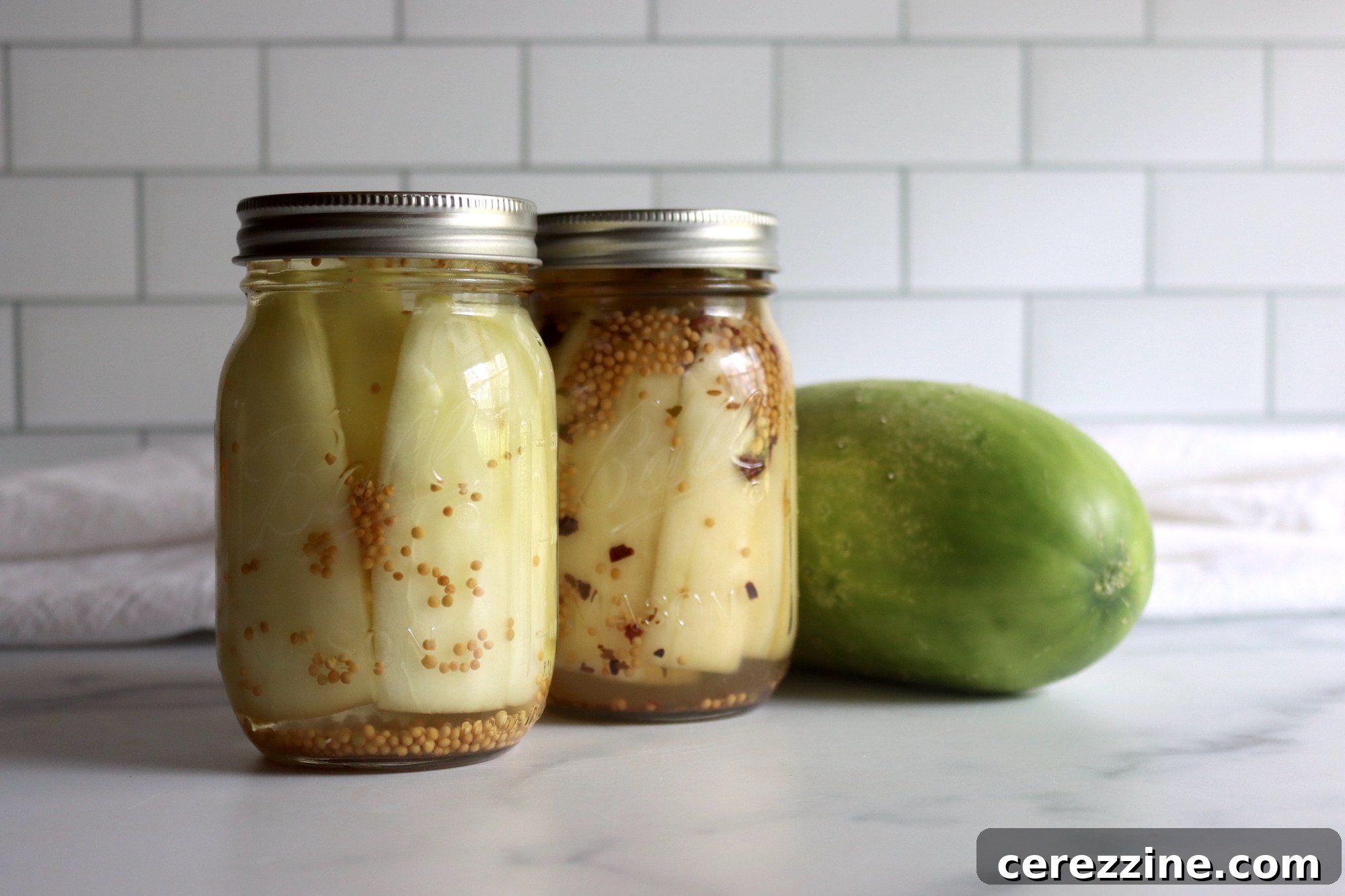
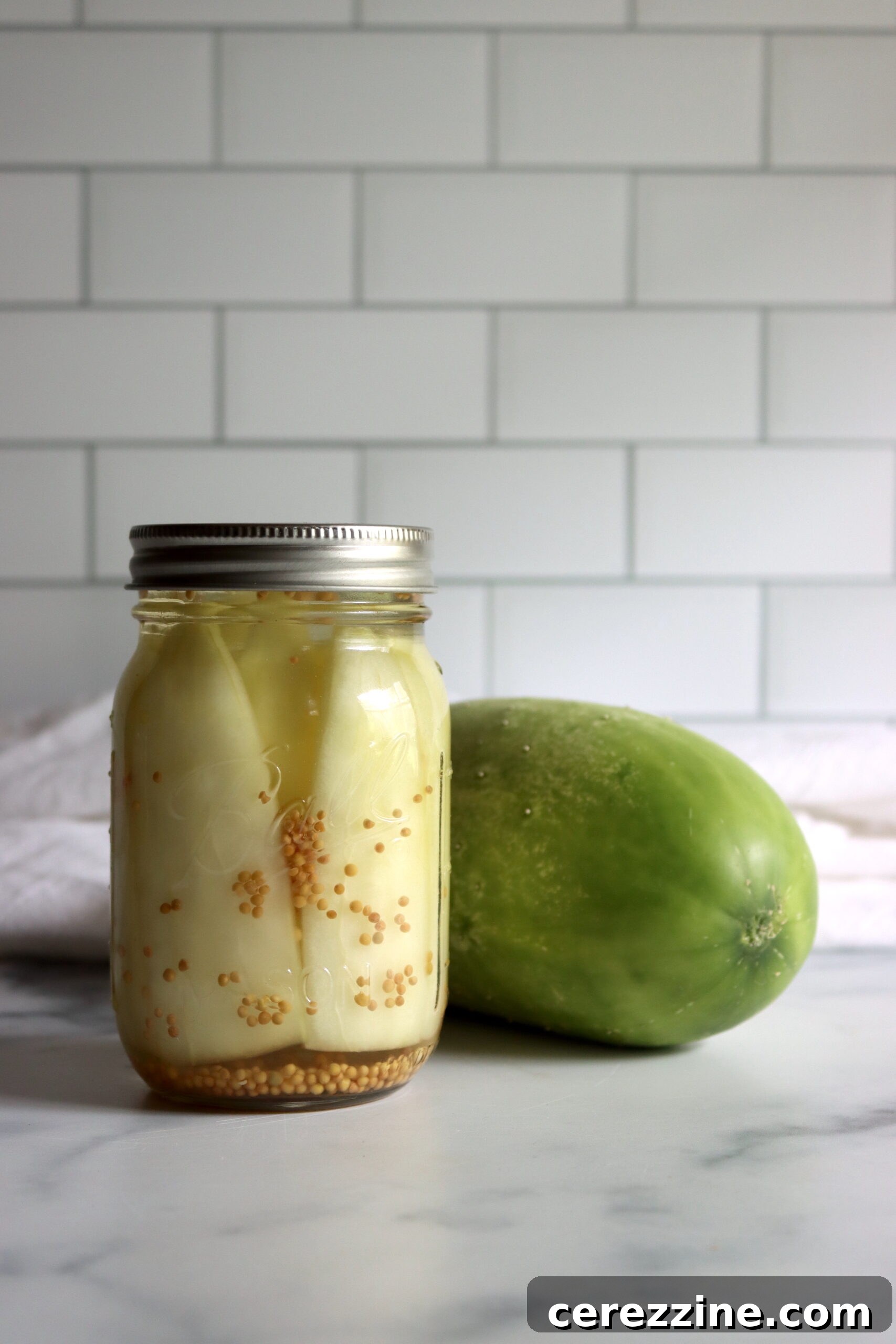
Among these global pickling traditions, the Germans offer a wonderfully straightforward yet incredibly satisfying solution: Senfgurken, or German Mustard Pickles. These pickles are characterized by their simple vinegar brine, which allows the natural flavor of the cucumber to shine through, beautifully complemented by the warm, pungent notes of whole mustard seeds. While some traditional recipes might incorporate a pinch of mixed pickling spices for added complexity, many purists prefer to stick solely to mustard seeds, highlighting their unique contribution. This article will guide you through both variations, ensuring you can tailor your Senfgurken to your exact preference.
Crafting Authentic German Senfgurken (Mustard Pickles)
Creating homemade Senfgurken is a rewarding experience that yields crisp, tangy, and flavorful pickles perfect for complementing a variety of meals. This recipe is designed to produce approximately 4 pint jars of these traditional German mustard pickles. Gather your ingredients and prepare for a delightful culinary journey.
Essential Ingredients for Your Senfgurken Batch
To embark on your Senfgurken adventure, you’ll need two main sets of ingredients: those for the initial pre-soak, which is crucial for achieving that desirable crisp texture, and those for the vibrant pickling brine.
For the Pre-Soak:
- 5 pounds ripe cucumbers: This typically equates to about 4 large, mature cucumbers. Look for firm, yellowing cucumbers, as these are ideal for the recipe. The larger size allows for substantial spears, while the maturity means their seeds will be easily removable.
- 1/4 cup pickling salt: This specialized salt is free of anti-caking agents and iodine, which can cause cloudiness or discoloration in your pickles. Using regular table salt is not recommended for canning.
For the Pickling Brine:
- 3 cups cider vinegar (5% acidity): The acidity of the vinegar is vital for safe canning and contributes significantly to the pickles’ tangy flavor. Always use vinegar with at least 5% acidity for pickling.
- 1 1/2 cups sugar: This provides a subtle sweetness that balances the tang of the vinegar and the pungency of the mustard seeds, creating a well-rounded flavor profile characteristic of Senfgurken.
- 4 tsp whole mustard seeds: The star of the show! You’ll need about one teaspoon per pint jar. Both yellow and brown mustard seeds can be used, with yellow being milder and brown offering a bit more heat and complexity.
- 4 tsp mixed pickling spices (optional): If you enjoy a more complex spice blend, you can add about one teaspoon per pint. Common pickling spice mixes include ingredients like dill seed, coriander, peppercorns, bay leaves, and cloves. This is entirely optional; traditional Senfgurken often rely solely on mustard seeds.
The choice to include mixed pickling spices truly comes down to personal preference and what you have on hand. Many authentic Senfgurken recipes proudly feature only mustard seeds, letting their unique character shine. I’ve experimented with both methods, and can assure you that whether you choose the simple mustard-only route or opt for the added depth of pickling spices, your homemade Senfgurken will be utterly delicious.
Step-by-Step Guide to Making Senfgurken
Creating your own batch of Senfgurken is a straightforward process that transforms your abundant cucumber harvest into delicious, shelf-stable pickles. Follow these detailed steps to ensure perfectly crisp and flavorful results.
- Prepare the Cucumbers: Begin by thoroughly washing your ripe cucumbers. Then, peel them completely using a vegetable peeler. Peeling is essential as the skin of overripe cucumbers can be tough and slightly bitter.
- Seed and Halve: Once peeled, slice each cucumber in half lengthwise. Using a spoon, carefully scoop out all the seeds from the center. This step is crucial, as the large seeds of mature cucumbers can detract from the pickle’s texture.
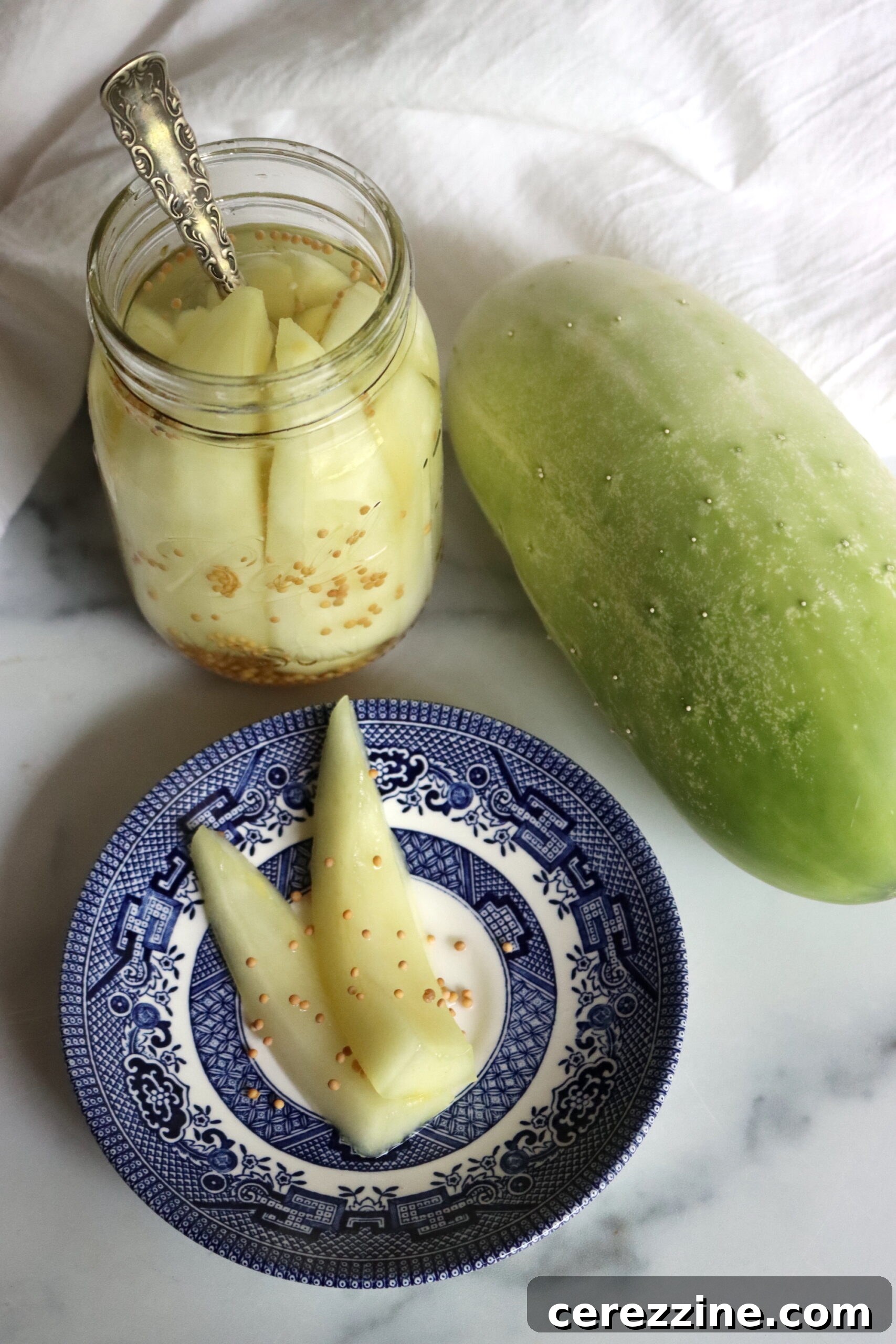
- Cut into Spears: At this stage, you’ll have long, hollowed-out cucumber “boats.” Cut each boat in half crosswise, creating two shorter pieces. Each of these pieces will have a naturally curved end. Next, cut these shorter halves lengthwise into thinner spears. Repeat this process until each original seeded half yields approximately 8 pieces, resulting in a total of 16 uniform spears per cucumber. This method ensures manageable and attractive pickle spears.
- Initiate the Pre-Soak: Place all your cucumber spears into a large bowl or non-reactive container. Sprinkle them generously with the pickling salt. Add just enough cold water to fully cover the cucumbers. This salt water soak is a vital step, drawing out excess moisture from the cucumbers and contributing significantly to their crispness, preventing them from becoming soft and limp after canning. Allow the cucumbers to soak for a substantial period of 8 to 12 hours, or simply leave them overnight.
- Drain and Rinse: After the soaking period, drain the cucumbers thoroughly. You can lightly rinse them to remove any excess salt, but ensure they are well-drained before proceeding.
- Prepare Canning Jars: While the cucumbers are soaking or draining, prepare your canning jars. Wash pint or quart jars and lids thoroughly in hot, soapy water, then rinse well. Sterilize the jars by immersing them in boiling water for at least 10 minutes. Keep them hot in the canner or in a warm oven until ready to fill.
- Add Spices to Jars: To each hot, sterilized pint jar, add 1 teaspoon of whole mustard seeds. If you choose to use mixed pickling spices, add 1 teaspoon of those to each jar as well.
- Prepare the Brine: In a large, non-reactive pot, combine the cider vinegar and sugar. Bring this mixture to a rolling boil over medium-high heat, stirring occasionally to ensure the sugar dissolves completely.
- Briefly Boil Cucumbers: Once the brine is boiling, add the drained cucumber spears to the pot. Allow them to boil gently with the brine for exactly 1 minute. This quick boil helps the cucumbers absorb the brine flavor and ensures they are heated through for proper canning.
- Pack the Jars: Carefully remove the hot cucumber spears from the brine using tongs or a slotted spoon and pack them tightly into your prepared hot jars, leaving approximately 1/2 inch of headspace from the rim of the jar.
- Fill with Brine: Ladle the hot pickling brine over the cucumbers in each jar, ensuring they are fully submerged. Maintain the 1/2-inch headspace.
- Remove Air Bubbles: Use a non-metallic utensil (like a plastic chopstick or canning bubble remover) to gently remove any trapped air bubbles from the jars. Adjust brine level if necessary, maintaining headspace.
- Seal and Process: Wipe the rims of the jars clean with a damp cloth to ensure a proper seal. Place lids and screw bands on the jars, tightening them to fingertip-tight.
- Water Bath Canning: Carefully place the filled and sealed jars into a water bath canner, ensuring they are fully covered by at least 1 inch of water. Bring the water to a rolling boil. Once boiling vigorously, begin your processing time, adjusting for your altitude.
- For 0 to 1,000 Feet in Elevation: Process pint jars for 10 minutes, and quart jars for 15 minutes.
- For 1,001 to 6,000 Feet in Elevation: Process pint jars for 15 minutes, and quart jars for 20 minutes.
- Above 6,001 Feet in Elevation: Process pint jars for 20 minutes, and quart jars for 25 minutes.
- Water Bath Canner
- Large pot (for brine)
- Large bowl or non-reactive container (for soaking)
- Canning jars (pint or quart), lids, and bands
- Canning funnel (optional)
- Jar lifter
- Non-metallic utensil (for removing air bubbles)
- 5 lbs ripe cucumbers (about 4 large cucumbers)
- 1/4 cup pickling salt
- 3 cups cider vinegar (5% acidity)
- 1 1/2 cups sugar
- 4 tsp whole mustard seeds (1 tsp per pint jar)
- 4 tsp mixed pickling spices (optional, 1 tsp per pint jar)
- Wash and peel the cucumbers completely.
- Slice the peeled cucumbers in half lengthwise and use a spoon to scoop out all seeds.
- Cut the cucumber halves into spears. First, cut each “boat” in half crosswise. Then, cut each shorter half lengthwise into thinner spears. Each original seeded half should yield about 8 pieces, totaling 16 pieces per cucumber.
- Place cucumber pieces in a large bowl, mix with pickling salt, and add just enough water to cover. Let them sit for 8 to 12 hours, or overnight, to draw out moisture and improve crispness.
- Drain the cucumbers thoroughly.
- Prepare your canning jars: wash, sterilize, and keep hot. Add 1 tsp mustard seeds (and 1 tsp optional pickling spices, if using) to each hot pint jar.
- In a large pot, combine cider vinegar and sugar. Bring to a rolling boil, stirring until sugar dissolves.
- Add the drained cucumbers to the boiling brine and boil for 1 minute.
- Using tongs, pack the hot cucumbers tightly into the prepared hot jars, leaving 1/2 inch headspace.
- Ladle the hot brine over the cucumbers, ensuring they are fully submerged and maintaining 1/2 inch headspace.
- Remove any air bubbles using a non-metallic utensil. Wipe jar rims clean. Place lids and screw bands, tightening to fingertip-tight.
- Process the jars in a water bath canner, adjusting processing time for your altitude (see notes below).
- For 0 to 1,000 Feet in Elevation: Process pint jars for 10 minutes, and quart jars for 15 minutes.
- For 1,001 to 6,000 Feet in Elevation: Process pint jars for 15 minutes, and quart jars for 20 minutes.
- Above 6,001 Feet in Elevation: Process pint jars for 20 minutes, and quart jars for 25 minutes.
- Calories: 26 kcal
- Carbohydrates: 6 g
- Protein: 0.3 g
- Fat: 0.1 g
- Saturated Fat: 0.01 g
- Polyunsaturated Fat: 0.02 g
- Monounsaturated Fat: 0.04 g
- Sodium: 443 mg
- Potassium: 58 mg
- Fiber: 0.3 g
- Sugar: 5 g
- Vitamin A: 26 IU
- Vitamin C: 1 mg
- Calcium: 7 mg
- Iron: 0.1 mg
- Classic Dill Pickle Spears: The quintessential pickle, bursting with fresh dill and garlic flavors, perfect for snacking or as a sandwich staple.
- Sweet and Tangy Bread and Butter Pickles: A beloved sweet-sour pickle, often featuring onions and bell peppers, ideal for adding a sweet tang to any meal.
Cucumber Pickle Canning Altitude Adjustments
It’s crucial to adjust canning times based on your elevation to ensure food safety. Water boils at lower temperatures at higher altitudes, meaning jars need longer processing times to reach the necessary sterilization. Here are the recommended altitude adjustments for canning Senfgurken:
Once processing is complete, turn off the heat and let the jars sit in the canner for 5 minutes before removing them. Transfer jars to a wire rack or towel-lined counter to cool completely, undisturbed, for 12-24 hours. Check seals; any unsealed jars should be refrigerated and consumed promptly.
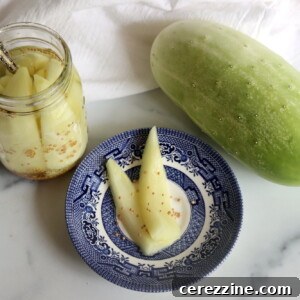
Senfgurken (German Mustard Pickles)
Equipment
Ingredients
For the Pre-Soak:
For the Pickling Brine:
Instructions
Notes
Water boils at a lower temperature at higher altitudes, so jars need to be processed a bit longer as you go up in elevation. Here are the altitude adjustments for canning Senfgurken:
After processing, let jars cool completely on a towel-lined counter for 12-24 hours. Check seals. Properly sealed jars can be stored in a cool, dark place for up to a year. Unsealed jars should be refrigerated and consumed within a few weeks.
Nutrition
(Approximate values per serving, based on 64 servings per recipe)
Nutrition information is automatically calculated and should only be used as an approximation.
Serving Suggestions and Storage
Once your Senfgurken have been properly canned and allowed to cure for at least a few weeks (this allows the flavors to fully develop), they are ready to be enjoyed! These tangy, subtly sweet, and mustard-spiced pickles are incredibly versatile. They make an excellent accompaniment to hearty German dishes like bratwurst, schnitzel, or potato salad. Their crisp texture and bright flavor also cut through the richness of sandwiches and burgers, making them a fantastic condiment. Don’t hesitate to serve them alongside cheese and charcuterie boards, or simply enjoy them as a refreshing snack straight from the jar.
For storage, properly sealed jars of Senfgurken can be kept in a cool, dark pantry for up to one year. Once opened, they should be stored in the refrigerator and consumed within a few weeks for the best quality and flavor. Always ensure that the cucumbers remain submerged in the brine; if necessary, use a fermentation weight or a small piece of food-safe plastic to keep them below the liquid line. This prevents spoilage and maintains their crispness.
Explore More Cucumber Pickling Recipes
If you’ve enjoyed the process of making Senfgurken and are eager to explore other ways to transform your cucumber harvest into delightful pickles, there’s a world of flavors waiting for you. Pickling is an art that offers endless possibilities, from classic brines to sweet and spicy concoctions. Consider trying these other fantastic cucumber pickle recipes:
Embrace the bounty of your garden and the rewarding tradition of home canning. Each jar of homemade pickles is a testament to sustainable living and a delicious addition to your pantry!