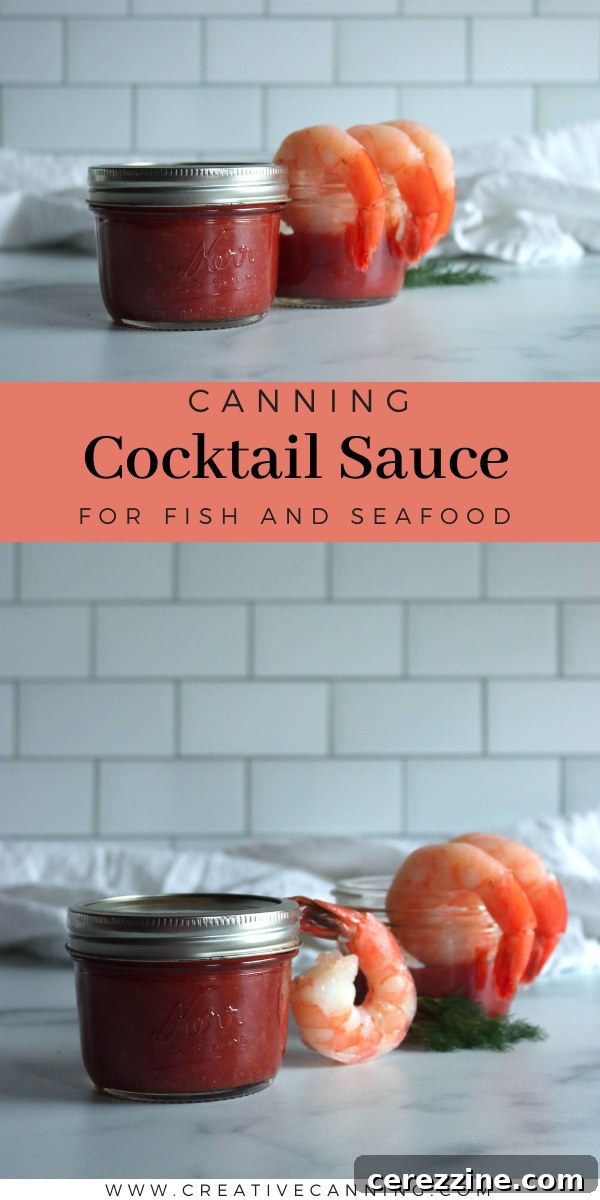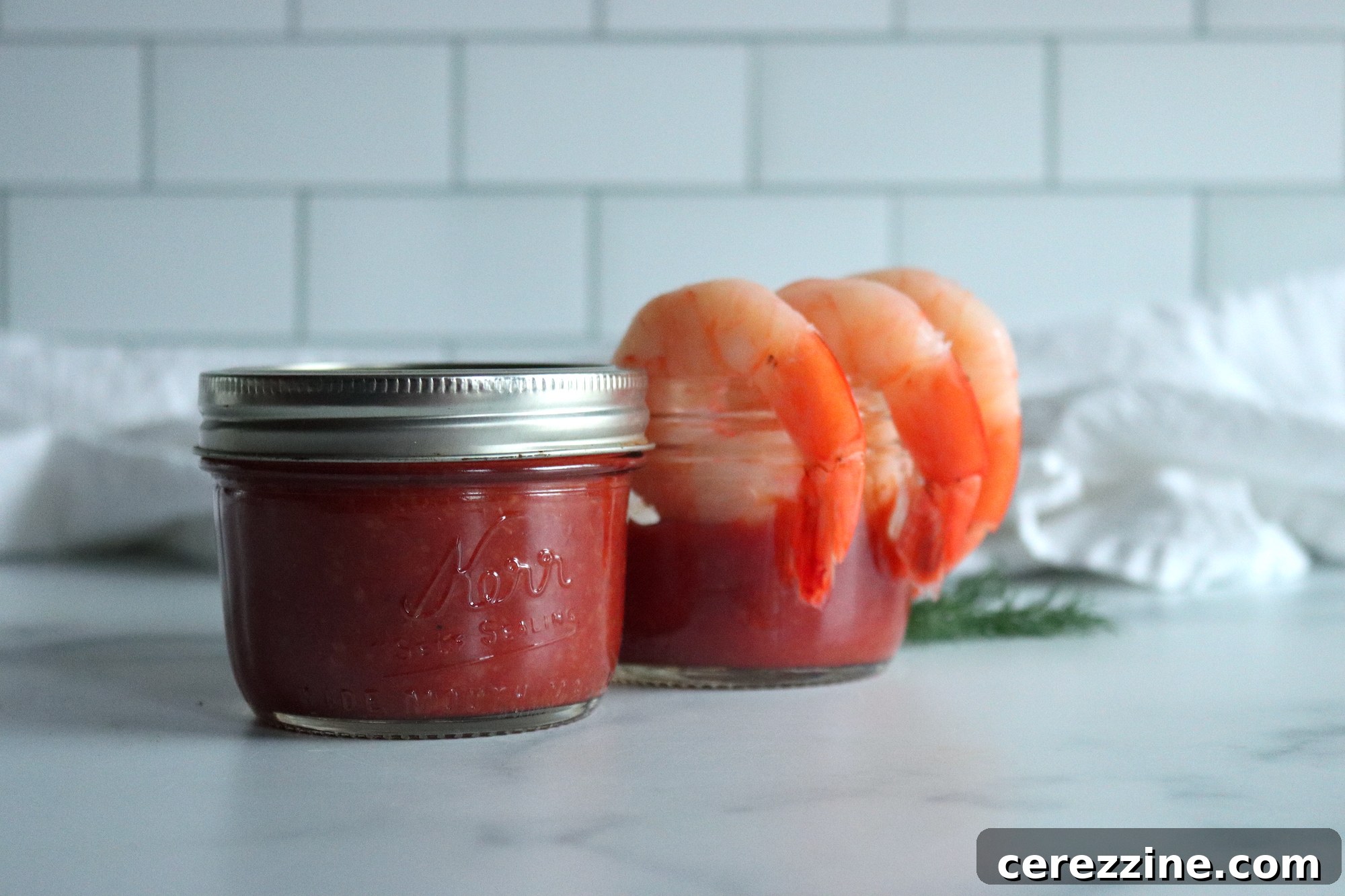
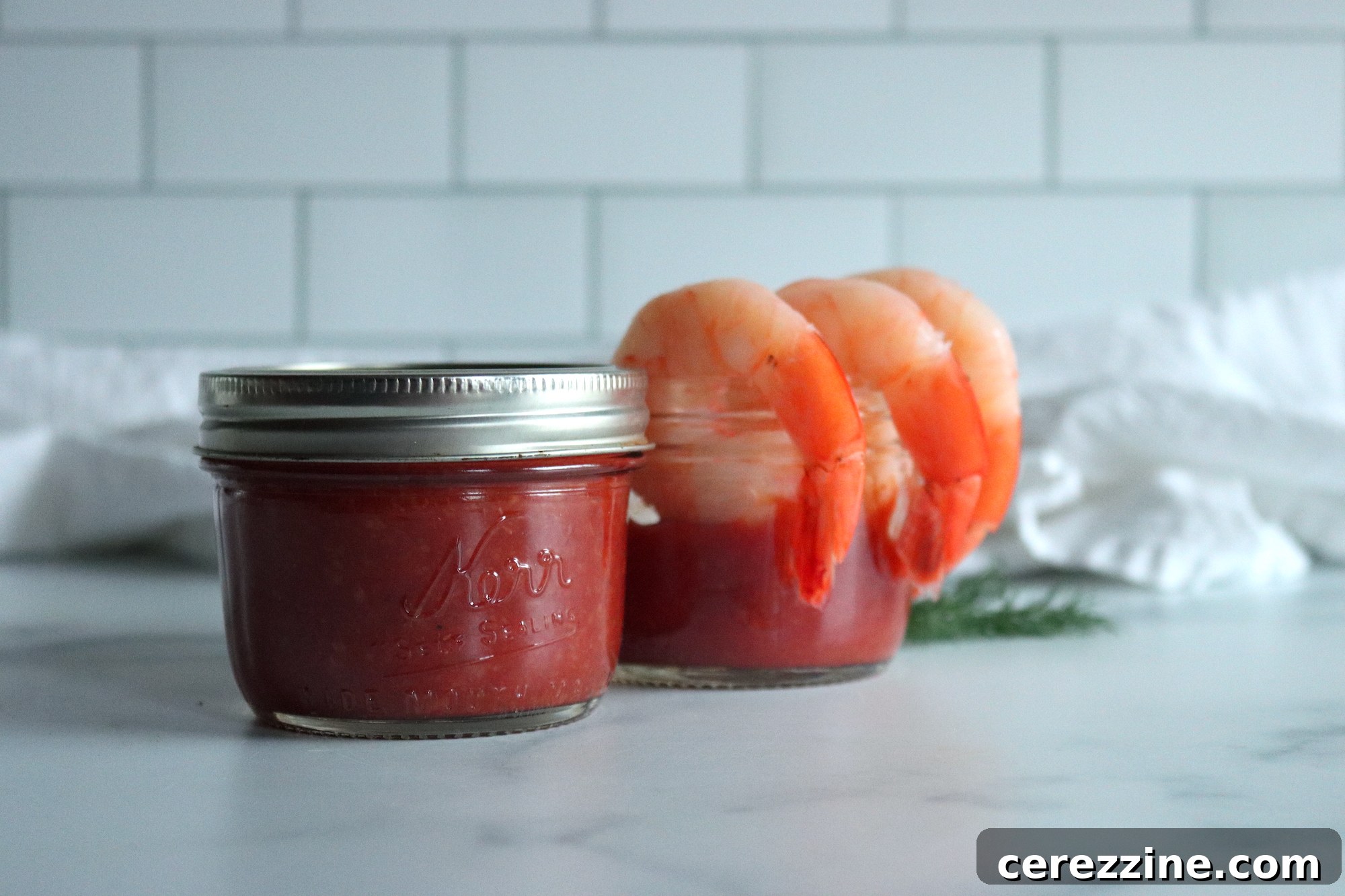
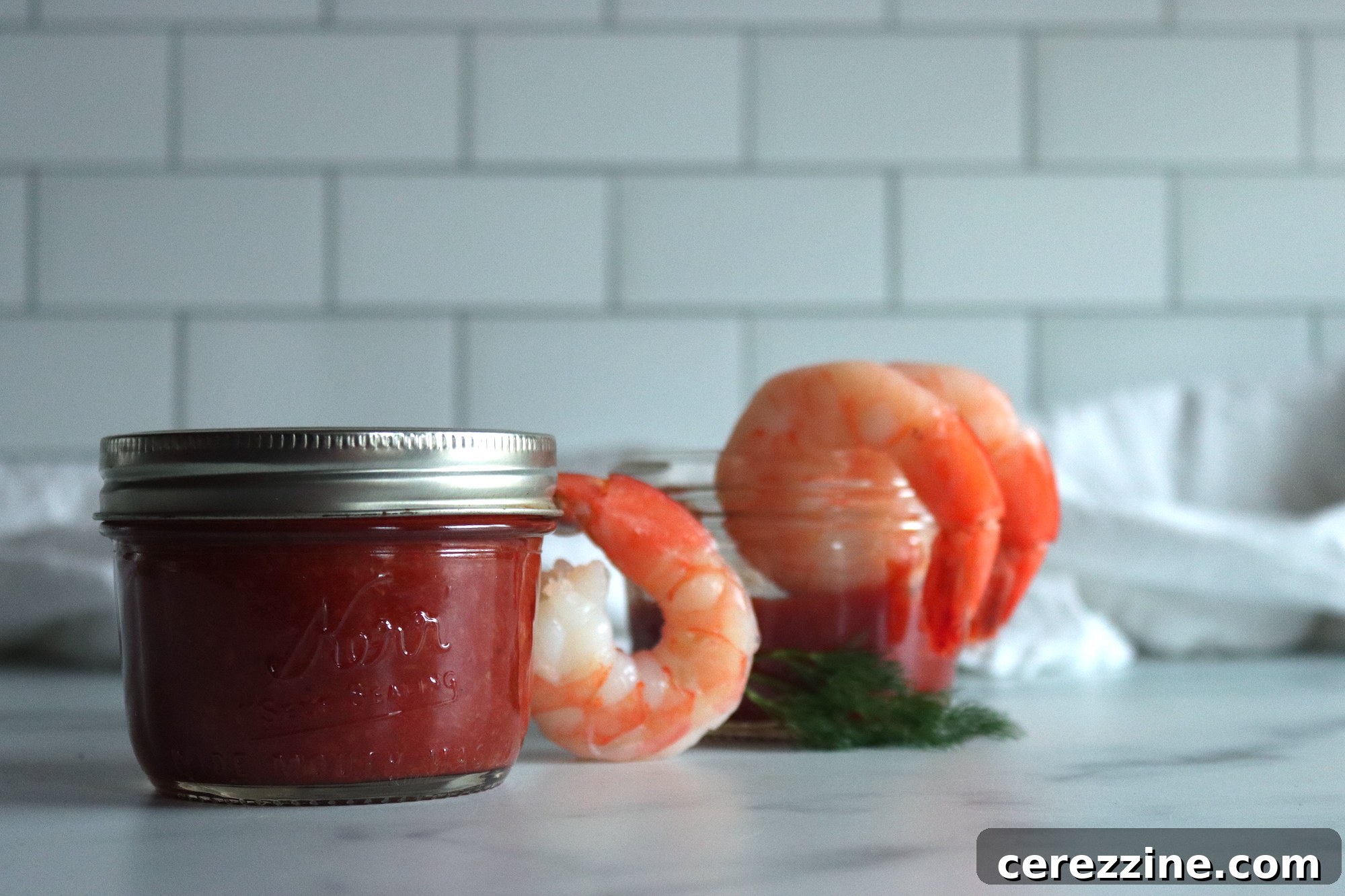
Embarking on the journey of home canning offers a rewarding way to ensure you always have your favorite condiments on hand, and homemade cocktail sauce is no exception. This vibrant, zesty, and boldly flavored sauce is an indispensable companion for seafood enthusiasts, elevating everything from classic shrimp cocktail to gourmet crab cakes. With its signature kick from fresh horseradish and a harmonious blend of tangy, savory, and subtly sweet notes, a jar of homemade cocktail sauce is a pantry staple that promises to enhance any meal or appetizer platter.
Our meticulously tested recipe transforms fresh tomato puree into a rich and robust base, layering in aromatic garlic, bright lemon, sharp vinegar, and a thoughtful selection of spices. The secret to its iconic heat lies in the strategic addition of pungent horseradish, stirred in at just the right moment to preserve its full potency. Once prepared and properly sealed using the water bath canning method, this exquisite cocktail sauce becomes shelf-stable, ready to deploy whenever you desire a quick, flavorful dip or an impressive addition to your holiday spread.
Why Can Your Own Cocktail Sauce? The Benefits of Homemade Preservation
There’s an undeniable charm and satisfaction in stocking your pantry with homemade preserves. Canning cocktail sauce at home isn’t just a culinary endeavor; it’s a step towards self-sufficiency and superior flavor. Here’s why preserving your own cocktail sauce is a brilliant idea:
- Unmatched Freshness and Flavor: Store-bought cocktail sauces often contain high fructose corn syrup, artificial colors, and preservatives. By making your own, you control every ingredient, ensuring a fresher taste and a healthier condiment free from unwanted additives. The ability to use peak-season tomatoes and fresh horseradish makes an enormous difference in the final product’s quality and taste profile.
- Cost-Effectiveness: While the initial investment in canning equipment might seem like a hurdle, in the long run, home canning can be significantly more economical than continuously purchasing specialty sauces. Buying ingredients in bulk, especially when tomatoes are in season, allows for substantial savings.
- Customizable Heat and Spice: Are you a fan of an extra-fiery kick, or do you prefer a milder zing? When you make your own cocktail sauce, you have the freedom to adjust the level of horseradish and cayenne pepper to perfectly match your palate. This customization is a luxury you rarely get with commercial products.
- Convenience and Preparedness: Imagine impromptu gatherings or last-minute dinner plans. With jars of shelf-stable cocktail sauce readily available in your pantry, you’re always prepared. No more last-minute dashes to the grocery store for a key ingredient. Just grab a jar, open, and serve!
- Thoughtful Gifting: Beautifully labeled jars of homemade cocktail sauce make fantastic gifts for fellow foodies, hosts, or anyone who appreciates handcrafted culinary delights. They’re a unique and personal present that speaks volumes about your care and effort.
A Trusted Recipe Foundation for Safe Home Canning
The foundation of any successful home canning project is a reliable, tested recipe. Our recipe for homemade cocktail sauce is adapted from the authoritative Ball Complete Book of Home Preserving, a gold standard in the canning community. This ensures that the ingredient ratios, acidity levels, and processing times are precisely calibrated for safety and optimal flavor, making it suitable for water bath canning.
The key to this particular recipe’s success lies in meticulously reducing the fresh tomato puree. This vital step concentrates the tomato flavor, preventing the sauce from becoming watery and ensuring it can stand up to the bold seasonings that define a great cocktail sauce. After the initial cooking and flavor melding, the finely grated horseradish is introduced off the heat. This critical technique preserves the horseradish’s volatile compounds, locking in its potent heat and unmistakable aroma that would otherwise dissipate with prolonged cooking. The result is a vibrant, full-bodied sauce with the perfect balance of tang, spice, and savory depth.
A Quick Look at the Recipe
- Recipe Name: Canning Cocktail Sauce
- Recipe Type: Tomato Sauce, Condiment
- Canning Method: Water Bath Canning
- Prep/Cook Time: Approximately 60 to 90 Minutes (active time)
- Canning Time: 15 Minutes (plus cooling)
- Yield: 6 to 7 half-pint jars
- Jar Sizes: Quarter Pint or Half Pint (recommended for safety and portion control)
- Headspace: 1/2 inch
- Ingredients Overview: Fresh tomatoes (or quality canned sauce), horseradish, lemon, garlic, vinegar, and a blend of spices.
- Difficulty: Moderate – requires a food mill or food strainer for fresh tomato preparation.
Essential Ingredients for Your Homemade Cocktail Sauce
Crafting an exceptional cocktail sauce begins with selecting high-quality ingredients. The star of the show is, of course, the tomato base, which can be made from scratch using fresh tomatoes or by using a suitable canned alternative. For fresh tomatoes, plum varieties like Roma are ideal due to their meaty texture and lower water content. You’ll need about 9 pounds of fresh plum tomatoes to yield approximately 13 cups of skinless and seedless puree, which will then be cooked down further to achieve the desired consistency and flavor concentration.
If you opt for the convenience of canned tomato sauce, you’ll need approximately 7½ cups (or about four 15-ounce cans) of plain, unseasoned tomato sauce. Commercial tomato sauce is already somewhat reduced, so it will require less cooking time than fresh puree.
Here’s a detailed look at the ingredients required to produce about 6 to 7 half-pint jars of this sensational cocktail sauce:
- Fresh Tomato Puree: Approximately 13 cups, derived from about 9 pounds of fresh plum tomatoes. This forms the rich, tangy backbone of the sauce. Alternatively, use 7½ cups of quality canned tomato sauce for a quicker option.
- Lemon Zest and Bottled Lemon Juice: The zest provides an aromatic brightness, while bottled lemon juice is crucial for ensuring consistent acidity. For safe canning, always use bottled lemon juice, as its pH is standardized, unlike fresh lemon juice which can vary.
- Garlic: Minced garlic cloves contribute a pungent, savory depth that perfectly complements the tomato and horseradish.
- Granulated Sugar: A touch of sugar is essential to balance the inherent acidity of the tomatoes and vinegar, creating a well-rounded flavor profile.
- Vinegar (White or Cider): Vinegar is not only key for the characteristic tangy flavor but also a vital component for acidification, which is paramount for safe water bath canning. White vinegar offers a clean tang, while cider vinegar can add a subtle fruitiness.
- Salt: Kosher or canning salt enhances all the other flavors and plays a role in the sauce’s preservation.
- Worcestershire Sauce: This savory condiment adds a layer of umami and complexity, deepening the sauce’s overall character.
- Dry Mustard, Cayenne Pepper, Onion Powder, Black Pepper: This classic spice blend delivers warmth, a gentle heat, and aromatic nuances that define the traditional cocktail sauce profile. Adjust cayenne to your preferred spice level.
- Horseradish (Fresh or Refrigerated, Finely Grated): The star ingredient for that quintessential, sinus-clearing kick. It must be added after the sauce is removed from heat to preserve its pungent compounds. Freshly grated horseradish offers the most potent flavor, but good quality refrigerated horseradish can also be used.
Preparing the Perfect Tomato Base: Fresh vs. Canned Options
The quality of your tomato base directly impacts the final flavor and texture of your cocktail sauce. Whether you choose fresh or canned tomatoes, careful preparation is key.
Using Fresh Tomatoes for the Base
If you’re starting with fresh plum tomatoes, begin by chopping approximately 9 pounds. As you chop, immediately transfer the pieces into a large, heavy-bottomed saucepan over medium-high heat. This continuous heating as you work is crucial; it helps to rapidly deactivate natural enzymes in the tomatoes that can otherwise cause the puree to separate into watery and solid layers later. Once all the tomatoes are in the pot, bring them to a gentle simmer for about 5 minutes, allowing them to soften thoroughly.
Next, pass the softened tomato mixture through a food mill or a food strainer. This essential step removes all skins and seeds, resulting in a smooth, vibrant fresh tomato puree, often referred to as “passata.” You should aim for approximately 13 cups of this smooth puree.
Now, for the reduction: Pour about half of your fresh tomato puree into a large, wide stainless steel saucepan. Bring it to a rolling boil over high heat, stirring frequently to prevent it from sticking and scorching. Once boiling vigorously, gradually add the remaining puree, about one cup at a time, allowing the mixture to return to a boil after each addition. This helps maintain a consistent cooking temperature. Once all the puree is incorporated, reduce the heat to maintain a steady, gentle simmer. Continue to cook, stirring occasionally, until the sauce has thickened significantly and reduced by roughly half its original volume. This reduction process typically takes around 30 minutes, but the exact time can vary depending on the width of your pot (wider pots allow for faster evaporation) and the intensity of your stove’s heat. A thicker base ensures a more concentrated flavor and prevents the final cocktail sauce from being too thin or watery.
Using Canned Tomato Sauce for the Base
For those seeking a more convenient approach, starting with canned tomato sauce is an excellent option. You will need approximately 7½ cups (or four 15-ounce cans) of plain, unseasoned tomato sauce. Since commercial tomato sauce is already partially cooked down, it requires significantly less reduction time. Simply simmer the canned tomato sauce in a large saucepan for about 8 to 10 minutes to slightly reduce its volume and concentrate its flavor before proceeding with the next steps.
Regardless of your chosen tomato base, while it is simmering, take this opportunity to prepare your water bath canner, jars, lids, and rings. Cleanliness and proper preparation are vital for successful and safe canning.
Crafting Your Signature Cocktail Sauce: Blending Flavors
Once your tomato base has reached the desired consistency and concentration, it’s time to infuse it with the characteristic flavors of cocktail sauce.
Carefully stir in the lemon zest, bottled lemon juice, minced garlic, granulated sugar, vinegar (white or cider), salt, Worcestershire sauce, dry mustard, cayenne pepper, onion powder, and black pepper. It’s crucial to hold off on adding the horseradish at this stage. Increase the heat under your saucepan and bring the entire mixture to a full, rolling boil. During this time, stir frequently and vigorously to ensure all ingredients are well combined and to prevent the sauce from sticking to the bottom of the pot and scorching.
As soon as the sauce achieves a robust boil, immediately remove the saucepan from the heat. This timing is essential for the next step.
The Horseradish Factor: Preserving the Punch
Now, with the sauce off the heat, stir in the finely grated horseradish. This is a critical step; do not return the mixture to the heat after adding the horseradish. The pungent compounds responsible for horseradish’s distinctive heat and flavor are volatile and degrade rapidly with prolonged cooking. By incorporating it at the very end, after removing the sauce from heat, you ensure that its bold, fiery character remains intact, delivering that unmistakable kick that defines an excellent cocktail sauce.
Canning Cocktail Sauce: A Step-by-Step Guide to Shelf-Stability
Canning your homemade cocktail sauce ensures its longevity and shelf-stability, making it a convenient condiment you can enjoy year-round. Follow these steps carefully for safe and successful preservation:
- Prepare Jars: Ensure your canning jars are clean and hot. You can heat them in your water bath canner, a dishwater cycle, or a low oven. Lids and bands should also be clean; lids typically do not need to be sterilized but should be warm.
- Fill Jars: Carefully ladle the hot cocktail sauce into the hot, prepared jars, leaving precisely ½ inch of headspace at the top. Headspace is the empty space between the food and the lid, crucial for proper sealing and creating a vacuum.
- Remove Air Bubbles: Insert a bubble remover or a non-metallic utensil (like a plastic spatula) down the sides of the jar to release any trapped air bubbles. Air bubbles can cause a false headspace reading and may interfere with sealing.
- Clean Rims: Wipe the rims of the jars clean with a damp cloth or paper towel. Any food residue on the rim can prevent a proper seal.
- Apply Lids and Bands: Center a clean, warm lid onto each jar. Screw on the bands until they are “fingertip-tight” – this means secure but not overly tightened. Over-tightening can prevent air from escaping during processing, leading to buckling or seal failures.
- Process Jars in Water Bath Canner: Using a jar lifter, carefully place the filled jars onto the rack in your prepared boiling water bath canner. Ensure that the water level covers the tops of the jars by at least 1 inch. Add more boiling water if needed.
- Boil and Process: Bring the canner back to a full, rolling boil. Once boiling, begin your processing time. Process for 15 minutes. Remember to adjust this time based on your altitude (refer to the altitude adjustments section below).
- Cool Down: After the processing time is complete, turn off the heat. Leave the jars in the hot canner for an additional 5 minutes. This allows the internal pressure to equalize and helps prevent liquid loss from the jars.
- Final Cooling: Carefully remove the jars from the canner using a jar lifter and place them on a towel-lined counter, spaced apart, to cool undisturbed for 12 to 24 hours. Avoid disturbing them during this crucial cooling period to allow for a strong seal to form.
- Check Seals and Store: After cooling, check that the jars have sealed by pressing the center of each lid. If it doesn’t flex, the jar is sealed. Remove the bands, label the jars with the contents and date, and store them in a cool, dark place. Any unsealed jars should be refrigerated and consumed within a few weeks.
Crucial Altitude Adjustments for Water Bath Canning
Processing times in water bath canning must be adjusted for higher altitudes to ensure food safety. Water boils at a lower temperature at higher elevations, which means foods require longer processing times to achieve proper sterilization. This recipe is specifically tested for small jars, either quarter-pints or half-pints. It is strongly advised not to use larger jars for this particular recipe to ensure safe processing.
- 0–1,000 feet: Process for 15 minutes
- 1,001–6,000 feet: Process for 20 minutes
- Above 6,000 feet: Process for 25 minutes
Serving Suggestions: Creative Ways to Enjoy Your Homemade Cocktail Sauce
Your homemade, shelf-stable cocktail sauce is incredibly versatile, ready to elevate a wide array of dishes. While it’s the perfect accompaniment to classic seafood, don’t limit its potential!
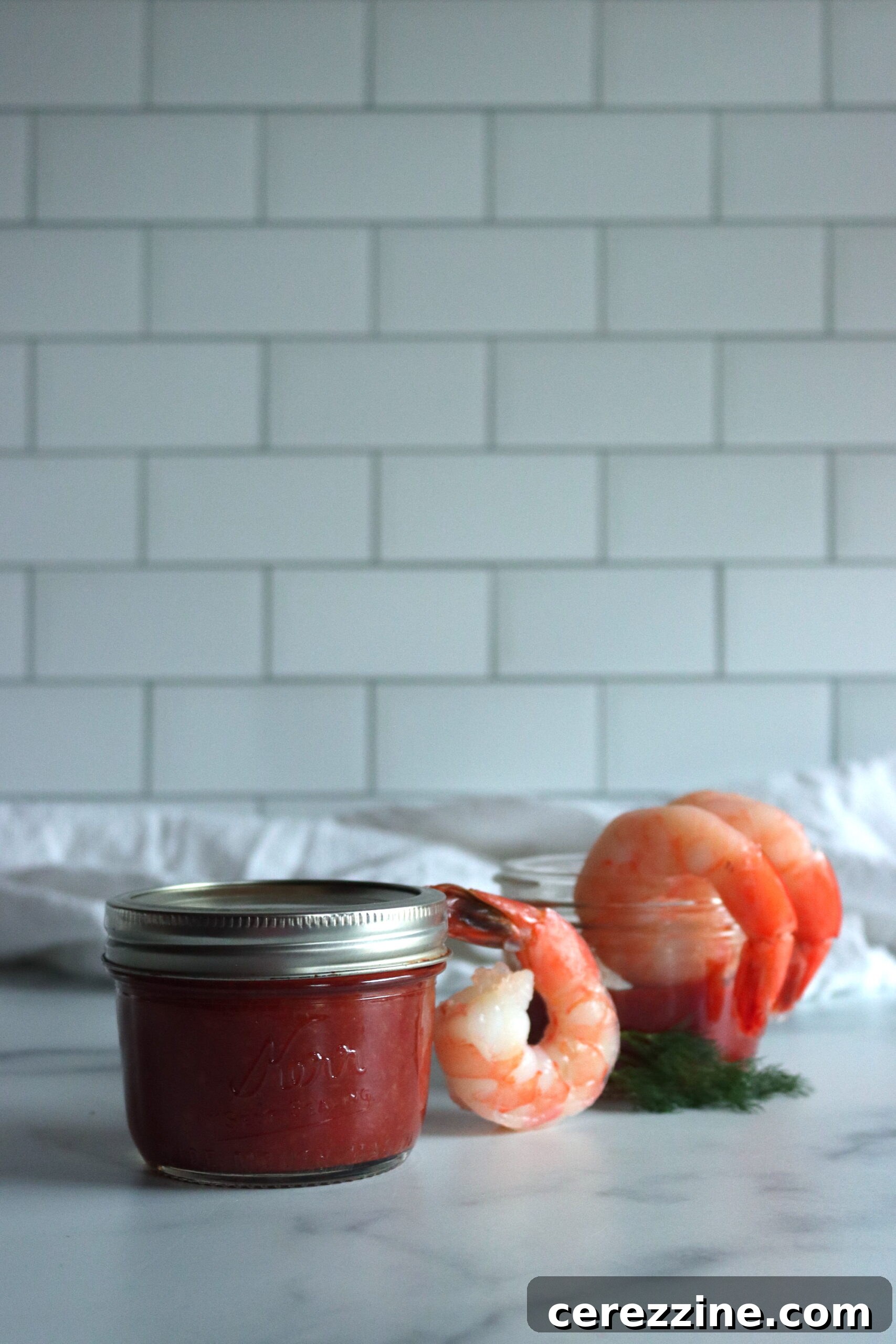
- Classic Shrimp Cocktail: The quintessential pairing. Serve chilled with freshly cooked shrimp and lemon wedges for an elegant appetizer.
- Oysters and Clams: A dollop of this zesty sauce is a must for freshly shucked oysters or steamed clams.
- Crab Cakes and Fish Fillets: Spoon it generously over pan-seared crab cakes, grilled salmon, or baked white fish for a burst of flavor.
- Fried Seafood Dip: A fantastic dipping sauce for fried calamari, fish and chips, or crispy shrimp.
- Bloody Mary Booster: Stir a spoonful into your Bloody Mary mix for an extra layer of spicy, tangy complexity and a delightful horseradish kick.
- Roasted Vegetables: Drizzle over roasted asparagus, broccoli, or Brussels sprouts for a surprising and flavorful twist.
- Meatballs or Cocktail Sausages: Use it as a glaze or dipping sauce for party meatballs or mini cocktail sausages.
- Marinade: Incorporate it into marinades for chicken or pork, adding a unique zesty and spicy note.
- Sandwich Spread: A thin layer on a fish sandwich or even a turkey burger can transform an ordinary meal.
With its bold flavor and shelf-stable convenience, this homemade cocktail sauce is bound to become a favorite in your kitchen.
If you tried this Canning Cocktail Sauce recipe, or any other recipe on Creative Canning, leave a ⭐ star rating and let me know what you think in the 📝 comments below!
And make sure you stay in touch with me by following on social media!
- Substack
User Rating: 5 out of 5 stars from 1 vote
48
servings, makes 6 to 7 half-pint jars
Canning Cocktail Sauce Recipe
1 hr
30 mins
15 mins
1 hr
45 mins
You can save, pin, rate, or print this recipe!
View full recipe for printing.
Enter your email to receive this recipe in your inbox, and get new recipes weekly!
Equipment
-
Water Bath Canner
-
Food Mill
-
Bubble Remover (Non-Metallic Utensil)
-
Jar Lifter
-
Canning Funnel
Ingredients
- 13 Cups Fresh Tomato Puree, see notes for fresh vs. canned options
- Zest of 2 lemons
- 6 Tbsp Bottled Lemon Juice
- 3 cloves garlic, minced
- 1 ¼ cups sugar
- 1 cup vinegar, white or cider
- 2 Tbsp salt
- 2 Tbsp Worcestershire Sauce
- 2 tsp dry mustard
- 1 tsp cayenne pepper
- 1 tsp onion powder
- ½ tsp black pepper
- 3 cups horseradish, finely grated (fresh or refrigerated)
Instructions
-
Prepare the tomato base: If starting from fresh tomatoes, chop about 9 pounds of plum tomatoes and add them directly to a large pot over medium-high heat as you chop. This helps prevent enzyme separation. Simmer for 5 minutes once all tomatoes are added, then pass through a food mill to remove skins and seeds, yielding approximately 13 cups of fresh tomato puree (passata).
-
Alternatively, if using canned products, use about 7½ cups of plain tomato sauce.
-
Prepare jars and canner: Before cooking the sauce, set up your boiling water bath canner. Wash jars, lids, and bands thoroughly. Keep jars hot until ready to fill.
-
Cook the tomato sauce: Pour half of the tomato puree (or all of the canned sauce) into a large stainless steel pot. Bring to a boil over high heat, stirring frequently. If using fresh puree, add the remaining puree 1 cup at a time, allowing it to return to a boil between additions. Reduce heat to a simmer and cook until the mixture reduces by about half (approx. 30 minutes for fresh puree). If using canned tomato sauce, simmer for about 8 to 10 minutes to slightly reduce volume.
-
Add the seasonings: Stir in the lemon zest, bottled lemon juice, garlic, sugar, vinegar, salt, Worcestershire sauce, dry mustard, cayenne, onion powder, and black pepper. Do NOT add the horseradish yet. Increase heat and return to a full rolling boil, stirring frequently to prevent scorching.
-
Add horseradish (off heat): Once boiling, immediately remove the pot from heat and stir in the finely grated horseradish. Do not return to heat after this step, as adding horseradish off-heat preserves its sharp flavor and heat.
-
Fill jars: Ladle the hot cocktail sauce into the hot, prepared jars, leaving ½ inch headspace. Use a bubble remover to remove air bubbles. Wipe jar rims clean. Apply lids and screw on bands until fingertip-tight.
-
Process jars: Carefully place filled jars into the boiling water bath canner, ensuring water covers jars by at least 1 inch. Bring to a full boil and process for 15 minutes (adjust for altitude as specified below). Turn off heat, let jars rest in the canner for 5 minutes. Remove to a towel-lined counter and cool undisturbed for 12–24 hours. Check seals, label, and store in a cool, dark place.
Notes
Horseradish is stirred in off-heat to preserve its flavor and heat—do not skip this step.
Store sealed jars in a cool, dark place. Refrigerate any opened jars and consume within a few weeks.
Tomato Quantities and Substitutions
You’ll need about 13 cups of fresh tomato puree for this recipe, which can be obtained from approximately 9 pounds of plum tomatoes. To make fresh tomato puree, chop tomatoes one at a time and immediately add them to a pan over medium-high heat. Cooking the tomato immediately after chopping is important to prevent enzyme-induced separation. Once all tomatoes are chopped, simmer for another 5 minutes, then remove from heat and pass through a food mill. This yields a thin, simple tomato sauce known as “passata.”
Alternatively, you can use regular canned “tomato sauce” (which is already a cooked-down tomato puree). Most commercial sauces are not quite half the original volume of fresh tomato sauce. For this recipe, if substituting, use about 7 ½ cups of canned tomato sauce (equivalent to four 15-ounce cans). You will then only need to cook it down slightly, simmering for about 8 to 10 minutes, rather than reducing it to half its original volume.
Altitude Adjustments
This recipe is tested for small jars only: quarter-pints or half-pints. Do not use larger jars for this recipe. Altitude adjustments for processing are as follows:
- 0–1,000 feet: 15 minutes
- 1,001–6,000 feet: 20 minutes
- Above 6,000 feet: 25 minutes
Nutrition (Approximate per serving)
,
Carbohydrates: 12g
,
Protein: 1g
,
Fat: 0.3g
,
Saturated Fat: 0.04g
,
Polyunsaturated Fat: 0.1g
,
Monounsaturated Fat: 0.1g
,
Sodium: 474mg
,
Potassium: 239mg
,
Fiber: 2g
,
Sugar: 9g
,
Vitamin A: 159IU
,
Vitamin C: 11mg
,
Calcium: 33mg
,
Iron: 1mg
Nutrition information is automatically calculated, so should only be used as an approximation.
Enjoyed this recipe? Share your thoughts below!
Find the perfect recipe
Searching for something else? Enter keywords to find the perfect recipe!