The delicate and ephemeral beauty of spring and summer blooms can be captured and savored long after their season with the delightful art of canning flower jelly. Imagine spreading a vibrant, fragrant jelly on your morning toast, a taste of sunshine and blossoms preserved for months to come. While a recent wave of misinformation has regrettably cast shadows of doubt on the safety of canning floral jellies, the unequivocal truth remains: these exquisite preserves are perfectly safe—**provided they are properly acidified.** With the right balance of natural acidifiers like lemon juice and the gelling power of pectin, flower jellies achieve the same shelf-stable reliability as any traditional fruit preserve, making them a wonderfully unique addition to any home canner’s pantry.
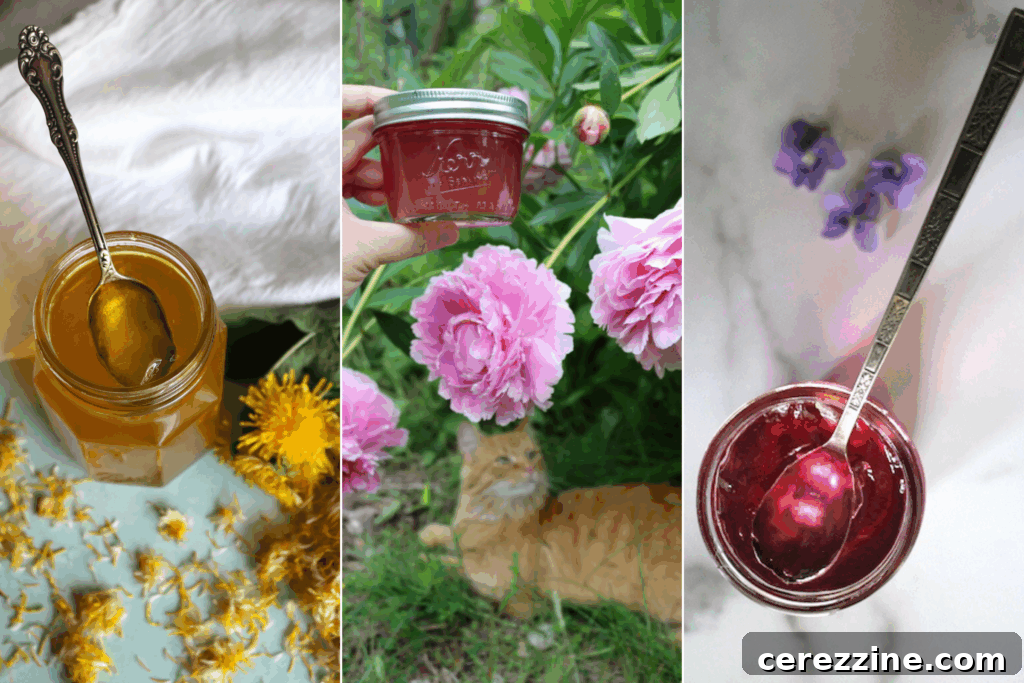
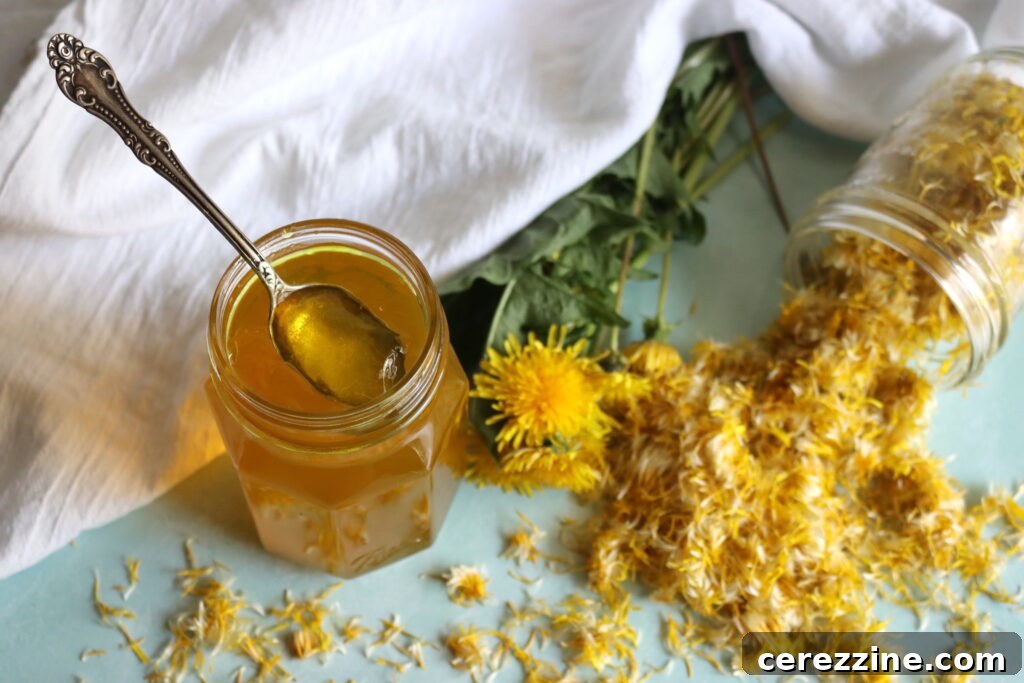
For generations, cherished recipes for botanical treats like dandelion jelly have graced family cookbooks and even official university extension bulletins, passed down through tradition and trusted culinary wisdom. However, a recent and perplexing development saw one such recipe—a long-standing dandelion jelly guide from the esteemed Wisconsin Extension—mysteriously vanish from their digital archives. Its removal was accompanied by a stark retraction claiming that “there are no safe recipes for canning flower jellies.” This unexpected pronouncement understandably triggered a cascade of confusion, frustration, and even fear among dedicated home canners, passionate foragers, and anyone who cherishes the art of food preservation.
So, let’s cut through the noise and address the core question directly: **Are flower jellies safe for home canning?** The answer, unequivocally, is yes—but with a critical caveat. Their safety is entirely dependent on **proper acidification**, a fundamental principle of water bath canning that ensures a stable, safe product.
Decoding the Controversy: The Real Story Behind the Panic
The sudden and sweeping retraction from the Wisconsin Extension was not, as many might assume, based on new scientific findings deeming flower jellies inherently dangerous. Instead, it stemmed from a crucial oversight in their original, decades-old dandelion jelly recipe: it lacked any specific instructions for adding lemon juice or another acidifying agent. Without this vital component, the pH level of the final product remained unknown and, crucially, untestable against the safety standards required for water bath canning. When pressed to provide testing data confirming the recipe fell below the safe pH threshold of 4.6 (the critical point for preventing the growth of Clostridium botulinum spores), the university could not produce it.
Driven by understandable liability concerns, the Wisconsin Extension opted for a broad, cautionary statement, implying that *no* flower jellies are safe for canning. This blanket decree, however, regrettably overlooked the fact that numerous other reputable university extensions, national food preservation centers, and commercial pectin companies continue to publish and endorse flower jelly recipes that are rigorously tested and demonstrably safe—precisely because they incorporate proper acidification techniques. The incident highlights a critical distinction: the flaw lay not with flower jellies in general, but with a specific recipe’s lack of an essential safety measure.
The University of Wisconsin did offer additional justifications for their decision, citing concerns about potential pesticide use on wildflowers, the risk of flower allergies, and the importance of accurate plant identification. While these are undeniably valid and important considerations for anyone foraging or consuming edible flowers—always choose unsprayed plants and be absolutely certain of your identification—it’s crucial to understand that these factors relate to the *quality and safety of the raw ingredients* and *consumer health in general*, not to the fundamental principles of *canning safety* once proper acidification is applied. An accurately identified, pesticide-free flower, once properly acidified, poses no more inherent canning risk than a properly acidified fruit.
This situation mirrors recent events concerning canned pickled garlic recipes. These were withdrawn not because pickled garlic itself is unsafe when properly acidified, but due to concerns about contamination in large quantities of pre-peeled garlic imported from certain regions. In both cases, the issue wasn’t the safety of the preservation method itself, but rather external factors or the absence of a critical safety step in specific, untried recipes. This underscores the core message: the safety of flower jellies, like all preserves, hinges on controlling acid levels, a factor entirely within the home canner’s control.
Understanding the Role of Acidity in Safe Home Canning
At the heart of safe water bath canning lies acidity. The pH scale measures how acidic or alkaline a substance is, with values below 7 being acidic and above 7 being alkaline. For low-acid foods (those with a pH above 4.6), the risk of Clostridium botulinum growth is present. This bacterium produces a potent toxin that can cause botulism, a serious and often fatal foodborne illness. By ensuring the pH of a preserve is consistently below 4.6, we create an environment where botulism spores cannot germinate and produce their toxin, rendering the food safe for shelf storage.
This critical pH level is achieved through the addition of high-acid ingredients such as lemon juice, vinegar, or naturally acidic fruits and wines. The excellent news for flower jelly enthusiasts is that these preserves are fundamentally made from **flower tea**, which is largely water and thus relatively easy to acidify. Unlike dense, low-acid vegetables or meats that require more robust acidification to penetrate the solids, a liquid medium like flower tea readily incorporates and equilibrates with added acids.
Research from the gold standard of home food preservation, the National Center for Home Food Preservation (NCHFP), reinforces this principle. Their studies, such as the 2004 investigation titled “Studies on safe acidification of salsa for home boiling water canning,” demonstrated that even low-acid vegetables like chopped onions or peppers could be safely acidified with minimal lemon juice. Specifically, just 10 ml (approximately 2 teaspoons) of lemon juice per 200 grams (about 1.5 cups) of chopped low-acid vegetables was sufficient to bring the pH well below the 4.6 threshold. Considering that flower tea is a far less dense and more homogenous medium than chopped solids, its acidification for safe canning is even more straightforward and effective.
Pectin’s Role and the Importance of Lemon Juice
When it comes to gelling agents, commercial boxed pectin often plays a dual role in many jelly recipes. Beyond its primary function of helping preserves set, many conventional pectins, particularly those designed for high-sugar recipes, contain **citric acid** as part of their formulation. This added citric acid contributes to the overall acidity of the mixture, further aiding in the critical task of pH reduction for safe canning. This is why some historically tested jelly recipes—such as classic **mint jelly** or **corn cob jelly**—do not explicitly call for additional lemon juice, yet they are still widely approved for safe canning, relying on the acidifying effects of the boxed pectin and other acidic components (like vinegar in some corn cob jelly variations).
However, despite the inherent acidity in some pectins, it is always a recommended best practice—and one I personally adhere to—to include supplementary lemon juice in all floral jelly recipes. This isn’t just about safety; it’s also about flavor. Lemon juice provides an extra margin of safety, ensuring the pH remains well within the safe zone, especially given potential variations in pectin formulations or the natural acidity of the flower tea itself. Furthermore, its bright, tangy notes perfectly balance the often delicate sweetness of flower jellies, enhancing their overall flavor profile without overpowering the floral essence.
It’s also important to note that not all commercial pectins are created equal in terms of their acid content. Some off-brands or specialty pectins may not include citric acid. For instance, **Pomona’s Universal Pectin** is specifically designed to be un-acidified and allows for low-sugar canning, meaning it *must* be paired with a significant amount of an acidifier like lemon juice or lime juice to ensure both gelling and canning safety. Conversely, over-acidification can also lead to issues like “weeping” or separation in jellies, highlighting that precise pH management is crucial for both food safety and optimal texture.
For those new to canning flower jellies, I highly recommend sticking with reliable brands like Sure-Jell. Both their regular and low-sugar variations are known for their consistent setting power and contain sufficient added citric acid, providing a solid foundation for safe and delicious flower jellies. Always read the specific pectin package instructions, as they often contain valuable guidance on acid additions for various fruit and non-fruit jellies.
Flower Jellies: Endorsed by Trusted Food Preservation Authorities
The recent isolated retraction by one university extension does not negate the extensive body of work and long-standing recommendations from numerous other highly respected food preservation authorities. Contrary to the implication that *all* flower jellies are unsafe, a wealth of tested and published recipes for flower-based and similar herb-tea-based jellies exist from these credible sources, affirming their safety when proper procedures are followed:
- The National Center for Home Food Preservation (NCHFP): As the leading authority on home canning in the United States, the NCHFP provides scientifically tested guidelines. They publish safe recipes for both classic **mint jelly** and **corn cob jelly**. Notably, neither of these recipes typically includes additional lemon juice, demonstrating that the combination of pectin’s acidifying properties and appropriate sugar levels is sufficient for safety. Corn cob tea, often more alkaline than many flower teas, serves as a powerful testament to the efficacy of pectin and sugar in creating a safe preserve.
- Colorado State University Extension: This extension office specifically highlights homemade flower jellies as an excellent and safe method for preserving edible flowers. They note that this preservation technique is superior to methods like infused oils, which can become rancid on the shelf. The university further states that edible flowers can be incorporated and preserved in the same manner as culinary herbs, suggesting their interchangeability in various recipes, including home-canned jellies, wines, syrups, and vinegars. (Source: Colorado State University Extension Fact Sheet 7.237)
- The Ball Blue Book Guide to Preserving: Considered a bible for home canners, the Ball Blue Book explicitly confirms that herbs and spices can be safely infused into any jelly recipe to enhance flavor without compromising canning safety. This process involves steeping the herbs or spices (or, in this case, flower petals) in the liquid base and then straining them out before the final jelly preparation and canning. This guidance directly supports the method used for flower jellies. (Source: Ball Blue Book Guide to Preserving, page 44, “Other Ingredients in Soft Spreads”)
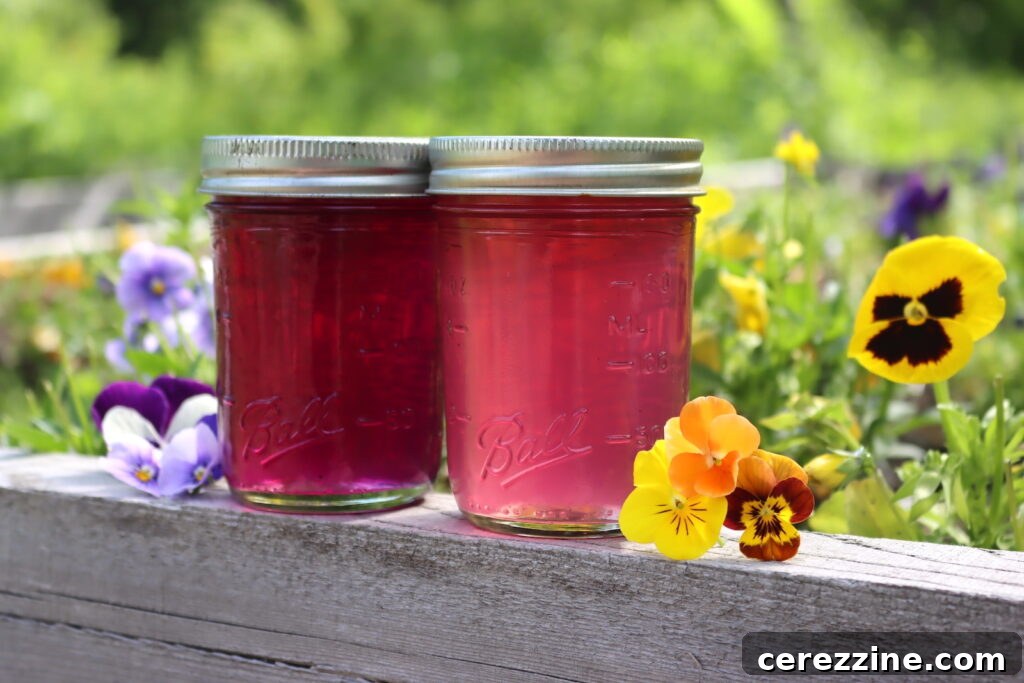
- Pomona’s Pectin: This well-regarded pectin company, known for its low-sugar and no-sugar pectin options, provides tested recipes for low-sugar violet jelly and low-sugar rose petal jelly. Given that Pomona’s pectin does not contain added citric acid, their recipes wisely call for a generous ½ cup of lemon juice (as opposed to the 2 tablespoons typical for conventional pectins) to ensure adequate acidity for safe preservation. These foundational recipes can be adapted for a wide variety of other edible flower petals, from peonies to sunflowers. (Source: Pomona’s Pectin)
- Ball Canning and Bernardin: These major canning supply companies offer a recipe for Lavender Wine Jelly. This recipe utilizes liquid pectin and relies on the inherent acidity of white wine, rather than added lemon juice, to achieve the necessary pH for safe canning. The edible lavender flowers are infused directly into the acidic white wine base, showcasing another safe method for floral jelly creation. (Source: Bernardin Lavender Wine Jelly)
- The University of Illinois Extension: Historically, the University of Illinois Extension specifically recommended making jellies from both dandelions and violets. While this information was recently removed, it was due to internal pressure following the University of Wisconsin’s retraction, and *not* as a result of any new safety data or independent testing conducted by the University of Illinois itself. This suggests a systemic rather than scientific basis for the change. (Source: University of Illinois Extension)
- The University of Alaska Extension: This extension has published and continues to endorse recipes for spruce tip jelly and rose petal jelly. Their tested methods specifically instruct adding 2 tablespoons of lemon juice to 4 cups of flower or herb tea per batch, demonstrating a clear understanding and application of proper acidification for wild-harvested ingredients. These tested recipes remain available in their publications. (Source: Wild Roses, Publication FNH-00114)
It is important to emphasize that all of the above references apply to “flower jelly,” where the flower petals are infused into the liquid and then *strained out* before the canning process. This differentiates it from “flower jam,” which typically includes the actual flower petals as a solid component within the preserve, a distinction we will explore further below.
A Reliable Basic Canning Recipe for Flower Jelly
While the specific edible flower you choose will impart its unique flavor and captivating color, the fundamental method for crafting a safe and delicious flower jelly remains remarkably consistent across varieties. The foundation is a simple, fragrant tea brewed from edible flower petals, which is then combined with essential ingredients: lemon juice for acidification, sugar for preservation and flavor, and pectin to achieve that perfect jelly consistency. Here’s a detailed, reliable starting point for your home canning adventure:
To begin your flower jelly creation, gently gather and measure **2 cups of lightly packed edible flower petals**. Excellent choices include vibrant dandelions, delicate violets, aromatic lilacs, or classic rose petals. Place the petals in a heat-proof bowl or jar. Bring **4 cups of water** to a rolling boil and immediately pour the boiling water over your prepared petals. Allow the petals to steep for at least **15 to 30 minutes** to extract their flavor and color, or for a more intensely flavored jelly, you can let them steep for several hours or even overnight in the refrigerator. Once steeped, carefully strain the petals from the liquid using a fine-mesh sieve lined with cheesecloth. Press gently to extract all the liquid; you should yield approximately **3½ to 4 cups of concentrated flower tea**.
Transfer the strained flower tea into a clean, heavy-bottomed saucepan. Stir in **2 tablespoons of bottled lemon juice** (using bottled lemon juice is recommended for consistent acidity, unlike fresh lemon juice which can vary). Next, thoroughly whisk in **one box (1.75 oz) of powdered pectin** (such as Sure-Jell). Bring this mixture to a full, vigorous rolling boil that cannot be stirred down. Once boiling, quickly add **4 cups of granulated sugar** all at once, stirring constantly until it is fully dissolved. Return the mixture to a strong, rolling boil and continue to cook for **1 to 2 minutes**, stirring continuously to prevent scorching, or until the jelly reaches its gelling point. You can test for the gelling point using a cold spoon test or a candy thermometer (typically around 220°F at sea level).
Carefully ladle the hot jelly into clean, sterilized canning jars, leaving precisely ¼ inch headspace at the top. Wipe the jar rims clean, apply new lids, and screw on the bands finger-tight. Process the jars in a boiling water bath canner for **10 minutes**. If you reside at an elevation above 6,000 feet, increase the processing time to 15 minutes to ensure proper sterilization. After processing, carefully remove the jars and let them cool undisturbed on a towel for 12-24 hours. Check for seals before storing.
This tried-and-true formula provides a beautiful canvas for a wide spectrum of edible flowers. Should you choose to use **Pomona’s Universal Pectin**, remember to consult their specific instructions, as this pectin typically requires the addition of **½ cup of lemon juice** and utilizes **calcium water** to facilitate gelling, offering a versatile option for low-sugar flower jellies. Once proficient in this basic technique, you can confidently explore creative variations, such as blending different floral essences, incorporating wine as part of your liquid base, or infusing complementary herbs like mint, lemon balm, or thyme—always remembering to maintain proper acid ratios and adhering to pectin-specific sugar requirements for successful and safe preservation.
Navigating Flower Jams: A More Complex Preservation Challenge
While the path to safely canning flower jellies is clear and well-trodden, the realm of “flower jams”—preserves that actually include the flower petals as a solid component—introduces a more intricate set of challenges. Unlike jellies, where the solids are strained out, jams retain the physical plant material, which can complicate the acidification process. For a flower jam to be safely water bath canned, the entire mixture, including the embedded petals, needs to achieve a uniformly acidic environment, effectively “pickling” the flower solids all the way through. This is a common requirement for many preserves that suspend low-acid ingredients within an acidic jelly or syrup.
Consider the popular **pepper jellies** as a prime example. These are, in essence, a type of jellied pickle, where chunks of low-acid peppers are suspended in a highly acidic, sweet-and-sour jelly base. Most pepper jelly recipes rely heavily on vinegar (often cider vinegar) to provide the necessary acidity, with a substantial amount of sugar added to balance the intense tang and create the desired texture. The principle for a savory herbal jam, which could include edible flower petals, would follow a similar logic. The recipe must ensure a high enough concentration of acid to safely preserve the solids.
For such a savory herbal jam featuring edible flowers, a general guideline suggests including at least ¼ cup of vinegar (at 5% acidity, such as wine, white, cider, or rice vinegar) per half-pint jar of finished product yield. This ensures adequate acidity to safely preserve the incorporated plant material. The tested recipe below, for a savory herbal jam, provides a solid framework and yields approximately four half-pint jars:
- 1 to 2 cups edible flowers
- 4 cups water (or 2 cups water and 2 cups white wine)
- 1 to 2 cups sugar
- 1 cup vinegar at 5% acidity (wine, white, cider, or rice)
- 1/4 cup lemon juice (bottled for consistent acidity)
- 1 box (1.75 ounces) Low Sugar Pectin (such as Sure-Jell Low Sugar)
In this recipe, using 2 cups of sugar will result in a preserve that is closer to the sweet-tangy profile of a classic pepper jelly. Reducing the sugar to 1 cup will yield a more savory jam, with just enough sweetness to temper the acidity. It’s crucial to understand that this savory profile is often not the “sweet flower jam” many home canners envision. However, there’s another fascinating route to sweet flower jams that leverages an inherently acidic ingredient: wine.
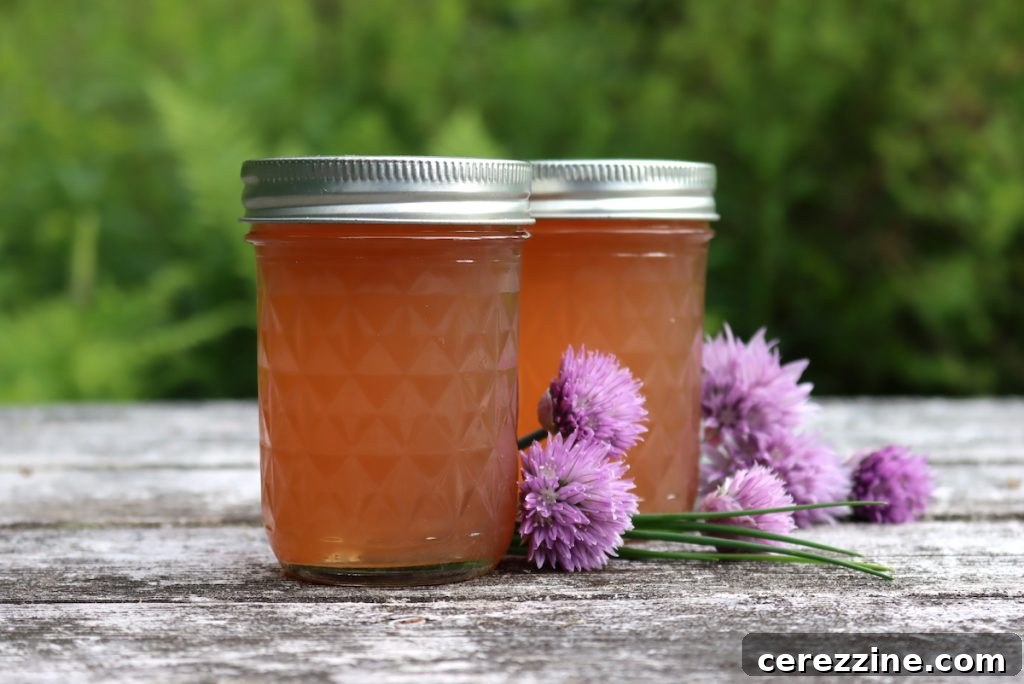
Crafting Flower Jams with Wine: An Acidic Foundation
Wine, by its very nature, is an acidic beverage. This acidity is not merely a taste characteristic but a crucial biological requirement that allows yeast to thrive during fermentation while simultaneously inhibiting the growth of spoilage microorganisms. In fact, if the pH of wine is too high, it can even become a breeding ground for undesirable bacteria, including those that could potentially produce botulism toxin – a surprising but true fact. Therefore, all wines, by definition and necessity, must possess a pH below 4.6, making them inherently safe acidic bases for certain preserves.
Typically, white wines exhibit a pH range of approximately 3.0 to 3.4, while red wines tend to fall between 3.3 and 3.6. These pH levels are comparable to, or even more acidic than, many common pickled vegetables. White wine, with its generally neutral flavor profile, offers an excellent foundation for a flower jam, allowing the delicate floral notes to shine through while providing a robust acidic environment for safety. When creating a flower jam, incorporating white wine into the liquid base allows for the inclusion of flower petals as solids, leveraging the wine’s acidity to preserve them safely.
For those adventurous enough to explore this avenue, Bernardin, a respected canning authority, offers an excellent all-wine and lemon juice pepper jelly recipe that omits added vinegar. This recipe, with its strong acidic base, could potentially be adapted into a delightful flower jam. In this speculative adaptation, flower petals would substitute the hot peppers, with the assumption that they behave similarly in terms of acidity and canning safety. **However, it is crucial to state that this adaptation is *not* a formally tested recipe, and therefore, home canners choosing to pursue this method would need to independently test the pH of their final product using reliable pH strips to ensure it falls below 4.6.**
Here’s a conceptual recipe for a wine-based flower jam, based on the Bernardin pepper jelly, with the critical caveat about pH testing:
- 1 cup edible flower petals (lightly packed)
- 1 1/2 cups (375 ml) sweet white wine (ensure pH is verified below 4.6)
- 3 1/2 cups (875 ml) granulated sugar
- 3 tbsp (45 ml) bottled lemon juice
- 1 pouch (85 ml) Liquid Pectin (or equivalent powdered pectin, following package directions)
This formulation benefits from multiple layers of acidification: the citric acid often present in boxed or liquid pectin, the additional lemon juice, and the inherent acidity of the wine itself. This combination should theoretically ensure the pH is well below the safety threshold. (Note: If using Pomona’s pectin, you would need to increase the lemon juice to ½ cup, as it lacks its own acidifiers, and follow its specific gelling instructions.) While the edible flowers are intended to “pickle” within this acidic medium much like chopped peppers, this is an inference rather than a tested outcome. As the sole, officially untested recipe mentioned in this article, exercising your own best judgment and diligently using pH strips for verification is paramount. All other recipes referenced in this guide are supported by known canning authorities and tested for safety.
Embracing Traditional High-Sugar Flower Preserves
Beyond jellies and modern jams, there exists a rich tradition of flower “jams” or preserves that operate on an entirely different principle of preservation: a very high sugar content. These traditional recipes often involve cooking flowers directly in a concentrated sugar syrup until the mixture reaches what is known as the “thread stage” (approximately 235°F on a candy thermometer). This temperature is significantly higher than the typical gelling point for most pectin-set jellies (around 220°F).
In these preparations, the preserve thickens not primarily due to pectin, but because of the sheer concentration of sugar. At such high sugar levels, the **water activity** within the preserve is drastically reduced. Water activity (aw) measures the amount of unbound water available for microbial growth. When water activity is low enough (typically below 0.85), most spoilage microorganisms, including bacteria and molds, cannot thrive. In this scenario, pH becomes largely irrelevant for safety, as the sugar itself acts as the primary preservative, effectively drawing out moisture and inhibiting microbial activity. These high-sugar preserves are perfectly safe for canning and offer a truly luxurious texture and flavor. (That said, a touch of lemon juice often still enhances the flavor by adding brightness and balancing the sweetness.)
In essence, you’re creating syrup-candied edible flowers that are then served like a “flower jam.” And regardless of the technical classification, the result is invariably delicious! This syrup-based approach to “flower jam” is celebrated and preserved across diverse cultures worldwide, with the luscious Turkish rose petal jam being a particularly renowned example of this exquisite tradition.
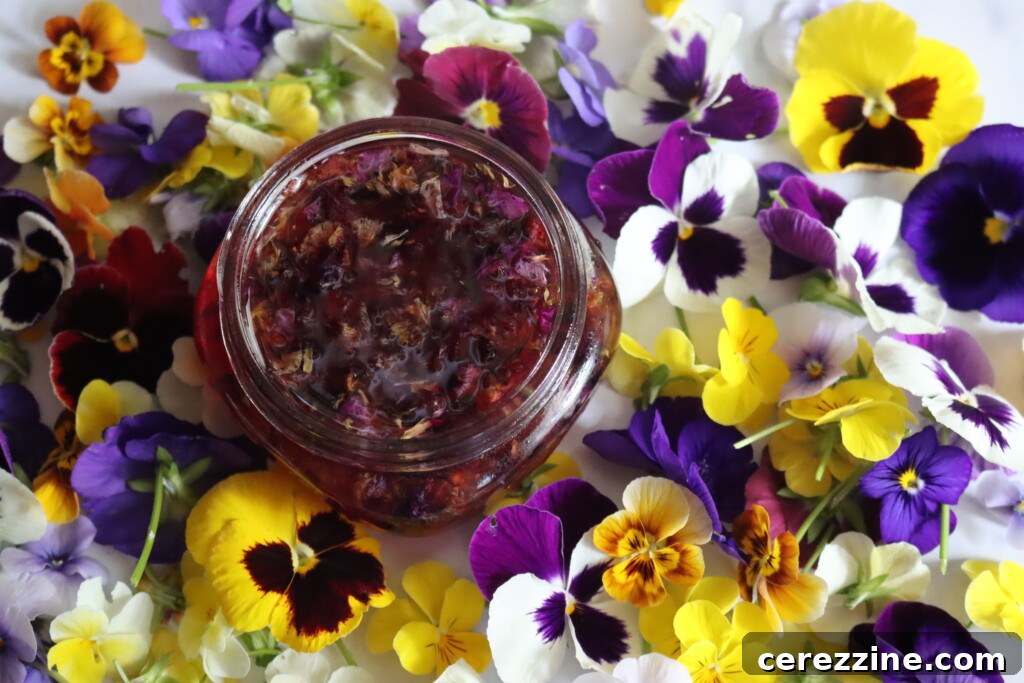
To craft a syrup-based flower jam, begin with **4 cups of water**, **4 cups of granulated sugar**, and **2 to 4 cups of edible flower petals** (depending on desired intensity). Combine all ingredients in a large, heavy-bottomed pot. Bring the mixture to a rolling boil over medium-high heat, stirring until the sugar is completely dissolved. Continue to cook, stirring occasionally, until the syrup reaches 235°F on a candy thermometer. This is the thread stage, where a small amount dropped into cold water will form a soft, pliable thread.
Carefully ladle the hot, thick preserve into prepared sterilized jars, leaving ¼ inch headspace. Wipe the jar rims clean and secure with new lids and bands. Process in a boiling water bath canner for **10 minutes** (or 15 minutes if at elevations above 6,000 feet). While in many parts of the world, this type of high-sugar syrup preserve might simply be stored in sterilized jars in a cool pantry without further canning, here in the US, we often prefer the added certainty and extended shelf life that water bath canning provides. The good news is, regardless of the storage method, the taste remains uniformly exquisite!
Flower Jellies Are Safe—When Done Right: Empowering Your Home Canning Journey
Despite the fleeting panic caused by a single, isolated retraction from one extension office, the overwhelming scientific evidence and a multitude of tested, proven recipes unequivocally support the safety of properly acidified flower jellies for home canning. When you adhere to established food preservation guidelines—utilizing boxed pectin (especially conventional types that include citric acid), ensuring adequate sugar content, and critically, incorporating a sufficient amount of lemon juice—you are operating well within the safe parameters for creating shelf-stable, delicious floral preserves.
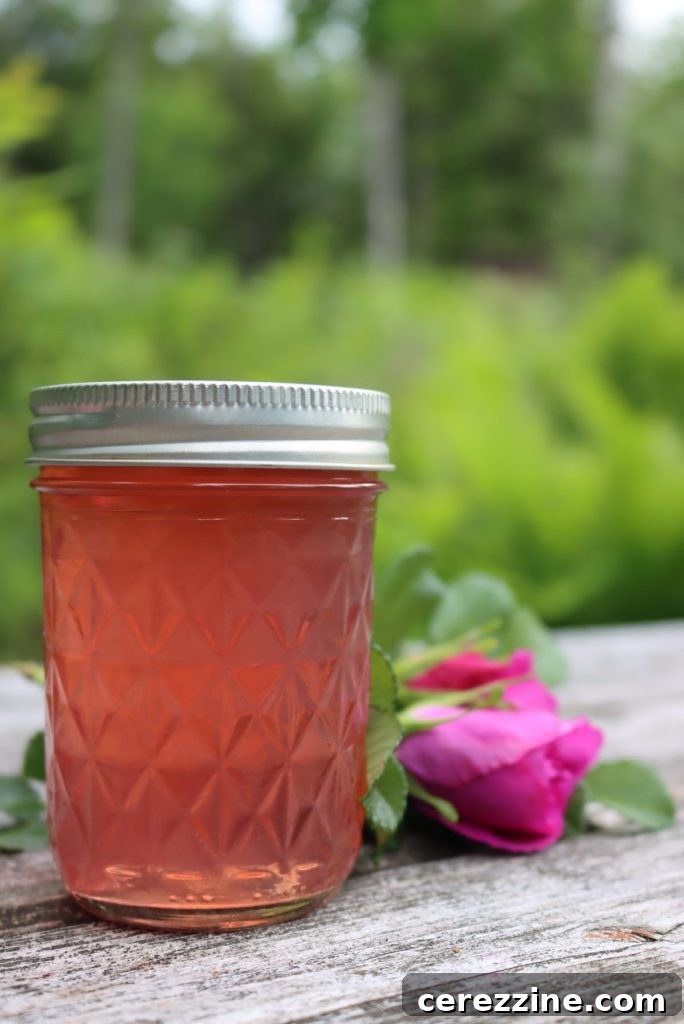
To be absolutely clear: flower jellies are not inherently unsafe. They simply demand the same thoughtful and precise acidification as any other preserve safely processed in a boiling water bath canner. Whether you’re making classic **mint jelly**, fragrant **rose jelly**, or cheerful **dandelion jelly**, the underlying principles of safety are identical: achieve and maintain a pH below 4.6. To provide an abundance of caution and ensure maximum safety, always add **2 tablespoons of bottled lemon juice** per 4 cups of flower tea when using standard boxed pectin like Sure-Jell. If you opt for Pomona’s Pectin, which is un-acidified, increase the lemon juice to **½ cup** and follow their specific instructions for calcium water to ensure a proper set and safe acidity.
There is nothing intrinsically dangerous about edible flower petals themselves, provided they are responsibly harvested from unsprayed locations and correctly identified. In truth, from a canning safety perspective, they are remarkably similar to culinary herbs like mint, which have been widely used in safe, tested jelly recipes for decades. If you encounter misinformation or fear-based claims suggesting otherwise, please feel empowered to share this comprehensive guide. Because the only thing more regrettable than the remote possibility of foodborne illness is the propagation of unsubstantiated fear that discourages us from celebrating and preserving the vibrant beauty and unique flavors of nature’s bounty.
Explore a Garden of Flower Jelly Recipes
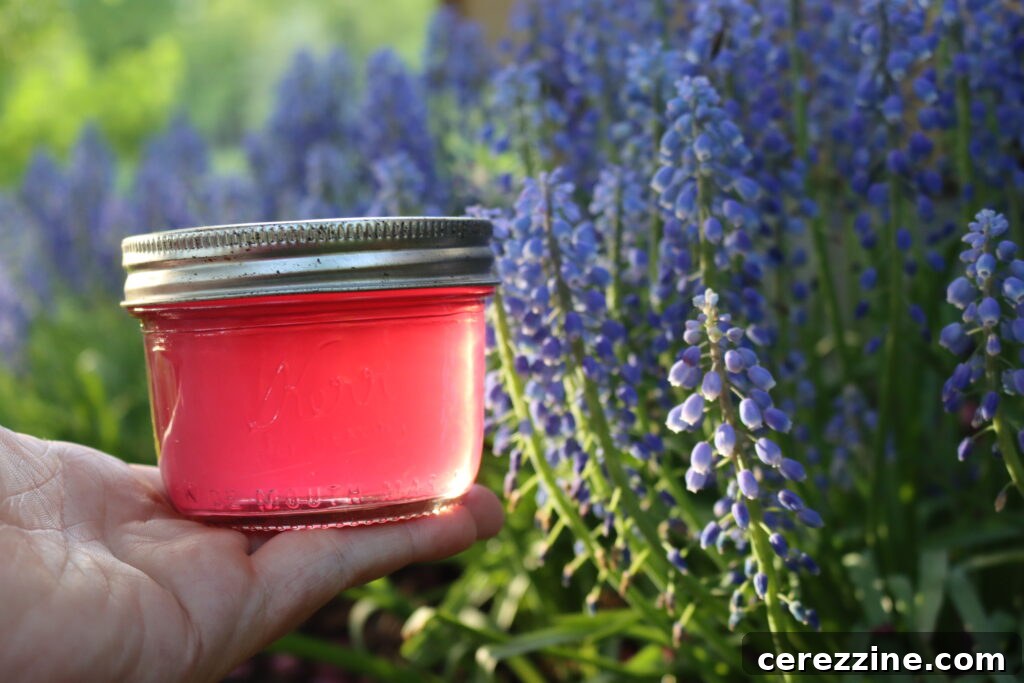
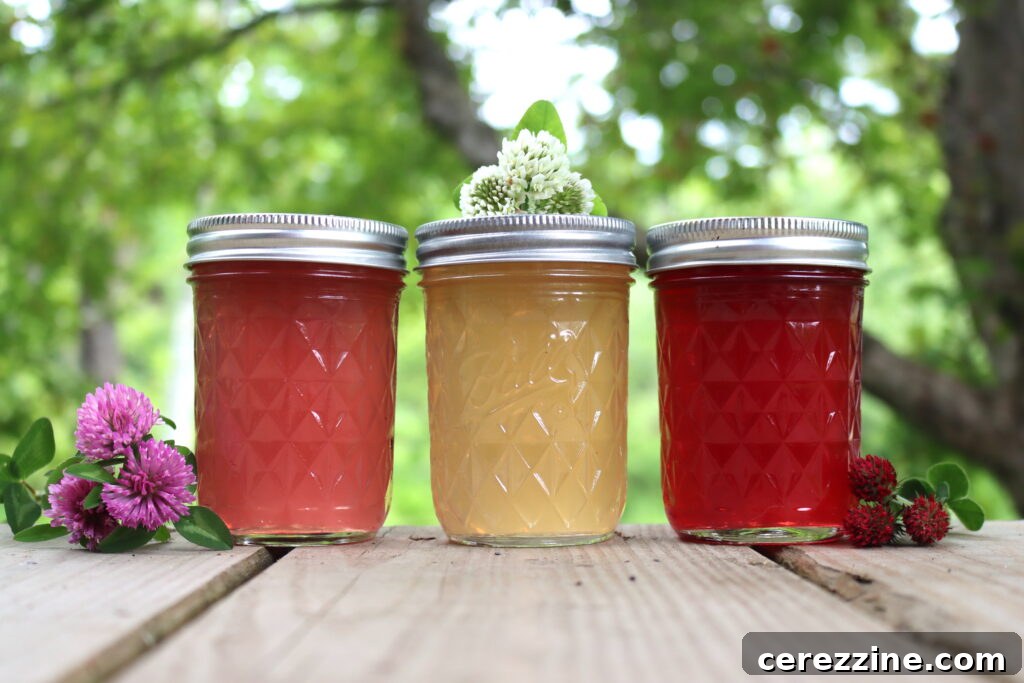
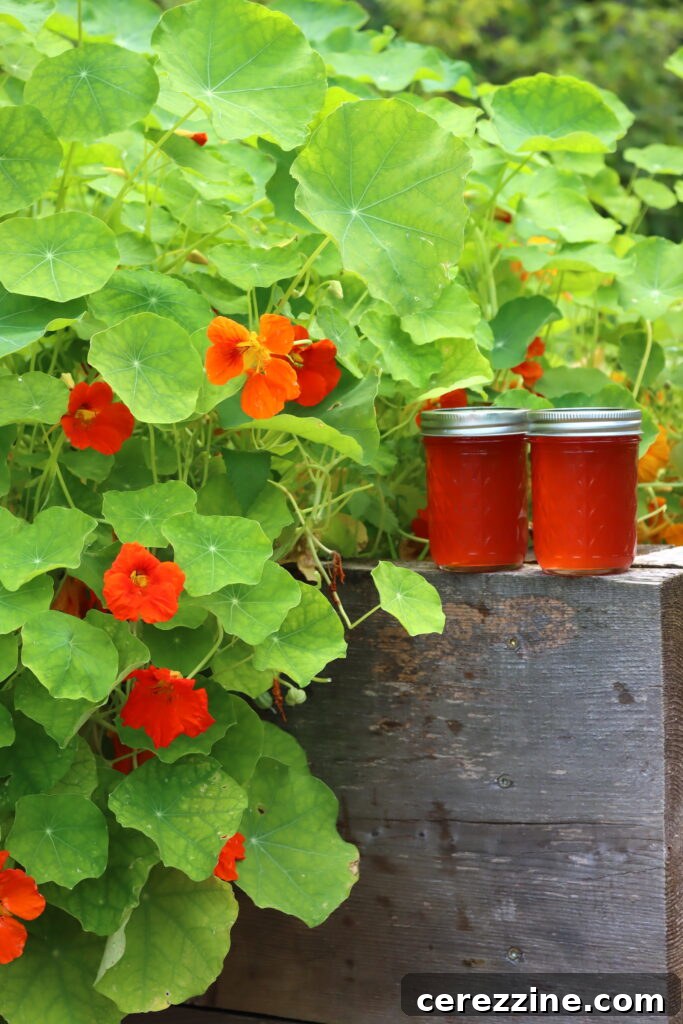
If you’re now inspired and ready to embark on your own flower jelly-making adventure, you’ll find a wide array of safe, tested recipes that faithfully adhere to proper acidification methods for home canning. Embrace the arrival of early spring with a batch of sunny dandelion jelly, a perennial favorite, or capture the delicate essence and stunning color of wild violets with a delightful violet jelly. As the season progresses, explore the fragrant possibilities of lilac jelly, the vibrant hues of forsythia jelly, or the unique peppery notes of nasturtium jelly, each offering its own distinctive floral experience. For those seeking something truly out of the ordinary, clover jelly, grape hyacinth jelly, and apple blossom jelly all promise beautiful and unique seasonal preserves.
Foragers with a keen eye for edible wild plants will particularly enjoy the delicate sweetness of redbud jelly and the enchanting aroma of elderflower jelly!
You can discover all these and more in my comprehensive collection of flower jelly recipes. Each recipe is meticulously crafted with clear canning instructions, appropriate acidification using bottled lemon juice, and detailed guidance to ensure both the safety and exquisite flavor of your homemade floral preserves.