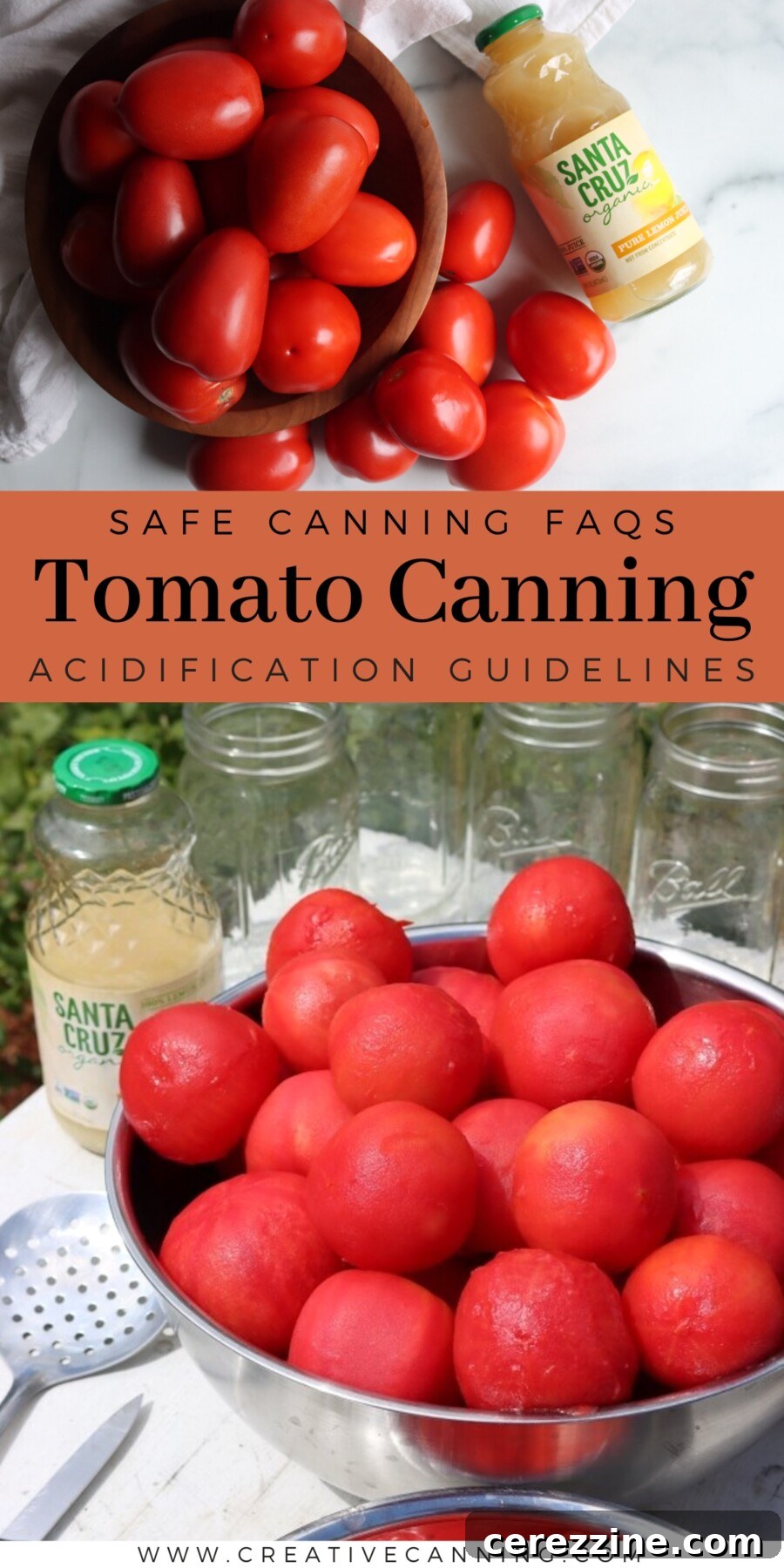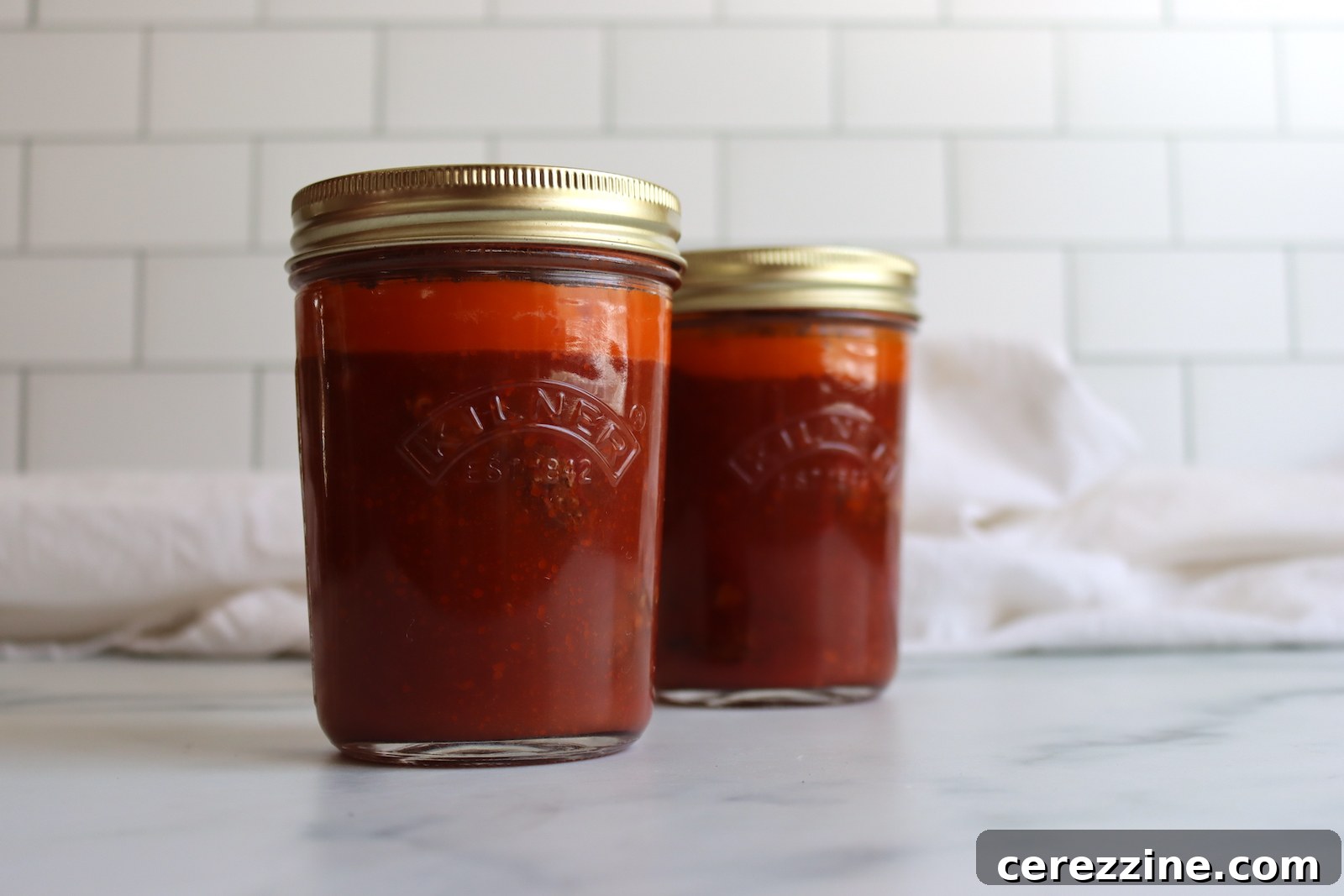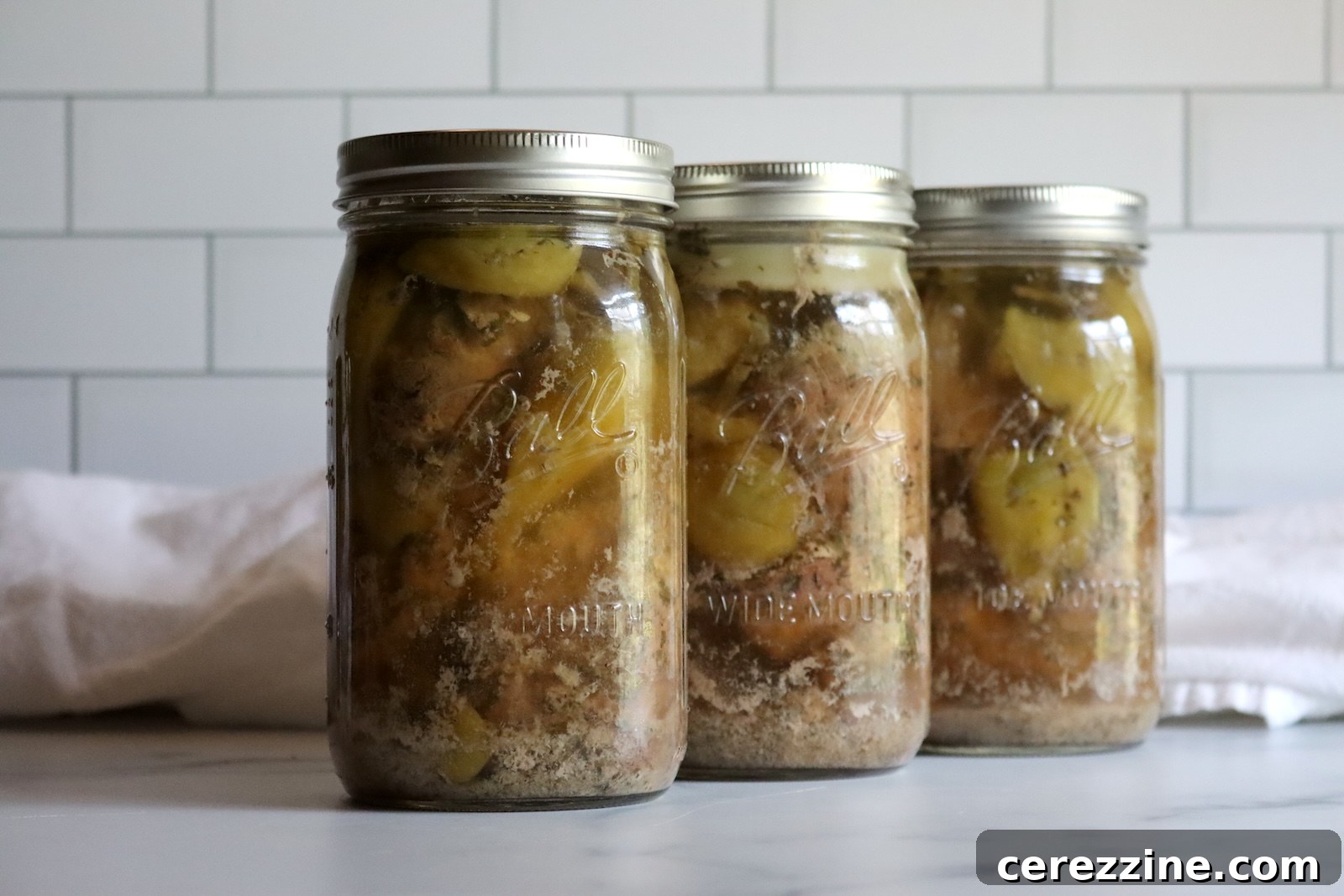
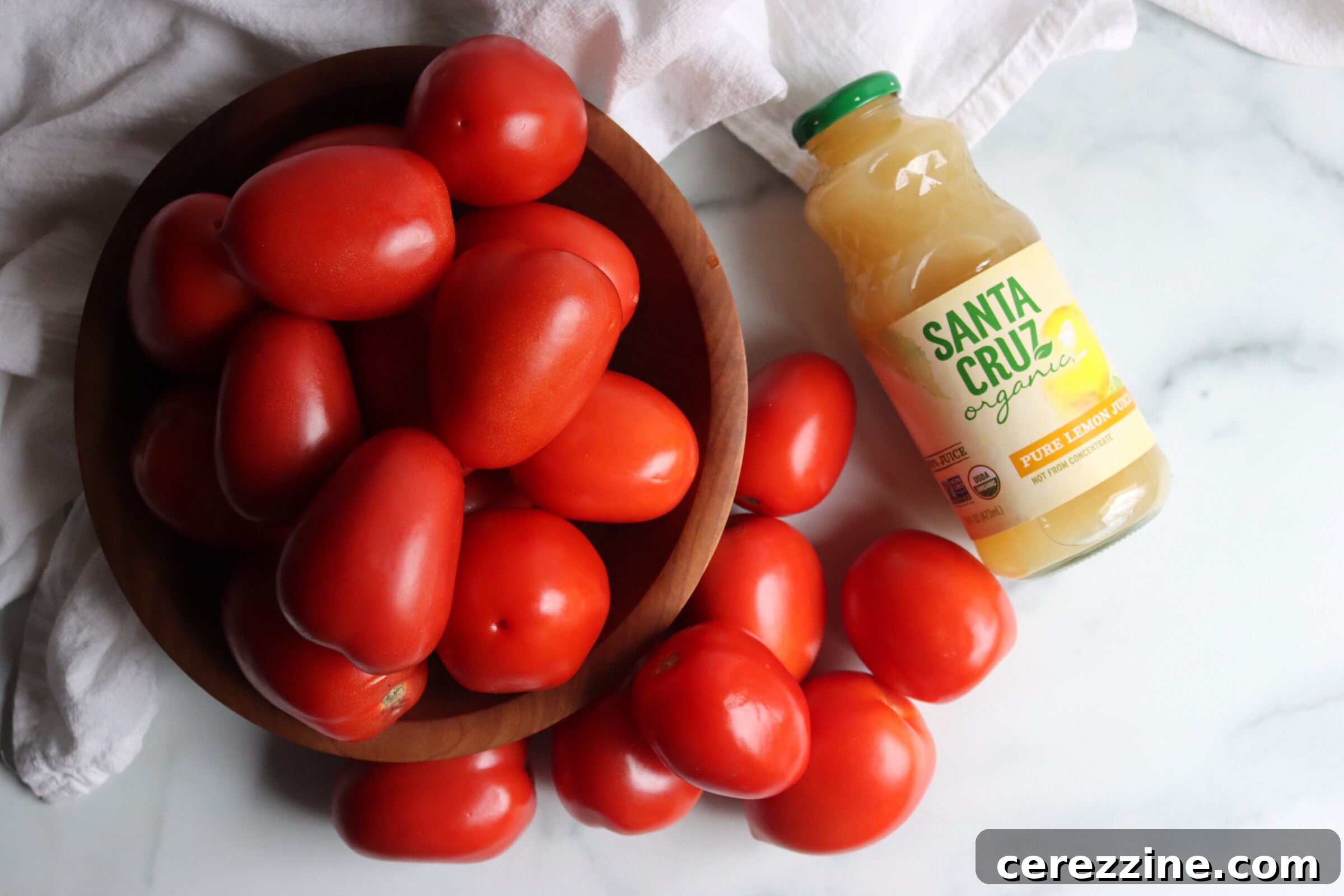
Ensuring the safety of home-canned tomatoes through acidification is a crucial step that every home canner must master. Whether you are preserving whole tomatoes, crushed tomatoes, rich tomato juice, or homemade sauce, adding the correct amount of an approved acid – be it bottled lemon juice, citric acid, or vinegar – is paramount. This simple yet vital process helps stabilize the pH level, making your finished jars safe for long-term storage and ensuring they remain shelf-stable for many months to come.
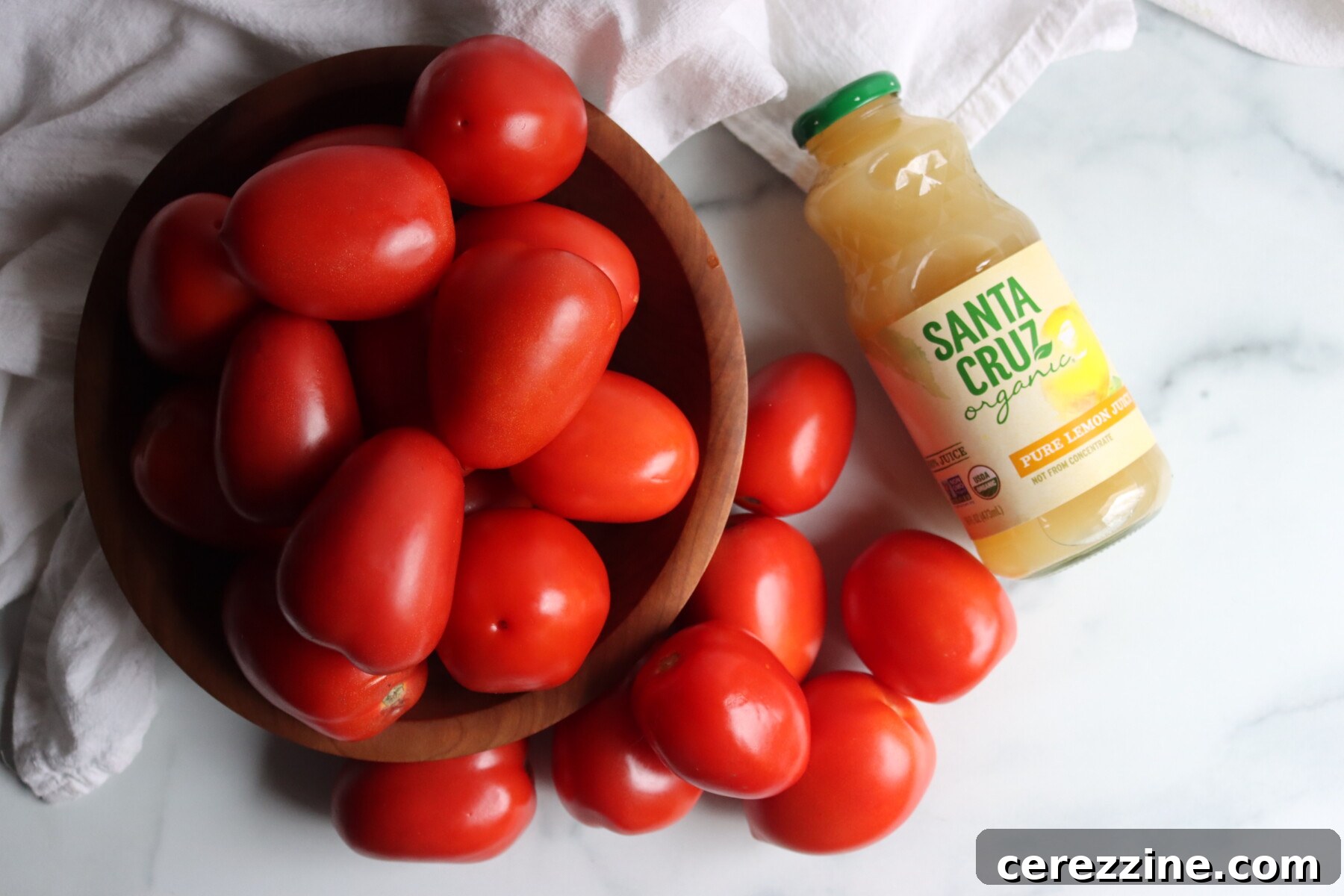
If you’re a seasoned home canner or just starting your journey, you’ve likely noticed that virtually all modern, tested canning recipes for tomatoes explicitly instruct you to add lemon juice or citric acid to the jars. This recommendation might seem confusing, particularly if you’re familiar with older recipes that omit this step entirely, or if you’re working with delicious homegrown tomatoes that taste wonderfully tart on their own. It’s a common point of discussion among canning enthusiasts, and many wonder if it’s truly a mandatory step or merely a suggestion.
The question of why tomatoes need added acid is one I encounter frequently. It often feels like a minor, fussy instruction that could be optional, especially when you pride yourself on growing sweet, flavorful tomatoes. However, when it comes to canning tomatoes, acidification is unequivocally one of the most critical safety measures in the entire process. Regardless of whether you are meticulously canning whole tomatoes, preparing crushed tomatoes, creating refreshing tomato juice, or crafting a batch of plain tomato sauce, the addition of acid to each jar is precisely what renders many tested tomato canning recipes safe for the water bath canning method. Without this essential step, the risk of foodborne illness, specifically botulism, increases significantly, making it a non-negotiable part of the process.
The truly encouraging news is that this crucial safety measure is remarkably straightforward and easy to implement. You’re not asked to fundamentally alter your entire recipe or engage in complex chemical procedures. It simply involves adding a carefully measured amount of an approved acid directly into each jar before you fill it with your prepared tomato product. Incorporating this simple step seamlessly into your canning routine will quickly become second nature, offering peace of mind with every jar you seal.
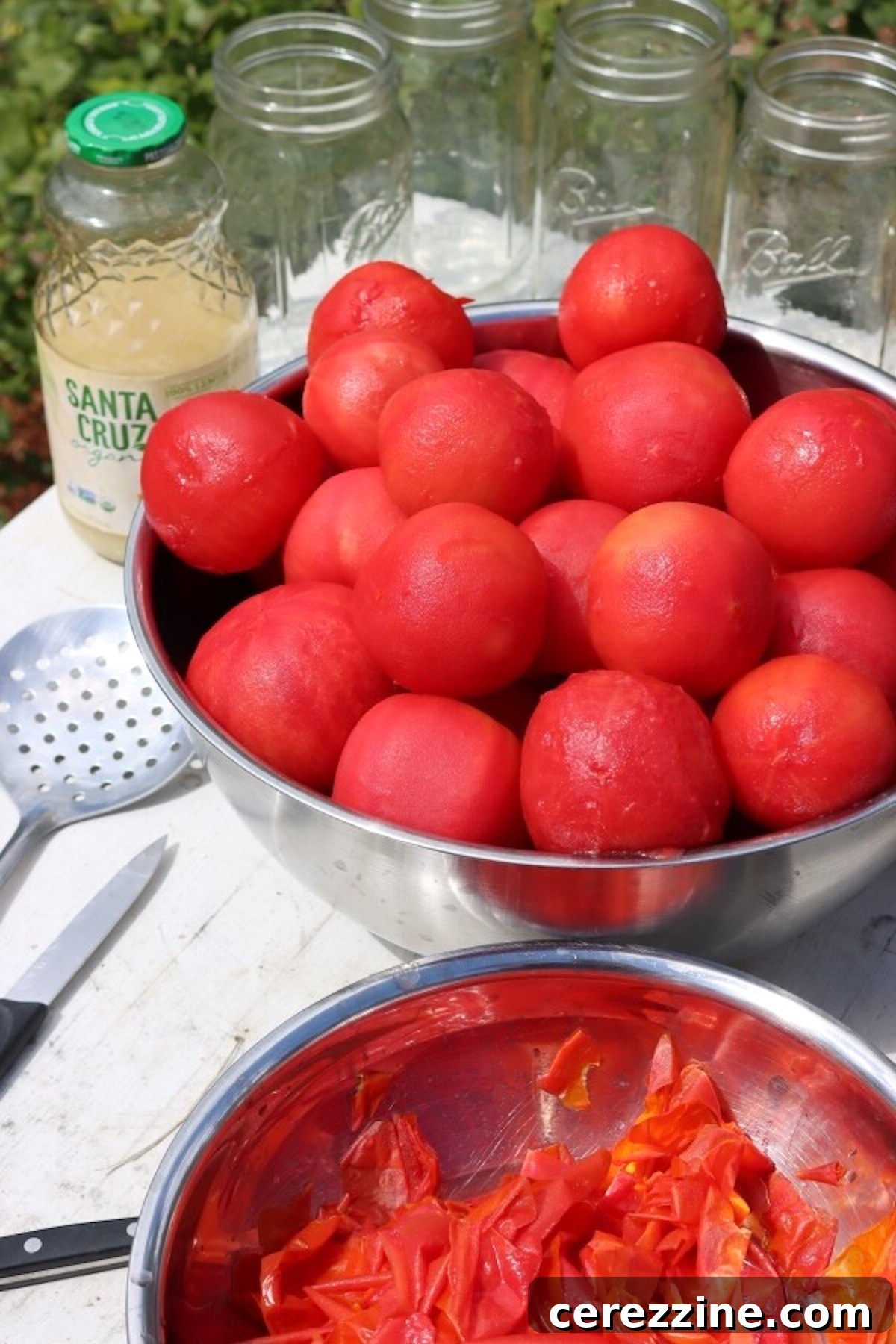
Acidification Guidelines for Canning Tomatoes
If you’re already familiar with the scientific rationale behind acidification and are simply seeking the practical, quick reference guide for proper pH, here are the precise amounts you need to add to each jar to ensure safe canning:
For Quart Jars (select one option):
- 2 tablespoons bottled lemon juice
- ½ teaspoon citric acid
- 4 tablespoons 5% acidity vinegar
For Pint Jars (select one option):
- 1 tablespoon bottled lemon juice
- ¼ teaspoon citric acid
- 2 tablespoons 5% acidity vinegar
Always add the chosen acid to the empty, hot jar before you begin filling it with your prepared tomatoes. If you wish to balance the taste, you may add sugar to taste after the canning process is complete, when preparing your meal. These acidification amounts are consistent and apply universally, whether you opt for water bath canning or pressure canning methods, and for all basic tomato products such as whole tomatoes, plain sauce, crushed tomatoes, or even tomato paste.

Choosing the Best Option for Acidifying Tomatoes
When faced with the choice of which acidifying agent to use, understanding the distinct characteristics of each can help you make the best decision for your specific canning project. Here’s a simple breakdown to guide your selection:
- Bottled lemon juice: This is a widely available and highly reliable option. Its consistent acidity makes it a popular choice for many home canners. However, it can impart a slight lemon flavor to your finished product, which may or may not be desirable depending on your recipe.
- Citric acid: For those seeking reliable acidification with the minimal impact on the natural flavor of their tomatoes, citric acid is often the superior choice. Its concentrated form means only a small amount is needed, making it less likely to alter the taste profile.
- Vinegar: While effective for acidification, vinegar can significantly influence the final taste of your canned tomatoes. Its strong, tangy flavor is often more pronounced than that of lemon juice or citric acid, making it a less preferred option for plain tomato products unless a vinegary taste is specifically desired.
For basic canned tomatoes, such as whole, crushed, or sauce, where you want to preserve the cleanest and most authentic tomato flavor, citric acid is frequently recommended as the optimal choice. However, bottled lemon juice remains a perfectly acceptable and widely used alternative, and for most home canners, it is the easiest and most convenient option to access and incorporate into their routine.
Why Tomatoes Need Added Acid: Understanding the Science of Safe Canning
The primary reason modern canning guidelines insist on adding acid to tomatoes stems from a critical safety concern: the prevention of botulism. Tomatoes are unique in the realm of home canning because they straddle the line between high-acid and low-acid foods. The pH scale, which measures acidity, considers foods with a pH of 4.6 or lower to be high-acid, safe for water bath canning. Foods with a pH above 4.6 are classified as low-acid and require the higher temperatures achieved only through pressure canning to destroy harmful bacteria.
While most fruits are definitively high-acid and many vegetables are low-acid, tomatoes are an anomaly. The pH level of a tomato can vary significantly due to a multitude of factors, including the specific variety (heirloom vs. hybrid), ripeness, growing conditions (soil, weather, fertilizer), and even the method of preparation. Some tomatoes might naturally be acidic enough on their own to fall below the 4.6 pH threshold, but others may not. Crucially, there is absolutely no practical way for a home canner to accurately judge the exact pH level of their tomatoes by taste, visual inspection, or even by knowing the specific variety or whether they were home-grown. Our taste buds are unreliable indicators of precise pH.
This inherent variability is precisely why modern, scientifically tested tomato canning recipes universally call for the addition of an approved acid. This step serves to standardize the acidity in every single jar, guaranteeing that the pH level is consistently brought down to a safe range (below 4.6). Only with this assured acidity can tomatoes be safely processed using the water bath canning method, as prescribed in tested recipes. Without this essential acidifying step, the acidity of your canned tomatoes remains unpredictable, exposing them to the risk of supporting the growth of Clostridium botulinum bacteria, which produces a deadly toxin. This applies to nearly all common tomato canning recipes that involve plain tomato products like whole tomatoes, crushed tomatoes, tomato juice, and unseasoned tomato sauce. In these recipes, the acid is typically added directly to the jar before filling to ensure even distribution and consistent safety.

Which Tomato Recipes Absolutely Require Acidification?
Understanding which tomato recipes necessitate added acid is crucial for safe home canning. In general, acidification is a mandatory step for many fundamental or “plain” tomato canning recipes, where tomatoes are the primary ingredient and are not heavily modified with other high-acid ingredients. These typically include:
- Whole tomatoes
- Halved tomatoes
- Diced tomatoes
- Crushed tomatoes
- Tomato juice
- Plain tomato sauce (without other high-acid ingredients like large amounts of vinegar)
- Tomato puree
If a reliable, tested canning recipe explicitly instructs you to acidify the jars for these types of products, that step is not merely optional; it is absolutely critical for safety. This remains true even if you believe you are working with particularly tangy tomatoes, heirloom varieties renowned for their tartness, or tomatoes grown in conditions you assume would make them more acidic. Modern canning science prioritizes consistency and eliminates guesswork, requiring adherence to the current tested directions exactly as written.
On the other hand, fully formulated recipes, such as various salsa canning recipes, ketchup, chutney, savory tomato jam, and relishes, are a little different. In these instances, the necessary acidity is typically incorporated and balanced within the complete ingredient list itself. These recipes usually contain a sufficient quantity of other high-acid components (like vinegar, lemon juice, or specific types of fruit) to bring the overall pH of the finished product into the safe range. Therefore, for these types of recipes, you should strictly follow the recipe as written, rather than adding separate, additional acid to each individual jar, unless the recipe specifically directs you to do so.
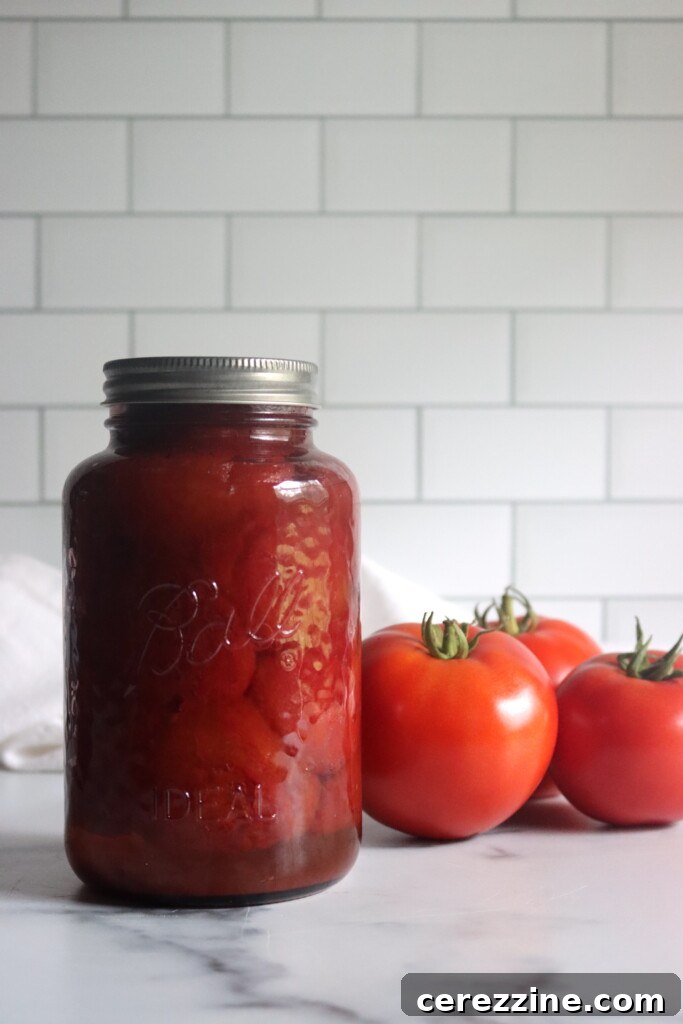
How to Acidify Tomatoes for Home Canning: A Simple Guide
The method for acidifying tomatoes for home canning is incredibly straightforward, designed for ease of use and consistent safety. The key principle is to add the acid directly into each canning jar before you begin filling it. This ensures that every single jar receives the precise, measured amount of acid necessary to lower its pH to a safe level, eliminating any guesswork or potential for oversight once the jars are full.
When preparing your jars, you must choose one of the following approved acidifying options:
- Bottled lemon juice: Use 1 tablespoon per pint jar or 2 tablespoons per quart jar.
- Citric acid: Use 1/4 teaspoon per pint jar or 1/2 teaspoon per quart jar.
- 5% acidity vinegar: Use 2 tablespoons per pint jar or 4 tablespoons per quart jar.
Once you’ve added your chosen acid to the bottom of each clean, hot jar, proceed to fill it with your hot tomato product (e.g., whole tomatoes, sauce, juice), leaving the appropriate headspace as specified in your tested recipe. After filling, carefully remove any trapped air bubbles using a non-metallic tool, and adjust the headspace if necessary. Finally, wipe the rims of the jars thoroughly to ensure a clean seal, apply the lids, and tighten the bands to fingertip-tight. At this point, your jars are ready for processing according to the specific, tested canning instructions provided in your chosen recipe, whether that involves a water bath or pressure canner.
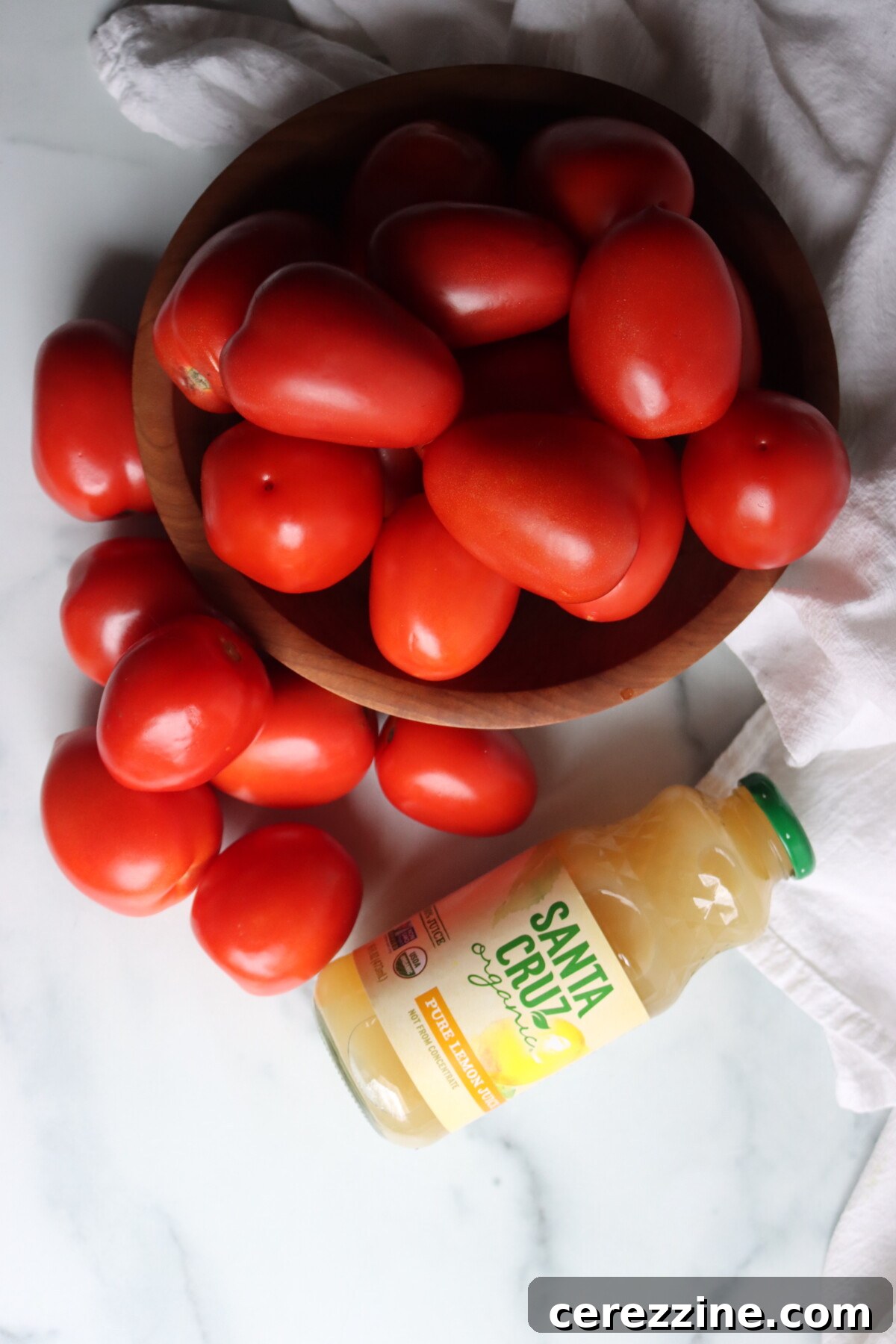
Bottled Lemon Juice for Canning Tomatoes: A Reliable Standard
For many home canners, bottled lemon juice is the go-to choice for acidifying tomatoes, and for good reason. It’s an exceptionally familiar, readily available, and user-friendly option. Its widespread use stems from its ease of measurement and, most importantly, its consistent and standardized acidity. This consistency is critical for canning safety, making it a highly reliable choice when specific pH levels are required.
The aspect of “standardized acidity” is paramount. When a tested canning recipe calls for lemon juice, it is imperative to use bottled lemon juice, not fresh-squeezed. Fresh lemons, being natural products, exhibit inherent variability in their acid content. One lemon might be significantly more acidic than another, and there’s no practical or accurate way to gauge this variability in a home kitchen environment. To ensure the safety and reliability of your canned goods, always defer to bottled lemon juice, as its pH is consistently regulated, providing the exact acidity needed for safe processing.
To use bottled lemon juice:
- Add 1 tablespoon bottled lemon juice per pint jar.
- Add 2 tablespoons bottled lemon juice per quart jar.
A helpful tip for efficiency, especially when preserving a large batch of tomatoes, is to add the measured lemon juice to all your empty, hot jars in advance. This preemptive step ensures that the acidification is completed for every jar before the busy process of filling begins, preventing you from having to pause and remember this crucial step later, and ensuring no jar is accidentally missed.
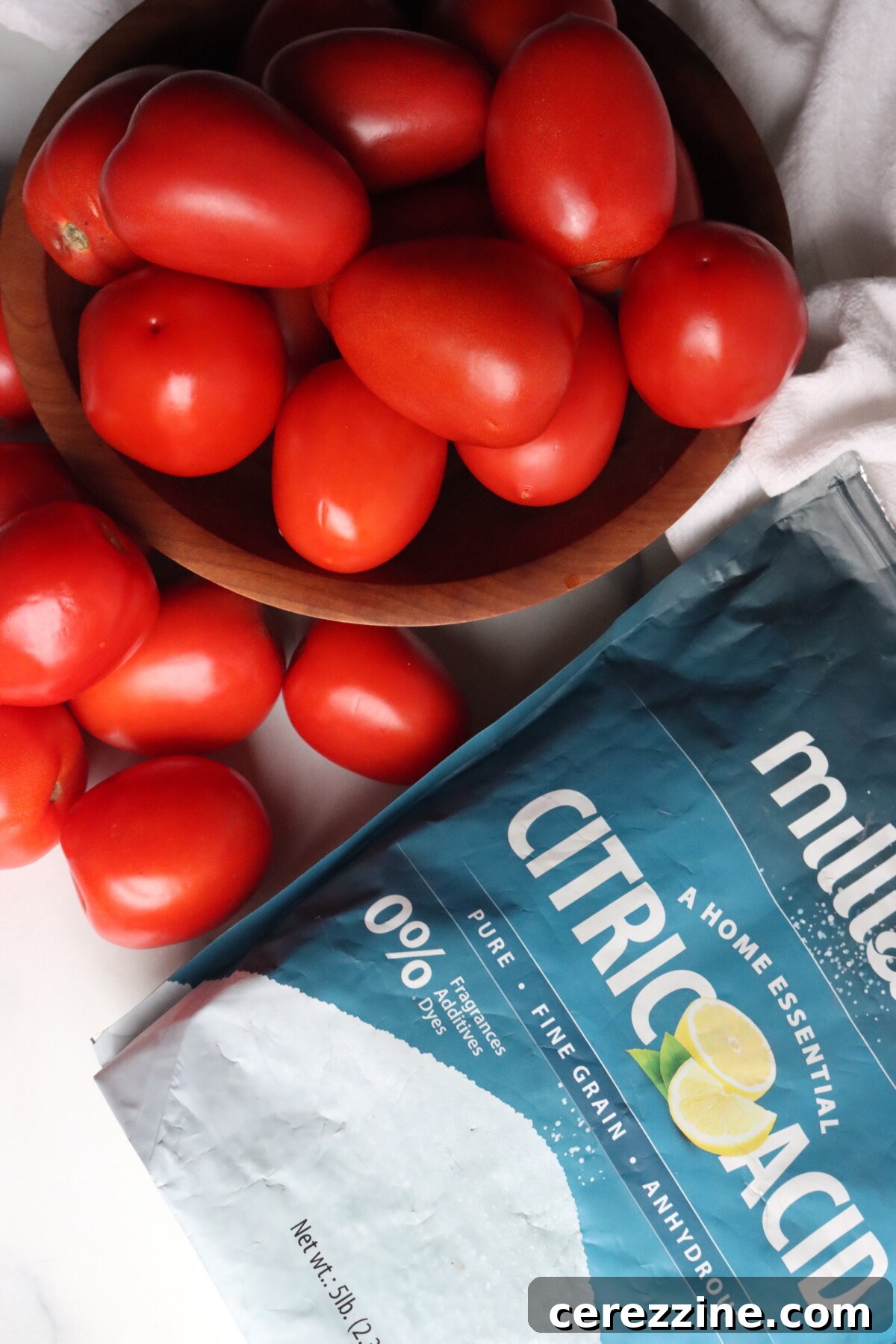
Citric Acid for Canning Tomatoes: Preserving Pure Flavor
Citric acid stands out as an excellent choice for acidifying tomatoes, particularly if your primary goal is to achieve dependable acidification with the least possible alteration to the natural flavor profile of your tomatoes. Because it is a highly concentrated acid, only a very small amount is required. This makes it an ideal additive for plain tomato products, such as whole tomatoes or simple tomato sauce, where you want the finished product’s taste to remain as neutral and unadulterated as possible, allowing the fresh tomato flavor to shine through without any added tanginess from lemon or vinegar.
Beyond its flavor-preserving qualities, citric acid also offers considerable convenience. It is economical, a little goes a very long way, and it stores exceptionally well in the pantry for extended periods, making it a practical staple for those who regularly can tomatoes. Having it readily available ensures you are always prepared for canning season.
To incorporate citric acid into your tomato canning process:
- Use 1/4 teaspoon citric acid per pint jar.
- Use 1/2 teaspoon citric acid per quart jar.
If you’ve previously found that bottled lemon juice lends a slightly sharper, more noticeable edge to your plain canned tomatoes than you prefer, switching to citric acid is often the perfect solution. Its minimal impact on taste makes it a favorite among canners who prioritize the pristine flavor of their homegrown produce.
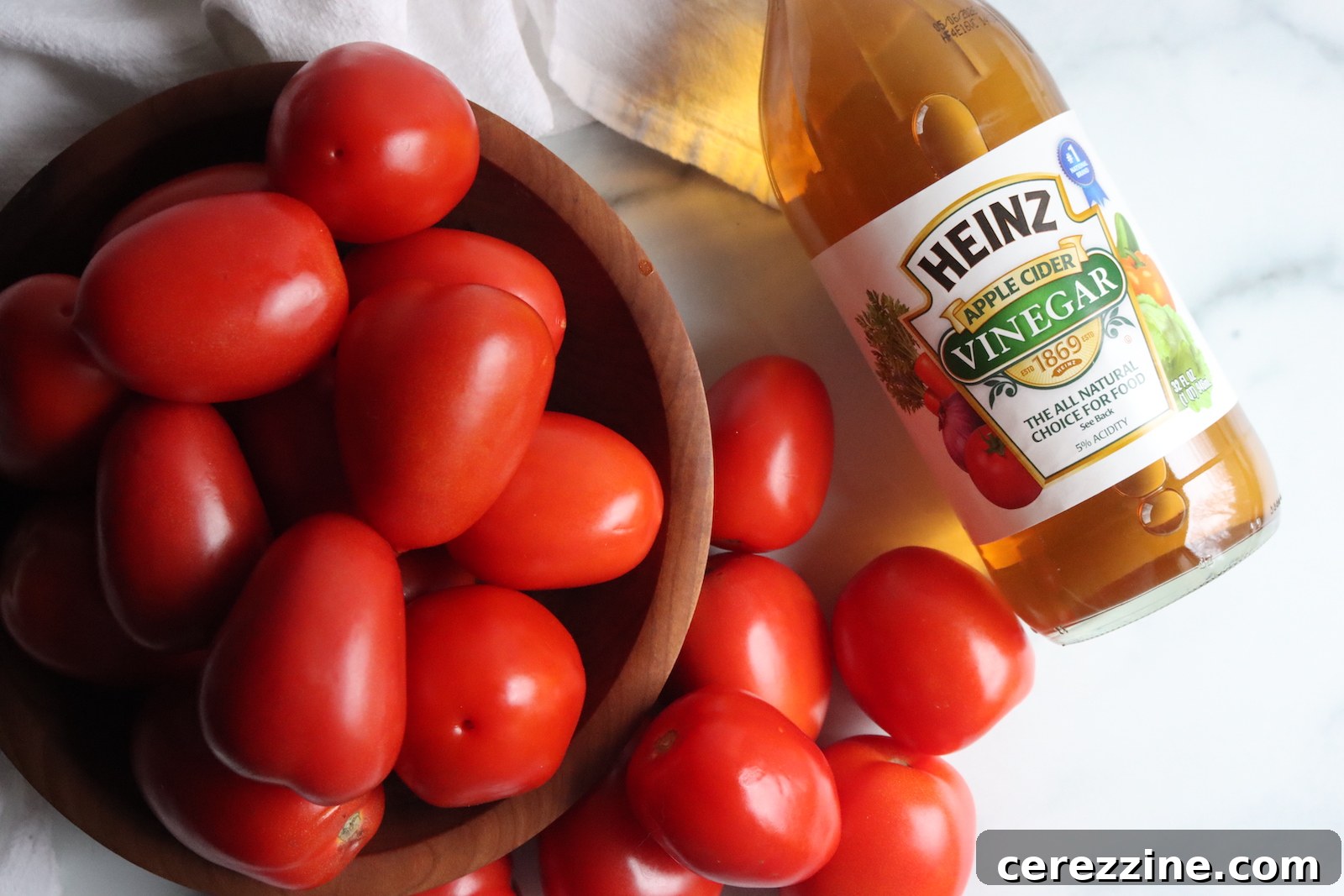
Can You Use Vinegar Instead for Acidifying Tomatoes?
Yes, vinegar is indeed an approved and effective option for safely acidifying tomatoes in home canning. However, it is generally the least popular choice, especially for basic or “plain” canned tomato products, primarily because it can impart a distinctly noticeable and often undesirable flavor change to the finished product. While safe, its strong taste often overshadows the delicate nuances of fresh tomatoes, which is not what most canners aim for in plain items.
If you decide to use vinegar for acidification, it is critical to ensure that it is 5% acidity vinegar (typically white vinegar or apple cider vinegar). The specific measurements are as follows:
- Add 2 tablespoons of 5% acidity vinegar per pint jar.
- Add 4 tablespoons of 5% acidity vinegar per quart jar.
As you can see from the measurements, these are fairly generous amounts compared to bottled lemon juice or citric acid. This larger quantity means the vinegar’s flavor can permeate the tomatoes much more strongly and clearly. In certain recipes, such as those intended to have a tangy profile or heavily spiced sauces, this might not be an issue. However, for plain canned tomatoes or a mild tomato sauce where the goal is to highlight the natural tomato taste, the vinegary flavor can be far more noticeable than most people prefer, potentially altering the intended culinary use of the product. Therefore, while scientifically sound, it’s essential to consider the flavor impact when opting for vinegar.
Tomato Canning Acidification FAQs
The most effective, safest, and easiest method is to add the acid before filling the jars. This approach is consistently outlined in most scientifically tested canning instructions because it ensures a simple, systematic, and consistent process. By adding the measured acid to each clean, hot jar first, you can then proceed to ladle in your prepared tomatoes or tomato product with confidence. This method significantly reduces the chance of making a mistake, as it’s far easier to verify that each empty jar has received its required acid. Once jars are full and the canning process is underway, it becomes much more challenging to remember if you added the acid or not, especially when working with multiple batches or in a busy kitchen. Adding it first also guarantees that the acid fully disperses throughout the entire contents of the jar, ensuring consistent pH from top to bottom.
Not always, and this is a common misconception that often leads to confusion. Many people mistakenly assume that the high temperatures achieved during pressure canning automatically negate the need for the acidification step. However, this is not a universal truth. If a specific, scientifically tested recipe for canning tomatoes, whether for whole tomatoes, sauce, or juice, includes acidification as an instruction, then you absolutely must follow that instruction exactly as written, even if you are using a pressure canner. The tested process for that particular recipe was developed with all of its steps in place, including the acidification when specified. Therefore, pressure canning alone does not automatically cancel out or replace the need for added acid; always defer to your tested recipe’s instructions.
Sometimes, a little, yes, it can. The degree of flavor change largely depends on the type of acidifying agent you choose. Vinegar is known to alter the flavor the most significantly, imparting a distinct tangy taste. Bottled lemon juice can sometimes be noticeable, adding a subtle citrusy tang. Citric acid, due to the small quantities used and its neutral profile, typically has the least effect on the overall taste, making it a preferred choice for those who desire the purest tomato flavor in plain canned products. If you find your canned tomatoes taste a bit sharper or tangier when you open the jar later, you can easily balance this in the finished dish by adding a pinch of sugar or a touch of baking soda. This is a normal culinary adjustment made after the canning process is complete and does not compromise the safety of your canned goods. What you must never do, however, is reduce the specified amount of acid in the jar during the canning process in an attempt to soften the flavor, as the full, measured amount is critical for safety.
No, absolutely not for acidifying tomatoes in any tested canning recipes. While fresh lemon juice is wonderful for cooking and beverages, it is not suitable or safe for the precise pH control required in home canning acidification. Fresh lemons are natural products, and their acidity can vary dramatically from one lemon to another, depending on factors like variety, ripeness, and growing conditions. There is no practical or accurate way for a home canner to measure or ensure the exact, consistent acidity level needed for safe canning with fresh lemon juice. For the utmost safety and reliability, always use bottled lemon juice if that is the acidification option specified in your tested canning recipe and chosen for your tomatoes. Bottled lemon juice is standardized for its acidity, providing the consistent pH necessary for preventing spoilage and bacterial growth.
Yes, absolutely. As discussed, taste is a highly unreliable indicator of actual pH levels, especially when it comes to the precision required for safe home canning. Your perception of a tomato being “very acidic” is subjective and cannot guarantee that its pH is consistently below the critical 4.6 threshold needed to prevent botulism. Even heirloom varieties known for their tartness can vary significantly in pH. The acidification step is a non-negotiable safety measure based on scientific testing, not on sensory perception. Always follow the tested recipe’s instructions and add the specified amount of bottled lemon juice, citric acid, or vinegar, regardless of how acidic your tomatoes taste.
Step-by-Step Guide: Acidifying Tomatoes for Canning with Confidence
For those who prefer a clear, actionable checklist, here is the exact sequence of steps to properly acidify tomatoes for home canning, ensuring both safety and delicious results:
- Prepare the Tomatoes: Begin by washing, peeling (if desired), and preparing your tomatoes according to the specific instructions of your chosen, tested canning recipe (e.g., whole, halved, crushed, juiced). Ensure they are hot for hot packing.
- Sanitize Jars: Wash your canning jars thoroughly in hot, soapy water, rinse them well, and then heat them to keep them hot until filling. This can be done in a dishwasher on a hot cycle, in a canner filled with hot water, or by placing them in an oven at a low temperature.
- Add the Acid First: Before you add any tomato product, place the chosen acidifying agent directly into each empty, hot canning jar.
- Quantities for Pints: For pint-sized jars, use 1 tablespoon of bottled lemon juice, or 1/4 teaspoon of citric acid, or 2 tablespoons of 5% acidity vinegar. Choose only one.
- Quantities for Quarts: For quart-sized jars, use 2 tablespoons of bottled lemon juice, or 1/2 teaspoon of citric acid, or 4 tablespoons of 5% acidity vinegar. Choose only one.
- Fill Jars with Hot Tomato Product: Carefully ladle your hot, prepared tomato product into the jars, ensuring a consistent fill.
- Maintain Headspace: Leave the precise amount of headspace specified in your recipe (typically 1/2 inch for most tomato products). This space is crucial for proper sealing and creating a vacuum.
- Remove Air Bubbles: Gently run a non-metallic spatula or bubble wand around the inside of each jar to release any trapped air bubbles. Adjust the headspace again if the liquid level drops significantly after removing bubbles.
- Clean Rims: Wipe the rims of each jar thoroughly with a clean, damp cloth to remove any food particles or acid residue. A clean rim is essential for a proper seal.
- Apply Lids and Bands: Center a new, pre-warmed canning lid on each jar, and then apply the screw bands, tightening them only to “fingertip tight” (snug but not overly tight).
- Process According to Recipe: Place the filled and sealed jars into your water bath or pressure canner, ensuring they are fully submerged (for water bath) or have the correct amount of water (for pressure). Process for the time and pressure/temperature specified in your tested recipe, adjusting for altitude as necessary.
Acidifying tomatoes for home canning might initially seem like a minor detail or an extra step in an already involved process, but it is, without exaggeration, one of the most significant safety measures you can take. Tomatoes possess just enough natural acidity to be borderline, meaning they require this slight, measured adjustment to reliably fall into the high-acid category. This precise amount of bottled lemon juice, citric acid, or vinegar is the scientific assurance that makes many beloved tomato recipes safe for water bath canning, protecting against the risk of harmful bacteria like Clostridium botulinum.
The truly encouraging aspect is how easy this step becomes with practice. After just a few canning sessions, adding the acid will integrate seamlessly into your routine, becoming an automatic part of filling your jars. Simply add the acid, fill the jars with your delicious tomatoes, and process according to your tested recipe. That’s all there is to it.
For anyone who dedicates their summers to preserving the bounty of tomatoes, establishing this habit provides not only confidence in the safety of your food but also the immense satisfaction of knowing your jars were prepared the right way, ready to be enjoyed throughout the year.
50+ Delicious & Safe Tomato Canning Recipes
Explore a world of possibilities with tomato canning! From classic sauces to unique relishes, turning summer’s abundance into a pantry full of real convenience has never been easier and safer with these tested recipes…
Find the Perfect Canning Recipe
Searching for another amazing recipe or a specific canning guide? Enter your keywords below to discover a wealth of reliable and delicious canning ideas!