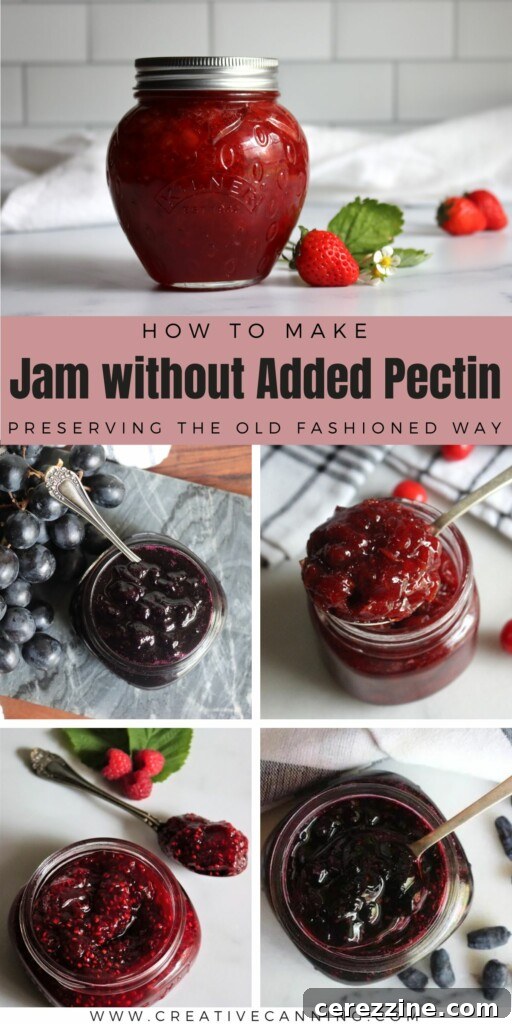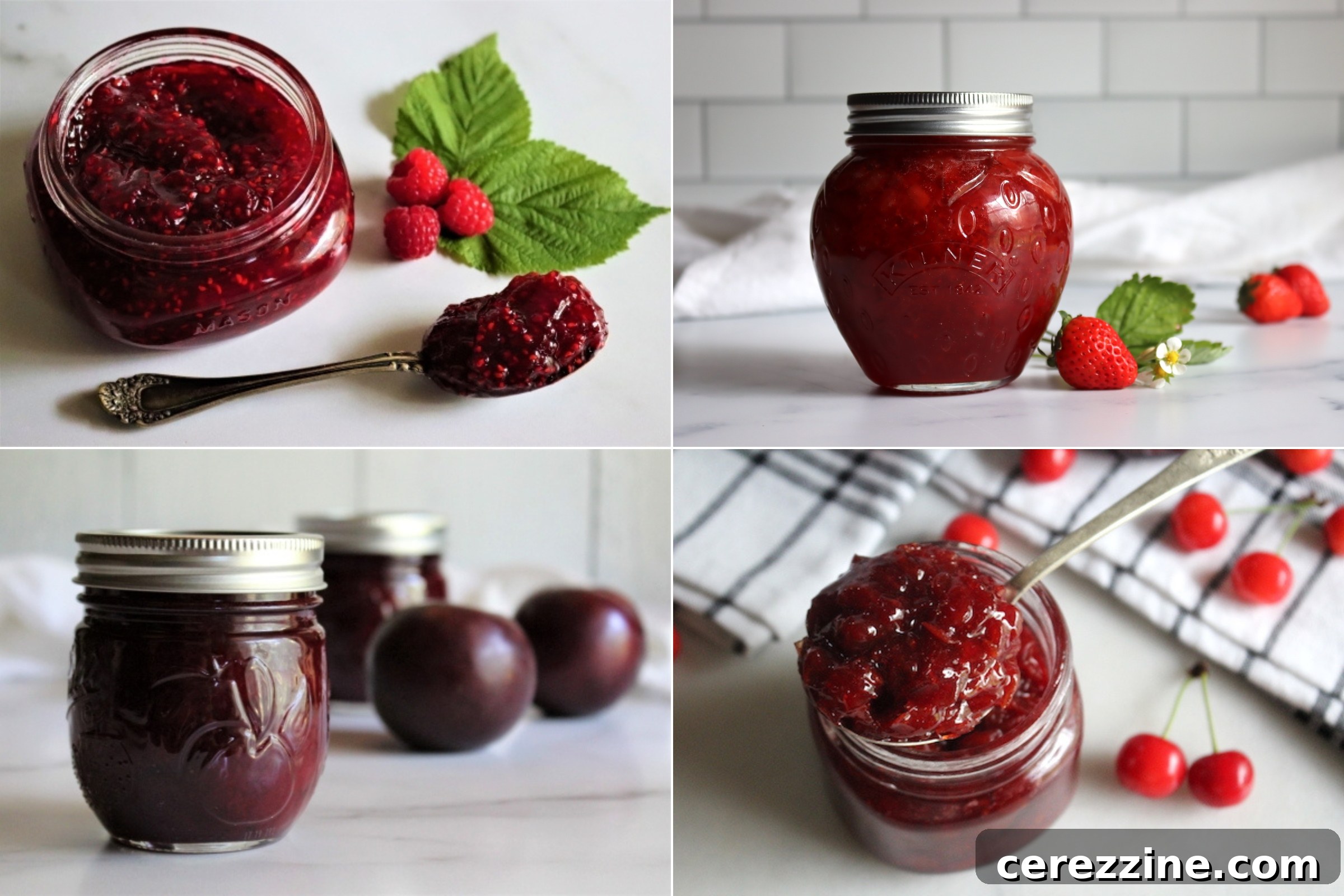
Crafting delicious jam without the addition of commercial pectin is a cherished culinary tradition, allowing you to transform fresh fruit, sugar, and a dash of patience into exquisite homemade preserves. This age-old method yields results that many believe surpass modern “quick jams,” offering unparalleled depth of flavor and a truly luxurious texture.
While many contemporary jam recipes rely on powdered pectin to achieve a rapid set, often within minutes, they frequently fall short of the rich, concentrated taste and luscious mouthfeel inherent in traditional, pectin-free jams. These classic preserves, made simply with fruit, sugar, and a hint of lemon juice, are a testament to the beauty of slow cooking and natural processes.
Embracing the old-fashioned way of jam making is not only a delightful culinary adventure but also a practical and economical solution for preserving abundant harvests from your garden or local market. By foregoing expensive boxes of commercial pectin, which can add a significant cost to each small batch of jam, you save money while celebrating the pure essence of the fruit.
Beyond the financial savings, the primary allure of pectin-free jams lies in their superior flavor profile. The longer, gentler cooking process required to naturally coax pectin from the fruit intensifies its inherent sugars and complex notes, resulting in a preserve that boasts a more profound and authentic taste compared to its quick-set counterparts. It’s an investment of time that truly pays dividends in taste.
Although making jam without commercial pectin demands a bit more attention and understanding of the fruit’s natural properties, the rewarding outcome makes every moment worthwhile. As you gain experience, you’ll intuitively learn to recognize the perfect setting point, empowering you to create consistently exquisite, natural preserves throughout the year.
Remember, jam making is a harmonious blend of scientific principles and artistic intuition. Don’t be disheartened if your initial batches aren’t absolutely flawless; each attempt serves as a valuable learning experience, helping you refine your technique. Before long, you’ll be proudly spreading your own vibrant, homemade, pectin-free jam on your morning toast, savoring the pure fruit essence and the profound satisfaction of a beautifully executed culinary craft.
Choosing the Right Fruits for Pectin-Free Jam
The secret to successful pectin-free jam begins with selecting fruits naturally rich in pectin. This natural carbohydrate acts as a gelling agent, crucial for achieving that desired set. Here are some fruits that excel in pectin content, making them ideal candidates for traditional jam making:
- Apples: Especially tart varieties, which contain higher levels of pectin.
- Blackberries: Offer a moderate to high pectin content, particularly when slightly underripe.
- Blueberries: While often considered moderate, their skins contribute to thickening.
- Cranberries: Abundantly high in pectin and acidity, setting beautifully.
- Currants: Both red and black currants are excellent natural sources of pectin.
- Gooseberries: Exceptionally high in pectin, setting almost instantly.
- Grapes: Concord grapes are notably rich in pectin, especially in their skins and seeds.
- Plums: Many varieties are naturally high in pectin, especially when slightly underripe.
- Quinces: Renowned for their extremely high pectin content, often used as a natural gelling aid for other fruits.
When working with fruits that have lower natural pectin levels, such as luscious strawberries or succulent peaches, you can still create delightful pectin-free jams. The key is strategic pairing. Consider incorporating a small quantity of a high-pectin fruit into your recipe. For instance, grating a tart apple into your strawberry jam, adding a handful of red currants to raspberry jam for a firmer set, or including some lemon zest can significantly aid in gelling without resorting to commercial pectin.
It is certainly possible to make single-fruit jam from lower-pectin fruits; the resultant set might simply be a bit softer or more akin to a fruit sauce, but the concentrated, authentic flavor will be absolutely superb.
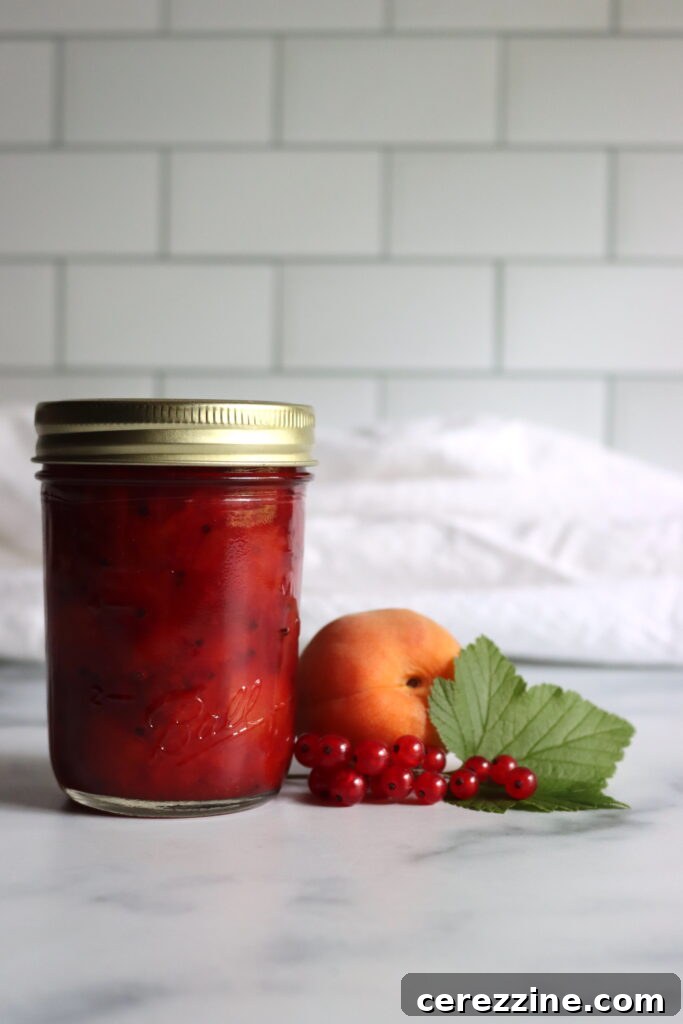
The Foundational Recipe for Pectin-Free Jam
While the precise ratios of fruit to sugar and acid can vary slightly based on the specific fruit’s sweetness and natural pectin content, this general guideline provides an excellent starting point for crafting exquisite jam without added pectin:
- 4 cups of prepared fruit: This refers to fruit that has been washed, stemmed, pitted, peeled (if necessary), and chopped or crushed to your desired texture.
- 2-4 cups of sugar: Adjust this amount according to the natural sweetness of your chosen fruit and your personal preference for sweetness. Less ripe fruits may require more sugar, while very sweet fruits might need less.
- 2 to 4 tablespoons of lemon juice: Lemon juice is vital for two reasons: its acidity helps extract pectin from the fruit, and it brightens the overall flavor, balancing the sweetness. For low-acid fruits, it’s also crucial for canning safety.
Step-by-Step Jam Making Process:
- Fruit Preparation: Begin by thoroughly washing your selected fruit. Remove any stems, pits, or bruised spots. Depending on the fruit and desired texture, chop it into small pieces, mash it lightly, or leave some larger chunks.
- Combine Ingredients: Place the prepared fruit into a large, heavy-bottomed pot. Add the measured sugar and lemon juice. For best results, especially with firmer fruits, you can allow the fruit to macerate (sit with the sugar) for several hours or overnight in the refrigerator. This step draws out the fruit’s natural juices, preventing scorching and enhancing flavor.
- Cooking the Jam: Bring the fruit mixture to a rolling boil over medium-high heat, stirring frequently to prevent it from sticking to the bottom of the pot. As the jam heats, it will begin to foam. Continuously stir and carefully watch the pot to prevent it from boiling over. Using a deep pot that is at least twice the volume of your ingredients can help manage the boil.
- Simmering to Perfection: Reduce the heat slightly to maintain a vigorous but controlled boil. Continue to cook, stirring regularly, allowing the mixture to thicken and the natural pectin to activate. This simmering process concentrates the flavors and reduces the liquid, leading to the jam’s final set. This stage requires patience, as it can take anywhere from 10 to 45 minutes or more, depending on the fruit and batch size.
- Reaching the Setting Point: The most crucial part of pectin-free jam making is knowing when it has reached its setting point. This is when the jam has cooked sufficiently to form a gel when cooled. Proceed to the “Testing for Doneness” section for reliable methods to determine this critical stage.
Mastering the Art of Testing for Jam Doneness
Without the predictability of added pectin, determining when your jam has reached the perfect set requires keen observation and a bit of practice. Here are three reliable methods to test for doneness, which are best used in conjunction for optimal results:
- Temperature Test: This is arguably the most scientific and precise method. Use a candy thermometer to monitor the jam’s temperature. The setting point for jam is typically 220°F (105°C) at sea level. For those living at higher altitudes, remember to adjust this temperature: subtract 2°F (approximately 1°C) for every 1,000 feet (300 meters) above sea level. For example, at an elevation of 2,000 feet, your jam will set around 216°F. The sugars in the jam reach a specific concentration at this temperature, indicating proper gelling potential.
- Spoon Test (or Sheet Test): This traditional method relies on visual cues. Dip a cold metal spoon (chilled in the freezer for a few minutes) into the boiling jam, ensuring it’s coated. Lift the spoon horizontally, allowing the jam to drip off. Observe the drips: if the jam forms two distinct drops that merge together and then fall off the spoon in a sheet (rather than individual drops), it signifies that the jam is ready. This “sheeting” effect indicates adequate gelling.
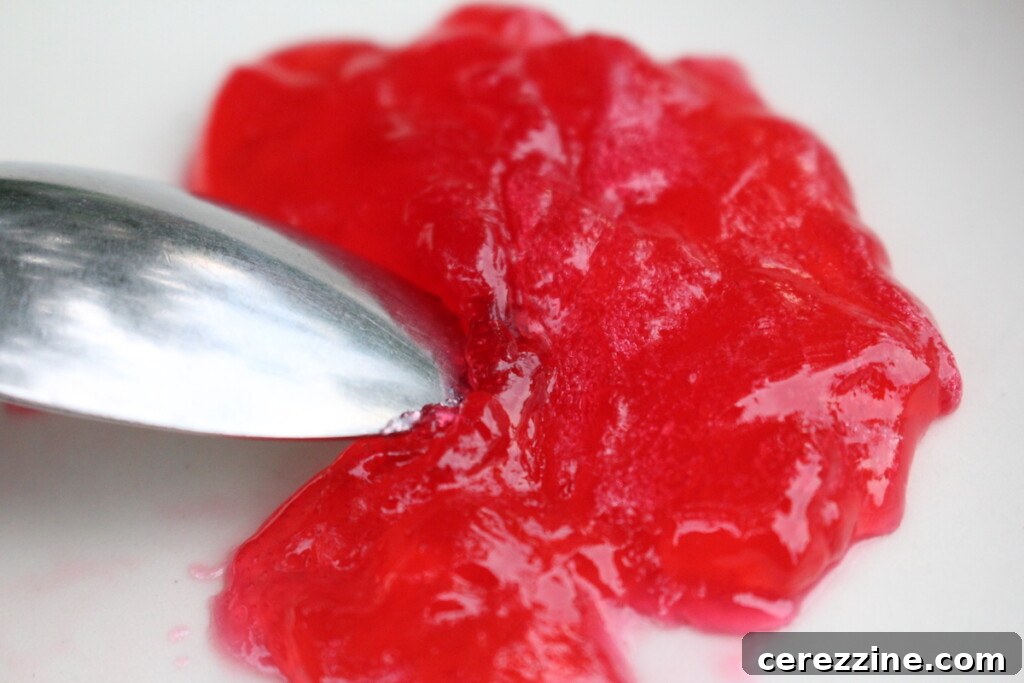
- Plate Test (or Wrinkle Test): Prepare for this test by placing a small ceramic plate in your freezer before you even begin cooking the jam. To test for set, remove the chilled plate and drop a small spoonful of hot jam onto its surface. Allow it to cool for about a minute. Then, gently push the jam with your fingertip. If the surface of the jam wrinkles and doesn’t readily flow back together, your jam has reached its setting point. The rapid cooling on the cold plate mimics how the jam will behave in the jar once cooled.
Canning Homemade Jam for Long-Term Storage
Once your exquisite, pectin-free jam has reached its ideal setting point, the next crucial step is safely preserving it for long-term enjoyment. Proper canning ensures shelf stability and prevents spoilage. Always start with thoroughly cleaned and sterilized jars and lids.
Carefully and swiftly ladle the hot jam into your prepared jars, leaving precisely 1/4 inch (about 6mm) of headspace at the top. This headspace is essential for proper sealing and creating a vacuum. Use a non-metallic tool to remove any air bubbles by gently running it along the inside of the jar. Wipe the rims of the jars meticulously clean with a damp cloth to ensure a perfect seal. Place the lids on top, followed by the screw bands, tightening them to fingertip-tight – not overly tight, which can prevent proper venting and sealing.
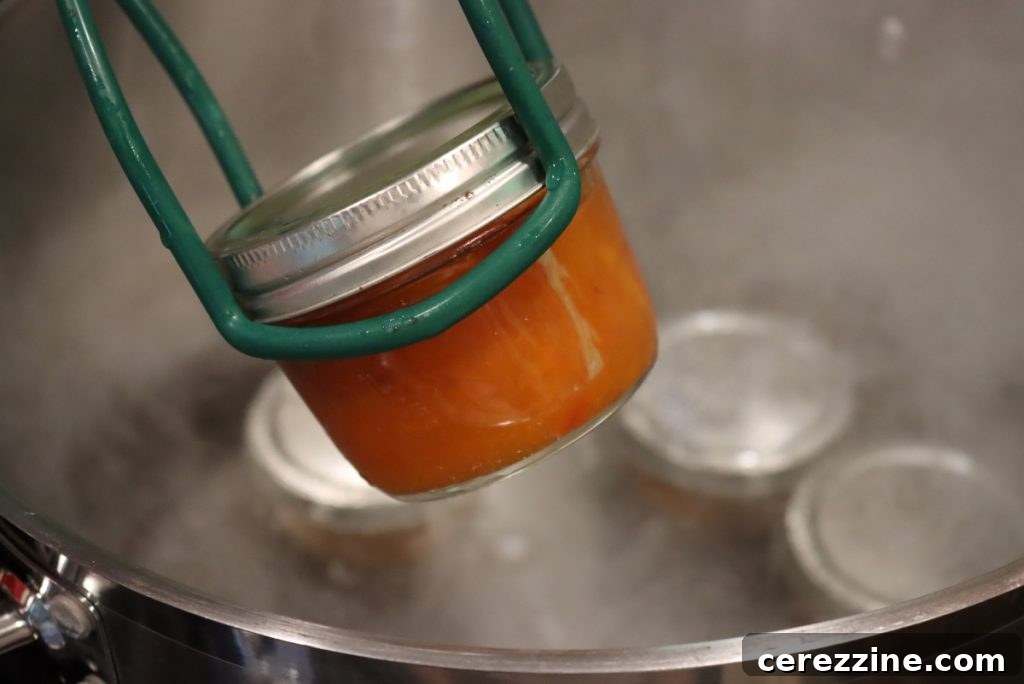
Process the filled jars in a boiling water bath canner. Gently lower the jars into the canner, ensuring they are fully submerged by at least 1-2 inches of water. Bring the water to a rolling boil and process the jars for 10 minutes. If you are at an elevation above 6,000 feet (approximately 1,800 meters), increase the processing time to 15 minutes to account for the lower boiling point of water. After processing, carefully remove the jars from the canner and place them on a towel-lined surface, allowing them to cool undisturbed for 12-24 hours. You should hear characteristic “ping” sounds as the lids seal, indicating successful preservation.
Troubleshooting Common Jam Making Challenges
Even seasoned jam makers occasionally encounter minor setbacks. Understanding how to diagnose and rectify common issues can save a batch of precious preserves. Here’s how to address some typical problems:
Runny Jam
If your jam appears too runny after cooling, don’t despair immediately. Natural pectin can sometimes take up to 48 to 72 hours to achieve its full set. Allow this waiting period before taking further action. If, after this time, the jam remains too liquid:
- Recooking: Empty the contents of the jars back into a clean, heavy-bottomed pot. Bring the jam back to a boil and cook it again, testing frequently for set using the temperature, spoon, or plate tests. Be cautious not to overcook.
- Adding Pectin: As a last resort, you can stir in a small amount of commercial liquid or powdered pectin (following package instructions for “re-cooking runny jam”) during the recooking process to help it set. However, this deviates from the true pectin-free philosophy.
Overly Thick or Rubbery Jam
An overly thick or rubbery texture is usually a sign of overcooking, where too much moisture has evaporated. While it might not be ideal for spreading, it’s still salvageable:
- Gentle Reheating: Before use, gently warm the jam in the microwave or a saucepan with a tablespoon or two of water to soften its consistency.
- Alternative Uses: Embrace its thickness! Use it as a delectable glaze for roasted meats or vegetables, or thin it with water to create a rich syrup for pancakes, waffles, or ice cream.
- Attempting to Thin: You can try reheating the entire batch with a small amount of added water, bringing it back to a gentle boil, and then immediately removing it from the heat once it reaches a more desirable consistency. However, overcooked jams can sometimes develop a slightly burnt flavor, so taste before committing to this step.
Crystallized Jam
The formation of sugar crystals in jam indicates that the sugar was not fully dissolved during the cooking process. This can also happen if the jam is overcooked and too much water evaporates, leading to a supersaturated sugar solution. To prevent this:
- Ensure Dissolution: Make sure all sugar crystals are completely dissolved before bringing the jam to a rolling boil. Stir thoroughly over low heat until no grit is felt when rubbing a small amount between your fingers.
- Avoid Scraping: Do not scrape down the sides of the pot once boiling begins, as any undissolved sugar crystals clinging to the sides can fall back into the jam and initiate crystallization.
- Salvaging Crystallized Jam: If crystals have already formed, gently reheat the jam in a saucepan over low heat, stirring constantly, until the crystals dissolve. You may need to add a tablespoon or two of water to aid the process.
Delectable Pectin-Free Jam Recipes by Fruit Type
While the basic principles of pectin-free jam making remain consistent, each fruit possesses unique characteristics that call for slight adjustments in approach and cooking time. Below are some of the most popular and rewarding homemade jams that shine without a speck of added pectin:
Apple Jam
Apples, especially tart varieties like Granny Smith or Braeburn, are inherently rich in pectin, making them an excellent choice for a naturally set jam. The key to a great apple jam is preventing it from turning into overly sweet applesauce. This is achieved through maceration.
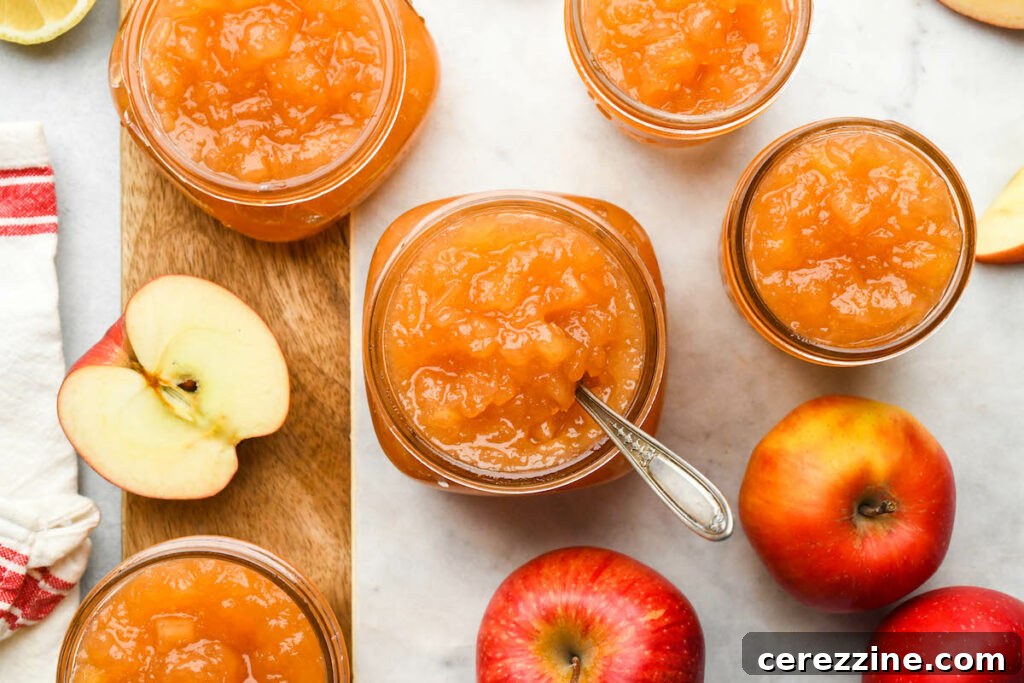
Begin by peeling, coring, and chopping your apples into approximately ½-inch pieces. Combine the chopped fruit with sugar and let it macerate for at least 4 hours, or ideally, overnight in the refrigerator. This crucial step firms up the fruit and draws out its juices, allowing it to cook into a jam with distinct pieces rather than disintegrating. For a batch yielding 4 to 5 half-pint jars, you’ll need about 16 cups of chopped apples (from approximately 6 lbs of whole apples), 4 cups of sugar, and ½ cup of lemon juice. Cook for approximately 20 to 30 minutes, or until the setting point is reached.
For a detailed, step-by-step guide with accompanying visuals, refer to my comprehensive recipe for apple jam.
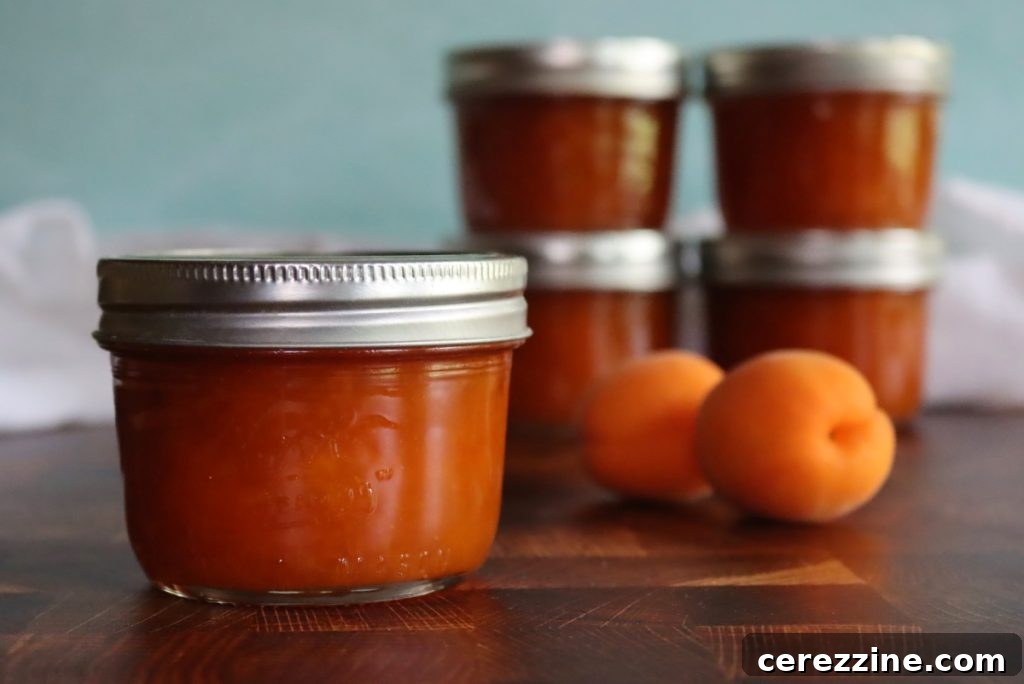
Apricot Jam
Apricots are naturally lower in pectin but yield a wonderfully velvety jam that spreads effortlessly. Unlike peaches, apricots generally don’t require peeling, simplifying the preparation process. For a batch using 4 to 5 pounds of apricots (roughly 12 cups chopped), combine with 3 cups of sugar and ¼ cup of lemon juice. Cook for approximately 30 to 45 minutes, allowing the jam to thicken to a luscious consistency. The longer cooking time helps concentrate the natural sugars and pectin present.
My complete recipe for apricot jam provides detailed instructions for each stage. With a bit more patience, you can also transform apricots into a rich, slow-cooked apricot butter.
Blackberry Jam
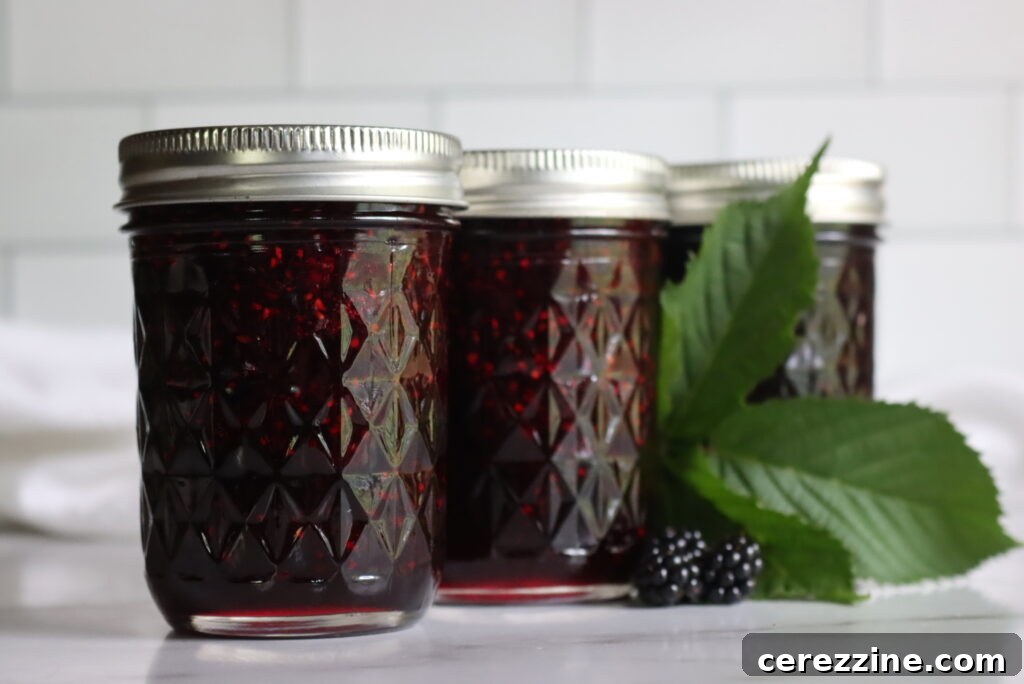
Blackberries contain a moderate amount of pectin, and wild blackberries, in particular, often set beautifully into a rich, flavorful pectin-free blackberry jam. For an extra boost to the set, some prefer to add a small amount of grated tart apple, or include about a quarter of the total blackberries as slightly underripe fruit, which has higher pectin content. For 8 cups of whole blackberries, use 4 cups of sugar and ¼ cup of lemon juice. Cook for approximately 15 to 25 minutes. Note that juicier cultivated blackberries may require a longer cooking time compared to the more pectin-rich and intensely flavored wild varieties.
You can also create a crystal-clear blackberry jelly without added pectin by straining out the seeds and pulp.
Blueberry Jam
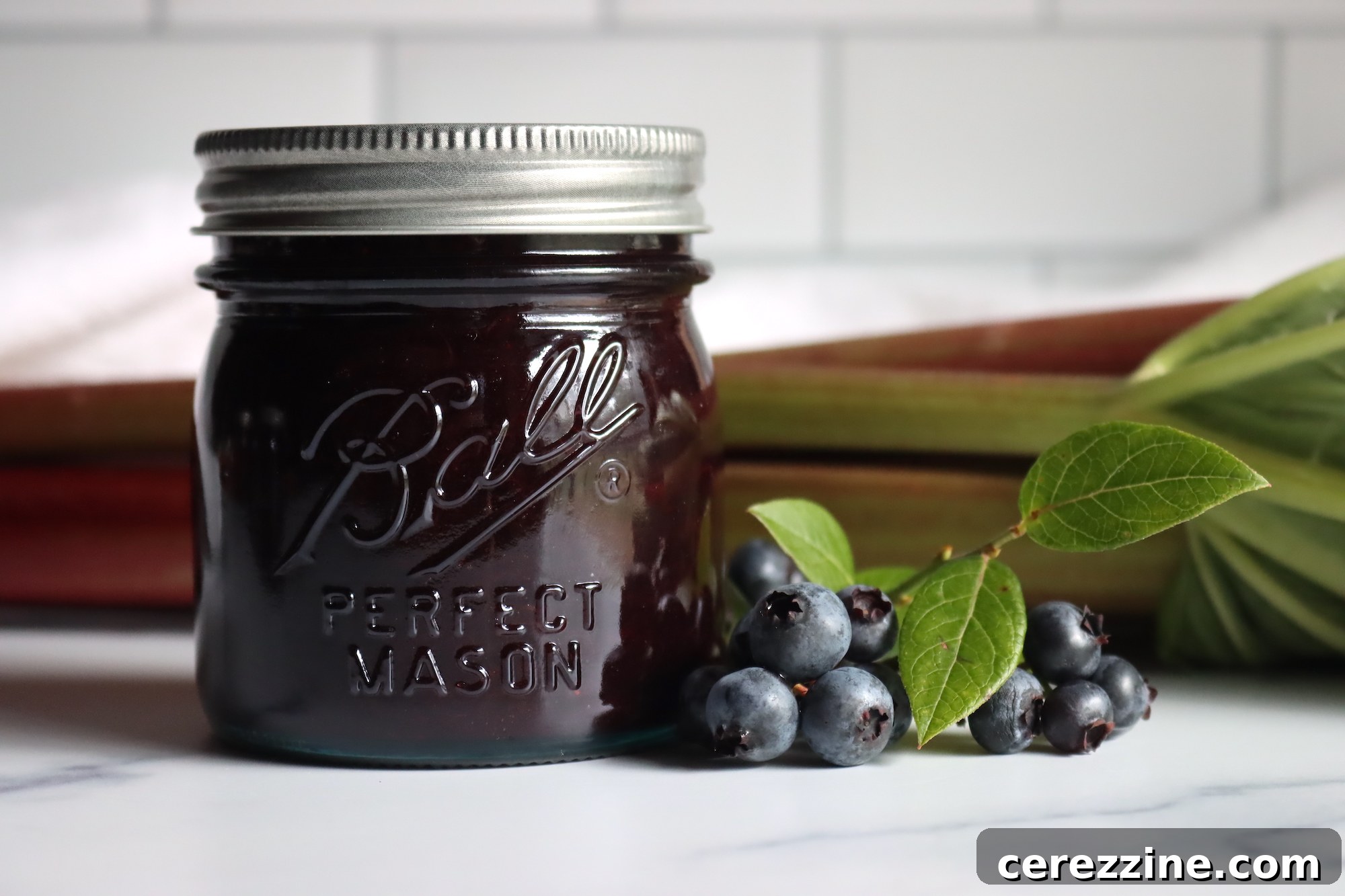
Blueberries are typically categorized as low in pectin, yet they possess ample natural fiber, particularly in their skins, which contributes significantly to thickening a pectin-free jam. This characteristic makes them suitable for jam, though not generally for pectin-free jelly, as the pulp and skins are essential for the desired consistency. Thankfully, the skins are where much of the blueberry’s vibrant flavor compounds reside anyway.
For 4 cups of blueberries, combine with 2 cups of sugar and ¼ cup of lemon juice. Cook for approximately 20 minutes, or until the jam reaches its setting point. My comprehensive recipe for no pectin added blueberry jam will guide you through the entire process. I also offer traditional recipes for unique flavor combinations such as blueberry rhubarb (bluebarb) jam, and a recipe for blueberry peach jam will be available later this summer.
For an extra special treat, consider making blueberry butter! Similar to apple butter, it involves slow-cooking blueberries into a rich, velvety spread.
Cherry Jam
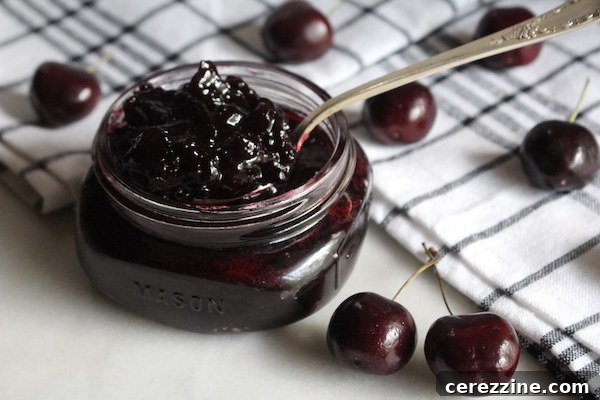
Cherries, particularly tart varieties, are low in pectin. However, their skins hold everything together beautifully, resulting in a lovely chunky spread without the need for added pectin. The natural tartness of pie cherries means they require less added lemon juice for balance and preservation, while sweet cherries benefit from a bit more. The added lemon juice provides crucial acidity to aid in the natural pectin’s activation and ensures canning safety.
For 6 pounds of whole cherries (or 5 pounds/10 cups pitted), use 4 cups of sugar. For tart pie cherries, include ¼ cup of lemon juice, and for sweet cherries, use ½ cup of lemon juice. Cook tart cherry jam for approximately 35 to 45 minutes, and sweet cherry jam for 20 to 25 minutes, or until the desired set is achieved. Explore my recipes for both tart cherry jam and black cherry jam to find your favorite.
Cranberry Jam
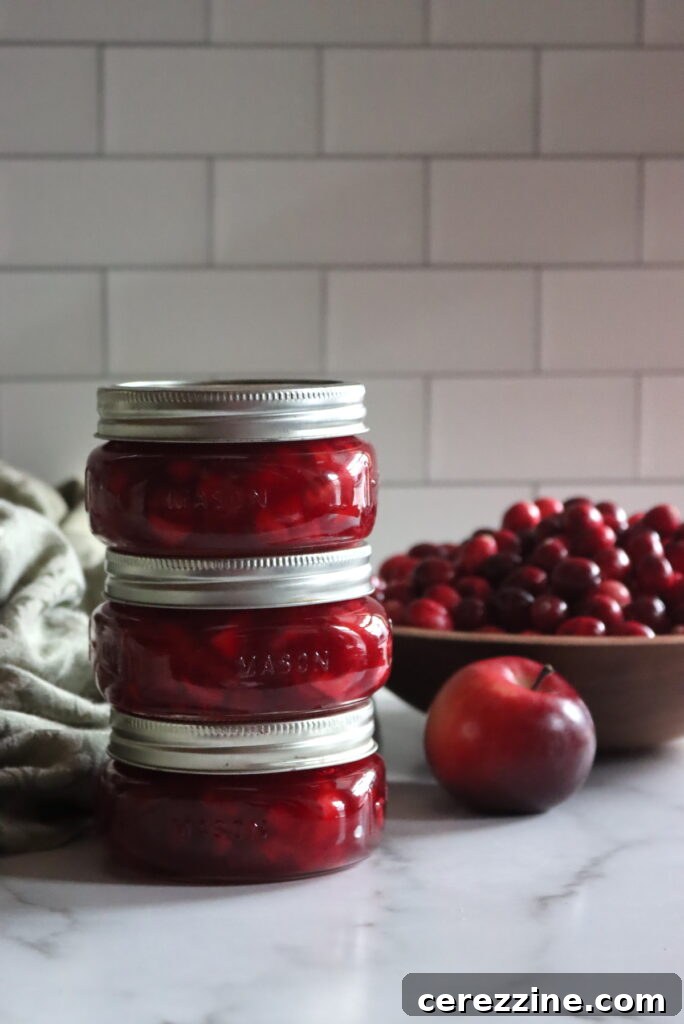
While often associated with holiday sauces, cranberry “sauce” is, in essence, a simple, pectin-free jam made with cranberries and sugar. The high pectin and acidity levels of cranberries make them a dream to work with for natural gelling. For 5 to 6 half-pint jars, you’ll need 6 cups of cranberries, 3 cups of sugar, and 3 cups of water (the water helps the cranberries burst and release their juices properly). Cook for just about 10 minutes until set. For a clear, vibrant preserve, you can also make a no-added-pectin cranberry jelly by straining out the tiny seeds and skins.
Cranberries’ tartness and high pectin content make them excellent companions for other seasonal fruits. Discover recipes for cranberry orange jam and cranberry apple jam. I also highly recommend using frozen strawberries to create a festive Christmas Jam (Cranberry Strawberry Jam), where the cranberries help the low-pectin strawberries set beautifully.
Elderberry Jam
Elderberries are low in pectin and also not quite acidic enough to be safely canned without a high sugar content or specific acidity adjustments. To make elderberry jam safely for canning using traditional methods, you must adhere strictly to a tested recipe that accounts for these factors. The cooperative extension provides a reliable recipe for elderberry jam that sets beautifully without commercial pectin. It’s crucial to follow this recipe precisely, as modifications can compromise canning safety (unlike many other fruit jams, where sugar levels can be adjusted to taste if acidity is sufficient).
For old-fashioned elderberry jam, you’ll need 8 cups of de-stemmed elderberries (approximately 2.5 lbs), 7 cups of white sugar (about 3 lbs), and ½ cup of lemon juice. Cook for approximately 25-30 minutes, ensuring the jam reaches a proper set.
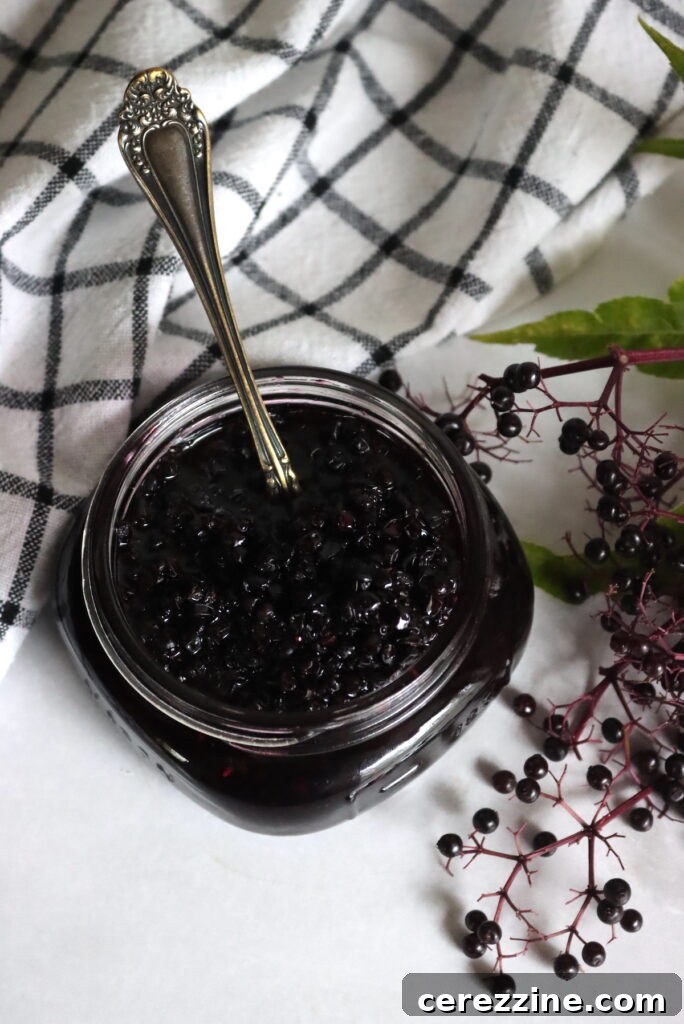
Fig Jam
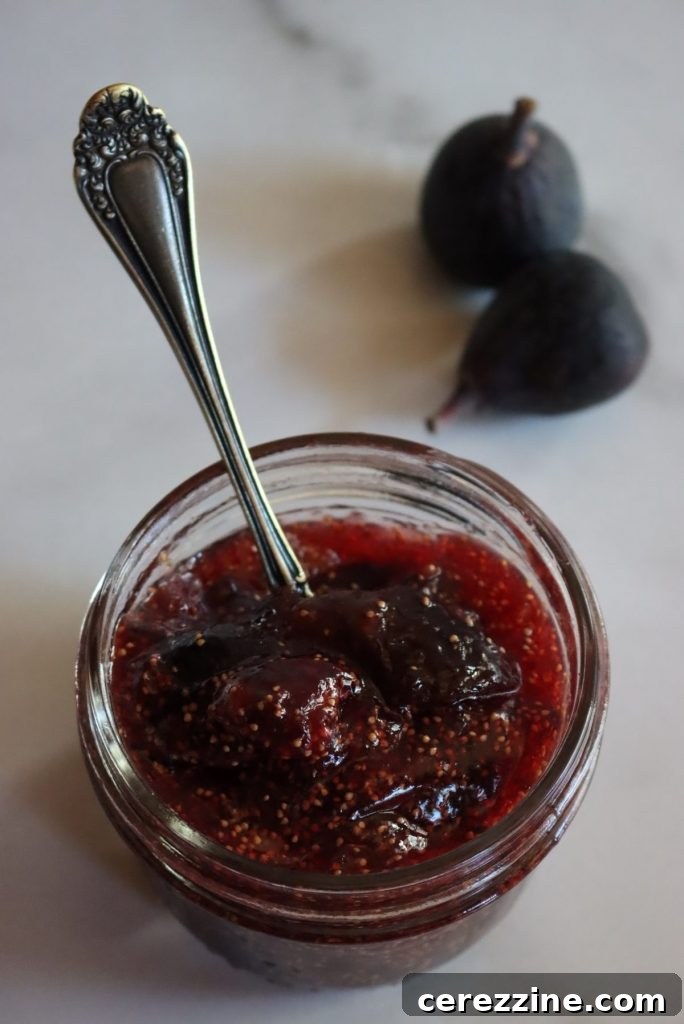
Figs offer a moderate amount of pectin and are also rich in other beneficial fibers, making them excellent for crafting homemade fig jam without any added pectin. Since figs are naturally low in acid, incorporating bottled lemon juice is not just for flavor balance but is crucial for ensuring canning safety and preventing spoilage.
For approximately one quart of figs, you will typically need 1¼ cups of sugar and 2 tablespoons of bottled lemon juice. Cook the mixture for about 10 to 12 minutes. A unique indicator of doneness for fig jam is when you can trace a spatula along the bottom of the pot, and the jam remains separated for a moment before slowly flowing back together, signifying it has thickened sufficiently.
Gooseberry Jam
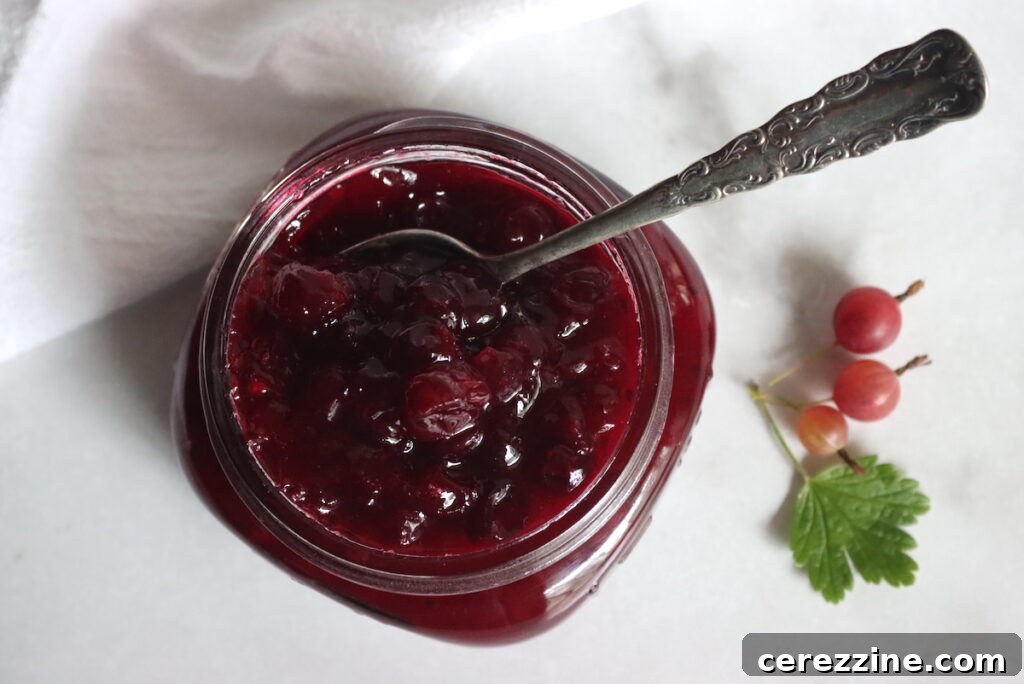
Gooseberries are a jam maker’s dream when it comes to natural pectin – they are so high in it that they often set almost immediately upon reaching a boil! These “old-fashioned” fruits were historically valued for their gelling properties and frequently added to other fruit jams to assist with setting. Therefore, making a simple, standalone gooseberry jam or even a clear gooseberry jelly without added pectin is incredibly straightforward.
For 3 cups of gooseberries, use 2 cups of sugar, and add a splash of water to initiate the cooking process and prevent scorching. Cook for a brief 10 to 15 minutes, or until the jam sets beautifully.
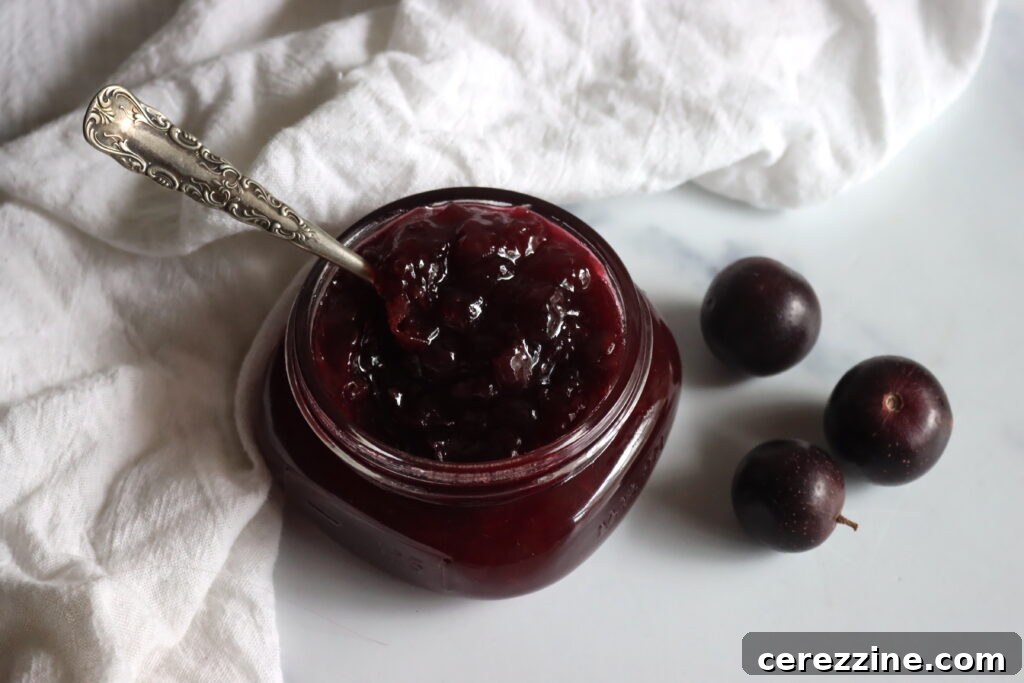
Grape Jam
While grapes are often cited as high in pectin, achieving a firm set for grape *jelly* without added pectin can sometimes be challenging. However, traditional grape jam, which includes the skins and pulp, generally sets nicely due to the pectin concentration in these parts of the fruit.
The process for grape jam is a bit more involved, as it typically requires skinning the grapes – a task that is surprisingly simple with the right technique. I highly recommend consulting my specific recipe for grape jam for detailed instructions on this unique method. Generally, for 8 cups of stemmed grapes (approximately 2 lbs), you will need 6 cups of sugar. Cook for about 15-20 minutes until the jam reaches its setting point.
This same technique can be applied to make delectable Muscadine Jam from the large, flavorful Southern grapes.
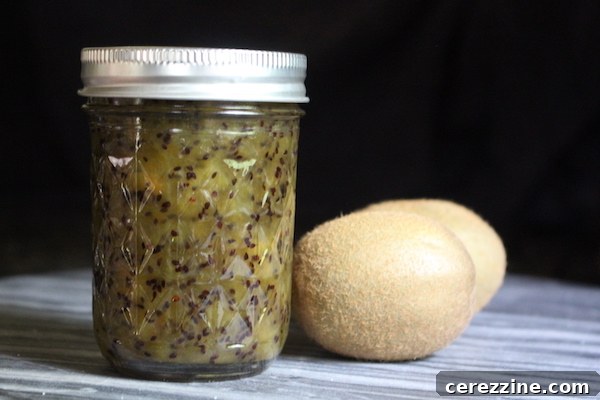
Kiwi Jam
Kiwis are impressively high in natural pectin, making them an excellent candidate for pectin-free jam. They are particularly popular in combination with strawberries (strawberry-kiwi jam) not just for their delightful flavor pairing, but because the pectin from the kiwi helps the typically low-pectin strawberries set beautifully.
To make a pure kiwi jam, you’ll need approximately 4 pounds of kiwis, 4 cups of sugar, and ¼ cup of lemon juice. Cook the mixture for a relatively short period, about 10 to 15 minutes, until it reaches the desired setting point, thanks to the fruit’s abundant natural gelling agents.
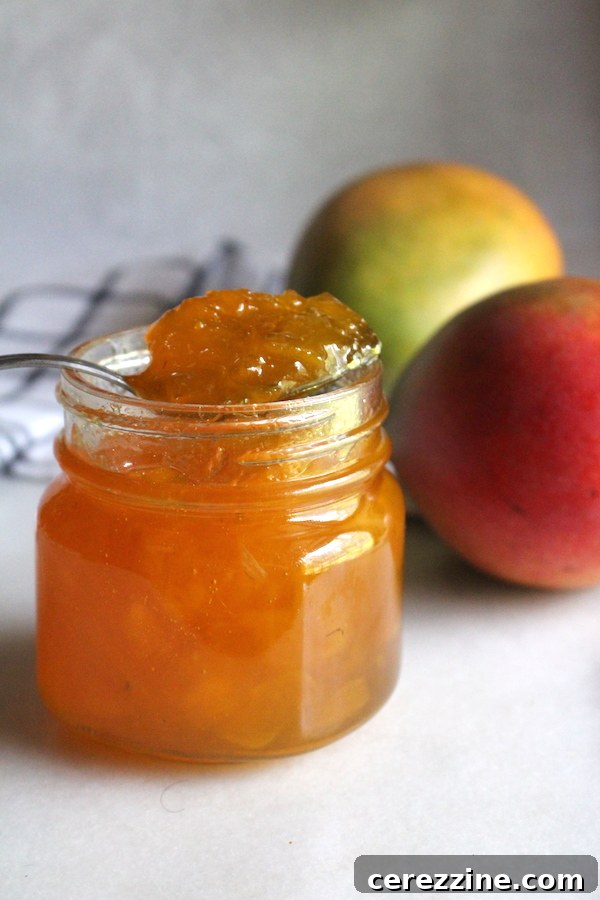
Mango Jam
Mangoes, while low in pectin, are rich in other types of dietary fiber which contribute to a naturally thick and full-flavored tropical jam without the need for added pectin. Their luscious texture transforms beautifully into a spread that captures the essence of the tropics.
For 4 cups of chopped mangoes, combine with 3 cups of sugar and 2 tablespoons of lemon juice. It’s important to note that despite their seemingly acidic flavor, mangoes are not acidic enough on their own for safe water bath canning, making the addition of bottled lemon juice essential for preservation. Cook the jam for approximately 20 minutes, or until it achieves a good set, characterized by its vibrant color and rich aroma.
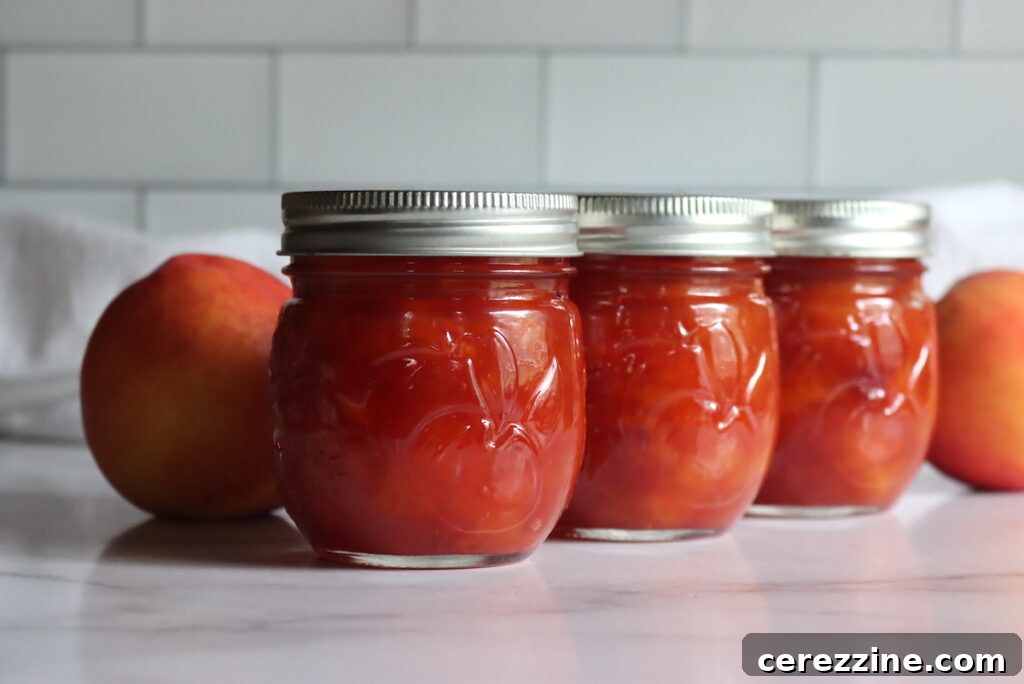
Nectarine Jam
Like peaches, nectarines are low in pectin. However, a distinct advantage of nectarines is their thin, soft peels, which virtually dissolve during cooking, contributing natural thickening without the fuzziness often associated with peach skins. This makes nectarine jam without pectin truly exceptional!
For 8 cups of chopped nectarines, you’ll typically use 2½ cups of sugar and ¼ cup of lemon juice. The cooking time for nectarine jam is relatively quick, often around 10 to 15 minutes, as the fruit breaks down easily and its natural fibers aid in gelling, creating a vibrant, flavorful spread.
Peach Jam
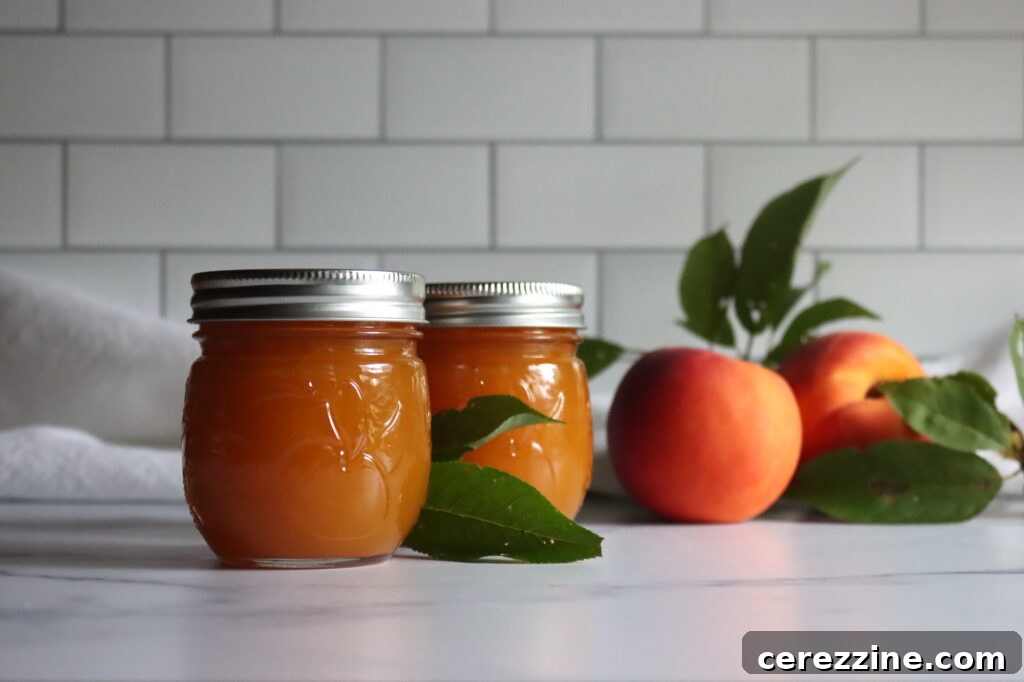
Peaches are another fruit with a naturally low pectin content, which typically results in a softer-set jam when made without added pectin. While the texture may be looser, the flavor of old-fashioned peach jam is incredibly rich and concentrated. For 5-6 cups of chopped peaches, you’ll need 4-5 cups of sugar and 2 tablespoons of lemon juice. Cook for 20-30 minutes, or until it reaches a desired, albeit soft, set.
It’s worth noting that while I generally prefer pectin-free methods, I often opt for making my peach jam WITH pectin to achieve a firmer, more traditional jam consistency. However, if I’m not adding pectin, my preference shifts to crafting peach butter, which relies on slow cooking to achieve a thick, velvety spread.
Pear Jam
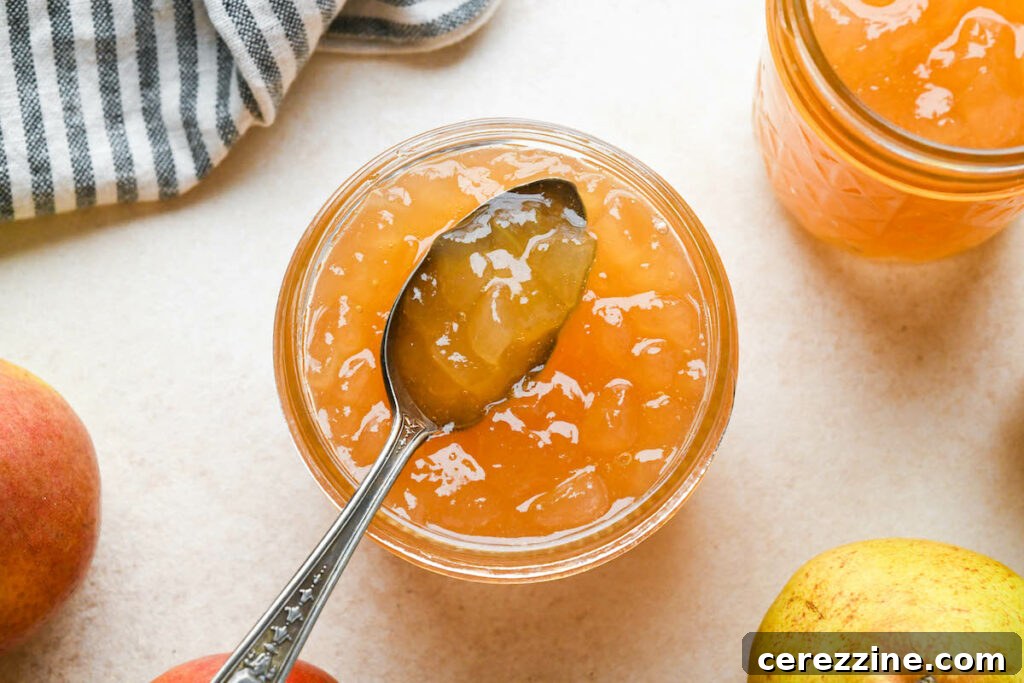
Pears possess a moderate level of pectin, slightly less than apples, but still ample enough to create a delicious jam with just sugar and lemon juice. As with apples, the key to preventing pears from breaking down into a sauce-like consistency is maceration.
For pear jam, you’ll definitely want to refer to my specific recipe for old-fashioned pear jam to ensure the fruit maintains its texture. Generally, for 4 pounds of pears, use 3 cups of sugar and ¼ cup of lemon juice. Cook for approximately 10 to 15 minutes, paying close attention to the setting point to achieve a delightful preserve with tender pear pieces.
Persimmon Jam
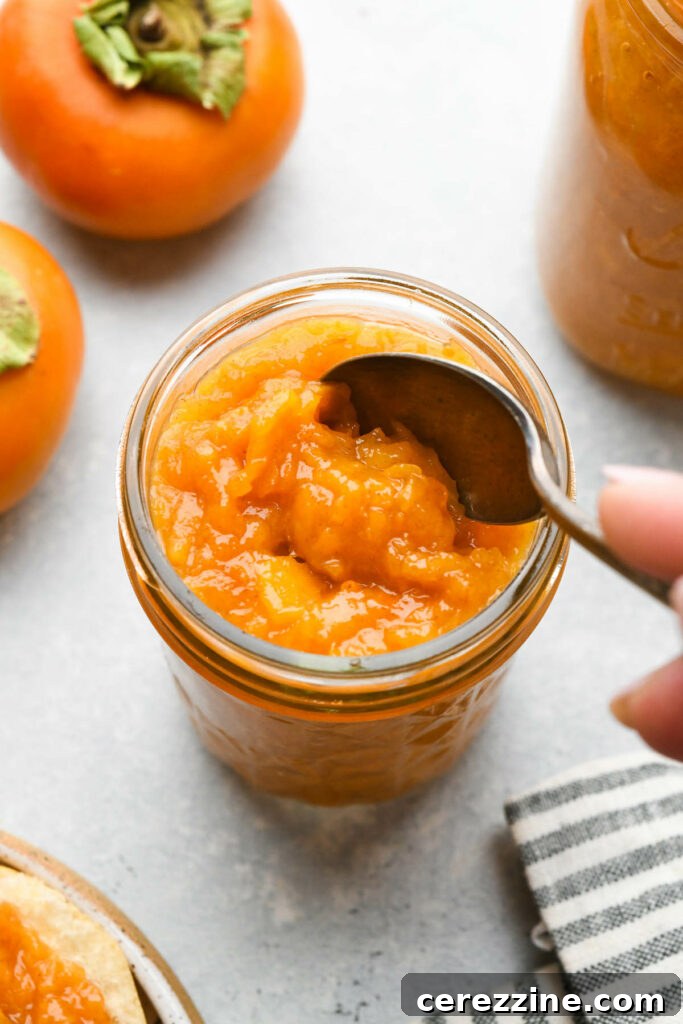
Persimmons are high in natural pectin, yet they are quite low in acidity, which makes the addition of extra lemon juice absolutely critical for safe preservation when canning. Similar to the elderberry jam recipe, this persimmon jam recipe is one that requires strict adherence to the specified quantities, particularly for sugar and lemon juice. While you can add more of these ingredients, never reduce them for safety reasons.
I typically make this jam with Fuyu persimmons, which are firm, seedless, and don’t require peeling. While I haven’t personally tried it, some enthusiasts also enjoy making jam from soft Hachiya persimmons or native wild astringent persimmons.
Pineapple Jam
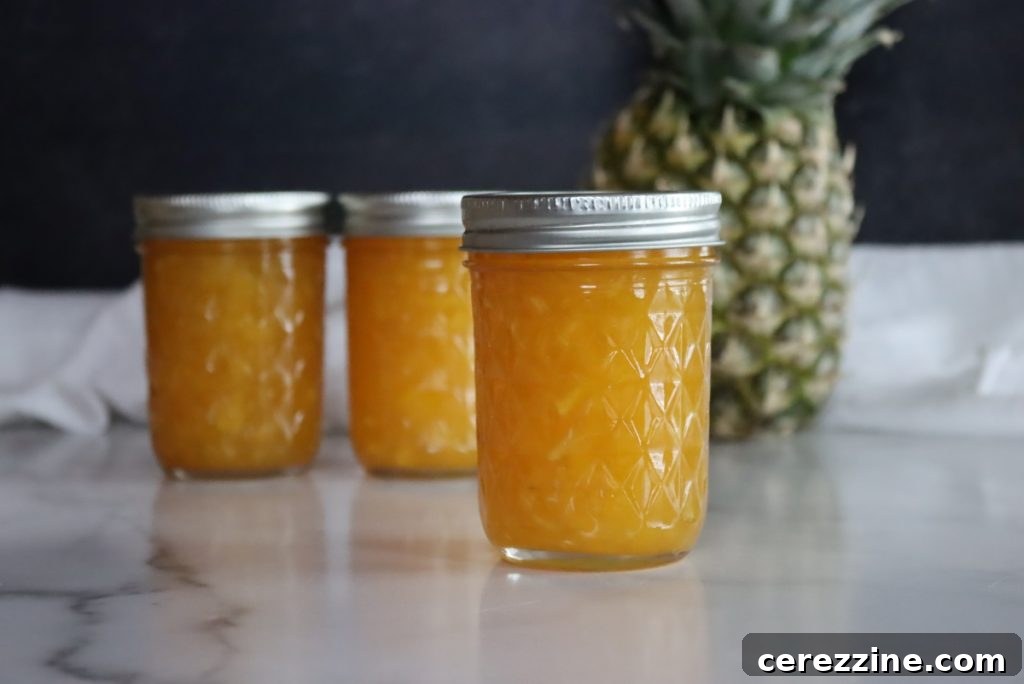
Pineapple is a fruit low in pectin, yet its rich fibrous content contributes wonderfully to a thick, tropical homemade pineapple jam without the need for any added pectin. The natural sweetness and tang of pineapple create a vibrant preserve.
For 3 cups of crushed pineapple, you’ll typically use 1½ to 2 cups of sugar, adjusted to your taste. No additional lemon juice is necessary for this jam, as pineapples are naturally acidic enough for safe canning. Cook the mixture for approximately 25 to 30 minutes, allowing it to reduce and thicken into a luscious, spreadable jam.
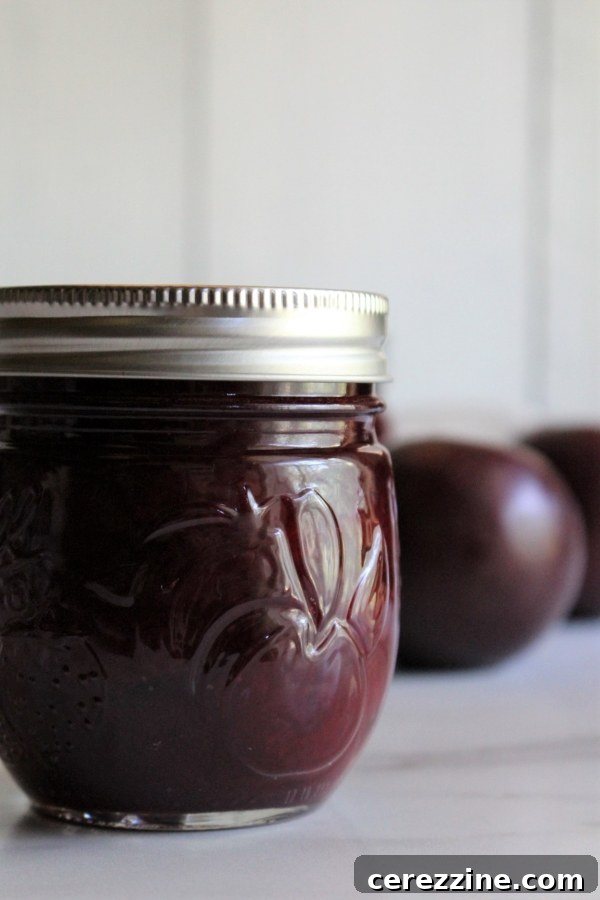
Plum Jam
Plums are exceptionally high in natural pectin, making plum jams remarkably easy to prepare using the traditional, pectin-free method. Their natural gelling ability ensures a quick and satisfying set.
For approximately 9 cups of chopped plums, you’ll need 3 cups of sugar. Cook for about 20 to 30 minutes, monitoring closely for the setting point. The result is a richly flavored jam with a beautiful deep hue. Beyond jam, plums also excel in creating a luscious no pectin added plum jelly, and I’m particularly fond of making slow-cooked plum butter, which offers a velvety, concentrated fruit spread.
Quince Jam
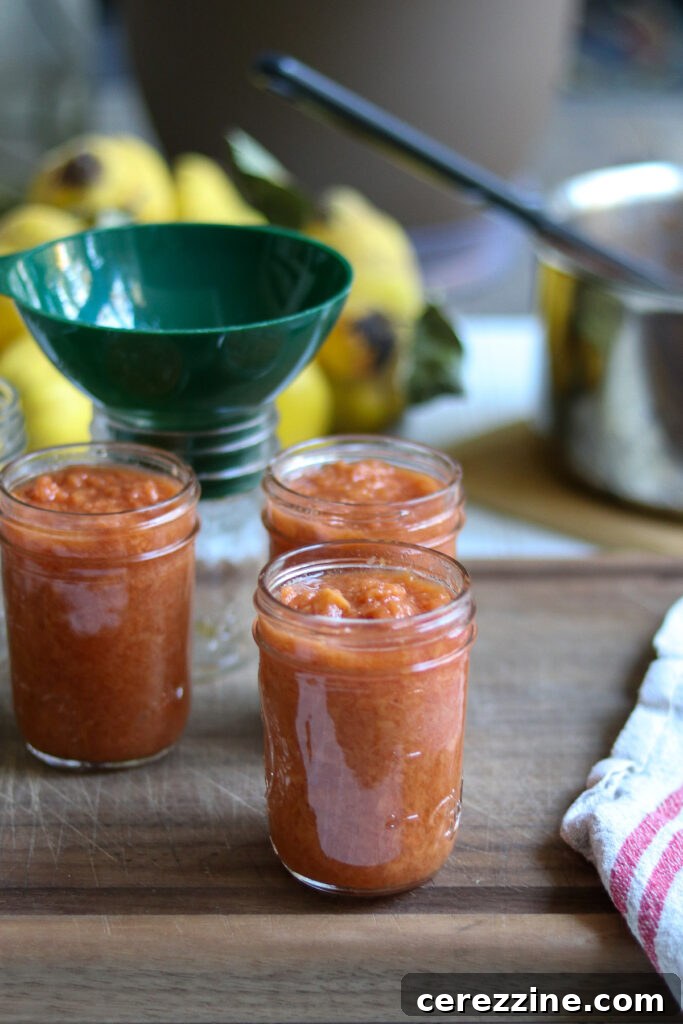
Quinces are veritable pectin powerhouses, setting remarkably quickly once they’ve had sufficient time to soften and cook through. In fact, quinces were historically used as a natural source of pectin to aid the setting of other fruit preserves, making a traditional quince jam or quince jelly quite straightforward to prepare.
For 7 cups of chopped quince, combine with 3 cups of sugar and ¼ cup of lemon juice. Cook for approximately 15-20 minutes, paying close attention to the setting point, which often comes quite rapidly due to the fruit’s abundant pectin. The resulting jam offers a unique floral and slightly tart flavor with a firm, beautiful set.
Raspberry Jam
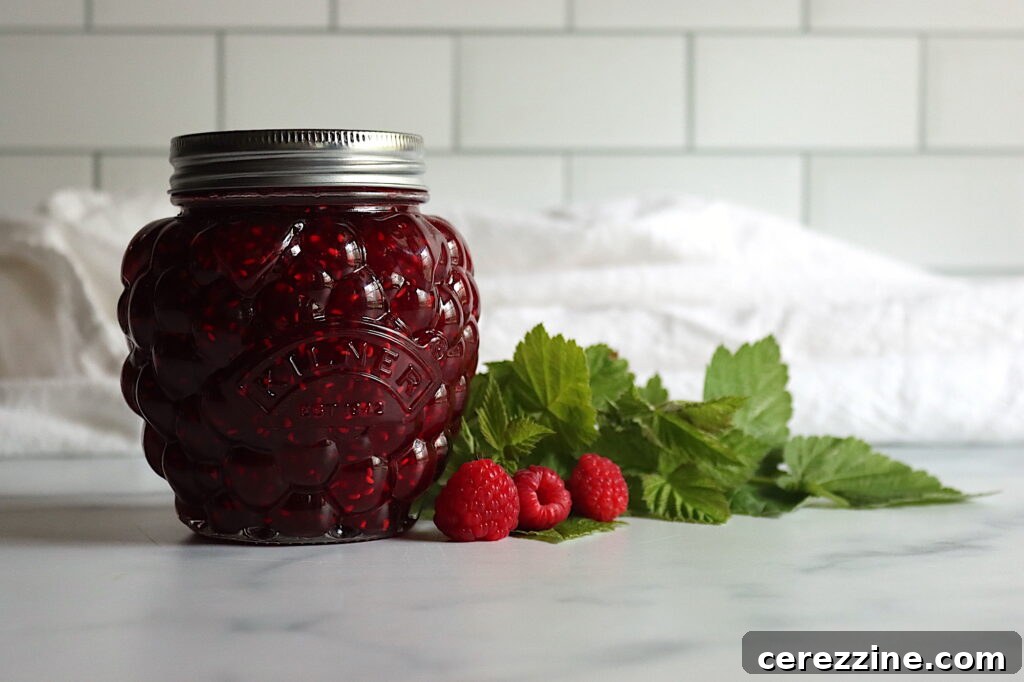
Raspberries are typically classified as having a moderate pectin content, yet their robust natural fibers allow them to behave much like high-pectin fruits during the jam-making process. I’ve even successfully crafted no pectin added raspberry jelly, an achievement not commonly possible with fruits labeled as “low pectin.”
To make a vibrant no added pectin raspberry jam, you’ll need 4 cups of raspberries and 4 cups of sugar. Cook for a relatively short period, often around 10 minutes, as raspberries release their juices and thicken quickly. The result is a brightly flavored, beautifully set jam. I also offer recipes for black raspberry jam and a seedless black raspberry jelly for those who enjoy these darker, richer berries.
Strawberry Jam
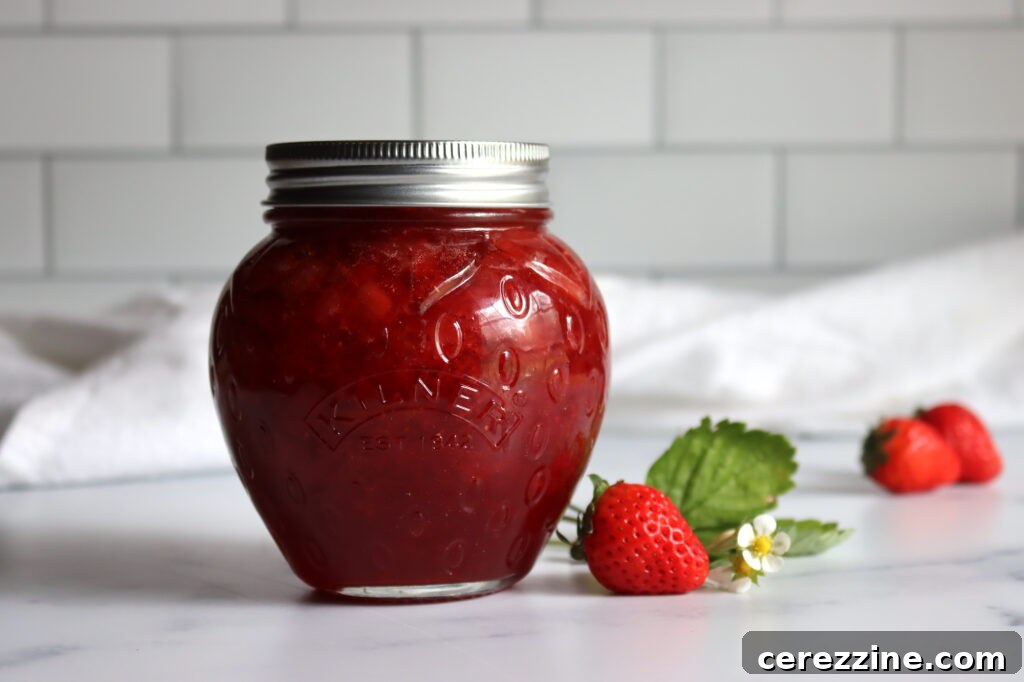
Strawberries are naturally low in pectin, meaning they generally require longer cooking times to achieve a set without added commercial pectin. This extended cooking process, however, deeply concentrates their sweet, summery flavor, resulting in an incredibly rich and satisfying jam. For 8 cups of mashed strawberries, you’ll typically use 6 cups of sugar and 2 tablespoons of lemon juice. Cook for approximately 45 minutes, or until the jam visibly thickens and passes the chosen doneness tests.
My comprehensive recipe for Old Fashioned Strawberry Jam meticulously guides you through each step of this rewarding process. For those seeking a quicker set with strawberries without commercial pectin, I also have a recipe for Christmas Jam, which combines strawberries with high-pectin cranberries, allowing for a much faster gelling time.
Beyond Jams: Exploring Other Pectin-Free Fruit Preserves
The world of pectin-free fruit preservation extends wonderfully beyond traditional jams. One particularly delightful category is homemade fruit butters. These preserves involve slow-cooking fruit until it achieves a thick, velvety consistency, often without any added pectin, relying instead on natural reduction and the fruit’s own fibers. This method works beautifully with nearly any fruit, offering a rich, concentrated flavor and a smooth, spreadable texture. Some cherished examples include luscious blueberry butter, sweet plum butter, and creamy peach butter.
And, of course, no discussion of pectin-free fruit preserves would be complete without mentioning the timeless classic: apple butter, a staple that perfectly embodies the rich flavors achieved through slow cooking.
What are your personal favorite homemade preserves that you craft without any added pectin? Share your experiences and cherished recipes in the comments below!