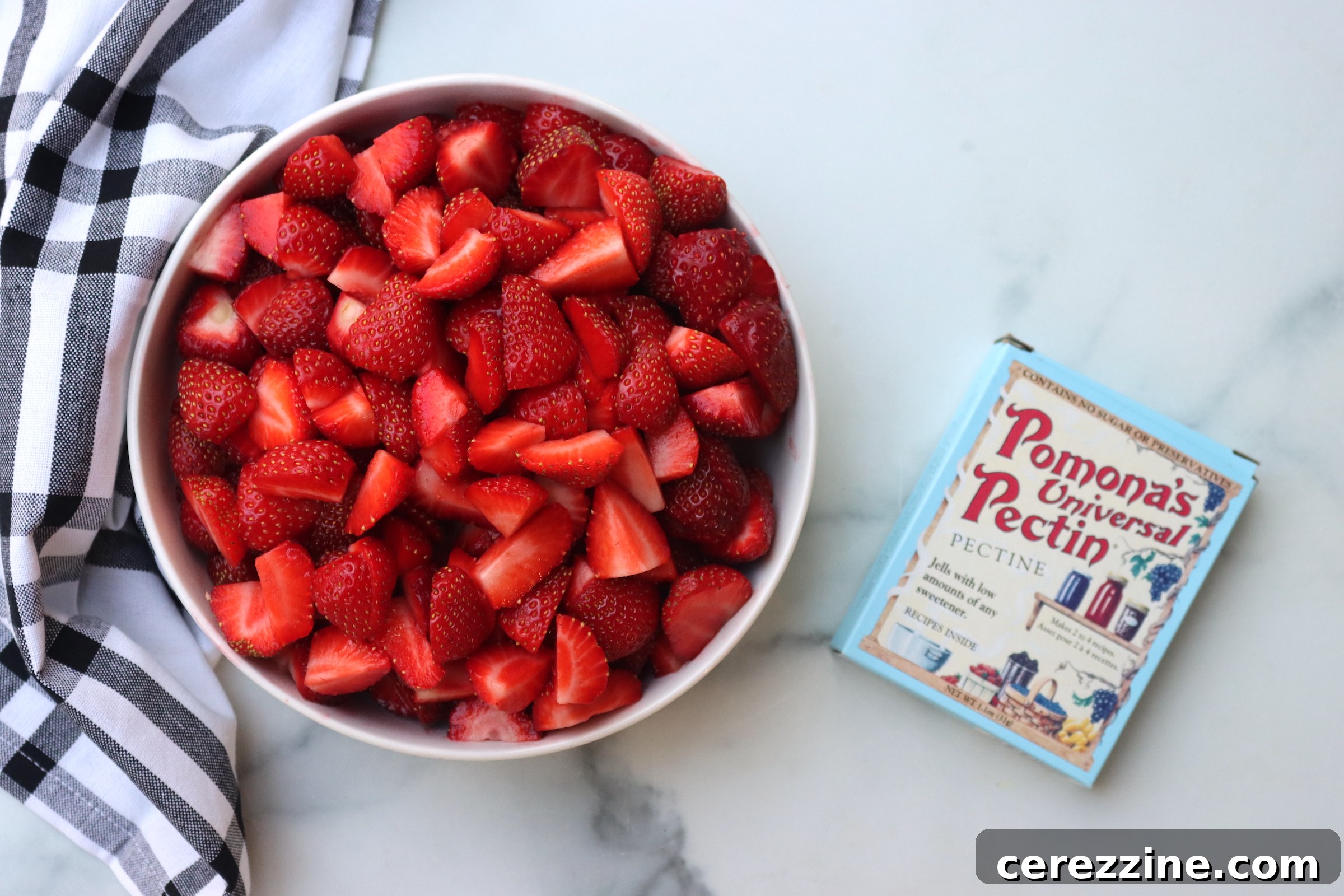
Mastering Low Sugar Jams: Your Ultimate Guide to Using Pomona’s Pectin
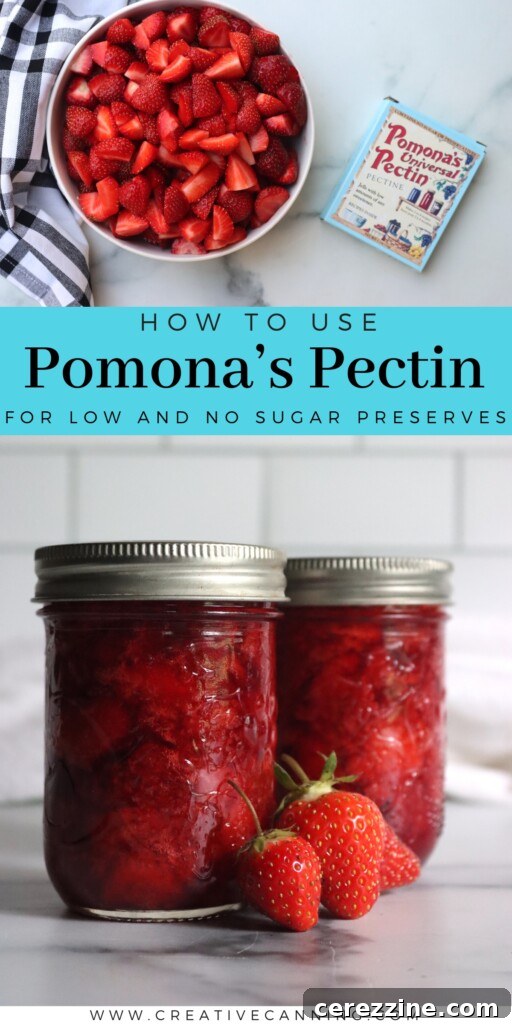
Embark on a delightful journey into the world of homemade jams and jellies with unparalleled flexibility, thanks to Pomona’s Pectin. This innovative gelling agent liberates home canners from the traditional reliance on excessive sugar, opening doors to healthier, more flavorful preserves. Unlike conventional pectins that demand high sugar content to set, Pomona’s Pectin empowers you to craft delicious spreads with low or no sugar, alternative sweeteners, and even unique fruit and vegetable combinations, all while ensuring a consistently reliable set. Once you grasp its simple yet distinct process, you’ll unlock the creative freedom to adapt virtually any recipe to suit your dietary preferences and pantry staples.
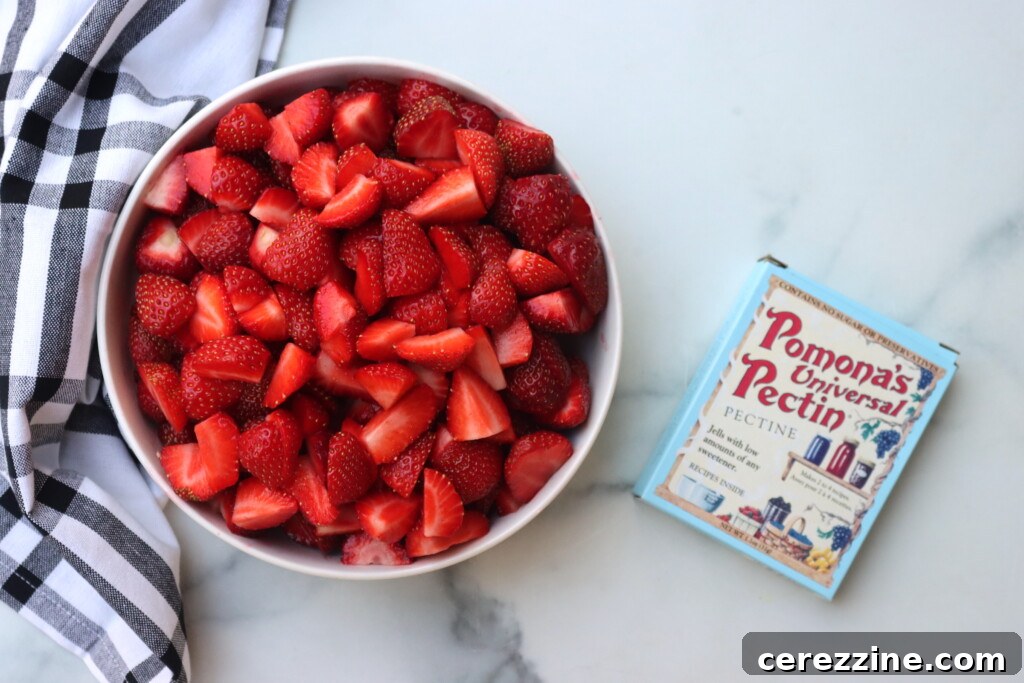
For those seeking to produce homemade jam with significantly less sugar, or even entirely sugar-free, Pomona’s Universal Pectin truly revolutionizes the canning experience. Traditional pectins depend on a precise balance of sugar and acid to achieve a proper gel, often requiring quantities of sugar that can overwhelm the natural fruit flavor. Pomona’s, however, operates on a unique calcium-based system. This ingenious mechanism grants you absolute command over the sweetness level of your preserves, allowing you to add as much or as little sweetener as you desire. Whether you prefer cane sugar, raw honey, rich maple syrup, agave, or wish to create completely unsweetened fruit spreads, Pomona’s accommodates your taste and dietary requirements with ease.
Many health-conscious canners and those prioritizing natural ingredients consistently choose Pomona’s Pectin because of its pure composition. It stands out in the market as one of the few pectins that contains no “funny stuff”—meaning no dextrose, artificial preservatives, or other additives often found in conventional pectin brands. Its simple formulation consists solely of pure citrus pectin and a small packet of monocalcium phosphate, the natural mineral used to activate its gelling properties. This commitment to natural ingredients ensures that the vibrant, authentic flavor of your fruit shines through, unmasked by excessive sweetness or unwanted chemicals.
This remarkable flexibility, however, does involve a slightly different methodology compared to what experienced canners might be accustomed to with Sure-Jell or Ball pectin. At first glance, the steps might appear unfamiliar, but with a quick understanding of the process, it becomes incredibly straightforward and intuitive. The payoff is immense: jams and jellies that boast exceptionally bright, fresh fruit flavors, and a firm, satisfying set without the need for prolonged boiling that can degrade delicate flavors and textures.
Unveiling the Science: How Pomona’s Pectin Achieves a Perfect Set
To truly appreciate Pomona’s Pectin, it’s helpful to understand its fundamental difference from traditional pectins. In classic jam recipes, sugar isn’t just a sweetener; it plays a critical role in the gelling process. The high sugar content helps separate the pectin molecules, allowing them to form a gel when combined with acid and heated. This is precisely why many conventional jam recipes demand large quantities—often 5 to 7 cups of sugar for every 4 cups of fruit. Pomona’s Pectin ingeniously sidesteps this sugar dependency entirely.
Pomona’s Pectin doesn’t rely on sugar for its gelling action. Instead, its unique formulation utilizes calcium to activate the gelling process. Each box of Pomona’s Pectin thoughtfully includes a separate small packet of calcium powder. This powder is then mixed with water to create a liquid solution known as calcium water. This calcium water is the true magic behind Pomona’s flexibility. By adding just a teaspoon or two of this prepared mixture to your mashed fruit, you initiate the gelling reaction, guaranteeing a reliable set regardless of the amount of sweetener you choose to incorporate (or omit entirely). This means you can truly sweeten to your exact preference, without compromising the final texture of your jam.
Because the gelling mechanism is independent of sugar, the culinary possibilities expand dramatically. You are no longer confined to recipes with a fixed, high sugar ratio. This freedom allows you to craft modest amounts of sugar, opt for natural alternatives like golden honey or rich maple syrup, or explore the delightful simplicity of fully unsweetened preserves that highlight the pure essence of the fruit. This makes Pomona’s Pectin an invaluable tool for those managing blood sugar levels, following specific diets, or simply seeking healthier, more fruit-forward options for their homemade spreads.
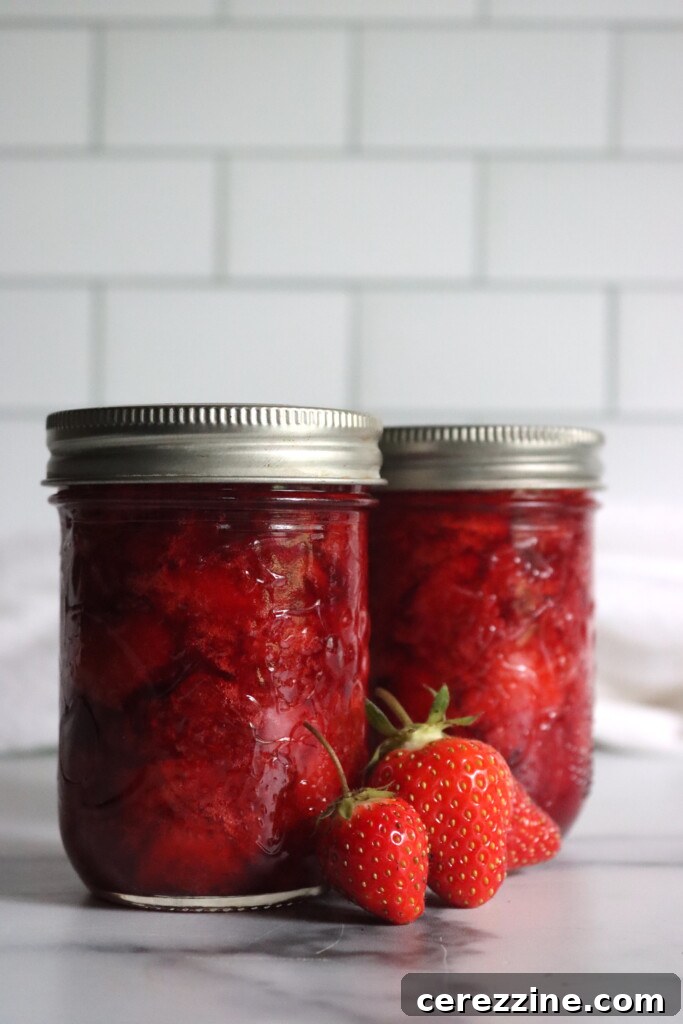
Your Step-by-Step Guide to Using Pomona’s Pectin Effectively
Embracing Pomona’s Pectin requires a slight shift in your jam-making routine, but these minor adjustments lead to superior results. Understanding the sequence of steps is key to success. One of the most critical deviations from standard practices is that you add the prepared calcium water directly to the mashed fruit *before* you even begin cooking. Typically, 1 to 2 teaspoons of calcium water are sufficient for a standard batch. This preliminary step is absolutely essential because, as discussed, Pomona’s Pectin relies on calcium, not sugar, to facilitate the gelling process. Forgetting this step will prevent your jam from setting.
Another crucial difference lies in how the pectin powder is incorporated. With Pomona’s, the pectin powder must be thoroughly mixed into your chosen sweetener *before* it is added to the fruit mixture. This might feel counterintuitive if you’re accustomed to traditional pectins, but this technique is vital. It effectively disperses the highly concentrated pectin powder, preventing it from clumping and ensuring it dissolves smoothly and evenly into your jam. Whether you’re using granulated sugar, liquid sweeteners like honey or maple syrup, or even a sugar substitute, make sure to combine the pectin powder with it first.
Once your fruit is mashed and combined with the calcium water, and your pectin is mixed into the sweetener, the cooking process is quite swift. You begin by bringing the fruit and calcium water mixture to a rolling boil on its own. Once a vigorous boil is achieved, you then stir in the pectin-sweetener mixture. Return the pot to a full, rolling boil for a very brief period—just 1 to 2 minutes. This short burst of heat is all that’s needed to activate the pectin and initiate the gelling. The advantage of this quick cook time is that it preserves the fresh flavor, vibrant color, and delicate nutrients of your fruit, unlike methods that require prolonged boiling.
Finally, one of the most celebrated features of Pomona’s Pectin is the complete control it gives you over the sweetness level. For every 4 cups of prepared fruit, you can add as little as ¼ cup of sugar (or honey, maple syrup, or other preferred sweetener) for a very tart, fruit-forward jam. If you prefer a slightly sweeter spread, you can increase this amount up to 1 cup. Most fruits yield a perfectly balanced flavor profile somewhere in the middle, typically requiring around ⅓ to ½ cup of sweetener per batch. The ultimate decision, however, rests entirely with your personal taste preferences, allowing for truly customized preserves.
Adapting Your Favorite Recipes for Pomona’s Pectin
One of the most appealing aspects of Pomona’s Pectin is its unparalleled versatility, especially in allowing you to dictate the quantity and type of sweetener. However, converting a conventional jam or jelly recipe designed for traditional pectin to use Pomona’s isn’t simply a one-to-one pectin swap. There are crucial considerations, particularly regarding acidification, to ensure not only a reliable set but also a safe, shelf-stable preserve suitable for water bath canning.
A fundamental difference to be aware of is that most traditional boxed pectins (such as Sure-Jell or Ball) often contain citric acid as part of their ingredient blend. This added acid serves a vital purpose: it helps ensure the jam is sufficiently acidic, which is critical for safe water bath canning, especially with fruits that might be borderline in acidity. Pomona’s Pectin, in contrast, does not include any citric acid. Therefore, when you convert a recipe, it is imperative to manually add an acid, typically bottled lemon juice, to guarantee the pH of your finished product remains safely below 4.6. This low pH level prevents the growth of harmful bacteria and ensures the safety of your home-canned goods.
For many common fruit jams—particularly those made with naturally high-acid fruits like strawberries, raspberries, or plums—this acidification step usually isn’t an issue, as the fruit itself provides ample acidity. However, for recipes that explicitly rely on the citric acid inherent in traditional pectins for their safety profile, you absolutely must add supplemental acid. This is not a matter of taste but of food safety and should never be overlooked when canning for shelf stability.
Consider the example of old-fashioned corn cob jelly. This is a thoroughly tested and approved recipe from the National Center for Home Food Preservation (NCHFP). The original recipe counts on boxed pectin not only for gelling but also for providing the necessary citric acid to safely acidify what is essentially a corn-flavored tea. If you decide to make this jelly using Pomona’s Pectin, you will need to add 2 tablespoons of bottled lemon juice per batch to ensure it reaches a safe pH for water bath canning. Skipping this step would render the jelly unsafe for shelf storage.
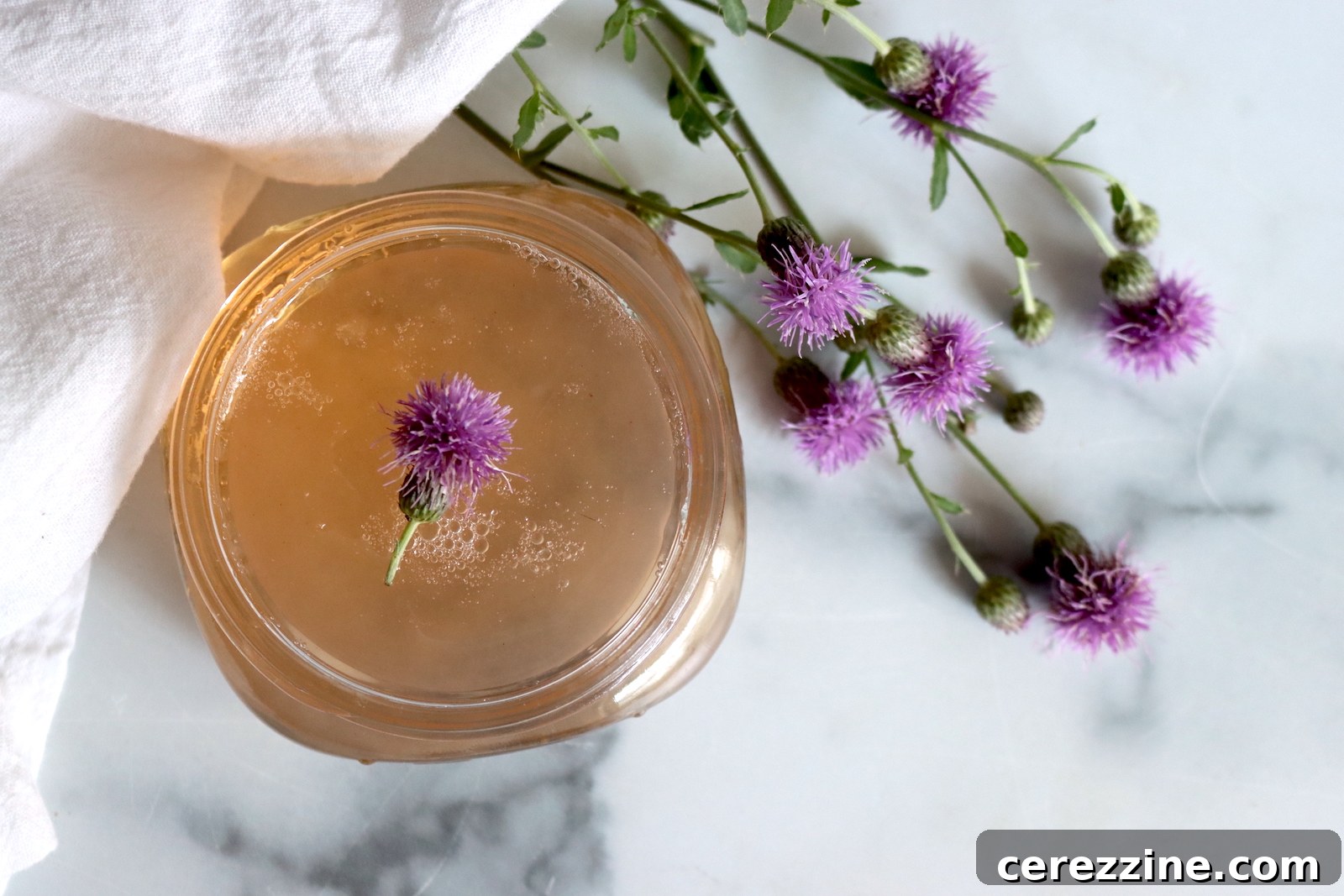
The same principle applies to delicate flower jellies, such as dandelion jelly or violet jelly. These recipes typically start with an infusion of mild floral tea, which, on its own, lacks sufficient acidity for safe canning. When preparing these exquisite jellies with Pomona’s Pectin, you must incorporate ¼ cup (or 4 tablespoons) of bottled lemon juice per 4-cup batch of liquid. This crucial addition guarantees that your floral jelly achieves a safe pH level, making it shelf-stable and enjoyable after proper processing in a boiling water bath.
Pro Tips for Flawless Pomona’s Pectin Jams
Achieving perfect results with Pomona’s Pectin is simple, but a few key considerations will ensure your success every time:
- Never Skip the Calcium Water: This is the cornerstone of Pomona’s Pectin’s gelling mechanism. Without the calcium water, the pectin will not activate, and your jam will fail to set, regardless of how much pectin you add. Always prepare it according to Pomona’s instructions and add it to the fruit as directed.
- Measure Accurately: Pomona’s Pectin is highly concentrated, and precision is important. Using too much pectin can result in a jam that is overly firm or even rubbery, diminishing its enjoyable texture. It’s always a good practice to measure both the pectin powder and the calcium water carefully. If you are ever in doubt, it’s better to start with a slightly smaller amount of pectin and adjust in future batches.
- Mind Your Batch Sizes: While Pomona’s Pectin allows for some flexibility, it’s generally safe to double a recipe as long as you proportionally scale both the pectin powder and the calcium water. Ensure thorough stirring to evenly distribute the gelling agents and bring the entire mixture to a full boil after adding the pectin-sweetener blend. However, avoid increasing beyond a double batch, as larger quantities can have trouble cooking evenly, which might lead to an inconsistent or failed set.
- Avoid Overcooking: Unlike traditional jam recipes that often call for extended boiling times to achieve a set, Pomona’s Pectin only requires a short cook time. Once the pectin-sweetener mixture is added, bring the jam to a full boil for just 1 to 2 minutes. This brief boiling period is sufficient to activate the pectin and helps preserve the vibrant color, delicate flavors, and nutritional integrity of your fruit, yielding a fresher-tasting product.
- Consider pH Testing for Safety: Especially when converting recipes or using fruits with unknown acidity levels, investing in a pH meter or pH testing strips (designed for food) can provide peace of mind. Ensuring your preserve’s pH is below 4.6 is critical for safe water bath canning.
- Ensure Proper Canning Practices: Always follow tested water bath canning guidelines for sterilizing jars, filling, headspace, lid application, and processing times based on your altitude. A successful set is only half the battle; proper canning ensures long-term, shelf-stable storage.
Basic Low-Sugar Jam Recipe with Pomona’s Pectin
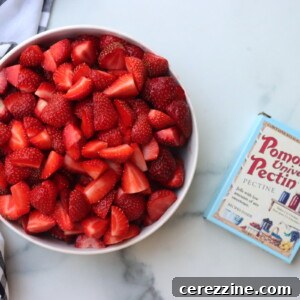
32 servings, or about four to five 8 oz jars
Low Sugar Jam with Pomona’s Pectin (Basic Recipe)
10 mins
5 mins
10 mins
25 mins
Print Recipe
Ingredients
- 4 cups mashed fruit, about 6 to 8 cups whole fruit
- 2 tsp calcium water, prepared using Pomona’s instructions
- ¼ to 1 cup sugar, honey, or maple syrup (to taste)
- 2 tsp Pomona’s Pectin powder
Instructions
-
Prepare calcium water: Mix ½ teaspoon calcium powder with ½ cup water in a small jar. Shake well. You’ll only need 2 teaspoons for this batch; store the rest in the fridge for future use.
-
Prep jars and canner: Wash jars, lids, and bands. Set up your water bath canner and keep jars warm until ready to fill.
-
Prepare fruit: Wash, hull, and mash your fruit. Measure exactly 4 cups and place in a saucepan. Add 2 teaspoons prepared calcium water and stir to combine.
-
Mix sweetener and pectin: In a separate bowl, mix 2 teaspoons Pomona’s pectin powder with your chosen sweetener (¼ to 1 cup). Stir well to distribute evenly.
-
Cook the fruit: Bring the fruit and calcium water mixture to a boil over medium-high heat.
-
Add pectin-sweetener mixture: Stir in the pectin-sweetener mixture and return to a full boil, stirring constantly. Boil for 1–2 minutes, then remove from heat.
-
Fill and close jars: Ladle hot jam into prepared jars, leaving ¼ inch headspace. Wipe rims clean, apply lids and rings, and tighten fingertip-tight.
-
Water bath process: Process jars in a boiling water bath for 10 minutes (or 15 minutes if above 6,000 feet elevation). Let rest 5 minutes in the canner, then remove and cool undisturbed for 12–24 hours.
-
Store: Check seals and label jars. Store in a cool, dark pantry for up to 18 months. Refrigerate any unsealed jars and use within a few weeks.
Notes
This recipe is a flexible base for making low-sugar jam using Pomona’s Universal Pectin. It works with nearly any fruit—just start with 4 cups of mashed or finely chopped fruit.
The calcium water is essential for activating the pectin; Pomona’s won’t set without it, so don’t skip that step.
You can adjust the sweetness to your preference: use as little as ¼ cup sugar (or honey/maple syrup), or increase up to 1 cup for a sweeter preserve. Always mix the pectin powder into the sweetener before adding it to the fruit—this helps it dissolve smoothly without clumping.
Once the fruit has come to a boil with the calcium water, stir in the sweetener-pectin mixture and bring it back to a full boil for 1–2 minutes to activate the set. This jam is shelf stable when processed in a water bath canner for 10 minutes (or 15 minutes if above 6,000 feet).
Nutrition
Nutrition information is automatically calculated, so should only be used as an approximation.
We hope this comprehensive guide inspires you to explore the incredible versatility of Pomona’s Pectin in your kitchen. This tool empowers you to create custom-sweetened preserves that cater to your taste and health preferences, ensuring every jar is packed with pure, unadulterated fruit flavor. Remember, the journey of home canning is one of creativity and delicious rewards.
Exploring More Pomona’s Pectin Recipes and Resources
Pomona’s Pectin is widely available both online through major retailers and in many health food stores, often found in the natural foods or baking aisle. Each box provides ample pectin and calcium powder for multiple batches of jam or jelly, making it an economical choice for active canners throughout the harvest season.
Ready to put your newfound knowledge to practice? Here are some fantastic recipes that utilize Pomona’s Pectin:
- Low Sugar Kiwi Jam
- Low Sugar Strawberry Jelly
- Low Sugar Peach Jam
Do you have a favorite low sugar jam or jelly recipe you love to make with Pomona’s Pectin? Or perhaps a creative combination you’ve discovered? We’d love to hear about your experiences and tips! Share your thoughts and culinary adventures in the comments section below.