
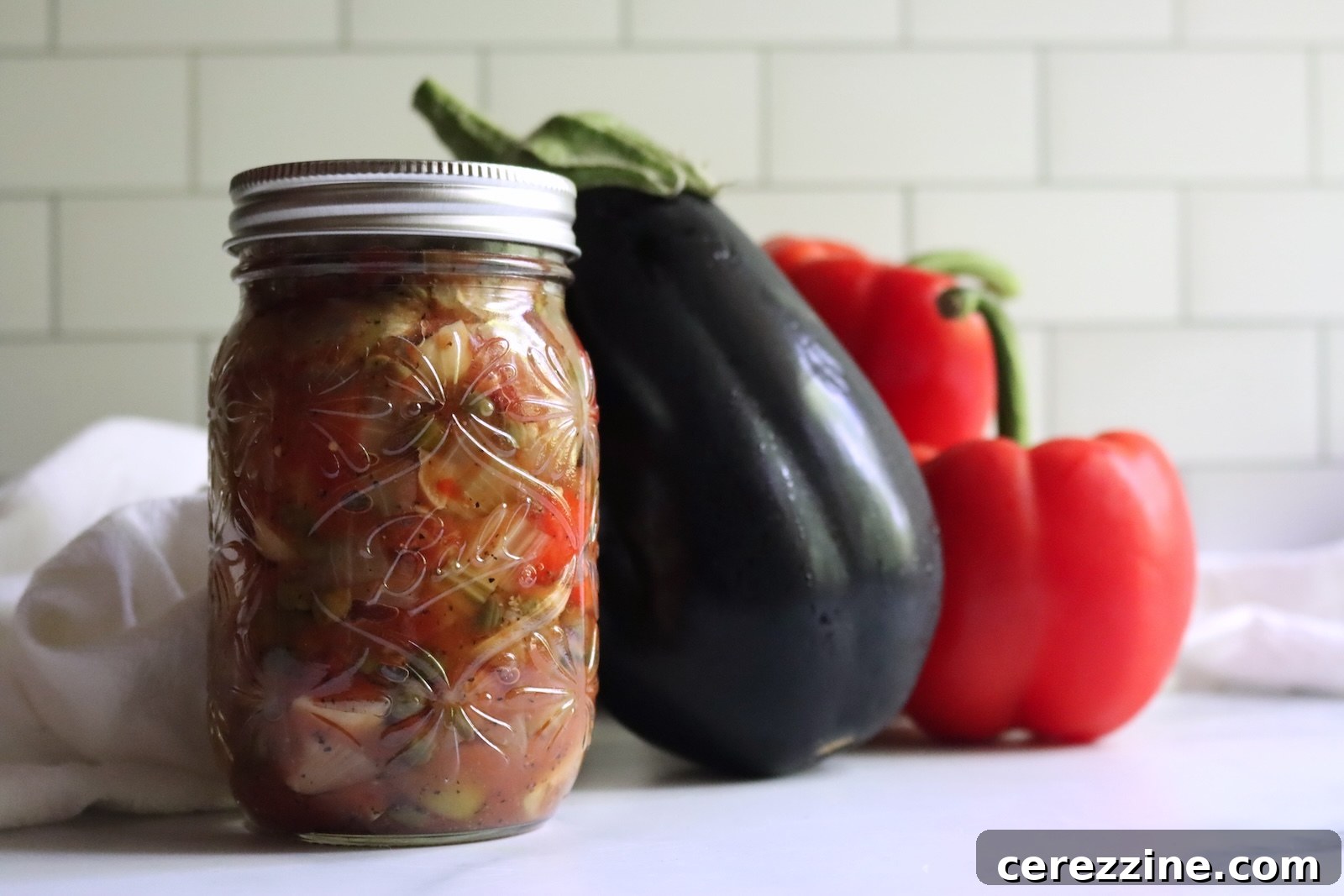
Eggplant caponata is a Sicilian sweet-and-sour eggplant relish. This tested canning recipe preserves that bright, savory-sweet flavor on the pantry shelf all year. Open a jar and spoon it onto crusty bread or toss it with hot pasta for a quick antipasto or an easy dinner in minutes.
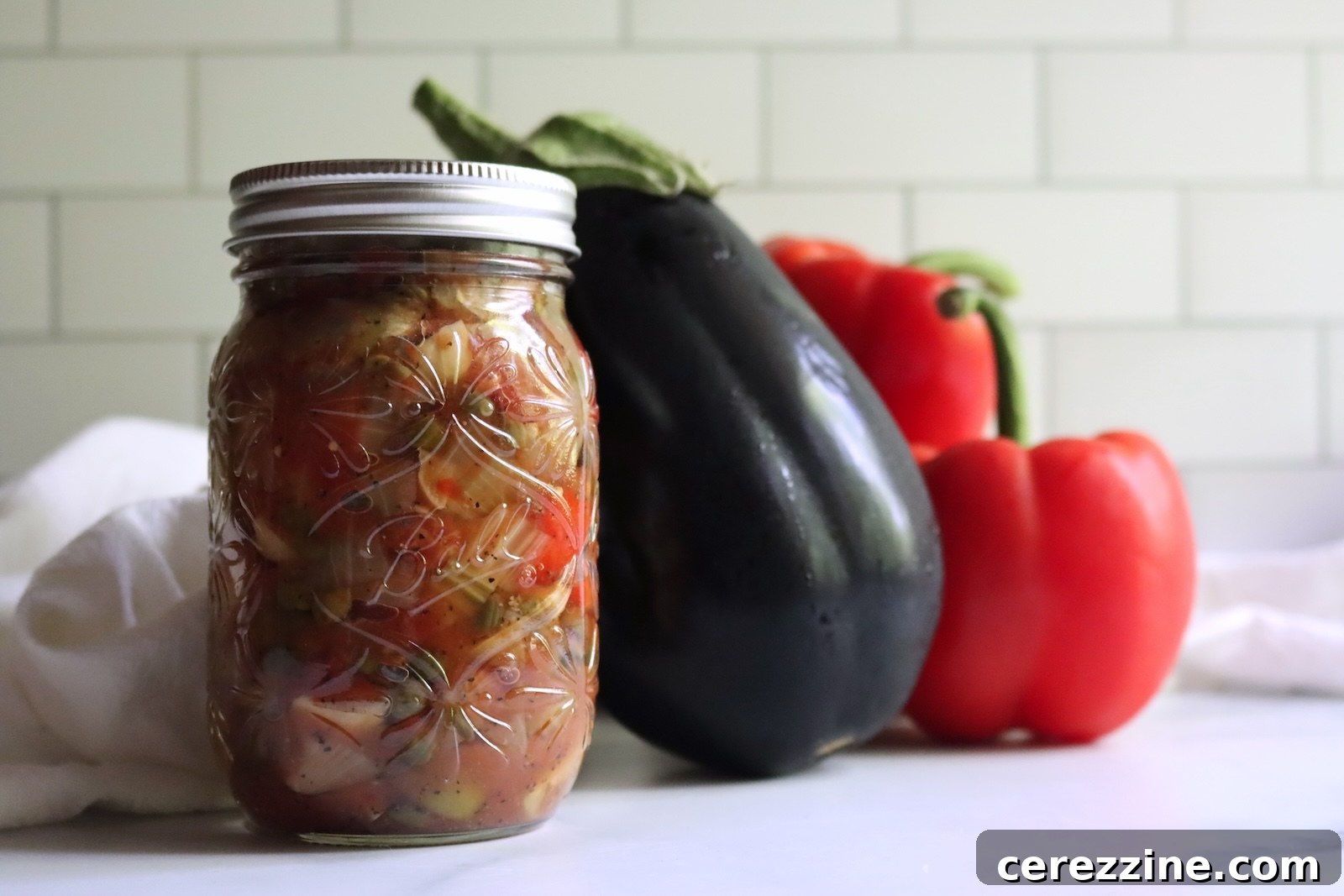
This recipe has been reviewed for safety and accuracy by a Master Food Preserver certified through the University of Cornell Cooperative Extension.
Caponata is a Sicilian relish made by simmering eggplant with onions, celery, olives, and capers in a sweet-and-sour sauce of sugar and vinegar (agrodolce). In Sicily it is usually served at room temperature, either on bread as an antipasto or alongside grilled fish and meats.
There are many regional versions—some include pine nuts or raisins and many fry the eggplant. This version roasts the eggplant, tomatoes, and red peppers for a lighter texture and concentrated flavor, then finishes on the stovetop before canning.
Notes from My Kitchen

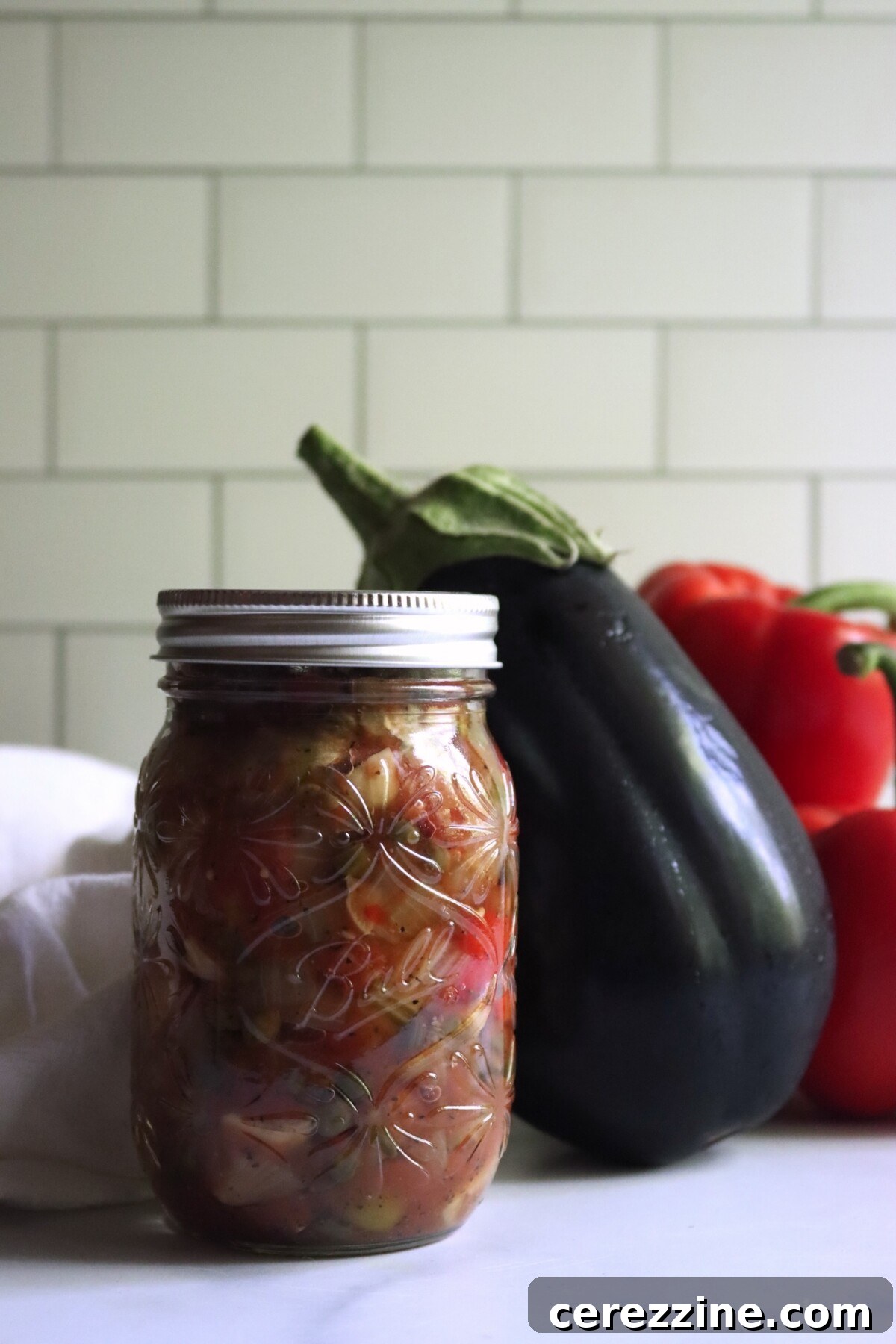
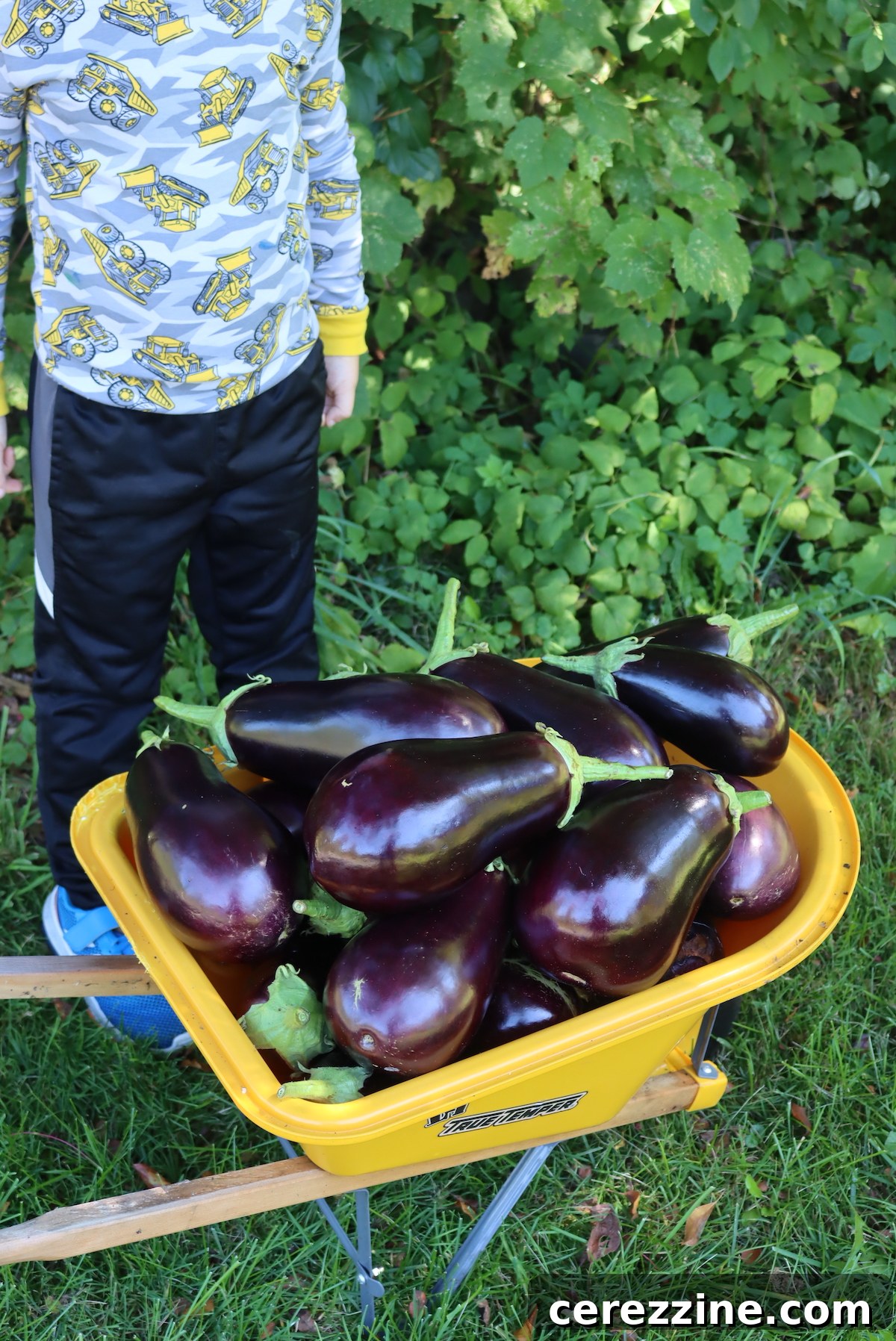
Our family grows more eggplant than we can eat fresh, so tested canning recipes help keep the harvest useful through the winter. Caponata is one of my favorites because the roasted vegetables combine with olives and capers for complex, satisfying flavor right out of the jar.
The olives add a distinctive salty, briny note that lifts the whole relish, and keeping jars on the shelf means an easy, flavorful addition to many meals.
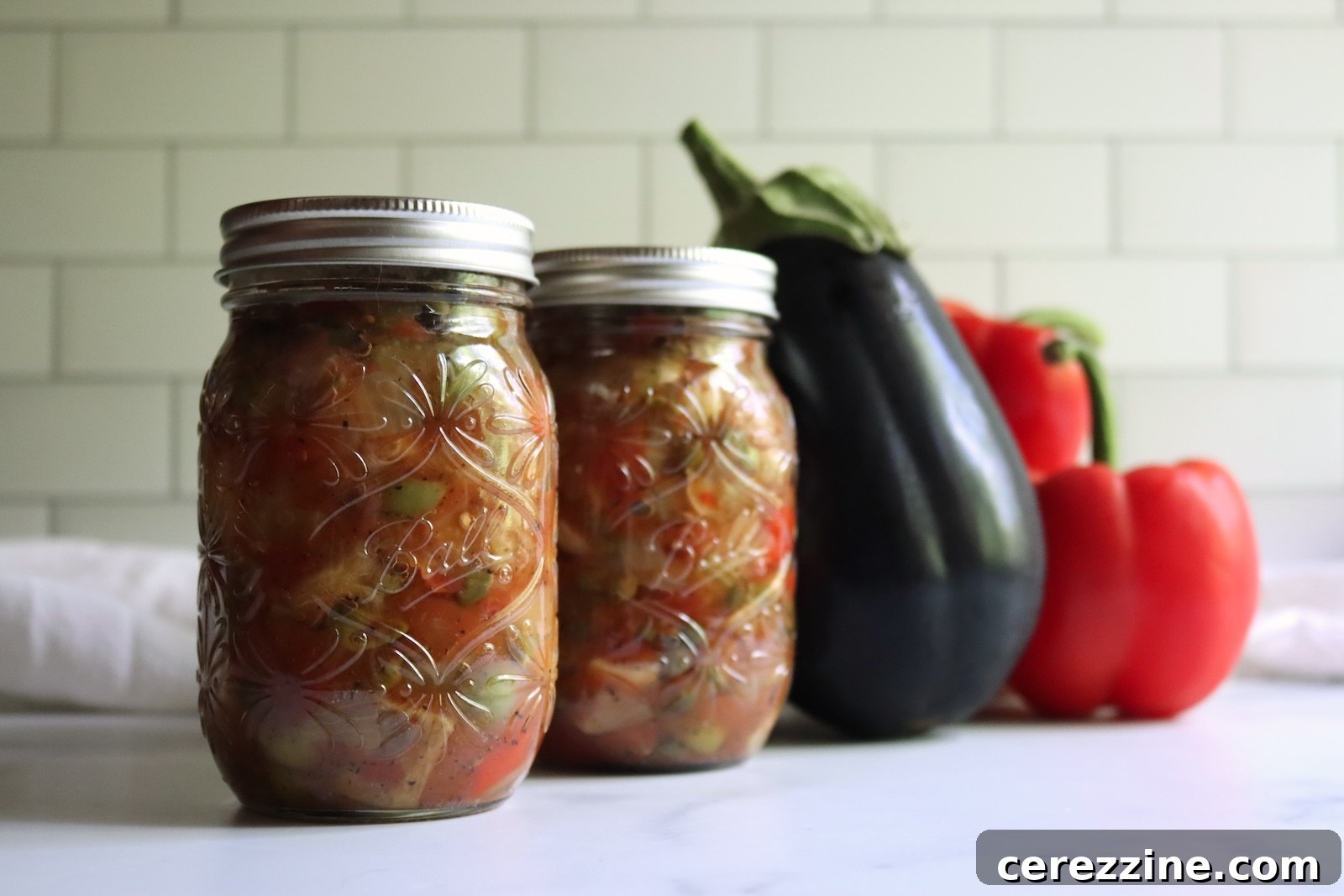
Here’s the recipe at a glance before you start roasting.
Quick Look at the Recipe
- Recipe Name: Eggplant Caponata
- Recipe Type: Sweet-and-sour eggplant relish, acidified with red wine vinegar
- Canning Method: Water bath canning
- Prep Time: About 40 minutes
- Cook Time: About 65 minutes, including roasting
- Canning Time: 35 minutes for pints or half pints (see altitude adjustments)
- Yield: About 5 pints
- Jar Sizes: Pints or half pints
- Headspace: 1/2 inch
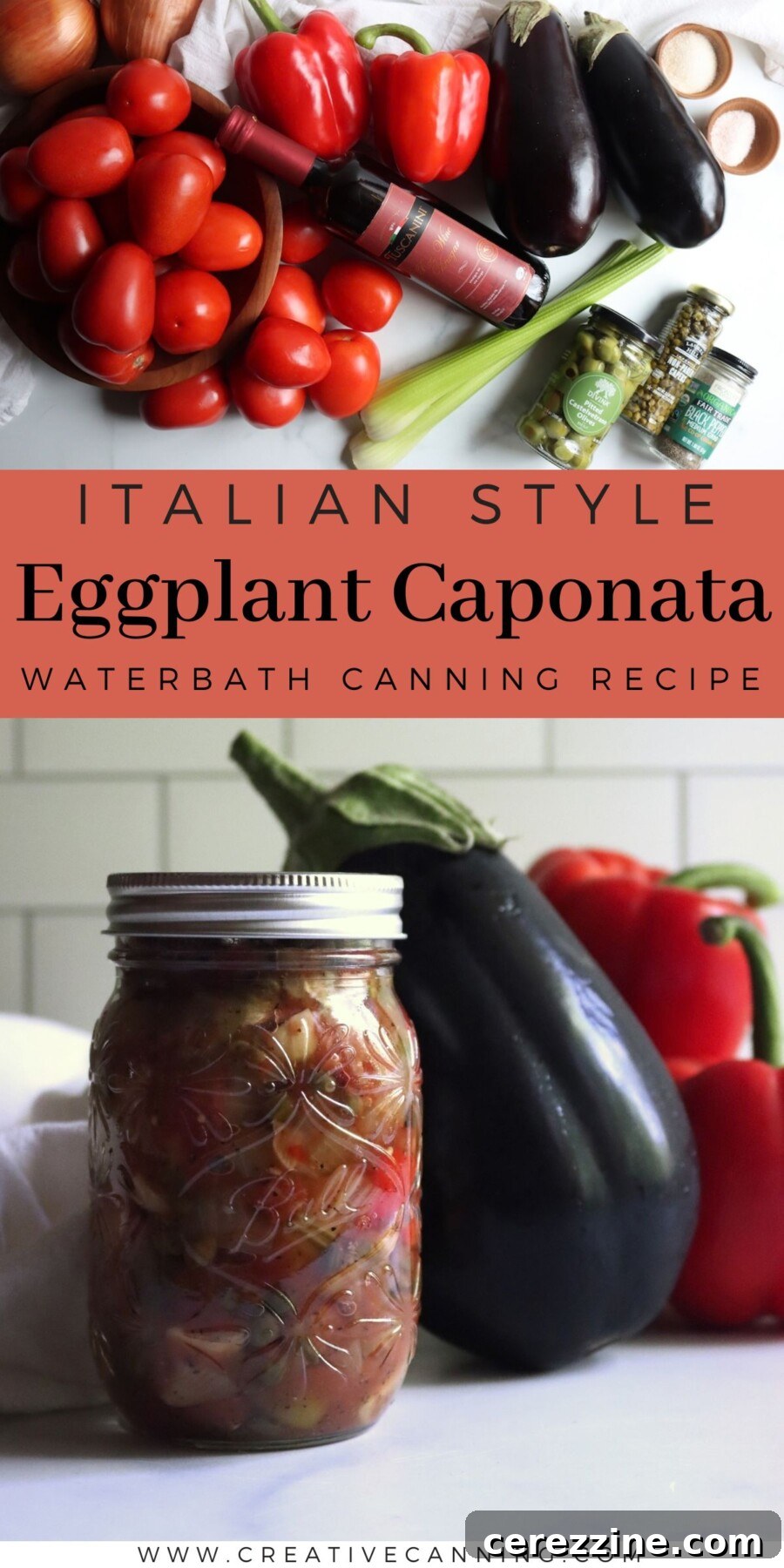
- Ingredients Overview: Eggplant, plum tomatoes, red bell peppers, onions, celery, garlic, olives, capers, sugar, red wine vinegar, salt, and black pepper
- Difficulty: Easy, with a good bit of chopping
Choosing Eggplant and Tomatoes for Caponata
Weigh eggplant instead of counting them—size varies by variety. Choose eggplants that feel heavy for their size with tight, glossy skin. Any variety will work; you don’t need to peel or salt them because they roast in their skins and you scoop the flesh out afterward.
For tomatoes, use plum/paste types like Roma or San Marzano for meatier flesh and less juice. If fresh tomatoes aren’t available, home-canned or commercial diced tomatoes can be substituted according to the recipe notes.
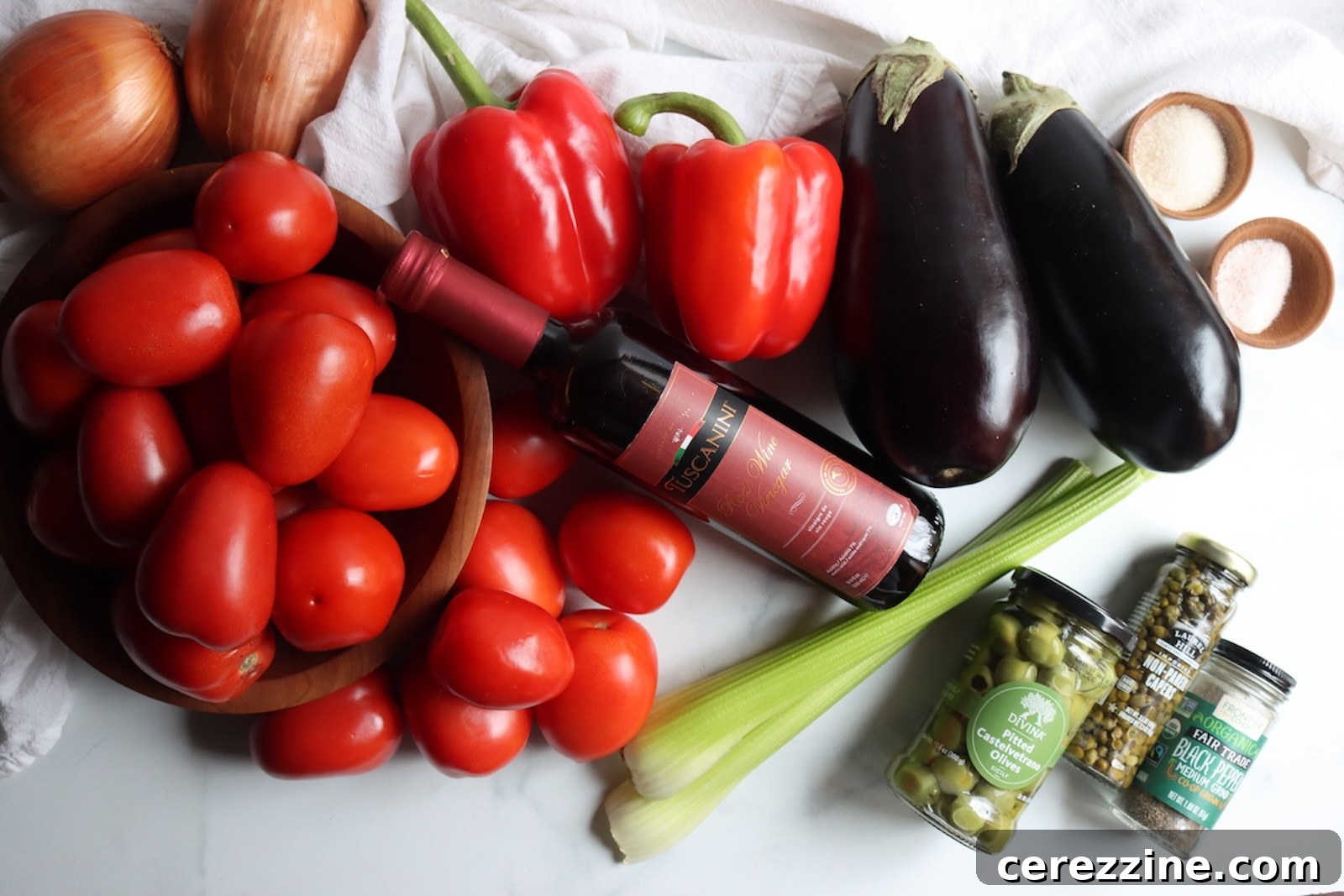
Ingredients for Eggplant Caponata
The ingredient list is long but straightforward—mostly vegetables and pantry staples. Amounts and specifics are important for safe canning, so follow the recipe measurements.
- Eggplant: Any variety, stemmed and quartered lengthwise; roast in skin and scoop flesh out.
- Plum tomatoes: Halved and roasted, then peeled and chopped; canned tomatoes may substitute.
- Red bell peppers: Halved, seeded, roasted, and peeled; orange or yellow peppers may be used.
- Onions: Yellow or white, diced.
- Celery: Diced to match the onions.
- Garlic: Fresh cloves, minced.
- Water: Used to soften the aromatics in the pan, as directed.
- Olives: Castelvetrano or kalamata, pitted and chopped.
- Capers: Brined capers, drained.
- Sugar: Granulated sugar for the sweet element.
- Red wine vinegar: The acidifier; use vinegar labeled 5% acidity or higher.
- Oil: A light coat on baking sheets and on vegetables for roasting.
- Salt and pepper: To taste; measure salt as specified for canning recipes.
The vinegar amount and the vegetable ratios are safety-critical for water bath canning; do not reduce the vinegar or add extra vegetables beyond the recipe amounts.
Eggplant Caponata Notes
Red wine vinegar is the safety control here. Eggplant, peppers, onions, and celery are all low-acid, so the specified vinegar volume and 5% acidity are what make the batch safe for a water bath canner.
Olive oil, pine nuts, and raisins are traditional Sicilian additions—stir those in after you open a jar if you like them. Swaps such as Castelvetrano for kalamata olives or yellow peppers for red are acceptable; however, do not alter the measured acid-to-vegetable ratio.
Step-by-Step Instructions
Caponata has two main stages: roast the eggplant, peppers, and tomatoes, then simmer everything together in a wide pan before packing hot into jars.
Start the water bath canner to heat while you prepare ingredients—the canner takes time to come to a boil and the caponata must be ladled into hot jars.
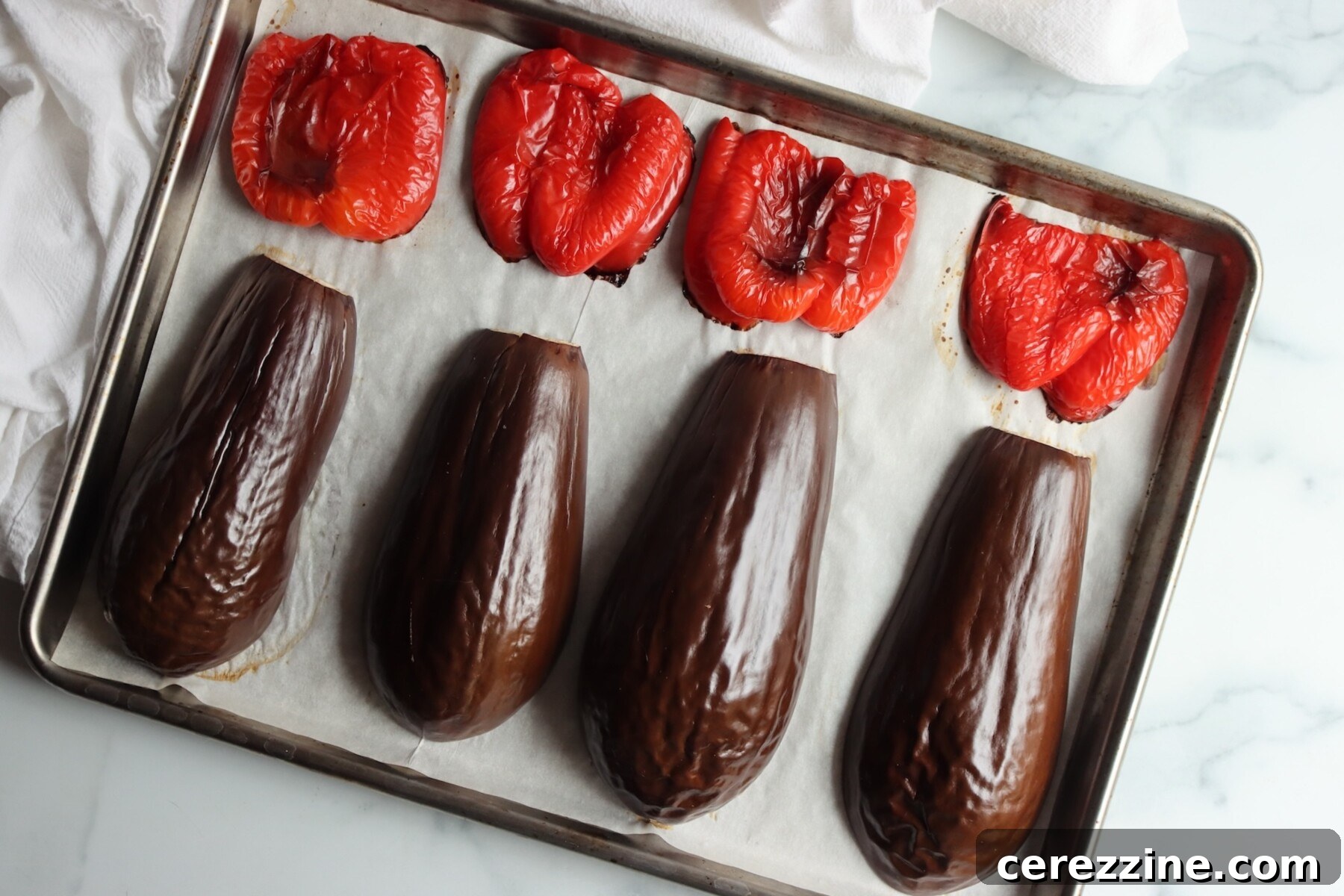
- Heat the oven to 375°F. Stem and quarter the eggplants lengthwise, halve and seed the red peppers, and halve the tomatoes. Brush a baking sheet with oil, arrange eggplants and peppers skin side up, brush lightly with oil, and set the tomato halves on a foil-lined rimmed sheet skin side up. Roast for 25–30 minutes until skins soften and char.
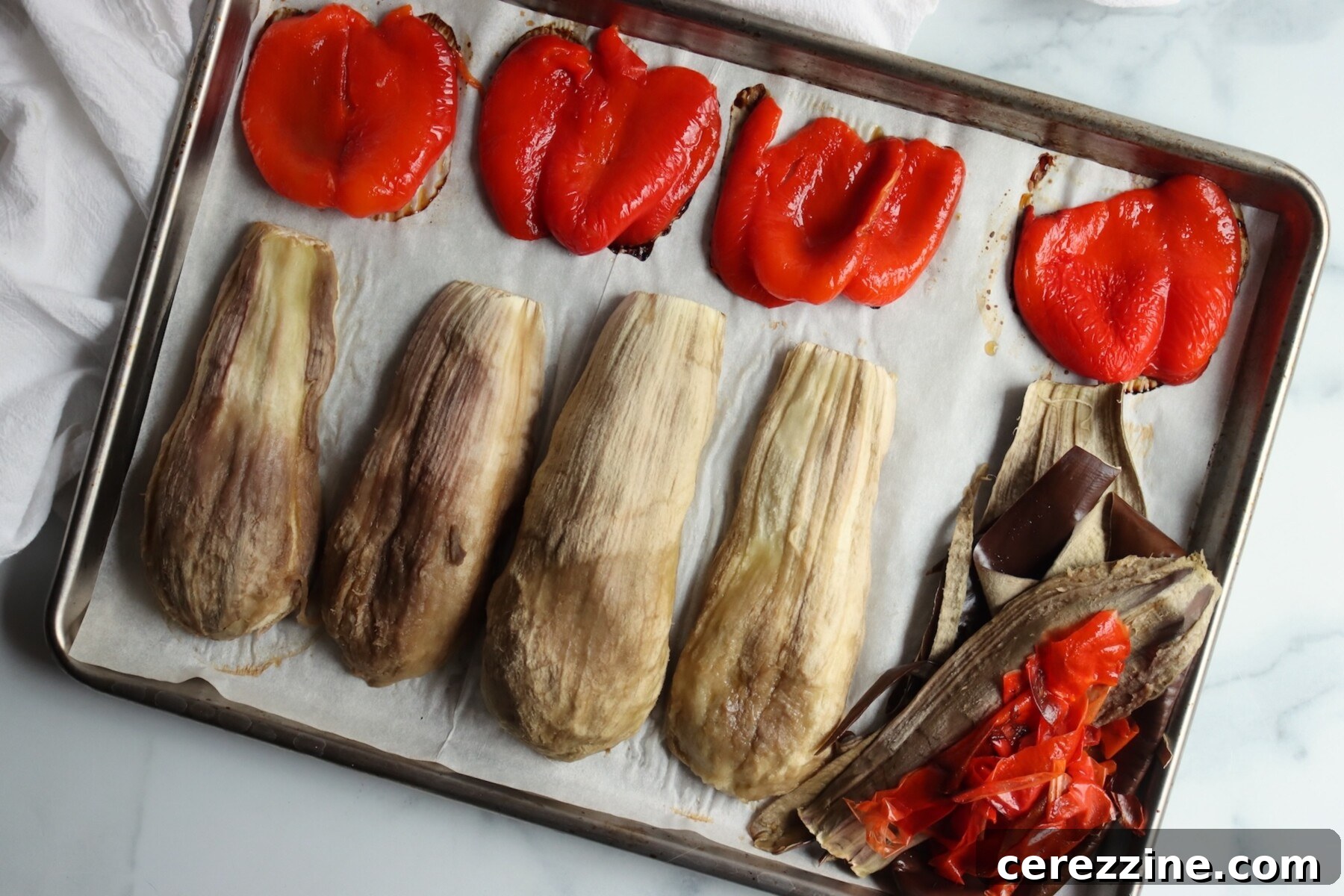
- Cool roasted vegetables to room temperature. Slip skins off tomatoes and peppers, scoop eggplant flesh from its skins, discard skins, and chop the vegetables. Keep tomatoes separate from eggplant and peppers because they are added earlier to the pan.
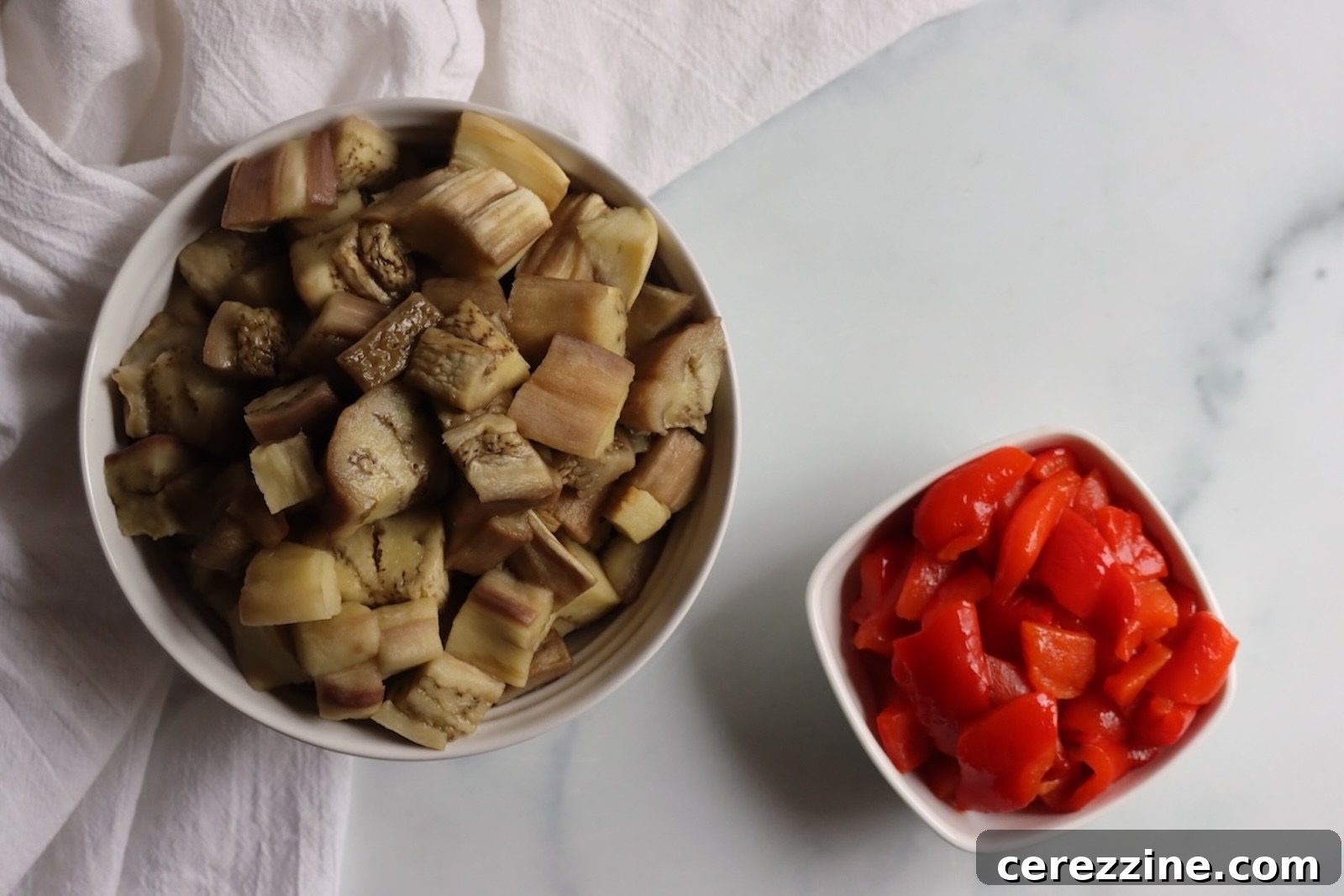
- Chop the roasted tomatoes, eggplant, and peppers. Keep the tomatoes separate so they go into the pan at the correct time.
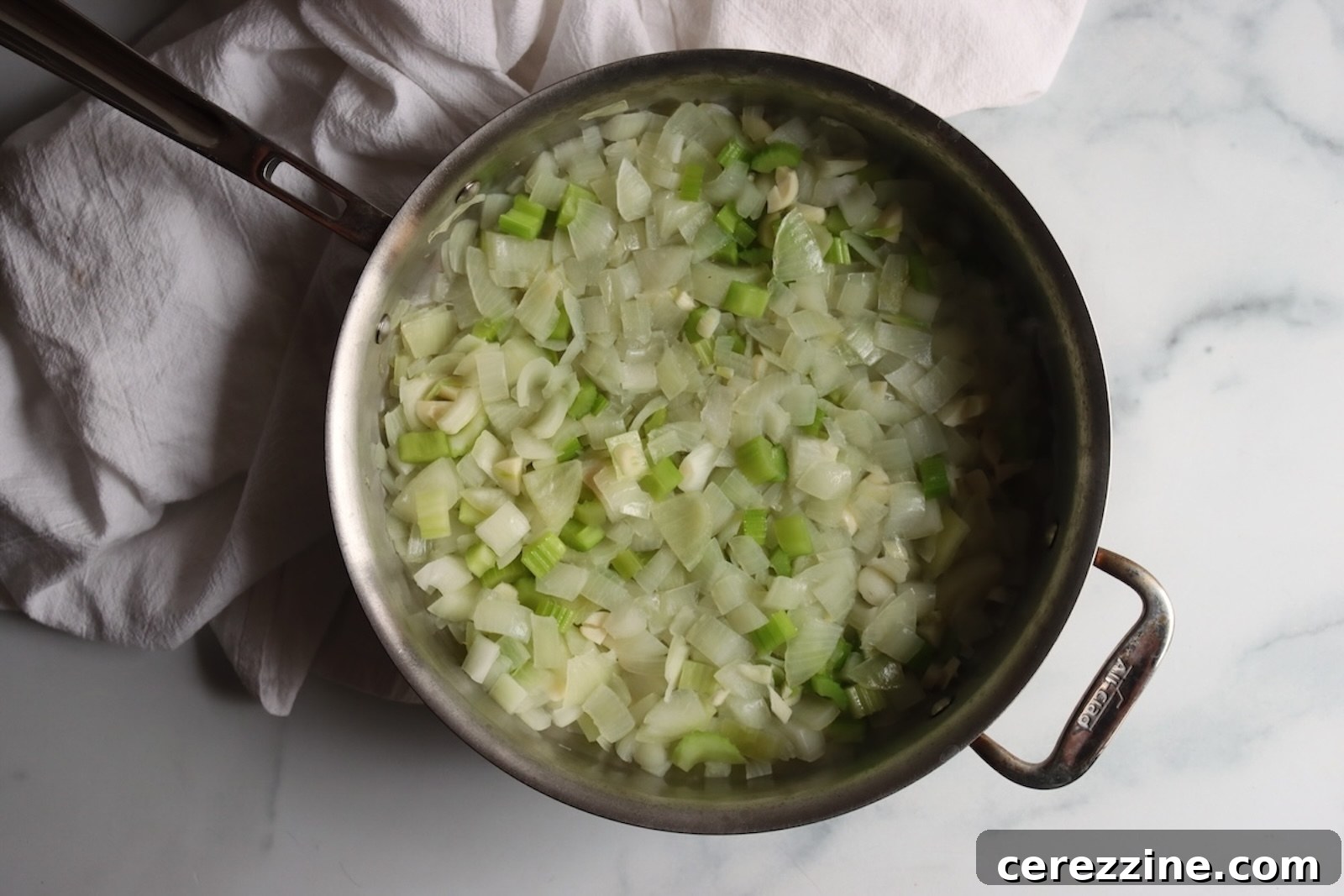
- Sauté diced onions, diced celery, minced garlic, and the measured water in a large wide pan or Dutch oven over medium heat until onions are translucent, about 10 minutes.
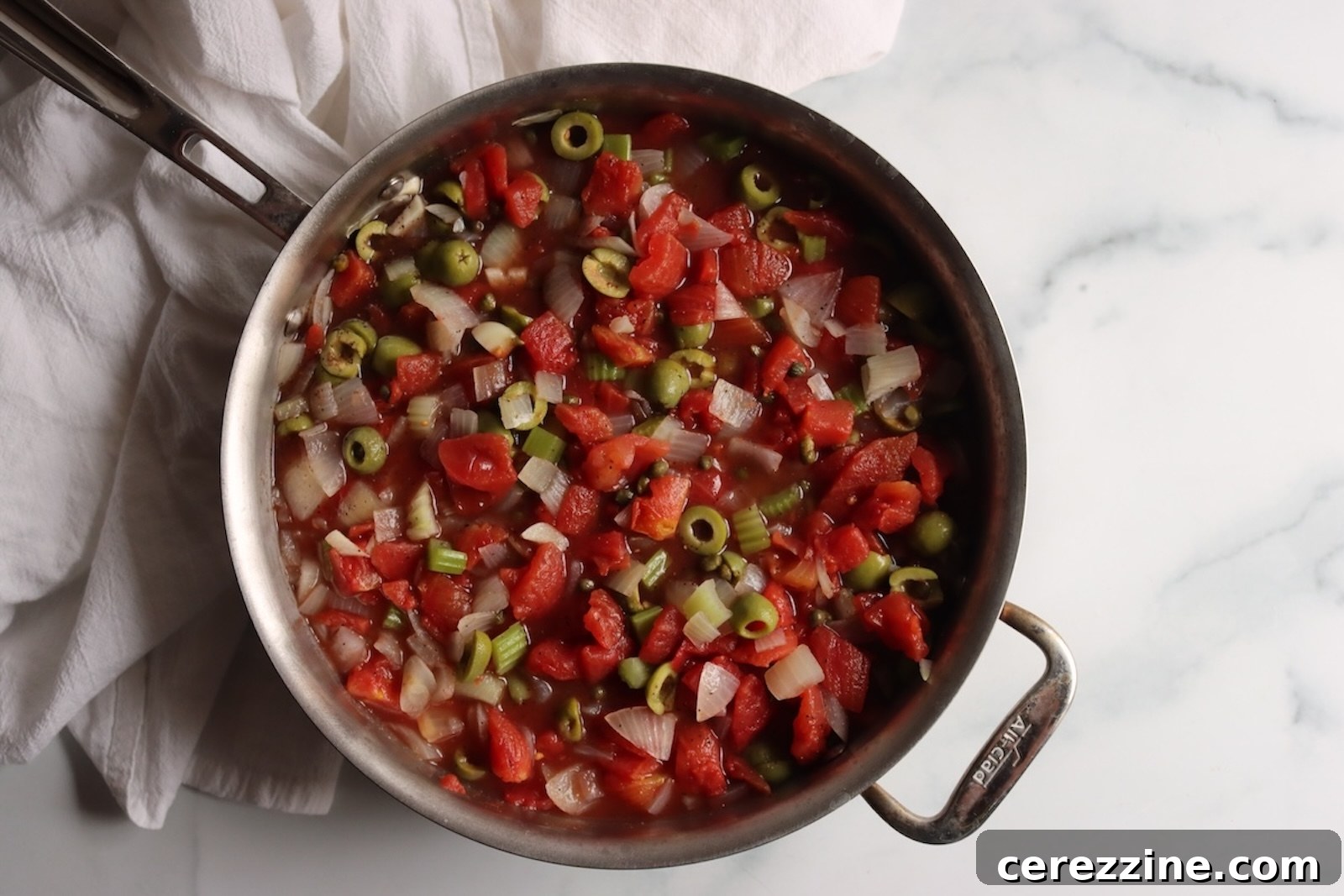
- Add the chopped tomatoes, chopped olives, drained capers, sugar, salt, black pepper, and red wine vinegar. Simmer over medium heat for about 20 minutes, stirring often, until the mixture thickens slightly. Do not reduce the vinegar; it is required for safe canning.
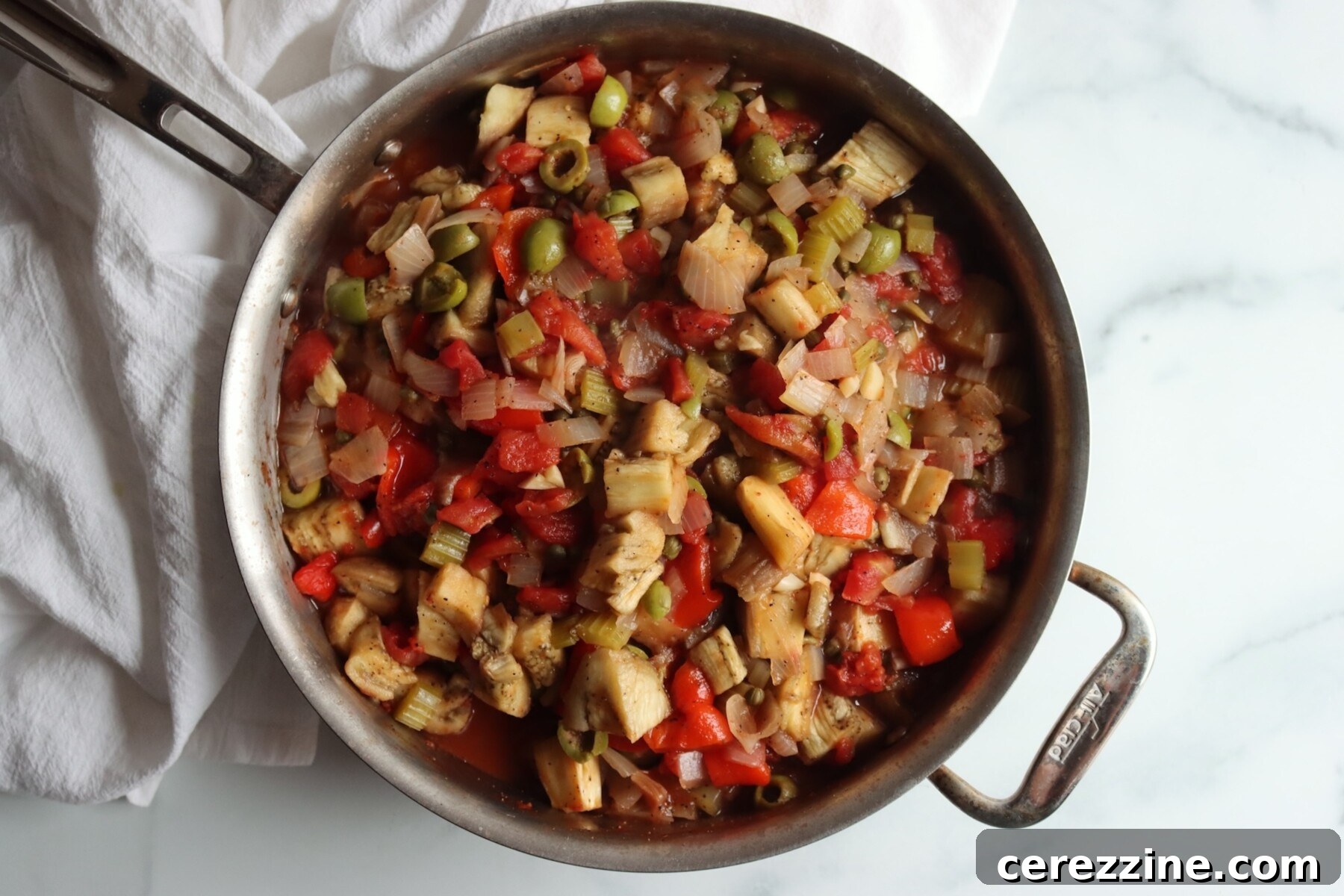
- Stir in the chopped roasted eggplant and peppers and cook 5 more minutes to heat through. Taste and adjust salt and pepper if needed.
Canning Eggplant Caponata
Keep jars hot and waiting in the canner. A wide-mouth funnel helps keep chunky relish off the jar rims. Ladle hot caponata into hot jars, leaving 1/2 inch headspace. Remove air bubbles, top up as needed, and wipe rims clean. Apply lids and screw bands fingertip tight.
Process pints or half pints for 35 minutes in a boiling-water-bath canner with at least 1 inch of water covering the jars. Adjust processing time for altitude as noted below.
The Corrected Recipe
This recipe follows the corrected, retested canning time. A misprint in some printed sources lists 20 minutes; the corrected processing time for pints and half pints is 35 minutes.
When processing time is complete, turn off heat, remove the canner lid, and let jars sit for 5 minutes. Lift jars out with a jar lifter and cool them on a towel for 12–24 hours before checking seals. Remove the rings before storage so any failed seal is easy to spot.
Altitude Adjustments
Increase water bath time above 1,000 feet because water boils at a lower temperature at altitude. Recommended processing times for pints and half pints:
- 0 to 1,000 feet: 35 minutes
- 1,001 to 3,000 feet: 40 minutes
- 3,001 to 6,000 feet: 45 minutes
- 6,001 to 8,000 feet: 50 minutes
- Above 8,000 feet: 55 minutes
Tips for the Best Eggplant Caponata
Dice the onions and celery small and even. Caponata is eaten by the spoonful and big chunks of celery can stand out; even pieces create a balanced texture.
Pick olives you enjoy eating. Castelvetranos are mild and buttery; kalamatas are darker and brinier. The olive flavor is prominent in each spoonful, so use one you like.
Ways to Use Eggplant Caponata
Serve caponata on toasted bread as an antipasto, spoon it into a bowl on an appetizer platter, or warm it and toss with hot pasta along with a splash of pasta water for a simple main course. For a more traditional finish, stir in a drizzle of good olive oil, toasted pine nuts, or a few raisins after opening a jar.
If you prefer not to can, store the finished caponata in the refrigerator for 1–2 weeks or freeze it for up to a year.
Storage and Shelf Life
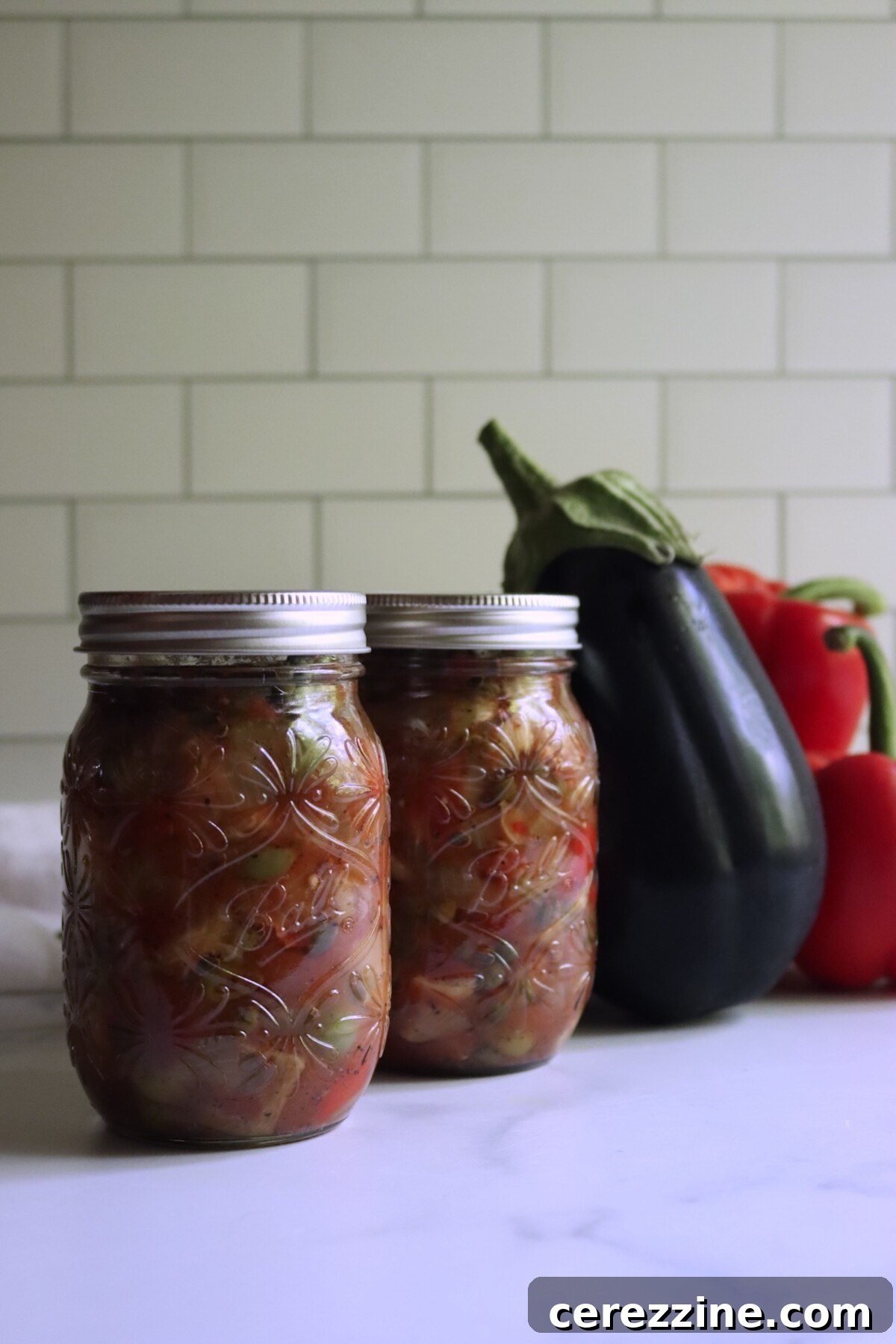
After cooling, press the center of each lid—sealed lids remain depressed and do not flex. Remove the rings before shelving so a failed seal is obvious. Store sealed jars in a cool, dark place and use within 12–18 months. Refrigerate after opening and use within 1–2 weeks.
Yield Notes
The recipe calls for approximately 2 pounds of eggplant (weigh rather than count). Roasted and scooped, that typically yields about 4 cups of eggplant flesh. Two roasted red peppers yield roughly 1 cup. Use 2 pints of home-canned tomatoes in place of 4 pounds fresh, or one 28-ounce can of diced tomatoes as allowed in the corrected version.
My batch produced five pints; the recipe may list six in some sources, so wash six jars in case you end up with a partial jar for the refrigerator.
Eggplant Caponata FAQs
Can I reduce the vinegar or add more vegetables? No. The vinegar amount is required for safe water bath canning and is balanced against the specified vegetable quantities. Do not reduce the vinegar or add extra vegetables.
Can I add olive oil, pine nuts, or raisins? Yes—add them after opening a jar. They are traditional but are not included in the jars for safe canning.
Can I use canned tomatoes instead of fresh? Yes. Use 2 pints of home-canned tomatoes, chopped, or a 28-ounce can of diced tomatoes in place of the fresh plum tomatoes. Skip the tomato roasting step if using canned tomatoes.
How does caponata differ from ratatouille? Caponata is Sicilian, sweet-and-sour, and includes vinegar, sugar, olives, and capers. Ratatouille is a French vegetable stew of eggplant, zucchini, peppers, and tomatoes simmered in olive oil and herbs without vinegar or sugar.
How long does canned caponata keep? Store sealed jars in a cool, dark place and use within 12–18 months. After opening, refrigerate and use within 1–2 weeks.
If you make a batch, let me know how it turns out.