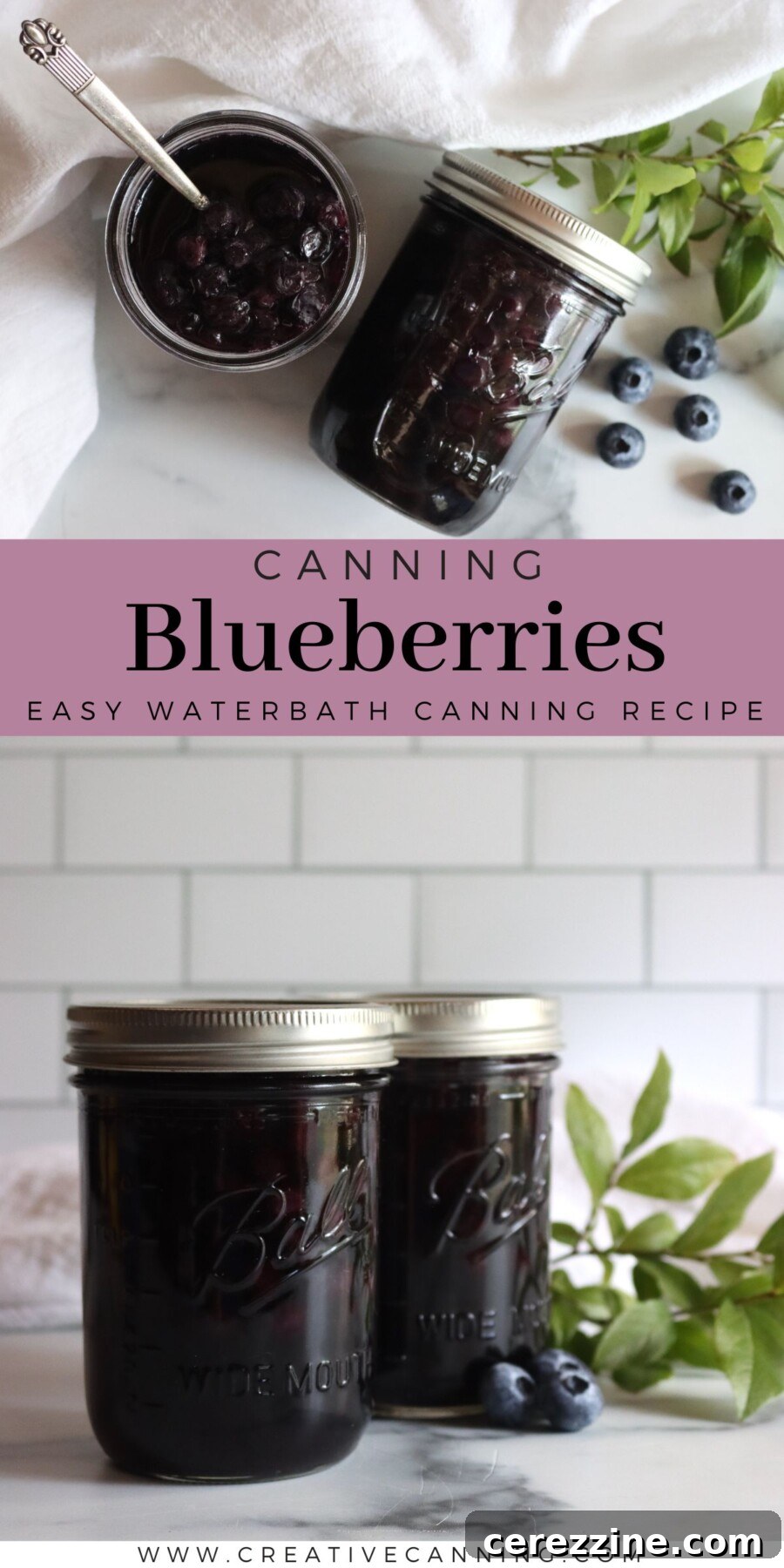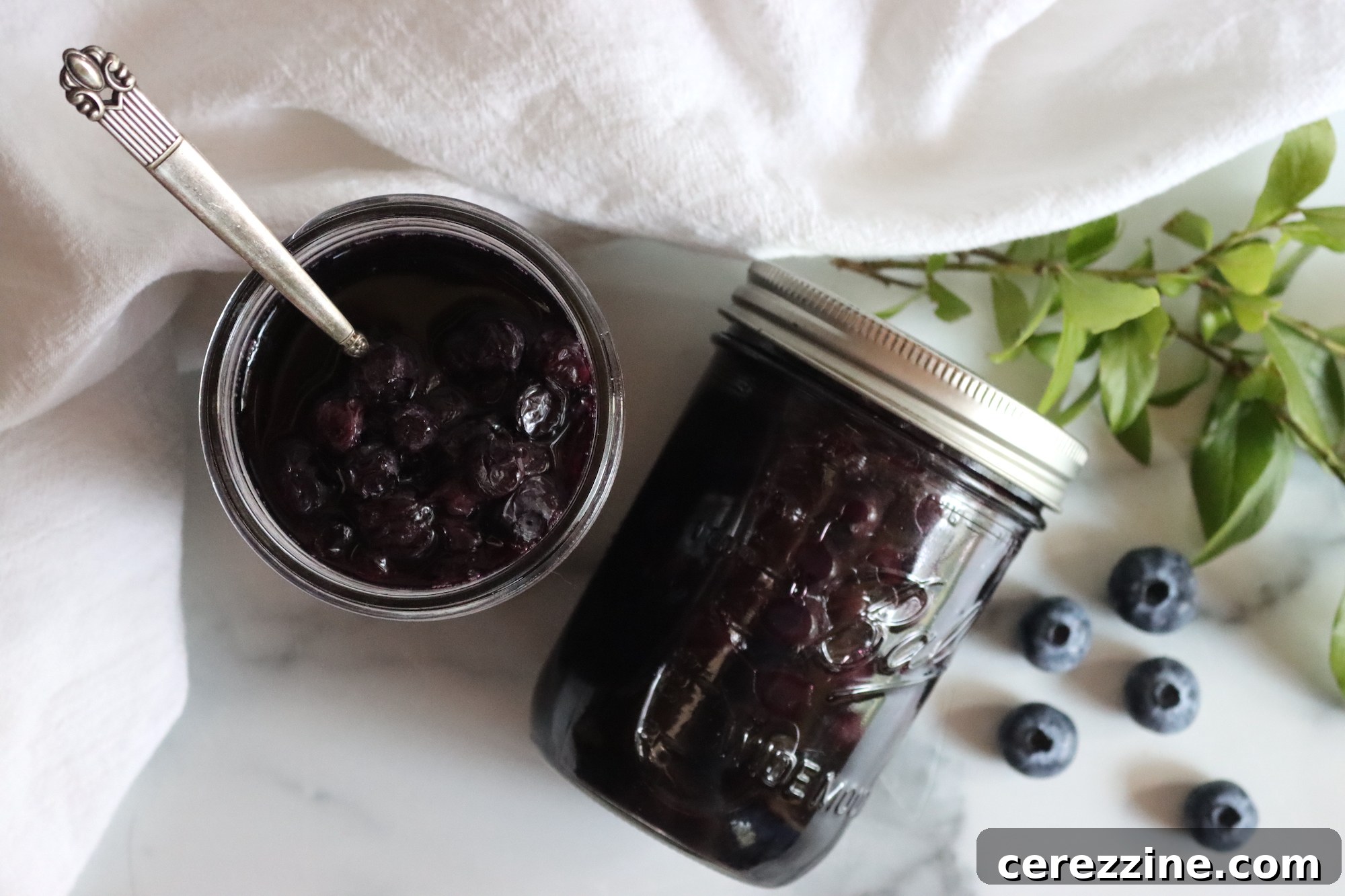
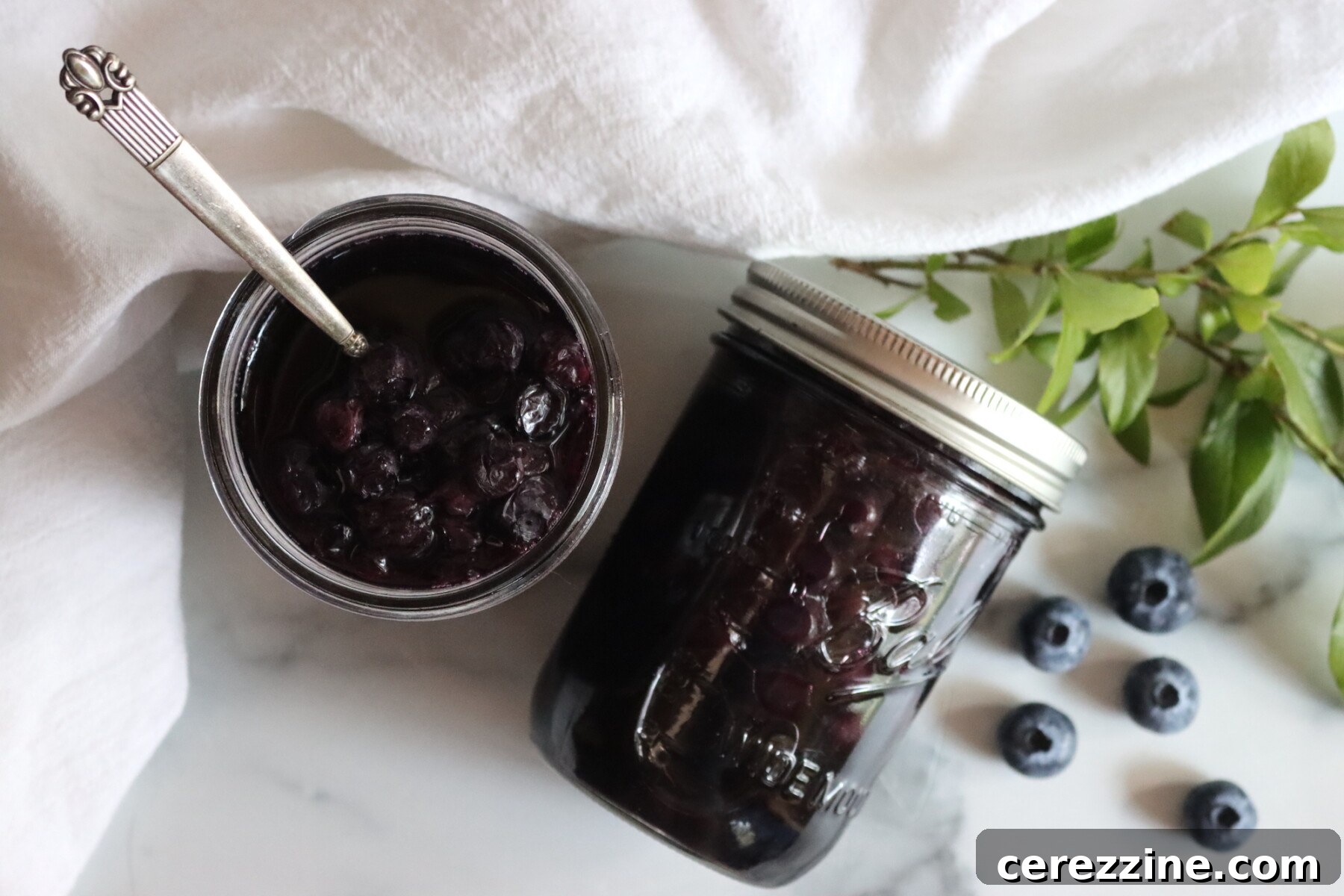
Canning blueberries is a straightforward way to preserve a summer harvest that always seems to disappear too quickly. Tuck whole berries into jars so you can spoon them over pancakes, stir them into oatmeal, or fold them into a cobbler in the middle of winter, long after the bushes have gone bare.
This recipe has been reviewed for safety and accuracy by a Master Food Preserver certified through the University of Cornell Cooperative Extension.
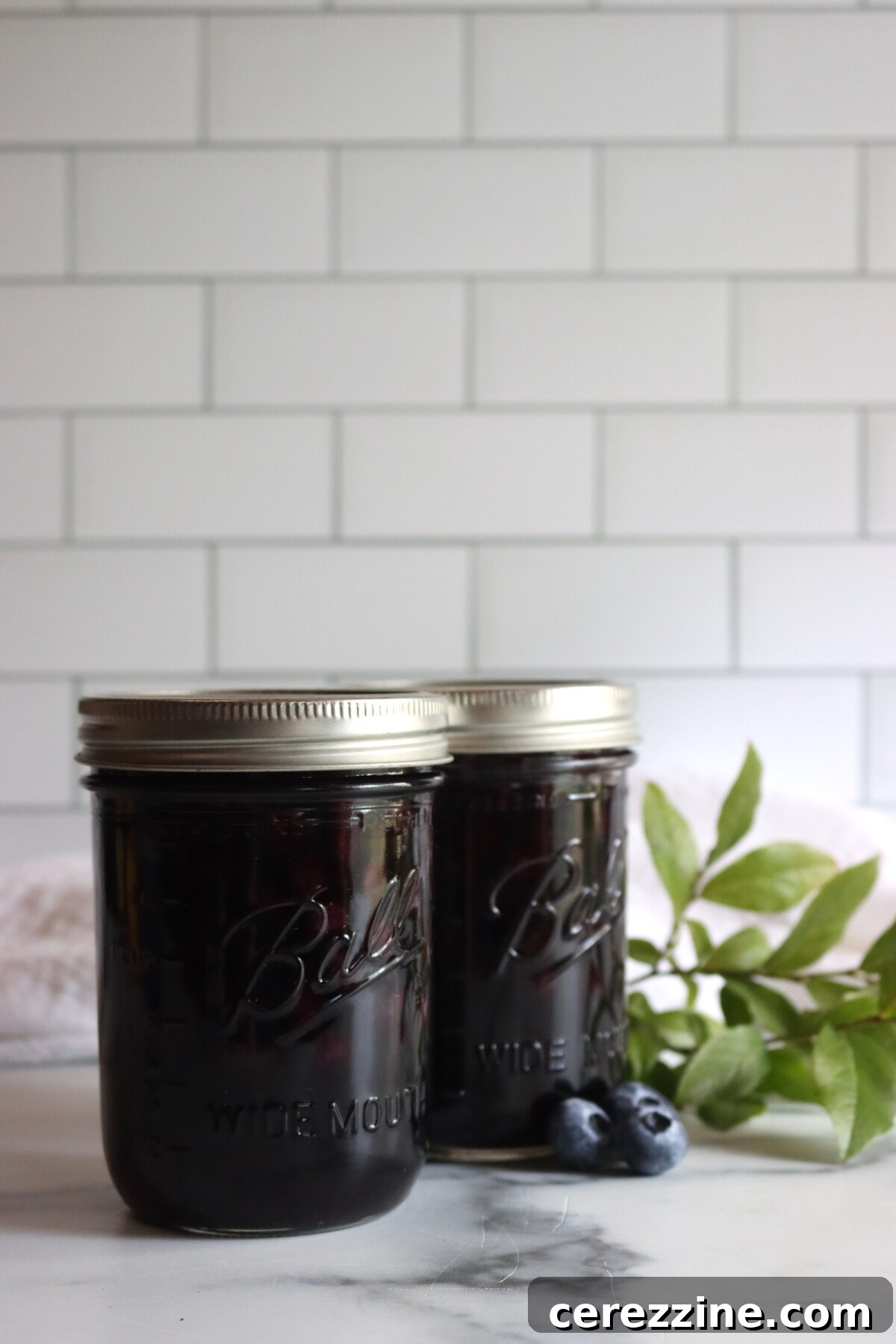
There is something deeply satisfying about opening a jar of whole blueberries in midwinter and seeing fruit that looks almost exactly as it did when it went in. Packed in a light syrup they keep their shape and color on the shelf and are ready to go straight onto yogurt, into a bowl of cereal, or into muffin batter.
Blueberries are a high-acid fruit and can be safely processed in a water bath canner without adding lemon juice or other acid. The sugar in the syrup is purely for flavor, color, and helping the berries hold their shape; it doesn’t affect safety. That means you can choose a sweeter syrup, a lighter syrup, or skip sugar entirely and use juice or water to cover the fruit without changing whether jars are safe for shelf storage.
If you have more berries than you want to pack whole, they also make excellent jam, syrup, butter, or pie filling. These are all useful ways to preserve excess fruit and make different pantry-ready ingredients.
Notes from My Kitchen

We have thirty blueberry bushes on our Vermont homestead, and some years the harvest arrives faster than I can preserve it. Canning whole berries in jars felt like a low-effort way to save the remainder after making pie filling, jam, and jelly. It has become one of the most useful items in my pantry—one jar drains and folds into batter or tops a stack of pancakes in about a minute.
My best practical tip: be gentle. Blueberries are soft, and if you rush the packing or pour syrup that is too vigorously boiled, the fruit can break and the jar will look more like a loose sauce than tidy whole berries. It will still taste great, but a light touch helps the jars look most attractive.
Quick Look at the Recipe
- Recipe Name: Canning Blueberries
- Recipe Type: Blueberries in Syrup
- Canning Method: Water Bath Canning
- Prep Time: About 20 minutes
- Cook Time: About 10 minutes to make the syrup
- Canning Time: 15 minutes for pints, 20 minutes for quarts (raw pack, at sea level)
- Yield: About 9 pints (adjust as needed)
- Jar Sizes: Half pints, pints, or quarts
- Headspace: 1/2 inch
- Ingredients Overview: Fresh or frozen blueberries, sugar (optional), and water or unsweetened juice
- Safe Canning Source: National Center for Home Food Preservation tested procedure
- Difficulty: Easy
Choosing Blueberries for Canning
The best results come from firm, ripe berries that are dry and evenly colored with no soft or leaking spots. Slightly underripe, firm berries often hold their shape better in jars than very soft, overripe ones, so when selecting fruit for canning favor plump, firm berries. Remove any shriveled, moldy, or mushy fruit—one broken berry can cloud the syrup around it.
Both cultivated and wild (lowbush) blueberries work well; wild berries are smaller and pack more tightly. Frozen blueberries can also be canned, which is convenient if you buy in bulk or froze your own harvest, though frozen fruit tends to break down more and produces a jar closer to compote.
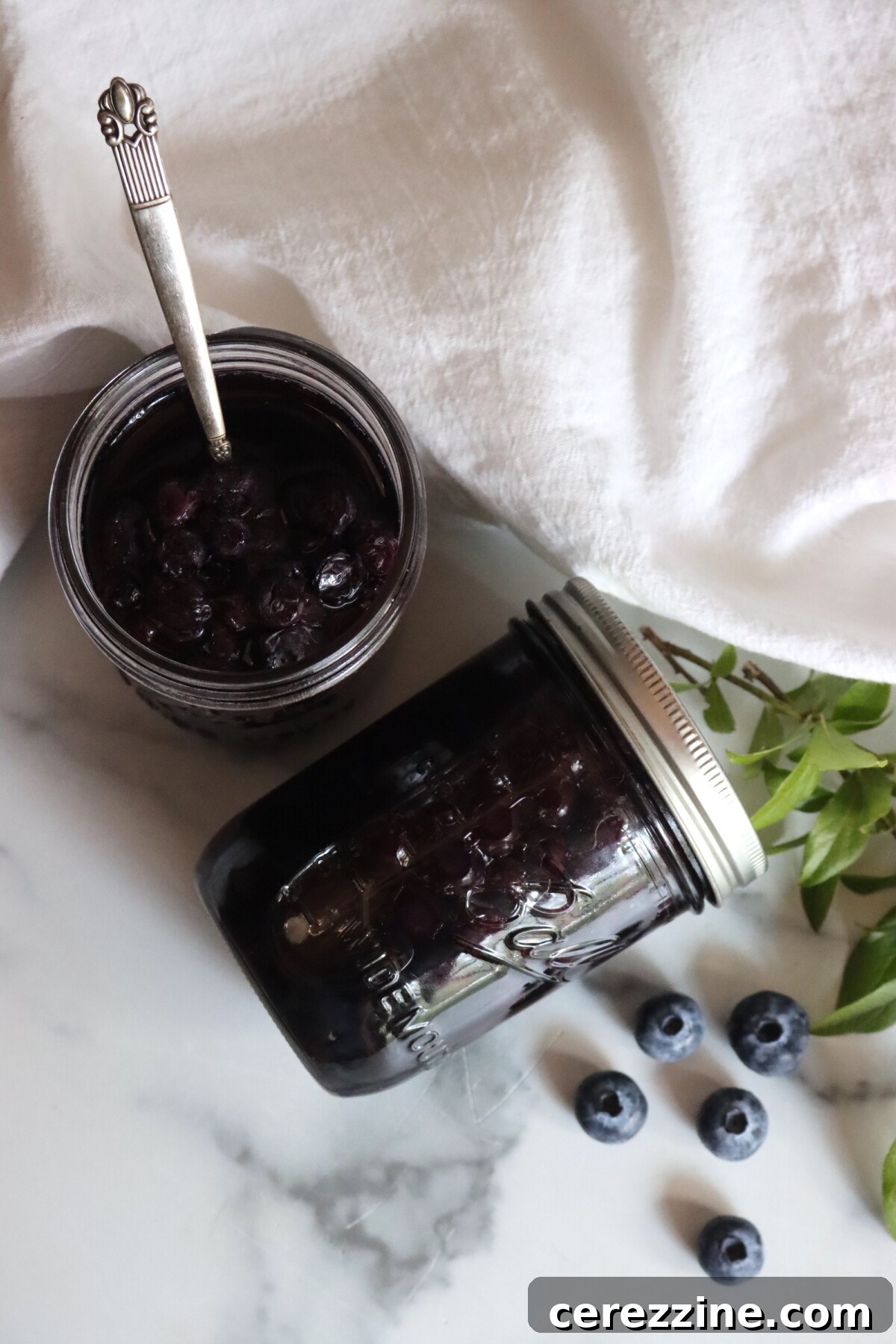
Ingredients for Canning Blueberries
The ingredient list is short: fruit and a liquid to cover it. Everything beyond that is a matter of personal taste for sweetness and texture.
- Blueberries: Fresh or frozen, washed and sorted. Plan on roughly 2 pounds per quart jar or about 1 pound per pint—around 8 pounds for a canner load of nine pints, and about 12 pounds for seven quarts.
- Sugar (optional): Granulated sugar is standard for syrup, but the amount is up to you. Use a light, medium, or heavier syrup for flavor and to help the berries hold shape, or omit sugar entirely and use juice or water.
- Water or Juice: The base for syrup or the packing liquid. Unsweetened white grape or apple juice works well as an alternative to water.
Because blueberries are naturally acidic there is no need to add bottled lemon juice or other acid. That acidity, together with proper headspace and the correct processing time, is what ensures safe shelf-stable jars.
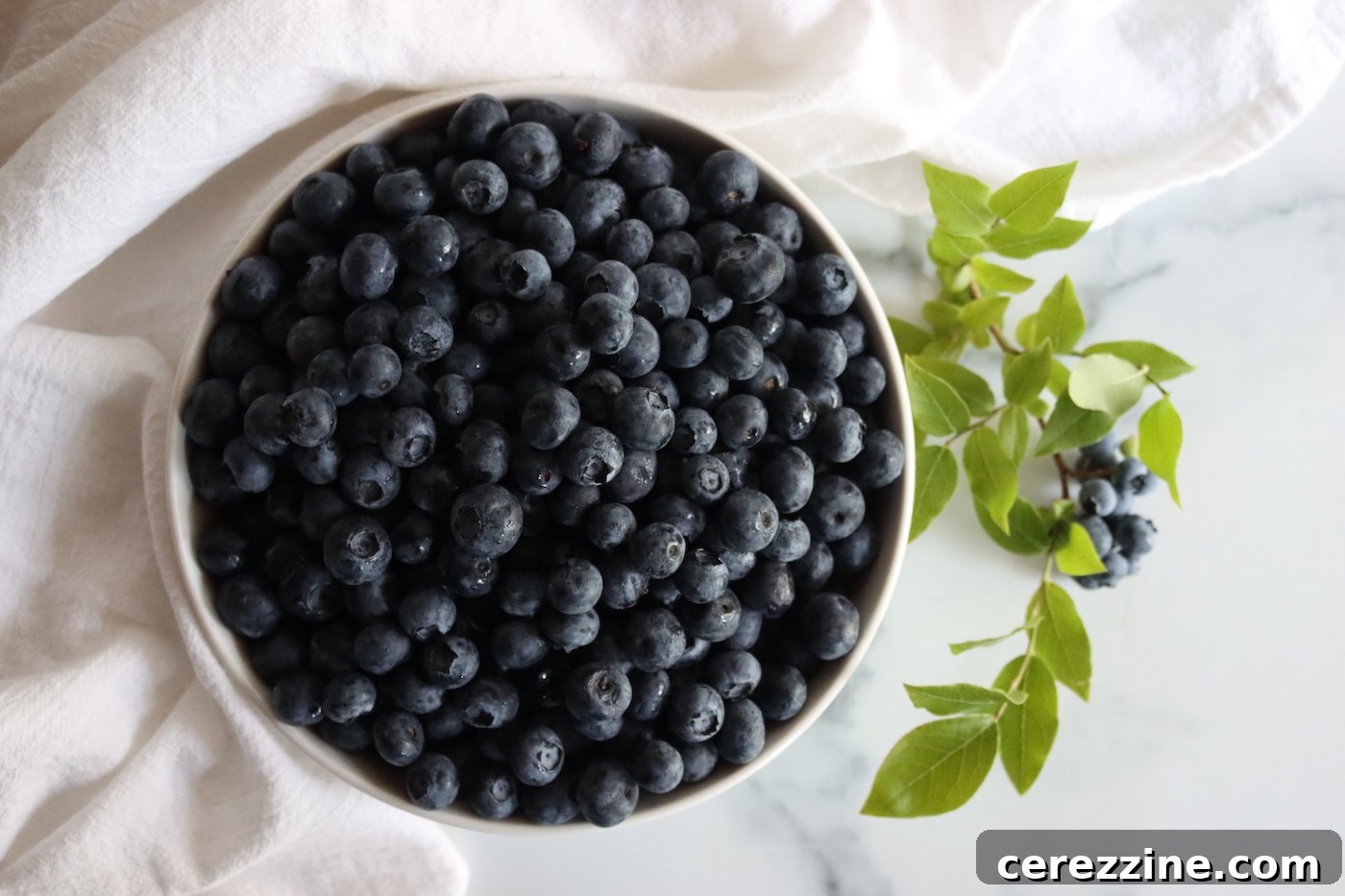
Making a Sugar Syrup for Blueberries
Syrup is simply sugar dissolved in water. Choose the strength you prefer: light, very light, or medium. For a 9-pint load, a medium syrup is roughly 5-1/4 cups water to 2-1/4 cups sugar. A light syrup for pints is about 5-3/4 cups water to 1-1/2 cups sugar; a very light syrup is about 6-1/2 cups water to 3/4 cup sugar. You can scale up for quarts or make a little extra if desired.
To prepare, combine water and sugar in a saucepan and heat, stirring, until the sugar dissolves and the mixture reaches a gentle boil. Keep it hot while you fill jars. If you prefer to skip sugar entirely, heat plain water or unsweetened juice and use that as the covering liquid.
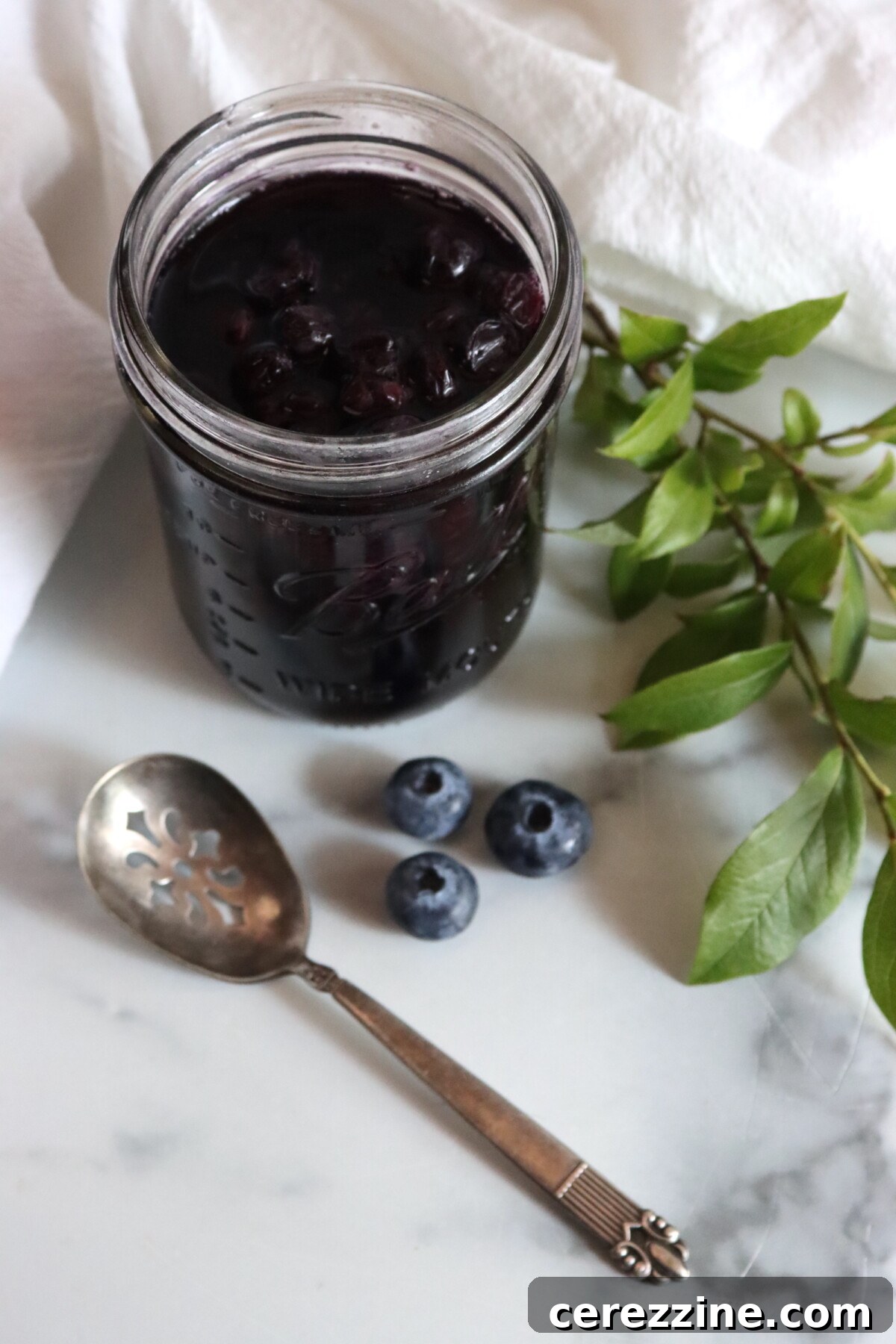
A Note on Canning Blueberries Safely
This procedure follows a tested method for canning whole berries. Blueberries are high-acid and are safe to process in a boiling water bath with no added acid. The sugar in syrup is for quality only. Maintaining 1/2-inch headspace and following the full processing time for your jar size and altitude are essential. Do not add low-acid ingredients (for example, vegetables or thickeners) to these jars, and do not alter headspace or process times.
How to Can Blueberries
Blueberries work especially well as a raw pack: raw berries go directly into jars and are covered with hot syrup or liquid. Raw packing preserves whole, firm fruit. The alternate hot pack fits slightly more fruit per jar but yields softer berries and more broken fruit in the finished jar. Both approaches are safe when the proper processing times and headspace are observed.
Prep the Berries and Jars
Heat your water bath canner and warm, clean jars. Wash blueberries a quart or two at a time under cool running water, drain, and sort out stems, leaves, and any soft, split, or underripe berries. Keep your covering liquid hot; adding about 1/2 cup of hot liquid to the bottom of each jar before adding berries helps prevent dry clumping and reduces floating.
Raw Pack the Jars
Add a splash of hot liquid to each jar, then fill with raw blueberries, gently shaking so the fruit settles without pressing. A canning funnel helps keep things tidy. Fill the jars to about an inch below the rim to leave room for the syrup. Pour hot syrup, juice, or water over the berries, leaving 1/2 inch of headspace. Release trapped air with a bubble tool or a thin spatula, recheck headspace, wipe rims clean, center lids, and apply bands fingertip tight.
Hot Pack Option
To hot pack, briefly heat the berries in boiling water for about 30 seconds, drain, then fill jars. Hot packing causes the berries to settle and lets you fit more fruit per jar, but the berries will be softer and more likely to break. Cover with hot liquid and finish jars the same way as for raw pack.
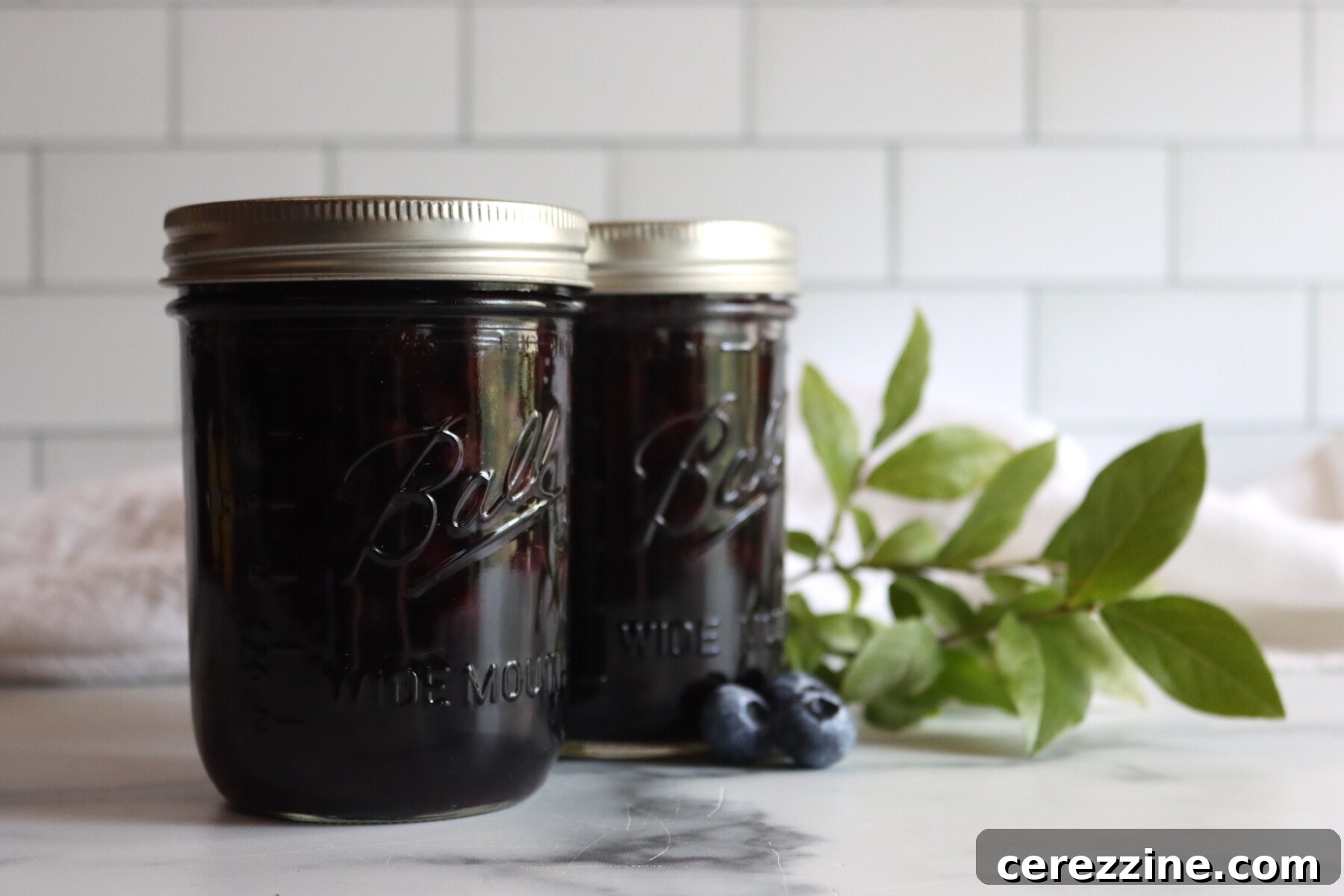
Canning Blueberries in a Water Bath
Lower filled and sealed jars into simmering water so they are covered by at least one inch. Bring the canner to a full rolling boil before timing. For a raw pack at sea level, process pints for 15 minutes and quarts for 20 minutes. After processing, turn off the heat, remove the canner lid, and let jars rest in the water for five minutes. Lift jars out and set them on a towel to cool undisturbed for 12 to 24 hours, then check that lids have sealed.
Altitude Adjustments
Processing times increase with elevation. Use these guidelines for raw-packed blueberries in a boiling water bath:
- 0 to 1,000 feet: 15 minutes for pints, 20 minutes for quarts
- 1,001 to 3,000 feet: 20 minutes for pints, 25 minutes for quarts
- 3,001 to 6,000 feet: 20 minutes for pints, 30 minutes for quarts
- Above 6,000 feet: 25 minutes for pints, 35 minutes for quarts
If you hot pack, process pints or quarts for 15 minutes at sea level, 20 minutes between 1,001 and 6,000 feet, and 25 minutes above 6,000 feet.
Tips for Success
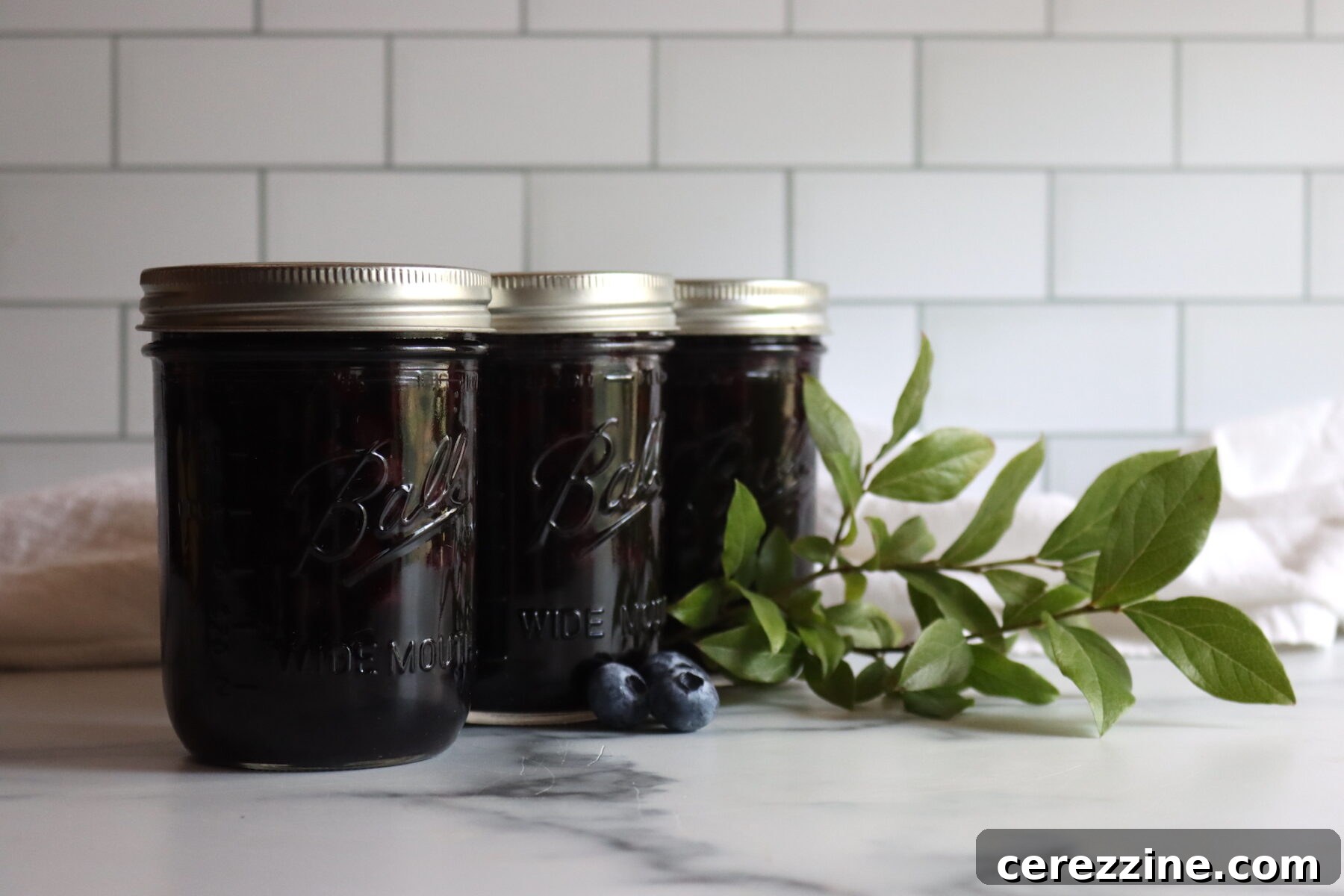
Floating berries are usually a cosmetic issue, not a safety problem. Raw-packed fruit is lighter than the syrup and may rise as the jars cool, leaving liquid at the bottom. Adding a splash of hot liquid before filling, packing the berries snugly, and avoiding an overboiled syrup will reduce floating, but a little is normal.
Color changes are also normal. Blueberries may tint their syrup deep purple, and berries near the lid can look paler after several months on the shelf. This does not indicate spoilage. Store jars in a cool, dark place to slow color changes and keep them looking their best for longer.
Ways to Use Canned Blueberries
Canned blueberries are ready to use straight from the jar, with or without syrup. Spoon them over pancakes, waffles, French toast, oatmeal, yogurt, or ice cream. Drained berries fold into muffin or quick-bread batter, pancake batter, or coffee cake, saving the step of thawing frozen fruit. They also cook down quickly into compote or sauce for cheesecake and pound cake, and a jar makes a quick start to a cobbler or crisp.
Yield Notes
Plan on roughly 2 pounds of blueberries per quart jar or about 1 pound per pint. A full canner load of seven quarts will use about 12 pounds of berries, while nine pints takes about 8 pounds. Wild blueberries, being smaller, pack more tightly and may yield a bit more per jar. Small batches work fine—processing time is the same no matter how many jars you run.
Below are answers to common questions about canning blueberries.
Canning Blueberries FAQs
Yes. Blueberries are high-acid and process safely in a boiling water bath without added acid. Raw-pack pints for 15 minutes and quarts for 20 minutes at sea level, leave 1/2 inch headspace, and adjust time for altitude.
No. Sugar is for flavor, color, and shape, not safety. Pack blueberries in a light or medium syrup, in unsweetened juice, or in plain water—each option is equally safe when processed correctly.
Raw packing keeps berries whole and firm and is preferred for appearance. Hot packing allows you to fit more fruit per jar with less floating but yields softer, more broken fruit.
Yes. Frozen blueberries can be canned but will break down more and produce a compote-like result. Thaw them fully before canning for more even results and expect a bit more color bleed.
Properly processed and sealed jars keep about 12 to 18 months in a cool, dark place. Refrigerate after opening and use within about a week. Discard any jar that has lost its seal, smells off, or shows signs of spoilage.
For more ideas with this summer fruit, try canning jam, syrup, pie filling, or lemonade concentrate—each provides a different way to enjoy blueberries through the year.
Blueberry Canning Recipes
Blueberry Jam (without Added Pectin)
Canning Blueberry Lemonade Concentrate
Canning Blueberry Pie Filling
If you tried this Canning Blueberries recipe, leave a star rating and share your experience in the comments.
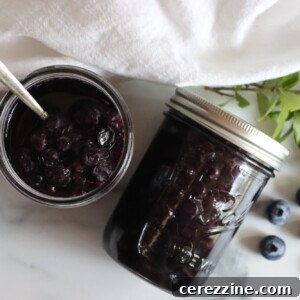
Canning Blueberries
Equipment
- Water bath canner
- Jar lifter
- Canning funnel
- Canning jars, lids, and bands
Ingredients
- 8 lbs fresh blueberries
- 5 3/4 cups water or unsweetened fruit juice (for light syrup)
- 1 1/2 cups sugar (optional, for light syrup)
Instructions
- Prepare a water bath canner, warm clean jars, lids, and bands. Wash blueberries a quart or two at a time, drain well, and sort out stems and any soft or split berries.
- Make the syrup: combine water and sugar in a saucepan and heat, stirring, until the sugar dissolves and the mixture comes to a gentle boil. Keep it hot. For an unsweetened pack, heat plain water or unsweetened juice instead.
- Add about 1/2 cup of the hot liquid to the bottom of each clean jar.
- Raw pack: fill jars with raw blueberries, gently shaking so the berries settle, to within about an inch of the rim.
- Pour hot syrup, juice, or water over the berries to cover, leaving 1/2 inch headspace.
- Release trapped air by running a bubble tool around the inside of the jar, recheck headspace, wipe rims clean, center lids, and apply bands fingertip tight.
- Process in a boiling water bath, adjusting for altitude. At sea level process pints for 15 minutes and quarts for 20 minutes.
- When processing time is finished, turn off heat, remove the canner lid, and let jars rest in the water for 5 minutes. Remove jars and cool undisturbed 12 to 24 hours, then check seals.
Notes
Syrup strength: Light syrup for pints uses about 5-3/4 cups water to 1-1/2 cups sugar. Very light syrup is about 6-1/2 cups water to 3/4 cup sugar. A medium syrup for a 9-pint load is roughly 5-1/4 cups water to 2-1/4 cups sugar. Sugar is optional; mild honey or light corn syrup can replace up to half the sugar.
Raw pack vs hot pack: Raw packing keeps fruit whole and firm. To hot pack, heat berries in boiling water for 30 seconds and drain before filling jars. Hot packing fits more fruit per jar but produces softer, more fragile berries.
No added acid: Blueberries are high-acid and safe to can without lemon juice or other acid when processed correctly with proper headspace and time.
Jar sizes: Use pints or quarts. Small batches are fine; processing time does not change with batch size. Make enough syrup to cover the fruit, and having extra is helpful.
Storage: Properly sealed jars keep 12 to 18 months in a cool, dark place. Refrigerate after opening and use within a week.
Nutrition
Calories: 241 kcal, Carbohydrates: 60 g, Protein: 0.5 g, Fat: 0.3 g, Sugar: 52 g (approximate)
Nutrition information is automatically calculated and should be used as an approximation.
Want more fruit to put up this season? Try recipes for strawberry lemonade concentrate, canned lemonade, or strawberry pie filling—each offers a different way to preserve summer flavors.
Fruit Canning Recipes
Canning Strawberry Lemonade Concentrate
Canning Lemonade (& Lemonade Concentrate)
Canning Strawberry Pie Filling
Find the perfect recipe
Searching for something else? Enter keywords to find the perfect recipe on the site.