
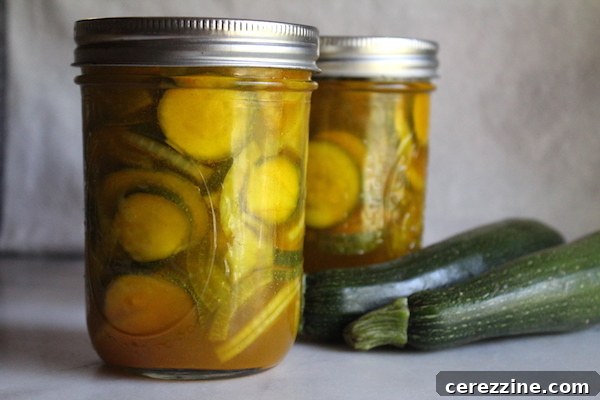
Delicious Bread and Butter Zucchini Pickles: Your Guide to Canning and Quick Pickling
Experience the satisfying crunch and vibrant flavor of homemade zucchini pickles. This delightful bread and butter style recipe offers a simple yet incredibly rewarding way to preserve your zucchini harvest, making it perfect for quick refrigerator pickles or securely water-bath canned for enjoyment throughout the year.
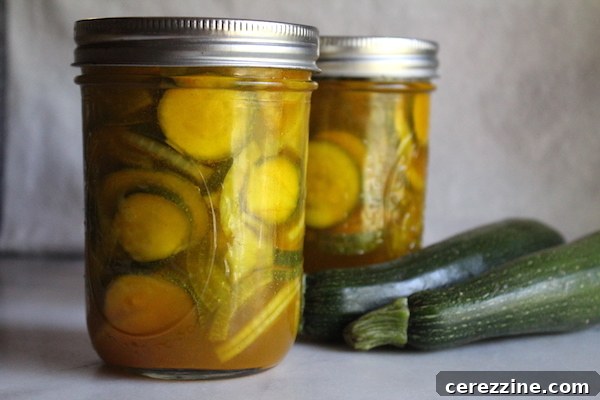
For anyone who has ever cultivated their own garden, the late summer abundance of zucchini is a familiar — and often overwhelming — phenomenon. One day you have a few humble plants, and the next, your countertops are overflowing with a verdant bounty. Even for those of us who genuinely adore zucchini and all its culinary possibilities, finding new and exciting ways to utilize a bumper crop can be a pleasant challenge. While classic dishes like zucchini bread, rich zucchini chocolate cake, or refreshing zucchini slaw are always welcome, there’s an often-overlooked hero in the world of zucchini preservation: pickling. Transforming garden-fresh zucchini into tangy, sweet, and spiced pickles is not only a fantastic way to handle a surplus but also to create a versatile condiment that brightens up any meal.
Why Zucchini Makes Superior Pickles
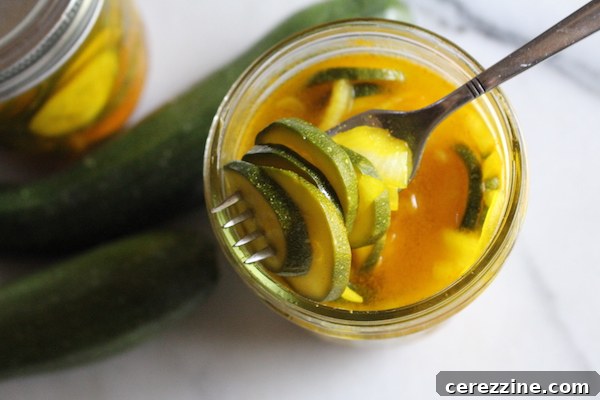
Many home canners might default to cucumbers for their pickle endeavors, but allow me to introduce you to the unparalleled virtues of zucchini pickles. Zucchini, with its naturally mild flavor, serves as the perfect canvas for a bold and zesty pickle brine. Unlike some vegetables that can turn mushy during the pickling process, zucchini possesses a unique cellular structure that allows it to maintain a remarkable crispness, often surpassing that of traditional cucumber pickles. This surprising texture is a game-changer, turning even the most skeptical eaters into fervent fans of Team Zucchini Pickle. Indeed, I’ve seen countless converts who, once they try a perfectly crisp zucchini pickle, never look back. This makes sharing your surplus zucchini not just a necessity, but a genuine pleasure, as you gift jars of unexpected delight to friends and family.
Our recipe for bread and butter zucchini pickles focuses on maximizing this desirable crispness and enhancing the overall flavor profile. We achieve this by slicing the zucchini into uniform rounds, typically between 1/8 to 1/4 inch thick, and combining them with thinly sliced white onions. The onions contribute a crucial textural element and a subtle, piquant flavor that mellows beautifully during pickling. The secret weapon for guaranteeing that extra-crisp texture is a preliminary saltwater soak, a step that draws out excess moisture from the vegetables before they even touch the hot brine. This foundational preparation ensures every bite delivers that satisfying snap we all crave in a good pickle, making these zucchini pickles a true standout.
The Art of Crafting Perfect Zucchini Pickles
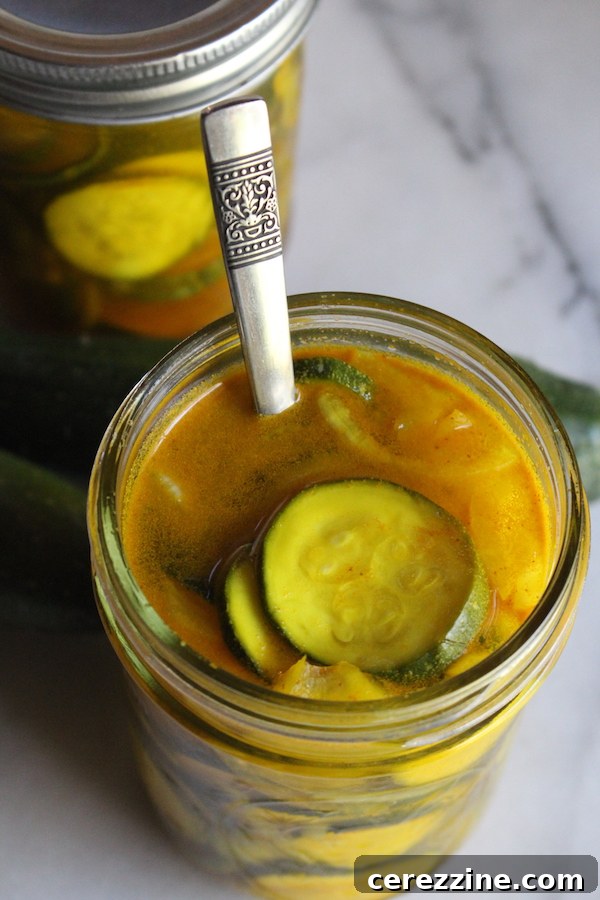
Making delicious pickled zucchini is a straightforward process, but a few key steps ensure optimal flavor and texture. This recipe delivers a classic bread and butter pickle experience – a delightful balance of sweet, tangy, and subtly spiced notes. Whether you’re a seasoned canner or new to the world of home preservation, these instructions will guide you to success in creating your own batch of irresistible zucchini pickles.
Selecting and Preparing Your Zucchini and Onions
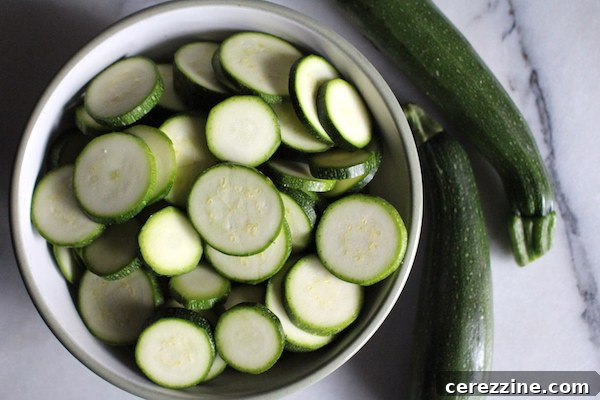
The success of your zucchini pickles largely depends on the quality of your squash. Aim for smaller, young zucchini, ideally no more than 6-8 inches long. These younger specimens have firmer flesh and fewer seeds, which are crucial for achieving that desired crisp texture. Larger, more mature zucchini tends to be spongy and watery, and can sometimes carry a bitter undertone, making them less suitable for pickling. Consistency in size is also beneficial, not just for aesthetic appeal, but more importantly, to ensure even slicing and consistent processing if you plan to can them. You’ll need approximately 16 cups of sliced zucchini for this recipe; factor in roughly one medium-sized zucchini per cup, though this can vary with size.
Once you’ve selected your zucchini, wash them thoroughly and slice them into uniform rounds, aiming for a thickness of 1/8 to 1/4 inch. Slices that are too thick may not crisp up as effectively and might require longer processing times if canning. For the onions, I recommend using white onions due to their crisp texture and balanced pungency, which softens delightfully during pickling. Slice them a bit thinner than the zucchini – this ensures they act as an accent flavor rather than overpowering the delicate zucchini. You’ll need about 4 cups of thinly sliced onions.
The Essential Saltwater Soak for Crispy Pickles
After your vegetables are prepped, transfer them to a very large, non-reactive bowl (such as glass or food-grade plastic). This is where the magic of crispness truly begins. Sprinkle 1/2 cup of canning or pickling salt evenly over the zucchini and onion slices, then cover them with about 1 inch of cool water. Gently swish the contents of the bowl to ensure the salt is evenly distributed and every piece is in contact with the solution. Let the vegetables stand in this saltwater solution for 2 hours. This critical step employs the principle of osmosis: the salt draws out excess moisture from the zucchini and onions, which not only makes them firmer and crisper by firming up their cell walls but also helps to mellow the raw, pungent bite of the onions. Skipping this step often results in softer, less desirable pickles. Once the 2 hours are up, thoroughly drain the vegetables, discarding the salty water, and set them aside. Do not rinse the vegetables after draining.
Crafting the Flavorful Bread and Butter Brine
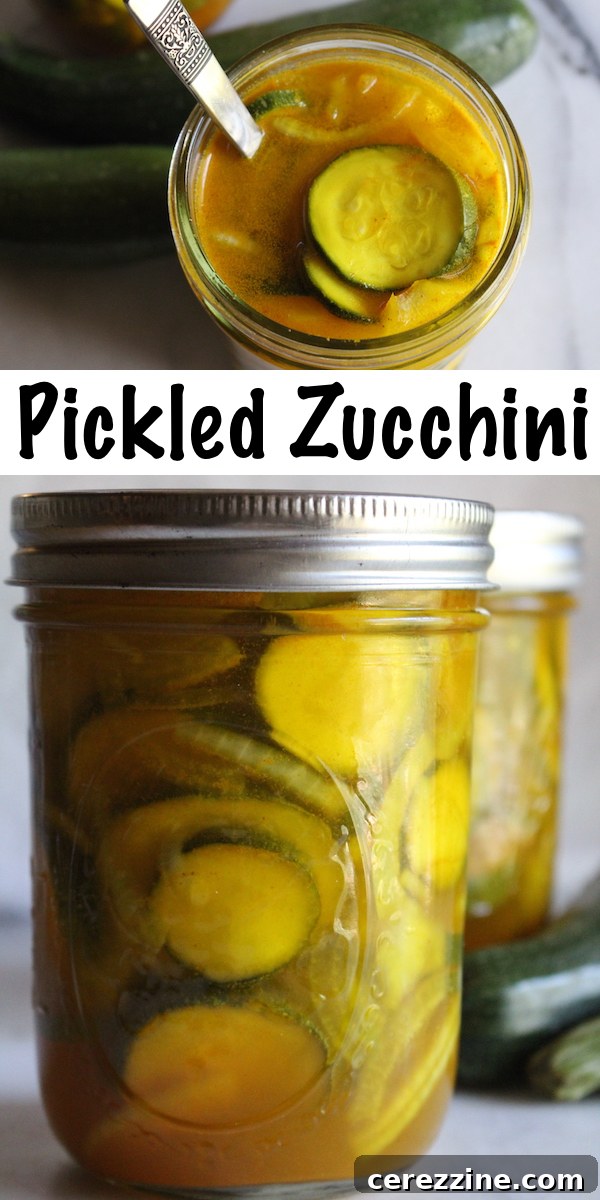
Now, it’s time to prepare the brine that will infuse your zucchini with its signature bread and butter flavor. In a large, non-reactive saucepan, combine 4 cups of white vinegar or apple cider vinegar (ensuring it has a standardized 5% acidity, which is crucial for safety in canning), 2 cups of sugar, 4 tablespoons of mustard seed, 2 tablespoons of celery seed, and 2 teaspoons of ground turmeric. The turmeric is responsible for the pickles’ appealing sunny yellow hue, in addition to its subtle earthy notes that complement the sweet and tangy profile.
Bring this brine mixture to a rolling boil over medium-high heat, stirring occasionally to dissolve the sugar. Once boiling, carefully add the drained zucchini and onion slices to the hot liquid. Exercise caution to avoid splashes, not just for safety but also because turmeric can stain countertops and clothing. Reduce the heat to a gentle simmer and let the mixture cook for precisely 5 minutes. This brief cooking time allows the vegetables to begin absorbing the brine flavors without losing their crispness. At this stage, your pickles are ready to be either transformed into quick refrigerator pickles or prepared for long-term storage through water bath canning.
*A note on vinegar: While this recipe specifies white or apple cider vinegar, you can experiment with other vinegars as long as they maintain a consistent 5% acidity. This acidity level is vital for food safety, especially when canning. Pickling brine, by definition, must be at least half vinegar by volume; with 2 cups of sugar added to 4 cups of vinegar, this brine is perfectly acidic and safe for canning. Always use tried and tested recipes for canning to ensure safety.
Preserving Your Harvest: Refrigerator vs. Water Bath Canning
One of the greatest joys of making these bread and butter zucchini pickles is the ability to enjoy them long after the summer growing season has ended. You have two excellent options for preservation, depending on how quickly you plan to consume them and whether you want them shelf-stable: quick refrigerator pickles or shelf-stable water bath canned pickles.
Quick Refrigerator Pickles
If immediate gratification is your goal, or if you prefer not to delve into the canning process, these pickles make fantastic quick refrigerator pickles. Simply transfer the hot zucchini and brine into clean, sanitized jars, allow them to cool to room temperature, then seal with lids and refrigerate. They will be ready to eat in a day or two, once the flavors have had a chance to meld, and will keep for up to two months in the refrigerator. While they remain deliciously tangy, their crispness may gradually diminish over time compared to their canned counterparts due to enzymatic activity.
Water Bath Canning Pickled Zucchini for Long-Term Storage
For truly extending the harvest and enjoying your zucchini pickles well into winter, water bath canning is the ideal method, providing shelf-stable jars for up to a year or more. While the brine is simmering with the vegetables, ensure your hot water bath canner is prepared, along with 8 to 9 pint jars and two-piece canning lids (new lids for sealing, clean rings). Jars should be hot (e.g., kept in hot water in the canner or a separate pot) to prevent thermal shock when filled with hot pickles. Following proper canning guidelines is paramount for food safety.
- When the pickles and brine are ready, carefully transfer the hot vegetables and brine into your hot canning jars, leaving precisely 1/2-inch headspace from the rim. This headspace is crucial for creating a vacuum seal.
- Use a wooden chopstick or a plastic canning utensil to gently remove any trapped air bubbles from the jars. Press the vegetables down slightly to release air, and if necessary, add more hot brine to maintain the 1/2-inch headspace.
- Wipe the rims of the jars clean with a damp cloth to ensure a perfect seal. Any food particles on the rim can prevent sealing. Center the two-piece canning lids on the jars and apply the screw bands until they are “fingertip tight” – meaning snug enough that you can still turn the lid with your fingertips, but not overly tightened.
- Carefully place the filled jars into the prepared hot water bath canner, ensuring they are fully submerged by at least 1 inch of water. Cover the canner with its lid. Bring the water to a rolling boil and process the pint jars for 10 minutes, starting the timer only once the water is at a full boil.
- **Altitude Adjustments:** If you reside at higher altitudes, you must increase the processing time to ensure food safety due to lower boiling points.
- 1,001-6,000 feet above sea level: Process for 15 minutes.
- 6,001+ feet above sea level: Process for 20 minutes.
- Once the processing time is complete, turn off the heat and allow the jars to remain in the hot water bath for an additional 5 minutes. This helps to normalize the pressure within the jars and promotes a stronger seal.
- Carefully remove the hot jars from the canner using a jar lifter and place them upright on a clean, folded towel or a wire rack, ensuring there is space (about 1 inch) between each jar for even cooling. Avoid disturbing them for 12 to 24 hours as they cool and seal. You will often hear a satisfying “ping” as the lids seal.
- After the cooling period, check each lid to confirm it has sealed properly. A good seal will result in a lid that is flat or slightly concave and does not flex or pop when pressed in the center. If the lid is sealed, you can remove the screw rings (wash and reuse them for future canning projects) and clean the jars before labeling and storing them in a cool, dry, dark place. Any jars that have not sealed correctly should be treated as refrigerator pickles and consumed within a few weeks.
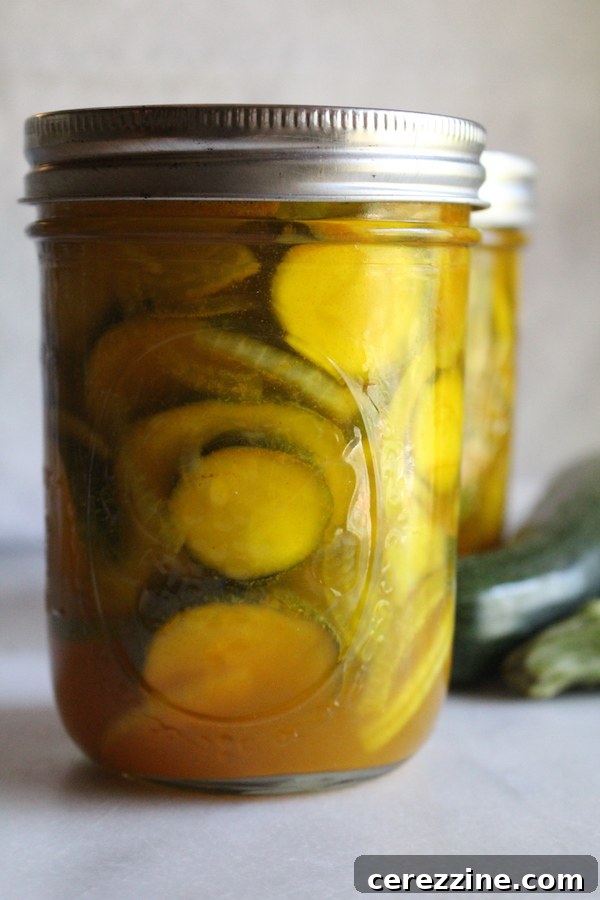
Bread and Butter Zucchini Pickles Recipe
These sweet and tangy zucchini pickles are incredibly versatile and delicious. They can be enjoyed fresh from the fridge or safely canned for long-term storage.
Ingredients
- 16 cups fresh zucchini, sliced (from small, young zucchini, about 8-10 medium)
- 4 cups white onions, thinly sliced
- 1/2 cup canning or pickling salt
- 4 cups white vinegar (5% acidity) or apple cider vinegar (5% acidity)
- 2 cups sugar
- 4 Tbsp. mustard seed
- 2 Tbsp. celery seed
- 2 tsp. ground turmeric
Instructions
- If planning to can, prepare a hot water bath canner, sterilize 8-9 pint jars, and have two-piece lids ready and simmering in hot water.
- In a very large, non-reactive bowl, combine the sliced zucchini and onions. Evenly sprinkle with 1/2 cup canning or pickling salt and cover with about 1 inch of cool water. Gently swish to combine. Let stand for 2 hours, then drain thoroughly. Do not rinse.
- In a large, non-reactive saucepan, combine the vinegar, sugar, mustard seed, celery seed, and ground turmeric. Stir until sugar is dissolved.
- Bring the brine mixture to a rolling boil over medium-high heat. Carefully add the drained zucchini and onion slices, then reduce heat to a gentle simmer and cook for 5 minutes.
- **For Refrigerator Pickles:** Ladle the hot vegetable mixture and brine into clean, sanitized jars, leaving 1/2-inch headspace. Cool to room temperature, then seal and refrigerate. Consume within 2 months for best quality.
- **For Water Bath Canning:** Working quickly, fill the prepared, hot jars with the hot vegetable mixture and hot pickling solution, leaving precisely 1/2-inch headspace.
- Remove any trapped air bubbles using a wooden chopstick or plastic canning utensil. Add more hot brine if needed to maintain 1/2-inch headspace.
- Wipe jar rims clean with a damp cloth. Center lids on jars and apply screw bands to fingertip tight.
- Carefully place jars in the hot water bath canner, ensuring they are covered by at least 1 inch of water. Bring water to a rolling boil and process pint jars for 10 minutes (refer to notes below for altitude adjustments).
- When processing time is complete, turn off the heat and let the jars sit in the hot water for 5 minutes before carefully removing them to a clean surface (like a folded towel or wire rack) to cool undisturbed for 12 to 24 hours.
- After cooling, check the seals on each jar (lids should be flat or slightly concave and not flex when pressed). Remove the rings (wash and save for next use). Label and store properly sealed jars in a cool, dry, dark place. Any jars that have not sealed correctly should be refrigerated and consumed within a couple of weeks.
Notes
- Canning at Higher Altitudes:
- 1,001-6,000 feet above sea level: Process jars for 15 minutes.
- 6,001+ feet above sea level: Process jars for 20 minutes.
- Canning recommendations are for pint jars. If using different jar sizes, consult an official canning guide for appropriate processing times.
- For best flavor development, allow canned pickles to rest for 2-3 weeks before opening.
Nutrition Information (Approximate per serving, based on 64 servings)
- Calories: 46 kcal
- Carbohydrates: 9g
- Protein: 1g
- Fat: 1g
- Saturated Fat: 0.1g
- Polyunsaturated Fat: 0.2g
- Monounsaturated Fat: 0.3g
- Sodium: 890mg
- Potassium: 160mg
- Fiber: 1g
- Sugar: 8g
- Vitamin A: 99 IU
- Vitamin C: 10mg
- Calcium: 23mg
- Iron: 1mg
Nutrition information is automatically calculated and should only be used as an approximation. Actual values may vary based on ingredients and preparation methods.
Enjoyed this recipe? We’d love to hear your thoughts! Leave a comment below.
Frequently Asked Questions About Zucchini Pickles
- Can I use yellow squash instead of zucchini? Yes, yellow squash can be used as a substitute for zucchini in this recipe. Its texture and mild flavor are quite similar, yielding comparable results in terms of crispness and taste when pickled.
- How do I ensure my pickles are extra crisp? The saltwater soak is absolutely crucial for drawing out excess moisture and firming the vegetables. Additionally, using young, firm zucchini, slicing them uniformly thin, and avoiding over-processing (especially during canning) will contribute significantly to maintaining crispness.
- What if I don’t have canning salt? Canning salt is preferred because it’s pure salt, free of anti-caking agents or iodine, which can cloud brine and sometimes affect flavor. In a pinch, non-iodized sea salt or kosher salt can be used, but avoid regular iodized table salt.
- How long should I wait before eating canned zucchini pickles? For the best flavor development, it’s highly recommended to wait at least 2-3 weeks after canning before opening a jar. This allows the complex flavors of the brine and vegetables to meld and mature, resulting in a richer, more balanced taste.
- Can I reduce the sugar content? While possible for refrigerator pickles, significantly reducing sugar in a bread and butter pickle recipe can dramatically alter the intended sweet and tangy flavor profile. For recipes intended for water bath canning, always stick to tested proportions for sugar and vinegar, as they contribute to the brine’s acidity and preservation quality. Altering them can compromise safety.
- Can I add other spices? Absolutely! Feel free to experiment with pickling spices like bay leaves, red pepper flakes for a kick, or whole cloves for added depth. Start with small amounts and adjust to your preference.
More Zucchini Canning Recipes
If you’re looking for additional creative ways to preserve your zucchini harvest in jars this season, explore these fantastic recipes:
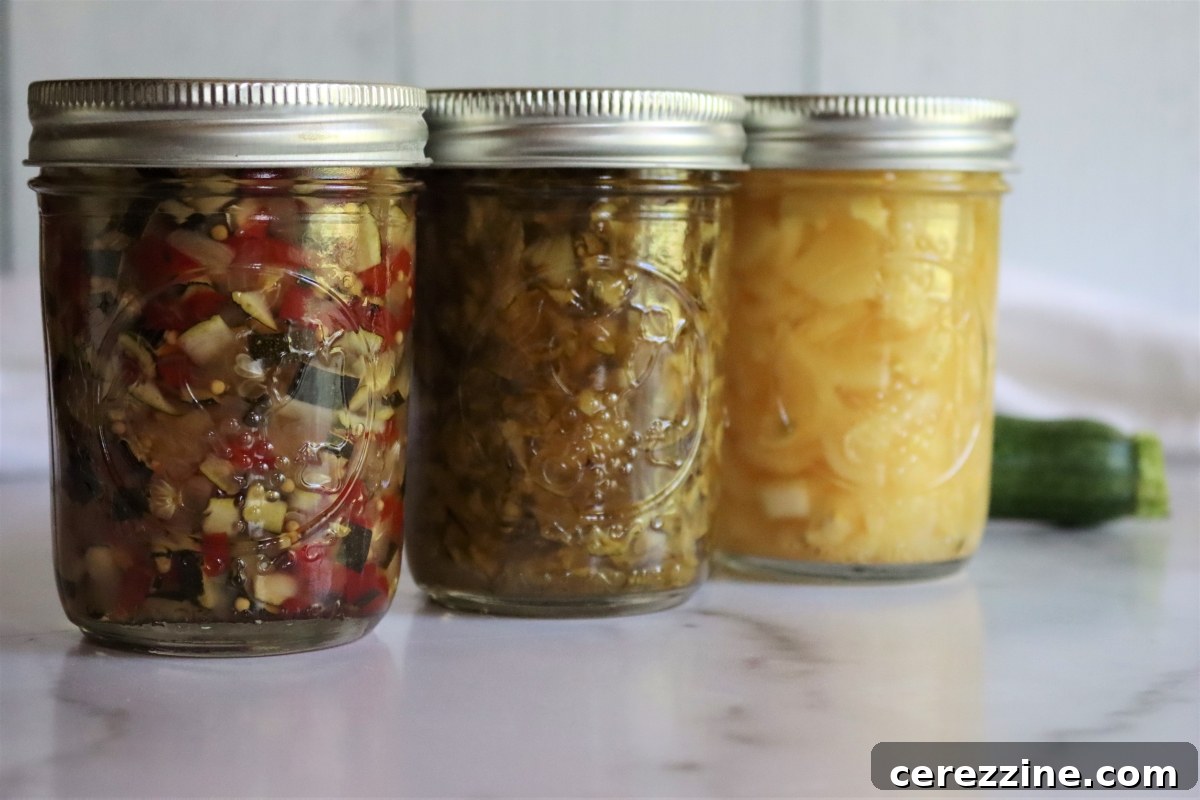
- Zucchini Marmalade (with lemon and ginger)
- Zucchini Relish
- Zucchini with Tomatoes or Okra
Beyond Pickling: Other Ways to Preserve Zucchini
While canning offers a wonderful way to store zucchini neatly on your pantry shelf, it’s just one of many methods to enjoy this versatile vegetable year-round. Consider these other excellent preservation techniques to make the most of your abundant harvest:
- Freezing Zucchini
- Dehydrating Zucchini
- Freeze Drying Zucchini
- Fermented Zucchini Pickle Chips
Explore More Easy Pickle Recipes
If the joy of homemade pickles has captured your interest, here are a few more simple and satisfying pickling recipes to add to your repertoire. These classic recipes will help you expand your home preservation skills and enjoy a variety of tangy treats:
- Classic Bread and Butter Pickles
- Crisp Dill Pickles
- Baby Cucumber Pickles (Cornichons or Gherkins)
Delicious Summer Canning Recipes
Don’t stop at zucchini! The summer harvest offers a bounty of produce perfect for canning. Expand your pantry with these delightful summer canning recipes, ensuring you have a taste of sunshine even in the coldest months:
- Canning Peaches
- Canning Blackberries
- Canning Tomatillos
- Canning Plums
- Canning Strawberries
Conclusion: Savoring Your Zucchini Success
From an overwhelming garden bounty to a neatly stocked pantry, transforming zucchini into these irresistible bread and butter pickles is a journey of culinary satisfaction. Whether you opt for the quick convenience of refrigerator pickles or the enduring delight of water bath canned jars, you’ll be rewarded with a tangy, sweet, and perfectly crisp condiment that elevates any meal. These pickles are more than just a way to use up extra zucchini; they’re a testament to the simple pleasures of homemade food and the rewarding act of preserving the season’s best. So, embrace your zucchini harvest, gather your ingredients, and embark on this flavorful adventure. Your taste buds, and your future self, will undoubtedly thank you for these delicious homemade bread and butter zucchini pickles!