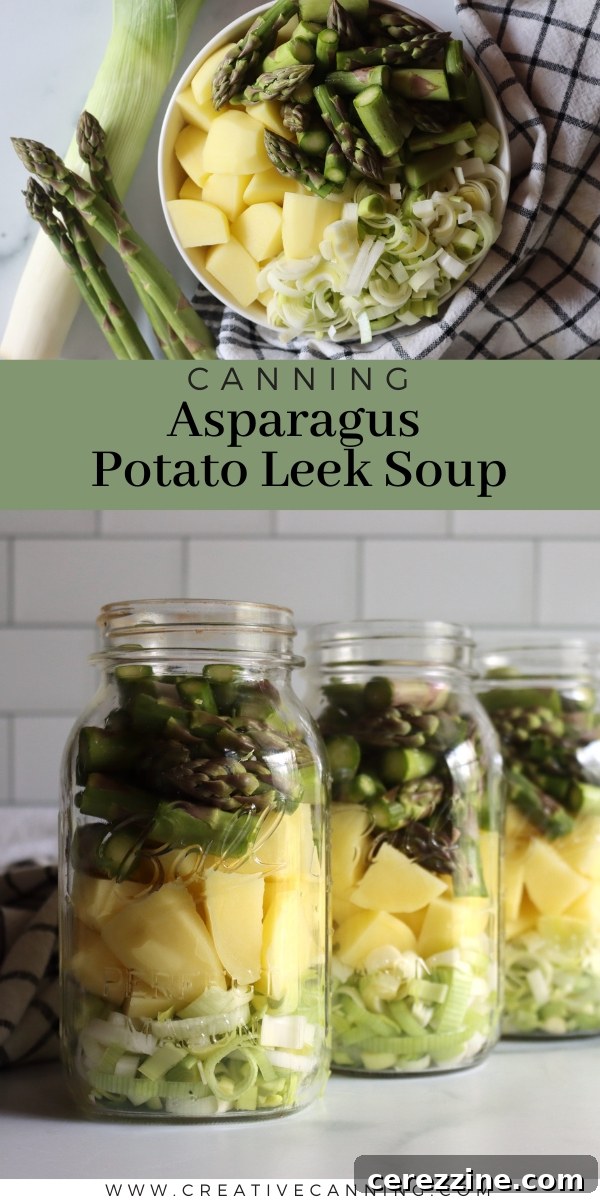
Homemade Asparagus, Potato, and Leek Soup: A Comprehensive Guide to Pressure Canning for Year-Round Enjoyment
Imagine savoring the rich, comforting flavors of garden-fresh asparagus, earthy potatoes, and sweet leeks, even when these seasonal vegetables are out of season. With this comprehensive guide, you can create and preserve delicious Asparagus, Potato, and Leek Soup through the safe and effective method of pressure canning. This recipe marries the rustic charm of classic potato leek soup with the delicate refinement of asparagus soup, resulting in a hearty vegetarian delight that’s perfect for any time of year.
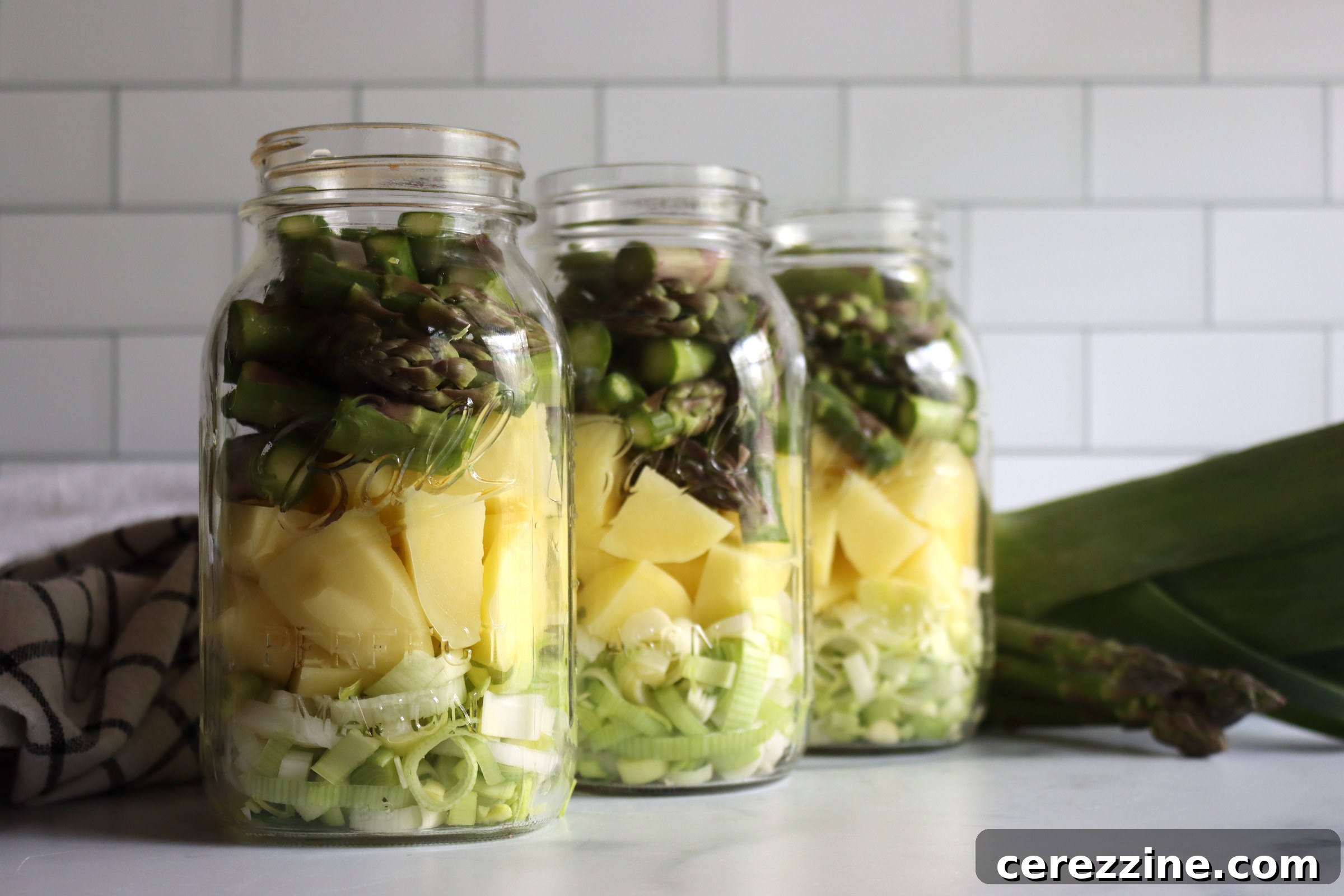
The inspiration for this unique soup blend came from a springtime kitchen experiment. While preserving batches of plain asparagus soup base from a bountiful garden harvest and simultaneously preparing my family’s favorite potato leek soup, it struck me how wonderfully these distinct flavors might intertwine. The result was a harmonious fusion – a simple yet incredibly satisfying soup that combines the best of both worlds. And with the power of pressure canning, this delightful creation is no longer confined to the spring season; it becomes a pantry staple, ready to warm your soul whenever a craving strikes.
Why Pressure Can Your Own Vegetarian Soup?
Canning your own soup offers a multitude of benefits, extending far beyond the immediate satisfaction of a homemade meal. For low-acid foods like this Asparagus, Potato, and Leek Soup, pressure canning is not just a preference, but a vital safety measure. Unlike high-acid foods that can be preserved with a water bath canner, low-acid foods require the higher temperatures achieved only through pressure canning to eliminate the risk of harmful bacteria, including Clostridium botulinum, which causes botulism.
Beyond safety, home canning provides unparalleled convenience. Imagine a busy weeknight when you’re pressed for time, but still desire a nourishing, wholesome meal. A jar of this pre-made soup, stored on your pantry shelf, is a quick solution. Simply open, heat, and serve – no artificial ingredients, no excessive sodium, just pure, wholesome goodness you prepared yourself. It’s a fantastic way to control the quality of ingredients, reduce food waste by preserving seasonal produce, and save money compared to store-bought options. Plus, there’s an immense sense of accomplishment and self-sufficiency that comes with stocking your pantry with handcrafted meals.
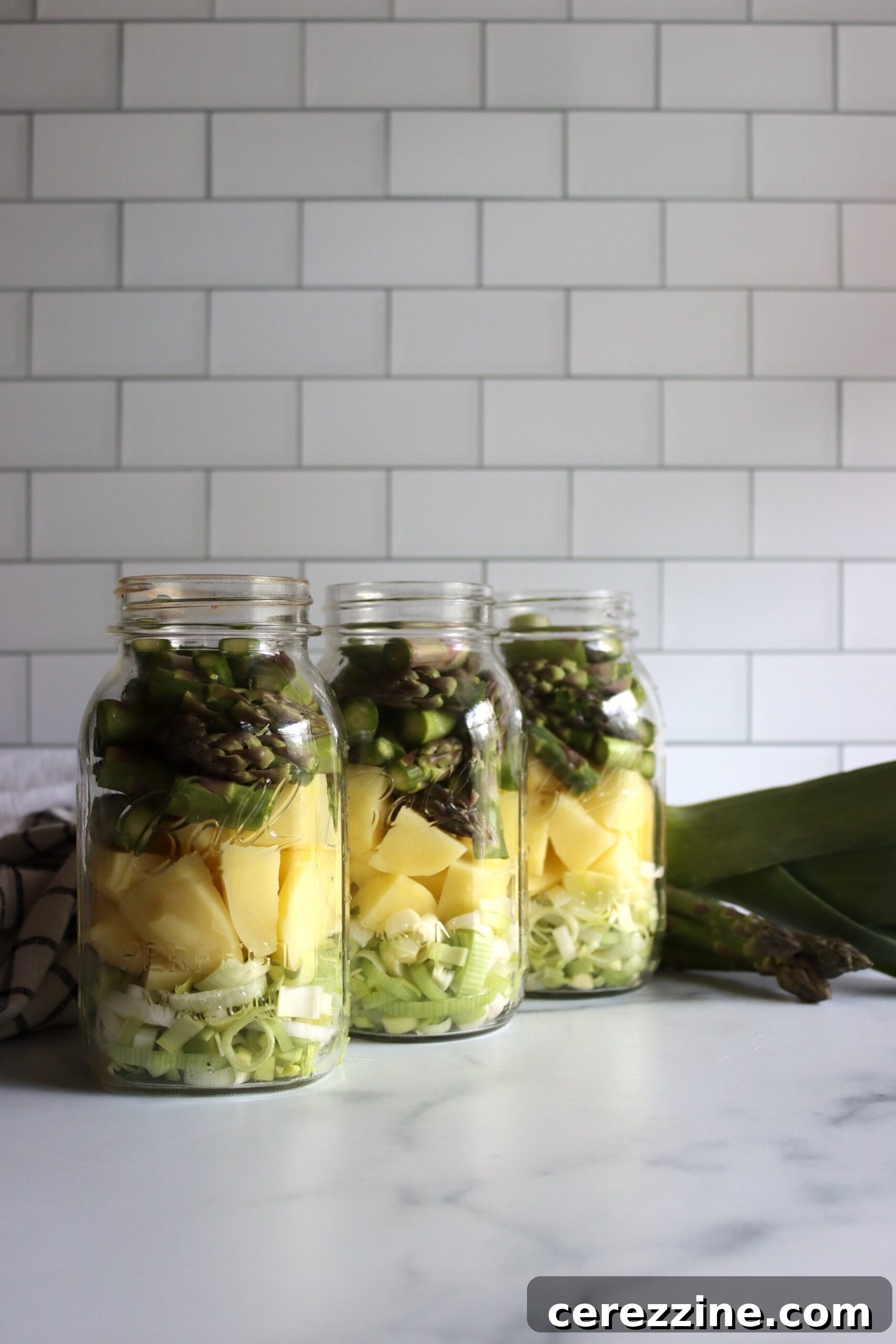
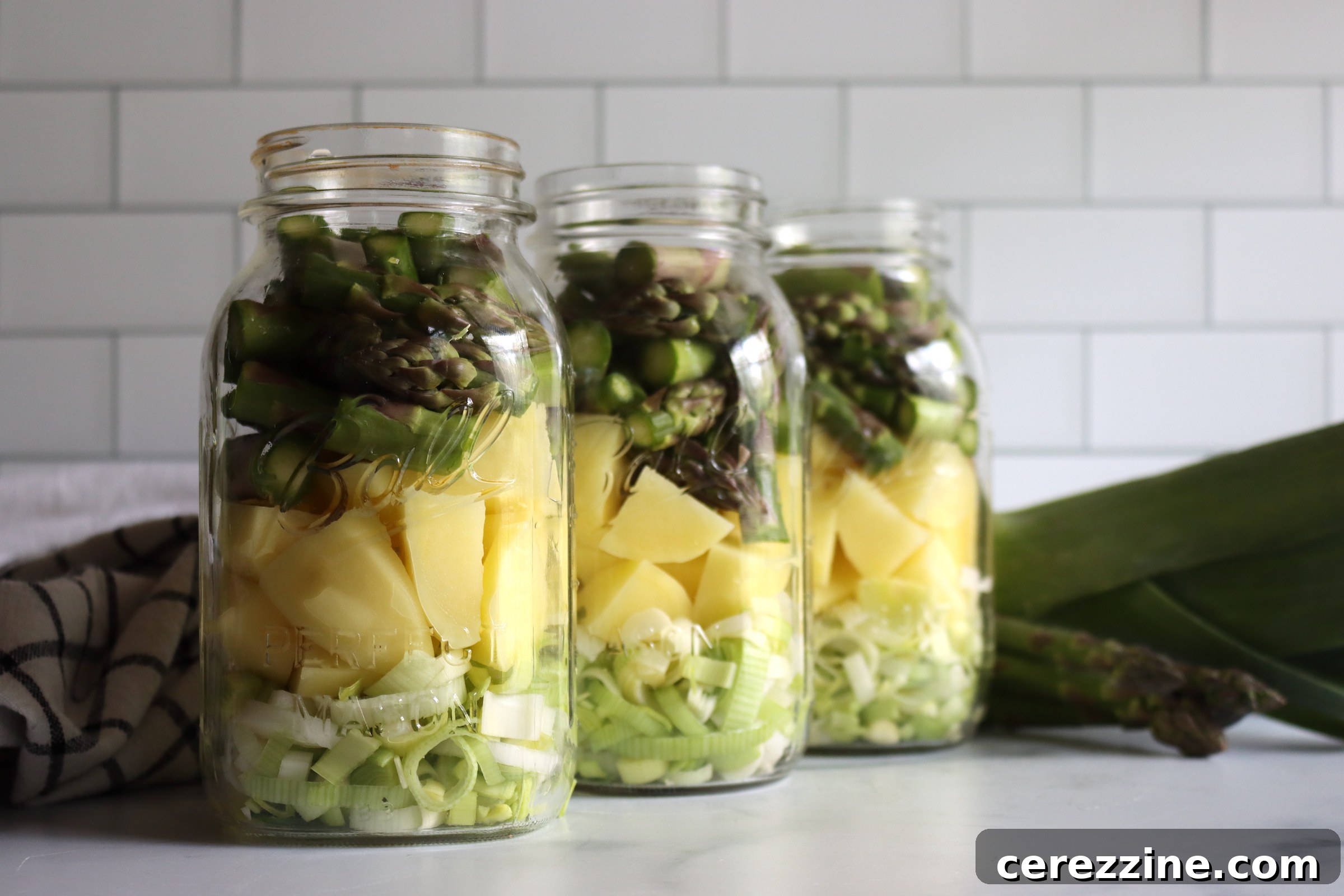
Ingredients for Canning Asparagus, Potato, & Leek Soup
This recipe adheres to the University of Alaska’s Hearty Soup Canning Guidelines (Publication FNH-00065), ensuring a safe and reliable method for preservation. The minimum batch size recommended for pressure canning is two quarts, making this recipe perfectly scaled for a small batch, though it can easily be increased to fill a full canner if you have a larger harvest or simply want more jars of this delightful soup.
Selecting Your Produce: Quality Matters
- Asparagus: Choose firm, bright green spears with tight tips. Thicker spears tend to hold up better during canning.
- Potatoes: Waxy potatoes like Yukon Golds or red potatoes are excellent choices as they retain their shape well in soup. Starchy varieties like Russets can become mealy. Ensure they are free of sprouts or green spots.
- Leeks: Look for leeks with crisp, dark green tops and clean white bottoms. Avoid any that are yellowing or slimy.
- Vegetable Broth: Opt for a good quality low-sodium vegetable broth to control the overall saltiness of your soup. Homemade vegetable broth is also an excellent option.
- Salt: Use canning or pickling salt, as it is pure sodium chloride without anti-caking agents that can cloud your soup.
The beauty of this soup lies in its flexibility. Feel free to adjust the ratios of asparagus, potatoes, and leeks to suit your personal taste. While this is a vegetarian recipe, you can certainly incorporate chicken or other meat stock for added richness. However, for those who prefer a smooth, pureed soup, a vegetarian broth often allows the delicate flavors of the vegetables to shine through most clearly. If adding meat, ensure it is properly cooked and cubed according to safe canning guidelines for meat and soup mixtures.
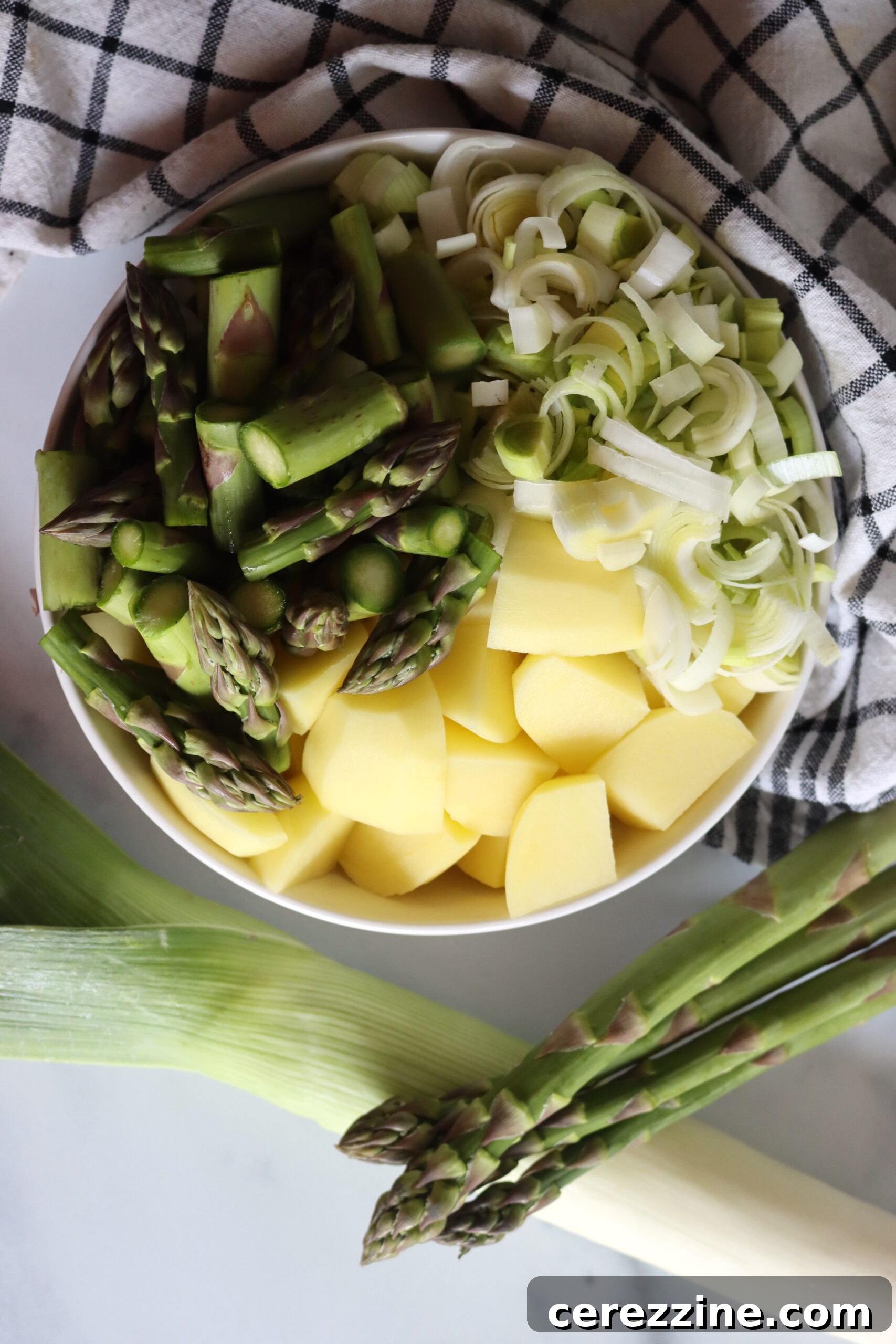
Canning Asparagus, Potato, and Leek Soup: A Step-by-Step Guide
Proper preparation and adherence to canning guidelines are crucial for both food safety and quality. Follow these steps meticulously to ensure your homemade soup is preserved perfectly.
Prepping Your Canning Station
Before you begin assembling your soup, thoroughly prepare your pressure canner and canning jars. Wash your pint or quart jars, lids, and bands in hot, soapy water, then rinse well. While sterilization is not strictly required for foods processed for 10 minutes or more in a pressure canner (as the processing itself sterilizes), it’s a good practice to ensure cleanliness. Keep your jars warm in a pot of hot (not boiling) water. Your pressure canner should also be ready, with the canning rack at the bottom and the appropriate amount of water added according to your canner’s manufacturer instructions.
- For a hot pack, the canner water should be simmering at around 180°F (82°C).
- For a raw pack, the water should be warm, around 140°F (60°C).
Preparing the Vegetables
Careful preparation of your vegetables ensures both flavor and safety:
- Leeks: Wash leeks thoroughly, as dirt can easily hide between their layers. Trim off the root end and the tough dark green tops. Slice the white and light green parts into 1/2-inch to 1-inch pieces. Rinse again under running water, fanning out the layers, to remove any remaining grit.
- Potatoes: Peel the potatoes and dice them into bite-sized pieces, roughly 1/2-inch to 3/4-inch cubes. Keep them in a bowl of cold water to prevent browning until ready to use.
- Asparagus: Hold an asparagus spear at both ends and bend it gently; it will naturally snap where the tough, woody part meets the tender portion. Discard the woody ends. Cut the tender asparagus into 1-inch pieces.
Hot Pack vs. Raw Pack: Choosing Your Method
For soups, both hot pack and raw pack methods are safe, provided you follow the processing times and pressures. However, they offer different advantages:
- Hot Pack (Recommended for Best Quality): In a large pot, combine the prepared leeks, diced potatoes, chopped asparagus, and salt. Add enough vegetable broth to cover the vegetables. Bring the mixture to a boil, then reduce the heat and let it simmer for about 5 minutes. This pre-cooking step slightly softens the vegetables, which helps them retain their texture and reduces shrinkage in the jars, often leading to better final product quality and less floating of solids.
- Raw Pack (Simplicity): If opting for a raw pack, you will pack the raw, prepared vegetables directly into the canning jars along with the salt. Separately, bring your vegetable broth to a rolling boil on the stovetop. While raw packing is simpler, vegetables can shrink more during processing, potentially leading to a less appealing appearance.
Filling the Jars
Regardless of whether you choose a hot or raw pack, the method for filling the jars remains critical:
- Load Solids: Using a slotted spoon (for hot pack) or simply by hand (for raw pack), evenly distribute the prepared vegetable mixture into warm, clean quart (or pint) canning jars.
- Add Salt: For each quart jar, add 1 teaspoon of canning salt directly to the vegetables. For pint jars, use 1/2 teaspoon.
- Pour Broth: Carefully ladle the boiling hot vegetable broth over the vegetables in the jars, ensuring all solids are covered. Leave a consistent 1-inch headspace (the space between the food surface and the rim of the jar). This headspace is essential for proper sealing and to prevent food from boiling out during processing.
- Remove Air Bubbles: Use a non-metallic bubble remover or a clean spatula to gently remove any trapped air bubbles by running it around the inside of the jar. Adjust headspace if necessary by adding more broth.
- Clean Rims: Wipe the rims of the jars with a clean, damp cloth to remove any food particles. This ensures a clean surface for the lid to seal properly.
- Apply Lids and Bands: Center a clean, new lid on each jar. Screw on the metal bands fingertip tight – snug enough to hold the lid in place, but not overtightened, which could prevent air from escaping and creating a vacuum seal.
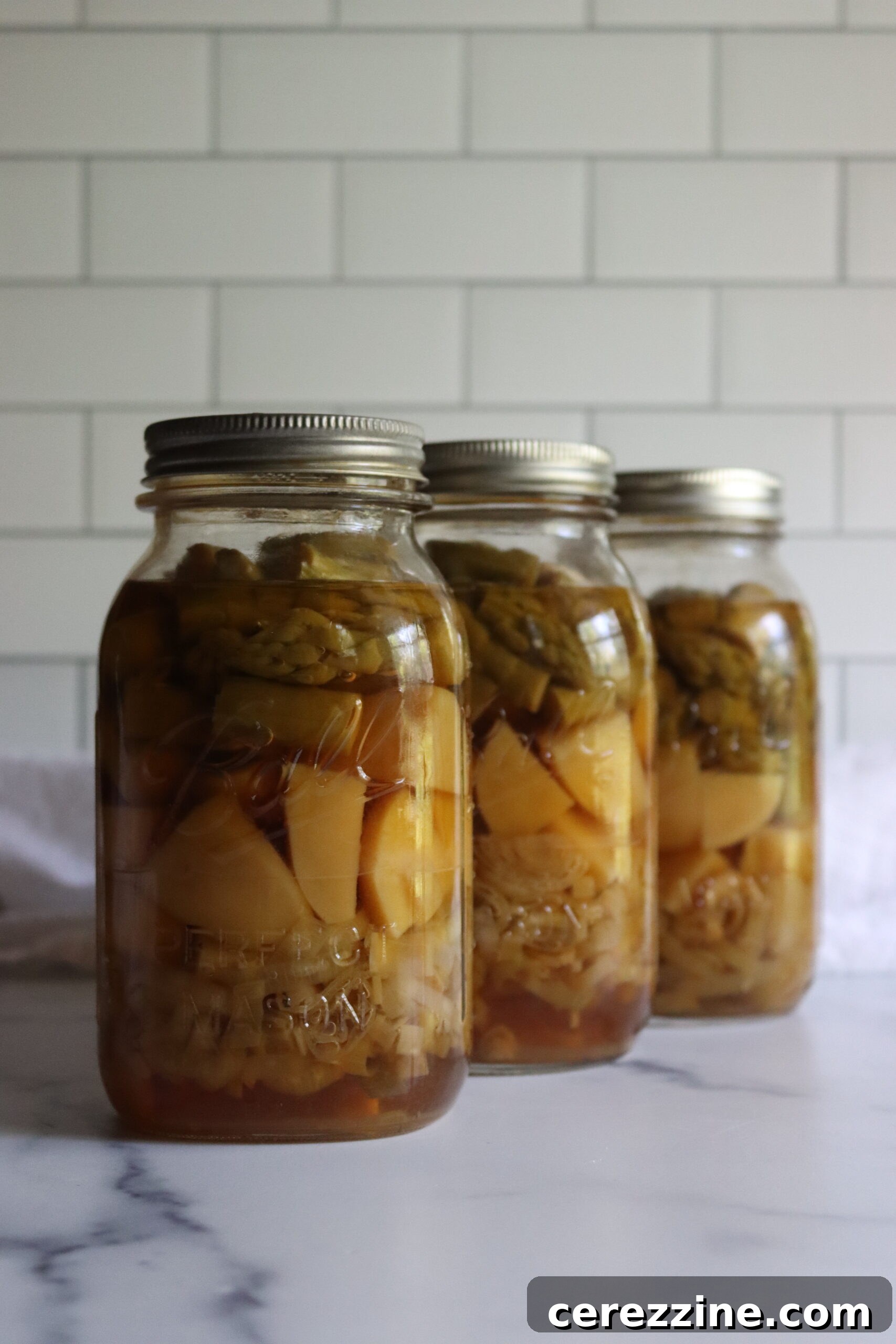
Pressure Canning Instructions
Place the filled jars carefully onto the rack in your pressure canner. Ensure there is enough water in the canner as per manufacturer’s instructions (usually 2-3 inches). Secure the canner lid, making sure it’s properly locked. Turn the heat to high.
- Allow steam to escape steadily from the vent pipe for a full 10 minutes. This “venting” step is crucial to ensure all air is expelled from the canner, and only pure steam remains, leading to accurate pressure readings.
- After 10 minutes of venting, place the weighted gauge or close the petcock (for dial gauge canners). Allow the pressure to build to the recommended level.
- Process quart jars for 75 minutes and pint jars for 60 minutes at 10 pounds of pressure (for weighted gauge) or 11 pounds of pressure (for dial gauge) at altitudes up to 1,000 feet. Adjust pressure for higher altitudes as needed (see section below).
- Maintain a consistent pressure throughout the entire processing time. Adjust heat as necessary to prevent fluctuations.
- Once the processing time is complete, turn off the heat. Allow the canner to cool naturally until the pressure gauge reads zero and the lid safety lock disengages. Do not force cool the canner, as this can lead to liquid loss from jars and seal failures.
- Once cooled and safe to open, carefully remove the canner lid, tilting it away from your face to avoid steam.
- Using a jar lifter, remove the hot jars and place them on a cooling rack or a towel-lined surface, ensuring there is space between them for air circulation.
Post-Canning: Cooling and Checking Seals
Let the jars cool undisturbed for 12 to 24 hours. You’ll hear the satisfying “ping” sound as the lids seal. After the cooling period, check the seals:
- Press the center of each lid. If it is concave and does not flex or pop when pressed, the jar is properly sealed.
- If a lid is not sealed, refrigerate the jar immediately and consume its contents within a few days, or reprocess the soup using a new lid within 24 hours. Never reprocess unsealed jars after 24 hours.
Store properly canned and sealed jars in a cool, dark, dry place, such as a pantry shelf. They will maintain peak quality for 12 to 18 months, but will remain safe to eat indefinitely as long as the seal holds. Once a jar is opened, refrigerate any unused portion and consume within a few days.
Critical Altitude Adjustments for Pressure Canning
Altitude affects boiling points and pressure requirements. It is absolutely essential to adjust the pressure setting based on your elevation to ensure safe processing. While processing *times* remain constant, the *pressure* must change.
For Dial Gauge Pressure Canners:
- 0 to 2,000 feet in elevation: 11 lbs pressure
- 2,001 to 4,000 feet in elevation: 12 lbs pressure
- 4,001 to 6,000 feet in elevation: 13 lbs pressure
- 6,001 to 8,000 feet in elevation: 14 lbs pressure
For Weighted Gauge Pressure Canners:
- 0 to 1,000 feet in elevation: 10 lbs pressure
- Above 1,000 feet: 15 lbs pressure
Serving Your Homemade Asparagus, Potato, and Leek Soup
Once you’ve safely canned your Asparagus, Potato, and Leek Soup, the joy of serving it begins. Simply heat the soup gently on the stovetop or in the microwave until it reaches your desired temperature. If you prefer a thinner consistency, feel free to add a splash of extra vegetable broth or water.
This soup is wonderfully versatile. You can enjoy it as a chunky, rustic soup, allowing you to savor the individual textures of the vegetables. Alternatively, for a silky-smooth and elegant presentation, use an immersion blender directly in the pot, or carefully transfer the soup to a stand blender (in batches, if necessary) and blend until creamy. Be cautious when blending hot liquids.
Elevate your serving experience with a variety of delicious garnishes and accompaniments:
- A drizzle of high-quality extra virgin olive oil for a touch of richness.
- Freshly chopped chives, parsley, or dill to brighten the flavors.
- A dollop of crème fraîche or sour cream for a creamy tang.
- A sprinkle of grated Parmesan or Pecorino Romano cheese.
- Toasted croutons or crusty bread for dipping.
- A swirl of pesto or a pinch of red pepper flakes for an extra kick.
Recipe: Canned Asparagus, Potato, & Leek Soup
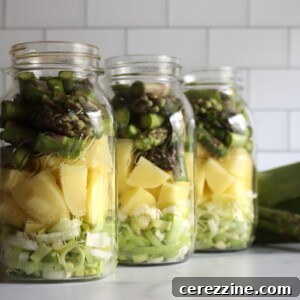
This delightful soup combines the classic flavors of potato leek with fresh asparagus, expertly preserved through pressure canning for enjoyment all year long.
Yields: 2 Quarts (4 servings)
Prep Time: 10 minutes
Cook Time: 10 minutes
Canning Time (Processing): 1 hour 30 minutes (90 minutes for quarts)
Equipment
- Pressure Canner
- Jar Lifter
- Canning Funnel
- Wide Mouth Quart Mason Jars
- Wide Mouth Canning Lids
- Large Pot
- Non-metallic spatula or bubble remover
Ingredients
For a small two-quart canner batch (or to prepare each quart jar with):
- 2 cups leeks, sliced (or 1 cup per quart jar)
- 3 cups potatoes, diced (or 1 1/2 cups per quart jar)
- 3 cups asparagus, chopped (or 1 1/2 cups per quart jar)
- 2 tsp salt (or 1 tsp per quart jar)
- Vegetable broth to fill (about 4 cups total, or 1 1/2 to 2 cups per quart jar)
Instructions
- Prepare Canner and Jars: Before starting, prepare your pressure canner and ensure jars are clean and warm. For a hot pack, the canner water should be simmering at around 180°F (82°C). For a raw pack, use warm water, around 140°F (60°C).
- Prepare Vegetables: Wash and slice leeks, ensuring no dirt remains between layers. Peel and dice potatoes into bite-sized pieces. Trim and cut asparagus into 1-inch pieces.
- Hot Pack Preparation (Recommended): In a large pot, combine the sliced leeks, diced potatoes, chopped asparagus, and salt. Add enough vegetable broth to cover the vegetables. Bring to a boil, then reduce heat and simmer for about 5 minutes. This helps soften vegetables and improves canned quality.
- Raw Pack Preparation (Alternative): If raw packing, pack the raw, prepared vegetables and salt directly into warm canning jars. Separately, bring your vegetable broth to a rolling boil.
- Fill Jars: Ladle the hot soup mixture (for hot pack) or raw vegetables (for raw pack) into warm quart jars. Ensure an even distribution of solids. If raw packing, pour boiling broth over the vegetables. Leave a consistent 1-inch headspace (space between food and rim).
- Remove Air Bubbles: Use a non-metallic bubble remover or spatula to remove trapped air bubbles. Adjust headspace by adding more broth if needed.
- Seal Jars: Wipe jar rims clean with a damp cloth. Center new lids on jars and screw on metal bands fingertip tight.
- Process in Pressure Canner: Place filled jars into the prepared pressure canner. Secure the lid and turn heat to high. Allow steam to escape for 10 minutes before adding the weight. Process quart jars at 10 pounds of pressure (for weighted gauge) or 11 pounds of pressure (for dial gauge) for 90 minutes. Adjust pressure for altitude as per guidelines.
- Cool and Check Seals: Once processing is complete, turn off heat and allow the canner to cool naturally until pressure drops to zero. Carefully remove jars and place them on a cooling rack, undisturbed for 12-24 hours. After cooling, check seals by pressing the center of each lid – it should be concave and not flex.
- Store: Store properly sealed jars in a cool, dark pantry. Refrigerate any unsealed jars and use immediately.
Notes
- Hot packing for soups is generally recommended for better quality (less shrinkage, better texture), though raw packing is safe if proper processing times and pressures are followed. The contents will cook completely during canning regardless of pack type.
- The minimum batch size for pressure canning is 2 quarts (or 4 pints). You can increase this recipe to your canner’s capacity, but do not decrease below this minimum for canning.
- Properly canned soup maintains peak quality for 12-18 months, but remains safe as long as the seal is intact. Refrigerate promptly after opening.
- Any jars that do not seal properly should be reprocessed with a new lid within 24 hours or stored in the refrigerator for immediate consumption.
Nutrition Information (Approximate)
Serving: 2 cups, Calories: 253kcal, Carbohydrates: 57g, Protein: 9g, Fat: 1g, Saturated Fat: 0.1g, Polyunsaturated Fat: 0.3g, Monounsaturated Fat: 0.01g, Sodium: 1775mg, Potassium: 1420mg, Fiber: 10g, Sugar: 7g, Vitamin A: 2257IU, Vitamin C: 63mg, Calcium: 105mg, Iron: 6mg
Nutrition information is automatically calculated and should only be used as an approximation. Actual values may vary.
Explore More Soup Canning Recipes
If you’ve enjoyed the rewarding experience of canning this Asparagus, Potato, and Leek Soup, you’ll be thrilled to discover the vast world of other delicious soups you can preserve for your pantry. Expand your collection of homemade, ready-to-eat meals with these proven soup canning recipes:
- Hearty Sausage, Potato, and Kale Soup
- Flavorful Taco Soup
- Sweet and Simple Carrot Soup
- Classic Roasted Tomato Basil Soup
- Comforting Split Pea Soup
- Traditional Chicken Soup
Discover More Vegetarian Canning Recipes
For those committed to plant-based eating or simply looking to incorporate more vegetables into their diet, canning offers an excellent way to preserve vegetarian and vegan dishes. Unlock the potential of your garden and extend the bounty of harvest season with these versatile vegetarian canning recipes:
- Savory Vegetarian Baked Beans
- Nutrient-Rich Carrot Soup
- Spicy Chipotle Black Bean Soup
- Essential Homemade Vegetable Broth