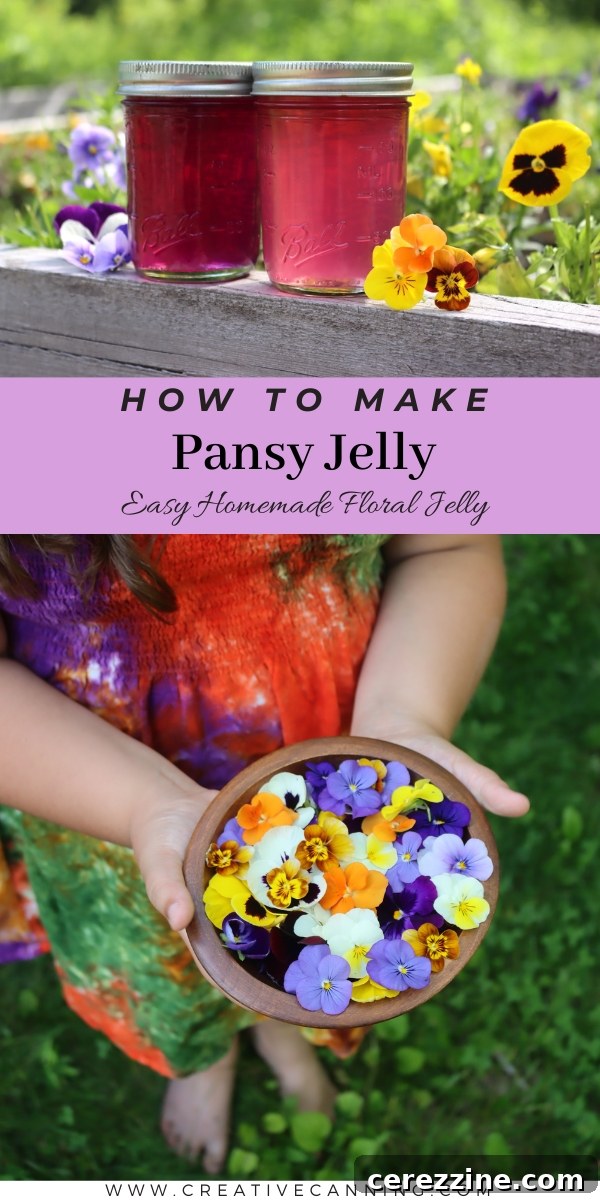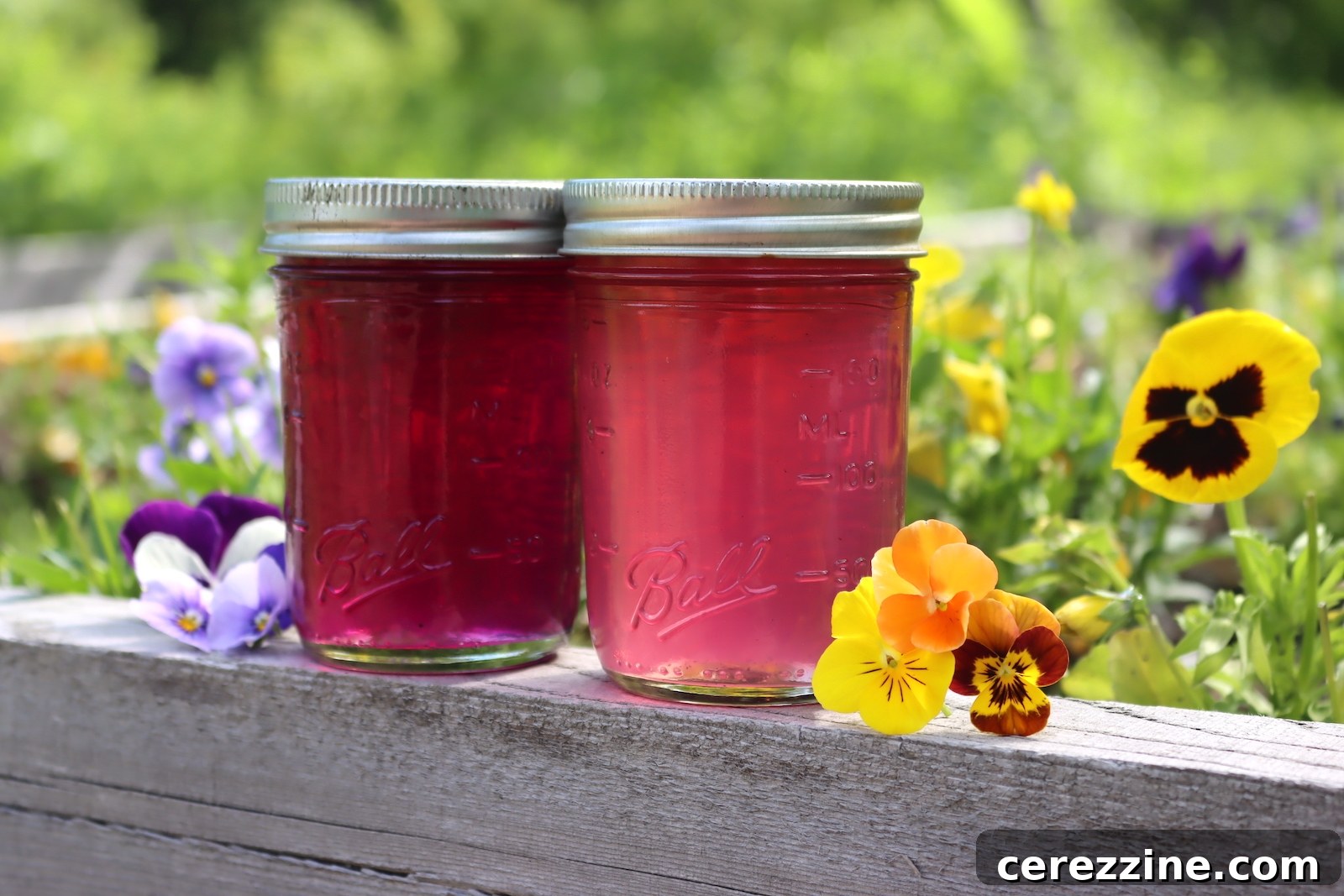
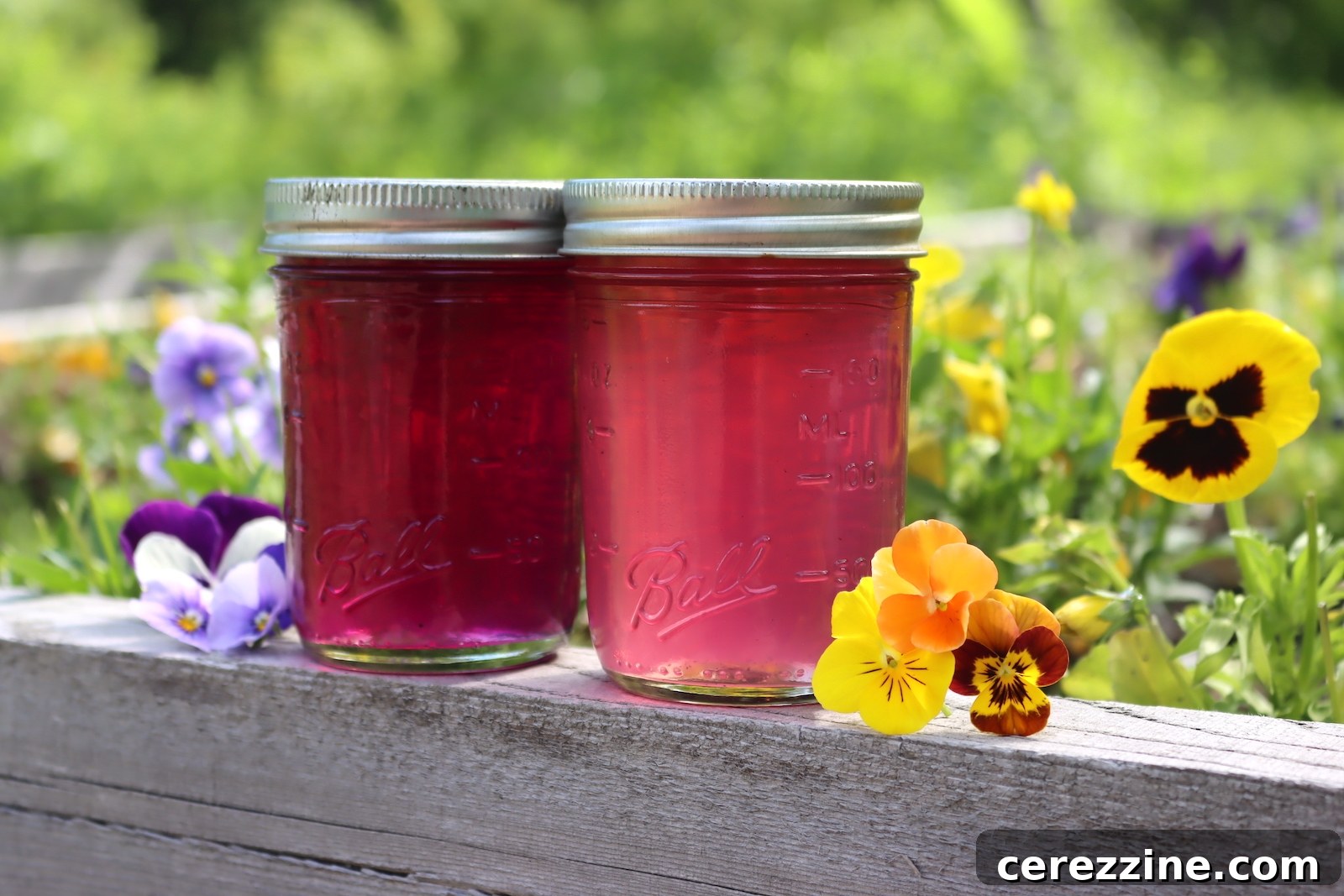
Step into a world of vibrant flavors and delicate aromas with Pansy Jelly, a true celebration of spring’s bounty. This exquisite floral jelly, crafted from beautiful edible pansy flowers, offers a unique culinary experience. Whether you’re gathering cultivated garden pansies or foraging for charming wild violets, this versatile recipe ensures a delightful result, transforming humble blossoms into a glistening, berry-like preserve.
As the winter chill begins to fade, pansies emerge as one of the very first heralds of spring in our gardens. Their cheerful faces, resilient against lingering frosts, bring a much-needed splash of color long before most other garden staples are even ready for planting. My daughter, like many, eagerly anticipates their appearance at the garden store each year, a sure sign that warmer days are on their way.
Beyond their aesthetic appeal and early season charm, these beloved flowers hold a delightful secret: pansies are entirely edible! This wonderful discovery opens up a world of culinary possibilities, allowing us to incorporate their beauty and subtle flavor into a variety of dishes.
These lovely spring blooms are perfect for adding a pop of color and a hint of fresh taste to salads, or for transforming into delicate candied flowers to adorn cakes and desserts. But for those looking to capture the essence of spring in a jar, an exceptional homemade pansy jelly truly shines. It’s a remarkably simple yet utterly magical way to preserve the season’s fleeting beauty and unique flavor.
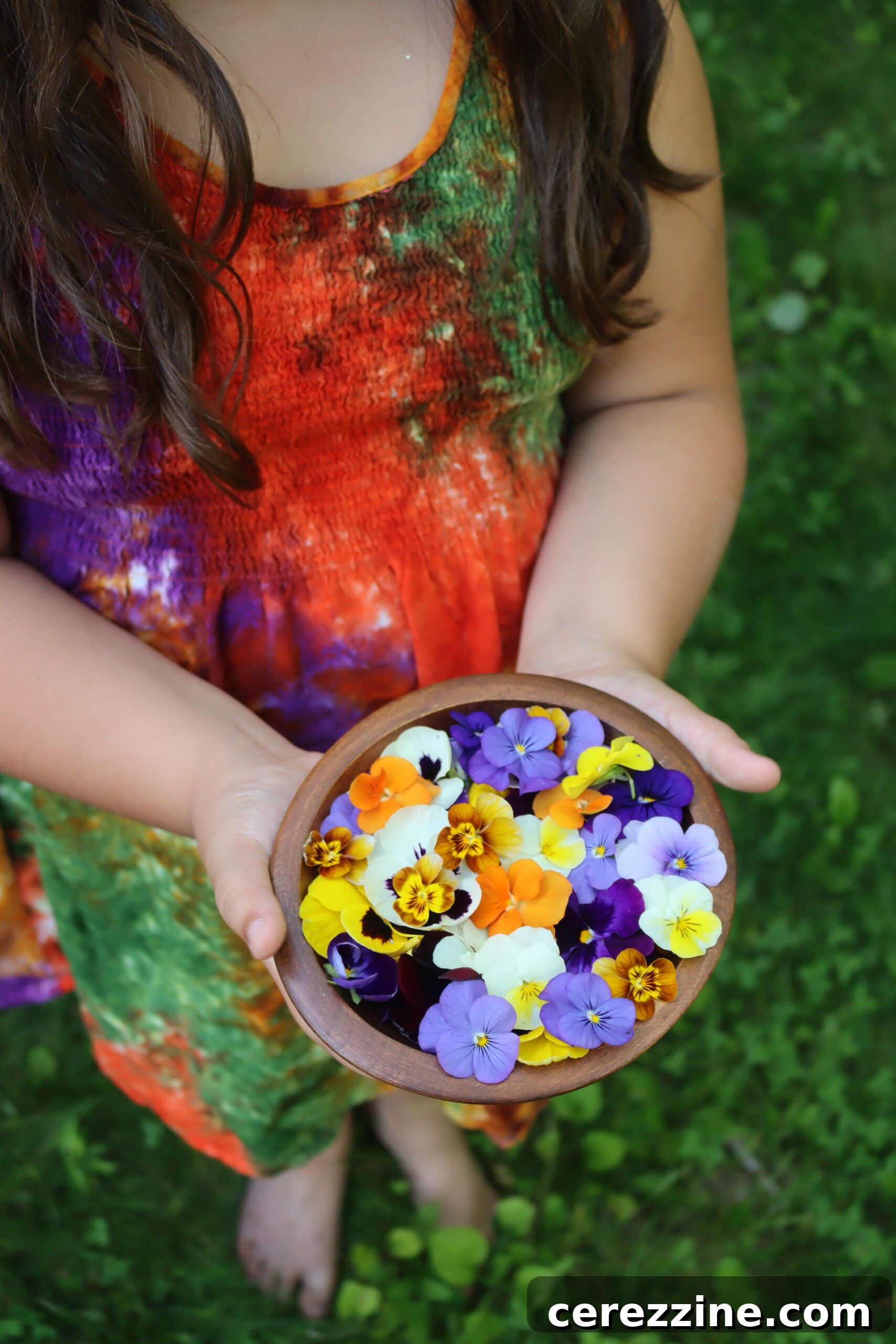
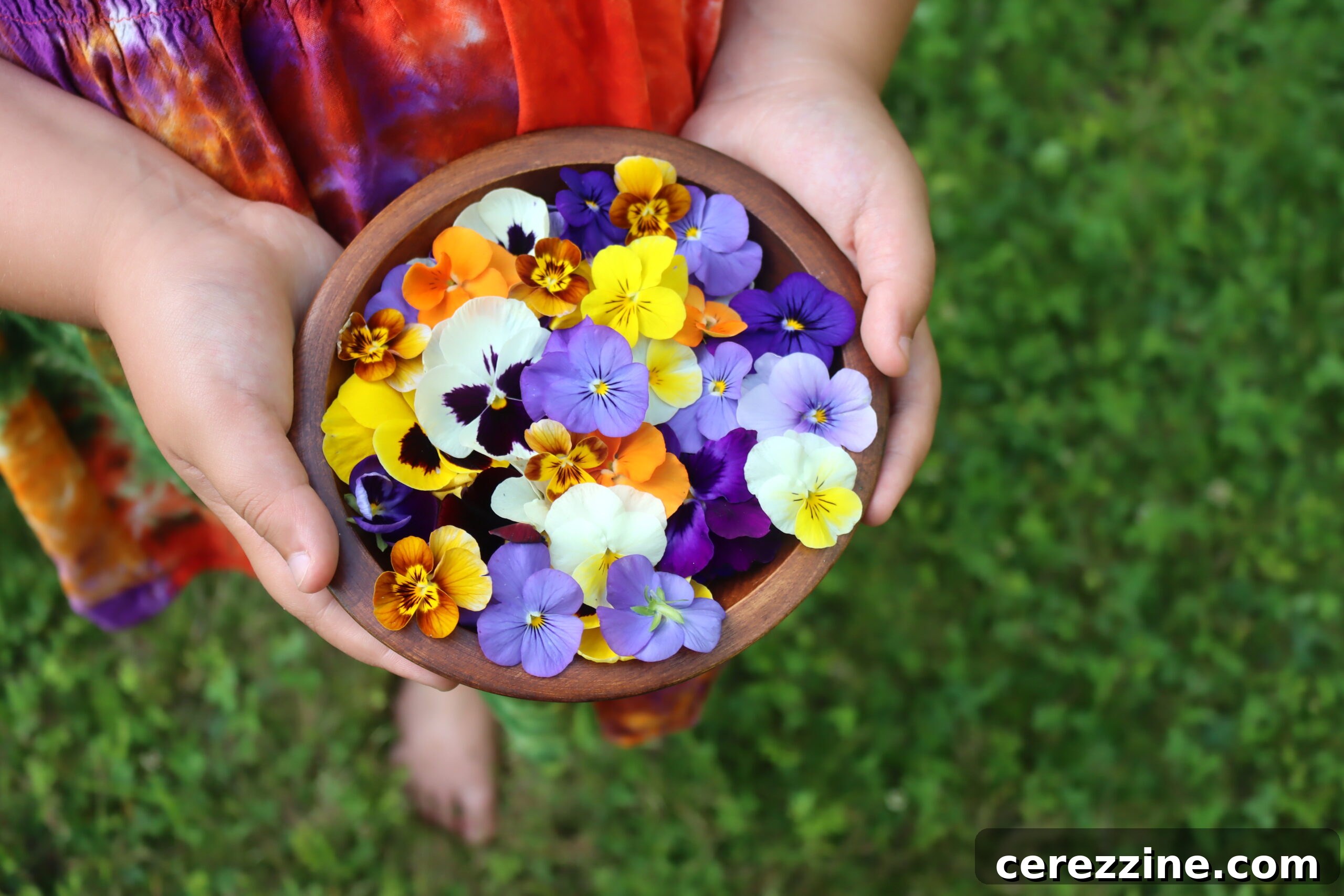
It’s important to note that all species within the Viola genus are edible, encompassing both the domesticated varieties found in nurseries and their wild counterparts. In previous years, we’ve experimented with making wild violet jelly, which is undeniably delicious. However, the diminutive size of wild violet blossoms often means spending an entire afternoon patiently gathering enough flowers to create a single batch. The same effort applies to “Johnny Jump Ups” (Viola tricolor), which, despite their abundance in the shady corners of our yard and garden paths, yield tiny flowers that require significant collection time.
This year, we turned our attention to the more robust garden pansies gracing our flower beds. The results of our simple pansy jelly experiment were nothing short of enchanting. The flavor proved just as wonderful as its wild violet cousin, but with a significant advantage: pansy flowers are considerably larger and more prolific. This means you can gather a sufficient quantity for a batch of jelly in mere minutes, rather than hours, making the process much more efficient and enjoyable. This convenience makes homemade pansy jelly an ideal project for both novice and experienced preservers.
A Quick Look at the Pansy Jelly Recipe
- Recipe Name: Pansy Jelly
- Recipe Type: Flower Jelly Recipe, Edible Floral Preserve
- Canning Method: Waterbath Canning (Optional, but Recommended for Shelf Stability)
- Prep/Cook Time: Approximately 30 Minutes Active Time
- Canning Time: 10 Minutes (Adjust for Altitude)
- Yield: 4 to 5 half-pint jars (depending on sugar content and pectin type)
- Recommended Jar Sizes: Quarter Pint, Half Pint, or Pint
- Headspace: 1/4 inch for optimal canning safety
- Ingredients Overview: Fresh Edible Pansy Flowers, Water, Lemon Juice (essential!), and Granulated Sugar
- Difficulty: Easy! This recipe is straightforward, essentially involving steeping a floral tea and setting it with pectin.
- Similar Recipes: The preparation method for pansy jelly closely mirrors that of other popular summertime floral jellies, including Chamomile Jelly, Calendula Jelly, Elderflower Jelly, Peony Jelly, Nasturtium Jelly, Borage Jelly, and Rose Petal Jelly.
Harvesting Pansies for an Unforgettable Flower Jelly
When embarking on the delightful journey of making flower jelly, my preferred method for harvesting blossoms is to pick them directly into a mason jar. This approach offers several practical benefits. Mason jars are heat-proof, making them ideal for the subsequent step of steeping the flower tea. More importantly, using a jar provides a visual cue, allowing me to gauge precisely when I’ve gathered enough flowers for the recipe, ensuring consistency in every batch of pansy jelly.
For a standard batch of flower jelly, typically requiring one box of pectin, you’ll need approximately 4 cups of pansy blossoms, loosely packed. This volume conveniently fills a one-quart mason jar. If you’re planning a smaller batch, a half-batch would require a pint jar full, and a quarter-batch would correspond to a half-pint jar. Aim for fresh, vibrant blooms that are fully open and free from blemishes or insect damage for the best flavor and color in your homemade pansy jelly.
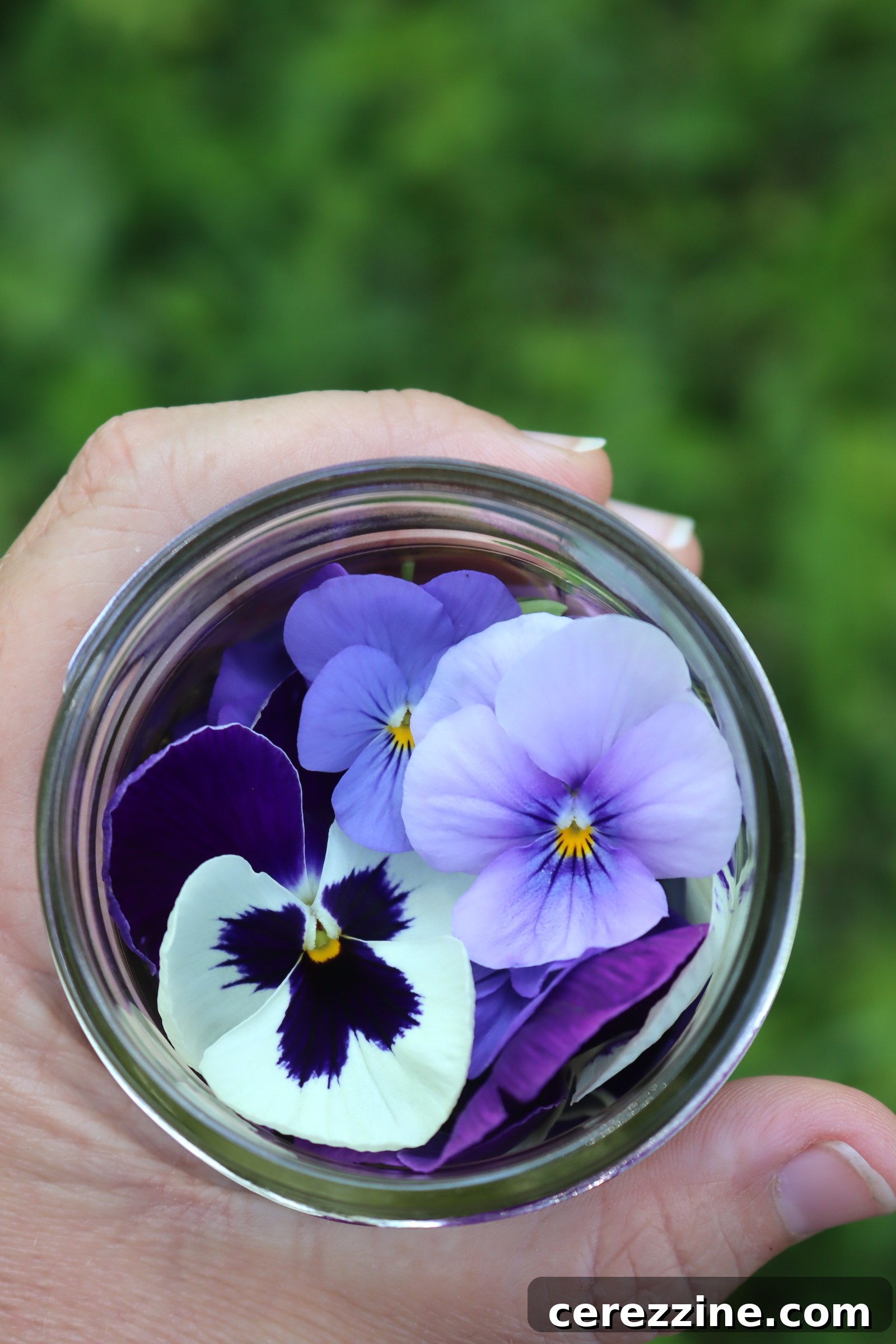
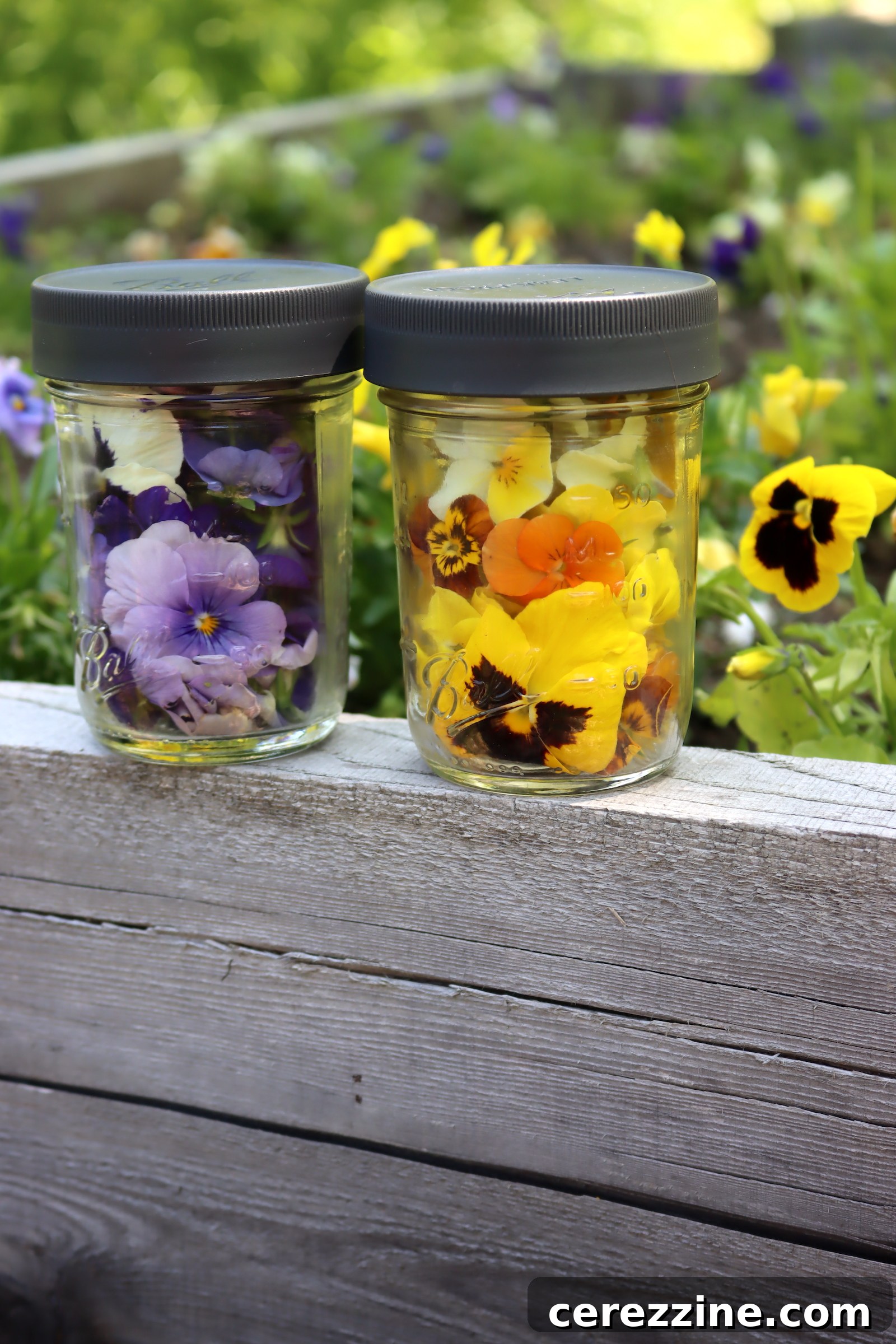
During my initial collection for this pansy jelly recipe, I separated the pansies into jars based on their color. My curiosity was piqued: would different colored pansies – from bright yellows and oranges to deep purples and blues – yield distinct jelly hues or even subtle flavor variations? Pansies truly come in an astonishing array of colors, some purples so dark they appear almost black.
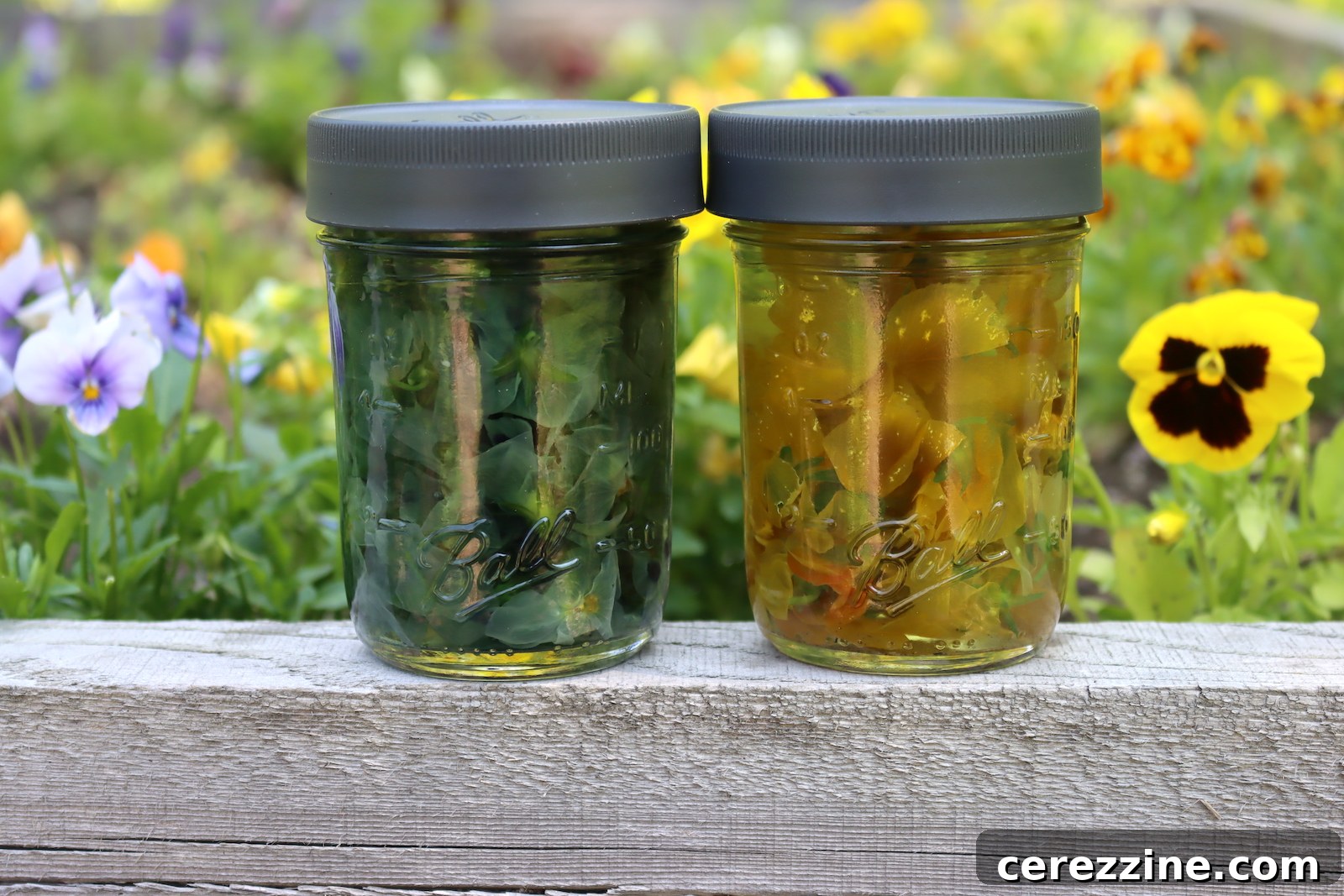
However, the magic truly begins when you transform these colorful blossoms into a pansy tea for jelly. Regardless of their initial hue, all pansy varieties will produce a tea that ranges from a delicate turquoise to a vivid blue-green. Lighter flowers typically yield a paler turquoise, while darker blooms result in a deeper blue-green, but the underlying color remains consistently within this spectrum.
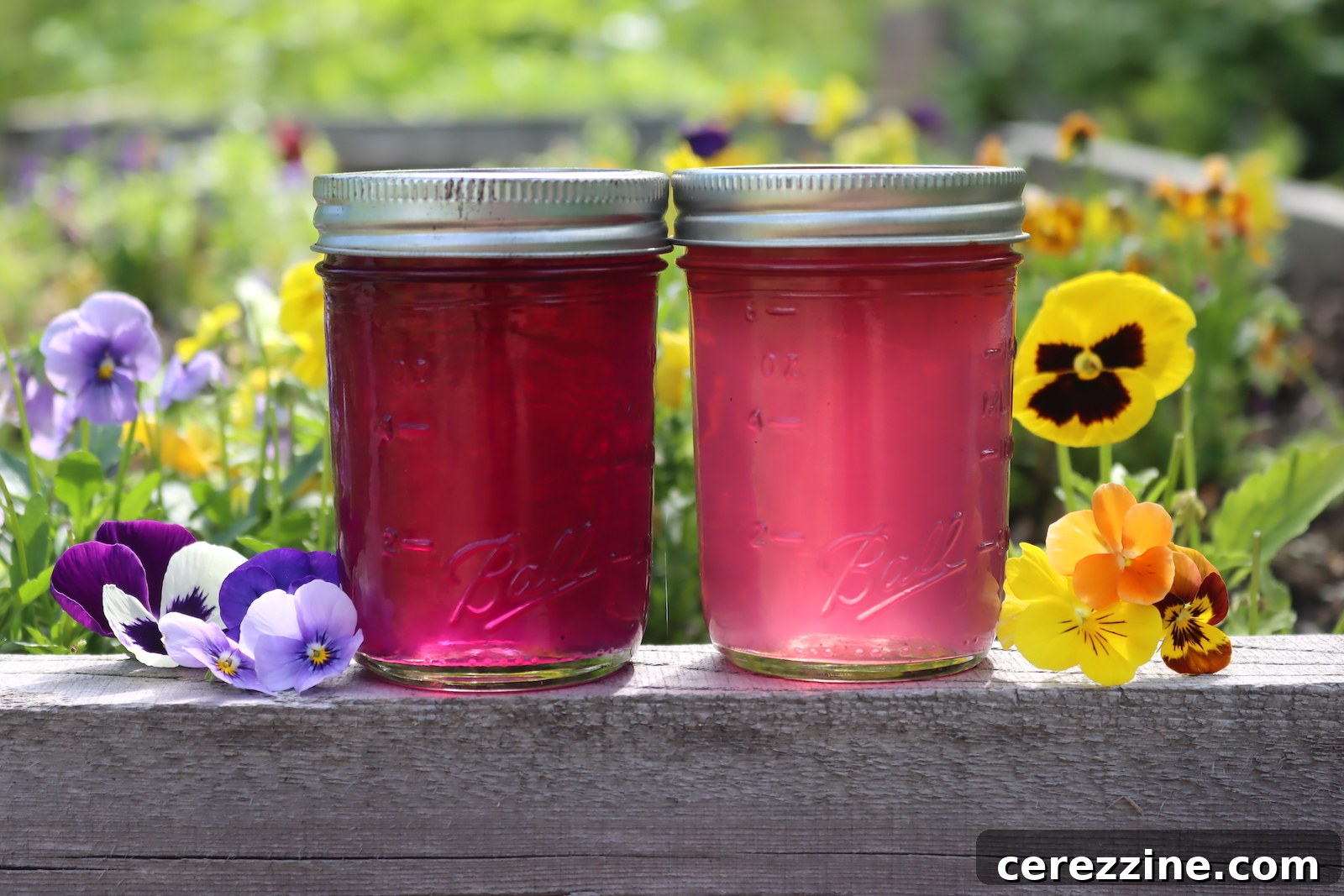
The truly transformative moment occurs when you introduce lemon juice (or citric acid) to the turquoise pansy tea. This acidic addition acts as a natural pH indicator, causing the blue-green liquid to dramatically shift into shades of purple-red or vibrant pink. This color change is universal, meaning even if you started with bright orange or sunny yellow pansies, your finished jelly will boast beautiful pink, red, maroon, or rich purple tones. So, don’t be alarmed by the unexpected blue-green tea at the beginning of the process – it’s an entirely normal and exciting part of crafting beautiful pansy jelly.
What Does Pansy Jelly Taste Like? A Surprising Spring Berry Flavor!
Prepare to be pleasantly surprised by the flavor of homemade pansy jelly. The very compounds responsible for pansies’ stunning colors are also intrinsically linked to their delicate taste. These vibrant pink and blue anthocyanin compounds are remarkably similar to those found in popular fruits like blueberries and strawberries. Believe it or not, this leads to an astonishing revelation: pansy jelly tastes remarkably like fresh spring berries!
When combined with a touch of lemon juice, which not only enhances the color but also provides a crucial acidic balance, the berry-like effect in pansy jelly is quite convincing. This means you can enjoy a delightful “fruit” jelly long before the season’s first actual berries ripen. It’s a fantastic way to enjoy fruity notes in early spring.
Beyond the prominent berry-like profile, a subtle, ethereal fragrance from the pansy flowers gently permeates the jelly. This adds another layer of complexity, creating a preserve that tastes like sun-ripened berries kissed with a light, fresh floral aroma. It’s a sophisticated yet comforting flavor that truly captures the essence of spring in every spoonful. Pansy jelly is not just a treat for the eyes but a delightful surprise for the palate, offering a unique twist on traditional preserves.
Essential Ingredients for Your Perfect Pansy Jelly
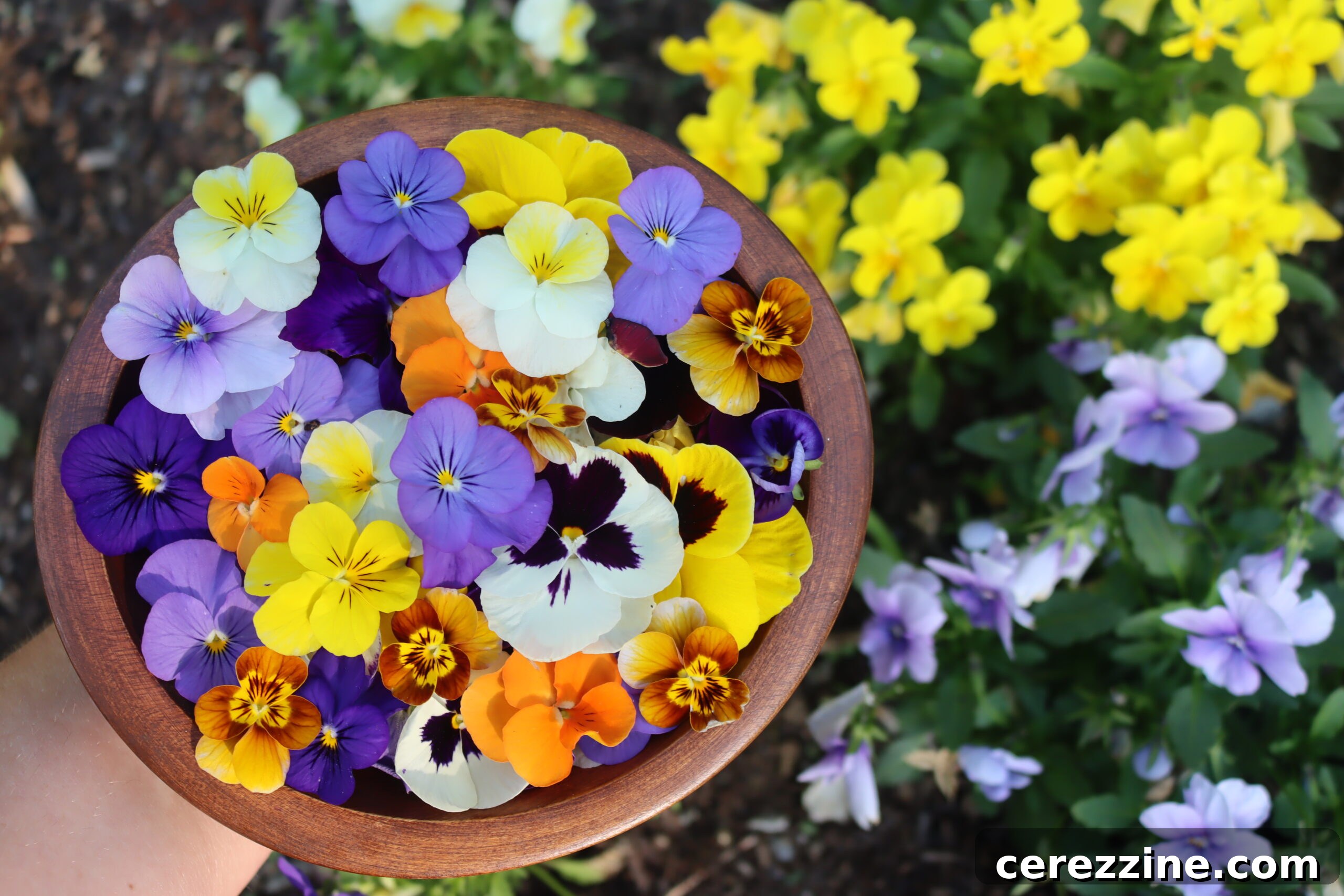
Crafting a delicious pansy jelly requires just a few key ingredients. You’ll need an abundance of freshly harvested edible pansy blooms, complemented by water, sugar, pectin for setting, and a vital splash of lemon juice. Each component plays a crucial role in achieving the desired flavor, texture, and shelf-stability of your homemade floral preserve.
For a standard batch yielding approximately 4 to 5 half-pint (8 oz) jars of pansy jelly, here are the precise quantities you’ll need:
- 4 cups of fresh pansy blossoms (loosely packed)
- 4 cups of clean water
- 2 tablespoons of fresh lemon juice (or ½ teaspoon of citric acid powder, dissolved) – this is NOT optional
- 1 to 4 cups of granulated sugar (*see important notes below on sugar quantity based on pectin type)
- 1 box (1.75 oz) powdered pectin (either Regular or Low Sugar variety will work, but impacts sugar needed)
If you find yourself with slightly fewer pansy flowers than the recipe calls for, don’t despair! You can easily make a half-batch of pansy jelly by reducing all ingredients proportionally. For pectin, remember that a full 1.75-ounce box typically contains 6 tablespoons, so a half-batch would use 3 tablespoons. Alternatively, using 2 cups of flowers instead of 4 will result in a lighter flavor and color, but still a delightful jelly.
The lemon juice is an indispensable ingredient in this pansy jelly recipe for several reasons. Firstly, it brilliantly balances the sweetness from the sugar, introducing a pleasant tart contrast that elevates and brightens the delicate flavor of the pansies. Secondly, lemon juice is crucial for lowering the pH of the jelly mixture. This acidity is essential for activating the pectin, ensuring your jelly sets properly to the perfect consistency. Furthermore, this lowered pH is critical for food safety, especially if you plan to preserve your pansy jelly through canning.
Even if you intend to store your pansy jelly solely in the refrigerator and not can it, the lemon juice remains a mandatory component for both flavor and pectin activation. Should you prefer a more neutral flavor profile without the distinct citrus note, you can substitute lemon juice with citric acid powder. Citric acid granules are considerably more potent than liquid citrus juice. The general conversion rate is 1/4 teaspoon of citric acid powder for every tablespoon of lemon or lime juice called for in a recipe. Given that this pansy jelly recipe requires 2 tablespoons of lemon juice, you would substitute it with 1/2 teaspoon of citric acid powder per batch, dissolved in a small amount of water.
Regarding pectin, I consistently rely on either Sure-Jell or Sure-Jell Low Sugar pectin. In my experience, these brands are exceptionally dependable and consistently produce the best texture for my homemade jellies and jams. I’ve experimented with nearly every type of pectin available on the market, and these remain my top choice.
If you’re using regular Sure-Jell pectin, it’s crucial to understand that it requires a minimum of 4 cups of sugar to ensure a proper set, maintaining a traditional 1:1 liquid-to-sugar ratio. This results in a classic, very sweet “old-fashioned” jelly. For those who prefer a less sweet preserve, Sure-Jell Low Sugar pectin is an excellent alternative. It’s formulated to gel with a much wider range of sugar quantities, allowing you to use as little as 1/2 cup of sugar for a barely sweet jelly. For a lower-sugar pansy jelly that still offers satisfying sweetness, I recommend using 1 to 2 cups of sugar.
(A practical tip: Sure-Jell Low Sugar pectin is incredibly versatile and can also be used successfully in full-sugar recipes. For this reason, it’s often the only pectin I keep stocked in my pantry, as it adapts perfectly to any sugar preference.)
Should you be using Ball Flex Batch Pectin, you will need 6 tablespoons for this recipe. This quantity is equivalent to a standard 1.75-ounce box of other powdered pectin brands, and this holds true for both their regular and low-sugar canisters.
While the following detailed recipe primarily focuses on powdered pectin, it’s worth mentioning liquid pectin. Liquid pectin generally demands significantly higher amounts of sugar to set (often around 7 cups of sugar for 4 cups of liquid). Personally, I don’t typically use liquid pectin due to these high sugar requirements. However, as some individuals prefer it, I’ve ensured the core instructions are adaptable, though you’d need to follow the specific directions provided with your liquid pectin product, as the order of ingredient addition is different.
Crafting Your Own Delicious Pansy Jelly: A Step-by-Step Guide
Making jelly from pansies follows a similar, straightforward process to creating any homemade flower jelly. The techniques learned here are easily transferable to other edible blooms like calendula, elderflowers, roses, and many more. The key is to start with fresh, vibrant flowers and follow the steps carefully to ensure a beautifully set, flavorful preserve.
You’ll need between 2 and 4 cups of fresh pansy blossoms. For the most vibrant color and robust flavor in your pansy jelly, I highly recommend using the full 4 cups. My preferred method is to pick the blossoms directly into a quart-sized mason jar. This jar serves as the perfect vessel for the next critical step: steeping the pansies in 4 cups of boiling water.
Once the boiling water is poured over the blossoms, allow the pansies to steep for approximately 15 to 20 minutes. This infusion period extracts the delicate flavors and colors from the petals, creating a potent floral tea. After steeping, carefully strain the liquid, discarding the spent blossoms.
Do not be alarmed when you observe that the resulting tea is a striking blue or green hue. This is completely normal and part of the pansy’s natural chemistry. The magical transformation to shades of pink and purple will occur when you introduce the lemon juice, so trust the process!
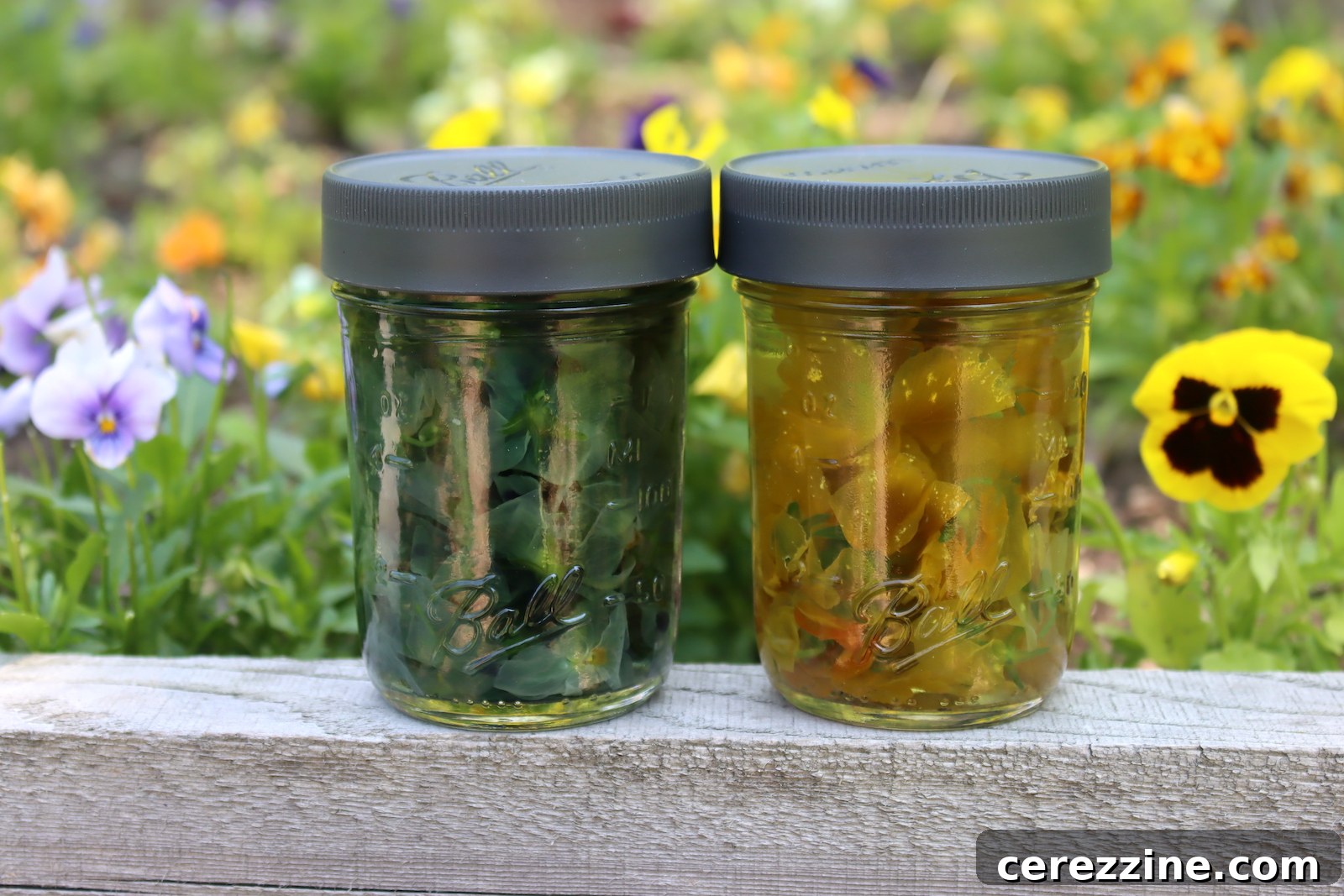
Next, pour the strained pansy tea into a clean jelly pot or a large saucepan. Add two tablespoons of fresh lemon juice. As discussed earlier, this lemon juice is indispensable: it beautifully balances the sweetness of the sugar, brings out the vibrant pink-to-purple color in your jelly, and crucially, adds the necessary acidity to make the jelly safe for canning. Even if you’re not planning to can your jelly, do not skip the lemon juice for optimal flavor and pectin set. Bring this tea mixture to a full boil over high heat.
Once the pansy tea with lemon juice is at a rolling boil, quickly add one box of powdered pectin. I generally use Sure-Jell, but any standard 1.75 oz box of powdered pectin will work effectively. It is vital to add the pectin at this stage, before the sugar.
Stir the pectin continuously until it is completely dissolved into the boiling liquid. Once dissolved, maintain a full, rolling boil for exactly 1 full minute. This ensures the pectin is properly activated.
Now, it’s time to add the sugar. If you are using standard pectin, remember that it requires a 1:1 ratio of sugar to liquid to achieve a proper gel. Since you’re working with 4 cups of pansy tea, you will need to add 4 cups of granulated sugar.
However, if you opted for a “low sugar” pectin, such as Sure-Jell Low Sugar, you have the flexibility to adjust the sugar content to your preference. For a very low sugar pansy jelly, you can use as little as 1/2 to 1 cup of sugar for 4 cups of pansy tea, resulting in a less sweet but equally delightful preserve.
After the sugar has been added, stir the mixture thoroughly until the sugar is completely dissolved. Return the mixture to a hard, rolling boil on the stove and boil vigorously for another 1 minute. This final boil ensures proper gel formation.
After the 1 minute of hard boiling, remove the jelly mixture from the heat. Carefully and quickly ladle the hot pansy jelly into your prepared jars, leaving precisely 1/4 inch of headspace at the top of each jar. This headspace is essential for proper sealing if you plan to can the jelly.
Canning Pansy Jelly for Year-Round Enjoyment
Once you’ve made your delicious pansy jelly, canning it is an optional but highly recommended step. If you choose not to can, you can simply store your homemade pansy jelly in the refrigerator, where it will maintain its quality for several weeks. Freezing is another viable option, provided you use freezer-safe jars or containers, extending its freshness for up to six months.
However, for ultimate convenience and long-term storage, I personally favor the simplicity and effectiveness of processing the jars in a water bath canner. This method allows me to safely store the pansy jelly directly on my pantry shelf, preserving its delightful qualities for an entire year or even longer. With properly canned jars, I can savor the sweet berry-like flavor and delicate floral notes of pansy jelly any time of year, without occupying precious refrigerator or freezer space.
To safely can this floral jelly, it is absolutely crucial that you have included the lemon juice in the recipe. The lemon juice effectively lowers the pH of the mixture to a level safe for water bath canning, inhibiting the growth of harmful bacteria.
Before you even begin making the pansy jelly, ensure you have your water bath canner, canning jars, and lids properly prepared and sterilized. Once the jelly is cooked according to the instructions above, carefully ladle it into your prepared canning jars, making sure to leave precisely 1/4 inch of headspace at the top of each jar. This is essential for a strong vacuum seal.
Securely seal the filled jars with two-part canning lids (a flat lid and a screw band), ensuring they are finger-tight. Then, process the jars in a boiling water bath canner for 10 minutes. If you reside at an elevation above 6,000 feet, you will need to increase the processing time to 15 minutes to account for the lower boiling point of water.
Once the canning time is complete, carefully remove the hot jars from the canner and place them on a clean towel on your counter, allowing them to cool undisturbed. As they cool, you should hear the satisfying “ping” of the lids sealing. Properly canned and sealed jars of pansy jelly will maintain their excellent quality and flavor on your pantry shelf for 12 to 18 months. Once a jar is opened, it should be refrigerated and consumed within a few weeks.
Exciting Pansy Jelly Variations to Explore
While the pure flavor of pansies shines beautifully on its own in jelly, these versatile blooms also pair wonderfully with other edible flowers, opening up exciting possibilities for unique flavor combinations. Experimenting with pansy jelly variations can lead to truly delightful discoveries for your pantry.
One fantastic combination is a dandelion petal pansy jelly. Dandelion petals impart a distinct honey-like flavor, which, when blended with pansies, creates a complex and irresistible honey-berry taste. If you’ve never made dandelion jelly before, I highly recommend trying it – it’s truly amazing and complements pansies perfectly!
Another intriguing variation is inspired by the 1988 book On Flowers by Kleinman & Slavin. They suggest making lavender jelly but utilizing pansies specifically for their vibrant color. Lavender boasts an intensely aromatic and potent flavor profile, but it doesn’t contribute much color to jelly. By combining a few cups of pansies with just 1 tablespoon of lavender blossoms, you can achieve a visually stunning jelly with plenty of luscious color, alongside more than enough exquisite lavender flavor.
In this particular lavender-pansy variation, however, it’s worth noting that the assertive fragrance and taste of the lavender will likely overpower the subtle, delicate flavors of the pansies. The pansies here serve primarily as a natural color enhancer rather than a dominant flavor contributor. Nevertheless, it’s a beautiful way to combine the strengths of both flowers for a truly unique preserve.
Discover More Creative Pansy Flower Recipes
Beyond the delightful world of pansy jelly, these edible spring flowers can be incorporated into a multitude of other culinary creations. If you’re inspired to explore more ways to utilize the beauty and subtle flavors of pansies in your kitchen, here are some fantastic ideas to get you started:
- Over 40 Creative Pansy Recipes: A comprehensive collection of ideas to inspire your culinary adventures with pansies.
- Elegant French Pansy Crepes: Add a touch of sophistication and spring charm to your breakfast or dessert.
- Flavorful Flower and Herb Butter: Infuse compound butter with pansies and herbs for a gourmet spread.
If you tried this Pansy Jelly Recipe, or any other recipe on Creative Canning, we’d love to hear from you! Please leave a ⭐ star rating and share your thoughts in the 📝 comments below!
And make sure you stay connected with us by following on social media for more creative canning and edible flower recipes!
Explore More Edible Flower Jellies
Tulip Jelly: A Unique Spring Preserve
Are Flower Jellies Safe for Canning? Essential Safety Guidelines
Fragrant Lilac Jelly: Capture Spring’s Scent
⭐
⭐
⭐
⭐
40
servings, Makes 5 (8 oz) Jars
Pansy Jelly Recipe
Ashley Adamant
15
5
10
30
Pin Recipe
Rate Recipe
Print Recipe
Ingredients
-
4
cups
pansy blossoms -
4
cups
water -
2
tbsp
lemon juice -
1 to 4
cup
sugar,
see note on pectin types -
1
box
powdered pectin
,
1.75 oz (Regular or Low Sugar variety)
Instructions
-
Harvest 4 cups of pansy blossoms into a heat-proof container such as a quart mason jar. There’s no need to meticulously remove the sepals or bases; they are perfectly edible and won’t impart any bitterness to your jelly.
-
Pour 4 cups of freshly boiled water directly over the collected pansy blossoms. Allow the floral tea to infuse for about 10 to 15 minutes, letting the water extract the delicate colors and flavors from the flowers.
-
Strain the infused floral tea into a clean saucepan or jam pot, discarding the spent pansy blossoms. Add the 2 tablespoons of lemon juice to the tea. This step is crucial: it enhances the vibrant color of the jelly, provides essential acidity for pectin to set, and makes the jelly safe for canning. Do not skip the lemon juice!
-
Bring the mixture to a full boil over high heat. Once boiling, add the powdered pectin, stirring continuously until it is completely dissolved. Allow the mixture to boil vigorously for exactly 1 full minute before proceeding to add the sugar. Important: Do not add the sugar at the same time as, or before, the pectin, as this can prevent the jelly from setting properly.
-
Add the granulated sugar, stirring well to ensure it is thoroughly dissolved. (Refer to the notes above regarding sugar quantity, depending on whether you are using regular or low-sugar pectin). Bring the entire mixture back to a rapid, rolling boil for another 1 minute. After this minute, remove the jelly from the heat and carefully ladle it into your prepared jelly jars, leaving a precise 1/4 inch of headspace at the top of each jar.
-
If you plan on canning, process the filled jars in a boiling water bath canner for 10 minutes (adjust to 15 minutes if at elevations above 6,000 feet). If not canning, allow the jars to cool completely on the counter before storing them in the refrigerator for up to a month, or in the freezer for up to 6 months in freezer-safe jars.
Notes
Beyond that, it’s always wise to exercise caution when trying new foods. Start with a small taste if you’ve never consumed pansies before, and be mindful of any potential individual reactions, especially before making large batches.
Many flowers possess medicinal properties in addition to being edible. While the quantities typically used in jelly recipes are generally not considered a “therapeutic dose,” it’s always prudent to be aware of their actions and ensure they don’t conflict with any existing health conditions or medications you may have. For instance, hawthorn blossoms are known for their use in blood pressure remedies, and violet blossoms have a mild diuretic effect.
Always conduct a brief background research on any particular edible blossom you choose to incorporate into your recipes.
A Note on Sugar for Pansy Jelly…
If you are using standard powdered pectin, it is absolutely essential to maintain a 1:1 ratio of liquid to sugar for the jelly to set correctly. This means that for 4 cups of pansy blossom tea, you will need a minimum of 4 cups of granulated sugar. This will result in a traditional, very sweet “old-fashioned” jelly. To achieve a lower-sugar jelly, simply use low-sugar pectin instead, following the instructions with reduced sugar. I highly recommend Sure-Jell Low Sugar pectin, as it is exceptionally dependable.
Be aware that reducing the sugar content will also typically result in a slightly lower yield. The yield of 5 half-pints mentioned in this recipe is based on a full-sugar version.
If you opt to use Pomona’s Universal Pectin, please note that the instructions are different as it is a 2-part, low-sugar pectin. You should meticulously follow the specific instructions provided within the Pomona’s pectin box for a recipe like mint jelly, adapting the flower tea.
Should you be using liquid pectin, the order of operations for adding ingredients is different (pectin is typically added last, after the sugar). Liquid pectin also generally requires a significantly higher amount of sugar to achieve a proper set (often around 7 cups of sugar for 4 cups of liquid). I personally do not recommend liquid pectin due to these high sugar requirements, but it will work if it is your preferred type of pectin; just be sure to follow its specific package instructions.
If you have Ball Flex Batch Pectin, you will need to use 6 tablespoons for this pansy jelly recipe. This amount is equivalent to a 1.75 oz box of most other powdered pectin varieties, and this measurement applies to both their regular and low-sugar canisters.
Nutrition
Calories:
23
kcal
,
Carbohydrates:
6
g
,
Protein:
0.01
g
,
Fat:
0.02
g
,
Saturated Fat:
0.001
g
,
Polyunsaturated Fat:
0.002
g
,
Sodium:
4
mg
,
Potassium:
1
mg
,
Fiber:
0.1
g
,
Sugar:
5
g
,
Vitamin A:
0.1
IU
,
Vitamin C:
0.3
mg
,
Calcium:
1
mg
,
Iron:
0.04
mg
Nutrition information is automatically calculated and should only be used as an approximation. Actual values may vary.
Did you enjoy this recipe? Leave a comment below!
More Delightful Flower Jelly Recipes
Beyond pansies, the garden offers a treasury of edible blossoms perfect for crafting unique and fragrant jellies. Stock your pantry with these tasty floral preserves, each bringing its own special touch of nature’s beauty to your table!
- Luxurious Peony Jelly
- Golden Dandelion Jelly
- Aromatic Lilac Jelly
- Delicate Violet Jelly
- Classic Rose Petal Jelly
- Sweet Elderflower Jelly
Discover Unique Herbal Jellies
Flowers aren’t the only treasures in the garden that make wonderful and surprising jellies! Many herbs also lend their distinct aromas and flavors to create truly unique preserves.
- Savory Mixed Herbal Jelly
- Refreshing Lemon Balm Jelly
- Vibrant Calendula Jelly (Marigold Jelly)
- Mint Jelly (Recipe coming soon!)
- Tulsi Jelly (Recipe coming soon!)