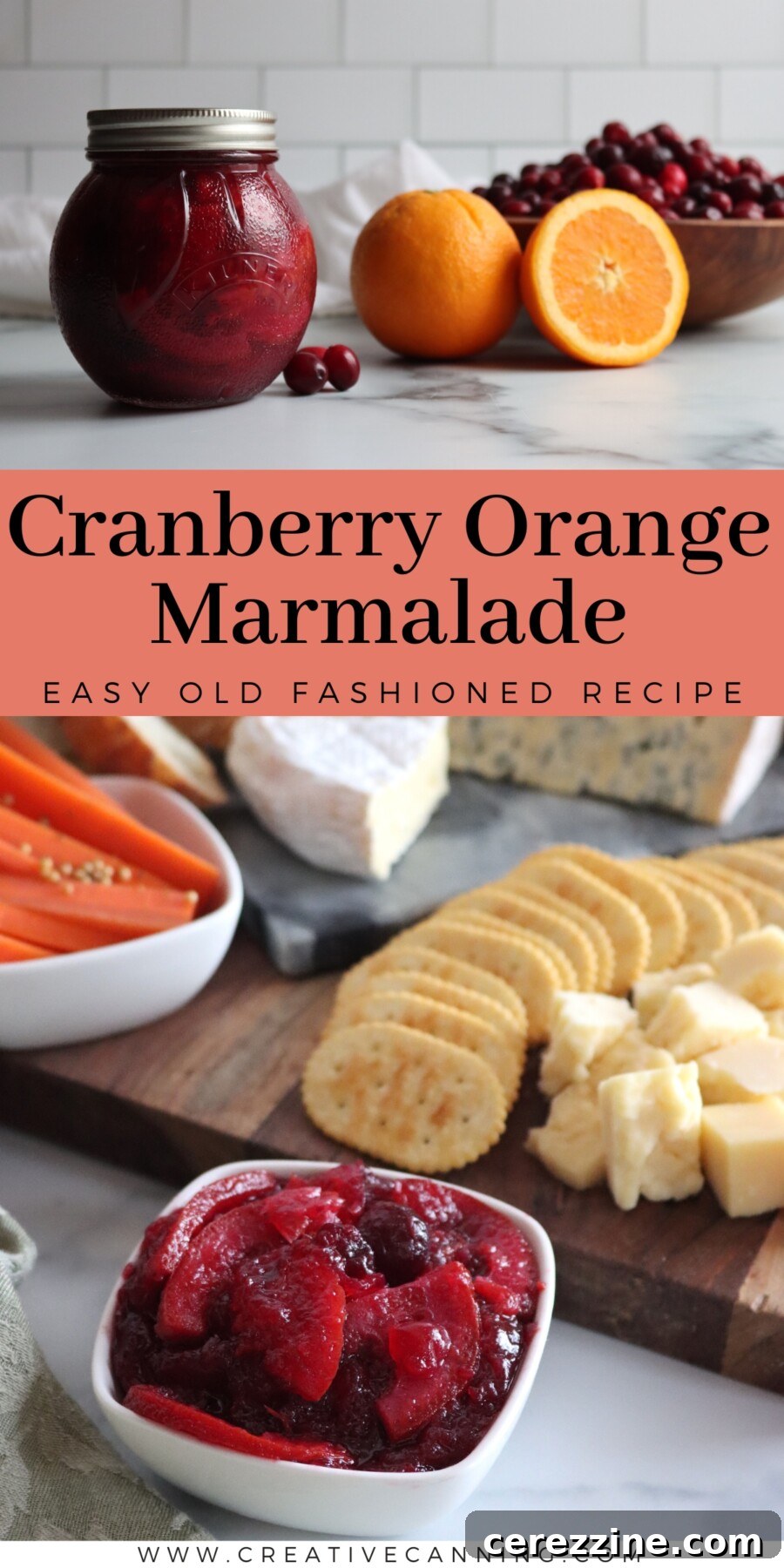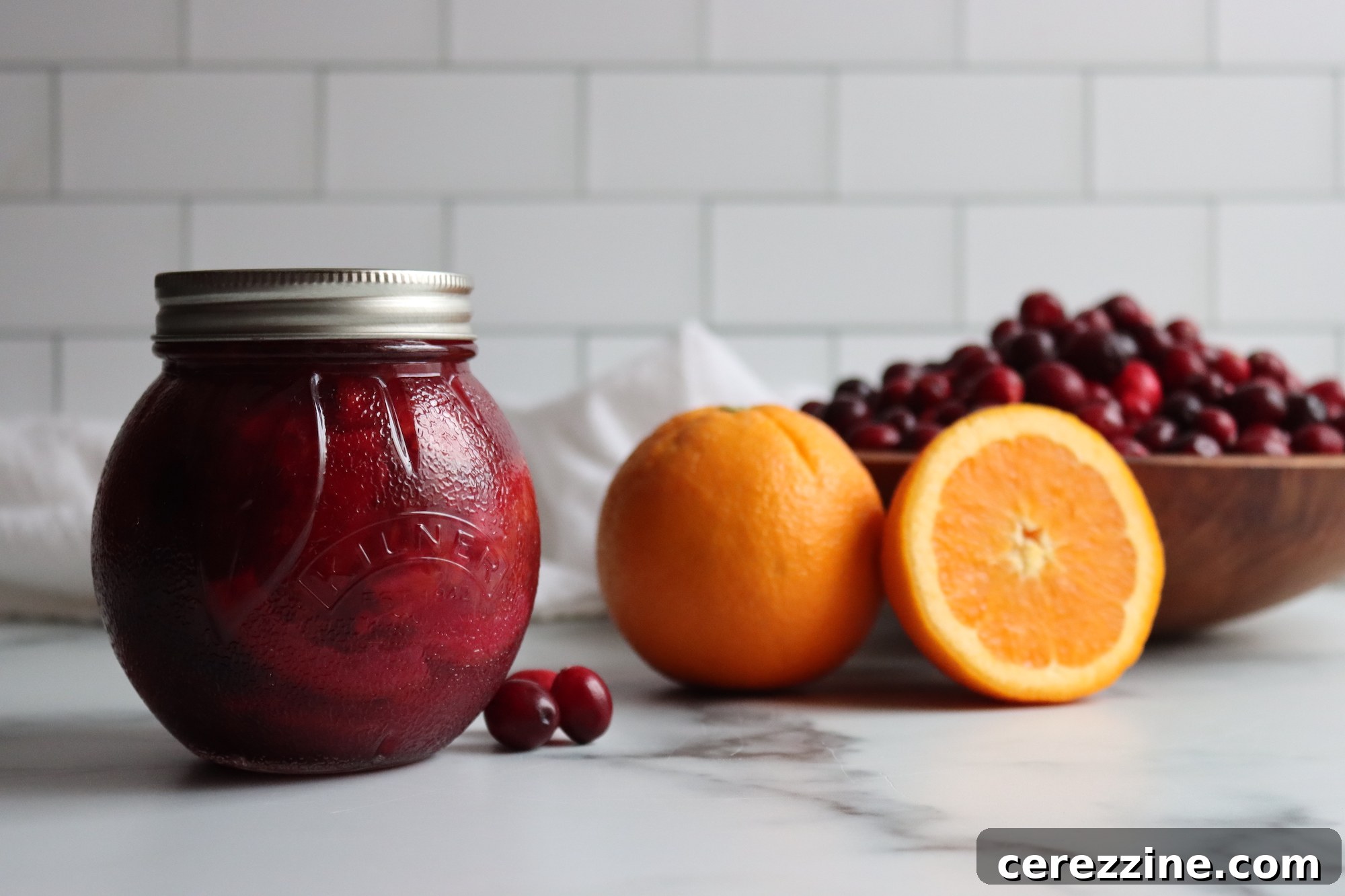
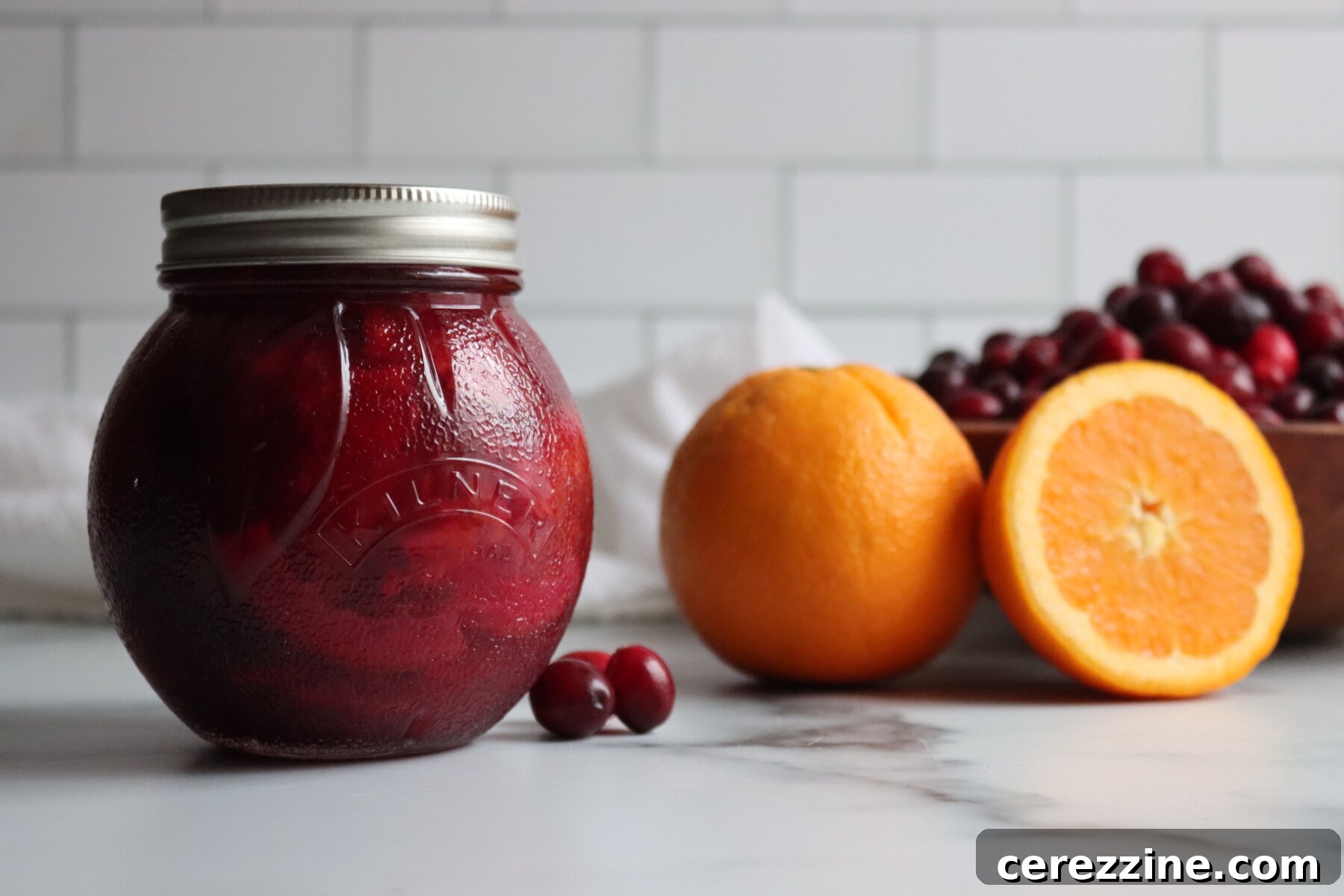
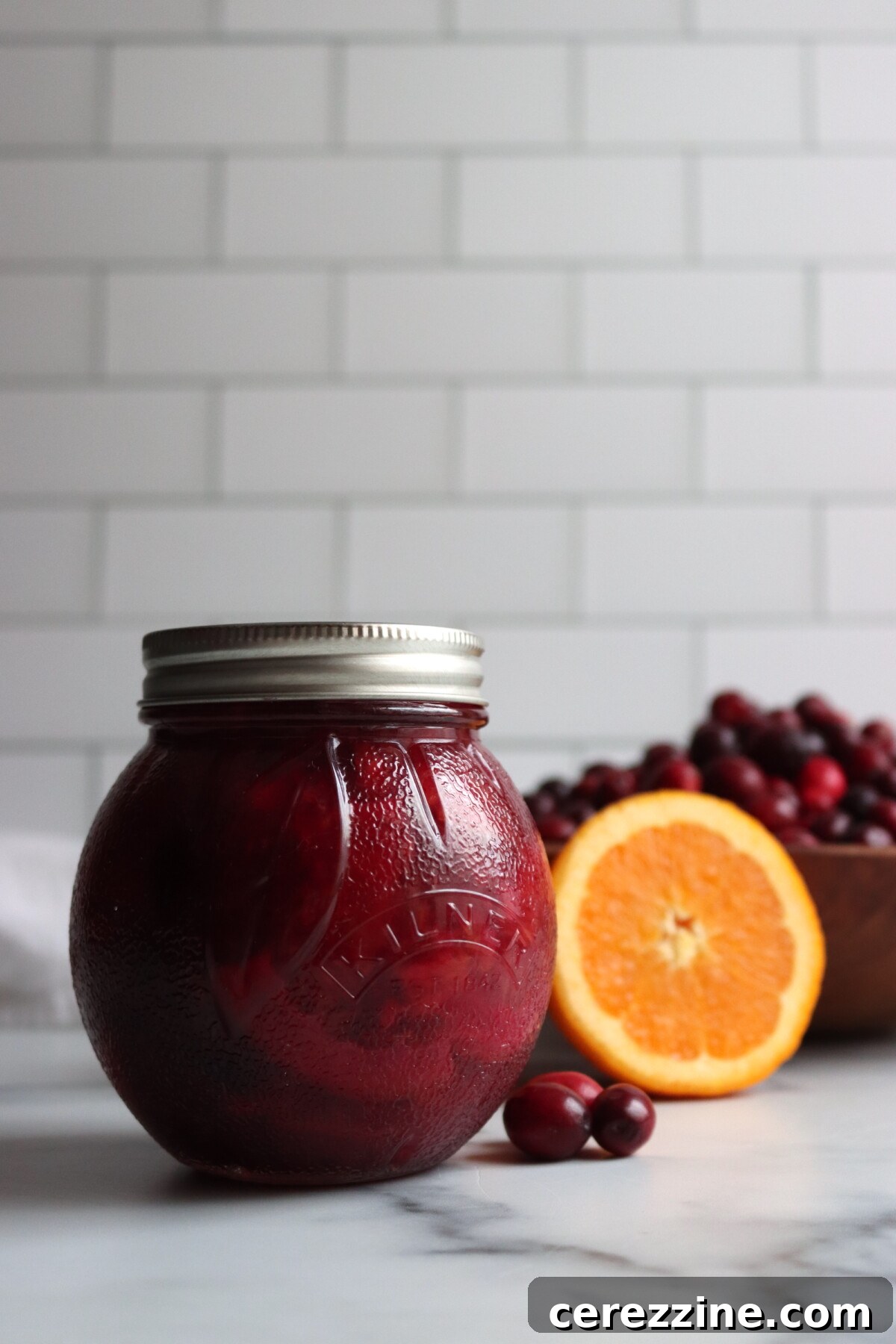
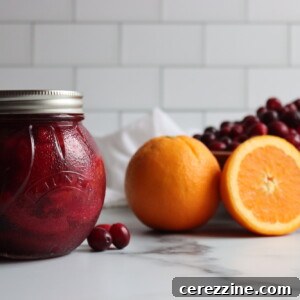
Cranberry Orange Marmalade is more than just a preserve; it’s a jar filled with the vibrant flavors and cozy warmth of the holiday season. This small-batch recipe masterfully combines the tartness of fresh cranberries with the bright, aromatic zest of oranges, balanced by just the right amount of sweetness. What makes it truly special is its incredible simplicity, making it approachable even for those new to the art of marmalade making. Forget complex techniques or expensive additions; this recipe celebrates the natural ability of cranberries and oranges to create a beautifully set, glossy marmalade.
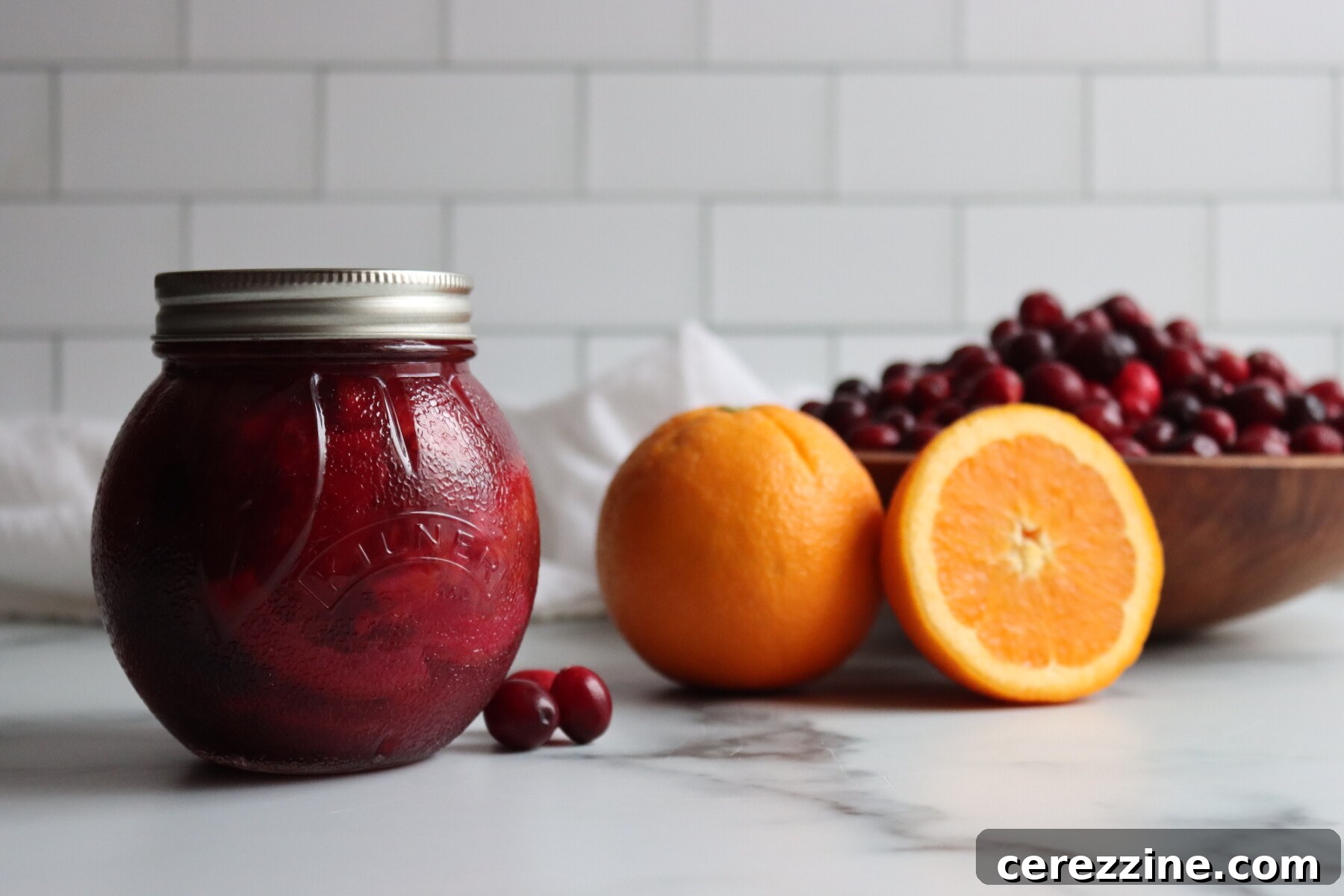
This recipe has been meticulously reviewed for safety and accuracy by a Master Food Preserver, certified through the esteemed University of Cornell Cooperative Extension, ensuring reliable results for your home canning endeavors.
The Inspiration Behind This Easy Cranberry Marmalade Recipe
My journey to developing this specific cranberry orange marmalade began with a quest. I was seeking a tried-and-true cranberry marmalade recipe, one that truly captured the essence of the fruit without being overly sweet or complicated. However, I found myself less than thrilled with the existing options.
The National Center for Home Food Preservation (NCHFP) offers a cranberry marmalade recipe, but its proportions left me puzzled. It suggests an astonishing amount of sugar—around seven cups—for a relatively modest quantity of fruit. This ratio felt drastically unbalanced, especially considering how cranberries typically behave in other preserves. For instance, a similarly sized batch of cranberry sauce might call for less than a cup of sugar. While marmalade is indeed sweeter than sauce, a tenfold increase in sugar seemed excessive, risking a candy-like preserve rather than one that celebrates the natural fruit flavors.
Furthermore, the NCHFP recipe includes boxed pectin, an addition that struck me as both unnecessary and costly. Cranberries and oranges are naturally rich in pectin, the very substance that allows jams and marmalades to gel. Cranberries possess high pectin levels on their own, as do oranges, particularly in their peels. When combined, these two fruits create a powerful natural gelling agent. With just a short, vigorous boil, they transform into a thick, glossy marmalade without any need for commercial pectin. This natural approach not only saves money but also highlights the pure, unadulterated flavors of the fruit.
Why You’ll Adore This Homemade Cranberry Orange Marmalade!

When I set out to create this recipe, my primary goal was to achieve a preserve that truly tastes of fresh, vibrant fruit, not merely sugar. The process begins with a quick, initial cook that gently coaxes the cranberries to “pop,” releasing their bright, tangy juices and infusing the entire pot with their characteristic aroma. Only then is the sugar introduced, and the transformation happens swiftly, as the mixture thickens and glistens.
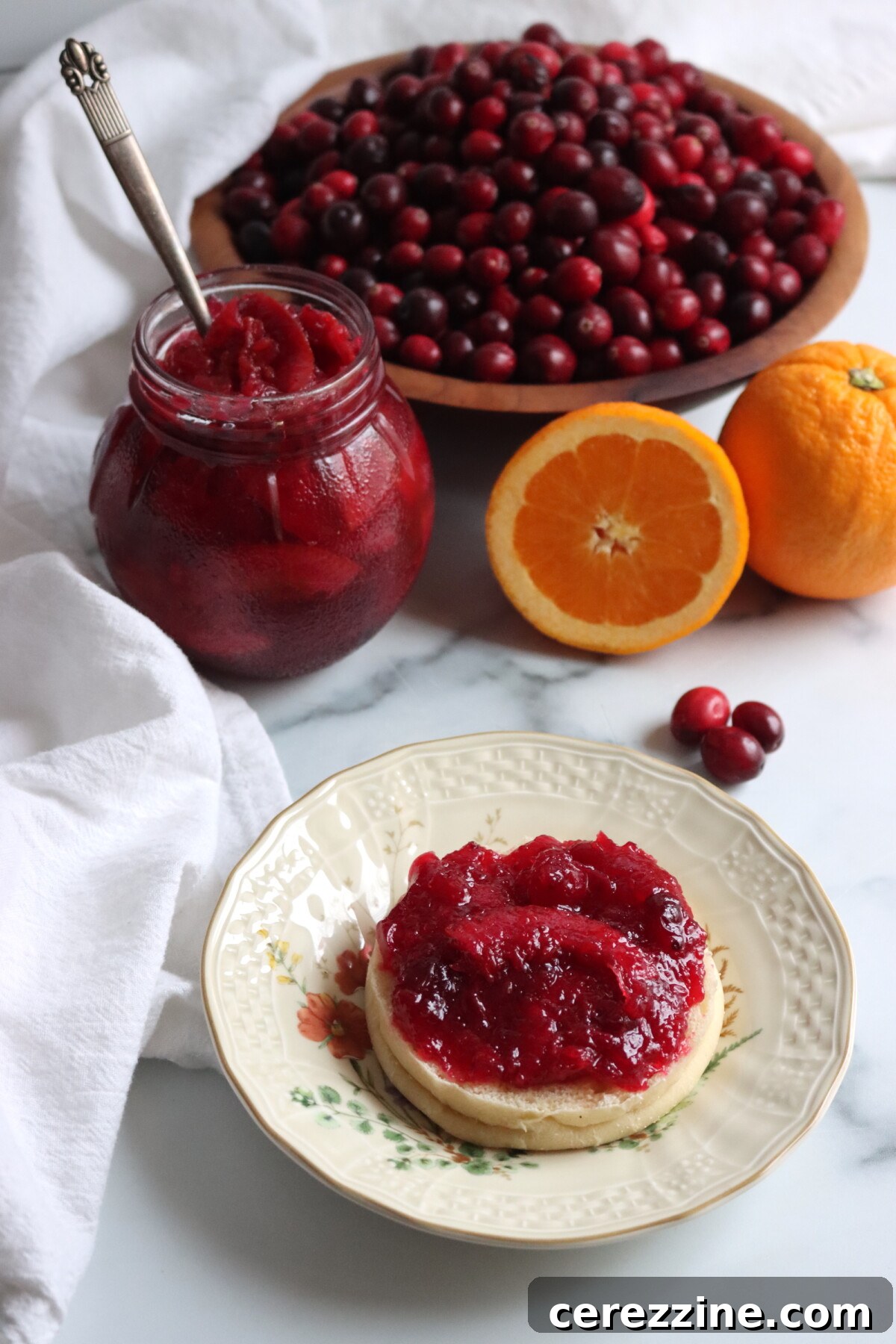
This is precisely the kind of recipe that rewards simplicity. The result is a luminous marmalade boasting a delightful cranberry tang, a clean and refreshing orange aroma, and delicate, thin ribbons of citrus peel. These thin peels are crucial; they provide that signature “marmalade bite” – a subtle texture and a hint of pleasant bitterness – without ever becoming tough, chewy, or overwhelmingly bitter. Each spoonful is a harmonious blend of sweet, tart, and citrusy notes that dance on the palate.
Beyond its exquisite taste, this recipe offers immense satisfaction with minimal effort. It’s truly one of those culinary triumphs that makes you feel like you’ve accomplished something grand in very little time. I can easily prepare a batch from start to finish in well under an hour, and the marmalade consistently sets to a beautiful, thick consistency, eliminating the need for prolonged simmering or constant monitoring. It’s perfect for busy home cooks who still crave the reward of homemade, artisanal preserves.
A Quick Look at the Recipe
- Recipe Name: Cranberry Orange Marmalade
- Recipe Type: Classic Marmalade without Added Pectin – Relying on the natural gelling power of fruits.
- Canning Method: Waterbath Canning or Steam Canning – Safe and proven methods for shelf-stable preserves.
- Prep/Cook Time: Approximately 20 Minutes – Quick and efficient for a homemade preserve.
- Canning Time: 10 Minutes – Minimal processing time for small jars.
- Yield: Approximately 4 half-pint jars – Perfect for small batches or gifting.
- Jar Sizes: Quarter Pint, Half Pint or Pint – Versatile for various needs.
- Headspace: 1/4 inch – Essential for proper sealing and vacuum.
- Ingredients Overview: Cranberries, Oranges, and Sugar – A simple, natural trio.
- Safe Canning Recipe Source: National Center for Food Preservation Guidance – Ensuring safety and reliability.
- Difficulty: Moderate – Requires familiarity with checking for set in pectin-free recipes, but easily mastered.
- Similar Recipes: This marmalade shares a similar preparation process with other old-fashioned, pectin-free marmalades like lemon marmalade, orange marmalade, and lime marmalade. Its vibrant flavor profile, a delightful mix of berry and citrus, actually bears a close resemblance to blood orange marmalade.
Essential Ingredients for Your Cranberry Orange Marmalade
While the ingredient list for this marmalade is refreshingly short, the quality and preparation of each component significantly impact the final flavor and texture. For the most exquisite results, choose ripe, fragrant oranges and allow the initial cooking phase for the cranberries to unfold without haste, ensuring they release their full potential.
- Cranberries: These little ruby jewels are the heart of this marmalade. They not only impart a wonderfully tart flavor and a deep, appealing color but are also naturally abundant in pectin. This inherent pectin is what gives the marmalade its firm, beautiful set without any artificial help.
- Oranges: Beyond their bright, citrusy aroma, oranges contribute that classic marmalade texture and a pleasant, slightly bitter “bite” from their thinly sliced peels. They also offer a significant amount of natural pectin, working in harmony with the cranberries to achieve a perfect gel.
- Water: A crucial, yet often overlooked, component. Water facilitates the initial softening of the fruit, allowing the cranberries to burst and release their juices efficiently. It also acts as a medium to prevent the fruit from scorching during the critical first cook before the sugar is added.
- Sugar: More than just a sweetener, sugar plays multiple vital roles. It balances the intense tartness of the cranberries, enhances the overall flavor, acts as a natural preservative, and, crucially, works with the fruit’s pectin to help the marmalade gel and set properly.
When selecting your cranberries, both fresh and frozen varieties perform exceptionally well in this recipe. This makes it an ideal way to utilize any cranberries you may have stashed in your freezer after the holiday season. For the oranges, any sweet variety will yield delicious results. However, if you’re aiming for a slightly more complex and visually striking marmalade, consider substituting one of the oranges with a blood orange. Their unique flavor profile, a delightful blend of berry and citrus, will add an intriguing dimension. For a softer, more mellow finish, a small splash of vanilla extract can be stirred in at the very end of cooking.
For those who are particularly sensitive to bitterness, there are a couple of important tips. First, slice your oranges as thinly as humanly possible. Thinner slices mean the peel softens more readily and distributes its flavor more evenly, reducing any harsh bitterness. Second, be diligent about removing any obvious seeds, as these can contribute to a bitter taste. Most significant bitterness often stems from excessively thick pieces of peel or large chunks of pith, the white spongy layer beneath the peel. Therefore, meticulous thin slicing makes a noticeable and worthwhile difference in the final product’s flavor profile.
How to Make Cranberry Orange Marmalade: A Simple Guide
This delightful marmalade comes together with surprising speed and ease, relying on two distinct cooking phases: an initial boil to release the vibrant flavors of the cranberries, followed by a second, shorter boil with sugar to achieve the perfect set. Here’s a detailed breakdown:
1. Prep the Citrus for Optimal Flavor and Texture
Begin by thoroughly washing your oranges to remove any surface residues. Next, quarter each orange and, using a very sharp knife, slice these quarters as thinly as you possibly can. As you slice, diligently remove any seeds you encounter. The importance of thin slices cannot be overstated: they soften quickly and evenly during the cooking process, ensuring that classic marmalade texture with tender, pleasant ribbons of peel, rather than tough or chewy bits. This meticulous preparation is key to a superior marmalade.
2. Pop the Cranberries and Release Their Essence
In a wide, heavy-bottomed saucepan or a dedicated jam pot, combine the prepared cranberries, thinly sliced oranges, and water. Bring this mixture to a vigorous boil over medium-high heat. Allow it to cook briefly, just until the cranberries begin to visibly pop and burst open, releasing their bright red juices into the pot. This stage happens quite rapidly. You’ll know it’s ready when the pot emits a distinct, strong aroma of cranberry, and you observe the berries clearly splitting. This crucial step extracts the maximum flavor and pectin from the cranberries before the sugar is introduced.
3. Add Sugar and Boil to Achieve Set
Once the cranberries have burst, stir in the measured sugar until it is fully dissolved. Return the mixture to a full, rolling boil – this means a boil that cannot be stirred down. Maintain this vigorous boil, stirring frequently to prevent sticking and ensure even cooking, until the marmalade visibly thickens and passes a set test. This transformation typically occurs within seven to eight minutes, though the exact time can vary slightly depending on the width of your pot, the strength of your stove burner, and the specific moisture content of your fruit. A wider pot will generally facilitate faster evaporation and a quicker set.
4. Confirm the Perfect Set with a Freezer Plate Test
For a reliably firm and beautifully set marmalade, the freezer plate test is your best friend. Before you even begin cooking, place a small ceramic plate in your freezer to get it thoroughly chilled. When you believe your marmalade is ready, spoon a small amount (about a teaspoon) onto the cold plate. Let it rest for a few seconds on the plate to cool. Then, gently push the marmalade with your fingertip. If it wrinkles, forms a distinct crease, and holds a clean line without immediately running back together, your marmalade has reached its perfect set. If it appears thin and runs easily, return the pot to the boil for another minute, then retest on a fresh cold spot on the plate. Repeat until the desired set is achieved.
Canning Cranberry Orange Marmalade for Long-Term Storage
Proper canning ensures your delicious cranberry orange marmalade remains shelf-stable and safe to enjoy for months to come. It’s imperative to prepare your canning equipment – a water bath canner, clean jars, and new lids – before you even begin cooking the marmalade. This allows you to fill and process the jars immediately while the marmalade is still piping hot, which is critical for food safety and a good seal.
Once the marmalade reaches its perfect set, carefully ladle the hot mixture into hot, clean half-pint canning jars. Ensure you leave precisely 1/4 inch of headspace at the top of each jar. Headspace is the empty space between the food and the lid, and it’s vital for creating a strong vacuum seal. Use a non-metallic utensil to gently remove any trapped air bubbles from the jars, adjusting the headspace if necessary after removing bubbles. With a clean, damp cloth, meticulously wipe the rims of each jar to remove any marmalade residue, which could interfere with the seal. Center a new lid on each jar, then apply the screw bands, tightening them to “fingertip tight”—meaning secure but not overly tight. This allows air to escape during processing while preventing liquid from siphoning out.
Carefully lower the filled jars into your boiling water bath canner, ensuring they are fully submerged in at least 1-2 inches of boiling water. Bring the water back to a full, rolling boil. Process the jars for a duration of 10 minutes. If you are canning at elevations above 1,000 feet, you will need to adjust the processing time to 15 minutes to account for the lower boiling point of water. These processing times apply equally to both pint and half-pint jars.
Once the processing time is complete, turn off the heat and carefully remove the canner lid. Allow the jars to rest undisturbed in the hot water for an additional five minutes. This resting period helps to equalize the temperature and significantly reduces the chances of siphoning (liquid loss from the jars). After five minutes, carefully lift the jars out of the canner using a jar lifter and place them on a towel-lined surface or a cooling rack, ensuring they are not touching each other. Let them cool completely and undisturbed for twelve to twenty-four hours. During this time, you should hear the satisfying “ping” sound as the lids seal. After cooling, check all seals by pressing on the center of the lid; it should not flex. Remove the screw bands, label your jars with the contents and date, and store them in a cool, dark place. Any unsealed jars should be refrigerated and consumed within a few weeks.
Creative Serving Suggestions for Cranberry Orange Marmalade
This bright and tangy cranberry orange marmalade is far too versatile to be confined to just toast! Its unique flavor profile makes it a fantastic addition to both sweet and savory dishes throughout the year, but especially during the holiday season. Here are some inspiring ways to enjoy your homemade preserve:
- Breakfast Boost: Swirl a generous spoonful into your morning plain yogurt or creamy oatmeal for an invigorating burst of tangy-sweetness. It instantly elevates a simple breakfast into a gourmet experience.
- Elegant Desserts: Spoon it lavishly over a slice of decadent cheesecake or a tender pound cake. The marmalade’s tartness beautifully cuts through the richness of these desserts, adding a welcome zip and vibrant flavor.
- Savory Glazes and Sauces: Gently warm the marmalade until it’s pourable and use it as a stunning glaze for roasted ham, turkey, or chicken. Its sweet and tangy notes caramelize beautifully, creating a glossy, flavorful crust. Alternatively, whisk a spoonful or two into a pan sauce for pork chops or poultry; it adds an unexpected depth and fruitiness that will impress your guests.
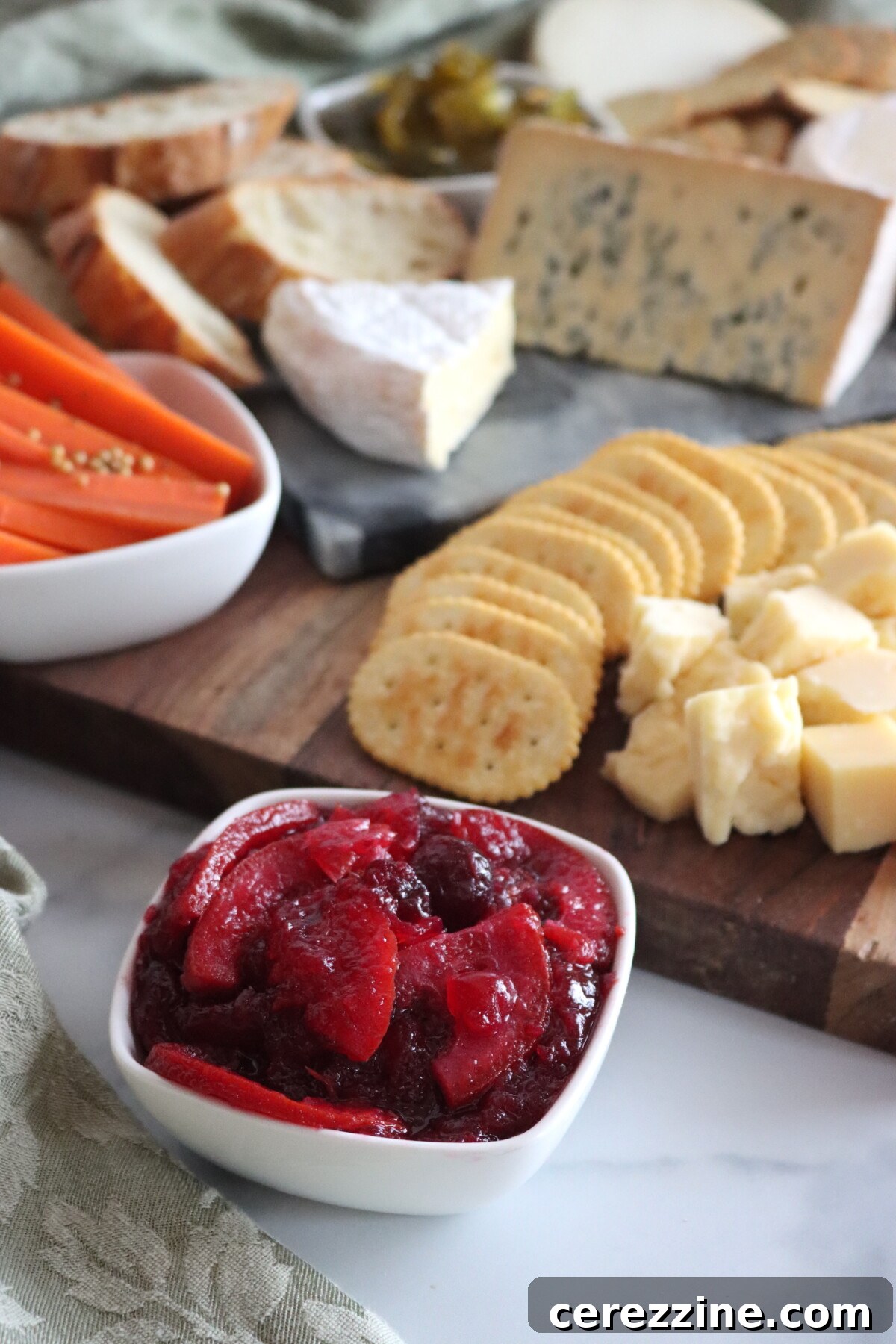
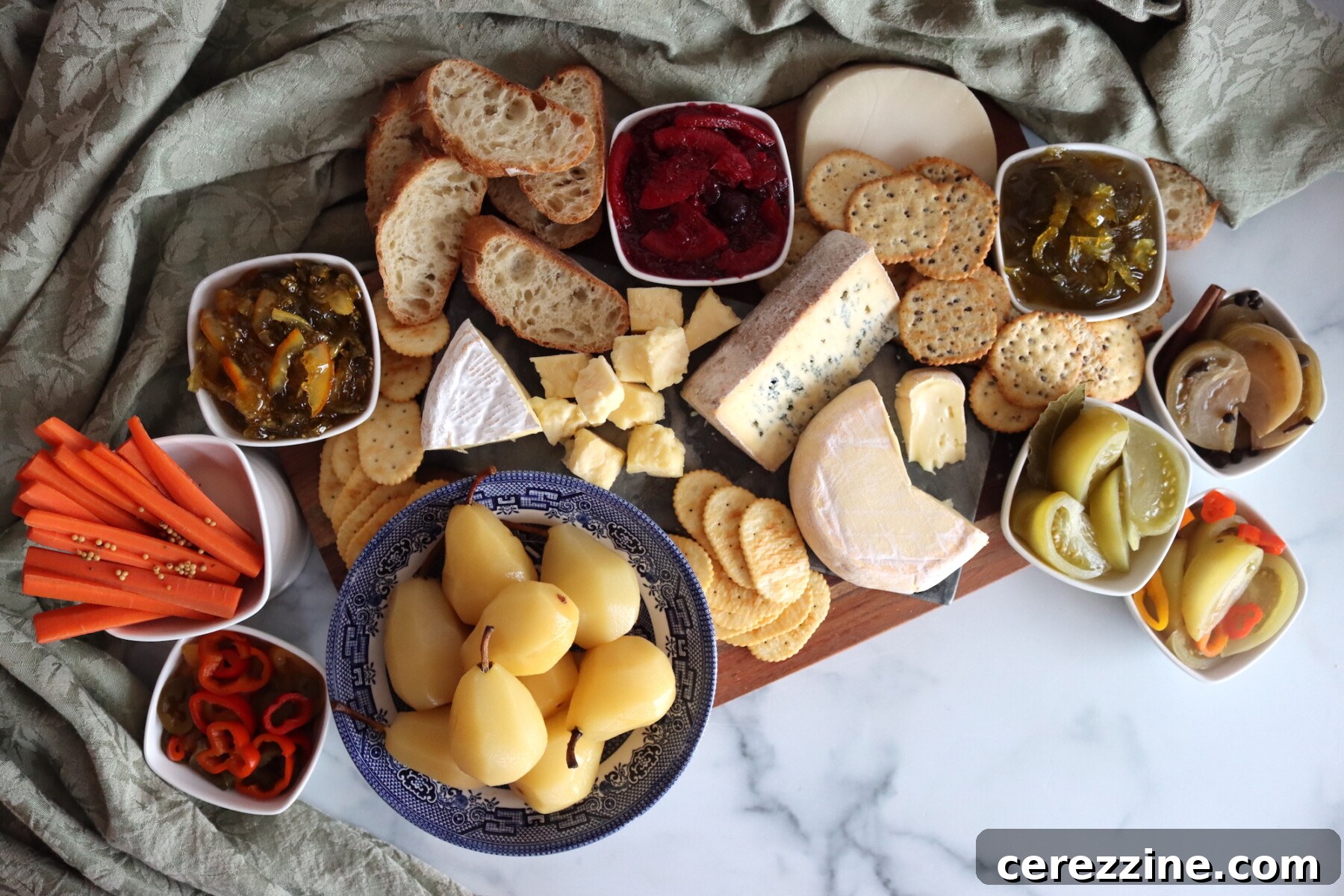
- Cheese Board Star: This past holiday season, I featured this marmalade prominently on my festive cheese board. Its bright, fruity notes pair exceptionally well with a variety of cheeses, from sharp cheddar to creamy brie, offering a delightful counterpoint to savory flavors. It complements other late-season preserves perfectly, creating a diverse and appealing spread. My board also included a delightful assortment of other homemade delights like Pickled Peppers, Pickled Carrots, Green Tomato Marmalade, Pickled Pears, Italian Green Tomato Preserves, and three distinctive types of Pickled Green Tomatoes – including sweet, dill, and spicy variations.
- Sandwich and Wrap Enhancer: Spread a thin layer on gourmet sandwiches or wraps, especially those featuring roasted meats like turkey or chicken, for an unexpected layer of flavor.
- Cocktail Mixer: A small dollop can add an intriguing fruity tang to cocktails, particularly those with gin or whiskey.
Cranberry Orange Marmalade FAQs
No, absolutely not! One of the wonderful advantages of making cranberry orange marmalade is that both cranberries and oranges are naturally rich in pectin. This means that with the right balance of fruit, sugar, and a good, vigorous rolling boil, the marmalade will set beautifully and firmly on its own. The key is allowing it to cook just long enough for the natural gel to properly form, typically indicated by the freezer plate test.
Yes, frozen cranberries are perfectly suitable for this recipe and yield excellent results. They are a convenient option, especially if you’re making marmalade outside of fresh cranberry season. You can use them straight from the freezer without thawing, though you should expect the mixture in the pot to take a little longer to come up to a boil initially due to the frozen temperature of the berries. Otherwise, the cooking process remains the same.
You can make a very slight reduction in the sugar content, but significant reductions can negatively impact the marmalade’s ability to set properly and its long-term preservation. Sugar plays a crucial role not only in flavor but also in the gelling process and acting as a preservative. If you desire a considerably lower sugar version, this is one instance where incorporating a specialized low-sugar pectin (such as Sure-Jell Low Sugar or Pomona’s Pectin, which relies on calcium rather than high sugar for setting) would likely be necessary to achieve a reliable set.
Bitterness in marmalade typically stems from a few common culprits. The most frequent causes are excessively thick pieces of orange peel, an abundance of pith (the white spongy layer under the peel), or leaving too many seeds in the mixture. To minimize bitterness, ensure you slice the oranges as thinly as possible, meticulously remove all visible seeds, and opt for sweet orange varieties rather than those with very thick or naturally bitter skins. If you know you are particularly sensitive to bitterness, an effective trick is to briefly blanch the thinly sliced oranges in boiling water for one to two minutes, drain them, and then proceed with the recipe. This blanching step helps to mellow out some of the bitter compounds in the peel (this is a flavor/texture adjustment, not a safety step).
More Delightful Cranberry Canning Recipes
Cranberry Orange Marmalade
Cranberry Applesauce
Cranberry Salsa
If you tried this Cranberry Orange Marmalade Recipe, or any other recipe on Creative Canning, please consider leaving a ⭐ star rating and share your thoughts in the 📝 comments below!
Stay connected for more delightful recipes and canning tips by following us on social media!
32
servings, makes 4 half pint jars
Cranberry Orange Marmalade
20
15
10
45
Rate
Equipment
-
Water Bath Canner
-
Large, Wide Saucepan or Jam Pot
-
Sharp Knife and Cutting Board
-
Small Plate (for freezer test)
-
Canning Jars (Half Pint recommended)
-
New Lids and Screw Bands
-
Jar Lifter, Funnel, Ladle
Ingredients
- 3 cups fresh or frozen cranberries, about one 12-ounce bag
- 2 medium oranges, washed, quartered and sliced very thin, seeds removed
- 2 cups water
- 2 cups granulated sugar
Instructions
-
In a large, wide saucepan or jam pot, combine the fresh or frozen cranberries, the thinly sliced oranges (ensure seeds are removed), and the water. Bring the mixture to a full boil over medium-high heat. Continue to cook for approximately five minutes, or until the cranberries visibly pop and release their vibrant juices. The pot will begin to smell strongly of cranberries, indicating their essence has been released.
-
Stir in the granulated sugar until it is completely dissolved. Return the mixture to a vigorous, full rolling boil – one that cannot be stirred down. Continue boiling for about seven to eight minutes, stirring frequently to prevent sticking, until the marmalade visibly thickens and passes your preferred set test (see notes below for the freezer plate test).
-
Immediately ladle the hot marmalade into hot, clean half-pint canning jars, leaving 1/4 inch of headspace. Use a non-metallic tool to remove any air bubbles. Adjust headspace if needed, then meticulously wipe the jar rims with a clean, damp cloth to ensure a proper seal. Center new lids on the jars and apply screw bands, tightening them to fingertip tight.
-
Process the filled jars in a boiling water bath canner for 10 minutes. If you are canning at elevations above 1,000 feet, increase the processing time to 15 minutes. Once processing is complete, turn off the heat, remove the canner lid, and allow the jars to rest in the hot water for 5 minutes. Carefully remove jars and let them cool undisturbed on a towel-lined surface for 12-24 hours. Check seals, label, and store in a cool, dark place.
Notes
The recipe yields approximately 4 half-pints of marmalade. However, the exact output can vary slightly based on factors such as how vigorously you boil the mixture and how thick you prefer your marmalade to set.
It is crucial to slice the oranges very thinly. Thin slices are key to achieving the desired classic marmalade texture, ensuring the peel softens beautifully during the relatively short cooking time without becoming tough or chewy. Thicker slices can result in a less pleasant texture and a more pronounced, potentially bitter, taste.
Bitterness in marmalade is typically caused by thick peel pieces, excessive pith (the white inner rind), or seeds. To mitigate this, ensure all visible seeds are removed as you slice the oranges, and strive to keep the peel pieces small and delicate. If your oranges have particularly thick skins or if you are sensitive to bitter flavors, you can opt to blanch the sliced oranges for one to two minutes in boiling water, then drain them, before proceeding with the rest of the recipe. This step is purely for flavor and texture, not for safety.
The “7 to 8 minutes” for the rolling boil is a general guideline. The actual time needed to reach a set can vary based on several factors, including the width of your pan (a wider pan promotes faster evaporation), the strength of your stove burner, and the natural moisture content of your fruit. Using a wide, shallow pan will aid in faster and more consistent setting.
For the most reliable set, always utilize the freezer plate test. Place a small ceramic plate in the freezer before you start cooking. When you suspect the marmalade is ready, spoon a small amount onto the thoroughly chilled plate. Allow it to cool for a few seconds, then gently push it with your fingertip. If the marmalade wrinkles and holds a distinct line, it has reached its setting point. If it still appears thin and watery, continue boiling for another minute, then test again on a fresh spot on the cold plate.
Nutrition
Carbohydrates: 15g,
Protein: 0.5g,
Fat: 0.1g,
Saturated Fat: 0.03g,
Polyunsaturated Fat: 0.02g,
Monounsaturated Fat: 0.04g,
Sodium: 6mg,
Potassium: 42mg,
Fiber: 1g,
Sugar: 14g,
Vitamin A: 210IU,
Vitamin C: 7mg,
Calcium: 3mg,
Iron: 0.1mg
Nutrition information is automatically calculated and should only be used as an approximation. Actual values may vary based on ingredients and preparation methods.
Enjoyed this recipe? Share your experience!Your feedback helps others discover delicious preserves.
Explore More Homemade Marmalade Canning Recipes
Lime Marmalade (Old Fashioned Recipe without Added Pectin)
Buddha’s Hand Marmalade
Grapefruit Marmalade
Find the perfect recipe for your next canning adventure!
Searching for something else? Use the search bar below to discover a wide array of delicious canning recipes tailored to your interests!