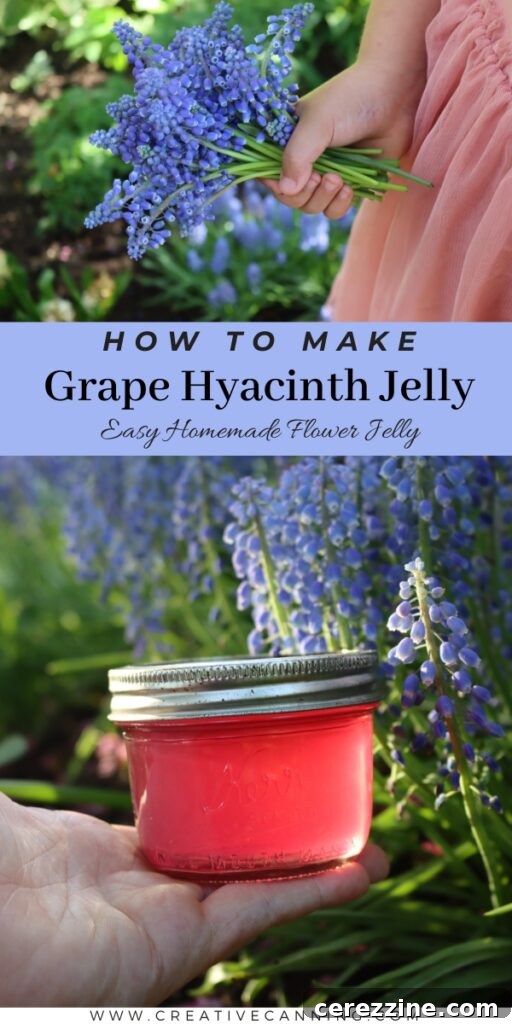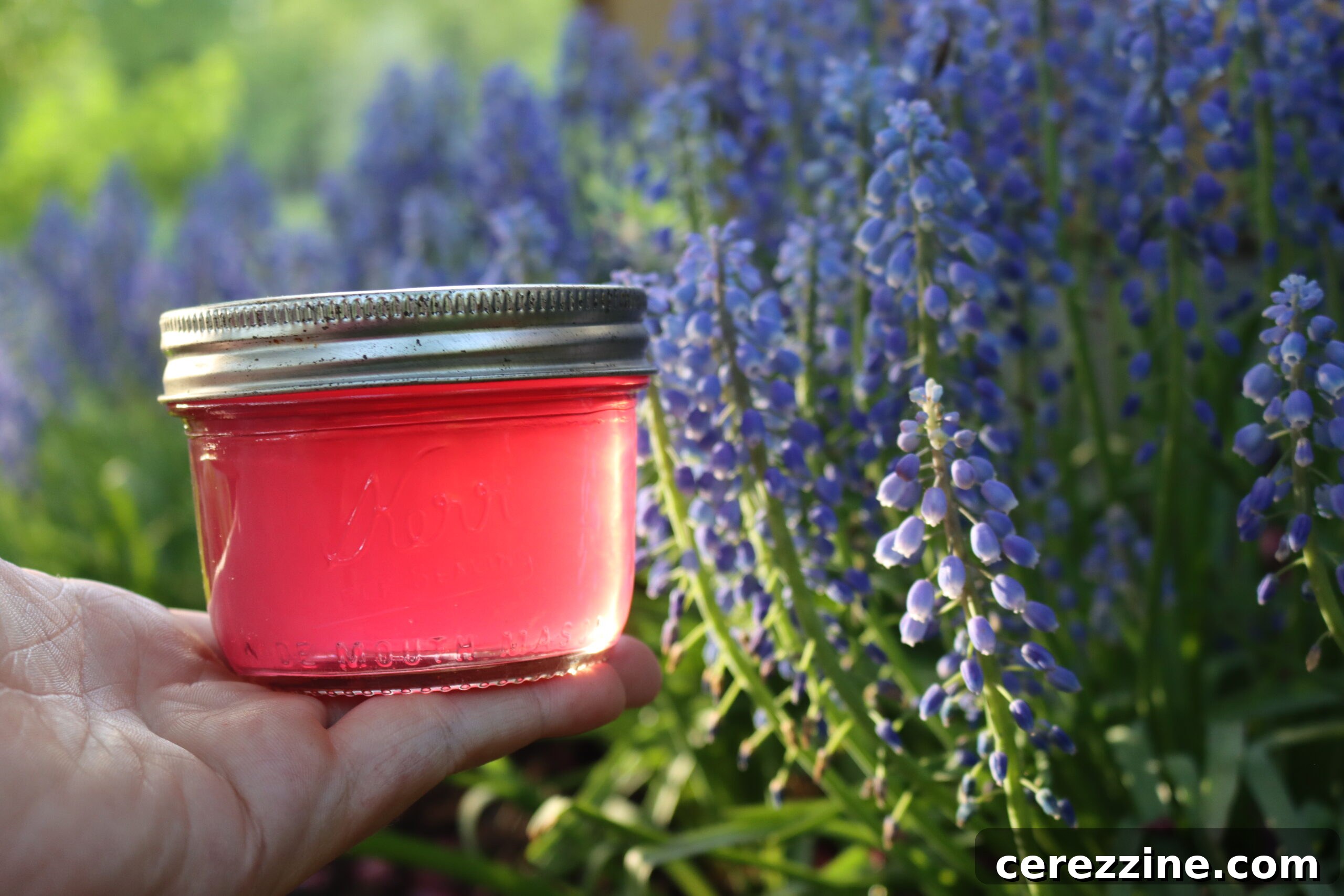
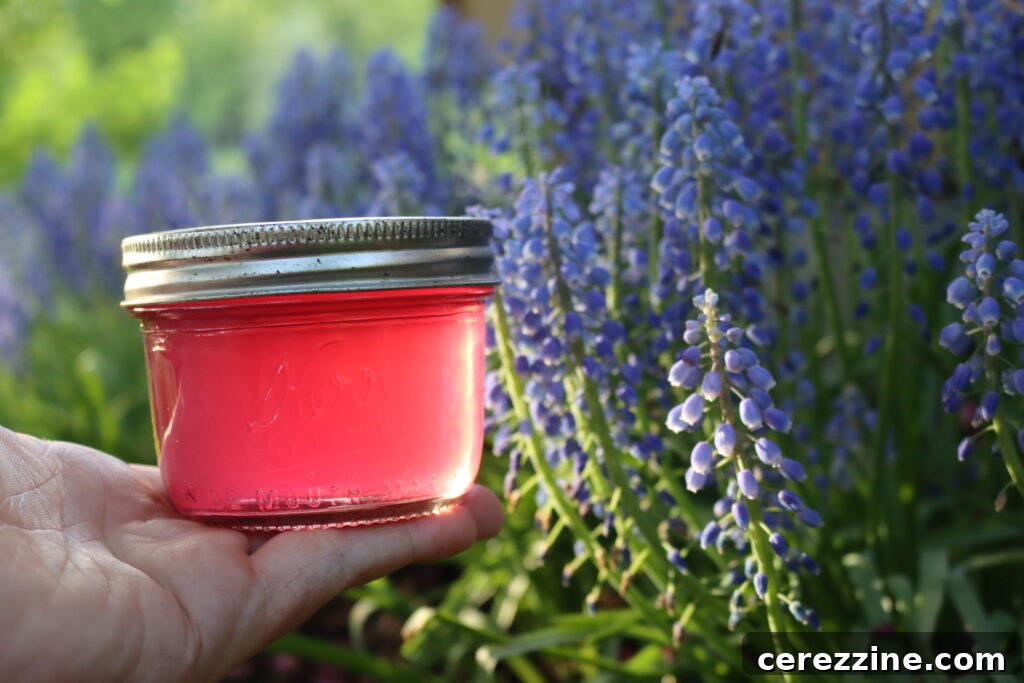
Welcome to a delightful journey into the heart of spring, where the vibrant beauty of early bloomers transforms into a culinary masterpiece. This guide introduces you to the enchanting world of Grape Hyacinth Jelly – a stunning preserve that encapsulates the delicate essence of the season. With its captivating purple-pink hue and subtly sweet, floral flavor, this homemade jelly offers a unique and elegant addition to any pantry. Imagine spreading it on warm, buttered toast, drizzling it over fluffy pancakes, or pairing it with artisanal cheeses for an unexpectedly gourmet charcuterie experience. It’s more than just a jelly; it’s a jarred whisper of springtime, ready to be enjoyed year-round.
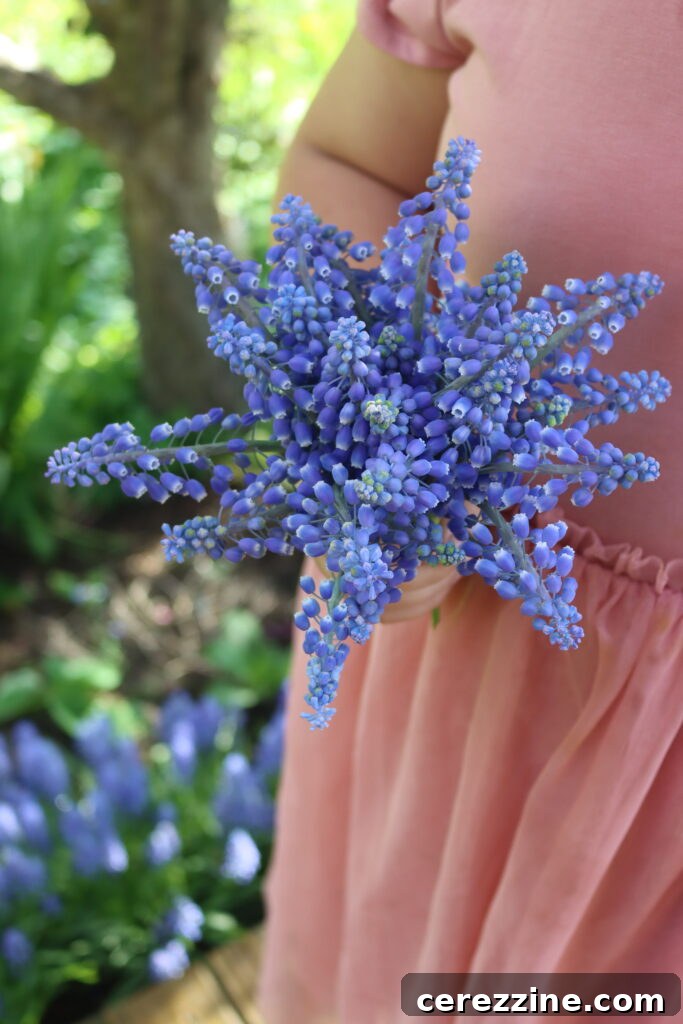
While grape hyacinths (Muscari armeniacum) are commonly admired for their charming bell-shaped flowers in garden landscapes, many are unaware of their delightful culinary potential. These seemingly humble blossoms harbor a surprising sweetness and a unique, mild floral note that, when carefully crafted into a jelly, becomes truly magical. If you’ve ever dreamt of preserving the fleeting beauty and flavor of spring’s first flowers, making grape hyacinth jelly is an accessible and rewarding way to achieve just that. This recipe is designed to be straightforward, allowing even novice canners to create a gourmet preserve that will impress and delight.
A Quick Look at the Grape Hyacinth Jelly Recipe
- Recipe Name: Grape Hyacinth Jelly
- Recipe Type: Flower Jelly Recipe
- Canning Method: Waterbath Canning
- Prep/Cook Time: Approximately 30 Minutes
- Canning Time: 10 Minutes
- Yield: 4 to 5 half-pint jars
- Jar Sizes: Quarter Pint, Half Pint, or Pint
- Headspace: 1/4 inch
- Key Ingredients: Edible Grape Hyacinth Flowers, Water, Fresh Lemon Juice, Granulated Sugar, Powdered Pectin.
- Difficulty: Easy! Essentially, you’re crafting a fragrant flower tea and setting it with pectin.
- Similar Recipes: This process closely mirrors that of other edible garden flower jellies, including Peony Jelly, Tulip Jelly, Pansy Jelly, Forsythia Jelly, Lilac Jelly, or Rose Petal Jelly.
Why Choose Grape Hyacinths for Jelly Making?
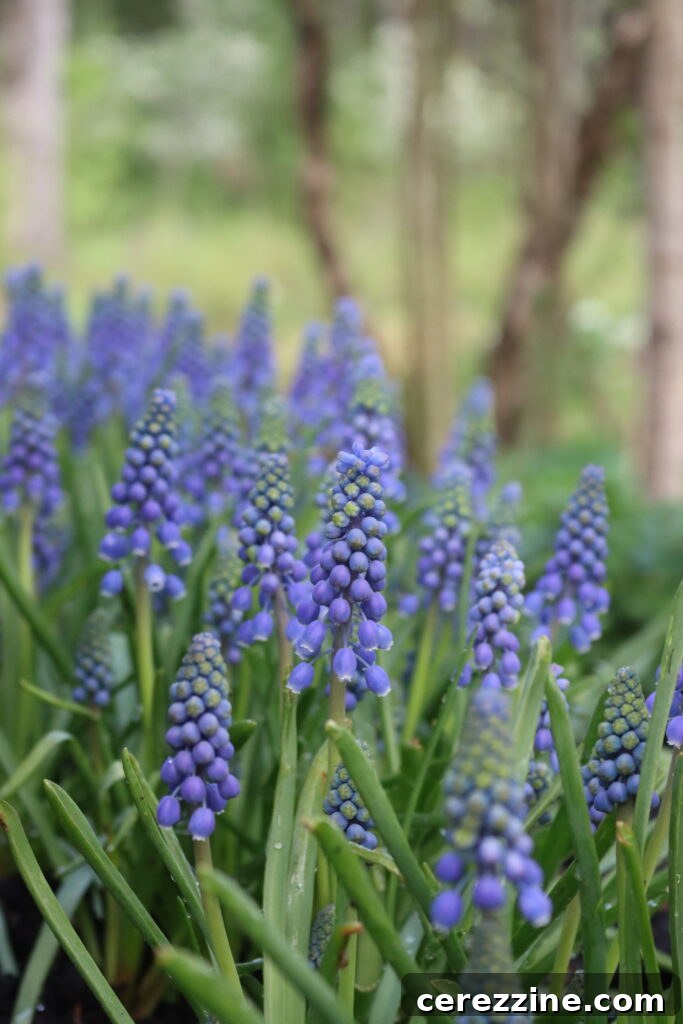
Grape hyacinths, or Muscari armeniacum, are often among the very first harbingers of spring, gracing gardens with their dense clusters of tiny, urn-shaped flowers. Their captivating hues range from deep indigo to vibrant violet and soft lavender, creating a breathtaking display. Beyond their visual appeal, these cold-hardy blossoms possess a sweet, delicate fragrance that, while often overlooked, is precisely what makes them an exceptional candidate for floral preserves. Their flavor profile is a unique blend of sweetness with a subtle, earthy musk, distinguishing them from more common floral notes. This complexity makes for an incredibly interesting and memorable jelly.
Historically, while not a staple in modern culinary practices, grape hyacinths have seen traditional uses in various herbal remedies and folk practices, suggesting their safe, if underutilized, nature. The blossoms themselves are non-toxic and impart a mild, pleasant flavor when infused in hot water. Transforming these fleeting blooms into jelly allows you to extend their ephemeral beauty and unique taste, capturing a concentrated essence of spring. By making grape hyacinth jelly, you’re not just creating a preserve; you’re engaging in a delightful botanical alchemy, ensuring the magic of these early spring flowers can be savored long after they’ve faded from the garden beds.
Crucial Edible Flower Safety Guidelines
When venturing into the world of edible flower recipes, safety is paramount. It is absolutely essential to correctly identify your flowers, as not all garden blooms are safe for consumption. This particular recipe for floral jelly is specifically formulated for grape hyacinths (Muscari armeniacum), which are entirely safe to eat. It is vital to distinguish these from common garden hyacinths (Hyacinthus orientalis), which, despite their similar name, belong to a different genus and contain toxic compounds. Ingesting garden hyacinths can lead to severe gastrointestinal distress and other health issues, so they must never be used in cooking or consumed in any form.
Beyond correct identification, responsible harvesting practices are equally important. Always ensure that the grape hyacinths you gather are un-sprayed, meaning they have not been treated with pesticides, herbicides, or synthetic fertilizers that are not food-grade. Many chemicals commonly used in ornamental flower gardens are not safe for human consumption. Therefore, it is highly recommended to harvest your grape hyacinths from a garden that is managed organically, away from roadsides where exhaust fumes and pollutants can accumulate. If you are unsure about the plant or its cultivation history, it is always best to err on the side of caution and refrain from using it. Prioritize safety to enjoy your delicious homemade grape hyacinth jelly worry-free.
Unveiling the Unique Flavor Profile of Grape Hyacinth Jelly
Grape hyacinth jelly delivers a truly distinctive flavor experience, offering a floral sweetness that is lighter and more ethereal than traditional grape jelly, yet with its own intriguing character. The jelly’s taste is delicate, nuanced, and surprisingly complex, featuring hints of muskiness that beautifully complement the sugar’s sweetness. Many describe the flavor as reminiscent of a gentle blend of wild spring flowers and the subtle richness of honey, all enveloped in a soft, natural perfume – a lovely reminder that you are indeed savoring the essence of fresh blossoms.
This isn’t an overpowering floral taste; rather, it’s light, refreshing, and possesses just enough complexity to make each bite a discovery. But the sensory delight doesn’t stop at taste. The deep purple-pink color of the finished jelly is as captivating as its flavor, making it a feast for both the eyes and the palate. If you appreciate floral notes that are more refined and subtle, rather than overtly perfumed, grape hyacinth jelly is an impeccable choice. Its versatility allows it to pair wonderfully with a diverse array of foods, while its unique profile ensures it can effortlessly stand out as a star on its own. It’s a delicate symphony of spring encapsulated in a jar.
Crafting Your Own Grape Hyacinth Jelly: Ingredients and Essential Tips
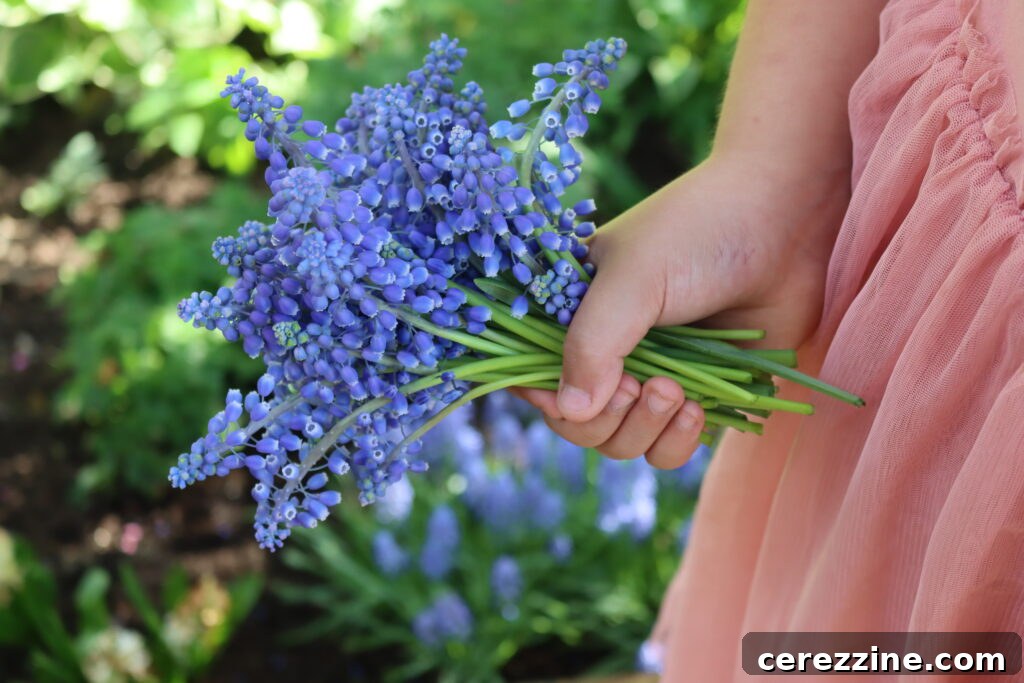
Just like other exquisite floral jellies, the magic of grape hyacinth jelly lies in the art of infusion. You’ll transform fresh blossoms into a fragrant tea, then combine this aromatic liquid with sugar and pectin to create a perfectly set, vibrant preserve. Here’s a breakdown of the key ingredients and considerations you’ll need for your homemade grape hyacinth jelly:
- Grape Hyacinth Blossoms: You’ll need 2 to 4 cups of fresh blooms. Ensure they are free of stems and any green parts, as these can introduce bitterness. The more flowers you use (up to 4 cups), the more intense the floral flavor will be.
- Water: 4 cups of clean, filtered water will be used to steep your blossoms and create the flavorful base.
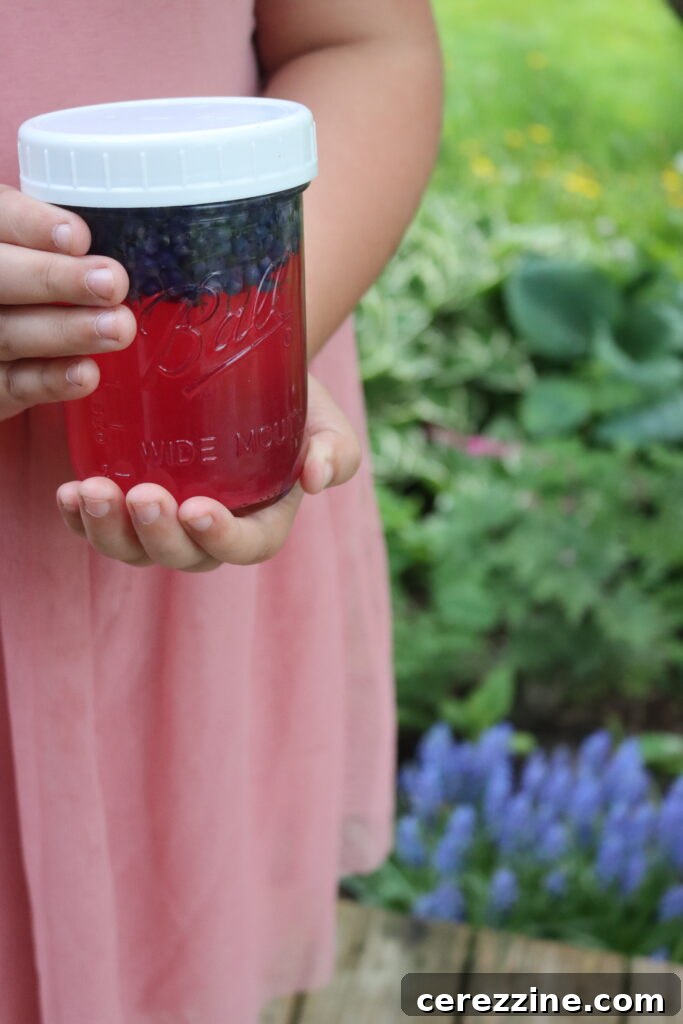
- Fresh Lemon Juice: 2 tablespoons of fresh lemon juice are absolutely crucial. This isn’t just for flavor balance; it’s a non-negotiable ingredient for safety. Floral jellies are only safe for water bath canning due to the added acidity from lemon juice. Beyond safety and taste, lemon juice also performs a beautiful transformation: it turns the initially blue-gray flower tea into a stunning, vibrant pink or magenta hue, bringing the color of the finished jelly to life.
- Powdered Pectin: One 1.75 oz box of powdered pectin (such as Sure-Jell) is essential for setting the jelly. Pectin is a natural gelling agent that ensures your jelly achieves the perfect consistency.
- Granulated Sugar: You’ll need 4 cups of granulated sugar for a traditional, sweet jelly. If you prefer a less sweet option, you can use a low-sugar pectin product and adjust the sugar quantity accordingly, typically to 1/2 to 1 cup. Always follow the specific instructions for your chosen pectin type.
Remember, the lemon juice is more than just an accent; it’s a critical component for both the safety and aesthetic appeal of your grape hyacinth jelly. Don’t be tempted to skip it!
Step-by-Step Guide to Making Grape Hyacinth Jelly
Embark on the rewarding process of transforming delicate blossoms into a gourmet preserve. Follow these detailed steps to create your own batch of delicious grape hyacinth jelly:
Step 1: Harvest and Prepare Your Flowers
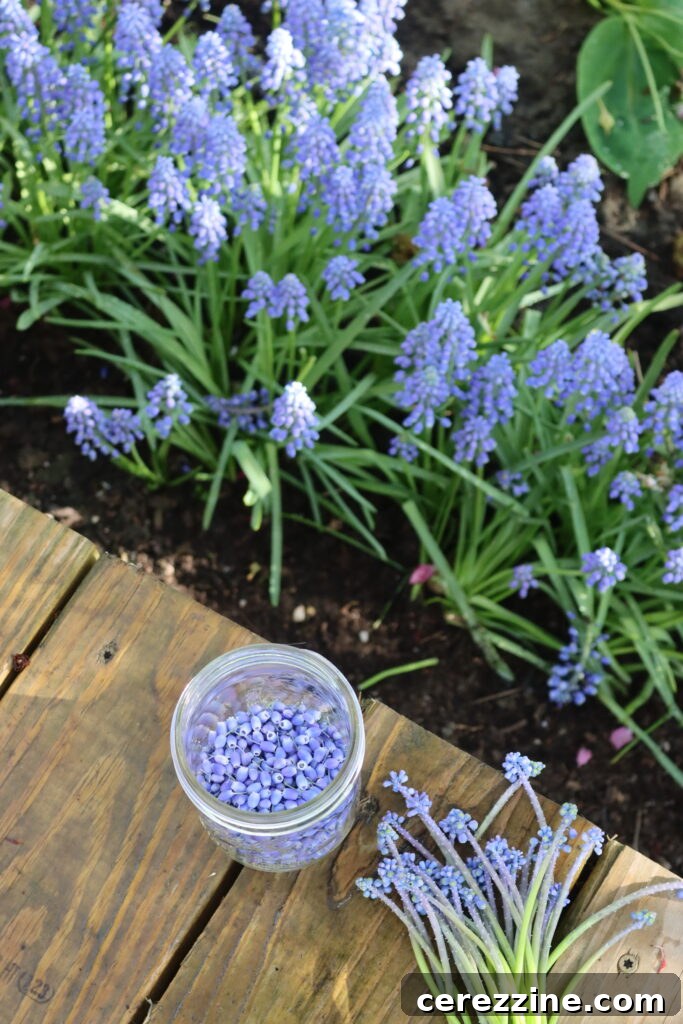
Start by harvesting fresh grape hyacinth flowers. Select vibrant, healthy blooms that are free from any signs of wilting or damage. Most importantly, ensure your flowers are organic and have not been exposed to pesticides or herbicides. You’ll need approximately 2 to 4 cups of blossoms. The more flowers you use, the richer and more intense the floral flavor will be in your finished jelly. Gently pull the individual, bell-shaped flowers from their main stems, making sure to discard any green parts or larger stems, as these can impart a bitter taste to the infusion. Unlike some other flower jellies, like dandelion jelly or lilac jelly, grape hyacinth blossoms detach quite easily.
Step 2: Infuse the Blossoms to Create a Floral Tea
Once your blossoms are prepared, place the grape hyacinth petals into a heatproof jar or a large bowl. Bring 4 cups of water to a rolling boil, then carefully pour the boiling water directly over the petals. Allow the mixture to steep undisturbed for 15 to 20 minutes. During this time, you will observe the water gradually changing color, absorbing the beautiful deep purple-blue pigments from the flowers. A subtle, sweet floral fragrance will also begin to permeate the air as the grape hyacinth essence infuses into the liquid. This infusion forms the flavor base of your jelly.
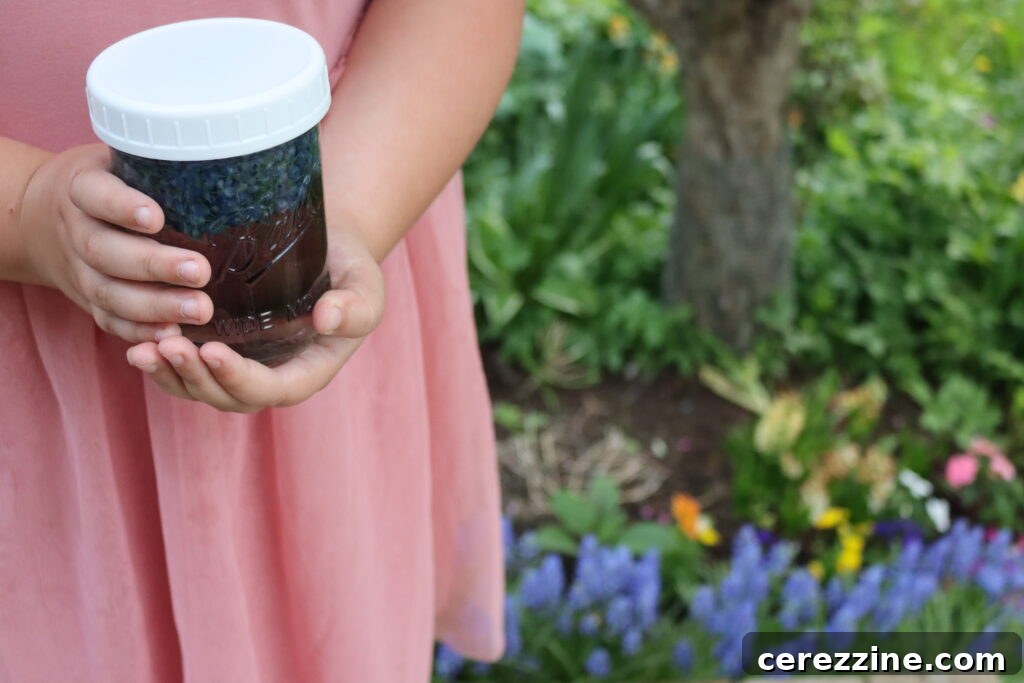
Step 3: Witness the Color Transformation with Lemon Juice
Many jelly makers prefer to add the lemon juice at this stage, directly to the steeping tea. The acidity of the lemon juice is believed by some to help extract even more vibrant color from the petals. Regardless of whether you add it now or later, the moment lemon juice meets the blue-purple infusion is magical: the tea will instantly transform into a brilliant, striking pink or magenta color. This visual cue gives you a preview of the stunning hue your finished jelly will possess.
For those who might wonder about preserving the original purple color, it’s worth noting that while you could technically skip lemon juice for a refrigerator jelly (though the flavor balance would suffer), commercially available powdered pectin contains citric acid for both safety and proper setting. Therefore, once pectin is introduced to make jelly, the color shift to pink is inevitable. Embrace this beautiful transformation!
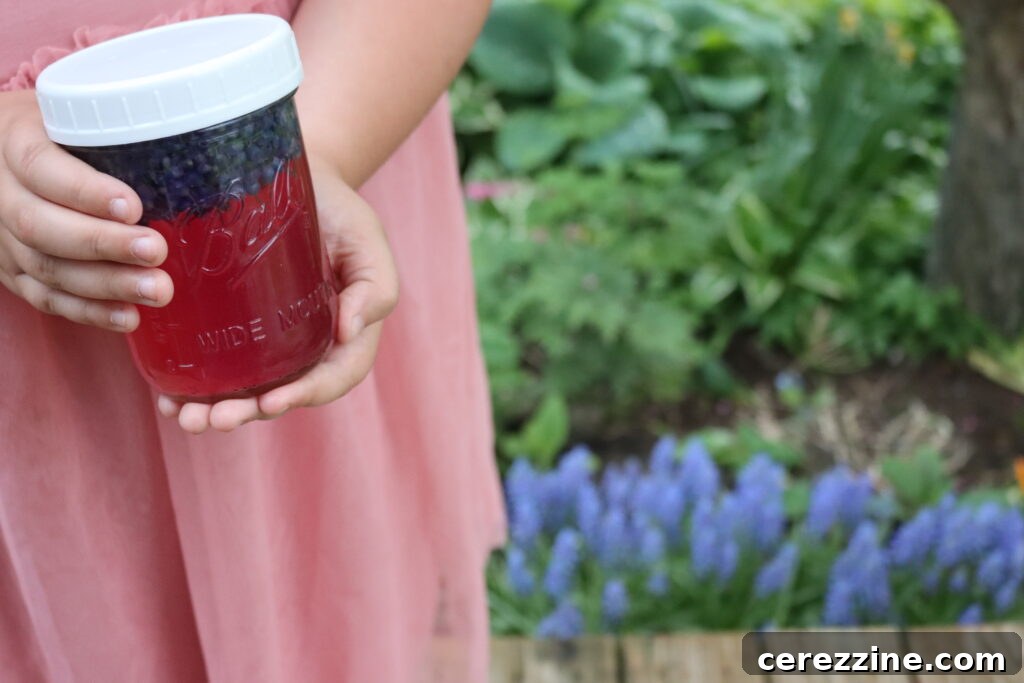
Step 4: Strain the Tea and Prepare the Jelly Base
Once the steeping time is complete, carefully strain the infused liquid to remove all the petals. You can use a fine-mesh sieve lined with cheesecloth for this step to ensure a clear, petal-free tea. This fragrant, colorful liquid is now your grape hyacinth tea base. Pour the strained tea into a large, heavy-bottomed pot. If you didn’t add the lemon juice in Step 3, now is the time to add the 2 tablespoons of fresh lemon juice. Stir it in thoroughly. The lemon juice is vital as it not only enhances the flavor but also provides the necessary acidity for safe canning and proper pectin activation, ensuring your jelly sets beautifully.
Step 5: Add Pectin and Bring to a Boil
Sprinkle the powdered pectin evenly over the grape hyacinth tea in the pot. Stir continuously to dissolve the pectin completely, ensuring no lumps remain. Bring the mixture to a full, rolling boil over high heat, stirring frequently to prevent sticking. Continue boiling for exactly 1 minute. This crucial minute allows the pectin to fully activate and dissolve, which is essential for the jelly to achieve its desired set and consistency.
Step 6: Incorporate the Sugar
After the pectin has boiled for 1 minute, stir in the granulated sugar. For a traditional, firm-set jelly, you’ll use a 1:1 ratio of sugar to liquid, meaning 4 cups of sugar for 4 cups of grape hyacinth tea. If you prefer a less sweet jelly, you’ll need to use a low-sugar pectin specifically designed for reduced-sugar recipes, and you can lower the sugar content to as little as 1/2 to 1 cup. Stir the sugar constantly until it is completely dissolved. Ensure there are no sugar crystals adhering to the sides or bottom of the pot.
Step 7: Final Boil and Consistency Check
Bring the entire mixture back to a vigorous, rolling boil that cannot be stirred down. Once this stage is reached, allow it to boil for precisely another 1 minute. This final boil ensures the jelly mixture reaches the correct temperature for the sugar and pectin to interact, guaranteeing a proper set. After this minute, remove the pot from the heat. At this point, you can perform a quick “wrinkle test” by placing a small amount of hot jelly on a chilled spoon or plate, letting it cool, and then pushing it with your finger. If it wrinkles, it’s ready!
Step 8: Ladle into Sterilized Jars
Carefully ladle the hot grape hyacinth jelly into your pre-sterilized canning jars. Fill the jars, leaving a precise 1/4 inch of headspace at the top. This headspace is critical for proper sealing during canning. Wipe the rims of the jars thoroughly with a clean, damp cloth to remove any jelly residue, which could prevent a proper seal. Place clean, new jar lids onto the jars and then screw on the rings until they are fingertip tight.
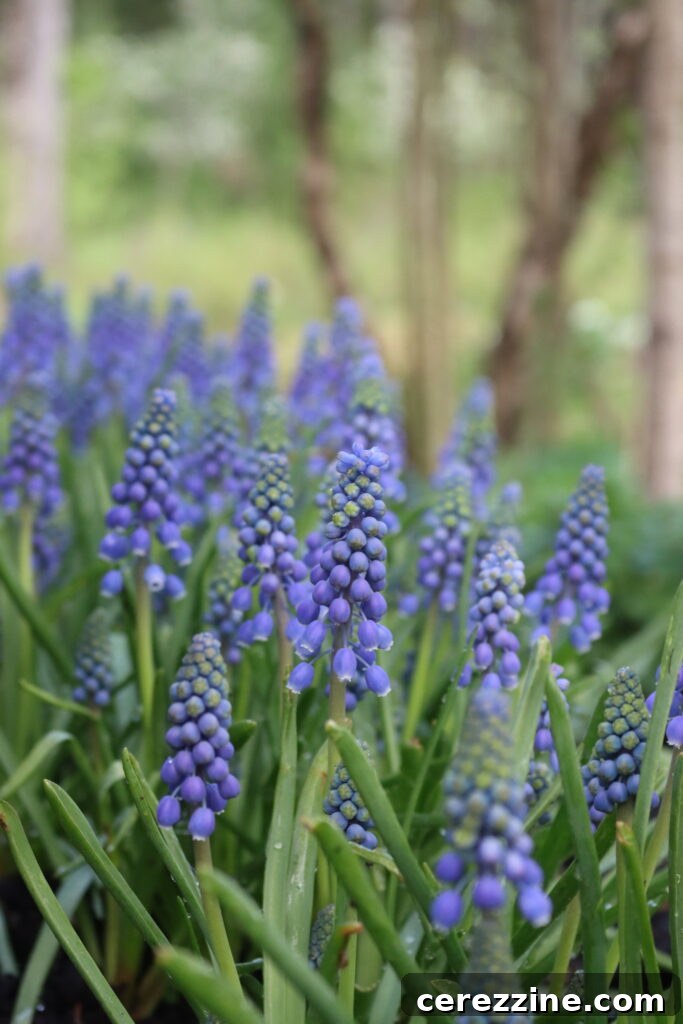
Water Bath Canning Grape Hyacinth Jelly (Optional, but Recommended for Shelf Stability)
Important Notes on Sugar and Pectin Choices
Understanding your pectin and sugar choices is key to successful jelly making:
- If you are using standard powdered pectin (such as Sure-Jell, commonly found in a red box), a 1:1 ratio of liquid to sugar is necessary for the jelly to set correctly. For our 4 cups of grape hyacinth tea, this means you will need 4 cups of sugar, resulting in a delightfully sweet jelly.
- Should you prefer a jelly with reduced sweetness, opt for a low-sugar pectin (often in a pink or purple box). This type of pectin is formulated to set with significantly less sugar, allowing you to reduce the amount to as little as 1/2 to 1 cup. Keep in mind that reducing the sugar content will also reduce the overall yield of your jelly. While a full-sugar version typically yields 5 half-pint jars, a low-sugar alternative may yield approximately 3 to 4 jars.
- Pomona’s Universal Pectin is an excellent choice for those seeking even greater flexibility with sugar levels, as it is a two-part pectin that sets reliably with very low or no sugar. Always follow the precise instructions provided with the Pomona’s package for optimal results.
- Avoid Liquid Pectin: I strongly recommend against using liquid pectin for this recipe. Liquid pectin typically requires a much higher sugar content (often around 7 cups of sugar for 4 cups of liquid) to set properly, which can overpower the delicate floral flavor of the grape hyacinths and result in an overly sweet consistency. Powdered pectin offers better flavor balance and consistency for this particular jelly.
If you wish to enjoy your exquisite grape hyacinth jelly for many months to come, safely preserved at room temperature, water bath canning is the ideal method. This simple and time-tested preservation technique ensures your jelly remains fresh and delicious on the pantry shelf for an extended period. To begin, prepare your water bath canner by filling it with enough water to cover your jars by at least 1 inch when they are submerged. Ensure your canning jars are clean, sterilized, and free from chips or cracks, and that your two-piece lids (flats and rings) are new and ready.
Once your jars are filled with hot jelly and sealed with lids and rings (finger-tight), carefully place them into the simmering water bath canner. Make sure the water level completely covers the jar tops. Bring the water to a full rolling boil. Process the jars for 10 minutes if you are at an elevation below 6,000 feet. For those residing at elevations above 6,000 feet, extend the processing time to 15 minutes to account for the lower boiling point of water. This precise processing time is crucial for ensuring a safe and stable product.
After the processing time is complete, carefully remove the hot jars from the canner using a jar lifter. Place them on a clean towel on your countertop, ensuring there is ample space between each jar to allow for even cooling. Do not disturb the jars for 12 to 24 hours. As they cool, you will typically hear satisfying “pinging” sounds, indicating that the lids have properly sealed. Once cooled, check the seals by pressing the center of each lid; it should be concave and not flex when pressed. Properly sealed jars can be stored in a cool, dark pantry for 12 to 18 months, allowing you to enjoy the taste of spring well into the colder seasons. Once a jar is opened, it must be refrigerated, where it will remain fresh for several weeks.
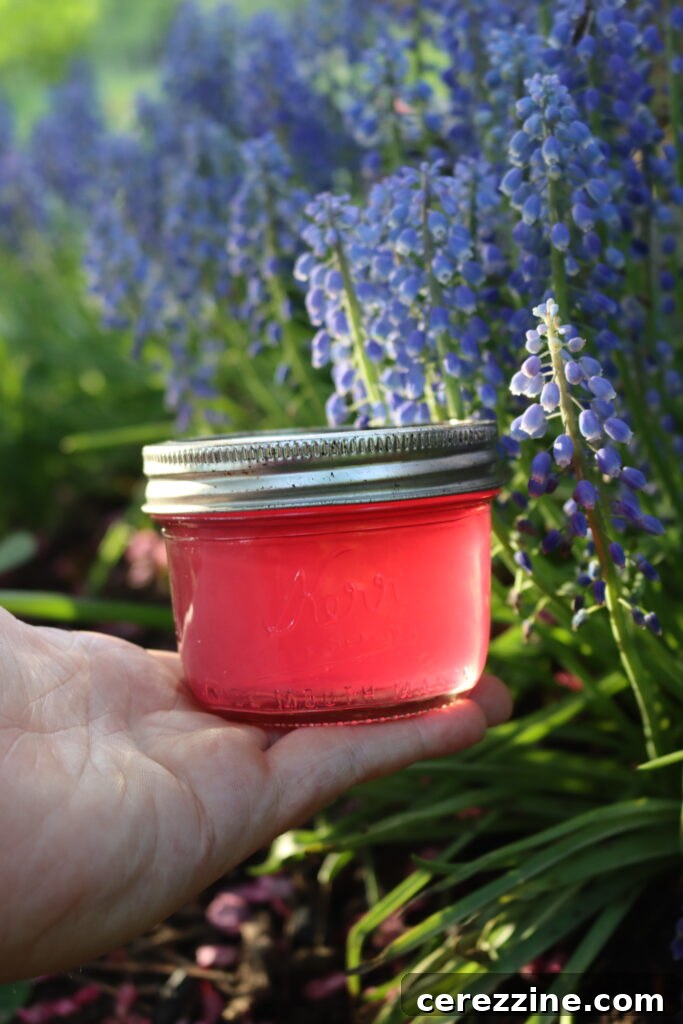
If you tried this Grape Hyacinth Jelly Recipe, or any other recipe on Creative Canning, leave a ⭐ star rating and let me know what you think in the 📝 comments below!
And make sure you stay in touch with me by following on social media!
Explore More Garden Flower Jellies
Delicious Tulip Jelly Recipe
Is Canning Flower Jellies Safe? A Guide
How to Make Fragrant Lilac Jelly
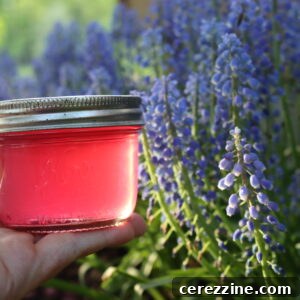
Grape Hyacinth Jelly
Pin
Rate
Ingredients
- 2 to 4 cups fresh grape hyacinth blossoms, no stems or green parts
- 4 cups water
- 2 tbsp fresh lemon juice
- 1 box powdered pectin, 1.75 ounces, like Sure-Jell
- 4 cups granulated sugar, or less if using low-sugar pectin
Instructions
-
Harvest the Grape Hyacinth Blossoms: Begin by picking fresh grape hyacinth flowers. Choose blossoms that are vibrant and free of pesticides. You’ll need about 2 to 4 cups of flowers, depending on their size. Gently pull the flowers off the stems, ensuring you only use the petals, as the stems and green parts can be bitter.
-
Steep the Flowers: Place the grape hyacinth petals in a heatproof jar or bowl. Pour 4 cups of boiling water over the flowers and let them steep for 15 to 20 minutes. The water will transform into a lovely, deep purple color, and the fragrance of the grape hyacinths will infuse the liquid. Once the steeping time is up, strain out the petals, leaving you with the fragrant purple tea.
-
Prepare the Jelly Base: Pour the strained grape hyacinth tea into a large pot. Add the 2 tablespoons of lemon juice. The acidity of the lemon juice helps balance the sweetness of the sugar and ensures the jelly sets properly.
-
Add Pectin and Boil: Stir in the powdered pectin and bring the mixture to a boil. Let it boil for 1 minute, stirring frequently. Make sure the pectin is fully dissolved before proceeding. This step is crucial because the pectin helps the jelly to set properly.
-
Add Sugar: Once the pectin has dissolved and the mixture is boiling, stir in the sugar. Use the standard 1:1 ratio of sugar to liquid for a traditional jelly, which means you’ll need 4 cups of sugar for every 4 cups of grape hyacinth tea. If you prefer a less sweet jelly, consider using a low-sugar pectin and reducing the sugar to 1/2 to 1 cup. Stir the sugar until it’s completely dissolved.
-
Final Boil: Bring the mixture back to a full boil and let it boil for another 1 minute. This ensures the jelly thickens and reaches the proper consistency.
-
Jar the Jelly: After the final boil, remove the pot from the heat. Ladle the hot jelly into sterilized jars, leaving about 1/4 inch of headspace at the top of each jar. Wipe the rims of the jars clean before sealing them with the jar lids.
-
Canning (Optional): Get your water bath canner ready with enough water to cover the jars by at least 1 inch. Make sure your canning jars and lids are clean and ready to go.
-
Seal and Process: After ladling the jelly into the jars, wipe the rims clean, place the lids on the jars, and screw on the rings. Process the jars in the water bath canner for 10 minutes (or 15 minutes if you are above 6,000 feet in elevation).
-
Cool and Store: Once the jars have been processed, carefully remove them from the canner and let them cool on a towel on the counter. If the jars have sealed properly, they will keep in a cool, dark pantry for 12 to 18 months. After opening, refrigerate the jelly.
Notes
Notes on Sugar and Pectin
- If you are using standard pectin (such as Sure-Jell), a 1:1 ratio of liquid to sugar is needed for the jelly to set. For 4 cups of grape hyacinth tea, this means you’ll need 4 cups of sugar. This will give you a sweet jelly. If you’d like to reduce the sweetness, you can use low-sugar pectin and lower the sugar to as little as 1/2 to 1 cup.
- With low-sugar pectin, you can use less sugar, but keep in mind that this will reduce the yield of jelly. Expect about 3 to 4 jars with a low-sugar version, compared to 5 half-pints with a full-sugar version.
- Pomona’s Universal Pectin is another option that works well for lower-sugar recipes. This two-part pectin allows for more flexibility with sugar, so be sure to follow the instructions that come with the box.
- Avoid Liquid Pectin: Liquid pectin requires a lot more sugar (about 7 cups of sugar for 4 cups of liquid) to set, so I recommend using powdered pectin instead for better flavor and consistency.
Nutrition
Nutrition information is automatically calculated, so should only be used as an approximation.
Like this? Leave a comment below!