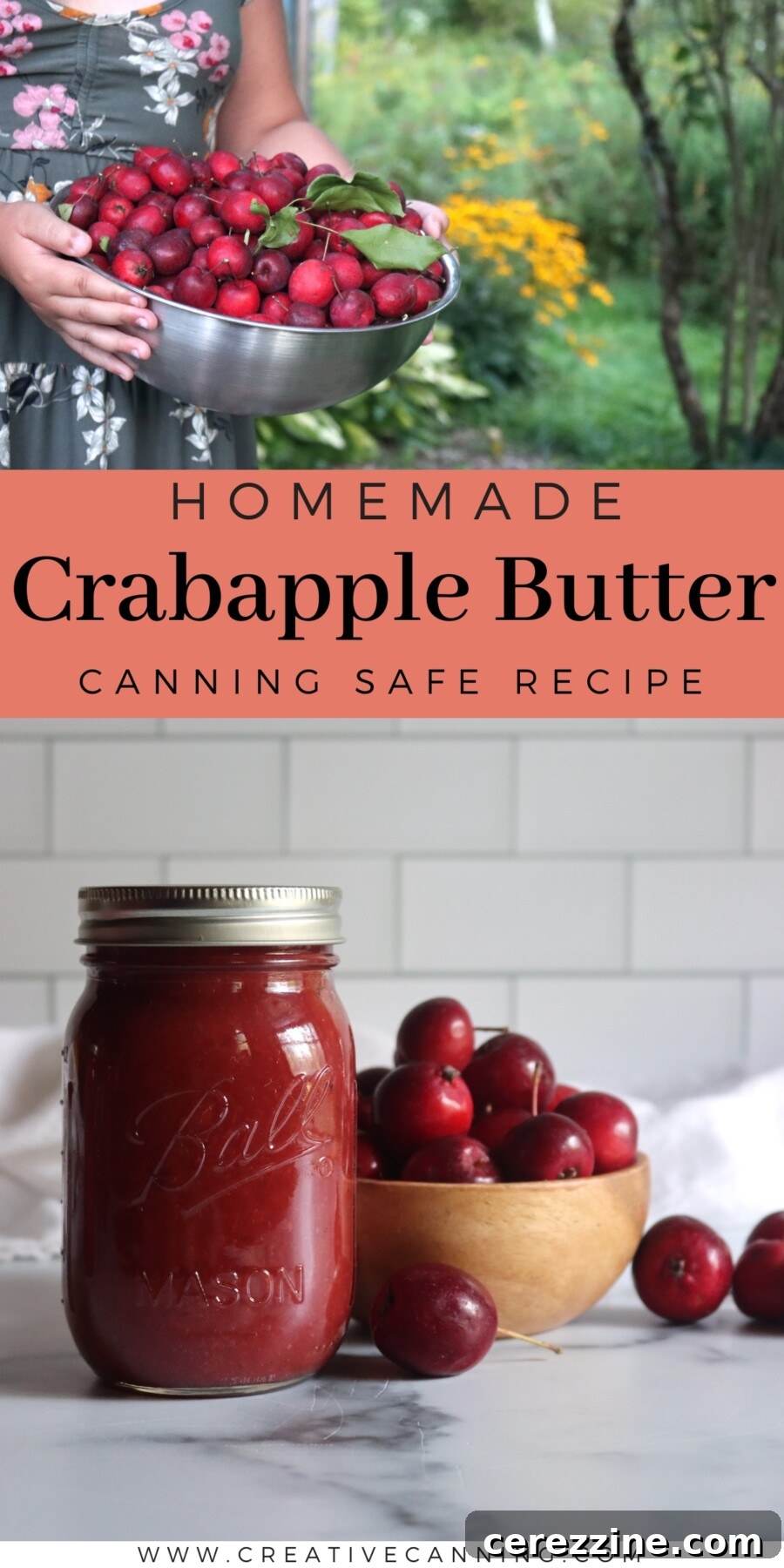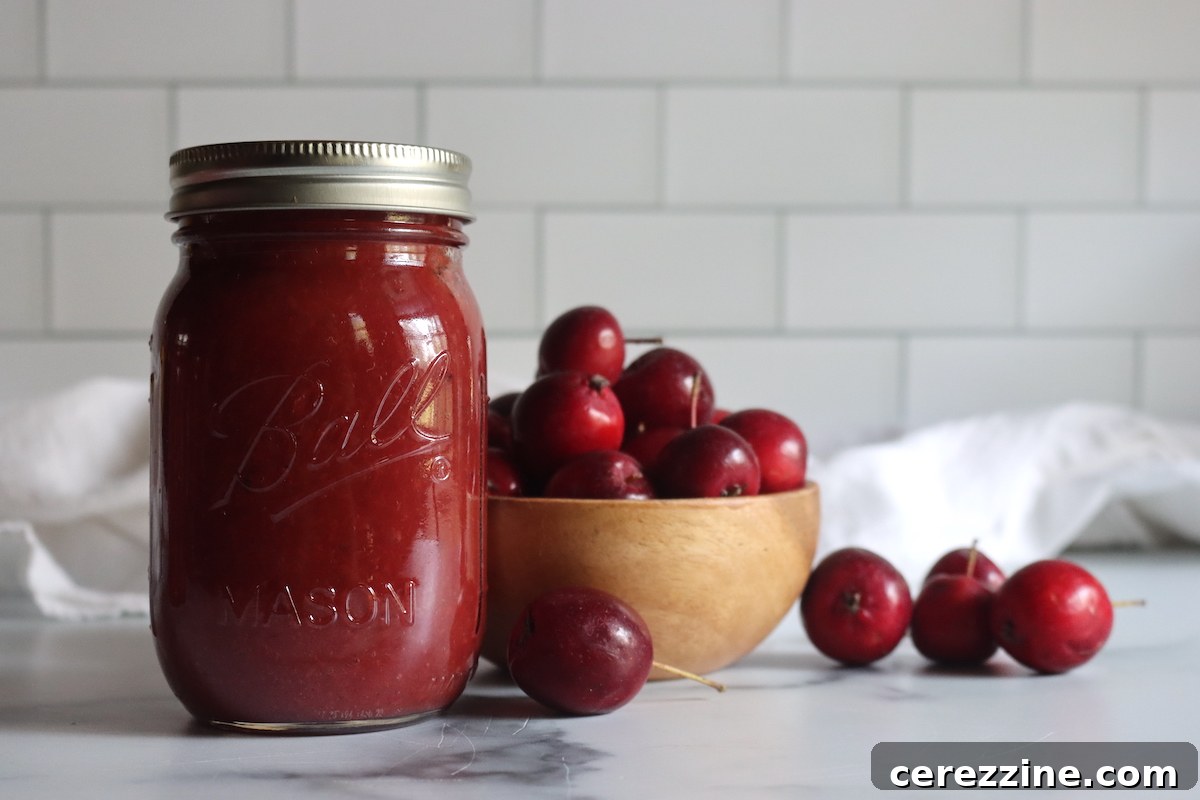
Crabapple butter turns small, tart crabapples into a richly spiced spread that captures the flavor of autumn in a jar. If your tree is dropping more fruit than you can use fresh, making butter is an excellent way to use the harvest. The natural tartness of crabapples pairs beautifully with sugar, orange, and warming spices to produce a complex, deeply flavored spread that’s different from standard apple butter.
This recipe was reviewed for safety and accuracy by a Master Food Preserver certified through the University of Cornell Cooperative Extension.
This method, adapted from a classic home-preserving source, uses the whole fruit rather than only the juice. Quarter the crabapples, simmer them until soft, then pass the cooked fruit through a food mill to remove skins and cores. No peeling or coring is required, which makes this a fast and forgiving preserve for windfalls and less-than-perfect fruit.
The recipe adds orange zest and juice plus cinnamon, cloves, and ginger for a bright, aromatic butter. Crabapples are naturally high in pectin, so the purée thickens fairly quickly when reduced and yields a smooth, silky texture once processed through a food mill.
Notes from the Kitchen

Crabapples are often overlooked despite being plentiful in many neighborhoods. Butter is my favorite solution because it accepts imperfect fruit and concentrates the flavor into a versatile spread. The orange in this recipe brightens the final product and keeps the flavor lively, making it an excellent choice for toast, cheese boards, or glazes for roasted meats.
Quick Look at the Recipe
- Recipe Name: Crabapple Butter
- Type: Fruit butter
- Canning method: Water bath canning for shelf-stable jars
- Prep time: About 30 minutes
- Cook time: 45 minutes to 1 hour (including reduction)
- Canning time: 15 minutes for half pints/pints at sea level (see altitude adjustments)
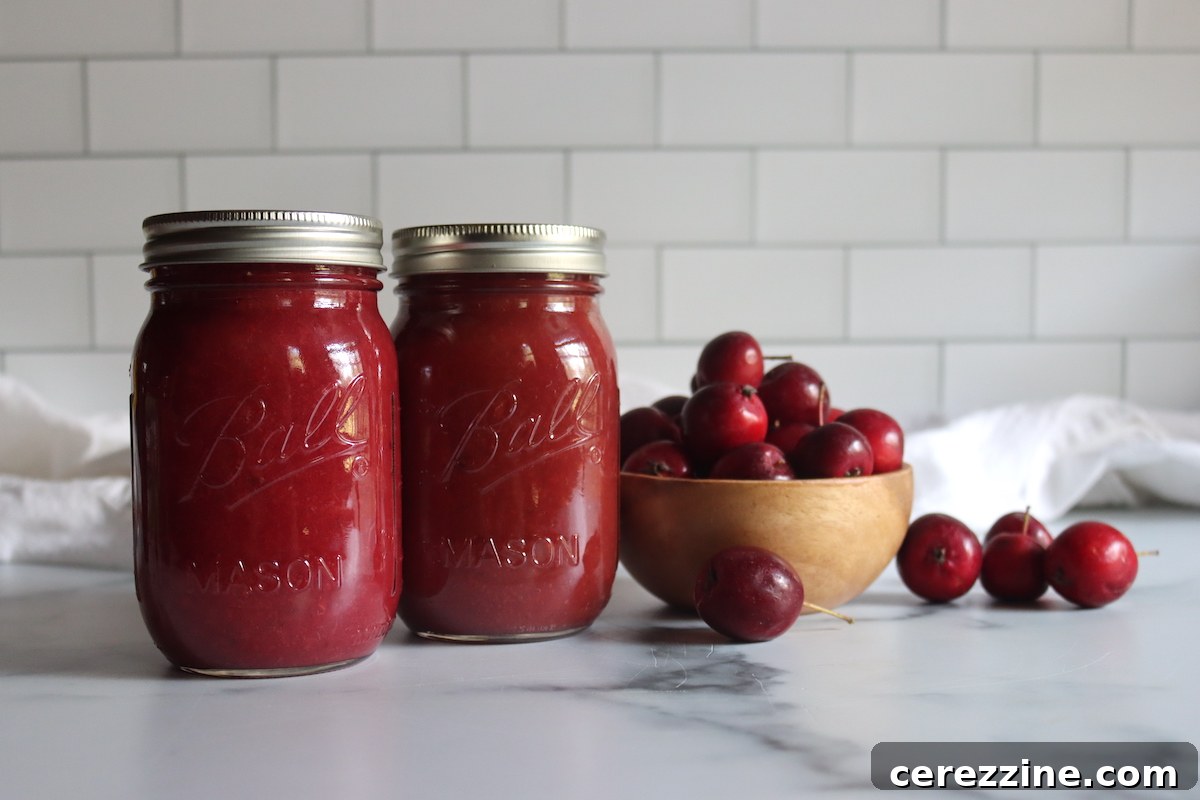
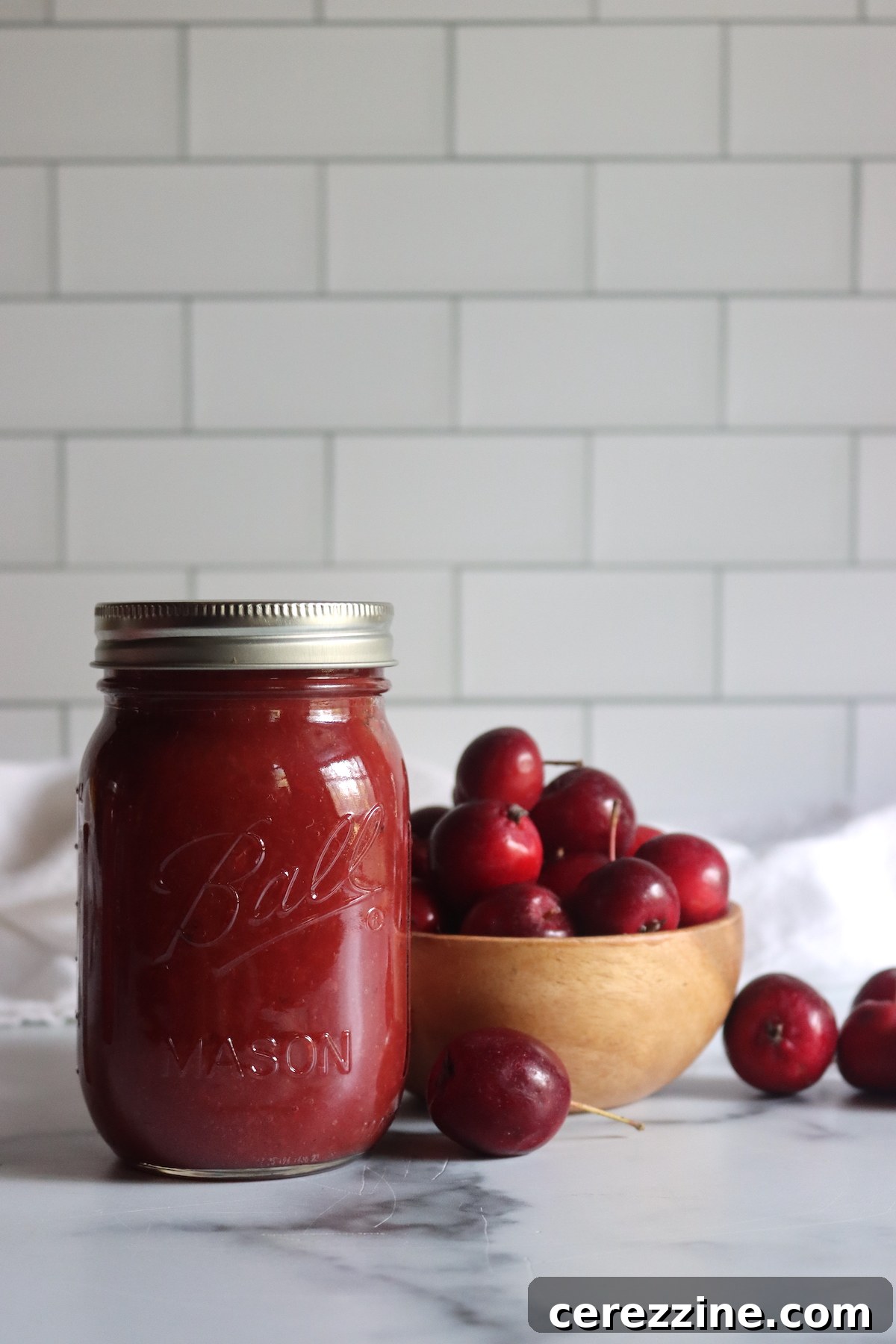
- Yield: About 6 half pints
- Jar size: Half pints recommended
- Headspace: 1/4 inch
- Key ingredients: Crabapples, orange, sugar, cinnamon, cloves, ginger
Ingredients
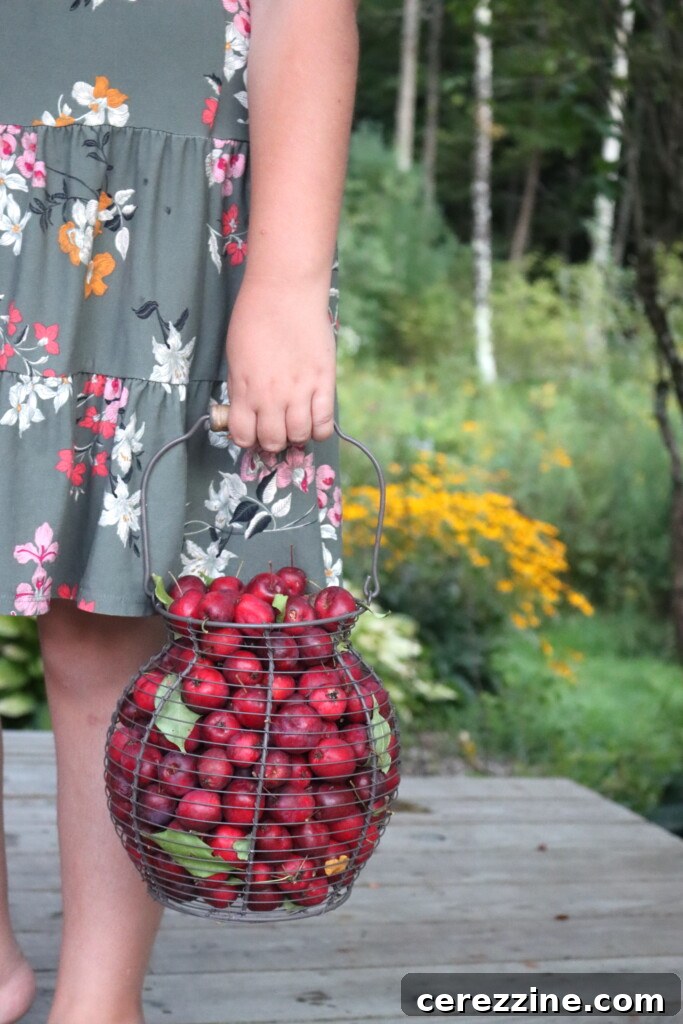
This recipe requires roughly 6 cups of crabapple purée, which typically comes from about 4 pounds of whole crabapples. Yield varies with fruit size and juiciness, so gather a few extra crabapples to be safe.
- Crabapples: 4 pounds, stems and blossom ends removed, quartered. No peeling or coring needed.
- Water: 1 cup, to start the cooking process.
- Orange: Zest and juice of 1 large orange (fresh).
- Granulated sugar: 2 cups.
- Ground cinnamon: 1½ teaspoons.
- Ground cloves: ½ teaspoon.
- Ground ginger: ½ teaspoon.
Step-by-Step Instructions
This process includes an initial cook to soften the fruit, a pass through a food mill to remove skins and cores, then a final reduction to thicken the purée into butter. Prepare canning equipment only once the butter is close to its final thickness.
Cook the crabapples
In a large stainless steel saucepan, combine the quartered crabapples and 1 cup water. Bring to a boil over medium-high heat, then reduce to a gentle simmer, cover, and cook until the fruit is soft, about 20–30 minutes, stirring occasionally.
Purée the fruit
Working in batches, pass the cooked crabapples through a food mill to remove skins and cores and create a smooth purée. You want about 6 cups of purée. A fine-mesh sieve and a spatula can work in a pinch, but a food mill is much faster.
Make the butter
In a clean large saucepan, combine the crabapple purée, orange zest and juice, sugar, cinnamon, cloves, and ginger. Stir until the sugar dissolves, then bring to a boil. Reduce heat and simmer, stirring frequently, until the mixture thickens and holds its shape on a spoon—typically 20 to 40 minutes depending on moisture content. Stir more often as it thickens to prevent scorching.
Fill jars
Ladle the hot butter into prepared half-pint jars, leaving 1/4 inch headspace. Remove air bubbles, wipe rims, center lids, and apply bands fingertip-tight. Process filled jars in a boiling water bath according to the times below for shelf-stable storage.
Canning and Storage
Uncanned, crabapple butter keeps in the refrigerator for up to three weeks or in the freezer for up to a year. For shelf-stable storage, process jars in a boiling water bath. Ensure jars are covered by at least 1 inch of boiling water and process for the recommended time for your altitude.
Altitude Adjustments
- 0–1,000 ft: 15 minutes
- 1,001–6,000 ft: 20 minutes
- Above 6,000 ft: 25 minutes
Yield and Scaling
This recipe yields roughly six half pints from about 4 pounds of crabapples. If you have extra purée, scale the sugar and spices proportionally—approximately 1/3 cup sugar and a pinch more spices per additional cup of purée.
Serving Ideas
Crabapple butter is excellent on toast, biscuits, and muffins. Its bright tartness and warm spice also pair well with savory foods: try it with roasted pork, on a ham sandwich, or alongside sharp cheddar. Use it as a filling for cookies, swirl into yogurt or oatmeal, or warm and brush it as a glaze for roasted chicken or pork.
Crabapple Butter FAQs
No. Remove stems and blossom ends, quarter the fruit, and cook. A food mill removes skins and cores after cooking, saving a lot of prep time.
A food mill is ideal because it separates skins and seeds while producing a smooth purée. If you don’t have one, press the cooked fruit through a fine-mesh sieve with a spoon or spatula; it will take more time and elbow grease.
The butter is ready when it holds its shape on a spoon. Scoop some onto a spoon and hold it horizontally—if it mounds instead of running off, it’s done. A cold plate test also works: a small cooled dollop should not run when the plate is tilted.
Yes. Regular apples will yield a different, usually milder flavor. Use a tart apple variety and consider a touch more orange juice to boost brightness if substituting.