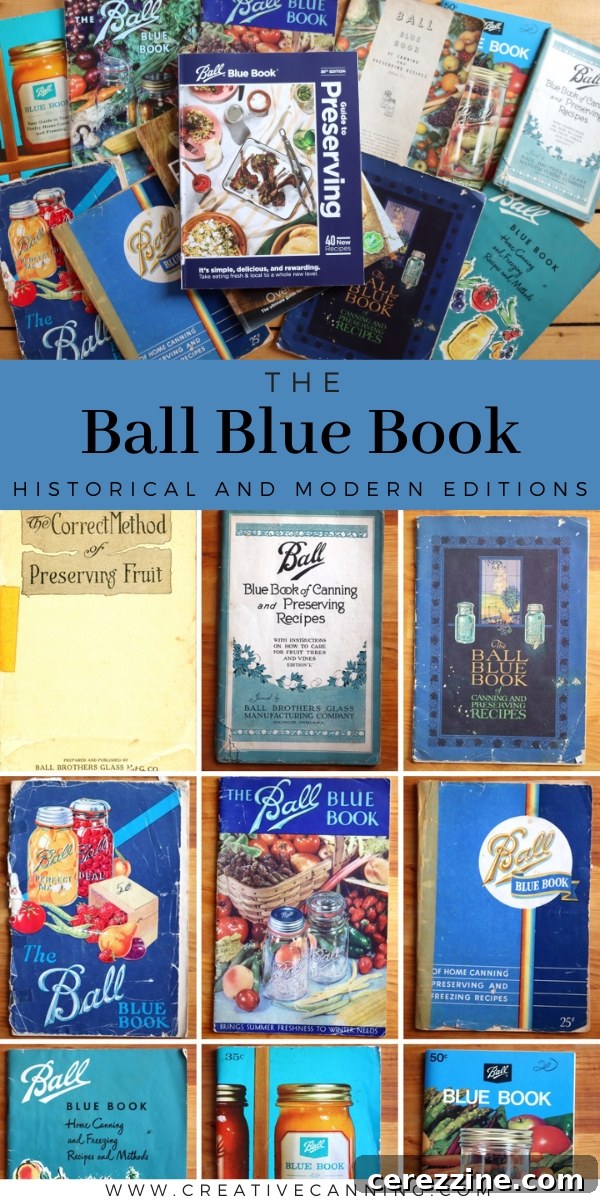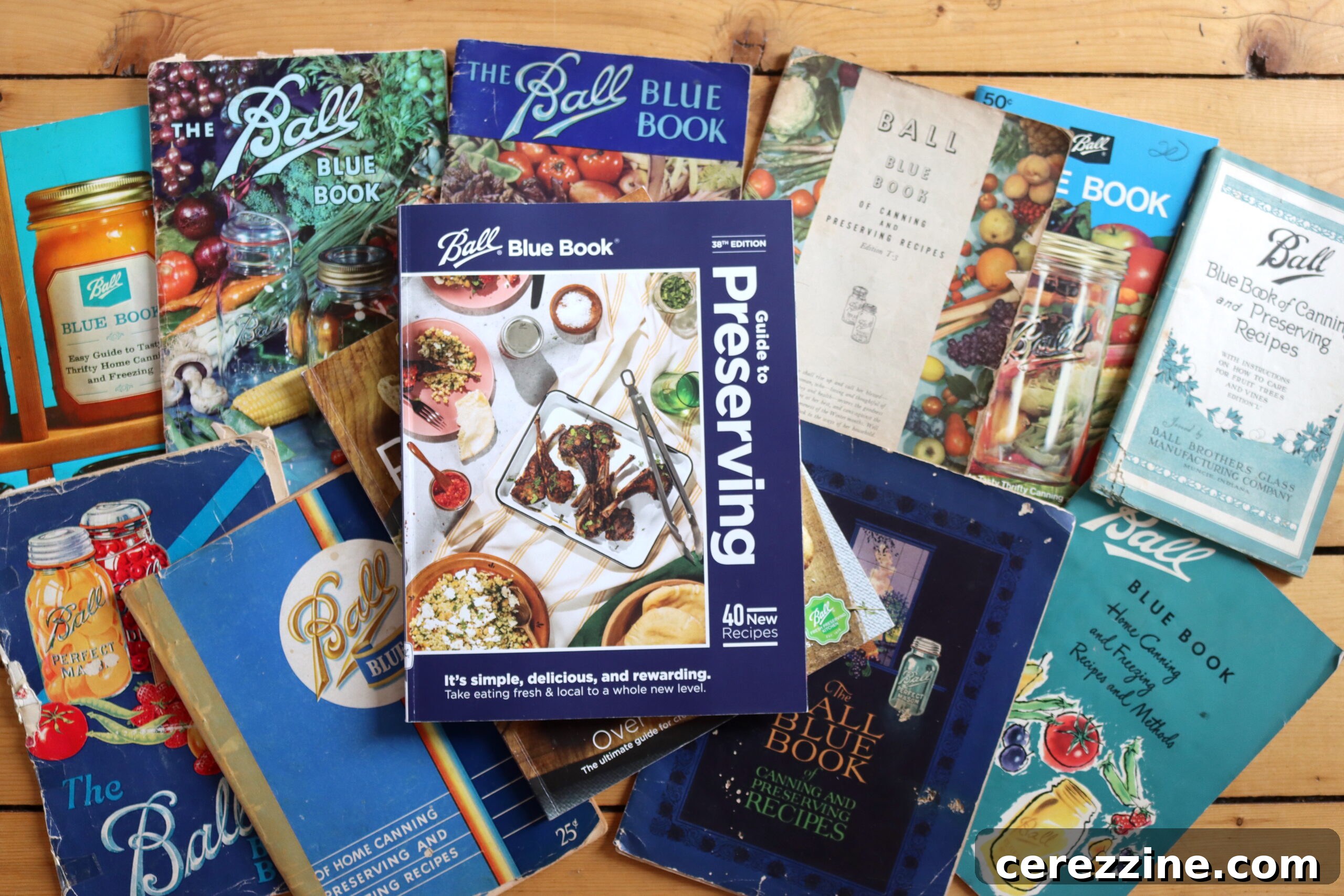
For over a century, the Ball Blue Book of Preserving has stood as an indispensable companion for home canners worldwide. First introduced to the general public in 1909, this iconic guide has not only taught generations how to safely preserve food but has also evolved significantly, reflecting advancements in food science and culinary practices. While enthusiasts cherish older editions as fascinating pieces of canning history, modern versions remain the definitive source for current, scientifically-backed safety standards, making them a cornerstone for anyone embarking on the journey of home food preservation.
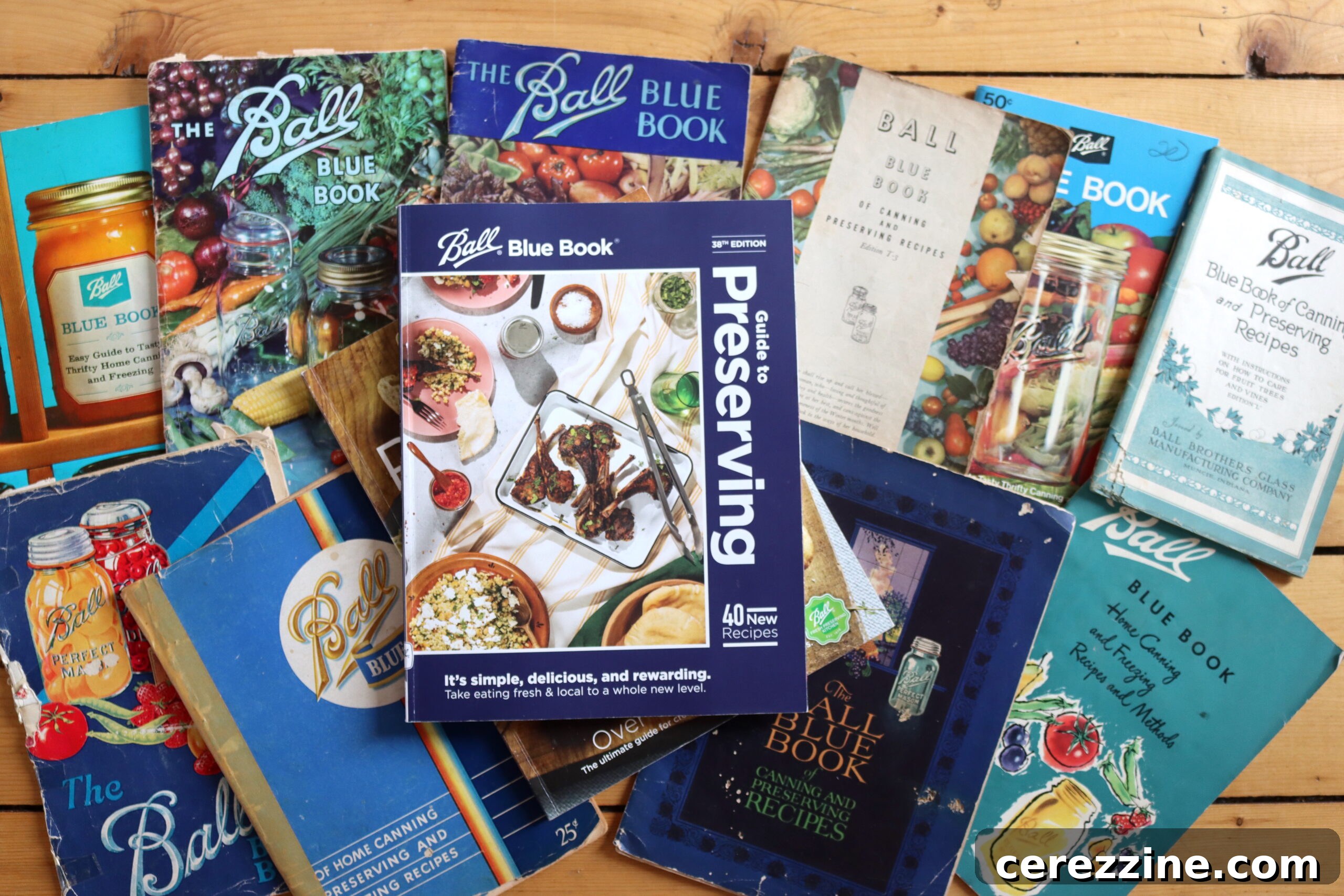
Initially released as a pioneering resource, the Ball Blue Book quickly became a household name, synonymous with reliable canning information. Today, it continues to be one of the most trusted and frequently updated guides, offering a blend of traditional wisdom and contemporary food safety practices.
Accessing this wealth of knowledge is easier than ever. Modern, up-to-date editions of the Ball Blue Book of Preserving are readily available for purchase through major retailers. For those with an appreciation for history, historical editions are highly sought after on eBay. It’s common to find many popular editions dating back to the 1930s. Notably, wartime editions from the early 1940s are among the most prevalent, reflecting a period when home canning surged in popularity due to widespread victory gardens and food rationing.
Ensuring Safety: The Evolution of Modern Ball Blue Book Editions
The landscape of home canning safety has undergone significant changes over the decades, driven by scientific research and a deeper understanding of foodborne pathogens. As such, relying on outdated information can pose serious risks. According to Penn State University Extension, a leading authority in food preservation, it is crucial to understand that “Canning books published prior to 1994 will not have safe processing times and/or methods.” This vital guideline directly applies to older editions of the Ball Blue Book, highlighting the importance of using the most current publication for all your canning endeavors. The year 1994 marked a pivotal moment in canning education, as new scientific data and processing techniques were widely adopted, rendering many older recipes and methods obsolete or even dangerous.
Each new edition of the Ball Blue Book is designed to supersede its predecessors, incorporating the latest research and safety recommendations. While some editions feature extensive revisions, others might present only subtle updates. However, these changes, no matter how minor, are often critical for maintaining the highest standards of food safety. They reflect an ongoing commitment to providing home canners with the most accurate and reliable information available.
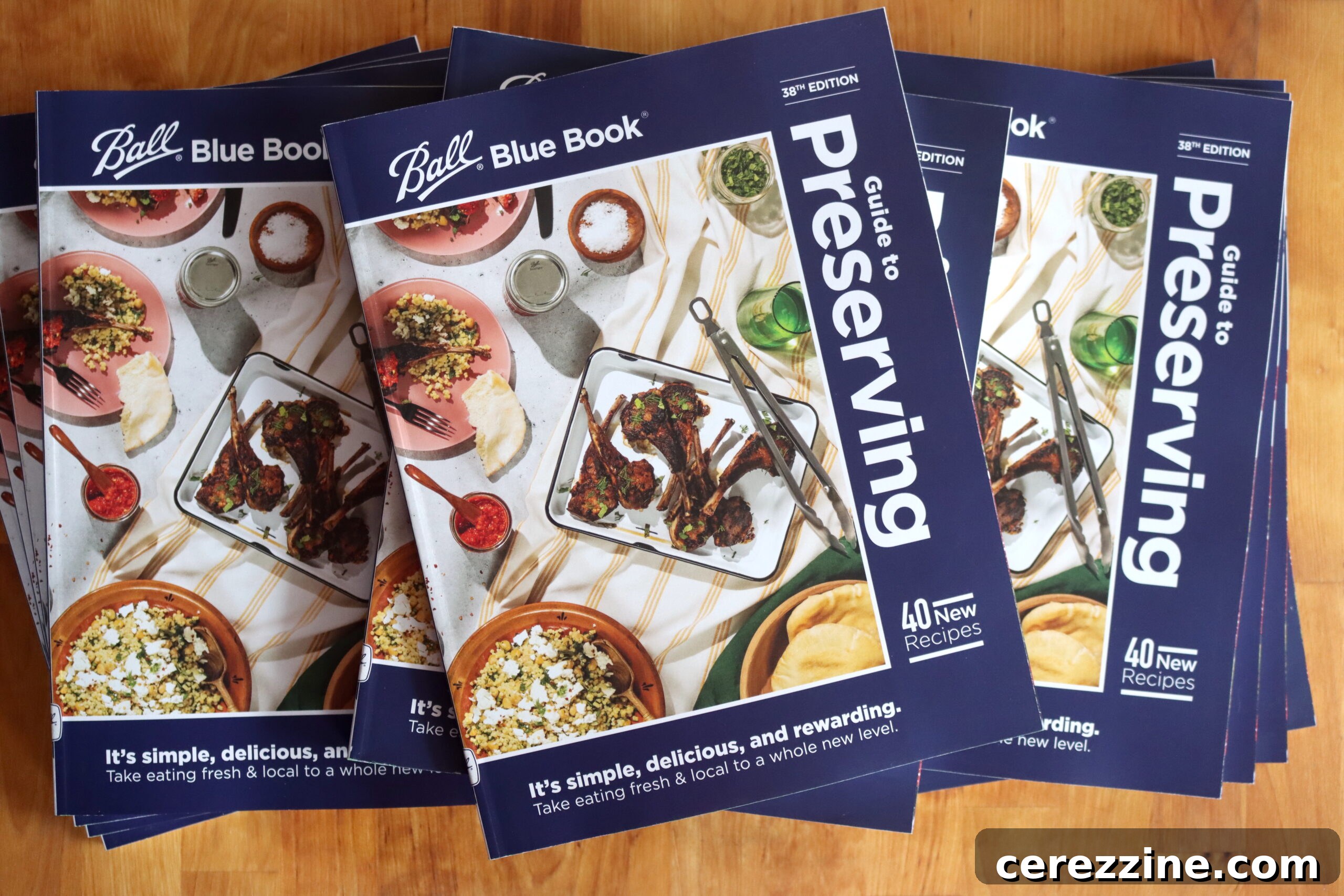
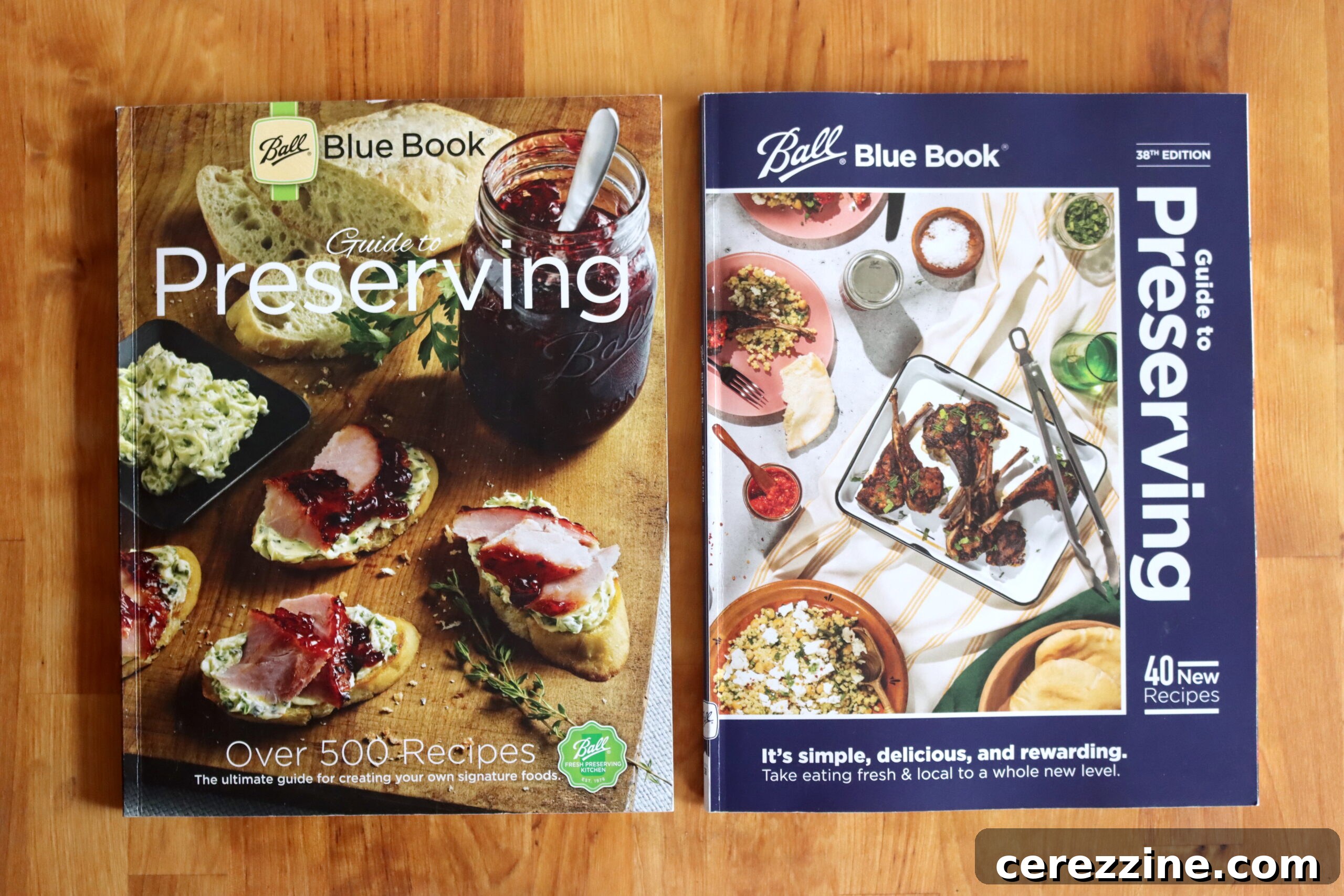
The most current iteration, the 38th Edition of the Ball Blue Book, was released in February 2024. This edition continues the tradition of innovation, introducing 40 brand-new recipes to inspire canners. Furthermore, it provides updated guidance on crucial topics such as the acidification of apples for canning, reflecting nuanced scientific understanding that directly impacts product safety and quality. These continuous updates underscore the dynamic nature of food science and Ball’s dedication to keeping canners informed and safe. For those eager to delve into the specifics, a complete list detailing what’s new in the 38th edition of the Ball Blue Book of Canning is available, outlining all the exciting changes and additions.
Addressing the Critiques: Understanding the Ball Blue Book’s Challenges
While celebrated for its extensive contributions to home canning, the Ball Blue Book has not been without its critics. Over the years, two primary concerns have frequently emerged, sparking discussions within the canning community.
One notable criticism centers on the perceived lack of precise measurements in some of its recipes. Certain instructions, such as calling for “One medium head of cabbage,” can be vague. The actual volume or weight of a “medium” vegetable can vary significantly, potentially leading to inconsistent results. However, it’s important to note that most recipes do provide exact measurements, especially for ingredients crucial to safety. In instances where measurements are less precise, such as for certain vegetable quantities in a relish, they typically do not compromise canning safety, provided critical components like vinegar are measured with utmost accuracy. The balance of acidity, often supplied by carefully measured vinegar or lemon juice, is paramount for inhibiting bacterial growth in water bath canning.
The other significant criticism extends to Ball Canning’s practices in general, particularly its historical reluctance to make recipe testing data publicly accessible. This lack of transparency has occasionally led to serious errors in the past, undermining trust among some canners. A prominent example involves elderberries: for a period, Ball assumed elderberries were sufficiently acidic for safe water bath canning without thorough testing. When independent tests were eventually conducted, the results revealed an average pH of 5, which is too alkaline for safe water bath canning without added acidification. Despite these findings, it took several years for these critical corrections to be reflected in printed editions of the Ball Blue Book, a delay that raised concerns about the responsiveness of their safety protocols. Encouragingly, the modern 2024 edition is the first to finally incorporate this crucial correction, demonstrating a step towards addressing past issues and reinforcing the continuous evolution of their guidelines.
A Century of Preservation: The Rich History of the Ball Blue Book
The origins of the beloved Ball Blue Book trace back to a modest pamphlet titled “The Correct Method for Preserving Fruits,” first published in 1909. This foundational guide was penned by George Ball, alongside his wife, Frances Woodworth Ball, whose combined expertise laid the groundwork for a legacy in home food preservation. Starting with just 30 pages, it was less a book and more an essential instruction manual designed to help consumers effectively use Ball’s innovative glass canning jars.
The pamphlet’s popularity soared, leading to annual re-issues with consistent updates. A unique aspect of its early development was its community-driven evolution: readers enthusiastically sent in handwritten notes containing cherished family recipes, hoping to see them included in subsequent editions. These submissions were meticulously tested by the Ball family and their team. If a recipe passed muster and met the nascent safety standards of the time, it earned a coveted spot in the next year’s edition, fostering a sense of shared culinary heritage.
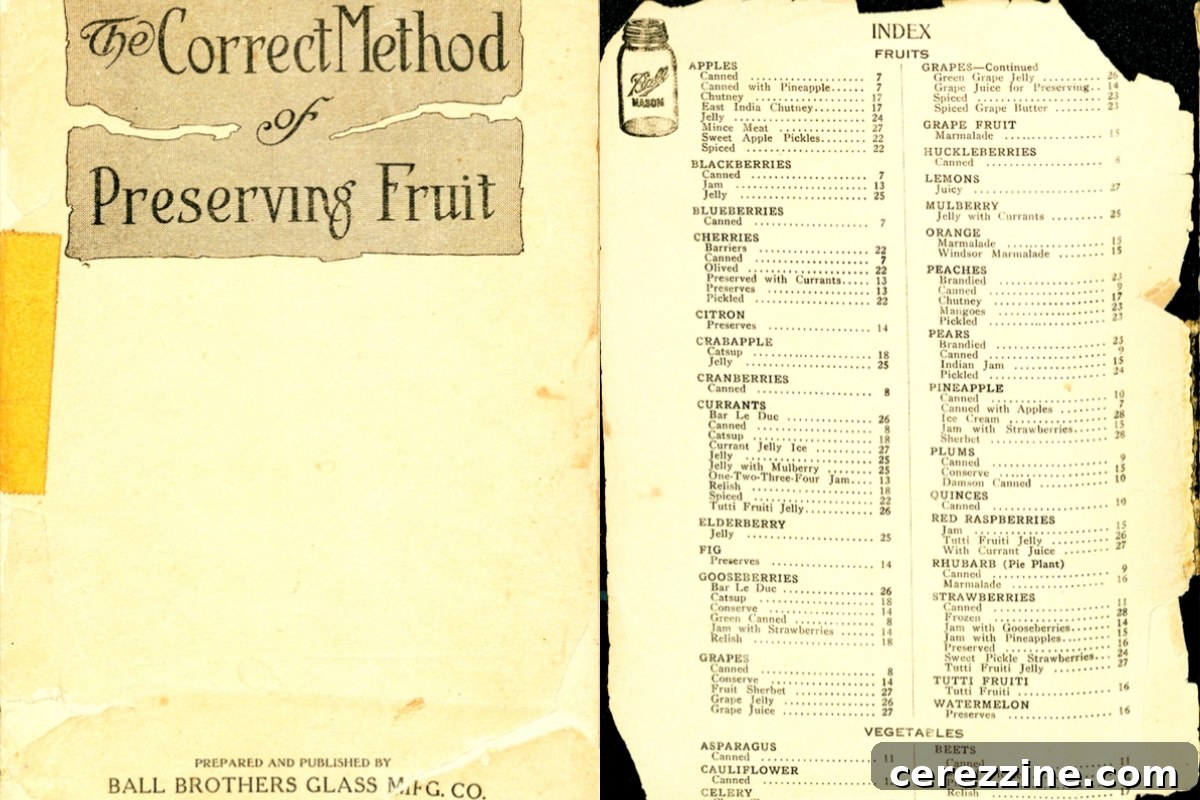
This early development process was notably informal. So much so that many sources suggest no known copies of the original 1909 edition have survived. However, dedicated researchers have unearthed rare copies, such as one discovered in the Archives of the University of Iowa (with special thanks extended to reference librarian Olivia Garrison for her invaluable assistance in digitizing this pivotal first edition). In its nascent stages, none of these editions were formally copyrighted. They served primarily as accessible pamphlets intended to empower users of Ball canning jars.
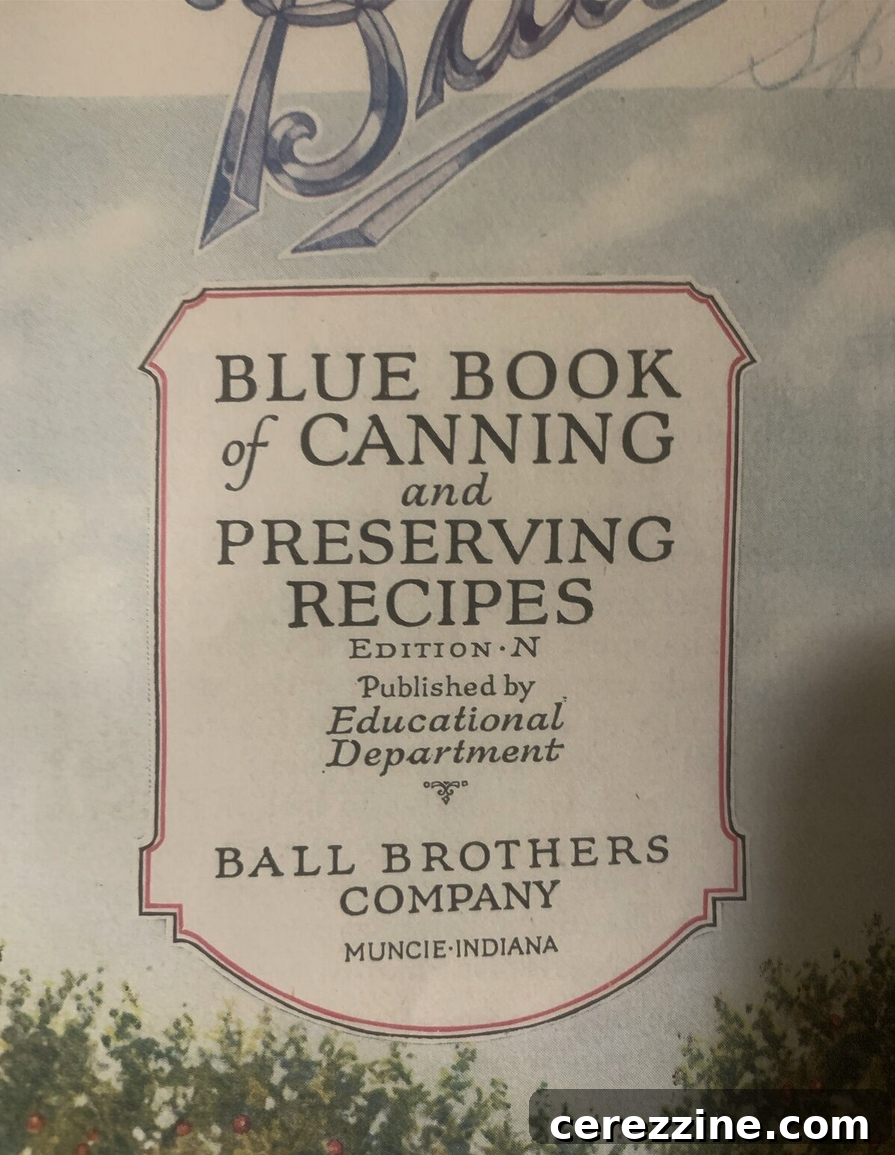
A significant shift occurred in 1916 when the publication officially adopted the title “The Ball Blue Book of Home Preserving,” and it received its first formal copyright. Early editions were often identified by unique letter labels, presenting a fascinating challenge for collectors and historians. For example, “Edition J” from 1916 is one of the earliest dated copies. The naming system can be tricky, as editions were sometimes labeled with a letter but lacked a specific publication date within the text itself. For a period, “Edition N,” copyrighted in 1926, was considered one of the earliest clearly dated copies available. However, more recent discoveries have brought to light editions from as early as 1915 and 1916 with actual dates, demonstrating the ongoing archaeological work in preserving this history. Most printings before the mid-1920s simply omitted the date, adding to the intrigue of tracing the book’s evolution.
Among the publicly accessible copies, the Ball Blue Book Edition M, digitized by the University of Iowa, stands out. Though undated, contextual clues suggest its publication sometime between the end of World War I in 1919 and Ball Canning’s name change in 1922, offering a valuable window into early 20th-century canning practices.
Early Ball Blue Books and Public Domain Status: A Resource for All
A fascinating aspect of the Ball Blue Book’s history is the public domain status of many of its earliest editions. Changes in U.S. copyright law since the early 1900s have profoundly impacted their accessibility. The key takeaway is that most editions printed before February 7, 1949, are no longer protected by copyright and are now freely available to the public.
Under the copyright law prevalent at the time, publishers were required to renew a copyright 28 years after the initial publication. If a renewal was not filed, the work automatically transitioned into the public domain. Ball Corporation notably renewed the copyright for only one pre-1949 edition: the 1949 edition (on July 2, 1976, under renewal number R636026). This specific renewal decision means that all earlier editions—encompassing those published throughout the 1910s, 1920s, 1930s, and most of the 1940s—were never renewed and their copyrights have since expired.
The 1949 edition is designated as “Edition Y.” Therefore, to the best of current knowledge, any edition preceding “Y” is considered part of the public domain. A prime example is Edition V from 1943, one of the most widely printed historical copies due to the high demand for home canning resources during World War II. This edition is readily available scanned online through the Hathitrust. Hathitrust has also made a 1916 Edition M available, further enriching the public archives.
In practical terms, this means that early Ball Blue Book editions can be freely accessed, reproduced, and shared by anyone. Their content, including recipes, photographs, and original page layouts, now belongs to the public domain. Many of these valuable historical resources have been digitized by various libraries and archives, such as HathiTrust and the Internet Archive, making them accessible to a global audience of researchers, historians, and home canning enthusiasts. It is only editions published from 1949 onward that remain protected by copyright, as the 1949 version was renewed, and subsequent works are covered automatically under newer copyright legislation.
(Please note: As I am not a copyright lawyer, this information is provided for general reference only and should not be construed as legal advice.)
Exploring the Comprehensive List of Ball Blue Book Editions
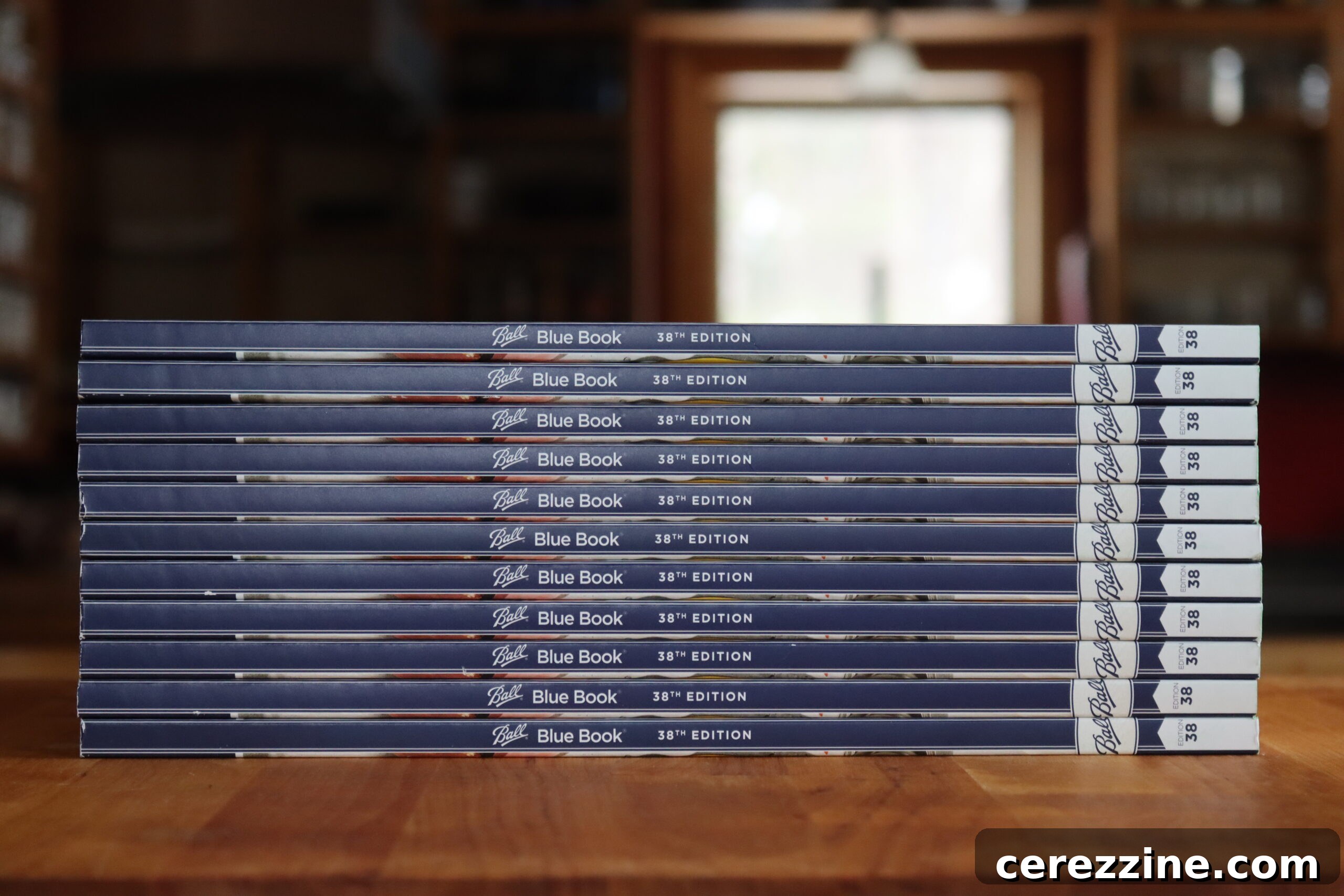
The current edition is proudly labeled the “38th Edition,” published in February 2024. However, the numbering system used throughout the book’s history can be somewhat deceptive. A deep dive into historical documents reveals that there have been far more distinct “editions” than this simple numerical count suggests. The early lettered editions often saw multiple updates within the same letter series, for instance, an “Edition T-3” would be released as a separate update from the original “Edition T.” Even after transitioning to a numerical system, it’s not uncommon to find multiple “editions” bearing the same number, despite substantial changes in their content. This layered history adds to the intrigue and challenge of collecting and cataloging these guides.
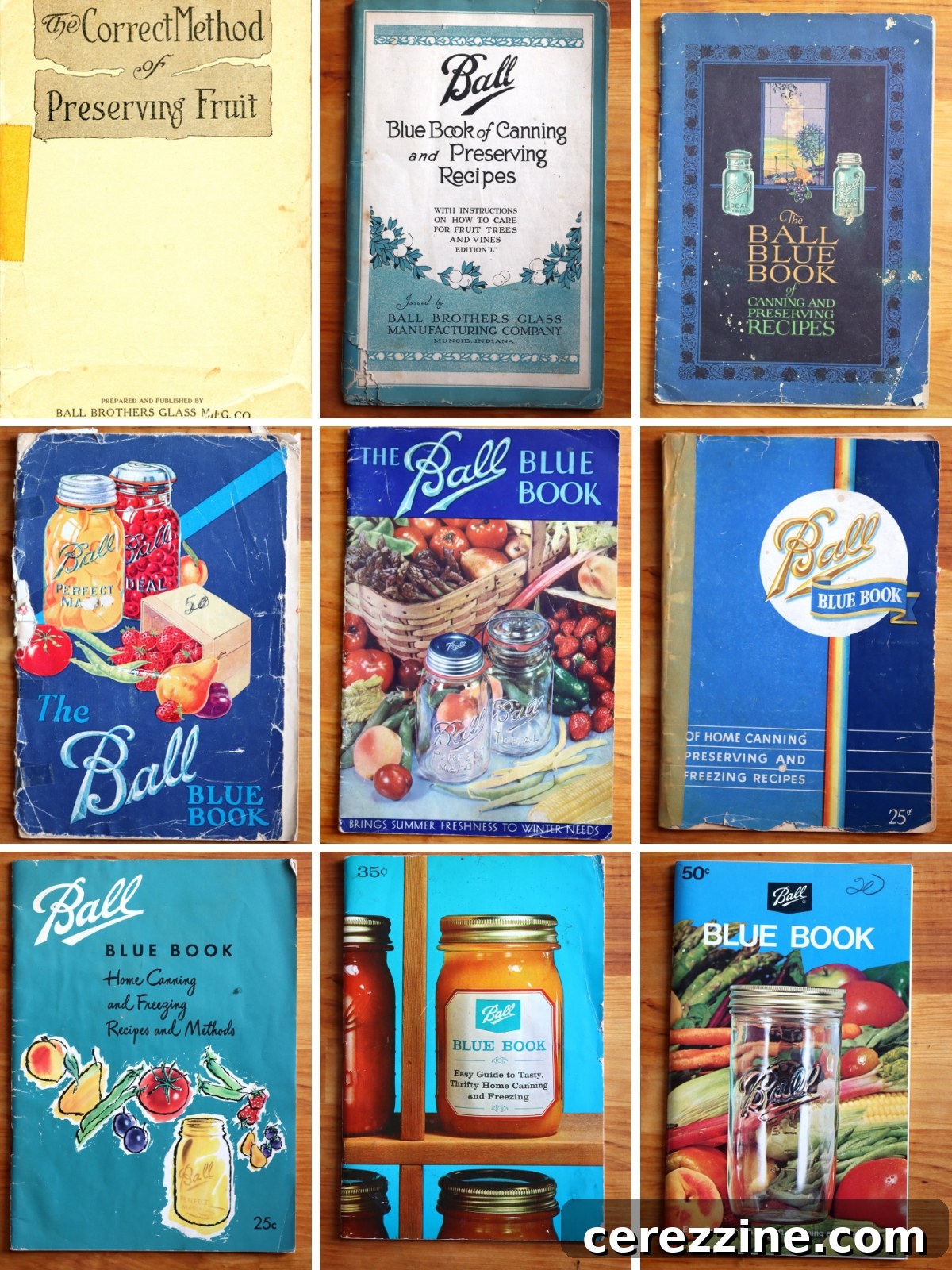
Below, you’ll find an extensive compilation of all the Ball Blue Book editions for which verifiable evidence exists online or in print. While this list strives for completeness, the intricate publishing history means it may not be entirely exhaustive. Should you possess information about other editions, your contributions in the comments would be greatly appreciated, helping to further enrich this historical record.
(Editions marked with an asterisk* are part of a personal collection, testament to the enduring appeal of these historical guides. Many of these vintage treasures can be discovered online, particularly on eBay, with prices varying from approximately $8 to $250, depending on their rarity and condition. Wartime editions from the early 1940s, highly sought after during that period of intensified home preservation, are typically the most common.)
- The Correct Method of Preserving Fruit – The original 1909 foundational pamphlet.
- Ball Blue Book H* ~ 1915 (This rare edition is uniquely dated on its front cover, making it a prized early possession in any collection.)
- Ball Blue Book I ~ (A currently elusive edition; its existence is inferred between editions H and K, likely dating around 1915-1916. A true collector’s quest!)
- Ball Blue Book Edition J ~ 1916 (One of the earliest editions with a clear date on its title page, confirming its publication year.)
- Ball Blue Book Edition K* ~ Circa 1916 – 1922 (While some sources link J and K to 1916, the K edition often lacks a specific date. Contextual clues suggest it falls within this broader timeframe.)
- Ball Blue Book Edition L* ~ Circa 1919 to 1922 (Reflecting the post-WWI era and evolving preservation techniques.)
- Ball Blue Book Edition M* ~ Early 1920s (A significant public domain edition, digitized by the University of Iowa, offering insights into this transitional period.)
- Ball Blue Book Edition N ~ 1926 (Marked as one of the first editions to feature a distinct copyright date, establishing a clearer timeline for subsequent publications.)
- Ball Blue Book Edition O* ~ 1930 (A snapshot of canning practices during the Great Depression era.)
- Ball Blue Book Edition P ~ 1932
- Ball Blue Book Edition Q ~ 1933
- Ball Blue Book Edition R ~ 1934
- Ball Blue Book Edition S ~ 1935
- Ball Blue Book Edition T* ~ 1936
- Ball Blue Book Edition T-3* ~ 1938 (An updated version within the ‘T’ series, reflecting incremental changes in practices.)
- Ball Blue Book Edition U ~ 1941 (Published as America entered WWII, highlighting the growing importance of home preservation.)
- Ball Blue Book Edition V* ~ 1943 (A highly common and historically significant wartime edition, widely used for victory gardens.)
- Ball Blue Book Edition X ~ 1947 (Currently the latest identified edition that remains out of copyright protection.)
- Ball Blue Book Edition Y* ~ 1949 (The crucial edition whose copyright was renewed, setting it apart from its predecessors.)
- Ball Blue Book Edition 26 ~ A 1953
- Ball Blue Book Edition 26 ~ B 1956
- Ball Blue Book Edition 26 ~ B 1959
- Ball Blue Book Edition 26* ~ C 1960 (Illustrating the alphanumeric sequencing used in later editions.)
- Ball Blue Book Edition 27 ~ 1963
- Ball Blue Book Edition 28 ~ 1966
- Ball Blue Book Edition 28* ~ 1969 reprint (Demonstrates the practice of reprinting editions with minor adjustments.)
- Ball Blue Book Edition 29* ~ 1972
- Ball Blue Book Edition 29 ~ 1974 reprint
- Ball Blue Book Edition 30 ~ 1977 (A pivotal edition that notably discontinued canning advice for certain vegetables like broccoli, cauliflower, cabbage, celery, and eggplant, reflecting evolving safety guidelines.)
- Ball Blue Book Edition 30 ~ 1979 reprint
- Ball Blue Book Edition 30 ~ 1982 reprint
- Ball Blue Book Edition 30 ~ 1983 reprint
- Ball Blue Book Edition 31 ~ 1986
- Ball Blue Book Edition 32 ~ 1989
- Ball Blue Book Edition 32 ~ 1990
- Ball Blue Book Edition 33 ~ 1995 (Published after the critical 1994 threshold for updated canning safety information.)
- Ball Blue Book Edition 34/35 ? ~ 1995 (with reprints in 1997, 1998 and 1999) (Highlighting a period of potentially combined or rapid updates.)
- Ball Blue Book Edition 36 ~ 2013
- Ball Blue Book Edition 37 ~ 2014
- Ball Blue Book Edition 37* ~ 2018 (An example of an edition with multiple printings over several years.)
- Ball Blue Book Edition 37 ~ 2020
- Ball Blue Book Edition 38 ~ February 2024 (The most current and comprehensive guide for modern home canners.)
For those keen to understand the latest developments, a detailed list of changes between the 37th and 38th editions of the Ball Blue Book has been meticulously compiled, offering clarity on all recent updates and new recipes.
(Special acknowledgments are extended to Healthy Canning, the Minnetrista Museum, and The University of Iowa Special Collections for their invaluable research and contributions, which served as essential resources in compiling this comprehensive historical overview.)
Beyond the Blue Book: Further Historical Canning Resources
For enthusiasts eager to deepen their understanding of canning literature and its rich history, a wealth of resources awaits. Explore these additional deep dives into the world of food preservation:
- Discover What’s New In the 38th Edition of the Ball Blue Book? – A focused look at the latest updates.
- Explore 100+ Vintage Canning Books (Full Text Free Online) – Access a treasure trove of historical canning guides.