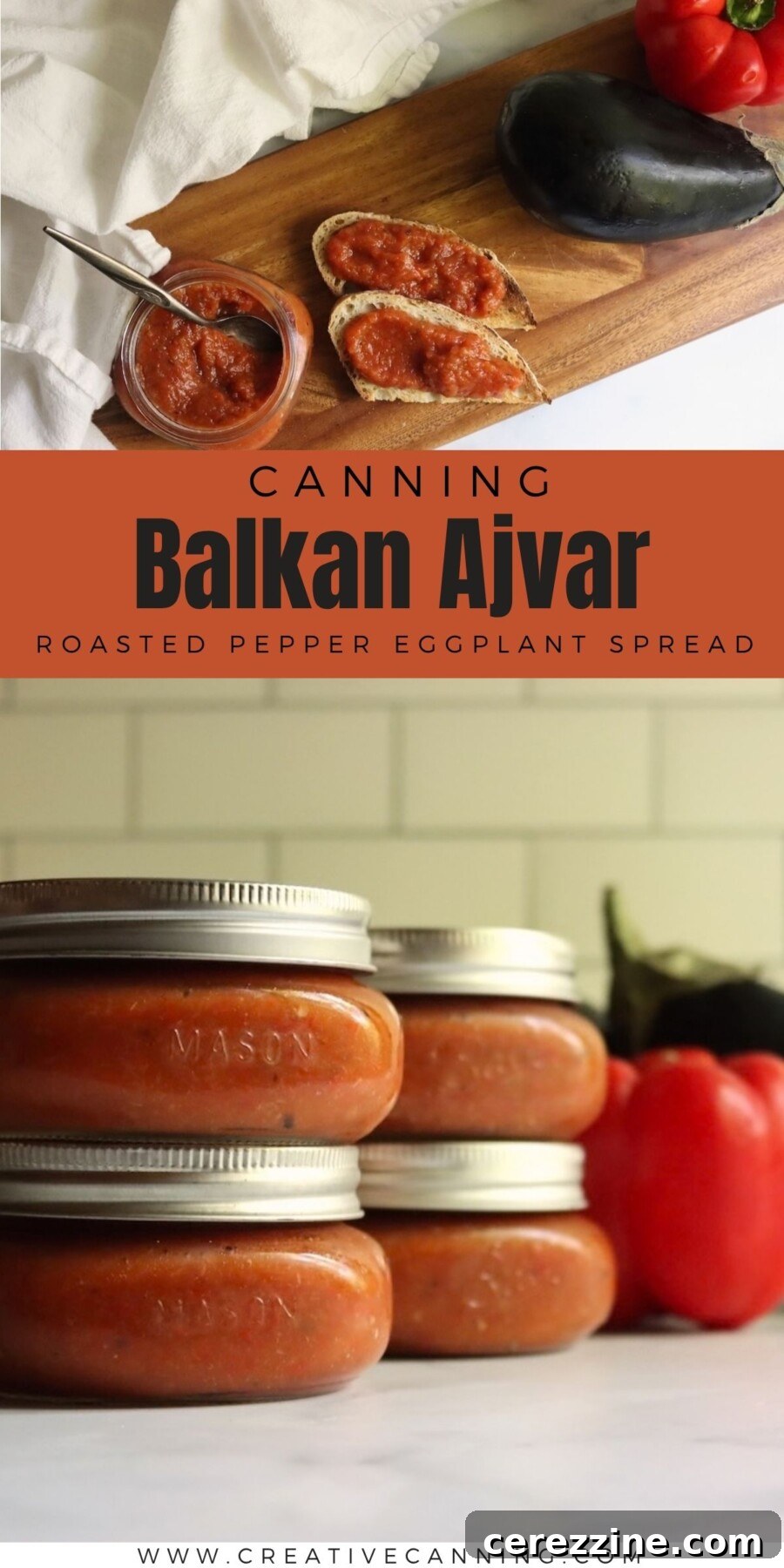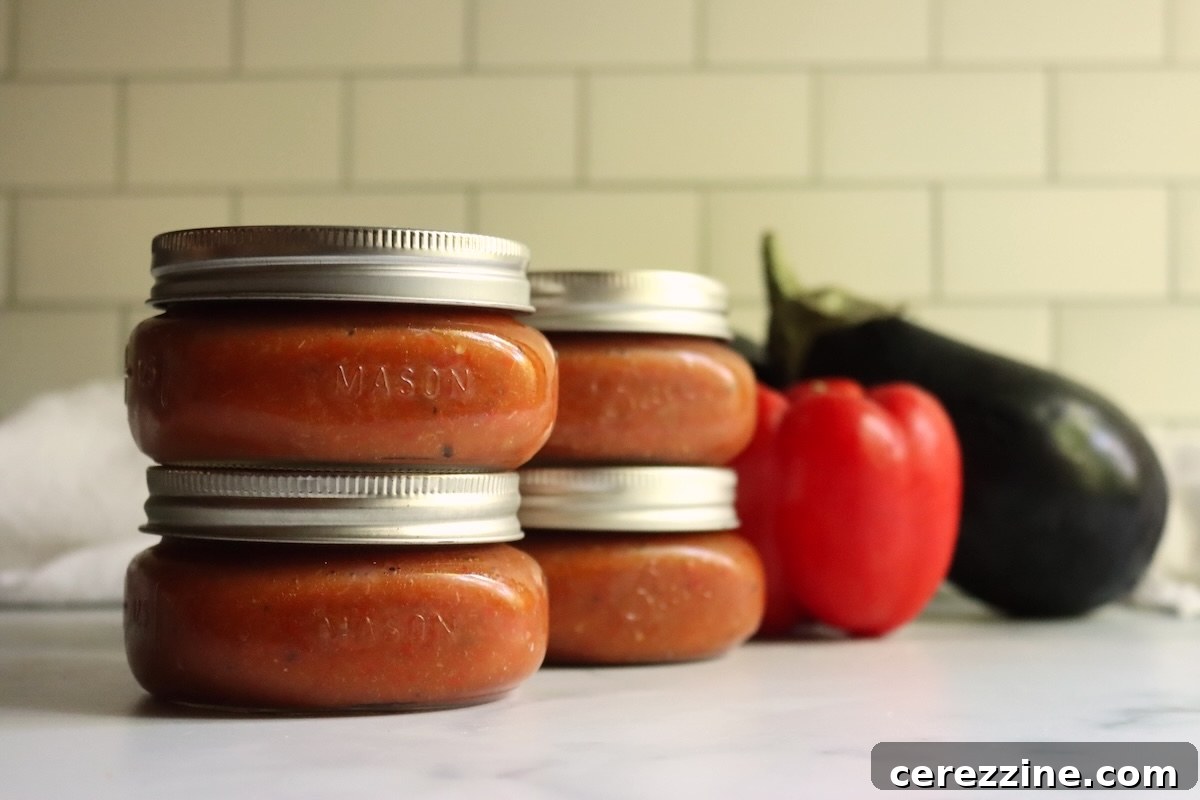
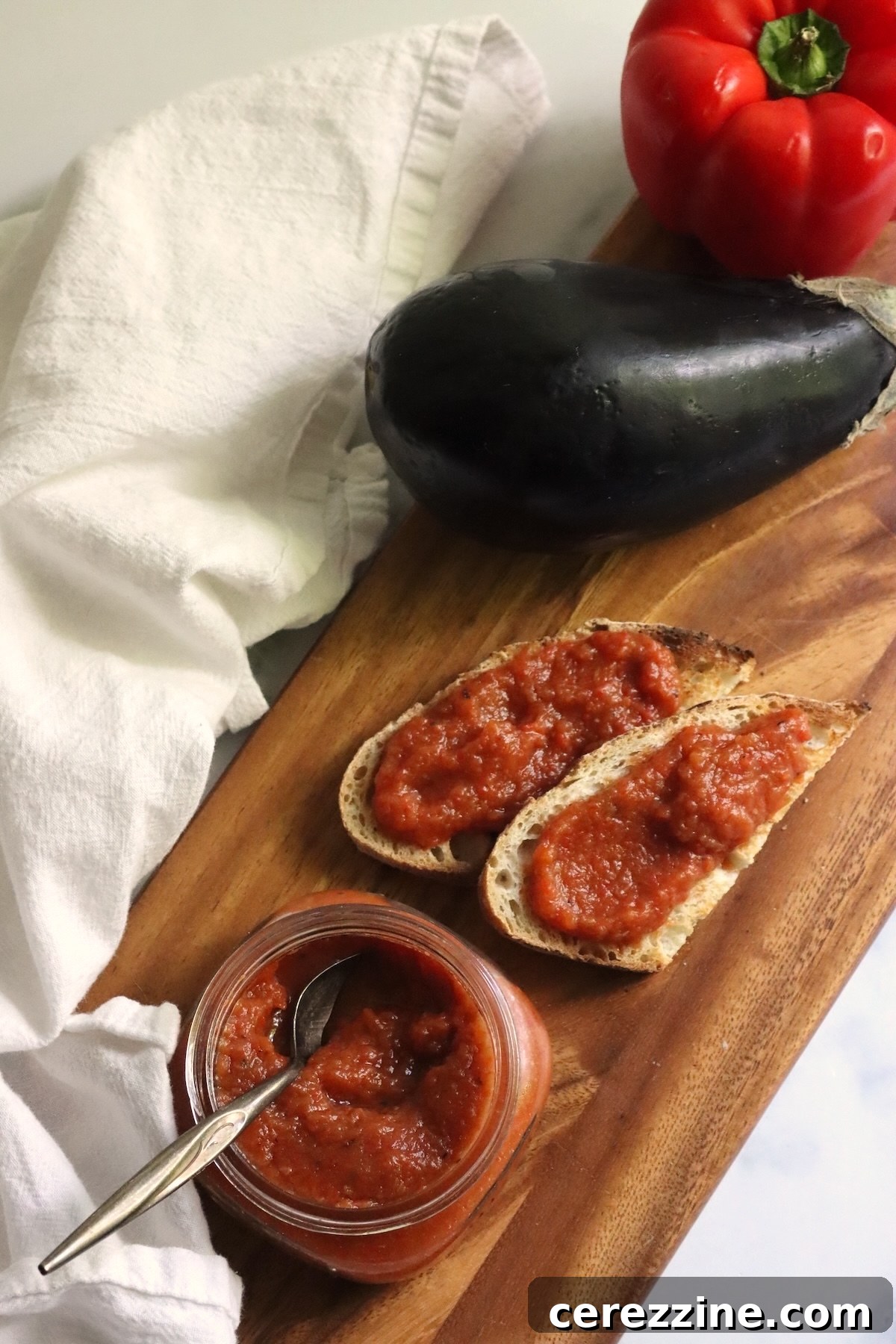
Ajvar is a roasted red pepper and eggplant spread from the Balkans. With this tested canning recipe you can preserve jars for the pantry and enjoy roasted peppers year-round—spread on bread, served with grilled meat, or offered as a dip.
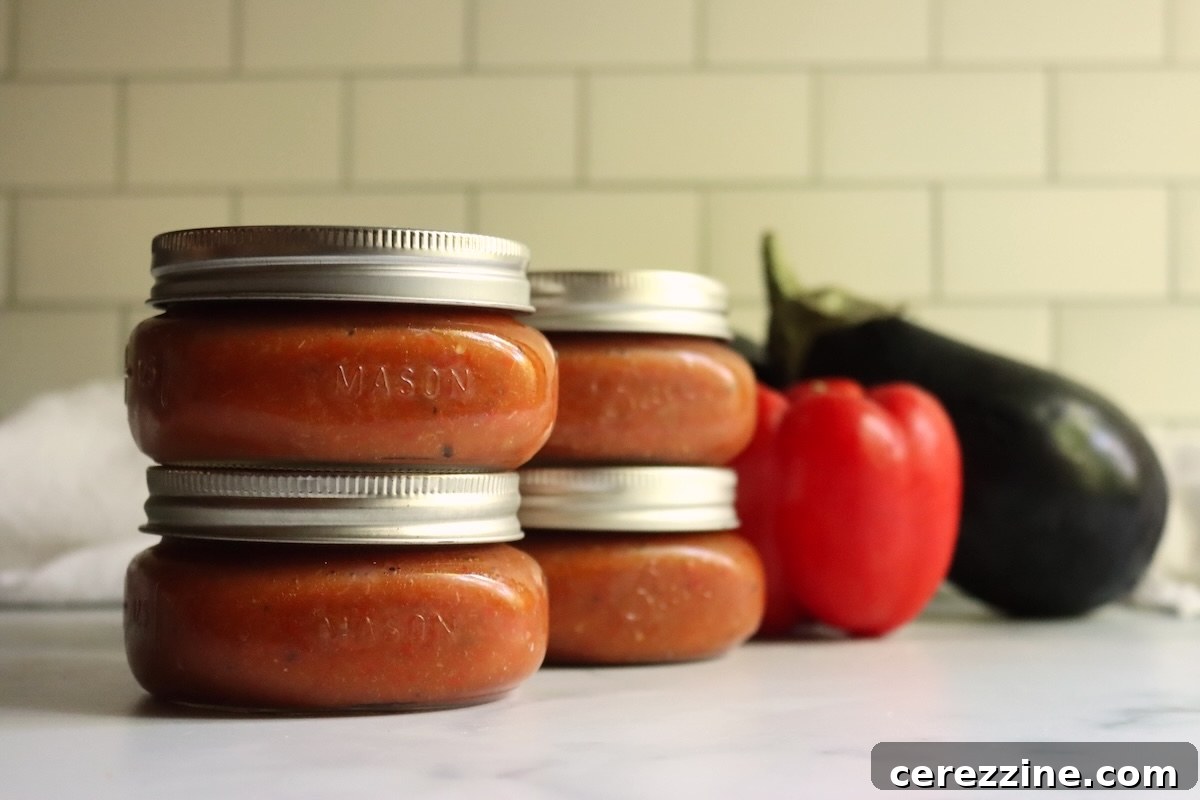
This recipe has been reviewed for safety and accuracy by a Master Food Preserver certified through the University of Cornell Cooperative Extension.
Ajvar (pronounced “eye-var”) is mildly sweet, slightly tangy, and thick enough to spread. It’s a staple across Serbia, North Macedonia, Croatia, and Bosnia, and every authentic jar begins with thoroughly roasted red peppers.
Traditional ajvar season is in late summer and fall—September and October—when red peppers are at their peak. In the Balkans, families and neighbors gather to roast whole peppers over open flames, peel them by hand, and jar the result for the winter pantry as part of zimnica (preserved winter foods).
This tested version adapts a Ball Blue Book recipe and adds roasted eggplant plus a touch of garlic and cider vinegar. The vinegar provides the necessary acidity for safe water-bath canning while keeping the finished jars free of oil, which preserves shelf stability.
What Is Ajvar?
Ajvar is essentially a roasted red pepper relish. Its name derives from a Turkish word that once referred to caviar; restaurants in Belgrade served a red pepper salad as a caviar substitute, calling it red ajvar, and the name stuck.
Sweet ajvar is the classic preparation; hot ajvar includes fiery chiles. Some families include eggplant or tomato. The tested Ball recipe included here uses eggplant to add body and smoothness to the spread.
Traditional family recipes often cook ajvar slowly with sunflower oil, but those methods haven’t been laboratory-tested for safe home canning. This recipe is developed for water-bath canning with measured vinegar and no oil in the jar.
Quick Look at the Recipe
- Recipe: Ajvar (Roasted Eggplant and Pepper Spread)
- Type: Roasted vegetable spread, vinegar added for acidity
- Canning method: Water bath canning (half-pint jars)
- Prep time: About 30 minutes
- Cook time: About 45 minutes (mostly roasting)
- Canning time: 15 minutes for half-pints at 0–1,000 ft (see altitude adjustments)
- Yield: About 4 half pints
- Headspace: 1/2 inch
- Main ingredients: Roasted red bell peppers, roasted eggplant, garlic, cider vinegar (at least 5% acidity), salt. Optional: hot red pepper or cayenne for heat.
- Difficulty: Easy
Choosing Peppers and Eggplant
Use fully ripe red bell peppers—no green shoulders—because underripe peppers retain a grassy flavor even after roasting. Traditional ajvar often uses long horn peppers (roga), but this tested canning recipe uses red bell peppers for consistency and availability.
Pick firm eggplants with glossy skin. Any variety works as long as you measure by weight: the recipe specifies quantities by weight because sizes vary widely and the vinegar amount is matched to those weights for safe canning.
Ingredients for Ajvar
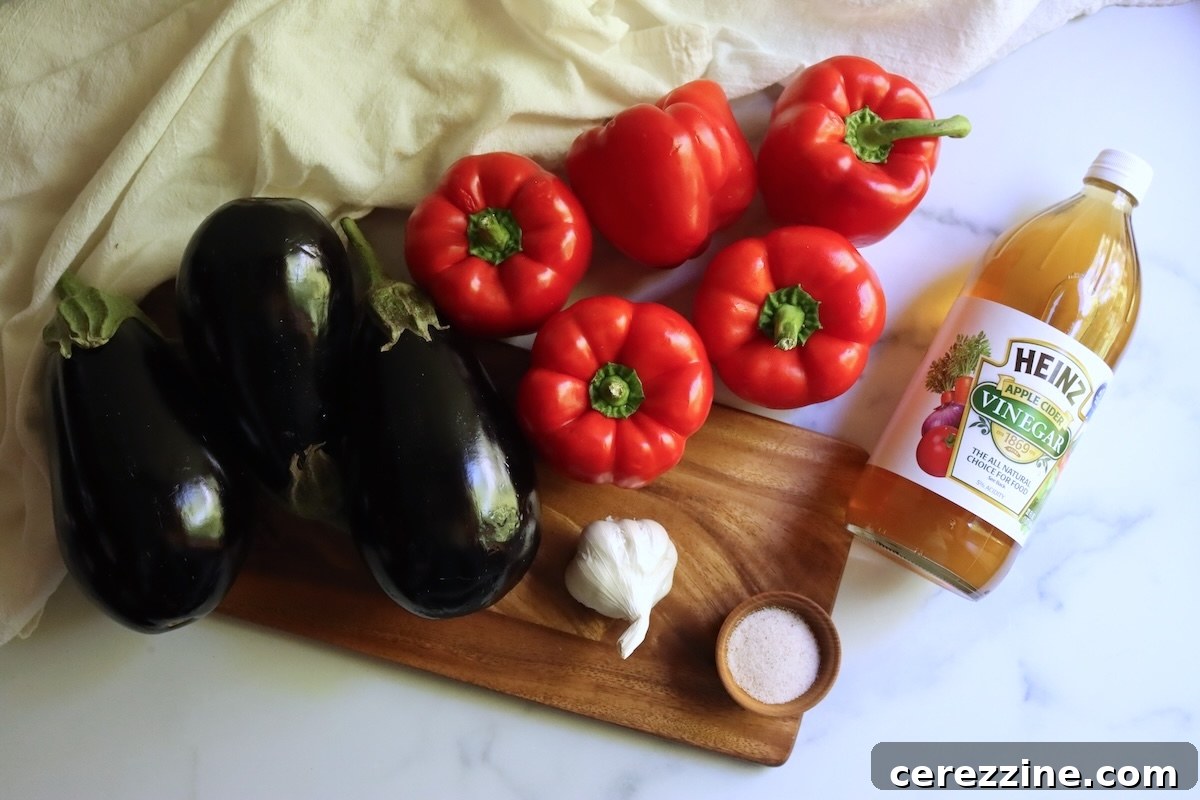
The recipe uses just a few ingredients plus an optional hot pepper for heat. Key items:
- Red bell peppers (ripe, fully red)
- Eggplant (measured by weight; roast and scoop the flesh)
- Garlic cloves
- Cider vinegar (2/3 cup total; label must show at least 5% acidity)—white wine vinegar at 5% is an acceptable substitute
- Salt (for flavor)
- Optional hot red pepper (seeded) or a pinch of cayenne for heat
Acid and Substitutions
Cider vinegar is essential for safe water-bath canning because peppers, eggplant, and garlic are low-acid. Use the full measured amount and confirm the vinegar is at least 5% acidity. White wine vinegar at 5% or higher may be substituted. Do not reduce the vinegar or add oil before canning; if you miss the richness of oil, stir in olive oil after opening a jar.
How to Make Ajvar
Ajvar is mostly hands-off oven roasting. Roast the vegetables, remove skins and seeds, blend to the texture you prefer, then heat the puree with vinegar before packing hot into jars.
Roast the Peppers and Eggplant
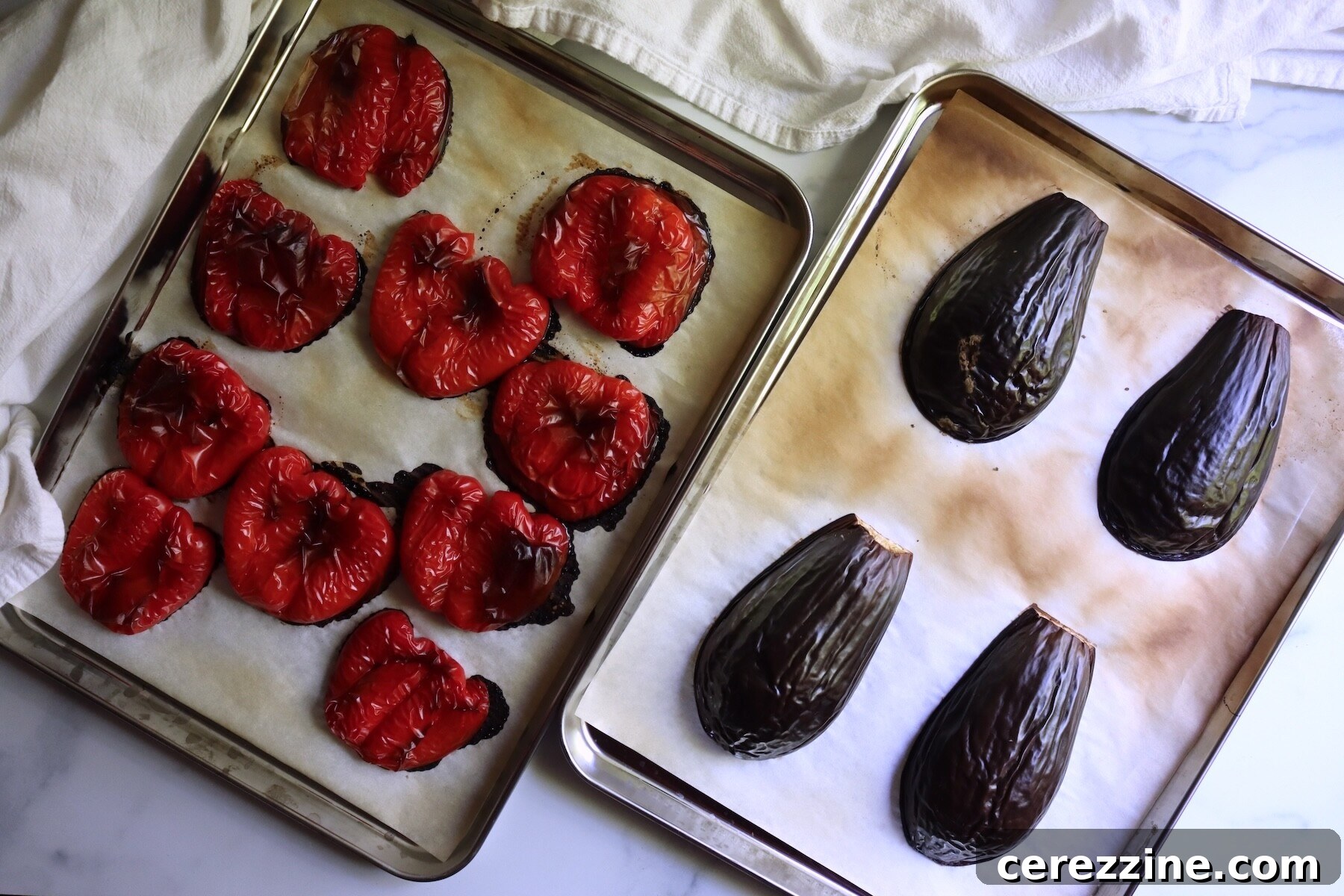
Preheat the oven to 400°F and line two rimmed baking sheets with parchment. Halve and seed the peppers, place skin-side up on one sheet. Halve the eggplants, place skin-side up on the other, and prick the skins so steam escapes. Roast until skins char: peppers ≈20 minutes, eggplant up to 30 minutes.
Peel the Peppers and Scoop the Eggplant
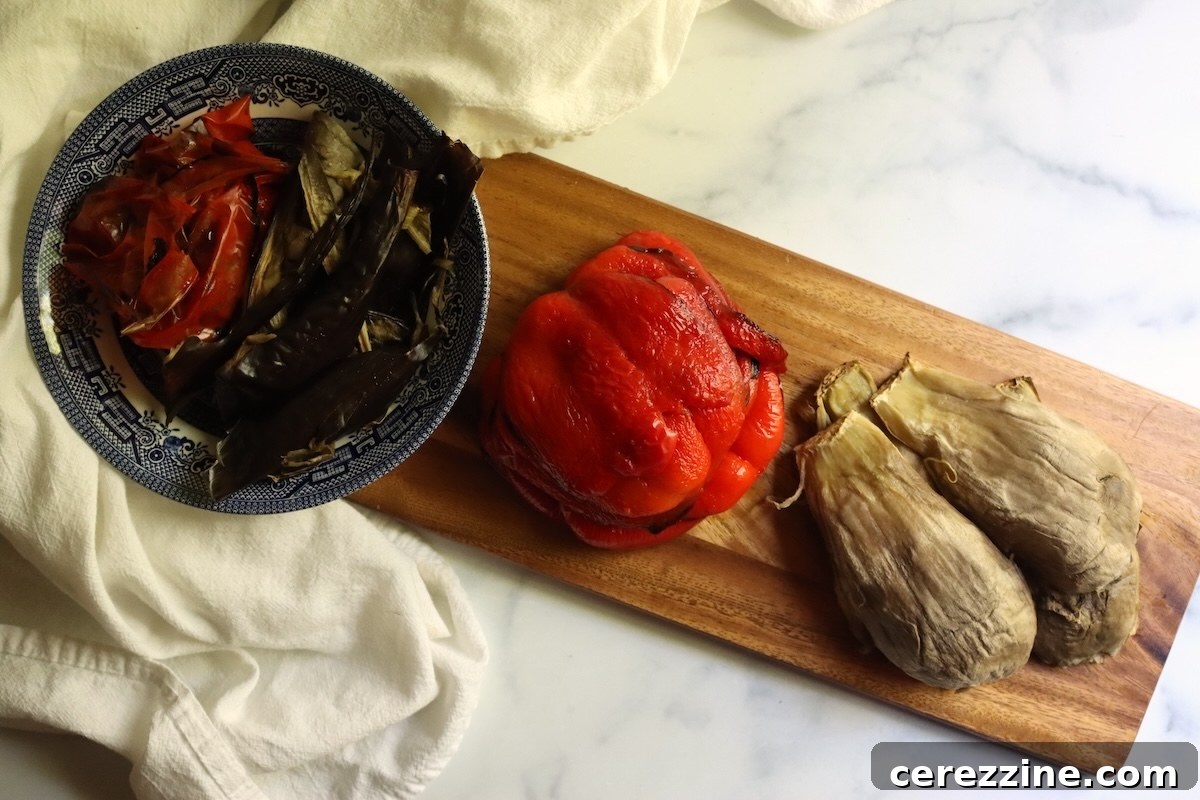
Place hot peppers in a covered bowl or under a plate to steam for about 10 minutes so skins loosen. Peel and discard skins. Let eggplant cool until manageable, then scoop out the flesh and discard skins and seeds.
Blend the Spread
Combine peeled peppers, scooped eggplant, garlic, salt, and any hot pepper in a food processor. Pulse for a chunky texture or puree on low for a smooth spread. Choose texture based on how you plan to serve it—chunky with grilled meats, smooth for bread and sandwiches.
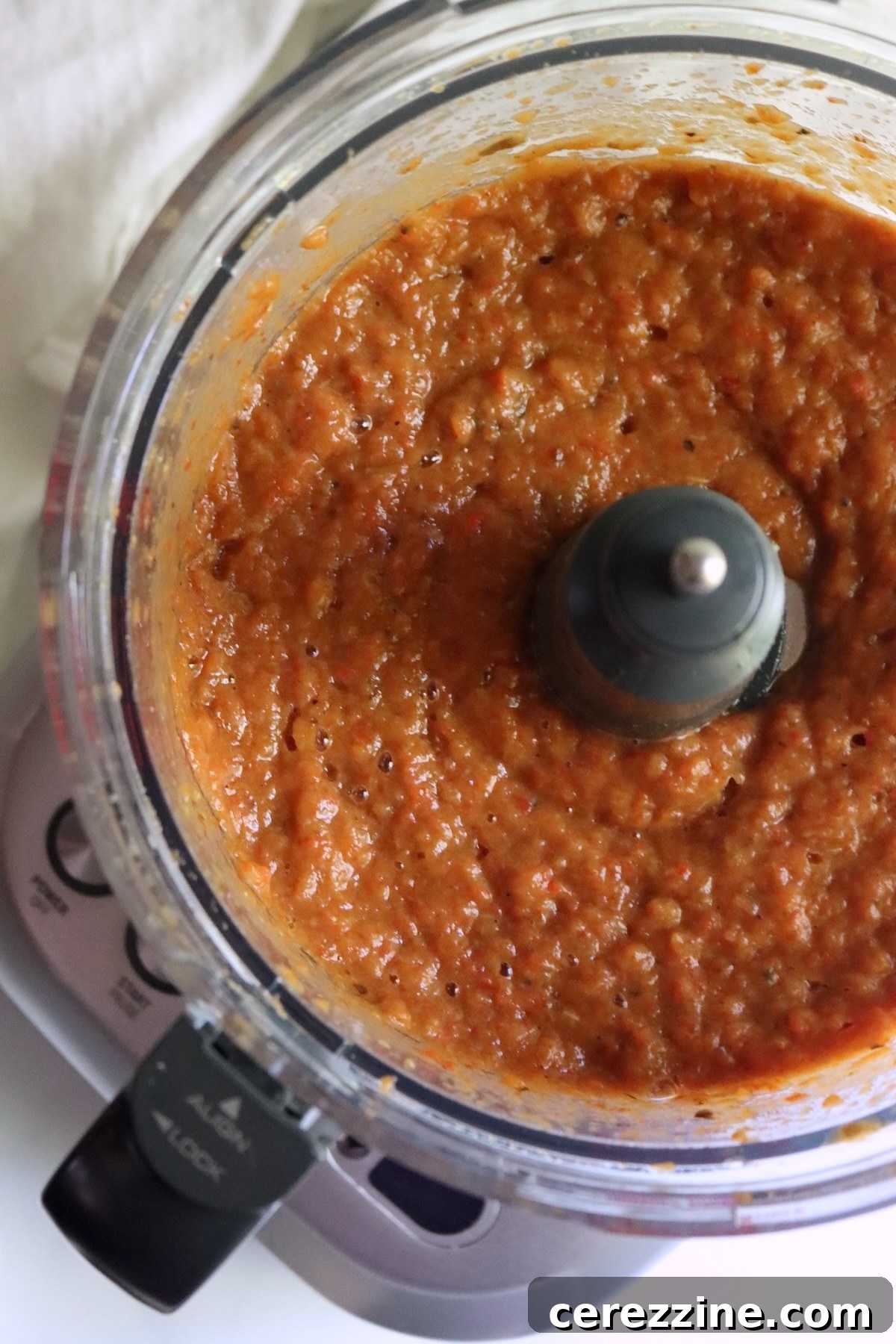
Cook with the Vinegar
Scrape the puree into a stainless-steel or enameled saucepan over medium heat and stir in all the vinegar. Bring to a steady boil, stirring constantly to prevent scorching and splattering. Taste and adjust salt if desired, but do not reduce the vinegar.
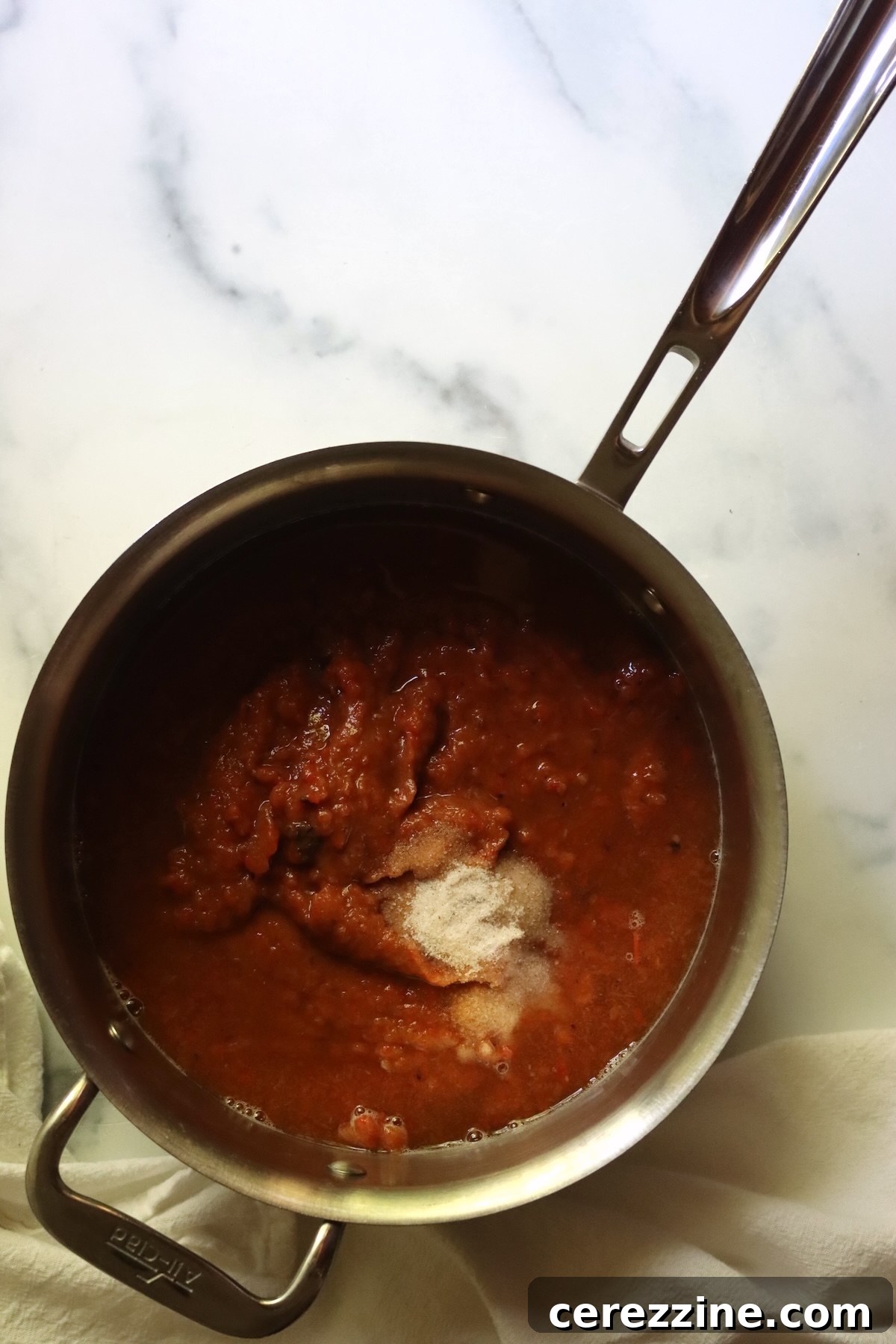
Canning Ajvar
Keep half-pint jars hot in simmering water until filling. Ladle the hot ajvar into jars, leaving 1/2 inch headspace. Remove air bubbles, recheck headspace, wipe rims, center lids, and apply bands fingertip-tight. Process jars in a boiling water bath with at least 1 inch of water covering the jars.
Process half-pints for 15 minutes at 0–1,000 feet. See altitude adjustments below and increase processing time if necessary. After processing, turn off heat, remove the canner lid, let jars sit 5 minutes, then remove and cool undisturbed for 12–24 hours.
Altitude Adjustments
- 0 to 1,000 feet: 15 minutes
- 1,001 to 6,000 feet: 20 minutes
- Above 6,000 feet: 25 minutes
Ways to Use Ajvar
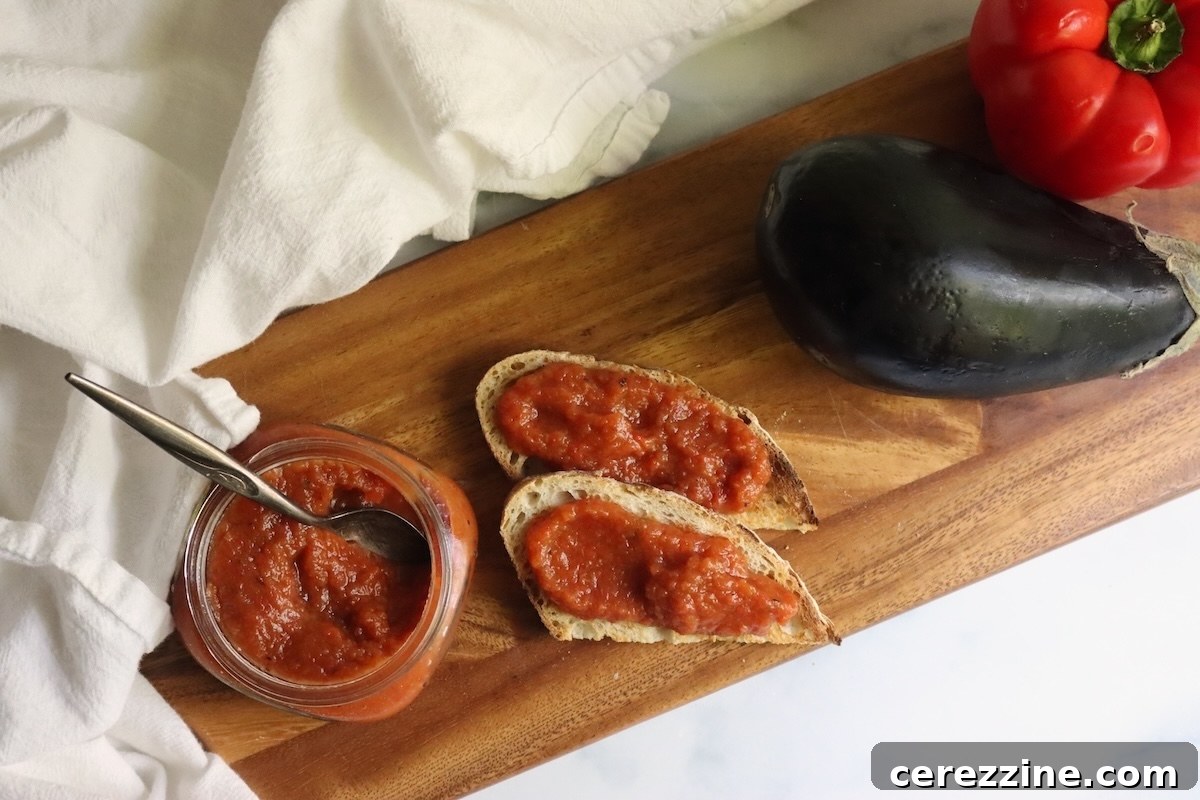
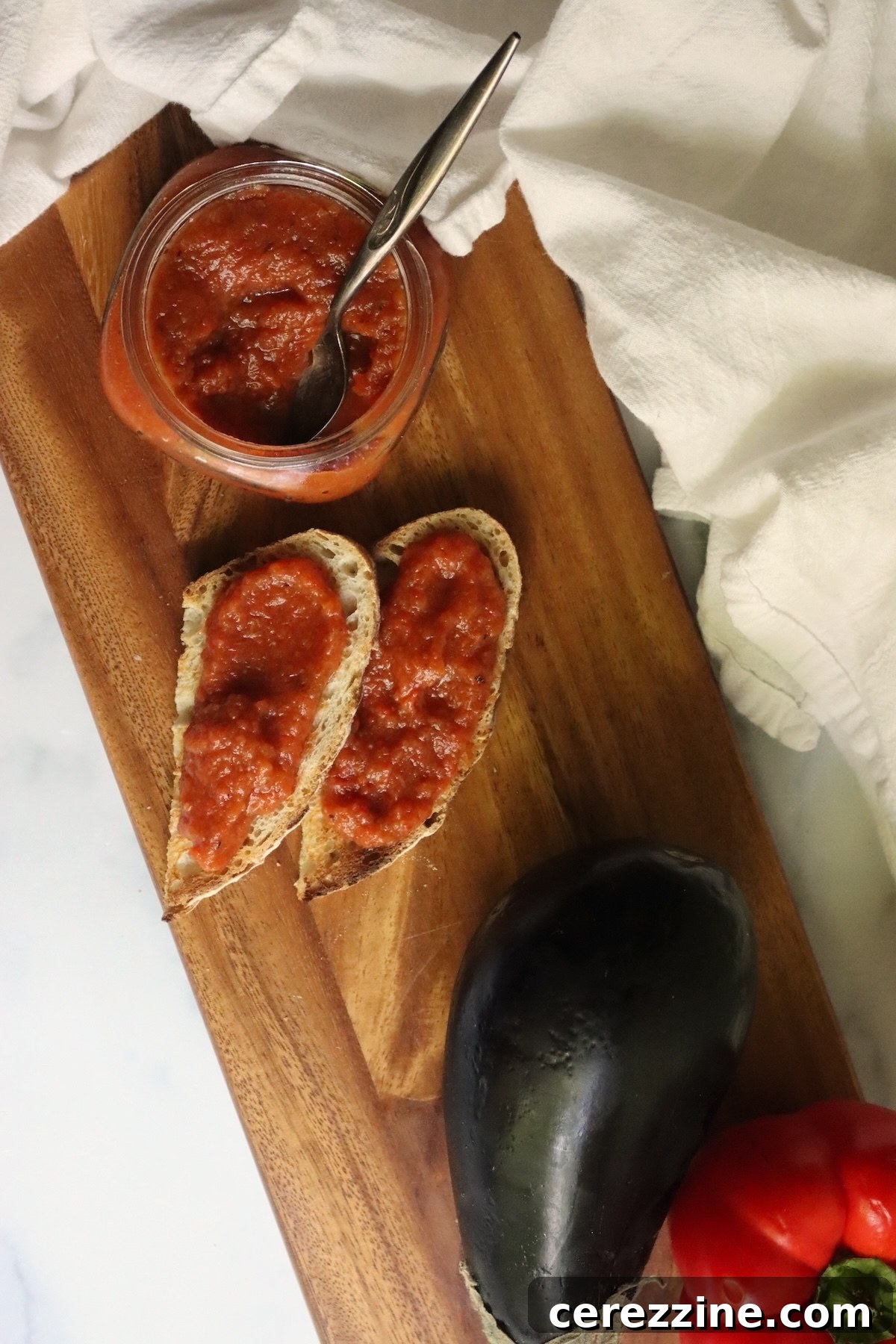
In the Balkans, ajvar is commonly spread on bread or served as a side dish. Try a thick slice of rustic bread topped with ajvar and a crumble of feta. Use ajvar as a condiment for grilled sausages, burgers, lamb, or chicken, or swap it for mayonnaise on sandwiches. Stir a spoonful into rice or beans, thin with a little water for a quick pasta sauce, or serve as a dip with pita and raw vegetables.
Storage and Shelf Life
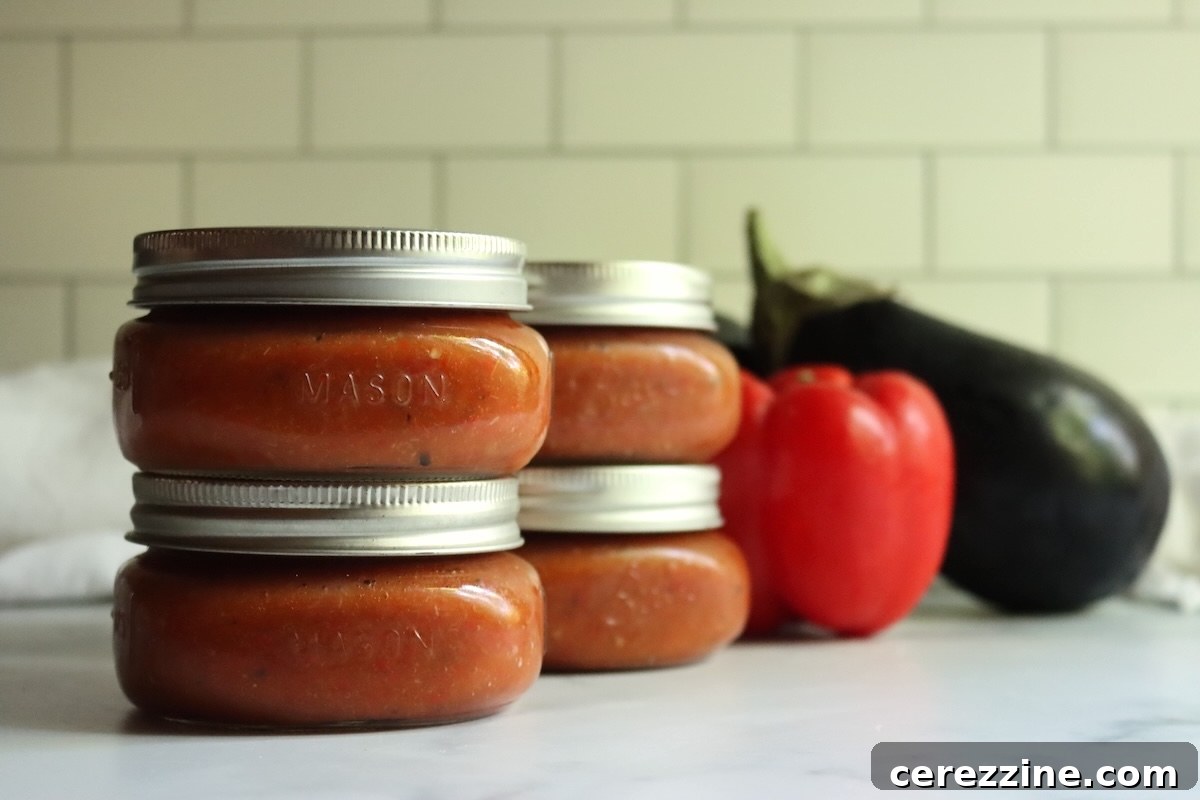
After cooling, press the center of each lid to confirm the seal—sealed lids will not flex. Remove the screw bands for storage since bands can hide a failed seal. Store sealed jars in a cool, dark place and use within 12–18 months. Once opened, refrigerate and use within 1–2 weeks.
If a jar fails to seal, refrigerate and use within a week or reprocess within 24 hours with a new lid. You may also skip canning: ajvar keeps refrigerated for up to a week or frozen for up to a year.
Yield Notes
Buy by weight, not by count. For this recipe, roughly 1 1/2 lb eggplant and 2 1/2 lb red bell peppers (as-purchased weight) yield about four half-pint jars. Wash an extra jar just in case your yield varies.